
Best Time to Trek Annapurna Base Camp – Seasons, Weather, and Expert Tips
28 Dec 2025
The Annapurna Base Camp trek stands among the world's most iconic Himalayan adventures. Every year, thousands of trekkers from across the globe journe...

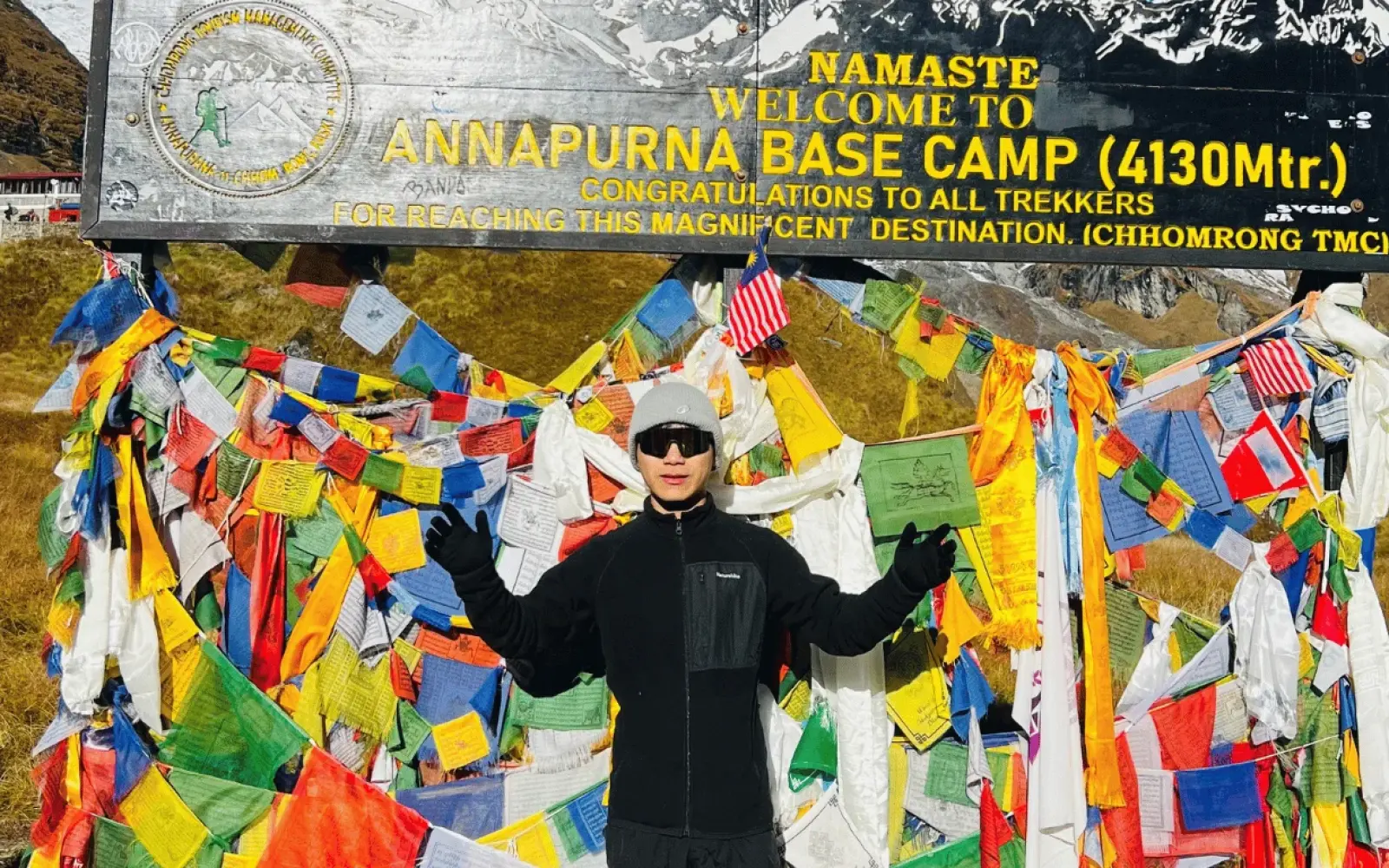

Is the ABC trek risky? Only a little. The Annapurna Base Camp (ABC) trek is a low-to-moderate-risk trek that most healthy beginners finish safely. It needs no climbing skills, tops out at 4,130 m (13,550 ft), and has lodges every few hours. Its real risks are avalanches between Hinku Cave, Deurali, and Machhapuchhre Base Camp after heavy snow, and the Hinku River and other streams that swell in the July–August monsoon. The thousands of stone steps make the trek tiring, but not dangerous. Altitude sickness is much less common than on the Everest Base Camp trek.
This answer comes from the trail, not from a desk. Majestic Trails Nepal founder Bibek Dhamala has guided the ABC trek 40–50 times, and Annapurna specialist Sujan Adhikari (licence No. 20809) many more, without ever having to turn a group back. Below, they show exactly where each risk is, which months to avoid, and what they do to keep every guest safe.
The table below sums up every real risk on the Annapurna Base Camp trek:
| Risk | Where | When | How serious | How to avoid it |
|---|---|---|---|---|
| Avalanche | Deurali to Machhapuchhre Base Camp | After heavy snow, mostly December to April | Serious, but rare | Follow the safer path that Deurali locals open after snowfall; a guide knows it |
| Swollen streams and landslides | Hinku River near Hinku Cave, and streams along the whole route | Peak monsoon, July and August | Moderate | Trek in spring or autumn |
| Altitude sickness | Above 3,000 m (9,843 ft), mostly MBC and ABC | All year | Low on ABC | Walk slowly, drink water, check oxygen each evening |
| Cold and full lodges | Deurali, MBC, ABC | Winter cold; lodges full in peak season | Low | Warm layers; book rooms ahead |
Most of the ABC trail is a well-used path through villages, forest, and lodges. The risk changes section by section, so here is what to expect on each part of the route.
From Jhinu, at about 1,780 m (5,840 ft), the trail climbs a long stone staircase to Chhomrong, at about 2,170 m (7,119 ft). It is one of the two hardest climbs on the whole trek. The main risk here is tired legs and sore knees, not danger.
From Chhomrong, the trail drops down hundreds of steps to the Chhomrong Khola, then climbs straight back up to Sinuwa, at about 2,340 m (7,677 ft). Majestic Trails Nepal guides rate this as the hardest section of stairs on the trek, and you walk it again on the way back. In the monsoon, the forest between Sinuwa and Bamboo is wet and slippery, with leeches.
The trail climbs through bamboo and rhododendron forest past Dovan, at about 2,600 m (8,530 ft), and Himalaya, at about 2,920 m (9,580 ft). In the dry season, this section is easy. In peak monsoon, small streams that you step across in October can become fast rivers.
Just before Deurali, near Hinku Cave at about 3,170 m (10,400 ft), the trail crosses the Hinku River. Most of the year it is an easy crossing. In heavy monsoon rain, the river grows big and fast, and after heavy snow, avalanches can come down the gully above it.
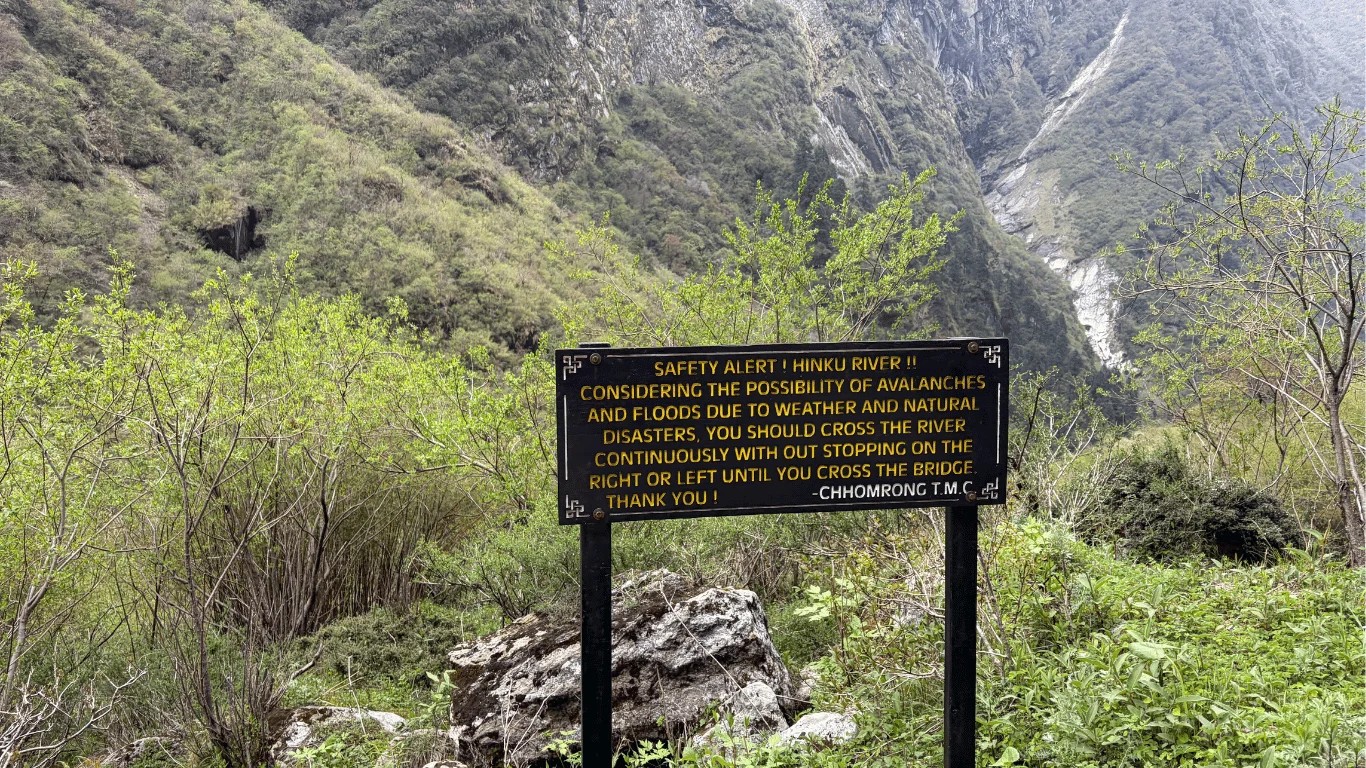
The Chhomrong Trekking Management Committee (TMC) has put up a safety alert at the crossing. It warns that, because of the possibility of avalanches and floods, trekkers should cross the river continuously, without stopping on the right or left bank, until they have crossed the bridge. Majestic Trails Nepal guides follow this rule every time: no photos, no rest stops, and no waiting in the gully.
This is the only part of the ABC trek with a real avalanche risk. Between Deurali, at about 3,230 m (10,597 ft), and Machhapuchhre Base Camp (MBC), at about 3,700 m (12,139 ft), the trail runs along a narrow valley under steep slopes. After heavy snow, avalanches can come down on the usual path.
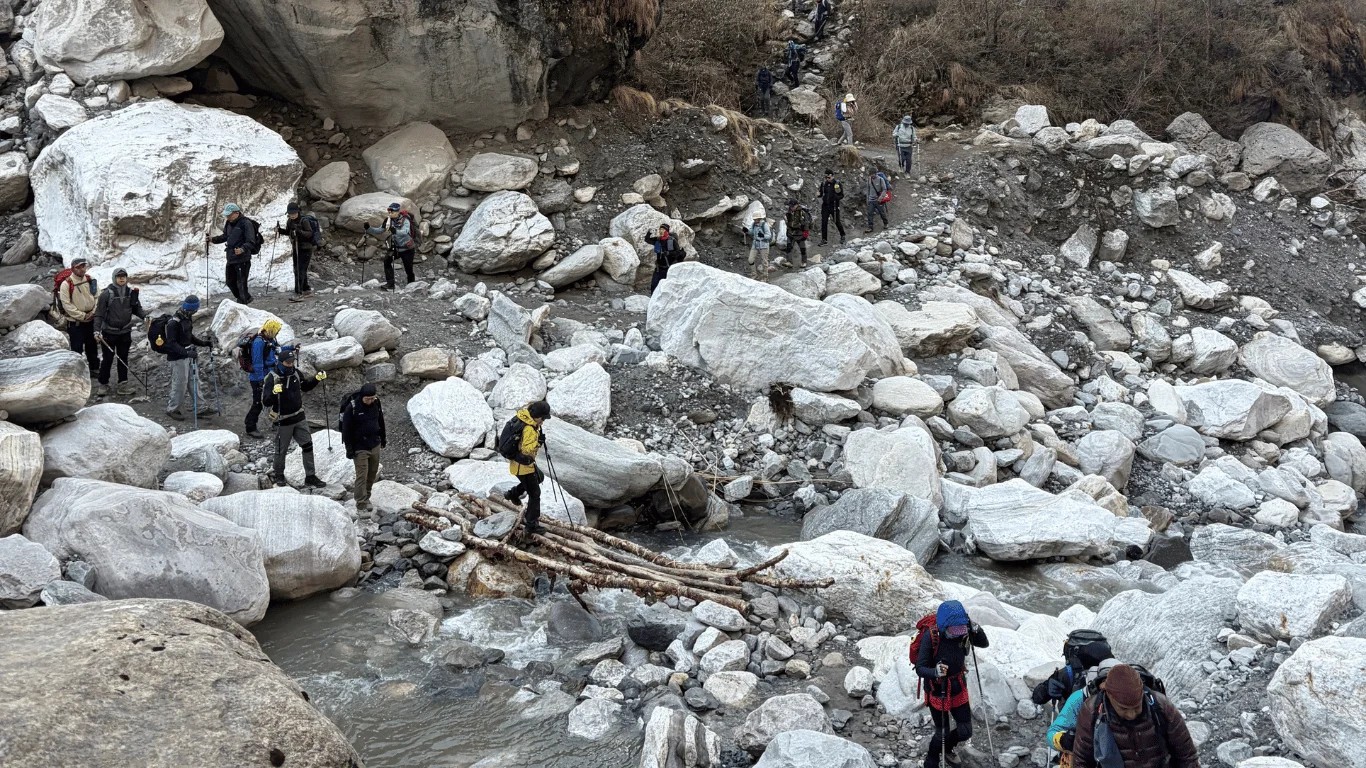
When that happens, people from Deurali open a safer path away from the avalanche slopes. Trekkers who walk without a guide often miss this path and take the old one. A guide who walks this valley every season knows which way is open.
The last climb from MBC to ABC, at 4,130 m (13,550 ft), is gentle but high. Nights at MBC and ABC are cold, often well below freezing in winter. This is where altitude sickness is most likely, although cases on ABC are far fewer than on the Everest Base Camp trek.
These are the five risks that matter on the ABC trek, from most to least serious.
Avalanches are the most serious risk on the ABC trek, but they are limited to one valley and one type of weather. The danger zone runs from around Hinku Cave and Deurali up to MBC, and only after heavy snowfall, mostly between December and April. On a clear autumn day, the same valley is safe.
To stay safe, do not walk this section during or straight after heavy snow; ask at Deurali which path is open, and follow the safer route that locals take. After heavy snow, crampons are essential on this section, not optional, and you should cross the Hinku River gully without stopping.
Altitude sickness (acute mountain sickness, or AMS) can start above about 2,500–3,000 m (8,200–9,843 ft). Signs include headache, nausea, dizziness, and poor sleep. If ignored, it can become life-threatening.
On ABC, it is much less common than on the Everest Base Camp trek, because you only spend one or two nights above 3,700 m (12,139 ft). Bibek has never seen a Majestic Trails Nepal guest get altitude sickness on ABC; the most common complaint is a bad night's sleep at MBC or ABC.
In July and August, heavy rain turns small streams into fast rivers and loosens the hillsides. The Hinku River near Hinku Cave, just before Deurali, is the crossing to watch most closely. In mid-July 2026, monsoon floods on the Kimrong Khola and Modi River damaged the Ghurjung suspension bridge and parts of the trail. This is why Majestic Trails Nepal does not take guests to ABC in peak monsoon. If you are still planning a rainy-season trip, read our guide to the Annapurna Base Camp trek during the monsoon.
In winter, nights at MBC and ABC are well below freezing. In October and November, the opposite problem appears: the ABC trek is one of the busiest in Nepal, and trekkers without a booking can arrive in the dark and find every room taken. Read more about accommodation on the Annapurna Base Camp trek. Walking on to the next lodge at night on an icy trail is a risk in itself.
This is the least dramatic risk, but one of the most common on any trek in Nepal. Untreated tap or stream water, and food left standing, can cause diarrhoea that drains your energy for days. Treat every refill with purification tablets or a filter, eat freshly cooked meals such as dal bhat, and wash or sanitise your hands before eating.
Altitude sickness is less common on ABC than on higher treks, but it can still happen at Deurali, MBC, and ABC. This table shows how to tell mild altitude sickness from an emergency:
| Stage | Signs | What to do |
|---|---|---|
| Mild AMS | Headache, tiredness, poor appetite, bad sleep | Rest, drink water, do not climb higher until you feel better |
| Moderate AMS | Headache that pain relief does not fix, vomiting, dizziness, low oxygen reading | Stop climbing; go down 300–500 m (984–1,640 ft) if it does not improve overnight |
| HACE (brain swelling) | Confusion, stumbling, unusual behaviour, extreme drowsiness | Emergency: go down at once and call for a helicopter |
| HAPE (fluid in the lungs) | Breathless at rest, wet cough, chest tightness, blue lips | Emergency: go down at once and call for a helicopter |
The good news on ABC is that going down is quick. From ABC, you can drop below 3,000 m (9,843 ft) to the Himalaya or Dovan in a few hours, which is far faster than on most high treks. For more detail, read our full guide to altitude sickness on the Annapurna Base Camp trek.
Serious accidents on the ABC trek are rare, but two recent events show exactly where the risks lie.
The risk on the ABC trek depends more on the month than on anything else. For weather and views in each season, see our guide to the best time to trek Annapurna Base Camp, and our ABC trek in October guide for the busiest month. This table shows what to expect in each month:
| Month | Risk level | What to expect |
|---|---|---|
| January | Higher | Heavy snow possible, avalanche risk above Deurali, very cold nights |
| February | Higher | Snow and avalanche risk continue; some lodges may close |
| March | Moderate | Late snow can bring avalanche risk; trail gets busier |
| April | Low | Warm days, rhododendrons in bloom; some late-season snow |
| May | Low | Warm and clear in the morning; afternoon clouds and pre-monsoon showers |
| June | Moderate | Monsoon starts; rain, leeches, slippery steps |
| July | Higher | Peak monsoon; swollen streams and landslides. Majestic Trails Nepal does not trek ABC |
| August | Higher | Peak monsoon continues; Majestic Trails Nepal does not trek ABC |
| September | Moderate | Monsoon ends during the month; trail dries out |
| October | Low | Best season; clear views, stable weather, very busy lodges |
| November | Low | Clear and dry; colder nights, still busy |
| December | Moderate | Cold, quieter, snow possible above Deurali |
Most ABC treks follow a similar route from Pokhara. This table shows a typical 8-day route, the altitude you sleep at each night, and the main thing to watch for each day. Your own itinerary may start or stop in slightly different places.
| Day | Route | Sleep at | What to watch for |
|---|---|---|---|
| 1 | Pokhara by road to Siwai or Nayapul, walk to Jhinu | Jhinu, about 1,780 m (5,840 ft) | Dusty or muddy road; landslides in the monsoon |
| 2 | Jhinu to Chhomrong | Chhomrong, about 2,170 m (7,119 ft) | Long, steep stone staircase; go slowly |
| 3 | Chhomrong to Sinuwa and Bamboo or Dovan | Dovan, about 2,600 m (8,530 ft) | The hardest stairs, down and up again; slippery forest steps |
| 4 | Dovan to Deurali | Deurali, about 3,230 m (10,597 ft) | Hinku River crossing near Hinku Cave (cross without stopping); start of the avalanche zone; ask locals about the path if it has snowed |
| 5 | Deurali to MBC and ABC | ABC, 4,130 m (13,550 ft) | Avalanche zone after snow; first signs of altitude sickness; cold night |
| 6 | ABC to Bamboo | Bamboo, about 2,310 m (7,579 ft) | Long descent; icy steps early in the morning |
| 7 | Bamboo to Jhinu | Jhinu | Chhomrong stairs again; tired knees |
| 8 | Jhinu to Pokhara | Pokhara, about 822 m (2,697 ft) | Road conditions |
No. Overall, the ABC trek is less risky than the Everest Base Camp (EBC) trek, mainly because it is lower and closer to help. EBC is harder on the lungs; ABC is harder on the knees. For a full comparison of route, cost, and views, read Annapurna Base Camp vs Everest Base Camp. This table compares the two on risk:
| Annapurna Base Camp | Everest Base Camp | |
|---|---|---|
| Highest point | 4,130 m (13,550 ft) | 5,364 m (17,598 ft); Kala Patthar about 5,644 m (18,517 ft) |
| Altitude sickness | Uncommon | Much more common |
| Avalanche risk on the trail | Deurali to MBC, after heavy snow | Very low on the normal trail |
| Stone steps | Thousands; the hardest part | Fewer; long gradual climbs |
| Helicopter from the nearest base | About 30 minutes from Pokhara | Longer; flights come from Lukla or Kathmandu |
| Start of the trek | Road from Pokhara | Flight to Lukla, often delayed by weather |
Yes, the ABC trek is one of the best first treks in Nepal. You need no climbing skills; there are lodges every few hours, and the highest point is lower than on most famous Himalayan treks. What you do need is the fitness to climb stone steps for several hours a day. If you want something shorter and lower first, the Ghorepani Poon Hill Trek and the Mardi Himal Trek start from the same area.
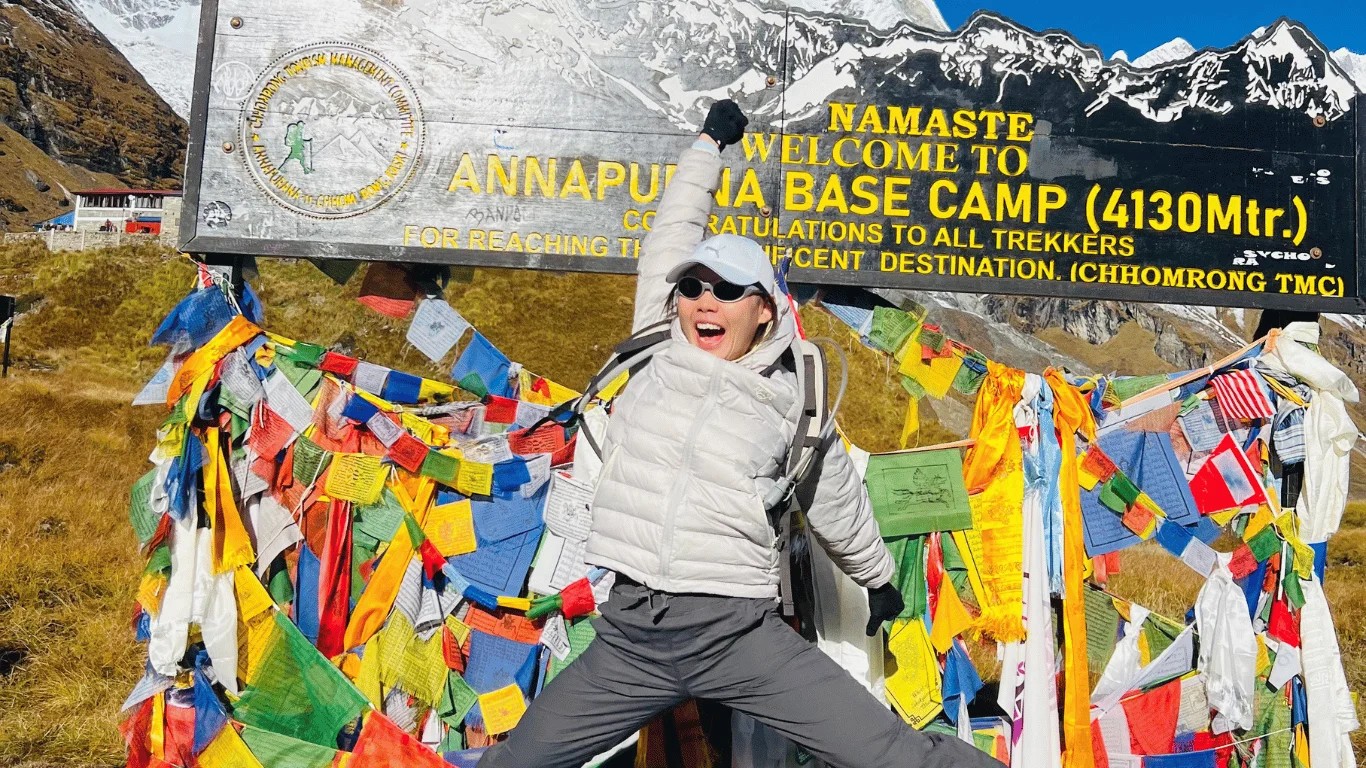
Solo trekkers and women walk the ABC trail every season, and the lodges are busy and friendly. The bigger risks for anyone walking alone are missing the safer path above Deurali after snow, getting sick with no one to notice, and arriving at a full lodge after dark. Walking with a guide, or at least with other trekkers, removes most of these risks. Women who prefer a woman guide can read our guide to finding a female trekking guide in Nepal.
In theory, yes. Since 1 April 2023, the Nepal Tourism Board has required foreign trekkers to hire a licensed guide in most trekking areas. In practice, the rule is not checked on the ABC trail, and in peak season Majestic Trails Nepal guides see many trekkers walking without one. You still need an ACAP permit; see our Annapurna Base Camp permit guide for current fees.
You can walk the ABC trek without a guide, but a guide makes it safer in three ways. A guide knows which path Deurali locals have opened after heavy snow, notices early signs of altitude sickness, and books your lodge ahead so you are never searching for a room in the dark.
If a trekker becomes seriously ill or injured, this is what happens on a Majestic Trails Nepal trek:
Most problems on the ABC trek come from a few avoidable mistakes:
The stone steps are what most trekkers underestimate. Two or three months before your trek, climb stairs or steep hills two or three times a week, with a light pack. Practise going down as well as up, because the descent from Chhomrong and Sinuwa is what hurts knees most. Use trekking poles on the trail, and take short steps downhill.
For the full gear list, see our packing list for trekking in Nepal. These items make the biggest difference to your safety on the ABC trek:
Majestic Trails Nepal runs every ABC trek with the same safety routine:
Trail status, 22 November 2026: Open. After the July 2026 monsoon floods, all damaged bridges, including the one at Ghurjung, have been repaired, and the trail is fully open. Majestic Trails Nepal will update this box every season.
The Annapurna Base Camp trek is not a dangerous trek. Its risks are real but predictable: avalanches above Deurali after heavy snow, swollen streams in peak monsoon, and long stone staircases that test your knees. Altitude sickness is far less common here than on the Everest Base Camp trek.
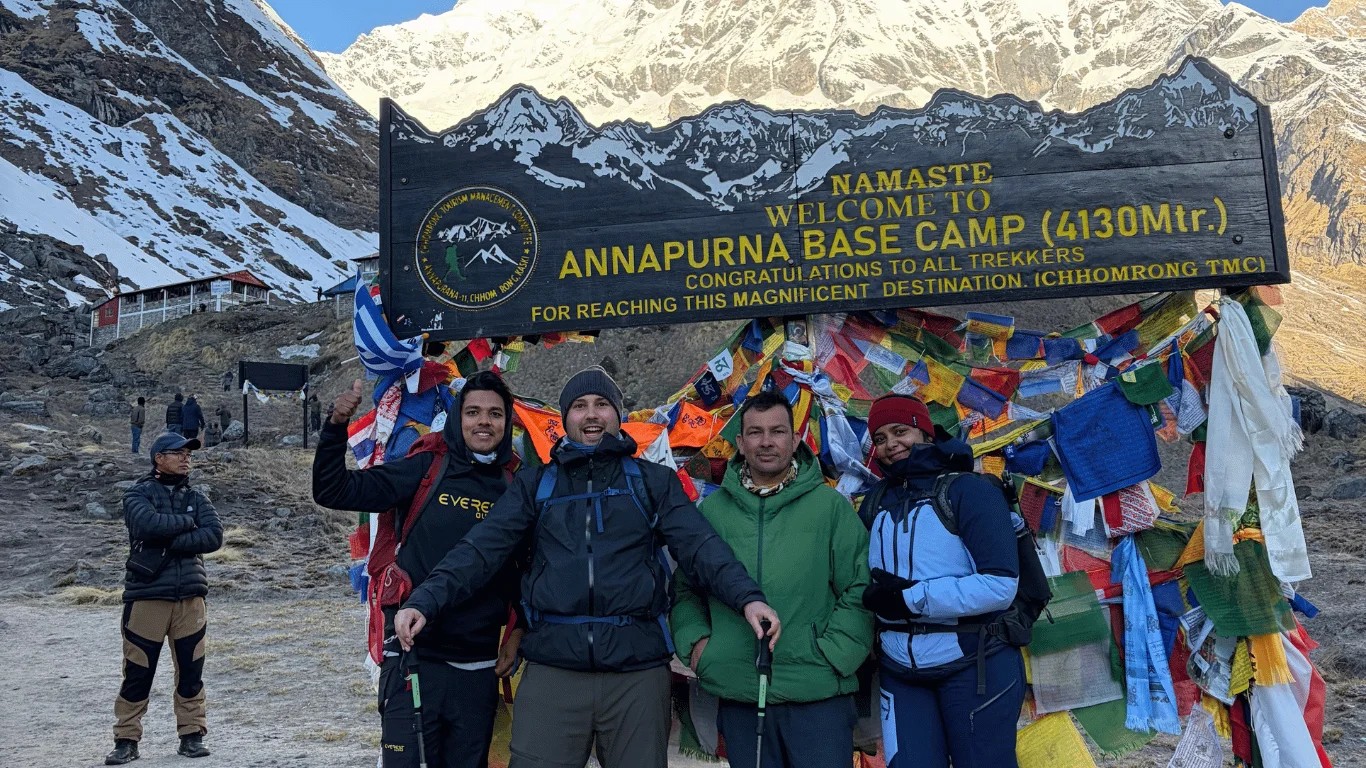
Pick spring or autumn, walk slowly, and trek with someone who knows the valley. Do that, and ABC is one of the safest and most rewarding treks in Nepal, ending in a ring of peaks over 7,000 m and 8,000 m.
Majestic Trails Nepal guides the Annapurna Base Camp Trek every spring and autumn with licensed Annapurna guides. If you are short on time, there is also the Annapurna Base Camp Express Trek, and before you go, read our 10 things to know before the Annapurna Base Camp trek. To plan your trek, message us on WhatsApp at +977 9700937981 or email info@majestictrailsnepal.com.
Yes. The ABC trek needs no climbing skills and tops out at 4,130 m (13,550 ft), so it is one of the best first treks in Nepal. Train on stairs before you go, because the stone steps are the hardest part.
The ABC trek is moderate. Most days have 5–7 hours of walking, with long stone staircases between Jhinu, Chhomrong, and Sinuwa. The altitude is easier than on the Everest Base Camp trek.
No. EBC is harder overall because it goes 1,234 m higher, to 5,364 m (17,598 ft), and altitude sickness is more common. ABC has more stone steps, so it is harder on the knees. See our Everest Base Camp trek difficulty guide to compare.
Yes, in spring and autumn. The Annapurna Circuit crosses Thorong La at 5,416 m (17,769 ft), so altitude sickness and snow on the pass are bigger risks there than on the ABC trek. Read our Thorong La Pass crossing guide and Annapurna Circuit difficulty guide.
Nepal does not publish an official death rate for the ABC trek. Deaths are rare, and the few on record are mostly linked to avalanches above Deurali after heavy snow, such as the January 2020 avalanche. Do not confuse the trek with climbing Annapurna I, the deadliest of the 8,000 m peaks; read why Annapurna I is called the killer mountain.
August is peak monsoon, with heavy rain, swollen streams, landslides, leeches, and clouds that hide the views. Majestic Trails Nepal does not take guests to ABC in July and August.
It can be, but winter brings freezing nights and a real avalanche risk between Deurali and MBC after heavy snow. Carry microspikes, check the path at Deurali, and walk with a guide.
There are thousands of stone steps, and there is no official count. The hardest sections are Jhinu to Chhomrong and Chhomrong to Sinuwa, and you climb them again on the way back.
The section between Deurali, at about 3,230 m (10,597 ft), and Machhapuchhre Base Camp, at about 3,700 m (12,139 ft), is the most dangerous part, because avalanches can come down on the trail after heavy snow. On clear days in spring and autumn, it is safe to walk.
Yes, in practice. A 2023 rule asks foreign trekkers to hire a licensed guide, but it is not checked on the ABC trail. Walking without a guide is riskiest after heavy snow, when trekkers can miss the safer path above Deurali.
Yes, for healthy older trekkers who walk slowly. The altitude is moderate, and going down in an emergency is quick. The stone steps are the main challenge, so knee strength and trekking poles matter more than age.
Tired legs and sore knees from the stone steps, followed by poor sleep at MBC and ABC and stomach upsets from untreated water. Serious problems are rare.
Only after heavy snow. In spring and autumn, good boots are enough, with microspikes for icy mornings. After heavy snow, crampons are essential above Hinku Cave, where the trail runs through the avalanche zone to MBC.

Written by
Content Writer
Rabina writes the trekking guides at Majestic Trails Nepal, based in Kathmandu. She has walked the Mardi Himal and Langtang Gosaikunda treks herself and has been writing about trekking in Nepal for more than two years. Each guide is researched with our licensed trekking guides, teahouse owners on the trail and trusted official sources online, such as the Nepal Tourism Board and Nepal’s national park offices.
The Annapurna Base Camp trek stands among the world's most iconic Himalayan adventures. Every year, thousands of trekkers from across the globe journe...
Trekking to Annapurna Base Camp Trek is one of Nepal’s most iconic mountain journeys. For mountaineers, the climb begins here, but for trekkers, Annap...
The morning mist lifted slowly from the Modi Khola valley as our trekking group paused near Deurali. Suddenly, movement caught my eye—a Himalayan tahr...
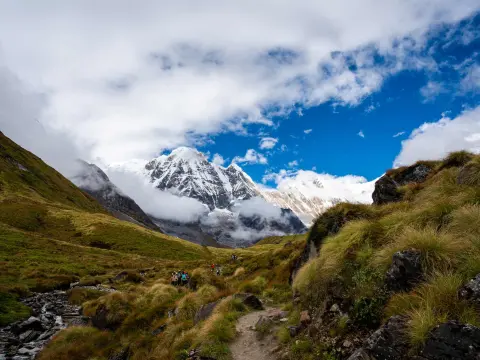
The Annapurna Base Camp trek is a moderate trek, suitable for fit beginners, with no technical climbing required. Its main challenge is not the altitu...
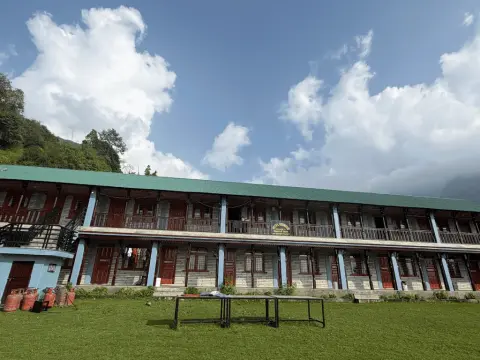
Every night on the Annapurna Base Camp trek is spent in a teahouse: a family-run lodge with simple twin rooms, blankets, and a heated dining hall. In...
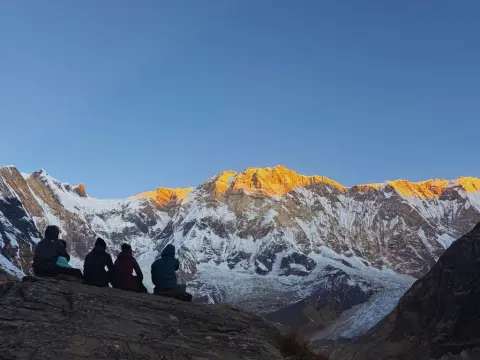
The Annapurna Sanctuary holds a secret that no photograph can truly capture and no words can fully describe. Yet every trekker who has stood at 4,130...
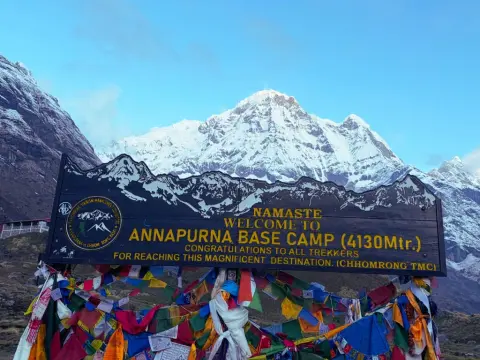
I remember the first time I stood at Annapurna Base Camp. I was 18 years old, still new to guiding, and I genuinely did not expect to cry. But when yo...
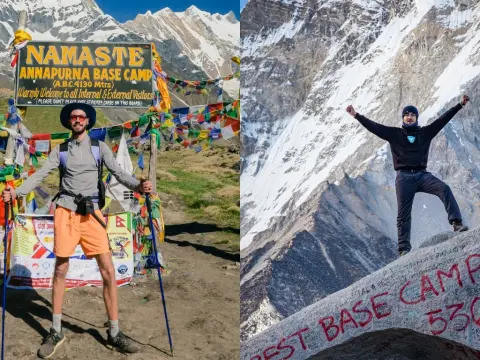
If you are deciding between Annapurna Base Camp Trek and Everest Base Camp Trek in 2026, here is the operator answer most websites will not give you:...
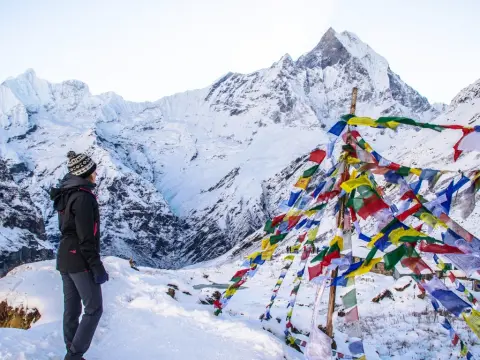
You need only one permit to trek to Annapurna Base Camp in 2026: the Annapurna Conservation Area Permit (ACAP), which costs NPR 3,000 for foreign nati...
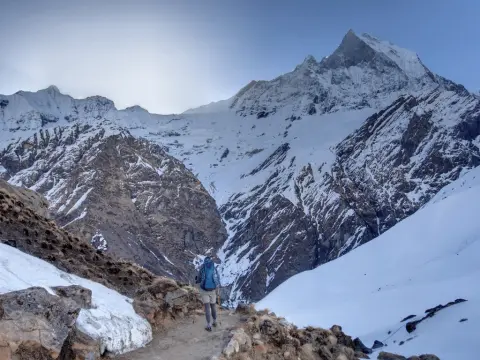
Altitude sickness on the Annapurna Base Camp trek is a health condition that affects trekkers when they ascend into the reduced oxygen of the Annapurn...
