Discover how we keep every trek safe, ethical, and unforgettable Read Our Safety Standards >>
Majestic Trails Nepal

Annapurna Base Camp Express Trek

(1 reviews)

The Annapurna Base Camp Express Trek is a fast and rewarding Himalayan adventure designed for trekkers who want to reach the heart of the Annapurna Sanctuary in a shorter time. This express route takes you from the lively city of Kathmandu to the stunning base camp of Annapurna I (8,091m), passing through lush forests, traditional villages, and dramatic mountain landscapes.

Trip Facts of Annapurna Base Camp Express Trek

Max. Elevation
4130 m / 13549 ft
Group size
Min 1+
Level
Moderate
Transportation
Tourist Bus/ Private 
Best Season
Mar - May, Sep - Nov
Starts at / Ends at
Kathmandu / Kathmandu
Accommodation
Included   ? 4 nights at a 3-star hotel in Kathmandu and Pokhara.
First few days: Private rooms with attached bathrooms.
After that: comfortable teahouses with shared bathrooms.
Meals
Included   ? 4 breakfasts in Kathmandu and Pokhara are included
During the trek, all meals are provided including breakfast, lunch, and dinner.
Each trekking day also includes three cups of hot drinks such as tea or coffee.

What Makes the Annapurna Base Camp Express Trek Special

  • You stand inside the mountains, not in front of them The Annapurna Sanctuary wraps around you on all sides — peaks above 7,000m in every direction. It's one of the few places on Earth where you genuinely feel enclosed by the Himalayas.
  • Annapurna Base Camp in 9 days — without rushing the experience Tight schedule, full experience. The jeep transfer to the trailhead cuts road-walking, not mountain time.
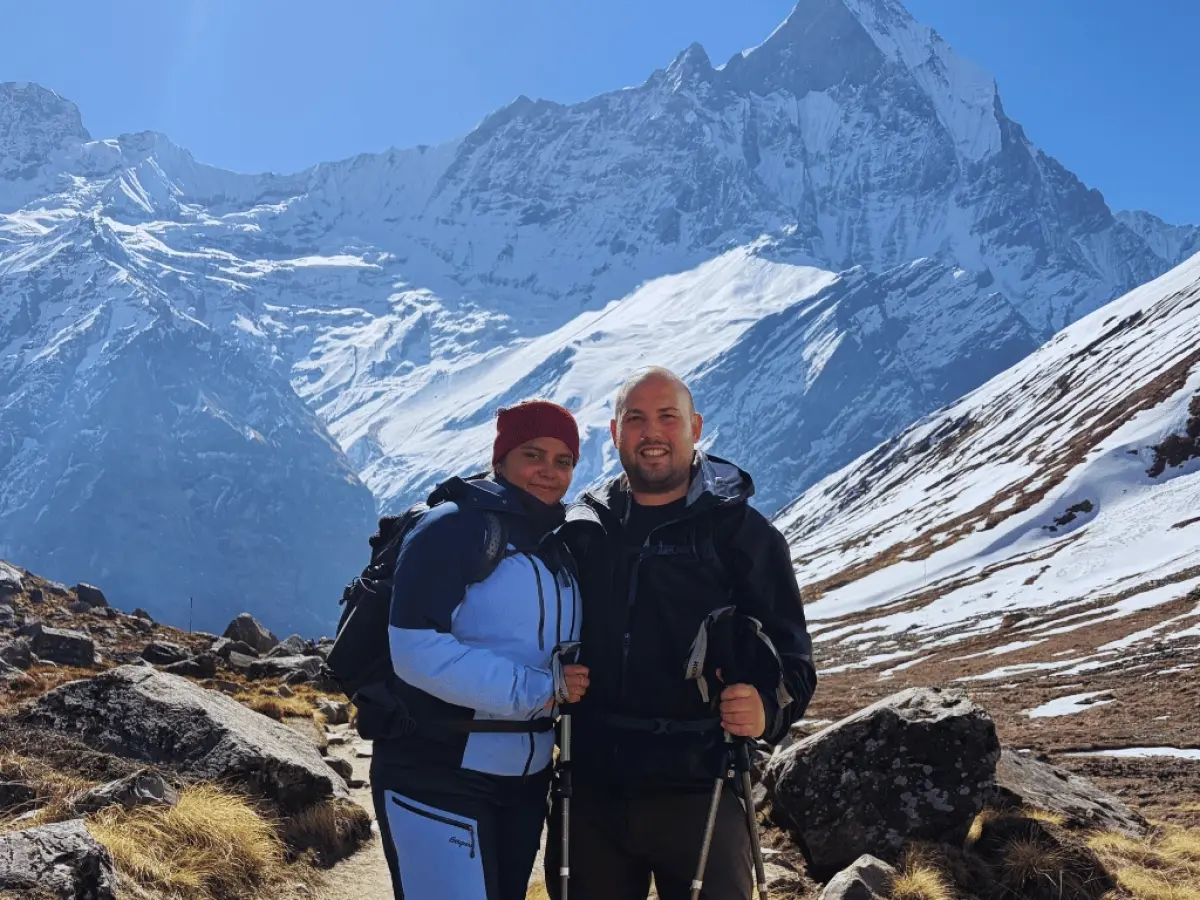
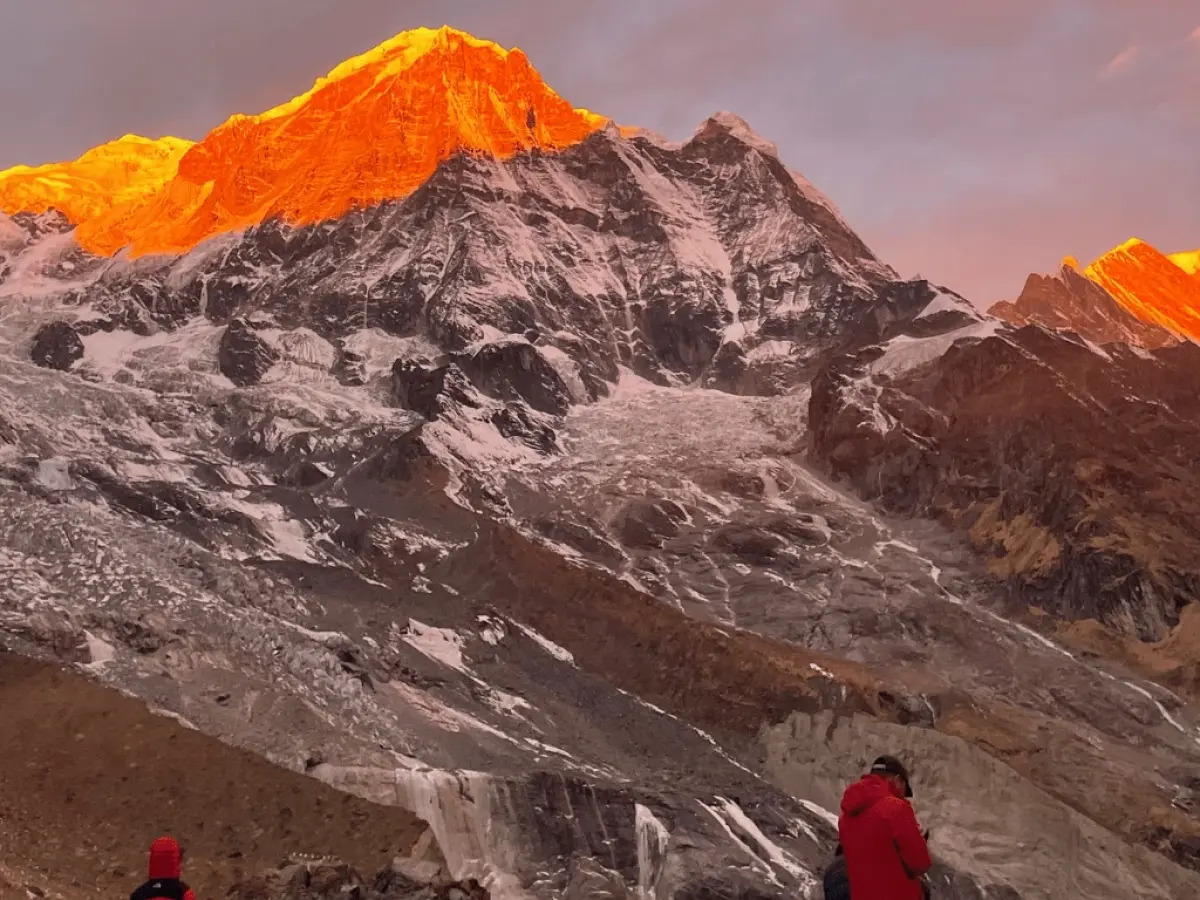
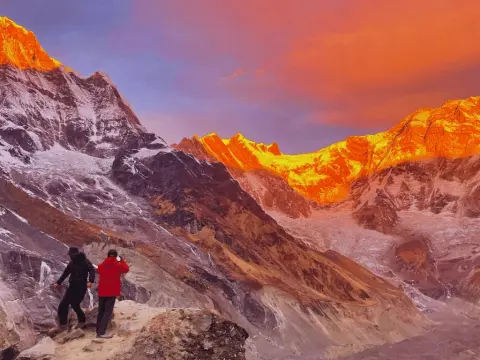
  • That sunrise will stay with you for years At 4,130m, watching the first light hit Annapurna I and Machhapuchhre in the early morning silence is something no photo does justice to. Most trekkers say it's the moment that makes everything worth it.
  • The trail changes every single day Subtropical forest, rhododendron groves, bamboo gorges, open alpine moraine. You won't feel like you're walking the same path twice.
  • Hot springs on the way in — and the way out Jhinu Danda's natural mineral pools are a genuinely wonderful surprise. After five days on the mountain, soaking here on the descent feels like the best decision you ever made.
  • Real Himalayan villages, not tourist stops Chhomrong, Sinuwa, and the Gurung settlements along the trail are lived-in, working communities. Stone houses, prayer flags, terraced fields, warm teahouse families.
  • Everything is taken care of Guide, porter, permits, transport, accommodation, all meals on the trail. You carry a daypack. We handle the rest.
  • You finish in Pokhara Two nights by Phewa Lake with Annapurna reflecting in the water. A perfect way to come back to earth after the mountains.

Overview Of Annapurna Base Camp Express Trek

Experience the heart of the Himalayas in just nine days. No shortcuts on experience — only on time.

There's a moment that stays with every trekker who reaches Annapurna Base Camp: the silence. You're standing at 4,130 metres, completely surrounded by a circle of peaks that climbers dream about for a lifetime — Annapurna I, Machapuchare, Hiunchuli, Gangapurna — and the world feels impossibly still. That moment is why people fly halfway across the planet to be here. And with the Annapurna Base Camp Express Trek, you can reach it in nine days without compromising the quality of the experience.

This itinerary has been carefully designed for trekkers who have limited time but unlimited drive. Whether you're a first-time Himalayan trekker or a seasoned traveller squeezing Nepal into a two-week window, this route delivers everything the classic ABC trek offers — the dramatic trail, the teahouse culture, the rhododendron forests, the glacial moraines — just with a tighter, more purposeful schedule.

At Majestic Trails Nepal, we've guided this route for years. We know every turn, every teahouse, and every weather window

Swipe horizontally to compare treks →
Trek Name Duration Difficulty Price Key Features
Annapurna Base Camp Trek 14 Days Moderate From USD 940 Scenic Annapurna views with lush rhododendron forests
Mardi Himal Trek 9 Days Moderate From USD 630 Secluded trail with close-up Mardi Himalayan views
Pikey Peak Trek 10 Days Moderate From USD 1,090 Quiet trails, cultural villages, panoramic Everest region views

Itinerary of Annapurna Base Camp Express Trek

Upon arrival at Tribhuvan International Airport (TIA) in Kathmandu, you will be greeted by a Majestic Trails Nepal representative, who will assist with your transfer to your hotel. After some rest, you will meet the owner and trekking guide for a briefing session, where you will receive important details about the trek, including safety protocols, route plans, and necessary gear. If you need to rent or purchase any trekking equipment, our team will assist you in finding the best stores in Thamel, Kathmandu’s popular tourist hub.

In the evening, you can explore Kathmandu, visit cultural sites like Swayambhunath (Monkey Temple) or Pashupatinath Temple, or simply relax at your hotel.

Today, after a hearty breakfast, you'll leave Kathmandu behind and begin your scenic journey to Pokhara, a popular destination known for its natural beauty and tranquil lakes. The journey by bus will take approximately 7-8 hours, with the route winding through hilly landscapes, rivers, and small villages. The road conditions are not the best, so you should expect a long, bumpy ride. Despite the rough ride, the views along the way are stunning, offering glimpses of terraced fields, rivers, and lush forests. If you'd prefer a more comfortable and quicker journey, you can opt to fly to Pokhara, which takes just 30 minutes but incurs an additional cost of around $90. Once in Pokhara, check into your hotel, and if you have time, enjoy the peaceful surroundings of Phewa Lake, where you can take a boat ride or relax by the lakeside cafes.

This morning, after breakfast, we’ll embark on an exciting jeep ride from Pokhara to Jhinu Dada. The jeep ride takes around 2-3 hours, driving through picturesque rural landscapes, passing small villages, terraced fields, and dense forests. From Jhinu Dada, the real trekking begins as we set off on foot towards Sinuwa. The trek from Jhinu Dada to Sinuwa is moderate, taking approximately 2-3 hours to complete. As you ascend, the trail leads you through rhododendron forests and charming settlements. Sinuwa offers stunning views of the surrounding mountains and is a peaceful spot to spend the night, giving you a taste of the serene beauty of the Annapurna region.

Today, you will begin your trek from Sinuwa to Deurali, an ascent that will take you through thick bamboo and oak forests. The path is steeper today, but the journey is incredibly rewarding as you pass through lush landscapes and gain altitude. Along the way, you will be treated to more panoramic views of the Annapurna massif and the surrounding peaks. As you approach Deurali, the trail begins to open up, offering dramatic views of the snow-capped mountains ahead. Deurali is located at an altitude of 3,230 meters, and the cool mountain air here feels refreshing after a day of hiking. You will spend the night at a lodge in Deurali, enjoying the beauty of the mountains surrounding you.

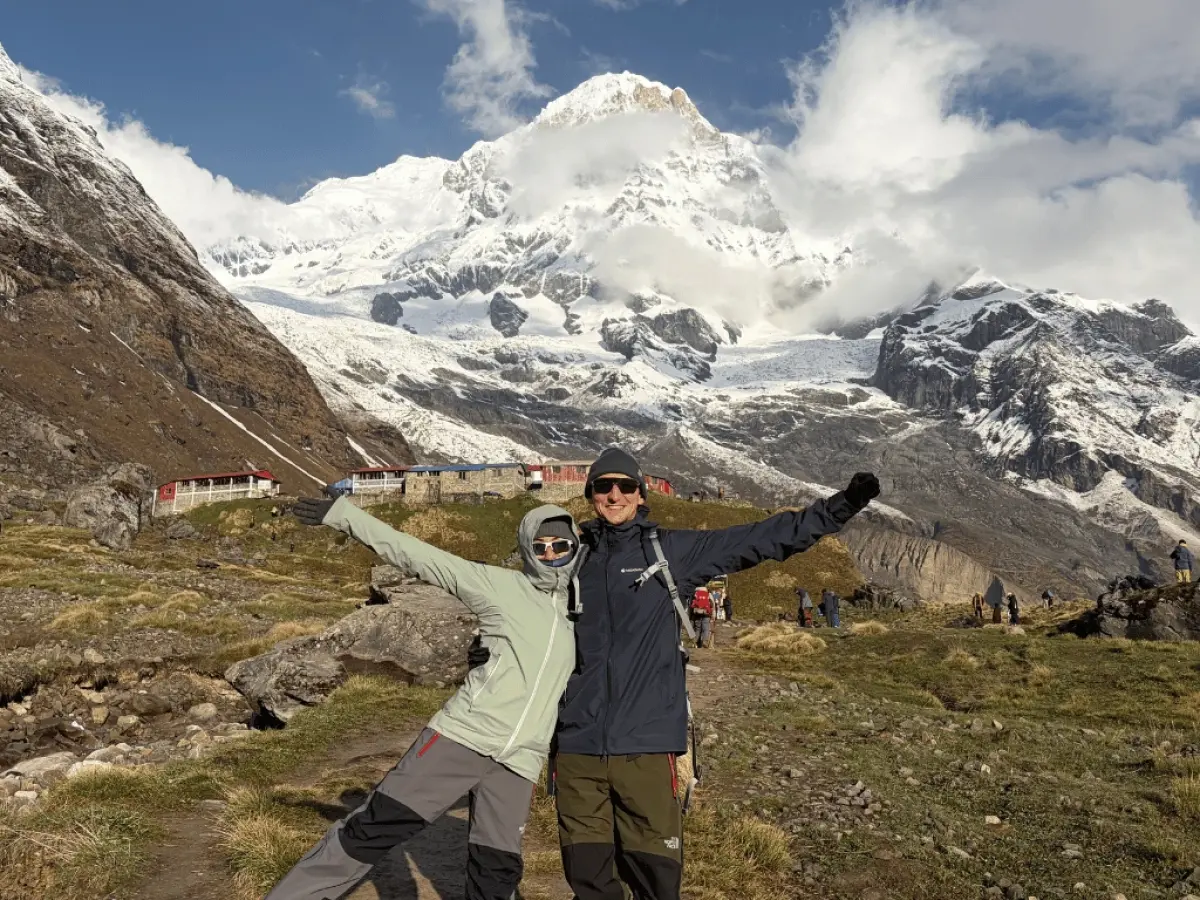
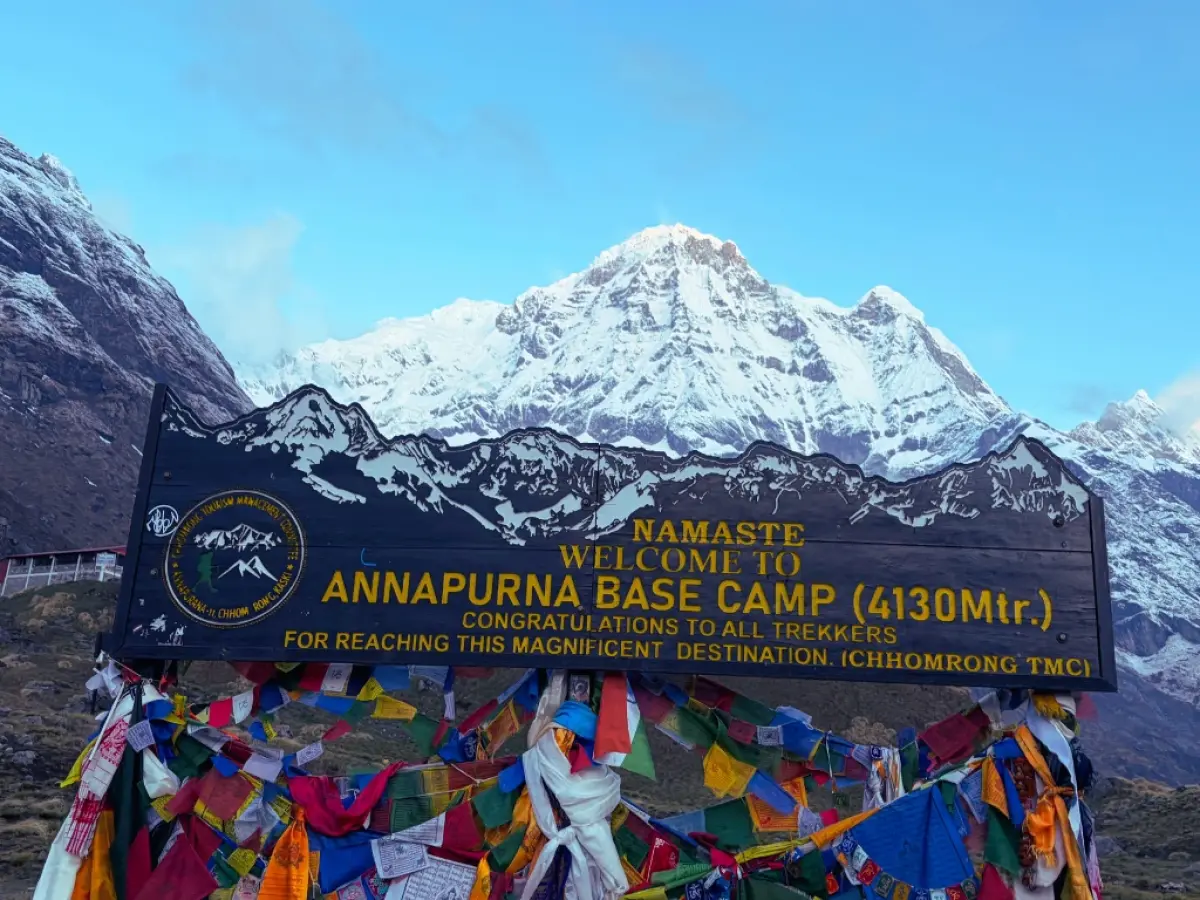
This is the most exciting day of your trek, as you make your way to Annapurna Base Camp (ABC), the pinnacle of your journey. The trek from Deurali to ABC is long and challenging, but every step brings you closer to the heart of the Himalayas. The landscape changes as you ascend, with more alpine meadows, rocky terrain, and dramatic views of the towering peaks of Annapurna South, Hiunchuli, Machapuchare (Fishtail), and the mighty Annapurna I. The path is dotted with small tea houses where you can take breaks and enjoy the stunning vistas. Once you reach Annapurna Base Camp, at an altitude of 4,130 meters, take in the awe-inspiring panoramic views of the entire Annapurna Range. The 360-degree view of the snow-capped peaks is absolutely breathtaking and makes the challenging trek worthwhile. After enjoying the views, you will rest at the Base Camp and reflect on your remarkable journey.

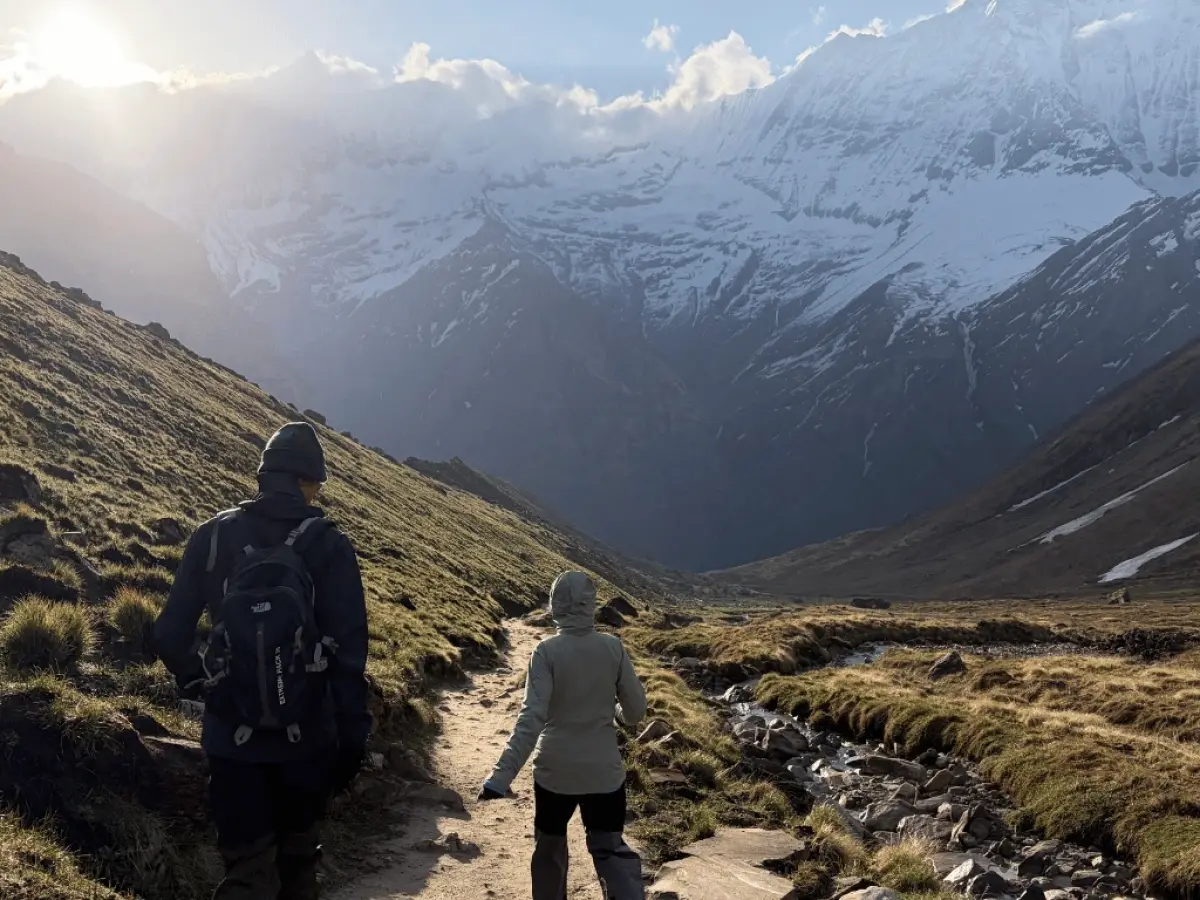
On this day, you’ll rise early to catch the incredible sunrise over the Annapurna Range. The first rays of sunlight hit the towering peaks, casting a warm golden glow on the snow-covered mountains—a truly magical experience. After taking in the sunrise, you will begin your descent back to either Bamboo or Sinuwa, depending on your pace. The downhill trek is easier on the legs, but still requires careful attention to the trail. You’ll pass through dense forests and small villages, reliving the beauty of the landscapes in reverse. By the time you reach your overnight stop, either at Bamboo or Sinuwa, you will have completed a significant part of the return journey, and you can rest and recuperate after the long day.

Today, you’ll trek from Sinuwa back down to the Jhinu Dada jeep station. The journey back is mostly downhill, passing through lush forests and vibrant villages. Once you reach the jeep station, a private jeep will be waiting to take you back to Pokhara. The jeep ride back is a bit bumpy, but it’s much quicker than walking, and it will take around 3-4 hours to reach Pokhara. Once in Pokhara, you can take a moment to relax and enjoy the stunning lake views, maybe even explore some of the local markets or cafes. Reflect on the incredible journey you’ve just experienced in the Annapurna region.

On the final day of your trek, you’ll head back to Kathmandu. The journey can be done either by bus or by flight. If you opt for the bus, the trip will take around 7-8 hours, with rough road conditions along the way. Alternatively, you can take a 30-minute flight to Kathmandu, which adds an extra cost of $90 but saves time. Upon arrival in Kathmandu, you’ll be transferred to your hotel. Depending on your schedule, you can spend the rest of the day relaxing or exploring more of Kathmandu’s vibrant streets, temples, and markets.

Today marks the end of your unforgettable Annapurna Base Camp trek. Depending on your flight time, you will be transferred to the airport for your departure. If you have more time and wish to extend your stay in Kathmandu, we offer various city tours to explore the rich cultural heritage of Nepal’s capital. From ancient temples to vibrant markets, Kathmandu offers endless opportunities for exploration. Let us know if you’d like to add any additional tours before you depart.

Not satisfied with this itinerary? Make your own.
Contact Us

What’s Included in Your Trek Package

Accommodation

  • 2 nights in a comfortable 3-star hotel in Kathmandu on a twin-sharing basis with breakfast included
  • 2 nights in a comfortable 3-star hotel in Pokhara on a twin-sharing basis with breakfast included
  • Teahouse accommodation throughout the trek on a twin-sharing basis
  • Clean and basic rooms during the trekking route (Sinuwa, Deurali, ABC, Bamboo/Sinuwa)

Meals

  • Full board meals during the trek (Breakfast, Lunch, and Dinner)
  • Fresh seasonal fruits after dinner during the trekking period

Transportation

  • Tourist bus from Kathmandu to Pokhara
  • Private jeep transfer from Pokhara to Jhinu Danda
  • Private jeep transfer from Jhinu Danda to Pokhara after trek
  • Tourist bus or flight from Pokhara to Kathmandu (as per package selection)
  • Airport pick-up and drop-off in Kathmandu

Trekking Staff and Support

  • Experienced, licensed English-speaking trekking guide
  • Strong and reliable porter service (1 porter for every 2 trekkers)
  • Guide and porter salary, insurance, meals, accommodation, and transportation
  • First aid kit carried by the guide

Permits and Fees

  • Annapurna Conservation Area Permit (ACAP)
  • All government taxes and official service charges

Additional Services

  • Trekking route map
  • Down jacket and sleeping bag (if required)
  • Assistance with all trekking logistics and arrangements

What’s Not Included in Your Package

International Travel

  • International flights to and from Nepal
  • Nepal entry visa fee

Personal Expenses

  • Travel insurance (must cover high-altitude trekking and emergency evacuation)
  • Personal trekking equipment and clothing
  • WiFi, hot showers, charging electronic devices, and personal snacks
  • Laundry, phone calls, and other personal expenses

Food and Drinks (Outside Trek)

  • Lunch and dinner in Kathmandu and Pokhara
  • Alcoholic beverages, soft drinks, bottled water, tea, and coffee outside included meals

Additional Costs

  • Tips for guide and porter (recommended but not mandatory)
  • Extra accommodation or transport due to weather delays, illness, or itinerary changes
  • Any emergency evacuation or rescue costs
  • Any services not mentioned in the “Cost Includes” section

Annapurna Base Camp Express Trek– Trip Information & Details

Let's be straightforward with you: the Annapurna Base Camp Express Trek is moderately challenging. It is absolutely achievable for fit beginners, but it does demand genuine physical preparation and a realistic understanding of what lies ahead.

Over nine days, you'll cover approximately 65 to 70 kilometres of mountain trail, gaining and losing significant altitude on most days. Daily walking hours range from five to seven hours, with Day 5 — the push to ABC — being the longest and most demanding stretch. You will climb stone-paved staircases that seem to go on forever, cross narrow suspension bridges over turquoise glacial rivers, and navigate trails that cut steeply through dense forest before opening into the high alpine terrain of the Annapurna Sanctuary.

The highest point of the trek is Annapurna Base Camp itself at 4,130 metres. For context, this is higher than any peak in the Alps or the Rockies. At that altitude, the air contains roughly 40% less oxygen than at sea level. You may feel breathless on flat ground. Appetite often diminishes. Sleep can be restless. None of this is unusual — it's the body adjusting. What matters is that you ascend gradually and listen to your body.

Who is this trek suitable for? Honestly, anyone who walks regularly and has spent some time building cardiovascular fitness in the months before the trek. You don't need to be a marathon runner. You don't need previous Himalayan experience. What you need is consistency — regular hiking, cycling, swimming, or gym sessions in the six to eight weeks before your trek will make a meaningful difference to your enjoyment on the trail.

Our guides carry a pulse oximeter on every trek. We monitor your oxygen saturation daily, particularly as you gain altitude. Safety is never compromised for the sake of reaching a summit — not on any trek we run. Read our Detailed blogs on Annapurna Base Camp Trek Difficulty.

One of the most frequently asked questions we receive is: what are we actually sleeping and eating out there?

The short answer is: better than you might expect, and with far more variety than most first-timers anticipate.

In Kathmandu and Pokhara, you'll stay in comfortable 3-star hotels — clean, well-maintained properties with private en-suite rooms, hot showers, Wi-Fi, and either a buffet or à la carte breakfast included. These are the nights to sleep well, so we've chosen accommodation with that in mind.

On the trail, the Annapurna Sanctuary route is served by a well-established network of teahouses — family-run mountain lodges that provide dormitory or private room accommodation and hot meals. The quality of teahouses varies as you gain altitude: lower on the trail in villages like Chhomrong and Sinuwa, teahouses are spacious, well-maintained, and some even have attached bathrooms. Higher up, in Deurali and at ABC itself, accommodation is more basic — twin-bed rooms with thin walls and shared toilet facilities — but blankets and pillows are always provided.

Most rooms at higher altitude teahouses are not heated, and temperatures inside can be very cold at night. A good sleeping bag liner is strongly recommended, and we advise bringing earplugs if you're a light sleeper — mountain teahouses are communal by nature.

Meals are the heart of teahouse life. Our package includes breakfast, lunch, and dinner throughout the trekking days. The teahouse menus are surprisingly extensive: Nepali dal bhat (lentil soup, rice, vegetables, pickle — the trekker's ultimate fuel), pasta, noodle soup, fried rice, pancakes, apple pie, Snickers porridge, and a range of hot drinks including black tea, milk tea, lemon honey ginger tea, and instant coffee. Dal bhat, famously, comes with unlimited refills and is widely considered the best high-energy trekking meal in the Himalayas — our guides eat it at least once a day, and most trekkers come around to it quickly.

Vegetarian and non-vegetarian options are available in the lower sections of the route. However, please note that meat is officially discouraged and generally not available after Dovan, so only vegetarian meals are typically served beyond this point. If you have specific dietary requirements — such as vegan, gluten-free, or any food allergies — please inform us before departure so we can coordinate with teahouses in advance. The trail is well-used by international trekkers, and most teahouses are familiar with accommodating different dietary needs.

Hygiene is a fair concern at altitude. Teahouses on the Annapurna trail are generally clean, and clean drinking water is available in the form of boiled or filtered water purchased from teahouses (we recommend water purification tablets as a backup). Hand washing before meals and use of hand sanitiser is a habit worth maintaining throughout the trek. Read our Detailed blogs on Accommodation during the Annapurna Base Camp Trek.

Timing your trek wisely is one of the most important decisions you'll make, and it's one where our experience can genuinely help.

The best seasons for the Annapurna Base Camp Express Trek are spring (March to May) and autumn (September to November). Both offer dramatically different but equally compelling trekking experiences.

Spring is the preferred season for most trekkers. Temperatures on the trail range from around 10–15°C during the day at lower elevations to -5°C to -10°C at night near ABC. The rhododendron forests are in full bloom from late March through April, the trail is vibrant with colour and birdsong, and the days are long enough for comfortable trekking hours. Visibility varies — morning skies are often crystal clear before cloud builds in the afternoon, which is standard behaviour for Himalayan weather — but there are frequent windows of exceptional clarity, particularly in March and early April before the pre-monsoon moisture arrives.

Autumn (October and November in particular) is statistically the clearest season in Nepal. After the monsoon washes the air clean, the skies over the Annapurna range can be strikingly sharp and blue, with visibility extending to peaks hundreds of kilometres distant. Temperatures are cooler than spring — overnight lows at ABC can reach -15°C in November — so warm sleeping gear is essential, but the crisp air and the golden light of post-monsoon Nepal are genuinely spectacular.

Avoid the monsoon (June to August) if possible. Rainfall is heavy and relentless, trails become slippery and prone to landslides, leeches emerge in the lower forests, and views of the mountains are almost entirely obscured by cloud. Some experienced trekkers enjoy the dramatic green of monsoon Nepal, but it requires a tolerance for wet conditions and restricted visibility that most first-timers don't have.

Winter trekking (December to February) is possible at lower elevations but the trail above Deurali and into the Sanctuary is frequently snow-covered and can be impassable without crampons and significant cold-weather experience. We do not operate the Express Trek in January and February.

The Sunrise at ABC: Across both seasons, the ABC sunrise is at its most powerful in the weeks around the equinoxes. In October and November, the early morning alpenglow on Annapurna I and Machhapuchhre lasts longer due to the lower sun angle, painting the peaks in shades of rose and amber for sometimes ten to fifteen minutes before full daylight arrives. In spring, the sunrise comes earlier and often with more dramatic cloud formations building below the summits. Either way — either season — that sunrise changes people.

Planning your dates? Contact us and we'll give you honest advice based on real-time conditions and long-range weather outlooks. Read the Complete Blogs on Best Time to trek to Annapurna base camp.

Annapurna Base Camp does not wait. The mountains have their own schedule — season changes, snow accumulation, trail conditions — and the window for a perfect nine-day express trek opens and closes with predictable precision each year.

At Majestic Trails Nepal, we run a limited number of departures each season to ensure every group receives the attention, guiding quality, and logistical support they deserve. We are not a mass-market trekking operation. We are a team of passionate, experienced mountain professionals who care deeply about the experience we deliver.

If you've read this far, the mountains are already calling. Contact us today to check availability for your preferred dates, ask any remaining questions, and take the first step towards one of the most remarkable nine days of your life.
📧 Email us at: info@majestictrailsnepal.com
🌐 Or fill out our enquiry form and we'll be in touch within 3-4 hours.
The summit is closer than you think. Let's get you there.

Why Book Annapurna Base Camp Express Trek with Majestic Trails Nepal – Personalized and Authentic Trekking Experiences?
  • Founded by experienced Guide with over 10 years of guiding expertise on Trekking in Nepal
  • Hundreds of genuine five-star reviews across TripAdvisor, Google, and social media.
  • Honest pricing with no hidden costs, ensuring reliability and value.
  • Fully personalized itineraries accommodating extra days, private guides, or unique trekking experiences.
  • Supporting sustainable tourism and local communities.
  • Professional English-speaking guides supported by local Sherpa porters for safety at high altitudes.
  • Comprehensive emergency care including first aid kits, essential trekking gear, oximeters, and reliable helicopter rescue arrangements.
  • Strong connections with local vendors and trusted partners, ensuring smooth flights, helicopter services, and full support during emergencies.
Full Package
US$ 810 /person
8 Nights 9 Days
  • 1 - 1 Person US$ 860
  • 2 - 3 Person US$ 810
  • 4 - 8 Person US$ 750
  • 8 - 15 Person US$ 680
Share
Print

Reviews of Annapurna Base Camp Express Trek by Past Trekkers

My Epic 9-Day Annapurna Base Camp Trek with Majestic Trails Nepal

I just finished the 9-day Annapurna Base Camp trek with Majestic Trails Nepal, and honestly, it was one of the best experiences of my life. From the moment I landed in Kathmandu till the final step back down, everything felt smooth and well taken care of. The trek itself? Absolutely stunning. The views blew my mind every single day — snow-capped peaks, lush forests, and cozy mountain villages. It wasn’t too crazy hard, but enough challenge to feel like a real adventure. What really stood out was the team — our guide was super knowledgeable and chill, always looking out for us and making sure we stayed safe and comfortable. The tea houses we stayed at were simple but clean and warm, perfect after a long day hiking. I wasn’t sure what to expect when I signed up, but Majestic Trails Nepal made it easy — from sorting permits to arranging transport, everything was handled without stress. They also gave great tips on what to pack and how to prepare. If you’re thinking about trekking in Nepal but don’t want to deal with hassle or worry about safety, I’d totally recommend booking with these guys. The Annapurna Base Camp trek in 9 days is doable and unforgettable!

A
Alex Johnson
United States
See more reviews

Packing List for Annapurna Base Camp Express Trek

  • Trekking backpack (25–35L daypack)
  • Duffel bag for porter transport (Provided by Majestic Trails Nepal)
  • Trekking poles
  • Rain cover for backpack
  • Waterproof dry bags
  • Reusable water bottles (2–3 liters total capacity)
  • Thermos flask for hot drinks
  • Sunglasses with UV protection
  • Moisture-wicking base layers (thermal tops and bottoms)
  • Fleece jacket or mid-layer
  • Warm down jacket (essential for higher altitude)
  • Waterproof and windproof jacket
  • Trekking pants (quick-dry)
  • Thermal innerwear for cold nights
  • Extra underwear and quick-dry t-shirts
  • Warm socks + liner socks
  • Warm woolen hat / beanie
  • Sun cap or hat
  • UV-protection sunglasses
  • Lightweight gloves
  • Insulated warm gloves for higher altitude
  • Broken-in trekking boots (waterproof recommended)
  • Lightweight sandals or slippers for teahouses
  • Wool trekking socks
  • Spare dry socks
  • High-quality sleeping bag (recommended)
  • Sleeping bag liner (optional but useful)
  • (Sleeping bags available from Majestic Trails Nepal if needed)
  • Toothbrush and toothpaste
  • Biodegradable soap and shampoo
  • Quick-dry towel
  • Wet wipes and tissues
  • Hand sanitizer
  • Sunscreen (high SPF)
  • Lip balm (UV protection)
  • Personal medication
  • First aid kit carried by guide
  • Sleeping bag and down jacket (on request)
  • Power bank (very important)
  • Universal travel adapter
  • Headlamp with extra batteries
  • Mobile phone and charger
  • Camera with spare batteries (recommended)
  • Energy bars and snacks
  • Electrolyte powder / hydration salts
  • Dry bags for electronics
  • Lightweight down vest
  • Journal or notebook
  • Extra cash for charging, WiFi, and hot showers

Frequently Asked Questions About Annapurna Base Camp Express Trek

Fitness and Difficulty

Both are rated moderate, but the Express format demands more per day — same trail, fewer days. Day 5 (Deurali to ABC) is the hardest, with a 930m elevation gain in a single push. No technical terrain, no ropes. If you're reasonably fit and have trained for six to eight weeks, you'll complete it.

Yes, if you've prepared. First-timers complete this route regularly. What matters is consistent cardio training for at least six weeks beforehand, realistic expectations about altitude above 3,000m, and a steady pace. If you can hike five to six hours comfortably at home, you're ready.

Expect four to six hours daily. Day 5 is the hardest — six to seven hours from Deurali to ABC, gaining 930 vertical metres at altitude. Day 3 and Day 4 are also demanding, with steep forest climbs. Descent days are easier on effort but hard on knees — trekking poles are strongly recommended.

Itinerary and Route Details

The classic ABC route starts from Birethati, adding one to two lower-altitude walking days through Ghandruk. On a nine-day schedule, that time is better spent on the Sanctuary trail. The jeep gets you to Jhinu Danda (1,780m) in two hours from Pokhara. You still trek through Chhomrong, the full forest corridor, and the entire Annapurna Sanctuary — nothing of the mountain experience is lost.

MBC is included — it's not skipped. On Day 5, you pass through MBC (3,700m) roughly two to three hours before ABC. It's a natural rest and altitude checkpoint with extraordinary views of Machhapuchhre (Fishtail). Trekkers stop here to eat, rest, and acclimatize before the final 400m push to ABC.

Yes. The nine-day schedule is a framework, not a fixed contract. If your guide recommends an extra night for acclimatization or your pace needs adjustment, we build it in. We ask that you keep buffer time in your international flight schedule — avoid flying out of Kathmandu the morning after Day 9.

The Sanctuary is a high-altitude glacial basin completely enclosed by peaks above 6,000m — Annapurna I (8,091m), Machhapuchhre, Gangapurna, and Hiunchuli. The only way in is through the narrow Modi Khola gorge you ascend on Days 3–5. ABC sits inside this basin, giving you a rare 360-degree mountain panorama found nowhere else on an accessible trekking route in Nepal.

Accommodation and Meals

In Kathmandu and Pokhara, you stay in 3-star hotels with private rooms and hot showers. Lower on the trail (Sinuwa), teahouses are comfortable and spacious. At Deurali (3,200m) and ABC (4,130m), expect basic twin-bed rooms with shared bathrooms, thin walls, and no room heating. Blankets are provided, but bring a sleeping bag liner — nights at ABC can drop to -10°C or below.

Yes — the trail is naturally vegetarian-friendly. An important note: meat is generally unavailable beyond Dovan (2,600m) for practical and traditional reasons. All teahouses from Deurali upwards serve vegetarian menus: dal bhat, fried rice, noodle soup, eggs, pasta, and Tibetan bread. Vegan and gluten-free trekkers can be accommodated with advance notice — inform us before your trek and we'll brief teahouses on the route.

Never drink tap or stream water untreated. Buy boiled or purified water from teahouses (NPR 50–150 per litre) or carry purification tablets, a SteriPen, or a filter bottle. Avoid single-use plastic. Above 3,000m, aim for three to four litres per day — staying hydrated is one of the most effective ways to prevent altitude sickness.

Why Majestic Trails Nepal

You meet our company owner on Day 1 — not a sales agent. Your guide stays with you from the pre-trek briefing through to your final departure, with no handoffs. We keep group sizes small, use only government-licensed guides trained in altitude medicine, and are transparent about every cost before you book. For us, your experience and safety are personal — not a transaction.

Every guide carries a pulse oximeter, a comprehensive first aid kit, and altitude illness protocols. We have working relationships with helicopter evacuation services out of Pokhara, and we maintain daily contact with our Kathmandu office via mobile networks on the trail. All trekkers must carry travel insurance that covers helicopter evacuation to at least 5,000m — this is mandatory, not optional.

Fairly and ethically. Our porters are paid above the industry minimum, provided with cold-weather gear appropriate to their altitude, insured against accident and illness, and never asked to carry more than 20–25kg. Same quality of accommodation and meals as the trekkers they support. This is a standard we hold without exception.

Yes. The nine-day format is a starting point. Extra nights, add-on city tours, private departures, and pace adjustments are all available. Small group departures follow a shared schedule; private bookings have full flexibility. Contact us before booking and we'll build the right itinerary for your timeline.

Weather and Best Time

Spring (March–May) brings warmer days, rhododendron forests in full bloom, and longer daylight hours. Mornings are usually clear; afternoon cloud is normal. Autumn (October–November) delivers the clearest skies of the year — exceptional visibility, sharper mountain light, and cooler temperatures. Both are excellent. Choose spring for forest colour and warmth; choose October–November for photography and maximum panoramic clarity.

Temperatures vary dramatically by altitude. Sinuwa evenings: 8–12°C. Deurali nights: near or below freezing. ABC overnight in October: -8°C to -15°C; in March: -5°C to -10°C. Layer up — moisture-wicking base, fleece mid-layer, windproof shell, and a down jacket for evenings and high altitude. A warm beanie, gloves, and waterproof boots are essential, not optional.

December is possible for lower sections but risky above Deurali — snow in the Sanctuary can make the MBC-to-ABC trail impassable without crampons. We don't operate the Express Trek in January or February due to consistent Sanctuary closure risk. If you're considering December, plan with genuine flexibility and be prepared to turn around at Deurali if conditions aren't safe.

Technically yes, practically no for most trekkers. Expect heavy rainfall, landslide-prone sections, leeches on the lower trail, and mountain views almost entirely obscured by cloud for weeks at a time. We advise planning around October–November or March–May. If your dates fall in monsoon season, we have alternative Nepal itineraries that work better in those conditions.

Cost and Payment

One permit is required—included in your package at no extra charge. The Annapurna Conservation Area Permit (ACAP) costs NPR 3,000 per foreign national. Our team handles all paperwork in Kathmandu before the trek begins. The guide will carry Permits throughout — checkpoints on the trail verify them.

A deposit is required at booking to confirm your dates, guide, and accommodation. The balance is paid on arrival in Kathmandu — by cash (USD, EUR, or GBP) or credit/debit card. All costs are agreed in writing before any payment is made. Free date changes up to 30 days before departure. No hidden fees, no surprises on the trail.

Add-on Trips

Similar Trips

Trending
Annapurna Base Camp Trek
14 Days
14 Reviews
US$ 940

Join our Newsletter

Sign up to stay updated with latest offers, recent events and more news.
Art representing various natural and cultutal heritages of Nepal
Home Whatsapp Book Now
We use cookies to enhance your experience on our website. By continuing to browse, you agree to our use of cookies.