
Killer Mountain of Nepal – Why Annapurna I Earned This Name
16 Feb 2026
The term "killer mountain" carries a somber weight in mountaineering circles. It refers to peaks with exceptionally high fatality rates relative to su...

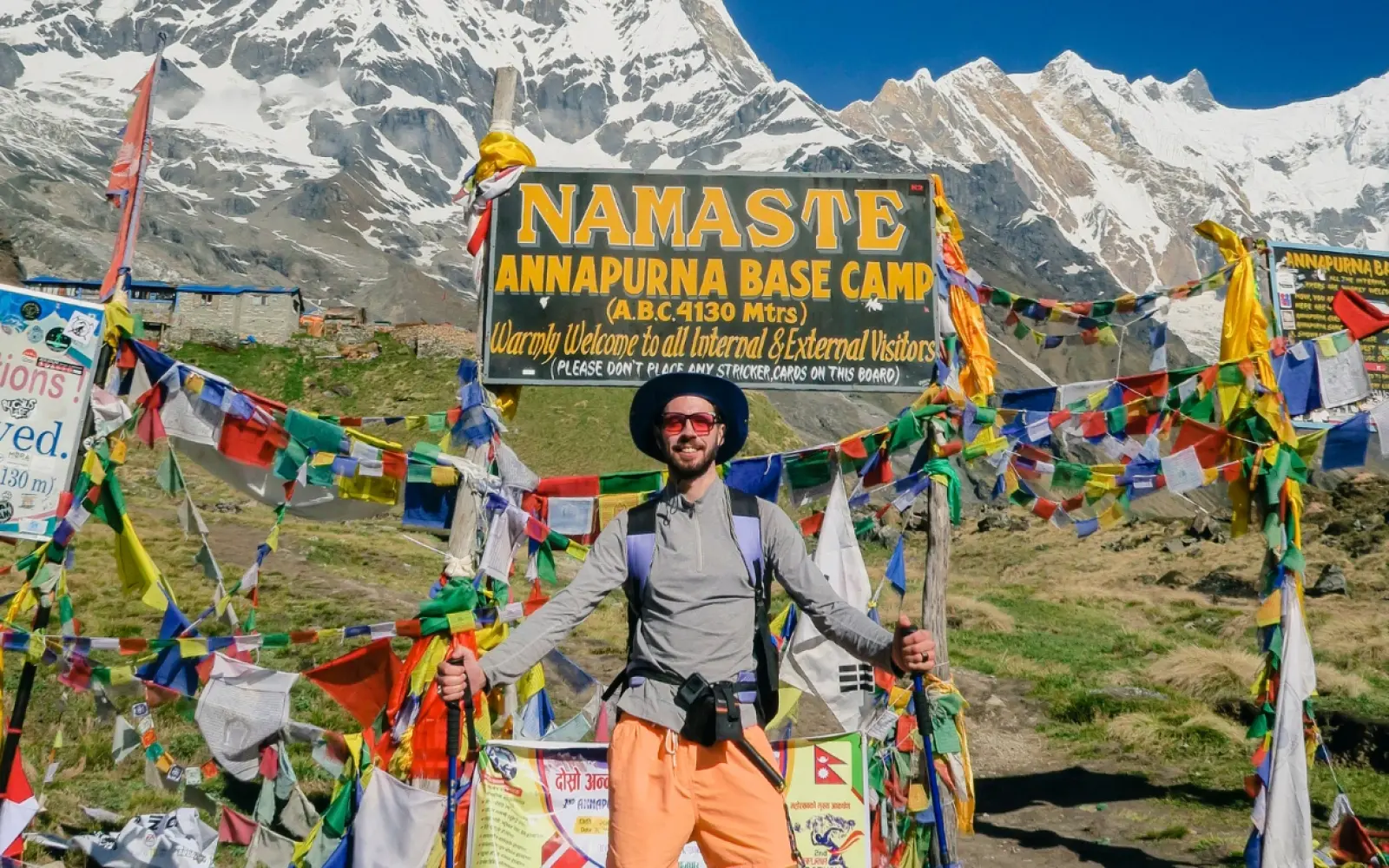

The height of Annapurna Base Camp (South) is 4,130 meters (13,550 feet) above sea level, making it one of the most Popular trekking destinations in Nepal. The height of Annapurna base camp north is 4,190 m (13,747 feet) above seas level. The North base camp getting popular now.
Yes, There are two Annapurna Base Camp.
The south Annapurna base camp sits right in the middle of the Annapurna mountain range, creating a protected bowl known as the Annapurna Sanctuary, it offers some of the most dramatic close-range views of Annapurna South, Annapurna 1 and Fishtail. This is the one most people mean when they ask about ABC height, elevation or altitude. For most trekkers, it takes between 7 and 12 days to reach ABC from Pokhara, depending on pace and route variation.
| Detail | South Annapurna Base Camp (ABC) | North Annapurna Base Camp |
|---|---|---|
| Elevation | 4,130 m / 13,550 ft | 4,050 meters / 13287 feet |
| Location | Annapurna Sanctuary | North Annapurna Base Camp |
| Coordinates | 28.5306° N, 83.8203° E | Approx. 28.596° N, 83.722° E |
| Trek Distance (Approx.) | ~115 km round trip | ~70–90 km round trip |
| Trek Duration | 7–12 days | 7–10 days |
| Total Elevation Gain from Pokhara | ~3,380 m (from 750 m) | ~3,440 m (from 750 m) |
| Famous Highlight | Annapurna Sanctuary amphitheater | Close-up view of the north face of Annapurna I |
Annapurna Base Camp South (ABC) is located in north-central Nepal within the Gandaki Province, sitting roughly 40 kilometers north of the lakeside city of Pokhara.
The surrounding massif includes Annapurna I (8,091 m), Annapurna South (7,219 m), Annapurna III (7,555 m), Hiunchuli (6,441 m), and Machapuchare — the sacred Fishtail peak (6,993 m) on south base camp.
North Annapurna Base Camp is located in north-central Nepal within the Gandaki Province, in the remote Myagdi District on the northern side of the Annapurna I massif, roughly 45–50 kilometers northwest of Pokhara.
The surrounding massif of North Annapurna Base Camp includes Annapurna I (8,091 m), Annapurna Fang (7,647 m), Nilgiri North (7,061 m), Nilgiri Central (6,940 m), and the massive glaciated north face of the Annapurna range dominating the entire valley.
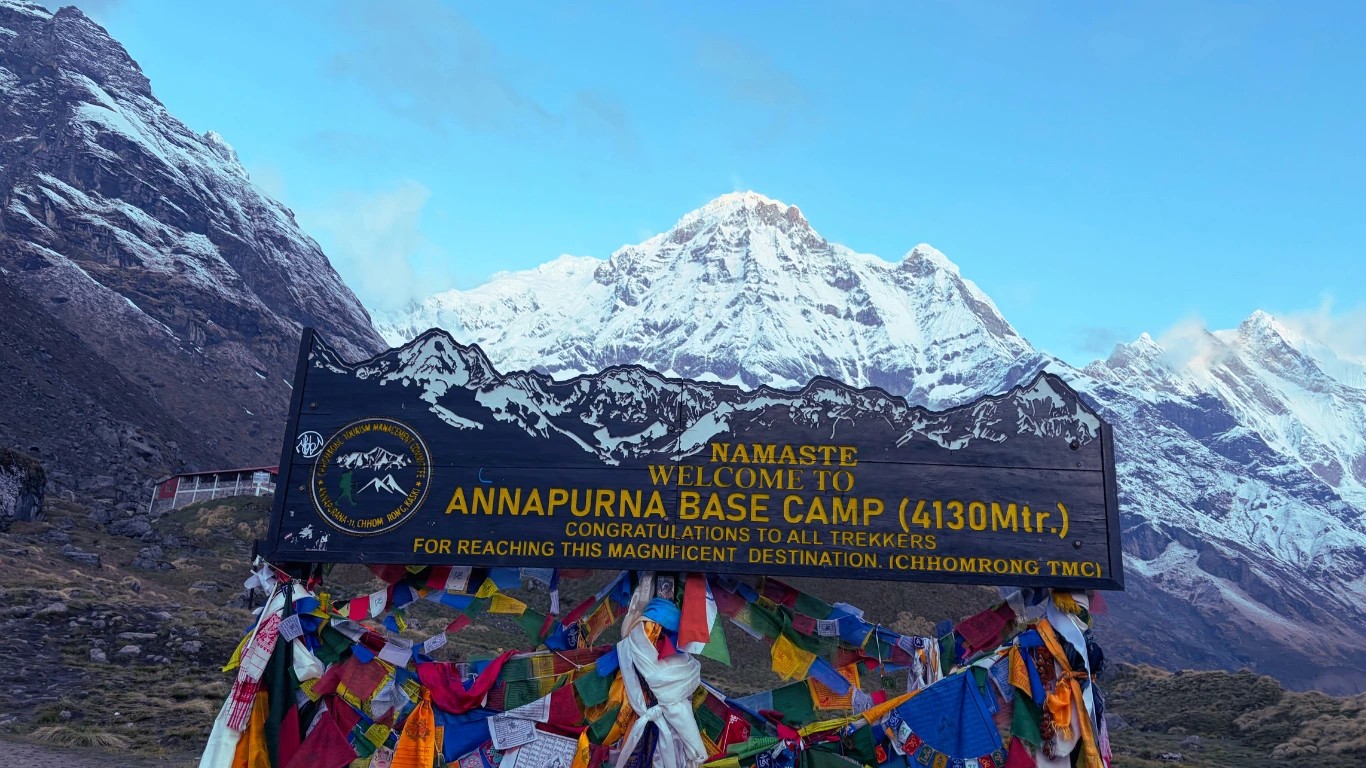
The elevation of South ABC is a fixed, well-documented figure confirmed across GPS measurements, topographic surveys, and trekking databases. Understanding what this number actually means — and where it sits in relation to the world around it — helps trekkers set realistic expectations before heading out.
Annapurna Base Camp stands at 4,130 meters above sea level. This is the standard metric figure used on all official trekking maps, permit documentation, and route guides. The elevation places the camp solidly in the high-altitude zone, where oxygen availability begins to drop noticeably and the body requires time to adjust.
In imperial units, Annapurna Base Camp reaches 13,550 feet above sea level. For trekkers more familiar with the imperial system, this is roughly the equivalent of stacking nearly 45 Eiffel Towers on top of each other. At this height, you are well above the treeline, surrounded entirely by glaciers, moraine, and towering rock faces.
The camp's coordinates are 28.5306° N, 83.8203° E, located in the Kaski District of Nepal's Gandaki Province. The elevation of 4,130 meters above sea level is measured from mean sea level — the global reference point used across aviation, mountaineering, and geography. This means every elevation figure mentioned on this page refers to distance from the ocean surface, not from any local ground reference.
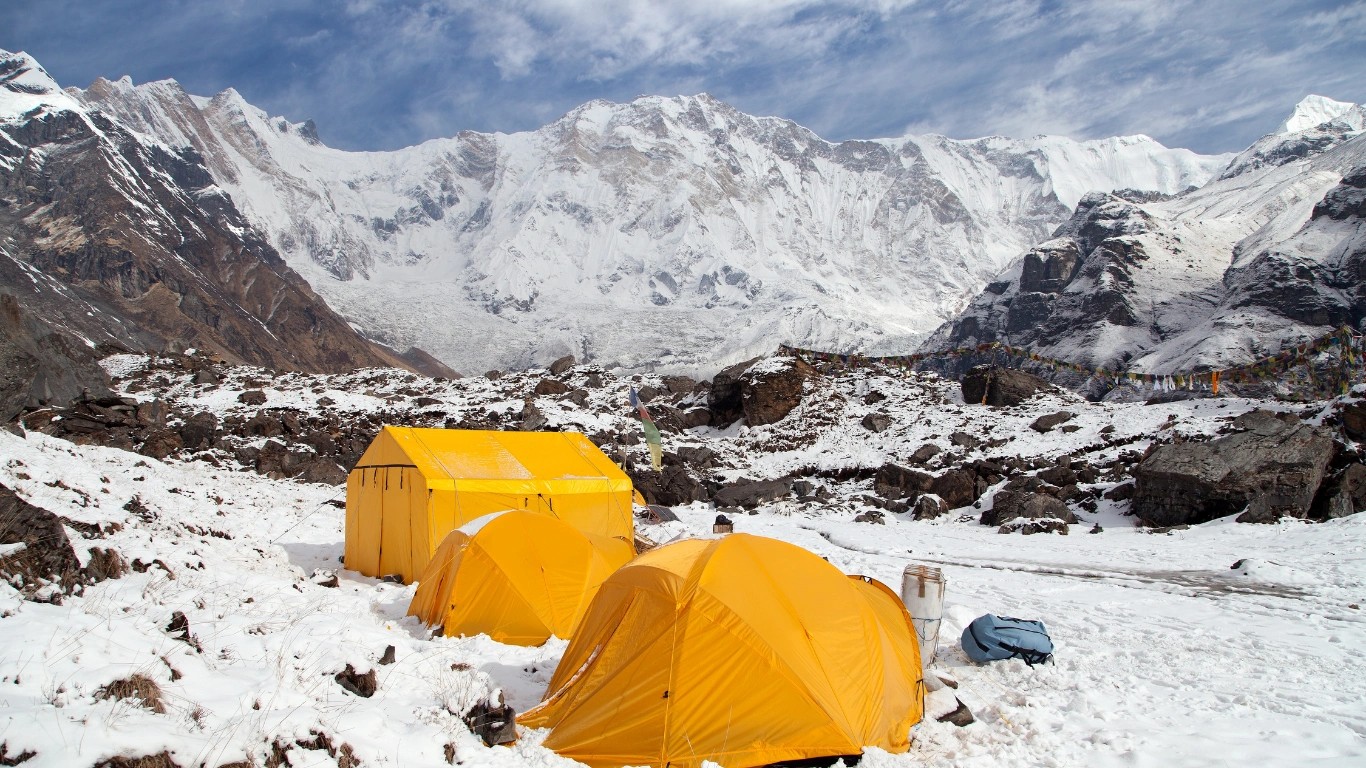
Many trekkers confuse the height of Annapurna Base Camp with the actual height of Annapurna 1 Mountain. Annapurna Base Camp sits at 4,130 meters (13,549 feet), while Annapurna I rises dramatically to 8,091 meters (26,545 feet), making it the 10th highest mountain in the world.
Annapurna I reaches a summit elevation of 8,091 meters (26,545 feet), ranking it as the 10th highest mountain in the world. It was first climbed in 1950 by French mountaineers Maurice Herzog and Louis Lachenal — the first 8,000-meter peak ever summited by humans. Annapurna I remains one of the most technically demanding and statistically dangerous high peaks, with a notably high fatality-to-ascent ratio.
The vertical difference between Annapurna Base Camp (4,130 m) and the Annapurna I summit (8,091 m) is 3,961 meters — nearly four kilometers of vertical rock, ice, and glaciated terrain. To put that in context, that gap alone is greater than the total elevation gain a trekker covers on the entire ABC trek.
| Point | Elevation |
| Annapurna Base Camp | 4,130 m / 13,550 ft |
| Annapurna I Summit | 8,091 m / 26,545 ft |
| Vertical Difference | 3,961 m / 12,995 ft |
This difference explains why expeditions to Annapurna I require months of preparation, acclimatization camps at 5,000–7,000 meters, and technical climbing gear — none of which the trekking route demands.
Understanding the altitude changes day by day is one of the most practical things you can do before starting the trek. The route doesn't climb in a straight line; it rises, dips, rises again, which naturally helps with acclimatization.
The trek typically begins at Birethati (1,070 m / 3,510 ft), a roadhead roughly 45 minutes by vehicle from Pokhara. Pokhara itself sits at approximately 822 meters above sea level. If you are flying in from Kathmandu (1,400 m), your body will have had some initial exposure to mid-altitude before the trek even begins.
| Village / Checkpoint | Elevation |
| Birethati(Trailhead) | 1,070 m / 3,510 ft |
| Tikhedhunga | 1,540 m / 5,052 ft |
| Ulleri | 2,020 m / 6,627 ft |
| Ghorepani | 2,840–2,874 m / - 9,300 ft |
| Poon Hill (Viewpoint) | 3,210 m / 10,531 ft |
| Tadapani | 2,630 m / 8,629 ft |
| Chhomrong | 2,170 m / 7,119 ft |
| Sinuwa | 2,360 m / 7,743 ft |
| Bamboo | 2,310 m / 7,579 ft |
| Dovan | 2,505 m / 8,218 ft |
| Deurali | 3,200 m / 10498 ft |
| Machhapuchare Base Camp (MBC) | 3,700 m / 12,139 ft |
| Annapurna Base Camp (ABC) | 4,130 m / 13,550 ft |
The highest point reached on the standard ABC trek is Annapurna Base Camp itself, at 4,130 meters. No viewpoint, side trail, or overnight stop on the route exceeds this elevation. The ascent from Deurali to ABC — passing through Machhapuchare Base Camp — gains approximately 900 meters, which is the steepest sustained climb of the entire journey.
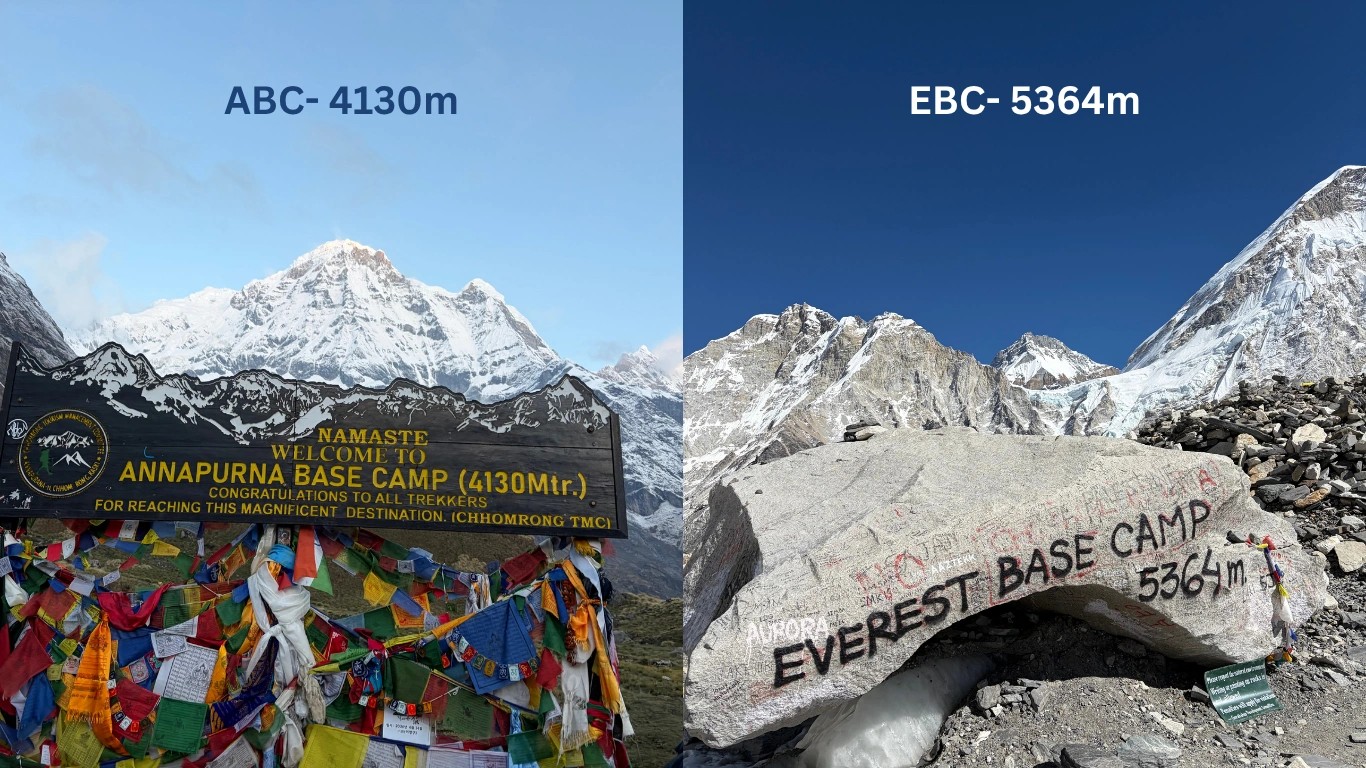
Before comparing Annapurna Base Camp with other famous trekking destinations in Nepal, it’s important to understand how its elevation affects trekking difficulty, altitude experience, and acclimatization compared to routes like Everest Base Camp, Mardi Himal, and Poon Hill.
The comparison between these two iconic base camps comes up frequently, and the difference is more significant than many realize.
| Base Camp | Elevation |
| Annapurna Base Camp (ABC) | 4,130 m / 13,550 ft |
| Everest Base Camp (EBC) | 5,364 m / 17,598 ft |
| Difference | 1,234 m / 4,048 ft |
Everest Base Camp sits more than 1,200 meters higher than ABC. That difference has real physiological consequences: the air at EBC contains roughly 53% of the oxygen available at sea level, compared to around 60% at ABC. The EBC trek also requires significantly more time — typically 12 to 14 days — and carries a higher risk of altitude sickness. For trekkers unsure whether they can handle high altitude, ABC is often recommended as a confidence-building first step.
Mardi Himal Base Camp sits at 4,500 meters (14,763 feet) — approximately 370 meters higher than ABC. The Mardi Himal trek is shorter in duration (5–7 days) but climbs a more exposed ridge to reach its endpoint. Unlike ABC, which is a well-established teahouse route, Mardi Himal involves a more isolated trail with fewer lodge options at higher elevations.
Poon Hill, the famous sunrise viewpoint on the Ghorepani-Poon Hill circuit, reaches 3,210 meters (10,531 feet) — nearly 1,000 meters below ABC. Many trekkers doing the ABC route pass through Poon Hill as part of their itinerary, making it a useful comparison point. Poon Hill is widely considered suitable for beginners and can be reached in 3–5 days from Pokhara.
| Trek High Point | Elevation |
| Poon Hill | 3,210 m / 10,531 ft |
| Annapurna Base Camp | 4,130 m / 13,550 ft |
| Mardi Himal Base Camp | 4,500 m / 14,763 ft |
| Everest Base Camp | 5,364 m / 17,598 ft |
Altitude-related concerns are one of the biggest questions trekkers have before reaching Annapurna Base Camp. Understanding how altitude sickness works at 4,130 meters can help trekkers prepare properly and complete the journey more safely.
Yes, altitude sickness is a genuine possibility at 4,130 meters. The risk begins to increase meaningfully above 3,700 meters, and by the time a trekker reaches Machhapuchare Base Camp (3,700 m), they are already in altitude sickness territory. That said, the majority of trekkers who pace their ascent correctly, stay hydrated, and listen to their bodies complete the trek without serious complications.
Acute Mountain Sickness (AMS) typically presents with one or more of the following:
More severe forms — High Altitude Pulmonary Edema (HAPE) and High Altitude Cerebral Edema (HACE) — are rare but life-threatening. They require immediate descent and medical attention.
Prior altitude experience does not guarantee immunity. Altitude sickness can affect fit athletes and beginners alike. The following factors increase risk:
Preventing altitude sickness on the Annapurna Base Camp trek mostly comes down to proper acclimatization, hydration, and trekking at a steady pace. Trekkers who respect the altitude and avoid rushing the ascent usually complete the journey safely and comfortably.
The fundamental rule of altitude trekking — climb high, sleep low — applies throughout the ABC route. The itinerary naturally incorporates this principle: for example, trekkers often ascend to Poon Hill (3,210 m) in the morning before descending to Tadapani (2,630 m) for the night. This pattern of going higher during the day and sleeping lower helps the body adjust at a manageable pace.
Never gain more than 300–500 meters of sleeping altitude per day above 3,000 meters. If you feel unwell, the correct decision is always to stop or descend — not to push through.
Dehydration amplifies the effects of altitude. Aim to drink 3–4 liters of water per day while trekking. Avoid alcohol, especially during the first few days at elevation. Caffeinated drinks are acceptable in moderation but are not a substitute for water.
Eat regularly, even if appetite decreases at altitude. Simple carbohydrates — dal bhat, rice, noodles — are your best energy source. Avoid heavy, fatty meals that are harder to digest in thinning air.
The ABC trek is not a race. A slower pace preserves energy and allows for better oxygen saturation at each stage. Build in at least one rest day if your itinerary is tight, and always add an acclimatization day if you feel off. Many standard 7-day itineraries are viable for fit trekkers, but a 10–12 day plan gives a comfortable buffer for slower acclimatizers.
To completely eliminate the risk of sleeping at 4,130 meters, trekkers can choose to sleep at Machhapuchchhare Base Camp (3,700 m) instead of ABC.
Reaching Annapurna Base Camp is not just about the altitude number on paper — it’s about experiencing thinner air, colder temperatures, and the unique physical effects that come with trekking above 4,000 meters in the Himalayas.
Temperature at ABC fluctuates significantly by season. During the spring trekking season (March–May), daytime temperatures can reach 5–10°C at the base camp, dropping sharply to -5°C or below overnight. In autumn (September–November), similar daytime temperatures apply, with overnight lows ranging from 0°C to -10°C. In winter, ABC can drop to -20°C or colder, making nighttime exposure genuinely dangerous without proper equipment.
| Season | Daytime Temp | Nighttime Temp |
| Spring (Mar–May) | 5–10°C | -5 to -10°C |
| Autumn (Sep–Nov) | 5–10°C | 0 to -10°C |
| Winter (Dec–Feb) | -5 to 0°C | -15 to -20°C |
| Monsoon (Jun–Aug) | 5–10°C | 0 to -5°C |
At 4,130 meters, the atmospheric pressure drops to roughly 60% of sea level. This means that with every breath, your body takes in approximately 40% less oxygen than it does at sea level. The body responds by breathing faster and the heart works harder. Most people notice this as mild breathlessness during uphill sections and a tendency to sleep less deeply at night.
Over several days, the body begins producing more red blood cells to compensate — this is the core mechanism of acclimatization. It takes time and cannot be rushed.
Trekkers at ABC frequently report that familiar activities become unexpectedly tiring. Walking a short distance uphill requires genuine effort. Tasks like changing clothes or getting in and out of a sleeping bag can leave you slightly breathless. Digestion slows, making heavy meals uncomfortable. These are not signs of failure — they are normal physiological responses to reduced oxygen.
Psychological adjustment matters too. The stark, treeless landscape of the Sanctuary — all rock and ice — is dramatic but can feel isolating after days of forested valleys and village life. Bringing this expectation into the trek helps.
The following table reflects the most common 10-day route via Ghorepani and Poon Hill.
| Day | Route | Elevation |
| Day 1 | Pokhara to Birethati→ Tikhedhunga | 1,070 m → 1,540 m |
| Day 2 | Tikhedhunga → Ghorepani | 1,540 m → 2,840 m |
| Day 3 | Poon Hill sunrise → Tadapani | 3,210 m (viewpoint) → 2,630 m (sleep) |
| Day 4 | Tadapani → Chhomrong | 2,630 m → 2,170 m |
| Day 5 | Chhomrong → Bamboo / Sinuwa | 2,170 m → 2,310–2,360 m |
| Day 6 | Bamboo → Dovan | 2,310 m → 2,505 m |
| Day 7 | Dovan → Deurali | 2,505 m → 3,230 m |
| Day 8 | Deurali → Machhapuchare Base Camp | 3,230 m → 3,700 m |
| Day 9 | MBC → Annapurna Base Camp | 3,700 m → 4,130 m |
| Day 10 | ABC → Descent begins | 4,130 m ↓ |
The most important daily elevation gains — from a safety perspective — occur in the upper section of the route. The jump from Deurali (3,230 m) to MBC (3,700 m) is 470 meters. The push from MBC to ABC adds another 430 meters. Neither day individually exceeds the standard safety guideline of 500 meters of sleeping altitude gain, which is part of why this route is considered relatively altitude-friendly for its height.
Choosing the right trekking season can dramatically affect your experience at Annapurna Base Camp, especially at 4,130 meters where weather, visibility, and temperature conditions change rapidly throughout the year.
Spring (March to May) is the most popular season for the ABC trek. Rhododendron forests bloom across the lower sections of the trail, creating spectacular color at elevations between 1,500 and 3,500 meters. Temperatures at base camp are cold but manageable, visibility is generally good, and the trails are at their most lively. April is considered the peak month, with crowds at teahouses reaching capacity on busy days.
Autumn (September to November) is the second major trekking season and is preferred by those who want slightly colder but exceptionally clear skies. Post-monsoon air is cleaner, mountain views are sharper, and the trails are drier. October and November are the peak months. Temperatures at ABC drop more sharply than in spring, so insulated sleeping gear is essential.
The monsoon season (June to August) brings heavy rainfall and leech-infested lower trails. The upper sanctuary can receive snowfall even in July, and visibility is frequently compromised. ABC remains technically accessible but trail conditions are unpredictable and some teahouses close.
Winter (December to February) transforms the route. The lower sections remain walkable, but the sanctuary approaches often accumulate deep snow. MBC and ABC can become snow-bound, and temperatures at base camp drop to dangerous levels overnight. Trekkers attempting this period need cold-weather camping gear and experience with winter conditions.
If we go beyond the classic Annapurna Base Camp route, there is also a lesser-known northern approach that leads to a different version of base camp with its own unique altitude, terrain, and trekking experience.
When most people search for Annapurna Base Camp, they are looking at the classic South-facing route through the Annapurna Sanctuary — the trail through Ghorepani, Chhomrong, and MBC that ends at 4,130 meters. North Annapurna Base Camp is an entirely different destination on the opposite side of the massif, accessed via the Mustang or Beni approach.
The North route is a camping trek with no teahouse infrastructure on its upper sections. It is far less crowded, considerably more remote, and demands a higher level of self-sufficiency. The trail passes through less-visited terrain in the Manang District side of the Annapurna massif.
The height of North Annapurna Base Camp is 4,190m.
If your interest is North Annapurna Base Camp specifically, confirm the exact elevation and route with your operator before booking, as itineraries and reference points vary more than on the standard route.
Annapurna Base Camp stands at 4,130 meters (13,550 feet) above sea level inside the Annapurna Sanctuary — a glacial basin enclosed by some of the highest peaks on Earth. The elevation is high enough to demand respect: altitude sickness is a real consideration above 3,000 meters, cold temperatures require layered gear, and proper pacing across 7 to 12 days is essential. But 4,130 meters is also approachable for non-technical trekkers who prepare well, choose the right season, and take the altitude gain seriously. For many people, it represents the highest they will ever stand in their lives — and the views that await make every meter of it worthwhile.
Annapurna Base Camp sits at 4,130 meters (13,550 feet) above sea level. This is the universally accepted elevation used on maps, GPS devices, and official trekking documentation.
No. Everest Base Camp (South) sits at 5,364 meters (17,598 feet), which is 1,234 meters higher than Annapurna Base Camp at 4,130 meters. The EBC trek is longer, more physically demanding, and carries a greater risk of altitude-related illness due to the additional elevation.
Annapurna Base Camp is 13,550 feet above sea level. Some sources cite 13,549 feet due to rounding differences between the metric and imperial conversions — both figures refer to the same camp at 4,130 meters.
The trek is rated moderate in difficulty. The altitude gain is gradual enough that most reasonably fit trekkers can acclimatize successfully without medication.
Yes — with realistic preparation. Beginners who have completed regular cardiovascular exercise in the months before the trek, carry appropriate gear, start early each day, stay hydrated, and listen to their bodies have successfully reached ABC.
No, a beginner cannot climb Annapurna I (the summit). However, a beginner can trek to Annapurna Base Camp (ABC).
No, the Annapurna Base Camp trek is generally not considered highly risky.
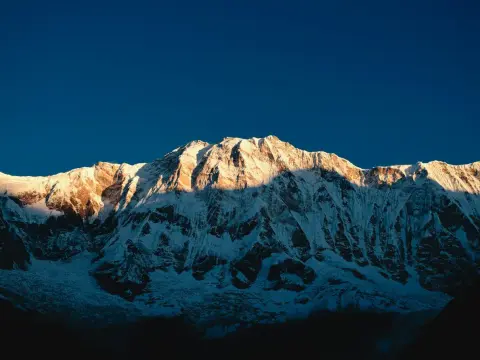
The term "killer mountain" carries a somber weight in mountaineering circles. It refers to peaks with exceptionally high fatality rates relative to su...

Macchapuchre stands as one of the most iconic and mysterious peaks in the entire Himalayan range. Also commonly spelled Machhapuchhre, this magnificen...
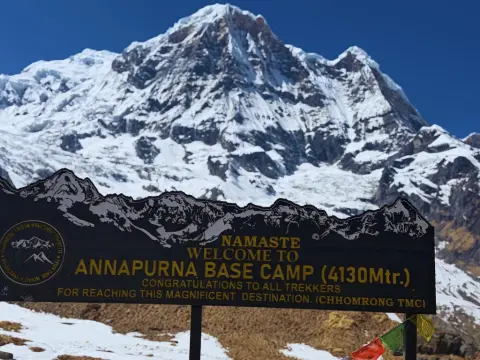
Why Every Trekker Asks "Where Is Annapurna Base Camp?"Few places on Earth stir the imagination of mountain lovers quite like Annapurna Base Camp. Nest...
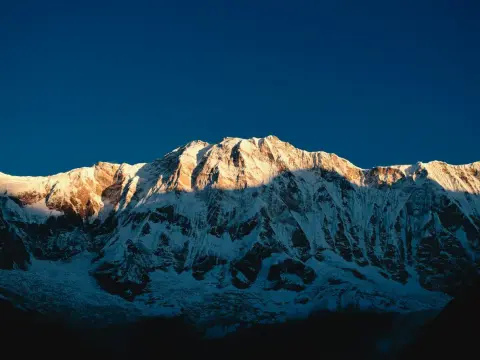
Annapurna I is the 10th highest mountain in the world. It is located in the country of Nepal, in Asia. It was the first mountain above 8,000 meters to...
