
Annapurna Base Camp Trek During Monsoon – A Raw Himalayan Journey in Nepal
18 Jan 2026
Trekking to Annapurna Base Camp Trek is one of Nepal’s most iconic mountain journeys. For mountaineers, the climb begins here, but for trekkers, Annap...

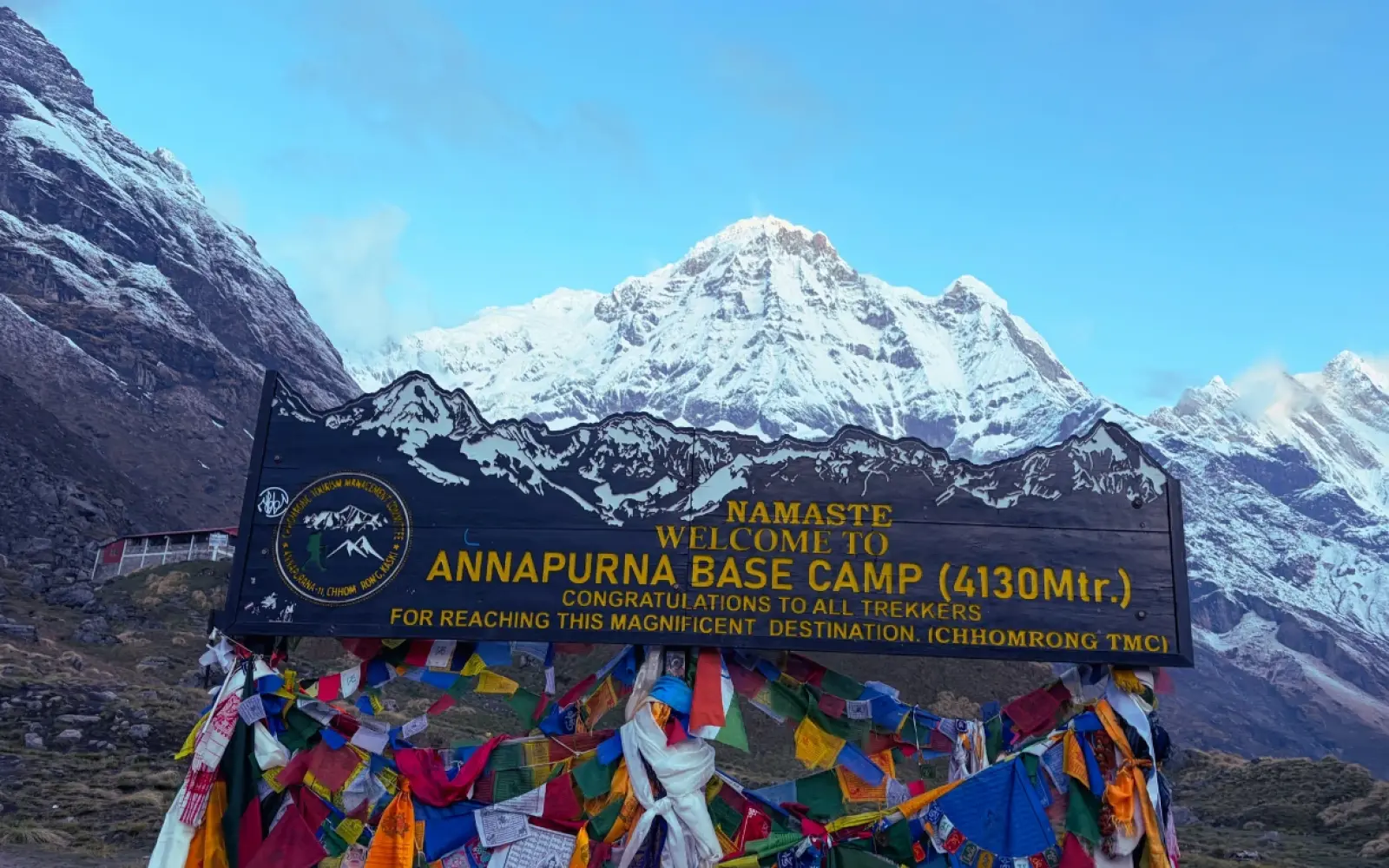

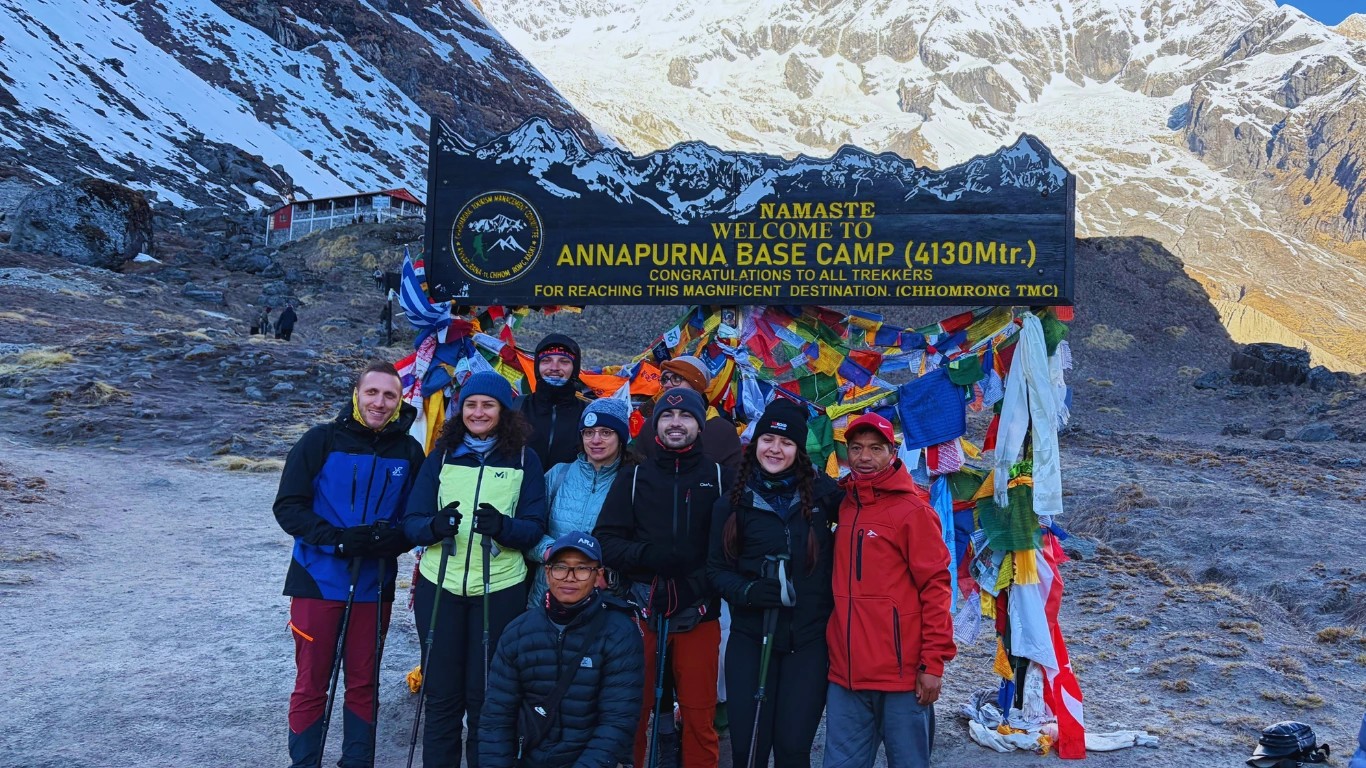
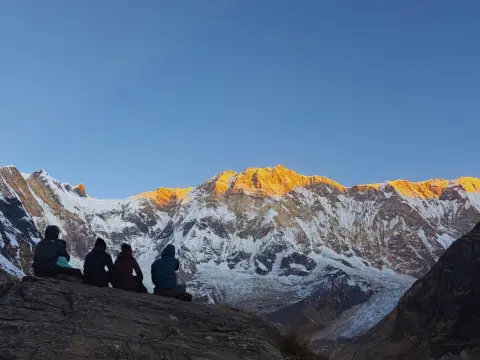
I remember the first time I stood at Annapurna Base Camp. I was 18 years old, still new to guiding, and I genuinely did not expect to cry. But when you walk into that open amphitheater at 4,130 metres and Annapurna I, Hiunchuli, and Machhapuchhre are standing around you like walls of the sky — something happens to you. Something that's hard to explain until you've been there.
That was over 40 treks ago. I've guided students, retirees, honeymooners, solo women, first-time hikers, and experienced mountaineers to ABC. And every single time, I see the same thing happen: people go quiet when they arrive. Not because they're tired. Because they feel it.
But here's what I also see — people arriving completely unprepared. Wrong shoes, no cash, no training for stairs (yes, stairs), and a very unrealistic idea of what "teahouse trekking" means above Sinuwa.
So before you book your Annapurna base camp trek Package, read this. All of it.
All ABC treks begin from Pokhara, which is 205 km from Kathmandu. You can get there by bus (roughly 6–7 hours) or by flight (25 minutes). Once in Pokhara, you have three route options — and which one you choose changes your entire experience.
This is the route I take most of my first-time trekkers on, and for good reason. Starting from Birethanti, you climb through Ulleri (prepare your legs — I'll come back to this), continue to Ghorepani, and wake up before dawn for the Poon Hill sunrise.
I have seen hundreds of sunrises from Poon Hill. The way the light catches Dhaulagiri and the Annapurna range in layers of orange and pink — it's one of the most beautiful mornings you can have in Nepal, maybe anywhere. After Ghorepani, the trail continues through Tadapani and descends to Chhomrong before heading into the sanctuary.
In spring (March to May), the rhododendron forests on this route are in full bloom — deep red and pink flowers covering the hillsides. If you have the time, this is the route to take. Check Out This Detailed Annapurna Base Camp via Ghorepani Trek Itinerary.
Best for: First-time trekkers, those who want the full Nepal experience, photographers, and anyone who can spare 9–10 days.
Starting from Ghandruk village, this route gives you something the classic route doesn't: real Gurung culture. You walk through traditional stone houses, past elderly women spinning wool, past doorways decorated the old way. The mountain views from Ghandruk itself — Annapurna South, Hiunchuli, Machhapuchhre — are stunning even before you start trekking.
The trail joins the main route at Chhomrong and continues to ABC from there.
Best for: Travelers who want cultural depth alongside mountain views, and those with 6–7 days available.
This is the shortest option. You drive directly to Jhinu Danda and aim to reach Sinuwa on the same day. It's physically harder in the first 24 hours, but it gets you to ABC faster.
I'll be honest — I don't recommend this for people who've never trekked before. The first day is long and tiring, and you miss a lot of the lower trail scenery. But if you're short on time and your legs are strong, it works. Check Out This Annapurna Base Camp Express Trek Itinerary.
Best for: Experienced trekkers, repeat visitors, or those with strict time constraints.
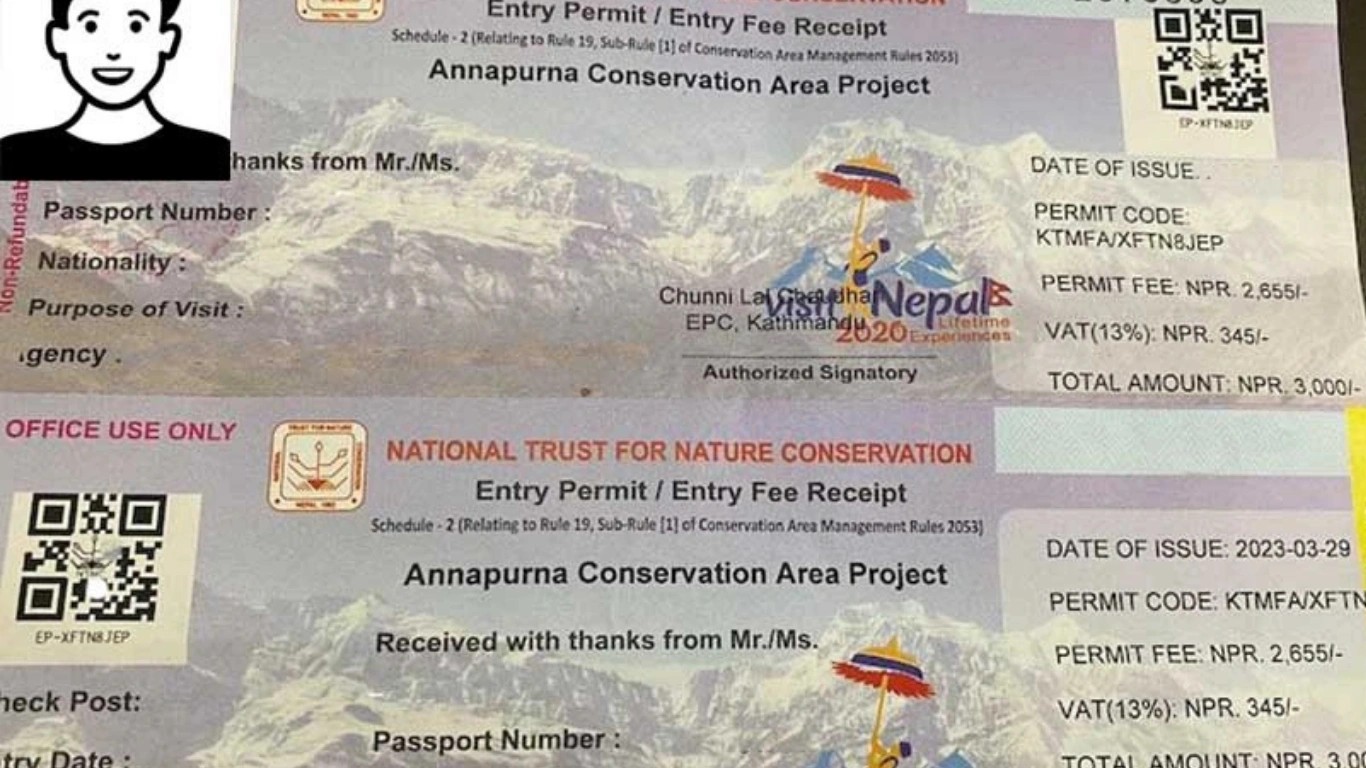
To enter the Annapurna Conservation Area, all trekkers are required to obtain the necessary trekking permit before starting the journey.
The only required permit for the Annapurna Base Camp Trek is the ACAP (Annapurna Conservation Area Permit).
This permit helps support conservation work, trail maintenance, and local community development inside the Annapurna region. You can get the permit at Kathmandu, Pokhara or starting point Birethati too.
Throughout the route, trekkers will pass through several official checkpoints where permits are checked and recorded. The main checkpoints include:
Trekkers are required to show their ACAP permit at these locations.
It is mandatory to carry your permit throughout the trek, as it will be checked multiple times along the route. Losing or forgetting it may cause delays at checkpoints.
Majestic Trails Nepal arranges all necessary permits for trekkers to ensure a smooth and hassle-free trekking experience in the Annapurna region.
This is probably the most misunderstood part of the ABC trek, so pay attention.
Up to Chhomrong, the lodges are genuinely comfortable. Private rooms, clean bathrooms, good variety of food, decent WiFi. Some lodges in Chhomrong are actually quite nice.
Then you cross into the Annapurna Sanctuary, and things change.
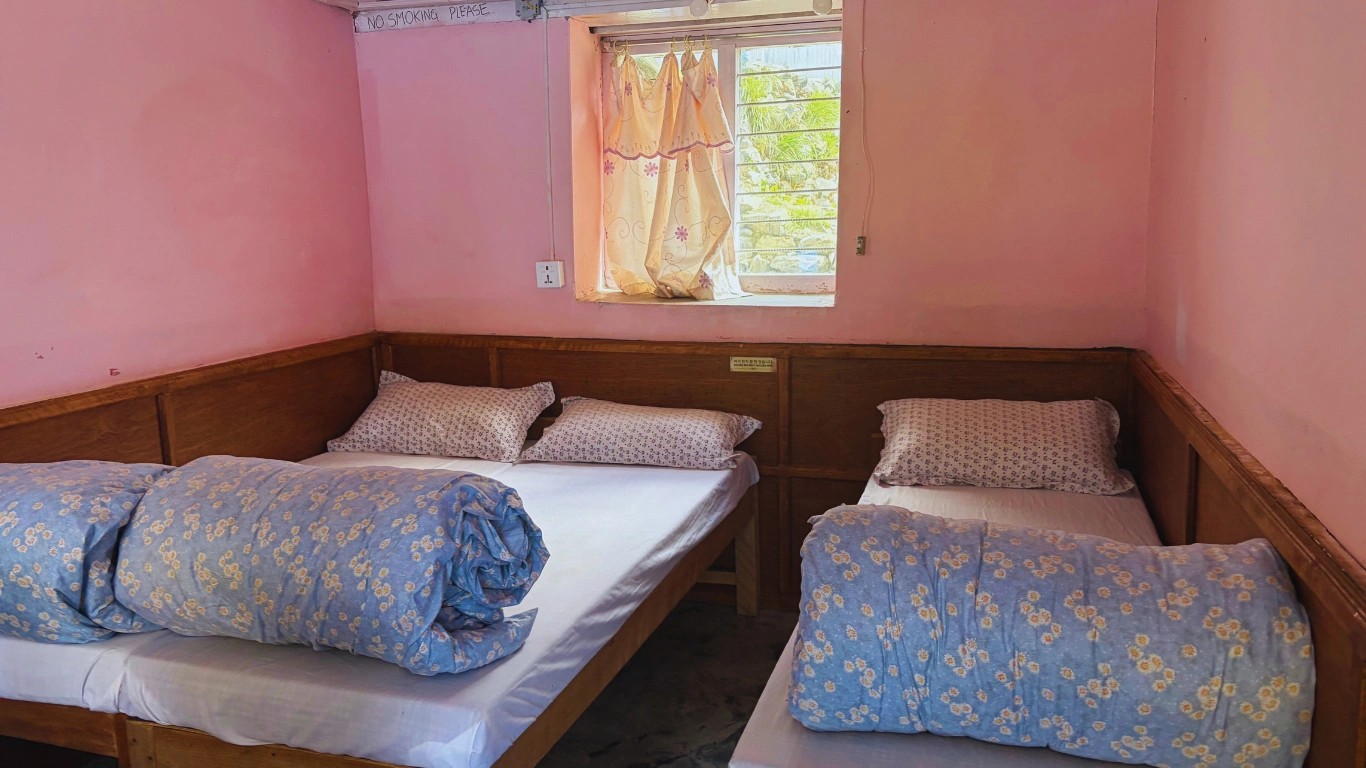
After Sinuwa, the lodges at Bamboo, Dovan, Himalaya, Deurali, MBC, and ABC are basic. Small rooms, thin walls, shared bathrooms in some places. This is not a complaint — it's just reality. And there's a specific reason for it.
The entire trail beyond Sinuwa passes through a government-protected conservation area. The rules are strict: only a handful of lodges are permitted per village. Most settlements have around five lodges. Himalaya village has even fewer. This means total capacity on the upper trail is genuinely small — and demand in peak season is very, very high.
Peak season is March, April, May, October, and November. During these months, if you arrive late to a village, you may find every room taken. I have seen trekkers sleeping on benches in dining halls. I have seen groups who had to keep walking in fading light to the next settlement because there was nothing left.
When you're staying at a lower lodge — say, in Chhomrong or Sinuwa — ask the lodge owner to call ahead to the next night's village and reserve a room for you. Lodge owners along the trail know each other. They have connections. This one simple step can save you serious stress higher up.
If you're trekking with Majestic Trails Nepal, we handle all of this for you as part of the service — our guides know every lodge owner on the trail personally.
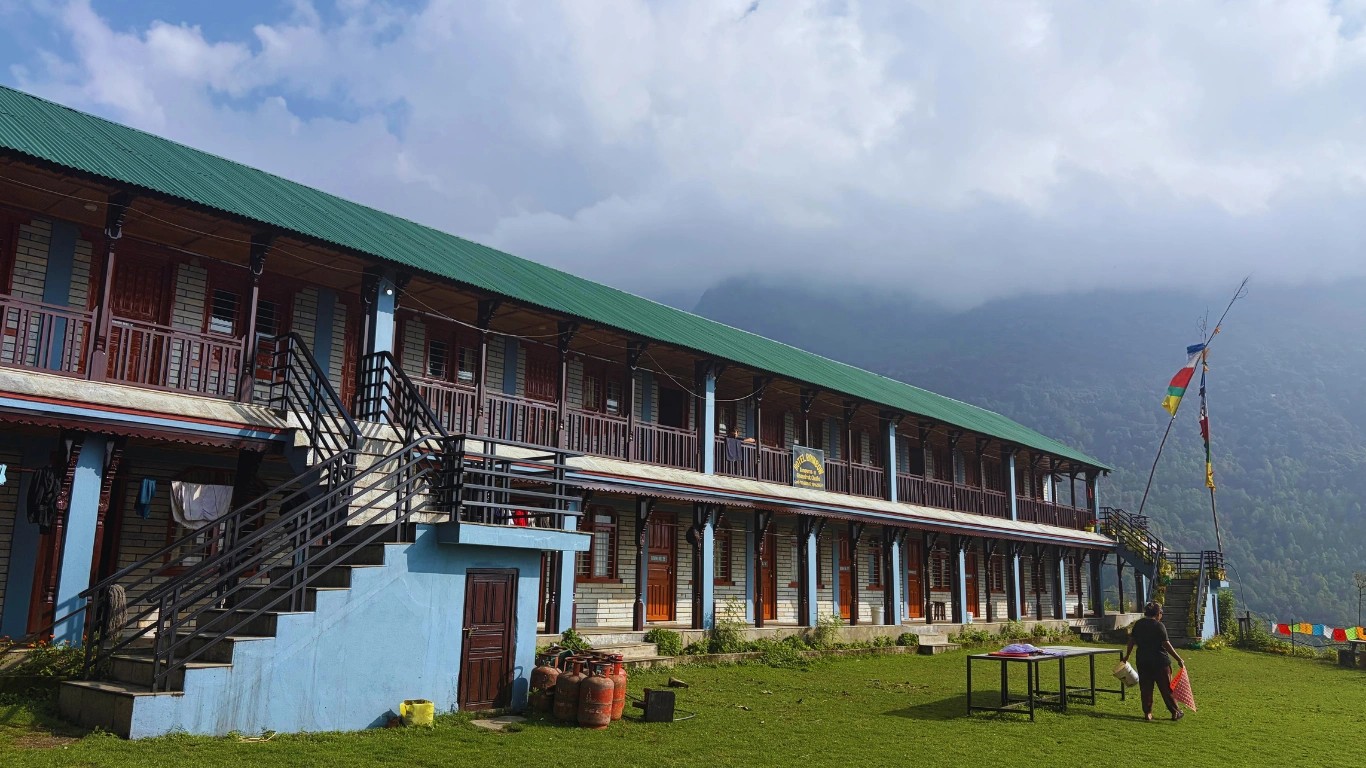
Most lodges from Sinuwa onwards operate on a package system rather than charging separately for everything. Around Sinuwa, a standard package costs approximately NPR 1,700 and includes your room, dinner, breakfast, tea, WiFi, and a hot shower.
Breakfast is typically Tibetan bread with eggs and tea — simple, filling, and exactly what you need before a morning of climbing. Dinner is usually Dal Bhat (more on that in a moment).
As you climb higher, prices increase with altitude:
ABC lodge packages: Approximately NPR 2,200 and above
This is completely normal and expected. Every kilo of food and gas that reaches MBC and ABC is carried up by porters or mules. When you're paying NPR 950 for a Dal Bhat at ABC, you're paying for the journey that food made to reach you at 4,130 metres.
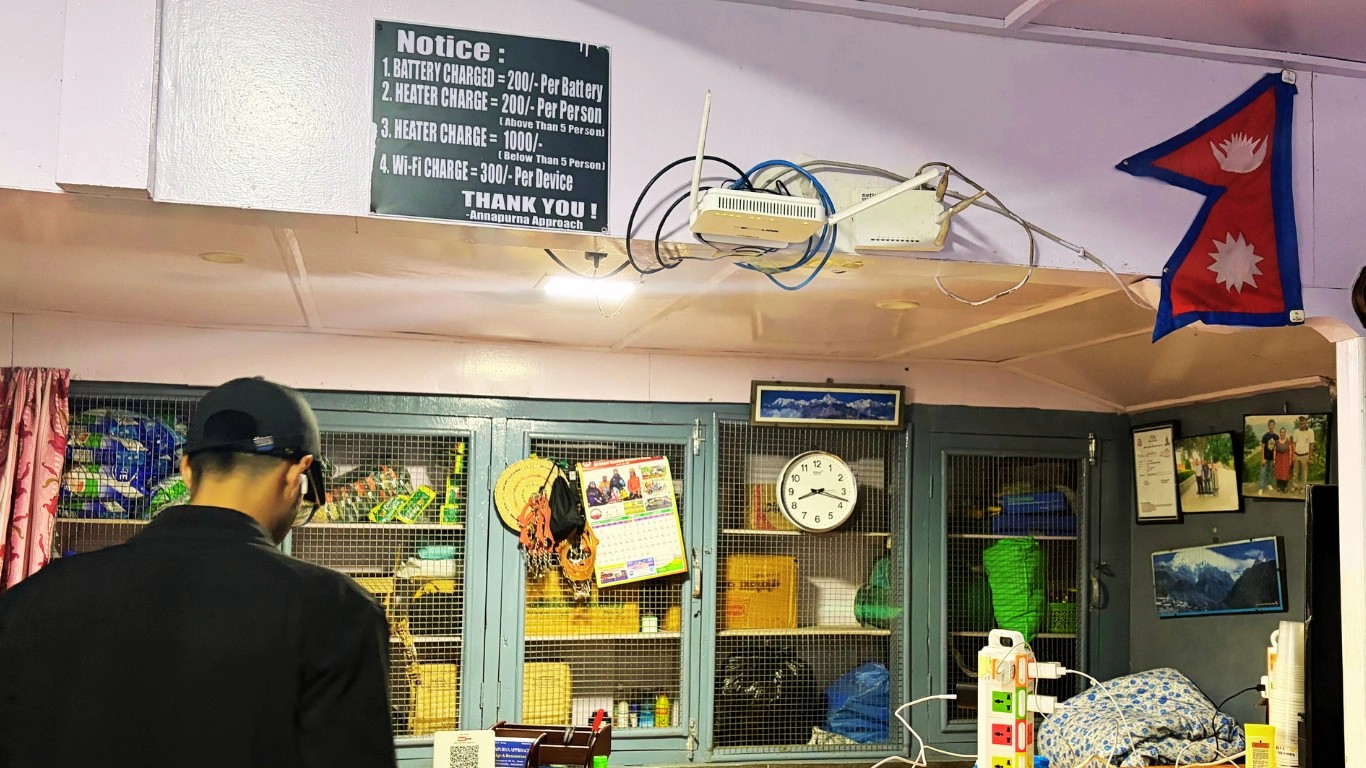
I get asked about this constantly, so let me give you the full picture.
My advice: Buy a fully charged power bank before leaving Pokhara, and top it up completely at Chhomrong. Don't rely on being able to charge devices at ABC — treat any charging you get there as a bonus, not a guarantee.
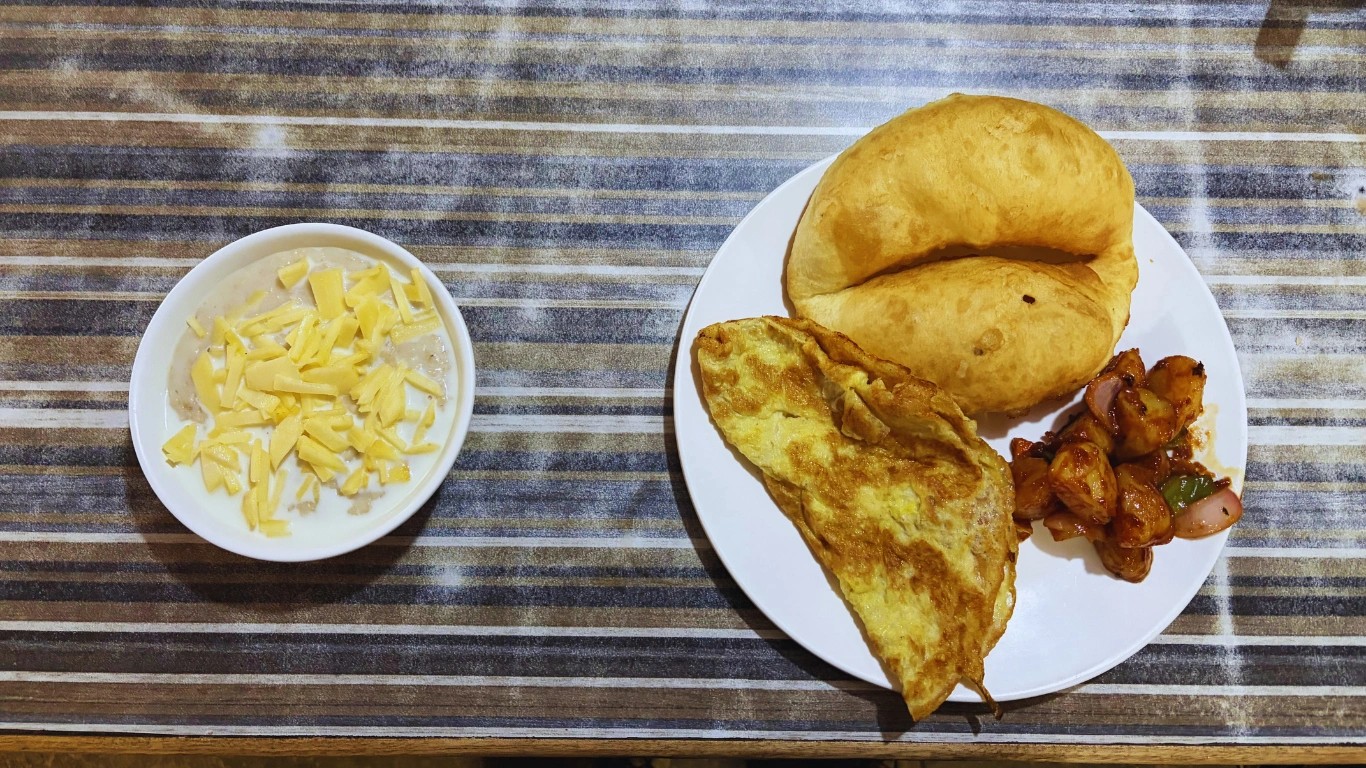
The food on the ABC trek is simple, honest, and filling. Here's what you'll find on every menu from Birethanti to ABC:
Dal Bhat, fried rice, fried noodles, eggs, soup, Tibetan bread, and tea in many varieties.
Order Dal Bhat:
If there is one piece of food advice I give every single trekker, it's this: order Dal Bhat.
It is rice, lentil soup, seasonal vegetables, and pickle. It sounds ordinary. It is extraordinary for trekking. Dal Bhat gives you sustained energy — no sugar crash, no bloating. And crucially, it comes with unlimited refills on the rice, lentils, and vegetables. You pay once and you eat until you physically cannot eat any more. At high altitude, when your appetite is reduced and your body needs fuel, Dal Bhat is the single best meal you can choose.
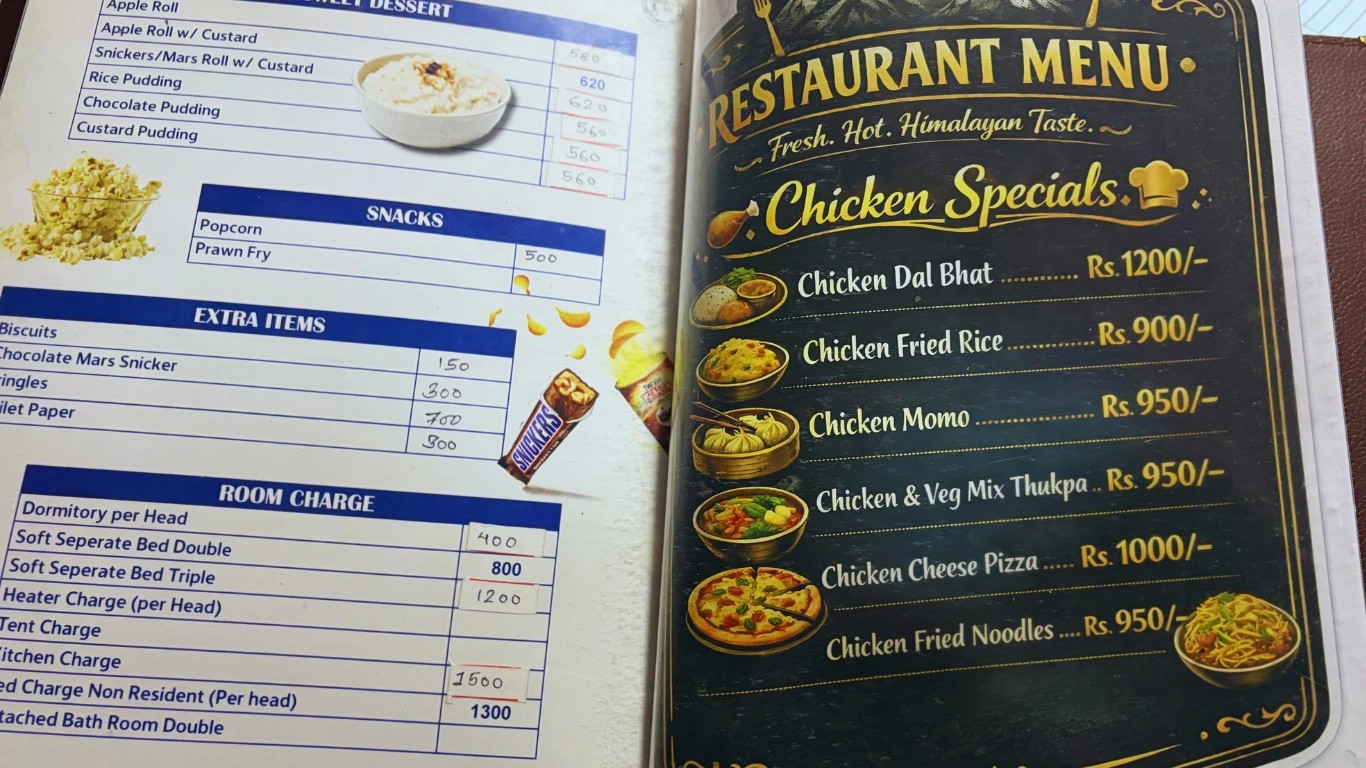
This is something many trekkers don't know until they arrive and are confused by the menu. Meat dishes are available up to Dovan. Above Dovan, most lodges serve only vegetarian food.
The reason is rooted in local belief and religion. There is a sacred temple located between Himalaya village and Dovan, and out of respect for this, the upper sanctuary operates as a largely meat-free zone. This is not a health-and-safety rule — it's a cultural and spiritual one, and I think it deserves to be respected.
Plan accordingly. Your body doesn't need heavy meat at altitude anyway.
These are fair prices given how everything is transported up. Don't haggle over food costs on this trail.
Up to Chhomrong, trekkers can easily buy mineral water bottles for around NPR 150–200.
From Chhomrong onwards, plastic bottles are banned, so teahouses provide filtered or boiled water, costing around NPR 150–200 per liter.
You can also refill tap water and use water purification tablets or filters, which is the most common and eco-friendly option.
Carry a reusable bottle and purification tablets to save cost and reduce plastic waste.
Although the Annapurna Base Camp Trek is considered a moderate-altitude trek compared to Everest Base Camp, altitude is still an important factor that trekkers should not ignore.
The trek gradually ascends from low river valleys and terraced villages all the way up to Annapurna Base Camp (4,130 meters), which is surrounded by massive Himalayan peaks.
Unlike short high-altitude climbs, ABC is a gradual ascent. However, the continuous gain in elevation each day still puts pressure on the body, especially after Deurali.
Key altitude points on the route include:
From around 3,000 meters and above, oxygen levels begin to noticeably decrease. Many trekkers start feeling:
This is normal and expected.
The ABC Trek is generally safe from severe altitude issues because:
However, proper pacing is still very important.
The most important rule on this trek is simple:
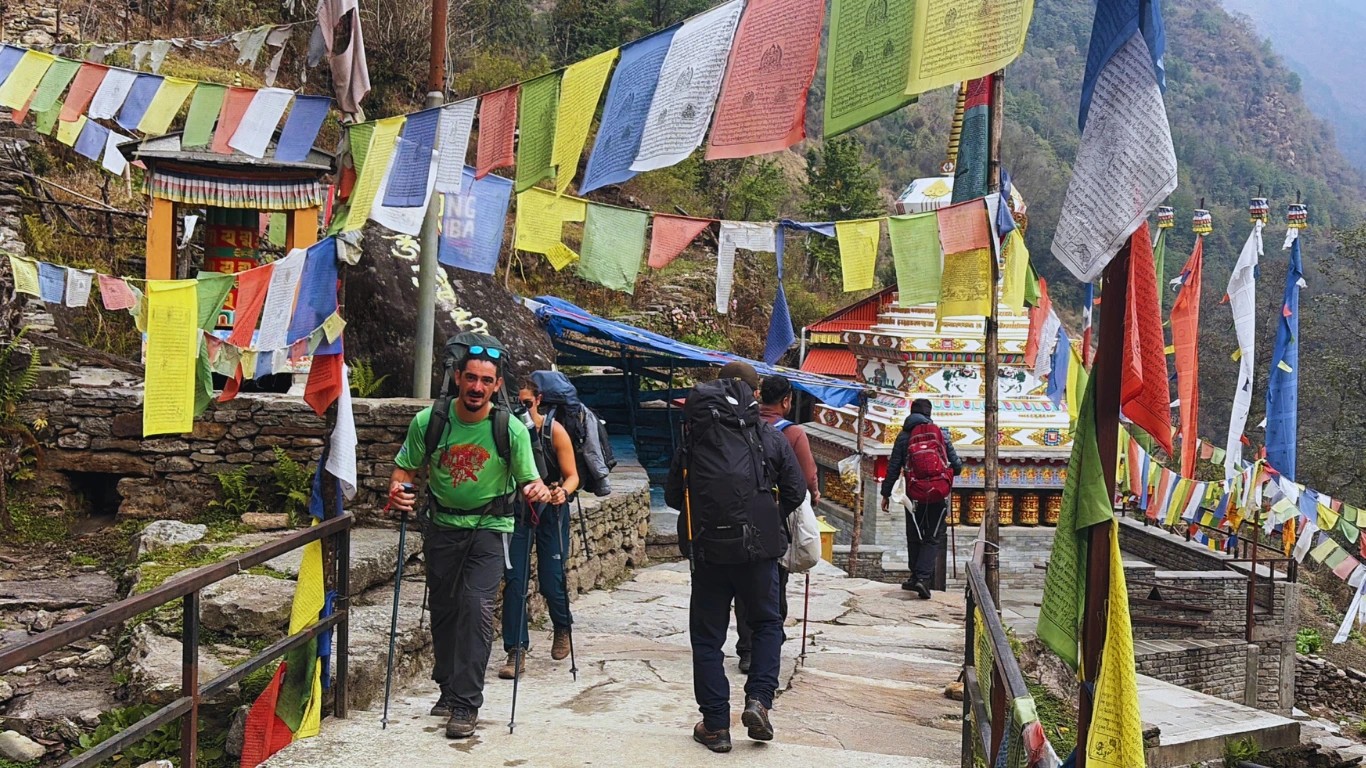
Every year, trekkers come to ABC expecting the main challenge to be altitude. And yes, altitude matters. But the thing that actually destroys people's legs on this trek — the thing that nobody prepares for — is the stairs.
This trail has more stone staircases than any trek I've guided on. Let me give you specific examples:
Ulleri is a relentless uphill staircase of nearly 3,500 stone steps. Straight up. No switchbacks that give you a break. Just stairs.
Chhomrong goes steeply downhill into the valley and then immediately climbs back up just as steeply on the other side. Your knees will feel this descent the next morning.
And throughout the entire route into the sanctuary — Bamboo, Dovan, Himalaya — it's continuous stone steps. Up and down, up and down.
I always tell my clients: "They should rename this trek 'Stairs Base Camp.'" It sounds like a joke, but it's not. Altitude training matters less than people think if your legs are giving out by day three.
Your legs will thank you. I promise.
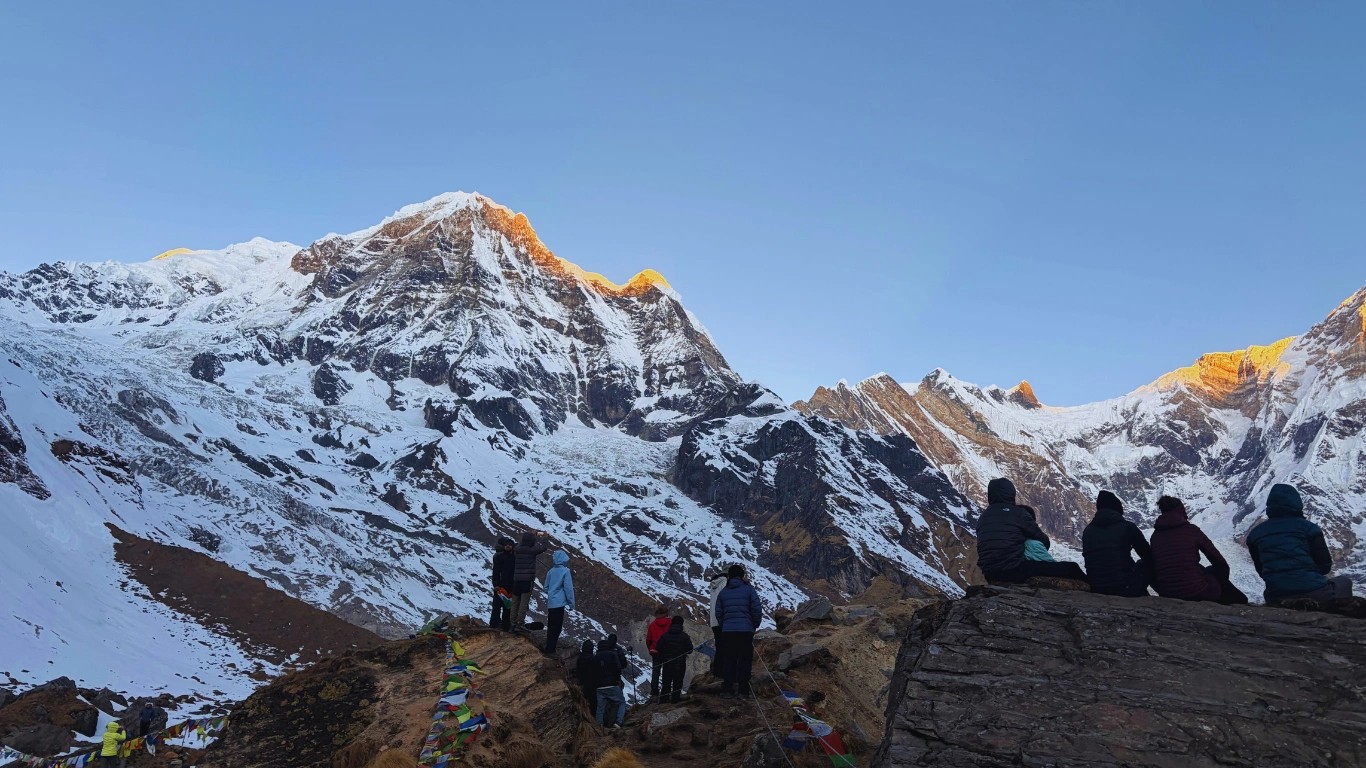
A very common question is: “When is the best time to do the Annapurna Base Camp Trek?”
The trek can be done throughout the year, but each season offers a completely different experience in terms of weather, visibility, trail conditions, and crowd levels.
Spring is one of the most popular and beautiful seasons for the Annapurna Base Camp Trek.
During this time, the trail is full of blooming rhododendron forests, especially between Ulleri, Ghorepani, and Tadapani. The landscapes become colorful, and mountain views are generally clear in the mornings.
This is also one of the busiest trekking seasons, so expect more trekkers on the trail and limited accommodation in higher villages.
Autumn is considered the most stable season for weather and visibility.
After the monsoon, the air becomes clean and clear, offering excellent views of Annapurna South, Hiunchuli, Machhapuchhre, and surrounding peaks.
Trails are dry and comfortable, making it one of the safest and most enjoyable trekking periods.
However, like spring, this is also a peak season, so teahouses can get fully booked quickly.
Winter trekking is possible and increasingly popular among experienced trekkers.
The trail is much quieter, and higher sections like MBC and ABC are often covered in snow. The views can be extremely clear on stable days, but temperatures drop significantly, especially at night.
This season requires proper cold-weather preparation, but rewards trekkers with a peaceful and less crowded Himalayan experience.
Monsoon season brings heavy rain, slippery trails, and leeches in lower forest areas.
Mountain views are often blocked by clouds, although the landscape becomes very green and lush.
This is generally the least preferred season for the Annapurna Base Camp Trek.
For most trekkers, spring and autumn are the best seasons for ABC.
Both seasons offer the best balance of weather, safety, and overall trekking experience in the Annapurna region.
Packing correctly for the Annapurna Base Camp Trek makes a huge difference in comfort, especially because the trail includes long stair climbs, changing weather, and colder temperatures at higher altitude.
Keep your packing light. The ABC Trek involves long stair sections, and carrying unnecessary weight will make the journey much more tiring than expected.
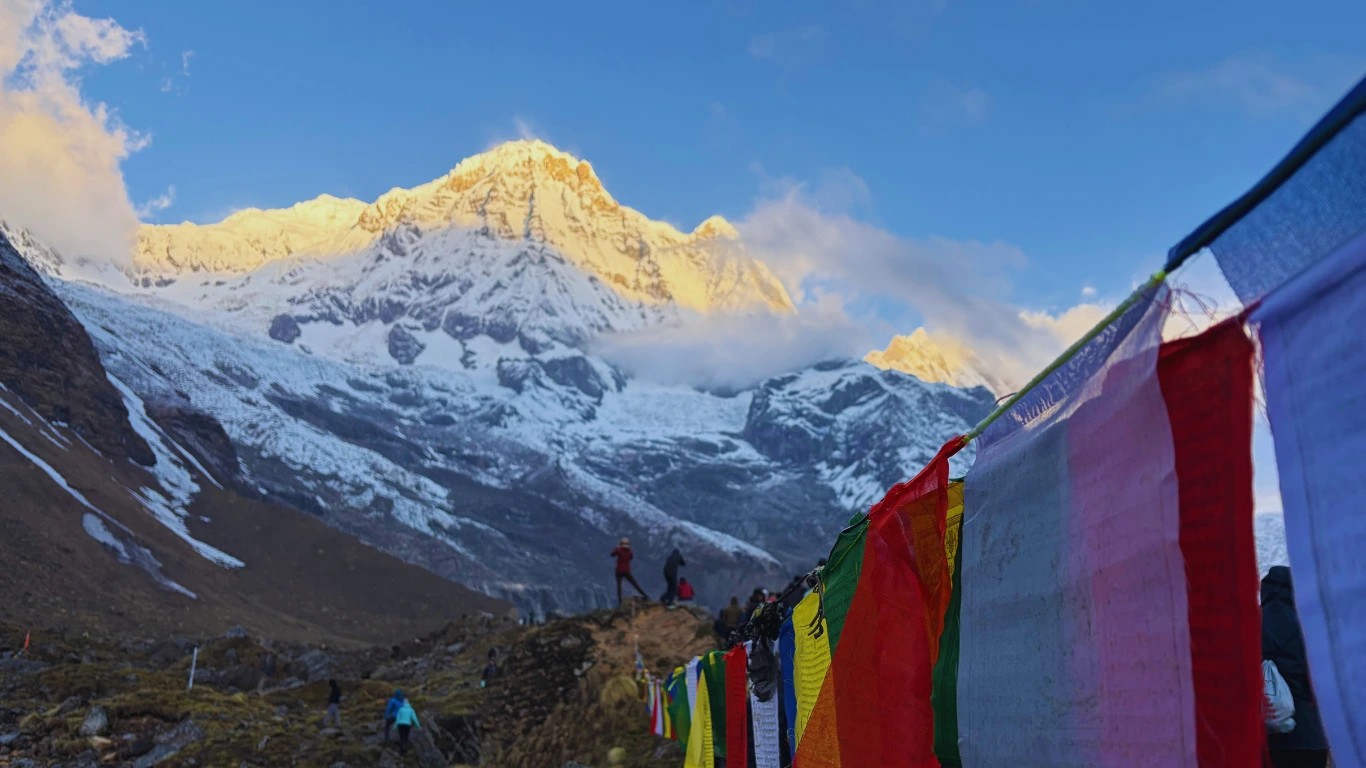
I want to tell you something I don't always say out loud, because it sounds dramatic. But after 40+ times at Annapurna Base Camp, I still feel it every single time.
When you walk the final stretch into the sanctuary — past Machhapuchhre Base Camp, across the rocky moraine, through the last steep push — and then suddenly the valley opens up and you are inside the Annapurna Sanctuary... something changes.
Annapurna I stands directly in front of you at 8,091 metres. Hiunchuli rises to one side. Machhapuchhre — the sacred, never-summited fishtail peak — frames the entrance behind you. You are completely surrounded by mountains over 6,000 and 7,000 metres.
And people go quiet.
I've seen this happen with groups of eight people who were chattering and joking all the way up the final stretch. The moment they step into that amphitheater, they stop talking. One by one. They just look.
I've watched a man who told me for three days he "wasn't really into mountains" stand at ABC with tears on his face. I've watched experienced trekkers who'd been to Everest Base Camp say, "This is different. I didn't expect it to feel like this."
I'm not sure I can fully explain why ABC hits people the way it does. It might be the scale — you feel genuinely small in a way that's rare. It might be the silence. The Annapurna Sanctuary is extraordinarily quiet. No road noise, no engines, nothing. Just wind and the occasional creak of a mountain.
Or maybe it's just that some places are sacred, whether you believe in that word or not.
I still feel it after 40 trips. I hope you get to feel it too.
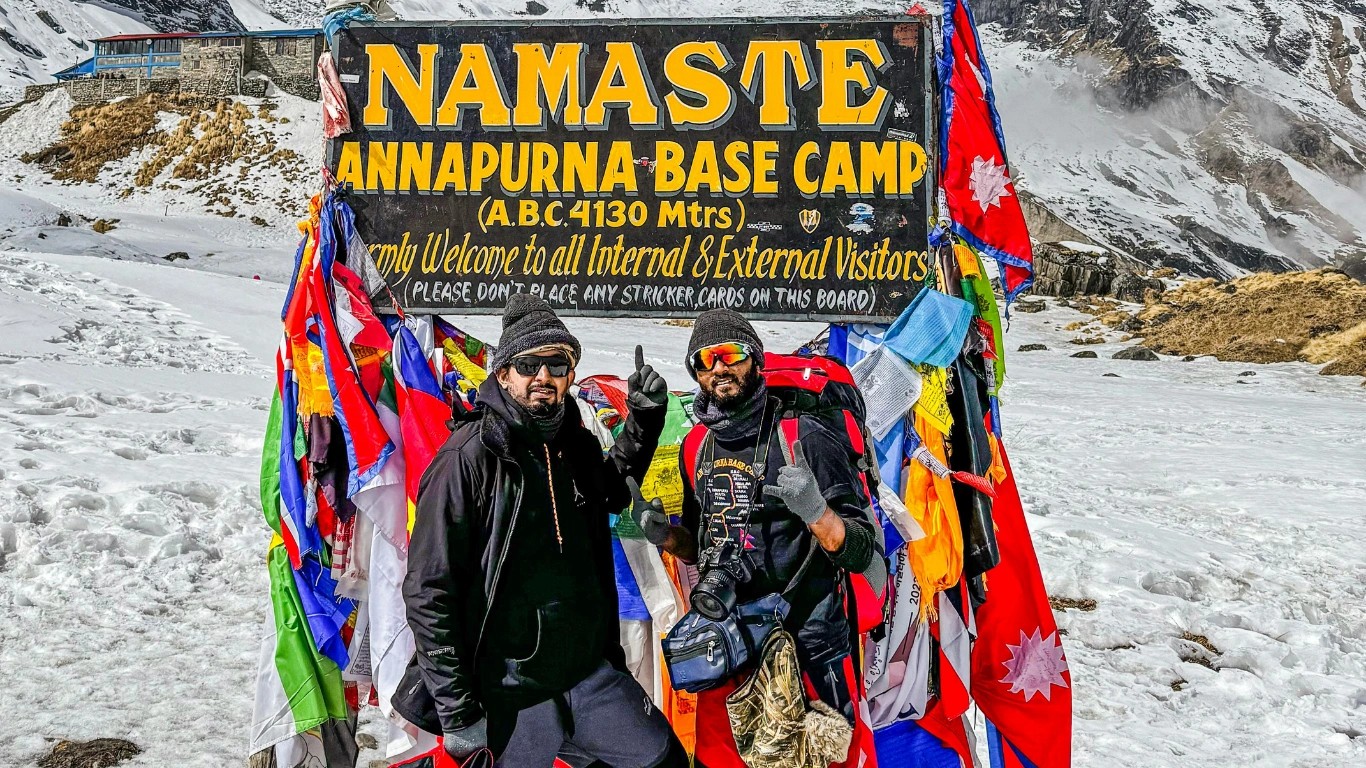
At Majestic Trails Nepal, the ABC trek is one of our most requested and most loved routes. Our guides have walked this trail collectively hundreds of times. We know the lodge owners by name. We know where to book ahead during peak season, which routes suit which travelers, and how to make sure you arrive at ABC healthy, safe, and completely present for the moment.
We offer all three ABC routes — classic, cultural, and fast-track — with full customization based on your fitness, your time, and what you want from the trek.
If you have questions about routes, packing, dates, fitness preparation, or anything else — contact us. We reply personally. No automated replies, no call centers. Just experienced guides who know this trail.
Your Annapurna Base Camp trek starts with one conversation. Let's have it.
📩 Get in touch with Majestic Trails Nepal →
The Annapurna Base Camp Trek is considered a moderate trek. While the altitude reaches 4,130 meters, many trekkers find the thousands of stone steps at Ulleri, Chhomrong, and throughout the sanctuary more challenging than the altitude itself. With basic fitness and proper preparation, most healthy individuals can complete the trek successfully.
The trek can take anywhere from 5 to 10 days depending on the route. The shortest option starts from Jhinu Danda and takes around 5–6 days, while the classic Annapurna Base Camp via Ghorepani and Poon Hill route typically takes 9–10 days.
Yes. The Annapurna Base Camp Trek is one of the best beginner-friendly treks in Nepal. The trail is well-established, accommodation is available throughout the route, and no technical climbing experience is required. Beginners who prepare physically and walk at a steady pace generally enjoy the trek without major difficulties.
The best preparation is stair climbing, uphill hiking, and regular walking or jogging. Training for at least 6–8 weeks before the trek will help strengthen your legs and improve endurance. Practicing with a backpack can also make the trek much easier.
Yes, the Annapurna Base Camp Trek is considered very safe. The route is well-marked, passes through numerous villages and teahouses, and is trekked by thousands of people every year. The main precautions involve walking carefully on stone steps, staying hydrated, and ascending gradually to avoid altitude-related issues.
Trekkers need an Annapurna Conservation Area Permit (ACAP) to enter the Annapurna region. The permit can be obtained in Kathmandu, Pokhara, or at the entry point before starting the trek. It must be carried throughout the journey as it is checked at several checkpoints along the route.
Essential items include trekking boots, warm layers, a waterproof jacket, gloves, a hat, a sleeping bag, a reusable water bottle, a headlamp, sunscreen, a first aid kit, water purification tablets, and a power bank. Packing light while carrying the essentials will make the trek much more comfortable.
The best seasons are spring (March to May) and autumn (September to November). Spring offers blooming rhododendron forests and pleasant temperatures, while autumn provides the clearest mountain views and the most stable weather conditions.
The highest point of the trek is Annapurna Base Camp itself at 4,130 meters (13,550 feet). Most trekkers spend only one night at this altitude before descending, which helps reduce the risk of altitude-related problems.
The classic Annapurna Base Camp via Ghorepani and Poon Hill route is the most popular option. It combines mountain views, rhododendron forests, traditional villages, and the famous Poon Hill sunrise. Trekkers with less time can choose the Ghandruk or Jhinu Danda routes instead.
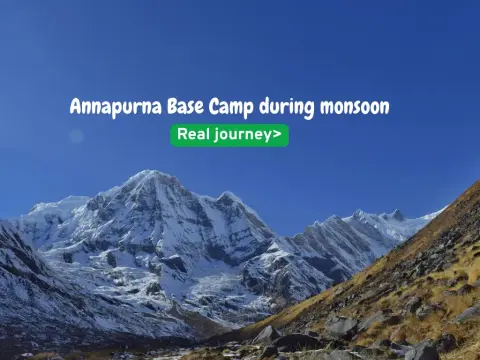
Trekking to Annapurna Base Camp Trek is one of Nepal’s most iconic mountain journeys. For mountaineers, the climb begins here, but for trekkers, Annap...
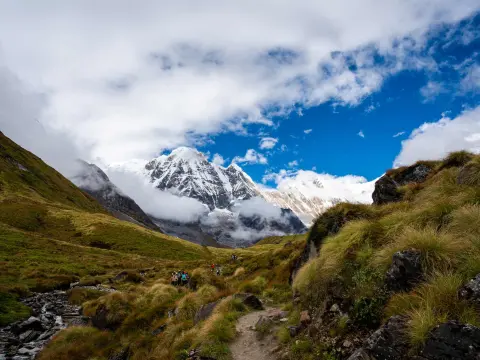
The Annapurna Base Camp trek is a moderate trek, suitable for fit beginners, with no technical climbing required. Its main challenge is not the altitu...
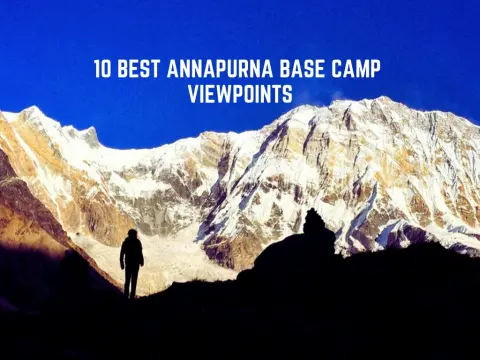
The alarm rings at 4:30 AM. You stumble out of your sleeping bag in Machhapuchhre Base Camp, cursing the cold—until you step outside.The first rays of...
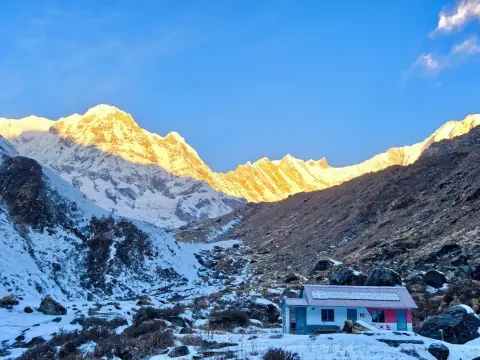
Nestled at 4,130 meters within a dramatic glacial amphitheater, the Annapurna Base Camp (ABC) trek stands among Nepal's most iconic Himalayan journeys...
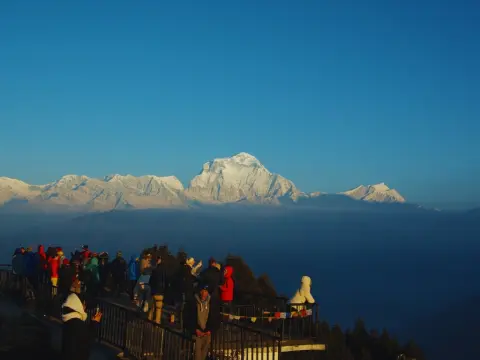
Poon Hill stands as Nepal's most accessible high-altitude viewpoint, rising to 3,210 meters (10,531 feet) above sea level in the Annapurna region of w...
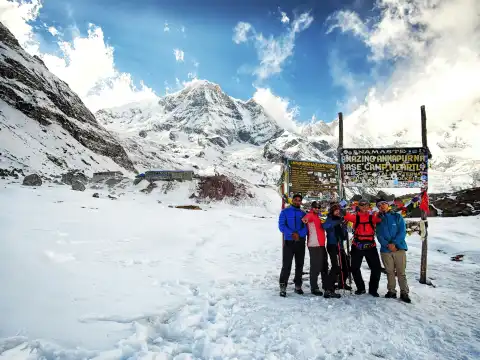
The Annapurna Base Camp trek stands as one of Nepal's most celebrated mountain journeys. Known simply as the ABC trek Nepal, this route draws thousand...
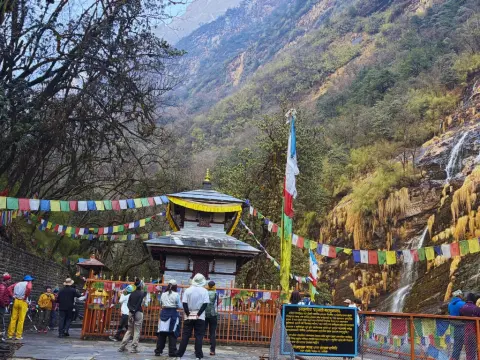
The Annapurna Base Camp trek is celebrated worldwide for its dramatic mountain scenery and diverse landscapes. Yet beyond the towering peaks and rhodo...
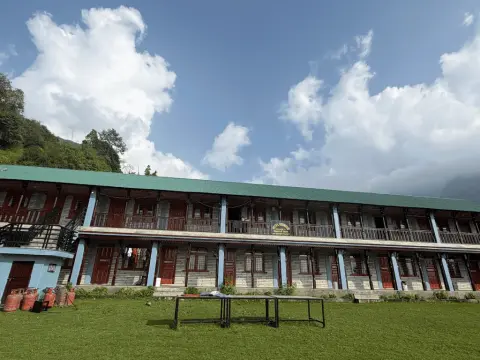
Every night on the Annapurna Base Camp trek is spent in a teahouse: a family-run lodge with simple twin rooms, blankets, and a heated dining hall. In...
The Annapurna Sanctuary holds a secret that no photograph can truly capture and no words can fully describe. Yet every trekker who has stood at 4,130...
