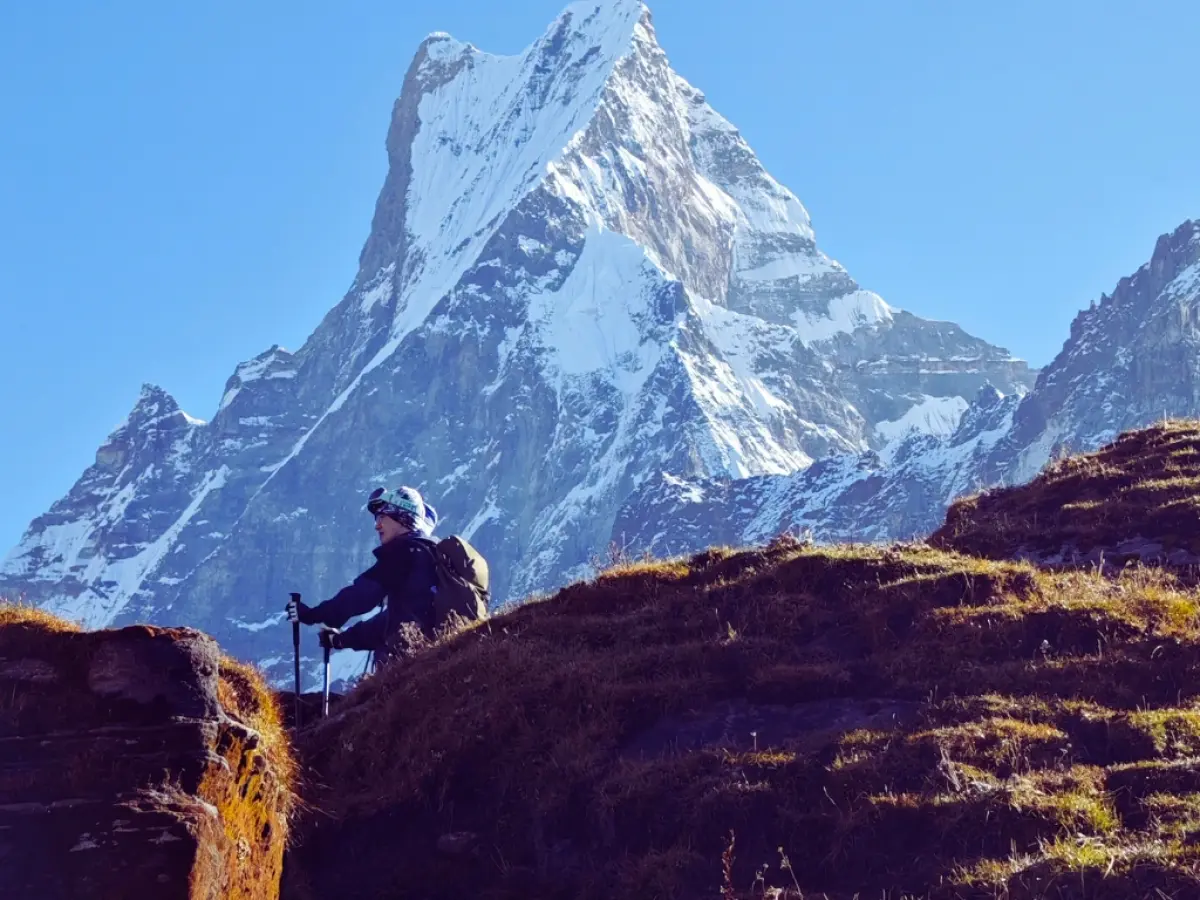
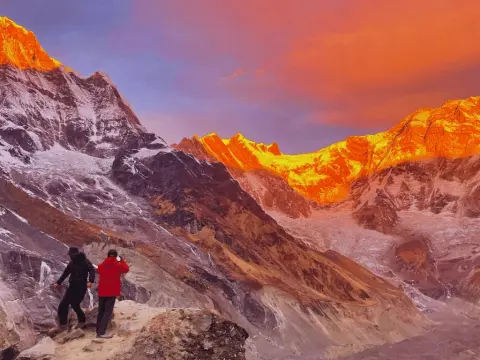
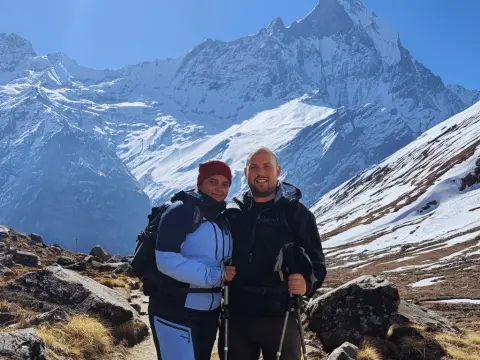
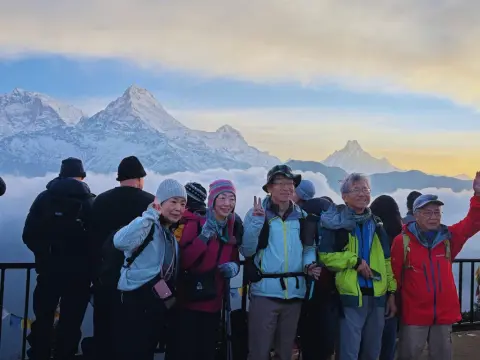
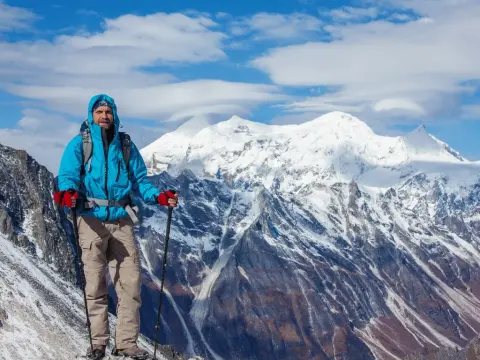
The Mardi Himal Trek is a short and scenic trekking route in the Annapurna region of Nepal, perfect for those seeking a less crowded yet stunning Himalayan experience. This trek offers breathtaking views of Mardi Himal, Machapuchare (Fishtail), Annapurna South, and Hiunchuli.
The Mardi Himal Trek stands as one of Nepal's most rewarding yet peaceful adventures, offering trekkers an intimate glimpse into the heart of the Annapurna region without the crowds that characterize more popular routes. As someone who has guided countless international adventurers along these pristine trails over the past two decades, I can confidently say this 10-day journey represents the perfect balance between accessibility and an authentic Himalayan experience.
Reaching a maximum altitude of approximately 4,200 meters at Mardi Himal Base Camp, this trek provides spectacular close-up views of Machapuchare (Fishtail Mountain), Annapurna South, and Hiunchuli. What makes the Mardi Himal Trek particularly special is its relatively recent opening to trekkers, meaning the trails remain unspoiled and the local communities retain their traditional warmth and authenticity. The route winds through enchanting rhododendron forests, alpine meadows, and traditional Gurung villages, creating a diverse tapestry of landscapes that change dramatically with each day's walk.
The Mardi Himal trek difficulty is perfectly suited for beginners and intermediate trekkers seeking their first serious Himalayan adventure. Unlike the more demanding Everest Base Camp Trek or the longer Annapurna Circuit Trek, this route offers manageable daily walking distances of 4-6 hours, allowing ample time for acclimatization and cultural immersion. The well-maintained trails and strategically placed teahouses ensure comfort without compromising the wilderness experience that draws adventurers to Nepal's mountains.
From a seasonal perspective, the Mardi Himal Trek in December presents unique opportunities for those seeking winter mountain views. While temperatures drop significantly at higher elevations, the crystal-clear skies often provide the most stunning mountain panoramas of the year. Spring (March-May) brings the famous rhododendron blooms, while autumn (September-November) offers stable weather and excellent visibility. Each season transforms the trek into a different adventure, though proper preparation becomes essential during the winter months.
The Mardi Himal trek cost remains remarkably reasonable compared to other Annapurna region treks, making it an excellent choice for budget-conscious travelers who refuse to compromise on quality. Our comprehensive 10-day package includes all necessary permits ACAP, experienced English-speaking guides, comfortable teahouse accommodations, three meals daily, and ground transportation. This transparent pricing structure eliminates hidden costs and allows trekkers to focus entirely on the mountain experience.
What distinguishes this short Mardi Himal trek from alternatives like the Annapurna Base Camp Trek is its sense of discovery and solitude. While ABC attracts hundreds of trekkers daily, Mardi Himal's trails offer peaceful mornings where the only sounds are rustling leaves and distant bird calls. The ridge walks provide panoramic views that rival any in the Himalayas, yet you'll often find yourself alone with the mountains, creating those profound moments that define transformative travel experiences.
The cultural aspect of this Machapuchare view trek cannot be overstated. Staying in family-run teahouses in villages like Deurali and Forest Camp allows genuine interactions with local Gurung and Magar communities. These encounters, combined with the spiritual significance of Machapuchare (considered sacred and never climbed), create connections that extend far beyond typical tourist experiences. Many guests tell me years later that their conversations with local families remain their most treasured memories.
For those seeking to explore more of Nepal's incredible diversity, this trek pairs beautifully with a Kathmandu City Tour either before or after the mountain adventure. The contrast between ancient temples and pristine wilderness creates a comprehensive understanding of Nepal's rich heritage.
As your trusted guide to Nepal's mountains, I encourage adventurous spirits to embrace this best short trek in Nepal. The Mardi Himal Trek offers everything that draws people to the Himalayas – stunning views, cultural authenticity, physical challenge, and spiritual renewal – compressed into an accessible 10-day format. Book your adventure with Majestic Trails Nepal today, and discover why this hidden gem continues to exceed expectations for trekkers from around the world. Whether you're planning your first Himalayan adventure or adding another spectacular route to your collection, these trails await your footsteps.
| Trek Name | Duration | Difficulty | Price | Key Features |
|---|---|---|---|---|
| Annapurna Base Camp Trek | 14 Days | Moderate | From USD 940 | Scenic Annapurna views with lush rhododendron forests |
| Ghorepani Poon Hill Trek | 8 Days | Easy | From USD 720 | Best Sunrise Viewpoint of Annapurna and Dhaulagiri ranges |
| Pikey Peak Trek | 10 Days | Moderate | From USD 1,090 | Quiet trails, cultural villages, panoramic Everest region views |
Welcome to Nepal! Upon landing at Tribhuvan International Airport, your Majestic Trails Nepal representative will greet you with a traditional khata (welcome scarf) and transfer you to your hotel in Thamel.
After freshening up, join us for an afternoon trek briefing where we'll:
Evening: Enjoy a welcome dinner featuring authentic Nepali cuisine—the perfect opportunity to meet your fellow trekkers and guides.
Today, you'll travel to Pokhara—Nepal's adventure capital and the launching point for your Mardi Himal Trek from Pokhara.
Option A – Scenic Flight (25 minutes):
Soar above the hills with breathtaking views of the Himalayan range, including distant glimpses of the peaks you'll soon approach on foot. Additional Cost - $110
Option B – Overland Drive (6-7 hours):
Travel along the Prithvi Highway, winding through river gorges and terraced hillsides. We stop for lunch at a riverside restaurant and for photo opportunities along the way.
Arriving in Pokhara, you'll have the afternoon free to explore the lakeside district, rent a boat on Phewa Lake, or simply relax before the trek begins. On clear evenings, Machapuchare's reflection shimmers on the lake—a preview of the views ahead.
Your Mardi Himal Trek begins today! After an early breakfast, we drive to Kande—a small settlement on the Pokhara-Baglung highway marking the trailhead.
The trek starts with a gradual ascent through terraced farmland and oak-rhododendron forests. The trail is well-marked and relatively easy, perfect for warming up your trekking legs.
After approximately 2-3 hours, you'll reach Deurali (also known as Australian Camp), a beautiful ridge settlement offering your first major Himalayan panorama. On clear days, the views stretch from Dhaulagiri in the west to the Annapurna massif and Machapuchare in the east.
Watch the sunset paint the peaks in alpenglow—this is just the beginning of the spectacular Mardi Himal Trek experience.
Today's trek takes you deeper into the wilderness, following a beautiful ridge trail that separates the Mardi Himal and Annapurna Base Camp routes.
The path winds through enchanting rhododendron forests—during spring (March-May), these ancient trees explode in brilliant reds, pinks, and whites. Even outside blooming season, the twisted trunks draped in moss create a mystical atmosphere.
Keep your eyes and ears open for wildlife. This section of the Mardi Himal Trek is known for:
Forest Camp Mardi Himal is a small, intimate settlement with just a handful of teahouses. The remote atmosphere and genuine hospitality here offer a stark contrast to busier trails elsewhere in Nepal.
This is the most significant altitude-gain day of your Mardi Himal Trek, and the landscape transformation is remarkable.
Leaving the forest behind, you'll ascend through Low Camp (2,970m)—a good spot for a mid-morning tea break—before continuing upward as the trees thin and eventually give way to high-altitude grasslands.
The final approach to High Camp Mardi Himal is steep but rewarding. With every step, the mountain views become more dramatic. Machapuchare's shark-fin summit dominates the northern horizon, while Mardi Himal itself now feels tantalizingly close.
Arriving at High Camp, you'll understand why experienced trekkers rate this as one of Nepal's finest viewpoints. The evening light on the peaks is simply spectacular.
Important: Proper acclimatization is crucial today. Walk slowly, stay hydrated, and inform your guide immediately if you experience any altitude-related symptoms.
The day you've been waiting for.
Starting before dawn, you'll ascend the final 600 meters to Mardi Himal Viewpoint—the crown jewel of this entire trek.
The trail from High Camp follows a steep but straightforward ridge, with fixed ropes assisting on the final scramble. Take your time; the thin air at this Mardi Himal Trek altitude demands respect.
Reaching the viewpoint as the first rays of sunlight strike the Annapurna giants is a transcendent experience. Before you stands:
Spend an hour soaking in the views, taking photographs, and savoring this hard-earned achievement. Then begin the descent—first back to High Camp for breakfast, then continuing down to Low Camp.
The descent is steep; trekking poles are essential. By late afternoon, you'll settle into Low Camp for a well-deserved rest.
Your final trekking day follows an alternative descent route, completing a satisfying loop rather than backtracking.
The trail drops through forests and past seasonal shepherd camps before reaching Siding Village, Mardi Himal—a peaceful Gurung settlement where traditional mountain life continues largely unchanged.
From Siding, our private vehicle awaits for the 2-hour drive back to Pokhara. By late afternoon, you'll be back at your lakeside hotel with hot showers, cold drinks, and a profound sense of accomplishment.
Evening: Celebrate your successful Mardi Himal Trek with a special farewell dinner in Pokhara. Lakeside restaurants offer everything from authentic dal bhat to international cuisine.
After a leisurely breakfast with final views of the Annapurna range, you'll return to Kathmandu by your preferred transport.
The afternoon is free for:
Evening: Final group dinner (optional) to share Mardi Himal Trek photos and swap stories with new friends.
Your Mardi Himal Trek adventure concludes today. We provide airport transfers timed to your flight departure—whether that's an early morning departure or an afternoon flight.
As you board your flight, the images of sunrise over Machapuchare, the twisted rhododendron forests, and the warmth of Nepali hospitality will remain with you long after you've left the mountains behind.
Didn't get enough? Many trekkers return for extended adventures—Annapurna Circuit, Everest Base Camp, or the challenging Upper Mustang. Let us know, and we'll help plan your next Himalayan journey.
The best times for the Mardi Himal Trek are spring (March to May) and autumn (September to November). These two seasons give you the clearest mountain views, the most stable weather, and the most comfortable walking conditions on the ridge. Because Mardi is shorter and lower than the big treks, it also handles the shoulder months better than most.
Here is the honest season-by-season breakdown from our years on this trail:
For a first Himalayan trek with the best chance of clear Machhapuchhre and Annapurna South views, choose spring or autumn. If you want solitude over guaranteed weather, the shoulder months reward you with an empty trail.
The Mardi Himal Trek is graded moderate, which makes it one of the best treks in Nepal for fit beginners and first-time Himalayan trekkers. You do not need any climbing skills, ropes, or technical experience. What you do need is the ability to walk uphill for four to six hours a day on stone steps and forest trails, carrying a light daypack.
Here is what actually makes Mardi challenging, in honest order:
The maximum altitude is 4,500 m at the upper viewpoint, high enough that altitude matters but low enough that serious altitude sickness is uncommon on a well-paced itinerary. With a month of regular cardio and stair practice beforehand, most reasonably fit people complete Mardi comfortably. This is exactly why we recommend it as a first trek — real Himalayan height and ridge-walking, without the long, punishing days of ABC or Everest.
The Mardi Himal Trek lies inside the Annapurna Conservation Area, so every foreign trekker needs the Annapurna Conservation Area Permit (ACAP). As of 2026, a licensed guide is also mandatory for this trek under Nepal's trekking regulations, so independent solo trekking is no longer permitted on this route.
The permit details for 2026:
A few practical notes from the trail:
When you trek Mardi Himal with Majestic Trails Nepal, we handle the entire permit process for you. You simply send your passport details and photos, and everything is ready before you start walking. No queues, no paperwork, no risk of the double fee that catches independent trekkers who arrive at a checkpoint without a permit.
Accommodation on the Mardi Himal Trek is in tea houses — simple, family-run lodges along the trail. Because the route only opened for tea house trekking in 2012, the lodges are smaller and more authentic than on the busier Annapurna routes, often run by families from the nearby Sidhing and Lwang villages. You stay in basic twin-share rooms with a bed, blankets, and a shared bathroom.
What to expect from the lodges:
The food is simple, freshly cooked, and surprisingly good. Every tea house serves a mix of Nepali and international dishes, but the most reliable and best-value choice at every altitude is dal bhat — rice, lentil soup, vegetable curry, and pickle, usually with a free refill. As our guides say, dal bhat power, 24 hour. Other common options include noodles, fried rice, pasta, potatoes, eggs, soups, and Tibetan bread.
Our honest advice: eat dal bhat for at least your main meal each day. It is fresh, filling, and the kitchen makes it constantly, so it is gentle on the stomach. Save the experimental menu items for the lower elevations. On our packages, three meals a day on the trek are included, so you eat well from start to finish.
The Mardi Himal Trek begins near Pokhara, not Kathmandu, so getting to the trailhead is a two-step journey: first Kathmandu to Pokhara, then Pokhara to the trail starting point at Kande, Phedi, or Dhampus. The whole approach is short and scenic, which is part of what makes Mardi so accessible.
Kathmandu to Pokhara (around 200 km):
Pokhara to the trailhead:
A practical note: some of the roads to the trailheads and out from Sidhing are rough and bumpy, especially in or after the monsoon. A sturdy jeep handles these sections best. When you book with us, all transport — Kathmandu to Pokhara, Pokhara to the trailhead, and the jeep back from Sidhing — is arranged and timed around your itinerary, so you never have to negotiate local vehicles or worry about being stranded after the trek. Most trekkers spend a night in Pokhara before and after the trek, and we are happy to build that into your trip.
Mardi Himal is one of the safer treks in Nepal, but as of 2026 you can no longer trek it fully solo — a licensed guide is mandatory on this route under Nepal's trekking regulations. This rule was introduced for trekker safety, because the upper section above Low Camp follows an exposed, narrow ridge where the trail is faint and the weather can change fast. A guide handles navigation, altitude monitoring, and any emergency, which removes most of the real risk from the trek.
For trekkers who used to worry about arriving solo and finding nowhere to sleep, there is good news in 2026:
So while true solo trekking is no longer allowed, a solo traveler can absolutely join a Mardi Himal trek and feel safe and supported the whole way. When you book with us, you get a licensed guide, your permits, and your lodges all arranged — you simply arrive and walk. Many of our Mardi trekkers are solo travelers, and the small-group, guided format is part of what makes the trek enjoyable rather than stressful.
The Mardi Himal Trek reaches a maximum altitude of 4,500 m at the upper viewpoint, which is high enough that altitude needs respect but low enough that serious altitude sickness is uncommon on a well-paced itinerary. Most trekkers feel only mild effects — shortness of breath or a light headache — that pass with rest, hydration, and a slow walking pace. The key is gaining height gradually and sleeping lower than your highest point, which our itineraries are built around.
How we manage altitude and safety on every trek:
In the rare event of a serious problem, the fastest solution is helicopter evacuation. Mardi Himal's location near Pokhara means a rescue helicopter can reach the trail quickly and fly a trekker to a Pokhara hospital in a short flight. This is exactly why travel insurance with helicopter evacuation cover is essential — see the next section. If a trekker ever needs to descend or be evacuated, your guide coordinates it immediately, contacts our Kathmandu office, and arranges the helicopter and hospital. In 10+ years of guiding the Annapurna region, our priority has always been getting people home safe, and a guided trek is the single biggest factor in that.
Travel insurance is not legally mandatory for the Mardi Himal Trek, but we strongly require all our trekkers to have it, and the one feature that matters most is helicopter evacuation cover up to at least 4,500 m. A standard travel policy is not enough — you need a plan that specifically covers high-altitude trekking and emergency helicopter rescue in Nepal, because a single evacuation flight can cost thousands of US dollars out of pocket without it.
What your Mardi Himal travel insurance should cover:
A few honest tips from experience:
We are not an insurance seller and do not earn anything from recommending it — this is simply the single most important thing you can organize for your own protection. When you book with us, we will remind you to arrange a policy with the right altitude and helicopter cover, and we keep your details on file in case they are ever needed.
The Mardi Himal Trek was a breathtaking journey through one of Nepal’s lesser-known but incredibly beautiful trekking routes. The trail winds through lush forests, quaint villages, and offers spectacular close-up views of Annapurna South, Machapuchare, and Mardi Himal peaks. Compared to busier routes, this trek felt peaceful and untouched, perfect for those seeking solitude and authentic mountain experiences. The highlight was reaching the Mardi Himal Base Camp, where the panoramic mountain vistas took my breath away. Along the way, the friendly locals and cozy teahouses made the journey comfortable and memorable. This trek offers a fantastic balance of adventure, nature, and culture, making it ideal for trekkers wanting a quieter Himalayan escape.
I did the Mardi Himal trek with Majestic Trails Nepal. I am surprised by their service. On the First day, the owner of the company came to meet me and gave me a whole briefing about the trek. I meet with the guide. Our guide Ram, was really helpful and an excellent guide throughout the trek. My porter was also really nice. The service they provided to us shows how good they are. I highly recommend this team to anyone who likes to come to Nepal.
The Mardi Himal Trek was perfect for a peaceful and scenic trekking experience. Majestic Trails Nepal organized everything beautifully, and the trail was much quieter compared to other popular routes. The views of the Annapurna range and Machapuchare were jaw-dropping. This trek is ideal for beginners or those looking for a less crowded trail. A huge thanks to the team for making my first trekking experience in Nepal so special!
The best time to trek Mardi Himal Trek is during the spring (March–May) and autumn (September–November) seasons. During these months, you'll enjoy clear skies, comfortable temperatures, and stunning mountain views. Spring brings rhododendron blooms, while autumn offers the best visibility of peaks like Machapuchare and Annapurna South.
Yes, the Mardi Himal Trek in December is possible and peaceful. December marks early winter, so trails are quiet, skies are often clear, and snow adds a magical touch to the landscape. However, temperatures are cold, especially at High Camp and Mardi Base Camp, so proper winter gear and a guide are highly recommended.
The classic Mardi Himal trek route starts from Kande and passes through Deurali, Forest Camp, Low Camp, High Camp, and finally reaches Mardi Base Camp. The Mardi Himal trek distance is around 50 kilometers round-trip, making it a great short Himalayan trek. The Mardi Himal trek route map shows a gradual ascent, helping with proper acclimatization.
The trek begins at around 1,800 meters and ascends to 4,500 meters at Mardi Himal Base Camp. The gradual increase in Mardi Himal trek elevation makes it suitable for beginners who acclimatize properly.
The Mardi Himal trek difficulty is considered moderate. While no technical climbing is required, the trail involves steep ascents and long walking days (4–6 hours daily). With proper pacing and guidance, even first-time trekkers can complete it successfully.
Technically, yes. But as of 2023, solo trekking without a guide is restricted in many regions of Nepal, including Annapurna. Even if it’s allowed, navigating the forested paths and high-altitude sections without experience can be risky. We strongly recommend doing the Mardi Himal trek with a guide for safety, support, and a smoother experience.
Yes! If you have limited time, we offer a Mardi Himal trek itinerary of 5 days or even a 3-day version starting directly from Pokhara. These are fast-paced but still rewarding options for those with tight schedules.
Yes! You can do a combined Annapurna Base Camp and Mardi Himal trek for a longer and more immersive trekking experience. We offer customizable itineraries that connect both trails with proper acclimatization and support.
You don't need to be an athlete, but you shouldn't arrive completely untrained either. Aim to walk 8–10 km on hilly terrain at least a few times a week in the month before your trek. Exercises like lunges, step-ups, and incline walks help condition your knees for the descent. Majestic Trails Nepal guides set a pace tailored to your group — nobody gets left behind, and rest stops are built in throughout every day.