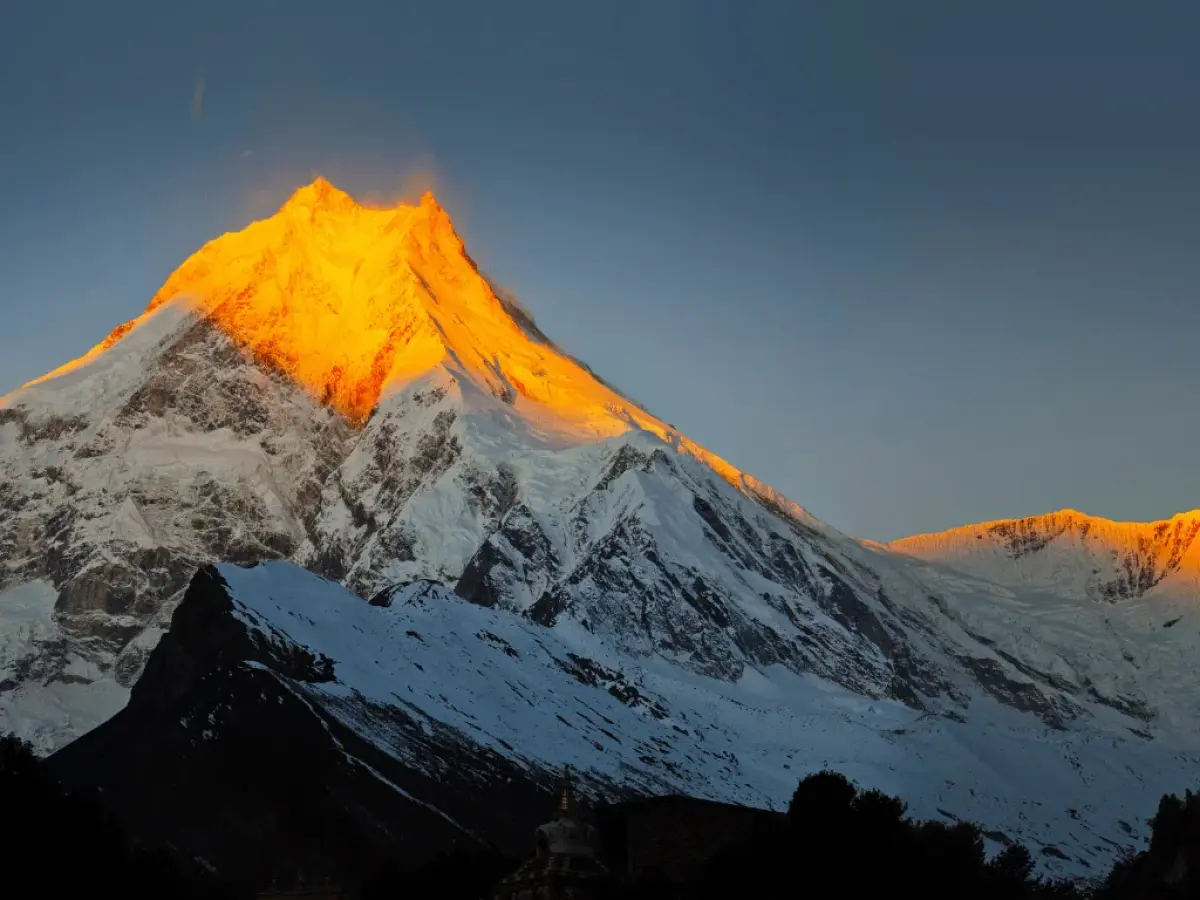
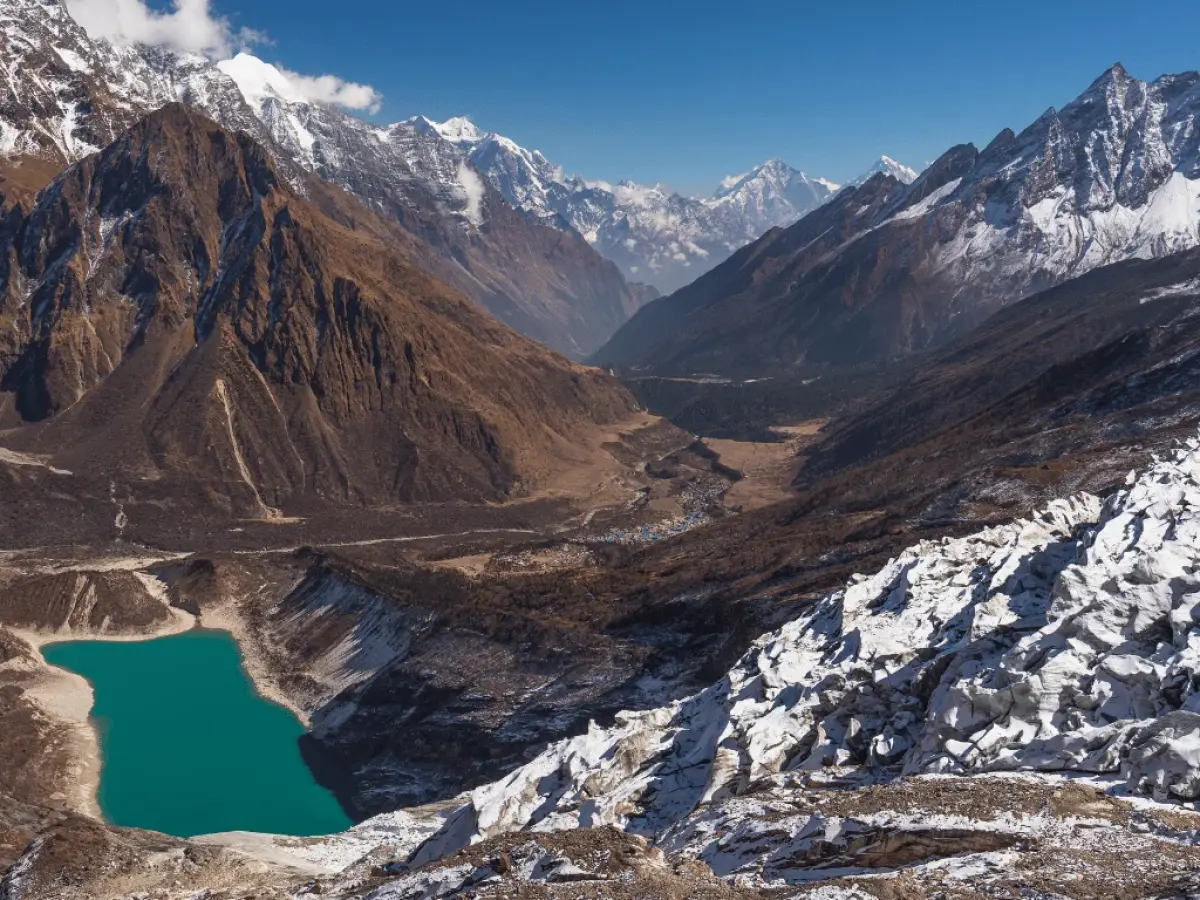
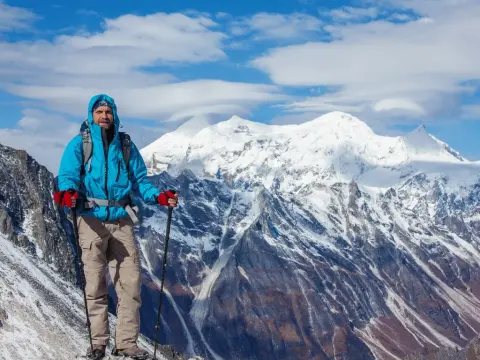
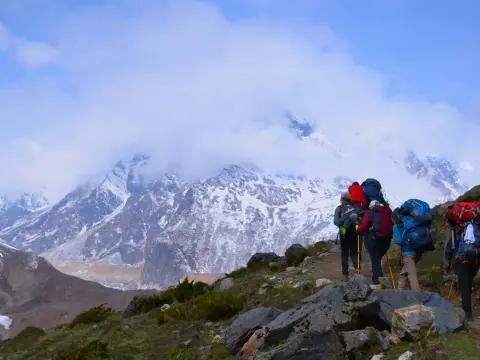
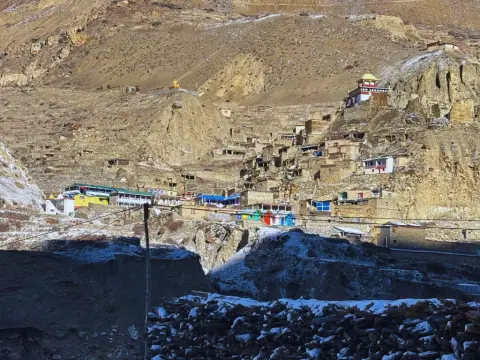
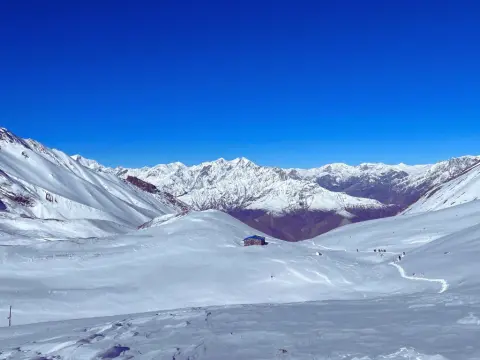
Set off for a journey to applaud the beauty that lies in the eighth highest mountain of the world i.e. Mt. Manaslu along with a hidden gem in the region known as “Tsum” valley. The glittering snow on the apex touching mountain peak is magnificent and the lush and wild landscape of Tsum valley will leave you in awe. Tsum Valley Manaslu Trek is a recently opened trail that has gained attraction of many travel lovers however the travellers in the region are very less owing to its difficult terrain and very simple accommodation facility.
Included
Included
In the realm of the Manaslu Trek with Tsum Valley, the poetic allure of nature, culture, and adventure converge. It leaves an indelible imprint on you. Prepare to be swept away in a symphony of sights, flavors, and emotions, for this is a tale of the Himalayas that will linger in your heart forever!
Tsum Valley Manaslu Trek is a delightful journey that lets you walk along the Nepal-Tibet border enjoying the culturally divine highlands settlements and appreciating the artistic monasteries built in those serene and quaint environment.
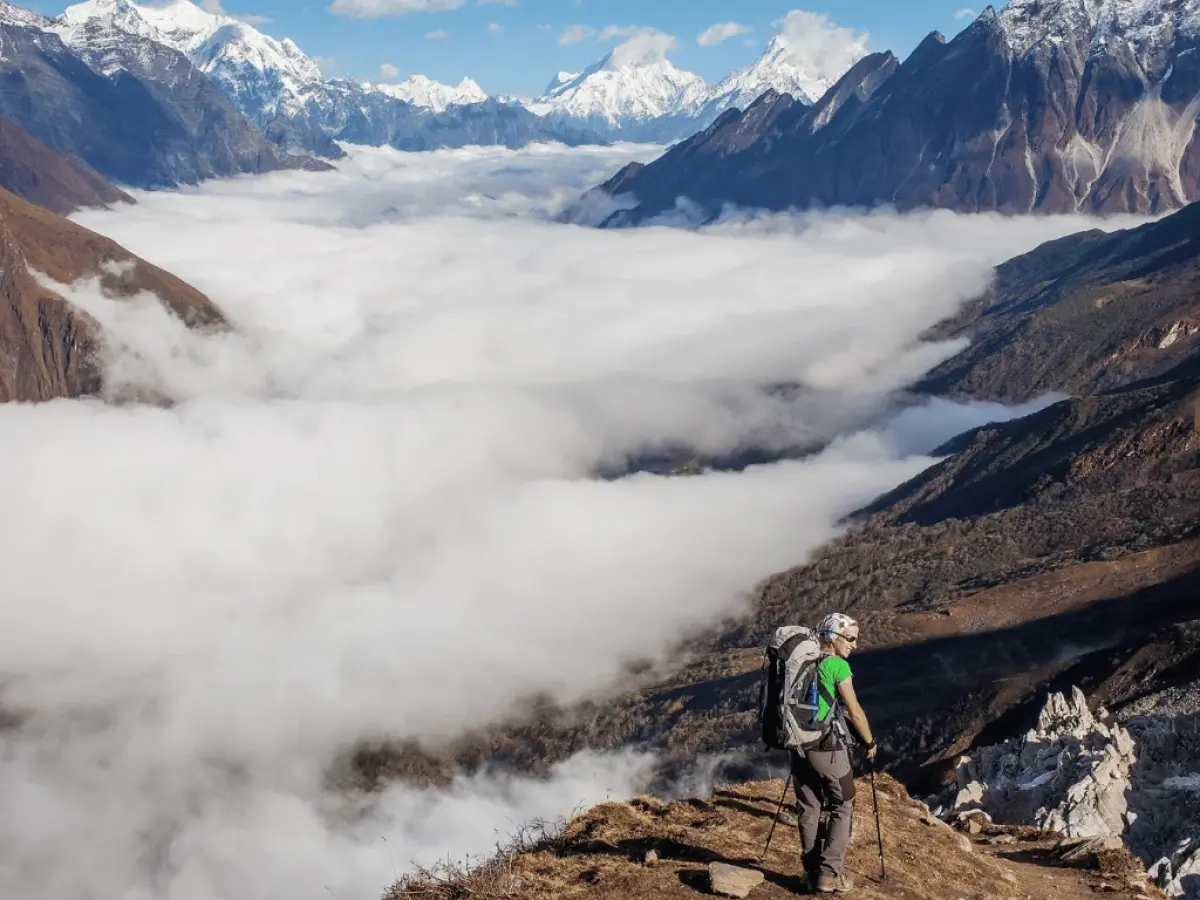
The dense forests in the region can be a home to many rare and endangered animals and the region is completely banned for hunting, fishing and animal slaughtering. You may get a glimpse of Himalayan Thar and Blue Sheep if lucky. Strolling along the rapids of Budhi Gandaki River, Machha Khola and Soti Khola is an amazing experience with the mountains like Mt. Manaslu, Ganesh Himal, Sringi Himal and Hiunchuli on our view.
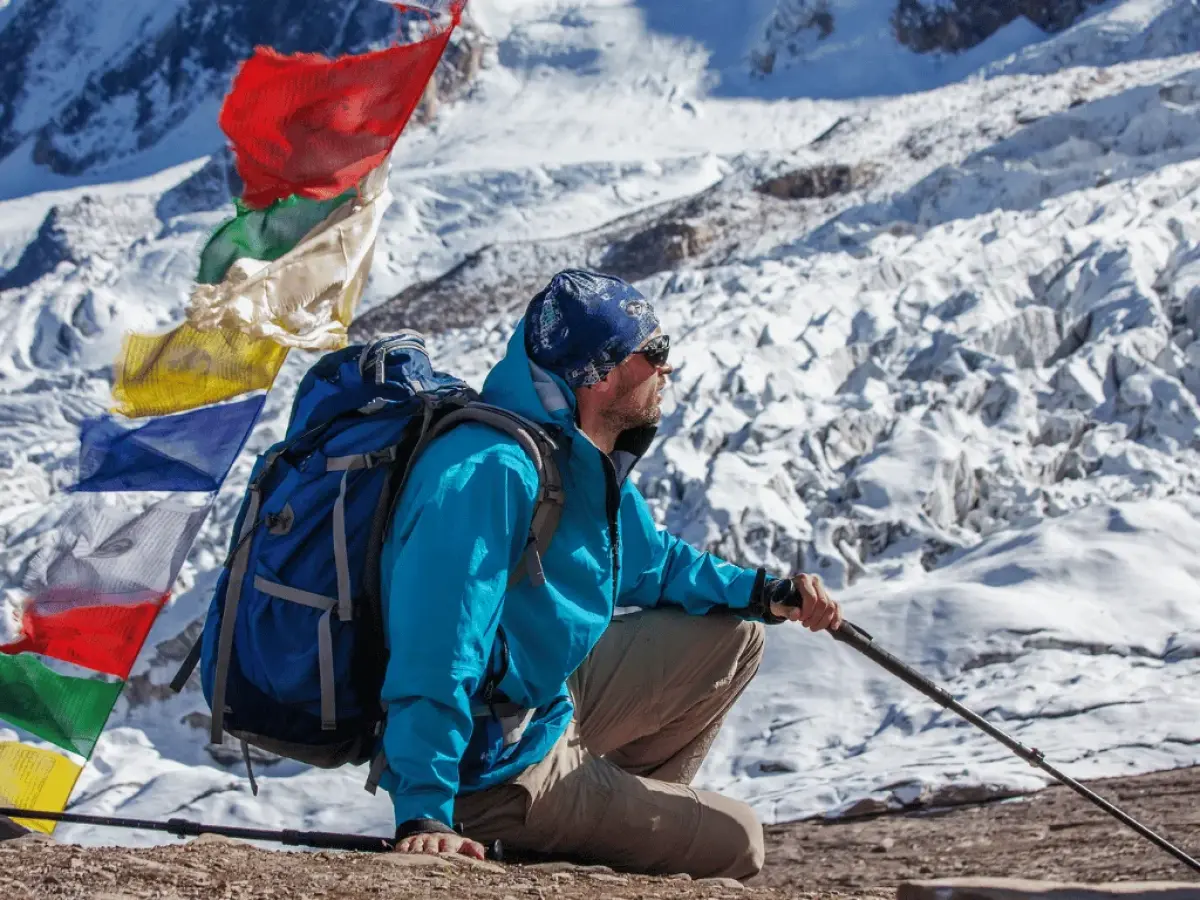
The biggest achievement of Tsum valley and Manaslu Trek is a climb up to Larkya La Pass which is (5106 metres) which is the highest point of our trek. From here, you can get some fascinating views of mountains like Cheo Himal, Kang Guru, Himlung Himal along with some rare views of Annapurna massif.
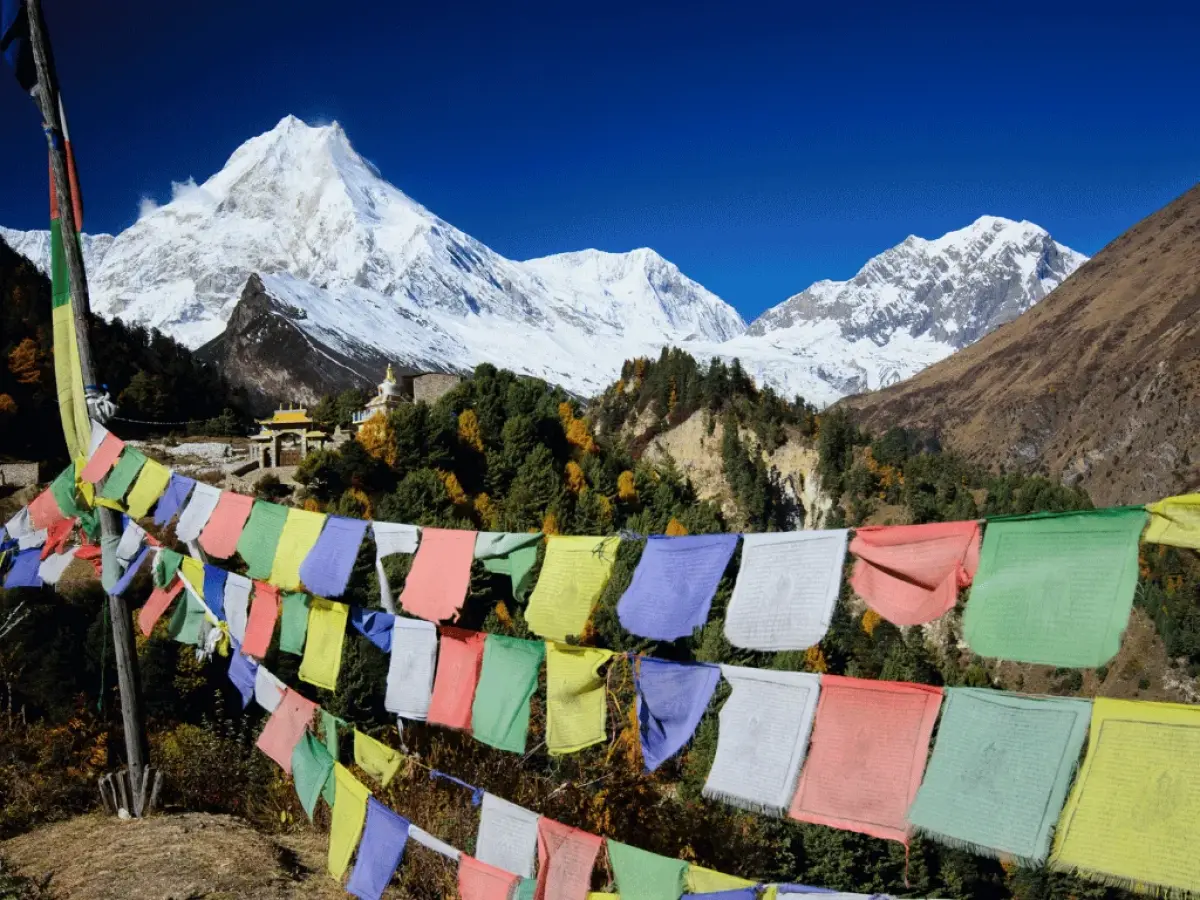
Enjoy the cultural vibrancy that can be found nowhere but in Tsum valley. Visit Mu Gompa, Rachen Gompa and Nunnery temple to get some insights about Tibetan Buddhist culture. The prayer flags, chortens, Mani walls; everything we encounter on our trail during our journey gives a resemblance of Tibetan Buddhist culture. The lifestyle and tradition of the people residing in the valley is unique and traditional. The people in the region have been able to preserve their uniqueness intact without any influence of outer world till date.
The Tsum Valley Manaslu Trek offers a diverse range of natural wonders that will leave you awestruck at every turn. Marvel at the serene beauty of glacial lakes like Birendra Tal and Pungyen Tso. These lakes reflect the surrounding snow-clad peaks on their surface.
As you step foot into Tribhuvan International Airport, you will be greeted by one of Majestic trails Nepal’s representatives. They shall guide you to your abode in Kathmandu.
Before the curtain of the Manaslu Trek with Tsum Valley adventure unfolds, a tapestry of sightseeing awaits. You will visit the city’s UNESCO World Heritage Sites. They serve as living testaments to the city's remarkable history, spirituality, and artistic heritage. Exploring these sites allows visitors to immerse themselves in the cultural tapestry of Nepal, experiencing the profound significance that continues to shape the city's identity.
Then, the journey begins with a drive to Machha Khola, a scenic overture that sets the stage for the walking journey that lies ahead. Village after village, like verses in an ancient poem, shall greet your footfalls - Jagat, Chisopani, Chumling, Chokhangparo, Nile, Mu Gompa, and Deng. As you traverse these storied lands, your steps shall ascend, a celestial ascent towards the grandeur of the Larkya La Pass.
Within the tapestry of this journey, you will get respite in the form of acclimatization days. In the embrace of Samagaon village, you can take in the tapestry of the surroundings and witness the breathtaking vistas the Himalayas unveil.
The path then unfurls towards Samdo and Dharmashala amidst the ethereal heights. You shall then embark upon a soul-stirring quest - to conquer the formidable Larkya La Pass. Located at an altitude of 5,160 meters (16,929 feet), the Larkya La Pass is known for its breathtaking views and its significance as a gateway between the Manaslu and Annapurna regions. The pass connects the valleys of the Budi Gandaki River to the east and the Marshyangdi River to the west, creating a mesmerizing transition between these two valleys.
Once the summit is conquered, the journey continues. From Bhimphedi to Tilje, each step is a testament to resilience until the melody of a jeep carries you from Tilje to Dharapani. From there, you will return back to Kathmandu.
In this enchanting tale of the Manaslu and Tsum Valley Trek, time shall weave its ethereal tapestry, blending the present and future in a dance of anticipation and discovery. This pilgrimage of the soul shall etch memories upon your heart, forever bound to the symphony of the Himalayas.
Do you want to know how difficult the journey can get? Well, let's cover that in this section.
Tsum Valley with Manaslu Trek is a moderate trekking journey. Starting at 900 meters above sea level, Machha Khola, this trek steadily increases elevation gain. Larkya La Pass at 5106 meters is the highest point you reach in the journey. It is one of the most challenging days because hikers will walk for roughly nine hours. Prior preparation is therefore essential for Tsum Valley with Manaslu Trek. Start the training at least 2-3 months in advance so that you can finish the trek smoothly
We understand that everyone wants to look at their options before choosing the right adventure. Hence, we will discuss the alternative treks in this section.
Firstly, there is the 14-day Manaslu Circuit Trek, a captivating journey that encompasses a circular route around the Manaslu region. This trek promises a mesmerizing encounter with the region's awe-inspiring landscapes, distinctive culture, and captivating traditions.
Alternatively, you may choose the 18-day Tsum Valley Trek, which delves into the pristine and restricted domain of the Manaslu region. This trek unveils the hidden valleys, remote villages, and awe-inspiring vistas of the Tsum Valley, offering an unparalleled experience.
Should you wish to proceed with booking this extraordinary Manaslu Tsum Valley Trek package?
At Majestic trails Nepal, we have created the Tsum Valley with Manaslu Trek for adventurers wanting to discover both the hidden Tibetan Buddhist culture of Tsum Valley and the classic Manaslu Circuit.
Our package features three nights in Kathmandu's top 3-star hotels. During the trek, we book the finest available teahouses in villages like Jagat, Chisopani, and Chumling for genuine mountain stays. Our professional guides walk with trekkers every day, explaining local culture, history, and Himalayan geography along the way.
We have been able to earn consistent 5-star ratings on TripAdvisor, Google, and Trustpilot for delivering safe, smooth, and memorable trekking adventures. Our Tsum Valley with Manaslu Trek brings together mountain adventure, rich culture, and stunning Himalayan landscapes in one remarkable journey.
The above information is a guide and standard template of what we provide. Our trip can be customized at your request to accommodate your specific requirements.
NOTE: During the trip; weather, local politics, transport or a multitude of other factors, that are beyond our control can result in a change of itinerary. It is, however, very unlikely that the itinerary would be substantially altered; if alterations are necessary the leader will decide what is the best alternative, taking into consideration the best interests of the whole group. Where a change does occur, we do everything we can to minimize its effect, but we cannot be responsible for the results of changes or delays.
Upon your arrival in Kathmandu, our airport representative will come to receive you at the airport, and he will transfer you to the hotel where you will be spending the night.
Meanwhile, you can further inquire about any information regarding the program.
Stay overnight at the hotel.
Today, we will start our sightseeing tour of Kathmandu Valley. The tour includes excursing the heritage sites listed in the UNESCO World Heritage Sites List, including Kathmandu Durbar Square, the Swayambhunath Temple, Bouddhanath Stupa, and the Pashupatinath Temple. These heritage sites present a sense of nostalgia because of their unique architectural integrity.
Enjoy the artistically opulent palaces, cultural quintessence, old priceless paintings, sculptures, and a brief history of Nepal.
Overnight stay at Hotel, Breakfast included.
Today, we drive to Macha Khola. The first four hours to Dhading Besi, the district headquarters of Dhading (1050m), are on paved roads, but we will be driving on a rougher surface for the section to Macha Khola.
In Jagat, we have to complete the ACAP procedure. In the early part of our trek, we ascend over a rocky ridge to Salleri and descend to Sirdibas through the flat-level path. The valley widens a bit as the trail continues up to Ghatta Khola. Continue upstream to a long simple hanging bridge and climb up to Philim.
Philim is a big village mainly inhabited by the Gurungs. Philim valley is well known for its Japanese-made school and police station. Walk past Philim to the north across a forest with the views of the narrowing valley. We reach Chisopani.
In Jagat, we have to complete the ACAP procedure. In the early part of our trek, we ascend over a rocky ridge to Salleri and descend to Sirdibas through the flat-level path. The valley widens a bit as the trail continues up to Ghatta Khola. Continue upstream to a long simple hanging bridge and climb up to Philim.
Philim is a big village mainly inhabited by the Gurungs. Philim valley is well known for its Japanese-made school and police station. Walk past Philim to the north across a forest with the views of the narrowing valley. We reach Chisopani.
Leaving Chisopani, we cross the gorge and walk for about half an hour, which offers a big and beautiful waterfall view. This day is challenging as it is an ascending path that stretches almost the entire route. Entering through the pine and rhododendron tree forest, we descend to the trail which leads us to Tsum Valley.
En route, you can see the panoramic views of the Mountains. Continuing our walk, we pass through a small beautiful village called Lokpa. It is along the old trail route.
From Lokpa, we have to descend for half an hour up to Lungwa Khola and then climb on a zigzag trail for a further two hours north through pines and rhododendrons until we reach Gumlung. After crossing the Siyar Khola, we finally arrive at Chumling. It is the lower Tsum valley. Chumling is located on the south face of the Shingri Himal, from where we can see an eye-catching view of Shringi Himal. You can also visit the old Chumling Gompa and the stone streets of the village.
After breakfast at Chumling, we carry out our walk towards Chokhangparo by crossing the suspension bridge on the river's opposite bank. The scenic views of the valley and views of Ganesh Himal amply compensate for today’s walk. Then we traverse through the rich farming land of maize and potatoes. The houses are classic Tibetan with barricades of firewood on the roof but without flat roofs, as it rains and snows here. Cross a huge slip where rocks and flood cleared the area even up onto the opposite bank, killing five in 1999, but is now covered with a forest of new trees.
Up the valley to the east are superb views of several of the 7000-7400m Ganesh Himal, of long suspension bridges on the opposite bank, and far above the perched village of Ripchet (2468m). Passing through Rainjam and crossing Serpu Khola, we climb for over two hours on well-graded but exposed track to upper Tsum and the join villages of Chokhangparo, stone houses with a few iron roofs nestled under cliffs.
Chokhangparo is situated on flat land and consists of 2 settlements, Chokhang and Paro. If the weather permits, enjoy the views of Himalchuli (7893m) and Ganesh Himal (7140m). Some households practice polyandry down here. This area is prominent for its Tibetan Buddhist heritage.
Ascending from Chokhangparo, you might get symptoms of Altitude sickness. So, we recommend you take precautions about it and drink plenty of water to keep yourself hydrated. We head east through small villages and past a local school. The magnificent view here pauses our trekking and stops for the honor of the amazing nature.
Gradually climbing over a ridge of chortens, we pass Lama Gaon (3202m) through the flat fields, looking across the extensive crops and river to the Rachen Gompa/ Nunnery Gompa (3240m) with excellent pilgrim accommodation. Thar is often sighted near here. The friendly people speak Tsumba, related to Tibetan, but often little Nepali and are quite unused to visitors.
We can also make a small visit and then cross the Shiyar Khola, pass through hamlets of Phurbe (3251m) and Pangdun (3258m) and pass an unusual round stupa before reaching the larger village of Chhule (3347m) through an impressive entrance gate. Then we continue walking through the well-managed villages Lar (micro hydropower), Phurbe, and Pangdun.
We leave the old historic Stupa of Buddha in a way crossing the village of Chhule. The children here all wear the Tibetan dressing gown called chubas, and there are many yaks. Heading upstream to cross the bridge and climb to Nile (pronounced Nee-lay). The Nile is the last village heading north in the upper Tsum valley. This area is massively deforested.
This village is situated on the banks of the Shiar Khola, and it consists of a large number of households. Both villages are in traditional style, including livestock compounds into the houses and sheltered verandahs for drying crops.
We are now almost close to the Tibetan border. Walk to the west bank of the valley through the Tibetan landscapes. Climb up to the Mu Gompa. This Mu Gompa is the largest monastery in the region. The Gompa lies at the highest and most remote part of the Tsum Valley.
Leaving behind the cultural sanctuary of the lower Tsum Valley, you will begin the day with a steady descent from Chumling (2,386m) toward the village of Lokpa. This section of the trail treats you to striking, open views of Sringi Himal and Ganesh Himal as you negotiate rocky ridges, stone steps, and local farmlands growing millet and maize. After reaching Lokpa, the trail drops sharply through dense, lush pine and bamboo forests into the steep, narrow gorge of the Budhi Gandaki River.
You will cross the roaring river multiple times via swaying iron suspension bridges. After rejoining the main Manaslu Circuit trail at the river junction, you will follow the path upstream along the canyon floor, climbing gently through the narrowing valley until you reach the riverside teahouse settlement of Deng (1,860m).
Today we trek to Deng in the Manaslu valley.
We scramble steeply up onto a spectacular trail and descend to cross the river. We pass through some small settlements and then ascend to an impressive valley. There we encounter Mani stones (prayer stones) carved into wayside rocks, a sign that we are entering a Tibetan territory. In the afternoon, we make an excursion to the small settlement of Prok, a two-hour round trip.
We pass the stone gate and the long Mani stone wall of the village after Lho, with a full view of Peak 29 ahead. You can make a side excursion to Pungen to get a very close-up view of Manaslu from here. The trial follows a lateral moraine of Pungen towards Sama. It takes another 20 minutes to reach Sama Gompa from there for a night halt.
This day has been set aside for acclimatization. An option for full or half-day walks has been set aside. The full-day walk is towards Manaslu Base Camp (approximately 6-7 hour round trip). Alternatively, there are half-day walks either across the valley or to Birendra Tal.
We cross pasture areas and gradually ascend to the valley. Fantastic views of the mountains, especially Manaslu, are ahead of us as we reach Samdo (3860m), a Tibetan refugee village. This remote village is only a day’s walk from the Tibetan border. In the afternoon, we will explore the village and the surrounding hills.
After crossing a couple of streams, we’ll reach the Larkya Bazaar. This is a village that thrived from trade with Tibet years ago. After a steady climb, we will arrive at our lodge at 4450m.
We climb Cho Chanda and then slowly head uphill towards the steep snowed-up pass. The panorama from the top is magnificent: Himlung Himal (7,126 meter), Cheo Himal (6,820 meters), Gyagi Kung, Kang Kuru (6,981 meters), and the Annapurna II (7,937 meters). The descent is steep, through moraines to Bhimphedi.
With a gentle climb through paddy fields, we head towards the small Karcha La pass. The trail descends through fig trees and rhododendron forests to Tilje.
Today, we shall trek down to Dharapani then we shall drive to Kathmandu by private vehicle.
A representative from Majestic trails Nepal will drop you off at the airport approximately 3 hours before your scheduled flight.
Timing is key, for it is the seasons that dictate the fate of your Himalayan journey. Amongst them, autumn reigns supreme from September to November. As the celestial curtains draw open, the skies offer their clarity, and the air whispers tales of dry serenity. This is the opportune moment when nature herself extends an invitation to traverse her sacred trails. Additionally, the daylight hours greet you with a gentle embrace, casting a pleasant ambiance upon your trekking endeavor. Yet, as twilight graces the horizon, a chill descends upon the land.
Similarly, as spring takes its turn upon nature's stage, from March to May, a transformation unfolds. As winter's icy grip loosens its hold, the Tsum Valley awakens from its slumber, adorned in a vibrant cloak of rejuvenation. The hillsides consequently come alive with an explosion of colors, as rhododendrons, Nepal's national flower, bloom in breathtaking splendor. As such, these majestic blooms paint the landscape with their fiery reds, brilliant pinks, and delicate whites, infusing the valley with an enchanting charm.
The monsoon, however, is not a great time for the trek. From June to September, the mountains and valleys transform under the embrace of the monsoon rains. Under torrential tears, the trails transform into treacherous pathways. Landslides render the paths impassable and fraught with danger.
Trekking in the winter can also be an option for experienced trekkers. However, the trekking routes can be challenging during this season due to the cold and snowy conditions. From December to February, the majestic Manaslu region offers rugged landscapes of the Himalayas covered in a serene blanket of snow. Hence, trekking in the region during winter requires a special kind of preparation and a spirit of resilience. The temperatures can plummet to sub-zero levels, and the trails may be covered in thick layers of snow.
The Manaslu Circuit with Tsum Valley Trek was one of the most memorable adventures of my time in Nepal. Bibek Dhamala, CEO of Majestic Trails Nepal, helped organize the trip and made sure we understood the itinerary before setting off. Our guide, Suman Rai, was knowledgeable about the local culture, mountain trails, and Tibetan Buddhist traditions in Tsum Valley. Our porter, Nima Sherpa, was equally helpful and always cheerful. Crossing Larkya La Pass was challenging, but the mountain scenery and peaceful villages made every step worthwhile. I would recommend this trek to anyone looking for a rewarding Himalayan adventure.
I chose the Manaslu Circuit with Tsum Valley Trek because I wanted to experience Nepal beyond the busier trekking routes. Bibek Dhamala helped coordinate the arrangements, and communication was smooth before the trek. Our guide, Karan Tamang, was patient, friendly, and happy to explain the history and traditions of the villages we visited. Porter Milan Gurung worked hard throughout the journey and always greeted us with a smile. I especially loved the monasteries, traditional villages, river valleys, and spectacular views of Mount Manaslu. The trek was physically demanding in places, but the team made the experience enjoyable and well organized.
The Manaslu Circuit with Tsum Valley trek is a 20-day teahouse trek in Nepal's Gorkha district that combines the sacred Tsum Valley, a Tibetan Buddhist "hidden valley" near the Tibet border, with the full Manaslu Circuit over Larke Pass (5,106m / 16,752ft). Majestic Trails Nepal runs it from Kathmandu to Kathmandu, walking into Tsum first and then joining the Manaslu Circuit at Deng.
The best months are late September to November and March to May. Autumn brings the clearest mountain views and stable weather for the Larke Pass crossing, while spring is warmer with rhododendrons in bloom. Majestic Trails Nepal does not recommend the monsoon (June to August) because of landslides on the lower trail, or mid-winter, when snow can close Larke Pass.
Majestic Trails Nepal's trek takes 20 days in total: 2 days in Kathmandu, 16 walking days and the drives in and out. That is about five days longer than the standard 15-day Manaslu Circuit, because the Tsum Valley adds around five days of walking to Chumling, Chhokangparo, Nile and Mu Gompa and back.
The trek starts at Machhakhola (900m), about 8–10 hours' drive from Kathmandu, and ends at Dharapani on the Annapurna side, from where we drive back to Kathmandu via Besisahar. Road construction is reaching further up the valley each year, so Majestic Trails Nepal confirms the exact starting point before your trek.
Yes, as on any trek above 3,000m, but this route has an advantage: walking the Tsum Valley first means several nights between 3,000m and 3,700m before Samagaon, and Majestic Trails Nepal adds a full rest day in Samagaon (3,500m). Our guides also check every trekker's oxygen level and symptoms every evening and write the readings down.
The highest point is Larke Pass (also spelled Larkya La) at 5,106m (16,752ft), crossed on Day 17 from Dharamsala (4,450m) to Bimthang (3,590m). The highest point in the Tsum Valley is Mu Gompa at about 3,700m (12,139ft).
It is a challenging trek, longer and more remote than the Annapurna Circuit or Everest Base Camp, mainly because of its 20-day length, the steep trails and the long Larke Pass day. Most days involve 5–7 hours of walking with steep climbs and descents, and pass day takes 8–10 hours. No climbing skills are needed, but Majestic Trails Nepal recommends it for people who have already done at least one multi-day trek.
You should be able to walk 6–7 hours a day on hilly ground, several days in a row, with a light daypack. Majestic Trails Nepal suggests 2–3 months of training before the trek: long hikes with height gain, stair climbing and some cardio. If you are unsure, book a free video call with us and we will give you an honest answer about whether this trek suits you.
You stay in family-run teahouses every night of the trek, usually in simple twin rooms with shared toilets. Lodges on the main Manaslu Circuit are more developed, while lodges in the Tsum Valley are smaller and more basic, sometimes more like a homestay. Majestic Trails Nepal books 3-star hotels for your nights in Kathmandu.
Teahouses serve dal bhat (rice, lentil soup and vegetables), noodles, fried rice, Tibetan bread, potatoes, soups and eggs, and three meals a day on the trek are included in the Majestic Trails Nepal price. In the Tsum Valley, where many villages follow a Buddhist tradition of not killing animals, food is mostly vegetarian. Dal bhat is the best choice: it is freshly cooked and refills are free.
Some lodges on the lower Manaslu Circuit and in Samagaon offer paid Wi-Fi, charging and hot showers, but higher up, and in most of the Tsum Valley, connection is slow or missing. These services cost extra and are not included in the trek price. Bring a power bank, and expect to be offline for several days.
Majestic Trails Nepal is a government-registered trekking company in Thamel, Kathmandu (Reg. No. 396834/83/84) that handles all four permits for this two-restricted-area trek, plans the Tsum Valley first for better acclimatisation, and checks every trekker's oxygen level every evening. Our guides are licensed and trained in first aid and wilderness medicine, and helicopter rescues are arranged with Air Dynasty if ever needed.
Yes. Majestic Trails Nepal offers a free video call before you pay anything, so you can ask about the permits, lodges, Larke Pass and your fitness face to face. You can also message our founder Bibek Dhamala directly on WhatsApp (+977 9700937981) before, during and after your trek.
You need four permits: the Manaslu Restricted Area Permit, the Tsum Valley Restricted Area Permit, the Manaslu Conservation Area Permit (MCAP) and the Annapurna Conservation Area Permit (ACAP). The restricted area permits can only be issued through a registered Nepali trekking agency, and Majestic Trails Nepal arranges all four for you in Kathmandu as part of the trek price.
Majestic Trails Nepal needs a clear scan of your passport, your Nepal visa details, and one or two passport-size photos, ideally at least two weeks before your trek. Bring your travel insurance details to the pre-trek meeting in Kathmandu, and carry your passport on the trek, as the permits are checked at Jagat, Philim and on the Annapurna side.
Yes, with a licensed guide, a well-paced itinerary and proper insurance. The main risks are altitude, cold and weather on Larke Pass, and landslides on the lower trail in the wet season. Majestic Trails Nepal manages them with an acclimatisation day in Samagaon, nightly oxygen checks, a guide who decides when it is safe to cross the pass, and a waiting day if snow or wind makes it dangerous.