[{"name":"Langtang Valley Trek \u2014 10 Days","duration":"10","image_url":"https:\/\/www.majestictrailsnepal.com\/storage\/trip-galleries\/1\/thumb_e7907ed736676d12e6ab17328008e746.webp","offer_price":null,"url":"https:\/\/www.majestictrailsnepal.com\/trips\/langtang-valley-trek"},{"name":"Everest Base Camp Trek","duration":"14","image_url":"https:\/\/www.majestictrailsnepal.com\/storage\/trip-galleries\/2\/thumb_4b769c9c4b5b007a61f4ce3b76ff440d.webp","offer_price":null,"url":"https:\/\/www.majestictrailsnepal.com\/trips\/everest-base-camp-trek"},{"name":"Everest Panorama Trek","duration":"9","image_url":"https:\/\/www.majestictrailsnepal.com\/storage\/trip-galleries\/3\/thumb_e6ee74caea3e2900c23ca370b06bab80.webp","offer_price":null,"url":"https:\/\/www.majestictrailsnepal.com\/trips\/everest-panorama-trek"},{"name":"Annapurna Base Camp Trek","duration":"14","image_url":"https:\/\/www.majestictrailsnepal.com\/storage\/trip-galleries\/4\/thumb_3f8d40f9472f701d7c46a827925201bc.webp","offer_price":null,"url":"https:\/\/www.majestictrailsnepal.com\/trips\/annapurna-base-camp-trek"},{"name":"Annapurna Base Camp Express Trek","duration":"9","image_url":"https:\/\/www.majestictrailsnepal.com\/storage\/trip-galleries\/5\/thumb_bac80de2bd257d651fa75d9c8025da1a.webp","offer_price":null,"url":"https:\/\/www.majestictrailsnepal.com\/trips\/annapurna-base-camp-express-trek"},{"name":"Annapurna Circuit Trek","duration":"15","image_url":"https:\/\/www.majestictrailsnepal.com\/storage\/trip-galleries\/6\/thumb_b73bdec74acacaa0d72a2a2a513f3d4a.webp","offer_price":null,"url":"https:\/\/www.majestictrailsnepal.com\/trips\/annapurna-circuit-trek"},{"name":"Ghorepani Poon Hill Trek","duration":"8","image_url":"https:\/\/www.majestictrailsnepal.com\/storage\/trip-galleries\/7\/thumb_aeda9e6388ab2692138cc9c9efa81a7f.webp","offer_price":null,"url":"https:\/\/www.majestictrailsnepal.com\/trips\/ghorepani-poon-hill-trek"},{"name":"Mardi Himal Trek \u2014 9 Days","duration":"9","image_url":"https:\/\/www.majestictrailsnepal.com\/storage\/trip-galleries\/8\/thumb_185a6bdd0bdb1ab5b4f218a2ec37ebf9.webp","offer_price":null,"url":"https:\/\/www.majestictrailsnepal.com\/trips\/mardi-himal-trek"},{"name":"Manaslu Circuit Trek","duration":"15","image_url":"https:\/\/www.majestictrailsnepal.com\/storage\/trip-galleries\/9\/thumb_7726908390ad6b249f2f6a7856f9dc17.webp","offer_price":null,"url":"https:\/\/www.majestictrailsnepal.com\/trips\/manaslu-circuit-trek"},{"name":"Upper Mustang Trek","duration":"16","image_url":"https:\/\/www.majestictrailsnepal.com\/storage\/trip-galleries\/10\/thumb_6a9b52ecd1d8cda92d594e5351431d6e.webp","offer_price":null,"url":"https:\/\/www.majestictrailsnepal.com\/trips\/upper-mustang-trek"},{"name":"Pokhara City Tour","duration":"1","image_url":"https:\/\/www.majestictrailsnepal.com\/storage\/trip-galleries\/11\/thumb_cf762ba4c20363bd1c0f239db35fcc84.webp","offer_price":null,"url":"https:\/\/www.majestictrailsnepal.com\/trips\/pokhara-city-tour"},{"name":"Paragliding in Pokhara","duration":"1","image_url":"https:\/\/www.majestictrailsnepal.com\/storage\/trip-galleries\/12\/thumb_b896201edf88bbe0f570e876c3c337a3.webp","offer_price":70,"url":"https:\/\/www.majestictrailsnepal.com\/trips\/paragliding-in-pokhara"},{"name":"Kathmandu City Tour","duration":"2","image_url":"https:\/\/www.majestictrailsnepal.com\/storage\/trip-galleries\/13\/thumb_846ad05bd3ce7bebb3843c24c08db6f9.webp","offer_price":null,"url":"https:\/\/www.majestictrailsnepal.com\/trips\/kathmandu-city-tour"},{"name":"Lumbini Buddhist Pilgrimage Tour","duration":"4","image_url":"https:\/\/www.majestictrailsnepal.com\/storage\/trip-galleries\/14\/a2998dca0ce22f28a61c3862dd47f6a3.webp","offer_price":null,"url":"https:\/\/www.majestictrailsnepal.com\/trips\/lumbini-buddhist-pilgrimage-tour"},{"name":"5 days langtang valley trek","duration":"5","image_url":"https:\/\/www.majestictrailsnepal.com\/storage\/trip-galleries\/15\/thumb_7a6c65c139b8085d220ac01913cb1448.webp","offer_price":510,"url":"https:\/\/www.majestictrailsnepal.com\/trips\/5-days-langtang-valley-trek"},{"name":"Leisure Port Nepal Price: Rafting and Camping Adventure","duration":"7","image_url":"https:\/\/www.majestictrailsnepal.com\/storage\/trip-galleries\/17\/thumb_02cb8c3f0697c7c5c4f73d744b47d87f.webp","offer_price":550,"url":"https:\/\/www.majestictrailsnepal.com\/trips\/leisure-port-nepal-price-rafting-and-camping-adventure"},{"name":"10 days spiritual tour in Nepal","duration":"10","image_url":"https:\/\/www.majestictrailsnepal.com\/storage\/trip-galleries\/18\/thumb_b4e7eba000673d1bce6b56abb422fe3b.webp","offer_price":1200,"url":"https:\/\/www.majestictrailsnepal.com\/trips\/10-days-spiritual-tour-in-nepal"},{"name":"Annapurna Circuit Short Trek","duration":"10","image_url":"https:\/\/www.majestictrailsnepal.com\/storage\/trip-galleries\/19\/thumb_769ee8cbe02a510d8db76419c97a2dc9.webp","offer_price":null,"url":"https:\/\/www.majestictrailsnepal.com\/trips\/annapurna-circuit-short-trek"},{"name":"Best Short Manaslu Circuit Trek","duration":"11","image_url":"https:\/\/www.majestictrailsnepal.com\/storage\/trip-galleries\/20\/thumb_ac1b4977a3fce9d11ee68240cad675b6.webp","offer_price":null,"url":"https:\/\/www.majestictrailsnepal.com\/trips\/best-short-manaslu-circuit-trek"},{"name":"Langtang Gosaikunda Trek","duration":"13","image_url":"https:\/\/www.majestictrailsnepal.com\/storage\/trip-galleries\/22\/thumb_577a6402f2ca4b3f12bfd80b96b33a23.webp","offer_price":940,"url":"https:\/\/www.majestictrailsnepal.com\/trips\/langtang-gosaikunda-trek"},{"name":"3 Passes Trek Nepal","duration":"22","image_url":"https:\/\/www.majestictrailsnepal.com\/storage\/trip-galleries\/24\/thumb_8020edea67aefce87e9012dc89a60087.webp","offer_price":null,"url":"https:\/\/www.majestictrailsnepal.com\/trips\/3-passes-trek-nepal"},{"name":"Tsum Valley Trek","duration":"13","image_url":"https:\/\/www.majestictrailsnepal.com\/storage\/trip-galleries\/25\/thumb_194c03e3c3463dff07a3f621a81ef9ea.webp","offer_price":null,"url":"https:\/\/www.majestictrailsnepal.com\/trips\/tsum-valley-trek"},{"name":"Gokyo and Renjo La Pass Trek","duration":"14","image_url":"https:\/\/www.majestictrailsnepal.com\/storage\/trip-galleries\/26\/thumb_7b865f0f0d0d4c6807b625b6e391b56d.webp","offer_price":1490,"url":"https:\/\/www.majestictrailsnepal.com\/trips\/gokyo-and-renjo-la-pass-trek"},{"name":"Honeymoon Tour in Nepal","duration":"9","image_url":"https:\/\/www.majestictrailsnepal.com\/storage\/trip-galleries\/27\/thumb_dabf449c090bb16efd5823c653eb61b3.webp","offer_price":null,"url":"https:\/\/www.majestictrailsnepal.com\/trips\/honeymoon-tour-in-nepal"},{"name":"Pikey Peak Trek","duration":"10","image_url":"https:\/\/www.majestictrailsnepal.com\/storage\/trip-galleries\/28\/thumb_5425e57ce3ea84d31a7b24b83b1af94f.webp","offer_price":1090,"url":"https:\/\/www.majestictrailsnepal.com\/trips\/pikey-peak-trek"},{"name":"Makalu Base Camp Trek","duration":"17","image_url":"https:\/\/www.majestictrailsnepal.com\/storage\/trip-galleries\/29\/thumb_d68c8ec6492540c922045d825a38cd50.webp","offer_price":null,"url":"https:\/\/www.majestictrailsnepal.com\/trips\/makalu-base-camp-trek"},{"name":"Nepal Winter Tour","duration":"8","image_url":"https:\/\/www.majestictrailsnepal.com\/storage\/trip-galleries\/30\/thumb_c8491c0c4b1fb19d8e93630866895799.webp","offer_price":null,"url":"https:\/\/www.majestictrailsnepal.com\/trips\/nepal-winter-tour"},{"name":"Maratika Tour in Nepal","duration":"6","image_url":"https:\/\/www.majestictrailsnepal.com\/storage\/trip-galleries\/31\/thumb_97948560c5a12a486f9ac2b76567cafd.webp","offer_price":null,"url":"https:\/\/www.majestictrailsnepal.com\/trips\/maratika-tour-in-nepal"},{"name":"Nepal Lake Trek","duration":"14","image_url":"https:\/\/www.majestictrailsnepal.com\/storage\/trip-galleries\/32\/thumb_d9b260fe13127816f5b3c25447caf70c.webp","offer_price":null,"url":"https:\/\/www.majestictrailsnepal.com\/trips\/nepal-lake-trek"},{"name":"Taste of Nepal Tour Package","duration":"9","image_url":"https:\/\/www.majestictrailsnepal.com\/storage\/trip-galleries\/33\/thumb_f4b55ab5760a8e057b4c3e208e25ab36.webp","offer_price":null,"url":"https:\/\/www.majestictrailsnepal.com\/trips\/taste-of-nepal-tour-package"},{"name":"Poon Hill Yoga Trek in Nepal","duration":"9","image_url":"https:\/\/www.majestictrailsnepal.com\/storage\/trip-galleries\/34\/thumb_904b238e690107c5c9b1092296880cc9.webp","offer_price":null,"url":"https:\/\/www.majestictrailsnepal.com\/trips\/poon-hill-yoga-trek-in-nepal"},{"name":"Nar Phu Nepal Trek","duration":"10","image_url":"https:\/\/www.majestictrailsnepal.com\/storage\/trip-galleries\/35\/thumb_f959e3e22c260629add0ba61a4038812.webp","offer_price":null,"url":"https:\/\/www.majestictrailsnepal.com\/trips\/nar-phu-nepal-trek"},{"name":"Annapurna Base Camp Helicopter Tour","duration":"1","image_url":"https:\/\/www.majestictrailsnepal.com\/storage\/trip-galleries\/36\/thumb_e81861e8772a9d7fac92ab4a7d43e3bf.webp","offer_price":null,"url":"https:\/\/www.majestictrailsnepal.com\/trips\/annapurna-base-camp-helicopter-tour"},{"name":"Annapurna Circuit with Nar Phu Valley Trek","duration":"16","image_url":"https:\/\/www.majestictrailsnepal.com\/storage\/trip-galleries\/38\/thumb_b70692cbd1c1dd772587c940be2d0bc9.webp","offer_price":null,"url":"https:\/\/www.majestictrailsnepal.com\/trips\/annapurna-circuit-with-nar-phu-valley-trek"},{"name":"Khopra Danda Trek","duration":"12","image_url":"https:\/\/www.majestictrailsnepal.com\/storage\/trip-galleries\/39\/thumb_6d5e38b2513af5a1ef359046decaffbf.webp","offer_price":null,"url":"https:\/\/www.majestictrailsnepal.com\/trips\/khopra-danda-trek"},{"name":"Manaslu Circuit with Tsum Valley Trek","duration":"20","image_url":"https:\/\/www.majestictrailsnepal.com\/storage\/trip-galleries\/40\/thumb_758926c6846b52ea9e258b1f06930d2c.webp","offer_price":null,"url":"https:\/\/www.majestictrailsnepal.com\/trips\/manaslu-circuit-with-tsum-valley-trek"},{"name":"Everest Base Camp with Island Peak Trek","duration":"19","image_url":"https:\/\/www.majestictrailsnepal.com\/storage\/trip-galleries\/41\/thumb_7c16b49e43f646d555dd9ed752d9e0a7.webp","offer_price":null,"url":"https:\/\/www.majestictrailsnepal.com\/trips\/everest-base-camp-with-island-peak"}]
How Difficult Is the Everest Base Camp Trek? An Honest Guide From Our Everest Guides (2026)
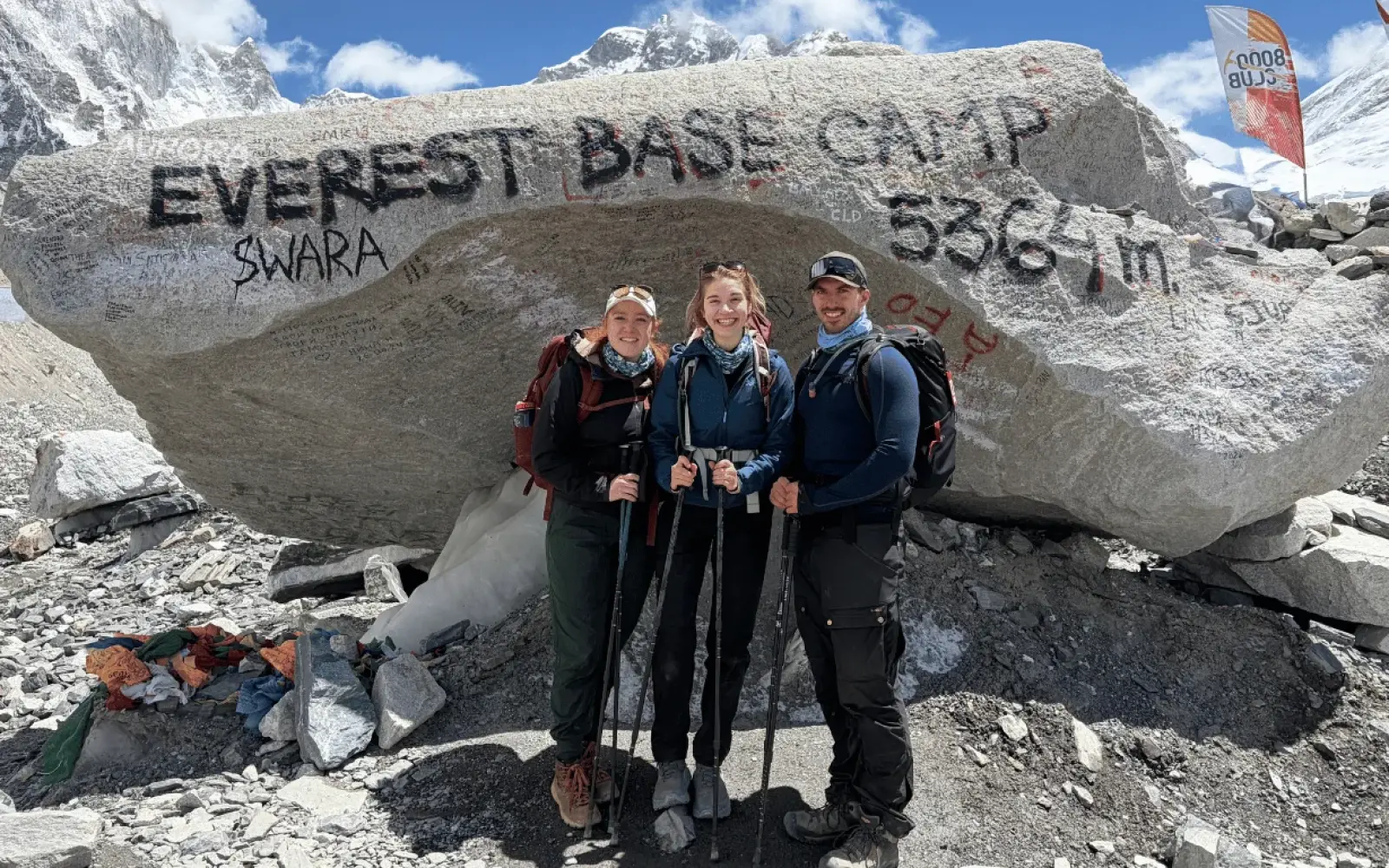
The Everest Base Camp trek is moderate to strenuous, about 7 out of 10 on our guides' scale. You need no climbing skills, but you walk about 130 km over 12 to 14 days to Everest Base Camp at 5,364m (17,598 ft), and the main challenge is the altitude, not the walking.
Most reasonably fit people can reach Base Camp with a sensible itinerary, two acclimatisation days and a guide who watches their health. The hardest parts are the climbs to Namche Bazaar and Tengboche, the days above 4,900m (16,076 ft) at Lobuche and Gorak Shep, freezing nights and the risk of stomach illness.
This guide was written by Bibek Dhamala, founder of Majestic Trails Nepal, who reached Kala Patthar in October 2026. It was fact-checked by Duk Kumar Basnet, the most experienced Majestic Trails Nepal guide, who grew up in Lukla and has led Everest treks for more than 15 years.
Key Takeaways
If you only remember five things from this guide, remember these.
Altitude is the real difficulty. Above 4,000m (13,123 ft), each breath carries about 60% of the oxygen it does at sea level, and at Base Camp it is close to 50%.
The hardest day is not the famous one. Many trekkers find Namche to Tengboche, and Lobuche to Gorak Shep and Base Camp, harder than the climb to Namche.
Much of the difficulty is in your control. Pace, rest days, food hygiene, pack weight and a buffer day for Lukla flights all make the trek easier.
An oximeter alone does not decide anything. Majestic Trails Nepal guides look at oxygen readings together with symptoms such as a bad headache, nausea and vomiting.
You do not need to be an athlete. Steady fitness, a slow pace and the willingness to turn around if your body says so matter more than speed.
How Hard Is the Everest Base Camp Trek? Our Guides' Difficulty Score
Majestic Trails Nepal guides rate the Everest Base Camp trek at about 7 out of 10 overall. The table splits the difficulty into what you cannot change and what you can, because almost half of what makes this trek hard depends on your choices.
Altitude and thin air (9/10): Acclimatise, walk slowly and check health daily.
Steep climbs and steps (6/10): Train on hills and stairs for 8–12 weeks.
Long walking days (7/10): Rest well, eat enough and carry a light daypack.
Cold nights (7/10): Wear layers and use the provided sleeping bag and down jacket.
Lukla flight delays (5/10): Add a buffer day in Kathmandu.
Wind and high-altitude weather (6/10): Start early, stay flexible and turn back when necessary.
Mental tiredness (6/10): Set small goals and rely on your guide for support.
Descent and knee strain (5/10): Use trekking poles and maintain a steady pace.
Scores are the judgement of Majestic Trails Nepal guides for a reasonably fit adult in spring or autumn. They are a guide, not a measurement.
What Makes the Everest Base Camp Trek Difficult? (9 Real Reasons)
The Everest Base Camp trek is difficult because of altitude, but altitude is only one of nine things that wear trekkers down. These are the reasons Majestic Trails Nepal guides see most often, in order of how much trouble they cause.
1. Altitude and Thin Air Above 4,000m
Altitude is the single biggest reason the Everest Base Camp trek is hard. As you climb, each breath carries less oxygen, so ordinary things such as rolling over in bed, packing your bag or walking up a few steps can leave you breathless.
The table shows how much oxygen is available at each main stop compared with sea level.
Stop
Altitude (m)
Altitude (ft)
Approx. oxygen compared with sea level
Lukla
2,860
9,383
70%
Namche Bazaar
3,440
11,286
65%
Tengboche
3,860
12,664
62%
Dingboche
4,410
14,469
58%
Lobuche
4,940
16,207
54%
Gorak Shep
5,164
16,942
52%
Everest Base Camp
5,364
17,598
51%
Kala Patthar
5,545
18,192
50%
Oxygen percentages are rounded estimates based on air pressure at each height. For more on symptoms and prevention, read the Majestic Trails Nepal guide to altitude sickness on Nepal treks.
2. Steep Climbs and Thousands of Stone Steps
The Everest trail is not a flat valley walk. It drops to rivers and climbs back up again and again, often on uneven stone steps, which locals jokingly call "Nepali flat": a little up, a little down, and your heart is always working.
The two biggest climbs are the 600m+ (1,970 ft) climb up Namche Hill and the steep climb of about 500m (1,640 ft) from the river at Phunki Tenga to Tengboche.
3. 130 km and 12 to 14 Days of Cumulative Fatigue
One day on the Everest trail is not hard for a fit person. Twelve days in a row, at altitude, on little sleep, is a different story. Most trekkers say their legs and lungs feel fine for the first few days, then tiredness builds from around day 6.
The full trek is about 130 km (80 miles) from Lukla to Base Camp and back, with 5 to 8 hours of walking on most days.
4. Freezing Nights and Poor Sleep at Lobuche and Gorak Shep
Above Dingboche, rooms are unheated and night temperatures often fall well below freezing, especially from December to February. Taps freeze, water bottles turn to ice, and many trekkers wake every two hours because of the cold and the altitude.
Poor sleep makes everything harder the next day. A warm sleeping bag, a hot water bottle inside it and dry layers make a big difference. Majestic Trails Nepal provides a down jacket and a sleeping bag rated to -15°C (5°F) for every trekker.
5. Stomach Illness and the Khumbu Cough
Stomach illness ends more Everest treks than most people expect. One case of food poisoning can leave you weak for days, and in remote villages the nearest clinic may be hours away on foot.
The cold, dry air also causes the "Khumbu cough", a dry, persistent cough that makes sleep and breathing harder. Drink only treated or boiled water, wash or sanitise your hands before every meal, eat freshly cooked vegetarian food above Namche, and wear a buff over your mouth on cold mornings.
6. Lukla Flight Delays and the Ramechhap Drive
The trek can become harder before you take a single step. Lukla flights only operate in good visibility, so delays and cancellations of a day or more are common, and some trekkers end up driving for hours or waiting in Kathmandu.
In peak season, most flights to Lukla leave from Ramechhap, a 4 to 6 hour drive from Kathmandu, and sometimes return flights land at Ramechhap too. Majestic Trails Nepal always recommends adding at least one buffer day to your trip, so a delay does not cost you your international flight. Read the full Lukla flight guide for details.
7. Afternoon Wind, Snow and Sudden Weather Changes
Above 4,000m, mornings are often clear and calm, but strong wind and cloud usually build in the afternoon. Snow can fall in any season, and a storm can close the trail above Gorak Shep for a day.
This is why Majestic Trails Nepal groups start early, and why your guide will wait a day or turn around when the weather is unsafe. Base Camp will still be there tomorrow.
8. The Mental Challenge After Day 6
By day 6 or 7, the excitement has faded, sleep is poor and every step above 4,900m feels slow. This is when many trekkers have their first moment of doubt.
The mental side is as important as fitness. Setting small goals for each day, walking at your own pace and having a guide who encourages rather than pressures you helps most people push through.
9. The Long Descent Back to Lukla
Many trekkers forget the trek is only half done at Base Camp. The way down is quicker, but the days are long, often 13 to 20 km, and the steep descents are hard on knees and tired legs.
Trekking poles, good boots and a steady pace protect your knees. The return from Gorak Shep to Lukla usually takes 3 days on the Majestic Trails Nepal itinerary.
What Is the Hardest Day on the Everest Base Camp Trek? Day-by-Day Difficulty, Rated by Our Guides
The hardest day on the Everest Base Camp trek is Lobuche to Gorak Shep and Base Camp, followed by the Kala Patthar climb for those who do it. The climbs to Namche Bazaar and Tengboche are the hardest days lower down. The table rates every trekking day on the 14-day Majestic Trails Nepal itinerary from 1 (easy) to 5 (very hard).
Day
Route
Altitude
Distance
Time
Difficulty
2
Lukla–Phakding
2,610m
8 km
3–4 hrs
1/5
3
Phakding–Namche
3,440m
10–11 km
6–7 hrs
4/5
4
Namche acclimatisation hike
3,440m
4–5 km
3–4 hrs
2/5
5
Namche–Tengboche
3,860m
10 km
5–6 hrs
4/5
6
Tengboche–Dingboche
4,410m
11–12 km
5–6 hrs
3/5
7
Dingboche acclimatisation hike
4,410m
4–5 km
3–4 hrs
3/5
8
Dingboche–Lobuche
4,940m
8–9 km
5–6 hrs
4/5
9
Lobuche–Gorak Shep–EBC
5,164m
12–13 km
7–8 hrs
5/5
10
Kala Patthar (optional)–Pheriche
4,240m
13–15 km
6–8 hrs
3–5/5
11
Pheriche–Namche
3,440m
15–20 km
6–7 hrs
3/5
12
Namche–Lukla
2,860m
18 km
6–7 hrs
3/5
Distances and times are approximate and vary with pace, weather and route. Day 1 is arrival in Kathmandu, and days 13 and 14 are the flight back and departure.
Phakding to Namche Bazaar (3,440m): The First Big Test
This is the day the Everest trail stops being gentle. After several suspension bridges, including the high Hillary Bridge, you climb more than 600m (1,970 ft) up Namche Hill in one long, steady push, and for most people it is the first time they feel the altitude.
Walk slowly, breathe steadily and take short breaks. Arriving in Namche tired is normal, and the acclimatisation day that follows helps your body adjust.
Namche to Tengboche (3,860m): Harder Than Most People Expect
Many trekkers find this day harder than the famous climb to Namche. The morning is a beautiful balcony trail with views of Everest and Ama Dablam, but then the path drops steeply to the river at Phunki Tenga before climbing about 500m (1,640 ft) straight up to Tengboche Monastery.
Have lunch at Phunki Tenga, rest properly and start the climb slowly. The reward at the top is one of the most beautiful monasteries in Nepal.
The Dingboche Acclimatisation Hike
The second acclimatisation day takes you up the ridge above Dingboche towards Nangkartshang Peak, reaching about 5,000m (16,404 ft) if you go all the way. It is the first time most trekkers go this high, and many turn back partway.
Turning back early is fine. The goal is to climb high and then sleep lower in Dingboche, not to reach the top. Coming down can be harder on the knees than going up, so use your poles.
Dingboche to Lobuche via Thukla Pass
The walk starts gently across open valley, then climbs steeply up the Thukla Pass, where stone memorials remember climbers and Sherpas who died on Everest. Above it, you walk alongside the Khumbu Glacier to Lobuche at 4,940m (16,207 ft).
This is the day many trekkers start to feel the altitude strongly. Nights at Lobuche are cold, and sleep is often poor.
Lobuche to Gorak Shep and Everest Base Camp (5,364m): The Longest, Highest Day
This is the hardest day of the trek. You walk 3 to 4 hours over rocky glacier moraine to Gorak Shep, have lunch, and then continue about 2 hours to Everest Base Camp and back, all above 5,000m (16,404 ft), often in strong afternoon wind.
Some parts of the trail are narrow and slippery, so watch your footing. Most trekkers move very slowly here, and that is exactly the right pace. Majestic Trails Nepal groups sleep at Gorak Shep after visiting Base Camp.
Kala Patthar (5,545m): The Hardest Climb of the Trek
Kala Patthar, at 5,545m (18,192 ft), is the highest point of the trek and the best viewpoint for Everest. It is a steep 2 to 3 hour climb from Gorak Shep, and it is optional.
Majestic Trails Nepal usually recommends climbing at sunset, after Base Camp, and going up to about halfway. Trekkers who still feel strong can continue to the top, and some choose the pre-dawn sunrise climb instead. Many trekkers skip Kala Patthar altogether, which is a perfectly sensible choice if you are tired or feel the altitude. Read the Majestic Trails Nepal guide to Kala Patthar for more on the viewpoint.
What Oxygen Level Is Normal on the Everest Base Camp Trek?
It is normal for your blood oxygen reading to fall as you climb, often into the 80s at Namche and Dingboche and into the 70s at Lobuche and Gorak Shep. A low number on its own does not mean you are sick: what matters is the reading together with how you feel.
The table shows rough ranges often seen in healthy, acclimatising trekkers. Everyone is different, and readings change with cold fingers, movement and the time of day.
Place
Altitude
Typical reading in healthy trekkers (SpO2)
Kathmandu
1,400m (4,593 ft)
95–99%
Namche Bazaar
3,440m (11,286 ft)
about 88–94%
Dingboche
4,410m (14,469 ft)
about 82–90%
Lobuche
4,940m (16,207 ft)
about 75–88%
Gorak Shep and Base Camp
5,164–5,364m (16,942–17,598 ft)
about 70–85%
These are approximate ranges for general guidance only, not medical advice.
How Majestic Trails Nepal Guides Use Oxygen Readings
Majestic Trails Nepal guides check every trekker's oxygen level and pulse each evening from Phakding onwards. They never make a decision from the oximeter alone, because a reading in the 70s can be normal at Gorak Shep for someone who feels well.
The guide looks at the reading together with symptoms. A low reading with a bad headache that does not improve with rest and water, nausea, vomiting, unusual tiredness or poor coordination means the trekker stops climbing. If symptoms get worse, the trekker goes down, and Majestic Trails Nepal arranges helicopter evacuation from Kathmandu when it is needed.
Warning Signs That Mean Go Down Now
Some symptoms are emergencies at any reading. Tell your guide straight away if you or someone in your group has any of these.
Breathlessness while resting, or a wet, bubbling cough
Confusion, unusual behaviour or difficulty walking in a straight line
A severe headache with vomiting that does not improve
Extreme tiredness, or being unable to get out of bed
These can be signs of high altitude pulmonary or cerebral oedema (HAPE or HACE), which are life-threatening. The only reliable treatment is going down, fast.
Can a Beginner Do the Everest Base Camp Trek?
Yes, a beginner can do the Everest Base Camp trek with good preparation, a 12 to 14 day itinerary and a licensed guide. Many people who reach Base Camp with Majestic Trails Nepal have never trekked at altitude before.
What beginners need is not experience but steady fitness, patience with the slow pace and honesty with their guide about how they feel. For a full answer, read the Majestic Trails Nepal guides on the Everest Base Camp trek for beginners and whether a normal person can do the Everest Base Camp trek.
How Fit Do You Need to Be for Everest Base Camp?
You need to be fit enough to walk 5 to 8 hours a day, up and down hills, for several days in a row. You do not need to be an athlete, but the fitter you are, the more energy you have left to cope with the altitude.
Are You Ready? A 6-Question Self-Test
If you can answer yes to most of these questions, you are probably fit enough to start training for Everest Base Camp.
Can you walk 15 km (9 miles) on hilly ground in a day?
Can you climb 600m (about 2,000 ft) of stairs or hills in 2 to 3 hours with a light pack?
Can you walk two long days in a row and still feel fine on the third morning?
Can you cope with basic rooms, shared toilets and no hot shower for several days?
Are you happy to walk slowly and let your guide set the pace?
Has your doctor said it is safe for you to go to high altitude?
A Simple 12-Week Training Plan
This plan suits most healthy adults. Adjust it to your starting fitness, and speak to a doctor first if you have any health conditions.
- Weeks 1–4: Build a base
Do 3 brisk walks or easy runs of 45–60 minutes each week.
Add 2 short leg and core strength sessions.
- Weeks 5–8: Add hills and load
Complete 1 long hike of 3–4 hours with a 5–7 kg pack.
Do 2 stair or hill sessions and 2 strength sessions each week.
- Weeks 9–11: Back-to-back days
Complete 2 long hikes on consecutive days, lasting 4–6 hours each.
Add 1 stair session and 1 strength session each week.
- Week 12: Rest and prepare
Take short, easy walks only.
Break in your trekking boots and check your gear.
Is Everest Base Camp Harder Than Other Treks?
Everest Base Camp is harder than Annapurna Base Camp and Mardi Himal, and similar overall to the Annapurna Circuit. Its highest point is lower than Kilimanjaro's, but you spend more days at high altitude. The table compares them.
Trek
Highest point
Hardest part
Difficulty
Everest Base Camp
5,545m
High-altitude nights
Moderate to strenuous
Annapurna Circuit
5,416m
Thorong La pass day
Moderate to strenuous
Annapurna Base Camp
4,130m
Steep stone steps
Moderate
Mardi Himal
~4,500m
Steep ridge climb
Moderate
Kilimanjaro
5,895m
Cold summit night
Strenuous
For more detailed comparisons, read the Majestic Trails Nepal guides to Annapurna Base Camp vs Everest Base Camp and Annapurna Circuit trek difficulty.
How Does the Season Change Everest Base Camp Difficulty?
The Everest Base Camp trek is easiest in autumn (October to November) and spring (March to May), when the weather is most stable. Winter adds extreme cold, and the monsoon adds rain, cloud and more flight delays.
Season
Months
Advantages
Challenges
Autumn
October–November
Clear skies, stable weather, great views
Crowds, busy teahouses, Ramechhap flights
Winter
December–February
Quiet trails, clear skies
Freezing nights, frozen water, snow
Spring
March–May
Warmer days, rhododendrons
Afternoon haze, April–May crowds
Monsoon
June–September
Quiet trails, green valleys
Rain, clouds, leeches, flight delays
For month-by-month advice, read the Majestic Trails Nepal guide to the best time for the Everest Base Camp trek, or the guide to trekking to Everest Base Camp in December.
Does Age Make the Everest Base Camp Trek Harder?
Age itself does not decide whether you reach Base Camp: fitness, health and pace matter far more. Trekkers in their 50s, 60s and older reach Everest Base Camp every season, while young, fit trekkers sometimes struggle because they walk too fast.
Older trekkers usually benefit from an extra rest day, lighter daypacks and a full medical check before the trip. Read the Majestic Trails Nepal guide on whether you are too old to trek in Nepal for more advice.
What Is the Success Rate of the Everest Base Camp Trek?
There is no official success rate for the Everest Base Camp trek. No government or park authority publishes how many trekkers start and how many reach Base Camp, so be careful with exact percentages you see online, including high figures quoted by trekking companies.
What Majestic Trails Nepal guides see is that most well-prepared trekkers on a 12 to 14 day itinerary with two acclimatisation days do reach Base Camp. The trekkers who do not usually turn back because of altitude sickness, stomach illness or bad weather, and very rarely because of fitness alone.
What Is the 2pm Rule on Everest, and Does It Apply to Trekkers?
The 2pm rule is a turnaround time used by Everest climbers. If they have not reached the summit by about 1pm or 2pm, they turn back, so they can get down before dark, before the afternoon weather turns, and before their bottled oxygen runs low.
Trekkers to Base Camp do not follow a fixed 2pm rule, but the same idea applies. Weather above 4,000m usually gets worse in the afternoon, so Majestic Trails Nepal groups start early, aim to reach high points before early afternoon and will turn around if the weather or a trekker's health makes it unsafe to continue.
How Majestic Trails Nepal Makes the Everest Base Camp Trek Easier
Majestic Trails Nepal cannot make the altitude lower, but it can control almost everything else. The table shows how each difficulty is handled on the 14-day Everest Base Camp trek.
Altitude: Two acclimatisation days in Namche Bazaar and Dingboche, with a slow, guide-set pace.
Altitude sickness: Licensed, first-aid-trained guides check oxygen levels and symptoms every evening from Phakding.
Emergencies: Helicopter evacuation arranged from Kathmandu when needed, with the guide staying with the trekker. Horse assistance can also be arranged for those who struggle.
Cold nights: A down jacket and a −15°C (5°F) sleeping bag provided for every trekker.
Heavy loads: Fairly paid porters, one for every two trekkers, carrying 20–25 kg each.
Lukla flight delays: A buffer day is always recommended, with flights from Ramechhap during peak season.
Kala Patthar: Flexible options include a standard sunset hike to halfway, the summit or sunrise for stronger trekkers, or skipping it.
Knowing what to expect: A free video call before booking, with honest advice about whether the trek suits you.
See the full itinerary, prices and inclusions on the Majestic Trails Nepal Everest Base Camp Trek page.
A Guide's View: The Day Duk Kumar Helped Every Group Off Kongma La
Duk Kumar Basnet grew up in Lukla and is the most experienced guide at Majestic Trails Nepal, with more than 15 years on the Everest trails (Licence No. 5899). One day stands out for him on Kongma La, the 5,535m (18,159 ft) pass between Chhukung and Lobuche [CONFIRM year and season].
Bad weather moved in and snow covered the trail, so the route over the pass was no longer visible. Groups from several companies were stuck and unsure which way to go. Duk Kumar found the way down and helped all the other groups off the pass safely, not only his own trekkers [CONFIRM any further details in Duk Kumar's own words].
For Duk Kumar, that day sums up the Everest region: the trek is not technical, but the mountains can change in an hour. A guide who knows the trail and stays calm makes the difference between a hard day and a dangerous one.
Everest Base Camp Trek Difficulty: FAQs
These are short answers to the questions trekkers ask most often about how hard the Everest Base Camp trek is.
Is the Everest Base Camp trek hard?
Yes, the Everest Base Camp trek is moderately to strenuously hard, mainly because of the altitude. It needs no climbing skills, and most reasonably fit people can complete it with good preparation and two acclimatisation days.
How many hours a day do you walk on the Everest Base Camp trek?
Most days involve 5 to 8 hours of walking. The longest day, Lobuche to Gorak Shep and Everest Base Camp, takes about 7 to 8 hours.
How long is the Everest Base Camp trek in km and miles?
The round trip from Lukla to Everest Base Camp and back is about 130 km (80 miles). It usually takes 12 to 14 days including acclimatisation.
Do you need climbing experience for Everest Base Camp?
No, you do not need any climbing or mountaineering experience. The Everest Base Camp trek is a walk on trails, with no ropes or technical sections.
Can a beginner do the Everest Base Camp trek?
Yes, beginners can do the Everest Base Camp trek with good fitness training, a 12 to 14 day itinerary and a licensed guide. Experience at altitude helps but is not required.
What is the hardest day on the Everest Base Camp trek?
The hardest day is Lobuche to Gorak Shep and Everest Base Camp, because it is long and entirely above 4,900m (16,076 ft). Lower down, Namche to Tengboche is often harder than people expect.
Is Everest Base Camp harder than Kilimanjaro?
Kilimanjaro's summit is higher, at 5,895m (19,341 ft), and its summit night is steeper and colder. Everest Base Camp is longer, with more nights at high altitude, so many trekkers find the two similarly hard in different ways.
Is Everest Base Camp harder than Annapurna Base Camp?
Yes, Everest Base Camp is harder than Annapurna Base Camp. It goes about 1,200m higher, to 5,364m (17,598 ft) compared with 4,130m (13,550 ft), and takes several days longer.
Can you get altitude sickness at Everest Base Camp?
Yes, altitude sickness is common above 4,000m (13,123 ft) on the Everest trail. Acclimatisation days, a slow pace, drinking enough water and telling your guide about symptoms early reduce the risk.
What is the success rate of the Everest Base Camp trek?
There is no official success rate for the Everest Base Camp trek. Most well-prepared trekkers on a 12 to 14 day itinerary reach Base Camp, and those who do not usually turn back because of altitude, illness or weather.
Can you ride a horse or take a helicopter if you struggle?
Yes. Horses can be hired on parts of the trail, and helicopters can evacuate trekkers in an emergency. Majestic Trails Nepal arranges helicopter evacuation from Kathmandu and the guide helps arrange a horse, but riding up does not help you acclimatise.
What is the 2pm rule on Everest?
The 2pm rule is a turnaround time for Everest summit climbers: if they have not reached the top by about 1pm to 2pm, they turn back. Trekkers follow a similar idea by starting early and reaching high points before afternoon weather arrives.
Final Thoughts: Hard, Honest and Absolutely Worth It
The Everest Base Camp trek is hard, but it is hard in ways you can prepare for. Train for steady hills, choose an itinerary with two acclimatisation days, protect your stomach, add a buffer day for Lukla flights and walk slower than you think you need to.
If you want an honest opinion on whether the trek suits you, book a free video call with Majestic Trails Nepal on WhatsApp at +977 9700937981 or email info@majestictrailsnepal.com, or see the full Everest Base Camp Trek itinerary.
Related Travel Blogs
Join our Newsletter
Sign up to stay updated with latest offers, recent events and more news.