
Annapurna Base Camp Trek During Monsoon – A Raw Himalayan Journey in Nepal
18 Jan 2026
Trekking to Annapurna Base Camp Trek is one of Nepal’s most iconic mountain journeys. For mountaineers, the climb begins here, but for trekkers, Annap...

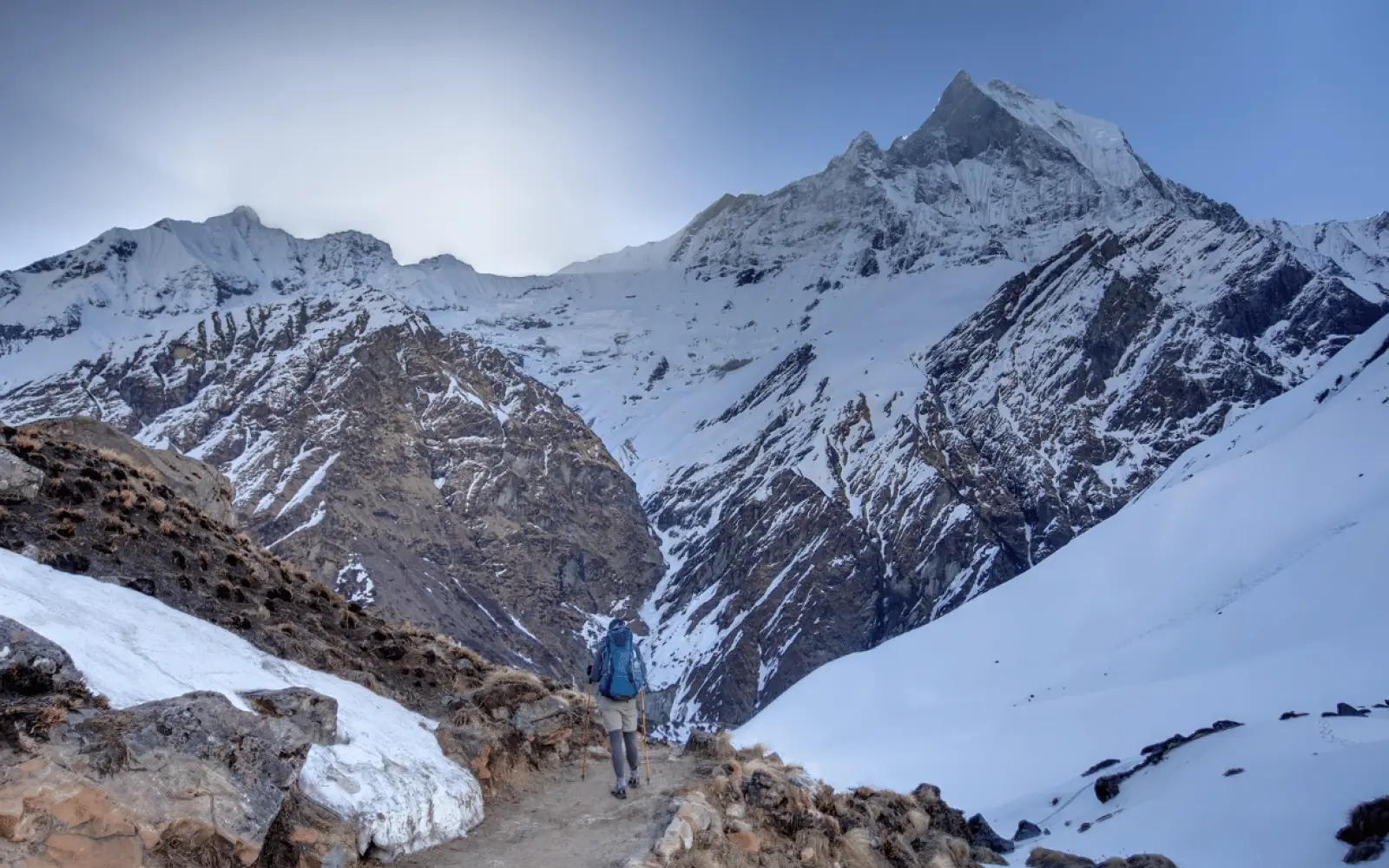

Altitude sickness on the Annapurna Base Camp trek is a health condition that affects trekkers when they ascend into the reduced oxygen of the Annapurna Sanctuary above 2,500m — but it is genuinely one of the lower-risk high-altitude treks in Nepal. Annapurna Base Camp sits at 4,130m (13,550 ft), significantly lower than Everest Base Camp (5,364m) or Manaslu Circuit's Larkya La (5,106m). This lower peak altitude means altitude sickness on the ABC trail is less common, less severe, and more manageable than on Nepal's higher trekking routes. On our Majestic Trails Nepal ABC treks, 95.6% of trekkers complete the trek with zero symptoms, and we have recorded zero guest rescues — the strongest track record on any of our high-altitude trips.
This guide covers everything you need to know about altitude sickness on the Annapurna Base Camp trek — where the real risk points are on the trail, the honest truth about the Deurali-to-MBC "avalanche section" (which most competitor blogs get wrong), a full day-by-day prevention framework, and the exact protocols that keep our sickness rates so low. For the broader science of high-altitude illness across all Nepal treks, see our Altitude Sickness on Nepal Treks guide.
Key Takeaways
| Detail | Information |
|---|---|
| Annapurna Base Camp altitude | 4,130m (13,550 ft) |
| Highest sleeping altitude | 4,130m (ABC) |
| MBC (Machhapuchhre Base Camp) | 3,700m |
| Deurali altitude | 3,230m |
| Trek duration | 6-14 days from Kathmandu |
| Typical AMS rate (industry) | 10-20% |
| Majestic Trails Nepal AMS rate | 4.4% (mild) |
| Zero symptoms rate on our treks | 95.6% |
| Recorded guest rescues on ABC | Zero |
| HAPE/HACE risk | Very low (below typical threshold) |
| Diamox necessity | Usually not required |
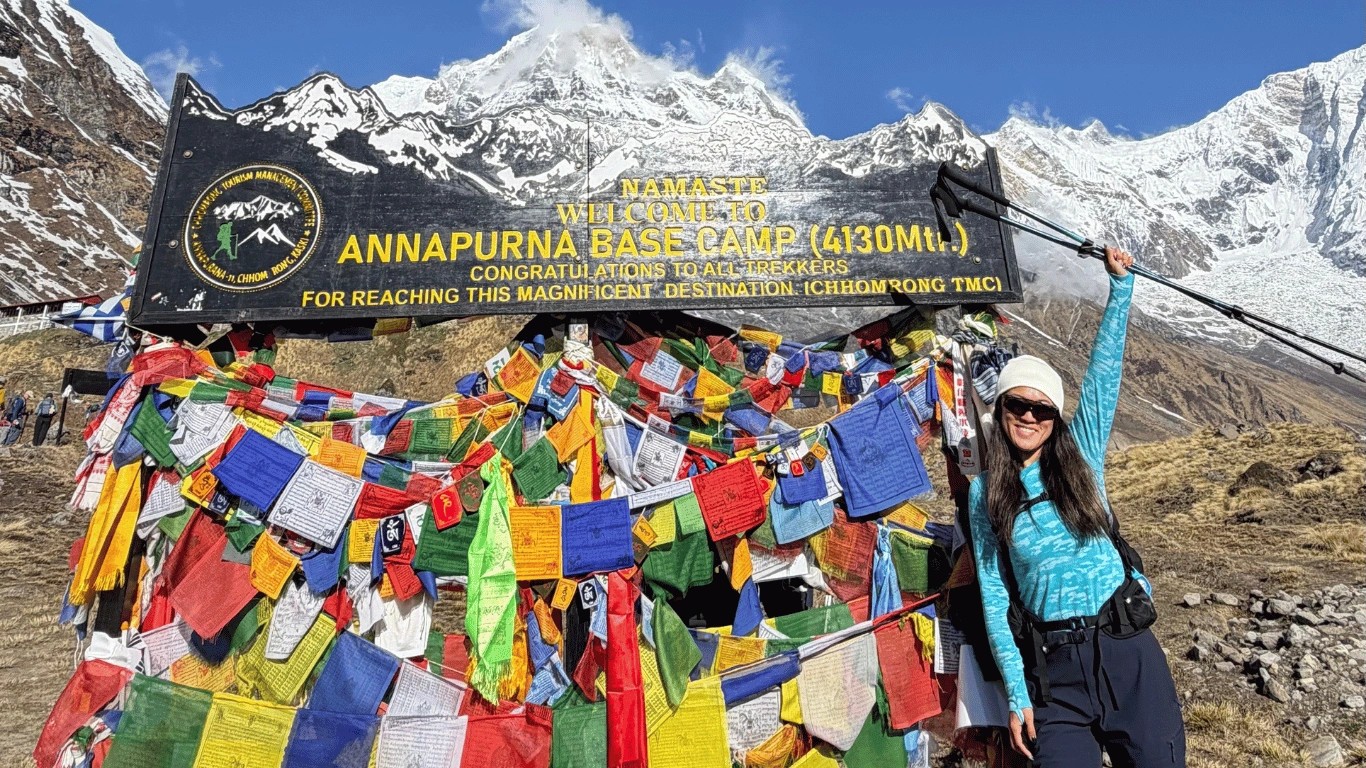
Altitude sickness on the Annapurna Base Camp trek is the group of medical conditions caused by ascending into the reduced oxygen of the Annapurna Sanctuary above 2,500m without giving your body enough time to adapt. As trekkers climb from Jhinu Danda or Chhomrong (around 2,000m) toward Annapurna Base Camp at 4,130m, atmospheric pressure drops and each breath contains fewer oxygen molecules — at ABC itself, roughly 60% of what your lungs would receive at sea level.
High-altitude illness on the ABC trek appears in three forms:
The most important fact about mountain sickness on the ABC trail: it is significantly less common and less severe than on the Everest Base Camp trek or the Annapurna Circuit. The ABC route peaks at 4,130m — below the 4,300m threshold where HAPE and HACE become genuine risks. This is why we honestly recommend the Annapurna Base Camp trek as the best first Himalayan trek for anyone worried about altitude.
The honest industry data on high-altitude illness on the ABC trail:
The reason our altitude sickness numbers on the Annapurna Base Camp trek are so much lower than industry averages comes down to Day 1 monitoring from Jhinu Danda, honest pacing that never rushes the climb to Bamboo or Deurali, and knowledge of the alternative avalanche-safe trail past Deurali that competitor operators often don't know about.
The full altitude progression of the Annapurna Base Camp trek:
| Day | Stop | Altitude | Oxygen % |
|---|---|---|---|
| 1 | Jhinu Danda | 1,780m | ~82% |
| 1 | Chhomrong | 2,170m | ~78% |
| 2 | Bamboo | 2,310m | ~76% |
| 2 | Dovan | 2,500m | ~74% |
| 3 | Himalaya | 2,920m | ~71% |
| 3 | Deurali | 3,230m | ~68% |
| 4 | Machhapuchhre Base Camp (MBC) | 3,700m | ~64% |
| 4 | Mirror Lake (Tolyong) | 3,980m | ~62% |
| 4 | Annapurna Base Camp (ABC) | 4,130m | ~60% |
| 5–6 | Descent to Bamboo/Jhinu Danda | Progressive drop | Rising |
Compared to other Nepal treks:
Annapurna Base Camp is genuinely the lowest peak altitude of any major Nepal high-altitude trek — which is exactly why altitude sickness on the ABC trail is less common and less severe.
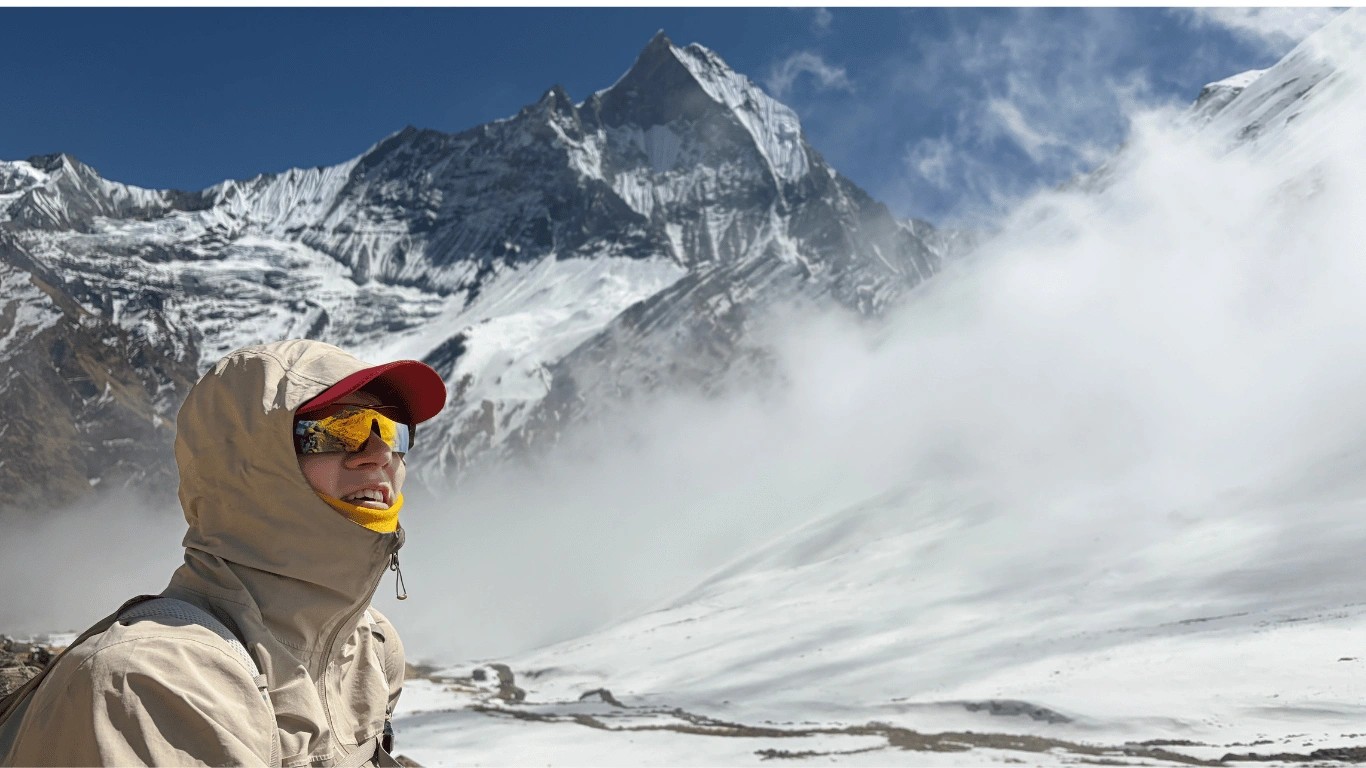
Net elevation gain from Jhinu Danda (1,780m) to Annapurna Base Camp (4,130m) is 2,350m.
Cumulative elevation gain across all trekking days (including the famous ABC stone stairs) is roughly 3,500m over 4-5 walking days — meaningful, but far less than EBC's 4,000m+.
The stone stairs factor: the ABC trek has more stone staircases than any other major Nepal trek. This affects altitude illness differently than pure vertical gain — it drains leg muscles faster, which can mask altitude fatigue. Trekkers who arrive at Bamboo exhausted from the stone stairs from Chhomrong sometimes mistake muscle fatigue for altitude symptoms — or worse, ignore real altitude symptoms because they think it's just leg tiredness.
The honest ranking of altitude difficulty on the Annapurna Base Camp trail:
#1 hardest: Day 4 — Deurali to MBC to ABC
The single biggest altitude gain day of the trek. You climb from Deurali (3,230m) up to MBC (3,700m), then continue to ABC (4,130m) — a total of 900m of gain in one day, sleeping at the highest altitude of the trek that night.
#2 hardest: Day 3 — Bamboo to Deurali
A 920m gain in one walking day (Bamboo 2,310m → Himalaya 2,920m → Deurali 3,230m). The first day trekkers cross the 3,000m altitude threshold where AMS becomes possible.
#3 hardest: Day 1 — Jhinu Danda to Chhomrong (uphill stone stairs)
Not altitude — but the stone stairs from the Jhinu Danda river up to Chhomrong genuinely exhaust trekkers. Arriving tired means less capacity to acclimatize.
The pattern: unlike EBC where the hardest days come at maximum altitude, ABC's hardest days are moderate altitude days where cumulative gain is highest. This is easier to manage — but requires honest pacing.
Distance: ~9 km / Elevation change: descent of 500m then climb 300m / Time: 5-6 hours
Most trekkers assume descent = easy. The Chhomrong-to-Bamboo section is actually one of the toughest days of the ABC trek because of the endless stone stair descent (going down thousands of steps to the Chhomrong Khola river) followed by an equally punishing climb up the other side.
Why this matters for altitude illness on the ABC trail:
Prevention on this section:
Altitude: 2,310m → 3,230m / Oxygen: ~76% dropping to ~68%
This is where the ABC trek crosses the 3,000m threshold — the altitude where AMS becomes possible for most trekkers. The trail passes through Dovan (2,500m) and Himalaya (2,920m) before reaching Deurali. Many trekkers first notice mild altitude symptoms (headache, slight nausea) at Deurali on Day 3.
Prevention approach at Deurali:
Altitude: 3,230m → 3,700m / Oxygen: ~68% dropping to ~64%
The trail from Deurali up to Machhapuchhre Base Camp (MBC) is where the Annapurna Sanctuary genuinely opens up — you enter the amphitheatre of peaks. But this is also where altitude illness on the ABC trek becomes a real consideration.
Between Deurali and MBC:
Prevention on this section:
Altitude: 3,700m → 4,130m / Oxygen: ~64% dropping to ~60%
The final push from MBC to Annapurna Base Camp is a moderate 2-hour walk with a 430m gain. This is where you reach the highest altitude of the entire trek — 4,130m. Some itineraries sleep here overnight; others descend back to MBC for the night.
Prevention on the ABC push:
Honest note: because ABC peaks at 4,130m — below the 4,300m threshold where HAPE and HACE become genuine risks — even trekkers with mild altitude symptoms usually complete the trek safely with proper monitoring.
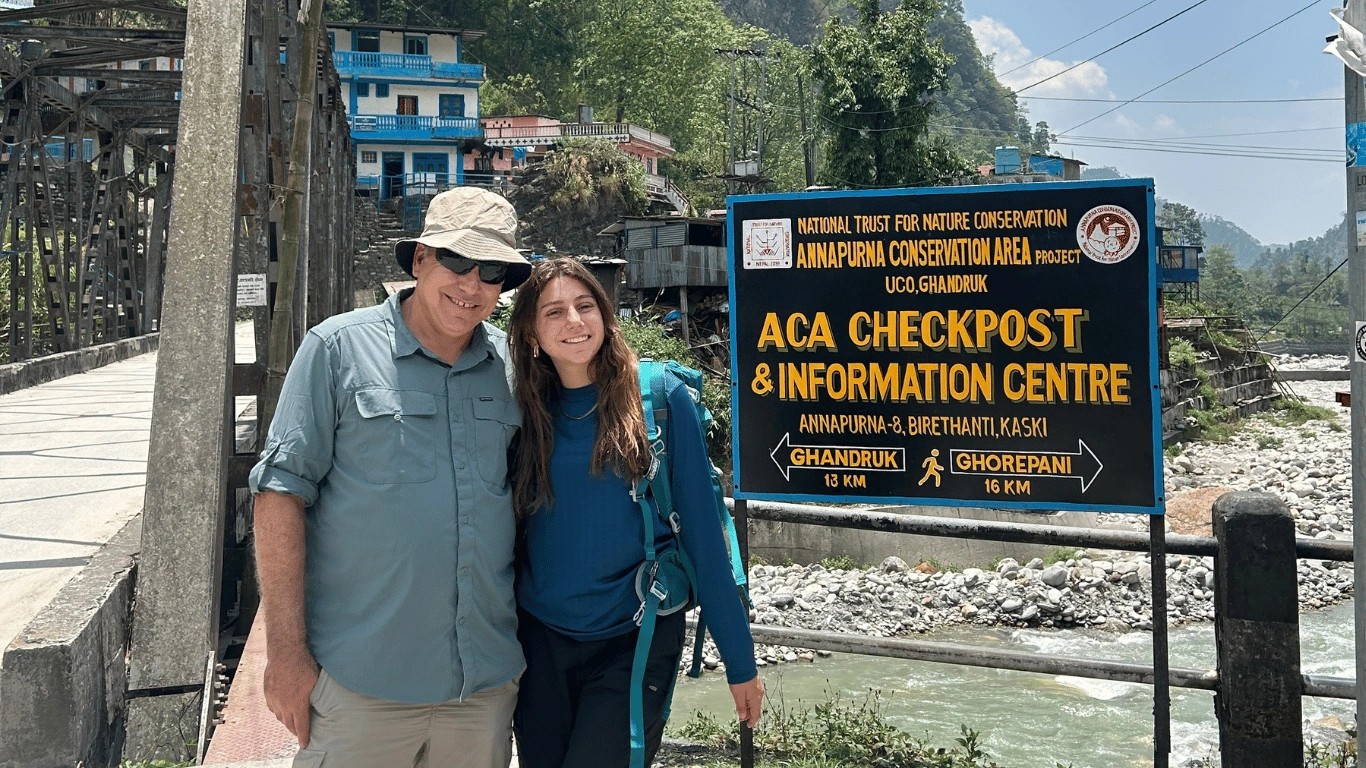
Annapurna Base Camp trek carries less altitude sickness risk than any other major high-altitude trek in Nepal — but it is not zero risk.
Real risks on the ABC trek:
Death statistics for ABC specifically:
Very few trekker deaths occur on the ABC route each year, and most are not altitude-related — they typically involve avalanches (in unstable conditions on the standard trail), falls on icy sections, or pre-existing medical conditions triggered by exertion.
For context: hundreds of thousands of trekkers complete the ABC trek every year without incident. Our own record — zero rescues, 95.6% zero symptoms — proves that with proper monitoring and route knowledge, the Annapurna Base Camp trek is genuinely one of the safest high-altitude experiences in Nepal.
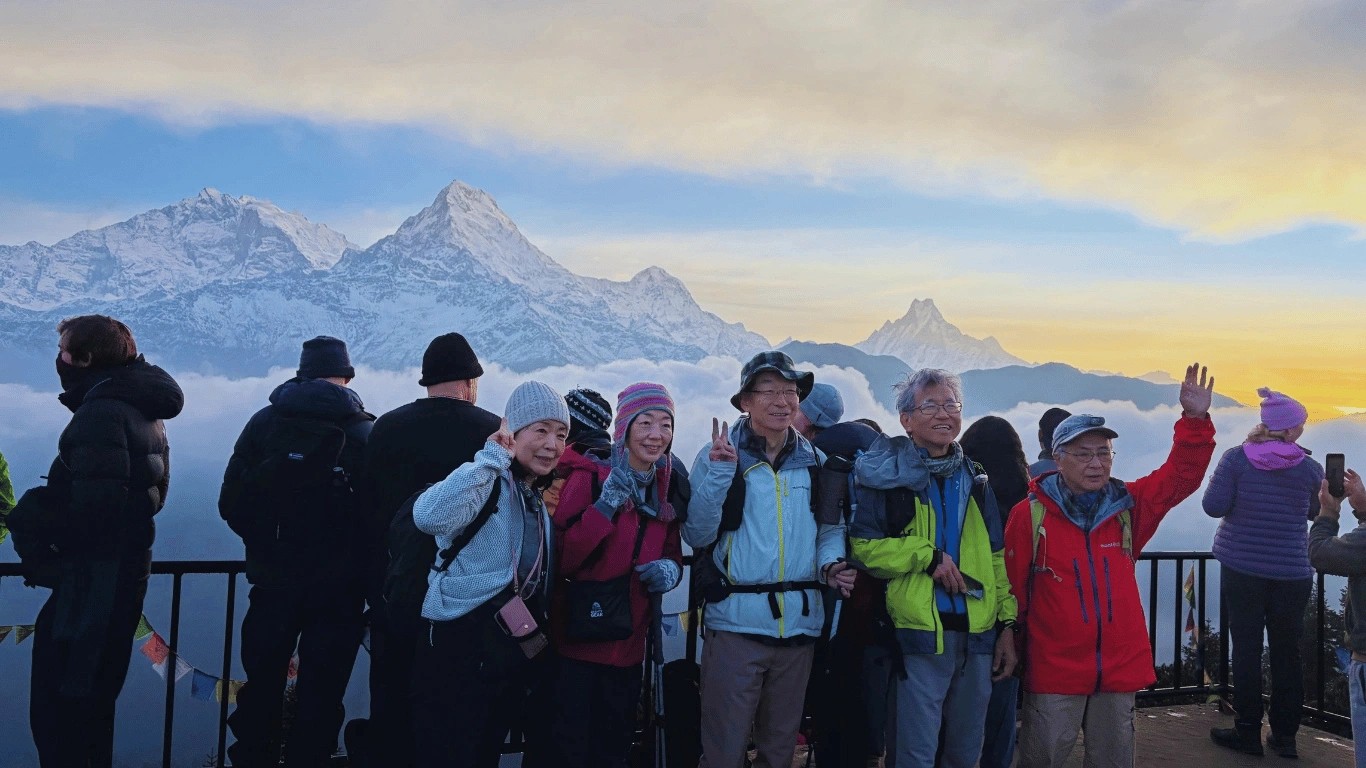
Mountain sickness on the ABC trek becomes possible above 2,500m — which on the Annapurna Base Camp trail means from Dovan onward.
The honest altitude worry framework:
The worry threshold on the ABC trek:
Early symptoms (typically at Deurali or MBC):
Warning symptoms (at MBC or ABC):
Emergency symptoms (rare on ABC but still possible):
The rule at Majestic Trails Nepal: any symptom, tell your guide immediately. Even mild ones. Especially at Deurali onward. This is exactly how we maintain our 95.6% zero symptoms rate — we catch issues before they develop.
Unlike EBC where we insist on 14 days minimum, the Annapurna Base Camp trek can safely be completed in as few as 6 days from Kathmandu — because the peak altitude of 4,130m allows faster ascent without significant altitude risk.
Standard 6-day ABC itinerary from Kathmandu:
| Day | Route | Sleeping altitude | Purpose |
|---|---|---|---|
| 1 | Kathmandu → Pokhara → Jhinu Danda → Chhomrong | 2,170m | Fly/drive + start trek |
| 2 | Chhomrong → Bamboo → Himalaya | 2,920m | Climb through changing landscape |
| 3 | Himalaya → Deurali → MBC → ABC | 4,130m | Peak day (sleep at ABC) |
| 4 | ABC → Bamboo | 2,310m | Fast descent |
| 5 | Bamboo → Jhinu Danda (hot springs) | 1,780m | Recovery + hot springs reward |
| 6 | Jhinu Danda → Pokhara → Kathmandu | 1,400m | Return |
For a 10-14 day itinerary we add:
Why fast ABC itineraries work (unlike EBC):
This is the practical prevention section every trekker should follow.
Physical training that helps:
Medical checkup:
Insurance requirement (non-negotiable):
Gear that matters:
Sleep at ABC (if conditions allow):
The perfect ending to the ABC trek. After 5 days of climbing and descending stone stairs, the natural hot springs at Jhinu Danda are genuinely restorative.
The hot springs are a 30-minute walk down from Jhinu Danda village. Stone-walled natural pools beside the Modi Khola river.
Do not skip the hot springs. This is one of the most memorable moments of the entire trek — a reward specifically designed by geography for what you just walked.
Overnight at Jhinu Danda. Fly or drive back to Pokhara the next morning.
Screenshot them. Follow them all.
Our honest position: most trekkers do not need Diamox on the ABC trek.
Unlike EBC where we typically recommend Diamox from Day 2 of altitude, the Annapurna Base Camp trek's maximum altitude of 4,130m is below the threshold where Diamox provides its clearest benefit. Most healthy trekkers with proper pacing complete ABC without needing the medication.
When Diamox is still worth taking on ABC:
Standard dosage if used:
Diamox is not a substitute for pacing, hydration, and honest self-monitoring. These matter far more than any medication on the ABC trek.
Expected SpO2 at every ABC stop:
| Stop | Altitude | Normal SpO2 Range |
|---|---|---|
| Jhinu Danda | 1,780m | 94-98% |
| Chhomrong | 2,170m | 92-96% |
| Bamboo | 2,310m | 90-95% |
| Himalaya | 2,920m | 88-93% |
| Deurali | 3,230m | 85-91% |
| MBC | 3,700m | 82-88% |
| ABC | 4,130m | 78-85% |
Warning thresholds:
The warm-hands rule — critical fact nobody explains:
Cold hands give false low readings on pulse oximeters. If your fingers are cold, warm them under your armpit or by rubbing them for 2 minutes before taking a reading. A false 65% reading from cold hands can cause unnecessary panic on a healthy trekker.
Yes — the Annapurna Base Camp trek is genuinely easier than the Everest Base Camp trek, especially for altitude sickness.
Direct comparison of high-altitude illness risk:
| Factor | Annapurna Base Camp | Everest Base Camp |
|---|---|---|
| Max altitude | 4,130m | 5,545m (Kala Patthar) |
| Trek duration | 6-14 days | 12-16 days |
| AMS rate (industry) | 10-20% | 40-75% |
| HAPE/HACE risk | Very low | Real above 4,300m |
| Acclimatization days needed | 0-1 | 2 (Namche + Dingboche) |
| Suitable for first-timers | Yes, ideal | Requires respect |
Why ABC is easier for altitude:
What ABC is NOT easier at:
For altitude-worried trekkers, ABC is the honest first choice. For trekkers wanting the iconic Everest experience, EBC still wins — but with real altitude preparation.
This is where every competitor blog gets it wrong.
Most websites describe the trail between Deurali and MBC as a dangerous "avalanche zone." Trekkers arrive at Deurali worried they're about to walk through a life-threatening section.
The honest truth from a real Nepal operator:
Yes — the standard trail past Deurali does have avalanche history. In heavy snow years and post-monsoon conditions, avalanches have occurred on this section.
But — this is only half the story. Approximately 5 minutes after leaving Deurali, the trail splits into two paths on the same route. One is the standard trail; the other crosses the river to the opposite side of the valley.
The alternative trail across the river has zero avalanche exposure.
How our guides handle it:
Why this matters: competitor blogs that make this section sound dangerous are describing only the standard trail. Trekkers with knowledgeable local guides never face avalanche risk here, because we know exactly when and how to use the alternative route.
This is operator knowledge that comes from actually walking the trail regularly — not from a blog.
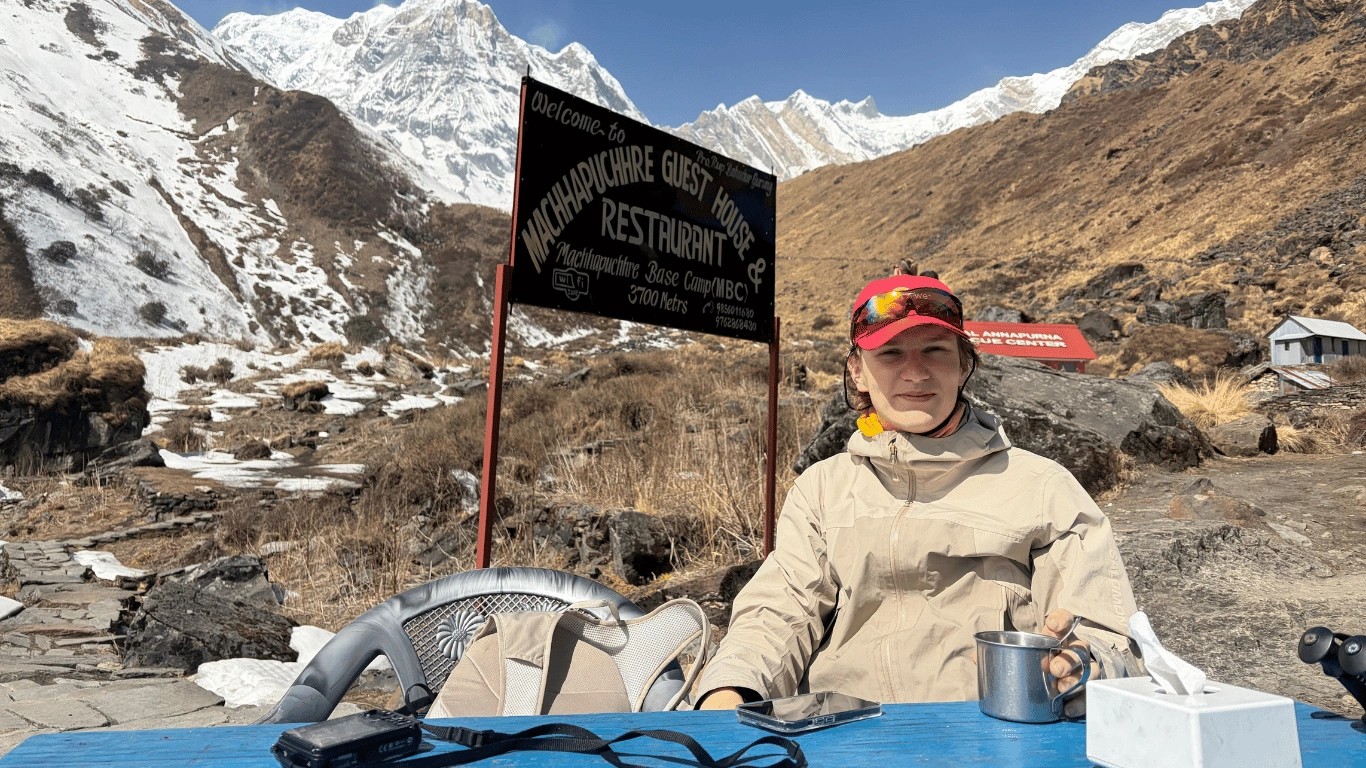
Meat is available up to Dovan (as of spring 2026 season). This is a genuine current change — most competitor blogs still say "no meat above Chhomrong" (the old rule). Above Dovan, only vegetarian food is available due to the sacred nature of the Annapurna Sanctuary.
Donkeys and horses are not allowed on the upper trail. Supplies above Chhomrong are carried by porters — a cultural rule of the sanctuary.
Dal bhat is the ideal altitude food — complex carbs, warm, endless refills.
Garlic soup is available at every teahouse from Chhomrong upward. May help thin blood at altitude; warm broth encourages hydration and appetite.
Water: 3-4 liters per day. Purified from teahouses or bottled.
Avoid:
Coffee at altitude: habitual drinkers can continue safely. Non-drinkers should not start.
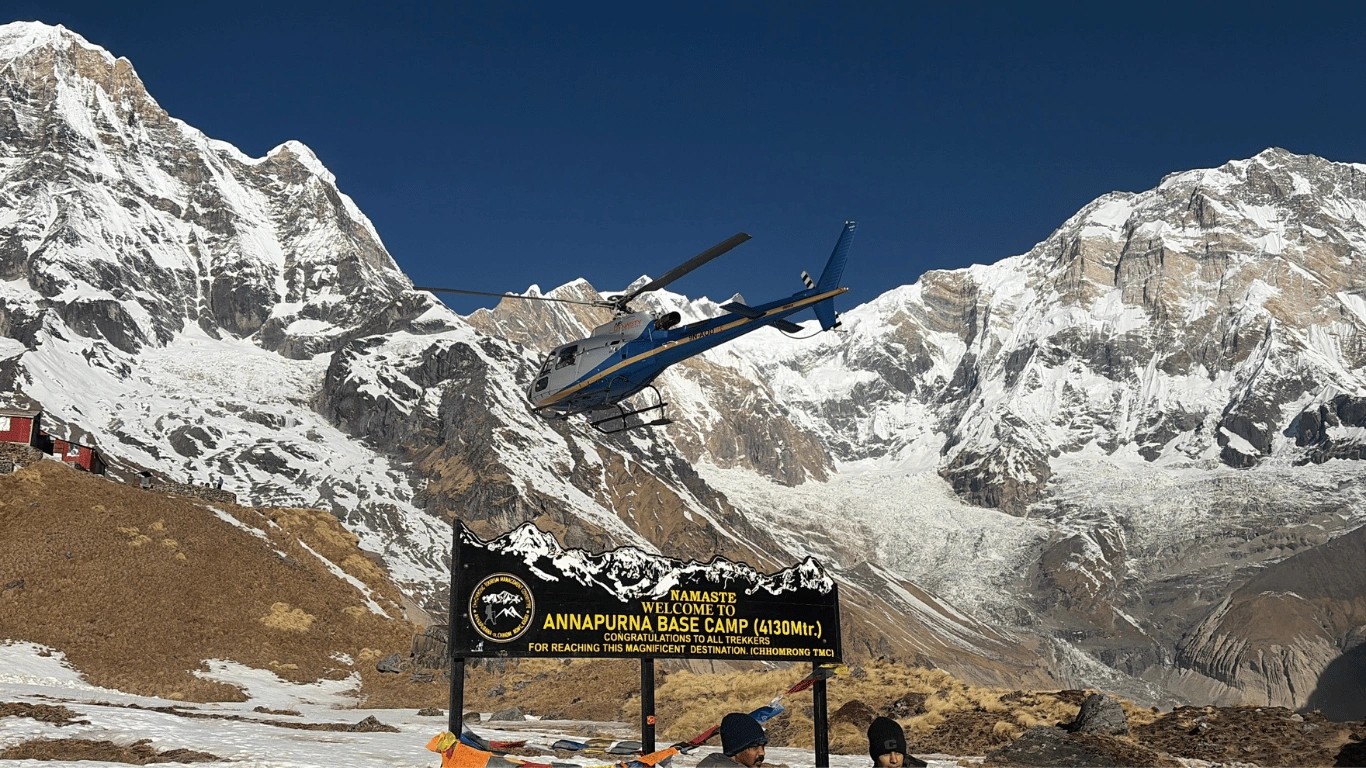
Helicopter rescue is available across the ABC region. Weather-dependent, but response times are generally good due to the relatively short distances involved.
Approximate 2026 helicopter rescue costs:
Our helicopter partner: Air Dynasty across the Annapurna region.
Insurance requirement: Every Majestic Trails Nepal ABC trekker must have insurance covering helicopter rescue to at least 5,000m. We collect a copy at your Kathmandu pre-trek meeting.
Our philosophy: we do not pre-book helicopters. We aim to get every trekker safely down without needing one. Our record — zero guest rescues on the ABC trek — proves this works.
The difference between our ABC approach and every other Nepal operator: we prevent altitude sickness from Day 1, and we know the trail well enough to avoid the risks that others don't even know exist.
Day 1 monitoring from Jhinu Danda. Not Deurali. Not MBC. From the very first evening on the trail, we take pulse oximeter readings, monitor heart rate, and ask honest questions about sleep, appetite, and how the trekker feels. This gives us a personal baseline for every trekker.
Altitude-adjusted interpretation. SpO2 of 82% at ABC is normal. The same reading at Chhomrong is concerning. We interpret every reading in altitude context.
Warm hands before every reading. Cold hands cause false low readings. Nobody else explains this.
Knowledge of the alternative avalanche-safe trail. As covered in Section 16 — our guides know both trails and choose based on conditions.
Pre-trek altitude briefing in Kathmandu. Every ABC trek starts with an honest conversation about symptoms, prevention, our protocols, and what to expect.
What we carry on every ABC trek:
Team structure:
Our track record on the Annapurna Base Camp trek:
Our data across the Annapurna Base Camp trek honestly:
Why our ABC numbers are so much better than industry:
Annapurna Base Camp sits at 4,130m (13,550 ft). This is genuinely lower than most Himalayan base camps, making altitude sickness on the ABC trek significantly less common than on EBC or the Annapurna Circuit.
The ABC trek is moderately difficult. The main challenges are the stone stair ascents and descents (more than any other Nepal trek) and the altitude reaching 4,130m. First-time Himalayan trekkers with reasonable fitness can complete it.
The Annapurna Base Camp trek can be completed in as few as 6 days from Kathmandu, or extended to 10-14 days with Poon Hill and other cultural stops added.
Most healthy trekkers do not need Diamox for the ABC trek because the peak altitude (4,130m) is below the threshold where the medication provides clearest benefit. Trekkers with previous altitude sickness or genuine worry may still choose to take it.
Yes. The Annapurna Base Camp trail is honestly the best first Himalayan trek for beginners worried about altitude. On our treks, 95.6% of trekkers complete it with zero altitude symptoms.
Annapurna Base Camp itself at 4,130m (13,550 ft) is the highest point of the trek. Mirror Lake (Tolyong) at 3,980m is a viewpoint between MBC and ABC.
For mild AMS: rest at your current teahouse, hydrate, take ibuprofen for headache, do not ascend. For worsening symptoms: descend at least 500m — the ABC trail is genuinely forgiving because you can drop quickly to Bamboo (2,310m) or Chhomrong within a few hours. Emergency helicopter rescue is available if needed.
Yes — the Annapurna Base Camp trek is easier than the Everest Base Camp trek for altitude sickness. ABC peaks at 4,130m vs EBC's 5,545m. AMS rates are dramatically lower. First-time high-altitude trekkers should consider ABC before EBC.
Monsoon season (June to August) is the worst — heavy rain, leech-heavy trails, poor visibility, and increased avalanche risk in the Deurali-to-MBC section. Winter (December to February) is possible but genuinely cold at ABC. Best seasons are autumn (September-November) and spring (March-May).
Yes — altitude sickness is possible in any season. Winter conditions may actually reduce ABC availability because heavy snow can close the trail past Deurali. Well-paced treks in stable weather remain safe.
The standard trail has avalanche history, but there is an alternative trail across the river that has zero avalanche exposure. Our guides know both trails and choose based on current conditions — which is why our safety record on the Annapurna Base Camp trail is genuinely exceptional.
Altitude sickness on the Annapurna Base Camp trek is real but genuinely manageable. At 4,130m peak altitude — below the threshold where serious altitude illness becomes common — ABC is the honest answer for anyone wanting a Himalayan base camp experience without extreme altitude exposure.
Our record on the Annapurna Base Camp trail — 95.6% zero symptoms, zero guest rescues — proves what proper pacing, Day 1 monitoring, and local trail knowledge can achieve. The alternative avalanche-safe trail past Deurali is one of many small details that turn "risky trek" into "safe trek" when your guide actually knows the region.
For altitude-worried trekkers wanting a Himalayan base camp: ABC is the honest first choice. For trekkers wanting the iconic Everest experience: EBC still wins — but with much more altitude preparation.
When in doubt, descend. The trail will still be there.

Trekking to Annapurna Base Camp Trek is one of Nepal’s most iconic mountain journeys. For mountaineers, the climb begins here, but for trekkers, Annap...
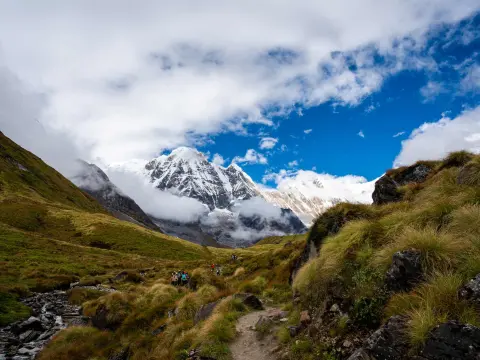
The Annapurna Base Camp trek is a moderate trek, suitable for fit beginners, with no technical climbing required. Its main challenge is not the altitu...
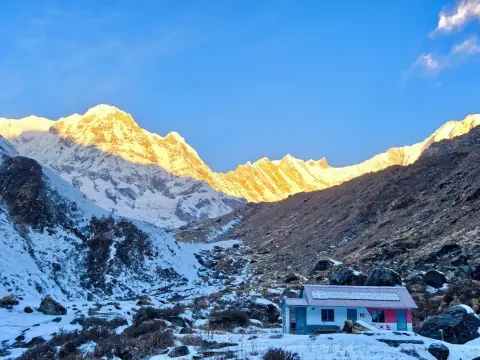
Nestled at 4,130 meters within a dramatic glacial amphitheater, the Annapurna Base Camp (ABC) trek stands among Nepal's most iconic Himalayan journeys...
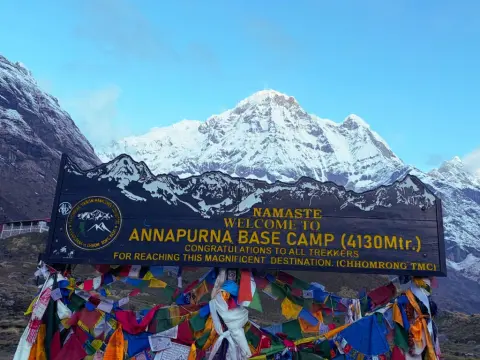
I remember the first time I stood at Annapurna Base Camp. I was 18 years old, still new to guiding, and I genuinely did not expect to cry. But when yo...
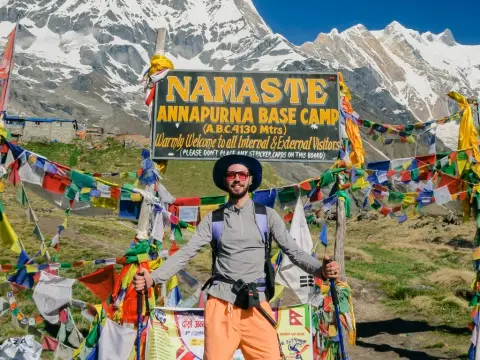
The height of Annapurna Base Camp (South) is 4,130 meters (13,550 feet) above sea level, making it one of the most Popular trekking destinations in Ne...
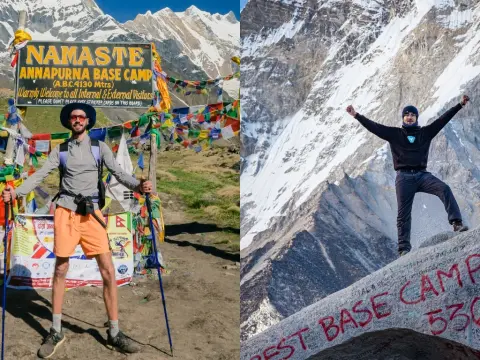
If you are deciding between Annapurna Base Camp Trek and Everest Base Camp Trek in 2026, here is the operator answer most websites will not give you:...
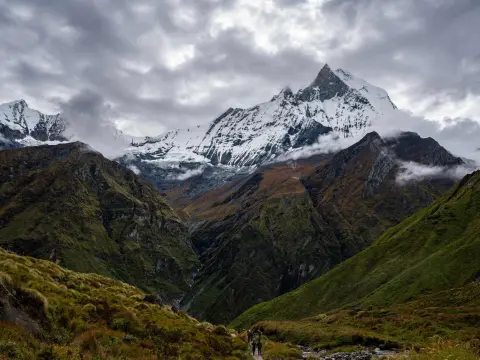
October is the best month of the year to trek to Annapurna Base Camp. The monsoon has cleared, the skies are at their sharpest, the trails are dry, an...
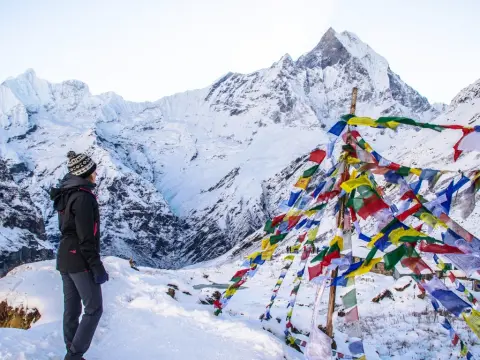
You need only one permit to trek to Annapurna Base Camp in 2026: the Annapurna Conservation Area Permit (ACAP), which costs NPR 3,000 for foreign nati...
