
Trekking in Nepal in Spring season - Best Trails, Tips, and seasonal guide
13 Jan 2026
Introduction: Why Spring is Nepal's Golden Season for TrekkersSpring in Nepal is a season of renewal, a time when the Himalayas awaken from their wint...

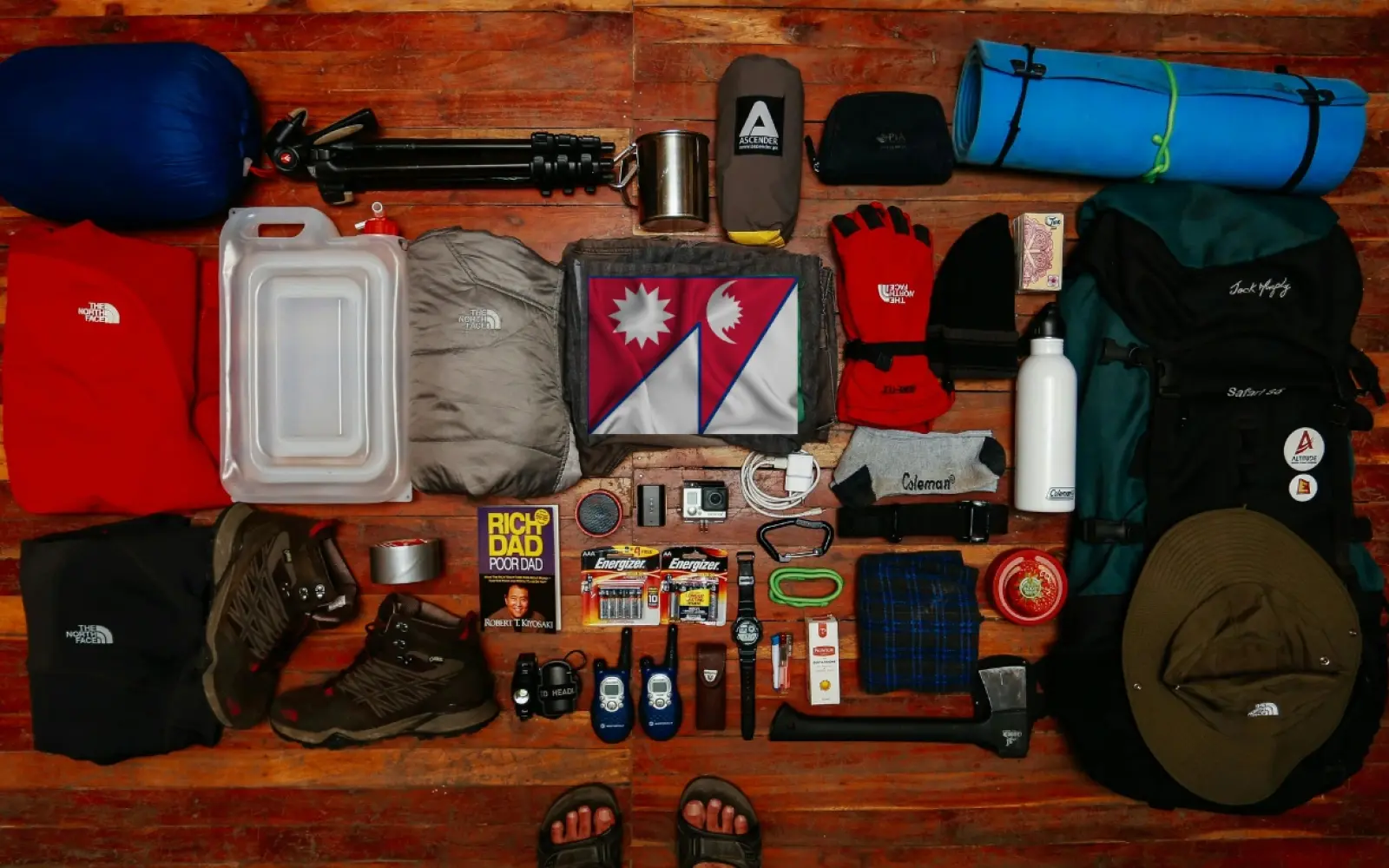

Your packing list for trekking in Nepal can be the difference between a transformative adventure and a dangerous ordeal. Nepal's trails stretch from subtropical foothills to glaciated passes above 5,000 metres — sometimes within the same week. Weather shifts without warning. Resupply is impossible in many zones. Altitude punishes the unprepared.
At Majestic Trails Nepal, we've guided thousands of trekkers across every major route in the Himalayas. We've watched trekkers arrive in cotton t-shirts for an Everest Base Camp trek, roll suitcases up to the Annapurna trailhead, and pack sleeping bags rated for a chilly autumn night — not a glacial mountain pass. This guide corrects all of that.
Whether you're planning the Everest Base Camp trek, Annapurna Circuit, Langtang Valley, Manaslu Circuit, or a restricted area trek like Nar Phu or Upper Mustang, this is the only packing guide you need. Read it. Use it. Trek confidently.
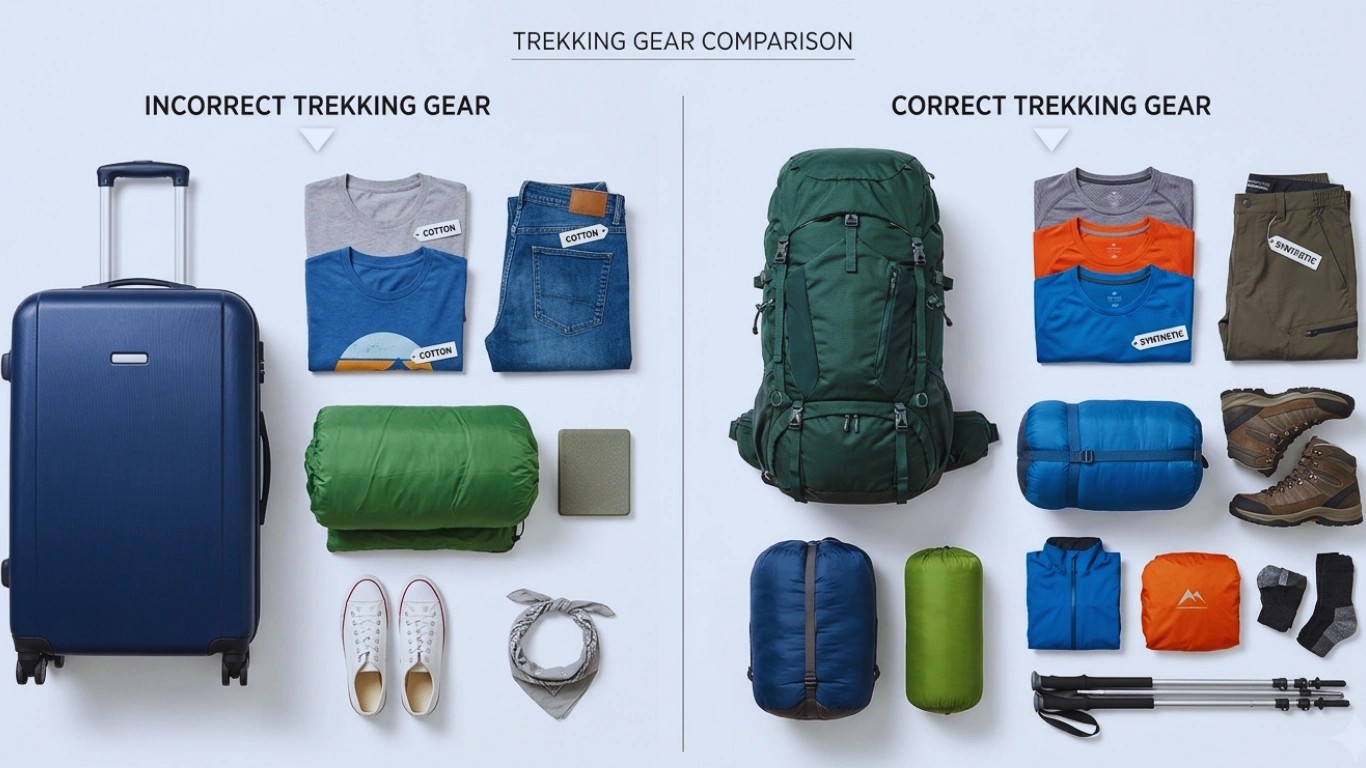
Nepal trekking is not a walk in a city park. Even a "moderate" trail like Langtang Valley can expose you to sudden snowfall, river crossings, and sustained days above 3,500 metres. An improper Nepal trekking packing list — too heavy, too light, or missing critical items — can compromise your safety and ruin your trek.
"The single biggest mistake I see trekkers make is packing for their home climate's version of cold. Nepal at 4,500m in October is nothing like a cold night in Europe or the US. Prepare for the mountain, not for your memory." — Dorje Sherpa, Lead Guide
Below is our full Nepal trekking gear checklist, refined across hundreds of guided expeditions. Items marked [MUST] are non-negotiable. Items marked [OPT] are trek-dependent or seasonal. Items marked [TECH] are electronics.
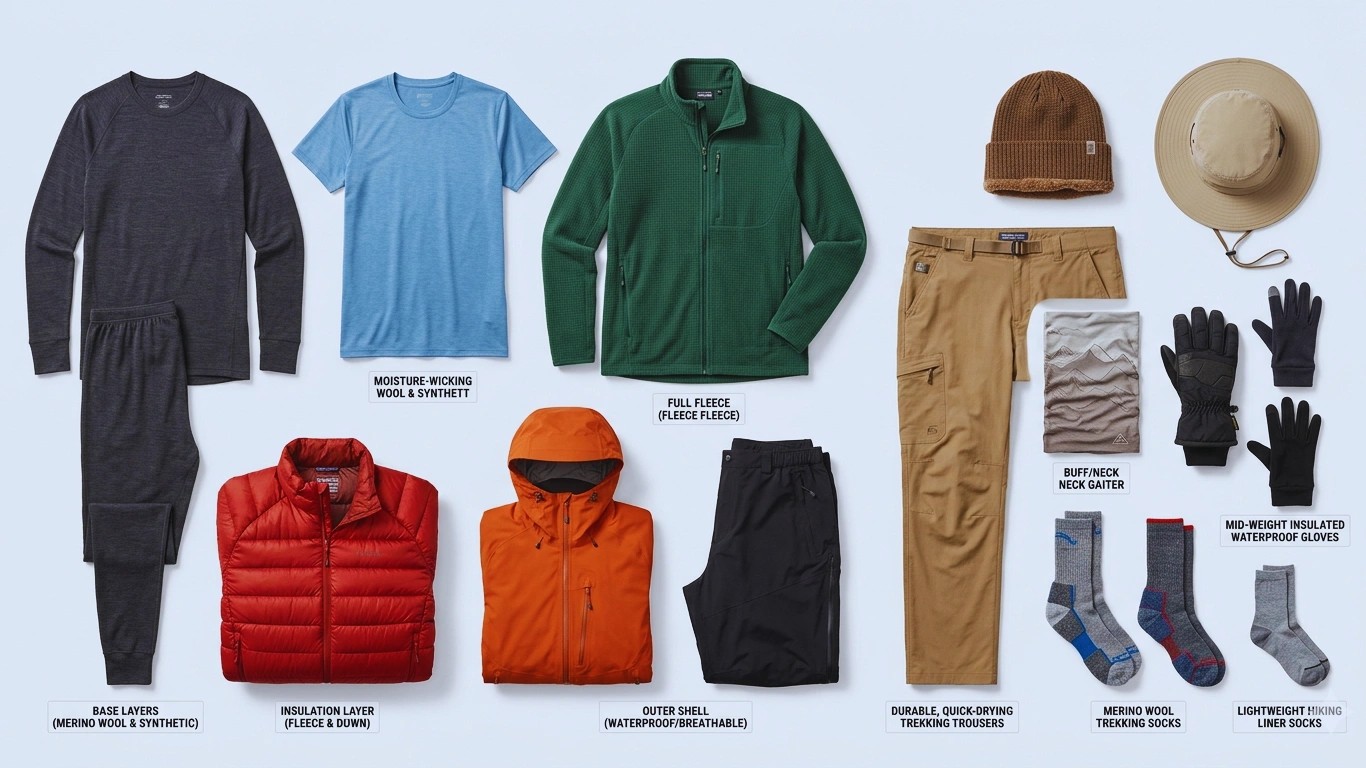
The Himalayan trekking checklist starts with your clothing system. Nepal trekking demands layers — not one thick jacket. Mornings start cold, midday warms dramatically, then temperatures plunge again at dusk. Your clothing is your primary safety system.
[ ] Moisture-wicking base layer top (×2) [MUST]
[ ] Thermal base layer bottoms (×1) [MUST]
[ ] Mid-layer fleece jacket (200–300g weight) [MUST]
[ ] Down jacket (600–800 fill power) [MUST]
[ ] Waterproof shell jacket (Gore-Tex or equivalent) [MUST]
[ ] Waterproof shell pants [MUST]
[ ] Convertible trekking trousers (×2) [MUST]
[ ] Lightweight trekking shorts [OPT]
[ ] Moisture-wicking T-shirts (×3) [MUST]
[ ] Thermal gloves (inner liner + waterproof outer shell) [MUST]
[ ] Buff / neck gaiter [MUST]
[ ] Warm wool or fleece hat [MUST]
[ ] Sun hat or cap with brim [MUST]
[ ] Merino wool or synthetic underwear (×3) [MUST]
[ ] Merino wool hiking socks (×4 pairs) [MUST]
[ ] Balaclava (for high altitude or winter treks) [OPT]
"Never pack cotton. Even one cotton shirt can become a hypothermia risk when wet. Stick to merino wool or synthetic fabrics throughout — even for underwear. Kathmandu's Thamel market stocks excellent alternatives if you arrive underprepared." — Pemba Tamang, Senior Guide
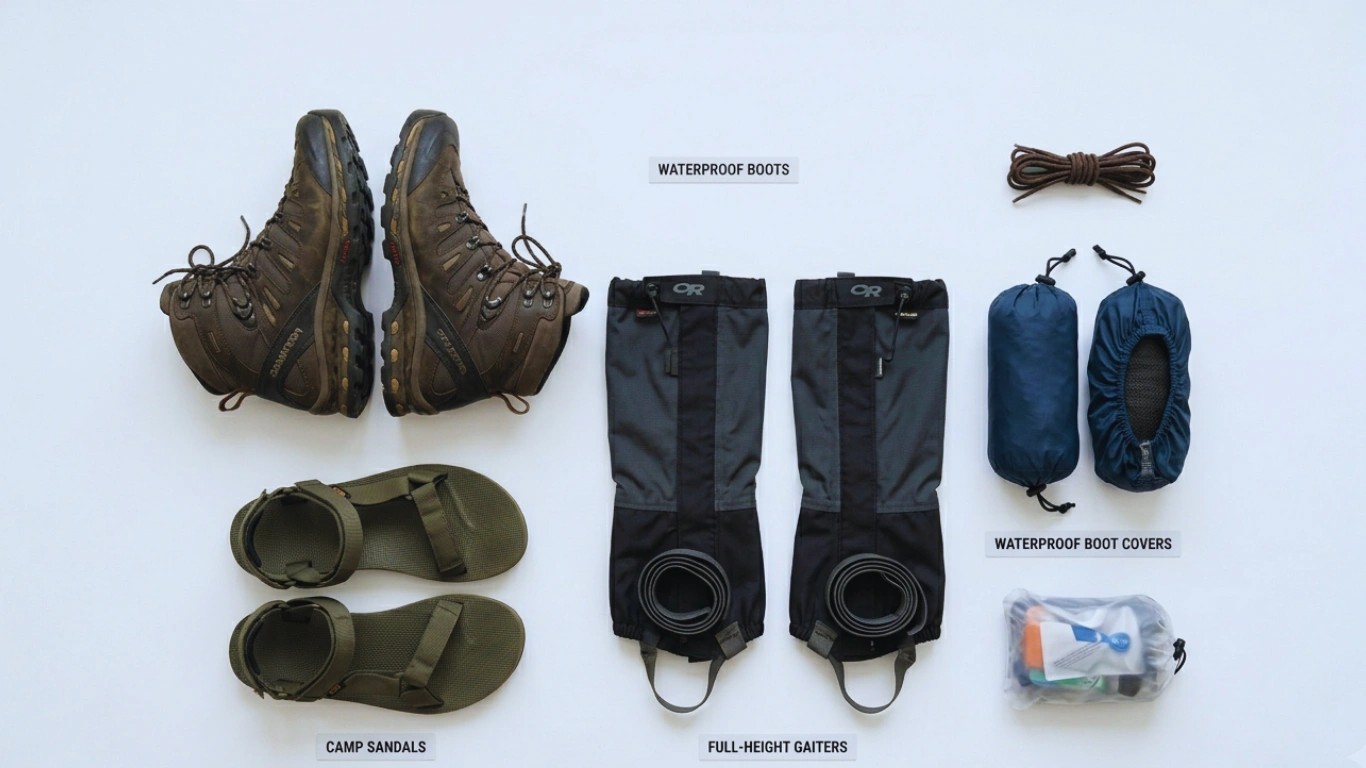
Your feet carry you 10–20 kilometres daily over loose rock, river crossings, and icy passes. Investing here is non-negotiable on any trekking gear checklist for Nepal.
[ ] Waterproof trekking boots with ankle support (broken in before trek) [MUST]
[ ] Camp sandals or lightweight shoes for teahouse evenings [MUST]
[ ] Gaiters (essential for snow or monsoon mud sections) [OPT]
[ ] Waterproof boot covers [OPT]
Never trek in brand-new boots. Break them in for at least 3–4 weeks before your trek. Blisters at altitude — far from medical care — are serious. Many trekkers have had to abandon their trek due to this preventable mistake.
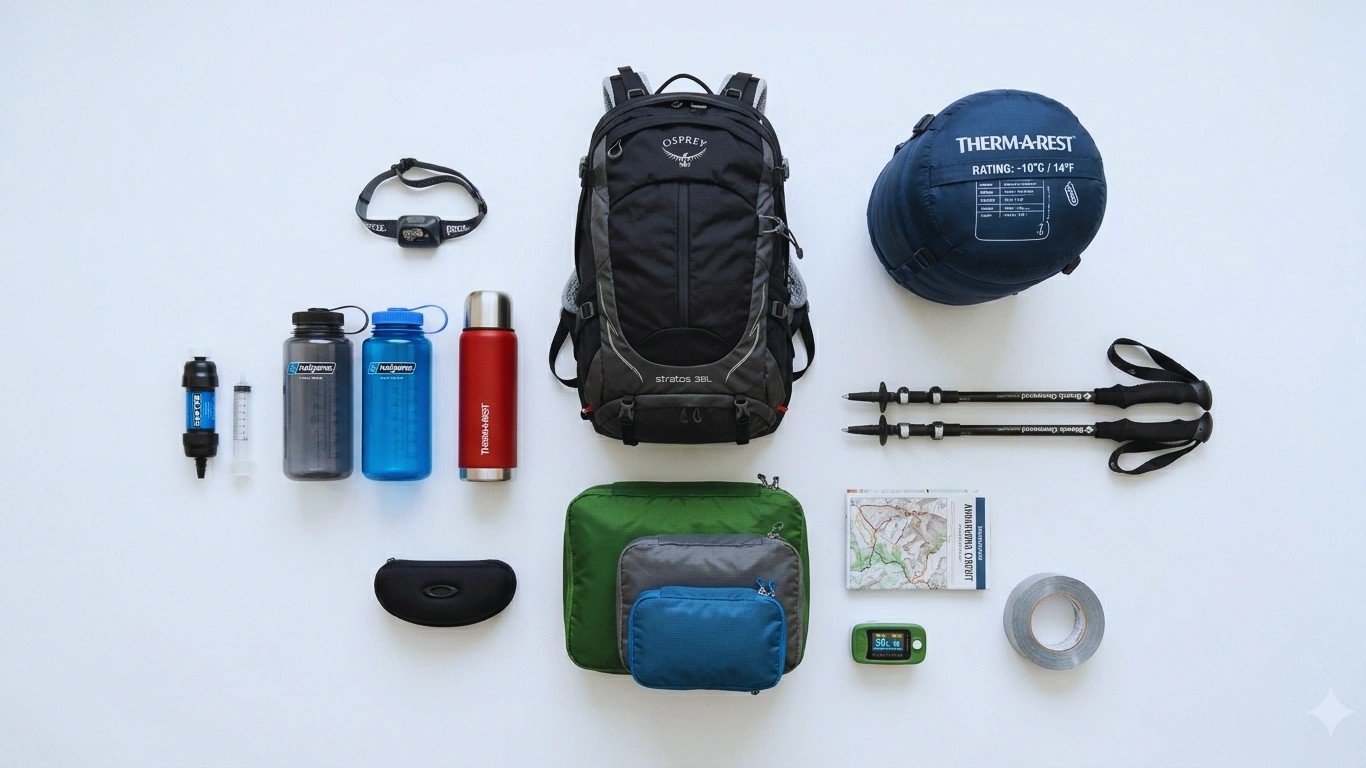
Your Himalayan trekking checklist for equipment should prioritise lightweight durability. Every gram matters at altitude.
[ ] Main daypack 30–40L (carried by you) [MUST]
[ ] Porter duffle bag 60–70L (carried by porter or yak) [OPT]
[ ] Waterproof pack cover and/or dry bag liners [MUST]
[ ] Sleeping bag rated to −10°C or lower for high altitude [MUST]
[ ] Sleeping bag liner (silk or fleece adds 5°C warmth) [MUST]
[ ] Trekking poles, collapsible, 2 pieces [MUST]
[ ] Headlamp with spare batteries [MUST]
[ ] Water bottles, 1L capacity × 2 [MUST]
[ ] Water purification tablets or filter straw [MUST]
[ ] Insulated thermos flask [OPT]
[ ] UV400 sunglasses with side shields [MUST]
[ ] Offline trekking map (laminated or on app) [OPT]
[ ] Packing cubes or dry sacks [MUST]
[ ] Full first aid kit [MUST]
[ ] Altitude medication — Diamox (consult your doctor before trek) [MUST]
[ ] Pulse oximeter [MUST]
[ ] Duct tape for emergency trail repairs [OPT]
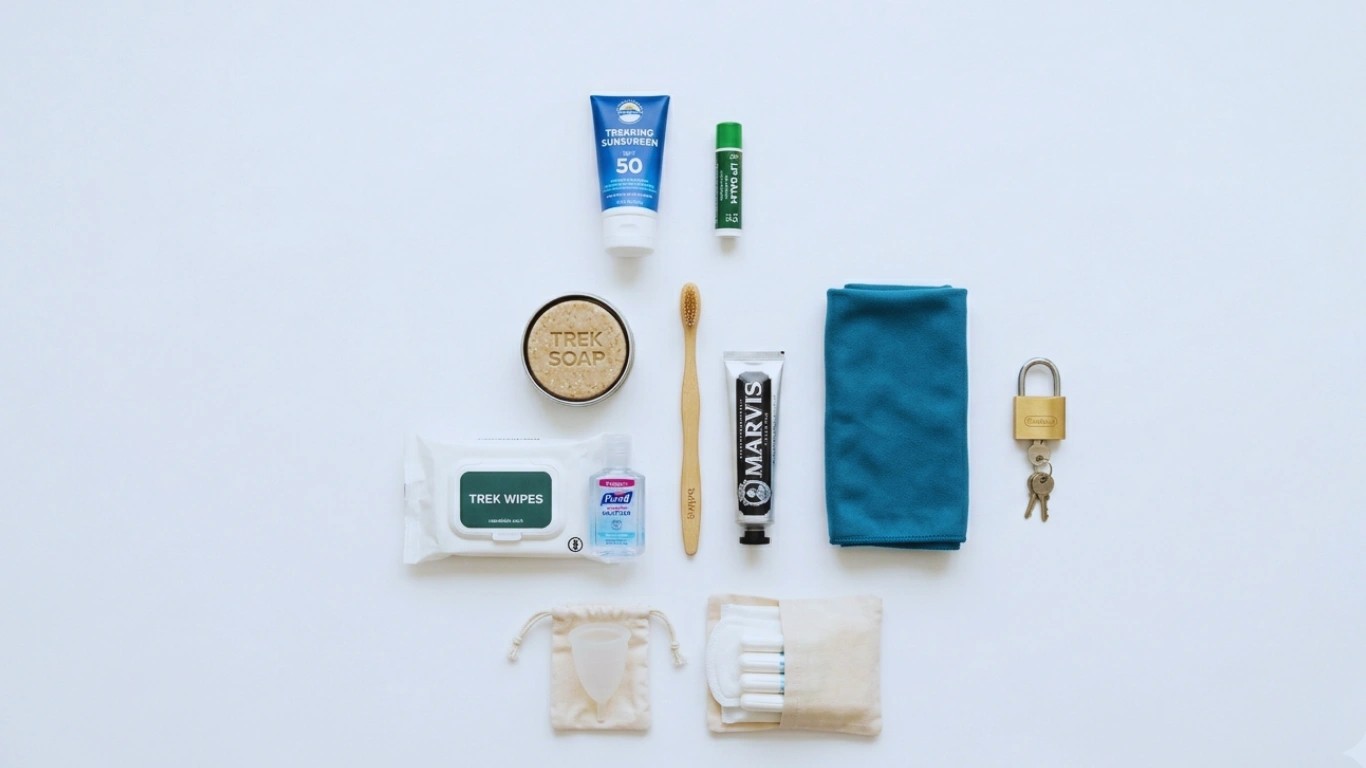
[ ] High-SPF sunscreen (SPF 50+, reapply every 2 hours at altitude) [MUST]
[ ] Lip balm with SPF [MUST]
[ ] Biodegradable soap and shampoo [MUST]
[ ] Toothbrush and toothpaste [MUST]
[ ] Quick-dry microfibre towel [MUST]
[ ] Wet wipes (hygienic necessity in remote areas) [MUST]
[ ] Hand sanitiser [MUST]
[ ] Toilet paper with small trowel for remote treks [MUST]
[ ] Personal medications and prescriptions [MUST]
[ ] Blister kit: moleskin, antiseptic, bandages [MUST]
[ ] Feminine hygiene products (limited availability on trail) [OPT]
[ ] Small padlock for teahouse storage rooms [OPT]
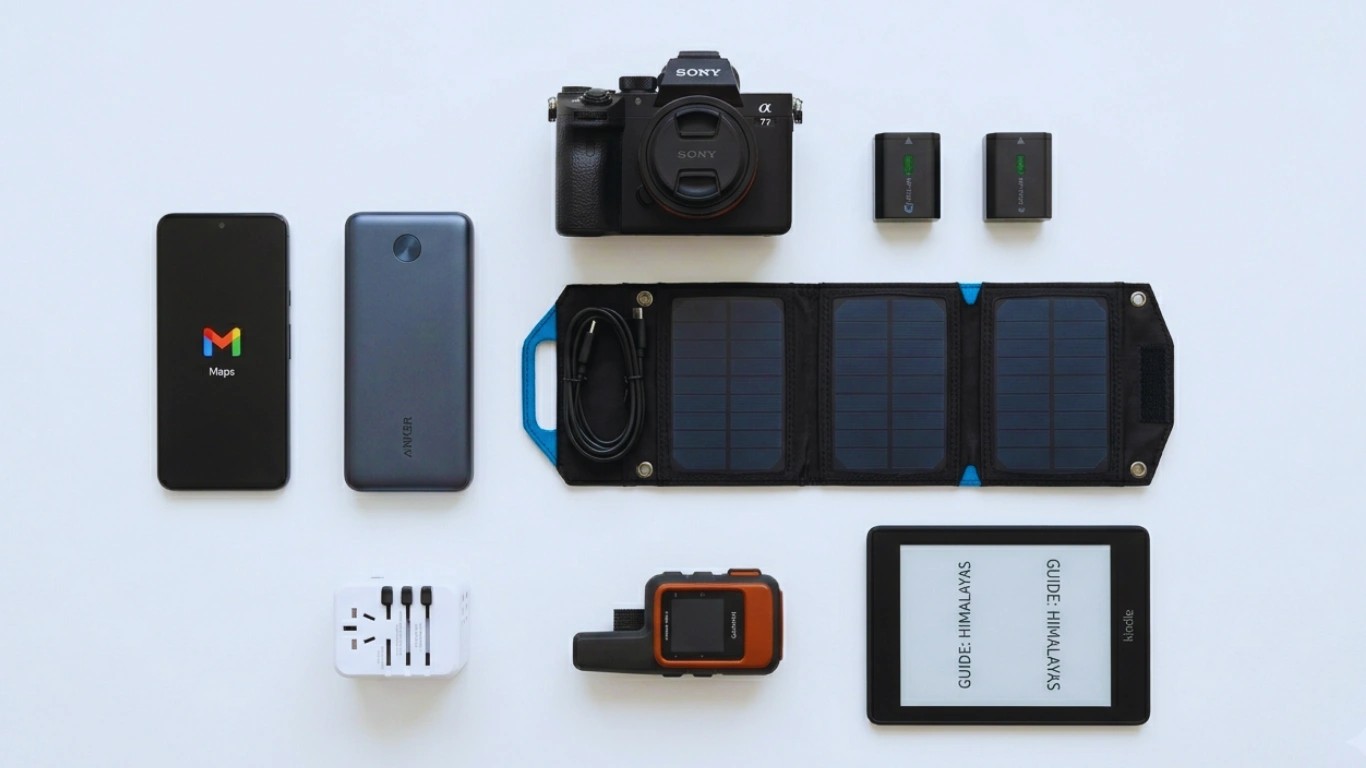
[ ] High-capacity power bank 20,000+ mAh [TECH]
[ ] Smartphone with offline maps downloaded (Maps.me or Gaia GPS) [TECH]
[ ] Universal travel adapter (Nepal uses Type C and D plugs) [TECH]
[ ] Camera and extra batteries [OPT]
[ ] Solar charger (recommended for remote restricted area treks) [OPT]
[ ] Satellite communicator or SPOT device [OPT]
[ ] E-reader for long rest days [OPT]
"Cold kills phone batteries fast above 4,000m. Keep your power bank in your sleeping bag overnight and your phone inside your jacket pocket during the day. A phone that won't switch on at Thorong La is more than an inconvenience — it's a safety emergency." — Lakpa Sherpa, High Altitude Specialist
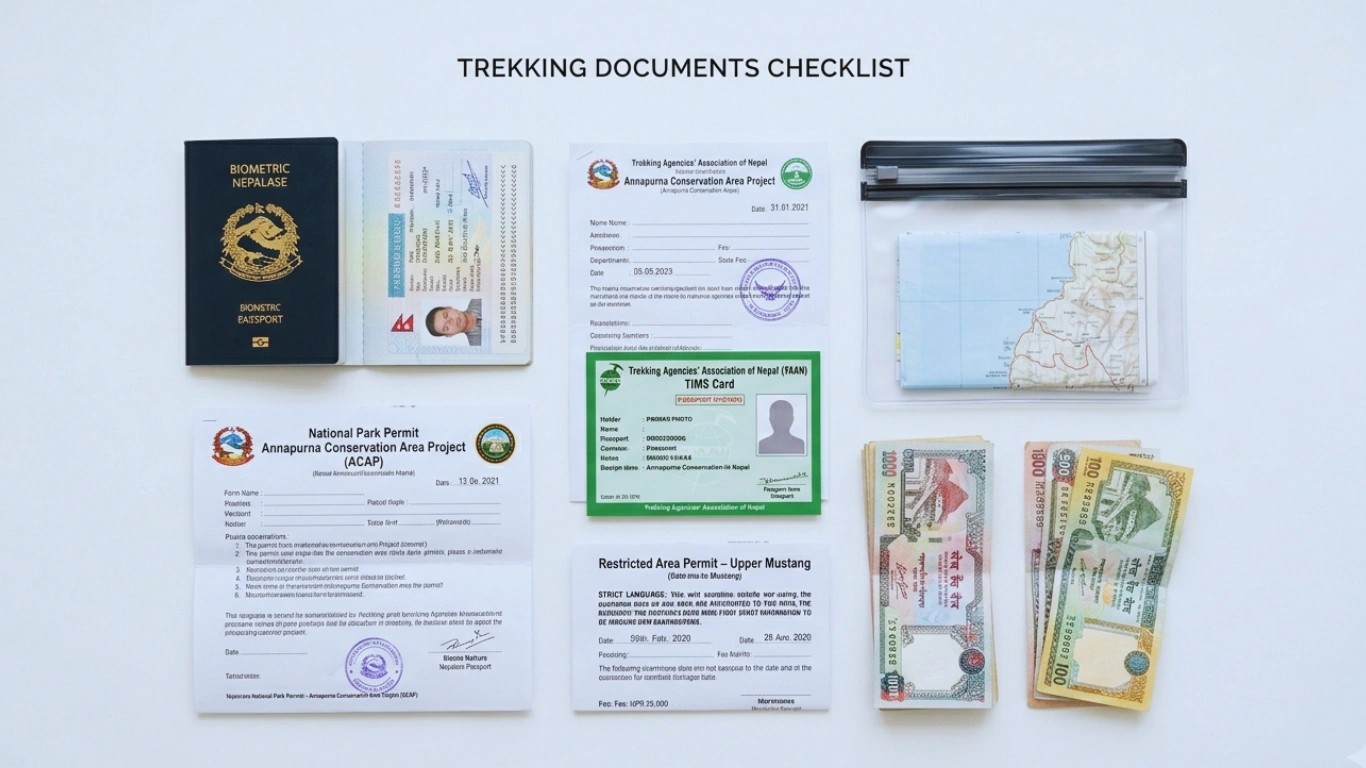
[ ] Passport (valid for at least 6 months beyond your trek dates) [MUST]
[ ] Nepal visa or visa-on-arrival fee in USD cash [MUST]
[ ] TIMS card — Trekker's Information Management System [MUST]
[ ] National Park or Conservation Area permit [MUST]
[ ] Restricted Area permit for Nar Phu, Upper Mustang, Manaslu, etc. [OPT]
[ ] Comprehensive travel insurance with emergency helicopter evacuation cover [MUST]
[ ] Emergency contacts card [MUST]
[ ] Cash in Nepalese Rupees — ATMs are unavailable on trail [MUST]
[ ] Waterproof document pouch [MUST]
Each major trekking route in Nepal has unique terrain, altitude profiles, and logistical realities. Your Nepal trek essentials should be adjusted accordingly.
The Everest Base Camp trek reaches 5,364 metres and demands your best cold-weather gear. This is the most unforgiving of Nepal's popular trekking routes from a gear perspective.
The Annapurna Circuit covers 160+ kilometres across wildly varying terrain — from subtropical valleys to the 5,416m Thorong La pass. Lightweight gear is the priority here.
Langtang has the highest rainfall risk of any major trekking route in Nepal, in virtually every season. Waterproofing everything is non-negotiable.
Manaslu is a restricted area trek requiring a licensed guide. It is more remote than the Everest and Annapurna regions, with fewer facilities.
Nar Phu is one of Nepal's most remote and pristine restricted zones, requiring a special permit and mandatory licensed guide.
Upper Mustang is Nepal's most iconic restricted area trek, requiring a special permit costing USD 500 per 10 days. It lies in a rain shadow north of the Annapurna range, making it an exceptional monsoon season option.
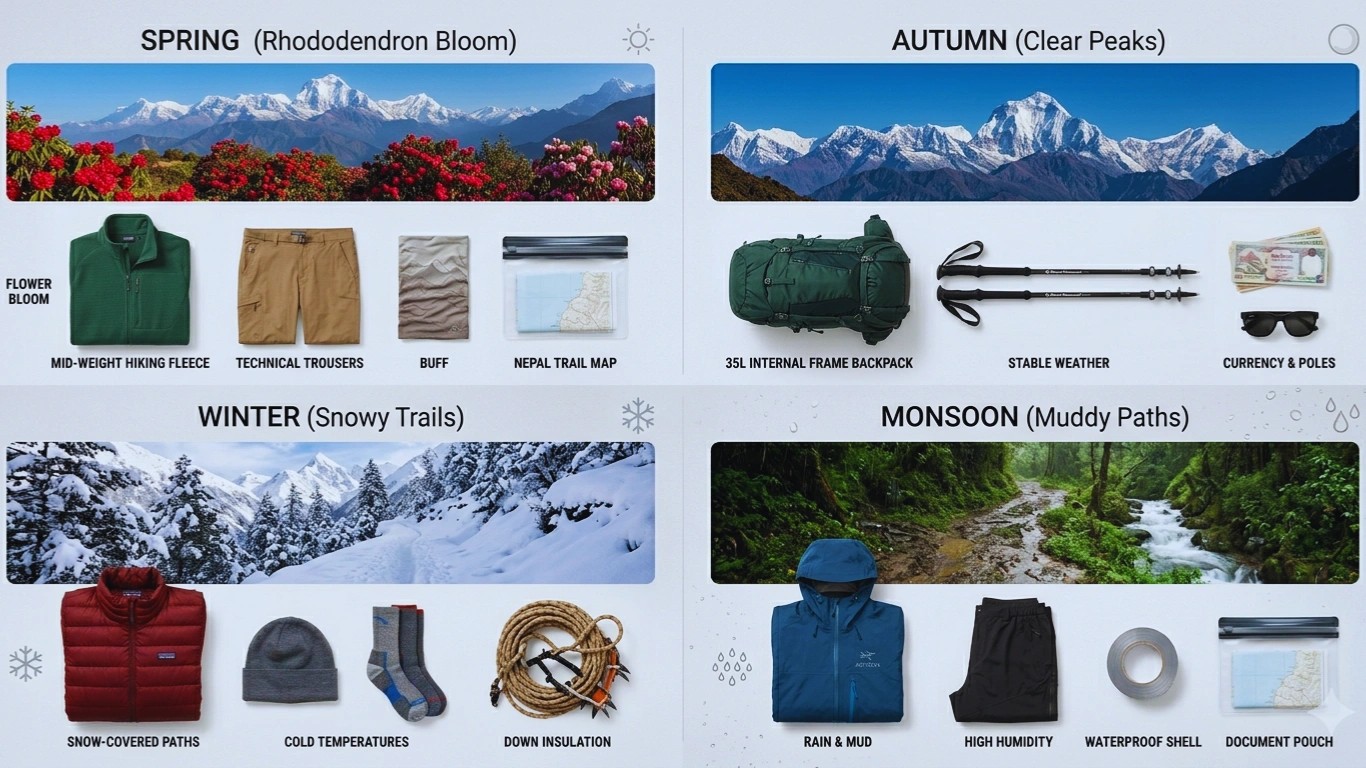
The season in which you trek dramatically changes what belongs on your Nepal trekking packing list.
Spring is prime trekking season. Rhododendrons bloom below 3,000 metres, temperatures are moderate, and trails are clear of heavy snow. This is the most popular season for the Everest and Annapurna regions.
Packing priorities:
Autumn is widely considered the best overall season for Nepal trekking. Skies are crystal clear, trails are dry, and visibility of the peaks is exceptional.
Packing priorities:
Winter trekking is challenging but rewards you with empty trails and extraordinary clear weather. Many high passes are closed, so route selection is critical. Lower altitude routes like Poon Hill and Langtang lower sections remain accessible.
Packing priorities:
Monsoon brings heavy daily rainfall to most of Nepal from June through August. However, rain shadow regions like Upper Mustang, Nar Phu, and Dolpo remain dry and are exceptional monsoon trekking destinations.
Packing priorities:
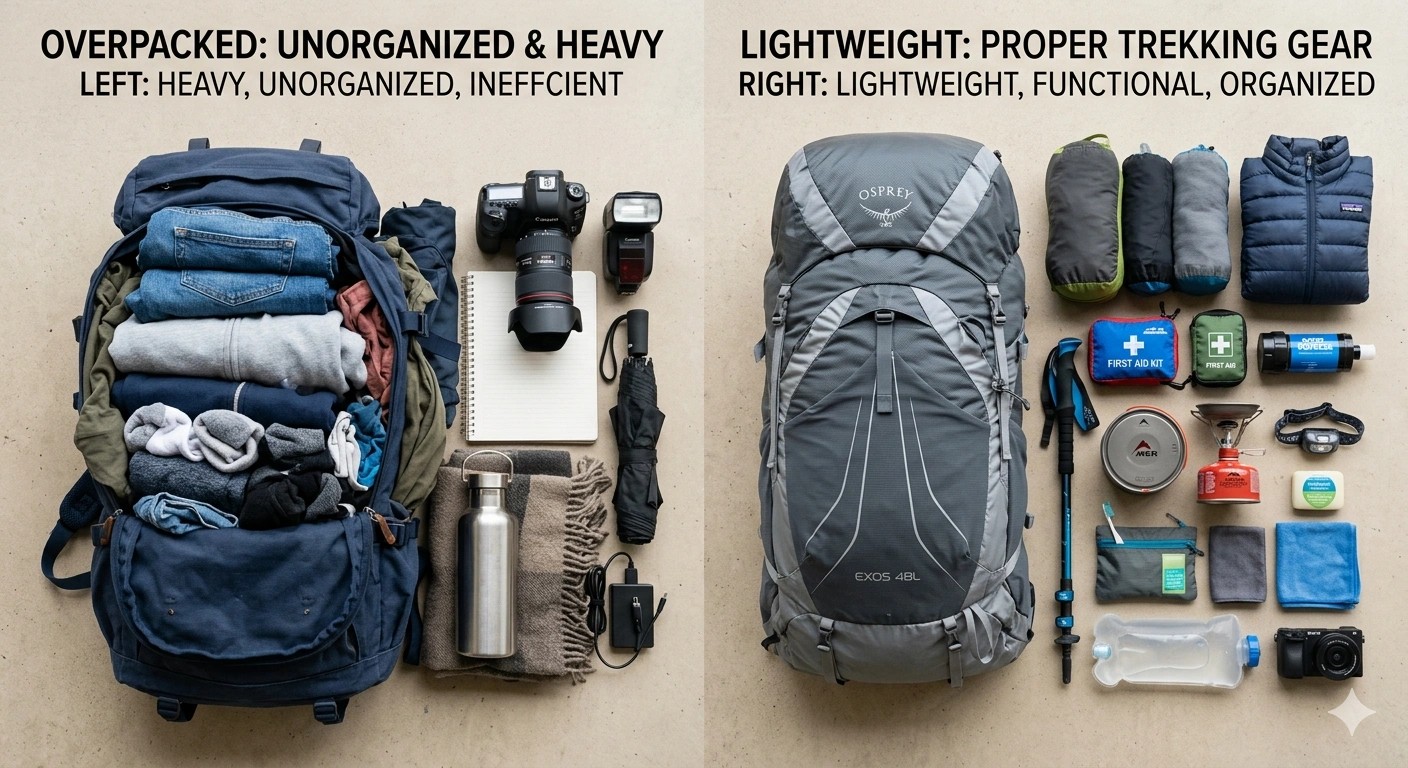
Overpacking is just as dangerous as underpacking. Carrying a 20 kg pack to Everest Base Camp will exhaust you before Namche Bazaar. Here is what to leave behind:
"Lay out everything you plan to pack on your bed. Then remove a third of it. You can buy most things in Kathmandu's Thamel area at a fraction of Western prices — down jackets, sleeping bags, socks, trekking poles. Don't pay airline luggage fees for things you can buy on arrival." — Nima Sherpa, Trekking Logistics Manager
The ideal day pack weight for Nepal trekking is 10–12 kg maximum. If you hire a porter — which we strongly recommend — they carry your main duffle bag, which should not exceed 15 kg. Distributing weight correctly prevents altitude-related exhaustion and back injury.
Start each morning in base layer plus fleece. Add your down jacket at rest stops when you stop moving. Switch to your waterproof shell when rain threatens. Never stop and cool down in wind without adding a layer immediately — wind chill at altitude is genuinely dangerous and hypothermia sets in faster than most trekkers expect.
Altitude medication, trail snacks, lip balm, sunscreen, and your phone should all be in your jacket pockets or the top pocket of your daypack — never buried at the bottom. You will need these items many times each day, often in cold, windy conditions where you cannot stop for long.
Stay hydrated by drinking 4+ litres of water per day. Keep Diamox in a clearly labelled and always-accessible pocket. Carry a pulse oximeter to monitor your blood oxygen saturation above 3,500m. Follow the golden rule: never ascend more than 500 metres per day above 3,000m. Your gear and your behaviour together prevent altitude mountain sickness.
Kathmandu's Thamel district is one of Asia's best outdoor gear hubs. You will find genuine and high-quality gear from major brands — The North Face, Arc'teryx, Mammut, Black Diamond — as well as excellent locally-produced alternatives. You can realistically complete 60–70% of your Nepal trekking gear list in Thamel at competitive prices. We recommend arriving 2–3 days before your trek begins to allow time for shopping and fitting.
Do a full day hike with the exact pack, boots, and clothing you plan to trek in. Nothing reveals fit problems, hot spots, or equipment failures faster than a 6-hour test hike before the point of no return. If your boots hurt at hour three in a local park, they will be disabling by day five in the Himalayas.
For Nar Phu Valley, Upper Mustang, Manaslu Circuit, and other restricted areas, all permits are arranged through a licensed agency like Majestic Trails Nepal before departure. You cannot enter these zones independently or obtain permits at the trailhead. Carry permit copies in your waterproof document pouch — checkpoint officials inspect them carefully. We handle all permit logistics as part of our guided packages.
Your core packing list for trekking in Nepal should include a full layered clothing system (base layer, fleece, down jacket, waterproof shell), waterproof trekking boots that are broken in, a sleeping bag rated to at least −10°C, trekking poles, headlamp, water purification, a first aid kit with altitude medication, a high-capacity power bank, offline maps on your phone, and all official permits in a waterproof pouch. See the full checklist sections above for the complete item-by-item breakdown.
Your daypack should weigh no more than 10–12 kg when you set off each morning. If you hire a porter (which Majestic Trails Nepal strongly recommends), they carry your main duffle bag up to 15 kg. Carrying excessive weight above 3,500m dramatically increases exhaustion and altitude mountain sickness risk. A well-organised, lightweight pack is one of the most important decisions you make before a Nepal trek.
Yes — and quite well. Kathmandu's Thamel district is stocked with genuine and high-quality trekking gear from major international brands, as well as excellent locally-produced items. Down jackets, sleeping bags, trekking poles, merino socks, and most clothing can be purchased competitively. However, bring specialised items from home: custom orthotics, prescription sunglasses, specific medications, and technical mountaineering equipment. Plan to arrive 2–3 days before your trek to allow shopping time.
Yes, for virtually all trekking routes. Teahouse blankets are not reliable in terms of warmth or hygiene above 3,500m — particularly in peak season when they are heavily used. A sleeping bag rated to at least −10°C is essential for the Everest region, Annapurna Circuit, Manaslu, Langtang, and all restricted area treks. Always carry your sleeping bag; it is a non-negotiable safety item.
Restricted area treks require additional preparation beyond standard Nepal trek essentials. All permits must be arranged through a licensed agency like Majestic Trails Nepal before you enter — you cannot obtain them at the border. Pack a satellite communicator or SPOT device, comprehensive self-sufficient medical supplies, a solar charger for electronics, extra cash in Nepalese Rupees (no ATMs), and additional cold weather layers. Upper Mustang demands exceptional sun protection due to its arid high-altitude desert terrain and intense UV exposure. Majestic Trails Nepal handles all permit logistics, guide arrangements, and pre-trek briefings for these specialised routes.
For treks above 4,500 metres — including Everest Base Camp, Thorong La on the Annapurna Circuit, and Larkya La on the Manaslu Circuit — you need: a down jacket with at least 600 fill power, a sleeping bag rated to −15°C or colder, double gloves (thermal liner plus waterproof outer shell), a balaclava, gaiters for snow, a pulse oximeter, altitude medication (Diamox), and UV-protective glacier glasses with side shields. Snow blindness is a real and painful risk above 4,000m — standard sunglasses are not sufficient.
Introduction: Why Spring is Nepal's Golden Season for TrekkersSpring in Nepal is a season of renewal, a time when the Himalayas awaken from their wint...
There's a moment that happens somewhere between your first mountain sunrise and your final meditation session. It's the moment you realize you've been...
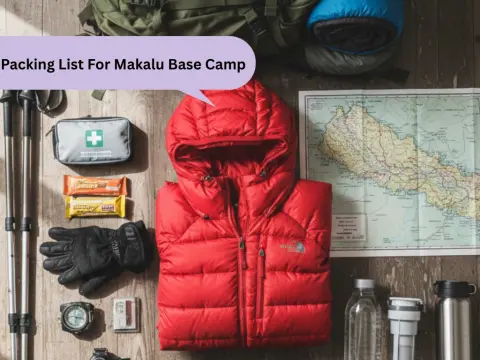
The Makalu Base Camp trek doesn't forgive packing mistakes. Unlike Everest or Annapurna where you can buy forgotten gear at the next village, Makalu's...
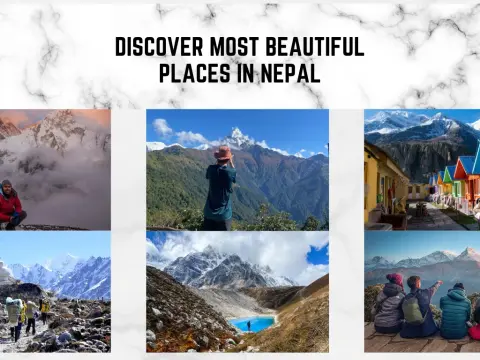
Nepal is a land where nature paints its most spectacular masterpieces. From the towering peaks of the Himalayas to serene alpine lakes, dense jungles...
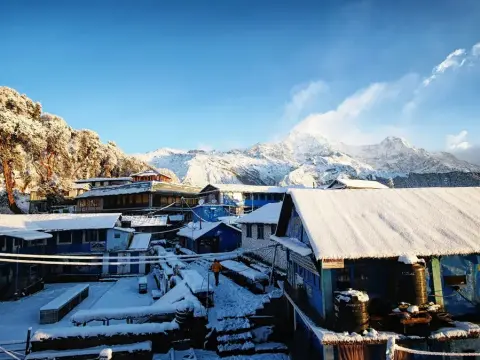
Winter in Nepal gets misunderstood a lot. Most travelers from Europe or North America picture deep snowdrifts, frozen trails, and dangerous conditions...
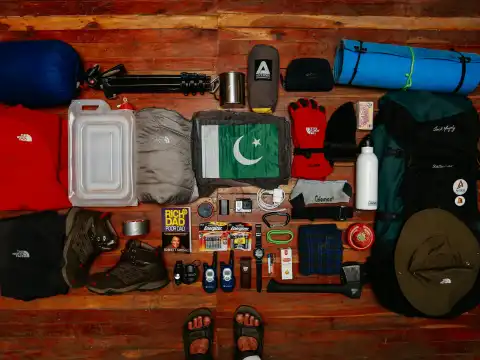
Getting your packing list for Langtang Valley Trek right can mean the difference between a comfortable journey and a miserable one. After outfitting t...
If you've ever scrolled through trekking forums or chatted with someone who's walked through Nepal's mountains, you've probably heard the phrase apple...
When trekkers ask us at Majestic Trails Nepal about the Annapurna Base Camp trek, one question comes up more than any other: "What's the accommodation...
