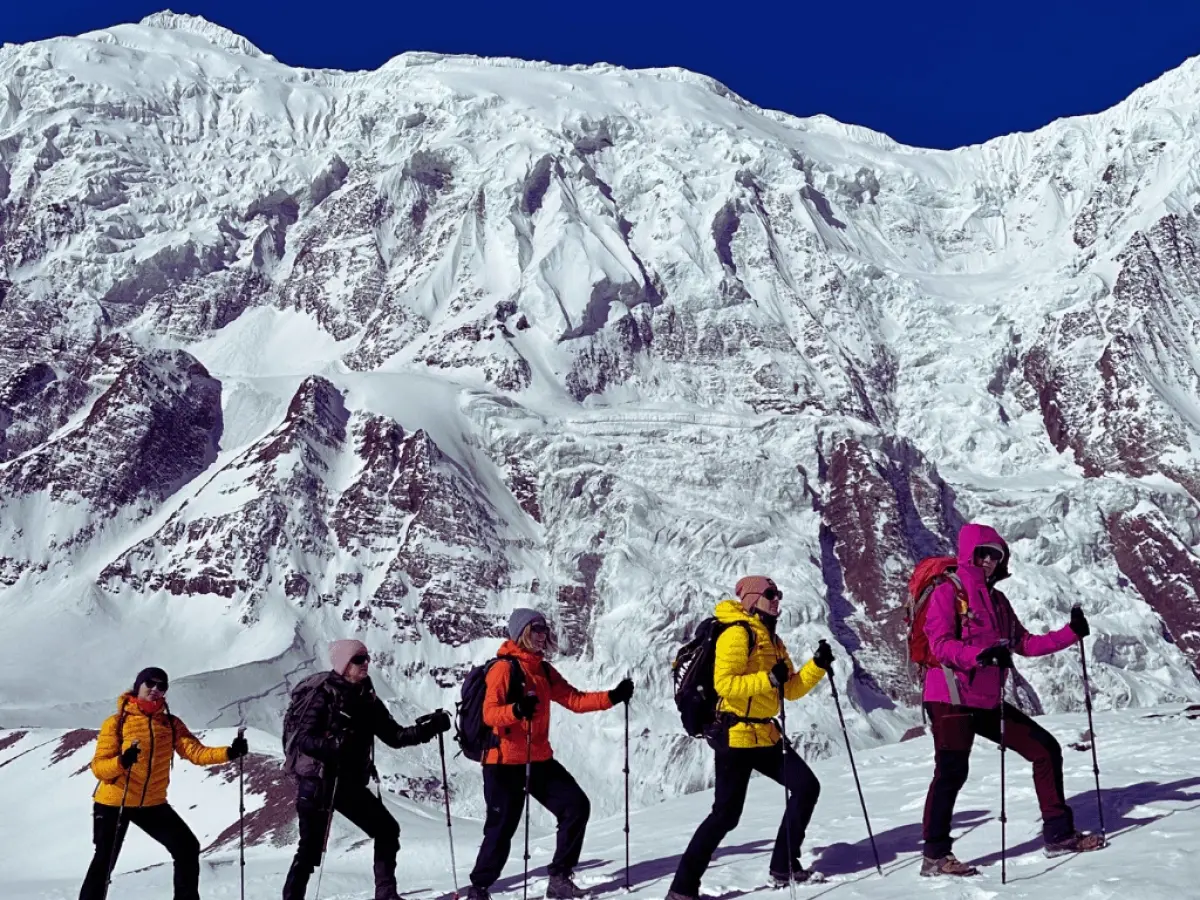
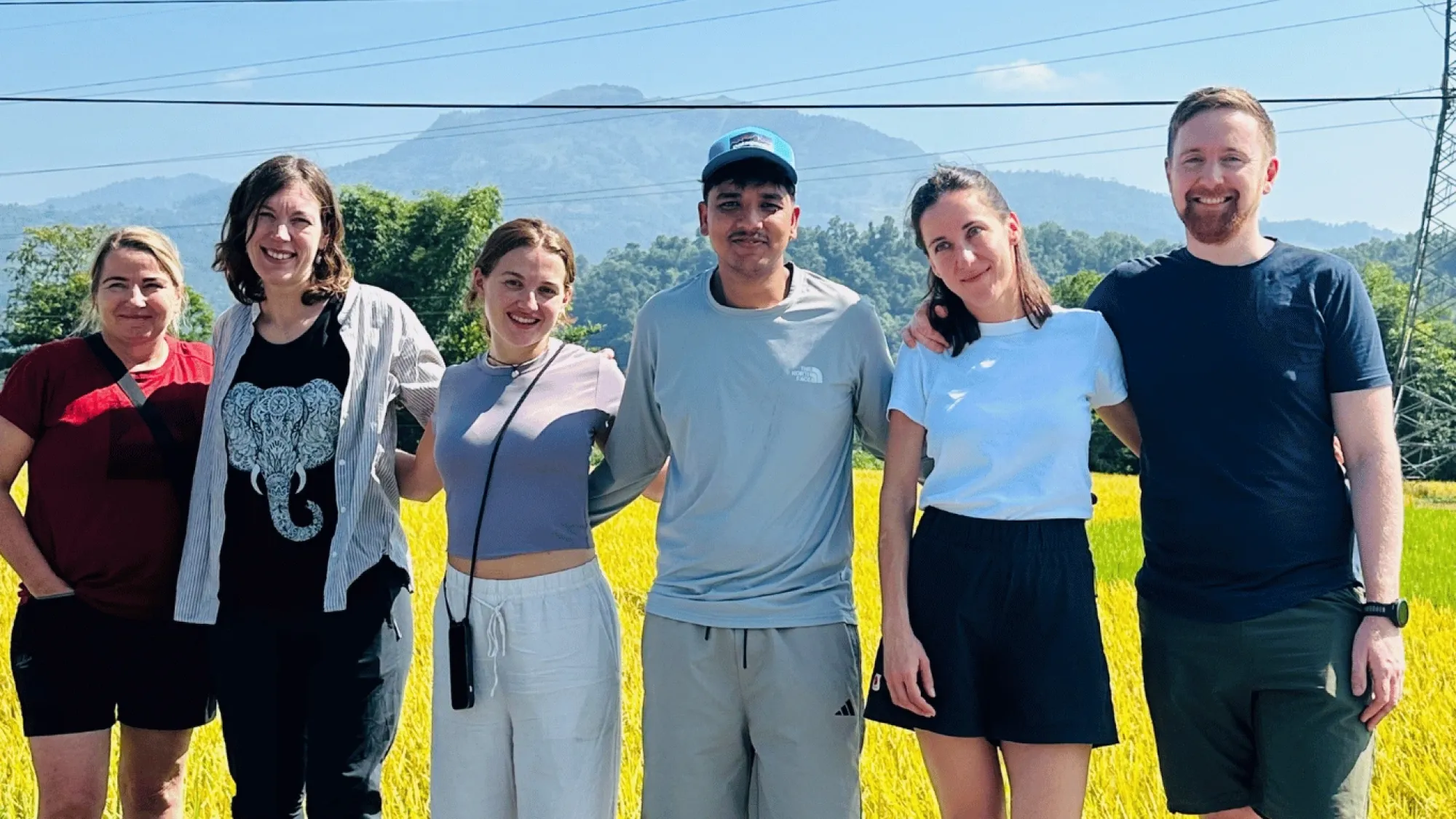
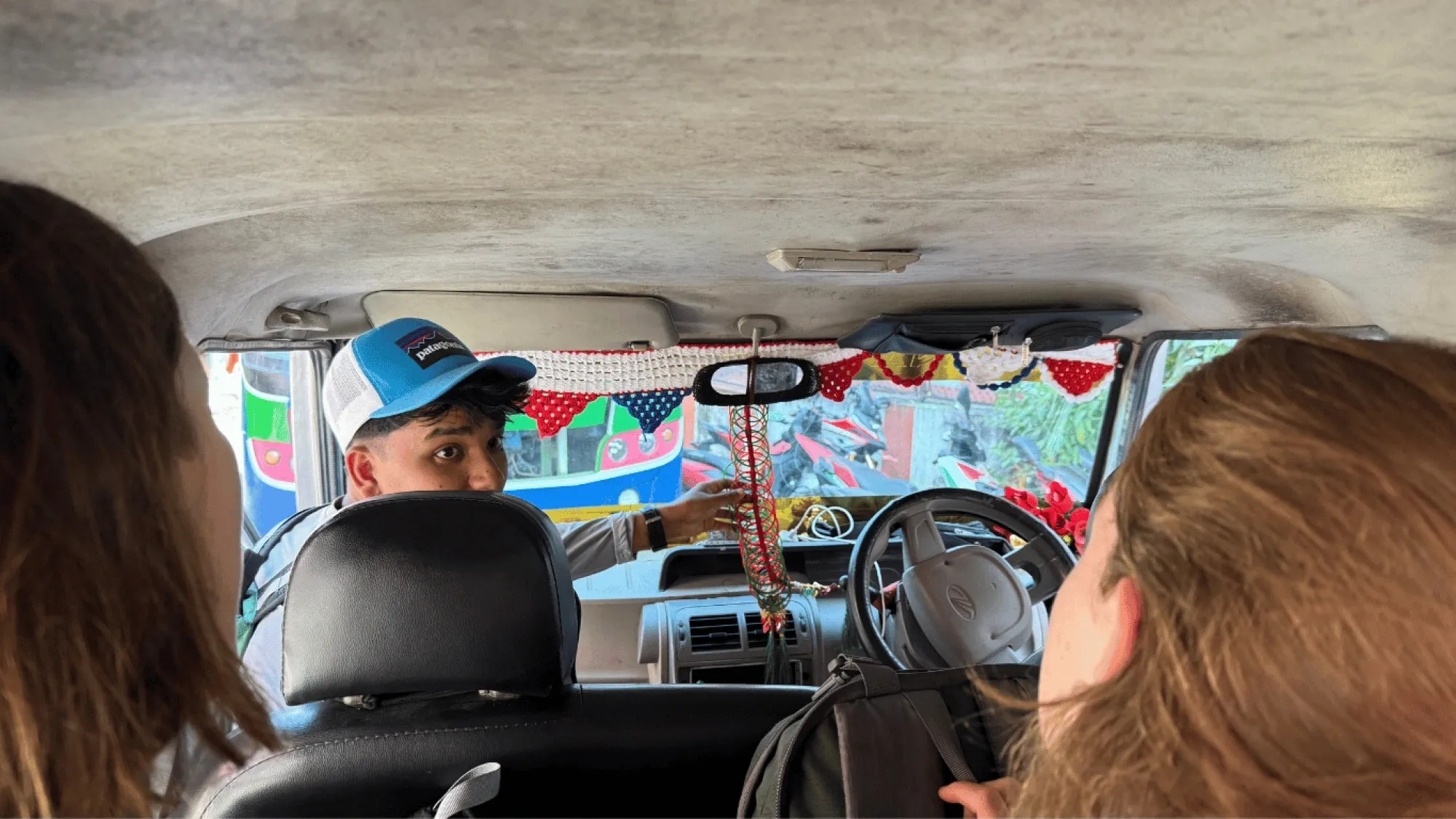
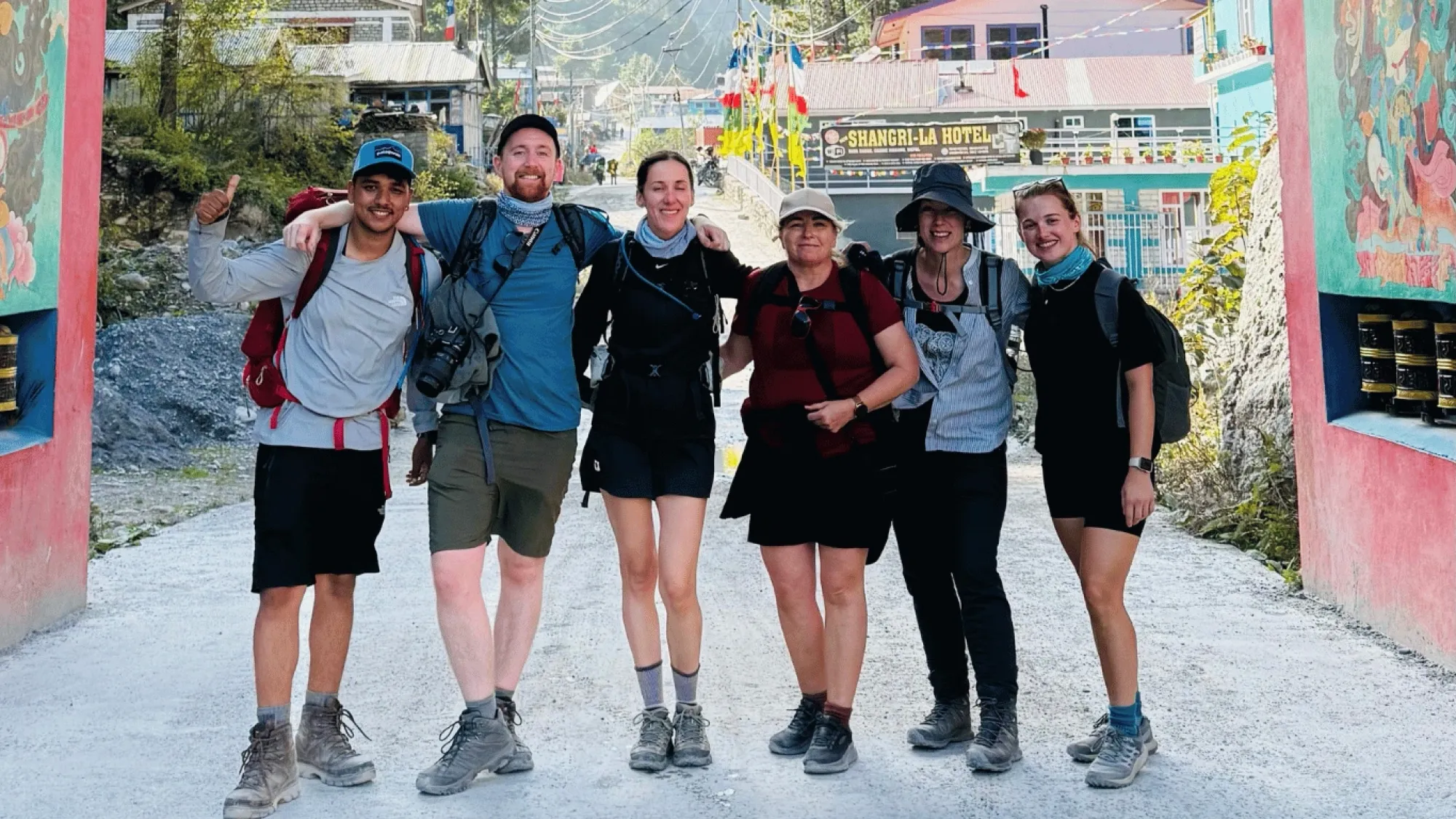
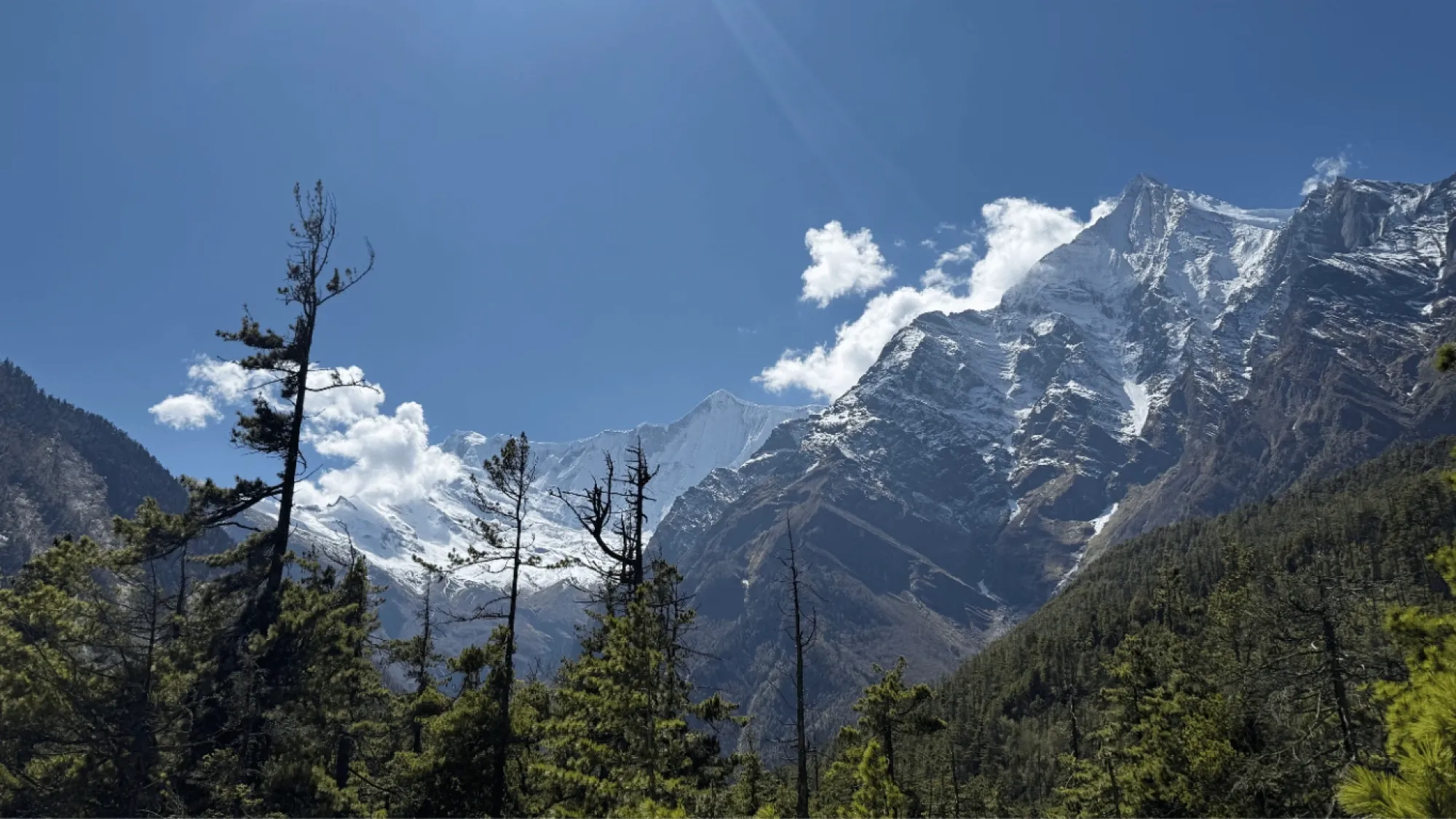
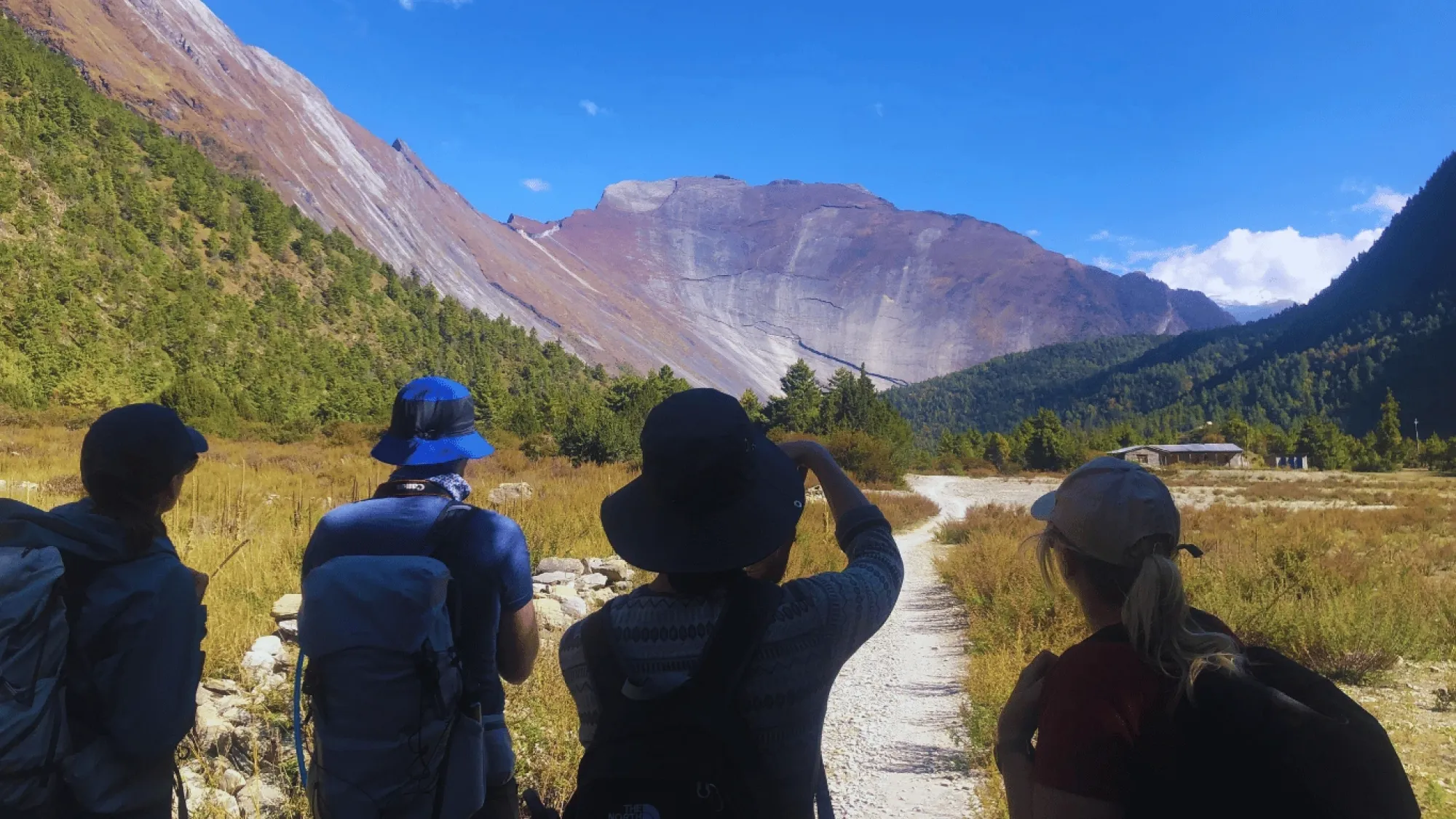
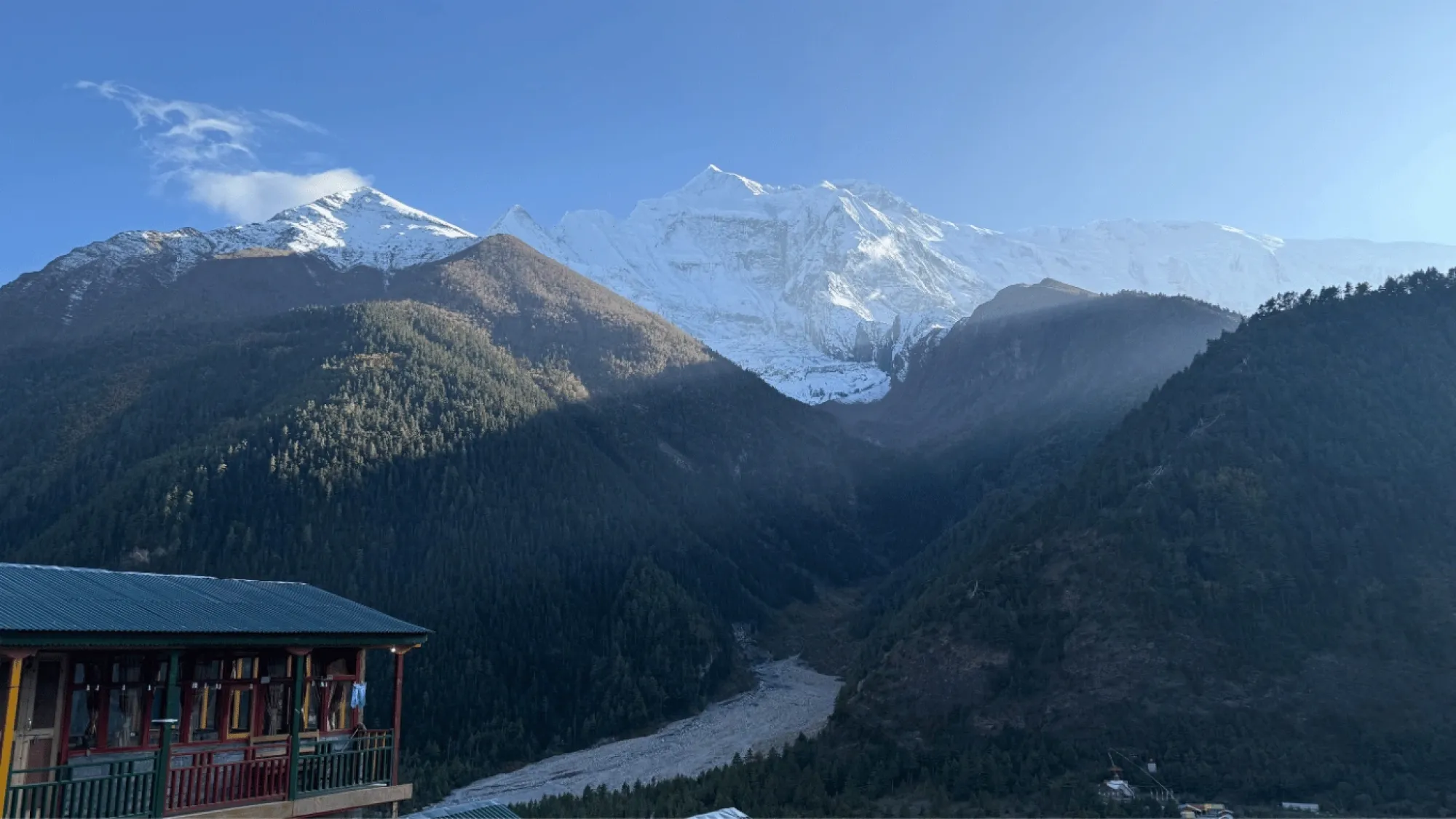
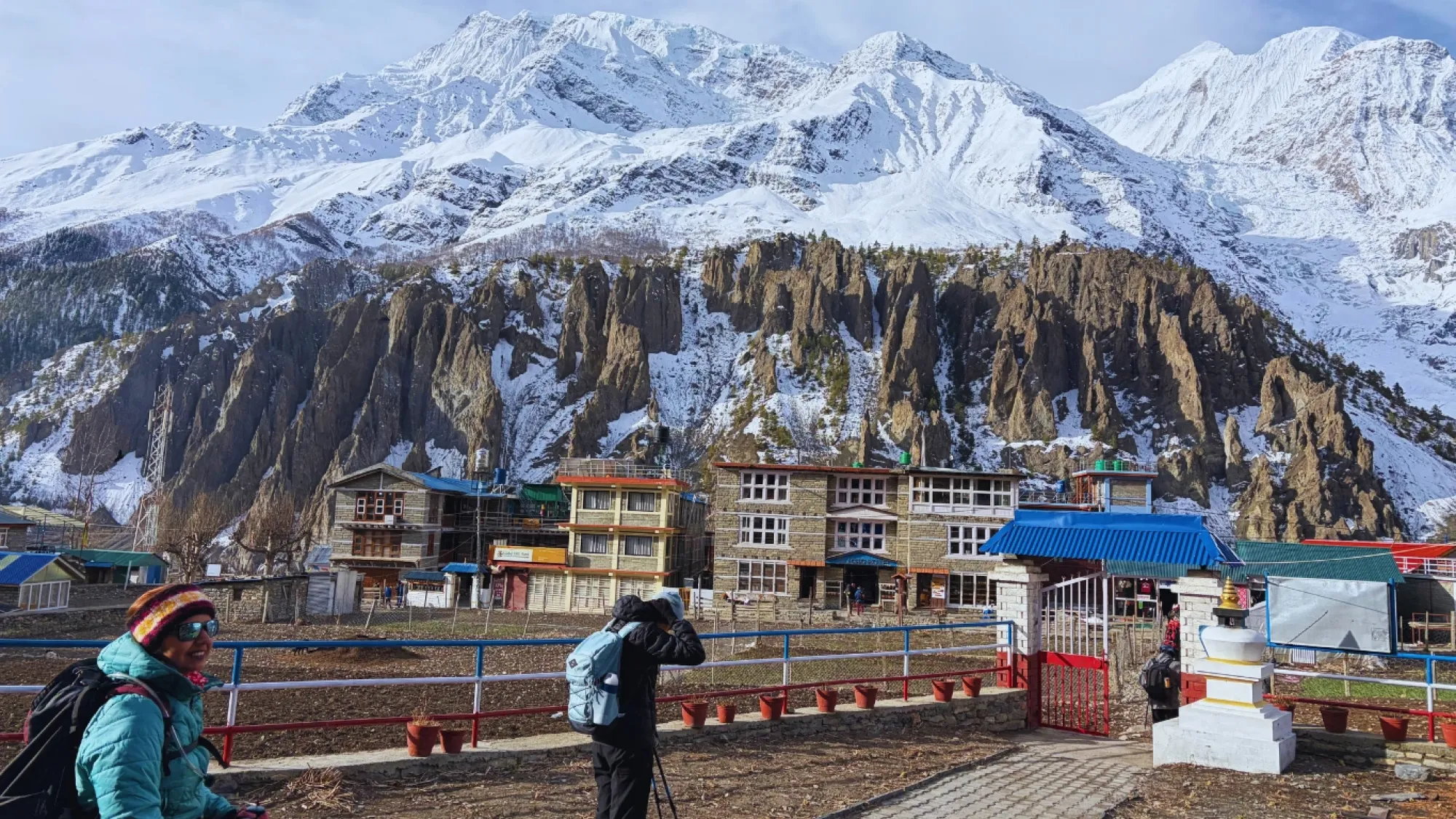
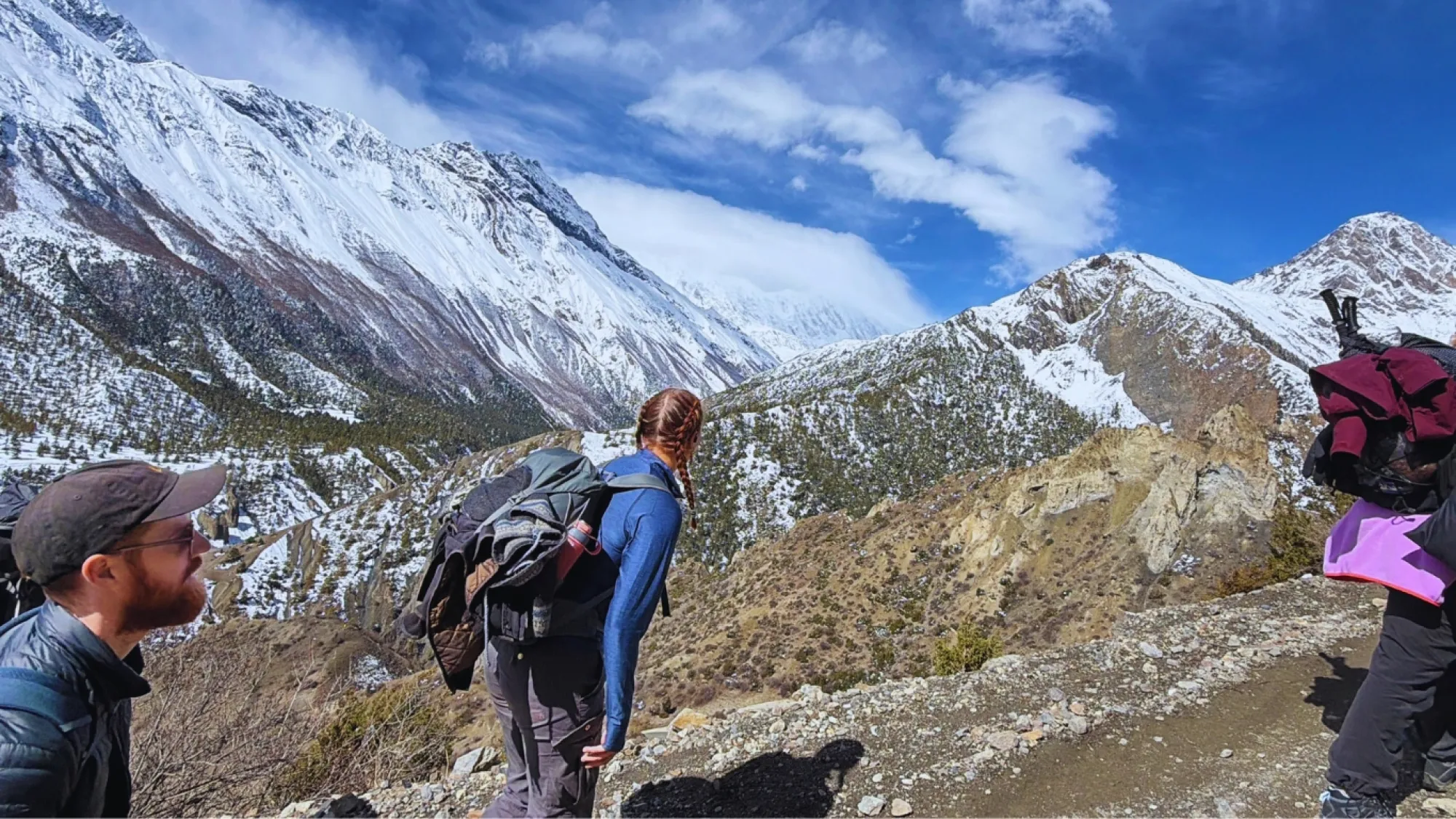
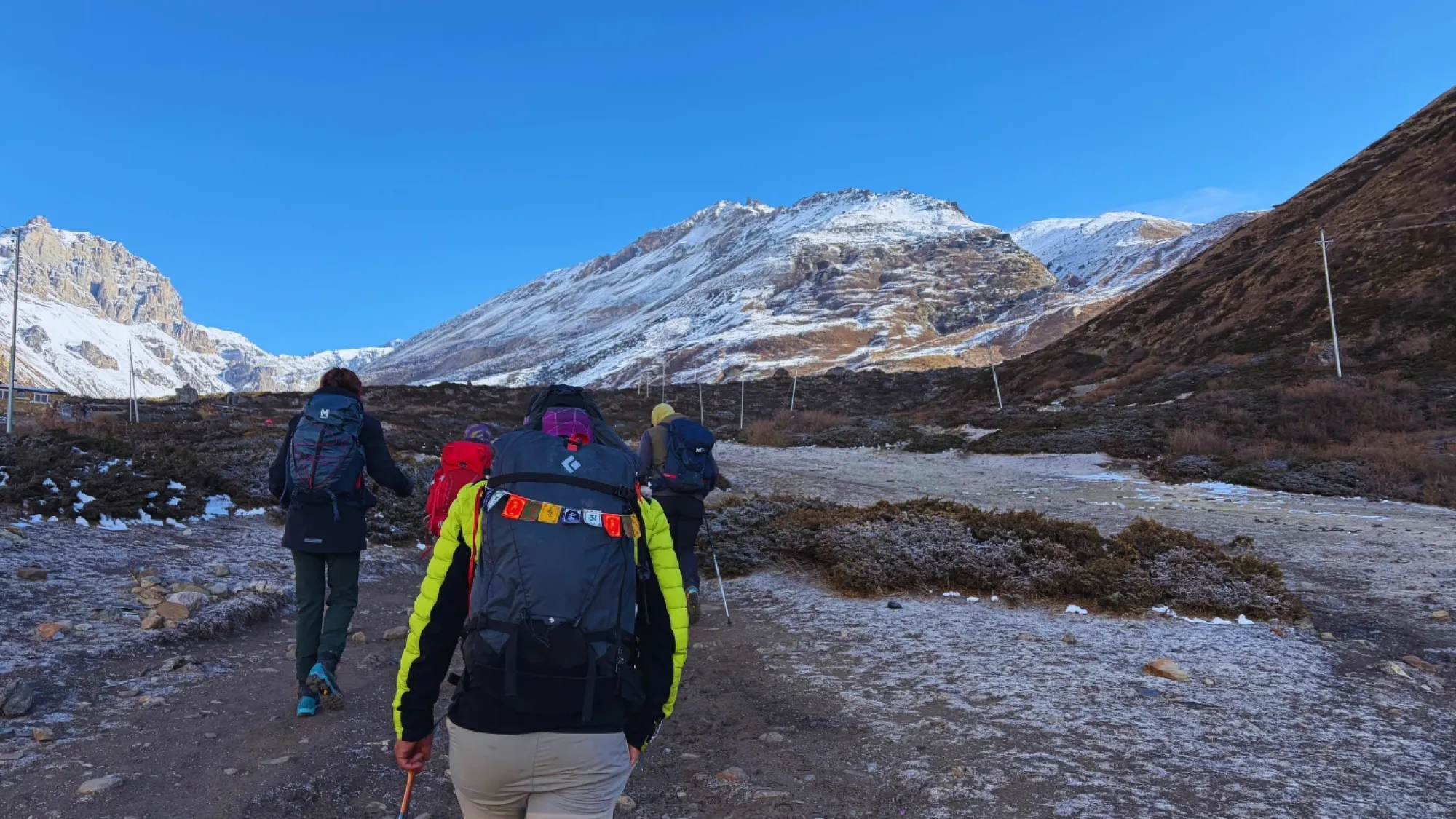
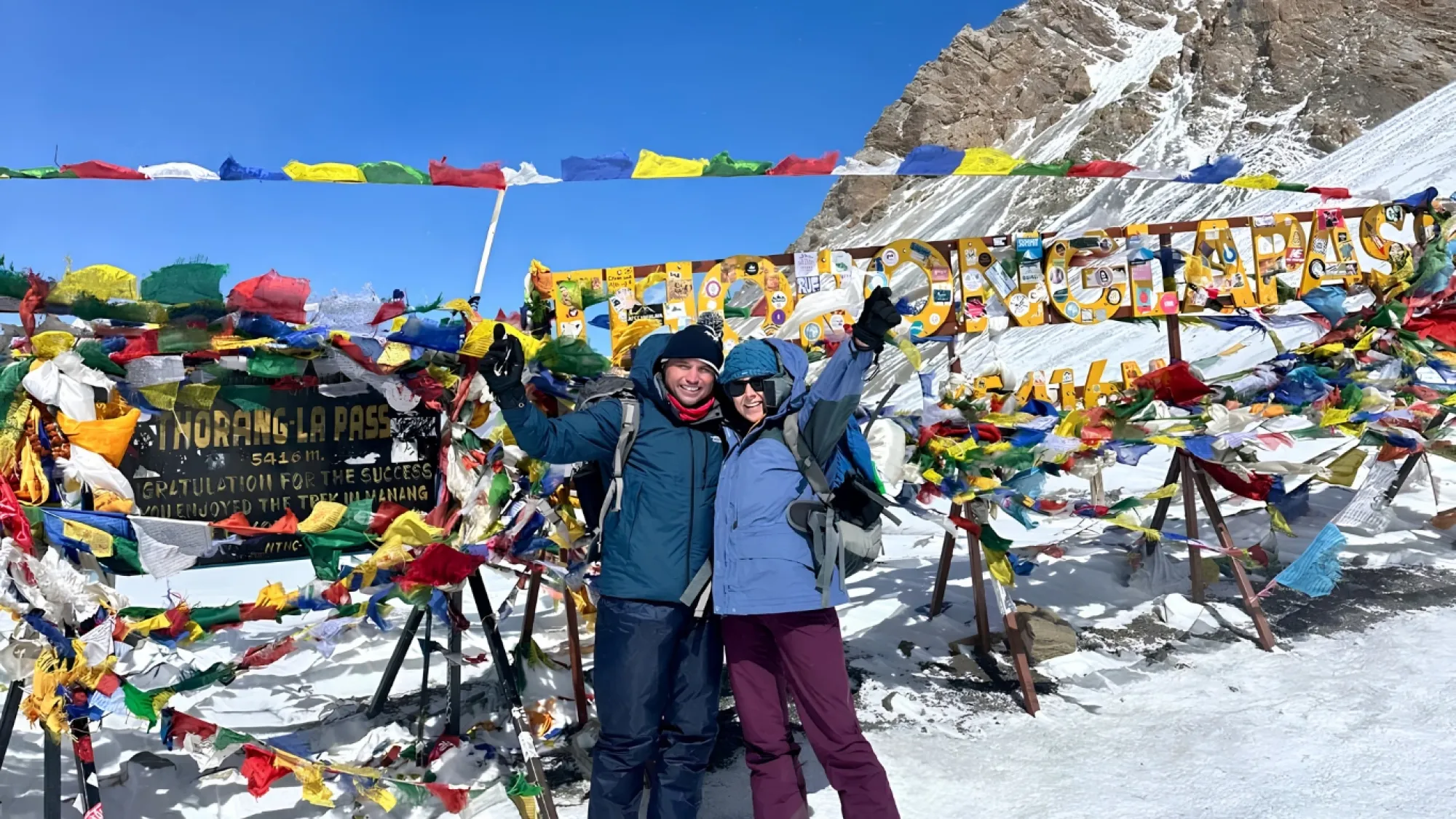
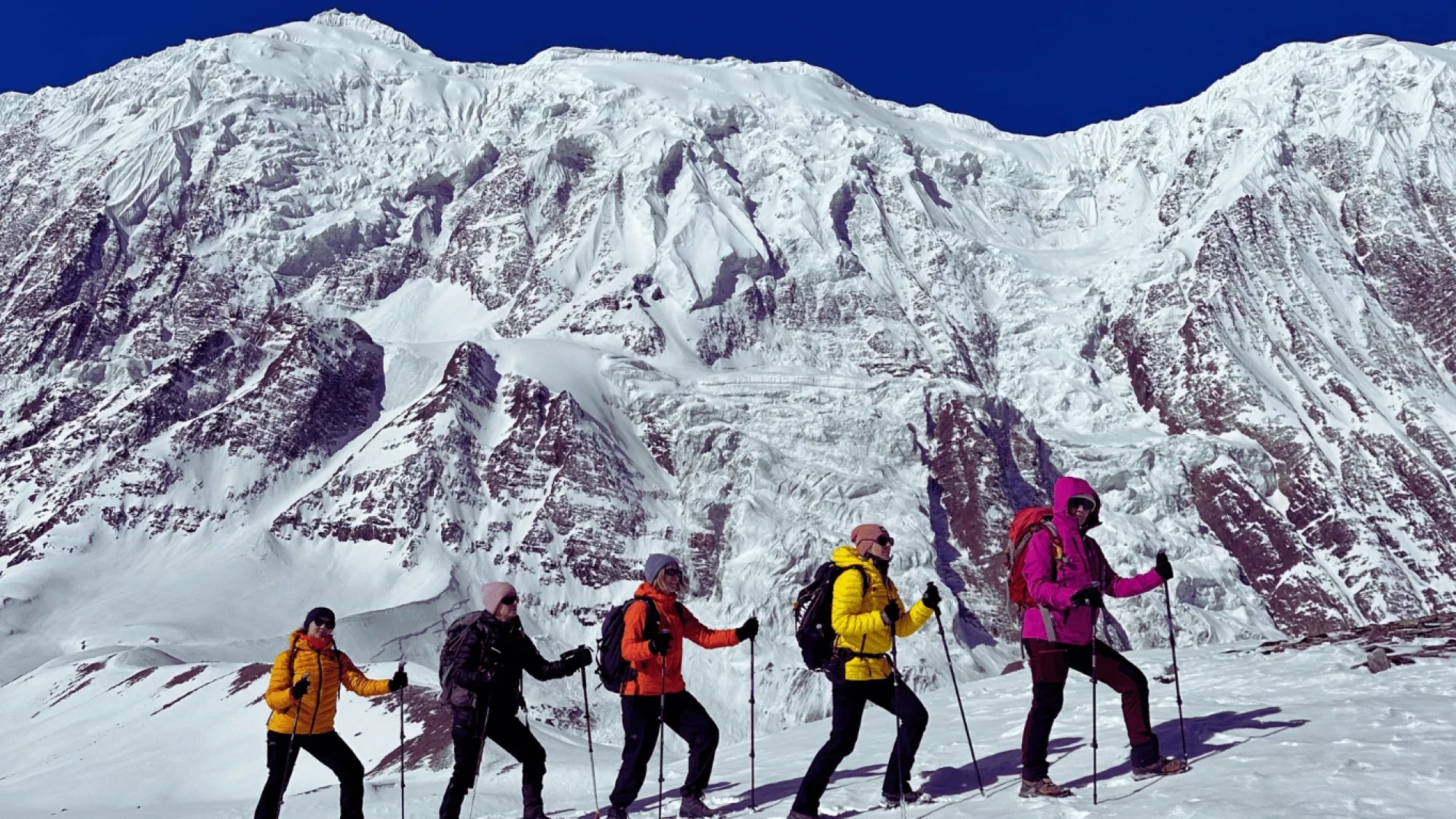
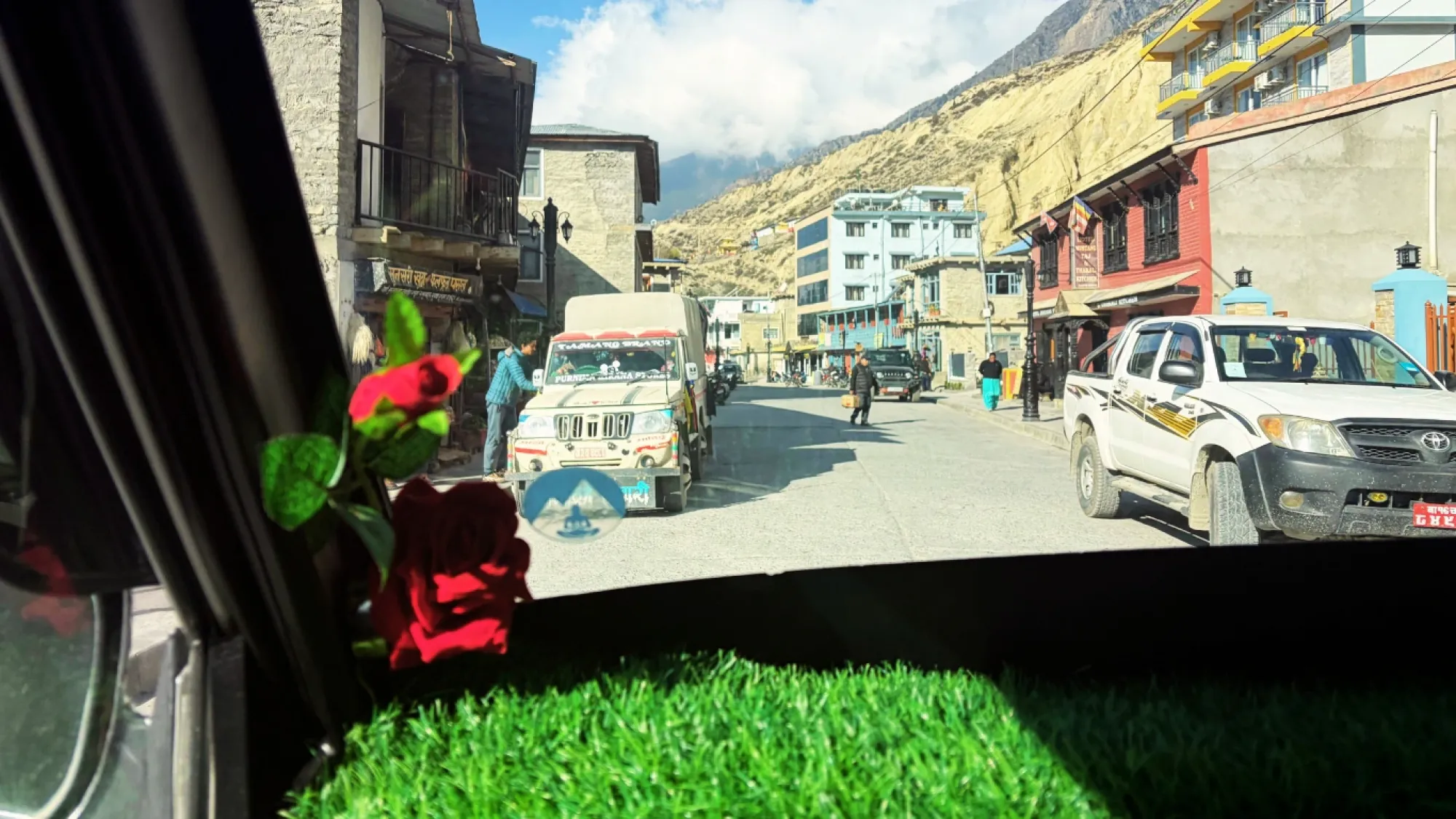
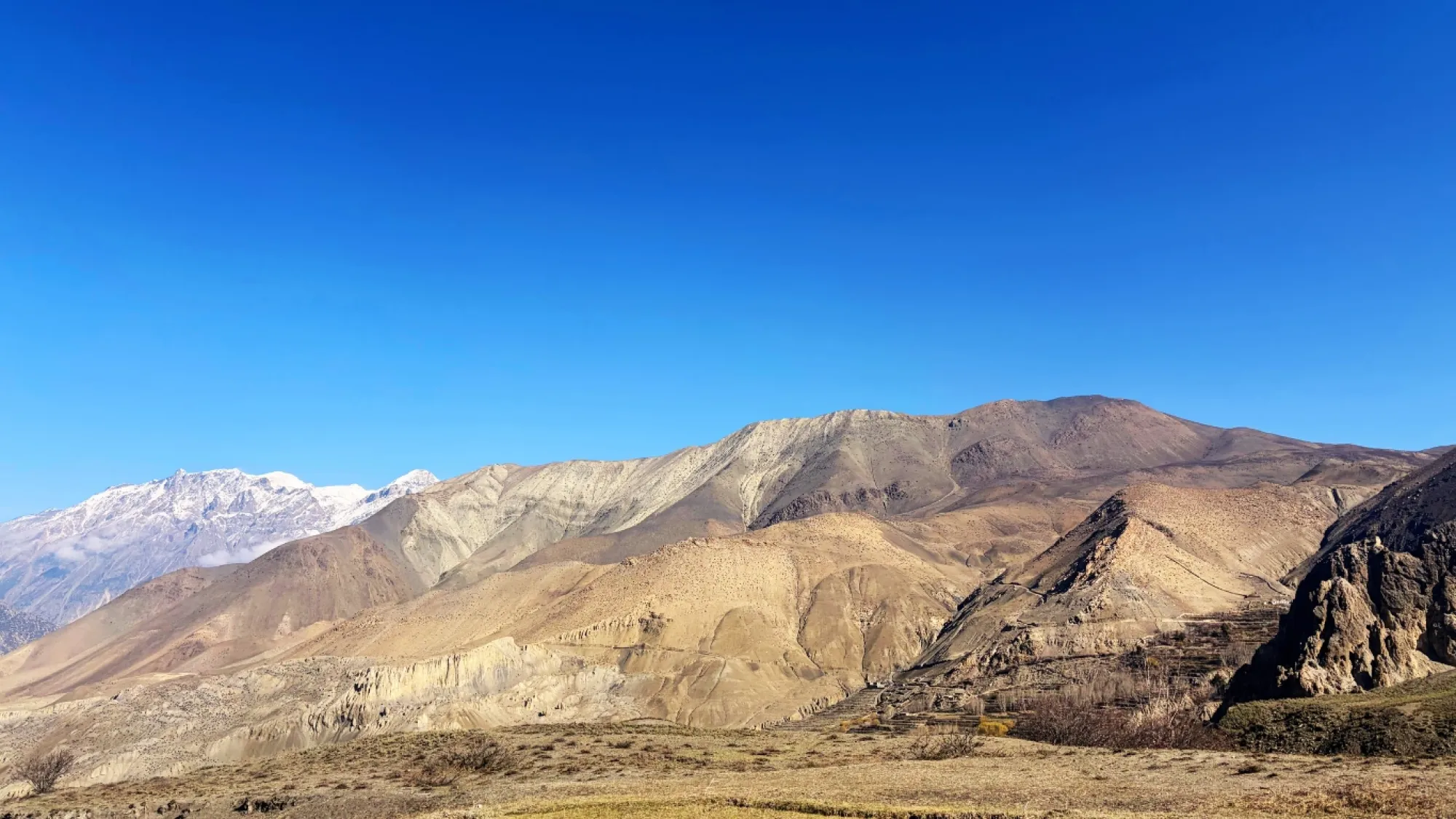
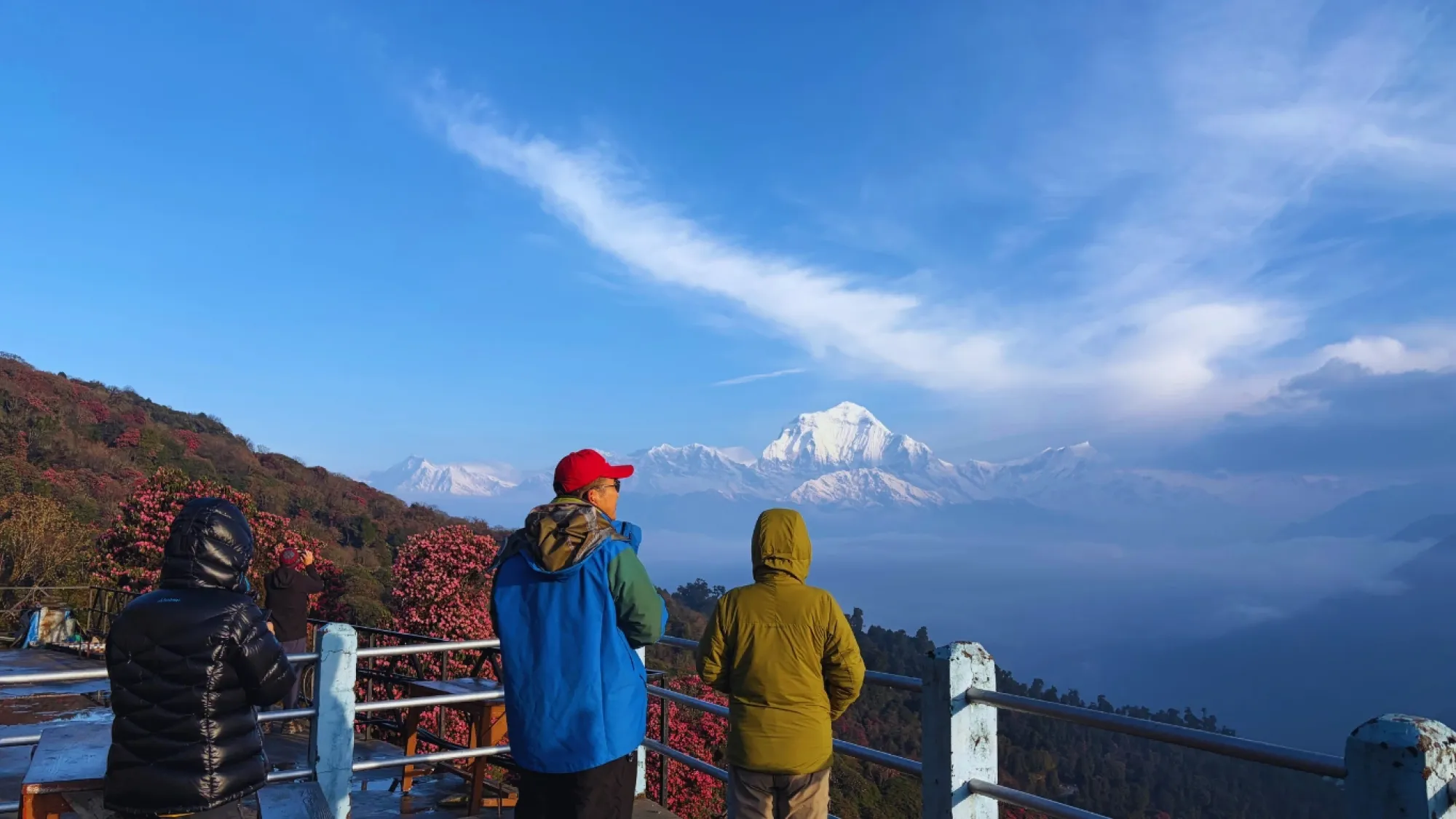
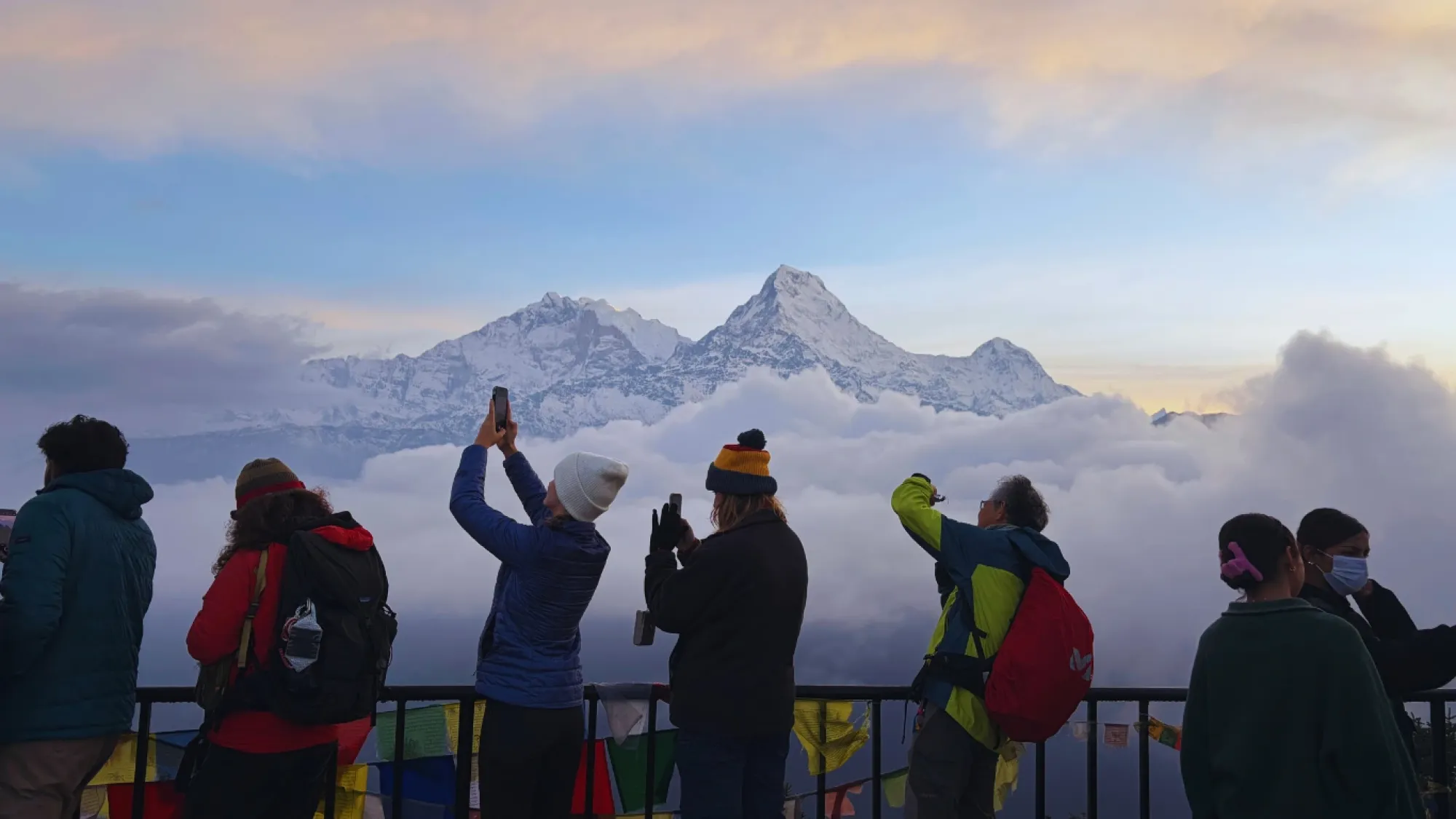
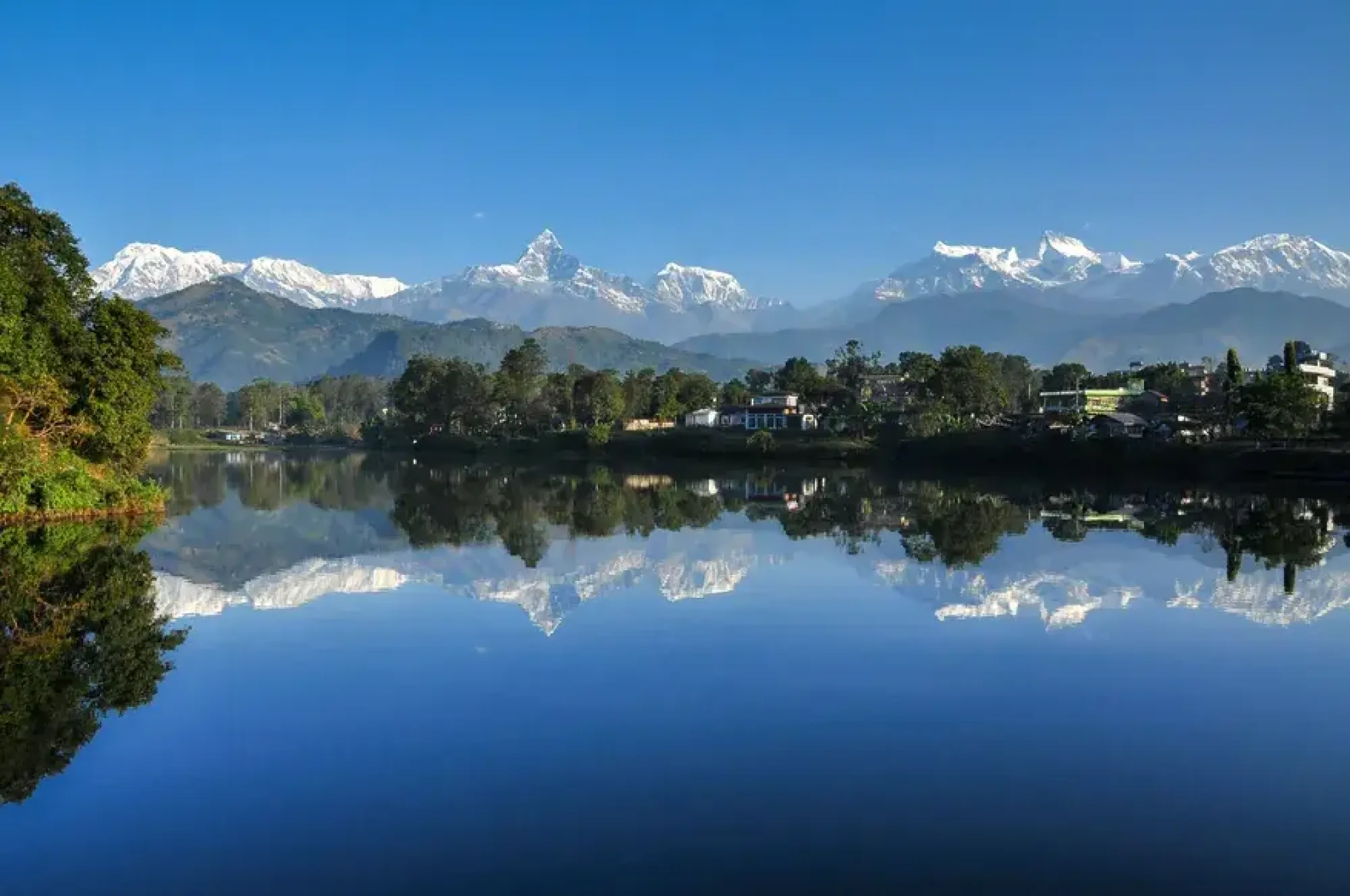
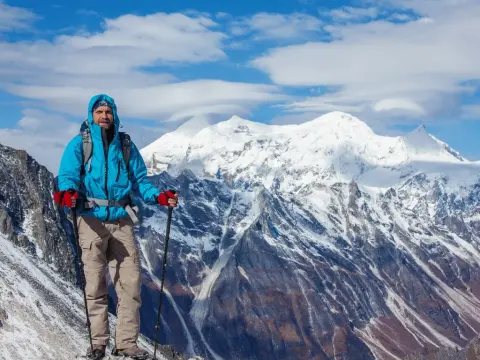
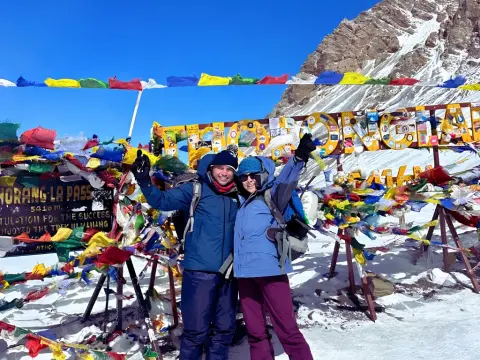
The Annapurna Circuit Trek is a long walking journey through Nepal’s mountains, passing forests, snowy peaks, and small villages while staying in cozy teahouses. It’s challenging but doable for anyone in good health and basic fitness, giving you breathtaking views, local culture, and the thrill of crossing the high Thorong La Pass.
Included
Included
If you're short on time but still dream of high peaks and rich culture, check out our equally breathtaking Short Manaslu Circuit Trek, perfect for a more off-the-beaten-path adventure.
| Trek Name | Duration | Difficulty | Price | Key Features |
|---|---|---|---|---|
| Manaslu Circuit Trek | 15 Days | Challenging | From USD 1380 | Remote off the beaten path |
| Mardi Himal Trek | 9 Days | Moderate | From USD 630 | Secluded trail with close-up Mardi Himalayan views |
| Pikey Peak Trek | 10 Days | Moderate | From USD 1,090 | Quiet trails, cultural villages, panoramic Everest region views |
Your journey begins in Kathmandu, the vibrant capital city of Nepal and the gateway to the Himalayas. As your plane descends over terraced hills and river valleys, the mountains reveal themselves in the distance — a quiet promise of what lies ahead.
Upon arrival at Tribhuvan International Airport, you will be welcomed by our team and transferred to your hotel. After check-in, you’ll have time to rest, freshen up, or explore the surrounding streets of Thamel — Kathmandu’s trekking hub filled with cafés, gear shops, cultural landmarks, and vibrant energy.
In the evening, we hold a trek briefing where you meet your guide, review the itinerary, discuss gear, check permits, and ask any final questions. This is also a great opportunity to understand altitude safety, packing strategies, and trail expectations.
After breakfast, you begin your overland journey into the Annapurna region. The drive follows the Trishuli River westward before turning north toward the Marsyangdi River Valley. As Kathmandu’s urban sprawl fades behind you, the scenery transforms into terraced farmland, rural villages, forested hillsides, and deep river gorges.
The road alternates between paved sections and rugged mountain tracks, offering dramatic views of waterfalls, suspension bridges, and remote settlements clinging to hillsides. You’ll pass through small market towns where locals trade vegetables, grains, livestock, and daily goods — offering an authentic glimpse into rural Nepali life.
By late afternoon, you reach Jagat, a charming stone village perched above the river and officially marking the entrance into the Annapurna Conservation Area. Here, the mountains feel closer, the air fresher, and the rhythm of life slower.
Your first trekking day begins along a beautifully engineered stone trail that follows the Marsyangdi River upstream. The path winds through forests of bamboo and rhododendron, past cascading waterfalls, terraced fields, and traditional villages where farmers work the land as they have for generations.
You’ll cross suspension bridges, pass prayer flags fluttering in the breeze, and encounter mule caravans transporting supplies to remote settlements higher in the mountains. The trail gradually gains elevation, though the pace remains comfortable — allowing your body to adjust naturally to movement and altitude.
As you walk, the cultural atmosphere slowly shifts. Hindu-style villages give way to Tibetan-influenced architecture, prayer wheels, mani walls, and monasteries — a subtle but powerful signal that you are entering a different Himalayan world.
By afternoon, you arrive in Dharapani, a scenic village set among pine forests with mountain ridges rising above. This marks the official gateway into the Manang district.
Today’s trail ascends steadily through forests of pine, fir, and oak, with frequent views of snow-capped peaks appearing through gaps in the trees. The Marsyangdi River continues to accompany you, now narrower and more turbulent as it cuts through steep gorges.
You pass through villages such as Bagarchhap and Timang, each with unique cultural character and stunning mountain backdrops. Timang, in particular, offers breathtaking views of Annapurna II and Lamjung Himal — often considered one of the most photogenic viewpoints in the lower Annapurna region.
As altitude increases, the air becomes cooler and crisper. Prayer flags become more common. Stone houses replace wooden structures. The mountains feel closer — no longer distant silhouettes but towering presences that dominate the skyline.
By late afternoon, you reach Chame, the administrative headquarters of Manang district. Set beneath massive cliffs and surrounded by snowy peaks, Chame offers a warm mountain village atmosphere with hot springs nearby — perfect for soothing tired muscles.
Today marks your transition into the high Himalayan landscape. The trail leaves Chame and follows a dramatic narrow gorge carved by the Marsyangdi River. Towering rock faces rise on both sides, and in places, the trail clings to cliff walls with waterfalls crashing hundreds of meters below.
One of the highlights of the day is crossing a suspension bridge beneath Paungda Danda — a massive, curved rock face considered sacred by locals. As you continue, the valley gradually widens, revealing expansive alpine terrain and clear views of Annapurna II, Pisang Peak, and the surrounding ridges.
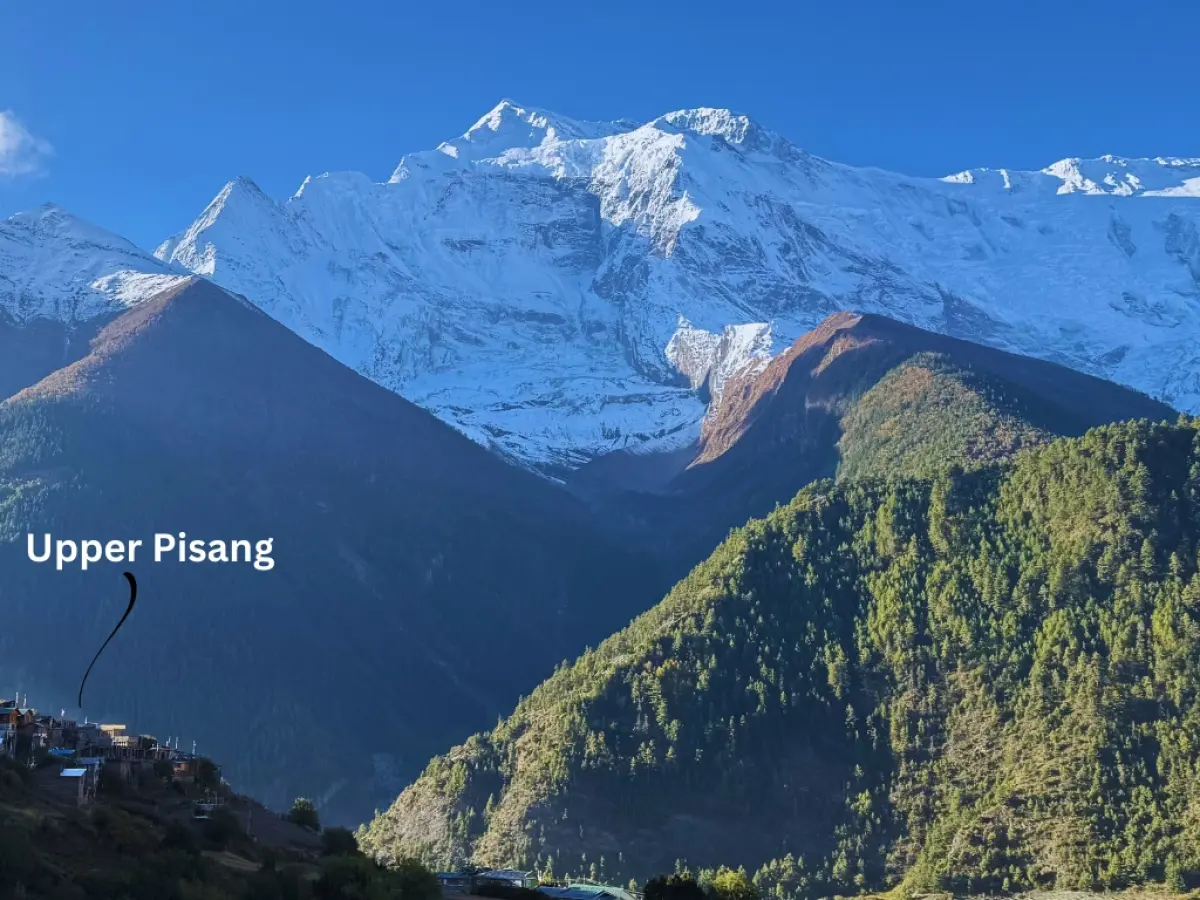
You pass through Lower Pisang before climbing gently to Upper Pisang — a picturesque village perched on a ridge overlooking the valley. With its traditional Tibetan-style houses, ancient monastery, stone walls, and prayer flags, Upper Pisang feels like a mountain sanctuary suspended between earth and sky.
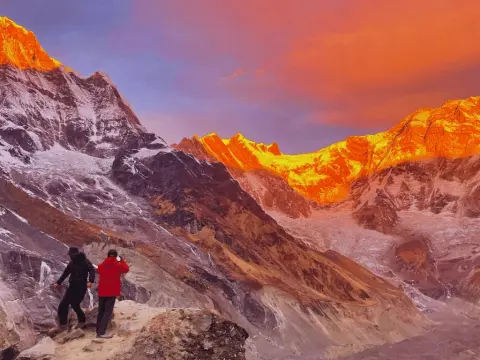
The sunset views from Upper Pisang are unforgettable, as golden light paints the Annapurna massif in shades of amber and crimson.
Today is widely regarded as one of the most scenic days of the entire Annapurna Circuit. Rather than taking the lower valley route, this itinerary follows the high trail via Ghyaru and Ngawal — offering panoramic views of Annapurna II, III, IV, Gangapurna, Tilicho Peak, and Pisang Peak.
The climb out of Upper Pisang is gradual but steady, rewarding you with breathtaking vistas at every turn. Stone villages cling to ridges above vast glacial valleys. Chortens and prayer wheels line the trail. The sense of space and altitude grows dramatically.
After passing through Ghyaru and Ngawal — traditional Tibetan-style villages with stone houses, mani walls, and wind-worn prayer flags — the trail contours gently across open hillsides toward Manang. The landscape here feels vast and elemental, shaped by glaciers, wind, and time. Below you, the Marsyangdi River winds through a wide glacial valley, while above you, the Annapurna massif rises in staggering scale.
The final descent into Manang passes juniper forests, yak pastures, and long mani walls etched with sacred Tibetan mantras. Soon, you arrive in the vibrant mountain settlement of Manang — one of the most important trading villages of the upper Himalayas and a critical acclimatization hub for trekkers crossing Thorong La Pass.
Manang sits beneath towering peaks, including Annapurna III, Gangapurna, and Tilicho Peak, and offers remarkable facilities for such a remote location: bakeries, coffee shops, medical clinics, gear stores, monasteries, and panoramic viewpoints. The atmosphere is both relaxed and energetic, as trekkers from around the world gather here to prepare for the high-altitude section of the trek.
Acclimatization is not rest — it is intelligent movement. Today is designed to allow your body to adapt safely to altitude while continuing to explore the extraordinary environment surrounding Manang. Rather than staying idle, we follow the proven mountaineering principle of “climb high, sleep low,” allowing your body to produce more red blood cells and adjust to thinner air.
Several optional acclimatization hikes are available, depending on weather, fitness, and preference. A popular option is the hike to Gangapurna Lake and Chongkor Viewpoint, where sweeping panoramas of Annapurna III, Gangapurna Glacier, and the entire Manang Valley unfold beneath you.
During the afternoon, you can explore the village, visit monasteries, enjoy freshly baked goods at mountain bakeries, attend altitude awareness talks at the Himalayan Rescue Association clinic, or simply relax while absorbing the alpine atmosphere.
This acclimatization day is critical to increasing your chances of safely and comfortably crossing Thorong La Pass — and it also provides one of the most immersive cultural experiences of the entire trek.
Leaving Manang behind, the trail climbs gradually above the valley floor, transitioning into an increasingly stark and beautiful alpine environment. Trees disappear, replaced by scrub vegetation, juniper bushes, and wide, wind-swept slopes. The terrain feels open and expansive, and the mountains dominate every horizon.
The pace today is deliberately slow and steady, allowing your body to continue acclimatizing while gaining altitude gradually. You pass through small seasonal settlements and yak grazing pastures, where herders tend livestock during the summer months. Blue sheep can sometimes be seen on distant slopes, and golden eagles soar overhead on thermals rising from the valley below.
As you walk, the views grow increasingly dramatic. Annapurna III towers behind you, Gangapurna’s glacier flows down massive rock faces, and Chulu peaks rise sharply to the north. The trail offers long, gentle traverses rather than steep ascents — a perfect design for high-altitude trekking.
Yak Kharka, your destination for the day, is not a single village but a cluster of teahouses scattered across alpine pastureland at approximately 4,050 meters. The air feels noticeably thinner here, and nights are colder — but the silence, stars, and mountain energy are unforgettable.
Today’s trek brings you closer to the base of Thorong La Pass and deeper into the high Himalayan wilderness. The trail climbs gradually at first before crossing a narrow suspension bridge over a landslide-prone section — a reminder of the raw geological forces shaping this landscape.
After the crossing, the route ascends steadily along rocky slopes, with magnificent views across the Thorong Khola Valley and up toward the snowfields leading to the pass. The mountains here feel immense and austere — stripped of vegetation, sculpted by glaciers, and glowing golden in late afternoon sunlight.
As altitude increases, walking becomes slower and more deliberate. Your guide will carefully monitor pacing, hydration, and breathing, ensuring your body adjusts comfortably. The goal today is not speed but steady, controlled progress — setting the foundation for a safe and successful pass crossing tomorrow.
Thorong Phedi sits at the base of Thorong La Pass and serves as the primary staging point for the crossing. The environment here is stark yet spectacular: towering rock walls, icy streams, and wind-swept slopes rising toward the sky. Despite the altitude and remoteness, the teahouses provide warm meals, hot drinks, and shelter from the cold — creating a surprisingly comfortable refuge in an extreme environment.
Most trekkers spend the afternoon resting, hydrating, organizing gear, and mentally preparing for the most demanding day of the trek.
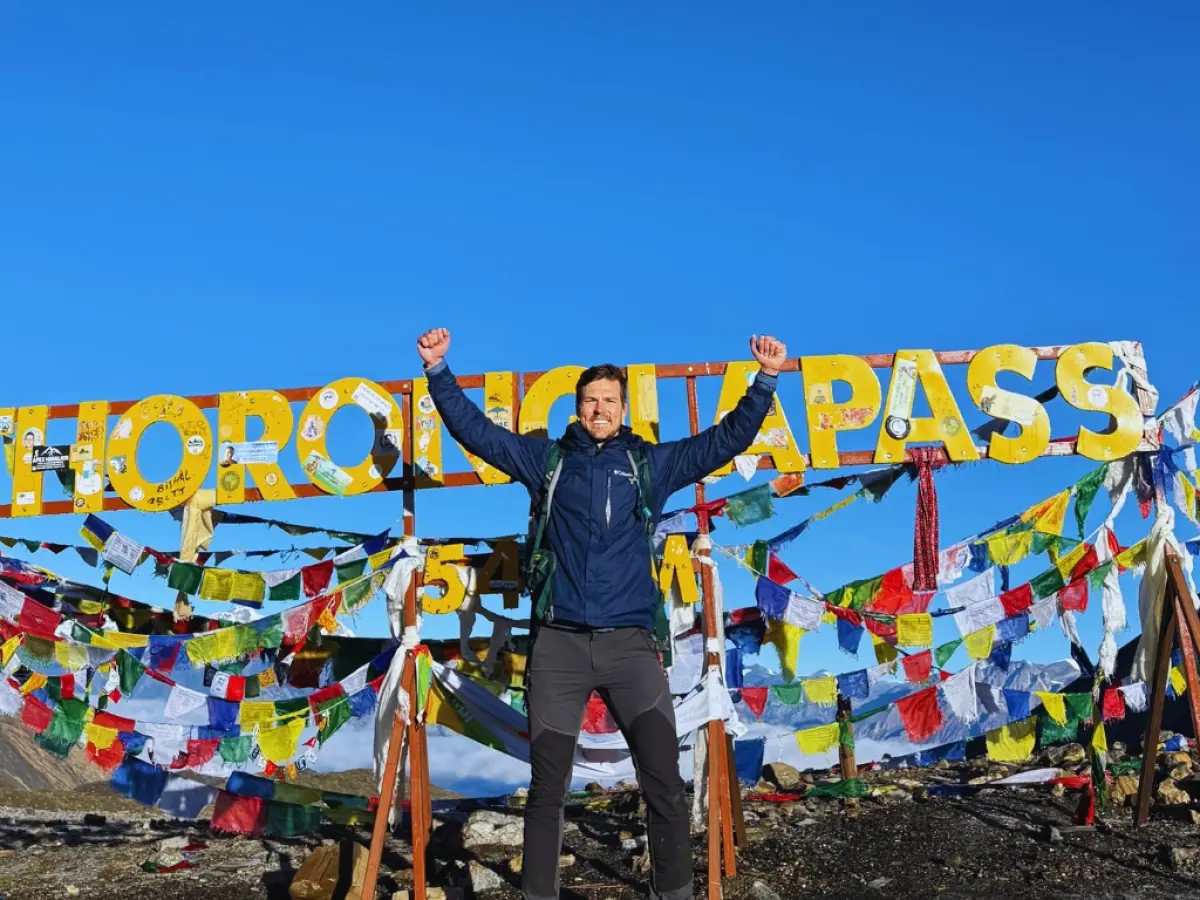
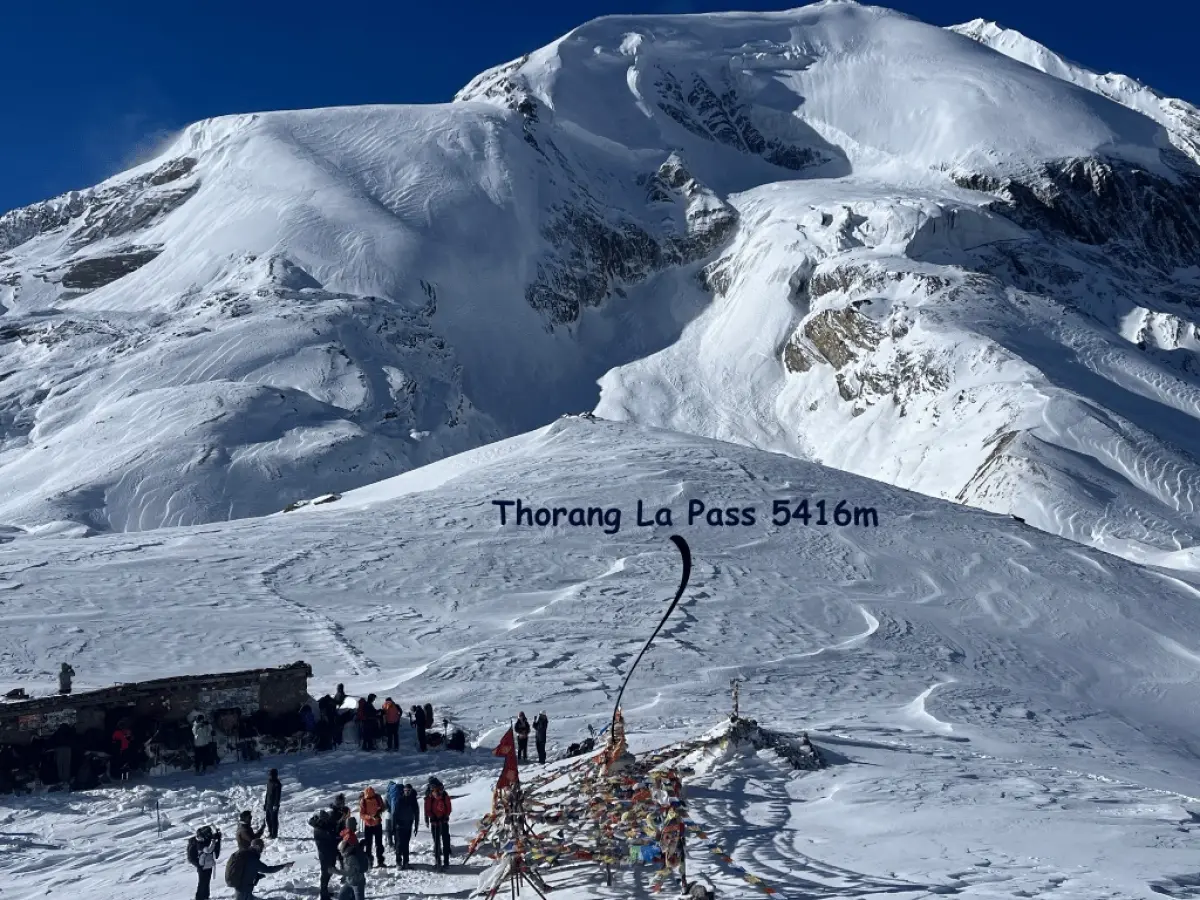
Today is the crown jewel of the Annapurna Circuit Trek — the crossing of Thorong La Pass at 5,416 meters. It is a long, challenging, and deeply rewarding day, one that often becomes the most memorable experience of the entire journey.
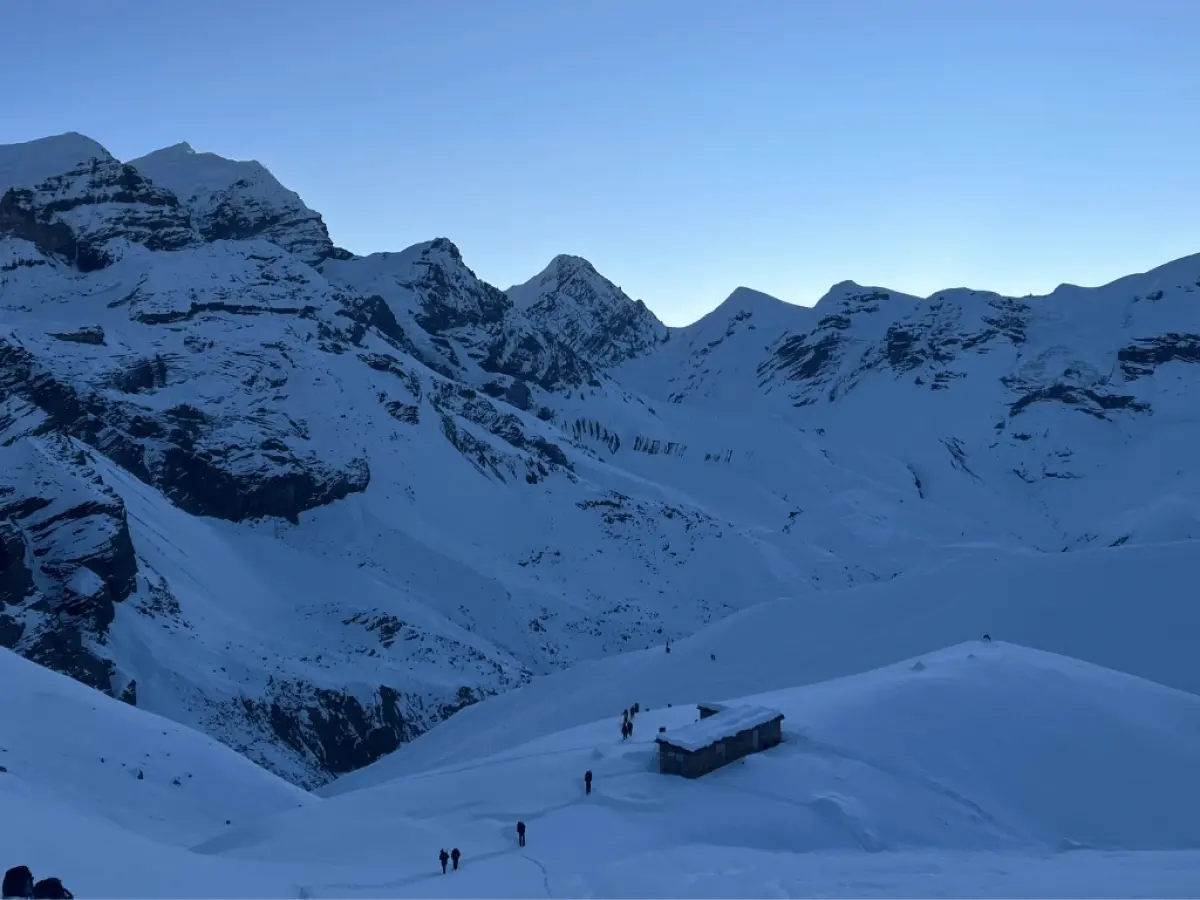
You begin before sunrise, usually around 4:00–5:00 a.m., under a sky filled with stars. Headlamps illuminate the rocky trail as it climbs steadily upward through cold, thin air. Each step feels deliberate, controlled, and purposeful. Your breath becomes rhythmic. Your awareness sharpens. And slowly, gradually, the darkness begins to fade.
As dawn breaks, the surrounding peaks emerge from shadow — Annapurna, Dhaulagiri, Gangapurna, Tilicho Peak, and the Mustang Himalayas, revealing themselves in layers of snow, rock, and sky. Prayer flags begin to appear, signaling that the pass is near.
Reaching Thorong La Pass is an emotional moment. At 5,416 meters, surrounded by glaciers, ridgelines, and endless horizons, the sense of accomplishment is overwhelming. Prayer flags snap in the wind. Fellow trekkers embrace. Photos are taken — but more importantly, memories are etched deeply into the soul.
After a brief rest at the top, you begin the long descent toward Muktinath. The terrain shifts dramatically as you leave the high alpine environment and descend into the arid, rain-shadowed landscapes of Mustang. Snow gives way to scree slopes, barren hills, and wide desert-like valleys — a striking contrast to the lush greenery of earlier days.
The descent is long but manageable, gradually easing as you approach the sacred pilgrimage site of Muktinath, revered by both Hindus and Buddhists. Muktinath Temple, with its 108 water spouts and eternal flame, is one of Nepal’s most important spiritual destinations — believed to grant liberation to those who visit.
After the physical intensity of the day, arriving in Muktinath feels both grounding and serene. Hot showers, warm meals, and comfortable beds feel deeply rewarding.
After breakfast, you leave the high alpine world behind and begin your journey into the Kali Gandaki Valley — one of the deepest gorges on Earth, flanked by Annapurna I and Dhaulagiri, two of the world’s highest mountains.
The drive descends through the dramatic landscapes of Mustang, passing ancient villages, dry riverbeds, eroded cliffs, and wide, windswept plains. The scenery here feels more Tibetan than Nepali, shaped by wind and rain-shadow rather than monsoon forests.
As you descend further, vegetation gradually returns. Pine forests reappear, terraced farmland emerges, and the climate warms noticeably. By afternoon, you arrive in Tatopani — a charming village famous for its natural hot springs.
After days of cold nights, high altitude, and strenuous trekking, soaking in the steaming mineral-rich pools beneath the open sky feels almost surreal. Muscles relax. Fatigue melts away. Laughter echoes across the river valley. It is one of the most restorative and joyful moments of the entire trek.
Today marks a dramatic shift in terrain as you leave the Kali Gandaki Valley and begin climbing into the lush rhododendron forests of the Annapurna foothills. The trail ascends steadily through terraced fields, small villages, and dense jungle-like vegetation — a striking contrast to the barren high-altitude landscapes of Mustang.
This section of the trek is physically demanding due to continuous uphill climbs, but the environment feels vibrant and alive. Birds sing from the trees. Waterfalls cascade down moss-covered cliffs. Villagers greet you warmly as they tend crops, carry firewood, and guide livestock along narrow stone paths.
As you climb higher, forests of oak, pine, and rhododendron envelop the trail. During spring, these hillsides explode into color with red, pink, and white blossoms — transforming the forest into one of the most beautiful trekking environments in Nepal.
By late afternoon, you arrive in Ghorepani, a lively mountain village perched on a ridge with expansive views toward Dhaulagiri, Annapurna South, Hiunchuli, and Machhapuchhre (Fishtail). Ghorepani serves as the gateway to Poon Hill — one of Nepal’s most famous sunrise viewpoints.
Before dawn, you rise for the short but steep hike to Poon Hill. The trail ascends through rhododendron forest and stone steps, guided by headlamp light and anticipation. After about 45 minutes to one hour, you reach the viewpoint — just as the eastern sky begins to glow.
From Poon Hill, the Himalayan panorama unfolds in breathtaking clarity. Annapurna South, Annapurna I, Hiunchuli, Dhaulagiri, Nilgiri, and Machhapuchhre line the horizon like frozen waves. As the sun rises, the peaks ignite in shades of gold, orange, and crimson — a moment of stillness, awe, and gratitude shared by trekkers from around the world.
After descending to Ghorepani for breakfast, you continue trekking through forested trails and traditional villages toward Ulleri. Stone staircases wind through terraced hillsides, offering a final immersive trekking experience before leaving the mountains behind.
From Ulleri, you drive to Pokhara — Nepal’s most scenic lakeside city. The transition from high mountain villages to palm-lined streets and lakeside cafés feels almost surreal after weeks in the Himalayas. Upon arrival, you check into your hotel and enjoy a well-earned rest — perhaps with a lakeside sunset, hot shower, and celebratory dinner.
After breakfast in Pokhara, we begin our journey back to Kathmandu. The 6-7 hour drive takes us along the scenic Prithvi Highway, passing through lush valleys, rivers, and mountain views. Along the way, we pass through small villages, terraced fields, and the bustling town of Mugling, which marks the midway point.
If you prefer a quicker and more scenic option, you can opt to fly from Pokhara to Kathmandu for an additional $90. The flight takes around 25 minutes, offering stunning aerial views of the Himalayas and the beautiful landscapes of Nepal.
For those who choose to drive, the journey is comfortable, with plenty of opportunities to enjoy the scenic beauty of Nepal. As we approach Kathmandu, the landscape gradually transforms into urban surroundings. We reach Kathmandu in the afternoon, where you can rest or explore the city for a final time before your departure.
Drive Duration: 6–7 hours (or 25-minute flight for $90)
Highlights: Scenic views along the Prithvi Highway, rivers, and villages
Accommodation: Hotel in Kathmandu
On the final day of your adventure, we will ensure a smooth transfer to Tribhuvan International Airport based on your flight schedule. Our team will pick you up from your hotel and take you to the airport in plenty of time for your international or domestic flight.
Whether you are returning home or continuing your travels, we will bid you farewell, hoping that your journey through the Annapurna Circuit has been a memorable experience filled with incredible views, cultural encounters, and a sense of accomplishment.
Departure: Based on flight schedule
Transfer: Hotel to Kathmandu Airport
End of Trip: Safe travels and departure!
One of the most enriching aspects of the Annapurna Circuit Trek is its cultural diversity. The route passes through communities influenced by Hinduism, Tibetan Buddhism, and ancient Himalayan traditions — offering trekkers insight into some of the most resilient and spiritually grounded cultures on Earth.
Lower regions of the trek are home to Gurung and Magar communities, known for their hospitality, military heritage (Gurkhas), terraced farming, and vibrant village life. Stone houses, prayer flags, traditional attire, and communal lifestyles characterize these regions.
As altitude increases, architecture shifts to flat-roofed stone houses, mani walls, chortens, and monasteries — reflecting Tibetan Buddhist heritage. Villages such as Upper Pisang, Manang, and settlements near Thorong La preserve centuries-old traditions shaped by Himalayan trade routes.
This cultural immersion transforms the trek from a physical journey into a deeply human experience — where stories, beliefs, rituals, and daily life unfold alongside mountain landscapes.
At Majestic Trails Nepal, we believe trekking should benefit both travelers and the mountains that host them. The Annapurna Conservation Area is one of the most biologically diverse regions in Nepal, and protecting its fragile ecosystems is essential for future generations.
We actively promote:
By trekking with us, you contribute directly to local livelihoods, conservation initiatives, and the sustainable development of Himalayan communities.
While the Annapurna Circuit passes through remote mountain terrain, basic connectivity is available in most villages.
We recommend carrying a power bank and downloading offline maps, documents, and entertainment before starting the trek.
The weather varies significantly by altitude and season.
Lower Elevations (800–2,000m):
Mid Elevations (2,000–4,000m):
High Elevations (Above 4,000m):
Wind chill near Thorong La Pass can make temperatures feel significantly colder. Proper layering and windproof gear are essential.
While independent trekking is possible in some regions, the Annapurna Circuit is a high-altitude, long-distance trek involving remote terrain, weather risks, altitude challenges, and navigation complexities. Guided trekking significantly enhances safety, experience quality, and cultural immersion.
Porters reduce physical strain, allowing you to enjoy the scenery and walk more comfortably — especially during long ascents and descents.
Throughout the trek, you stay in local teahouses — simple, clean mountain lodges run by local families. For a complete breakdown of what to expect each night, you can explore our detailed Accommodation During Annapurna Circuit Trek blog.
Rooms typically feature twin beds, mattresses, pillows, and blankets, with either attached or shared bathrooms depending on the location. At lower elevations, teahouses are more comfortable, often offering hot showers, Wi-Fi, and charging facilities — sometimes even free of cost.
As you ascend higher on the Annapurna Circuit Trek, especially beyond Yak Kharkha, accommodation becomes more basic. Expect shared bathrooms, limited electricity, and paid charging services. Despite the simplicity, teahouses remain warm, welcoming, and an essential part of the trekking experience, giving you a real connection with local mountain life.
In Kathmandu and Pokhara, you stay in comfortable tourist-standard hotels with private bathrooms and modern amenities.
Meals are served in teahouse dining halls and typically include:
Dal bhat is particularly popular among trekkers because it is nutritious, filling, and comes with unlimited refills — ideal for long trekking days.
Our guides assist in menu choices to ensure balanced nutrition and hydration throughout the trek.
Altitude sickness is the most serious risk on high Himalayan treks — and it is entirely manageable with proper planning, pacing, hydration, and monitoring. For a deeper understanding of how altitude affects your body and what to expect at each stage, explore our detailed Annapurna Circuit Trek Altitude Guide blog.
Our Annapurna Circuit itinerary is designed using proven acclimatization principles to maximize safety while maintaining a smooth trekking flow.
If symptoms occur, your guide will assess and respond immediately — adjusting pace, descending if necessary, and using medical protocols as required.
Our guides carry first-aid kits, pulse oximeters, and emergency oxygen when necessary. In severe cases, helicopter evacuation can be arranged through insurance providers. We prioritize prevention above all else, and our safety-first approach ensures that most trekkers complete the circuit comfortably and confidently.
The Annapurna Circuit Trek is classified as moderate to challenging, primarily due to its length, altitude, and the crossing of Thorong La Pass at 5,416 meters. While no technical climbing skills are required, trekkers must be physically prepared for sustained daily walking over varied terrain and extended periods above 3,500 meters. For a complete breakdown of terrain, altitude impact, and real trekking challenges, you can explore our detailed Annapurna Circuit Trek Difficulty guide.
We recommend beginning cardiovascular training at least 6–8 weeks before the trek. Activities such as hiking, stair climbing, cycling, swimming, and jogging help build endurance. Strength training for legs and core also improves stability and comfort on uneven terrain. If possible, multi-day hikes with a backpack are ideal preparation.
To complete your Annapurna Circuit Trek legally and safely, you’ll need the required permit issued by the Nepal government. For a full step-by-step explanation, cost breakdown, and how to obtain it easily, check our detailed Annapurna Circuit Trek Permits Guide blog.
The ACAP permit is mandatory as the trek passes through the protected Annapurna region. The fees directly support conservation efforts, trail maintenance, and local communities living along the route.
Getting your permit sorted before starting the Annapurna Circuit Trek ensures a smooth and hassle-free trekking experience.
I just wrapped up the Annapurna Circuit trek with Majestic Trails Nepal, and wow — what an epic journey! The whole experience was truly unforgettable. Over the course of about two weeks, I got to see some of the most stunning landscapes I’ve ever laid eyes on — from lush valleys and traditional villages to dramatic mountain passes with jaw-dropping views. The trek was challenging but totally doable, and the gradual changes in terrain kept things interesting every day. Our guide was amazing — super friendly, knowledgeable, and always ready to help. They made sure we were safe and comfortable the whole way, which really helped me relax and enjoy the trek. I loved the tea houses where we stayed; they were cozy and welcoming, with delicious local food that kept me fueled for the long days ahead. The team at Majestic Trails Nepal took care of all the logistics, permits, and transportation, so I didn’t have to worry about a thing. If you’re looking for an incredible trekking experience that combines adventure, culture, and stunning nature, I can’t recommend the Annapurna Circuit trek enough. And if you want to do it stress-free, Majestic Trails Nepal is definitely the company to book with!
The Annapurna Circuit Trek with Majestic Trails Nepal was an unforgettable Himalayan adventure and easily one of the best treks I’ve ever done. From the first day in Kathmandu to crossing the legendary Thorong La Pass, everything was professionally organized and smoothly managed. Our guide was highly experienced, friendly, and deeply knowledgeable about the mountains, local culture, and altitude safety. The itinerary was well paced, with proper acclimatization days, comfortable teahouses, and incredible scenery changing every single day. Snow-capped peaks, traditional villages, and high mountain passes made the Annapurna Circuit Trek both challenging and rewarding. If you are looking for a safe, authentic, and expertly guided Annapurna Circuit Trek in Nepal, I highly recommend Majestic Trails Nepal. This trek exceeded all my expectations and created memories that will last a lifetime.
It's rated moderate to challenging. The trail itself isn't technically difficult — there's no climbing or ropes — but the length, altitude, and multi-week duration demand solid fitness. If you can hike 5–7 hours daily with a light daypack and have done some hill training beforehand, you're in good shape. First-timers do complete this trek regularly with the right preparation and a reliable guide.
Start training 8–12 weeks before departure. Focus on long-distance hiking (especially uphill), stair climbing, and cardiovascular fitness — cycling or running work well. Your knees take a beating on descents, so build leg strength too. Consistency matters more than intensity. Trekkers who arrive physically prepared have noticeably better experiences at altitude.
Absolutely — age is much less of a barrier than fitness level and mindset. We've guided trekkers well into their 60s and beyond on this route. The key is pacing yourself, allowing proper acclimatization, and being honest about your physical condition. Majestic Trails Nepal can adjust daily distances to suit your pace, which makes a real difference.
Yes, generally. The Annapurna Circuit is longer, reaches higher elevation, and involves crossing a 5,416-meter pass. The Base Camp Trek is shorter and tops out around 4,130 meters, making it more accessible. That said, both are achievable for fit, motivated trekkers. The Circuit simply demands more time, endurance, and altitude preparation.
The Annapurna Circuit is a moderate-to-challenging trek, not a technical mountaineering expedition — but it demands real physical preparation. The biggest challenge isn't the daily distance (typically 10–18 km per day), it's the cumulative altitude gain and the crossing of Thorong La Pass at 5,416m. Most healthy adults in reasonable shape can complete it with 6–8 weeks of preparation. The Thorong La crossing is a long day (7–9 hours), starts before dawn, and involves 1,000m of ascent followed by 1,600m of descent. Knees take a beating on the way down to Muktinath. Poles are strongly recommended.
Yes — with the right preparation and pacing. Every year, first-time trekkers with no prior Himalayan experience successfully complete the circuit. The key factors are: adequate cardiovascular fitness beforehand (running, cycling, hiking with a loaded pack), choosing a 16+ day itinerary rather than a rushed 12-day version, and listening to your guide when they recommend a rest day. Attempting to push through altitude sickness symptoms is the most common mistake beginners make. The trek does not require technical skills, ropes, or climbing experience. Trekking poles, good waterproof boots, and a layering system are your most important gear investments.
Start at least 8–12 weeks before departure. Focus on cardiovascular endurance and leg strength. Recommended training: 3–4 days per week of hiking with a 7–10 kg daypack, stair climbing or step-up exercises, cycling, and light strength training for quads and glutes. Weekend hikes of 15–20 km on varied terrain are ideal. If you're based in a flat city, simulate the elevation gain by hiking with a weighted pack on treadmill inclines or stadium stairs. Swimming and running are good supplementary cardio but don't fully replicate the demands of loaded, multi-hour walking on uneven terrain.
The Annapurna Circuit has been completed by trekkers ranging from age 14 to 72. There is no official age restriction. For teenagers, the main consideration is motivation and mental resilience on long days — they usually handle altitude well. For trekkers over 55–60, we recommend a pre-departure medical check (especially cardiovascular), a longer itinerary with more rest days, and honest conversations with your guide about turnaround conditions. Older trekkers who maintain regular fitness often outperform unfit younger ones. Altitude doesn't discriminate by age — it discriminates by fitness and acclimatization.
Not necessarily. Mild AMS symptoms (headache, nausea, fatigue, poor sleep) are experienced by the majority of trekkers above 3,500m and usually resolve with a rest day at the same altitude. The protocol is simple: never ascend with symptoms. If symptoms are moderate, descent of even 300–500m often provides rapid relief. Severe AMS, HAPE, or HACE require immediate descent and evacuation — your guide will make this call with you. The Annapurna Circuit actually has a natural built-in acclimatization advantage at Manang: most itineraries include a mandatory rest day here with an optional hike to 4,000m+ to aid acclimatization before the pass. Only a small percentage of trekkers have to turn back due to altitude illness.
Broadly speaking, EBC and the Annapurna Circuit are comparable in difficulty — both are graded moderate-to-challenging and both top out above 5,000m. The key differences: the Annapurna Circuit is longer and more varied (it's a full circuit, not an out-and-back); Thorong La Pass (5,416m) is slightly higher than EBC (5,364m); but EBC involves longer days at extreme altitude. The Annapurna Circuit offers more cultural diversity — from subtropical forests to high desert — making it a richer overall experience. EBC tends to be more crowded. For a first Himalayan trek, many experienced guides (including ours) recommend the Annapurna Circuit for its variety and lower teahouse crowds.
ACT is physically demanding but achievable with proper training and acclimatization.
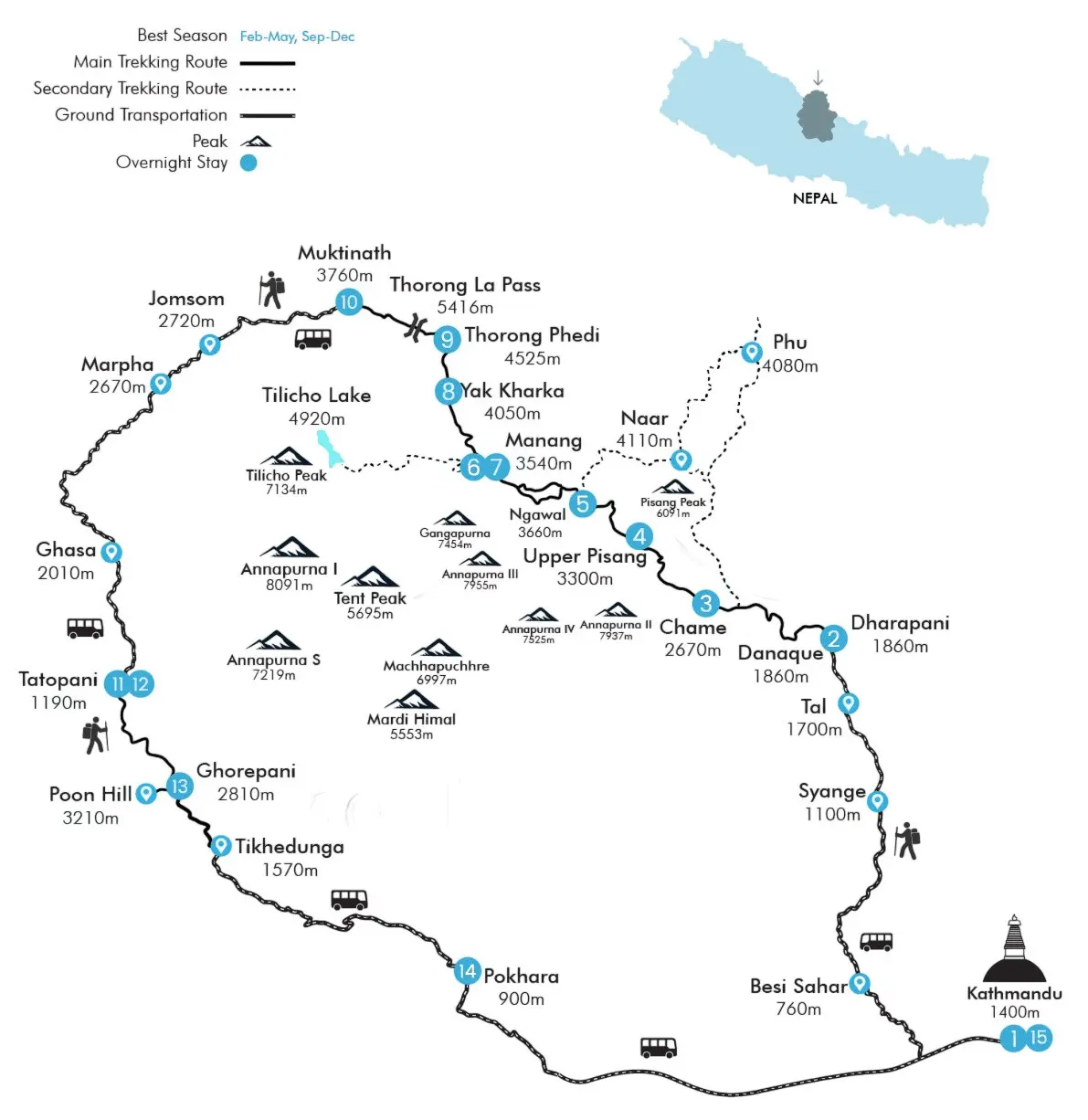
The classic 14-day itinerary starts with a drive from Kathmandu to the trailhead, then follows the Marsyangdi River valley through Jagat, Dharapani, Chame, Upper Pisang, and Manang — where you spend an acclimatization day. From there you ascend to Yak Kharka, Thorong Phedi, cross Thorong La Pass to Muktinath, then descend through Jomsom before flying back to Pokhara.
Yes, and it's well worth the extra two to three days. Tilicho Lake sits at 4,919 meters and is one of the highest lakes in the world — the views are extraordinary. You branch off near Manang, hike to the lake and back, then rejoin the main Circuit trail. We recommend this for trekkers who have a bit more time and want an off-the-beaten-path experience.
Most trekkers start from Jagat or Tal after a drive from Kathmandu via Besisahar. The trek typically ends in Jomsom, from where you can fly to Pokhara — a spectacular 20-minute mountain flight — or take a jeep. We recommend the flight if schedules allow; those aerial views of Dhaulagiri and the Annapurna range are unforgettable.
Yes. The Short Annapurna Circuit can be done in 8–11 days by skipping some lower-valley sections covered by road and focusing on the high-altitude highlights — Upper Pisang, Manang, Thorong La Pass, and Muktinath. It's a smart option for travelers with limited time who still want the dramatic mountain experience and don't want to walk along jeep roads.
The Annapurna Circuit is a classic trek that circles the Annapurna range, offering diverse landscapes and cultural experiences.
The Annapurna Circuit is located in the Annapurna Conservation Area in central Nepal, north of Pokhara. The journey begins with a scenic drive of 7–8 hours from Kathmandu to Jagat, one of the common starting points of the Annapurna Circuit trek.
The Annapurna Circuit is about 160–230 km (100–145 miles) depending on the route.
The Annapurna Circuit trek covers approximately 100 to 145 miles.
The Annapurna Circuit trek takes 12 to 18 days, depending on itinerary and acclimatization.
The highest point of the Annapurna Circuit is Thorong La Pass (5,416 meters).
The Annapurna circuit trek commonly ends at Muktinath, Jomsom, or Banthati.
The starting point, Jagat, is 200 km from Kathmandu, a 6–8 hour drive.
No, the Annapurna Circuit does not go to base camp. For that, you need the Annapurna Base Camp trek.
No, Mount Everest is not visible from the Annapurna Circuit.
Below Manang you'll find comfortable teahouses with attached bathrooms, reliable hot water, and Wi-Fi (often paid). Above Manang and beyond Thorong La Pass, facilities become more basic — shared bathrooms, thicker blankets, and simpler rooms. It's part of the experience. The warmth of a teahouse dining hall after a long day at altitude genuinely feels like arriving home.
The menus are surprisingly varied. Dal Bhat — rice, lentils, vegetables — is the local staple and comes with unlimited refills, which hungry trekkers genuinely appreciate. You'll also find fried rice, noodle soup, pasta, Tibetan bread, pancakes, and momos. Manang's teahouse bakeries are a real treat — apple pie at altitude somehow tastes better than anywhere else.
Absolutely. Nepal's trekking culture is naturally vegetarian-friendly, and every teahouse along the route will have multiple vegetarian options. If you have specific dietary needs — vegan, gluten intolerance, allergies — inform your guide beforehand. Our guides at Majestic Trails Nepal always communicate your requirements to teahouse owners in advance to avoid any surprises.
Don't drink tap or stream water directly. The safest approach is to use purification tablets, a water filter, or buy boiled water from teahouses. Avoid plastic bottled water where possible — it's expensive at altitude and terrible for the environment. Most teahouses now sell purified or boiled water at a small cost, which is both the responsible and affordable choice.
Teahouses (locally called lodges or bhaatis) along the Annapurna Circuit range from basic to surprisingly comfortable, depending on the village. In lower elevations and main towns like Chame, Manang, Jomsom, and Tatopani, teahouses often have private rooms with attached bathrooms, WiFi, phone charging points, and even hot showers. Higher up (above 4,000m), rooms become simpler — typically twin beds with thin mattresses and shared squat toilets. Blankets are provided but can be thin; bring a sleeping bag liner at minimum, and a 0°C sleeping bag for comfort above Manang. Common areas with wood stoves are where trekkers gather in the evening — some of the best conversations of your trip happen here.
The food on the Annapurna Circuit is better than most trekkers expect. Dal bhat (lentil soup, rice, vegetables, pickles) is the staple and is nutritionally excellent for trekking — and most teahouses offer unlimited refills. Beyond that, expect: pasta, noodle soups, fried rice, momo (dumplings), Tibetan bread, pancakes, eggs, porridge, and even pizza in larger teahouses. As you gain altitude, menus shrink and prices rise — a meal that costs $3 in Besisahar might cost $8 in Thorong Phedi. Vegetarian trekkers eat extremely well on this route. Vegans can manage with advance communication to teahouse owners. Meat (especially chicken) is available but should be approached with caution above 3,500m — refrigeration is limited.
Do not drink tap water or stream water without treatment. Boiled water is available at all teahouses (usually NPR 50–100 per thermos). We strongly recommend carrying a SteriPen, water purification tablets, or a LifeStraw bottle to reduce both cost and plastic waste. Staying well-hydrated is one of the most effective ways to prevent altitude sickness — aim for 3–4 liters per day above 3,500m. Avoid excessive alcohol, which dehydrates you and accelerates AMS symptoms. Electrolyte sachets are useful and widely available in Kathmandu trekking stores — pack a week's supply.
When you book with Majestic Trails Nepal, you're hiring people who live this trek. Our guides have walked the Annapurna Circuit dozens of times — not just as employees, but as people who grew up in these mountains. That means they know which teahouses serve the best dal bhat, where to spot the Himalayan Thar at sunrise, and how to read the weather before it turns. Unlike big international operators who sub-contract to local agencies anyway, we cut out the middleman. You get direct communication, real flexibility, and transparent pricing with no hidden fees. We've guided trekkers from the USA, UK, Australia, and across Europe — and most of them come back for Everest Base Camp.
Flexibility is one of our biggest advantages over larger operators. We offer private, semi-private, and small group departures — and every itinerary can be adjusted based on your fitness level, interests, and pace. Want to add a side trip to Tilicho Lake (4,949m), one of the highest lakes in the world? Done. Need an extra acclimatization day in Manang? No problem. We don't believe in rushing one of the most beautiful treks on the planet. Most of our clients prefer a 16–18 day itinerary rather than the rushed 12-day version many agencies push.
Our senior guides are Nepali-born mountain professionals, many of whom are from the Annapurna and Mustang regions themselves. They speak English fluently and most speak basic German, French, or Spanish. Beyond logistics, they're cultural interpreters — they'll introduce you to a local Gurung family for butter tea, explain the significance of Muktinath Temple, and know exactly which altitude warning signs to watch for. We assign the same guide from Kathmandu briefing to the final day — no handoffs, no confusion. Your guide is also your emergency coordinator if anything unexpected happens on the trail.
Safety is non-negotiable for us. Every group carries a pulse oximeter, basic first aid kit, and altitude sickness medication (Diamox). Our guides are trained to recognize the symptoms of Acute Mountain Sickness (AMS), High Altitude Pulmonary Edema (HAPE), and High Altitude Cerebral Edema (HACE). We have established relationships with helicopter evacuation services in Kathmandu, and all our packages include high-altitude rescue insurance coordination support. In areas with mobile connectivity (most of the route now has NTC), guides stay in contact with our Kathmandu office daily. We also carry satellite communication devices on remote sections of the route.
Yes — and this is something we're proud of. Our quoted package price includes: government permits (ACAP + TIMS), guide and porter fees, their accommodation and meals, airport transfers, a pre-trek briefing in Kathmandu, and a first night's accommodation in Kathmandu. What's not included (and we tell you upfront): your personal travel insurance, visa fees, international flights, tips for guides/porters, personal snacks, hot showers at teahouses (usually $1–3 per shower), and alcoholic beverages. There are no surprises on the trail. We send a detailed cost breakdown with every quote.
Our guests consistently highlight three things: the quality of our guides, the flexibility in our itineraries, and the honest communication throughout the booking process. We have clients from the UK who've returned three times, and solo female travelers from Australia who specifically chose us because of our safety-first reputation. We don't fabricate reviews — we encourage every client to post honest feedback on TripAdvisor and Google. Our response to any concern, positive or negative, is always personal and prompt. We know that in this industry, reputation is everything — especially for a boutique agency competing on quality over volume.
The two best windows are October–November (post-monsoon) and March–May (pre-monsoon). October and November offer the most reliable clear skies, stable temperatures, and the best Himalayan panoramas — including iconic views of Annapurna I (8,091m), Gangapurna, and Dhaulagiri. Days are crisp, teahouses are fully stocked, and the trails are at their most photogenic. March–May brings warmer temperatures, blooming rhododendron forests in the lower sections, and slightly fewer trekkers than peak October, making it an excellent choice for those who prefer a quieter trail.
Yes, but with important caveats. Winter trekking is possible and rewarding, but Thorong La Pass can be closed by heavy snowfall — sometimes for days at a time. Temperatures at the pass can drop to -20°C or below before wind chill. Some teahouses between Manang and Muktinath close in January–February. That said, the lower sections of the circuit (Besisahar to Chame, and the Tatopani to Pokhara finish) remain accessible and stunning in winter. If you're a cold-weather trekker who wants solitude, December can be magical — just be flexible with your schedule and carry proper winter sleeping bag gear.
It's not recommended for most trekkers, but it's not impossible. Monsoon brings heavy rainfall, leeches on lower trails, frequent trail washouts, and obscured mountain views. The Upper Mustang section (north of Jomsom, in the rain shadow) actually receives very little monsoon precipitation and remains trekable — but requires a separate restricted area permit. For most international visitors, attempting the full Annapurna Circuit during monsoon is a gamble that often results in frustration. We advise against it unless you have significant monsoon trekking experience and flexible timing.
Temperatures vary dramatically based on elevation and season. In October at lower elevations (1,000–2,000m), expect days of 15–25°C. At Manang (3,519m), nights drop to 0–5°C. At Thorong La Pass (5,416m) in October, expect -5°C to -15°C with wind. In March, lower sections are warmer but the pass remains bitterly cold. Essential gear: a down jacket rated to at least -10°C, moisture-wicking base layers, waterproof shell jacket and pants, trekking poles, warm hat and gloves, and a headlamp for early-morning pass crossings. Don't rely on renting quality gear in Kathmandu — bring your own if possible.
Mid-January through mid-February carries the highest risk of pass closure due to heavy snowfall. Multiple trekkers get stranded in Thorong Phedi or High Camp each year during these months, sometimes for 3–5 days. The second risky window is during unpredictable late-October storms — while rare, they do happen. Always check local conditions at the Manang police checkpost and with your guide before attempting the crossing. Guides and local teahouse owners communicate via phone about pass conditions daily. Never attempt the crossing against guide advice — this is when accidents happen.
Late October occasionally sees early winter snowfall above 4,000m, which can complicate the Thorong La crossing but is rarely dangerous if you're prepared. In a typical October, you can expect 2–3 days of overcast skies or light rain spread across the entire trek — mostly in the lower, subtropical sections. The rest of the month delivers near-perfect trekking weather. November is even more settled but slightly colder at altitude. Pre-monsoon (April–May) brings afternoon cloud build-up — mornings are almost always clear, so smart trekkers aim for early starts.
Temperatures range from 10–20°C in lower regions to -20°C at high altitude.
In May, temperatures range from 10–15°C during the day to -5°C at night at higher elevations.
Price variation exists because some agencies cut corners you won't notice until you're on the trail. Very cheap packages (under USD $600 for a 14-day guided trek) often mean: unqualified guides, no porter insurance, low-quality accommodation in Kathmandu, excluded permits, or the agency sub-contracting to an even cheaper local operator. At Majestic Trails Nepal, we don't compete on being the cheapest — we compete on delivering exactly what we promise. Our price quotes are itemized, and we'll explain every line if you ask. A trekking permit not included in a quoted price, for example, adds $100+ per person immediately.
The Annapurna Circuit requires one permit:
1. ACAP (Annapurna Conservation Area Project Permit): NPR 3,000 (approx. USD $23) per person
Permits are included in all Majestic Trails Nepal standard packages. These permits must be obtained in Kathmandu at the NTB office or TAAN office before the trek — attempting to get them en route is unreliable. Permit checkposts are present throughout the trail, and missing a stamp can cause serious delays.
Yes. We require a 30% deposit to confirm your booking, with the balance payable 30 days before departure or upon arrival in Kathmandu. We accept bank transfers, credit cards (with a small processing fee), and PayPal. For last-minute bookings (within 2 weeks of departure), full payment is required upfront. We're flexible for genuine emergencies and communicate directly — if your situation changes, talk to us before you assume a refund isn't possible. Our cancellation policy is transparent: full refund up to 30 days before departure, 50% refund up to 15 days, no refund within 14 days (though we offer rescheduling credits).
Solo/guideless trekking is now restricted on the Annapurna Circuit as of 2023 regulations — all foreign trekkers are required to hire a licensed guide or trek through a registered agency. Independent (non-guided) trekking in designated areas like Annapurna now carries fines if discovered at checkposts. Freelance guides hired informally on the street are often unlicensed and uninsured. Booking through a registered agency like ours ensures your guide is certified, your permits are valid, and you're covered in the event of an emergency. The guide requirement also genuinely enhances the experience — logistics, culture, language, and safety all improve dramatically.