
10 Naturally Beautiful Places in Nepal You Must Visit
16 Feb 2026
Nepal is a land where nature paints its most spectacular masterpieces. From the towering peaks of the Himalayas to serene alpine lakes, dense jungles...

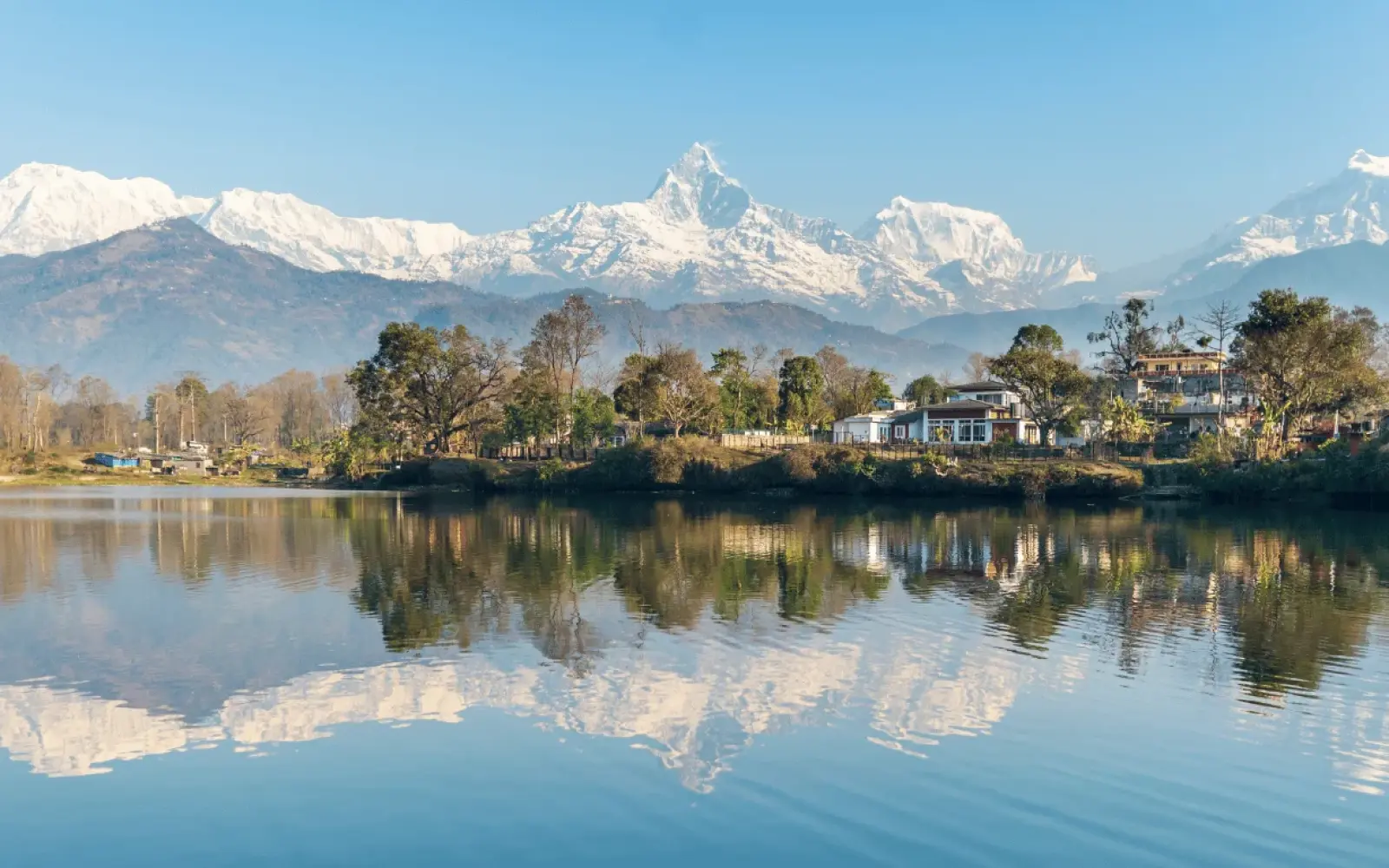

Pokhara is famous for its lakes, especially Phewa Lake, and for close-up views of the Annapurna range, with three peaks over 8,000 m (26,247 ft) within about 50 km of the city. It's also Nepal's adventure capital for paragliding and skydiving, the starting point for the Annapurna treks, and a relaxed lakeside city that Nepal declared its tourism capital in 2024.
Pokhara is also famous for sunrise over the Annapurnas from Sarangkot, the World Peace Pagoda above Phewa Lake, Devi's Fall and Gupteshwor Mahadev Cave, Thakali food, Gurkha heritage, and the cafes and yoga centres of Lakeside. It's known as the City of Lakes because nine lakes, including Phewa, Begnas, and Rupa, lie in the Pokhara Valley.
Pokhara sits at about 822 m (2,697 ft), roughly 200 km (124 miles) west of Kathmandu, yet Machhapuchhre, 6,993 m (22,943 ft), rises almost straight above its rooftops. This guide covers the 15 things Pokhara is best known for, from the Annapurna Himalaya to the lakes, the top places to visit, its food and shopping, the best time to go, how to get there, and the treks and day hikes Majestic Trails Nepal guides run from the city.
These quick facts explain where Pokhara is and why it matters to travellers.
| Fact | Details |
|---|---|
| Location | Gandaki Province, central Nepal |
| Elevation | About 822 m (2,697 ft) |
| Distance from Kathmandu | About 200 km (124 miles) west |
| Population | About 600,000 (2021 census), Nepal's second-largest city |
| Area | 464 km², Nepal's largest metropolitan city by area |
| Nickname | The City of Lakes |
| Status | Declared Nepal's tourism capital in 2024 |
| Airport | Pokhara International Airport, opened in January 2023 |
| Famous mountain view | Machhapuchhre, 6,993 m (22,943 ft) |
| 8,000 m peaks nearby | Annapurna I, Dhaulagiri, and Manaslu |
Pokhara is best known for a rare mix of big mountains, calm lakes, adventure, and easy access to some of Nepal's best treks. These are the 15 famous attractions and experiences that make Pokhara worth visiting, and what each one is known for.
Pokhara Is Famous for Close-Up Views of the Annapurna Range
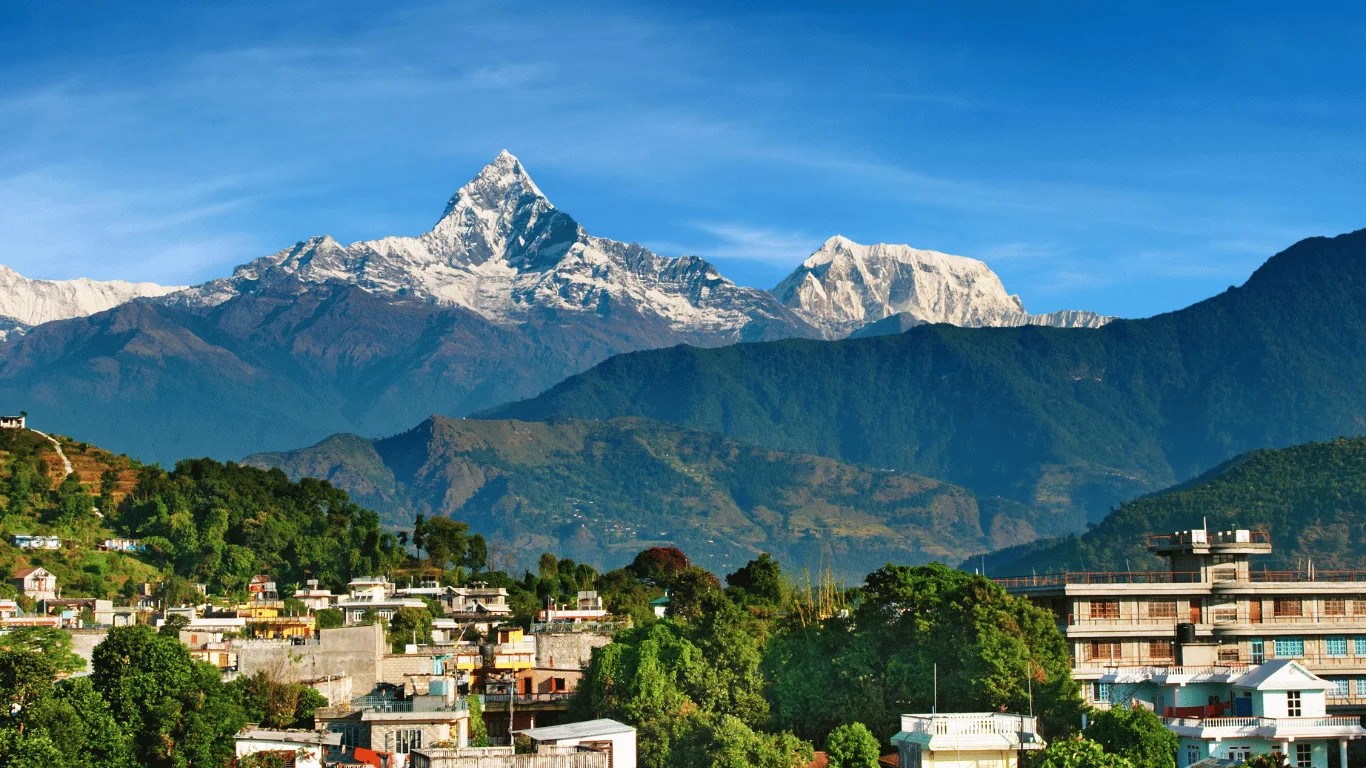
Pokhara is renowned above all for its mountain views, because few cities in the world sit this close to the high Himalaya. From about 800 m, Pokhara looks straight up at peaks over 6,000 m only 25–30 km away, and three 8,000 m mountains, Annapurna I, 8,091 m (26,545 ft), Dhaulagiri, 8,167 m (26,795 ft), and Manaslu, 8,163 m (26,781 ft), lie within about 24–56 km.
The star is Machhapuchhre, the "Fishtail", whose sharp summit dominates the skyline. It's sacred to local people and closed to climbers. The clearest views come on early mornings from October to April.
Phewa Lake and Tal Barahi Temple, Pokhara's Most Famous Landmark
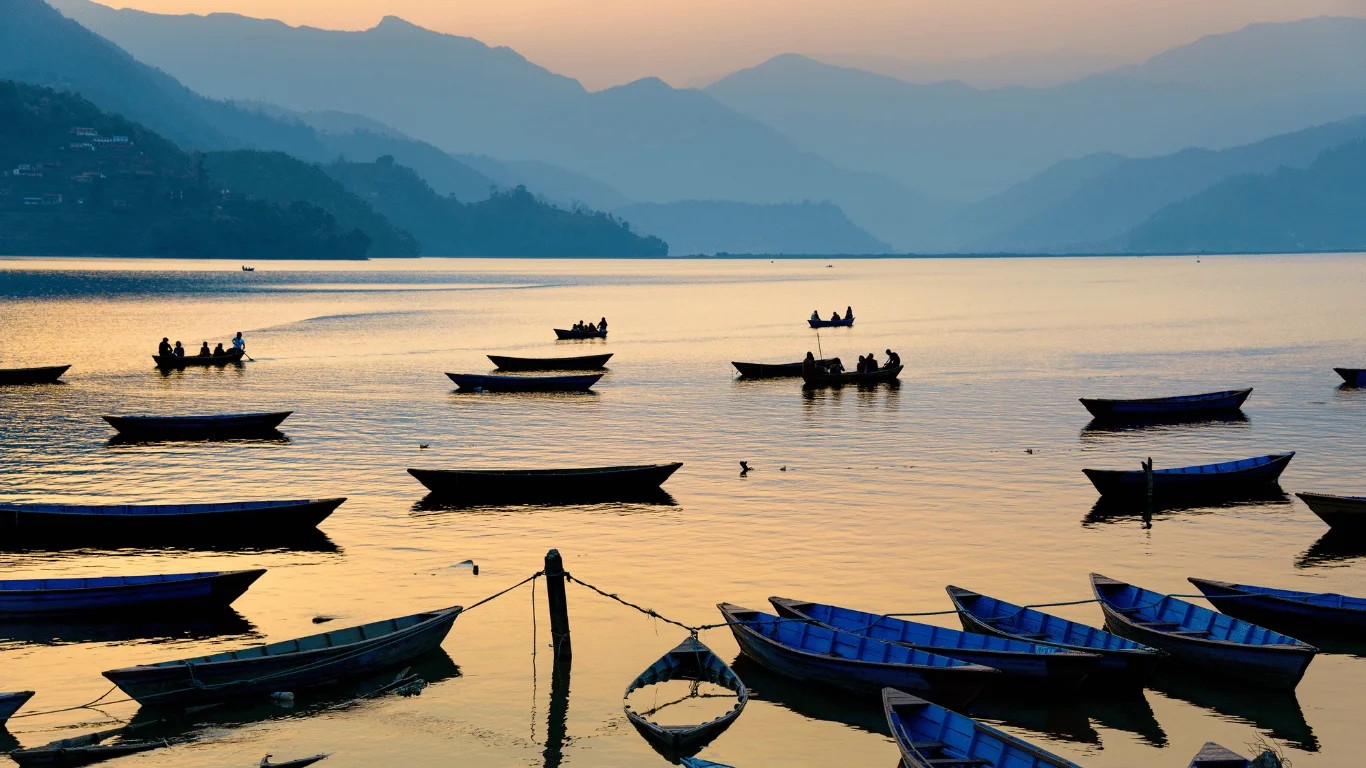
Phewa Lake is the heart of Pokhara, its largest lake, and its most famous landmark. On calm mornings, Machhapuchhre and the Annapurnas reflect in the water. You can hire a colourful wooden boat by the hour, paddle yourself, or take a guided row across to the far shore. A Pokhara city tour with Majestic Trails Nepal includes the boat ride and the main sights in one day.
On a small island near the shore stands Tal Barahi Temple, a two-storey pagoda dedicated to the goddess Barahi. It's a short boat ride from Lakeside, and it gets busy with local worshippers on Saturdays.
Guide's tip: go out on the lake just after sunrise, when the water is calmest, and the mountain reflections are sharpest.
Begnas Lake: Why Pokhara Is Known as the City of Lakes
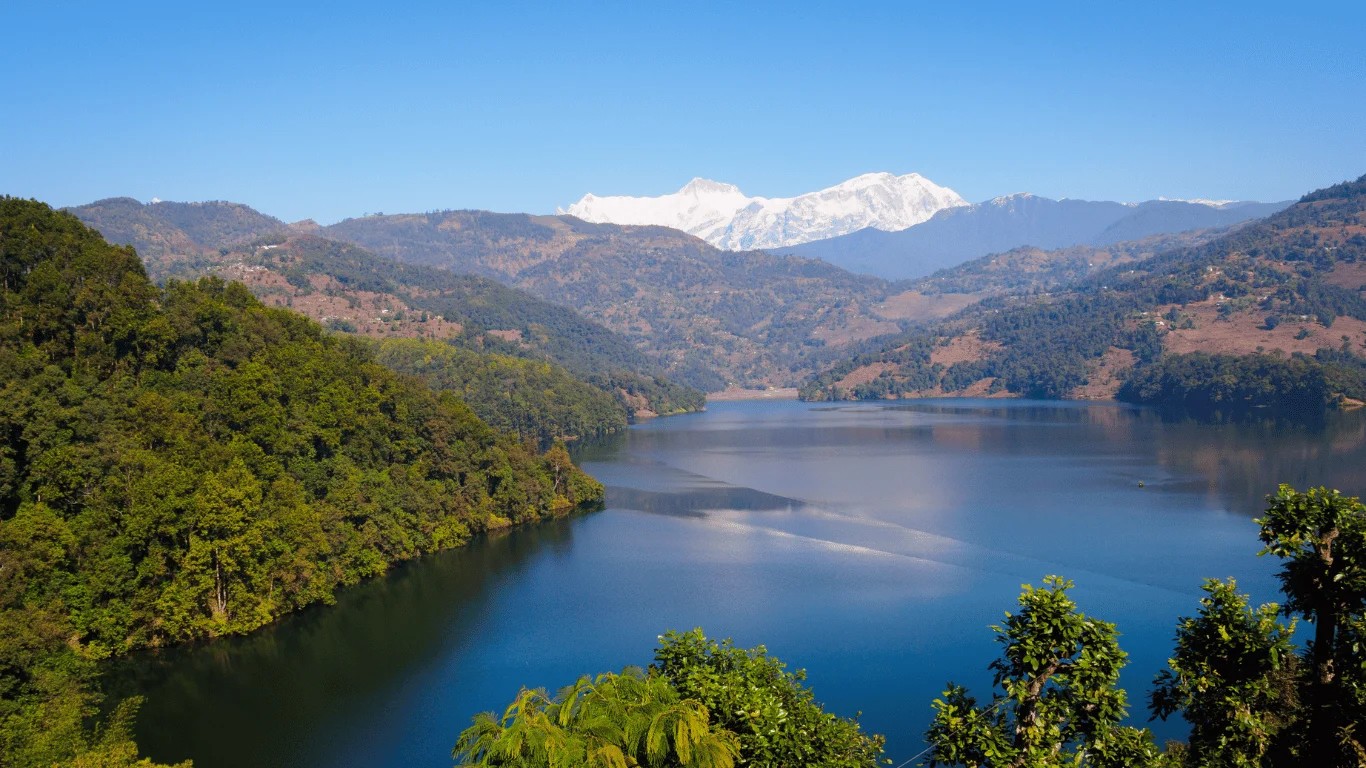
Pokhara is called the City of Lakes because the valley holds a cluster of nine lakes. Besides Phewa, the best-known are Begnas and Rupa, about 15 km east of Lakeside. They're quieter and greener, with fish farms, village paths, and lake-view homestays. Begnas is a good half-day escape if Phewa feels busy. If you love lakes, the Nepal lake trek takes you to higher mountain lakes.
Pokhara Is Famous as the Gateway to the Annapurna Treks
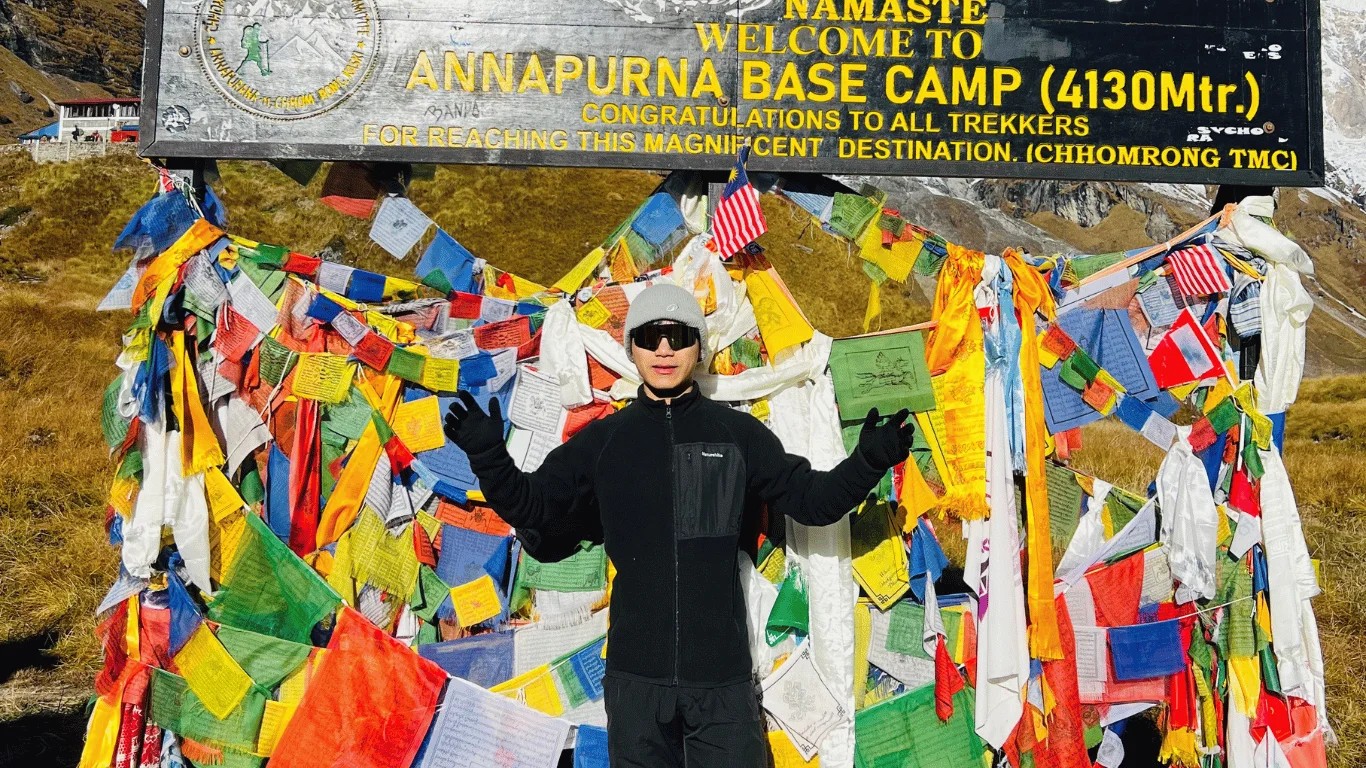
Among trekkers, Pokhara is best known as the starting and finishing point for most treks in the Annapurna region. Trekkers arrive here to prepare, collect permits, and rest after weeks in the mountains. Roads now reach Jhinu, Ghandruk, and even Ghorepani, so many treks start within a few hours' drive of Lakeside.
Popular treks from Pokhara include the Ghorepani Poon Hill Trek, Mardi Himal, Annapurna Base Camp, Khopra Danda, and the Annapurna Circuit, covered in detail further down, along with the top Annapurna region treks. Short on time? An Annapurna Base Camp helicopter tour from Pokhara puts you among the peaks in a morning.
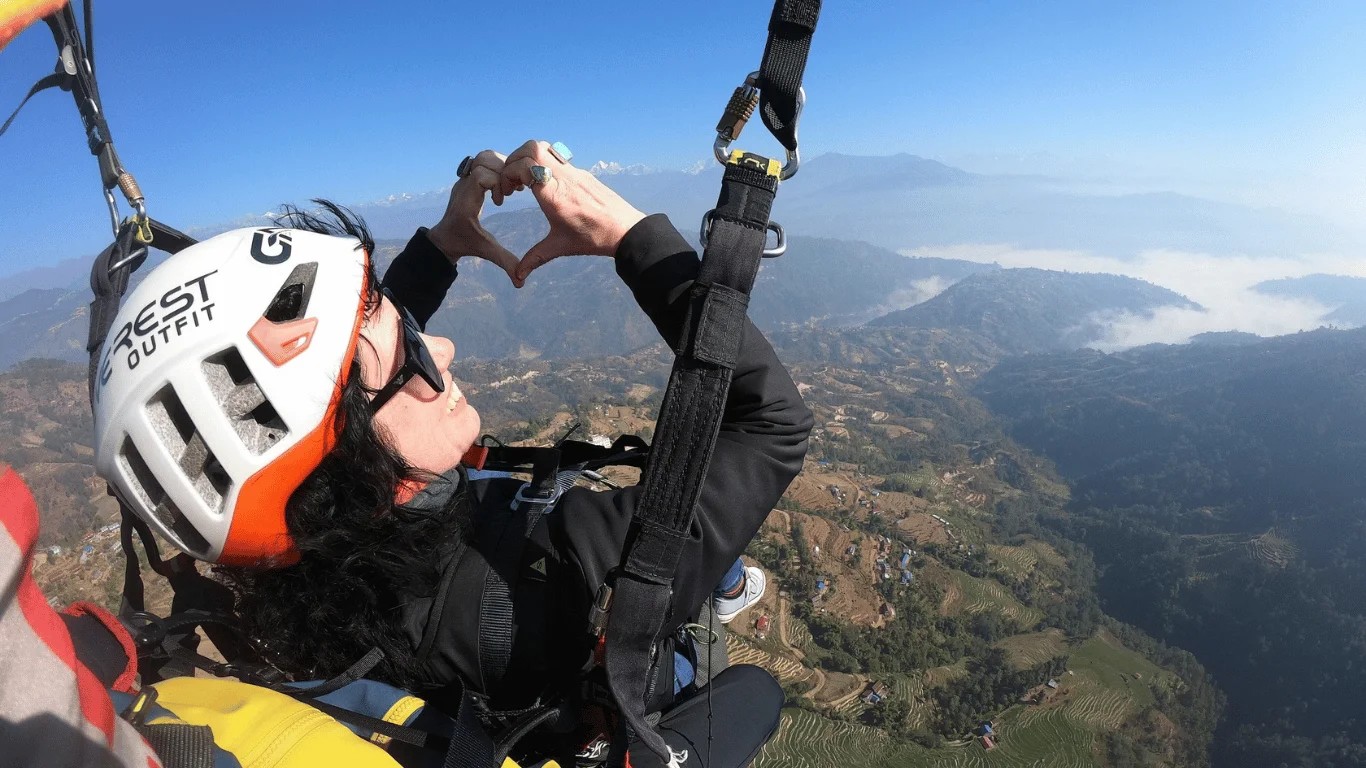
Pokhara is renowned as one of Asia's top destinations for paragliding. Tandem flights take off from Sarangkot, at about 1,590 m (5,217 ft), and glide over terraced hills with Phewa Lake below and the Annapurnas on the horizon, before landing near Lakeside. Standard flights last about 20–30 minutes, with longer cross-country options.
The best flying months are October to November and March to April. In the monsoon, flights are often cancelled because of rain and clouds.
Sarangkot Sunrise, Pokhara's Most Famous Viewpoint
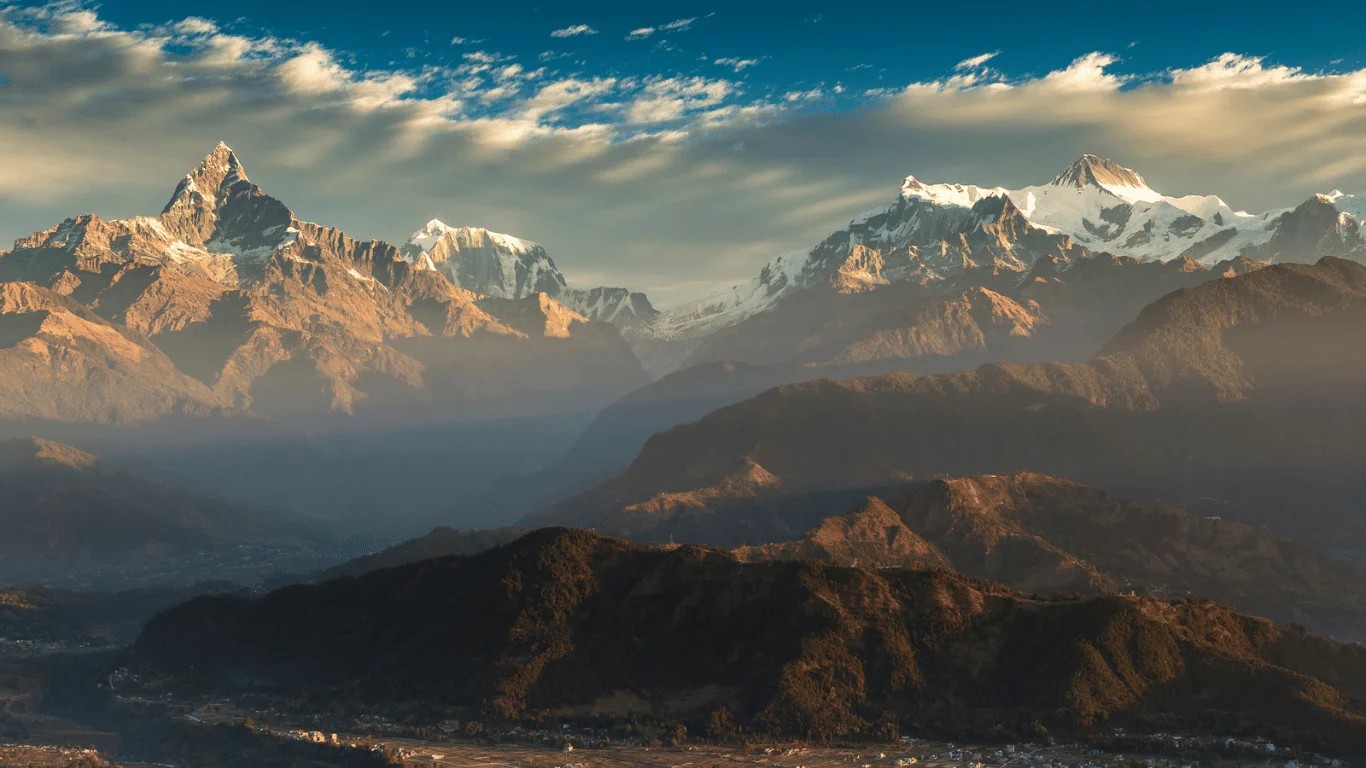
Sarangkot is a hill above the north shore of Phewa Lake and Pokhara's most famous sunrise viewpoint. On a clear morning, first light hits Dhaulagiri, the Annapurnas, and Machhapuchhre in turn. You can drive up in about 30 minutes, hike up in two to three hours, or take the cable car. For a sunrise on a trek, Poon Hill is the famous next step.
World Peace Pagoda, a Famous Landmark Above Pokhara
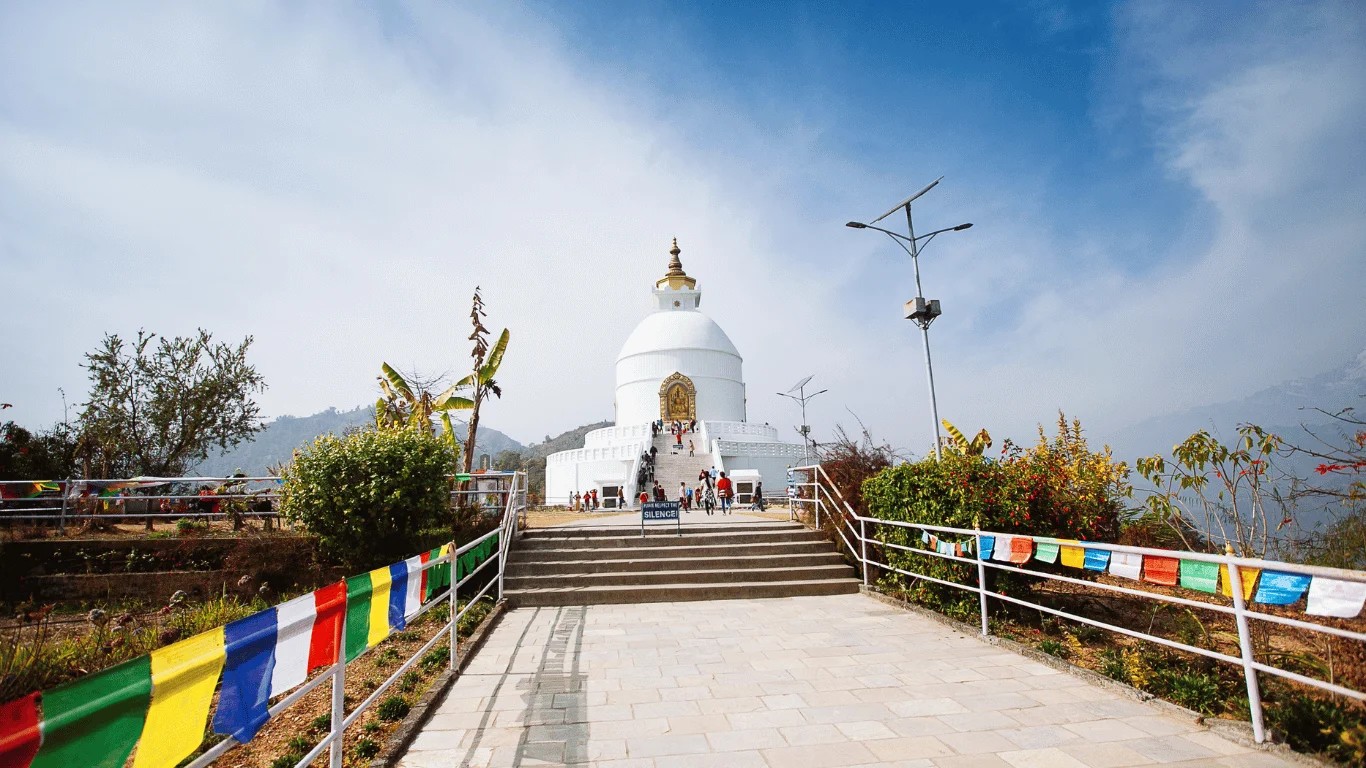
The World Peace Pagoda, or Shanti Stupa, is a white Buddhist stupa on a ridge above the south shore of Phewa Lake. It is one of Pokhara's most recognisable landmarks, with one of the best views of the lake, the city, and the Annapurna range together. Many visitors take a boat across the lake and hike up through the forest in about an hour.
Beyond paragliding, Pokhara is known as Nepal's hub for adventure sports. These are the most popular:
Always book with a licensed operator, and check that your travel insurance covers the activity.
Devi's Fall and Gupteshwor Cave, Pokhara's Famous Caves
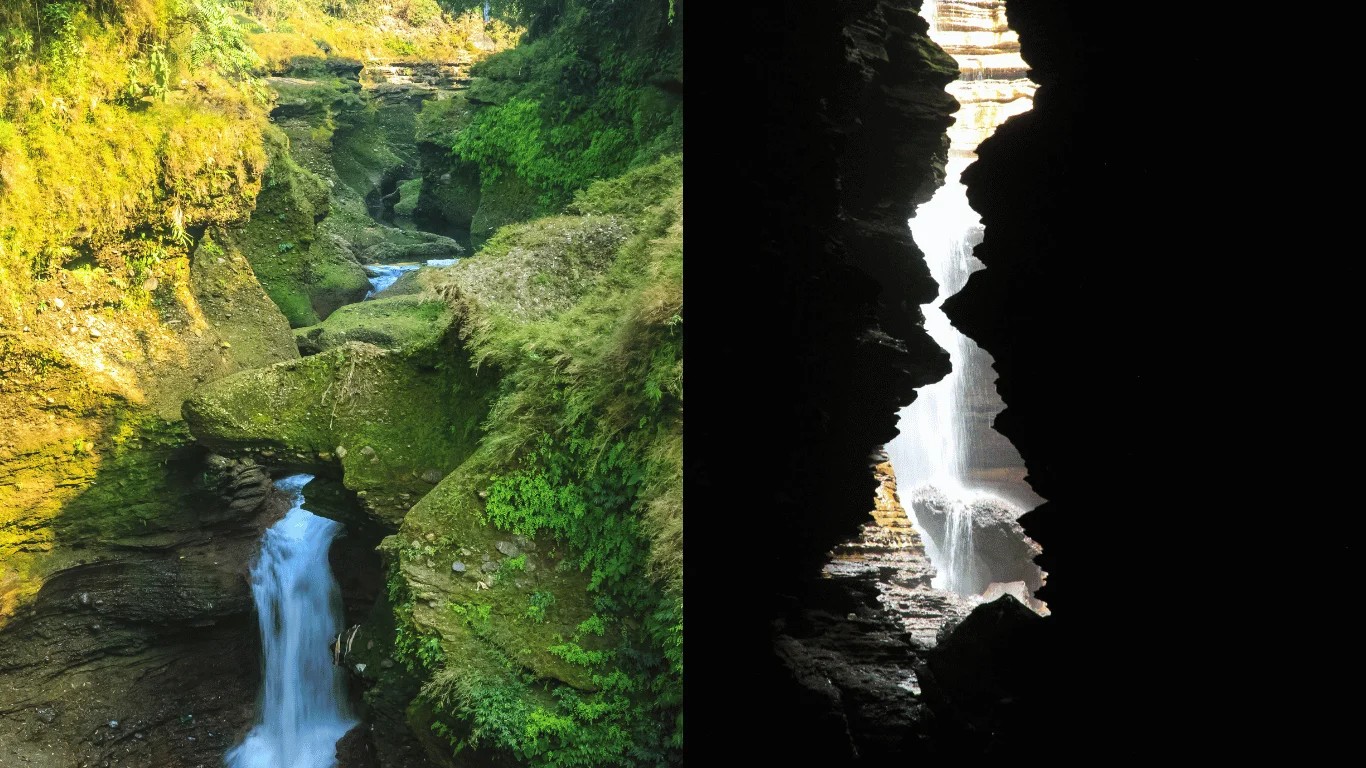
Pokhara is also famous for its caves and waterfalls, carved by the valley's soft limestone:
One of the natural wonders Pokhara is known for is the milky-white Seti River, which cuts a narrow gorge straight through the city. In places, it's tens of metres deep and only a few metres wide, so you can hear the river long before you see it. The best viewpoints are from the bridges around the old part of town and at the K.I. Singh Bridge.
The International Mountain Museum, Pokhara's best-known museum, tells the story of the Himalaya, its mountaineering history, and the people who live in the mountains. It's a good stop on a cloudy day and a natural fit before or after a trek, with exhibits on the 8,000 m peaks, early expeditions, and Himalayan cultures.
Pokhara is widely known for its links with the Gurkha soldiers who have served in the British and Indian armies for more than 200 years, and many Gurkha families come from the hills around the city. The Gurkha Memorial Museum explains their history, campaigns, and medals.
Pumdikot Shiva Statue, One of Pokhara's Famous Temples and Sacred Sites
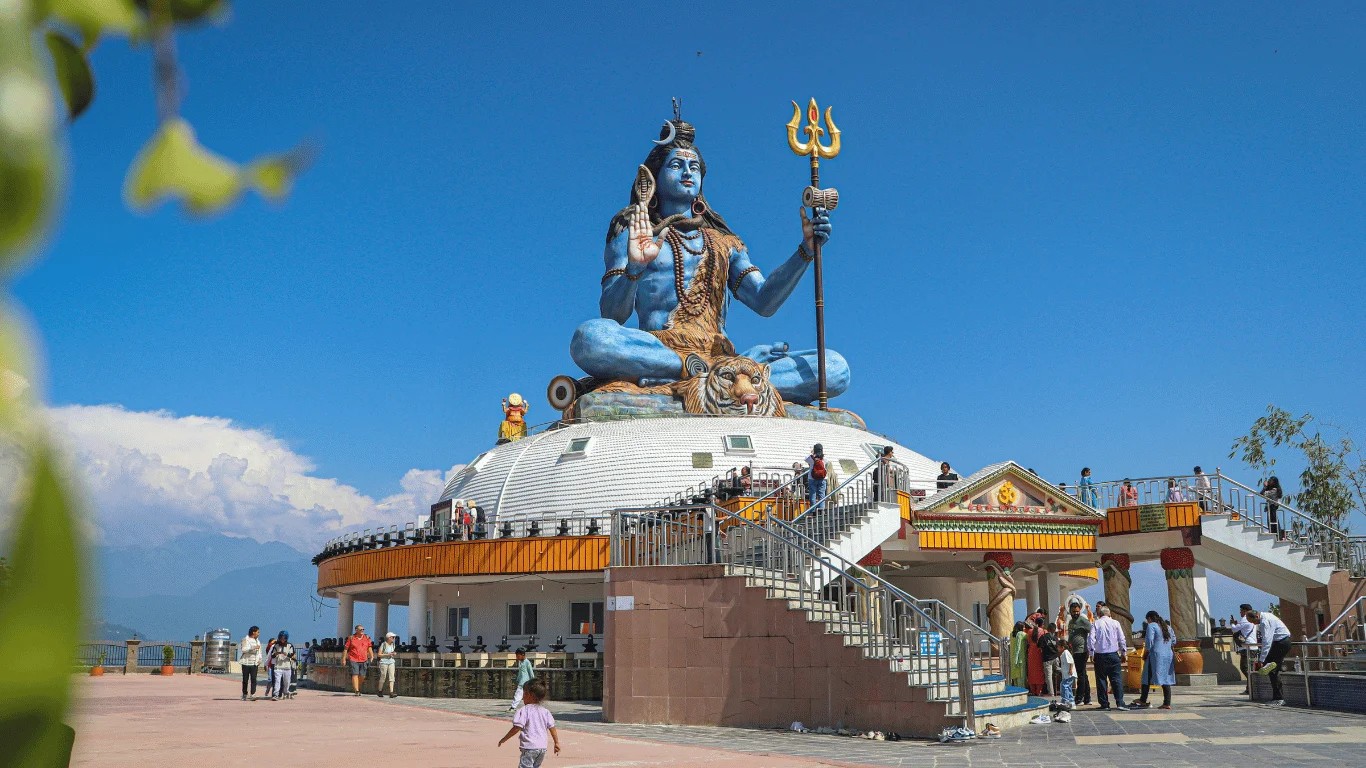
Pokhara is also known for its temples and sacred sites, many of them around the old bazaar, and they make a fine start to a tour of the top spiritual places in Nepal:
Lakeside is the part of Pokhara most visitors remember: a long, walkable strip of cafes, bakeries, bookshops, and gear shops along Phewa Lake. It's calmer and cleaner than Kathmandu, and Pokhara has many yoga and meditation centres, the base for a wellness tour in Nepal or a Poon Hill yoga trek, which is a big reason Pokhara is famous as the place to rest before or after a trek.
Pokhara is also known for its Tibetan communities, who have lived around the city since the 1960s. At Tashi Palkhel, north of the city, and Tashiling, in the south, you can visit monasteries, see carpets being woven, and buy handicrafts directly from the community.
If you only have a short time, these are the five places Majestic Trails Nepal guides recommend first.
| Place | Famous for | Best time | Time needed |
|---|---|---|---|
| Phewa Lake and Tal Barahi Temple | Boating and mountain reflections | Early morning | 1–2 hours |
| Sarangkot | Sunrise over the Annapurnas, paragliding | Sunrise | Half a day |
| World Peace Pagoda | Views of the lake, city, and mountains | Morning or sunset | 2–3 hours |
| Devi's Fall and Gupteshwor Mahadev Cave | Waterfall and sacred cave | Daytime, strongest in the monsoon | 1–2 hours |
| International Mountain Museum | Himalayan and mountaineering history | Any time | 1–2 hours |
Pokhara's food reflects the hill peoples of the Annapurna region and its role as a travellers' city. These are the dishes to try:
To taste more of the country, the Taste of Nepal tour combines food, culture, and scenery. Vegetarians are well looked after: dal bhat is vegetarian by default, and most Lakeside restaurants have vegetarian Nepali dishes.
Pokhara is good for shopping, especially for trekkers and anyone who likes handicrafts. These are the most popular buys:
Bargaining is normal in handicraft shops, but keep it friendly.
If you're short on time, these simple plans cover the highlights.
One day in Pokhara:
Two days in Pokhara: add a paragliding flight on the second morning, the International Mountain Museum, and an afternoon at Begnas Lake or the Tibetan settlement at Tashi Palkhel.
Pokhara suits almost every kind of traveller. These ideas work for different groups:
The best time to visit Pokhara is October to November, followed by March to April. These months bring the clearest mountain views and the best paragliding conditions. This table shows what each season is like.
| Season | Months | Weather in Pokhara | Good for |
|---|---|---|---|
| Autumn | Late September–November | Clear and dry, with the sharpest mountain views | Views, paragliding, trekking |
| Winter | December–February | Cool, often clear mornings, chilly nights around 7°C | Quiet sightseeing, short low treks |
| Spring | March–May | Warm, rhododendrons on nearby hills, haze later in May | Trekking, paragliding in March–April |
| Monsoon | June–September | Very wet, with heavy rain and cloud | Green scenery, Devi's Fall at full power |
Pokhara is one of the wettest cities in Nepal in the monsoon, and nearby Lumle is among the wettest places in the country, so mountain views are rare from June to September.
For trekking months by region, read the guide to the best time to trek in Nepal, and see the best spring treks in Nepal for March to May.
Pokhara is about 200 km (124 miles) west of Kathmandu. Most visitors combine both cities on a Kathmandu and Pokhara tour. There are two main ways to get there:
From the airport, Lakeside is a short taxi ride. Majestic Trails Nepal can arrange flights, vehicles, and airport transfers as part of your trip.
For trekkers, Pokhara's biggest claim to fame is what lies just beyond it. These are the treks and hikes Majestic Trails Nepal guides run from the city:
| Trek or hike | Days | Max altitude | Level | Why it's famous |
|---|---|---|---|---|
| Sarangkot hike | Half a day | About 1,590 m (5,217 ft) | Easy | Sunrise over the Annapurnas |
| Australian Camp and Dhampus | 1–2 | About 2,060 m (6,759 ft) | Easy | Big mountain views with a short walk |
| Ghorepani Poon Hill | 4–8 | 3,210 m (10,531 ft) | Easy | Rhododendrons and Poon Hill sunrise |
| Mardi Himal | 5–9 | 4,500 m (14,763 ft) | Moderate | Ridge trek under Machhapuchhre |
| Khopra Danda | 7–12 | 3,660 m (12,007 ft) | Easy | Quiet ridge with Dhaulagiri views |
| Annapurna Base Camp | 7–14 | 4,130 m (13,549 ft) | Moderate | A ring of 7,000 m and 8,000 m peaks |
| Annapurna Circuit | 14–20 | 5,416 m (17,769 ft) | Moderate | Thorong La and the full Annapurna loop |
| Upper Mustang | 12–16 | 3,840 m (12,598 ft) | Moderate | Walled city of Lo Manthang, via Jomsom |
Remember that trekkers entering the Annapurna Conservation Area must now carry a printed copy of their Annapurna entry permit; digital copies aren't accepted at checkpoints. Majestic Trails Nepal arranges and prints permits for every trek.
See the Ghorepani Poon Hill Trek, Mardi Himal Trek, Khopra Danda Trek, Annapurna Base Camp Trek, Annapurna Circuit Trek, and Upper Mustang Trek, or browse the best short treks in Nepal and the best treks in Nepal.
Neither is better; they're different, and most visitors see both. Kathmandu is known for its UNESCO World Heritage Sites, and a Kathmandu city tour pairs well with Pokhara. This table compares them.
| Pokhara | Kathmandu | |
|---|---|---|
| Famous for | Lakes, mountain views, adventure sports | Temples, palaces, UNESCO heritage |
| Atmosphere | Relaxed, green, lakeside | Busy, historic, crowded |
| Mountain views | Close-up Annapurnas from the city | Distant, mainly from viewpoints on the valley rim |
| Adventure | Paragliding, zipline, bungee, rafting | Limited in the city |
| Trekking | Gateway to the Annapurna region | Gateway to Everest, Langtang, and Manaslu |
| Best for | Resting, nature, adventure | Culture, history, shopping |
These tips answer the questions travellers ask most before arriving:
Majestic Trails Nepal, a government-registered trekking company in Kathmandu (Reg. No. 396834/83/84), runs Pokhara city tours, paragliding, and every major Annapurna trek from Pokhara.
Book a Pokhara City Tour, Paragliding in Pokhara, or join a fixed group departure.
Pokhara is famous because it puts the high Himalaya, calm lakes, and real adventure within a few kilometres of each other. You can row across Phewa Lake at sunrise, fly over it by paraglider at midday, and be walking into the Annapurna foothills the next morning. For trekkers, it's the place where Annapurna journeys begin and end; for everyone else, it's the most relaxed and beautiful city in Nepal.
Plan at least two days, aim for October to November or March to April, and pair your visit with one of the treks that start just beyond the lake.
Planning a trip to Pokhara or an Annapurna trek? Message Majestic Trails Nepal on WhatsApp at +977 9700937981 or email info@majestictrailsnepal.com.
Pokhara is famous for Phewa Lake, close-up views of the Annapurna range and Machhapuchhre, paragliding from Sarangkot, and being the gateway to the Annapurna treks.
In Nepali: पोखरा ताल, हिमाल, प्याराग्लाइडिङ र अन्नपूर्ण पदयात्राको प्रवेशद्वारका लागि प्रसिद्ध छ। (Pokhara is famous for its lakes, mountains, paragliding, and as the gateway to the Annapurna treks.)
Because the Pokhara Valley holds a cluster of nine lakes, including Phewa, Begnas, and Rupa. Phewa Lake lies right beside the city and is its main attraction.
Tandem skydiving is now offered in Pokhara, with jumps from a helicopter over Phewa Lake and views of the Annapurna range. It runs in seasonal windows, mainly autumn and spring, rather than all year, so confirm dates in advance.
Mount Everest isn't visible from Pokhara. It lies about 250 km east in the Everest region, and other ranges block the view. From Pokhara you see the Annapurna range, Machhapuchhre, Dhaulagiri, and Manaslu.
Two to three days is enough for the main sights and a paragliding flight. Add more if you're starting or finishing a trek in the Annapurna region.
October and November are best, with the clearest skies. March and April are also good, with warm weather and rhododendrons on the nearby hills.
Pokhara is safe to visit and one of the most relaxed, visitor-friendly cities in Nepal. Take normal travel precautions, and be careful near lakes and rivers in the monsoon.
Pokhara can be as cheap or as comfortable as you like, with options from budget guesthouses and local eateries to lakeside resorts. Food and rooms are generally cheaper than in Western countries, while adventure activities cost more.
For natural beauty, most visitors choose Pokhara, with its lakes and close mountain views. Kathmandu is richer in temples, palaces, and history.
Pokhara was officially declared Nepal's tourism capital in 2024, reflecting its role as the country's main base for adventure and trekking.
Written by
Founder & Trekking Guide
Bibek Dhamala is the CEO of Majestic Trails Nepal, a locally operated trekking company based in Tarakeshwar, Kathmandu. With a background in trekking and mountain guiding, he understands the challenges of Himalayan adventures and the importance of responsible tourism, experienced local guides, and personalized service. Through Majestic Trails Nepal, Bibek aims to help trekkers explore Nepal’s Himalayas safely and authentically, from Everest Base Camp and the Annapurna region to the remote trails of Manaslu. He is passionate about supporting local communities, creating meaningful trekking experiences, and sharing the natural and cultural beauty of Nepal with travelers from around the world.
Nepal is a land where nature paints its most spectacular masterpieces. From the towering peaks of the Himalayas to serene alpine lakes, dense jungles...
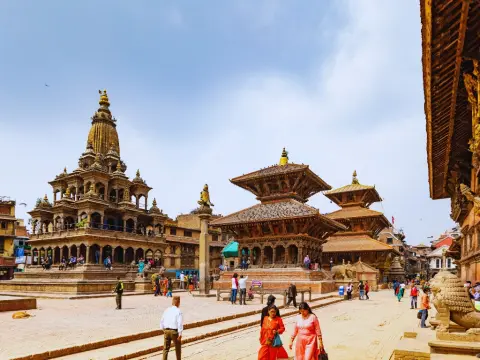
A Nepal Kathmandu Pokhara tour represents the quintessential introduction to this Himalayan nation, combining ancient cultural heritage with breathtak...
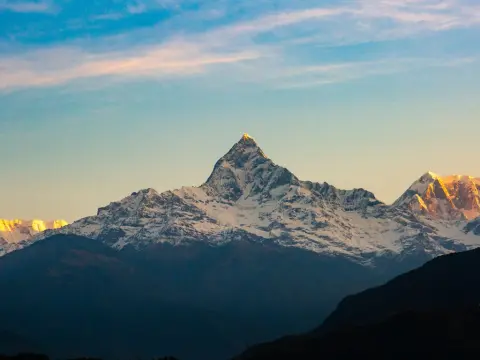
Sarangkot is 11 km from Pokhara. At 1,600 metres above sea level, it holds some of the most dramatic Himalayan views on earth — Annapurna, Dhaulagiri,...
