
Annapurna Circuit Trek Nepal – Complete Guide, Itinerary, Cost & Best Time
23 Jan 2026
The Annapurna Circuit Trek is one of the world’s most legendary long-distance treks — a journey that circles the Annapurna massif through Nepal’s most...

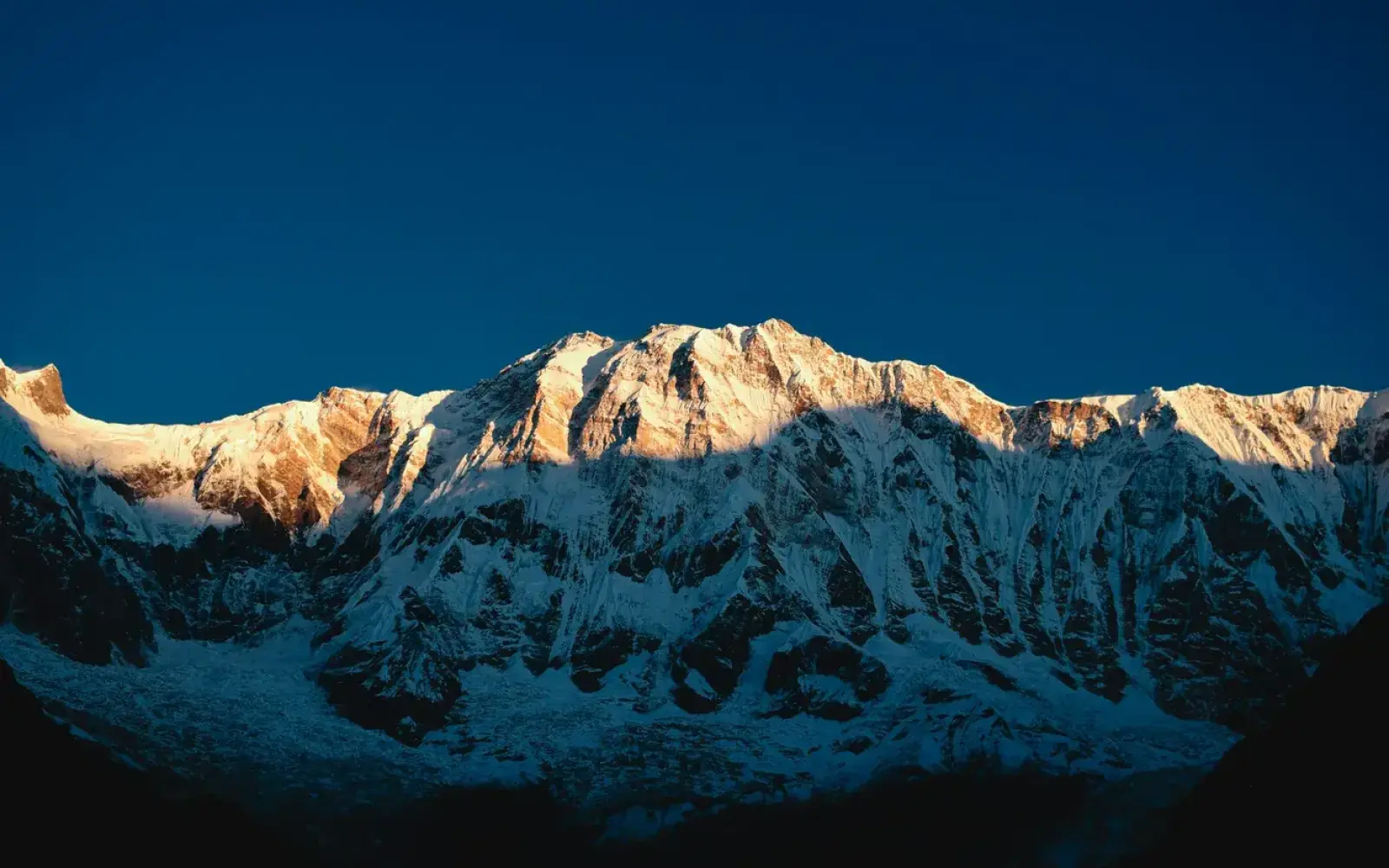

Annapurna I is the 10th highest mountain in the world. It is located in the country of Nepal, in Asia. It was the first mountain above 8,000 meters to be successfully summited.
Standing as the tenth highest mountain on our planet, Annapurna 1 represents far more than just impressive altitude statistics. The name itself derives from Sanskrit, meaning "full of food" or "goddess of harvests," and local communities have revered this mountain as a divine presence for centuries.
For those who venture into its shadow, whether on a challenging trek to base camp or simply gazing upon its snow-clad faces from the rhododendron forests below, Annapurna 1 delivers an experience that transcends ordinary travel.
At Majestic Trails Nepal, we've had the profound privilege of guiding thousands of adventurers through this magnificent region. We can tell you with certainty that understanding where Annapurna 1 is located is merely the first step in a journey that will leave you forever changed.
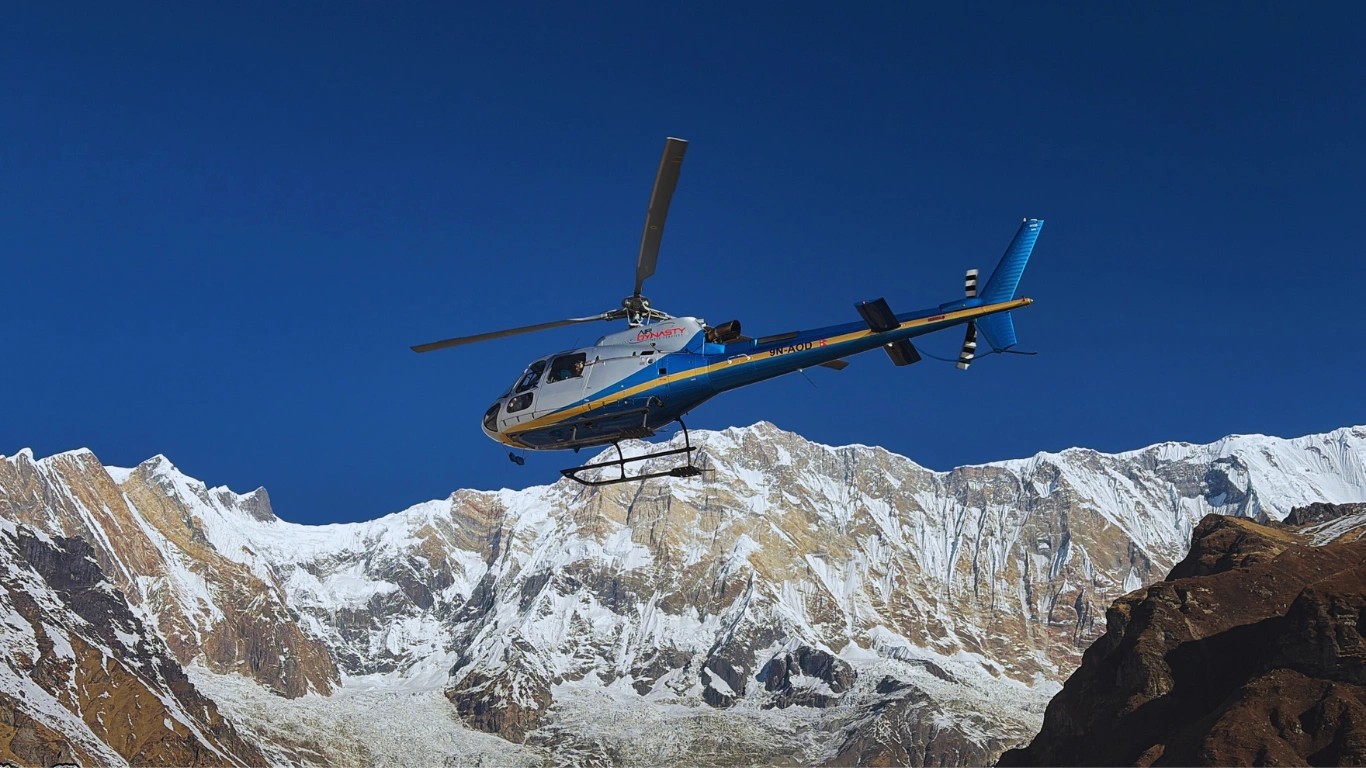
Annapurna 1 is located in north-central Nepal, positioned within the Gandaki Province in the Kaski and Myagdi districts. The mountain forms the centerpiece of the renowned Annapurna massif, a stunning collection of peaks that stretches approximately 55 kilometers along the spine of the Himalayas.
This natural barrier separates the Tibetan Plateau to the north from the subtropical lowlands of Nepal to the south, creating dramatic landscape contrasts that few places on Earth can match.
The precise coordinates of Annapurna 1's summit place it at 28°35'44"N latitude and 83°49'13"E longitude. This situates the peak roughly 150 kilometers northwest of Kathmandu as the crow flies, though the actual journey by road and foot is considerably longer and infinitely more rewarding.
The Annapurna 1 location benefits from its position within the Annapurna Conservation Area, the largest protected region in Nepal. This conservation zone encompasses diverse ecological zones ranging from subtropical forests to alpine meadows and permanent ice fields.
Understanding where Annapurna I is located helps adventurers appreciate that this isn't an isolated peak. Rather, it serves as the crown jewel of an entire mountain kingdom that includes sister summits like Annapurna II, III, IV, and the distinctively pointed Machapuchare, which locals consider sacred and remains unclimbed by decree.
The question "Annapurna 1 which country" has a straightforward answer—Nepal—but the fuller picture reveals a mountain that serves as a geographical and cultural bridge.
To the north, the terrain transitions toward the rain shadow of the Himalayas, where Tibetan-influenced cultures thrive in high-altitude villages like Manang and Mustang. To the south, the dramatically steep southern faces of the Annapurna range catch the moisture-laden monsoon winds, creating lush forests and terraced agricultural landscapes that have sustained local communities for millennia.
| Attribute | Details |
|---|---|
| Official Name | Annapurna 1 (Annapurna I) |
| Height | 8,091 meters (26,545 feet) |
| Rank | 10th highest mountain in the world |
| Country | Nepal |
| Province | Gandaki Province |
| Districts | Kaski and Myagdi |
| Mountain Range | Annapurna Massif, part of the Himalayas |
| Coordinates | 28°35'44"N, 83°49'13"E |
| First Ascent | June 3, 1950 |
| Protection Status | Annapurna Conservation Area |
| Nearest Major City | Pokhara (approximately 40 km south) |
The Annapurna 1 location becomes even more impressive when you consider its immediate neighbors.
The mountain stands as the highest point in a massif that includes Annapurna II (7,937 m), Annapurna III (7,555 m), Annapurna IV (7,525 m), and Annapurna South (7,219 m), along with numerous other significant peaks.
To the east, the sacred pyramid of Machapuchare (6,993 m) guards the entrance to the Annapurna Sanctuary. To the west, the landscape transitions toward the dramatic Dhaulagiri massif, separated by the world's deepest gorge carved by the Kali Gandaki River.
This geographic positioning creates a landscape of extraordinary contrasts. The southern faces of the Annapurna range are among the steepest and most avalanche-prone slopes anywhere in the Himalayas, dropping nearly 4,000 meters in just a few horizontal kilometers.
Meanwhile, the northern slopes present a more gradual but no less challenging environment. High-altitude deserts and ancient trading routes wind through landscapes that seem more Tibetan than Nepali.
For trekkers wondering where Annapurna 1 is located in relation to popular trekking routes, the mountain can be approached from multiple directions. The Annapurna Circuit circumnavigates the entire massif, while the Annapurna Base Camp trek penetrates the sanctuary to the mountain's southern foot.
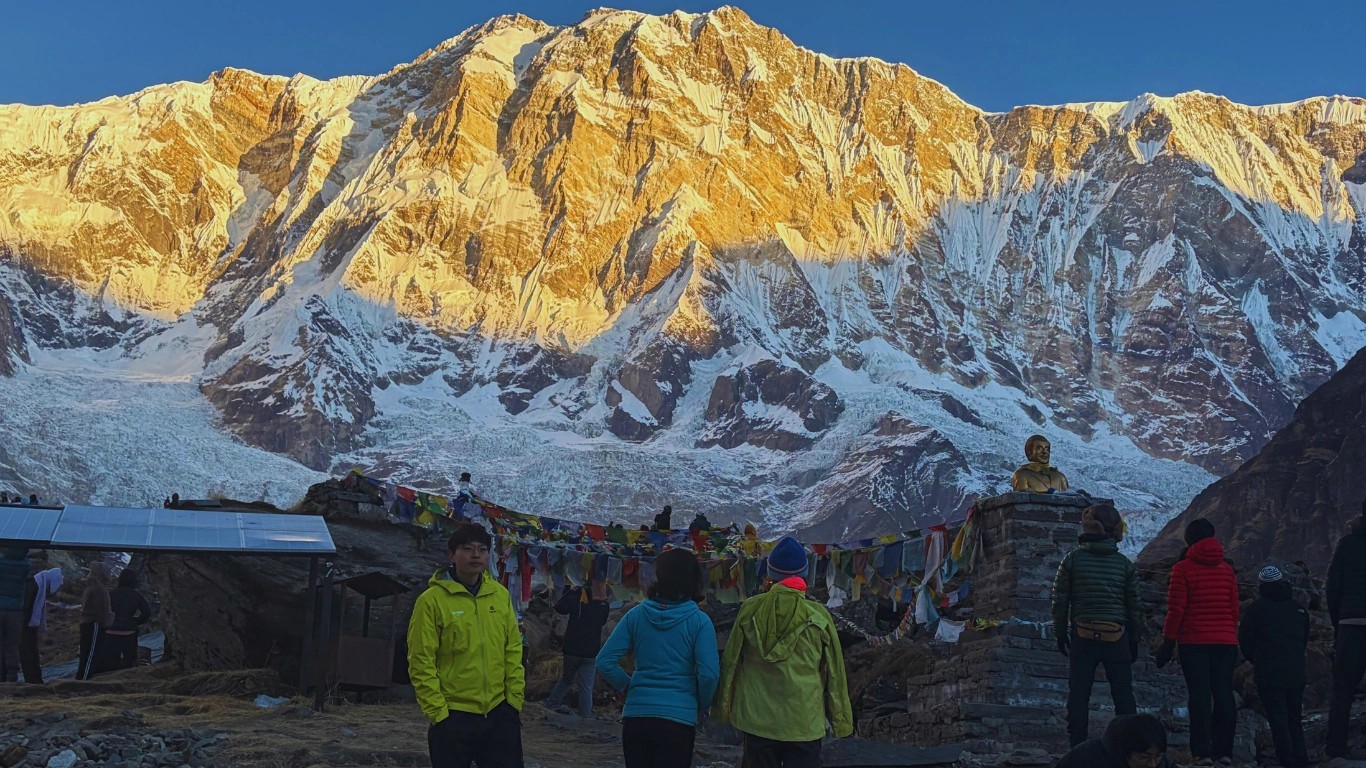
To truly understand where is Annapurna 1 in the broader context of Himalayan culture, one must delve into the rich spiritual traditions that have grown up around this magnificent peak.
The name "Annapurna" originates from the Sanskrit words "anna" (food or grain) and "purna" (full, complete, or perfect). This translates to "full of food" or "she who is filled with food."
In Hindu tradition, Annapurna is revered as the goddess of nourishment, sustenance, and the harvest—a deity who ensures that devotees never go hungry.
This isn't merely poetic metaphor. The mountain's presence genuinely affects the agricultural fertility of surrounding valleys. Glacial meltwater and monsoon rains trapped by its massive flanks irrigate the terraced fields that have fed local communities for generations.
For the Hindu and Buddhist communities living in the mountain's shadow, Annapurna 1 isn't simply a geological formation but a living presence. It represents a manifestation of divine feminine energy that both provides for and protects the people of the region.
Temples and shrines dedicated to the goddess Annapurna can be found throughout the valleys surrounding the mountain. Trekkers will often encounter local people performing small rituals or leaving offerings at particularly scenic viewpoints.
Understanding this cultural dimension transforms the question of where is Annapurna I located from a matter of geography into an invitation to participate in a living spiritual tradition.
The villages that dot the approaches to Annapurna 1 maintain traditions of mountain worship that stretch back centuries.
In Gurung villages like Ghandruk and Chhomrong, shamans known as "poju" perform rituals to appease mountain spirits before important undertakings. Whether planting crops, embarking on trading journeys, or welcoming trekking groups to the region, these ceremonies play an important role in community life.
The rituals often include offerings of grain, butter, and incense, acknowledging the mountain as a source of both abundance and potential danger.
Buddhist communities in the higher regions, particularly in Manang and the Mustang region to the northwest, incorporate Annapurna into a cosmology that views the high Himalayas as dwelling places of enlightened beings.
Monastery prayer flags flutter on ridges throughout the region. Their printed mantras are believed to carry blessings on the wind that sweeps down from the peaks.
For these communities, asking "where is Annapurna 1" would seem as strange as asking where the sky is. The mountain is an ever-present reality, shaping weather, water, and spiritual life in ways that outsiders can only begin to appreciate.
At Majestic Trails Nepal, we believe that authentic adventure travel must engage with these cultural dimensions. When our guides explain the significance of Annapurna 1 to trekking groups, they're not simply sharing folklore but transmitting living knowledge.
This approach reflects our commitment to responsible tourism that benefits local communities while providing travelers with genuinely transformative experiences.
Here is the list of best treks to see the Annapurna 1 closely:
For most visitors seeking to experience where Annapurna 1 is located firsthand, the Annapurna Base Camp (ABC) trek offers the perfect combination of accessibility and dramatic mountain scenery.
This iconic trek brings trekkers directly into the heart of the Annapurna Sanctuary. This massive glacial basin is surrounded by towering peaks on all sides, with Annapurna 1's south face dominating the northwestern horizon.
The ABC trek typically requires 7 to 14 days depending on the itinerary chosen. Trails begin from villages accessible from Pokhara, Nepal's second-largest city and the gateway to the Annapurna region.
The classic route departs from Nayapul, ascending through terraced farmland and pristine forests before reaching the Gurung villages of Ghandruk and Chhomrong. Both villages offer stunning views of the Annapurna massif and warm Nepali hospitality.
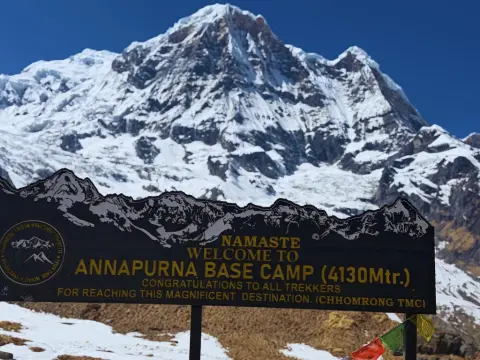
Beyond Chhomrong, the trail enters the Annapurna Sanctuary itself. Trekkers pass through bamboo forests, rhododendron groves, and increasingly alpine terrain before arriving at the Annapurna Base Camp at 4,130 meters elevation.
Here, trekkers stand just 10 kilometers from the summit of Annapurna 1. They're surrounded by a 360-degree panorama that includes Machapuchare, Annapurna South, Hiunchuli, and numerous other peaks exceeding 7,000 meters.
| Trek Details | Information |
|---|---|
| Starting Point | Nayapul or Phedi |
| Ending Point | Nayapul or Phedi |
| Duration | 7-14 days |
| Maximum Elevation | 4,130 m (Annapurna Base Camp) |
| Difficulty Level | Moderate |
| Best Season | March-May, September-November |
| Required Permits | ACAP |
Travelers with limited time who still want to experience where is Mount Annapurna 1 from a spectacular vantage point should consider the Ghorepani Poon Hill trek.
This shorter itinerary, typically completed in 4 to 5 days, ascends to Poon Hill (3,210 m). This panoramic viewpoint offers sweeping views of the entire Annapurna and Dhaulagiri ranges at sunrise.
While Poon Hill doesn't bring trekkers as close to Annapurna 1 as the ABC trek, the breadth of the panorama is exceptional. Stretching across dozens of major peaks, it provides an unforgettable visual introduction to the Himalayan giants.
The Poon Hill trek follows ancient trading routes through Magar and Gurung villages. The path passes through some of the most beautiful rhododendron forests in Nepal.
During the spring trekking season (March through May), these forests explode with color. Rhododendrons of red, pink, and white bloom in profusion, creating a fairy-tale landscape that perfectly complements the snow-capped peaks above.
This trek is ideal for families, first-time trekkers, and anyone seeking a taste of Himalayan adventure without the physical demands of higher-altitude routes.
For adventurers seeking a more comprehensive answer to where is Annapurna I located, the Annapurna Circuit remains one of the world's great trekking experiences.
This 160-230 kilometer route (depending on variations chosen) circumnavigates the entire Annapurna massif. It crosses the Thorong La pass at 5,416 meters and traverses landscapes ranging from subtropical valleys to high-altitude deserts.
The circuit typically requires 12 to 21 days and provides views of Annapurna 1 from multiple angles and distances. Trekkers also experience immersion in the diverse cultures of the Annapurna region.
Beginning from the subtropical lowlands near Besisahar, the circuit ascends gradually through Hindu farming villages. Eventually, trekkers enter the Manang Valley, where Tibetan Buddhist culture predominates.
The crossing of Thorong La represents the physical and emotional climax of the trek. Successful trekkers are rewarded with staggering views and an overwhelming sense of accomplishment.
The descent into the Mustang region reveals yet another landscape. A rain-shadow desert of eroded cliffs and medieval villages unfolds before trekkers, feeling more like Tibet than Nepal.
While most visitors experience the Annapurna 1 location through trekking rather than climbing, it's worth understanding what mountaineers face when attempting the summit.
Annapurna 1 holds the grim distinction of having the highest fatality rate of any 8,000-meter peak. Approximately 32% of climbers who have summited have lost their lives—a ratio that exceeds even the notorious K2.
The mountain's steep faces, unstable snow conditions, and unpredictable weather create an environment where even the most experienced climbers face mortal danger.
Climbing expeditions to Annapurna 1 typically occupy 6 to 8 weeks. They require permits costing $11,000 or more for foreign climbers, plus the expense of equipment, guides, and support staff.
Several routes exist, with the north face and the Dutch Rib on the northwest face being among the more frequently attempted.
Despite its dangers—or perhaps because of them—Annapurna 1 continues to attract elite alpinists seeking the ultimate test of skill, endurance, and courage.
For those without mountaineering aspirations, the trekking routes described above provide a much safer way to experience the majesty of this extraordinary peak.
Understanding where is Annapurna 1 in ecological terms reveals one of the most biologically diverse mountain environments on Earth.
The dramatic elevation changes in the Annapurna region—from subtropical valleys at 1,000 meters to permanent ice above 7,000 meters—create a series of distinct ecological zones. Each zone supports unique communities of plants and animals.
The lower elevations feature subtropical and temperate forests dominated by sal, oak, and maple trees. Higher up, dense stands of rhododendron and bamboo give way to alpine meadows and finally to the sparse vegetation of the high Himalayan zone.
The rhododendron forests of the Annapurna region deserve special mention. Nepal recognizes the rhododendron as its national flower, and nowhere are these spectacular plants more abundant than on the approaches to Annapurna 1.
More than 30 species of rhododendron grow in the region. They range from small shrubs to trees exceeding 20 meters in height.
During the spring bloom season, the forests transform into a kaleidoscope of color that photographers and nature lovers find absolutely irresistible.
These forests also support a rich understory of orchids, ferns, and medicinal plants that local communities have harvested sustainably for generations.
The Annapurna Conservation Area, which protects the entire region where Annapurna I is located, shelters an impressive array of wildlife despite increasing human activity from trekking and tourism.
Snow leopards—arguably the most iconic and elusive of Himalayan animals—prowl the high-altitude terrain. They prey on blue sheep, Himalayan tahr, and smaller mammals.
Sightings remain extremely rare, but researchers using camera traps have documented healthy populations in remote areas of the conservation zone.
More commonly observed wildlife includes various species of pheasant, including the spectacular Himalayan monal. This is Nepal's national bird, and its iridescent plumage flashes rainbow colors in the mountain sunlight.
Trekkers may also encounter langur monkeys in the lower forests and musk deer in the alpine zones. A remarkable diversity of birds ranges from tiny sunbirds to massive lammergeiers soaring on thermals above the peaks.
The Annapurna Conservation Area's management approach involves local communities in protection and sustainable use of natural resources. This has helped maintain biodiversity even as trekking tourism has grown dramatically.
The question "where is Annapurna 1" gained global significance on June 3, 1950. On that day, French mountaineers Maurice Herzog and Louis Lachenal became the first humans to stand atop an 8,000-meter peak.
Their achievement came after an extraordinarily difficult expedition. The team struggled simply to locate a viable route to the summit, ultimately choosing the north face after finding other approaches too dangerous.
The successful climb was a triumph of French national prestige in the post-war era. It captured the world's imagination, particularly through Herzog's best-selling memoir "Annapurna," which remains one of the most famous mountaineering books ever written.
The victory came at tremendous cost. Both Herzog and Lachenal suffered severe frostbite during the descent, with Herzog ultimately losing all his fingers and toes to amputation.
The expedition's harrowing retreat through monsoon storms, with injured climbers being carried by their companions, added to the legend. It established Annapurna's reputation as a mountain that demands the highest price from those who dare to climb it.
Understanding where Annapurna 1 is located in the history of mountaineering means recognizing something profound. This was the peak that opened the era of 8,000-meter climbing, paving the way for subsequent ascents of Everest, K2, and the other giants of the Himalayas.
Since 1950, Annapurna 1 has witnessed numerous notable expeditions that have added to its storied history.
In 1970, a British expedition led by Chris Bonington made the first ascent of the formidable south face. This route remains one of the most demanding in high-altitude mountaineering.
The expedition featured a remarkable roster of climbers, including Don Whillans and Dougal Haston. It proved that Annapurna's challenges extended far beyond its north face.
Women's mountaineering history was made on Annapurna 1 when an all-female American expedition successfully placed Vera Komarkova and Irene Miller on the summit in 1978.
Tragedy struck when two other team members and two Sherpas were killed during a subsequent summit attempt. This expedition highlighted both the achievements and dangers that Annapurna presents.
In 2015, Swiss climber Ueli Steck completed an astonishing solo speed ascent of the south face in 28 hours. This demonstrated how advances in technique and equipment have transformed what's possible even on the most dangerous mountains.
Despite these achievements, Annapurna 1 remains far less frequently climbed than other 8,000-meter peaks. Fewer than 200 successful ascents have occurred in its entire history, compared to thousands for Everest.
Travelers who want to understand where is Annapurna 1 within the context of sustainable tourism should know about the pioneering conservation model that protects this region.
At Majestic Trails Nepal, we believe that responsible tourism is the only acceptable form of tourism. This is particularly true in fragile mountain environments like the Annapurna region.
These changes make continued investment in conservation and sustainable tourism practices more important than ever.
Now that you understand where Annapurna 1 is located and what makes this region so extraordinary, the only question remaining is when you'll begin your own Annapurna adventure.
At Majestic Trails Nepal, we've spent years developing deep expertise in the Annapurna region. We've built relationships with local communities and perfected itineraries that balance adventure, cultural immersion, and responsible tourism.
Our experienced guides—many of them born and raised in the shadow of these mountains—bring both professional skill and genuine passion to every trek. They ensure that you experience not just the physical landscape but the living culture that makes Nepal's mountains so special.
We offer a range of Annapurna trekking packages designed to match every ability level, time frame, and interest.
Whether you're seeking the classic Annapurna Base Camp experience, the dramatic panoramas of Poon Hill, or the comprehensive journey of the Annapurna Circuit, we can craft an itinerary that fulfills your mountain dreams.
Our commitment to responsible tourism means that your adventure supports local communities and conservation efforts. You'll leave a positive footprint in this remarkable landscape.
The goddess mountain awaits.
Whether you've been dreaming of Himalayan adventure for years or you've only just discovered where is Annapurna 1, the moment to act is now.
Contact Majestic Trails Nepal to begin planning your journey to the Annapurna region. Our team will answer your questions, help you choose the perfect itinerary, and ensure that every detail of your trek is arranged with care and expertise.
Let Majestic Trails Nepal guide you to the base of the goddess mountain. Here, the Himalayas reveal their most dramatic faces, and the boundaries between adventure and transformation dissolve in the thin mountain air.
Your Annapurna story begins with a single step—take it with us.
Annapurna 1 is located in the Gandaki Province of north-central Nepal, straddling the Kaski and Myagdi districts.
Annapurna 1 is located entirely within Nepal, making it a Nepali mountain.
Annapurna 1 stands at 8,091 meters (26,545 feet) above sea level, making it the tenth highest mountain in the world.
Annapurna Base Camp (ABC) is located at 4,130 meters (13,549 feet) elevation within the Annapurna Sanctuary. This is a glacial basin surrounded by high peaks on all sides.
Climbing Annapurna 1 is extremely difficult and dangerous, even by 8,000-meter peak standards.
The best seasons for trekking in the Annapurna region are spring (March through May) and autumn (September through November).
Yes, all trekkers in the Annapurna region must obtain an Annapurna Conservation Area Permit (ACAP).
The Annapurna Circuit Trek is one of the world’s most legendary long-distance treks — a journey that circles the Annapurna massif through Nepal’s most...
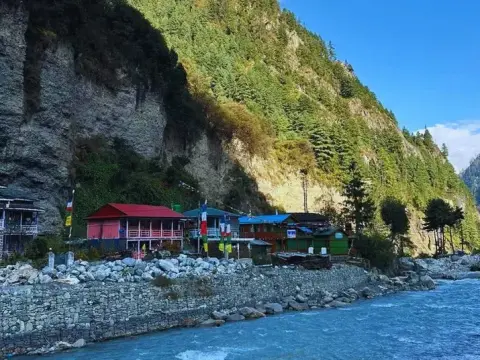
Let us guide you through the must-visit villages on the Annapurna Circuit Trek, where breathtaking Himalayan landscapes meet centuries-old traditions...

The ACT Nepal Trek stands as one of the most iconic high-altitude adventures on Earth, drawing thousands of trekkers annually to Nepal's magnificent A...
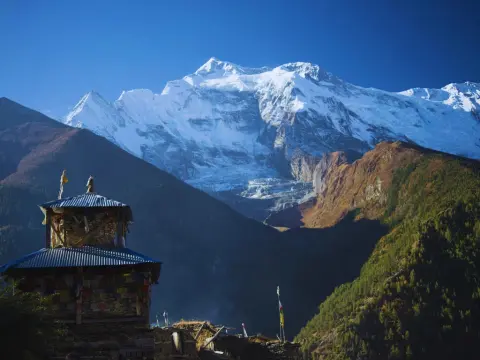
If you've ever scrolled through trekking forums or chatted with someone who's walked through Nepal's mountains, you've probably heard the phrase apple...
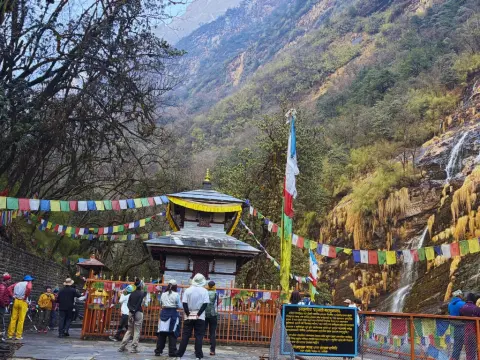
The Annapurna Base Camp trek is celebrated worldwide for its dramatic mountain scenery and diverse landscapes. Yet beyond the towering peaks and rhodo...
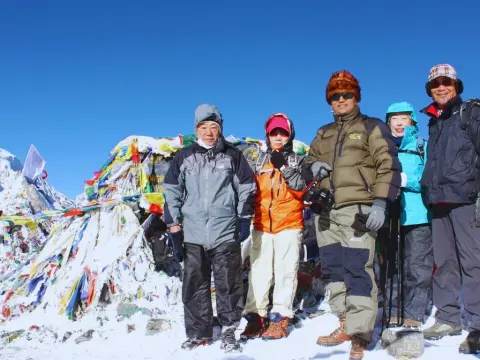
The Annapurna Circuit stands among the world's most celebrated trekking routes, drawing thousands of adventurers each year to experience its dramatic...
Why Every Trekker Asks "Where Is Annapurna Base Camp?"Few places on Earth stir the imagination of mountain lovers quite like Annapurna Base Camp. Nest...
