[{"name":"Langtang Valley Trek \u2014 10 Days","duration":"10","image_url":"https:\/\/www.majestictrailsnepal.com\/storage\/trip-galleries\/1\/thumb_e7907ed736676d12e6ab17328008e746.webp","offer_price":null,"url":"https:\/\/www.majestictrailsnepal.com\/trips\/langtang-valley-trek"},{"name":"Everest Base Camp Trek","duration":"14","image_url":"https:\/\/www.majestictrailsnepal.com\/storage\/trip-galleries\/2\/thumb_4b769c9c4b5b007a61f4ce3b76ff440d.webp","offer_price":null,"url":"https:\/\/www.majestictrailsnepal.com\/trips\/everest-base-camp-trek"},{"name":"Everest Panorama Trek","duration":"9","image_url":"https:\/\/www.majestictrailsnepal.com\/storage\/trip-galleries\/3\/thumb_e6ee74caea3e2900c23ca370b06bab80.webp","offer_price":null,"url":"https:\/\/www.majestictrailsnepal.com\/trips\/everest-panorama-trek"},{"name":"Annapurna Base Camp Trek","duration":"14","image_url":"https:\/\/www.majestictrailsnepal.com\/storage\/trip-galleries\/4\/thumb_3f8d40f9472f701d7c46a827925201bc.webp","offer_price":null,"url":"https:\/\/www.majestictrailsnepal.com\/trips\/annapurna-base-camp-trek"},{"name":"Annapurna Base Camp Express Trek","duration":"9","image_url":"https:\/\/www.majestictrailsnepal.com\/storage\/trip-galleries\/5\/thumb_bac80de2bd257d651fa75d9c8025da1a.webp","offer_price":null,"url":"https:\/\/www.majestictrailsnepal.com\/trips\/annapurna-base-camp-express-trek"},{"name":"Annapurna Circuit Trek","duration":"15","image_url":"https:\/\/www.majestictrailsnepal.com\/storage\/trip-galleries\/6\/thumb_b73bdec74acacaa0d72a2a2a513f3d4a.webp","offer_price":null,"url":"https:\/\/www.majestictrailsnepal.com\/trips\/annapurna-circuit-trek"},{"name":"Ghorepani Poon Hill Trek","duration":"8","image_url":"https:\/\/www.majestictrailsnepal.com\/storage\/trip-galleries\/7\/thumb_aeda9e6388ab2692138cc9c9efa81a7f.webp","offer_price":null,"url":"https:\/\/www.majestictrailsnepal.com\/trips\/ghorepani-poon-hill-trek"},{"name":"Mardi Himal Trek \u2014 9 Days","duration":"9","image_url":"https:\/\/www.majestictrailsnepal.com\/storage\/trip-galleries\/8\/thumb_c511ee87ecab8ff015210dd647392d66.webp","offer_price":null,"url":"https:\/\/www.majestictrailsnepal.com\/trips\/mardi-himal-trek"},{"name":"Manaslu Circuit Trek","duration":"15","image_url":"https:\/\/www.majestictrailsnepal.com\/storage\/trip-galleries\/9\/thumb_7726908390ad6b249f2f6a7856f9dc17.webp","offer_price":null,"url":"https:\/\/www.majestictrailsnepal.com\/trips\/manaslu-circuit-trek"},{"name":"Upper Mustang Trek","duration":"16","image_url":"https:\/\/www.majestictrailsnepal.com\/storage\/trip-galleries\/10\/thumb_6a9b52ecd1d8cda92d594e5351431d6e.webp","offer_price":null,"url":"https:\/\/www.majestictrailsnepal.com\/trips\/upper-mustang-trek"},{"name":"Pokhara City Tour","duration":"1","image_url":"https:\/\/www.majestictrailsnepal.com\/storage\/trip-galleries\/11\/thumb_cf762ba4c20363bd1c0f239db35fcc84.webp","offer_price":null,"url":"https:\/\/www.majestictrailsnepal.com\/trips\/pokhara-city-tour"},{"name":"Paragliding in Pokhara","duration":"1","image_url":"https:\/\/www.majestictrailsnepal.com\/storage\/trip-galleries\/12\/thumb_b896201edf88bbe0f570e876c3c337a3.webp","offer_price":70,"url":"https:\/\/www.majestictrailsnepal.com\/trips\/paragliding-in-pokhara"},{"name":"Kathmandu City Tour","duration":"2","image_url":"https:\/\/www.majestictrailsnepal.com\/storage\/trip-galleries\/13\/thumb_846ad05bd3ce7bebb3843c24c08db6f9.webp","offer_price":null,"url":"https:\/\/www.majestictrailsnepal.com\/trips\/kathmandu-city-tour"},{"name":"Lumbini Buddhist Pilgrimage Tour","duration":"4","image_url":"https:\/\/www.majestictrailsnepal.com\/storage\/trip-galleries\/14\/a2998dca0ce22f28a61c3862dd47f6a3.webp","offer_price":null,"url":"https:\/\/www.majestictrailsnepal.com\/trips\/lumbini-buddhist-pilgrimage-tour"},{"name":"5 days langtang valley trek","duration":"5","image_url":"https:\/\/www.majestictrailsnepal.com\/storage\/trip-galleries\/15\/thumb_7a6c65c139b8085d220ac01913cb1448.webp","offer_price":510,"url":"https:\/\/www.majestictrailsnepal.com\/trips\/5-days-langtang-valley-trek"},{"name":"Leisure Port Nepal Price: Rafting and Camping Adventure","duration":"7","image_url":"https:\/\/www.majestictrailsnepal.com\/storage\/trip-galleries\/17\/thumb_02cb8c3f0697c7c5c4f73d744b47d87f.webp","offer_price":550,"url":"https:\/\/www.majestictrailsnepal.com\/trips\/leisure-port-nepal-price-rafting-and-camping-adventure"},{"name":"10 days spiritual tour in Nepal","duration":"10","image_url":"https:\/\/www.majestictrailsnepal.com\/storage\/trip-galleries\/18\/thumb_b4e7eba000673d1bce6b56abb422fe3b.webp","offer_price":1200,"url":"https:\/\/www.majestictrailsnepal.com\/trips\/10-days-spiritual-tour-in-nepal"},{"name":"Annapurna Circuit Short Trek","duration":"10","image_url":"https:\/\/www.majestictrailsnepal.com\/storage\/trip-galleries\/19\/thumb_769ee8cbe02a510d8db76419c97a2dc9.webp","offer_price":null,"url":"https:\/\/www.majestictrailsnepal.com\/trips\/annapurna-circuit-short-trek"},{"name":"Best Short Manaslu Circuit Trek","duration":"11","image_url":"https:\/\/www.majestictrailsnepal.com\/storage\/trip-galleries\/20\/thumb_ac1b4977a3fce9d11ee68240cad675b6.webp","offer_price":null,"url":"https:\/\/www.majestictrailsnepal.com\/trips\/best-short-manaslu-circuit-trek"},{"name":"Langtang Gosaikunda Trek","duration":"13","image_url":"https:\/\/www.majestictrailsnepal.com\/storage\/trip-galleries\/22\/thumb_577a6402f2ca4b3f12bfd80b96b33a23.webp","offer_price":940,"url":"https:\/\/www.majestictrailsnepal.com\/trips\/langtang-gosaikunda-trek"},{"name":"3 Passes Trek Nepal","duration":"22","image_url":"https:\/\/www.majestictrailsnepal.com\/storage\/trip-galleries\/24\/thumb_8020edea67aefce87e9012dc89a60087.webp","offer_price":null,"url":"https:\/\/www.majestictrailsnepal.com\/trips\/3-passes-trek-nepal"},{"name":"Tsum Valley Trek","duration":"13","image_url":"https:\/\/www.majestictrailsnepal.com\/storage\/trip-galleries\/25\/thumb_194c03e3c3463dff07a3f621a81ef9ea.webp","offer_price":null,"url":"https:\/\/www.majestictrailsnepal.com\/trips\/tsum-valley-trek"},{"name":"Gokyo and Renjo La Pass Trek","duration":"14","image_url":"https:\/\/www.majestictrailsnepal.com\/storage\/trip-galleries\/26\/thumb_7b865f0f0d0d4c6807b625b6e391b56d.webp","offer_price":1490,"url":"https:\/\/www.majestictrailsnepal.com\/trips\/gokyo-and-renjo-la-pass-trek"},{"name":"Honeymoon Tour in Nepal","duration":"9","image_url":"https:\/\/www.majestictrailsnepal.com\/storage\/trip-galleries\/27\/thumb_dabf449c090bb16efd5823c653eb61b3.webp","offer_price":null,"url":"https:\/\/www.majestictrailsnepal.com\/trips\/honeymoon-tour-in-nepal"},{"name":"Pikey Peak Trek","duration":"10","image_url":"https:\/\/www.majestictrailsnepal.com\/storage\/trip-galleries\/28\/thumb_5425e57ce3ea84d31a7b24b83b1af94f.webp","offer_price":1090,"url":"https:\/\/www.majestictrailsnepal.com\/trips\/pikey-peak-trek"},{"name":"Makalu Base Camp Trek","duration":"17","image_url":"https:\/\/www.majestictrailsnepal.com\/storage\/trip-galleries\/29\/thumb_d68c8ec6492540c922045d825a38cd50.webp","offer_price":null,"url":"https:\/\/www.majestictrailsnepal.com\/trips\/makalu-base-camp-trek"},{"name":"Nepal Winter Tour","duration":"8","image_url":"https:\/\/www.majestictrailsnepal.com\/storage\/trip-galleries\/30\/thumb_c8491c0c4b1fb19d8e93630866895799.webp","offer_price":null,"url":"https:\/\/www.majestictrailsnepal.com\/trips\/nepal-winter-tour"},{"name":"Maratika Tour in Nepal","duration":"6","image_url":"https:\/\/www.majestictrailsnepal.com\/storage\/trip-galleries\/31\/thumb_97948560c5a12a486f9ac2b76567cafd.webp","offer_price":null,"url":"https:\/\/www.majestictrailsnepal.com\/trips\/maratika-tour-in-nepal"},{"name":"Nepal Lake Trek","duration":"14","image_url":"https:\/\/www.majestictrailsnepal.com\/storage\/trip-galleries\/32\/thumb_d9b260fe13127816f5b3c25447caf70c.webp","offer_price":null,"url":"https:\/\/www.majestictrailsnepal.com\/trips\/nepal-lake-trek"},{"name":"Taste of Nepal Tour Package","duration":"9","image_url":"https:\/\/www.majestictrailsnepal.com\/storage\/trip-galleries\/33\/thumb_f4b55ab5760a8e057b4c3e208e25ab36.webp","offer_price":null,"url":"https:\/\/www.majestictrailsnepal.com\/trips\/taste-of-nepal-tour-package"},{"name":"Poon Hill Yoga Trek in Nepal","duration":"9","image_url":"https:\/\/www.majestictrailsnepal.com\/storage\/trip-galleries\/34\/thumb_904b238e690107c5c9b1092296880cc9.webp","offer_price":null,"url":"https:\/\/www.majestictrailsnepal.com\/trips\/poon-hill-yoga-trek-in-nepal"},{"name":"Nar Phu Nepal Trek","duration":"10","image_url":"https:\/\/www.majestictrailsnepal.com\/storage\/trip-galleries\/35\/thumb_f959e3e22c260629add0ba61a4038812.webp","offer_price":null,"url":"https:\/\/www.majestictrailsnepal.com\/trips\/nar-phu-nepal-trek"},{"name":"Annapurna Base Camp Helicopter Tour","duration":"1","image_url":"https:\/\/www.majestictrailsnepal.com\/storage\/trip-galleries\/36\/thumb_e81861e8772a9d7fac92ab4a7d43e3bf.webp","offer_price":null,"url":"https:\/\/www.majestictrailsnepal.com\/trips\/annapurna-base-camp-helicopter-tour"},{"name":"Annapurna Circuit with Nar Phu Valley Trek","duration":"16","image_url":"https:\/\/www.majestictrailsnepal.com\/storage\/trip-galleries\/38\/thumb_b70692cbd1c1dd772587c940be2d0bc9.webp","offer_price":null,"url":"https:\/\/www.majestictrailsnepal.com\/trips\/annapurna-circuit-with-nar-phu-valley-trek"}]
Sarangkot is 11 km from Pokhara. At 1,600 metres above sea level, it holds some of the most dramatic Himalayan views on earth — Annapurna, Dhaulagiri, Manaslu, Fishtail — all visible from a single ridge before 6 AM. This guide covers everything: how to get there, when to go, what it costs, and what most guides get wrong.
What Is Sarangkot? Location & Overview
Saragkot is at Pokhara, Nepal
Sarangkot is a hilltop village sitting on the northwestern ridge of Pokhara, now officially Ward 18 of Pokhara Metropolitan City in Kaski District, Nepal. It was merged into the city in 2015, but do not let that fool you — up here, it feels nothing like a city. The rooftops are red-tiled, the mornings are cold and quiet, and on a clear day, the Himalayas fill every inch of the horizon.
The village sits at roughly 1,600 metres above sea level, putting it about 1,000 metres higher than Pokhara's lakeside. That elevation difference is what makes it special: you are high enough to see above the valley haze, close enough to Annapurna to feel the scale of those peaks in your chest.
At just 11 km from Pokhara Lakeside (roughly 30 minutes by taxi), Sarangkot is one of the most accessible high-altitude viewpoints in all of Nepal. You do not need trekking experience, fitness training, or special permits. You just need to show up — ideally before sunrise.
The altitude is high enough to give sweeping panoramic views, but low enough that altitude sickness is not a concern for the vast majority of visitors. If you are hiking up, take your time on the steeper sections — but you are not going to need acclimatisation days here.
Sarangkot Sunrise: The Real Deal
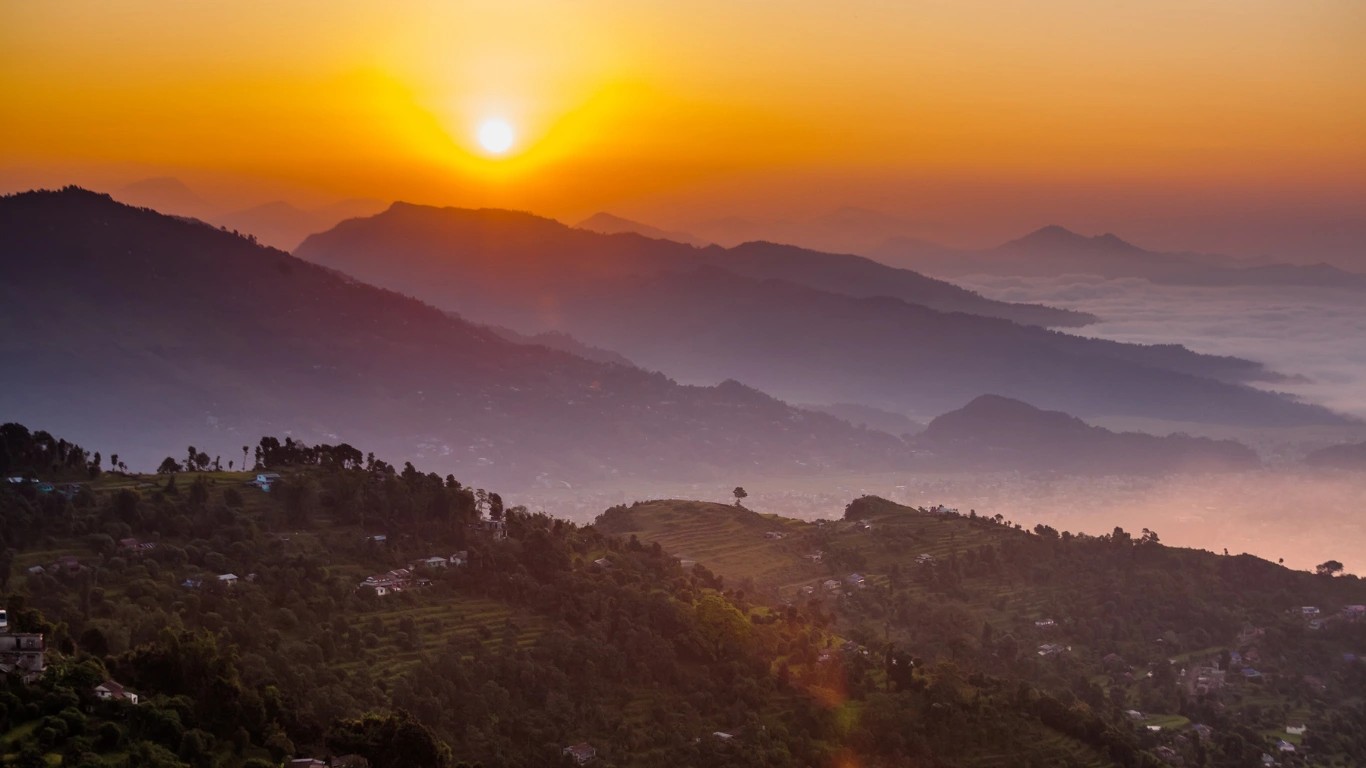
Sunrise from sarangkot
Let us be honest with you: the Sarangkot sunrise is one of the most hyped experiences in Nepal. The good news? The hype is justified. The better news? Most people do it wrong, which means if you do it right, the experience is entirely different.
What Happens at Sunrise
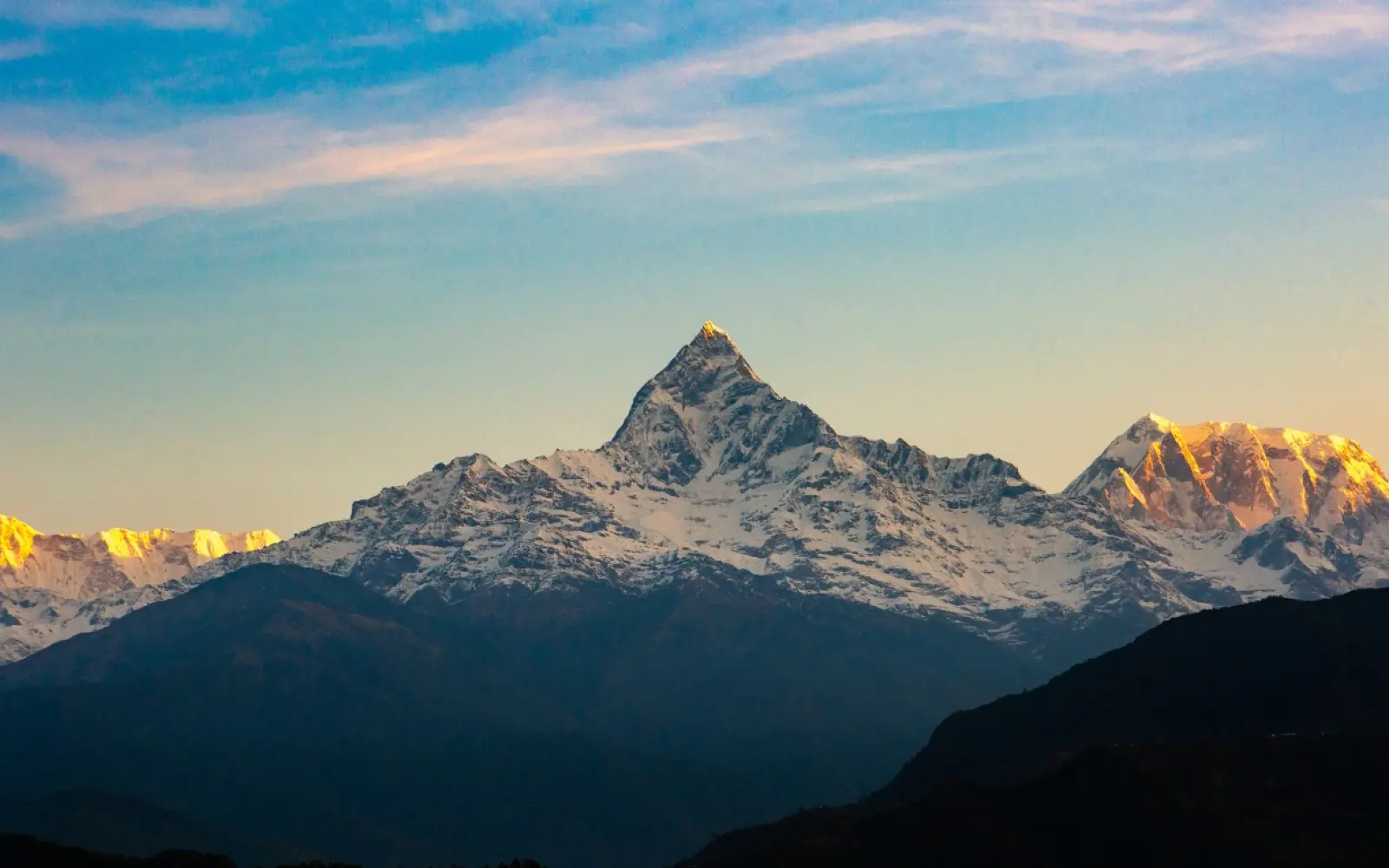
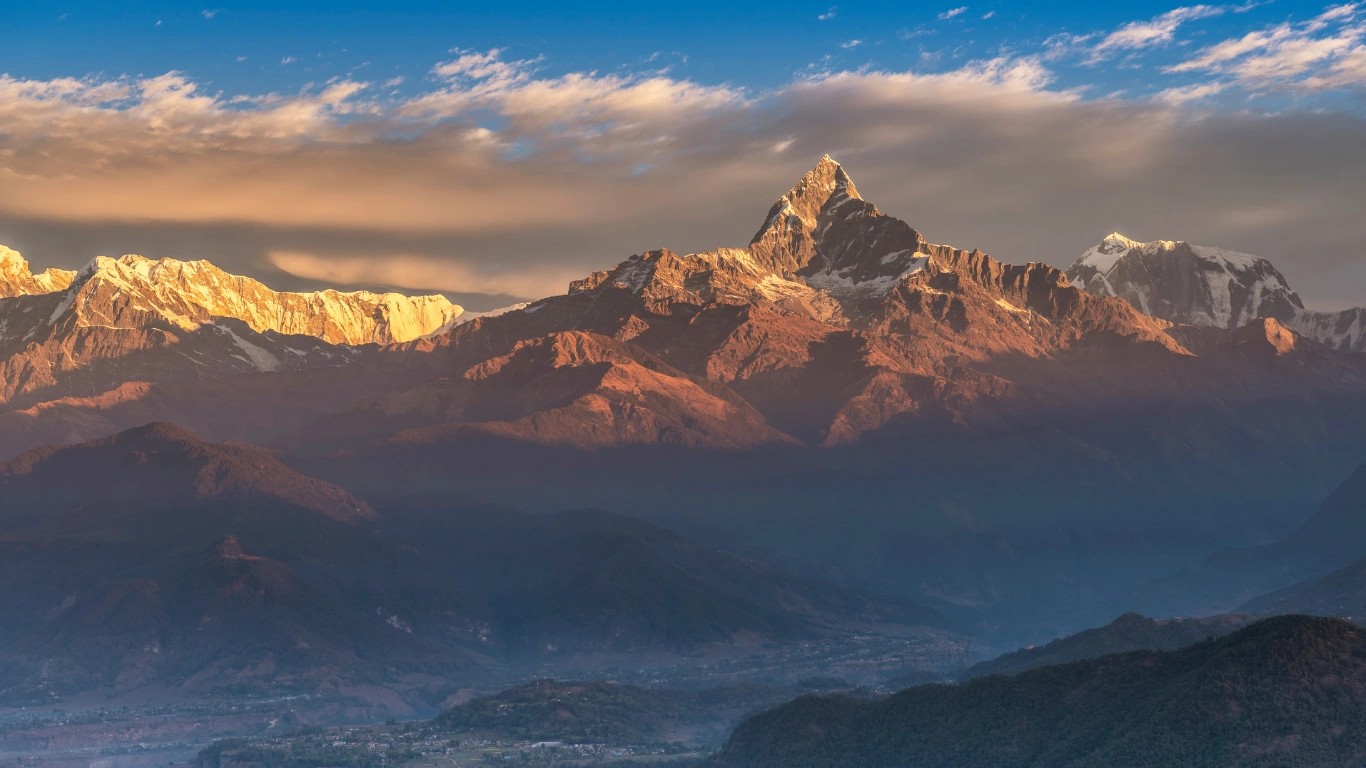
When the conditions are right — and we will explain when they are — the sky behind Machhapuchhre (Fishtail Mountain) begins to bruise orange around 5:30–6:00 AM. Within 20 minutes, the first rays catch the snow fields of Annapurna South and the peak turns from white to pale gold to deep amber. By the time the sun clears the ridge, the entire Annapurna range is lit from the inside.
It is not something you can describe properly. You just have to be there.
Sunrise Timing at Sarangkot by Month
Month
Approximate Sunrise Time
January
6:45 AM
February
6:25 AM
March
6:00 AM
April
5:35 AM
May
5:15 AM
June
5:05 AM
July
5:10 AM
August
5:20 AM
September
5:40 AM
October
6:00 AM
November
6:20 AM
December
6:45 AM
Our recommendation: Leave Pokhara Lakeside at least 1 hour before sunrise. Aim to reach the viewpoint 30–45 minutes early so you can find a good spot and let your eyes adjust to the dark.
The View Tower vs. The Upper Viewpoint
Most people get dropped at the parking area below the Sarangkot View Tower. From there it is a 10–15 minute walk up a staircase to the main tower. However, locals know there is a second, slightly higher viewpoint off to the left — less crowded, better angle for photographing the sunrise over the full range. Ask your guide or driver to point it out.
Sunrise Tips from Our Team
Check the stars the night before. If you can see stars clearly at 10 PM, the next morning will likely be clear. Clouds overnight are a bad sign.
Do not rely on the cable car for sunrise timing. Cable car pick-up can be unpredictable. A private taxi or our guided sunrise tour gives you more control.
October is the gold standard for clear views. September-November is reliably the clearest period overall.
Bring layers. At 1,600 metres at 5 AM, it is cold. Even in April. Especially in winter.
Get there early. The best spots fill up fast in peak season. At 5:30 AM in October, the viewpoint already has a crowd.
📍 Book a Sarangkot Sunrise Tour with Majestic Trails Nepal — includes private transport, local guide, and guaranteed early access. [Contact us here →]
Mountains Visible from Sarangkot
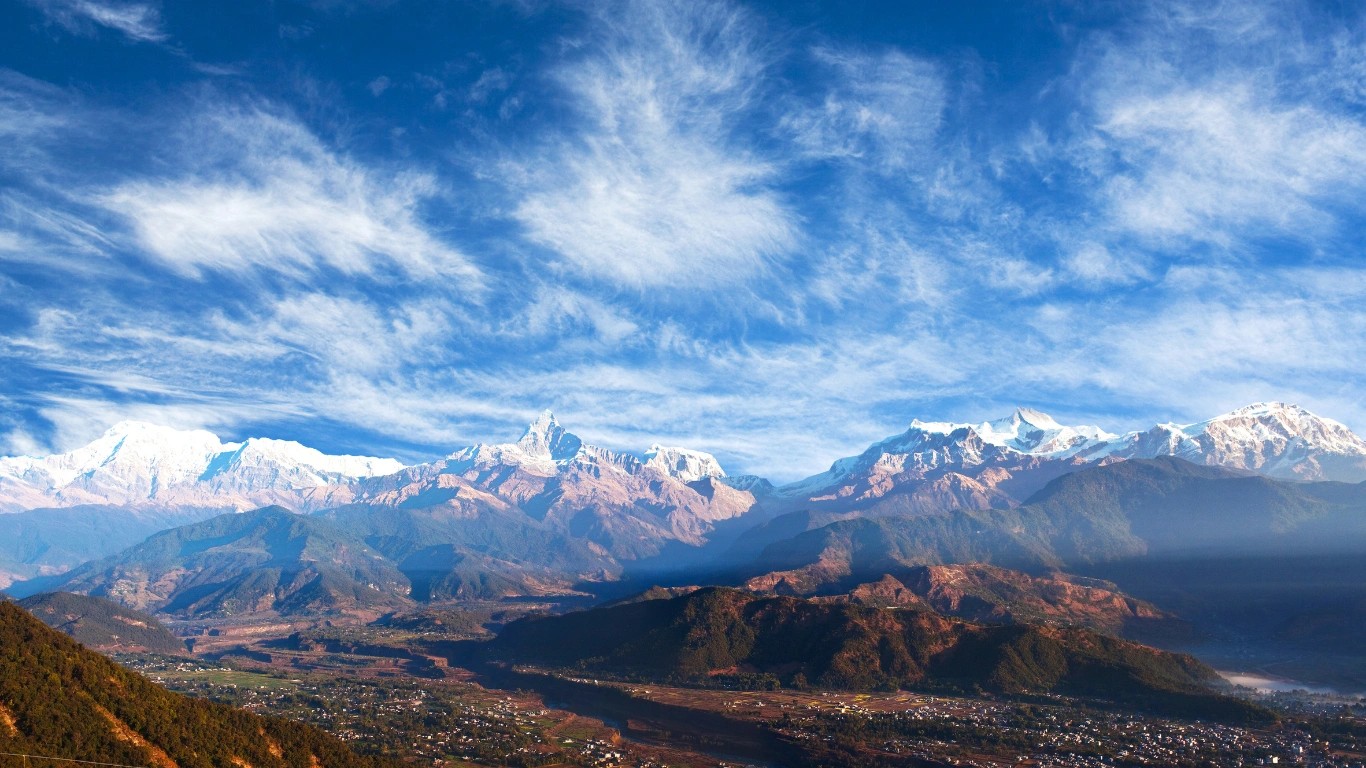
Full mountain view from sarangkot
One of the biggest questions we get:
Can you see Everest from Sarangkot?
No. Everest is too far east and blocked by intervening ridges.
But here is the thing — what you can see from Sarangkot is arguably more dramatic than Everest. You are looking at a wall of giants stretching from west to east, including three peaks that top 8,000 metres.
Mountain
Altitude
Notes
Dhaulagiri I
8,167 m
7th highest in the world; visible to the far west
Annapurna I
8,091 m
10th highest; iconic in the centre-west of the range
Annapurna II
7,937 m
Prominent tent-like shape
Annapurna III
7,555 m
Part of the Annapurna massif
Annapurna IV
7,525 m
Often seen alongside Annapurna III
Annapurna South
7,219 m
The first to catch morning light
Machhapuchhre (Fishtail)
6,993 m
The iconic "fishtail" — unclimbed and sacred
Lamjung Himal
6,983 m
Eastern anchor of the panorama
Manaslu
8,163 m
8th highest in the world; visible to the northeast
On a perfect morning, you can trace peaks across nearly 200 km of the Himalayas from a single viewpoint. This is what makes Sarangkot exceptional — it is not just one peak, it is an entire dynasty.
Things to Do in Sarangkot
Sarangkot is far more than a single sunrise stop. Here is everything worth doing:
Sunrise & Sunset Viewing
The two anchor experiences. Sunrise is the more popular of the two, but sunset — when the mountains turn pink and then purple as the light fades — is deeply underrated and far less crowded.
Paragliding (covered in detail below)
Sarangkot is one of the world's top-rated paragliding launch sites. The flight from Sarangkot toward Phewa Lake gives you a 20–40 minute aerial tour of Pokhara Valley from above.
Sarangkot View Tower
The primary viewpoint structure at the top. Open from 5:00 AM to 8:00 PM. No entry fee for the viewing area itself, though some nearby cafes and viewing platforms charge a small fee for access.
Zip-Lining
One of the world's steepest and longest zip lines operates near Sarangkot — a 1.8 km line with a 600-metre drop, reaching speeds up to 120 km/h over forests and valleys. Not for the faint-hearted. Thrilling for everyone else.
Bungee Jumping
About 15 minutes from Sarangkot viewpoint, there is a 70-metre bungee jump with views of cliffs, the lake, and valleys below. Pokhara's bungee scene is well-established and safety-regulated.
Hiking & Trekking Trails
Several trails lead to and from Sarangkot, ranging from 1.5 hours to a full day. The classic Sarangkot to World Peace Pagoda day hike is one of our favourite routes — combining mountain views with a descent to Phewa Lake.
Bird Watching
The forests around Sarangkot are home to over 200 bird species including Himalayan Griffon Vultures, eagles, and a variety of Himalayan songbirds. Early morning, before the paragliders launch, is the best time.
Village Exploration
Sarangkot's village life is authentic and still relatively untouched by mass tourism. Walk 10 minutes off the main viewpoint road and you will find traditional Nepali homes, local tea shops, and a pace of life very different from Lakeside Pokhara below.
Paragliding in Sarangkot, Pokhara
If you are going to do one adventure activity in Pokhara, make it this one.
Sarangkot is considered one of the best paragliding launch sites in the world — and that is not marketing copy, that is a fact backed by the international paragliding community. The combination of altitude, steady thermals, the stunning Annapurna backdrop, and the landing zone near Phewa Lake makes this a genuinely world-class setup.
How It Works
Your operator picks you up from your hotel in Lakeside, Pokhara
A 30–45 minute drive up to Sarangkot (1,592 m launch altitude)
A safety briefing from your certified pilot (no experience required — this is tandem)
Take-off from the Sarangkot hill station
20–40 minute flight over Pokhara Valley with views of Phewa Lake, the Annapurna range, and the city below
Smooth landing near the Pame area (near the lake)
Transport back to Lakeside
The entire experience from hotel pickup to hotel drop-off takes about 2.5–3 hours.
Sarangkot Paragliding Prices (2026)
Flight Type
Duration
Price (NPR)
Price (USD approx.)
Standard Tandem Flight
20–30 min
NPR 8,500–10,000
USD 60–75
Extended Tandem Flight
40 min
NPR 10,000–13,000
USD 75–95
Cross-Country Flight
45–60 min
NPR 13,000+
USD 95+
Acrobatic Add-On
Additional
NPR 2,000–3,000 extra
USD 15–22
Note: Prices are the same for Nepali, Indian, SAARC, and foreign nationals as per Nepal Airsports Association (NAA) regulation. Photos and GoPro video (70–80 photos + video) are typically included.
What's Included
Hotel pickup and drop-off from Lakeside
Transport to Sarangkot launch site
Certified tandem pilot (APPI-licensed, CAAN-approved)
All paragliding equipment
GoPro photos and video
Insurance
Government taxes
Best Time to Paraglide in Sarangkot
Best months: March, April, May, September, October, November
Best time of day: 10:00 AM–1:00 PM (thermals are strongest mid-morning; early morning flights tend to be shorter as the ground hasn't warmed yet)
Avoid: Monsoon season (mid-June to mid-September) — flights are cancelled when visibility is poor
Is Paragliding in Sarangkot Safe?
Yes — with proper operators. In peak season, over 250–300 tandem flights take off from Sarangkot daily. All commercial pilots must hold an APPI tandem certification and be licensed by the Civil Aviation Authority of Nepal (CAAN). There has been no recorded tandem paragliding accident in Pokhara when flying with a licensed operator.
What to look for in an operator:
CAAN-licensed pilots
Insurance included in the price
Clear cancellation policy
Transparent pricing (no hidden fees)
📍 Book Paragliding through Majestic Trails Nepal — we work with trusted, licensed operators and can bundle this with your Sarangkot sunrise visit or Pokhara sightseeing day. [Get in touch →]
How to Get to Sarangkot from Pokhara
Sarangkot is 10–11 km from Pokhara Lakeside. The road is well-maintained and paved most of the way. Here are all your options:
Transport Comparison Table
Transport
Distance
Duration
Cost (NPR)
Best For
Private Taxi
11 km
25–35 min
1,000–1,500 (round trip)
Sunrise trips, comfort, flexibility
App Taxi (InDrive/Pathao)
11 km
25–35 min
800–1,000
Budget-conscious solo travellers
Motorbike Taxi (app)
11 km
20–30 min
~300
Solo travellers, quick access
Local Bus
11 km
~60 min
~100
Budget travel, not for sunrise
Annapurna Cable Car
2.2 km (cable section)
10 min (cable)
700 (Nepali) / 1,000 (SAARC) / USD 12 (foreign)
Scenic, convenient daytime visit
Hiking
~5 km trail
1.5–3 hours
Free
Adventure, fitness, morning hikers
By Private Taxi (Recommended for Sunrise)
This is what we recommend for anyone visiting for the sunrise. Book your taxi the evening before — most hotels can arrange this. A standard private taxi round trip from Lakeside to Sarangkot costs NPR 1,000–1,500. Ask the driver to take you to the upper car park (not the lower one) to minimise your walking distance to the viewpoint.
By Annapurna Cable Car
Opened in 2022, this cable car operates from Sedibagar station (a free shuttle connects Lakeside to Sedibagar in the mornings). The cable car covers 2.2 km in about 10 minutes and starts at 5:00 AM — early enough for sunrise. Cable car operating hours: 5:00 AM to 5:30 PM.
Cable car ticket prices (two-way):
Nepali citizens: NPR 700
SAARC nationals: NPR 1,000
Foreign nationals: USD 12 (payable in NPR)
One caveat from our experience: the free shuttle timing and the cable car queue during peak hours can make this less reliable for sunrise. If catching the exact golden light matters to you, take a private taxi.
By Local Bus
Local buses run from Baglung Bus Park in central Pokhara to Sarangkot for around NPR 100. The journey takes about an hour. Buses operate roughly every 40–60 minutes from 9:00 AM onwards — which means this option does not work for sunrise visits, but is fine for an afternoon or evening visit.
By Hiking
See the full hiking section below. For those who want to combine the hike with a sunrise, depart from Lakeside no later than 3:30–4:00 AM for a sunrise arrival.
Hiking to Sarangkot from Pokhara
The hike to Sarangkot is one of the most rewarding short walks in Nepal. It is not a technical trail — no ropes, no permits, no guide required — but it is steep in sections and best done with good footwear.
Main Hiking Routes
Route 1: From Sedi Bagar / Baglung Highway (Most Common)
Starting point: Pokhara-Baglung Highway at Miruwa/Sedi Bagar
Duration: 1.5–2 hours to the viewpoint
Difficulty: Moderate (steep in sections)
Trail type: Paved and dirt mixed
Route 2: From Phewa Lake / Phedi
Starting point: Near the lakeside, below the Sarangkot ridge
Duration: 3–5 hours
Difficulty: Moderate to challenging
Trail type: Forest trail, more scenic, more solitary
Route 3: Sarangkot to World Peace Pagoda (Day Hike)
This is a full-day trail from Sarangkot descending toward the World Peace Pagoda and ending at Phewa Lake
Duration: 5–7 hours total
Difficulty: Moderate
Best done with a guide — highly recommended by our team
Hiking Tips
Wear trail shoes or sturdy sneakers — flip-flops will betray you on the steep sections
Carry at least 1.5 litres of water; there are some tea shops along the main route but not on the forest trails
Start before dawn if you want to hike to the sunrise — most hikers depart Lakeside by 3:30–4:00 AM
A headlamp is essential for the pre-dawn hike
The descent takes roughly half the time of the ascent
📍 Join Our Guided Sarangkot to World Peace Pagoda Day Hike — one of our most popular local excursions. [Enquire now →]
Best Time to Visit Sarangkot
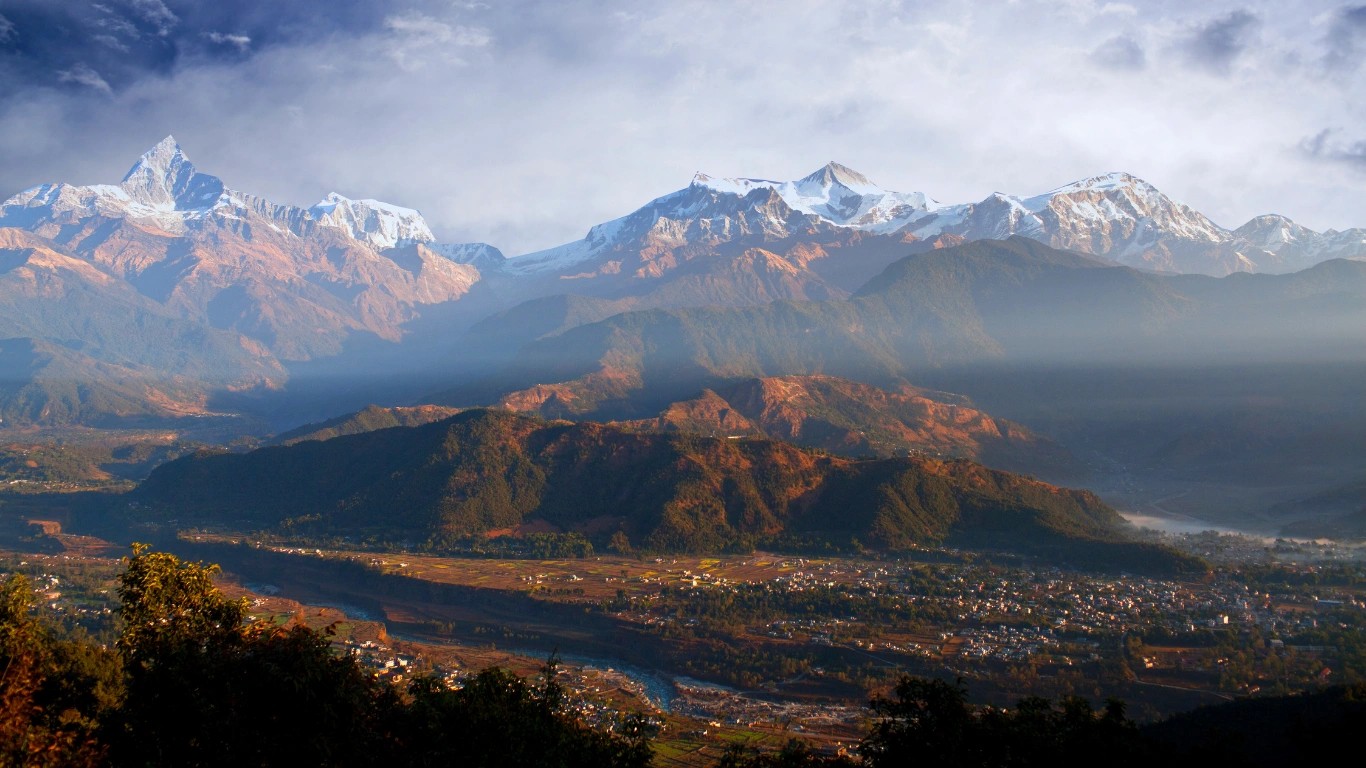
Right time to visit sarangkot
This is probably the most important section of this guide. Many travellers show up at the wrong time, get clouded out, and leave disappointed. We want to make sure that is not you.
Season-by-Season Breakdown
Season
Months
Mountain Views
Crowds
Our Verdict
Autumn (Best)
Sep–Nov
Excellent
High
Peak season for a reason — clear skies, crisp air, post-monsoon freshness
Spring (Good)
Mar–May
Good (hazy afternoons)
Medium-High
Great for paragliding; mornings clear, afternoons can get hazy
Winter (Underrated)
Dec–Feb
Very good on clear days
Low
Cold but often crystal clear; snow on peaks looks stunning
Monsoon (Avoid for views)
Jun–Aug
Poor
Low
Heavy clouds and rain; views nearly impossible; paragliding mostly suspended
The Honest Truth About Weather
Even in October — the best month — you can have cloudy mornings. Weather in the Himalayas is unpredictable. Here are three things that actually help:
Check stars the night before (clear stars = clear sunrise)
Go early in the season — October and early November tend to be clearer than late November
Stay one extra day — if your first sunrise attempt is clouded, you have a second shot
Hotels in Sarangkot Pokhara
Sarangkot has a growing accommodation scene. Staying overnight here — as opposed to doing a day trip from Pokhara — is something we genuinely recommend for the full experience: a quiet evening with mountain silhouettes, followed by sunrise from literally outside your room door.
One of the well-known mid-range properties on the ridge
Famous for its mountain views from the balcony
Popular with sunrise-seekers who want a proper room
Luxury Options: NPR 5,000+/night
A handful of boutique resorts and lodges with premium mountain views, proper restaurant facilities, and guided services
The number of quality properties here has grown significantly since 2022
Should You Stay Overnight?
Yes — if you can spare one night. Here is why: after the sunrise crowd leaves by 8 AM, Sarangkot becomes completely different. The village goes quiet. The mountains stay. You can walk the ridgeline, have tea at a local shop with no-one around, and watch the afternoon light change on the peaks. The following morning, you already know exactly where to stand.
What to Eat in Sarangkot
Food options at Sarangkot have improved considerably in recent years. You will not find the full Lakeside restaurant variety up here, and that is actually a good thing.
What to Order
Dal Bhat — the definitive Nepali meal (lentil soup, rice, vegetables, pickle); order it anywhere on the hill and you will not regret it
Momos — steamed or fried dumplings; available at most teahouses
Thukpa — Tibetan noodle soup; perfect for cold mornings
Dhido — traditional buckwheat porridge; a Nepali staple and genuinely delicious
Masala Tea / Black Tea — there are small tea stalls right at the viewpoint steps; a cup of hot tea in the cold pre-dawn air is a Sarangkot tradition
Note: For the sunrise rush, many small stalls and cafés around the viewpoint steps open as early as 4:30–5:00 AM. Coffee, tea, instant noodles, and snacks are available. Do not expect a full restaurant experience at that hour.
Day Trip vs. Overnight Stay
Factor
Day Trip
Overnight Stay
Cost
Lower
Higher (add hotel cost)
Experience
Good
Much richer
Sunrise stress
Higher (timing pressure)
Lower (you're already there)
Evening views
Missed
Included
Village atmosphere
Glimpse
Full immersion
Best for
Tight schedules
Anyone with an extra night
Our recommendation: If you are spending 3+ days in Pokhara, stay one night at Sarangkot. If you have only 1–2 days in Pokhara, a guided sunrise day trip is the right call.
Nearby Attractions
Sarangkot does not exist in isolation. Pair it with these nearby attractions for a fuller Pokhara experience:
Phewa Lake (Fewa Tal) — 2 km from the base of Sarangkot; Nepal's second-largest lake, serene and beautiful; the paragliding landing zone is nearby
World Peace Pagoda — a stunning Japanese Buddhist stupa on a ridge above the lake; excellent day hike destination from Sarangkot
Tal Barahi Temple — island temple on Phewa Lake; reachable by rowboat
Bindhya Basini Temple — hilltop temple in Pokhara dedicated to Goddess Bhagwati; 30 min from Lakeside
International Mountain Museum — excellent introduction to Himalayan climbing history; 3 halls covering mountain cultures, world peaks, and mountaineering
Devi's Fall — a mysterious waterfall where a stream disappears underground; 2.6 km from Lakeside
Mahendra Cave — stalactite cave with zigzag passages; good for families
Local Tips from Our Guides
These are things we tell every traveller who books a Sarangkot experience with us. You will not find these in most travel guides.
The upper staircase viewpoint is better than the tower. Ask to be shown the secondary viewpoint to the left of the main stairs. Fewer people, cleaner angle for photography.
Avoid March for the clearest views. Spring is beautiful, but wildfires and controlled burning in the valley can severely reduce visibility in March–April. October is the safest bet.
Do not rely on sunrise photos from Instagram. Many of those are taken on the rare perfect morning in peak season. Set realistic expectations and let yourself be surprised.
The teahouse locals know things. The aunty running the tea stall at the bottom of the steps at 5 AM has been watching those mountains for decades. Ask her about the day's weather and she will usually give you a straight answer.
If it is cloudy at sunrise, wait. Sometimes clouds break 30–45 minutes after sunrise and the mountains appear. Do not leave immediately.
Sunrise is not the only time. An hour before sunset, the mountains turn golden from the west. Fewer tourists, same magic.
Cable car queues during peak October can be 45–60 minutes on popular mornings. Factor this into your timing if you choose that route.
Frequently Asked Questions
What is Sarangkot famous for?
Sarangkot is famous for two things: its panoramic sunrise views over the Annapurna, Dhaulagiri, and Manaslu ranges, and its status as one of the world's top paragliding launch sites. It is Pokhara's most-visited day trip destination.
What is the height of Sarangkot, Pokhara?
Sarangkot sits at approximately 1,592–1,600 metres (5,220–5,250 feet) above sea level. The distance from Pokhara Lakeside (742 m) represents an elevation gain of around 850 metres.
Can you see Everest from Sarangkot?
No. Everest is located too far to the east and is blocked by intervening ridges. From Sarangkot, you can see Dhaulagiri, the Annapurna range (including Annapurna I, II, III, and South), Machhapuchhre (Fishtail), Manaslu, and Lamjung Himal. Three of these are among the world's ten highest peaks.
How do I get from Pokhara to Sarangkot?
The most popular options are private taxi (NPR 1,000–1,500 round trip, 30 min), the Annapurna Cable Car (USD 12 return for foreigners, 10 min cable ride), local bus (NPR 100, 1 hour), or hiking (1.5–3 hours depending on route). For sunrise visits, private taxi is the most reliable.
How far is Sarangkot from Pokhara?
Sarangkot is approximately 10–11 km from Pokhara Lakeside by road.
Is it worth staying overnight in Sarangkot?
Yes, we strongly recommend it if you have the time. Staying overnight means you can enjoy the quiet village evenings, watch the sunset, wake up without the time pressure of a pre-dawn taxi ride, and catch the sunrise from your doorstep. The experience is qualitatively different from a rushed day trip.
How much does paragliding cost in Sarangkot, Pokhara?
A standard 20–30 minute tandem paragliding flight costs approximately NPR 8,500–10,000 (USD 60–75) in 2026. Extended and cross-country flights cost more. The price is regulated by the Nepal Airsports Association and is the same for all nationalities.
What is the best time to visit Sarangkot for the sunrise?
October to November offers the most reliably clear skies. Spring (March–May) is also good but can be affected by valley haze. Avoid monsoon (June–mid-September) for mountain views. Whatever time of year you visit, always check for clear skies the night before.
Is it possible to do Sarangkot as a day trip from Pokhara?
Absolutely. Most visitors do Sarangkot as an early morning day trip. Leave Pokhara Lakeside at 4:30–5:00 AM, arrive for sunrise, spend 2–3 hours at the viewpoint, and return by 8–9 AM. If you add paragliding, plan to return by noon.
Do I need a guide for Sarangkot?
Not strictly required for the viewpoint itself. However, for hiking trails, the Sarangkot to World Peace Pagoda route, or a full Pokhara sightseeing day, a local guide significantly enriches the experience. Our guides know which viewpoint spots have the best angles, the best local tea stalls, and the weather patterns that most travel guides miss.
Plan Your Sarangkot Experience with Majestic Trails Nepal
We are a Nepal-based trekking and tour operator running Sarangkot sunrise tours, paragliding packages, Pokhara day trips, and multi-day treks that start or finish in Pokhara. We are not an aggregator or a booking platform — we are the people who actually take you there.
What we offer for Sarangkot:
Sarangkot Sunrise Tour (private transport + local guide)
Sarangkot + Paragliding Combo Package
Full-Day Pokhara Sightseeing with Sarangkot Sunrise
Sarangkot to World Peace Pagoda Guided Day Hike
Overnight Sarangkot Packages (hotel + sunrise + guided village walk)