
Swayambhunath Height, Location, and History: Monkey Temple Guide
7 Feb 2026
People visiting Kathmandu almost always ask the same two questions about Swayambhunath: how high is it, and where exactly is it? Seems simple. But the...


Nepal punches way above its weight when it comes to UNESCO recognition. For a small, landlocked country wedged between two giants, it holds ten UNESCO World Heritage Sites, which is a number that even experienced travelers find surprising. Eight are cultural sites, each layered with centuries of religious art, royal history, and Newari craftsmanship. Two are natural sites that protect some of the most extraordinary ecosystems on the planet.
Whether you are planning a heritage walking tour through Kathmandu Valley, a pilgrimage to Lumbini, or a trek into Sagarmatha National Park, understanding these sites before you visit makes the experience far richer. This guide covers all ten UNESCO World Heritage Sites of Nepal with updated 2026 entry fees, highlights, and practical travel tips.
Nepal currently has 10 UNESCO World Heritage Sites. Of these, 8 are cultural heritage sites and 2 are natural heritage sites. Seven of the cultural sites fall within the Kathmandu Valley UNESCO World Heritage inscription of 1979, while Lumbini was inscribed in 1997. The two natural sites, Sagarmatha National Park and Chitwan National Park, were inscribed in 1979 and 1984, respectively.
| Site | Year of UNESCO Inscription | Entry Fee for Foreigners |
|---|---|---|
| Kathmandu Durbar Square | 1979 | NPR 1,000 / USD 8 |
| Bhaktapur Durbar Square | 1979 | NPR 1,500 / USD 12 |
| Patan Durbar Square | 1979 | NPR 1,000 / USD 8 |
| Changu Narayan Temple | 1979 | NPR 300 / USD 3 |
| Swayambhunath | 1979 | NPR 200 / USD 2 |
| Boudhanath | 1979 | NPR 400 / USD 4 |
| Pashupatinath Temple | 1979 | NPR 1,000 / USD 8 |
| Lumbini | 1997 | NPR 200 / USD 2 |
| Chitwan National Park | 1984 | NPR 2,000 / USD 16 |
| Sagarmatha National Park | 1979 | NPR 4,000 / USD 32 |
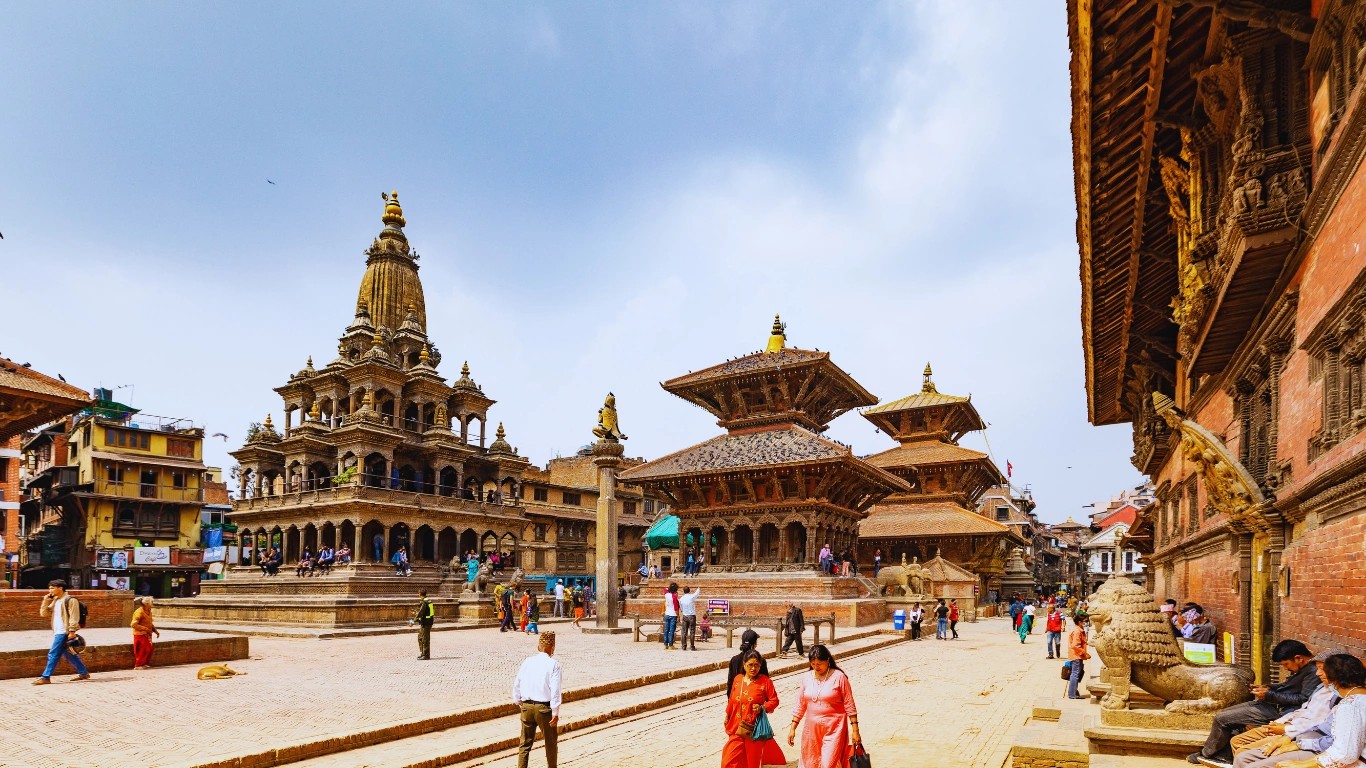
Also known as Hanuman Dhoka or Basantapur Durbar Square, this ancient royal complex sits right at the historical heart of Kathmandu. The word "durbar" simply means palace, and this one delivers on that promise many times over. Rows of pagodas, stone shrines, and intricately carved courtyards stretch in every direction. It was once the seat of Nepal's Shah dynasty rulers, and even today it remains the home of the Kumari, Kathmandu's revered living goddess.
When you are here, make sure to stop at Kumari Ghar, Taleju Temple, Maru Tole, and the Hanuman Dhoka Palace Museum. The woodwork alone, all of it crafted by Newari artisans, is worth hours of quiet observation. After the 2015 earthquake caused significant damage to several structures, restoration work backed by international agencies has been ongoing, and the square has largely been brought back to its pre-quake character.
| Visitor Category | Fee |
|---|---|
| SAARC nationals | NPR 150 |
| International tourists | NPR 1,000 |
The square is roughly a 20-minute walk from Thamel through Chetrapati and Ason, passing some of the city's most lively bazaar streets. If you prefer, grab a taxi directly from your hotel and you will be there in under ten minutes. As per 2026, you can download apps like Yango, inDrive, or Pathao, which work similarly to Uber and are widely used in Nepal for booking rides and taxis.
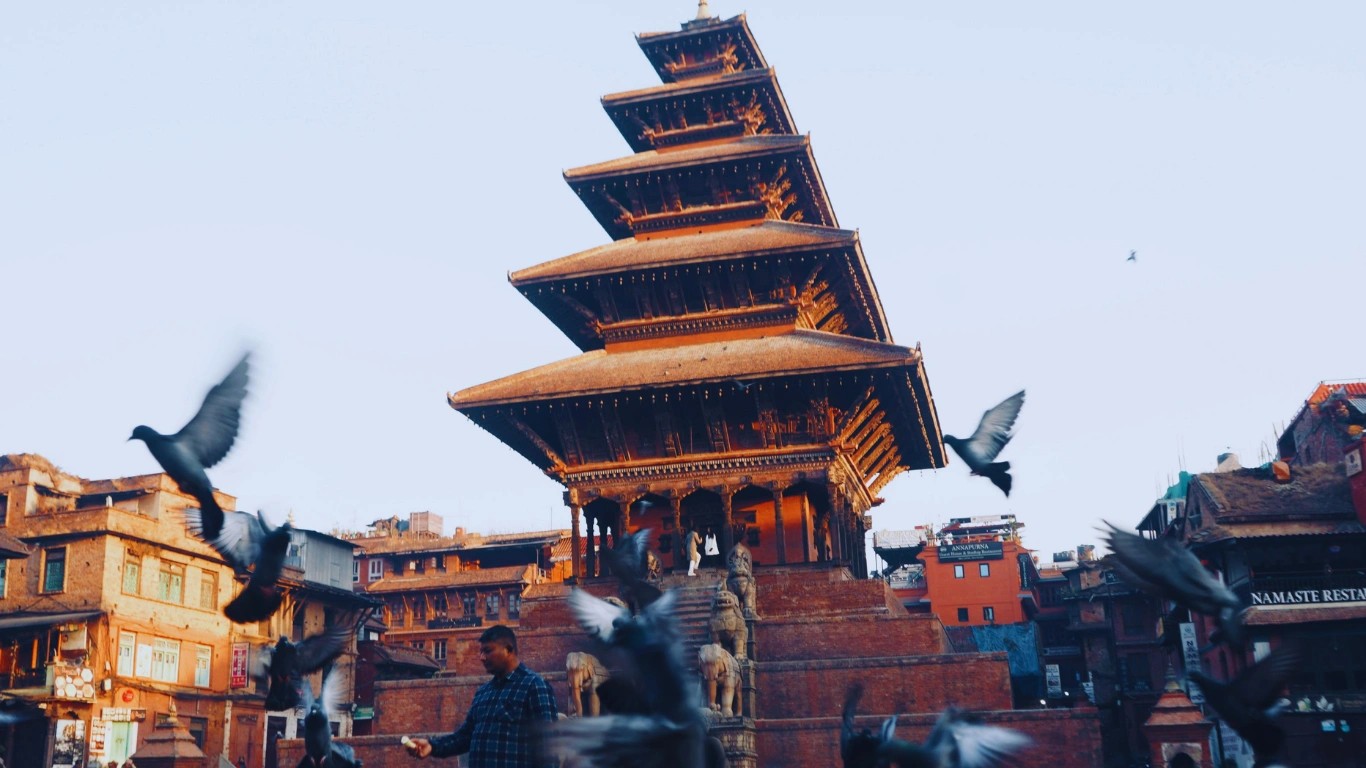
Bhaktapur is the smallest of the three historic cities in Kathmandu Valley and, in many ways, the one that feels most preserved. The town has maintained its traditional Newari character with remarkable stubbornness, which makes walking its alleys feel genuinely different from the busier parts of Kathmandu. The durbar square spreads across a series of interconnected courtyards, each flanked by temples in pagoda and shikhara architectural styles.
Do not skip Pottery Square, where local artisans still shape clay pots by hand the way their ancestors did. The 55 Windows Palace is one of the finest examples of decorative woodwork in all of Nepal. Nyatapola Temple, a five-tiered structure that stood firm through the 2015 earthquake, was historically the tallest building in the valley.
| Visitor Category | Fee |
|---|---|
| SAARC nationals and Chinese citizens | NPR 500 |
| International tourists | NPR 1,500 |
Taxis from Thamel to Bhaktapur take around 45 minutes. Local buses run frequently from Naya Bus Park and Ratna Park. Once you arrive in Bhaktapur, the durbar square is a short 10-15 minute walk from the main bus stop.
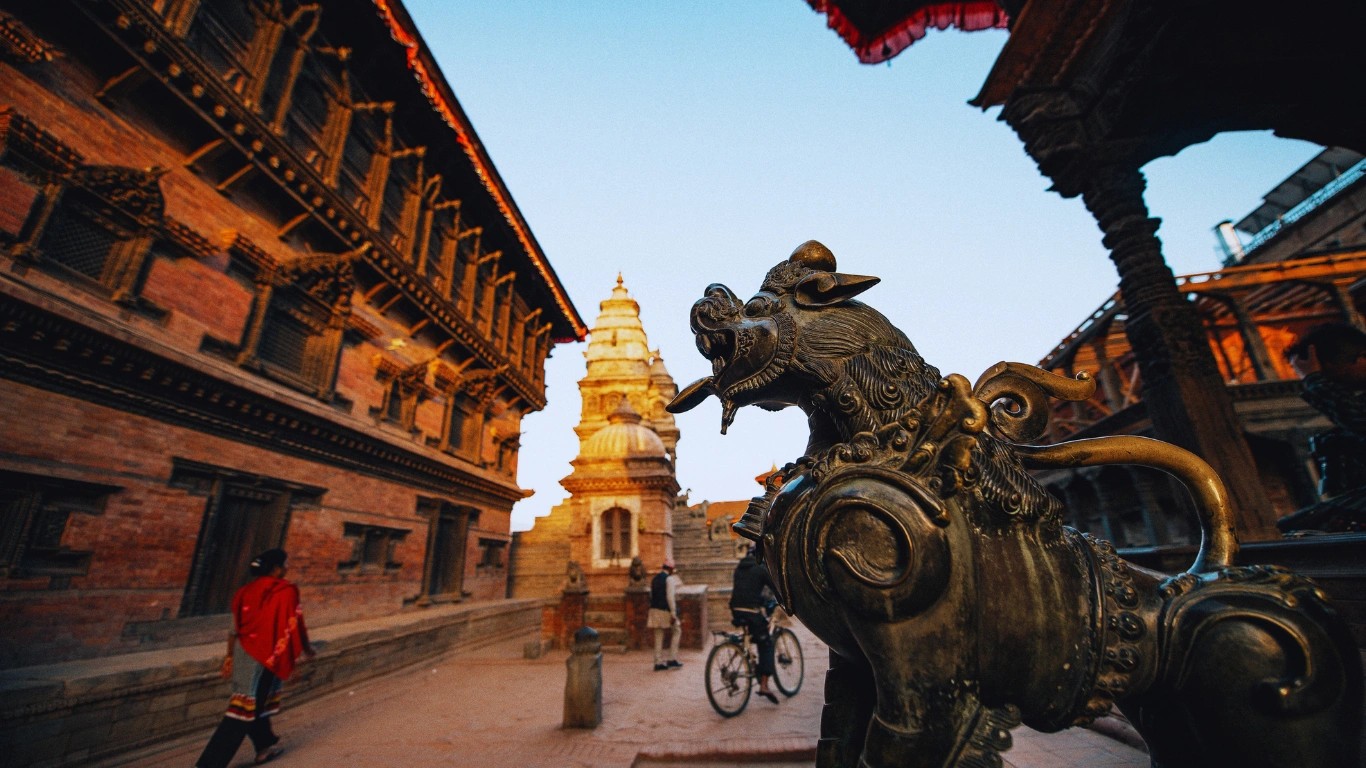
Patan, now part of greater Kathmandu but historically a separate kingdom, holds what many architectural historians consider the most concentrated display of Newari temple craft in existence. The Durbar Square was declared a UNESCO World Heritage Site in 1979, and the designation has helped protect structures that were already centuries old by then.
The temple construction here accelerated dramatically between the 14th and 18th centuries during the Malla period, when rival kings competed to outdo each other with religious monuments. The Krishna Mandir, built entirely of stone in a shikhara style, and the Hiranya Varna Mahavihara (Golden Temple) are both architectural standouts. The Patan Museum, housed inside the old royal palace, has one of the most thoughtfully curated collections of Newar art and religious artifacts in South Asia.
| Visitor Category | Fee |
|---|---|
| SAARC nationals | NPR 250 |
| International tourists | NPR 1,000 |
From Thamel, the drive to Patan Durbar Square takes roughly 20 minutes by taxi in light traffic. Public buses and tuk-tuks are available from Ratna Park and Sundhara Junction.
Changu Narayan is often overlooked in favor of the better-known Kathmandu Valley sites, which is honestly a mistake. This hilltop temple complex is considered one of the oldest surviving temples in Nepal, with roots tracing back to the Licchavi period, around the 4th century AD. Dedicated to Lord Vishnu, it holds the oldest stone inscription discovered in Nepal, dating to around 464 AD, which makes it a primary source for early Nepali history.
The courtyard is scattered with stone and wooden sculptures representing all the avatars of Vishnu, many of them so old and detailed that they are individually cataloged by archaeologists. The setting adds to the experience. The temple sits on a forested hilltop above the Bhaktapur Valley, and the approach through quiet woods feels noticeably different from the busier Kathmandu sites.
| Visitor Category | Fee |
|---|---|
| SAARC nationals | NPR 100 |
| International tourists | NPR 300 |
Direct buses from Kathmandu do not serve Changu Narayan. The most practical route is to reach Bhaktapur first by taxi or public bus from Old Bus Park or Ratna Park, then take a local bus or hire transportation from Bhaktapur. The site is also a popular half-day hiking destination from Bhaktapur town.
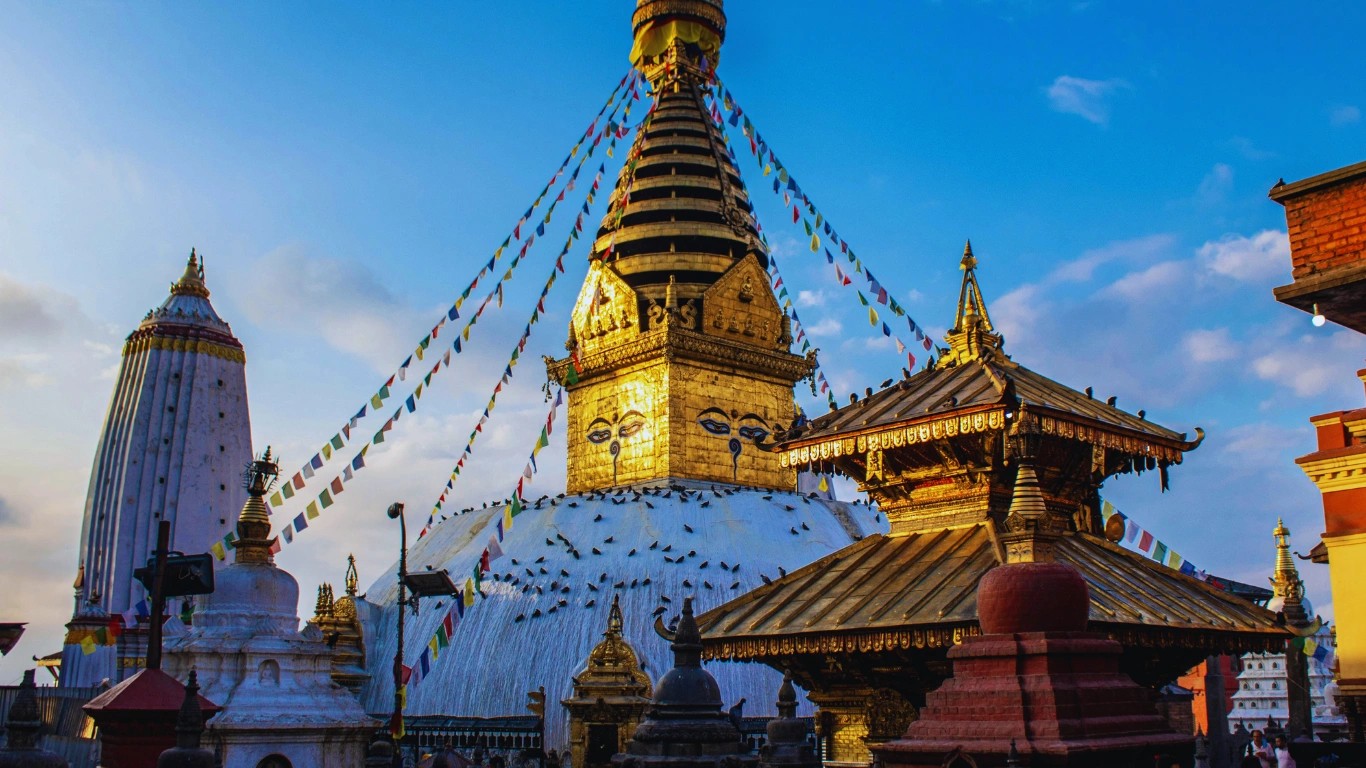
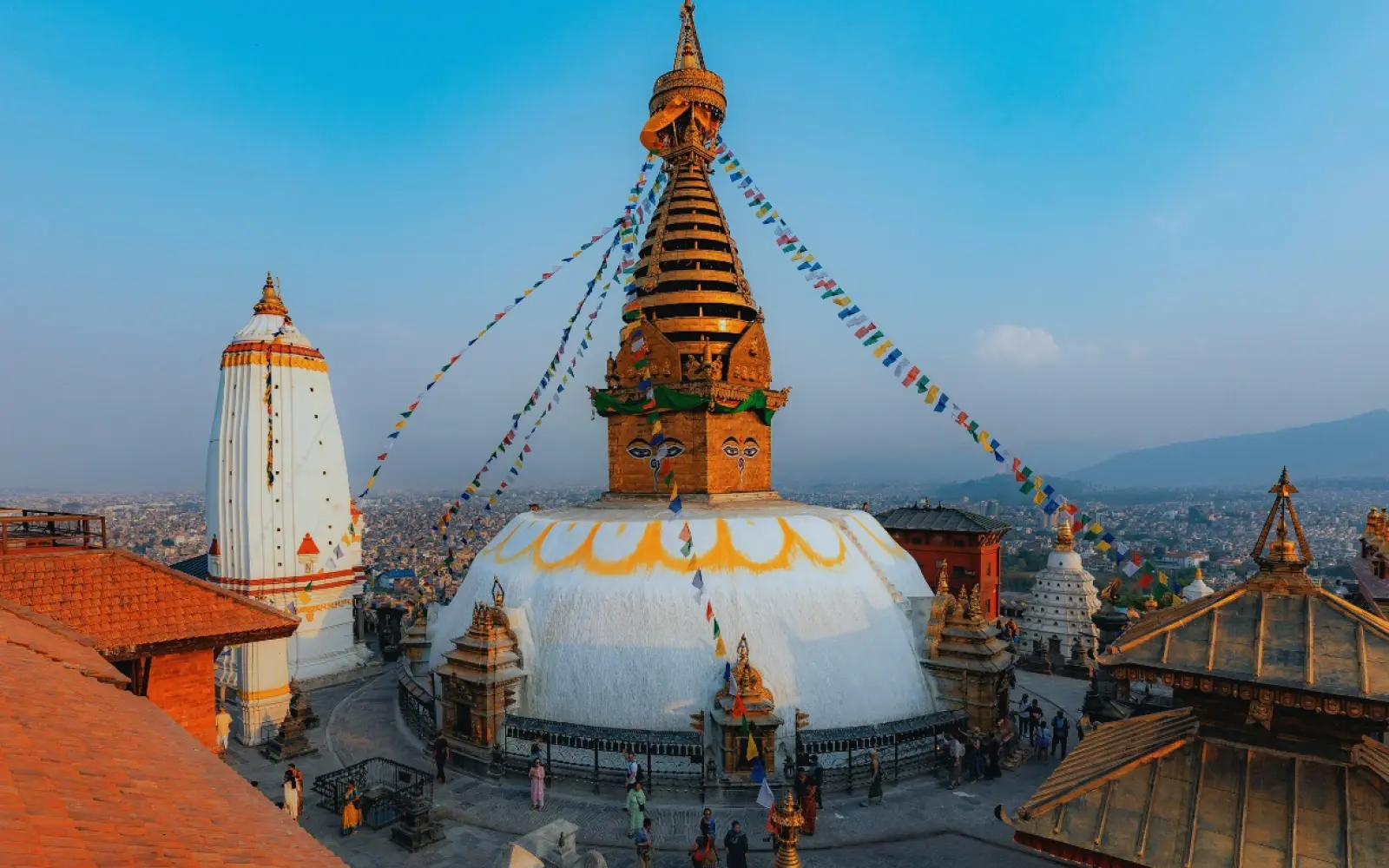
Few places in Nepal carry the spiritual weight of Swayambhunath. The ancient Buddhist stupa crowns a wooded hill 77 meters above the Kathmandu Valley floor, part of the Kathmandu Valley UNESCO World Heritage Site inscribed in 1979. The all-seeing eyes of the Buddha painted on the four sides of the tower are one of the most photographed images in Nepal and something you genuinely cannot look away from in person.
The temple gets its popular nickname, Monkey Temple, honestly. Hundreds of rhesus monkeys treat the entire complex as their own, wandering between shrines and begging from visitors with zero self-consciousness. Local legend holds that the valley itself was once a great lake and that the bodhisattva Manjushri drained it to create the site for this stupa. Whether or not you follow the religion, the atmosphere here, with prayer flags snapping in the wind, incense drifting through carved courtyards, and devotees spinning prayer wheels at dawn, is hard to forget.
| Visitor Category | Fee |
|---|---|
| SAARC nationals | NPR 50 |
| International tourists | NPR 200 |
Swayambhunath is about a 35-minute walk west of Thamel, making it one of the more walkable sites in the valley. Public buses run from Sorahkhutte and drop passengers at the base of the hill. From there, a 15-20 minute climb up stone steps brings you to the stupa. The monkey encounters on the way up are a bonus.
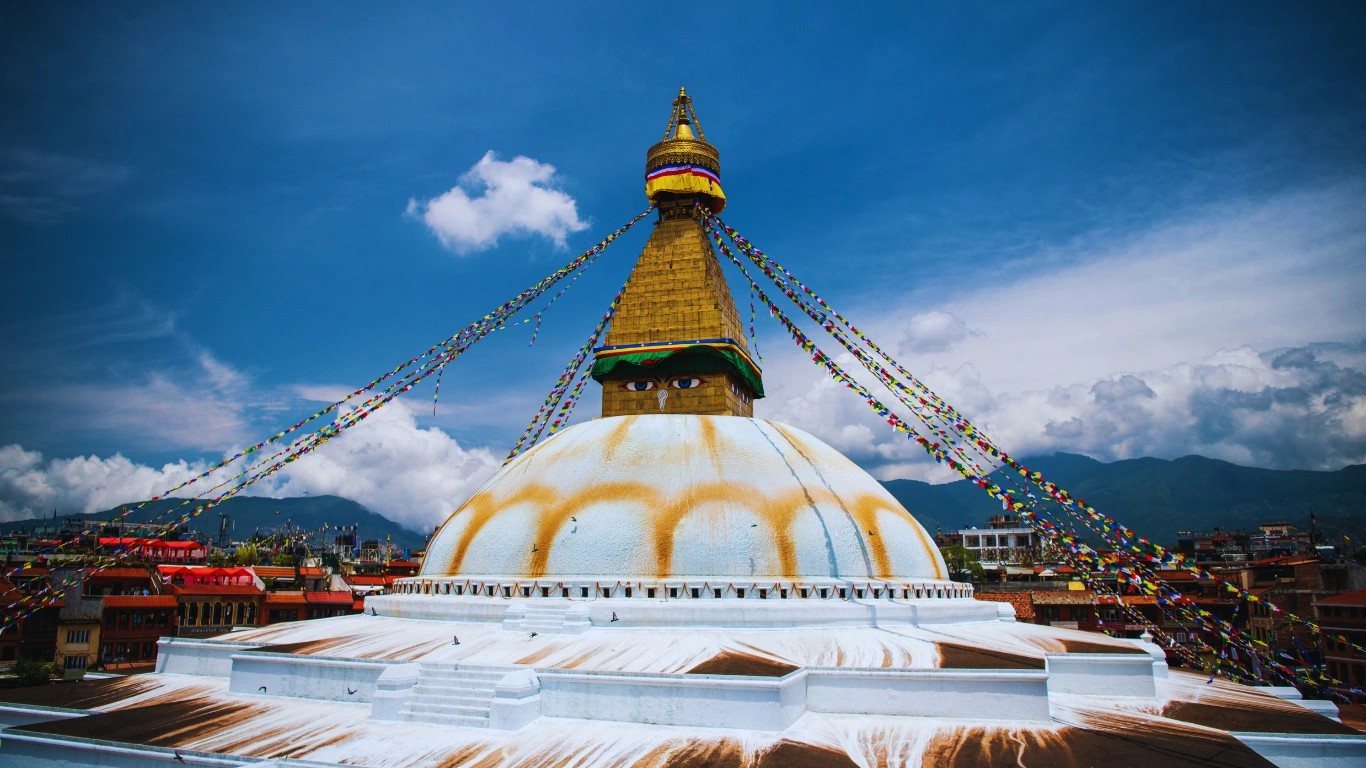
Boudhanath is one of the largest stupas in the world and the spiritual center of Tibetan Buddhist life in Nepal. The stupa's circular base, mandala layout, and gilded tower have remained largely unchanged since its foundations were laid. The whitewashed dome is encircled by a ring of 108 prayer wheels at ground level, and the entire structure functions as a clockwise circumambulation path for pilgrims who arrive around it at all hours.
The neighborhood around Boudhanath is its own experience. Dozens of Tibetan Buddhist monasteries cluster around the stupa, and the area fills with monks in maroon robes, Tibetan traders, and international visitors who come specifically for the atmosphere. The ring of cafes and restaurants overlooking the stupa from their upper floors gives you an elevated view that most people spend far longer at than planned.
| Visitor Category | Fee |
|---|---|
| SAARC nationals | NPR 100 |
| International tourists | NPR 400 |
Taxis are the simplest option from anywhere in Kathmandu. Public buses run frequently from Ratna Park, Sundhara, and Gongabu and drop passengers directly at the stupa entrance.
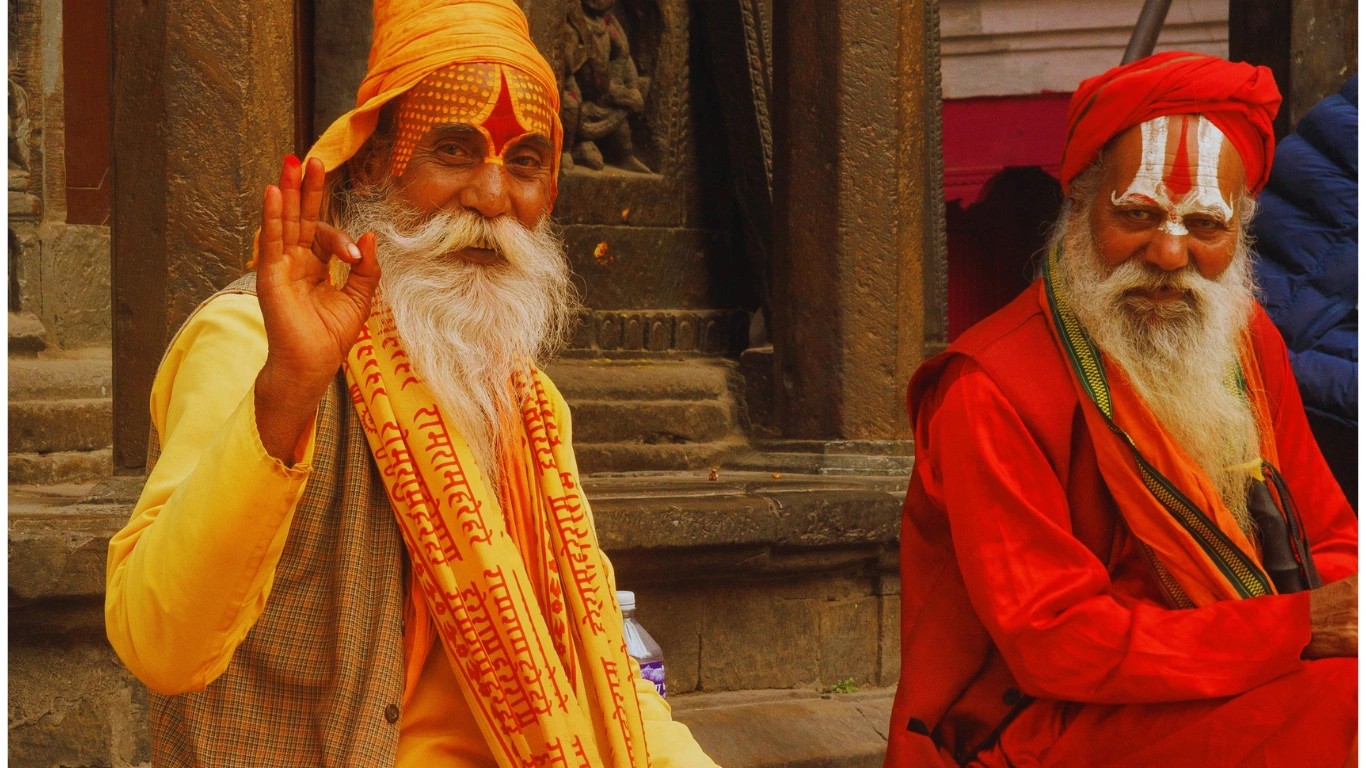
Pashupatinath is arguably the most important Hindu pilgrimage site in the entire Indian subcontinent outside of India itself. The main temple, dedicated to Lord Shiva in his form as Pashupati, protector of living beings, sits beside the sacred Bagmati River in eastern Kathmandu. Non-Hindu visitors are not permitted inside the inner sanctum, but the eastern bank of the Bagmati provides a direct view of the main temple complex and the open-air cremation ghats at Arya Ghat.
The evening aarti ceremony held on the riverbanks is a spiritually charged ritual that draws hundreds of devotees each night. Sadhus, Hindu ascetics in ochre robes and ash-painted faces, are present throughout the temple grounds and are approachable for conversation and photography. The complex extends far beyond the main temple and includes dozens of smaller shrines, ashrams, and sacred bathing areas along the river.
| Visitor Category | Fee |
|---|---|
| Indian nationals | Free |
| International tourists | NPR 1,000 |
Pashupatinath lies close to Tribhuvan International Airport and is easily reachable by taxi from anywhere in Kathmandu. Local buses from central Kathmandu also run regularly to the temple area.
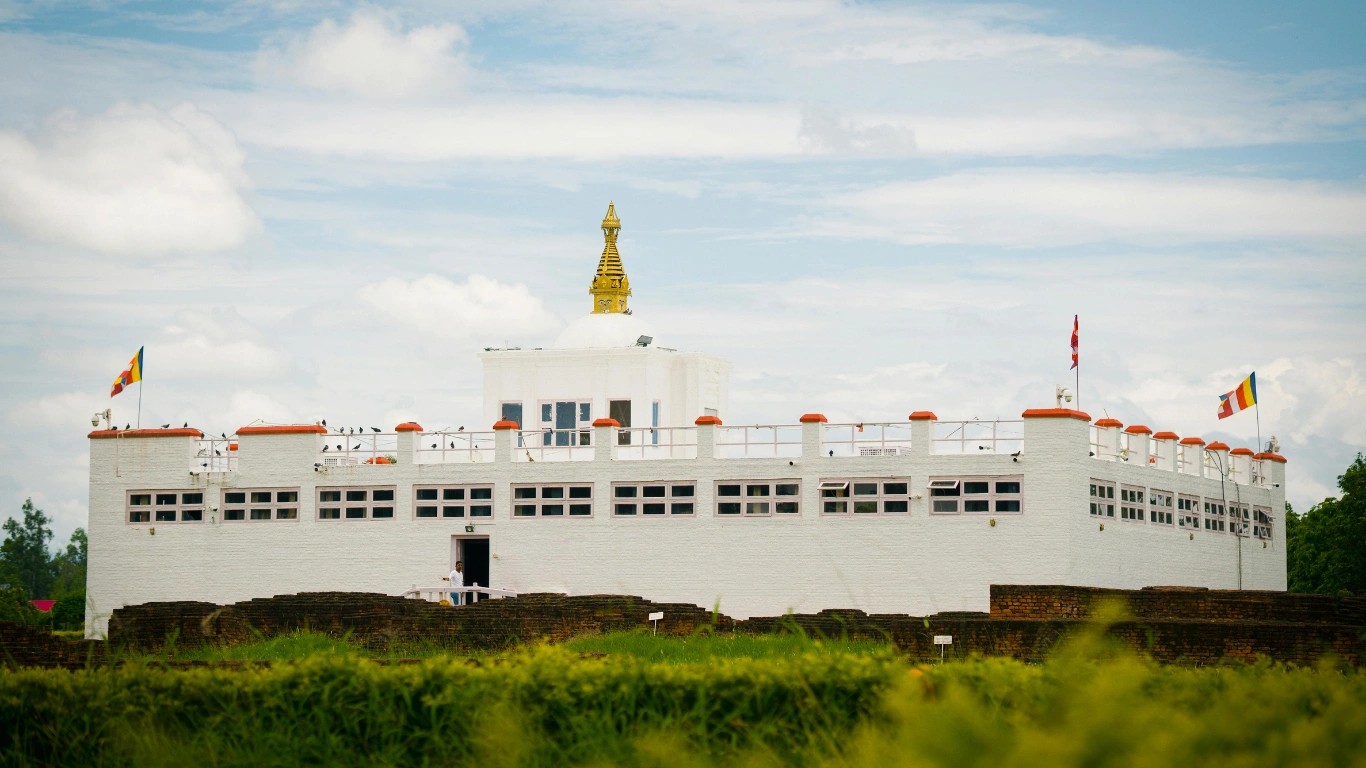
Lumbini is not just a UNESCO World Heritage Site in Nepal. It is the documented birthplace of Siddhartha Gautama, who became the Buddha, and that alone makes it one of the most significant religious sites on earth. Inscribed in 1997, Lumbini sits in the southern Terai region near the Indian border and draws Buddhist pilgrims from across Asia year-round.
The Maya Devi Temple marks the exact location where Queen Maya Devi gave birth to Siddhartha around 623 BC. Nearby, the Ashoka Pillar erected by the Indian Emperor Ashoka in 249 BC bears an inscription confirming this as the birthplace of the Buddha. The Sacred Garden and Puskarini Pond, where the Buddha's mother bathed before giving birth, add to the spiritual atmosphere. Surrounding the central zone, monasteries built by Buddhist countries from Japan, Korea, China, Sri Lanka, and Myanmar form a truly international religious landscape.
| Visitor Category | Fee |
|---|---|
| SAARC nationals | NPR 100 |
| International tourists | NPR 200 |
From Kathmandu, the overland journey to Lumbini takes roughly 8-9 hours by tourist or express bus. Flights to Gautam Buddha International Airport in Bhairahawa take about 35 minutes from Kathmandu, followed by a 30-minute drive to Lumbini itself.
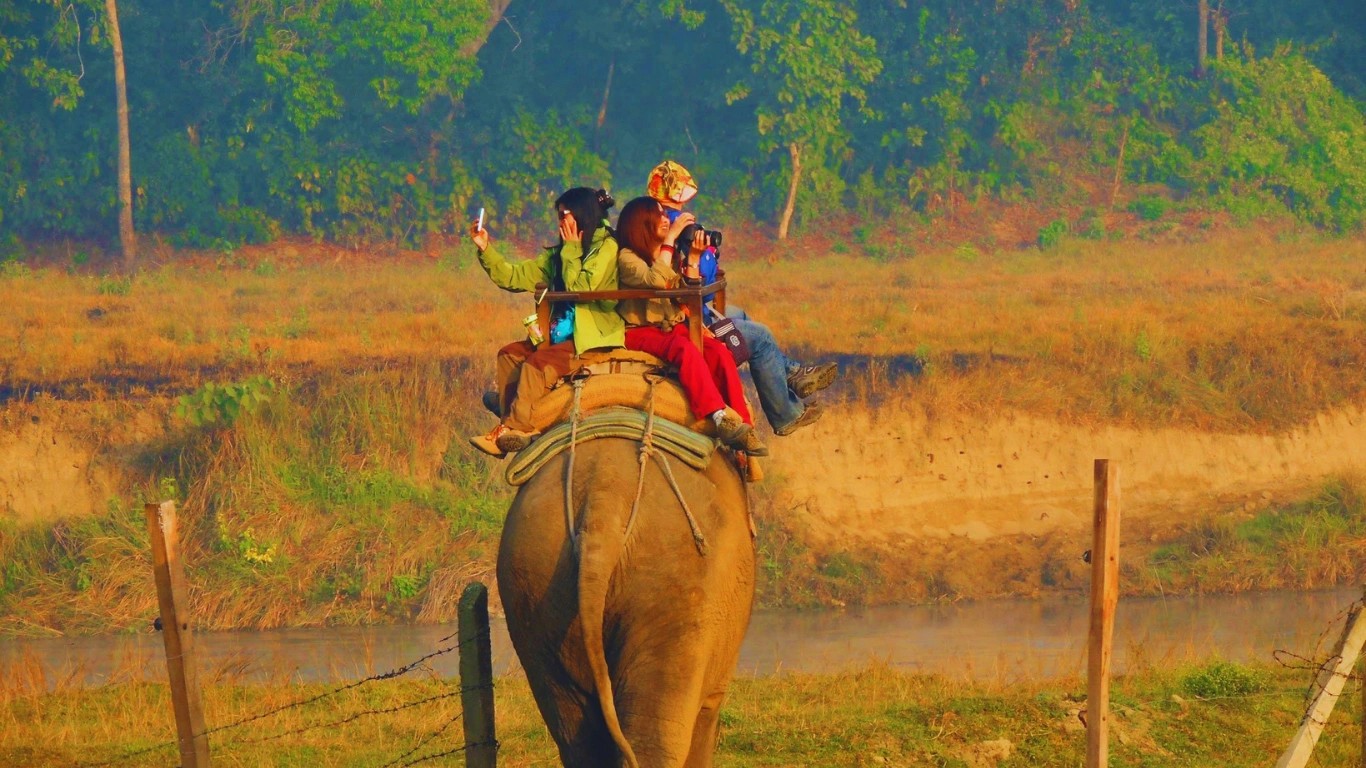
Chitwan was Nepal's first national park and remains one of the finest wildlife conservation success stories in Asia. The park was inscribed as a UNESCO World Heritage Site in 1984 in recognition of its extraordinary biodiversity and its role in protecting critically endangered species. At its core, Chitwan is about two animals: the one-horned rhinoceros, whose population in Nepal has climbed from near extinction to over 700 individuals, and the Royal Bengal tiger.
Beyond the flagship species, the park supports sloth bears, wild elephants, gharials, mugger crocodiles, and over 650 species of birds, including endangered Bengal floricans and lesser adjutant storks. The Tharu people, who have lived around the park for centuries, add a cultural dimension to any visit, and an evening walk through a Tharu village is worth building into your itinerary.
| Visitor Category | Fee |
|---|---|
| SAARC nationals | NPR 1,000 |
| International tourists | NPR 2,000 |
Tourist and local buses run between Kathmandu and Sauraha, the gateway town for Chitwan, with journey times around 5-6 hours. Flights to Bharatpur Airport take around 20 minutes, followed by roughly 40 minutes of road travel to the park.
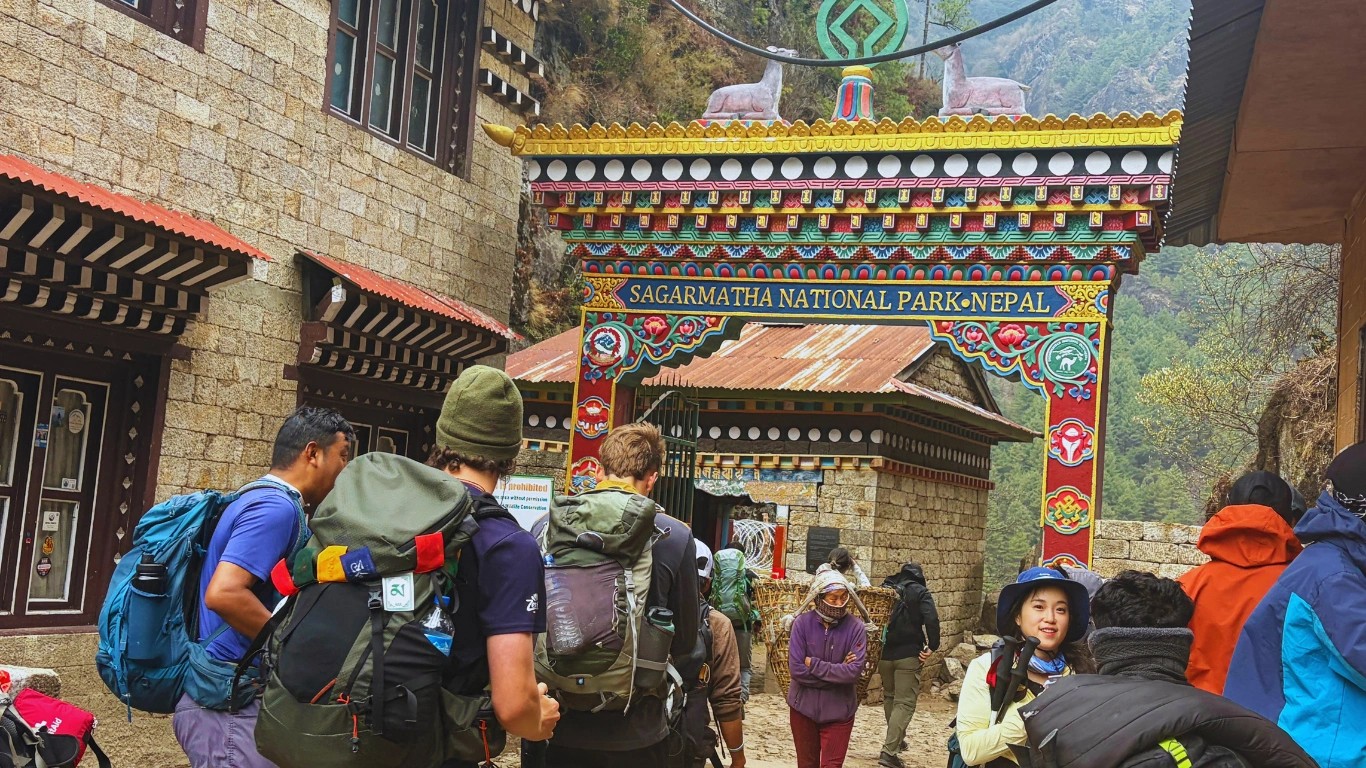
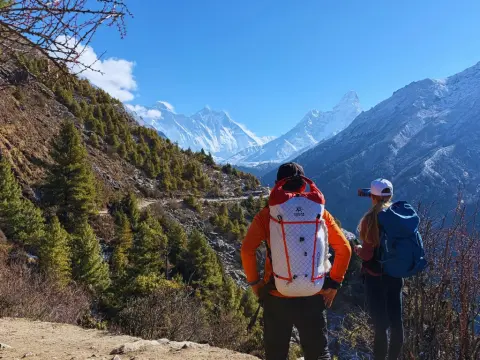
Sagarmatha National Park was the first Himalayan park in the world to receive UNESCO World Heritage status, inscribed in 1979. The park's name in Nepali means "forehead of the sky," which fits. It encompasses a dramatic terrain of soaring peaks, glacier systems, high-altitude wetlands, and deep river gorges in the Khumbu region of northeastern Nepal. Mount Everest, at 8,849 meters the highest point on earth, sits inside the park.
But Sagarmatha is more than Everest. The park contains multiple peaks above 7,000 and 8,000 meters, including Lhotse, Cho Oyu, and Ama Dablam. The Gokyo Lakes system, the highest freshwater lake chain in the world, lies within its boundaries. Snow leopards, Himalayan tahr, red pandas, and musk deer inhabit its forests and alpine zones. Sherpa villages like Namche Bazaar, Khumjung, and Tengboche preserve a living Buddhist culture that has coexisted with this extreme landscape for generations.
| Visitor Category | Fee |
|---|---|
| SAARC nationals | NPR 1,500 |
| International tourists | NPR 4,000 |
The standard entry point is Lukla, reachable by short flight from Kathmandu or, seasonally, from Ramechhap. Alternatively, trekkers can walk in from Jiri, a route that adds roughly a week to the approach but offers a significantly quieter and more varied introduction to the Khumbu region.
| Site | Type | Inscription Year | Key Attraction |
|---|---|---|---|
| Kathmandu Durbar Square | Cultural | 1979 | Kumari Ghar, Taleju Temple, Hanuman Dhoka |
| Bhaktapur Durbar Square | Cultural | 1979 | Nyatapola Temple, 55 Windows Palace |
| Patan Durbar Square | Cultural | 1979 | Krishna Mandir, Patan Museum |
| Changu Narayan Temple | Cultural | 1979 | Oldest inscription in Nepal, Licchavi sculptures |
| Swayambhunath Stupa | Cultural | 1979 | All-seeing eyes, valley views, monkeys |
| Boudhanath Stupa | Cultural | 1979 | World's largest dome stupa, Tibetan monasteries |
| Pashupatinath Temple | Cultural | 1979 | Arya Ghat, evening aarti, Sadhus |
| Lumbini | Cultural | 1997 | Maya Devi Temple, Ashoka Pillar |
| Chitwan National Park | Natural | 1984 | One-horned rhino, Bengal tiger |
| Sagarmatha National Park | Natural | 1979 | Mount Everest, snow leopard, Sherpa culture |
These ten sites collectively represent what Nepal has built, protected, and passed on across centuries. A Kathmandu Valley heritage circuit covering the seven urban sites can realistically be completed in three to four days. Lumbini works well as a dedicated day trip or as a stop en route between Kathmandu and Pokhara. Chitwan and Sagarmatha both reward longer stays and are typically combined with trekking itineraries.
At Majestic Trails Nepal, we design itineraries that give these sites the time they deserve. If you want to move beyond the tourist surface and actually understand what you are standing in front of, get in touch and we will put something together that fits your schedule.
Nepal has 10 UNESCO World Heritage Sites in total. Eight are cultural heritage sites and two are natural heritage sites.
Seven UNESCO sites are located within or near the Kathmandu Valley, all inscribed together in 1979. These are Kathmandu Durbar Square, Bhaktapur Durbar Square, Patan Durbar Square, Changu Narayan Temple, Swayambhunath, Boudhanath, and Pashupatinath.
Nepal gained its first UNESCO inscriptions in 1979, with both Sagarmatha National Park and the seven monument zones of the Kathmandu Valley receiving recognition that year.
Yes. Chitwan National Park was inscribed as a UNESCO Natural World Heritage Site in 1984, recognized for its biodiversity and endangered species conservation.
Sagarmatha National Park is Nepal's UNESCO World Heritage Site most associated with mountaineering, home to Mount Everest and several other high-altitude peaks.
People visiting Kathmandu almost always ask the same two questions about Swayambhunath: how high is it, and where exactly is it? Seems simple. But the...
Nepal is more than a trekking destination. It is a sanctuary where mountains are worshiped, rivers are sacred, and every stone carries the weight of d...
Stand at the edge of the Khumbu Valley on a clear October morning, and the world stops making sense in the best possible way. The silence is absolute....
