[{"name":"Langtang Valley Trek \u2014 10 Days","duration":"10","image_url":"https:\/\/www.majestictrailsnepal.com\/storage\/trip-galleries\/1\/thumb_e7907ed736676d12e6ab17328008e746.webp","offer_price":null,"url":"https:\/\/www.majestictrailsnepal.com\/trips\/langtang-valley-trek"},{"name":"Everest Base Camp Trek","duration":"14","image_url":"https:\/\/www.majestictrailsnepal.com\/storage\/trip-galleries\/2\/thumb_4b769c9c4b5b007a61f4ce3b76ff440d.webp","offer_price":null,"url":"https:\/\/www.majestictrailsnepal.com\/trips\/everest-base-camp-trek"},{"name":"Everest Panorama Trek","duration":"9","image_url":"https:\/\/www.majestictrailsnepal.com\/storage\/trip-galleries\/3\/thumb_e6ee74caea3e2900c23ca370b06bab80.webp","offer_price":null,"url":"https:\/\/www.majestictrailsnepal.com\/trips\/everest-panorama-trek"},{"name":"Annapurna Base Camp Trek","duration":"14","image_url":"https:\/\/www.majestictrailsnepal.com\/storage\/trip-galleries\/4\/thumb_3f8d40f9472f701d7c46a827925201bc.webp","offer_price":null,"url":"https:\/\/www.majestictrailsnepal.com\/trips\/annapurna-base-camp-trek"},{"name":"Annapurna Base Camp Express Trek","duration":"9","image_url":"https:\/\/www.majestictrailsnepal.com\/storage\/trip-galleries\/5\/thumb_bac80de2bd257d651fa75d9c8025da1a.webp","offer_price":null,"url":"https:\/\/www.majestictrailsnepal.com\/trips\/annapurna-base-camp-express-trek"},{"name":"Annapurna Circuit Trek","duration":"15","image_url":"https:\/\/www.majestictrailsnepal.com\/storage\/trip-galleries\/6\/thumb_b73bdec74acacaa0d72a2a2a513f3d4a.webp","offer_price":null,"url":"https:\/\/www.majestictrailsnepal.com\/trips\/annapurna-circuit-trek"},{"name":"Ghorepani Poon Hill Trek","duration":"8","image_url":"https:\/\/www.majestictrailsnepal.com\/storage\/trip-galleries\/7\/thumb_aeda9e6388ab2692138cc9c9efa81a7f.webp","offer_price":null,"url":"https:\/\/www.majestictrailsnepal.com\/trips\/ghorepani-poon-hill-trek"},{"name":"Mardi Himal Trek \u2014 9 Days","duration":"9","image_url":"https:\/\/www.majestictrailsnepal.com\/storage\/trip-galleries\/8\/thumb_c511ee87ecab8ff015210dd647392d66.webp","offer_price":null,"url":"https:\/\/www.majestictrailsnepal.com\/trips\/mardi-himal-trek"},{"name":"Manaslu Circuit Trek","duration":"15","image_url":"https:\/\/www.majestictrailsnepal.com\/storage\/trip-galleries\/9\/thumb_7726908390ad6b249f2f6a7856f9dc17.webp","offer_price":null,"url":"https:\/\/www.majestictrailsnepal.com\/trips\/manaslu-circuit-trek"},{"name":"Upper Mustang Trek","duration":"16","image_url":"https:\/\/www.majestictrailsnepal.com\/storage\/trip-galleries\/10\/thumb_6a9b52ecd1d8cda92d594e5351431d6e.webp","offer_price":null,"url":"https:\/\/www.majestictrailsnepal.com\/trips\/upper-mustang-trek"},{"name":"Pokhara City Tour","duration":"1","image_url":"https:\/\/www.majestictrailsnepal.com\/storage\/trip-galleries\/11\/thumb_cf762ba4c20363bd1c0f239db35fcc84.webp","offer_price":null,"url":"https:\/\/www.majestictrailsnepal.com\/trips\/pokhara-city-tour"},{"name":"Paragliding in Pokhara","duration":"1","image_url":"https:\/\/www.majestictrailsnepal.com\/storage\/trip-galleries\/12\/thumb_b896201edf88bbe0f570e876c3c337a3.webp","offer_price":70,"url":"https:\/\/www.majestictrailsnepal.com\/trips\/paragliding-in-pokhara"},{"name":"Kathmandu City Tour","duration":"2","image_url":"https:\/\/www.majestictrailsnepal.com\/storage\/trip-galleries\/13\/thumb_846ad05bd3ce7bebb3843c24c08db6f9.webp","offer_price":null,"url":"https:\/\/www.majestictrailsnepal.com\/trips\/kathmandu-city-tour"},{"name":"Lumbini Buddhist Pilgrimage Tour","duration":"4","image_url":"https:\/\/www.majestictrailsnepal.com\/storage\/trip-galleries\/14\/a2998dca0ce22f28a61c3862dd47f6a3.webp","offer_price":null,"url":"https:\/\/www.majestictrailsnepal.com\/trips\/lumbini-buddhist-pilgrimage-tour"},{"name":"5 days langtang valley trek","duration":"5","image_url":"https:\/\/www.majestictrailsnepal.com\/storage\/trip-galleries\/15\/thumb_7a6c65c139b8085d220ac01913cb1448.webp","offer_price":510,"url":"https:\/\/www.majestictrailsnepal.com\/trips\/5-days-langtang-valley-trek"},{"name":"Leisure Port Nepal Price: Rafting and Camping Adventure","duration":"7","image_url":"https:\/\/www.majestictrailsnepal.com\/storage\/trip-galleries\/17\/thumb_02cb8c3f0697c7c5c4f73d744b47d87f.webp","offer_price":550,"url":"https:\/\/www.majestictrailsnepal.com\/trips\/leisure-port-nepal-price-rafting-and-camping-adventure"},{"name":"10 days spiritual tour in Nepal","duration":"10","image_url":"https:\/\/www.majestictrailsnepal.com\/storage\/trip-galleries\/18\/thumb_b4e7eba000673d1bce6b56abb422fe3b.webp","offer_price":1200,"url":"https:\/\/www.majestictrailsnepal.com\/trips\/10-days-spiritual-tour-in-nepal"},{"name":"Annapurna Circuit Short Trek","duration":"10","image_url":"https:\/\/www.majestictrailsnepal.com\/storage\/trip-galleries\/19\/thumb_769ee8cbe02a510d8db76419c97a2dc9.webp","offer_price":null,"url":"https:\/\/www.majestictrailsnepal.com\/trips\/annapurna-circuit-short-trek"},{"name":"Best Short Manaslu Circuit Trek","duration":"11","image_url":"https:\/\/www.majestictrailsnepal.com\/storage\/trip-galleries\/20\/thumb_ac1b4977a3fce9d11ee68240cad675b6.webp","offer_price":null,"url":"https:\/\/www.majestictrailsnepal.com\/trips\/best-short-manaslu-circuit-trek"},{"name":"Langtang Gosaikunda Trek","duration":"13","image_url":"https:\/\/www.majestictrailsnepal.com\/storage\/trip-galleries\/22\/thumb_577a6402f2ca4b3f12bfd80b96b33a23.webp","offer_price":940,"url":"https:\/\/www.majestictrailsnepal.com\/trips\/langtang-gosaikunda-trek"},{"name":"3 Passes Trek Nepal","duration":"22","image_url":"https:\/\/www.majestictrailsnepal.com\/storage\/trip-galleries\/24\/thumb_8020edea67aefce87e9012dc89a60087.webp","offer_price":null,"url":"https:\/\/www.majestictrailsnepal.com\/trips\/3-passes-trek-nepal"},{"name":"Tsum Valley Trek","duration":"13","image_url":"https:\/\/www.majestictrailsnepal.com\/storage\/trip-galleries\/25\/thumb_194c03e3c3463dff07a3f621a81ef9ea.webp","offer_price":null,"url":"https:\/\/www.majestictrailsnepal.com\/trips\/tsum-valley-trek"},{"name":"Gokyo and Renjo La Pass Trek","duration":"14","image_url":"https:\/\/www.majestictrailsnepal.com\/storage\/trip-galleries\/26\/thumb_7b865f0f0d0d4c6807b625b6e391b56d.webp","offer_price":1490,"url":"https:\/\/www.majestictrailsnepal.com\/trips\/gokyo-and-renjo-la-pass-trek"},{"name":"Honeymoon Tour in Nepal","duration":"9","image_url":"https:\/\/www.majestictrailsnepal.com\/storage\/trip-galleries\/27\/thumb_dabf449c090bb16efd5823c653eb61b3.webp","offer_price":null,"url":"https:\/\/www.majestictrailsnepal.com\/trips\/honeymoon-tour-in-nepal"},{"name":"Pikey Peak Trek","duration":"10","image_url":"https:\/\/www.majestictrailsnepal.com\/storage\/trip-galleries\/28\/thumb_5425e57ce3ea84d31a7b24b83b1af94f.webp","offer_price":1090,"url":"https:\/\/www.majestictrailsnepal.com\/trips\/pikey-peak-trek"},{"name":"Makalu Base Camp Trek","duration":"17","image_url":"https:\/\/www.majestictrailsnepal.com\/storage\/trip-galleries\/29\/thumb_d68c8ec6492540c922045d825a38cd50.webp","offer_price":null,"url":"https:\/\/www.majestictrailsnepal.com\/trips\/makalu-base-camp-trek"},{"name":"Nepal Winter Tour","duration":"8","image_url":"https:\/\/www.majestictrailsnepal.com\/storage\/trip-galleries\/30\/thumb_c8491c0c4b1fb19d8e93630866895799.webp","offer_price":null,"url":"https:\/\/www.majestictrailsnepal.com\/trips\/nepal-winter-tour"},{"name":"Maratika Tour in Nepal","duration":"6","image_url":"https:\/\/www.majestictrailsnepal.com\/storage\/trip-galleries\/31\/thumb_97948560c5a12a486f9ac2b76567cafd.webp","offer_price":null,"url":"https:\/\/www.majestictrailsnepal.com\/trips\/maratika-tour-in-nepal"},{"name":"Nepal Lake Trek","duration":"14","image_url":"https:\/\/www.majestictrailsnepal.com\/storage\/trip-galleries\/32\/thumb_d9b260fe13127816f5b3c25447caf70c.webp","offer_price":null,"url":"https:\/\/www.majestictrailsnepal.com\/trips\/nepal-lake-trek"},{"name":"Taste of Nepal Tour Package","duration":"9","image_url":"https:\/\/www.majestictrailsnepal.com\/storage\/trip-galleries\/33\/thumb_f4b55ab5760a8e057b4c3e208e25ab36.webp","offer_price":null,"url":"https:\/\/www.majestictrailsnepal.com\/trips\/taste-of-nepal-tour-package"},{"name":"Poon Hill Yoga Trek in Nepal","duration":"9","image_url":"https:\/\/www.majestictrailsnepal.com\/storage\/trip-galleries\/34\/thumb_904b238e690107c5c9b1092296880cc9.webp","offer_price":null,"url":"https:\/\/www.majestictrailsnepal.com\/trips\/poon-hill-yoga-trek-in-nepal"},{"name":"Nar Phu Nepal Trek","duration":"10","image_url":"https:\/\/www.majestictrailsnepal.com\/storage\/trip-galleries\/35\/thumb_f959e3e22c260629add0ba61a4038812.webp","offer_price":null,"url":"https:\/\/www.majestictrailsnepal.com\/trips\/nar-phu-nepal-trek"},{"name":"Annapurna Base Camp Helicopter Tour","duration":"1","image_url":"https:\/\/www.majestictrailsnepal.com\/storage\/trip-galleries\/36\/thumb_e81861e8772a9d7fac92ab4a7d43e3bf.webp","offer_price":null,"url":"https:\/\/www.majestictrailsnepal.com\/trips\/annapurna-base-camp-helicopter-tour"},{"name":"Annapurna Circuit with Nar Phu Valley Trek","duration":"16","image_url":"https:\/\/www.majestictrailsnepal.com\/storage\/trip-galleries\/38\/thumb_b70692cbd1c1dd772587c940be2d0bc9.webp","offer_price":null,"url":"https:\/\/www.majestictrailsnepal.com\/trips\/annapurna-circuit-with-nar-phu-valley-trek"}]
What makes for the best treks in Nepal can vary from person to person. While Everest Base Camp Trek (EBC) at 5545 m is ideal for a trekker wanting the iconic Himalayan experience, it is not ideal for a first time trekker without any altitude history. The beginner that has little time can enjoy Mardi Himal at 4500 m, whereas the second class mountaineer will not be happy.
Over the past decade+ years providing international trekkers with the guidance of the Himalayan paths of Nepal, Majestic Trails Nepal has seen the same thing over and over: the trekkers that book the trek appropriate to their fitness, experience, and time come back smiling. Those who book the wrong trek suffer.
The "10 Best Treks in Nepal 2026" list is prepared with a decision matrix that matches each type of trekker with the trek that is best suited to them, and is based on real trail experience and not simply the verbiage of a travel brochure.
How to Choose the Best Trek in Nepal for You
When you're considering a trek, think these 5 questions:
How much time you have in Nepal? There are 4 day and 22 day trekking options. The most important filter is available time.
What is your trekking experience? Whether you are a first-time multi-day trekker, weekend hiker, or seasoned mountaineer, this course offers something for you. The levels correspond to various routes.
What altitude are you comfortable at? The experience of Mardi Himal at 4,500m is very different to EBC at 5,545m. Some trekkers are good at high altitudes and others are not comfortable above 4000 m.
What sort of experience are you seeking? Best trek – bucket list trek, cultural immersion, quiet remote trails, easy scenic introduction and/or serious technical challenge.
How much do you have to spend? Treks in areas that are restricted (e.g. Manaslu and Narphu) are more expensive than open-area treks.
If you answer the following 5 questions, the decision matrix below matches you directly to the proper trek.
The Decision Matrix — Which Trek is Right for You
Trekker Type
Best Trek
First-time trekkers / never been to altitude
Mardi Himal Trek
Limited time (1 week or less)
Mardi Himal Trek
Most famous bucket list experience
Everest Base Camp Trek
Quiet trails / fewer crowds (2026 update)
Narphu Trek
Experienced trekkers wanting challenge
Three Passes Trek
Hidden gem / undiscovered route
Khopra Trek
Popular beginner-friendly base camp
Annapurna Base Camp Trek
Remote adventure with restricted permits
Manaslu Circuit Trek
Short scenic introduction
Ghorepani Poon Hill Trek
Cultural trek experience
Langtang Valley Trek
1. Annapurna Base Camp Trek — Best Base Camp Trek in Nepal
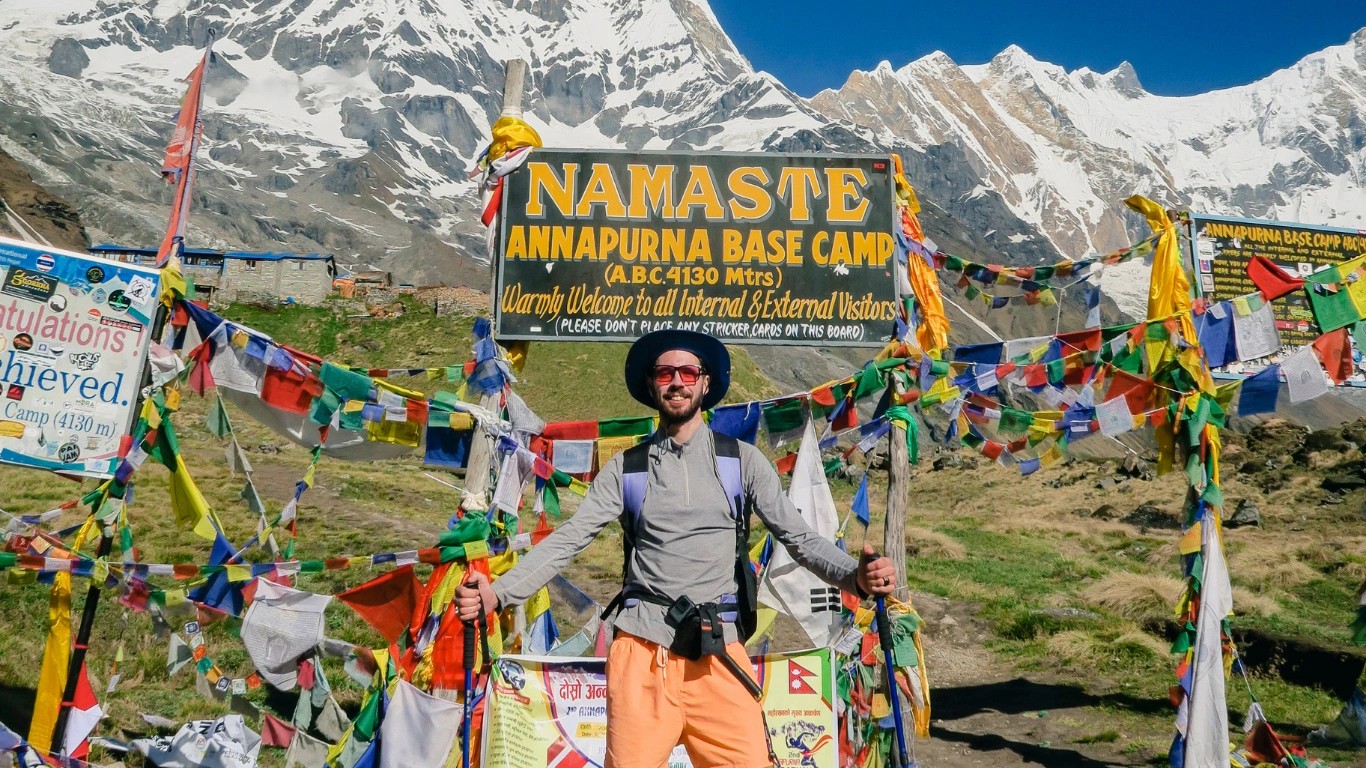
Annapurna Base Camp at 4,130 m directly below the south face of Annapurna South — the most accessible base camp trek in Nepal.
The Annapurna Base Camp Trek is the most popular high altitude trek in Nepal, ascending to 4130m right under the south face of Annapurna South. This trek requires 8-10 days from Kathmandu (includes transport) and 10 days of trekking which is 4-5 hours per day.
Quick facts:
Duration: 14 days (10 trekking)
Max altitude: 4,130 m
Difficulty: Moderate — stairs are the real challenge, not altitude
Permits: ACAP (NPR 3,000 foreigners)
Best months: October, November, March, April
Suitable for: First time trekkers, walkers (2-3 hours per day), and trekkers who wish to experience the Himalaya for the greatest reward with the least altitude risk. For 10+ years, Majestic Trails Nepal has been running this trek with zero serious altitude sickness issues — the natural acclimatisation is one of the safest in Nepal.
Not recommended for: Any trekkers with a serious knee condition (as of 2026 the majority of the trail to MBC will be staired and the descent will place an increased load on the knees).
2. Everest Base Camp Trek — The Most Iconic Nepal Trek
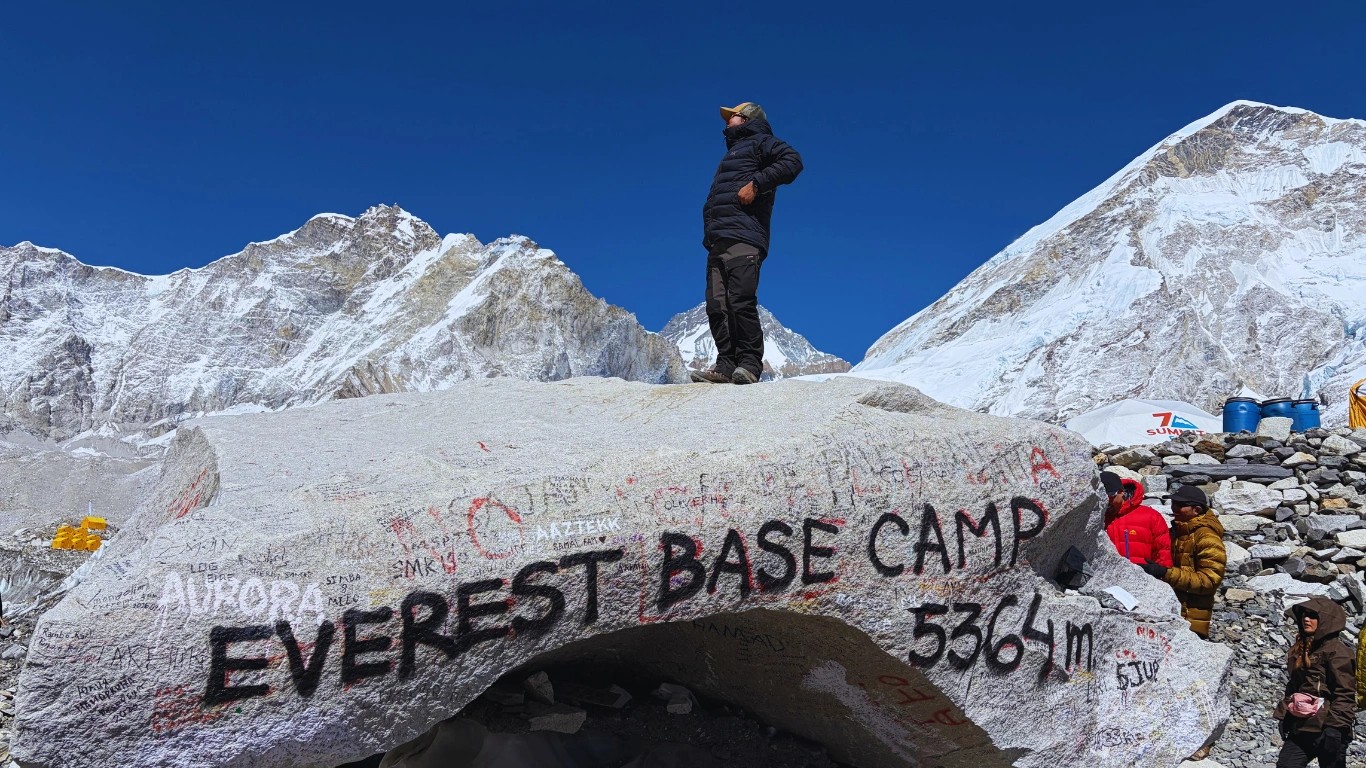
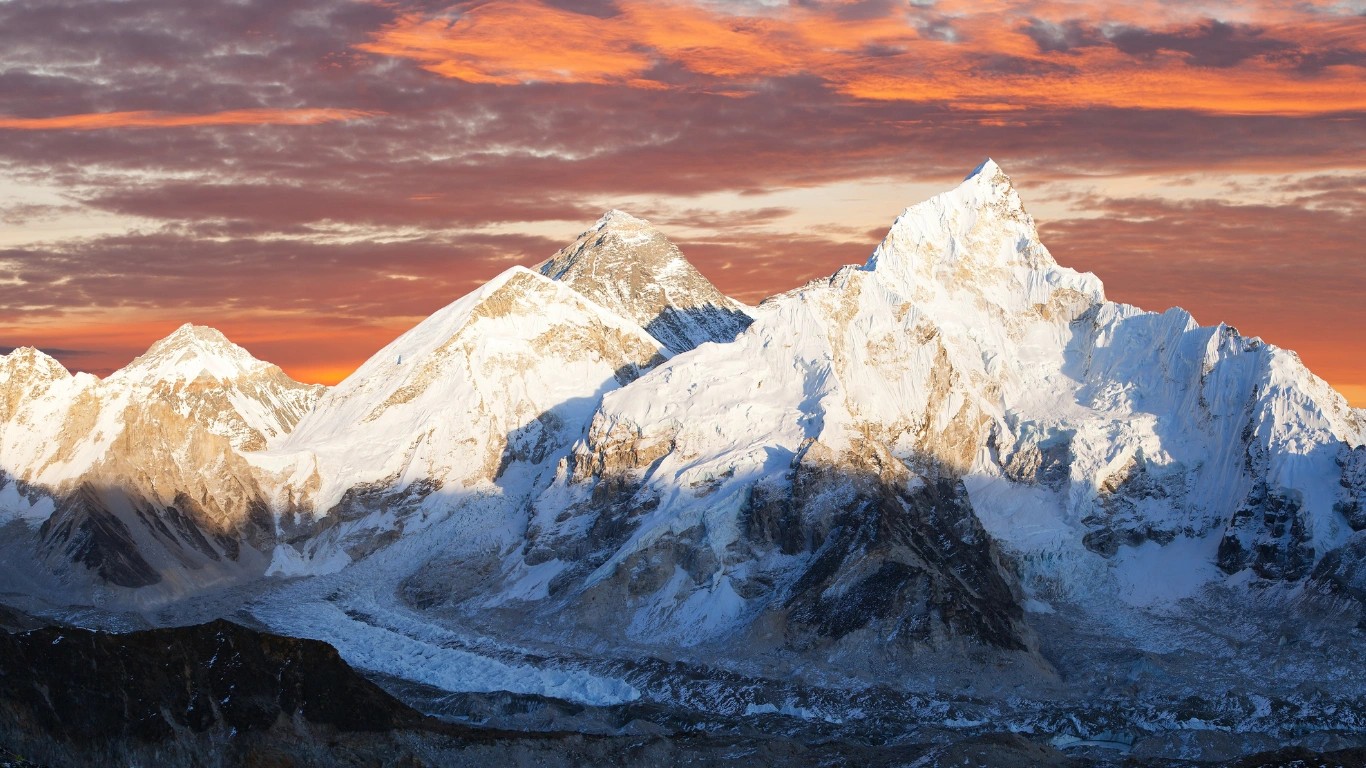
Everest Base Camp at 5,364 m — the most iconic trek in Nepal and the world.
The most popular trek worldwide is the Everest Base Camp Trek at 5,364 m at Everest base camp and 5,545 m at Kala Patthar for the sweeping views of Everest, Lhotse and Nuptse. The journey begins with a 35 minutes flight from Kathmandu to Lukla (2,860 m) and takes 12 days from Kathmandu.
Quick facts:
Duration: 14 days
Max altitude: 5,545 m (Kala Patthar)
Difficulty: Strenuous — altitude is the main challenge
Permits: Sagarmatha National Park + Khumbu Pasang Lhamu Rural Municipality permit
Best months: October, November, March, April — and December for the clearest skies
It's best for: people who already have a few days' worth of hiking under their belt, people who want the bucket list experience, or people who want to experience the iconic trekking experience. In December, the air is exceptionally clear and the mountains are most visible for the year, and most operators will not recommend, but this is a time for the more adventurous trekkers to come out.
Not recommended for: Complete beginners, cardiovascular conditions, trekkers with less than 2 weeks.
3. Mardi Himal Trek — Best Trek in Nepal for Beginners
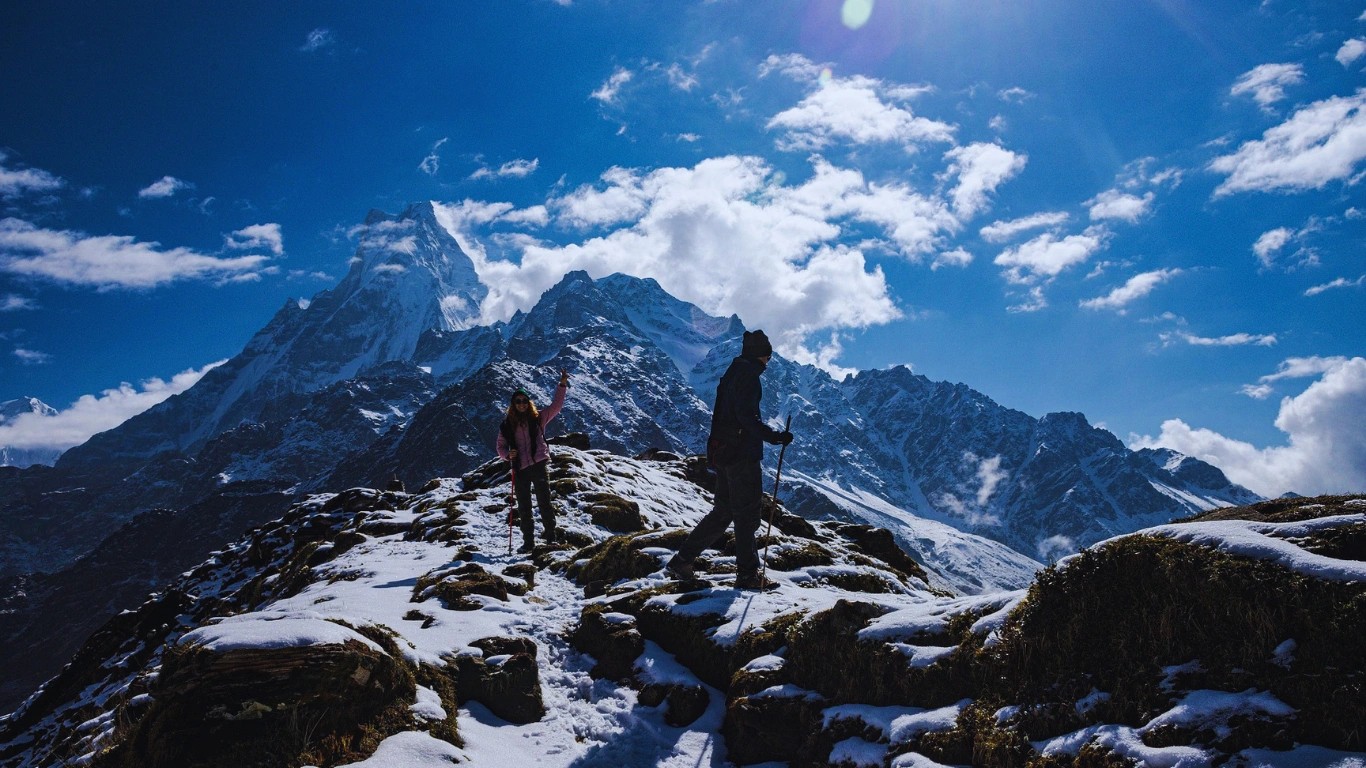
Mardi Himal Trek — the best Nepal trek for beginners and limited time.
Mardi Himal Trek reaches 4,500 m at Mardi Himal Base Camp — the closest high viewpoint to Pokhara and the most beginner-friendly multi-day trek in Nepal. The trek takes 5–7 days and offers direct views of Machhapuchhre, Annapurna South, and Hiunchuli from elevations most first-time trekkers can reach safely.
Quick facts:
Duration: 5–7 days
Max altitude: 4,500 m
Difficulty: Easy to moderate
Permits: ACAP (NPR 3,000 foreigners)
Best months: October, November, March, April
Who it suits: Complete beginners, trekkers with only 1 week in Nepal, anyone who has never trekked at altitude before, families with older children. The trail is gentler than ABC, the daily walking is 4–5 hours, and the tea house infrastructure is well established despite being less crowded than the major routes.
Who it does not suit: Trekkers wanting glaciers, base camps, or extended Himalayan immersion — Mardi Himal is shorter and the views, while spectacular, are less dramatic than ABC or EBC.
4. Annapurna Circuit Trek — Best for Landscape Diversity
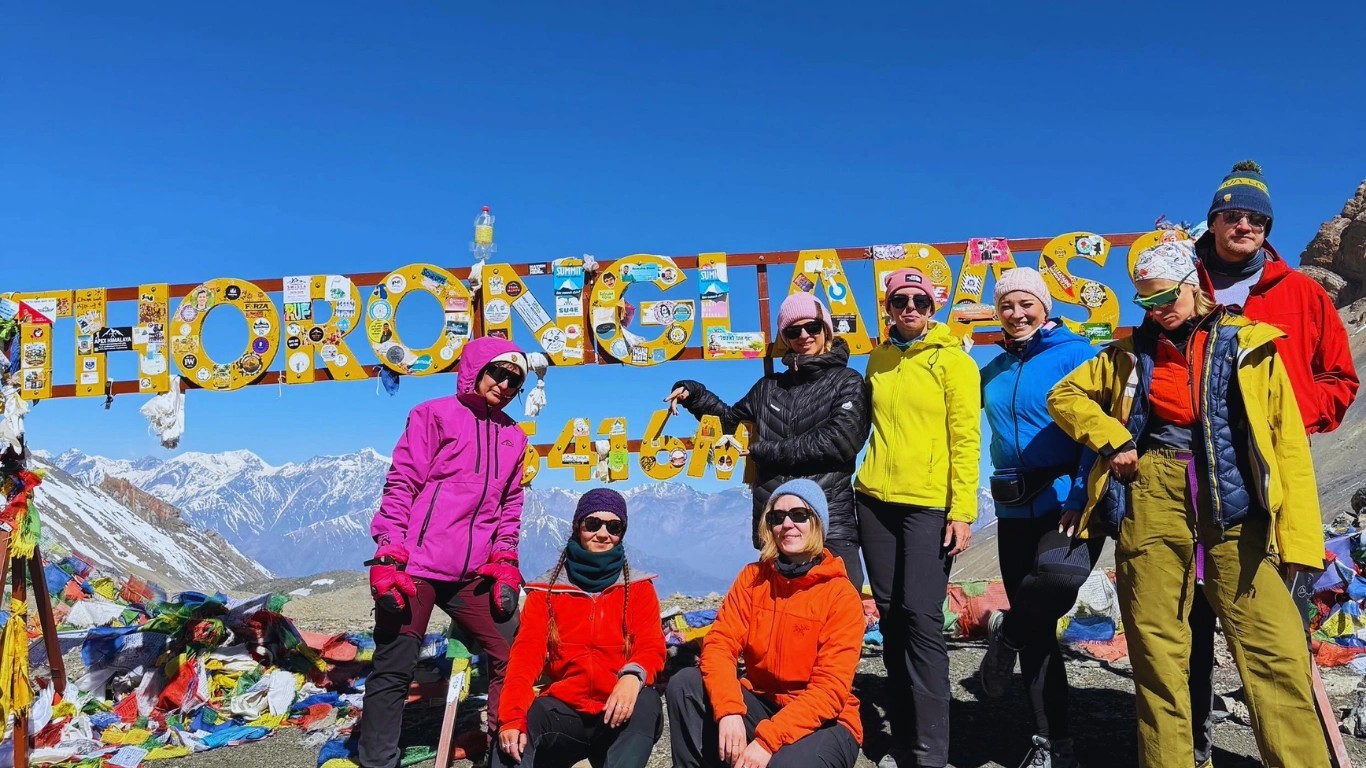
Thorong La Pass at 5,416 m — the highest point of the Annapurna Circuit and the day that completes the circuit.
Annapurna Circuit covers 160–230 km depending on sections walked, circumnavigating the Annapurna massif through 7 distinct ecological zones from subtropical forest at 800 m to high alpine desert above 4,000 m. The trek takes 14–21 days and crosses the Thorong La Pass at 5,416 m — the highest point and the day that determines whether the circuit is completed.
Best months: October, November, March, April — viable in December for cold-tolerant trekkers
Who it suits: Trekkers wanting maximum landscape diversity, anyone with 2+ weeks available, those who want cultural variety from Hindu villages to Tibetan Buddhist Mustang. The Mustang section after Muktinath sits in a rain shadow and remains accessible during monsoon — making the partial circuit one of the few high-altitude treks possible in summer.
Who it does not suit: Trekkers with less than 2 weeks, anyone uncomfortable with a 5,400 m pass crossing on a single day, those who prefer in-and-out trekking to a long circuit.
5. Ghorepani Poon Hill Trek — Best Short Trek in Nepal
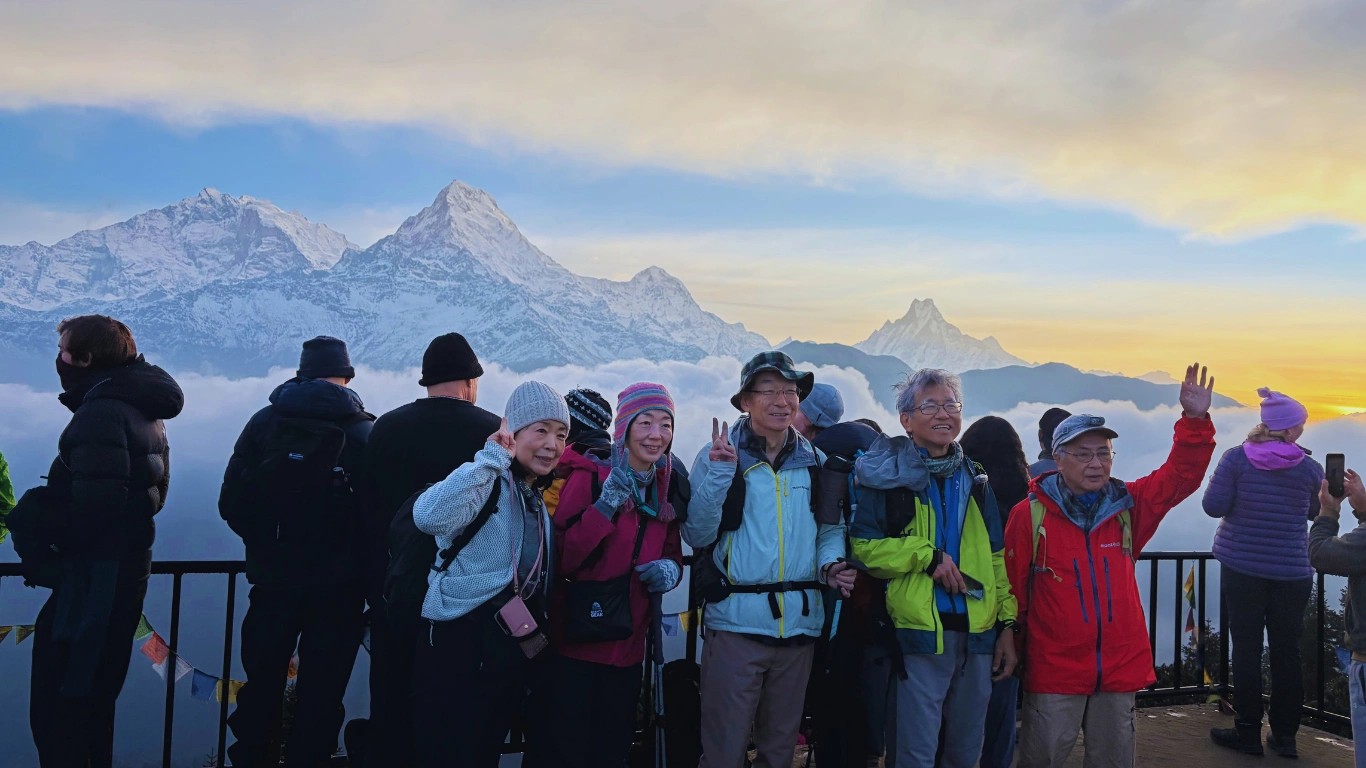
Poon Hill sunrise viewpoint at 3,210 m — the best short trek in Nepal
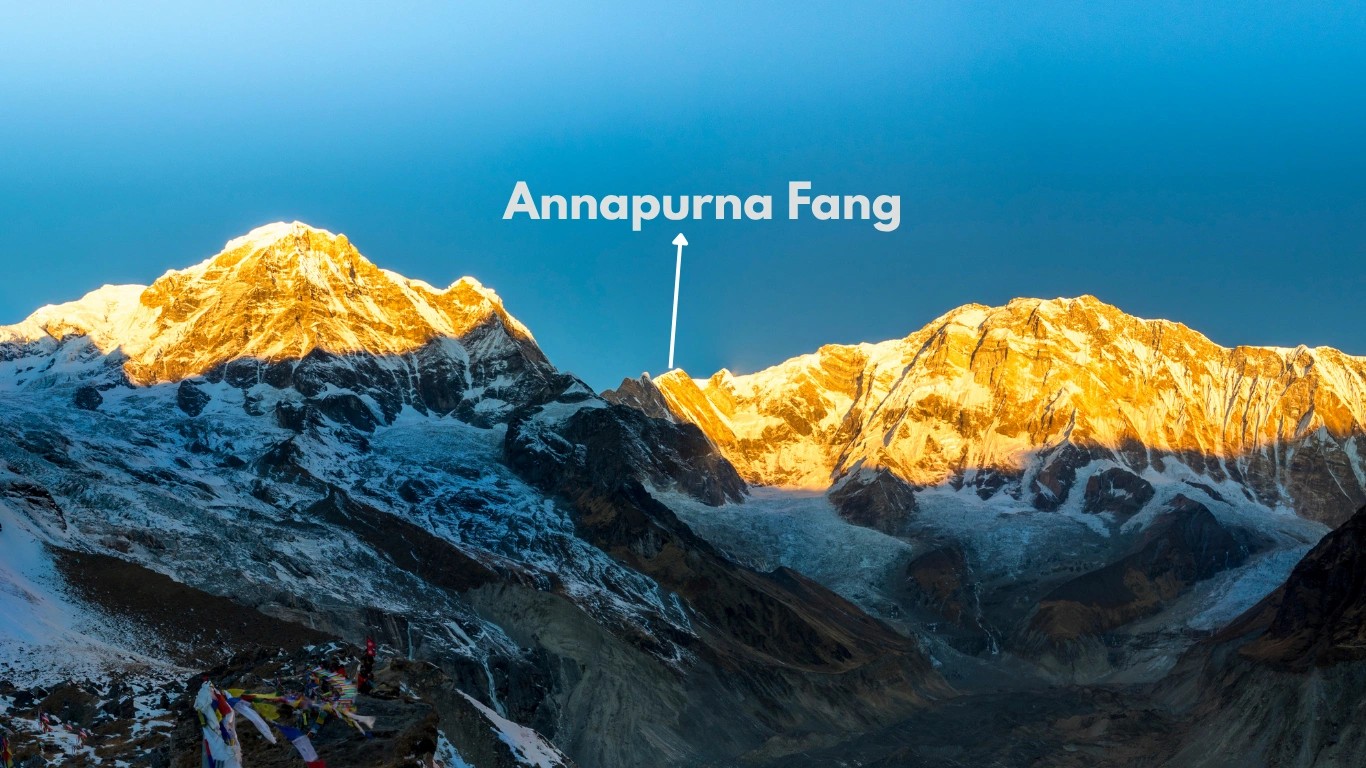
The Ghorepani Poon Hill Trek reaches 3,210 m at Poon Hill — one of the most celebrated sunrise viewpoints in Nepal — and takes 4–5 days from Pokhara. Sunrise from Poon Hill reveals a panoramic view of Dhaulagiri, Annapurna South, Annapurna Fang, Nilgiri, and Machhapuchhre catching the morning light one by one.
Quick facts:
Duration: 4–5 days
Max altitude: 3,210 m (Poon Hill)
Difficulty: Easy
Permits: ACAP (NPR 3,000 foreigners)
Best months: October, November, March, April — viable year-round including winter
Who it suits: Trekkers with limited time, older trekkers, families, anyone who wants real Himalayan views without altitude commitment. The route also passes through the largest rhododendron forest in the world between Ulleri, Ghorepani, and Tadapani — most spectacular in spring with predominantly pink blooms covering the hillsides.
Who it does not suit: Trekkers wanting base camps or extended altitude experience.
6. Khopra Trek — Best Hidden Gem Trek in Nepal
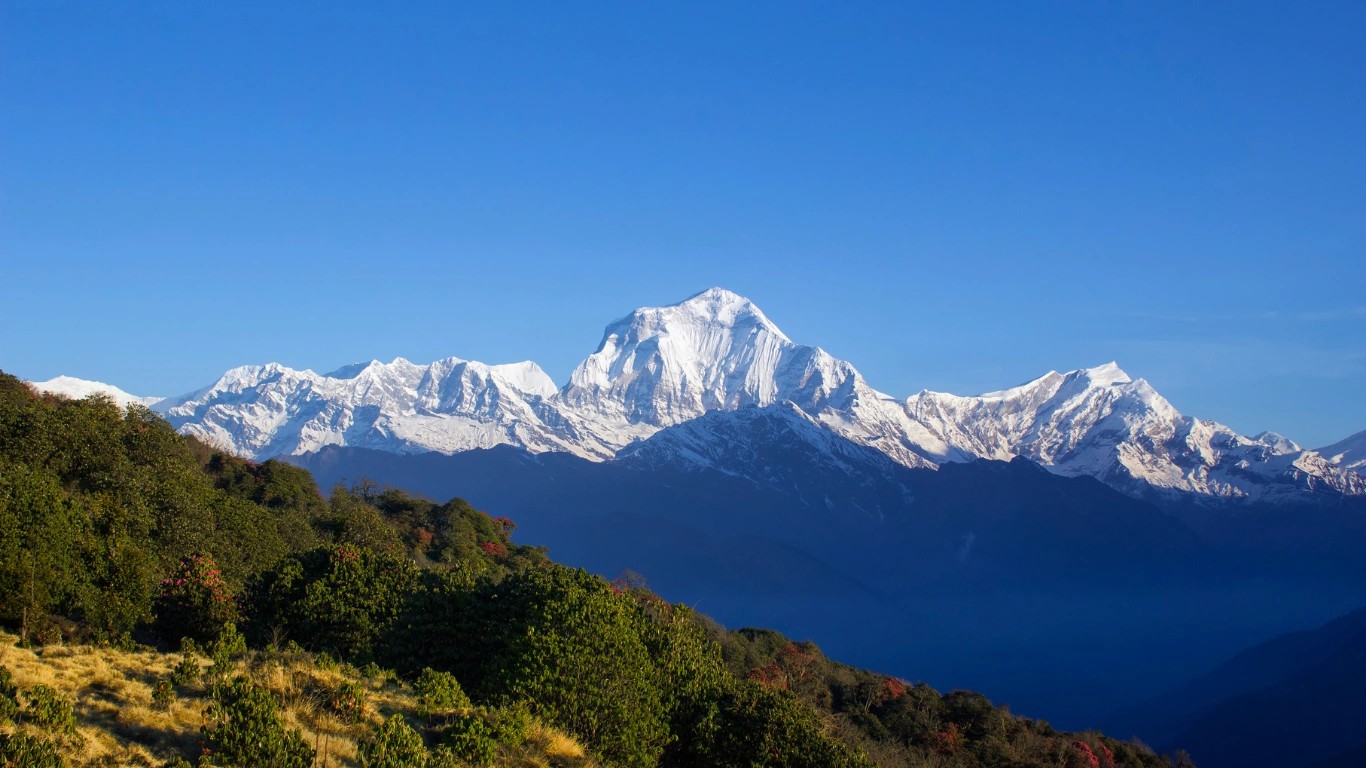
Dhaulagiri (8,167 m) viewed from Khopra Danda — the close-range Dhaulagiri view that no popular Nepal trek offers.
The Khopra Trek is one of Nepal's most underrated routes — 12 days reaching 3,660 m at Khopra Danda with an optional side trip to the sacred Khayer Lake at 4,660 m. Most international trekkers have never heard of it, which is exactly what makes it special.
Quick facts:
Duration: 12 days
Max altitude: 3,660 m (Khopra Danda)
Difficulty: Easy to moderate
Permits: ACAP (NPR 3,000 foreigners)
Best months: October, November, March, April
Who it suits: Trekkers wanting Annapurna views without Annapurna crowds. The trek is comparable to Poon Hill or ABC in difficulty and beauty but sees a fraction of the trekkers. The highlight is the close-range view of Dhaulagiri (8,167 m, the world's 7th highest mountain) — a perspective most popular Nepal treks do not offer at all.
Who it does not suit: Trekkers wanting to summit a base camp or who specifically want to see Everest or the Annapurna amphitheatre.
7. Manaslu Circuit Trek — Best for Remote Adventure (with a 2026 reality check)
Manaslu Circuit, now one of the most popular trending treks in Nepal as of 2026.
Manaslu Circuit takes 15 days to circumnavigate the world's 8th highest mountain at 8,163 m, crossing the Larke Pass at 5,215 m as the high point. It traditionally ranked as Nepal's best quiet alternative to the busy Annapurna and Everest routes.
Quick facts:
Duration: 15 days
Max altitude: 5,215 m (Larke Pass)
Difficulty: Strenuous
Permits: Restricted Area Permit + MCAP + ACAP — significantly more paperwork than open treks
Best months: October, November, March, April
Who it suits: Experienced trekkers wanting a high-altitude pass crossing with cultural and landscape diversity. The restricted area permit requires a minimum of 2 trekkers with a licensed guide — no solo trekking allowed.
The 2026 reality check: Manaslu is no longer the quiet trek it once was. As of 2026 it has become one of the most trending routes in Nepal — trail crowds and tea house congestion now resemble the Annapurna Circuit during peak season. If you specifically want a remote and quiet experience, Narphu Trek (Section 8 below) is now the better choice.
8. Narphu Trek — The Quietest Trek in Nepal as of 2026
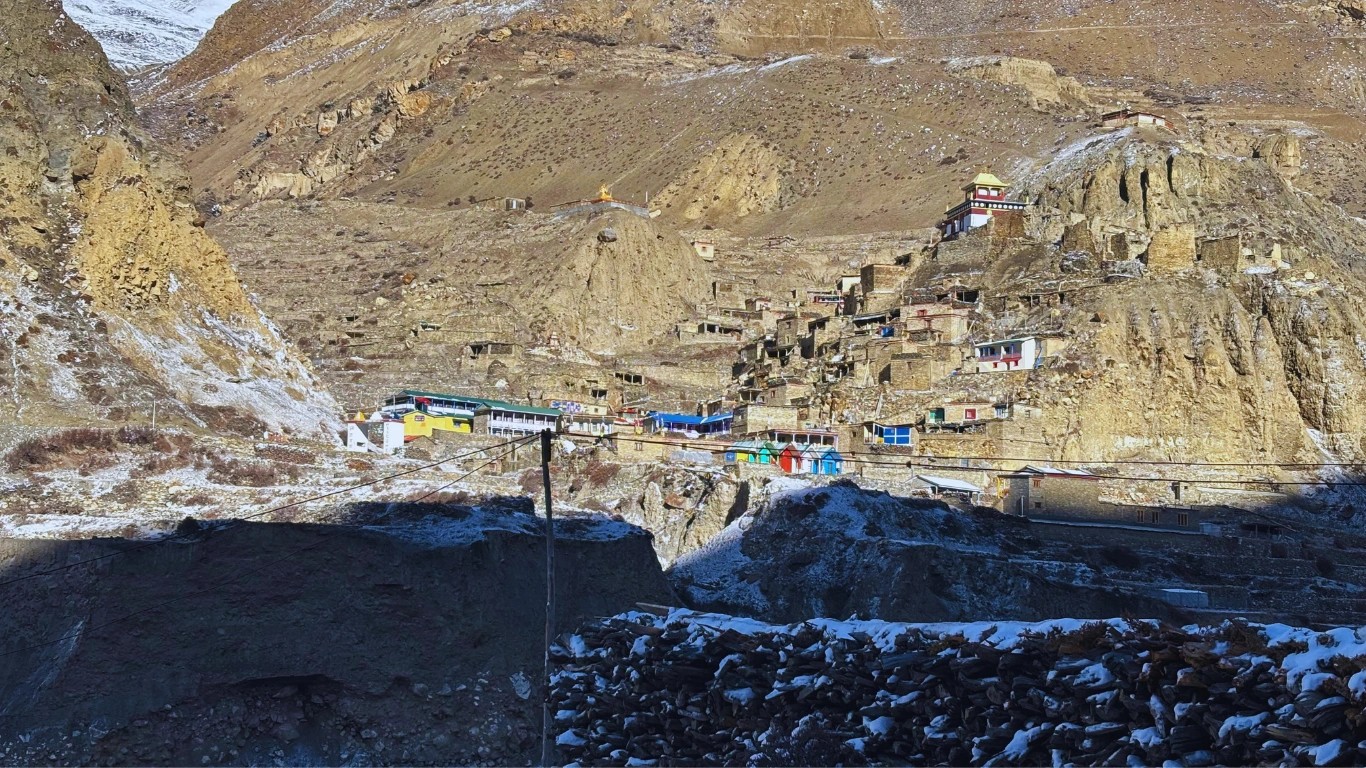
Phu Village in the Narphu region — one of the most culturally preserved Tibetan-influenced settlements and the quietest trek in Nepal as of 2026.
Narphu valley Trek is the upcoming hero of quiet Nepal trekking. As Manaslu has grown crowded, Narphu has become the genuine alternative for trekkers seeking authentic remote Himalayan trekking with almost no other groups on the trail. 10 days reaching 5,322 m through the medieval villages of Nar and Phu — two of the most culturally preserved Tibetan-influenced settlements in Nepal.
Quick facts:
Duration: 10 days
Max altitude: 5,322 m
Difficulty: Strenuous
Permits: Restricted Area Permit + ACAP
Best months: October, November, March, April
Can be combined with: Annapurna Circuit for a 20+ day expedition
Who it suits: Experienced trekkers who want what Manaslu used to be — quiet trails, authentic mountain villages, and genuine Tibetan Buddhist culture without crowds. The villages of Nar and Phu are the highlight — their people, traditional houses, and way of life remain almost untouched by tourism in a way Manaslu villages no longer are.
Why we predict this for 2026, 2027, and 2028: Quiet treks do not stay quiet forever — Manaslu is the proof. Narphu is in the early window before mass discovery. Trekkers who go now experience what only a few hundred international trekkers see each year.
9. Three Passes Trek — Best for Experienced Trekkers
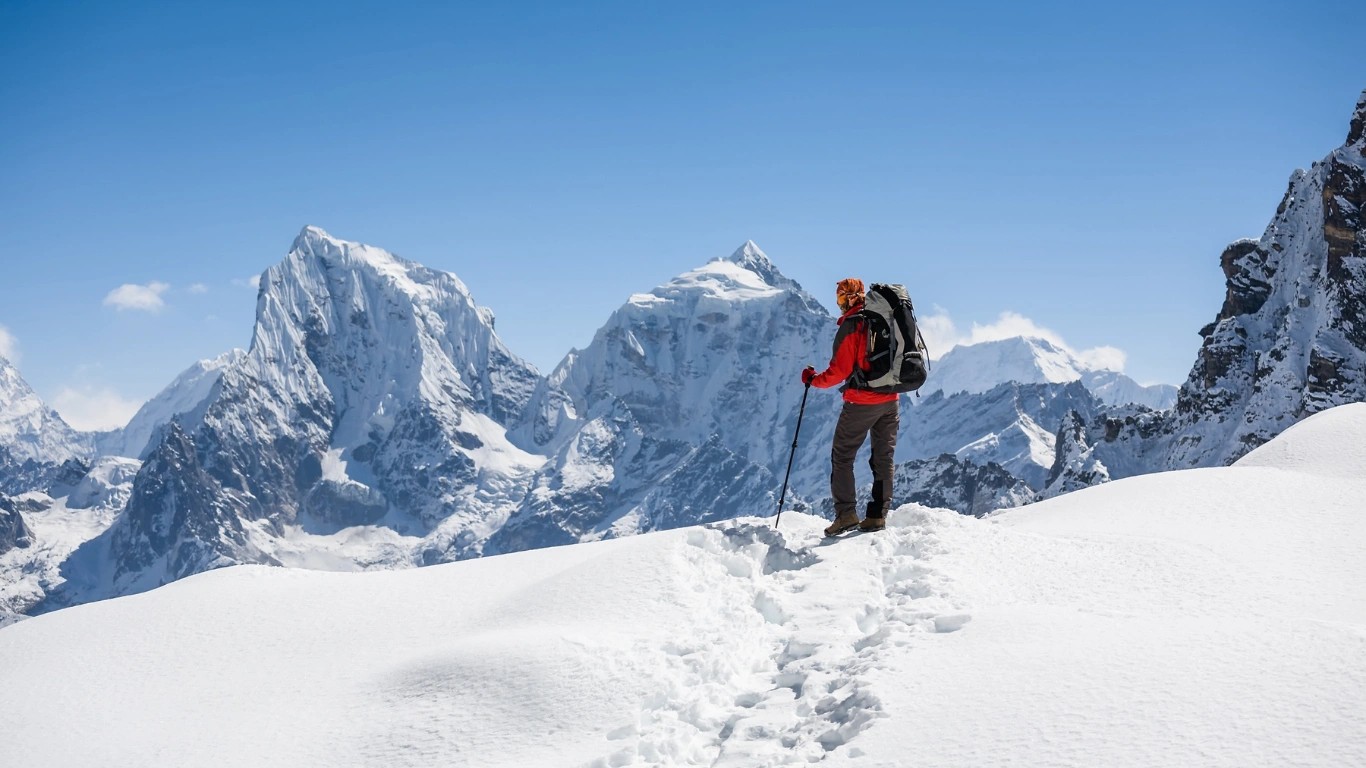
Three high passes trek Nepal's most demanding trek, recommended only for experienced trekkers.
The Three Passes Trek is the most demanding trek in Nepal — 22 days crossing Kongma La (5,535 m), Cho La (5,420 m), and Renjo La (5,360 m) while also reaching Everest Base Camp and Kala Patthar (5,545 m). It combines everything the Everest region has to offer into a single comprehensive expedition.
Quick facts:
Duration: 22 days
Max altitude: 5,545 m (Kala Patthar)
Three passes: Kongma La (5,535 m), Cho La (5,420 m), Renjo La (5,360 m)
Difficulty: Very strenuous — for experienced trekkers only
Permits: Sagarmatha National Park + Khumbu Pasang Lhamu permit
Best months: October, November, April, May
Who it suits: Trekkers with serious mountain experience, anyone who has already completed EBC or a similar high-altitude trek, those with 3+ weeks available and who want the complete Everest region experience including the Gokyo Lakes route.
Who it does not suit: First-time Himalayan trekkers, anyone uncomfortable with multiple high pass crossings, trekkers with less than 3 weeks available. Three Passes is not a starting point — it is a culmination.
10. Langtang Valley Trek — Best Cultural Trek in Nepal
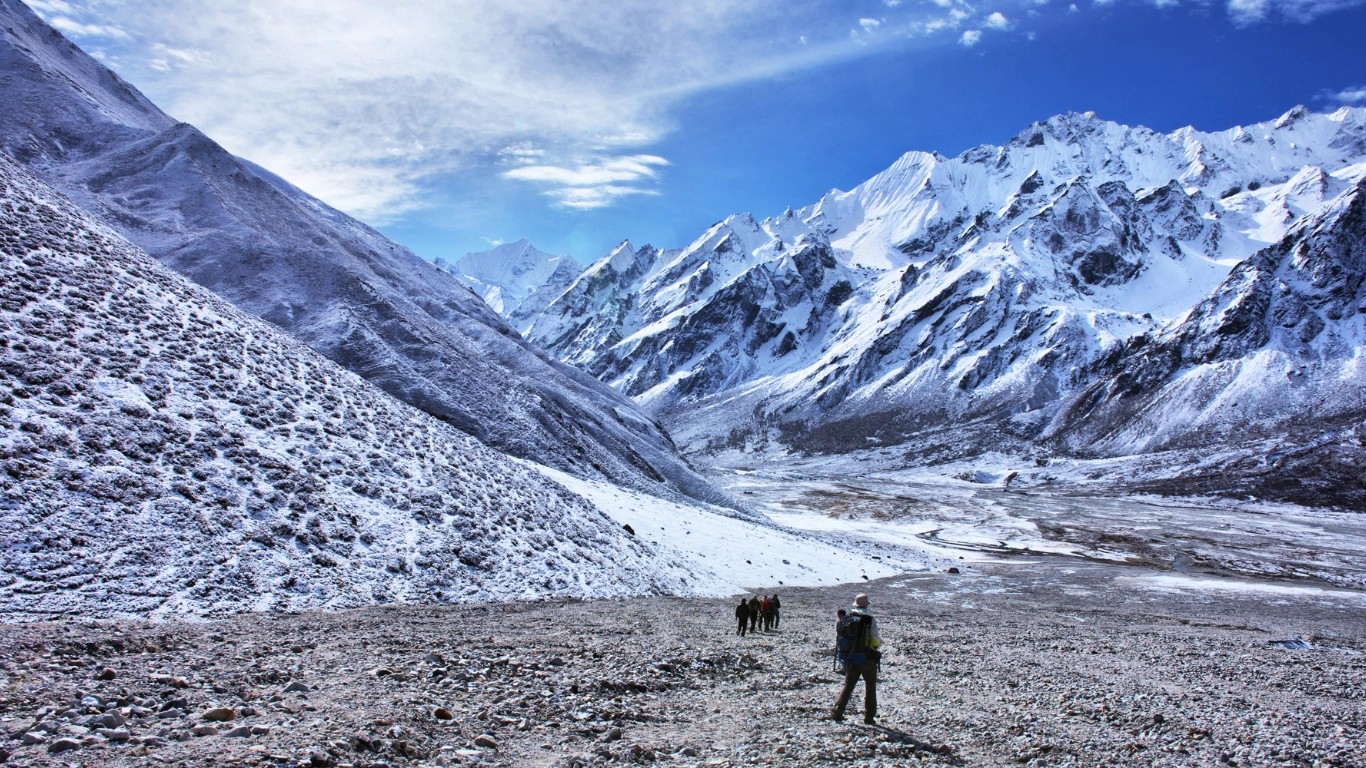
Nepal's best cultural trek through Tamang Buddhist communities.
The Langtang Valley Trek is Nepal's most authentic cultural trek — 10 days through Tamang Buddhist villages, working monasteries, and traditional mountain communities that survived and rebuilt after the 2015 earthquake. Trekkers choose between two summit viewpoints — Kyanjin Ri (4,773 m) or Tserko Ri (4,984 m) — based on energy and weather on the day.
Quick facts:
Duration: 10 days
Max altitude: Trekker's choice — Kyanjin Ri (4,773 m) or Tserko Ri (4,984 m)
Difficulty: Moderate
Permits: Langtang National Park + TIMS card
Best months: October, November, March, April
Closest major trek to Kathmandu — accessible by road without flights
Who it suits: Trekkers wanting authentic Buddhist mountain culture, those interested in supporting post-earthquake recovery communities, anyone who prefers cultural depth over base camp fame. The Tamang Heritage region offers some of the most genuine community-tourism interactions available anywhere in Nepal.
Who it does not suit: Trekkers who specifically want to see Everest or the Annapurna massif — Langtang has its own dramatic mountains but is a different region entirely.
The 10 Best Treks in Nepal — Complete Comparison Table
Trek
Days
Max Altitude
Difficulty
Best For
Mardi Himal
5–7
4,500 m
Easy-Moderate
Beginners, limited time
Ghorepani Poon Hill
4–5
3,210 m
Easy
Short trek, families, year-round
Khopra Trek
12
3,660 m
Easy-Moderate
Hidden gem, Dhaulagiri views
Annapurna Base Camp
14
4,130 m
Moderate
Best base camp for beginners
Langtang Valley
10
4,984 m
Moderate
Cultural trek, post-earthquake
Annapurna Circuit
14–21
5,416 m
Strenuous
Landscape diversity
Narphu Trek
10
5,322 m
Strenuous
Quietest trails 2026
Manaslu Circuit
15
5,215 m
Strenuous
Remote (but now crowded)
Everest Base Camp
14
5,545 m
Strenuous
Iconic bucket list
Three Passes Trek
22
5,545 m
Very Strenuous
Experienced trekkers only
Best Time to Trek in Nepal — Month by Month Guide
Clear October skies over the Annapurna range — October is the best month to trek in Nepal for visibility and stable weather.
The best season to trek in Nepal is autumn — October and November deliver the clearest skies, most stable weather, and best mountain visibility across all major routes. Spring — March, April, May — is the second-best window with warmer temperatures and rhododendron blooms below 3,500 m. Monsoon (June to September) and winter (December to February) are typically avoided but each has specific exceptions worth knowing.
Month by month breakdown:
January — Avoid most treks. Extreme cold above 4,000 m. Many tea houses closed on higher routes.
February — Harshest month. Cold, windy, limited services. Not recommended.
March — End of March is excellent. Minimal rain, rhododendrons in full bloom between 2,400–2,880 m.
April — Strong spring window. Warm days, stable weather. One of the busiest months.
May — Last reliable pre-monsoon month. Afternoon clouds build above 4,500 m but mornings are excellent.
June — Monsoon begins. Heavy rainfall on lower elevations. Mustang section of Annapurna Circuit remains viable in rain shadow.
July — Heaviest rainfall of the year. Not recommended for any trek.
August — Continued monsoon. Trails muddy and views inconsistent.
September — Late monsoon. Bookable for experienced trekkers comfortable with weather uncertainty.
October — The single best month for trekking in Nepal. Clear skies, stable weather, vibrant post-monsoon colours. Busiest month — book 3–4 months in advance.
November — Equal to October for visibility, fewer crowds, colder nights above 4,500 m.
December — Cold but offers exceptionally clear skies. From our direct experience guiding EBC in December the visibility is superior to peak season — the trade-off is cold tolerance.
The best treks in Nepal in October and November are EBC, ABC, Annapurna Circuit, and Manaslu — all at their absolute peak conditions during these two months. The best winter trek in Nepal for cold-tolerant trekkers is Everest Base Camp for the clearest mountain visibility of the entire year.
Best Tea House Treks in Nepal — Standard vs Luxury
A tea house trek means you sleep and eat at local lodges along the trail — no tents, no cooking equipment, no camping gear required. Tea houses provide rooms, hot meals, and basic facilities. Almost every major trek in Nepal is a tea house trek.
Best standard tea house treks:
Annapurna Base Camp Trek — well-maintained tea houses throughout
Annapurna Circuit Trek — full tea house route with varying quality by region
Ghorepani Poon Hill Trek — most comfortable tea houses on any Nepal route
Mardi Himal Trek — newer tea houses, simple but clean
Best luxury tea house trek:
Everest Base Camp Trek is the only major Nepal route with genuine luxury lodge options. Companies like Yeti Mountain Home and Mountain Lodges of Nepal operate boutique properties along the EBC route — private rooms with attached bathrooms, heated dining halls, oxygen-enriched rooms, and Western-style amenities at trekking elevations.
For 95% of trekkers a standard tea house trek delivers everything needed for an exceptional experience. The luxury option exists for trekkers who want EBC with hotel-grade comfort at altitude — and is priced accordingly.
Best Winter Treks in Nepal — December to February
Everest visible from Kala Patthar in December — winter trekking in Nepal offers the clearest skies of the year.
Winter trekking in Nepal is genuinely possible if you choose the right route and prepare correctly. Most operators avoid promoting winter trekking — but the trekkers who go in December see Nepal at its visual best.
The 3 best winter treks in Nepal:
Everest Base Camp Trek — December offers exceptionally clear skies and the most visible mountains of the entire year. The trade-off is cold — temperatures at Gorak Shep drop to −20°C. From direct experience guiding this trek in December, the visibility is superior to October peak season for trekkers who can handle the temperatures.
Annapurna Circuit Trek — viable in December for trekkers comfortable with cold. Some tea houses above 4,000 m close — itinerary planning is essential.
Ghorepani Poon Hill Trek — the easiest winter trek in Nepal. Maximum altitude of 3,210 m means manageable temperatures and full tea house operation year-round. Best winter option for families and trekkers new to cold-weather hiking.
Winter trekking requires more cold-weather gear, more flexibility on the itinerary, and an honest assessment of your tolerance for cold. With those conditions met, winter trekking in Nepal offers visibility and solitude unmatched in any other season.
How Much Does Trekking in Nepal Cost?
Trekking in Nepal costs significantly less than equivalent trekking destinations like Patagonia, the Alps, or the Himalayas in India. A guided trek with full inclusions ranges from approximately USD 900 to USD 3,500+ depending on the route, duration, and inclusions.
Approximate cost ranges by trek (guided, all-inclusive):
Ghorepani Poon Hill: USD 500–900
Mardi Himal: USD 600–1300
Khopra Trek: USD 800–1,000
Langtang Valley: USD 850–1,300
Annapurna Base Camp: USD 1,000–1,500
Annapurna Circuit: USD 1,200–1,800
Manaslu Circuit: USD 1,300–2,200
Narphu Trek: USD 1,500–2,000
Everest Base Camp: USD 1,400–2,000
Three Passes Trek: USD 1,800–3,500
Standard guided packages include accommodation, meals on the trail, guide and porter fees, permits, and transport from Kathmandu. International flights, travel insurance, personal gear, and tips are not included.
Do You Need a Guide for Trekking in Nepal?
As of 2025–26, hiring a guide is mandatory for foreign trekkers on most major Nepal trekking routes. The Nepal Tourism Board introduced this requirement to improve trekker safety and reduce rescue incidents on remote trails.
Why a guide matters beyond legal requirement:
Local knowledge of trail conditions, weather, and route changes
Trained in altitude sickness assessment and emergency response
Helps with permit checkpoints, tea house bookings, and language
Carries first aid including pulse oximeters and water purification
Restricted area treks like Manaslu Circuit, Narphu, and Upper Mustang have always required a guide plus minimum group size by law. For all other treks the practical and safety case for a guide remains strong regardless of legal requirement.
The best trek in Nepal is the one that matches you.
The best treks in Nepal are not the famous ones — they are the right ones for you. EBC suits the trekker chasing the iconic image. ABC suits the first-timer who wants Himalayan reward without serious risk. Mardi Himal suits the beginner with limited time. Narphu suits the trekker who wants what Manaslu used to be. Three Passes suits only those who have already done the easier ones.
At Majestic Trails Nepal we have been guiding international trekkers across every major route in Nepal for over 10 years — from beginners on Poon Hill to experienced mountaineers crossing all three passes. We help trekkers choose the trek that matches their reality, not the one that matches their friend's Instagram.
If you are ready to walk into the Himalayas — choose the trek that fits you, not the one that fits everyone else. Then come and walk it.
The Mardi Himal Trek is the best trek in Nepal for beginners — 5–7 days reaching 4,500 m with gentle terrain, well-maintained tea houses, and direct views of Machhapuchhre and Annapurna South. Ghorepani Poon Hill is the second best option for complete beginners with only 4–5 days available.
The best base camp trek in Nepal depends on your experience. For first-time base camp trekkers Annapurna Base Camp at 4,130 m offers the safest acclimatization profile. For the iconic bucket list experience Everest Base Camp at 5,364 m is the world's most famous trek.
The best short treks in Nepal are Ghorepani Poon Hill (4–5 days) and Mardi Himal (5–7 days) — both based out of Pokhara with full tea house infrastructure and significant Himalayan views despite their shorter duration.
The best time to trek in Nepal is October and November — clear skies, stable weather, and peak visibility across all major routes. Late March, April, and May offer the second-best window with spring blooms and warmer temperatures.
October is the strongest month for every major Nepal trek. The best treks in Nepal in October are Annapurna Base Camp, Everest Base Camp, and the Annapurna Circuit — all at their absolute peak conditions with the clearest skies of the entire year.
November rivals October for visibility and offers fewer crowds. The best treks in Nepal in November are EBC for the iconic experience, ABC for the most accessible base camp, and Annapurna Circuit for landscape diversity — all with cold but manageable temperatures.
For experienced trekkers Everest Base Camp in December offers the clearest mountain views of the entire year. For beginners and families Ghorepani Poon Hill is the easiest winter trek in Nepal — low altitude, year-round tea house operation, and manageable temperatures.
Every major trek in Nepal is a teahouse trek — Annapurna Base Camp, Everest Base Camp, Annapurna Circuit, and all others provide full lodge accommodation throughout. The best luxury teahouse trek in Nepal is Everest Base Camp with private boutique lodge operators offering hotel-grade comfort at altitude.
Related Travel Blogs
Join our Newsletter
Sign up to stay updated with latest offers, recent events and more news.