
Annapurna Circuit Trek Nepal – Complete Guide, Itinerary, Cost & Best Time
23 Jan 2026
The Annapurna Circuit Trek is one of the world’s most legendary long-distance treks — a journey that circles the Annapurna massif through Nepal’s most...

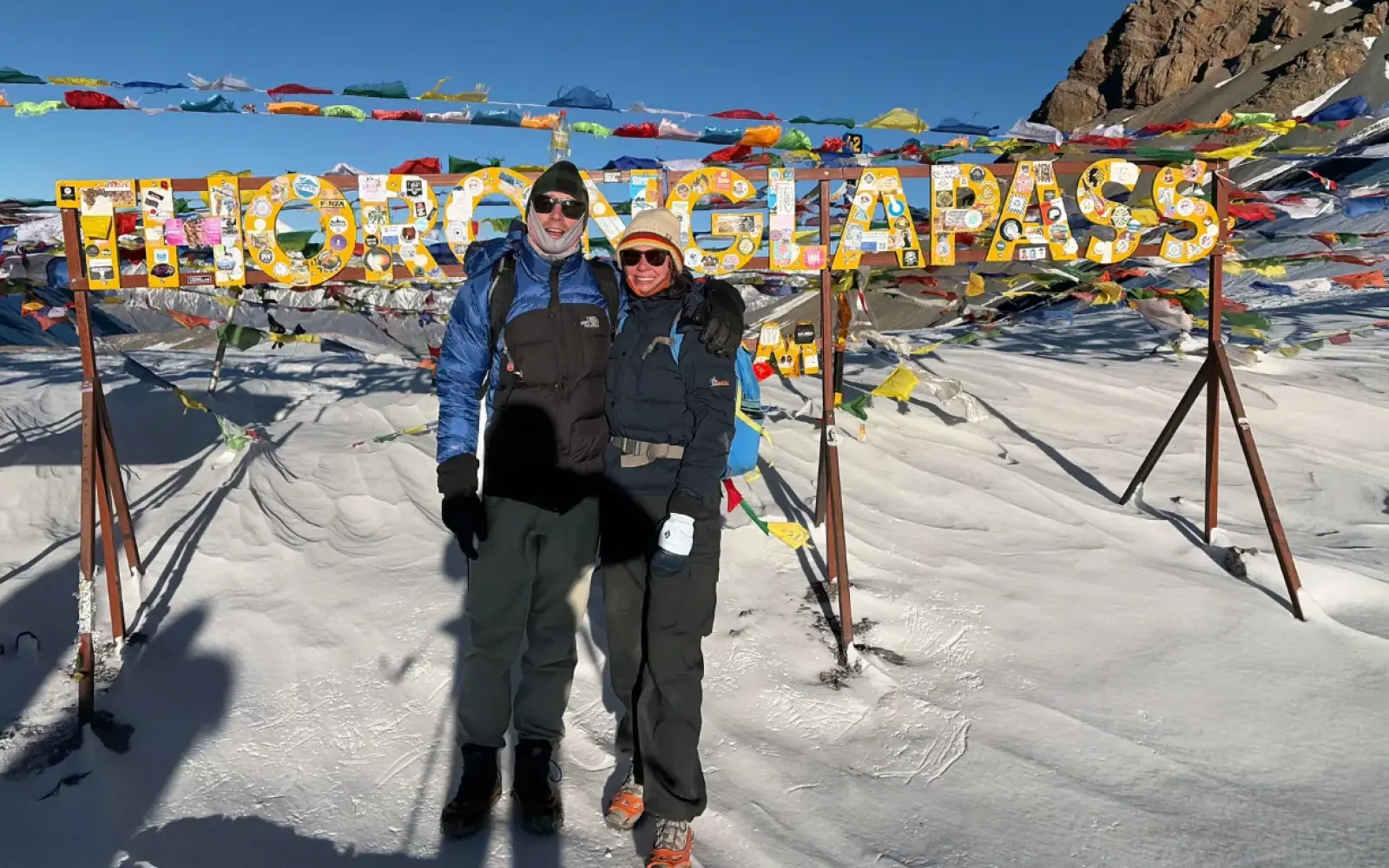

Yes, November is one of the best months to trek the Annapurna Circuit, with dry, stable weather, the clearest mountain views of the year, and fewer trekkers than October. Days are sunny and mild in the valleys, but nights above Manang drop to −10 °C (14 °F) or lower, and snow is common on Thorong La (5,416 m / 17,769 ft), so pack warm layers and crampons. This guide is based on our own Annapurna Circuit trek in November 2026.
Planning the Annapurna Circuit for November 2027? The best way to know what to expect is to hear from someone who has just done it. Most "Annapurna Circuit in November" guides are written from a desk. This one comes from the trail. Bibek Dhamala, founder and licensed guide at Majestic Trails Nepal, led our guests Libby and Keith from the USA over Thorong La in November 2026. Below is exactly what we found, from the weather and snow to crossing times and menu prices, plus how to plan your own November 2027 trek.
Why you can trust this report: Written from a real trek on 6–14 November 2026. Led by Bibek Dhamala, licensed trekking guide (Licence No. 19911) and founder of Majestic Trails Nepal (Reg. No. 396834/83/84). Every price, time, and temperature below is from this trip or from forecasts checked on 17 November 2026.
Yes. November is one of the two best months for the Annapurna Circuit, together with October, and in 2026 it gave us almost perfect conditions. Here is why:
The trade-off is cold. Nights above Manang drop well below freezing, and snow often lingers after High Camp. With warm clothes, crampons, and a slow pace, November is very manageable, and for many trekkers it is the most rewarding month of all.
The table below sums up our trip in one place.
| Detail | Our Trek |
|---|---|
| Dates | 6–14 November 2026 (9 nights on the trail) |
| Route | Dharapani to Muktinath, over Thorong La |
| Group | 2 guests from the USA, aged 30–40, good fitness, private trip |
| Guide | Bibek Dhamala, lead guide, Majestic Trails Nepal |
| Getting in | Private vehicle from Kathmandu to Besisahar, then private jeep to Dharapani |
| Getting out | Private jeep from Muktinath to Pokhara (6–7 hours with stops) |
| Overnight stops | Dharapani, Chame, Upper Pisang, Ngawal, Manang (2 nights), Yak Kharka, High Camp, Muktinath |
| Sky | Clear almost every day; some cloudy evenings |
| Coldest night | About −13 °C (9 °F) inside our room at High Camp |
| Snow | Many sections after High Camp, sometimes knee-deep |
| Altitude sickness | None; both guests felt fine all the way |
The Annapurna Circuit is now flexible. Roads reach Dharapani on the east side and Muktinath on the west, so in November you can start and finish wherever suits your time and fitness.
November weather on the Annapurna Circuit is dry, sunny, and cold: warm days in the lower valleys and freezing nights above 3,000 m (9,843 ft). On our trek, the sky was clear almost every morning, a few evenings clouded over, and we had no rain. The only snowfall came about eight days before our Thorong La crossing, and it fell high up, around High Camp and the pass.
The table combines what we felt on the trail with forecast data for mid-to-late November 2026 (AccuWeather, Google Weather, and a mountain weather model, checked on 17 November 2026).
| Place | Altitude | Daytime | Night |
|---|---|---|---|
| Chame | 2,670 m (8,760 ft) | 4 to 12 °C (39 to 54 °F) | −5 to −7 °C (23 to 19 °F) |
| Upper Pisang | 3,300 m (10,827 ft) | 7 to 18 °C (45 to 64 °F) in sun | −5 to −9 °C (23 to 16 °F) |
| Manang | 3,540 m (11,614 ft) | about 0 to 10 °C (32 to 50 °F), depending on sun and wind | −7 to −11 °C (19 to 12 °F) |
| High Camp | 4,880 m (16,010 ft) | cold even in sun | about −13 °C (9 °F) inside rooms |
| Thorong La | 5,416 m (17,769 ft) | −4 to −8 °C (25 to 18 °F) | −15 to −19 °C (5 to −2 °F); wind chill to −25 °C (−13 °F) |
| Muktinath | 3,800 m (12,467 ft) | 4 to 12 °C (39 to 54 °F) | around −5 °C (23 °F) |
Four more things to plan around:
Here is what the trail looked like on our November 2026 trek, so you know what to expect in November 2027. The trail was in good condition all the way to High Camp, with no ice before Thorong Phedi. Here is how each section looked on our trek.
We drove by private jeep from Besisahar to Dharapani, 1,860 m (6,102 ft), and started walking there. Between Dharapani and Chame, we mostly used the New Annapurna Trekking Trails (NATT), marked footpaths that keep you off the dusty jeep road. Near Chame, we crossed an old landslide area from the 2026 monsoon. It was easy to pass, but watch your footing.
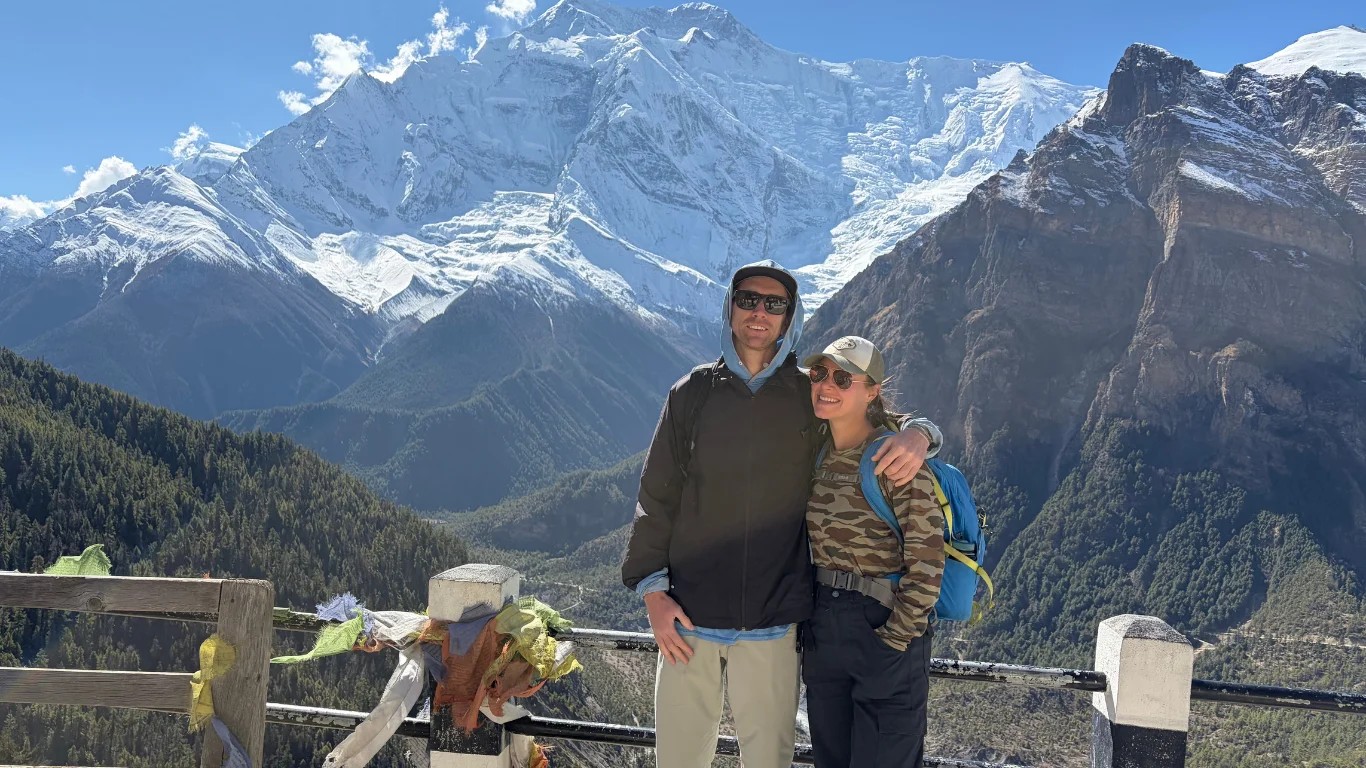
This was the highlight of our trek before the pass. From Upper Pisang, 3,300 m (10,827 ft), the sunrise over Annapurna II is unforgettable, and the garlic soup and thukpa there are the best on the trail. The next morning we took the high route through Ghyaru, 3,670 m (12,041 ft), to Ngawal, 3,660 m (12,008 ft), instead of the lower valley trail. The climb to Ghyaru is steep, but the views across the Manang valley are the finest on the circuit, and the high route boosts your acclimatisation. Stop in Ghyaru for apple pie.
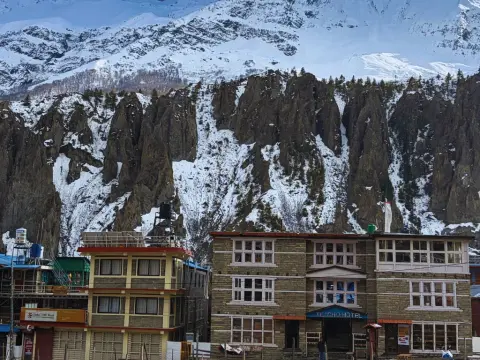
We spent two nights in Manang, 3,540 m (11,614 ft), the most important acclimatisation stop on the circuit. On our rest day we:
Manang has bakeries, well-stocked shops, and a place to buy crampons if you did not bring them.
From Yak Kharka, 4,050 m (13,287 ft), we climbed to Thorong High Camp, 4,880 m (16,010 ft). The trail was dry with no ice up to Thorong Phedi. The snow started after High Camp.
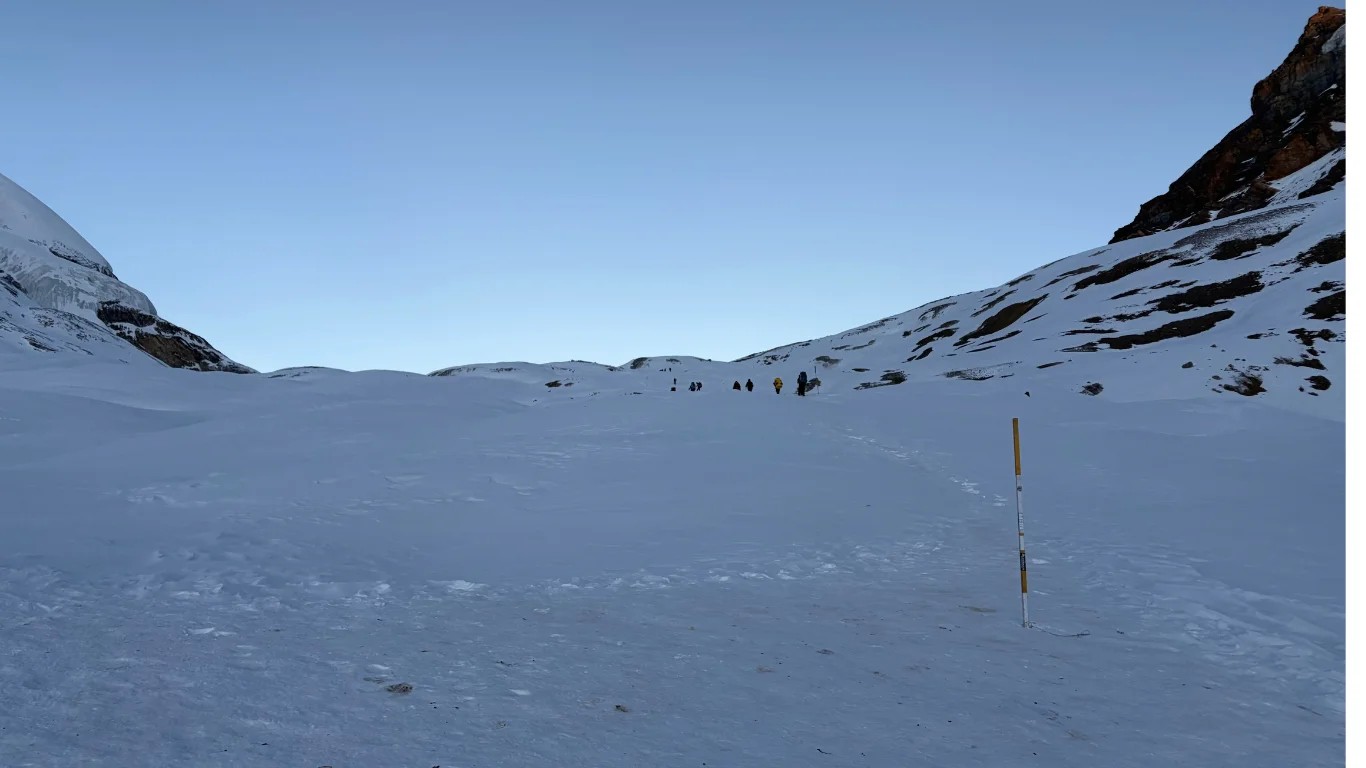
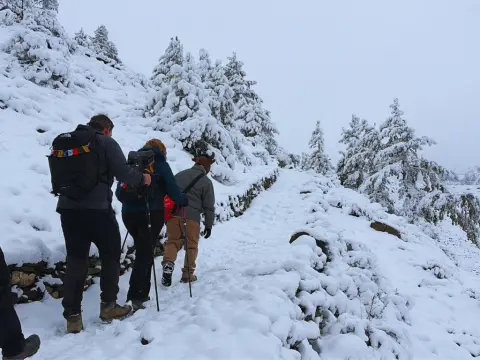
Yes, often. On our crossing in November 2026, snow covered many sections between High Camp and the pass, and in places it was knee-deep. The last snowfall had been about eight days before we crossed, and the snow had not melted on the shaded slopes.
Early that morning, 7–8 guides from different trekking groups worked together to open the trail through the deepest section. Bibek led the trail-opening, and it took about 30 minutes. This is a normal part of guiding in November, and it is one of the clearest reasons to cross the pass with an experienced guide.
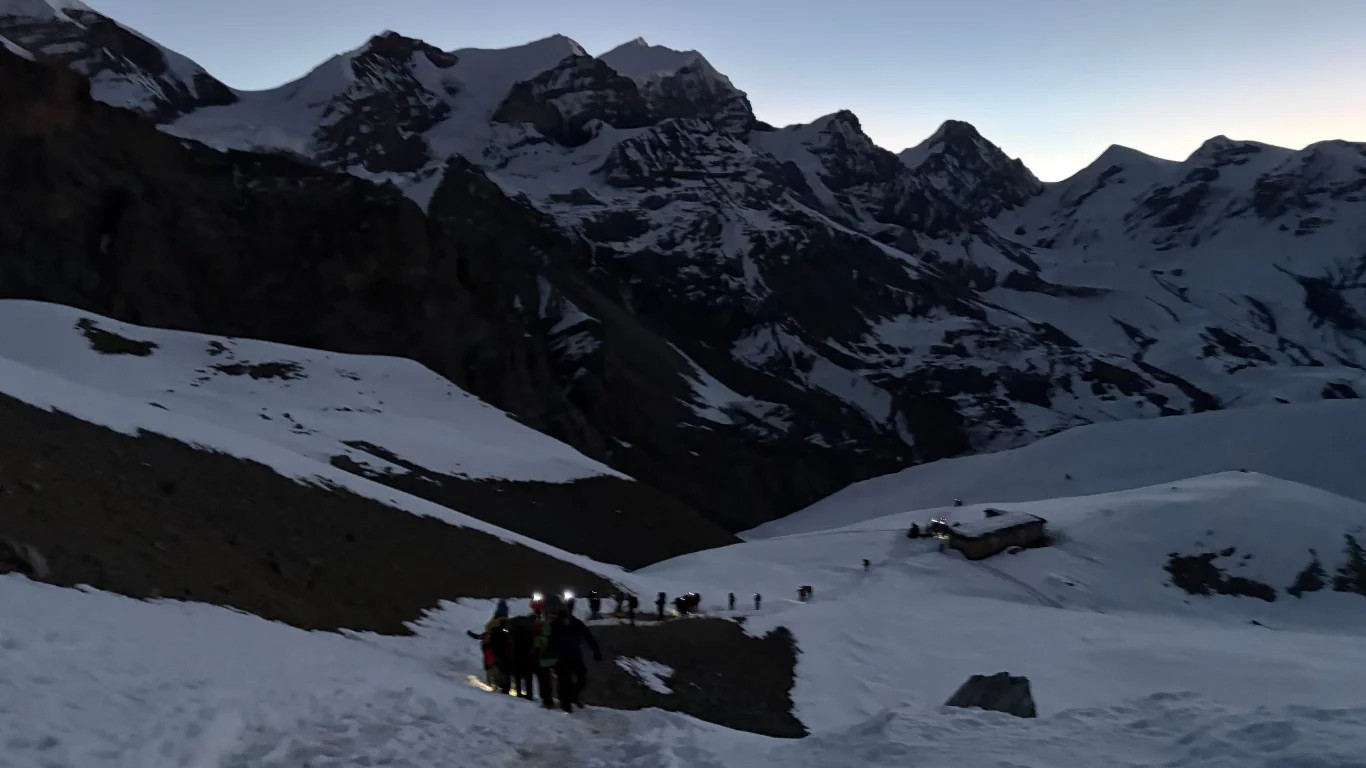
Yes. Thorong La is open in November, and on our crossing in November 2026, groups were crossing normally. After heavy snowfall, the pass can close for a day or two until the trail is opened and packed down, which is exactly what guides did on our crossing morning. Build one spare day into your plan in case you need to wait at Manang or High Camp.
From High Camp, it took us about 3 hours 25 minutes to reach Thorong La and about 4 hours to descend to Muktinath. The timeline below shows our crossing day:
| Time | What Happened |
|---|---|
| 3:30 am | Breakfast at High Camp, 4,880 m (16,010 ft) |
| 4:00 am | Left High Camp by headlamp, in the dark and very cold |
| Early morning | Guides opened a snowy section of trail (about 30 minutes) |
| 7:25 am | Reached Thorong La, 5,416 m (17,769 ft) |
| 11:25 am | Reached Muktinath, 3,800 m (12,467 ft) |
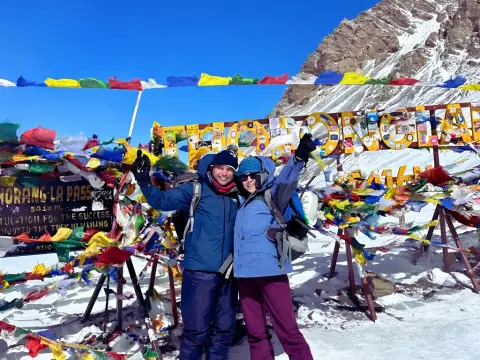
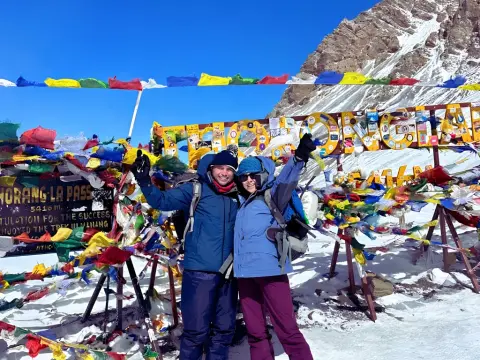
We walked slowly and took frequent short breaks. That steady pace is why both guests reached the top feeling strong. At the prayer flags, Libby and Keith summed it up: "What a beautiful moment, and so cold!"
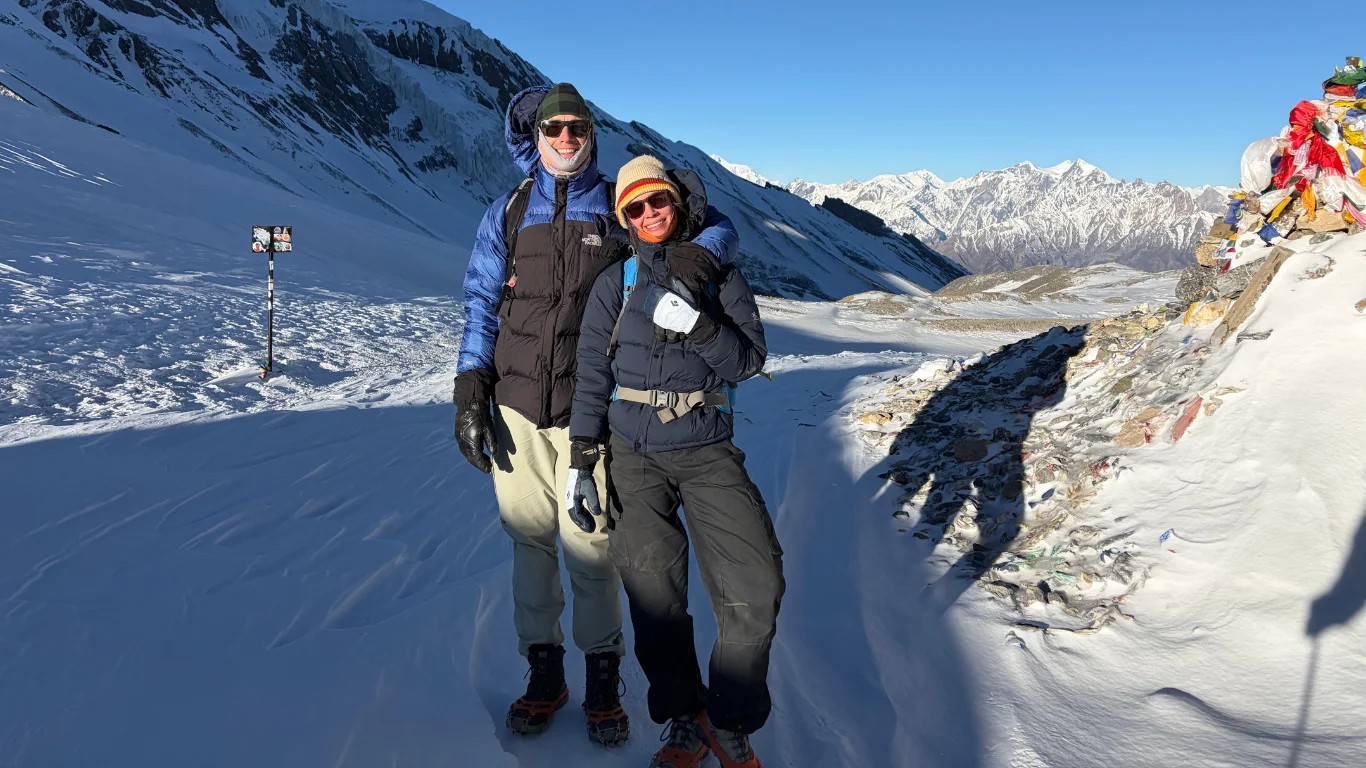
Yes. In November, crampons or microspikes are the single most important item for Thorong La. The descent to Muktinath is long and steep, and the packed snow turns icy. With crampons, our guests found it perfectly safe and not slippery at all. Trekkers without them struggled badly, and that was the most surprising thing we saw all trek. If you forget yours, you can buy crampons in Manang.
Sleep at High Camp if you feel well, and at Thorong Phedi if you have any altitude symptoms. Bibek's advice:
High Camp is cold. Our room was about −13 °C (9 °F), and water bottles started to freeze by morning. In the evening, the dining room lights a stove, and that is where everyone gathers.
You need about 9 nights on the trail from Dharapani to Muktinath, or about 11 days from Kathmandu back to Kathmandu. That is what our November 2026 trek took, including two nights in Manang for acclimatisation. Add 2–3 days if you include Tilicho Lake, or about 4–5 days for Poon Hill.
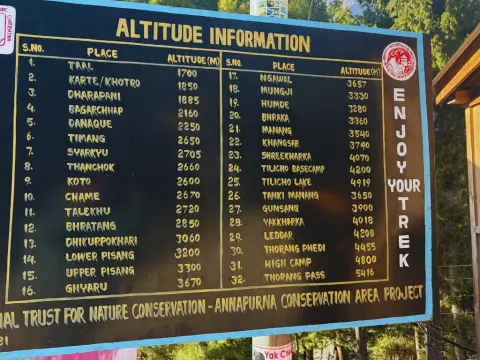
The table below shows the stops we used, with altitudes:
| Night | Overnight Stop | Altitude |
|---|---|---|
| 1 | Dharapani (drive from Kathmandu via Besisahar) | 1,860 m (6,102 ft) |
| 2 | Chame | 2,670 m (8,760 ft) |
| 3 | Upper Pisang | 3,300 m (10,827 ft) |
| 4 | Ngawal (via Ghyaru high route) | 3,660 m (12,008 ft) |
| 5 | Manang | 3,540 m (11,614 ft) |
| 6 | Manang (acclimatisation day) | 3,540 m (11,614 ft) |
| 7 | Yak Kharka | 4,050 m (13,287 ft) |
| 8 | Thorong High Camp | 4,880 m (16,010 ft) |
| 9 | Muktinath (over Thorong La, 5,416 m / 17,769 ft) | 3,800 m (12,467 ft) |
| Next day | Drive Muktinath to Pokhara (6–7 hours) | 822 m (2,697 ft) |
In November, this plan is flexible. Because roads reach Dharapani and Muktinath, you can shorten or lengthen the trek to match your time, but never cut the acclimatisation nights.
You can now drive to the start of the walking section and drive out again after Thorong La, which is how most November trekkers save days. These are the main options:
| Stage | Option | Notes |
|---|---|---|
| Kathmandu to Besisahar | Private vehicle (what we used) | Fastest and most comfortable; leave early to avoid traffic out of Kathmandu |
| Kathmandu to Besisahar | Tourist or local bus | Cheapest option; a long day on the road |
| Besisahar to Dharapani or Chame | Private jeep (what we used) or shared jeep | Rough mountain road; jeeps also run as far as Chame and beyond |
| Muktinath to Pokhara | Private jeep (what we used) | 6–7 hours with stops at Jomsom, Marpha, and Kalopani |
| Muktinath to Jomsom | Shared jeep or bus | Then continue by bus or jeep to Pokhara |
| Jomsom to Pokhara | Flight | A short scenic flight, but morning-only and often delayed by wind; keep a spare day |
On our drive out, we stopped at Marpha for its famous apples and at Kalopani for a close view of Annapurna I, at 8,091 m (26,545 ft), the tenth-highest mountain in the world. A private jeep makes these stops easy; shared jeeps and buses are cheaper and work well on a budget.
No. In early to mid November 2026, the trail felt comfortable, not crowded, and we never saw anyone turned away from a teahouse. You do not strictly need to book ahead in November, but Majestic Trails Nepal always pre-books rooms for our guests, especially at Manang and High Camp, so nobody has to search for a bed after a long, cold day. Booking matters most at Thorong High Camp, which has very limited rooms; when it fills up, late arrivals end up sleeping in the dining hall or walking back down to Thorong Phedi.
Prices on the Annapurna Circuit rise as you climb, because almost everything above the road is carried up by porters. In November 2026, a plate of dal bhat cost NPR 950–1,200, and a trekker paying for their own room and three meals should budget about NPR 3000-4000 a day. For November 2027, add a little extra in case teahouse prices rise. For Majestic Trails Nepal guests, three meals a day are included in the package, so they spend only about NPR 2,000 a day on extras such as drinks, snacks, and hot showers.
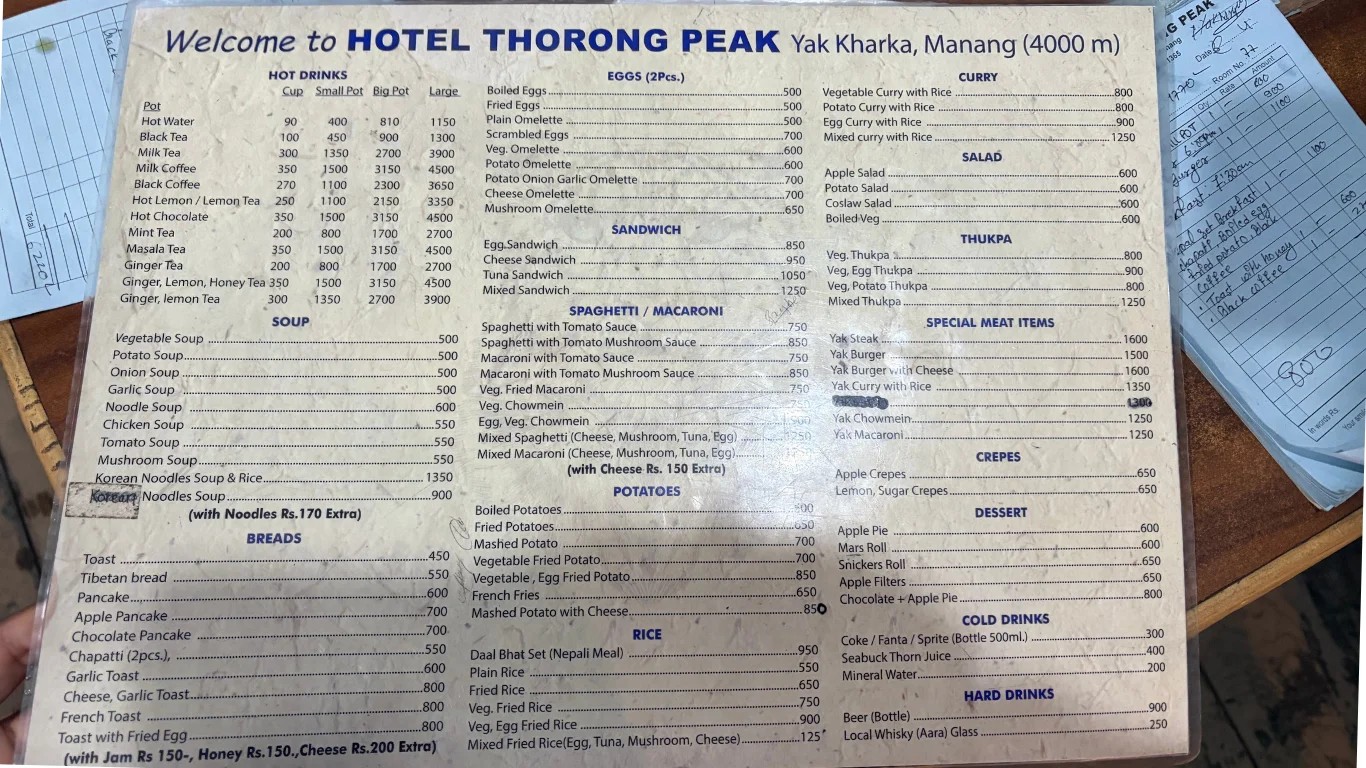
These are the prices we saw on teahouse menus in November 2026:
| Item | Price (NPR) | Notes |
|---|---|---|
| Dal bhat (unlimited refills) | 950–1,200 | Cheaper lower down, higher near the pass |
| Room | Around 500 | About NPR 500 more in higher villages |
| Hot shower | Free | No shower at High Camp |
| Charging and wifi | Free | NTC 4G worked well up to Manang |
| Apple pie | NRS 550 | Best at Ghyaru |
| Garlic soup | NRS 400-700 | Best at Upper Pisang |
NTC 4G data worked very well all the way up to Manang. It stopped about 1 hour 30 minutes after leaving Manang towards Yak Kharka. Download offline maps and message home before you leave Manang, because you may have no signal until Muktinath. Charging is easy: in November 2026, the teahouses we stayed in charged phones and cameras for free, with electricity all the way up to Thorong High Camp.
The safest, cheapest, and greenest option is tap water with purification tablets. Bibek always recommends it: fill your bottle from the tap, add a tablet, and wait the time on the pack. It is completely safe and keeps plastic bottles off the trail. Use an insulated bottle above Manang so your water does not freeze.
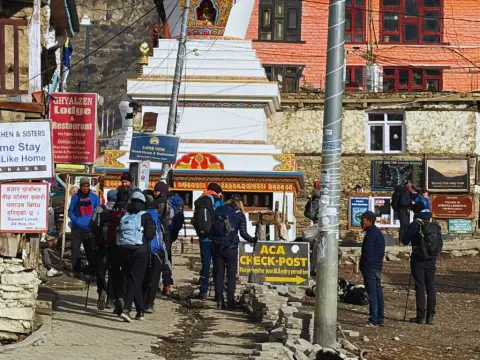
The main permit for the Annapurna Circuit is the Annapurna Conservation Area Permit (ACAP). Here is what you need to know:
Some websites still mention a TIMS card. On our November 2026 trek, only the ACAP permit was checked.
There are ATMs at Chame and Manang, so you can top up cash on the way. They can run out of money or stop working in busy weeks, so still carry enough Nepali rupees from Kathmandu or Pokhara as a backup. Cards are rarely accepted in teahouses, and after Manang you should not count on finding an ATM until you are past Thorong La.
The best way to avoid altitude sickness is to climb slowly and give your body time to adjust. Both of our guests finished without any symptoms, thanks to these habits:
If you feel a headache, nausea, or dizziness that does not go away, tell your guide, rest, and do not go higher. The free HRA talk in Manang explains the warning signs clearly.
Pack for winter above Manang. This is Bibek's November list, in order of importance:
For the full list, read our packing list for trekking in Nepal.
The later in November you go, the colder it gets. Here is the difference:
Whenever you go in November, carry crampons for Thorong La.
The first half of November gives the best balance. Starting the trek between about 1 and 15 November, as we did, means clear skies, nights that are cold but bearable, and every teahouse open. Late-November starts are still very good, but plan for colder nights and a higher chance of snow on the pass.
Yes, most are. In early to mid November 2026, every teahouse we passed was open and serving full menus. Towards the end of November and into December, some teahouses at the highest stops, such as High Camp and Thorong Phedi, may run with fewer rooms or close for a few days, so check with your guide or trekking company before you go.
November has far more advantages than disadvantages, and every disadvantage can be managed with the right preparation. Here is the honest picture from our trek.
These are the reasons we recommend November:
These are the challenges, with the fix for each:
The table below sums up November in one view.
| Advantages | Disadvantages |
|---|---|
| Clearest mountain views of the year | Very cold nights above Manang (−10 °C or colder) |
| Little to no rain | Snow and ice likely after High Camp |
| Stable, predictable weather | Thorong La can close for 1–2 days after heavy snow |
| Fewer trekkers than October | Shorter daylight hours |
| Easy to find rooms | Cold dining rooms after sunset |
| Pleasant daytime walking temperatures | Crampons and gaiters needed |
| Great light for photography | Strong afternoon wind on the pass |
November suits most trekkers, but not everyone. Use this quick check:
These are Bibek's own tips after leading the trek this November:
The two biggest mistakes we saw were crossing Thorong La without crampons and trekking without a guide. We also met trekkers who started alone and then hired a porter halfway along the trail, which cost them much more than booking one from the start.
Yes, both are worth adding in November.
If you want to trek in November 2027, here is the plan we would give a friend, based on this season on the trail:
Roads, permit rules, and prices in Nepal can change from one season to the next. We will update this guide after our November 2027 treks, so check back before you go, or ask our team for the latest conditions.
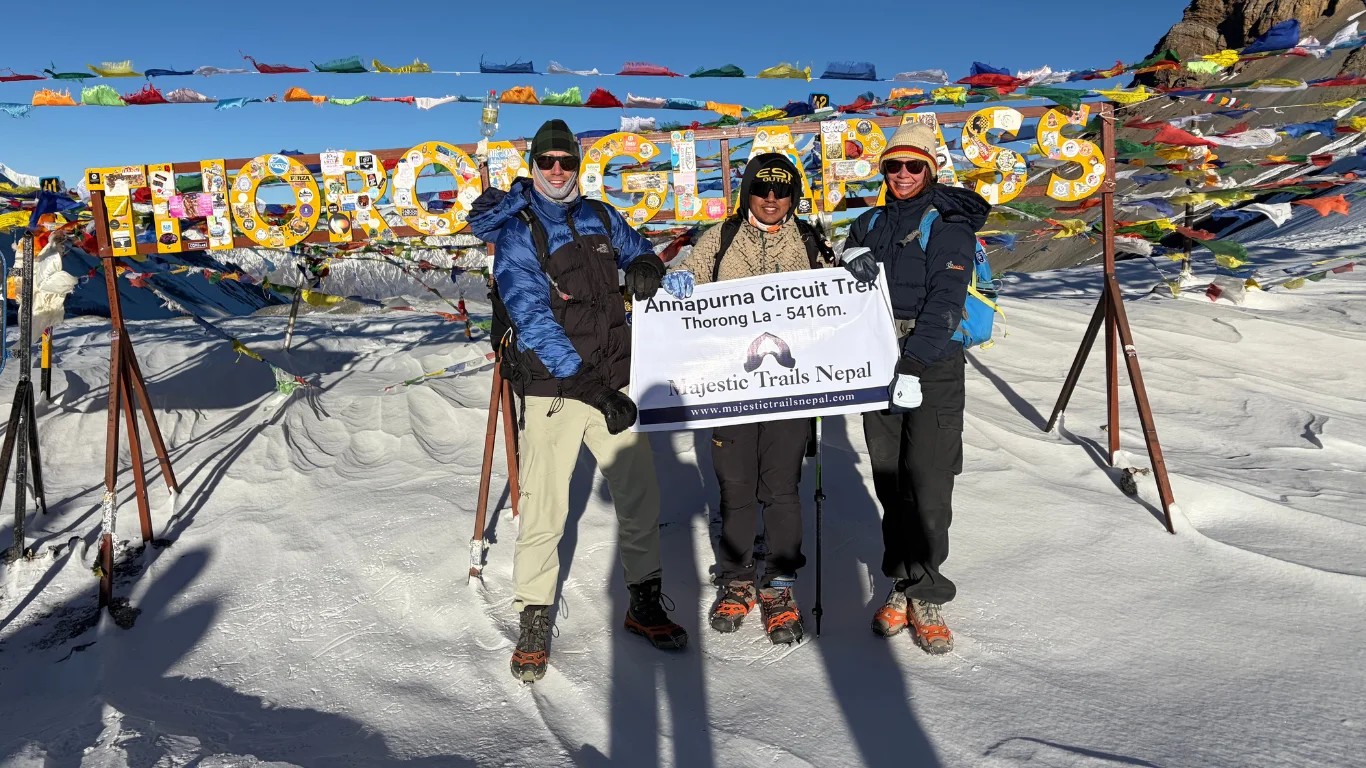
Majestic Trails Nepal runs the Annapurna Circuit through the season with licensed guides who know Thorong La in every condition, including the snow of November. Our package includes three meals a day, pre-booked teahouses, permits, and a guide who has crossed the pass this season.
Choose the version that fits your time:
Planning to trek in November 2027? Contact our team on WhatsApp at +977 9700937981 or email info@majestictrailsnepal.com.
Yes. November gave us clear skies, quiet trails, and some of the best mountain views of the year, from Upper Pisang and Ghyaru to the prayer flags on Thorong La. The cold is real, and snow after High Camp means crampons are not optional. But with good clothes, a slow pace, and a guide who knows the pass, November is one of the best months to walk the Annapurna Circuit.
If you are planning for November 2027, now is the time to choose your dates. Book the Annapurna Circuit Trek with Majestic Trails Nepal, or talk to Bibek and the team about your dates.
Often, yes. On our crossing in November 2026, snow covered many sections after High Camp, and some were knee-deep. The last snowfall had been about eight days earlier. Crampons or microspikes are strongly recommended.
Lower valleys are pleasant by day (about 4–18 °C / 39–64 °F) but freezing at night. Above Manang, nights drop to about −10 °C (14 °F), our room at High Camp was about −13 °C (9 °F), and the pass can reach −19 °C (−2 °F) before sunrise.
Yes, in November. Crampons or microspikes make the snowy, icy descent to Muktinath safe. Trekkers without them struggled on our crossing. You can buy them in Manang.
From High Camp, it took us about 3 hours 25 minutes to reach the pass and about 4 hours to descend to Muktinath, around 7 hours 30 minutes in total. From Thorong Phedi, add about one hour.
No. It is quieter than October. In early to mid-November 2026, rooms were easy to find everywhere, though we still pre-booked for our guests.
Yes, if they are reasonably fit, walk slowly, acclimatise properly, and pack for the cold. Going with a licensed guide makes November much safer for first-time trekkers.
A guide is strongly recommended in November. Nepal introduced a rule in April 2023 requiring foreign trekkers in protected areas to hire a licensed guide, though enforcement on the Annapurna Circuit varies and we still met trekkers walking alone. A guide also helps with snow, trail-opening, and the 4:00 am start on pass day.
October is slightly warmer but much busier. November has clearer, more stable skies and fewer people, with colder nights and a higher chance of snow on the pass. For quiet trails and views, November is excellent.
Yes, but it is colder, and Thorong La can close for a few days after heavy snow. Bring crampons, allow spare days, and go with a guide who checks pass conditions daily.
No. In November 2026, Tilicho Lake was not frozen, according to groups we met on the trail. The trail was in good condition but cold.
Yes. Thorong La is open in November. After heavy snowfall, it may close for a day or two until the trail is opened, so keep one spare day in your plan.
October and November are the best months, followed by April and May. November gives the clearest skies and quieter trails; October is slightly warmer but busier. We recommend starting in the first half of November.
About 9 nights from Dharapani to Muktinath, or about 11 days from Kathmandu to Kathmandu, including two nights in Manang. Add 2–3 days for Tilicho Lake.
Yes. The Annapurna Circuit is longer and higher, crossing Thorong La at 5,416 m (17,769 ft), while Annapurna Base Camp sits at 4,130 m (13,550 ft). In November, the circuit also brings colder nights and possible snow on the pass. See our Annapurna Base Camp Trek if you want a shorter, lower option.
At Annapurna Base Camp, 4,130 m (13,550 ft), November days are sunny and mild in the sun, while nights usually drop to around −5 to −10 °C (23 to 14 °F). It is cold, but less extreme than High Camp and Thorong La on the circuit.
Solo trekking without a guide is not recommended in November. Nepal's April 2023 rule requires foreign trekkers in protected areas to hire a licensed guide, and in snowy conditions, a guide makes the pass day far safer. Solo travellers can join a group or book a private guide with Majestic Trails Nepal.
Yes. In November 2026, charging was free in the teahouses we stayed in, and there was grid electricity all the way to Thorong High Camp. Carry a power bank, because cold drains batteries fast above Manang.
Yes. Choose travel insurance that covers trekking up to at least 5,500 m (18,045 ft) and helicopter evacuation. On a high-pass trek in November, it is essential.

Written by
Content Writer
Rabina writes the trekking guides at Majestic Trails Nepal, based in Kathmandu. She has walked the Mardi Himal and Langtang Gosaikunda treks herself and has been writing about trekking in Nepal for more than two years. Each guide is researched with our licensed trekking guides, teahouse owners on the trail and trusted official sources online, such as the Nepal Tourism Board and Nepal’s national park offices.
The Annapurna Circuit Trek is one of the world’s most legendary long-distance treks — a journey that circles the Annapurna massif through Nepal’s most...
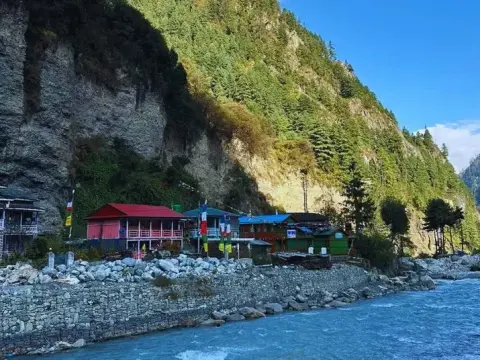
Let us guide you through the must-visit villages on the Annapurna Circuit Trek, where breathtaking Himalayan landscapes meet centuries-old traditions...

The ACT Nepal Trek stands as one of the most iconic high-altitude adventures on Earth, drawing thousands of trekkers annually to Nepal's magnificent A...
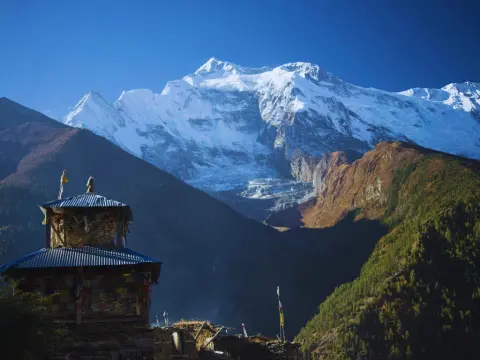
If you've ever scrolled through trekking forums or chatted with someone who's walked through Nepal's mountains, you've probably heard the phrase apple...
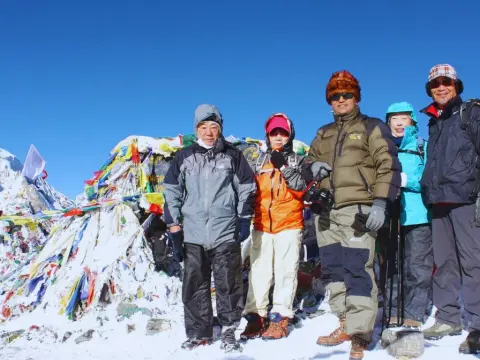
The Annapurna Circuit stands among the world's most celebrated trekking routes, drawing thousands of adventurers each year to experience its dramatic...
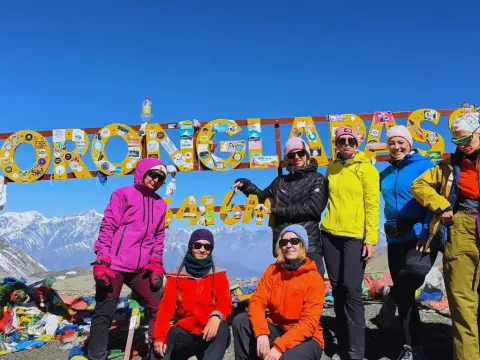
Choosing the right Annapurna Circuit trek agency is genuinely one of the most consequential decisions you will make in planning this journey. Not beca...
The Annapurna Circuit requires only one permit in 2026: the Annapurna Conservation Area Permit (ACAP). It costs NPR 3,000 for foreign nationals and NP...
The Annapurna Circuit Trek altitude is both the greatest challenge and the most rewarding aspect of this legendary Himalayan journey. As a trekking co...
Planning your accommodation during Annapurna Circuit trek requires understanding Nepal's unique teahouse culture—a system that has welcomed trekkers f...
At Majestic Trails Nepal, we've guided hundreds of trekkers across the Annapurna Circuit. One question we hear constantly: "How difficult is the Annap...
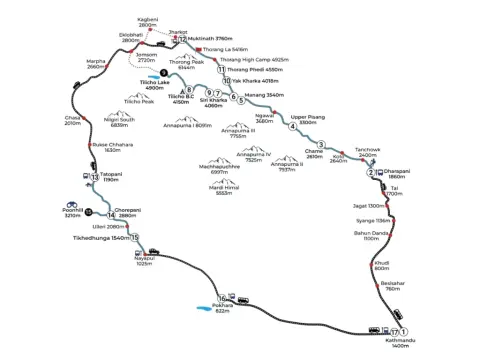
If you're planning the Annapurna Circuit Trek, the first thing you need is a reliable map — not just a blurry screenshot from Google, but a real, deta...
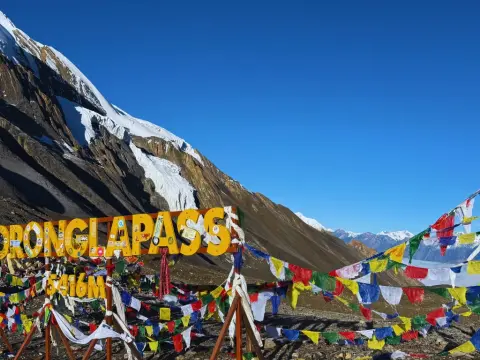
The best time to trek the Annapurna Circuit is during autumn (September to November) and spring (March to May), when the skies are clear, the weather...

Manang is the most important stop on the Annapurna Circuit. Sitting at 3,519 m in a wide, dry valley beneath the Annapurna massif, it is where every t...
The Annapurna Circuit runs anywhere from about 68 miles (110 km) to 140 miles (225 km), depending entirely on where you end the trek. There is no sing...
The biggest Annapurna Circuit mistake is taking the trek lightly. Many people hear about the new road and think it is an easy walk, but the route stil...
