
Best Time for the Langtang Valley Trek – By Local Experts
14 Jul 2025
The Langtang Valley Trek is one of Nepal’s most rewarding trekking adventures—less crowded than Everest or Annapurna, yet rich in culture, biodiversit...


The Annapurna Circuit Trek is one of the world’s most legendary long-distance treks — a journey that circles the Annapurna massif through Nepal’s most dramatic landscapes and culturally rich mountain villages. From subtropical river valleys and alpine forests to Himalayan deserts and one of the highest trekking passes on Earth, this trek offers a complete Himalayan experience in a single route.
Unlike destination treks that lead to one viewpoint and return, the Annapurna Circuit is a true journey — every day brings new terrain, new culture, and deeper immersion into Nepal’s mountain life. Whether you're seeking a life-changing adventure or planning your first major Himalayan trek, this guide gives you everything you need to trek smart, safe, and unforgettable.
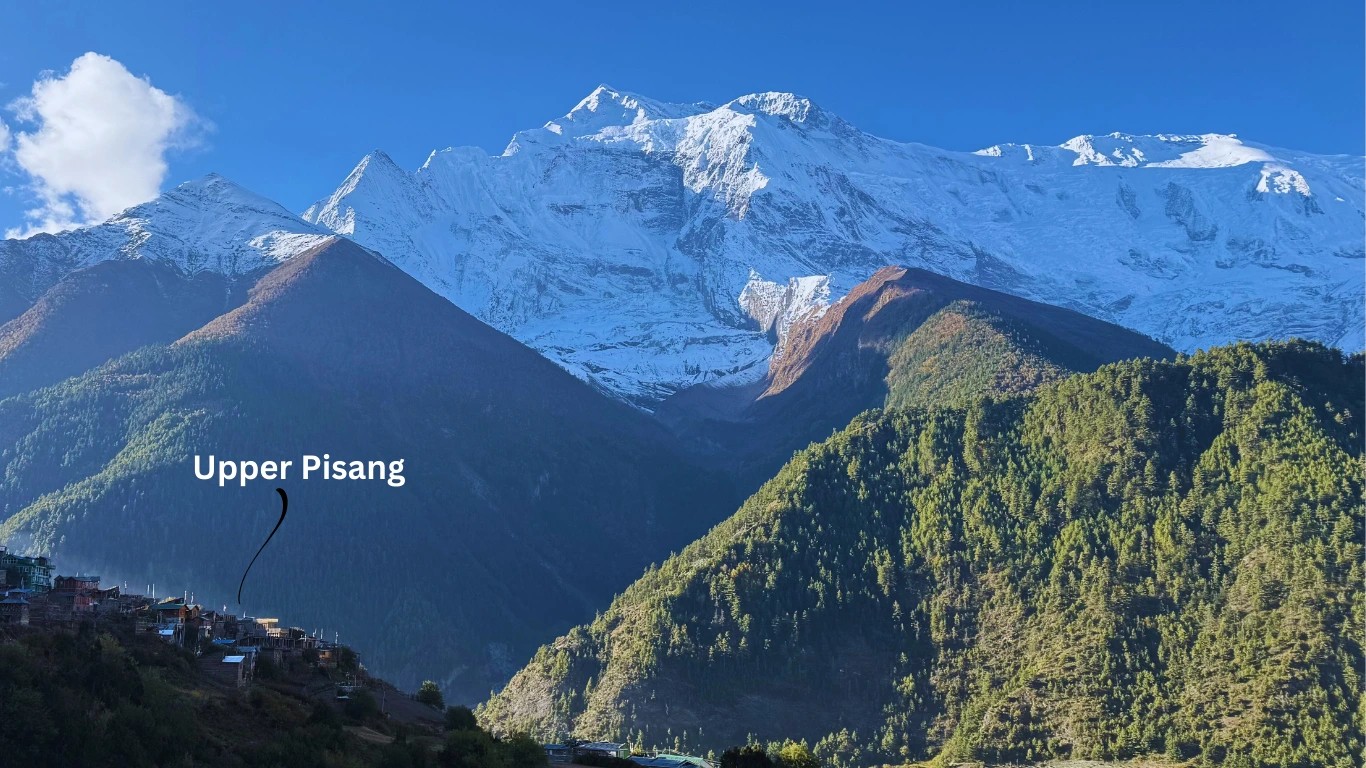
The Annapurna Circuit Trek is consistently ranked among the world’s greatest treks — and not by accident.
In just days, you move from green rice terraces to pine forests, glacier valleys, high mountain deserts, and snowy passes. Few treks on Earth offer this range.
You walk through Gurung, Magar, Thakali, Manangi, and Tibetan-influenced villages where daily life still follows ancient Himalayan traditions.
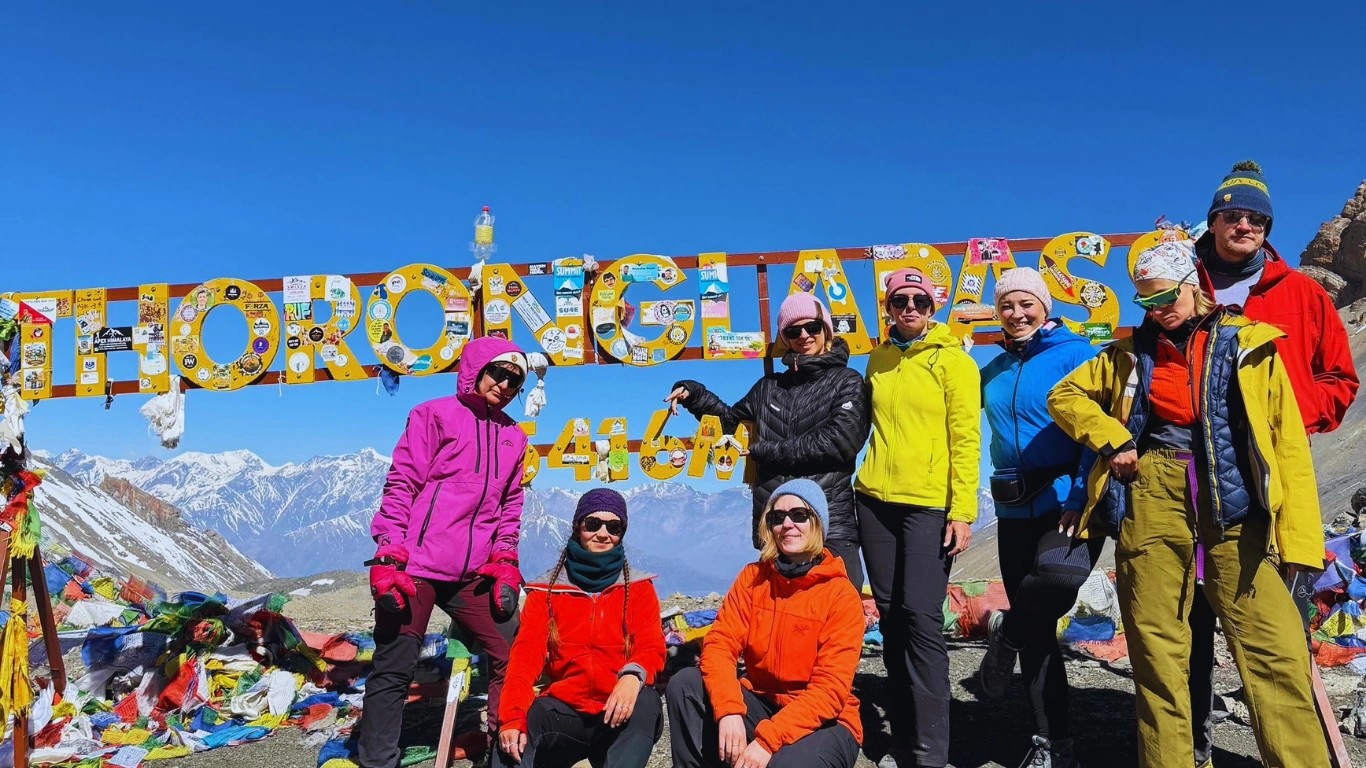
Crossing Thorong La Pass (5,416m/17769ft) is one of the most rewarding non-technical mountain challenges in Nepal.
You can shorten the route, avoid roads, add Tilicho Lake, or create a fully custom Annapurna Circuit itinerary based on your time, fitness, and interests.
This is why many trekkers — including seasoned mountaineers — still call the Annapurna Circuit Trek Nepal’s most complete trekking experience.
One of the defining features of the Annapurna Circuit Trek is how dramatically the scenery changes.
You begin in lush river valleys filled with waterfalls, banana trees, and terraced farms. As altitude increases, forests thin into alpine meadows, before opening into dry Himalayan deserts north of the Annapurna range. The transition feels like traveling across multiple countries — all on foot.
Throughout the journey, you’re surrounded by Mountains:
• Annapurna II – 7,937 m (26,040 ft)
• Annapurna III – 7,555 m (24,787 ft)
• Annapurna IV – 7,525 m (24,688 ft)
• Gangapurna – 7,455 m (24,457 ft)
• Tilicho Peak – 7,134 m (23,406 ft)
• Pisang Peak – 6,091 m (19,983 ft)
• Dhaulagiri – 8,167 m (26,794 ft) ( After Thorang La Pass)
• Manaslu – 8,163 m (26,781.5 ft) (Timang Village is the best viewpoint to see this mountain)
Every day feels visually new — one of the main reasons trekkers rank the Annapurna Circuit Trek among the world’s most scenic routes.
The Annapurna Circuit Trek isn’t just about mountains — it’s about people.
The lower valleys are home to Gurung and Magar communities, famous for their hospitality and deep connection to the land. Higher up, in Manang and beyond, Tibetan-influenced culture dominates — prayer flags line trails, mani walls guard villages, and ancient monasteries echo across cliffs.
Descending into Mustang, you enter Thakali trading towns, known for their traditional architecture, apple orchards, and some of the best food on the trail.
Staying in teahouses owned by local families creates a real connection — not just accommodation. This human experience is what transforms the Annapurna Circuit from a hike into a journey.
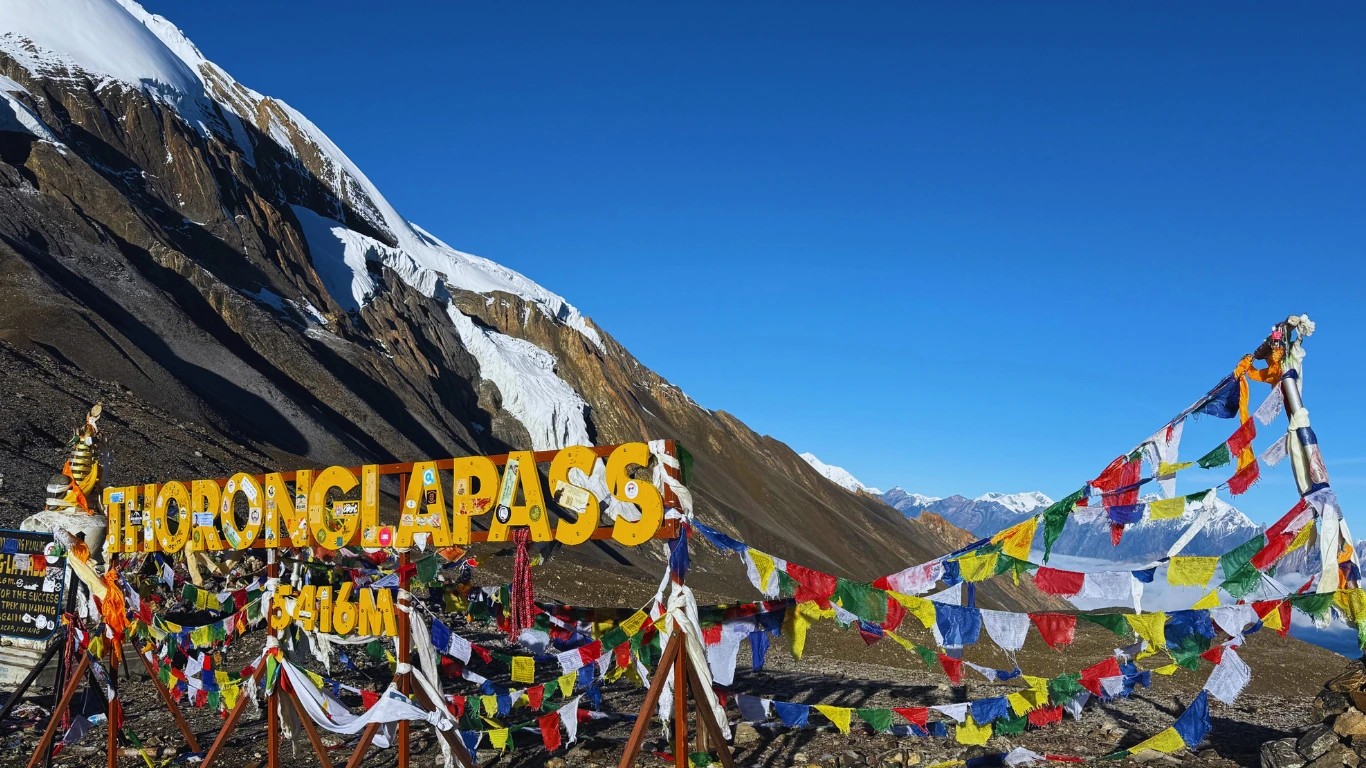
Crossing Thorong La Pass is the emotional and physical climax of the Annapurna Circuit Trek.
The day begins very early, usually around 3:00–4:00 am from Thorong Phedi or High Camp, depending on conditions. This early start is essential to avoid the strong winds that build up after sunrise. As you climb steadily in the thin air, prayer flags slowly emerge on the horizon — marking one of the highest trekking passes in the world.
From the top, panoramic views explode across:
• Annapurna range
• Gangapurna
• Chulu peaks
• Dhaulagiri massif
Crossing Thorong La isn’t just about altitude — it’s about endurance, patience, and mental strength. For many trekkers, this moment becomes the highlight of their entire Himalayan journey.
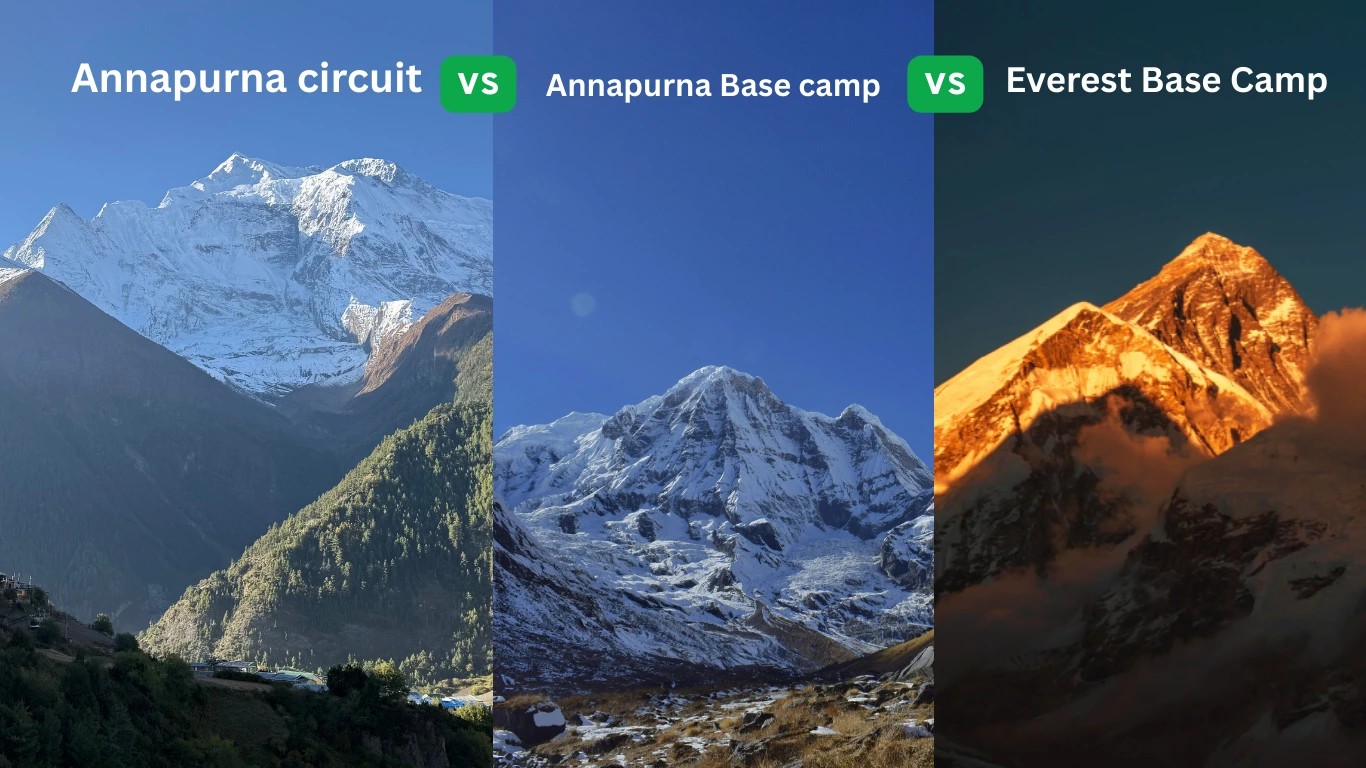
Nepal offers some of the world’s most iconic trekking routes, but choosing the right one depends on the experience you’re seeking. The Annapurna Circuit Trek, Annapurna Base Camp Trek, and Everest Base Camp Trek each deliver something unique — from extreme landscape diversity to legendary mountain views and deep cultural immersion. Here’s a clear comparison to help you decide which Himalayan journey fits you best.
| Comparison | Annapurna Circuit Trek | Annapurna Base Camp | Everest Base Camp |
|---|---|---|---|
| Duration | 14–18 days | 7–12 days | 12–14 days |
| Landscape Variety | Jungles → deserts → high passes | Mountain valleys & glaciers | High alpine terrain |
| Cultural Experience | Multi-ethnic villages & traditions | Gurung & Magar culture | Sherpa culture |
| Highest Point | Thorong La Pass (5,416m) | ABC (4,130m) | Kala Patthar (5,545m) |
| Flights Required | No domestic flights | No | Yes (Lukla) |
| Route Flexibility | Multiple start & exit points | Single main route | Single main route |
| Overall Experience | Most complete Himalayan trek | Short scenic adventure | Iconic Everest journey |
If you're looking for the most complete Himalayan trekking experience — landscapes, culture, altitude challenge, and flexibility — the Annapurna Circuit Trek consistently stands out.
✔ Blooming rhododendrons
✔ Clear skies
✔ Mild temperatures
✔ Best mountain visibility
✔ Dry trails
✔ Peak trekking season
✔ Fewer crowds
✔ Very cold at altitude
❌ Thorong La may close due to snow
❌ Slippery trails
❌ Leeches
❌ Limited mountain views
Best months: October, November, April, and May are the best months to trek the Annapurna Circuit Trek.
You only need one permit:
✔ Annapurna Conservation Area Permit (ACAP)
TIMS cards are no longer required for the Annapurna Circuit.
Permits are available in Kathmandu, Pokhara, or Besisahar and typically cost around NPR 3,000.
Average trekking budget:
USD 700 – 1,500 per person
Costs vary based on:
• Trek duration
• Guide/porter hiring
• Accommodation standard
• Side trips like Tilicho Lake
Typical daily expenses:
• Food: $20–30
• Accommodation: $5–10
• Guide: $25–35
• Porter: $20–25
For most trekkers, booking a guided Annapurna Circuit Trek in Nepal delivers better safety, logistics, and overall value.
✔ Lower cost
✔ More flexibility
❌ Requires strong navigation skills
❌ Higher risk in emergencies
For high-altitude Himalayan routes like the Annapurna Circuit Trek, traveling with a licensed guide is strongly recommended — especially for first-time trekkers in Nepal.
Travel insurance is mandatory and must cover:
Helicopter rescue can cost $3,000–$6,000+, making insurance essential.
Fly into Kathmandu (KTM) — Tribhuvan International Airport, Nepal’s only international airport.
Most trekkers travel by bus or jeep to Besisahar (760 m / 2,493 ft) and then drive to Jagat (1,300 m / 4,265 ft) to start the trek. New roads also allow higher starting points, such as Chamje (1,430 m / 4,692 ft) or Dharapani (1,860 m / 6,102 ft), which reduces long stretches of road walking. Experienced trekkers who are well-acclimatized may even start directly from Pisang (3,300 m / 10,827 ft) or Manang (3,500 m / 11,483 ft) to skip lower-altitude sections, but this requires good fitness and prior high-altitude experience.
Most trekkers finish in Jomsom, then fly or drive to Pokhara — Nepal’s trekking capital and the perfect place to recover lakeside.
Here’s the classic route — customizable based on your pace, side trips, and trail conditions:
Day 1 – Drive Kathmandu → Besisahar → Jagat
Day 2 – jagat→ dharapani
Day 3 – dharapani→ chame
Day 4 – chame→ upper pisang
Day 5 – upper pisang→ Manang
Day 6 – Acclimatization Day in Manang
Day 7 – Manang → Yak Kharka
Day 8 – Yak Kharka → Thorong Phedi / High Camp
Day 9 – Cross Thorong La Pass → Muktinath
Day 10 – Muktinath → Jomsom
Day 11 – Fly/Drive to Pokhara
Optional side trip: Tilicho Lake (4,919m) — one of the highest lakes in the world.
The Annapurna Circuit Trek uses Nepal’s famous teahouse system, meaning no camping is required.
Expect:
• Twin rooms with basic bedding
• Attached bathrooms up to Manang; shared bathrooms after Thorong La Pass
• Warm dining halls
• Hot meals
Hot showers, WiFi, and charging are often available but usually cost extra — especially at higher elevations.
Teahouse menus are similar across villages and include:
• Dal Bhat (rice, lentils, vegetables) — unlimited refills
• Fried rice
• Chow mein
• Momos
• Tibetan bread
• Pancakes, porridge, eggs
Stick to cooked meals and drink plenty of fluids to support acclimatization.
Avoid bottled water whenever possible.
Best options:
✔ Water purification tablets
✔ UV sterilizer pens
✔ Water filter bottles
These save money and reduce plastic waste in fragile mountain environments.
Common symptoms:
• Headache
• Nausea
• Fatigue
• Dizziness
Prevention:
If symptoms worsen, descend immediately.
• Wear broken-in hiking boots
• Use trekking poles
• Start early on pass day
• Avoid trekking alone in bad weather
• Follow your guide’s advice
• Thermal base layers
• Fleece or mid-layer jacket
• Down jacket
• Waterproof jacket & pants
• Trekking shirts
• Trekking pants
• Warm hat & sun hat
• Gloves
• Wool socks
• Waterproof hiking boots
• Camp sandals or shoes
• Backpack (50–65L)
• Sleeping bag (-10°C recommended)
• Trekking poles
• Headlamp
• Sunglasses
• Sunscreen & lip balm
• Water bottles (2L+)
• Water purifier
• First-aid kit
• Diamox (if prescribed)
• Toiletries
• Toilet paper
• Hand sanitizer
• Power bank
• Plug adapter
• Phone/camera
• Greet locals with “Namaste.”
• Ask before taking photos
• Dress modestly in villages and monasteries
• Walk clockwise around stupas and mani walls
• Carry out all trash
• Avoid plastic bottles
• Stay on marked trails
• Use refillable water systems
• Support local teahouses and businesses
Responsible trekking ensures the Annapurna region remains pristine for future generations.
If you’re planning the Annapurna Circuit Trek and want a locally guided, flexible itinerary, trekking with an experienced Nepali team can make the journey safer and more meaningful.
The Annapurna Circuit Trek is more than a trek — it’s a complete Himalayan journey.
From lush valleys and sacred villages to glacial passes and Himalayan deserts, this route delivers unmatched variety. The challenge of Thorong La, the warmth of teahouse hospitality, and the silence of Himalayan sunrises combine into an experience that stays with you long after the trek ends.
If you want:
✔ Maximum scenery
✔ Deep cultural immersion
✔ Real high-altitude adventure
✔ Flexible itineraries
✔ Authentic Himalayan life
Then the Annapurna Circuit Trek Nepal is your ultimate destination.
The classic Annapurna Circuit Trek takes 12–18 days, depending on your starting point, acclimatization days, and whether you add side trips like Tilicho Lake.
Physically, both are challenging, but the Annapurna Circuit Trek is generally considered more demanding due to its length and the high altitude of Thorong La Pass (5,416m).
Yes — fit beginners can complete the Annapurna Circuit Trek with proper acclimatization, pacing, and ideally a licensed guide.
While independent trekking is still possible in parts of Nepal, hiring a guide for the Annapurna Circuit Trek is strongly recommended for safety, route navigation, altitude management, and cultural experience.
The highest point is Thorong La Pass (5,416 meters / 17,769 feet) — one of the highest trekking passes in the world.
At high altitude, temperatures can drop to -15°C to -20°C at night, especially near Thorong La and during the winter months.

The Langtang Valley Trek is one of Nepal’s most rewarding trekking adventures—less crowded than Everest or Annapurna, yet rich in culture, biodiversit...

Short on time but big on ambition? Nepal delivers extraordinary mountain experiences in as little as three days, and this guide breaks down exactly wh...
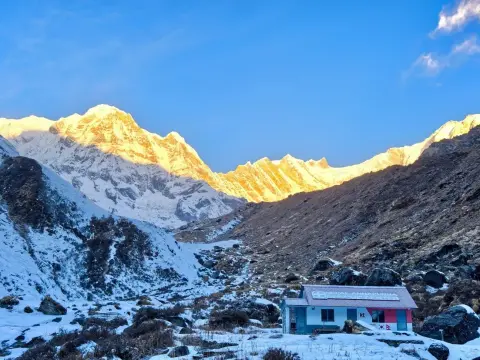
The Annapurna Base Camp trek stands among the world's most iconic Himalayan adventures. Every year, thousands of trekkers from across the globe journe...
Imagine waking up to breathtaking Himalayan sunrises, sharing candlelit dinners beside serene lakes, and exploring ancient temples hand-in-hand with y...
Introduction: Why Spring is Nepal's Golden Season for TrekkersSpring in Nepal is a season of renewal, a time when the Himalayas awaken from their wint...

Solukhumbu is synonymous with Mount Everest, but beyond the famous peak lie quieter, magical destinations that often get overlooked. One such gem is P...
IntroductionNepal — the final destination for every mountaineer. A place where almost everyone dreams of going at least once in their lifetime. To see...
Trekking to Annapurna Base Camp Trek is one of Nepal’s most iconic mountain journeys. For mountaineers, the climb begins here, but for trekkers, Annap...
