
Best 6000m Trekking Peaks in Nepal for Beginners and Adventurers
7 Feb 2026
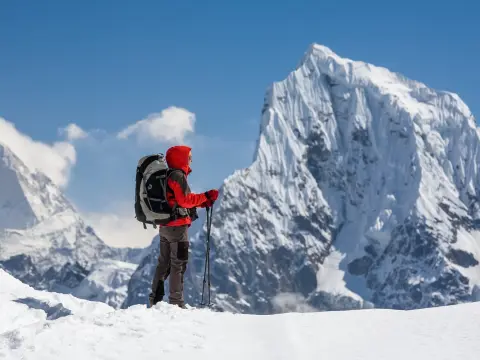
Why 6000m Trekking Peaks Nepal Should Be Your Next AdventureStanding atop a 6000-meter summit in the Himalayas, with prayer flags snapping in the wind...

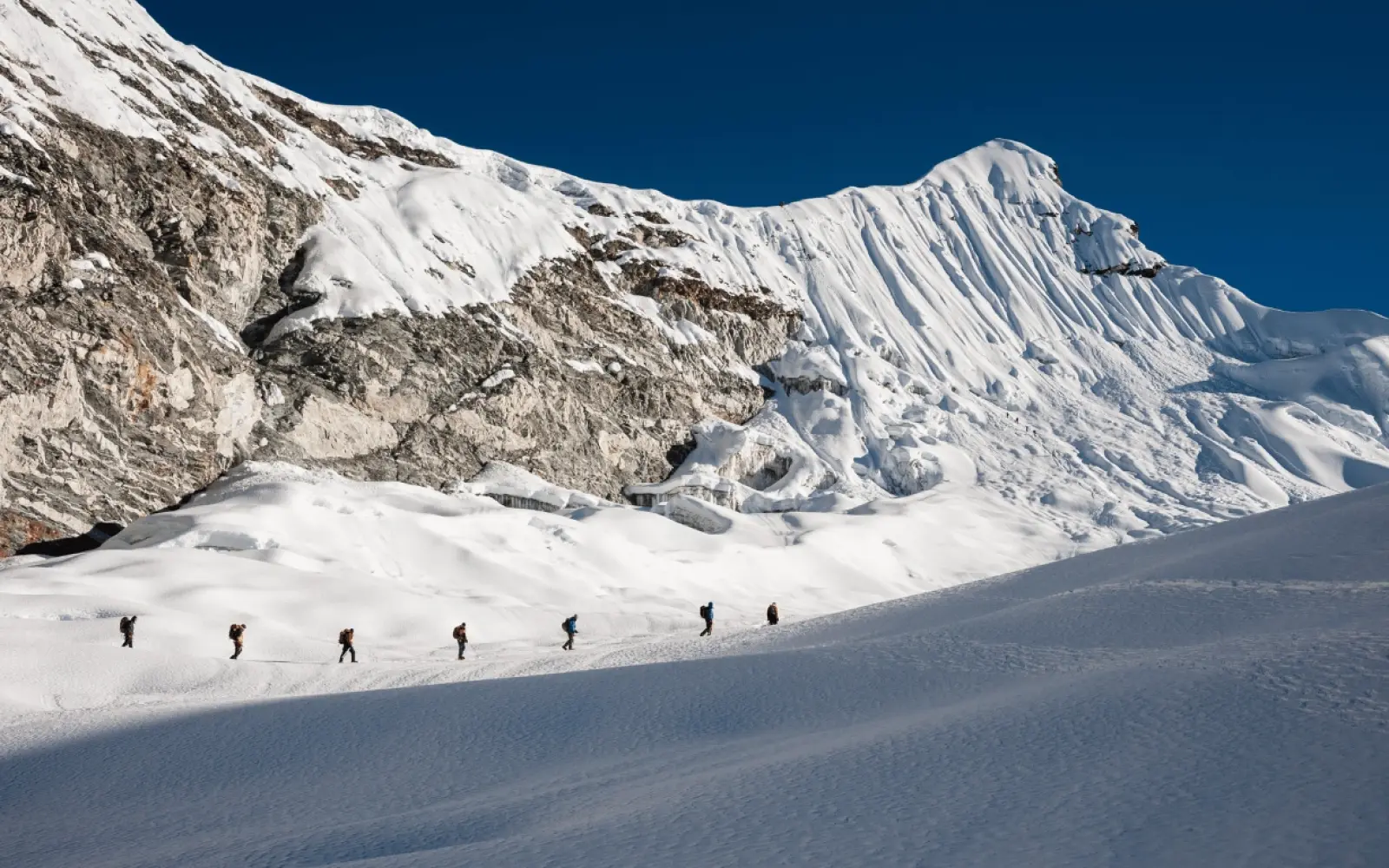

Peak climbing in Nepal refers to climbing one of the 27 to 33 mountains designated as "trekking peaks" by the Nepal Mountaineering Association (NMA) — summits typically between 5,500m and 6,500m that require basic mountaineering skills but not full expedition status. Official NMA permit fees for foreign climbers range from USD 70 to 400 depending on the peak and season, with the most popular options being Island Peak (6,160m), Mera Peak (6,470m), and Lobuche East (6,119m). The best climbing seasons are Spring (March-May) and Autumn (September-November), and every foreign climber legally requires an NMA-licensed climbing guide, insurance, and a 10,000 USD mountain heli-rescue provision.
At Majestic Trails Nepal, our NMA-licensed climbing team leads groups on the most popular trekking peaks in Nepal — from the beginner-friendly Yala Peak (5,732m) to the technically-demanding Island Peak (6,160m) and the highest of them all, Mera Peak (6,470m). This guide covers everything you need to know about peak climbing in Nepal — every NMA peak categorized, the exact official permit fees for foreign and Nepali climbers, gear requirements, seasonal timing, difficulty grading, and how to choose the right peak for your climbing level.
Key Takeaways
| Detail | Information |
|---|---|
| Governing body | Nepal Mountaineering Association (NMA) |
| NMA-regulated peaks | 27 |
| Height range | 5,500m–6,584m |
| Permit groups | Group A (12) + Group B (15) |
| Free-permit peaks | 6 peaks |
| Foreign permit (Spring) | From USD 250 per person |
| Nepali permit (Spring) | From NPR 4,000 per person |
| Best seasons | Spring & Autumn |
| Maximum team size | 15 members |
| Garbage deposit | USD 250 refundable |
| Guide requirement | NMA-licensed climbing guide legally mandatory |
Peak climbing in Nepal refers to climbing mountains classified by the Nepal Mountaineering Association (NMA) as "trekking peaks" — summits generally between 5,500m and 6,500m that sit between standard trekking and full mountaineering expeditions.
The term "trekking peak" is a Nepal-specific legal classification, not a difficulty rating. These peaks require:
Peak climbing in Nepal is genuinely accessible for fit trekkers with basic technical training — you don't need to be a professional mountaineer. Most trekking peaks involve 1-2 days of actual climbing on top of an approach trek of 8-14 days. This makes them the most realistic way for a determined trekker to stand on a real Himalayan summit.
What peak climbing in Nepal is NOT:
Understanding the three tiers of Nepal mountain activities:
| Category | Height | Skills | Cost |
|---|---|---|---|
| Trekking | Up to 5,545m | None | $1,200–2,500 |
| Peak Climbing | 5,500–6,584m | Basic | $1,800–4,500+ |
| Expedition | 6,585m+ | Advanced | $8,000–90,000+ |
Key differences:
Peak climbing in Nepal fills the exact gap for climbers who want the summit experience without the price tag or time commitment of a full expedition.
The Nepal Mountaineering Association (NMA) is Nepal's national mountaineering organization, founded in 1973. It's an active member of the UIAA (International Climbing and Mountaineering Federation) since 1975.
What NMA does for peak climbing:
Historical note: until October 2015, the NMA managed 33 trekking peaks. In 2015, the Government of Nepal restructured mountaineering administration and transferred some responsibilities to the Ministry of Culture, Tourism & Civil Aviation. The official current NMA-managed list is 27 peaks, though many operators and climbing community sources still reference "33 trekking peaks" from tradition.
The NMA divides its regulated trekking peaks into two groups. Here's the complete official list with heights and regions.
| # | Peak Name | Region | Height |
|---|---|---|---|
| 1 | Cholatse | Khumbu | 6,423m |
| 2 | Kyazo Ri | Mahalangur | 6,151m |
| 3 | Phari Lapcha | Mahalangur | 6,159m |
| 4 | Nirekha | Mahalangur | 6,169m |
| 5 | Langsisa Ri | Jugal | 6,412m |
| 6 | Obmigaichen | Mahalangur | 6,340m |
| 7 | Bokta | Kanchenjunga | 6,114m |
| 8 | Chekigo | Gaurishankar | 6,121m |
| 9 | Lobuje West | Khumbu | 6,135m |
| 10 | Larkya Peak | Manaslu | 6,416m |
| 11 | ABI | Mahalangur | 6,043m |
| 12 | Yubra Himal | Langtang Himal | 6,048m |
| # | Peak Name | Region | Height |
|---|---|---|---|
| 1 | Hiunchuli | Annapurna | 6,423m |
| 2 | Singhu Chuli (Fluted Peak) | Annapurna | 6,501m |
| 3 | Mera Peak | Khumbu | 6,470m |
| 4 | Kusum Kangru | Khumbu | 6,360m |
| 5 | Kwangde | Khumbu | 6,011m |
| 6 | Chulu West | Manang | 6,419m |
| 7 | Chulu East | Manang | 6,584m |
| 8 | Imja Tse (Island Peak) | Khumbu | 6,160m |
| 9 | Pharchamo | Rolwaling | 6,187m |
| 10 | Lobuje East | Khumbu | 6,119m |
| 11 | Ramdung | Rolwaling | 5,925m |
| 12 | Pisang Peak | Manang | 6,091m |
| 13 | Khongma Tse | Khumbu | 5,849m |
| 14 | Ganja-la Chuli | Langtang | 5,844m |
| 15 | Paldor Peak | Langtang | 5,896m |
These 6 NMA-designated peaks currently require no permit fee, though registration is still required:
| # | Peak Name | Height | Region |
|---|---|---|---|
| 1 | Tharpu Chuli (Tent Peak) | 5,695m | Annapurna |
| 2 | Mardi Himal | 5,553m | Annapurna |
| 3 | Yala Peak | 5,732m | Langtang |
| 4 | Chhukung Ri | 5,833m | Mahalangur |
| 5 | Machhermo | 5,559m | Mahalangur |
| 6 | Pokhalde | 5,780m | Khumbu |
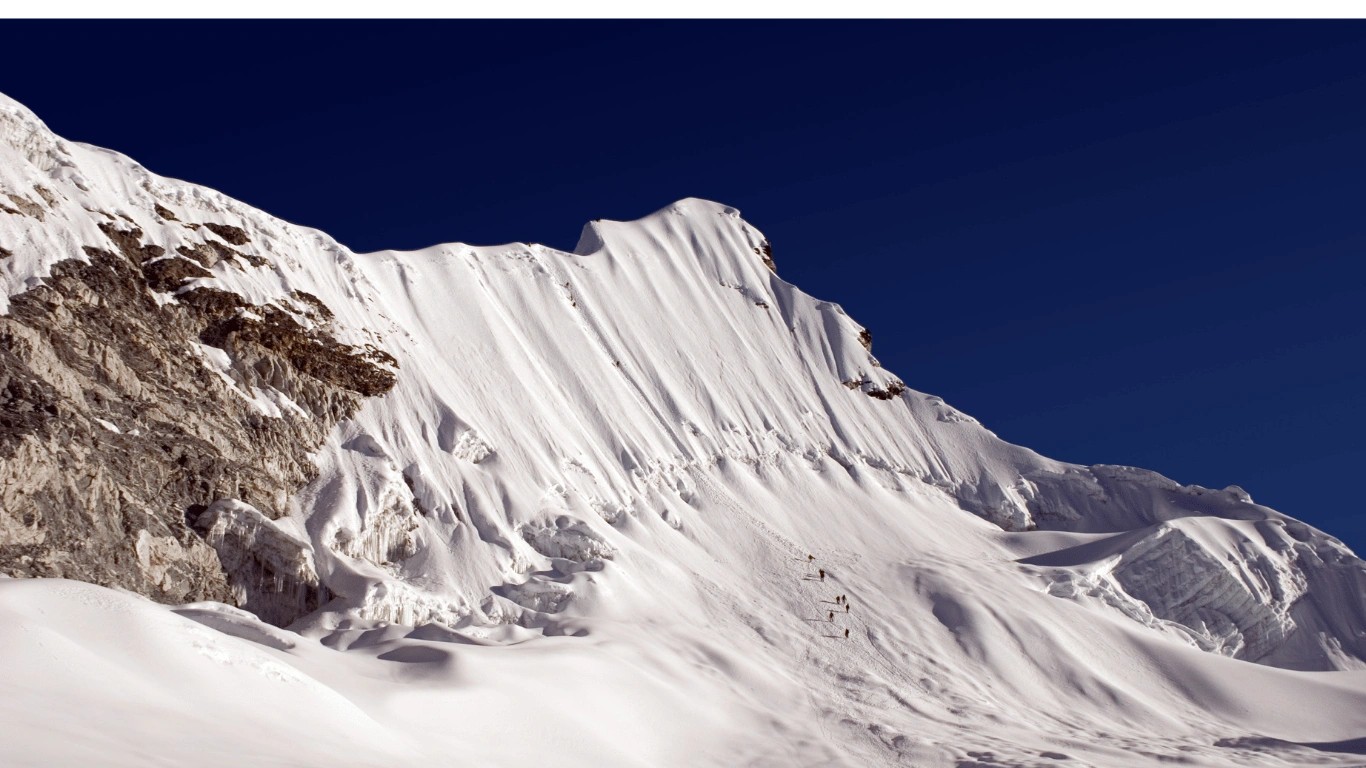
Group B | Foreign permit fee: USD 250 (Spring)
Island Peak is Nepal's most popular trekking peak, and the reason is honest: it offers a genuine 6,000m+ summit that fit trekkers can achieve with proper training. Named "Island Peak" by Eric Shipton's 1953 team because it looks like an island in a sea of ice, this peak sits in the Khumbu region within the Imja valley.
What makes it popular:
Difficulty: Moderate technical. Requires basic ice axe, crampon, and rope work.
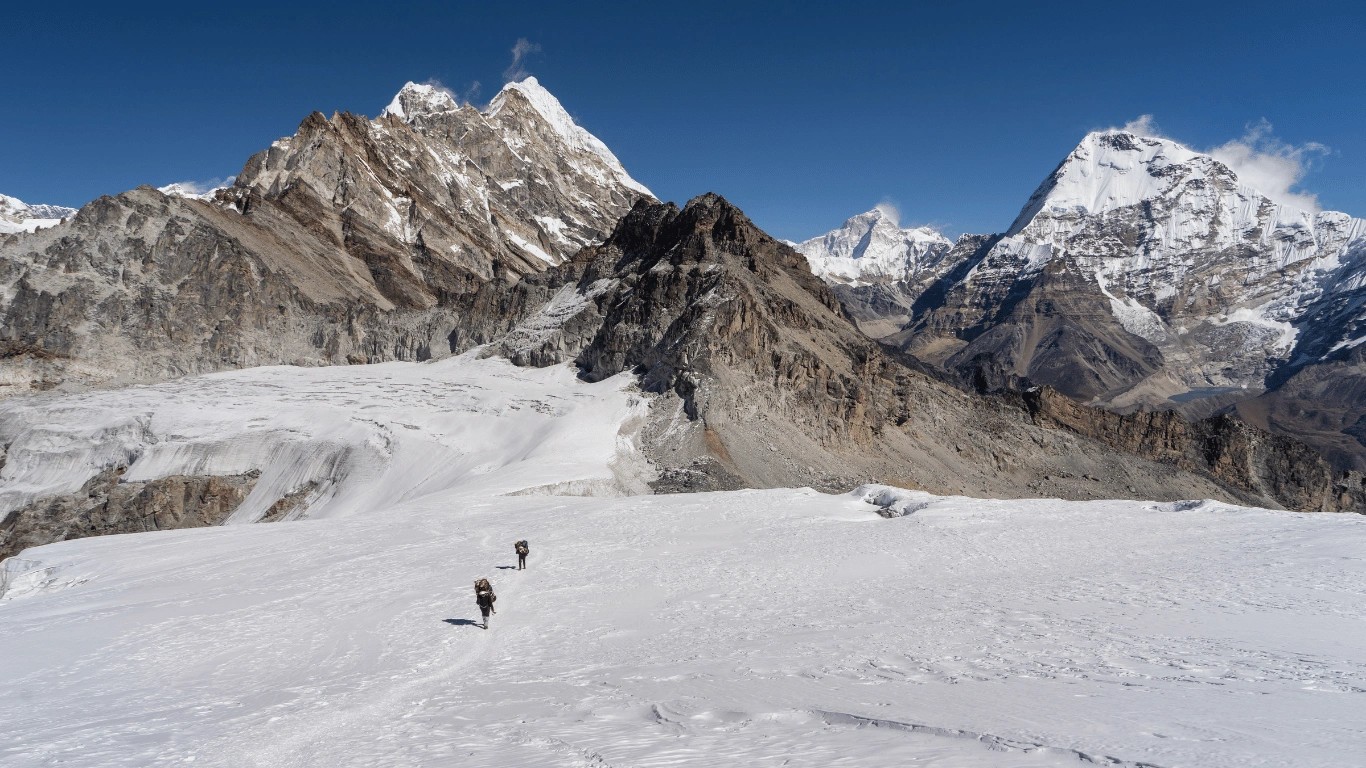
Group B | Foreign permit fee: USD 250 (Spring)
Mera Peak is Nepal's highest trekking peak — the summit ceiling for the NMA trekking peak category. Located in the Hinku Valley of Khumbu region, Mera offers the highest achievable altitude within the NMA permit system.
What makes it popular:
Difficulty: Physical challenge (altitude), minimal technical requirements. Ice axe and crampons required, but no rope work on the standard route.
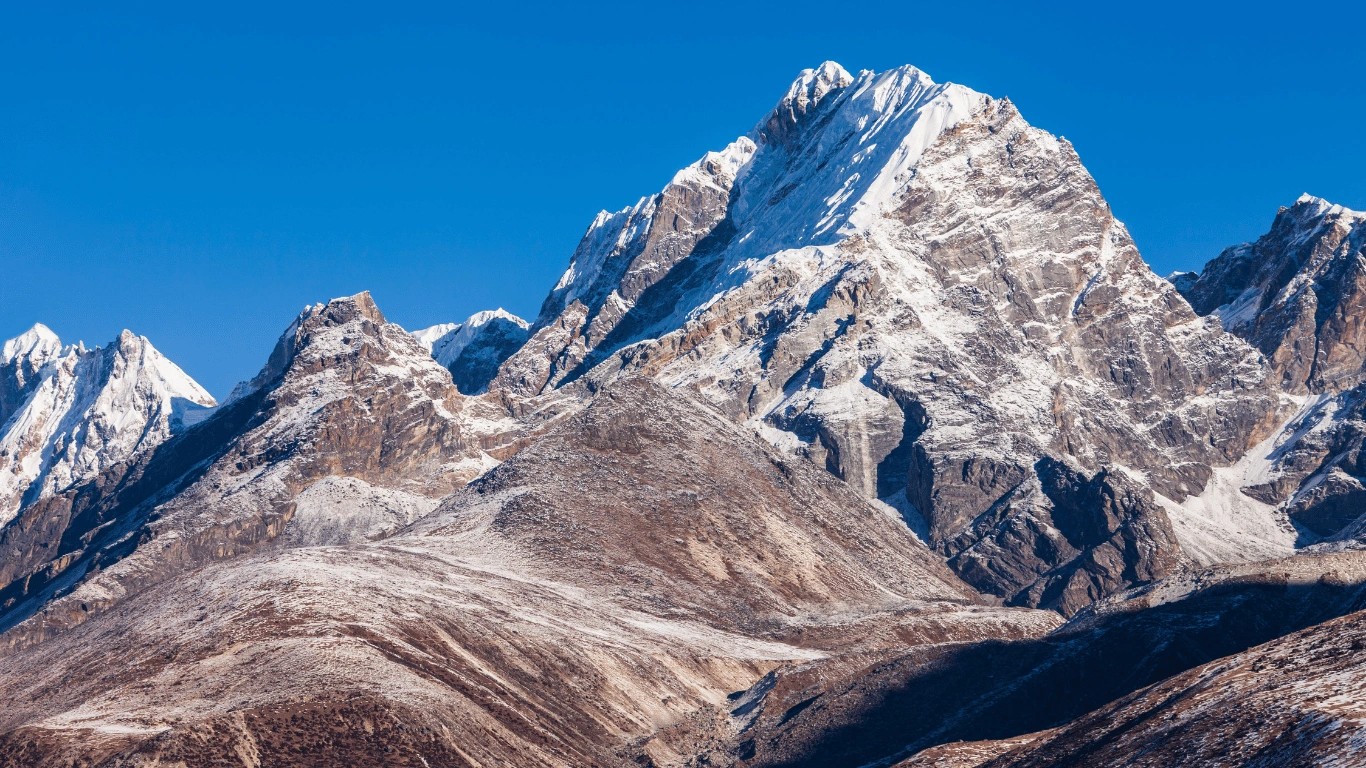
Group B | Foreign permit fee: USD 250 (Spring)
Lobuche East is the more accessible sister peak of Lobuche West (which is Group A and more technical). Located in the upper Khumbu region near the village of Lobuche, this peak combines beautifully with an Everest Base Camp trek.
What makes it popular:
Difficulty: Moderate technical. Similar to Island Peak but with more mixed rock and ice sections.
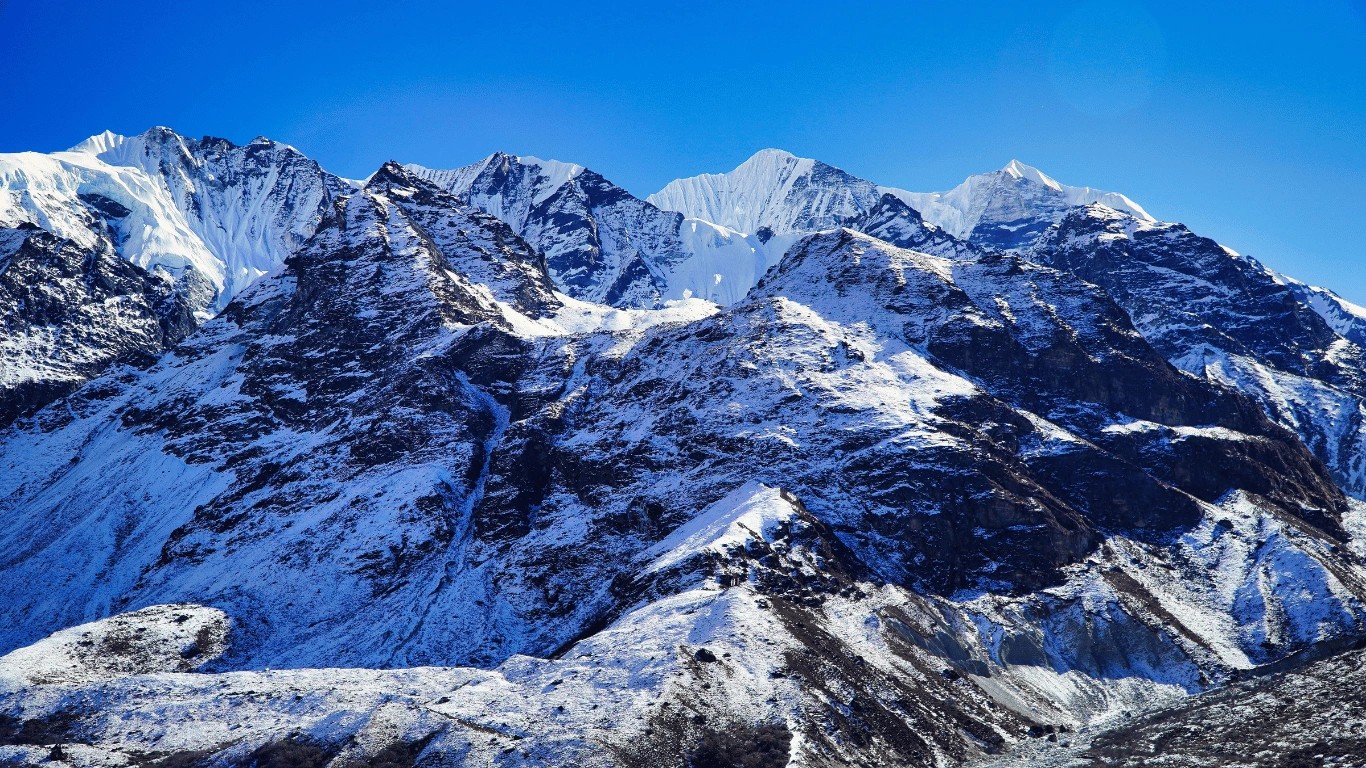
Free permit peak | No NMA permit fee
Yala Peak in the Langtang region is genuinely the best peak in Nepal for first-time climbers. It's non-technical, requires only basic training, and costs nothing in NMA permit fees.
What makes it popular:
Difficulty: Easy — beginners with basic fitness can complete this. Real crampon and ice axe use, but no rope work needed on standard route.
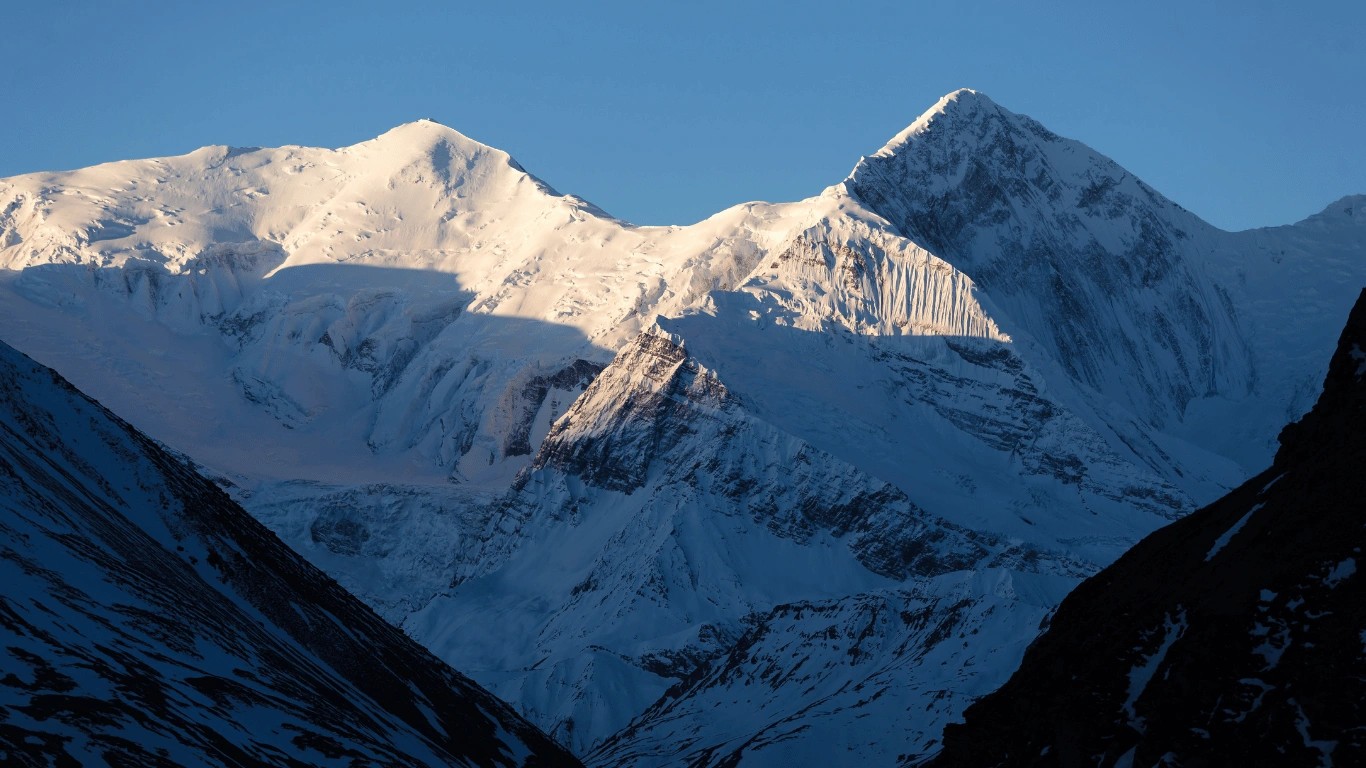
Group B | Foreign permit fee: USD 250 (Spring)
Chulu West is located in the Manang region and combines with the Annapurna Circuit trek. Less crowded than Khumbu region peaks.
What makes it popular:
Difficulty: Moderate. Long summit day but not technically demanding.
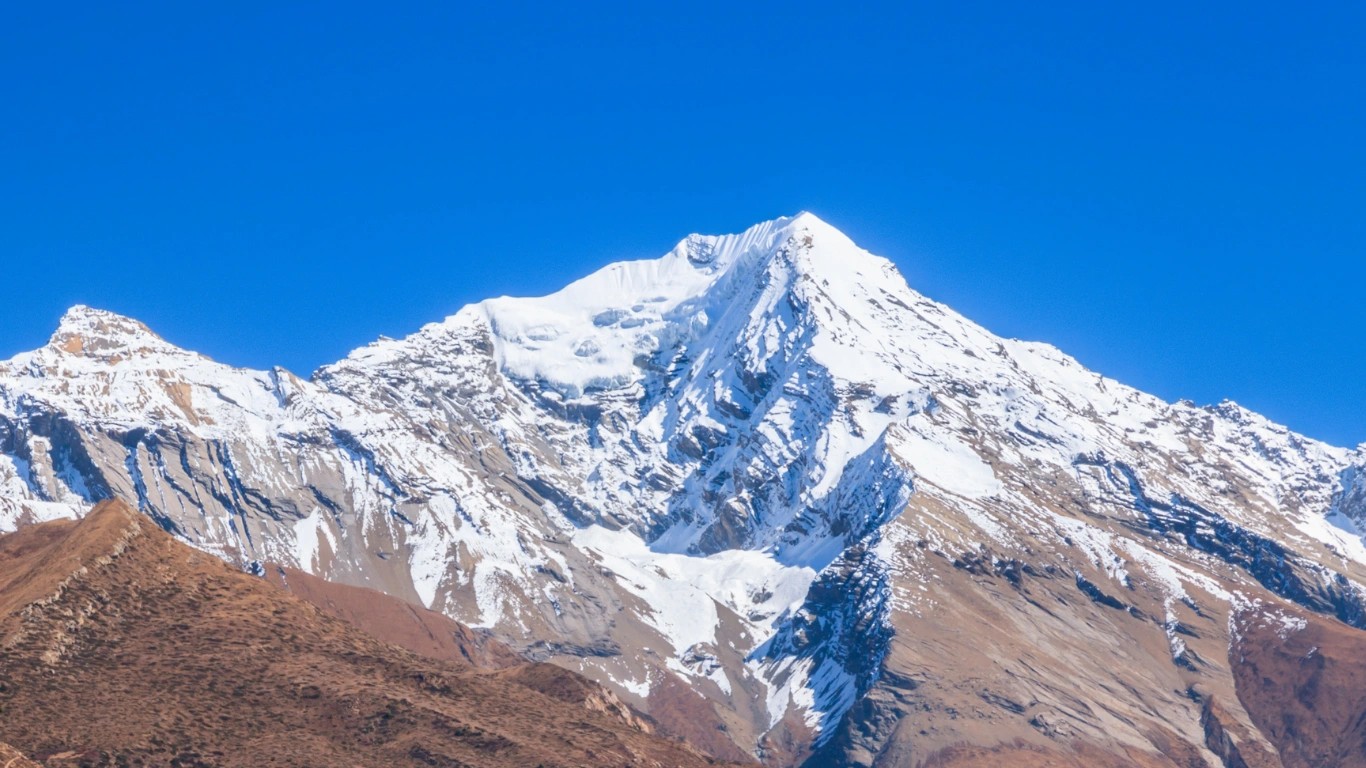
Group B | Foreign permit fee: USD 250 (Spring)
Pisang Peak also sits in the Annapurna Circuit region, above Pisang village. Combines naturally with a Circuit trek.
What makes it popular:
Difficulty: Moderate technical.
The easiest peak to climb in Nepal is Yala Peak (5,732m) in the Langtang region, followed by Mera Peak (6,470m) on the non-technical standard route.
Honest reality check on "easiest": even the easiest NMA peaks involve:
"Easy" is relative to other trekking peaks — not compared to a weekend hike.
The highest official NMA trekking peak in Nepal is Chulu East (6,584m) in the Manang region. Mera Peak (6,470m) is commonly cited as "the highest trekking peak" and holds that title in general popularity, but Chulu East has the technically higher summit elevation on the NMA list.
The heights ranked:
| Rank | Peak | Height |
|---|---|---|
| 1 | Chulu East | 6,584m |
| 2 | Singhu Chuli (Fluted Peak) | 6,501m |
| 3 | Mera Peak | 6,470m |
| 4 | Cholatse | 6,423m |
| 5 | Hiunchuli | 6,423m |
| 6 | Chulu West | 6,419m |
| 7 | Larkya Peak | 6,416m |
| 8 | Langsisa Ri | 6,412m |
| 9 | Kusum Kangru | 6,360m |
| 10 | Obmigaichen | 6,340m |
Why Mera Peak is more famous than Chulu East: Mera Peak has an easier, mostly non-technical route to the summit that fit trekkers can complete with basic training. Chulu East is a more technical climb requiring more advanced mountaineering skills, so fewer climbers attempt it despite its higher elevation.
Peak climbing in Nepal costs between USD 1,800 and USD 4,500 per person depending on the peak, season, and operator. Here's the honest breakdown of what makes up that price.
Typical peak climbing cost components:
| Cost Item | Approximate Cost (per person) |
|---|---|
| NMA permit (Group B, Spring) | USD 250 |
| Garbage deposit (refundable) | USD 250 |
| Insurance (mandatory) | USD 100-200 |
| NMA-licensed climbing guide | USD 500-1,200 |
| Climbing gear (rental) | USD 200-500 |
| Approach trek (permits, food, lodging) | USD 400-800 |
| Domestic flights (Lukla, if applicable) | USD 250-500 |
| Kathmandu accommodation | USD 100-200 |
| Emergency/contingency budget | USD 200-500 |
Total realistic cost for popular peaks:
Why prices vary so much: operator quality, group size, gear included vs rental, guide-to-climber ratio, and hidden costs (rescue insurance, weather delays, contingency) all shift the total significantly. A USD 1,500 quote versus a USD 3,000 quote for the same peak isn't the same product.
Below are the official NMA permit fees for 2026, taken directly from the Trekking Agencies' Association of Nepal (TAAN) official source.
| Season | Fee |
|---|---|
| Spring (March-April-May) | USD 250 |
| Autumn (Sept-Oct-Nov) | USD 125 |
| Winter (Dec-Jan-Feb) | USD 70 |
| Summer (June-July-Aug) | USD 70 |
| Season | Standard B Peaks | Chulu East / Singhu Chuli |
|---|---|---|
| Spring (March-April-May) | USD 250 | USD 400 |
| Autumn (Sept-Oct-Nov) | USD 125 | USD 200 |
| Winter (Dec-Jan-Feb) | USD 70 | USD 100 |
| Summer (June-July-Aug) | USD 70 | USD 100 |
| Season | Fee |
|---|---|
| Spring | NPR 4,000 |
| Autumn | NPR 2,000 |
| Winter | NPR 1,000 |
| Summer | NPR 1,000 |
| Season | Standard B Peaks | Chulu East / Singhu Chuli |
|---|---|---|
| Spring | NPR 4,000 | NPR 5,000 |
| Autumn | NPR 2,000 | NPR 2,500 |
| Winter | NPR 1,000 | NPR 1,250 |
| Summer | NPR 1,000 | NPR 1,250 |
The best seasons for peak climbing in Nepal are Spring (March to May) and Autumn (September to November).
Peak climbing in Nepal requires solid cardiovascular fitness, endurance, and physical resilience — significantly more than a standard trek but less than full mountaineering expeditions.
Minimum fitness benchmarks:
Recommended 12-week training plan:
Who peak climbing is realistic for:
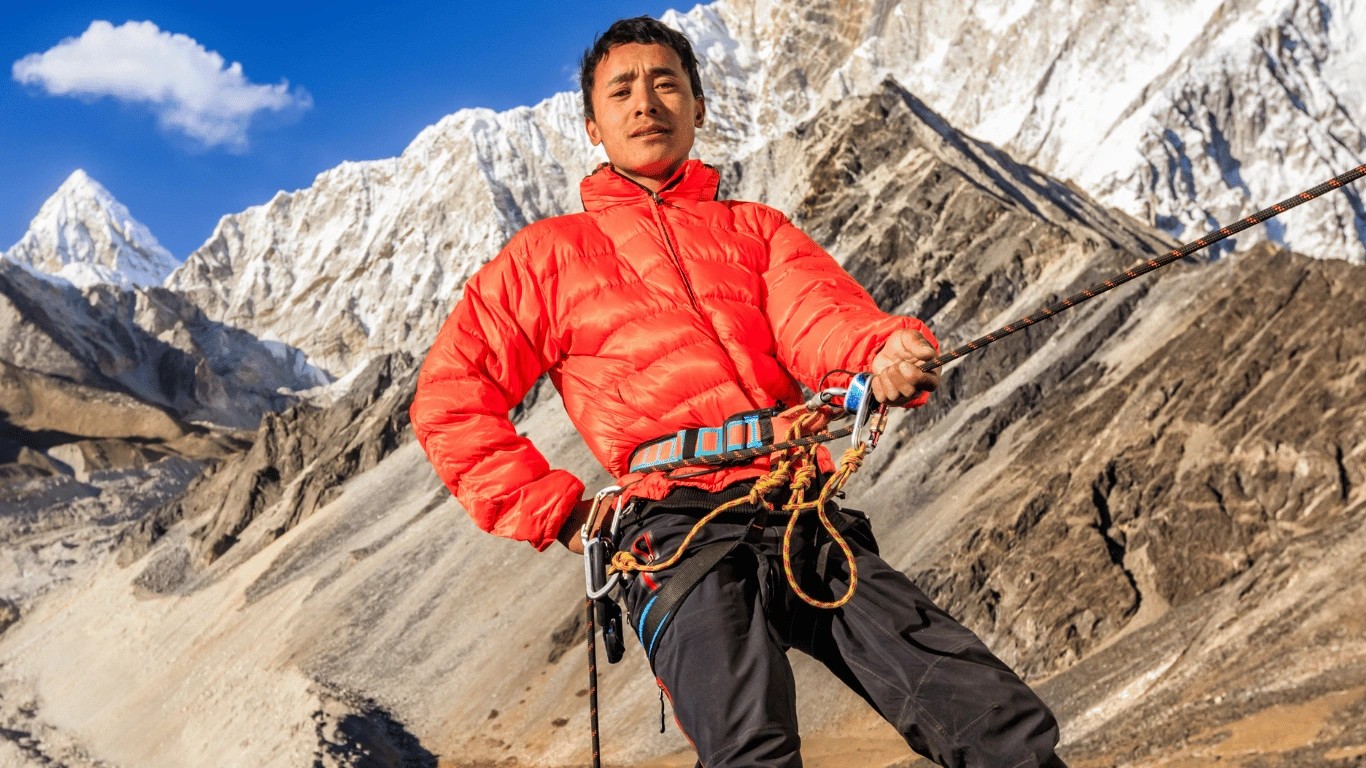
Peak climbing requires basic mountaineering skills that can be learned quickly — most first-time climbers get sufficient training on the trek approach itself.
Beyond standard trekking gear, peak climbing requires specific technical equipment.
Technical gear (usually rentable in Kathmandu):
Personal gear:
Trekking gear:
Gear rental in Kathmandu: most technical gear can be rented in Thamel for USD 5-15 per item per day. Bring critical items from home (boots, sleeping bag) for personal fit; rent everything else to save baggage weight.
Peak climbing trip duration includes both the approach trek and the actual climbing days.
| Peak | Total Days from Kathmandu | Climbing Days |
|---|---|---|
| Yala Peak | 8-10 | 1-2 |
| Mardi Himal | 7-9 | 1 |
| Pokhalde | 12-14 | 1 |
| Chhukung Ri | 12-14 | 1 |
| Island Peak | 12-14 | 1-2 |
| Lobuche East | 14-16 | 2-3 |
| Mera Peak | 14-16 | 2-3 |
| Pisang Peak | 16-18 | 2 |
| Chulu West | 16-18 | 2-3 |
| Chulu East | 18-20 | 2-3 |
| Chekigo | 20-22 | 3-4 |
Combined itineraries (popular options):
Trekking peaks in Nepal all sit above 5,700m — an altitude where serious altitude sickness (HAPE, HACE) is a genuine risk.
Key safety considerations:
Mandatory safety provisions for every NMA climb:
Match the peak to your genuine experience level, not your ambition.
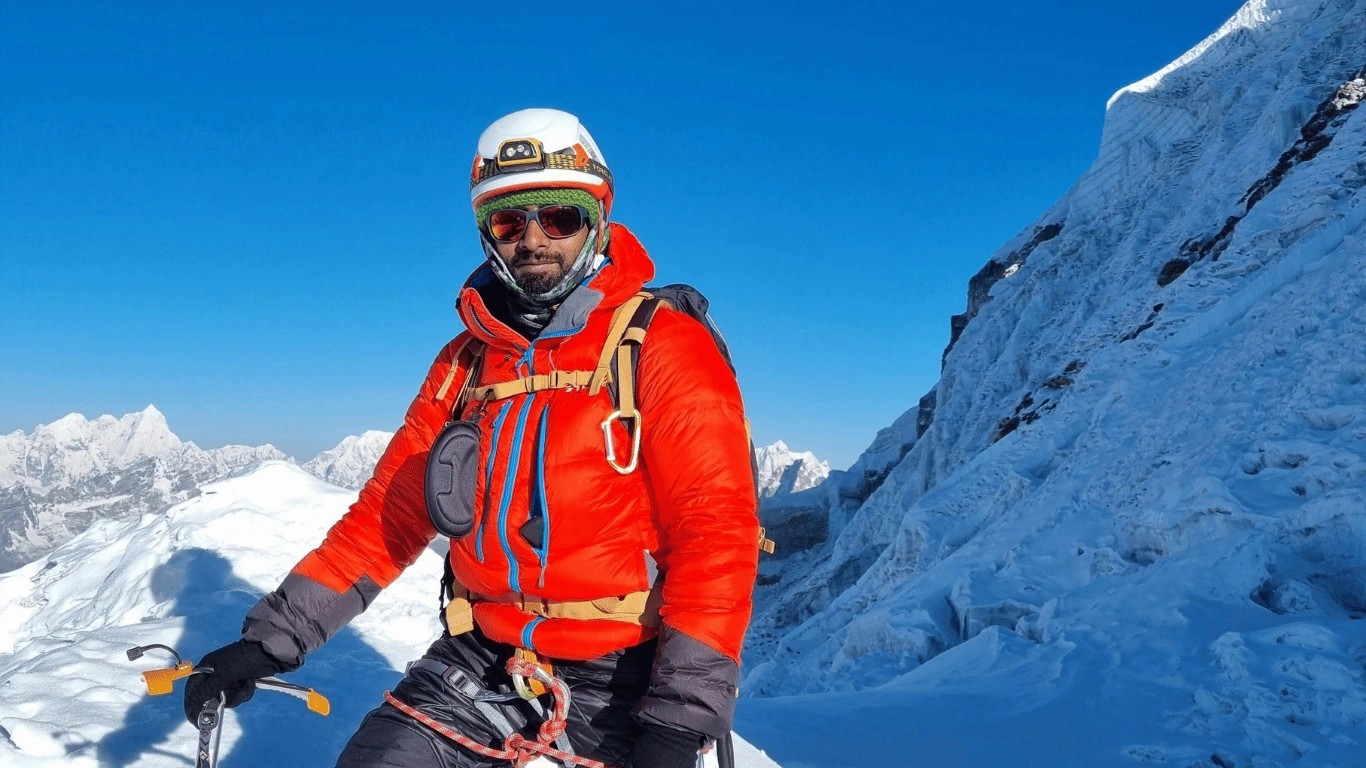
Peak climbing requires more operator expertise than standard trekking — the margin for error is smaller, the technical demands are real, and the guide's judgement affects everything from summit success to safety.
Mistake 1: Booking the cheapest operator. Peak climbing operators quoting USD 1,000-1,500 for Island Peak or Mera Peak are cutting critical corners — safety gear, guide qualifications, insurance provisions. The savings evaporate the moment something goes wrong.
Mistake 2: Insufficient technical preparation. Showing up with zero prior crampon or ice axe use means learning on the mountain itself — under pressure, in cold, at altitude. Take a mountaineering course at home before departure.
Mistake 3: Underestimating altitude. Trekking peaks all sit above 5,700m. Every altitude rule for trekking becomes stricter for climbing. Skipping acclimatization days is where most peak climbing failures happen.
Mistake 4: Wrong peak for experience level. First-time climbers attempting Cholatse or Kusum Kangru instead of Yala Peak or Mera Peak. Match ambition to reality.
Mistake 5: Not verifying guide's NMA license. Ask directly. Look at the physical NMA certification card. Unlicensed climbing guides are common and dangerous.
Mistake 6: Inadequate insurance. Basic travel insurance rarely covers technical mountaineering above 6,000m. Verify your policy covers peak climbing to your target altitude specifically.
Mistake 7: Rushed summit-day timing. Not starting early enough (2-4 AM start typical), attempting summit in bad weather, or continuing when weather deteriorates during the climb.
Mistake 8: Poor gear selection. Using trekking boots not rated for crampons, inadequate sleeping bag for high camp temperatures, missing critical layers.
Mistake 9: Ignoring pre-existing conditions. Heart conditions, high blood pressure, or recent illness increase risk significantly at climbing altitudes. Get medical clearance before booking.
Mistake 10: Skipping the garbage deposit rules. The USD 250 garbage deposit is refundable only when you return with proof of no waste left on the mountain. Some climbers forget and lose the deposit.
Peak climbing in Nepal refers to climbing one of the 27 NMA-designated "trekking peaks" — mountains between 5,500m and 6,500m that require basic mountaineering skills but not full expedition status.
Yala Peak (5,732m) in Langtang region is the easiest, requiring no NMA permit fee and no technical rope work. Mardi Himal (5,553m) and Chhukung Ri (5,833m) are also considered beginner-friendly.
Chulu East at 6,584m is the highest official NMA trekking peak. Mera Peak (6,470m) is more famous and commonly cited as "the highest" because of its easier non-technical route.
Peak climbing costs between USD 1,800 and USD 4,500+ per person depending on the peak, season, and operator. NMA permits alone range from USD 70 to 400. Add guide, gear, permits, logistics, and insurance for the full total.
Yes — every foreign climber legally requires an NMA-licensed climbing guide for any trekking peak. Solo climbing is not permitted on NMA peaks.
You need an NMA climbing permit specific to the peak, plus standard trekking permits for the approach region (national park entry, TIMS card, restricted area permits where applicable).
Spring (March-May) is prime season. Autumn (September-November) is second-best with lower permit fees. Winter is possible but very cold; monsoon should be avoided.
Yes — with proper technical training. Yala Peak, Mera Peak, and Island Peak are the popular beginner-friendly options. Take a mountaineering course before departure to learn basic techniques.
Trip duration ranges from 8 days (Yala Peak) to 22 days (Chulu East or combined trek-and-climb itineraries).
Group A peaks (12 peaks) are generally more technically challenging with higher permit fees. Group B peaks (15 peaks) are more accessible with standard permit fees. Six additional NMA peaks require no permit fee.
No. Trekking peaks are a middle category — more technical than trekking, less demanding than full expedition mountaineering on peaks like Everest (8,848m). NMA regulates trekking peaks; Ministry of Tourism regulates expedition peaks above 6,585m.
Mandatory insurance provisions include USD 10,000 mountain helicopter rescue coverage, NPR 15 lakhs guide/sardar insurance, and NPR 4 lakhs medical insurance. Personal travel insurance covering technical mountaineering to your target altitude is essential.
Peak climbing in Nepal opens the Himalayas to climbers who want the summit experience without the cost and complexity of a full expedition. With 27 NMA-designated peaks between 5,500m and 6,584m, there's a genuine climbing challenge for every skill level — from the beginner-friendly Yala Peak to the technically-demanding Cholatse.
The path to successful peak climbing:
Nepal's trekking peaks offer the most accessible Himalayan summit experience in the world — but "accessible" doesn't mean "casual." Real preparation, honest operator support, and respect for altitude and weather are what turn peak climbing from ambition into achievement.
Written by
Trekking guide
Prabin Adhikari is a professional trekking guide in Nepal with extensive experience leading trekkers across the Himalayas. Known for his friendly personality, local knowledge, and commitment to safety, he ensures every journey is enjoyable and well-organized.
Why 6000m Trekking Peaks Nepal Should Be Your Next AdventureStanding atop a 6000-meter summit in the Himalayas, with prayer flags snapping in the wind...
What Is the "3 Peaks Trek Nepal"?If you've been searching for the 3 Peaks Trek Nepal, you're likely looking for one of the most challenging and reward...
The 3 passes trek Nepal itinerary represents one of the most challenging and rewarding high-altitude adventures in the Himalayas. This epic journey ta...
