
Why Trekking in Nepal Should Be Your Next Adventure
14 Feb 2026
If you've ever wondered why trekking in Nepal captivates adventurers from every corner of the globe, the answer lies in its extraordinary combination...

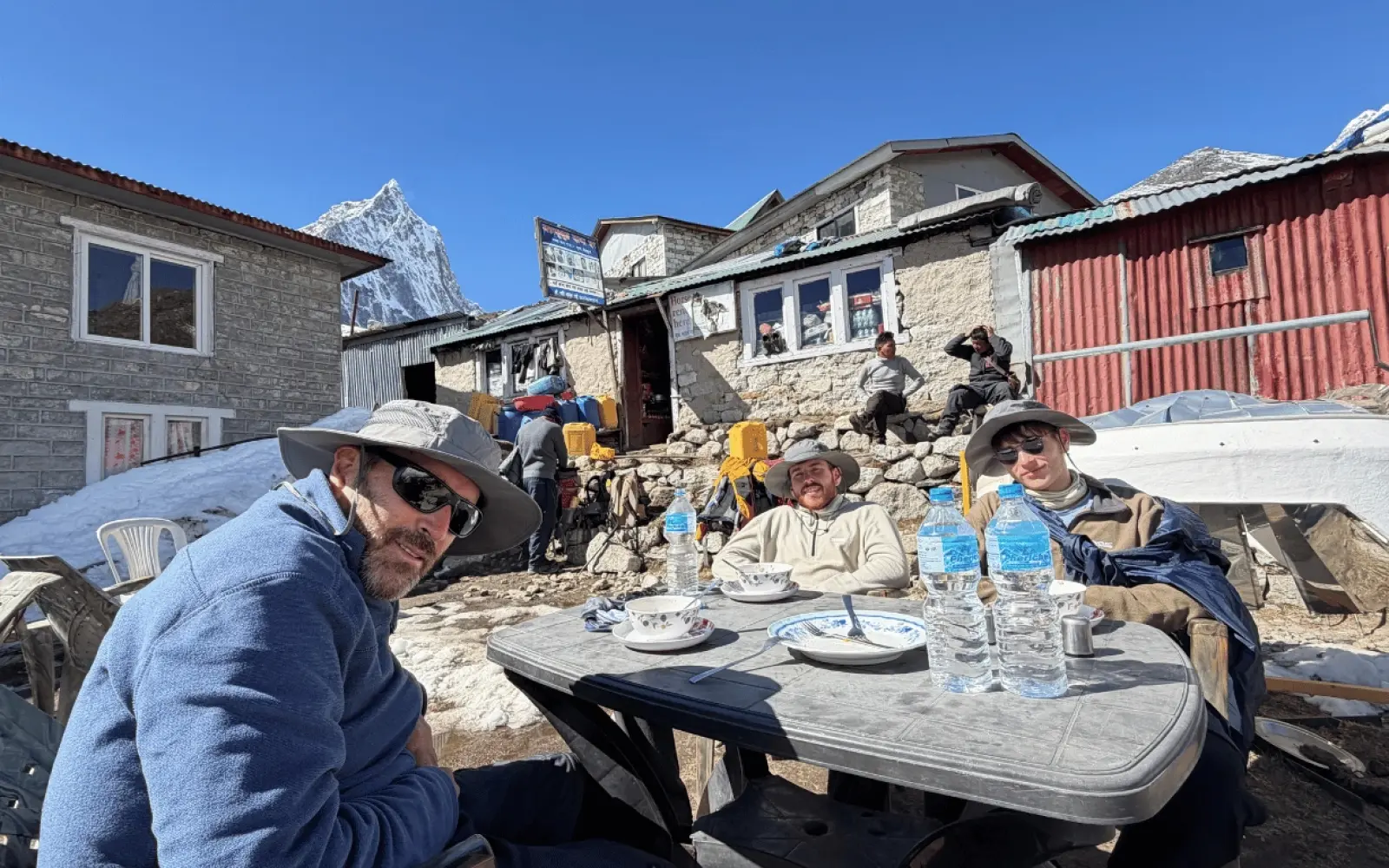

Altitude sickness affects roughly 25% of trekkers who sleep above 2,450m in Nepal, and over 50% of trekkers above 4,500m. It comes in three forms: mild Acute Mountain Sickness (AMS), and two life-threatening emergencies — High Altitude Pulmonary Edema (HAPE) and High Altitude Cerebral Edema (HACE). The good news: with the right pace, honest self-awareness, and a competent guide, it is almost entirely preventable. This guide covers everything about altitude sickness on Nepal treks — symptoms, prevention, treatment, medications, real oxygen levels by altitude, and exactly what to do if it happens on the trail.
At Majestic Trails Nepal, only 4.7% of our Everest Base Camp trekkers experience even mild AMS, and we have recorded zero HAPE or HACE cases. This is not luck. It's a specific protocol built around Day 1 monitoring, honest itinerary pacing, and never trading a client's safety for a summit day. This guide explains both the medical reality of altitude sickness and how our approach differs from every other operator in Nepal.
Key Takeaways:
| Detail | Information |
|---|---|
| Onset altitude | Above 2,500m |
| AMS prevalence above 2,450m | ~25% |
| AMS prevalence above 4,500m | ~51% |
| Highest trekker-accessible point in Nepal | Kala Patthar (5,545m) |
| Highest pass on major treks | Thorong La (5,416m) |
| Golden rule | Max 300-500m sleeping altitude gain per day above 3,000m |
| Rest day frequency | Every 3–4 days or every 1,000m of gain |
| Primary prevention drug | Diamox (Acetazolamide) 250mg |
| Only reliable cure | Immediate descent of at least 500m |
| Majestic Trails EBC AMS rate | 4.7% (mild) |
| Majestic Trails HAPE/HACE cases | Zero recorded |
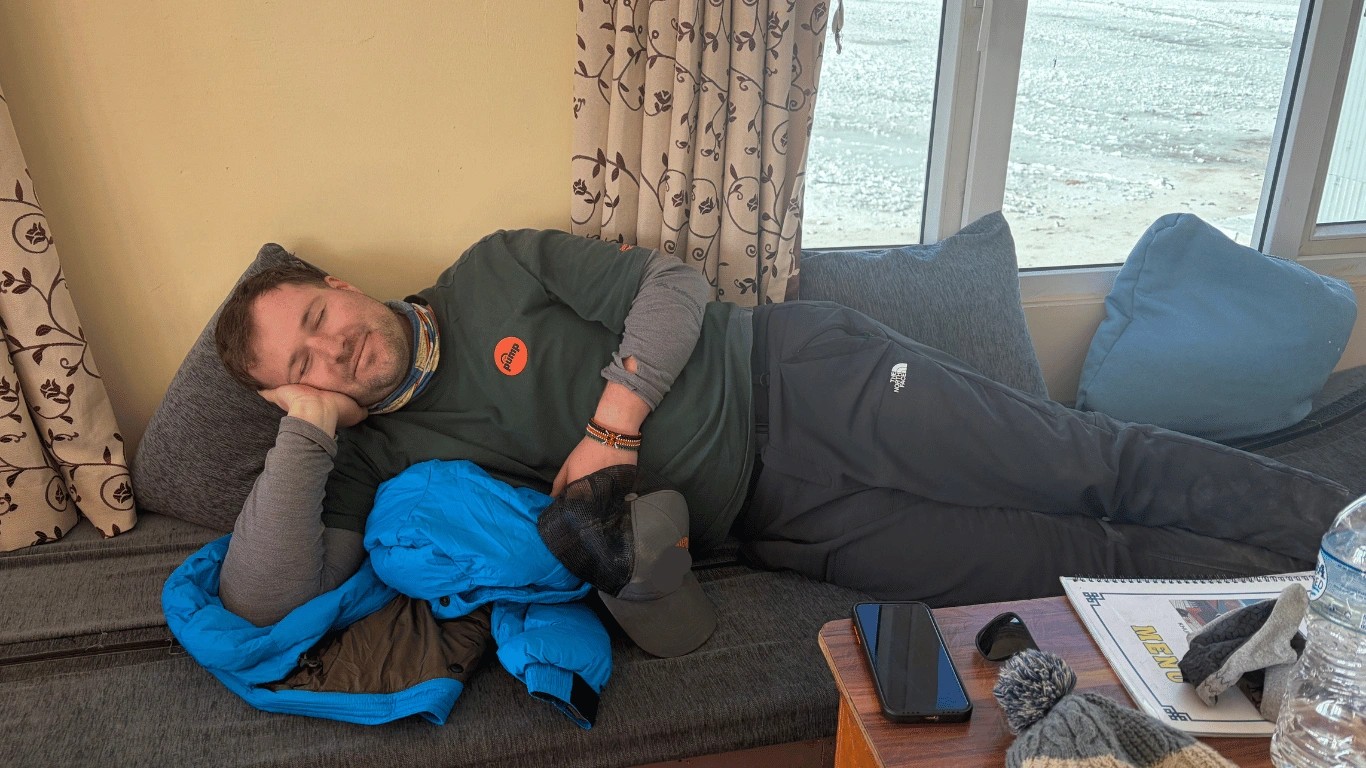
Altitude sickness happens when your body cannot adjust quickly enough to the reduced oxygen at high elevations. As you ascend, atmospheric pressure drops. Air still contains 21% oxygen, but the reduced pressure means fewer oxygen molecules reach your lungs with each breath. Your body compensates by breathing faster, increasing heart rate, and eventually producing more red blood cells — but this takes time, and if you climb faster than your body can adjust, altitude sickness develops.
Three forms exist:
AMS is common. HAPE and HACE are rare — but both can develop from untreated AMS, and both can kill within hours if not addressed immediately.
The medical data is honest and worth knowing before you trek:
On Nepal treks specifically, the biggest risk zones are:
Numbers matter, but so does the honest truth behind them: altitude sickness is not random. It responds directly to how fast you ascend, how well you eat and hydrate, how you sleep, and how honestly you listen to your body.
The single most useful reference table on this whole page:
| Altitude | Oxygen (vs sea level) | Nepal Trek Reference |
|---|---|---|
| Sea level | 100% | — |
| 1,400m | ~85% | Kathmandu |
| 2,000m | ~80% | Lower Annapurna Circuit trailheads |
| 2,860m | ~72% | Lukla (EBC start) |
| 3,210m | ~70% | Poon Hill |
| 3,440m | ~68% | Namche Bazaar |
| 3,540m | ~67% | Manang |
| 3,860m | ~63% | Tengboche |
| 4,130m | ~60% | Annapurna Base Camp |
| 4,410m | ~58% | Dingboche |
| 4,940m | ~53% | Lobuche |
| 5,164m | ~52% | Gorak Shep |
| 5,364m | ~50% | Everest Base Camp |
| 5,416m | ~49% | Thorong La Pass |
| 5,545m | ~48% | Kala Patthar |
| 8,848m | ~33% | Mount Everest summit |
At Everest Base Camp, every breath you take contains half the oxygen it would at sea level. That is why acclimatization matters more than fitness.
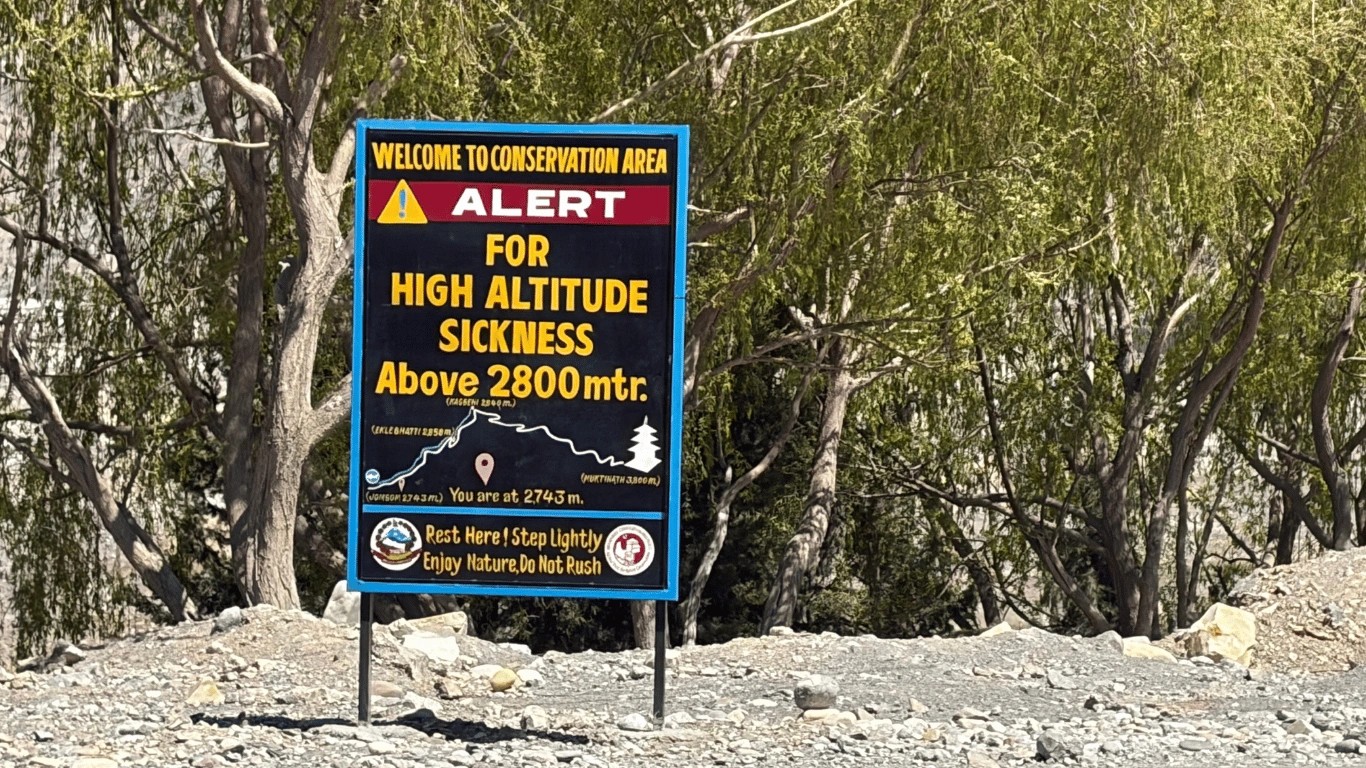
Symptoms: headache plus at least one of the following — nausea, tiredness, sleeplessness, or dizziness. Symptoms usually appear 6–12 hours after arrival at a new altitude.
Severity levels:
If symptoms worsen instead of improving with rest, treat it as HAPE or HACE developing.
Symptoms:
HAPE is a medical emergency. Untreated HAPE can kill within hours. The response is immediate descent (at least 500m), supplementary oxygen if available, and helicopter evacuation. Nifedipine may be used as a bridging medication until descent is possible.
Symptoms:
HACE is a medical emergency. Untreated HACE causes coma and death within hours. The response is immediate descent (at least 500m), supplementary oxygen, dexamethasone if available, and helicopter evacuation.
The honest way to recognize altitude sickness on the trail:
The rule at Majestic Trails Nepal is: any symptom, tell your guide immediately. Not tomorrow morning. Not "if it gets worse." Immediately. Every rescue we have ever done was possible because the trekker spoke up early — and every serious complication in Nepal's mountains happens to someone who didn't.
The single biggest myth about altitude sickness: that fitness protects you.
It doesn't.
In fact, fit trekkers are often at higher risk — because they walk faster, feel confident, and push through discomfort. A marathon runner who races uphill from Namche to Tengboche is at more risk than a slow, patient walker who takes twice as long. The lungs adapt slowly. Muscles and cardiovascular fitness cannot substitute for time.
What actually predicts altitude sickness risk:
Age and gender: age is not a strong predictor by itself. Older trekkers who acclimatize properly often do better than young trekkers who rush. Gender differences exist but are small.
One counterintuitive fact: Sherpas and Tibetans, born and raised at altitude, rarely develop altitude sickness — the result of thousands of years of exposure to high-altitude living.
These rules are non-negotiable — every serious altitude medicine authority agrees on them:
Every one of our itineraries follows these rules. Two nights at Namche. Two nights at Dingboche. A rest day at Manang. Acclimatization hikes built into every rest day. This is not optional — it is the whole reason our AMS rate is 4.7% instead of the industry average of 25%+.
Diamox is the most tried and tested drug for altitude sickness prevention. Unlike dexamethasone, it does not mask symptoms — it actually helps your body acclimatize by speeding up the natural process.
What it does:
What it does NOT do:
Standard dosage:
Common side effects:
Our Diamox philosophy at Majestic Trails Nepal:
We do not force Diamox on anyone. For treks like Annapurna Base Camp (4,130m), no Diamox is needed for most trekkers. For higher treks like EBC, Annapurna Circuit, Manaslu Circuit, and Gokyo, we typically recommend starting Diamox from Day 2 of the altitude ascent — but only after a pre-trek conversation about the trekker's background, medical history, and comfort level.
Our honest view: the pace, the food, the water, the sleep, and honest self-awareness matter more than any medication. Diamox is a confidence booster for trekkers who need extra reassurance. It is not a substitute for a properly-paced trek.
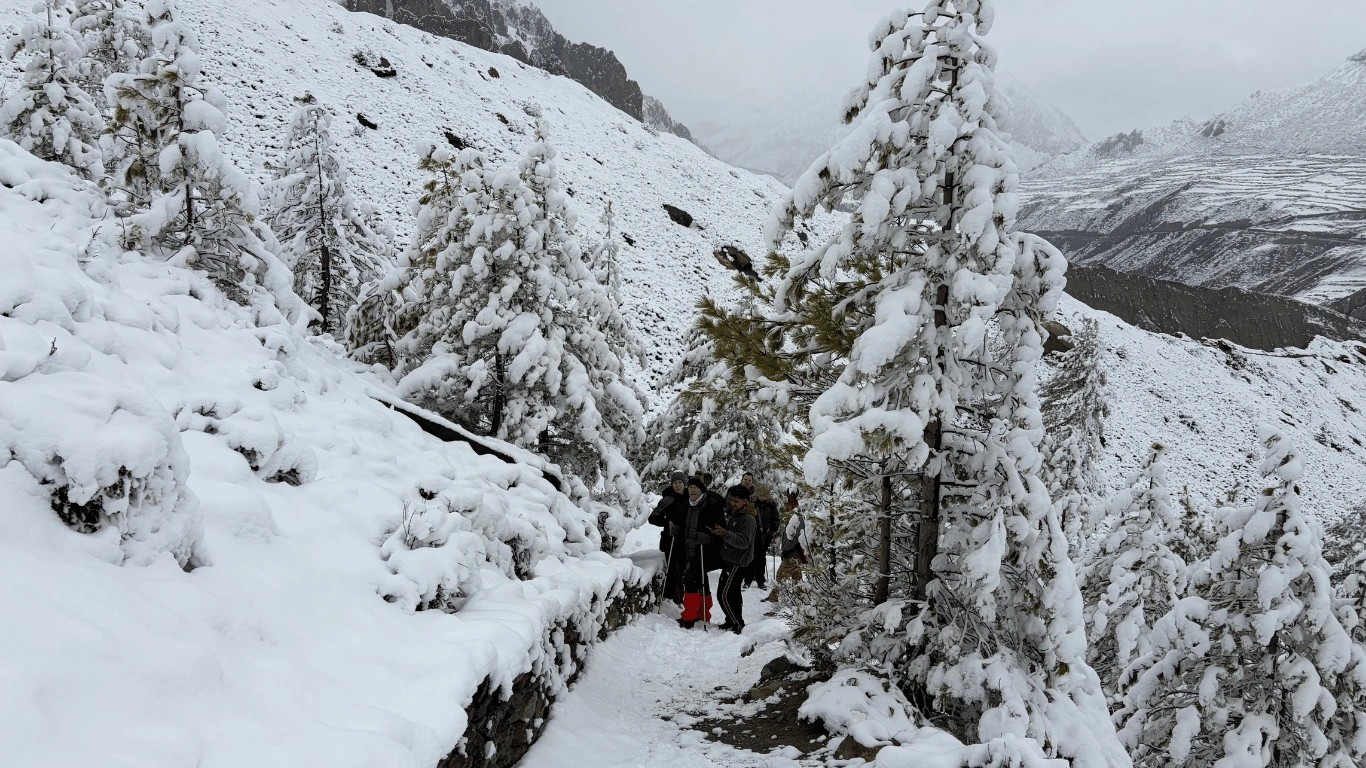
This is the section that saves lives. Read it carefully.
The core rule
Descent is the only reliable cure for altitude sickness. No medication, no oxygen bottle, no acclimatization hike replaces going down. If in doubt — descend.
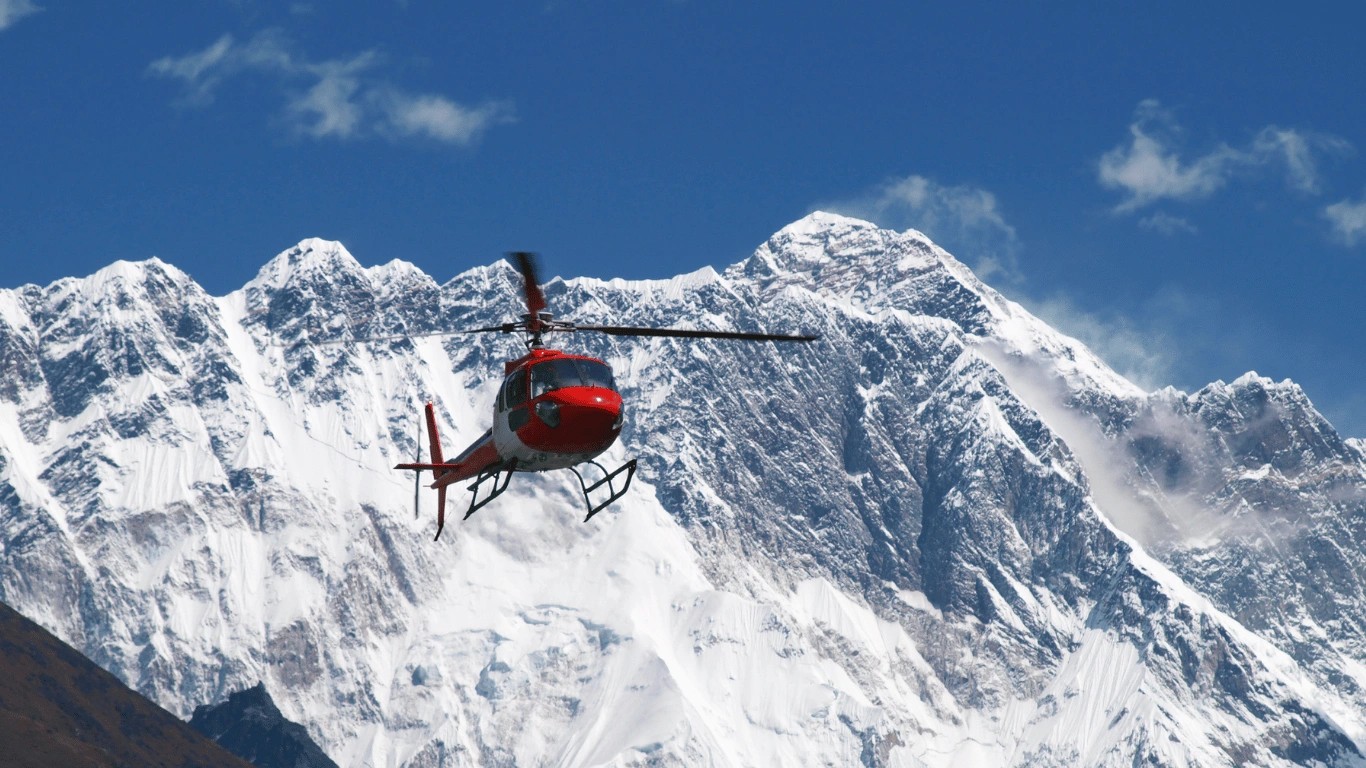
Helicopter rescue is available across all major trekking regions in Nepal — Everest, Annapurna, Manaslu, Langtang. Response time varies by weather and daylight; morning flights are more reliable than afternoon.
Realistic costs (2026):
Insurance is mandatory. Every Majestic Trails Nepal trekker is required to have travel insurance that covers helicopter rescue up to the maximum altitude of their trek. Not USD 100,000 general medical — specifically helicopter rescue with named altitude coverage. We collect a copy of the insurance certificate at your pre-trek meeting in Kathmandu, so if a rescue is needed, we can contact your insurer directly on your behalf.
Our helicopter partner: we work with Air Dynasty across all our trekking regions. We do not pre-book helicopters — because our philosophy is to get every trekker safely down without needing one. But when a rescue is truly required, Air Dynasty is our first call.
Insurance recommendation: World Nomads, Global Rescue, IMG Global, and Allianz all offer altitude-inclusive coverage. Check the fine print — "trekking to 6,000m" is different from "trekking to 5,000m."
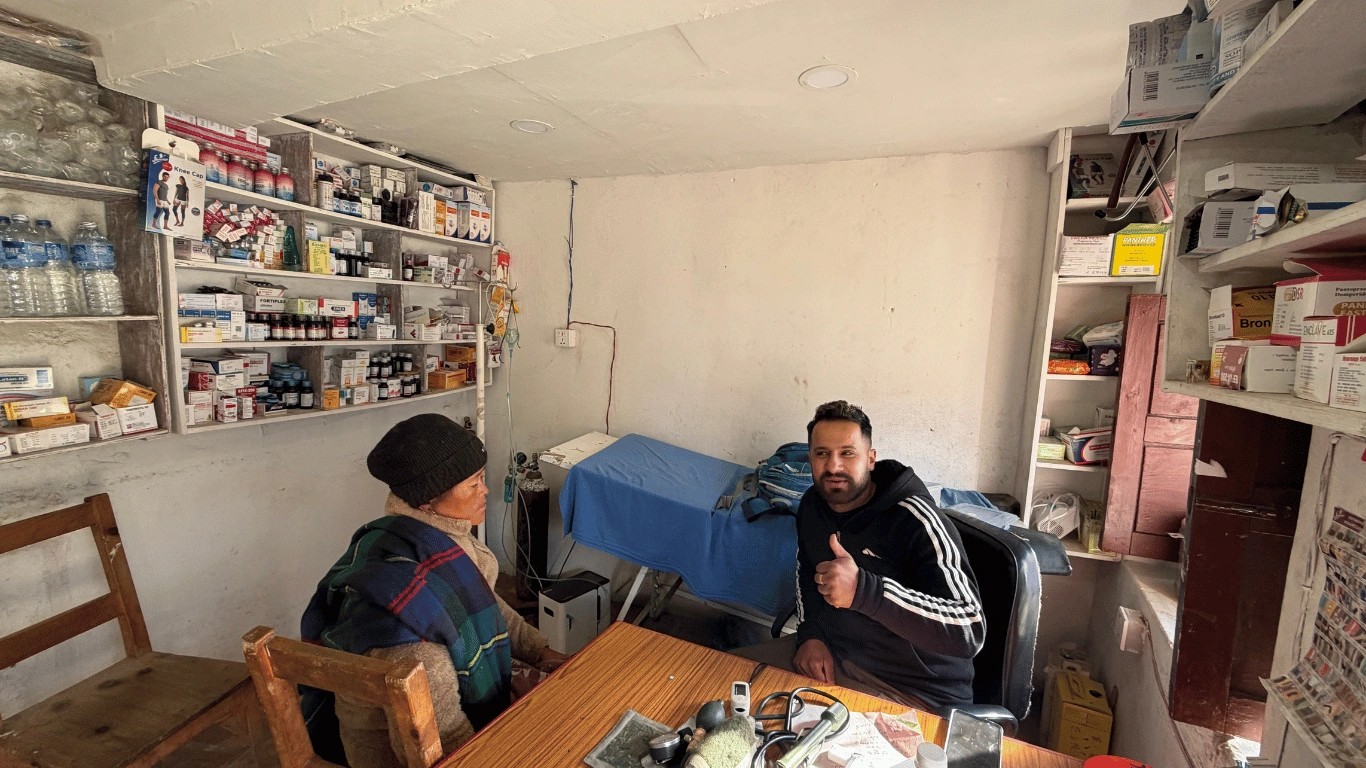
The Himalayan Rescue Association (HRA) is a non-profit organization that runs seasonal medical posts in Nepal's highest-risk trekking areas.
HRA locations:
Free services for trekkers:
At Majestic Trails Nepal, we offer the HRA briefing at Manang as an optional stop for every Annapurna Circuit group. It is free and worth attending — real doctors, real Nepal-specific information, and a chance to hear altitude experience from professionals who see it every day. Bibek and our senior guides also attend HRA training refreshers regularly to stay current with best practice.
A pulse oximeter is a small clip-on device that measures blood oxygen saturation (SpO2) as a percentage. It is a genuinely useful tool at altitude — but only when used correctly.
Normal SpO2 at altitude (approximate ranges):
| Altitude | Expected SpO2 |
|---|---|
| Sea level | 96–100% |
| 2,500m | 92–96% |
| 3,500m | 85–92% |
| 4,000m | 82–88% |
| 4,500m | 78–85% |
| 5,000m | 75–82% |
| 5,364m (EBC) | 70–80% |
Warning thresholds:
Important — a fact almost nobody tells trekkers: cold hands give false low readings. If your fingers are cold, warm them under your armpit or by rubbing them for two minutes before taking a reading. A false 65% reading from cold hands can send a healthy trekker into unnecessary panic.
How we use the oximeter at Majestic Trails Nepal: we take readings every evening before dinner, log them alongside heart rate, appetite level, sleep quality, and how the trekker says they are feeling. We do not treat the oximeter number as the whole story. A trekker with SpO2 at 78% who is eating, sleeping, and feeling fine is doing better than a trekker with SpO2 at 84% who cannot eat and cannot sleep. The trekker matters more than the number.
Every major Nepal trek has a different altitude risk profile. A quick honest breakdown:
| Trek | Max Altitude | Risk | Note |
|---|---|---|---|
| Ghorepani Poon Hill | 3,210m | Very Low | Great first trek |
| Annapurna Base Camp | 4,130m | Low | Good first high-altitude trek |
| Mardi Himal | 4,500m | Moderate | Summit push |
| Everest Panorama | 3,860m | Moderate | Namche & Tengboche |
| Langtang Valley | 3,870m | Moderate | Easier evacuation |
| Everest Base Camp | 5,545m | Real | Acclimatization needed |
| Annapurna Circuit | 5,416m | Real | High-pass crossing |
| Manaslu Circuit | 5,106m | Real | Remote route |
| Gokyo & Renjo La | 5,357m | Real | Similar to EBC |
| 3 Passes Trek | 5,535m | Serious | Three high passes |
| Upper Mustang | 3,840m | Moderate | High plateau |
Detailed altitude sickness guides for each major trek are coming — Everest Base Camp, Annapurna Circuit, Manaslu Circuit, ABC, and Gokyo pages will follow this pillar.
Two of the most common questions asked before a Nepal trip:
No. Kathmandu sits at approximately 1,400m — well below the 2,500m threshold where altitude sickness begins. You may feel slight breathlessness during your first day or two if you flew in from sea level, but this is not altitude sickness — it is your body making a small adjustment. You'll be completely fine.
No. Pokhara sits at approximately 822m — actually lower than Kathmandu. There is zero altitude sickness risk in Pokhara itself. Trekking treks that start from Pokhara (Annapurna Circuit, ABC, Mardi Himal, Poon Hill) gain altitude gradually enough that your body adapts along the way.
Above 2,500m — which on most Nepal treks means from the second or third day. Namche Bazaar (3,440m), Manang (3,540m), and Ghorepani (2,750m) are the first meaningful altitude exposures on their respective treks.
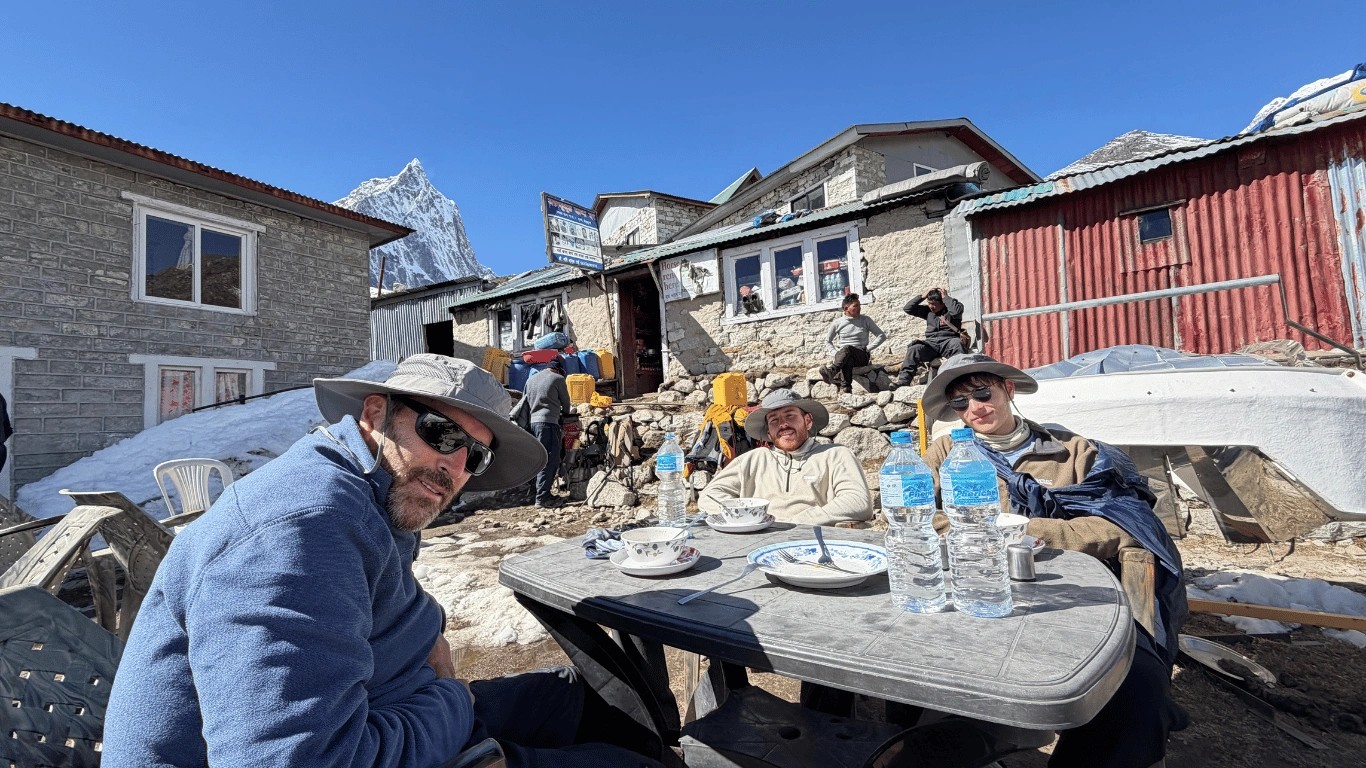
Water — 3-4 litres per day above 3,000m. Dehydration mimics altitude sickness symptoms and makes real AMS worse. Drink water with meals, between meals, and before bed.
Carbohydrates over fats. At altitude, your body burns carbs more efficiently than fats due to reduced oxygen. Dal bhat — the traditional Nepali lentil-and-rice meal served on every teahouse trek — is genuinely close to the ideal altitude food: complex carbs, hydrating lentils, warm, and endless refills.
High-calorie snacks. Your appetite drops at altitude but your caloric needs increase. Chocolate, nuts, dried fruit, biscuits — all worth carrying.
Avoid or reduce:
The coffee question, answered honestly:
Contrary to widespread advice, habitual coffee drinkers do not need to stop coffee at altitude. A study at Everest Base Camp (5,345m) showed identical hydration levels between coffee drinkers and non-drinkers. If you drink coffee daily at home, continue at altitude — abrupt caffeine withdrawal actually mimics AMS symptoms and can be misdiagnosed as altitude sickness. However: if you are not a regular coffee drinker, do not start now. And avoid caffeine after early afternoon, since disrupted sleep at altitude is a real risk factor.
On nose bleeding at altitude: dry Himalayan air, reduced humidity, and capillary fragility from cold cause occasional nose bleeds at altitude. This is normal and not usually serious. Keep nostrils moist with Sinex or vaseline, and drink plenty of water.
Garlic soup — Nepali tradition, mild real benefit. Garlic may help thin blood and improve circulation at altitude. More reliably, warm garlic broth encourages hydration and eating when appetite is low. We recommend it on our treks — the psychological confidence boost alone is worth it.
Altitude sickness often manifests at night. During sleep, oxygen levels in the blood dip further than during the day. This is why "sleeping altitude" matters more than "daytime altitude" — you can hike higher during the day, but where you sleep is where the risk sits.
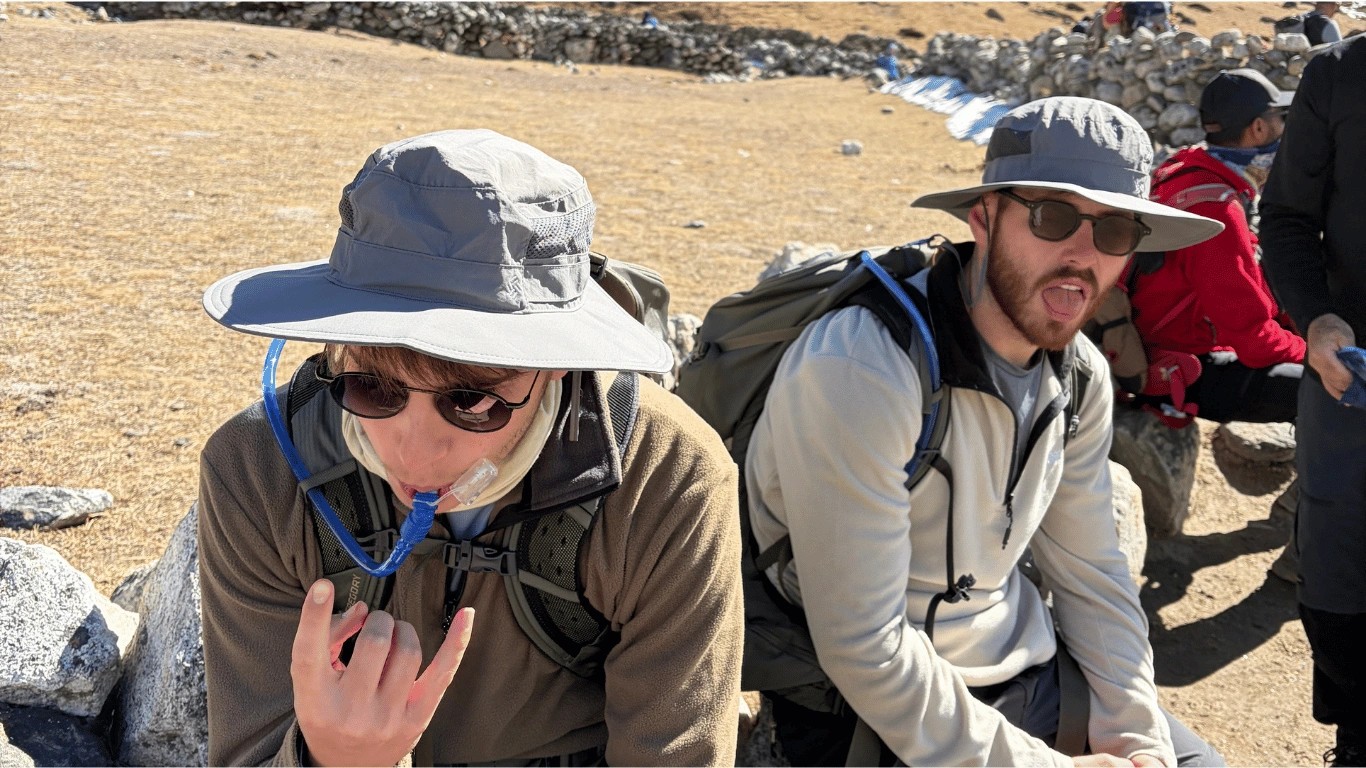
The difference between our approach and every other Nepal trekking operator:
We do not manage altitude sickness after it happens. We prevent it from Day 1.
Most Nepal operators start monitoring at Namche or Manang — the altitudes where AMS commonly appears. By then, the trekker's oxygen levels, hydration, sleep, and appetite patterns are unknown baselines. If someone gets sick, the response is reactive.
Our approach:
Built-in acclimatization:
What we carry on every high-altitude trek:
Team structure that supports safety:
Our track record:
When rescue is needed — our decision criteria:
Our turn-back rate is about 5% — a mix of altitude issues, personal decisions, and other health factors. We record every turn-back honestly. We never push a trekker to continue when they should descend. That policy is what makes our completion rate honest, and our rescue rate low.
Every one of these is anonymized but real:
The pattern in every case: early symptom recognition, immediate action, honest communication with the trekker, and never trying to push through symptoms. Every rescue was successful because we did not wait.
For mild AMS:
For moderate AMS (required descent):
For HAPE or HACE (required emergency descent):
Long-term effects:
What genuinely helps:
What doesn't help much:
Medical checkup before booking:
Disclose everything at your pre-trek meeting. Existing conditions, medications, previous altitude experience (good or bad), current fitness. The more your guide knows about you before Day 1, the better your trek will be.
Descend immediately for anything beyond mild AMS. Rest, hydrate, and let symptoms clear fully before re-ascending. Full recovery typically takes 24-48 hours after descent. HAPE and HACE require immediate medical evaluation and full trek termination.
People ascending too fast, dehydrated trekkers, those with no previous altitude exposure, and individuals with genetic susceptibility. Fitness does NOT protect you — fit people who ascend too fast are often at higher risk than slower, less-fit trekkers.
High-carbohydrate foods (dal bhat, rice, noodles, potatoes), warm liquids (garlic soup, ginger tea), and lots of water (3-4 litres per day above 3,000m). Avoid heavy meat above 3,500m, alcohol, and excessive salt.
Mild AMS: headache plus nausea, tiredness, sleeplessness, or dizziness. Moderate AMS: worsening symptoms despite rest. Severe (HAPE/HACE): breathlessness at rest, gurgling breath, blue lips, confusion, loss of coordination, extreme headache. Emergency descent required for severe cases.
No. Kathmandu is at 1,400m — below the 2,500m threshold where altitude sickness begins.
No. Pokhara is at 822m — even lower than Kathmandu.
Approximately 53% of sea-level oxygen. At Everest Base Camp (5,364m), it drops to roughly 50%.
Mild AMS typically resolves within 24-48 hours of rest or descent. HAPE and HACE require immediate emergency evacuation and full trek termination.
For most people, up to about 2,500m without significant risk. Above that, gradual ascent (300-500m per night above 3,000m) is essential.
Yes. Children can develop altitude sickness at the same altitudes as adults, but symptoms can be harder to recognize. We recommend children stay below 3,500m unless they have previous altitude experience.
Yes — from HAPE or HACE, both of which can kill within hours if untreated. Mild AMS does not kill on its own, but ignored AMS can develop into HAPE or HACE. This is why every symptom matters and every early sign should be reported to your guide.
Altitude sickness is real, but it is not random. It responds directly to how you climb, what you eat and drink, how you sleep, and how honestly you listen to your body. With proper acclimatization, honest self-awareness, and a competent guide, altitude sickness on Nepal treks is almost entirely preventable.
At Majestic Trails Nepal, our 4.7% mild AMS rate on Everest Base Camp — compared to the industry average of 25%+ — is not luck. It is the direct result of Day 1 monitoring, honest itinerary pacing, real acclimatization days, and a team that has genuinely spent 1,200+ groups above 5,000m learning what works.
The single most important lesson from every trek we have ever led: the mountain does not care about your summit day. It cares about whether you climbed slowly enough. Trekkers who respect that fact almost always reach their destination. Trekkers who don't often end up in a helicopter.
When in doubt, descend. No summit is worth your life.
→ See our Everest Base Camp Trek — with real acclimatization built in
→ See our Annapurna Circuit Trek — with Manang rest day and HRA briefing
→ See our Annapurna Base Camp Trek — genuinely low altitude risk
→ Nepal Trekking Safety Standards — our full safety approach
→ Contact us — talk to Bibek about your trek
Written by
Trekking guide
Prabin Adhikari is a professional trekking guide in Nepal with extensive experience leading trekkers across the Himalayas. Known for his friendly personality, local knowledge, and commitment to safety, he ensures every journey is enjoyable and well-organized.
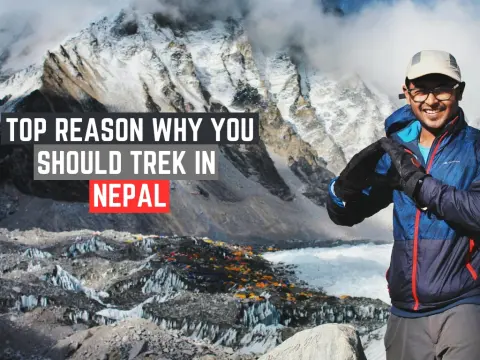
If you've ever wondered why trekking in Nepal captivates adventurers from every corner of the globe, the answer lies in its extraordinary combination...
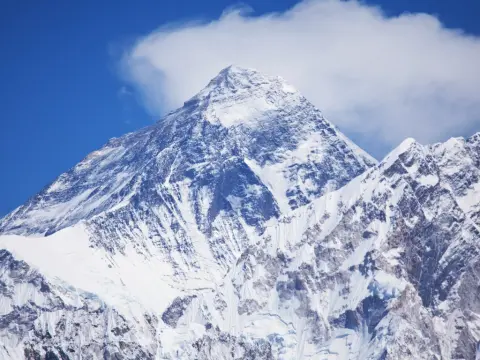
Mount Everest is the highest mountain on Earth at 8,848.86 meters (29,031.7 feet) above sea level, sitting on the border between Nepal and the Tibet A...

The first sight of the Himalayas rarely matches what people expect. From an airplane window on the approach to Kathmandu, travelers look for a single...
