
Everest View Trek Nepal – The Best Short Everest Trek
19 Feb 2026
Standing face-to-face with Mount Everest doesn't require weeks of grueling trekking or extreme altitude exposure. The Everest View Trek Nepal offers o...

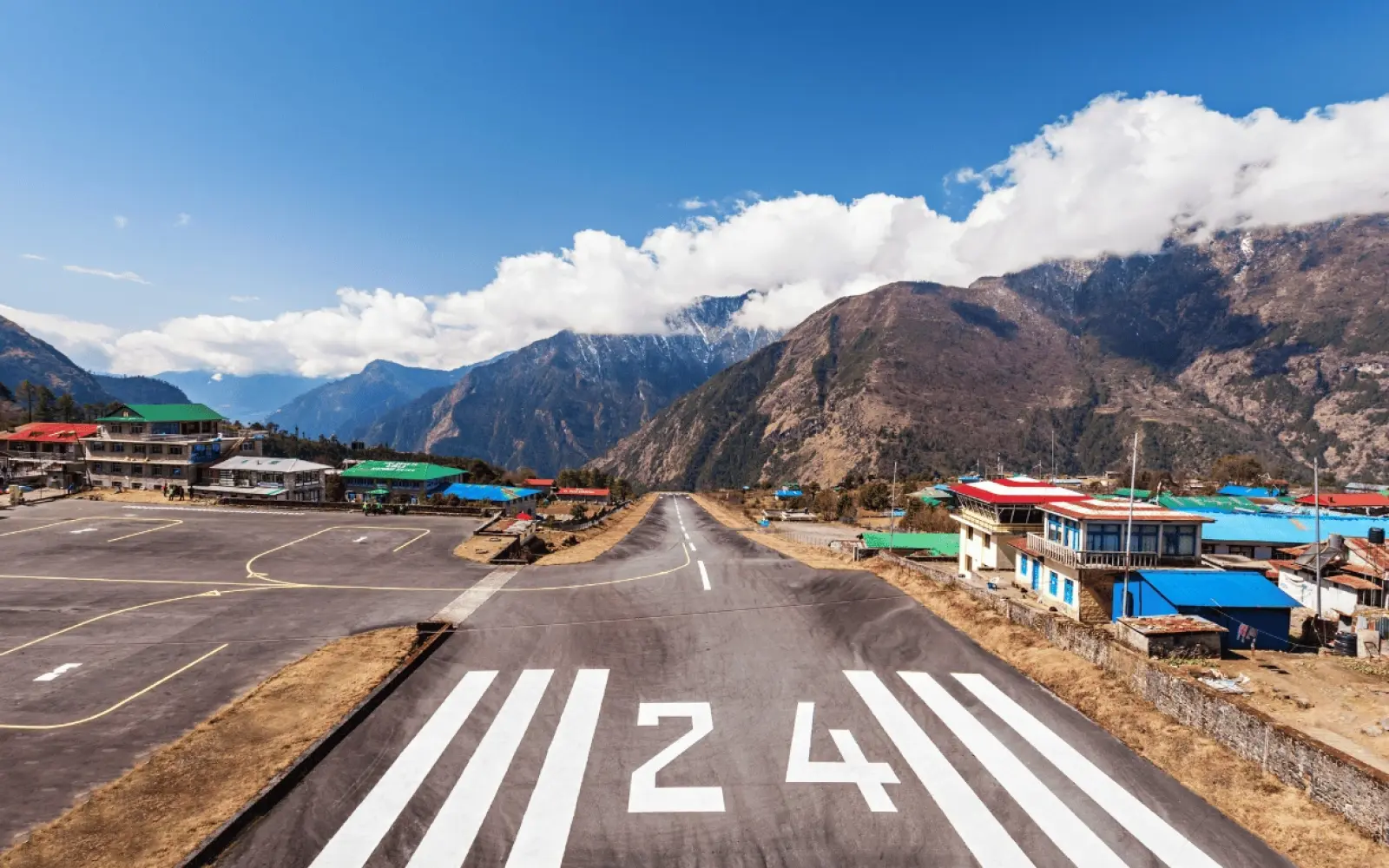

Kathmandu-to-Lukla flights in 2026 cost approximately USD 253-255 one-way for foreign trekkers, 22,000 NPR for Indian nationals, 8,500 NPR for Nepali licensed guides, and 13,000 NPR for Nepali LPC (Licensed Porter/Crew). Three airlines fly the route — Tara Air, Sita Air, and Summit Air. Helicopter alternatives cost around USD 600 one-way through late September due to a monsoon 2-pilot safety requirement, dropping to around USD 500 per person after (pre-booked).
From October through November, most Lukla flights operate from Ramechhap (Manthali) Airport, a 5-6 hour drive from Kathmandu — where foreign trekkers pay approximately USD 210 one-way.
Flying to Lukla is where most Everest Base Camp trekkers first meet the real Himalaya — and where most travel plans first meet the weather. This guide covers everything you need to know about Lukla flights in 2026 — real prices for every passenger type, why cancellations happen, the Ramechhap route explained honestly, how to handle delays, and exactly how a properly-managed EBC operator handles flight logistics.
Key Takeaways
| Detail | Information |
|---|---|
| Kathmandu → Lukla (foreign) | ~$253-255 USD one-way |
| Ramechhap → Lukla (foreign) | ~$210 USD one-way |
| Round-trip cost (foreign) | ~$510 USD |
| Helicopter (monsoon, 2-pilot) | ~$600 USD one-way |
| Helicopter (pre-booked, post-monsoon) | ~$500 USD per person |
| Airlines operating | Tara Air, Sita Air, Summit Air |
| Ramechhap season | October-November (sometimes later) |
| Ramechhap drive time from Kathmandu | 5-6 hours |
| Flight duration Kathmandu-Lukla | ~35 minutes |
| Flight duration Ramechhap-Lukla | ~20 minutes |
| Lukla Airport elevation | 2,845m (9,334 ft) |
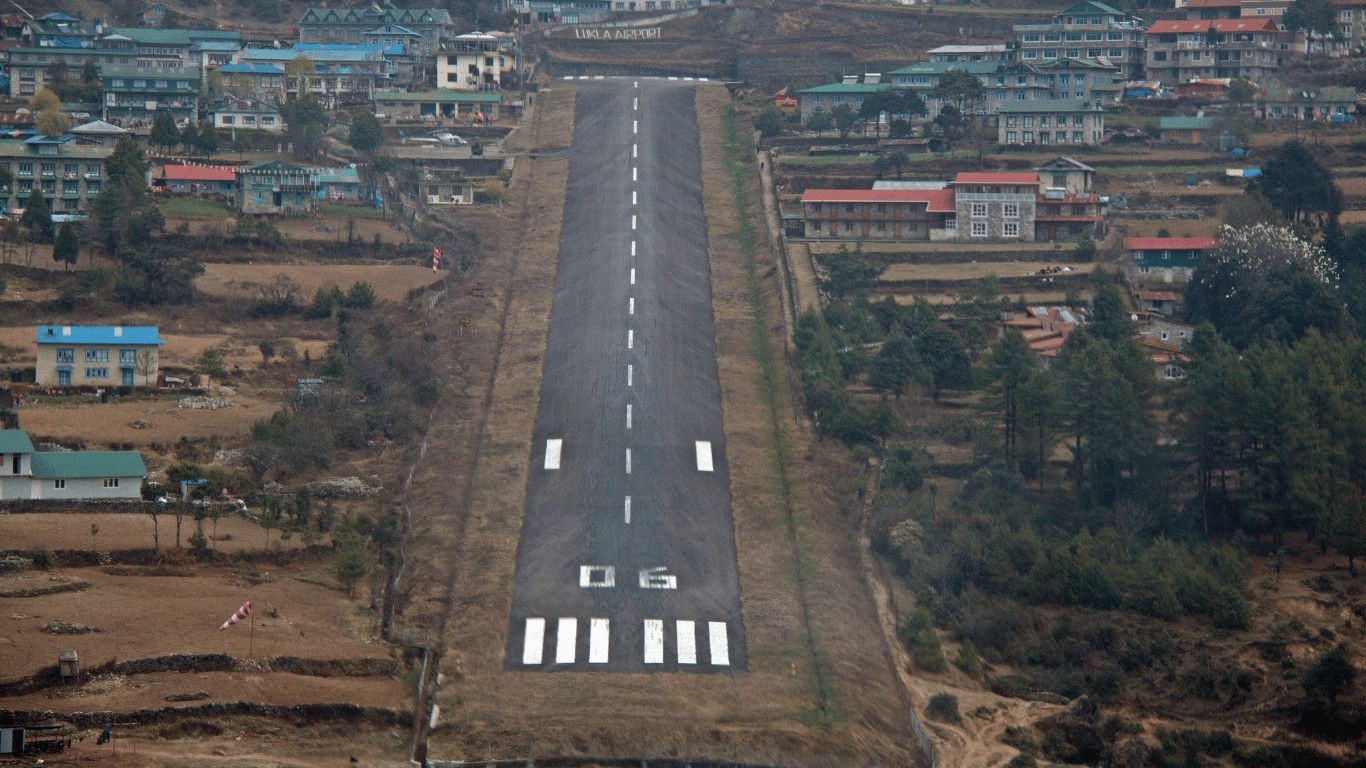
Lukla flights are short flights from Kathmandu (or Ramechhap during peak season) to Tenzing-Hillary Airport at Lukla, the gateway village for the Everest Base Camp trek. Lukla sits at 2,845m in the Solukhumbu district of eastern Nepal, and its airport is genuinely one of the most challenging airfields in the world — a 527m runway on a mountain slope, with a fixed 12% gradient.
For Everest Base Camp trekkers, the Lukla flight matters mainly because it saves time. In 2026, you can drive from Kathmandu toward the Everest region and reach Surke, from where it is roughly a 45–60 minute uphill walk to Lukla. However, the overland route generally adds around 2 days to the journey compared with flying. The Lukla flight takes only about 30–35 minutes, making it the quickest and most convenient way to reach the Everest trailhead.
This is why Lukla flights become the single most stressful logistics question in Everest Base Camp planning — not the trek itself, not the altitude, but this short, weather-dependent flight that decides whether your carefully-planned trek starts on time.
Lukla flight cost in 2026 for foreign trekkers is approximately USD 253-255 one-way from Kathmandu, or USD 210 one-way from Ramechhap.
The price genuinely differs by passenger nationality and role — something no other blog explains clearly.
Kathmandu to Lukla, one way (2026):
| Passenger Type | 2026 Price |
|---|---|
| Foreign trekkers | ~$253-255 USD |
| Indian nationals | ~22,000 NPR |
| Nepali licensed guide | ~8,500 NPR |
| Nepali LPC (Licensed Porter/Crew) | ~13,000 NPR |
Ramechhap (Manthali) to Lukla, one way (2026):
| Passenger Type | 2026 Price |
|---|---|
| Foreign trekkers | ~$210 USD |
| Indian nationals | ~17,000 NPR |
| Nepali licensed guide | ~6,500 NPR |
| Nepali LPC | ~9,000 NPR |
If you're travelling with a Nepali guide and support crew, this pricing structure is exactly why your total trip cost is broken down the way it is — the guide and porter are not paying the same fare you are, and any honest agency should be able to show you that breakdown transparently.
A round-trip Kathmandu-Lukla flight for a foreign trekker in 2026 costs approximately USD 510. ($253-255 × 2)
If your trek operates from Ramechhap (as most do October-November), the round-trip cost drops to approximately USD 420 for a foreign trekker.
Why pricing shifts between Kathmandu and Ramechhap:
If your quoted trek price includes flights, ask which airport your flight is scheduled from — this alone can shift the trip cost by nearly USD 100 per person round trip.
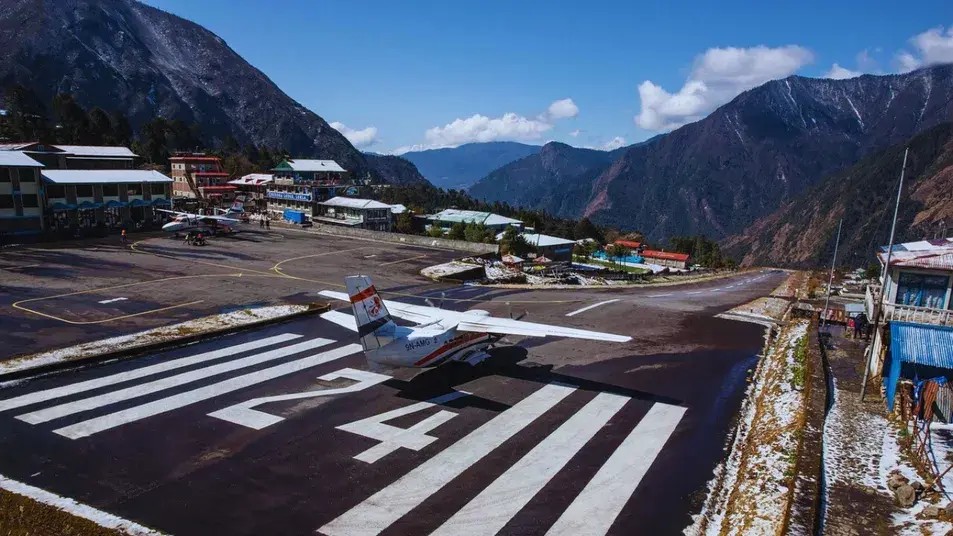
A Lukla flight for Indian nationals in 2026 costs approximately 22,000 NPR one-way from Kathmandu, or 17,000 NPR one-way from Ramechhap. This translates to roughly USD 165-170 from Kathmandu and USD 130-135 from Ramechhap — significantly cheaper than foreign trekker pricing due to Nepal-India special travel arrangements.
Complete Indian national pricing (2026):
| Route | One-way (NPR) | Approx. USD |
|---|---|---|
| Kathmandu → Lukla | ~22,000 NPR | ~$165-170 |
| Ramechhap → Lukla | ~17,000 NPR | ~$130-135 |
Round-trip Kathmandu-Lukla for an Indian national is approximately 44,000 NPR (~$330-340 USD).
Why Indian nationals pay differently: Nepal and India have long-standing open-border agreements that extend to certain domestic travel pricing. Airlines apply this rate to Indian passport holders on production of valid ID at check-in. This is a genuine pricing tier — not a discount — and applies at all three operating airlines (Tara Air, Sita Air, Summit Air).
Booking tip for Indian trekkers: the Indian national fare cannot be booked through most international online platforms — book directly through a Nepali trekking agency or airline office to access the correct pricing.
A Lukla flight for a Nepali licensed trekking guide in 2026 costs approximately 8,500 NPR one-way from Kathmandu, or 6,500 NPR one-way from Ramechhap. This is the lowest passenger tier on the Kathmandu-Lukla route, applied to registered Nepali guides holding valid government trekking licenses (like License No. 19911).
Complete Nepali guide pricing (2026):
| Route | One-way (NPR) | Approx. USD |
|---|---|---|
| Kathmandu → Lukla | ~8,500 NPR | ~$65 |
| Ramechhap → Lukla | ~6,500 NPR | ~$50 |
Why Nepali guides pay this reduced fare: the Nepali government supports domestic trekking operations by offering discounted airline pricing to licensed trekking professionals accompanying foreign trekkers. This is why your trip cost breakdown from an honest Nepali agency should show separate line items for your foreign trekker fare and your guide's Nepali guide fare — they are genuinely different, and any operator should be transparent about this.
Guide license verification: the discounted fare is only available to Nepali guides who present their valid government-issued trekking license at check-in. Unlicensed guides pay the standard Nepali civilian fare, which is significantly higher.
A Lukla flight for Nepali LPC (Licensed Porter/Crew) in 2026 costs approximately 13,000 NPR one-way from Kathmandu, or 9,000 NPR one-way from Ramechhap. LPC — Licensed Porter/Crew — is the classification for registered Nepali trek support staff, including porters and assistant crew members traveling with a licensed guide-led group.
Complete Nepali LPC pricing (2026):
| Route | One-way (NPR) | Approx. USD |
|---|---|---|
| Kathmandu → Lukla | ~13,000 NPR | ~$100 |
| Ramechhap → Lukla | ~9,000 NPR | ~$70 |
Why LPC pricing sits between guide and civilian fare: the LPC rate acknowledges that porters and crew are professional trek staff (not casual travelers), but the fare tier is higher than the licensed guide rate because it reflects a different tier of licensing and government trek registration.
For trekkers booking with an operator like Majestic Trails Nepal: when your trip includes a licensed guide and porter, both are paying their respective professional fares — not your foreign trekker rate. This is why an honest cost breakdown of your Nepal trek shows separate flight cost lines for each team member — because they genuinely are different prices.
Three airlines currently operate scheduled flights to Lukla:
The honest answer nobody else will give you: there is no single "best" airline for Lukla flights.
Some days Tara performs better. Some days it's Sita. Some days Summit is the only carrier that gets a plane on the ground. This depends genuinely on:
Anyone confidently telling you "always fly Tara" or "always fly Summit" either hasn't flown enough times to know better, or is trying to sell you something. As guides who have flown this route many times over 5+ years, we book the airline that has the best morning slot for our departure date — not out of loyalty to any single carrier.
One factor that does matter: all three airlines use the same aircraft type (twin-engine turboprops — Dornier 228, De Havilland Twin Otter) and all three follow the same weather-based flight rules. Safety standards are equivalent across the three operators.
Lukla flights are cancelled or delayed frequently — especially the 3rd flight of the day, which is the pattern most trekkers don't know about.
Real cancellation frequency by season:
| Season | Typical Cancellation Rate |
|---|---|
| September | Moderate — end of monsoon, weather clearing |
| October | Low — best flying season |
| November | Low — clear skies dominant |
| December-February | Moderate — cold, occasional heavy weather |
| March-May | Low — spring flying season |
| June-August | High — active monsoon |
The 3rd flight of the day pattern:
Weather at Lukla worsens throughout the morning as sun heats the valley and clouds build. The pattern almost every experienced Lukla pilot recognizes:
The latest flight I have personally flown to Lukla was 2 PM. That is very unusual — most days nothing is flying after late morning — but it does happen when weather holds unusually late. Don't assume "if I'm not on an early flight, I'm not going." It depends entirely on the day - Prabin Adhikari
Lukla flights are expensive because Tenzing-Hillary Airport is one of the world's most technically demanding airfields — with only three airlines certified to operate it, no alternative land route, and weather-dependent operations that limit daily flight capacity.
The specific reasons Lukla flights cost more than a comparable Nepal domestic flight:
The Kathmandu-Lukla route is one of the highest per-kilometer domestic flight prices in Nepal — but genuinely reflects the operational cost of running this route safely.
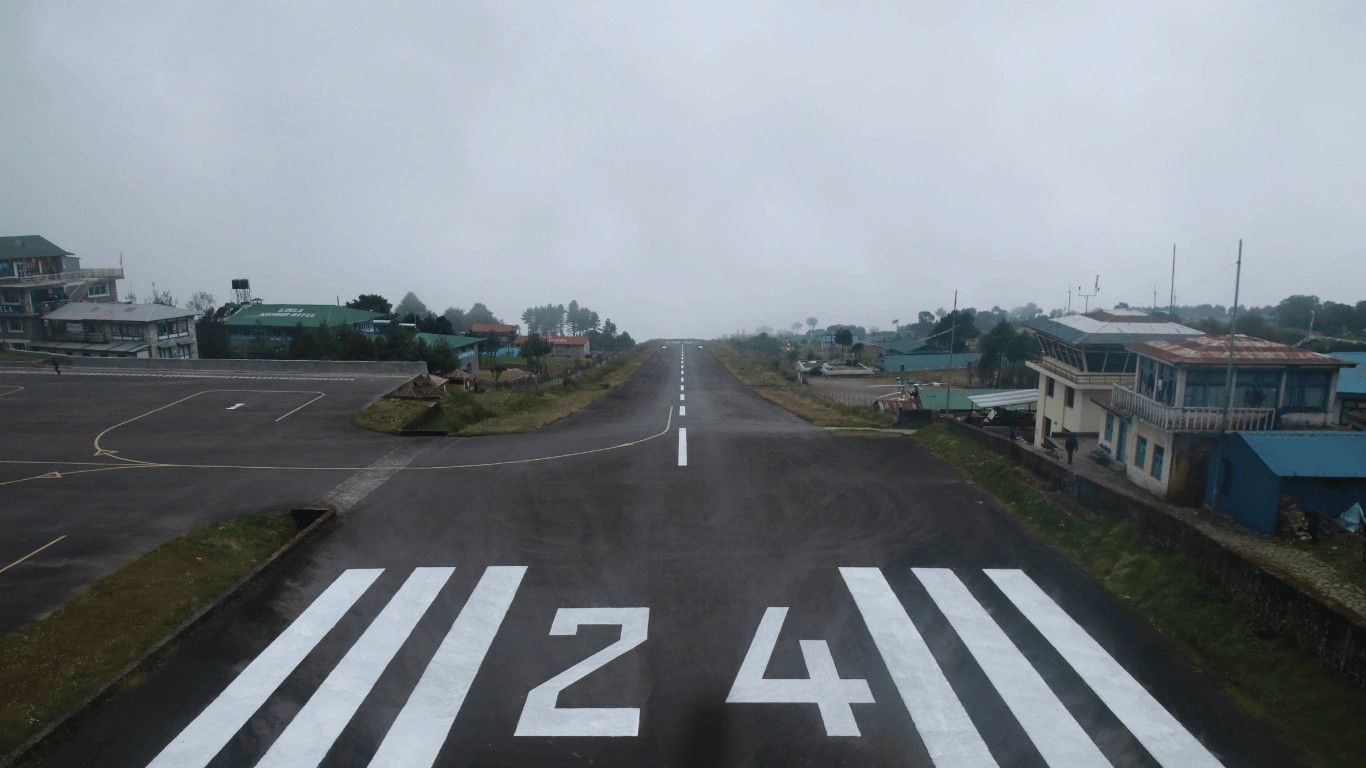
Understanding when flights operate from where matters more than the price itself.
The "book the first flight" rule applies year-round: the earliest morning slot has the best weather window and highest completion probability.
During October and November, most Lukla flights operate out of Ramechhap (Manthali) Airport instead of Kathmandu. This confuses trekkers who booked expecting a Kathmandu departure — so here's the honest breakdown.
What Ramechhap actually involves:
The logistics reality:
A trekker on a Ramechhap-departure day typically wakes at 1:00-1:30 AM in Kathmandu, drives 5-6 hours through the night, arrives at Ramechhap around 6:30 AM, and boards a Lukla flight by 7:00-8:00 AM.
What most trekkers don't know:
For any October-November EBC trek, ask your operator directly: "Which airport does my flight depart from?" The answer affects your Day 1 timing by 5-6 hours.
Helicopter is the reliable alternative when weather grounds fixed-wing flights. Real 2026 pricing:
Standard 2026 helicopter pricing:
The 2-pilot rule explained:
During monsoon season (roughly June through end of September), helicopters flying to Lukla are required to carry two pilots instead of the standard one. This is a safety regulation for monsoon operations — the second pilot provides redundancy in poor weather conditions. Two pilots = higher operational cost = higher ticket price.
After the 2-pilot rule ends in late September, base helicopter pricing drops to around $500 per person for pre-booked seats. Book in advance to lock this rate.
Why last-minute helicopter costs more:
If your plane is cancelled and you decide to switch to helicopter at Lukla airport, pricing depends entirely on demand that day. When 50 stranded trekkers all want helicopters at 11 AM, prices go up. When only a few passengers need helicopter service, prices stay closer to base rate.
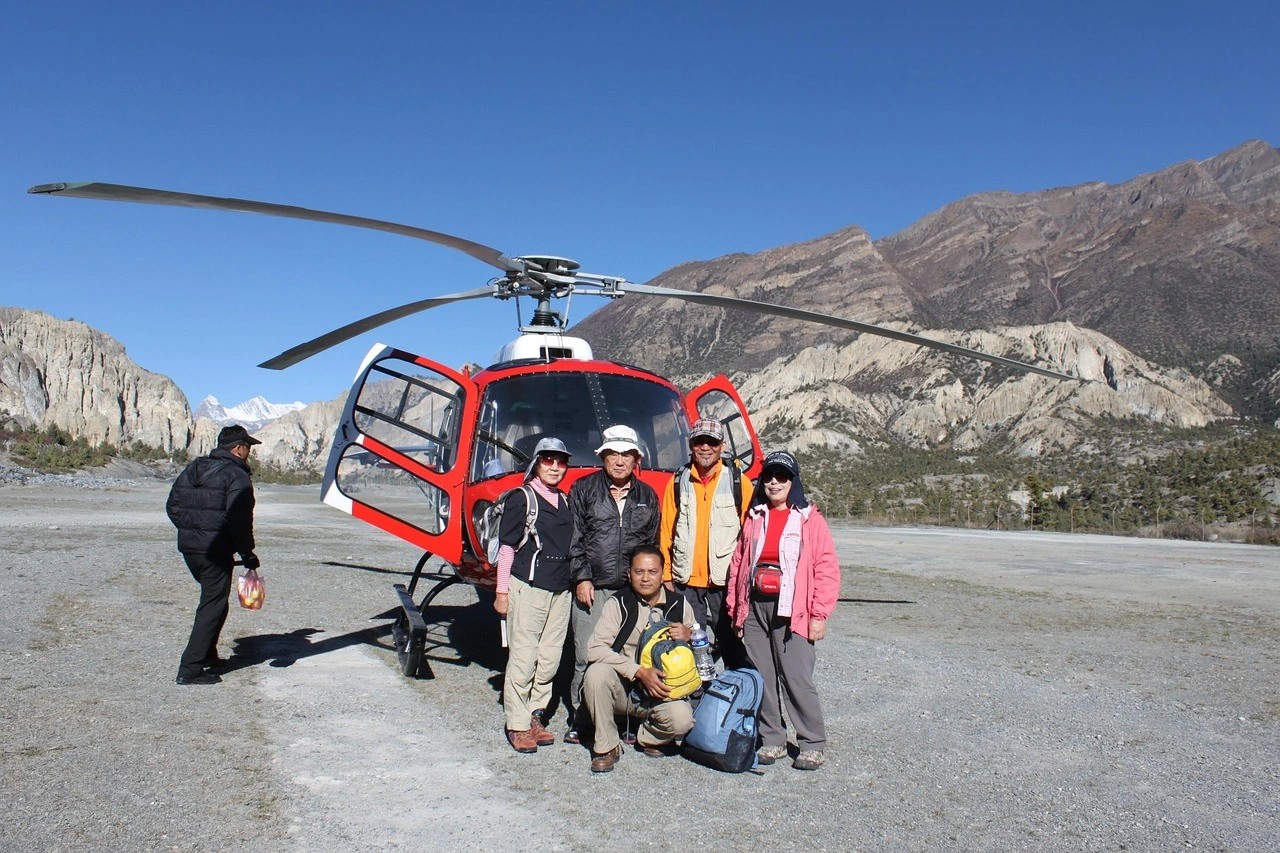
Yes — you can switch from plane to helicopter if your flight is cancelled or delayed. It's genuinely much easier through a guide or agency than solo.
Solo trekker version:
Solo trekkers can do the same thing but have to negotiate directly with the airline (for refund) and helicopter operator (for booking) — typically at the airport itself, in a stressful moment, with limited language options.
Price implications:
Majestic Trails Nepal's approach: we monitor Lukla weather constantly through our team on the ground and make helicopter switch calls proactively — before the plane is officially cancelled — when the pattern suggests a plane cancellation is likely.
Getting stuck at Lukla airport for 3-4 days is genuinely possible but not common. Understanding your options in advance prevents panic if it happens.
When this happens:
Your options when stuck:
Money tip nobody explains:
If you get stuck on the way back and end up booking a last-minute helicopter, prices can be significantly higher than standard rates because it's demand-driven. Carry extra cash beyond your planned budget — USD 200-400 as emergency contingency — so you can pay directly on the spot if needed. Don't leave Kathmandu with only exactly enough for your planned Lukla flight.
Insurance note: most travel insurance policies cover trip disruption costs including additional accommodation and rerouting fees, but you need to keep receipts. Save every receipt if you're stuck.
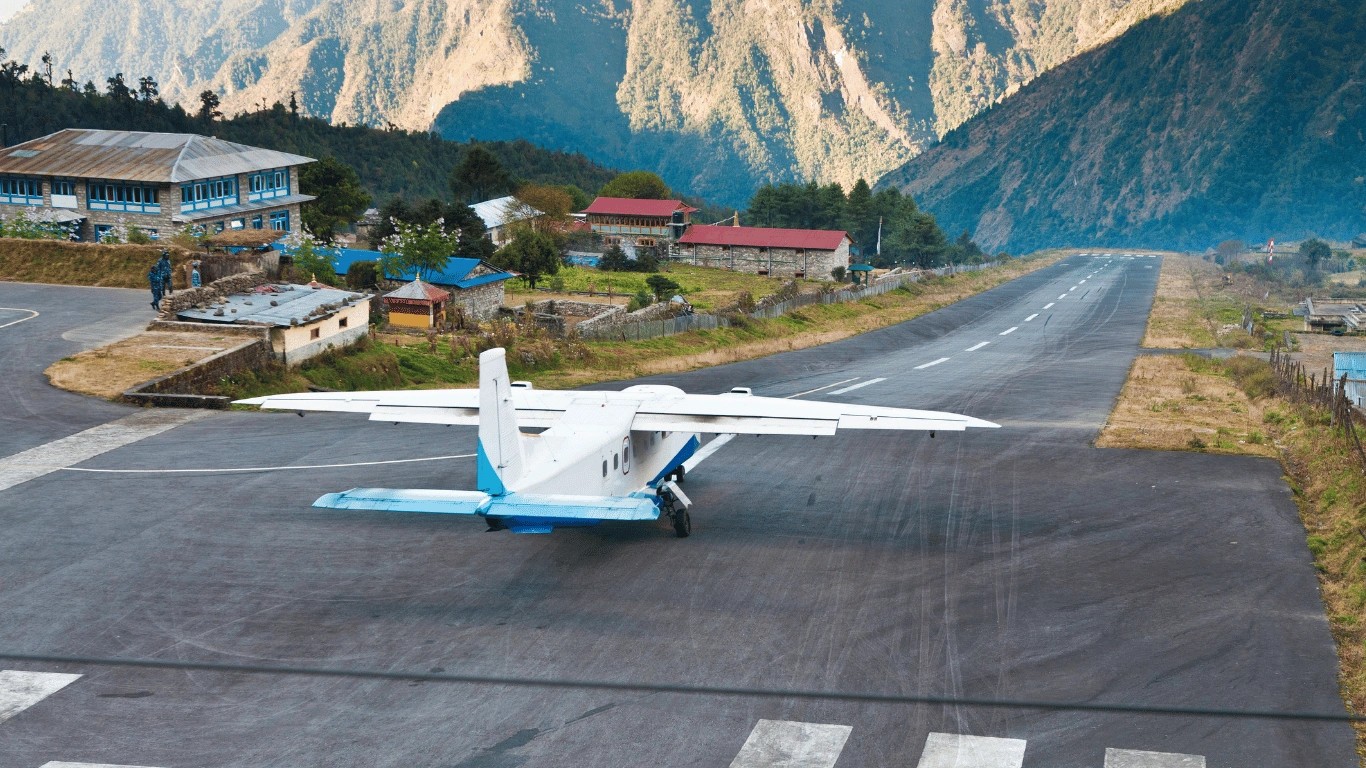
This is the single most valuable insider tip we give solo trekkers before every trek — and almost nobody else explains it properly.
The situation:
You've finished your EBC trek. You're back at Lukla. Your printed ticket says you fly to Kathmandu tomorrow morning at 6:30 AM.
What most solo trekkers don't know:
That printed ticket time and destination can change last-minute — even at the last minute. Weather conditions the day before your flight can cause the airline to reroute your flight from Kathmandu to Ramechhap, or shift your time earlier or later. If you don't know this, you might miss your flight entirely or show up at the wrong destination for your onward transport.
The 3 PM ticket counter rule:
After 3 PM the day before your scheduled return flight, go to the Lukla airline ticket counter in person, give your name, and ask them to confirm your actual flight time and destination.
This is how it genuinely works on the ground:
How guided trekkers avoid this stress:
If you're on a guided trek, your guide handles this check for you every single evening before departure. We already know when flights shift — including flights that were booked for Kathmandu getting moved to Ramechhap because of weather. You get to enjoy your last night in Lukla instead of stressing over your ticket.
Yes — you can change your Lukla return flight date, especially through an agency or guide. Solo trekkers face more challenges but it's not impossible.
When trekkers change return dates:
Guided trekker process:
Your guide contacts the airline office in Kathmandu (or on the ground at Lukla), checks for open seats on the desired date, and reschedules. Turn-around time is usually a few hours.
Solo trekker process:
You visit the airline ticket counter at Lukla airport, ask for date change, and either receive it (if open seats) or not (if fully booked). Rescheduling fees may apply. During peak season (October-November), reschedules can be difficult due to full flights.
Practical advice for date-change flexibility:
Tip #1: Book the first flight of the day. The 6:15-6:30 AM flight has the best weather window and highest completion probability. Later flights face progressively higher cancellation risk.
Tip #2: Book 2+ months in advance for morning slots. The good morning slots go first, especially in October-November peak season. Late bookings often get afternoon slots that get cancelled.
Tip #3: If booking through an agency, ask about their airline allocation. Agencies have block allocations from airlines and typically get access to the best morning slots. This is one genuine advantage of guided trekking.
Tip #4: For October-November trips, expect Ramechhap. Plan your Day 1 logistics around a 1:00 AM Kathmandu departure, 5-6 hour drive, and 7-8 AM Lukla flight. Sleep the night before is limited.
Tip #5: Carry helicopter contingency cash. USD 200-400 beyond your planned Lukla flight budget covers most emergency helicopter scenarios.
Tip #6: Buffer your international departure. Book your Kathmandu international departure 2-3 days after your original Lukla return date. This is the single biggest logistical protection against weather-related trek delays.
Tip #7: Don't overpack. Lukla flights have strict weight limits — typically 15 kg total (10 kg checked + 5 kg carry-on). Excess baggage costs extra and slows boarding.
The difference between our approach and a solo trekker booking directly:
Our flight logistics record:
A clean, practical framework for handling cancellation:
Step 1: Stay calm. Cancellation is annoying but rarely dangerous. Your trek is not ruined — plans just need to adjust.
Step 2: Confirm the cancellation. Get a written cancellation confirmation from the airline (not just a verbal "maybe next flight"). This is your paper trail for insurance and refunds.
Step 3: Assess weather forecast. Ask your guide or the airline whether tomorrow's forecast looks better or worse. This decides whether to wait or switch modes.
Step 4: Decide between waiting or switching to helicopter.
Step 5: Handle the logistics.
Step 6: Adjust downstream plans.
Step 7: Keep receipts. Every extra accommodation, meal, or transport cost caused by the delay is potentially insurance-claimable. Save every receipt.
Kathmandu-Lukla one-way costs approximately USD 253-255 for foreign trekkers, 22,000 NPR for Indian nationals, 8,500 NPR for Nepali licensed guides, and 13,000 NPR for Nepali LPC. From Ramechhap, foreign trekkers pay approximately USD 210 one-way.
Approximately 22,000 NPR (~$165-170 USD) one-way from Kathmandu, or 17,000 NPR (~$130-135 USD) one-way from Ramechhap in 2026. Must be booked through a Nepali agency or airline office with valid Indian ID.
Approximately 8,500 NPR (~$65 USD) one-way from Kathmandu, or 6,500 NPR (~$50 USD) one-way from Ramechhap in 2026. Requires a valid Nepal government trekking guide license.
Approximately 13,000 NPR (~$100 USD) one-way from Kathmandu, or 9,000 NPR (~$70 USD) one-way from Ramechhap in 2026. Applies to registered Nepali trek support staff.
Cancellation frequency varies by season. October-November are the most reliable months. Monsoon (June-August) has the highest cancellation rate. Even in peak season, the 3rd flight of the day is more likely to be cancelled than the 1st, because weather at Lukla worsens through the morning.
Approximately USD 510 for foreign trekkers ($253-255 × 2 one-way). Round-trip from Ramechhap costs approximately USD 420.
Lukla flights are expensive because Tenzing-Hillary Airport has one of the world’s most demanding runways (527m long with a 12% gradient), only a limited number of airlines and specialized small aircraft can operate there, and weather-related cancellations are frequent. While there is now a road alternative to Surke followed by a short uphill walk to Lukla, the overland journey adds roughly 4 days compared with flying. Combined, these factors create a premium price for a short flight.
None consistently. It depends on the day — weather conditions, aircraft rotation, and which airline holds the earliest morning slot. All three use similar aircraft and follow the same safety rules. Trust operator recommendations for specific dates over blanket "best airline" claims.
Yes. Guided trekkers can switch easily through their agency. Solo trekkers can switch by negotiating with the airline (refund) and helicopter operator (booking) directly. Last-minute helicopter switches at the airport cost more than pre-planned switches due to demand-driven pricing.
From October through November, most Lukla flights operate from Ramechhap (Manthali) Airport instead of Kathmandu. Ramechhap is 5-6 hours by drive from Kathmandu. The flight from Ramechhap to Lukla is shorter (~20 minutes) and typically cheaper (~USD 210 one-way for foreign trekkers). Hotels are available near Ramechhap airport if your flight is delayed.
Yes, especially with a guide or agency handling the request. Solo trekkers face more challenges. Reschedule fees may apply, and during peak season, open seats on other dates may be limited.
Rare but possible. Multi-day weather events can trap trekkers for 3-4 days. Helicopters can often fly when planes cannot — until end of September — providing an escape option. Carry extra cash for potential last-minute helicopter bookings.
Modern Lukla flight safety has improved significantly compared to earlier decades. All three operating airlines (Tara Air, Sita Air, Summit Air) follow strict weather-based flight rules — pilots refuse to fly if conditions are not clearly safe. That refusal is why cancellations happen, and it's also why the safety record has improved.
Lukla Airport, officially named Tenzing-Hillary Airport, is a small mountain airport at 2,845m in Solukhumbu District, Nepal. Named after Sir Edmund Hillary and Tenzing Norgay (first Everest summitters, 1953), it was built in 1964 by Hillary's Himalayan Trust. Its 527m runway is one of the most technically demanding in world aviation.
Kathmandu-Lukla direct flight is approximately 35 minutes. Ramechhap-Lukla flight is approximately 20 minutes. Both offer spectacular Himalayan views on clear days.
Lukla flights are the piece of Everest Base Camp planning that stresses trekkers most — but the stress is unnecessary when you understand the reality.
The honest truths:
Everest Base Camp is a great trek. The Lukla flight is the piece of it that makes people nervous — but with real preparation, real operator support, and real contingency planning, this flight becomes what it should be: the exciting 35-minute prologue to the walk of a lifetime.

Written by
Operations & Emergency Support Coordinator
Sumina Rai is the Operations & Emergency Support Coordinator at Majestic Trails Nepal. She manages domestic flight bookings, travel arrangements, and emergency support, including helicopter rescue coordination when needed. She works closely with guests, guides, airlines, helicopter operators, and insurance providers to ensure smooth travel and timely assistance.
Standing face-to-face with Mount Everest doesn't require weeks of grueling trekking or extreme altitude exposure. The Everest View Trek Nepal offers o...
Understanding the Everest Base Camp trek Nepal cost helps you plan your dream Himalayan adventure without budget surprises.The total EBC trek cost Nep...
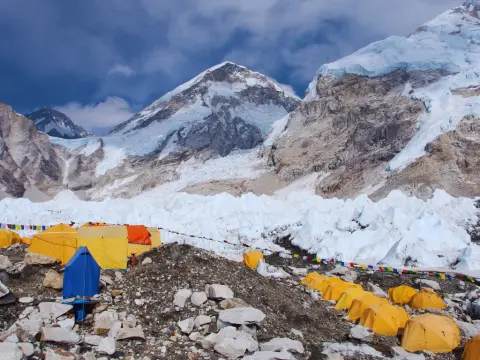
Everest Base Camp in Nepal sits at 5,364 meters above sea level, which converts to 17,598 feet. That is the number you will find on official trekking...
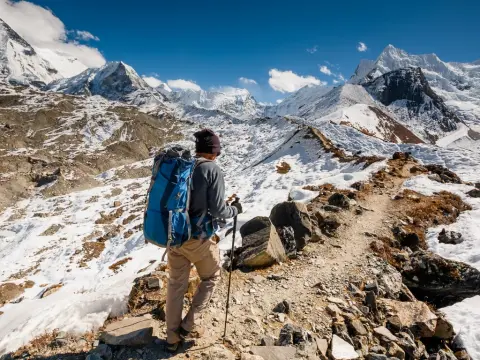
Yes, a beginner can complete the Everest Base Camp Trek. Despite what many people assume, reaching Everest Base Camp is not a mountaineering expeditio...
For the Everest Base Camp trek in 2026, you need two permits: the Sagarmatha National Park Entry Permit and the Khumbu Pasang Lhamu Rural Municipality...

Accommodation on the Everest Base Camp (EBC) trek ranges from basic teahouses to luxury lodges. Rooms generally cost $3 to $100 per night, with amenit...
