
Trekking to Everest Base Camp in December: A Quiet Winter Journey
16 Jan 2026
IntroductionNepal — the final destination for every mountaineer. A place where almost everyone dreams of going at least once in their lifetime. To see...

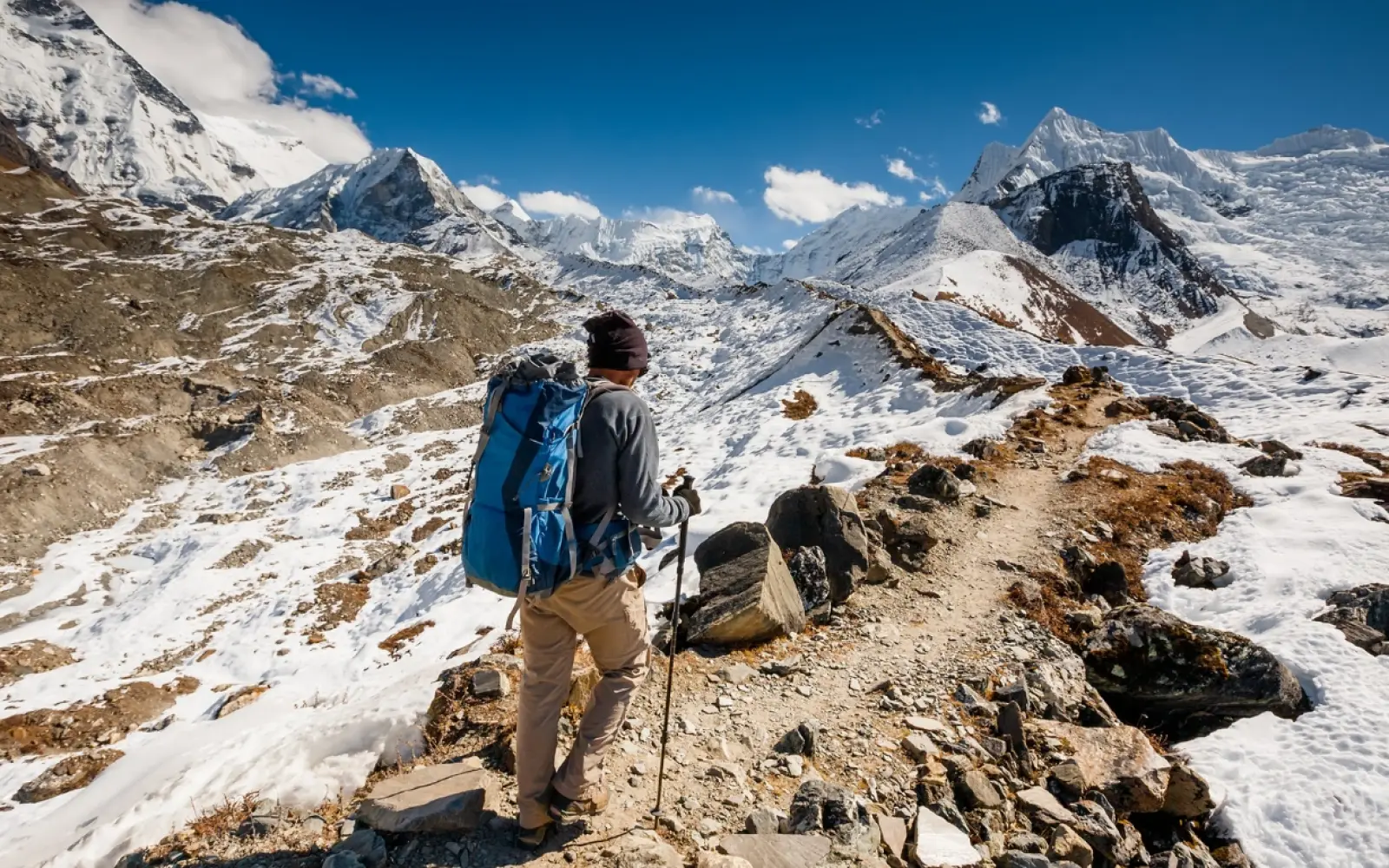

Yes, a beginner can complete the Everest Base Camp Trek. Despite what many people assume, reaching Everest Base Camp is not a mountaineering expedition. It is a demanding high-altitude trek that follows established mountain trails through the Khumbu region. You do not need ropes, crampons, an ice axe, or previous climbing experience. What you do need is consistent preparation, a steady walking pace, and the discipline to let your body acclimatize as the elevation increases.
Each trekking season, thousands of first-time hikers successfully reach Everest Base Camp. The route through Sagarmatha National Park, a UNESCO World Heritage Site, welcomes trekkers from every background, including students, families, retirees, and outdoor enthusiasts tackling their first Himalayan adventure. According to official park records, more than 55,000 visitors entered the park during Nepal's 2023/24 fiscal year, with a significant share traveling specifically for the Everest Base Camp Trek.
The journey is undeniably challenging, but it is also remarkably achievable for healthy beginners who prepare realistically and respect the effects of altitude. Success on this trail is rarely determined by athletic ability alone. Instead, it comes down to gradual acclimatization, sensible pacing, physical readiness, and informed decision-making throughout the trek.
This guide brings together published medical research, current trekking regulations, official permit information, and the practical experience of the licensed guides at Majestic Trails Nepal. Rather than relying on myths, social media exaggerations, or outdated advice, it explains exactly what beginners should expect before deciding whether the Everest Base Camp Trek is the right adventure for them.
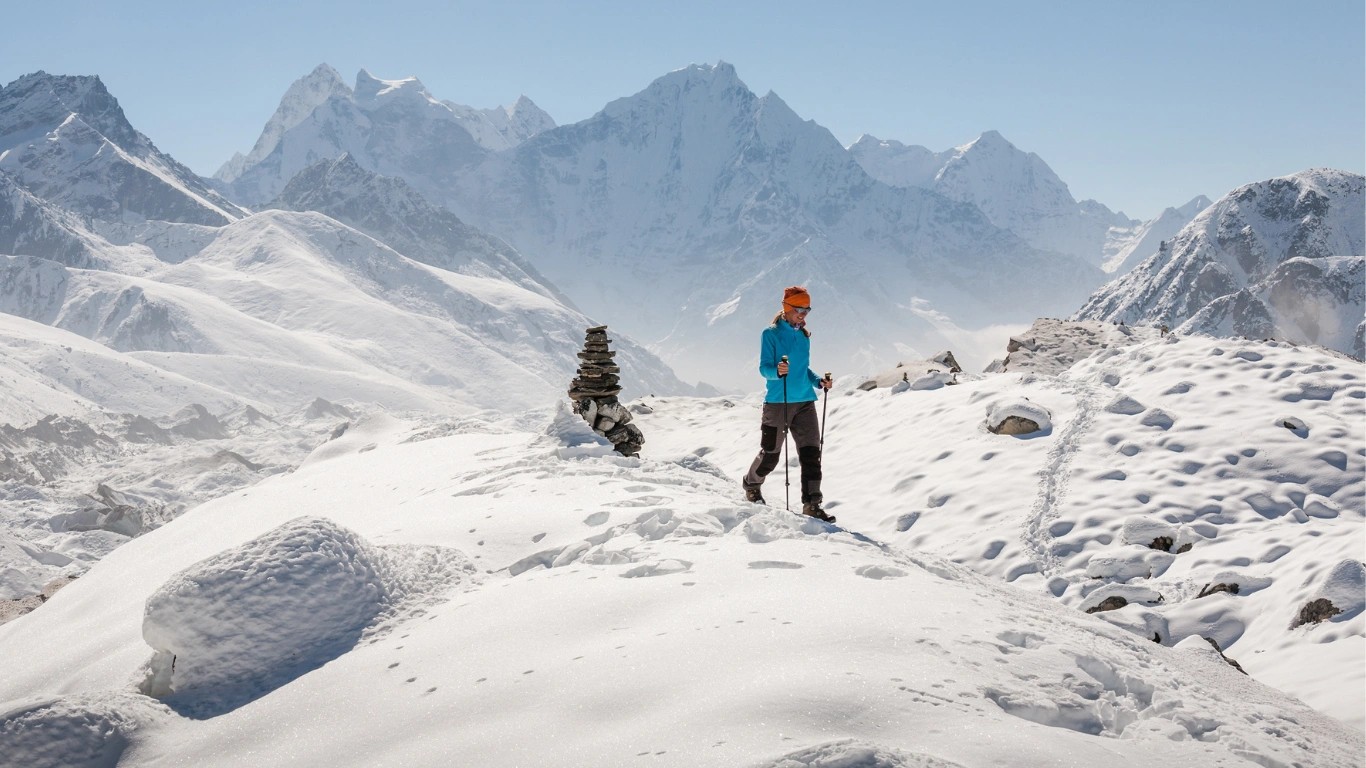
One of the most common misconceptions is that trekking to Everest Base Camp is the same as climbing Mount Everest. Search data consistently shows that many people search for "Can a beginner climb Everest?" when they are actually referring to the Everest Base Camp Trek. In reality, the two activities differ dramatically in terms of difficulty, technical requirements, cost, preparation, and risk.
The Everest Base Camp Trek is a high-altitude, non-technical hiking adventure through Nepal's Khumbu region. The trail follows established footpaths, suspension bridges, traditional Sherpa villages, and alpine valleys before reaching Everest Base Camp at 5,364 meters (17,598 feet). It requires no mountaineering equipment, no previous climbing experience, and no technical skills. The primary challenges are altitude, endurance, and maintaining a steady pace over consecutive days.
Climbing Mount Everest, by contrast, is one of the world's most demanding mountaineering expeditions. Reaching the summit at 8,849 meters (29,032 feet) requires extensive alpine experience, advanced technical climbing skills, fixed ropes, glacier travel, icefall navigation, and weeks of acclimatization in one of the harshest environments on Earth. It is a professional expedition that carries substantially greater costs and risks.
For most healthy people who prepare properly, the Everest Base Camp Trek is an ambitious yet realistic goal. Standing on the summit of Mount Everest is an entirely different achievement that belongs to the world of elite high-altitude mountaineering.
| Comparison | Everest Base Camp Trek | Climbing Mount Everest |
| Highest elevation | 5,364 m (17,598 ft) at Everest Base Camp or 5,545 m (18,192 ft) at Kala Patthar | 8,849 m (29,032 ft) summit |
| Duration | 12 to 14 days | 6 to 9 weeks |
| Technical skills | None. A well-established trekking trail | Advanced mountaineering, glacier travel, fixed ropes, ladders |
| Mountaineering experience | Not required | Essential |
| Typical cost | USD 1,200 to 2,400 (guided) | USD 45,000 to 100,000+ |
| Best suited for | Fit beginners with adequate preparation | Experienced high-altitude climbers |
| Overall risk | Low when proper acclimatization is followed | Significantly higher due to extreme altitude and technical climbing |
If you can comfortably hike for five to seven hours a day, carry a light daypack, stay in traditional teahouses, and repeat that routine over nearly two weeks, completing the Everest Base Camp Trek is well within reach for many beginners. Climbing Mount Everest, however, demands years of mountaineering experience, specialized training, and expedition-level preparation.
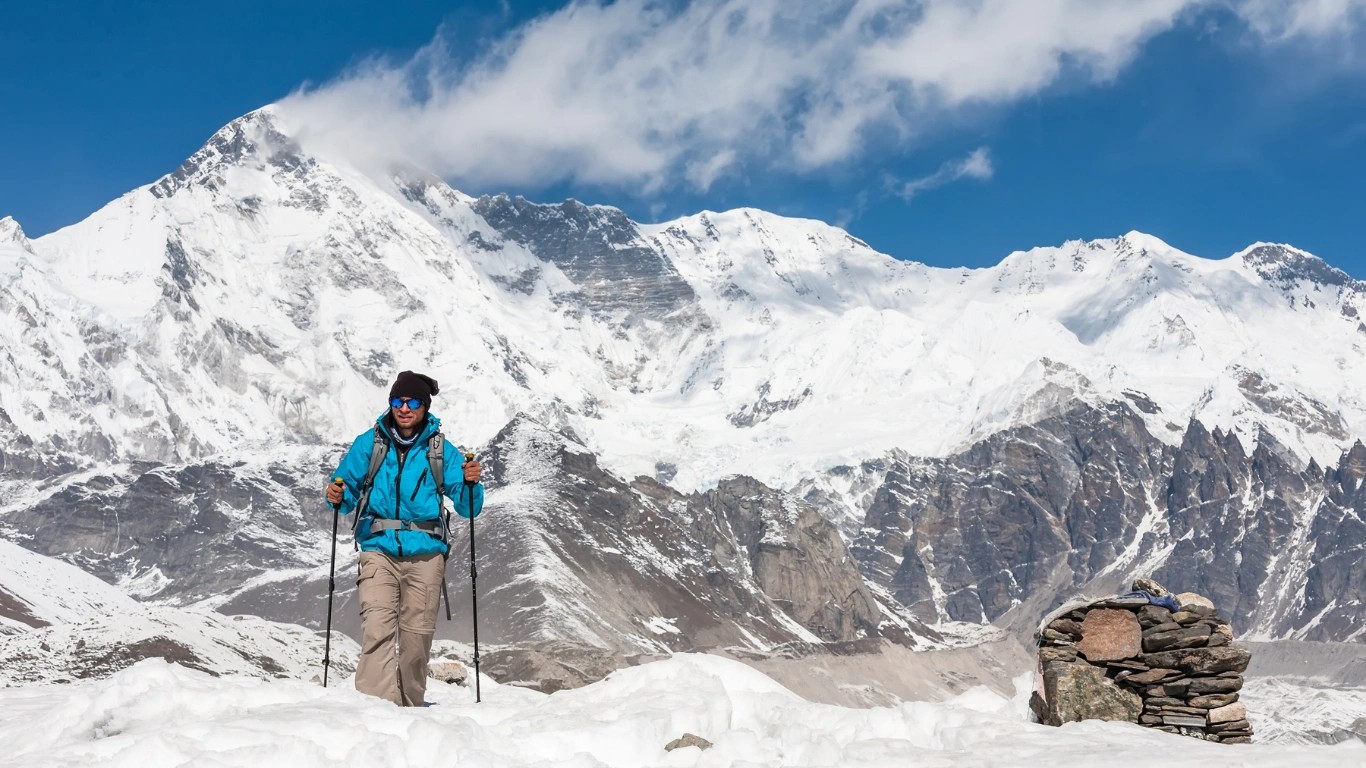
The Everest Base Camp Trek is widely considered a moderately difficult high-altitude trek. Contrary to popular belief, the challenge does not come from technical climbing or dangerous mountain terrain. Instead, it comes from covering long distances over consecutive days while your body gradually adapts to thinner air at increasing elevations.
The complete round-trip from Lukla spans approximately 130 kilometers (81 miles) along well-established mountain trails that wind through Sherpa villages, suspension bridges, alpine forests, glacial valleys, and rocky moraines. Most trekking days cover 10 to 15 kilometers (6 to 9 miles) and typically require five to seven hours of walking, including regular breaks for rest, meals, and acclimatization.
For most beginners, no single day feels overwhelmingly difficult. Rather, the cumulative effect of hiking for nearly two weeks at elevations exceeding 3,500 meters (11,483 feet) gradually becomes the greatest physical challenge. As altitude increases, the available oxygen decreases, making even gentle uphill sections feel noticeably more demanding than they would at sea level.
Two sections of the trek consistently test first-time trekkers more than any others.
The first is the steady ascent from the Hillary Suspension Bridge to Namche Bazaar on the third trekking day. Although the climb generally takes around two hours, it is many trekkers' first real encounter with sustained elevation gain and thinner mountain air.
The second is the journey from Lobuche to Everest Base Camp via Gorak Shep. This is the longest and most physically demanding day of the itinerary, requiring approximately eight to nine hours of hiking across rugged glacial moraine at elevations where the atmosphere contains roughly half the oxygen available at sea level.
Between these demanding sections, the trail remains surprisingly approachable for well-prepared beginners. Much of the route follows clearly defined footpaths, stone staircases, suspension bridges, and the gently rolling terrain that local people often describe as "Nepali flat", a landscape characterized by gradual ascents and descents rather than continuous climbing.
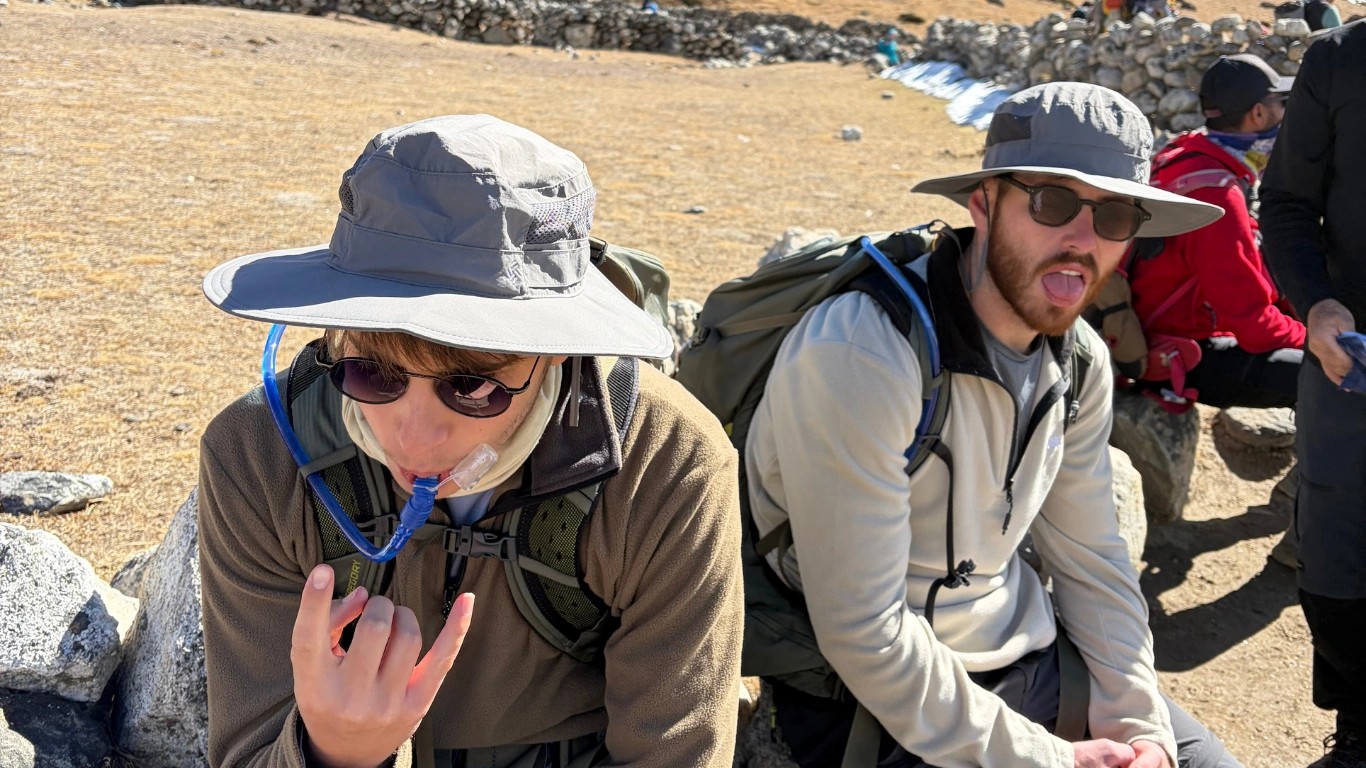
Altitude, not fitness, decides who reaches Base Camp. Published studies of trekkers in the Nepal Himalaya report Acute Mountain Sickness (AMS) rates between 22% and 68%, depending on how fast people climb. A field study in the Solu-Khumbu found the incidence jumps sharply above 4,500 meters, reaching 51% between 4,500 and 5,000 meters. A 2022 survey of 366 trekkers on this exact route found that 40.5% had at least one medical issue during the trip, and nearly half of those were altitude-related.
The same research offers the reassuring half of the story. Age and gender showed no link to AMS. Ascent speed did. Trekkers who climbed slowly and rested got sick far less than fast ones, regardless of fitness.
| Location | Altitude | Effective oxygen vs. sea level |
| Lukla | 2,860 m / 9,383 ft | About 72% |
| Namche Bazaar | 3,440 m / 11,286 ft | About 67% |
| Dingboche | 4,410 m / 14,468 ft | About 59% |
| Lobuche | 4,910 m / 16,109 ft | About 56% |
| Everest Base Camp | 5,364 m / 17,598 ft | About 53% |
| Kala Patthar | 5,545 m / 18,192 ft | About 50% |
Early AMS shows up as a persistent headache, poor sleep, loss of appetite, or dizziness. Caught early, it is managed with rest and fluids. Ignored, it can progress to HAPE or HACE, both medical emergencies where immediate descent is the only treatment.
The prevention rules are simple and proven:
The Himalayan Rescue Association operates an aid post at Pheriche (4,371 m), and helicopter evacuation reaches every village on the route. That is why insurance covering evacuation to 6,000 meters is mandatory in practice. Standard policies stop at 3,000 meters and are worthless here.
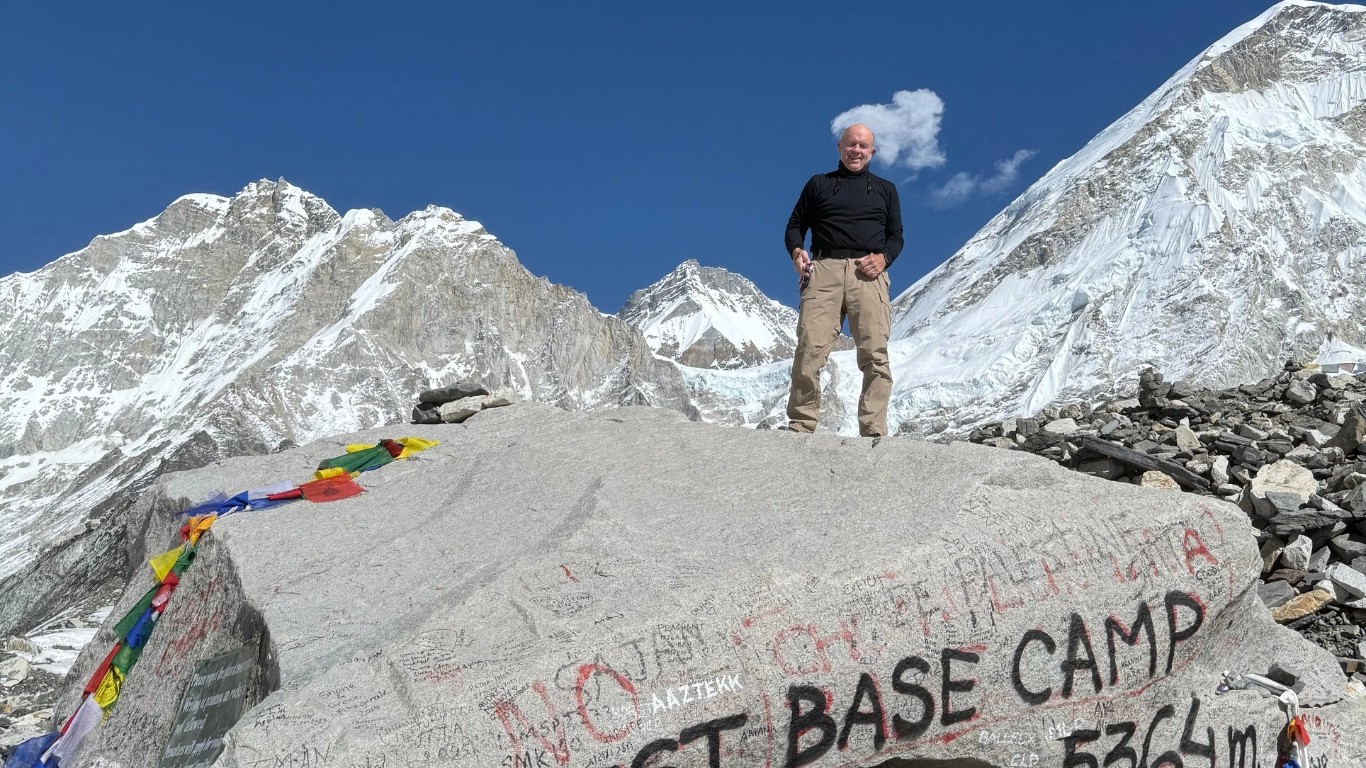
Yes, but not like an athlete. Two to three months of consistent preparation covers most healthy beginners. The single goal: make a six-hour walking day feel routine before you land in Kathmandu.
| Weeks before departure | Focus | What to do |
| 12 to 9 | Base endurance | Walk 40 to 60 minutes, four times a week. Add cycling, jogging, or swimming |
| 8 to 5 | Legs and stairs | Two stair or hill sessions weekly. Squats, lunges, and planks twice a week |
| 4 to 2 | Trek simulation | One 4 to 6 hour weekend hike with a 5 to 6 kg daypack, in your actual trekking boots |
| Final week | Taper | Light walking, stretching, rest, packing |
Break in your boots on every training walk. Blisters end more first-week treks than altitude does. Prepare your head too. Cold rooms, squat toilets above 4,000 meters, and patchy Wi-Fi are part of the deal. Trekkers who expect basic conditions handle them fine.
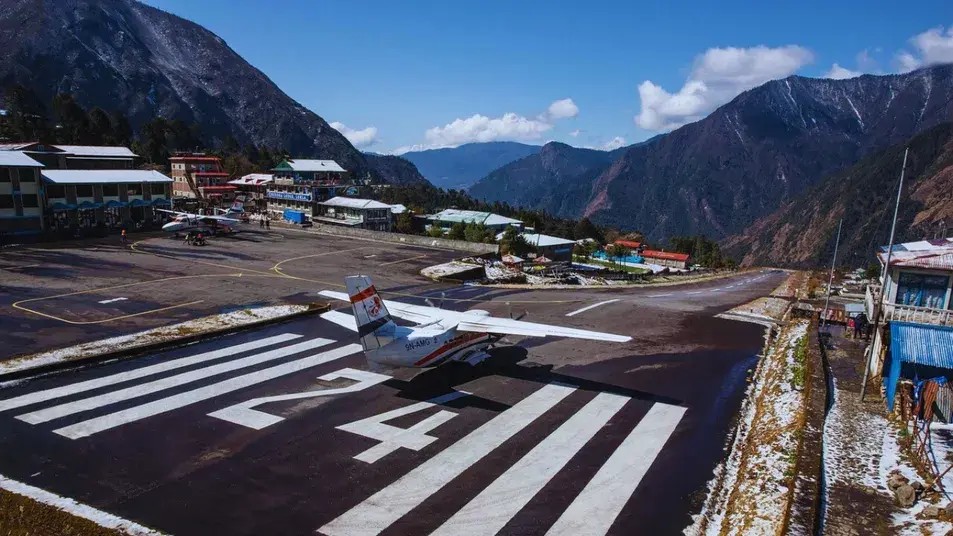
Mostly, yes. There is no road, so you cannot drive there, and you need two permits. But the barriers are lower than most first-timers assume, and nothing requires months of advance paperwork.
The permits are issued on the spot:
On guides, the record needs correcting because many blogs get it wrong. Nepal introduced a national rule in April 2023 requiring guides for solo foreign trekkers. The Khumbu Pasang Lhamu Rural Municipality, which governs the Everest region, publicly opted out and continues to issue Trek Cards to independent trekkers. Solo trekking to Everest Base Camp remains legal.
Legal and sensible are different questions at 5,000 meters. For a first-timer, a licensed guide reads AMS symptoms early, secures lodge rooms in peak season, sets a survivable pace, and manages evacuation if something goes wrong. The research quoted above found that knowledge of altitude illness, not raw fitness, predicted safer outcomes. A good guide is that knowledge, walking beside you.
The last logistics piece is the flight. Nearly everyone starts with the 35-minute flight to Lukla. In peak months those flights depart from Ramechhap (Manthali), a 4 to 5 hour drive from Kathmandu. Weather delays are routine, so keep one or two buffer days before your international departure.
A guided Everest Base Camp trek costs USD 1,200 to 2,400 per person for a 12 to 14 day package. That covers permits, Lukla flights, teahouse lodging, three daily meals, and guide and porter support. A realistic total budget, with gear, insurance, and trail extras, runs USD 2,000 to 3,500.
| Expense | Typical cost (USD) |
| Guided trek package, 12 to 14 days | 1,200 to 2,400 |
| Travel insurance with 6,000 m helicopter evacuation | 150 to 350 |
| Gear purchases and rentals | 200 to 500 |
| Nepal visa on arrival, 30 days | 50 |
| Trail extras: Wi-Fi, charging, hot showers, snacks | 150 to 300 |
| Guide and porter tips | 100 to 200 |
Prices rise with the trail. Every soda and phone charge above Namche arrives by porter or yak, so a USD 3 hot shower in Namche costs USD 10 near Gorak Shep. Carry Nepali rupees in cash from Kathmandu. The ATMs in Lukla and Namche fail often, and none exist beyond them.
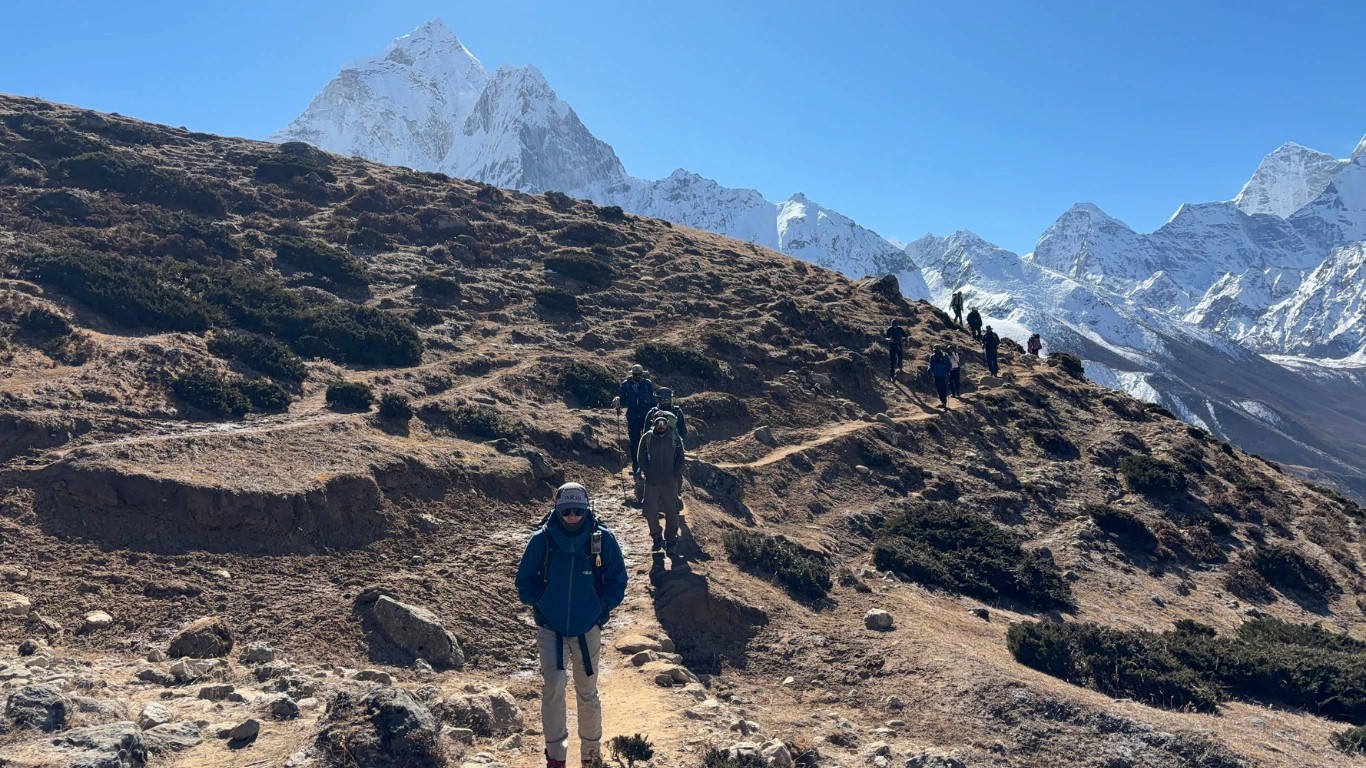
Safe beginner itineraries share one non-negotiable feature: two full acclimatization days. This is the schedule Majestic Trails Nepal runs for first-time trekkers, built around the ascent-rate findings above.
| Day | Route | Altitude | Walking time |
| 1 | Arrive Kathmandu, trek briefing | 1,400 m | - |
| 2 | Fly to Lukla, trek to Phakding | 2,610 m | 3 to 4 hrs |
| 3 | Phakding to Namche Bazaar | 3,440 m | 5 to 6 hrs |
| 4 | Acclimatization hike to Everest View Hotel | 3,880 m, sleep at 3,440 m | 3 to 4 hrs |
| 5 | Namche to Tengboche | 3,860 m | 5 hrs |
| 6 | Tengboche to Dingboche | 4,410 m | 5 to 6 hrs |
| 7 | Acclimatization hike toward Nangkartshang | About 5,000 m, sleep at 4,410 m | 4 hrs |
| 8 | Dingboche to Lobuche via Thukla Pass | 4,910 m | 5 to 6 hrs |
| 9 | Lobuche to Gorak Shep and Everest Base Camp | 5,364 m | 8 to 9 hrs |
| 10 | Sunrise at Kala Patthar, descend to Pheriche | 5,545 m high point | 7 to 8 hrs |
| 11 | Pheriche to Namche Bazaar | 3,440 m | 7 hrs |
| 12 | Namche to Lukla | 2,860 m | 7 to 8 hrs |
| 13 | Fly to Kathmandu | 1,400 m | - |
| 14 | Buffer day, departure | - | - |
The trek settles into a rhythm within two days. Breakfast around 7:00 AM, walking by 8:00, a teahouse lunch midway, arrival by mid-afternoon, dinner around the dining hall stove, asleep by 9:00 PM. A porter carries your main duffel (the Lukla flight allows 15 kg total), so you walk with only a daypack.
Teahouses are family-run lodges. Expect twin rooms, a mattress and blanket, and shared bathrooms that shift from Western-style to squat toilets as you climb. The dining hall, usually warmed by a yak-dung stove, is where trekkers from six countries end up playing cards by night three.
Eat dal bhat. The rice, lentil, and vegetable plate digests well at altitude and comes with free refills at most lodges. Skip meat above Namche Bazaar, since everything is carried up unrefrigerated. For water, purification tablets or a filter bottle beat plastic bottles that reach USD 4 apiece near Gorak Shep.
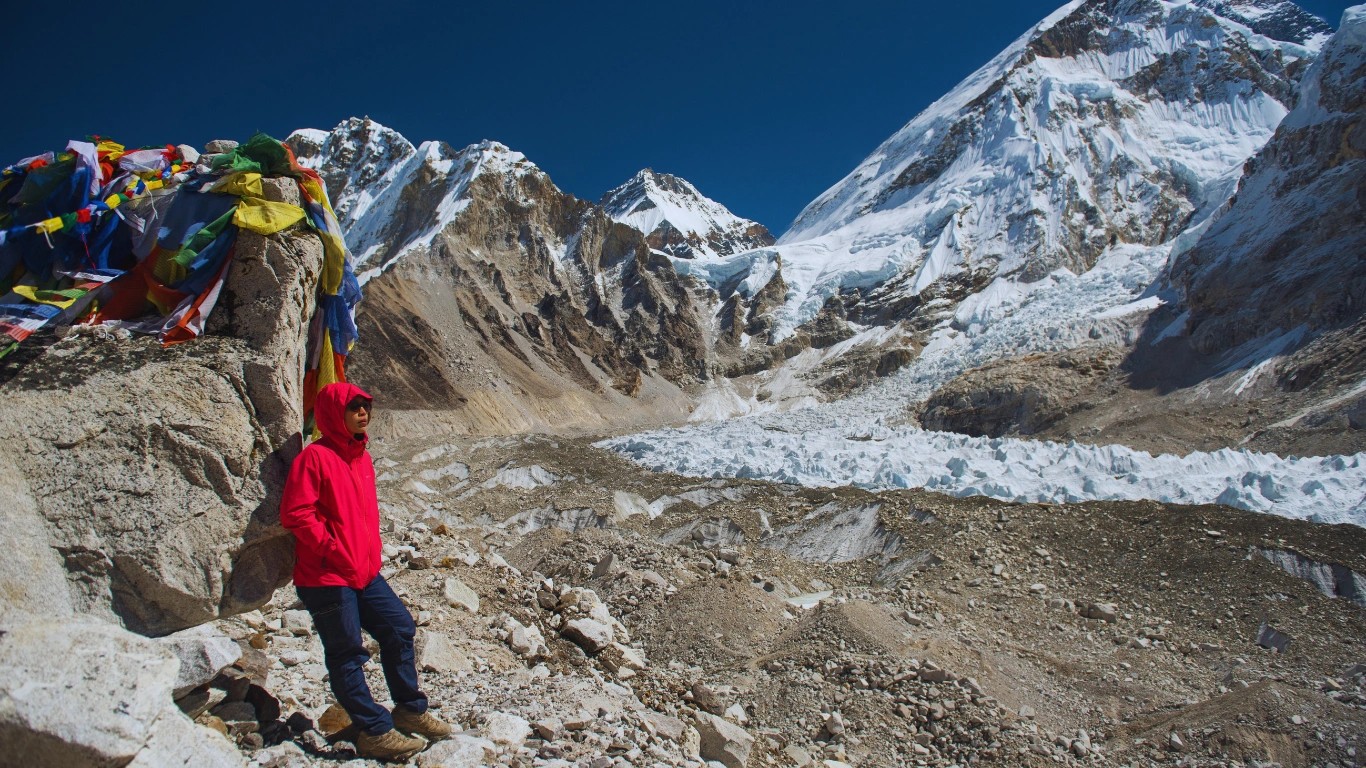
Spring (March to May) and autumn (late September to November) offer the most stable weather, the clearest views, and the safest trail conditions. Spring brings blooming rhododendron in the lower valleys. Autumn delivers the sharpest visibility of the year.
For first-timers specifically, the shoulder edges of those windows, May and November, add quieter trails, easier lodge availability, and fewer Lukla flight delays. Winter is possible but harsh. The summer monsoon means rain, mud, and grounded flights, and is best avoided.
Base camp is not the only entry point to the Himalaya. If two weeks or 5,364 meters feels like too much for a first trip, these routes deliver big mountain scenery at lower risk. Majestic Trails Nepal runs guided departures on all of them.
| Trek | Duration | Max Altitude | Difficulty |
|---|---|---|---|
| Ghorepani Poon Hill | 4–5 days | 3,210 m | Easy |
| Mardi Himal | 5–7 days | 4,500 m | Easy to Moderate |
| Langtang Valley | 7–8 days | 3,870 m (4,984 m optional) | Moderate |
| Everest View Trek | 5–7 days | 3,880 m | Easy to Moderate |
| Annapurna Base Camp | 7–11 days | 4,130 m | Moderate |
Each of these builds the trail habits that make a later Everest Base Camp trek easier: pacing, layering, teahouse routines, and altitude awareness.
Fit enough to walk 5 to 7 hours with breaks, several days in a row. Two to three months of walking, stair sessions, and weekend hikes prepares most healthy beginners. Endurance and patience matter more than speed.
Legally, yes. The Everest region's local municipality exempted itself from Nepal's 2023 guide rule, so independent trekkers can obtain a Trek Card and go solo. For first-timers, a guide remains the strongest safety measure available on the route.
Everest Base Camp sits at 5,364 meters (17,598 feet). Most itineraries include Kala Patthar at 5,545 meters (18,192 feet), the classic sunrise viewpoint with the best direct view of Everest's summit pyramid.
It carries real, manageable risks, chiefly altitude sickness. Published studies show incidence rises sharply above 4,500 meters, which is exactly why sound itineraries place rest days below that line. With two acclimatization days, honest symptom reporting, and proper insurance, thousands of first-timers finish safely each season.
Yes. Active kids and trekkers into their seventies reach Base Camp regularly, usually on longer itineraries with shorter days. Research found no link between age and altitude sickness. Pacing decides outcomes, not birthdays.
The standard round trip takes 12 to 14 days including acclimatization days, plus a day on each end in Kathmandu. Shorter versions exist, but they cut rest days, which is the wrong trade for a beginner.
A beginner can reach Everest Base Camp, and most people standing there in any given October are exactly that: regular walkers who trained for a few months, went slowly, and let their bodies adapt. The trail asks for preparation and patience, not talent.
Majestic Trails Nepal has guided first-time trekkers on this route for years, with itineraries built around the acclimatization science above, licensed local guides carrying pulse oximeters, and full permit and flight handling. If Everest Base Camp is the goal, see our Everest Base Camp trek package. If a shorter first step makes more sense, our Ghorepani Poon Hill trek and Annapurna Base Camp trek are where many of our EBC trekkers started.
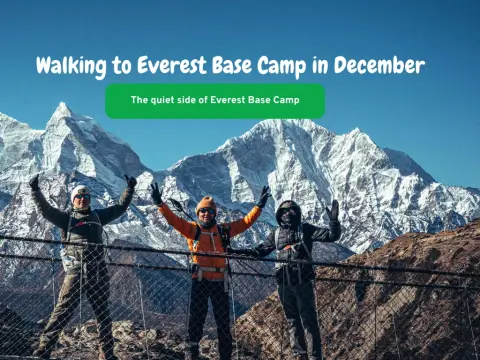
IntroductionNepal — the final destination for every mountaineer. A place where almost everyone dreams of going at least once in their lifetime. To see...
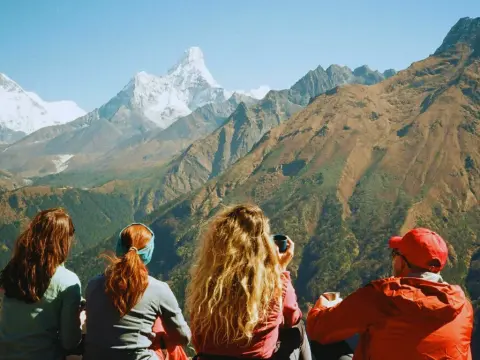
Standing face-to-face with Mount Everest doesn't require weeks of grueling trekking or extreme altitude exposure. The Everest View Trek Nepal offers o...
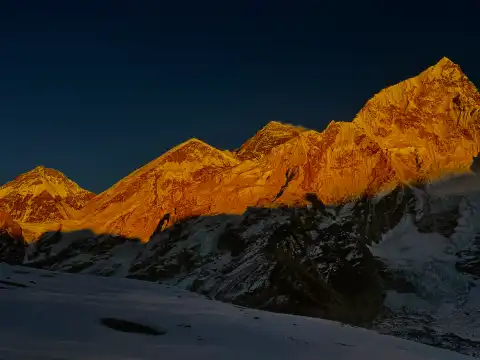
Kalapathar stands at 5,545 meters (18,192 feet) as the highest accessible viewpoint on the Everest Base Camp trek and arguably the most spectacular pa...
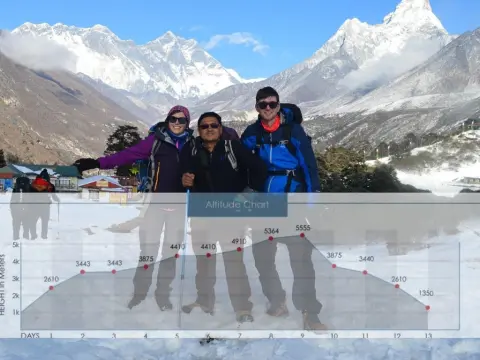
The Nepal EBC trek map displays the complete trekking route from Lukla (2,860m) to Everest Base Camp (5,364m) through the Khumbu Valley. This map show...
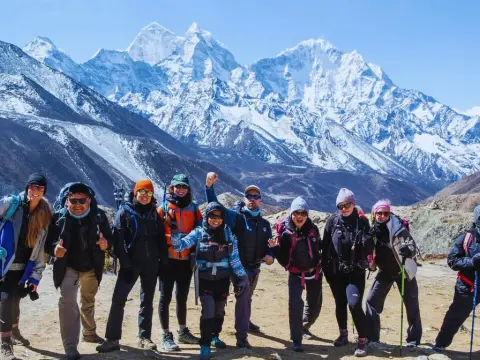
Understanding the Everest Base Camp trek Nepal cost helps you plan your dream Himalayan adventure without budget surprises.The total EBC trek cost Nep...
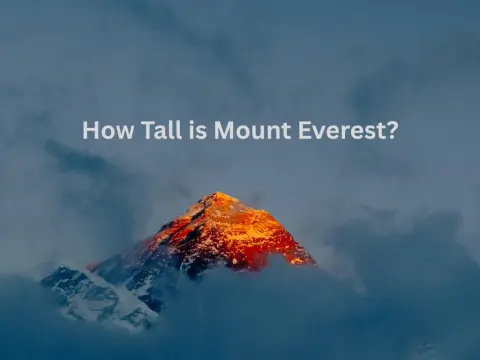
Mount Everest is 8,848.86 meters tall. That is 29,031.7 feet, or roughly 5.5 miles straight up from the ocean's average surface. Nepal and China joint...
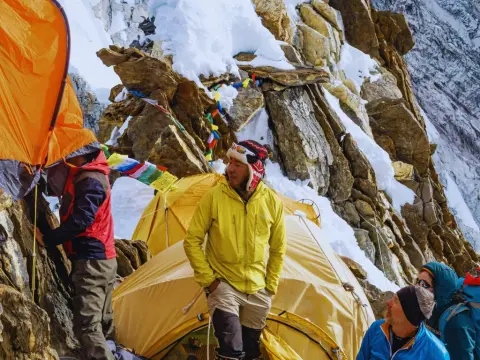
Everest and the Sherpa people have been associated for the past 73 years. Years before the first Everest summit, the Sherpa people had already made th...
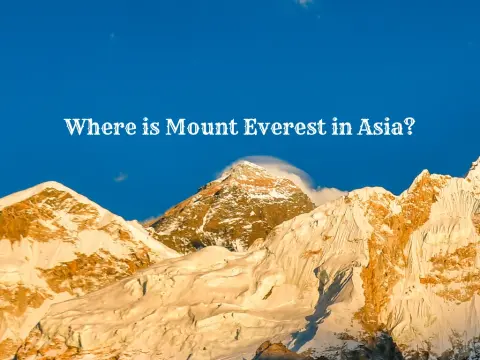
Mount Everest sits on the border between Nepal and the Tibet Autonomous Region of China, deep within the eastern Himalayas of South Asia. It is the hi...
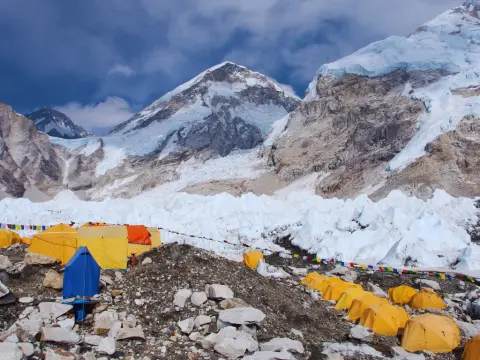
Everest Base Camp in Nepal sits at 5,364 meters above sea level, which converts to 17,598 feet. That is the number you will find on official trekking...
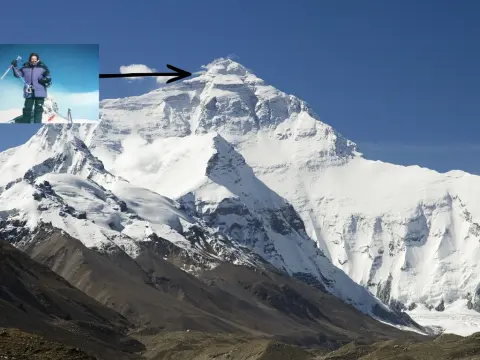
Every climber ascending Everest's Northeast Ridge carries two burdens — their own body weight and the weight of knowing what lies along the route.For...
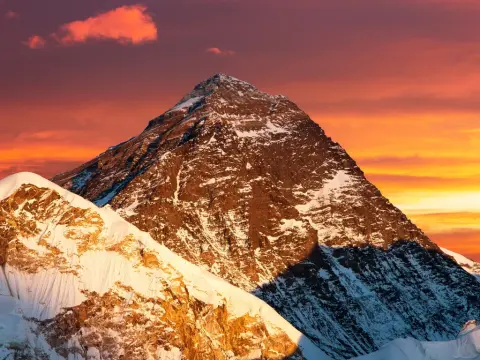
What does Everest mean? Mount Everest is the highest mountain on earth at 8,849 m, but the name "Everest" has only existed since 1865 — when British s...
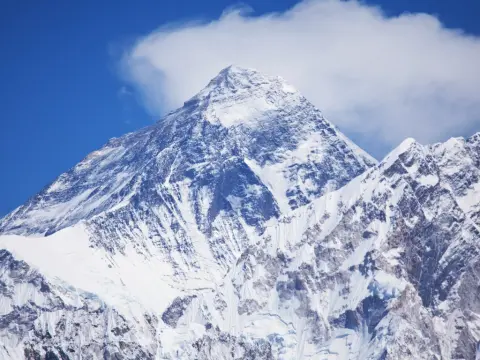
Mount Everest is the highest mountain on Earth at 8,848.86 meters (29,031.7 feet) above sea level, sitting on the border between Nepal and the Tibet A...
