
Everest View Trek Nepal – The Best Short Everest Trek
19 Feb 2026
Standing face-to-face with Mount Everest doesn't require weeks of grueling trekking or extreme altitude exposure. The Everest View Trek Nepal offers o...

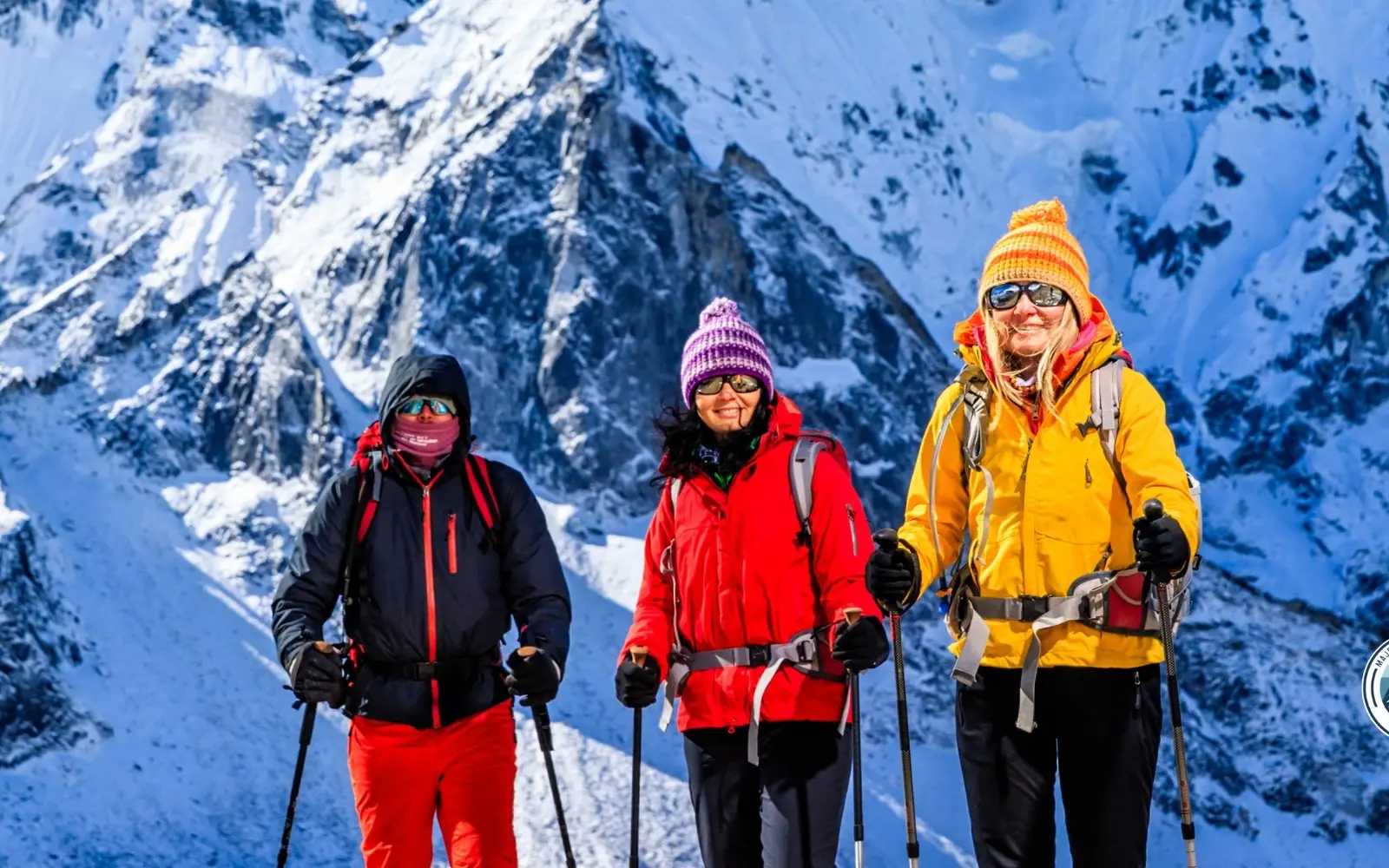

For the Everest Base Camp trek in 2026, you need two permits: the Sagarmatha National Park Entry Permit and the Khumbu Pasang Lhamu Rural Municipality Permit. Total cost for foreign nationals is NPR 6,000 (~USD 45); for SAARC nationals NPR 3,500 (~USD 27); for Nepali Tourist NPR 200. TIMS is optional and not required. Both permits are issued only on the trail, never in Kathmandu, and not available online, with the Khumbu permit available only at Lukla, and the Sagarmatha permit at Lukla in peak season or Monjo year-round.
Only your passport is needed to buy them. Payment is in Nepali rupees only. The four checkpoints on the trail are Lukla, Monjo, the Namche checkpoint, and Phungi Thenga— nowhere else.
This guide covers everything about EBC permits in 2026 — costs by nationality, exactly where and when to buy them, payment, common mistakes, and the honest reality most other guides get wrong.
Key Takeaways
| Detail | Information |
|---|---|
| Total permits needed | 2 |
| Foreign national total | NPR 6,000 (~USD 45) |
| SAARC national total | NPR 3,500 (~USD 27) |
| Nepali citizen total | NPR 200 |
| Where obtained | Lukla + Monjo (never Kathmandu, not online) |
| TIMS status | Optional (not required) |
| Guide required to buy? | No — passport only |
| Payment | Nepali rupees only |
| Checkpoints on trail | Lukla, Monjo, Namche, Phungi Thenga |
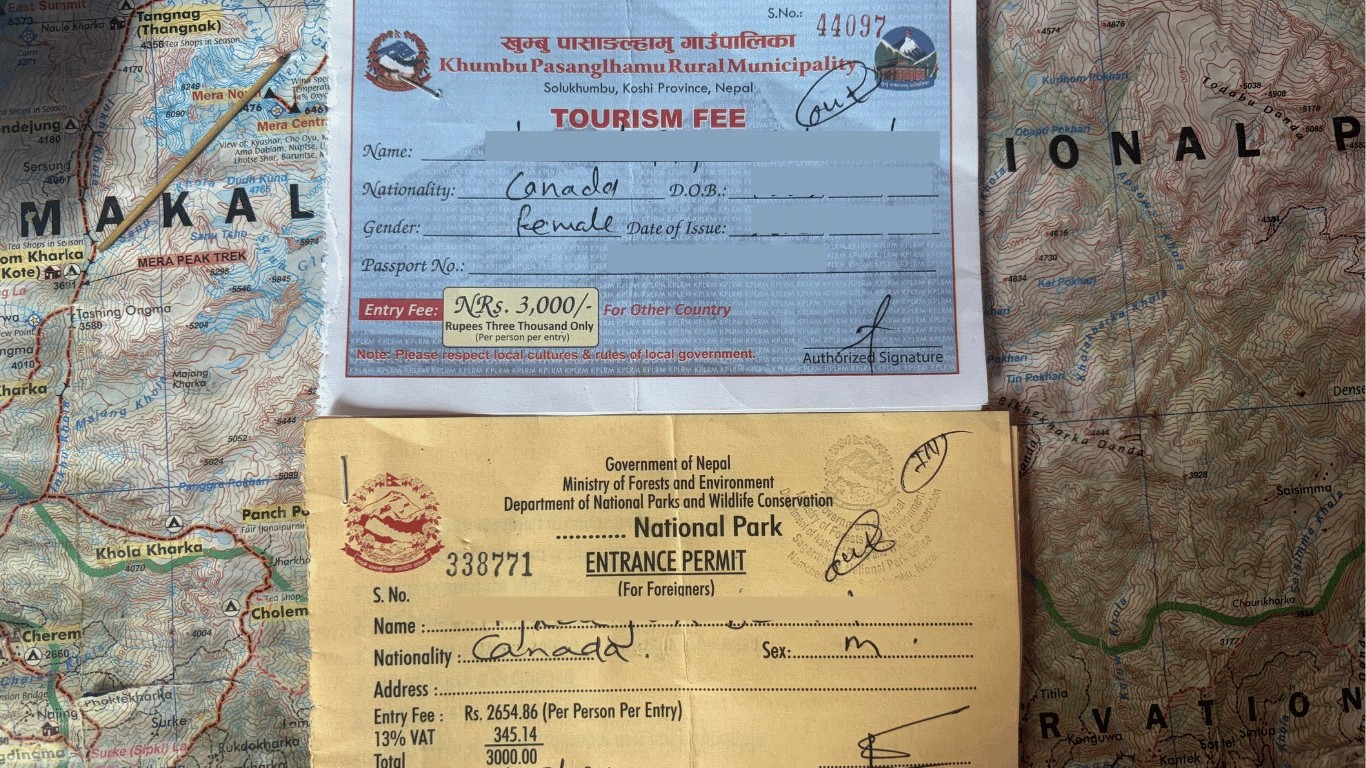
That's it. No TIMS card is required. No additional permits are needed for the standard EBC trek starting from Lukla.
If you trek the classic route starting from Jiri or Salleri instead of flying into Lukla, you'll additionally need a Gaurishankar Conservation Area Permit — see Section 8.
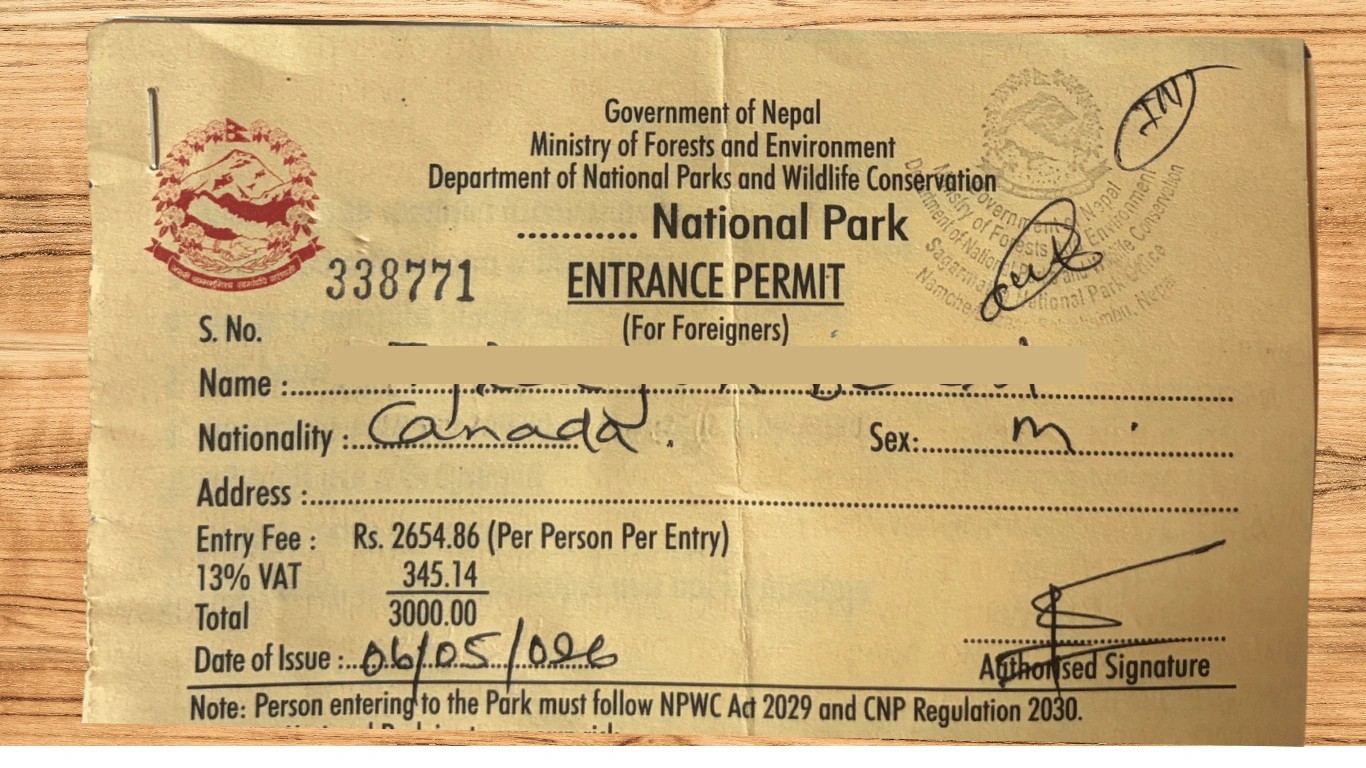
The Sagarmatha National Park Entry Permit covers your entry into Sagarmatha National Park — the UNESCO World Heritage protected area that includes Mount Everest itself and the entire upper Khumbu.
| Category | Fee |
|---|---|
| Foreign nationals | NPR 3,000 |
| SAARC nationals | NPR 1,500 |
| Nepali citizens | NPR 100 |
| Porter | NPR 25 |
| Guide (annual renewal) | NPR 1,500 |
| Helicopter landing | NPR 3,000 |
| Children under 10 | Free |
Important — outdated pricing correction: Older websites and some AI answers still cite "NPR 3,000 + 13% VAT." This is outdated. VAT was absorbed into the base fee in 2019 — the NPR 3,000 figure is the total, all-inclusive cost. Nothing is added on top.
The NPR 1,500 guide fee is an annual professional renewal paid by the licensed guide as part of their license — not something a trekker pays separately per trek. Your guide's costs are covered in your trek package.
Where to buy: See Section 6 for the honest, season-by-season reality.
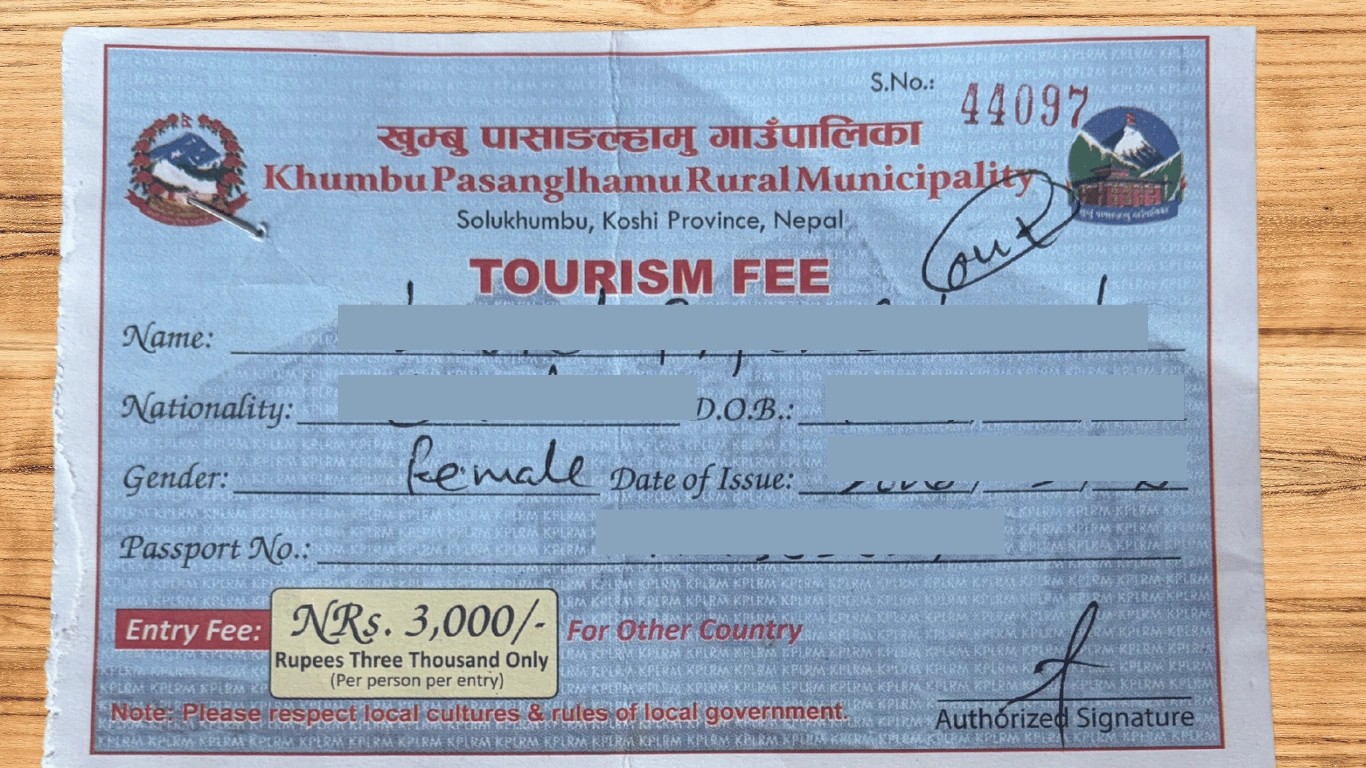
This is the local permit that replaced TIMS in the Everest region in 2018. The revenue funds waste management, trail maintenance, community infrastructure, and Sherpa community welfare programs across the Khumbu.
2026 fees:
| Category | Fee |
|---|---|
| Foreign nationals | NPR 3,000 |
| SAARC nationals | NPR 2,000 |
| Nepali citizens | NPR 100 |
The fee for foreign nationals was raised from NPR 2,000 to NPR 3,000 in September 2024, so older websites still show the outdated price.
Where to buy: Only at Lukla. You cannot get this permit anywhere else — not at Monjo, not in Kathmandu, not from a trekking agency in advance, not online. See Section 6.
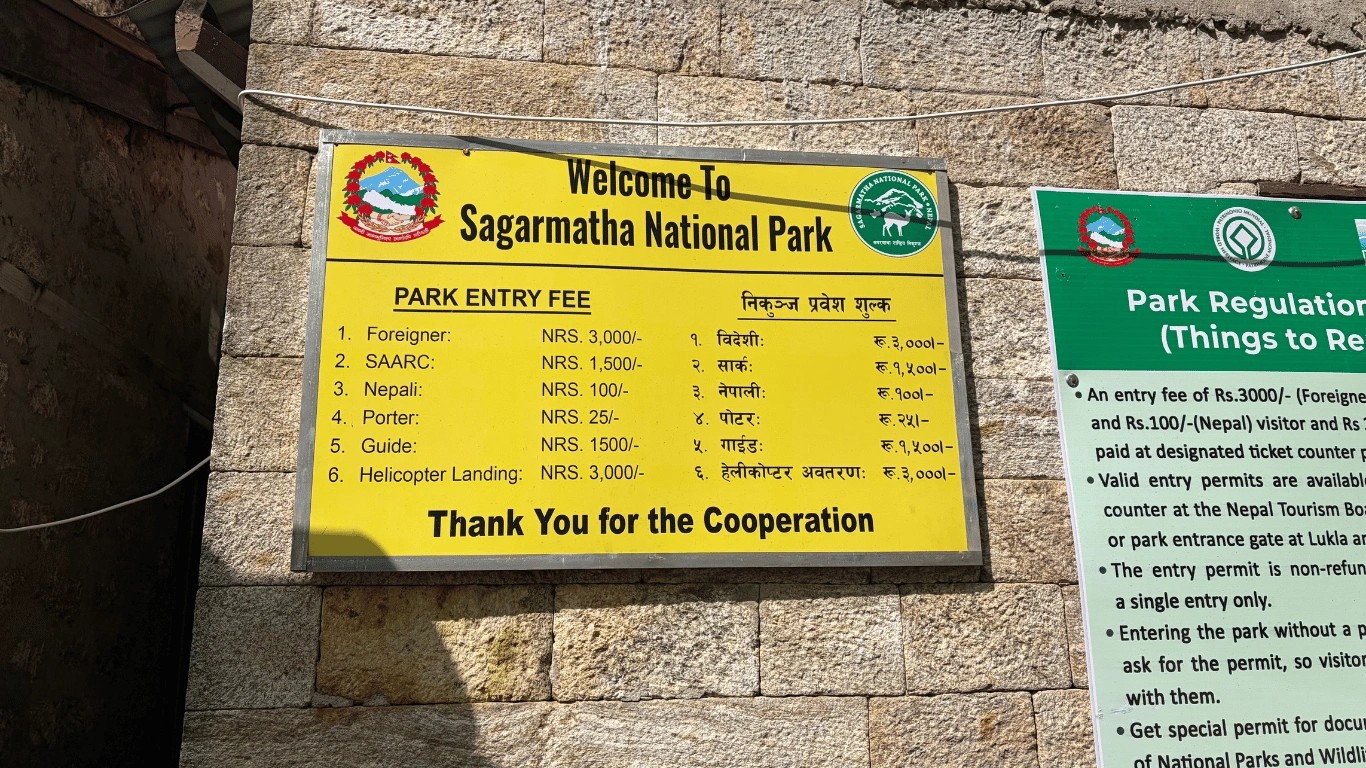
By nationality:
| Trekker Type | Sagarmatha NP | Khumbu Rural | Total |
|---|---|---|---|
| Foreign national | NPR 3,000 | NPR 3,000 | NPR 6,000 (~USD 45) |
| SAARC national | NPR 1,500 | NPR 2,000 | NPR 3,500 (~USD 27) |
| Nepali citizen | NPR 100 | NPR 100 | NPR 200 |
These are the permit fees only — not the trek cost. For the complete trek breakdown (guide, porter, accommodation, food, Lukla flight, insurance), see our full EBC cost guide.
TIMS is optional — but not required for the Everest region.
The Trekkers' Information Management System (TIMS) card was replaced by the Khumbu Rural Municipality permit in 2018 when Nepal decentralized its permit system. The Khumbu Rural Municipality now handles what TIMS previously did for the Everest region.
If a trekking company tells you TIMS is required for EBC and charges you for it, they are either misinformed or upcharging.
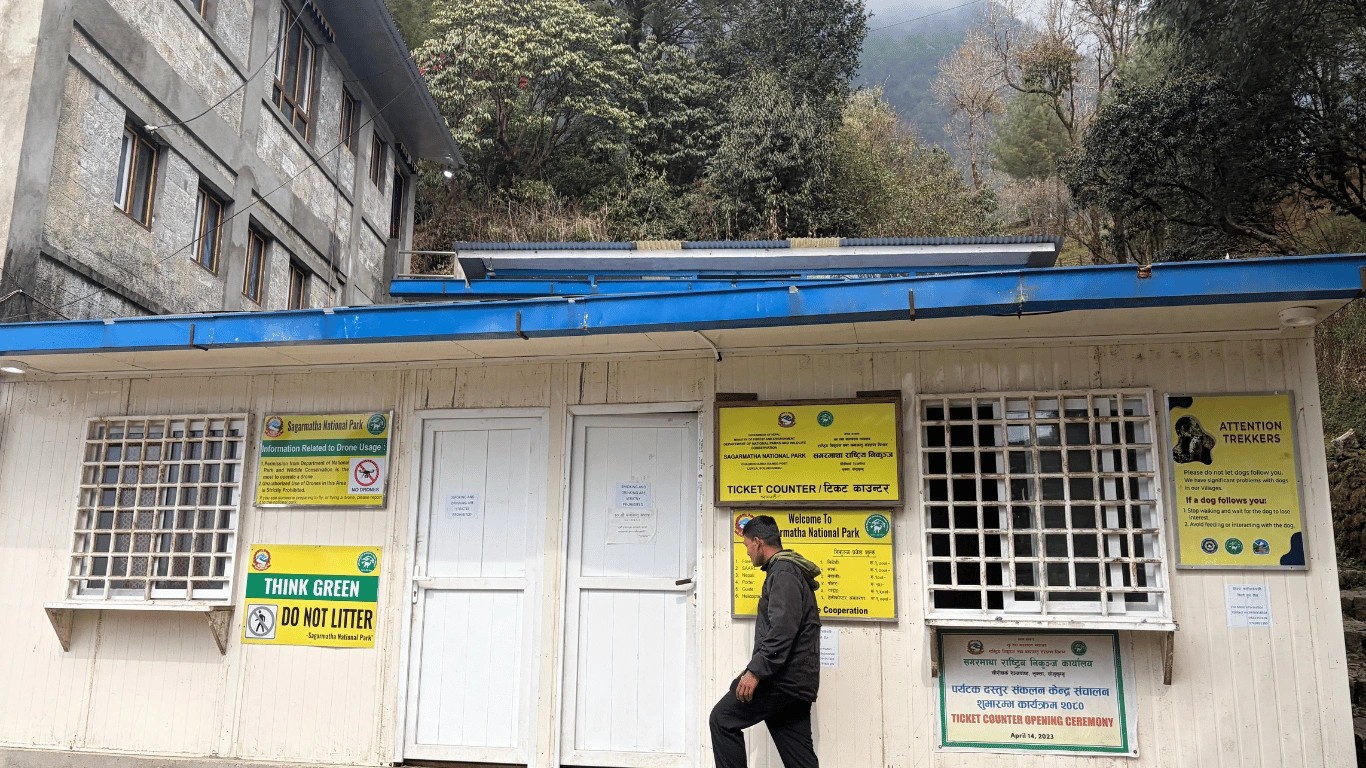
This is where nearly every other guide gets it wrong. Here's the actual, on-the-ground reality:
Your guide handles the permit process entirely — you just carry your passport and pay the fees. There's no paperwork to sort yourself, no queue anxiety, no risk of missing a document.
Every permit counter accepts Nepali rupees only. Not USD, not EUR, not Indian rupees.
Practical implications:
If you're doing the classic EBC route by trekking in from Jiri or Salleri (instead of flying to Lukla), you'll need one additional permit:
Gaurishankar Conservation Area Permit (GCAP) — NPR 3,000 for foreign nationals
Where to buy: at Shivalaya on the trail from Jiri, or at the Nepal Tourism Board in Kathmandu.
The two standard EBC permits (Sagarmatha + Khumbu) are still required — you'll pick them up when you reach Monjo/Lukla area.
Total permits for the Jiri classic route: 3 permits, roughly NPR 9,000 (~USD 68) for foreign nationals.
Officially yes, in practice not enforced on the Everest Base Camp route. Here's the honest situation:
We honestly recommend a guide anyway — not because the rule requires it, but because at 5,000+ metres, if something goes wrong, having a licensed guide with altitude experience, first aid training, and emergency evacuation contacts is genuinely valuable. But if you're deciding based on legal necessity alone, EBC checkpoints do not currently enforce the guide requirement.
There are four permit checkpoints on the entire EBC trail:
Nowhere else on the trail — not at Dingboche, not at Lobuche, not at Base Camp. If someone above Phungi Thenga asks to see your permit, they are not an official checkpoint.
Keep your permits accessible on all four inspection days. Above Phungi Thenga you can stow them safely in your daypack.
If you're planning to shoot commercial video, a documentary, or a film inside Sagarmatha National Park, additional permits apply:
| Category | Fee |
|---|---|
| Nepali / SAARC national filming | NPR 10,000 |
| Other foreign nationals filming | USD 1,500 |
| Drone additional fee | +25% of the film permit fee |
This is real and enforced. If you're a content creator planning to publish YouTube travel content, a documentary, or a commercial project involving the trek, you need to declare it and pay these fees in advance.
Standard personal photos and phone video for your own memories do not require these permits.
Only your passport.
You do not need:
Just bring your original passport to the counter. That's the entire document requirement.
Honest answer: you have to buy it again, at full price.
There's no reissue at a discounted rate. If your permit is lost — dropped in a river, blown away by wind, stolen — you'll pay the full NPR 3,000 again for whichever permit went missing.
Practical protection:
Bring the originals, not photocopies — checkpoints reject copies.
The same two permits (Sagarmatha NP + Khumbu Rural Municipality) cover the following treks:
If your trek stays within Sagarmatha National Park and the Khumbu Rural Municipality boundaries — which all standard Everest region treks do — you don't need additional permits.
Yes. Two permits are mandatory: the Sagarmatha National Park Entry Permit and the Khumbu Pasang Lhamu Rural Municipality Permit. Both must be obtained on the trail — the Khumbu permit at Lukla only, the Sagarmatha permit at Lukla (peak season) or Monjo.
For foreign nationals, NPR 6,000 (~USD 45) total. For SAARC nationals, NPR 3,500 (~USD 27). For Nepali citizens, NPR 200. These prices are all-inclusive of tax — VAT was absorbed into the fee in 2019.
Yes — Everest Base Camp is a trek, not a climb. Thousands of ordinary people with no mountaineering experience complete it every year. What you need is reasonable fitness (able to walk 5-7 hours a day for 12+ days), the two required permits, respect for altitude (proper acclimatization stops at Namche and Dingboche), and honest expectations about pace. You don't need technical skills, ropes, ice axes, or previous expedition experience.
No. Neither the Sagarmatha National Park permit nor the Khumbu Rural Municipality permit can be obtained online in 2026. Both must be issued at physical counters on the trail — Khumbu at Lukla only, Sagarmatha at Lukla (peak season) or Monjo. There is no e-permit system for the Everest region.
For SAARC nationals (India, Pakistan, Bangladesh, Sri Lanka, Maldives, Bhutan, Afghanistan), the total is NPR 3,500 — NPR 1,500 for the Sagarmatha National Park permit and NPR 2,000 for the Khumbu Rural Municipality permit. For Nepali citizens, the total is NPR 100— NPR 100 for each permit.
TIMS is optional for the Everest region — not required. You can get one if you want, but it's not checked at any point on the EBC trail. It was replaced by the Khumbu Rural Municipality permit in 2018.
Both permits are obtained on the trail — the Khumbu Rural Municipality permit only at Lukla, and the Sagarmatha National Park permit at Lukla (peak season) or Monjo. Neither is genuinely available in Kathmandu anymore, and neither can be bought online.
No — this is a common misconception. The Khumbu Rural Municipality permit is only issued at Lukla. Most current trekkers get both permits on the trail, not in Kathmandu.
Only your passport. No photos or other documents required at the counters.
You'll have to buy a replacement at full price. There's no discounted reissue. Trekkers with a guide have their permits managed for them.
Officially yes since April 2023, but in practice, EBC checkpoints do not enforce the guide requirement. Only your permit and passport are checked. We recommend a guide for safety reasons at altitude, not legal ones.
Children under 10 are free for the Sagarmatha National Park permit. The Khumbu Rural Municipality permit fee may still apply — confirm at the counter.
Commercial filming inside Sagarmatha National Park requires an additional film permit: NPR 10,000 for Nepali/SAARC nationals, USD 1,500 for other foreign nationals, plus a 25% surcharge if you're using a drone. Personal photos and casual phone video for your own use do not require this.
Four checkpoints: Lukla (departure), Monjo (Sagarmatha NP entry gate), the Namche checkpoint (~20 minutes before Namche Bazaar itself), and Phungi Thenga (before Tengboche). Nowhere else on the trail.
Yes. The Sagarmatha NP + Khumbu Rural Municipality permits cover all standard Everest region treks — EBC, Gokyo, Three Passes, and Everest Panorama.
The EBC permit system is actually simple: two permits, obtained on the trail — NPR 6,000 for foreigners, NPR 3,500 for SAARC nationals, NPR 200 for Nepalis. Where nearly every other blog gets confused is by repeating outdated information about TIMS, Kathmandu offices, online e-permits, and complicated document requirements that just don't exist anymore.
If you're trekking with a competent operator, permits are entirely handled — you won't touch a counter or think about paperwork. If you're going solo, get the Khumbu permit at Lukla, the Sagarmatha permit at Monjo (or at Lukla in peak season), bring your passport and Nepali rupees, and you're set.
The permits themselves are the easy part. Save your focus and energy for the walk itself.
→ See our Everest Base Camp Trek (14 days) — permits and logistics fully handled
→ Full EBC Cost Breakdown — what everything else actually costs
→ Namche Bazaar Complete Guide — your first proper stop in the Khumbu
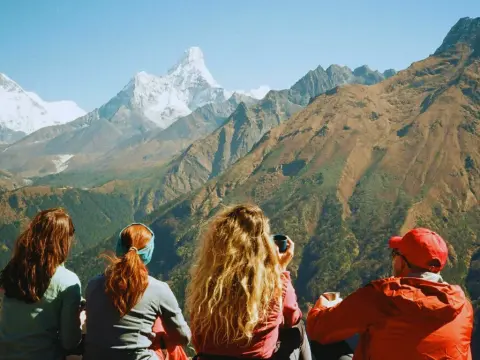
Standing face-to-face with Mount Everest doesn't require weeks of grueling trekking or extreme altitude exposure. The Everest View Trek Nepal offers o...
Understanding the Everest Base Camp trek Nepal cost helps you plan your dream Himalayan adventure without budget surprises.The total EBC trek cost Nep...
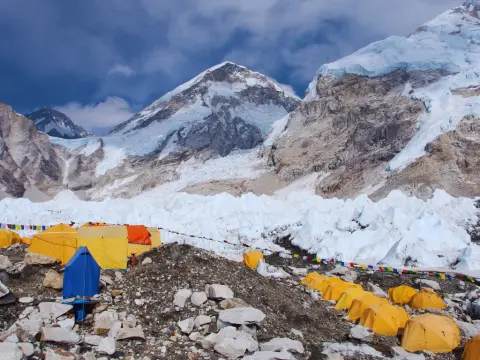
Everest Base Camp in Nepal sits at 5,364 meters above sea level, which converts to 17,598 feet. That is the number you will find on official trekking...
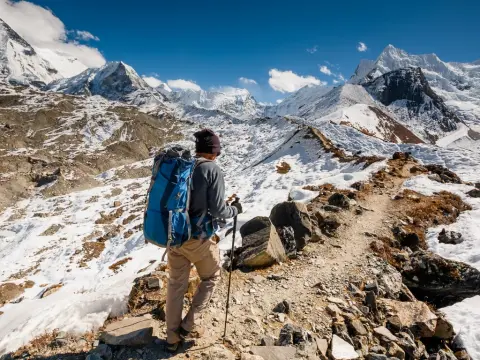
Yes, a beginner can complete the Everest Base Camp Trek. Despite what many people assume, reaching Everest Base Camp is not a mountaineering expeditio...
