
The 10 Best Treks in Nepal for 2026
10 Jun 2025
What makes for the best treks in Nepal can vary from person to person. While Everest Base Camp Trek (EBC) at 5545 m is ideal for a trekker wanting the...

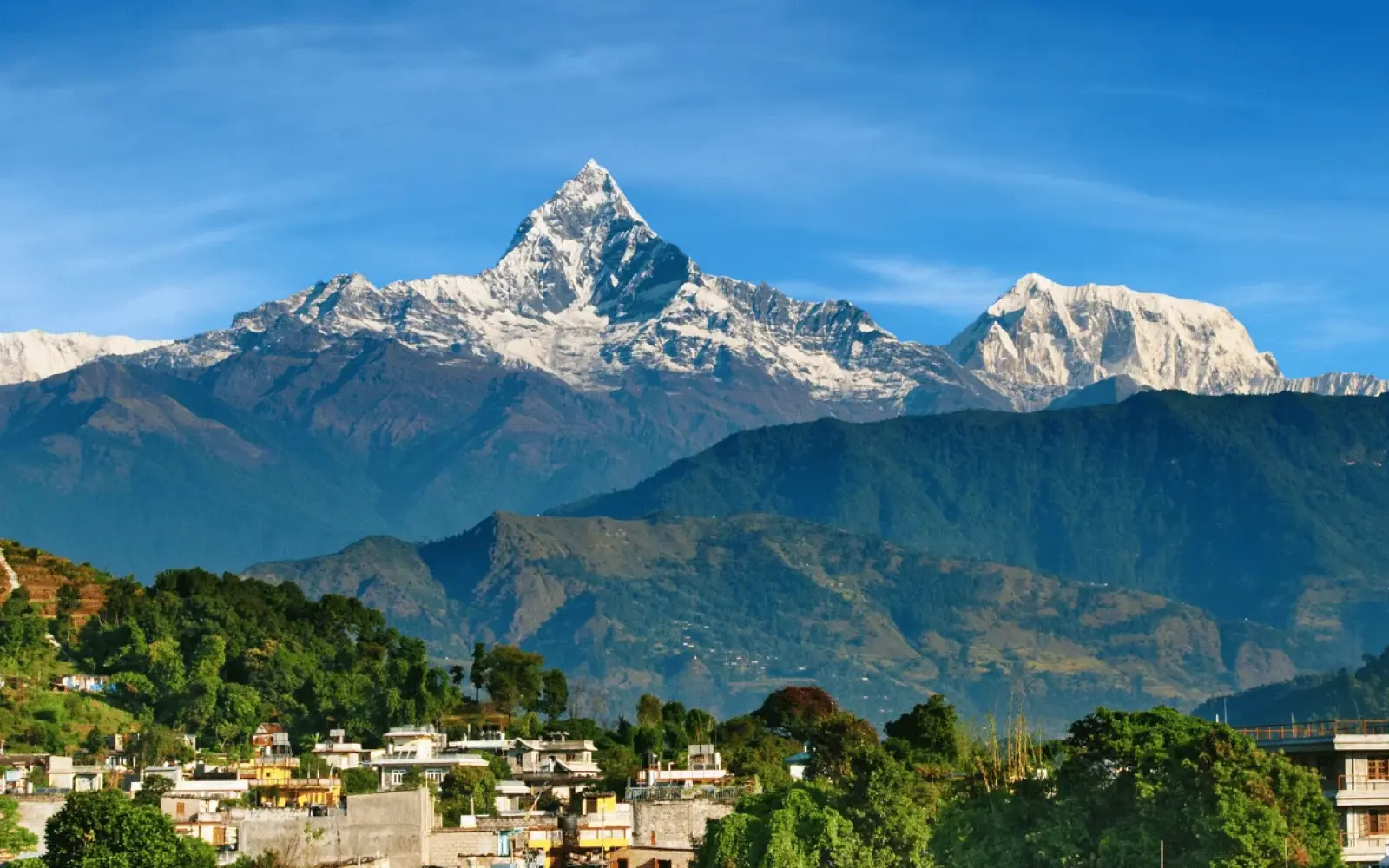

Nepal is often recognized as the home of Mount Everest and the birthplace of Gautama Buddha, but there is much more to this small South Asian country than its famous mountains and spiritual heritage. Nepal has an extraordinary range of landscapes, hundreds of cultural traditions, rare wildlife, ancient cities, and customs that continue to shape everyday life.
Despite covering approximately 147,516 square kilometres, Nepal stretches from the lowland plains of the Terai to the world's highest mountain. Its geography, history, and cultural diversity make it a fascinating destination for travelers, nature enthusiasts, and anyone curious about the world.
Here are ten interesting facts about Nepal that reveal some of the country's most remarkable features, including a few that even regular visitors may not know.
One of the most interesting facts about Nepal is that eight of the world's fourteen mountains rising above 8,000 metres are located within its borders. These peaks, often called the world's eight-thousanders, include some of the most recognizable names in mountaineering: Mount Everest, Kanchenjunga, Lhotse, Makalu, Cho Oyu, Dhaulagiri, Manaslu, and Annapurna I.
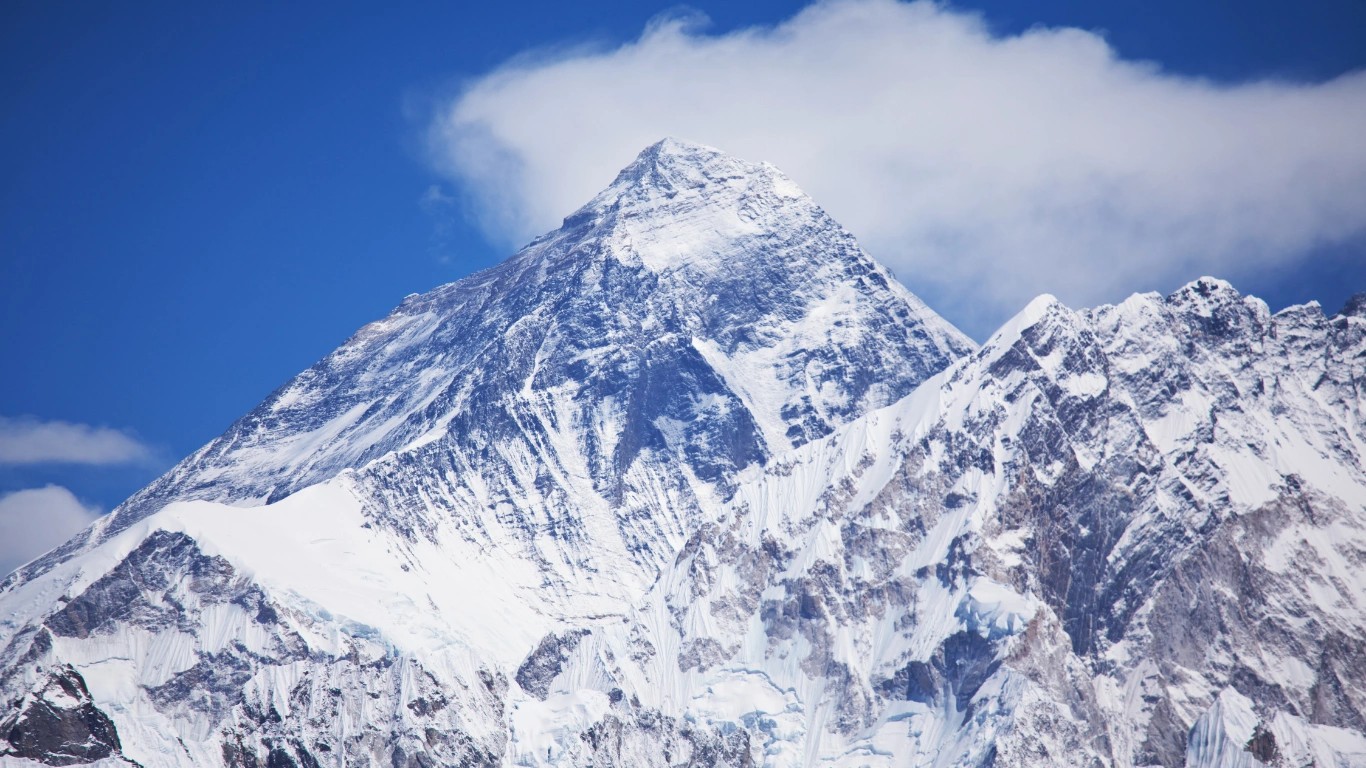
Mount Everest, known as Sagarmatha in Nepali and Chomolungma in Tibetan, reaches 8,848.86 metres above sea level and is the highest mountain on Earth. Its neighboring peaks are impressive in their own right. Kanchenjunga, at 8,586 metres, is the world's third-highest mountain, while Lhotse, at 8,516 metres, ranks fourth.
These mountains are more than geographical landmarks. They shape local climates, feed rivers through snow and glacial melt, and support communities whose livelihoods depend on farming, livestock, mountaineering, and tourism. Their slopes also contain distinct ecological zones, from forests and alpine meadows to permanently snow-covered terrain.
For travelers, this concentration of high peaks makes Nepal a leading destination for trekking and mountaineering. Routes such as the Everest Base Camp Trek and the Annapurna Circuit let you experience Himalayan landscapes without summiting an eight-thousander. However, high altitude requires careful acclimatization, and reaching a mountain's base camp is a very different undertaking from climbing its summit.
Unlike the rectangular national flags used by most countries, Nepal's national flag consists of two joined triangular pennants. Its distinctive shape makes it one of the easiest national flags to recognize and an especially interesting part of Nepal's national identity.
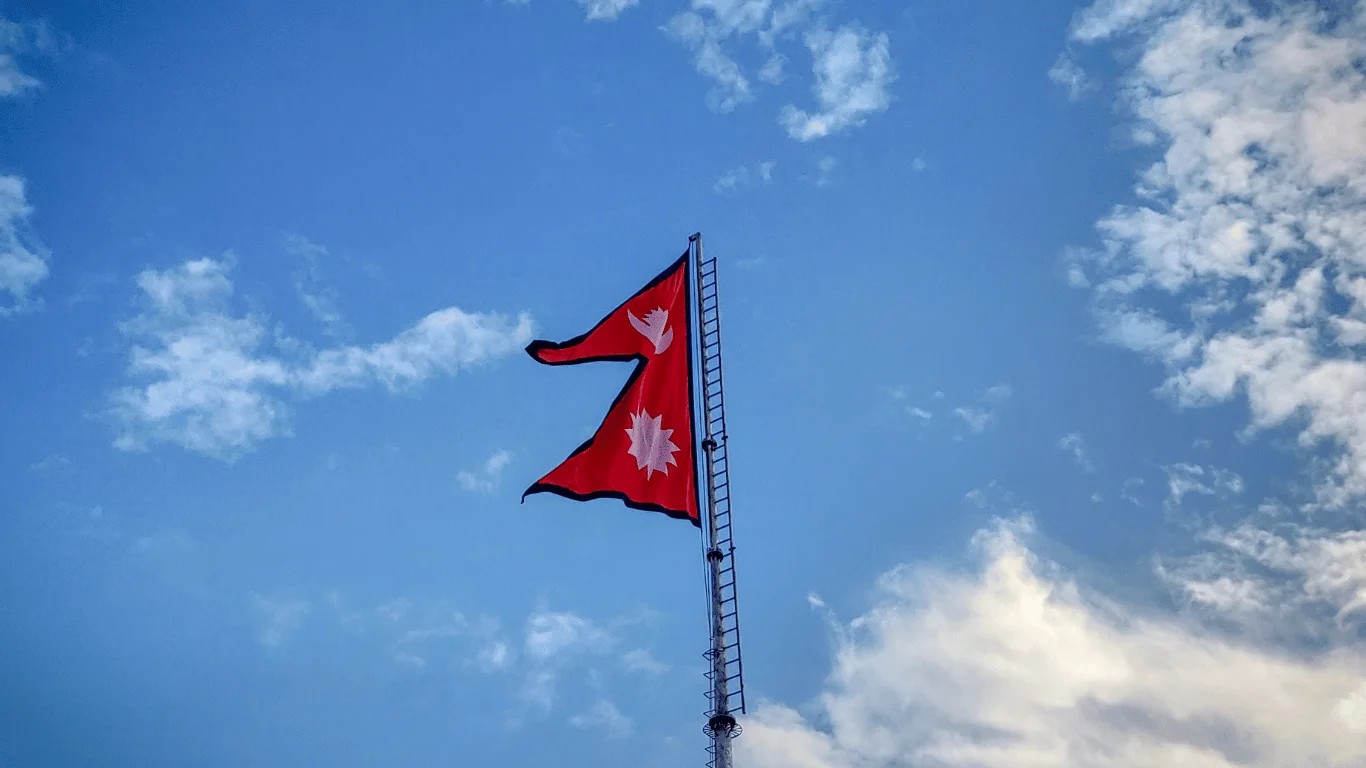
The flag features a crimson-red background with a deep-blue border. It also contains white symbols of the moon and sun, one in each triangular section. The red is commonly associated with bravery and is also Nepal's national color, while the blue border represents peace and harmony. The celestial symbols have traditionally been associated with the hope that the country will endure for as long as the sun and moon remain in the sky.
The flag's two-triangle design is rooted in historical pennant traditions rather than the rectangular format adopted by most modern states. Its precise geometry is also formally defined in Nepal's Constitution, which includes a construction method for reproducing the flag accurately.
This makes the Nepali flag unique for another reason: its shape is not merely a decorative choice. Its proportions and construction are specified in the constitutional text, giving the flag a distinct place in the country's legal and national symbolism.
For visitors, the flag is a familiar sight across Kathmandu, mountain villages, temples, government buildings, and trekking routes. It is a simple but memorable reminder of Nepal's distinct national identity and long-standing traditions.
Nepal's cultural diversity is reflected in the many languages spoken across its hills, mountains, and plains. According to Nepal's National Population and Housing Census 2021, the country recorded 124 mother tongues. The census also documented 142 caste and ethnic groups, illustrating how many distinct communities contribute to Nepal's social and cultural life.
Nepali is the country's official language and serves as a common language for communication across many communities. However, it is not everyone's mother tongue. The 2021 census found that 44.86% of the population reported Nepali as their mother language. Other widely spoken languages include Maithili, Bhojpuri, Tharu, Tamang, Bajjika, and Nepal Bhasa, also known as Newar.
Language differences are closely connected to local history, cultural practices, oral traditions, and community identity. A traveler moving from the Kathmandu Valley into the eastern hills or the southern Terai may encounter different languages, traditional music, food customs, and forms of greeting within a relatively short journey.
The census also reported several mother tongues that had not appeared as separate entries in the 2011 census, reflecting the continuing work of documenting Nepal's linguistic landscape. Counting a language, however, does not automatically tell us how widely it is used or whether it is at risk of disappearing.
For visitors, this diversity is one reason Nepal feels culturally different from one region to another. Learning a simple local greeting, listening to traditional songs, or visiting a community museum can offer a deeper understanding of the people behind the country's famous landscapes.
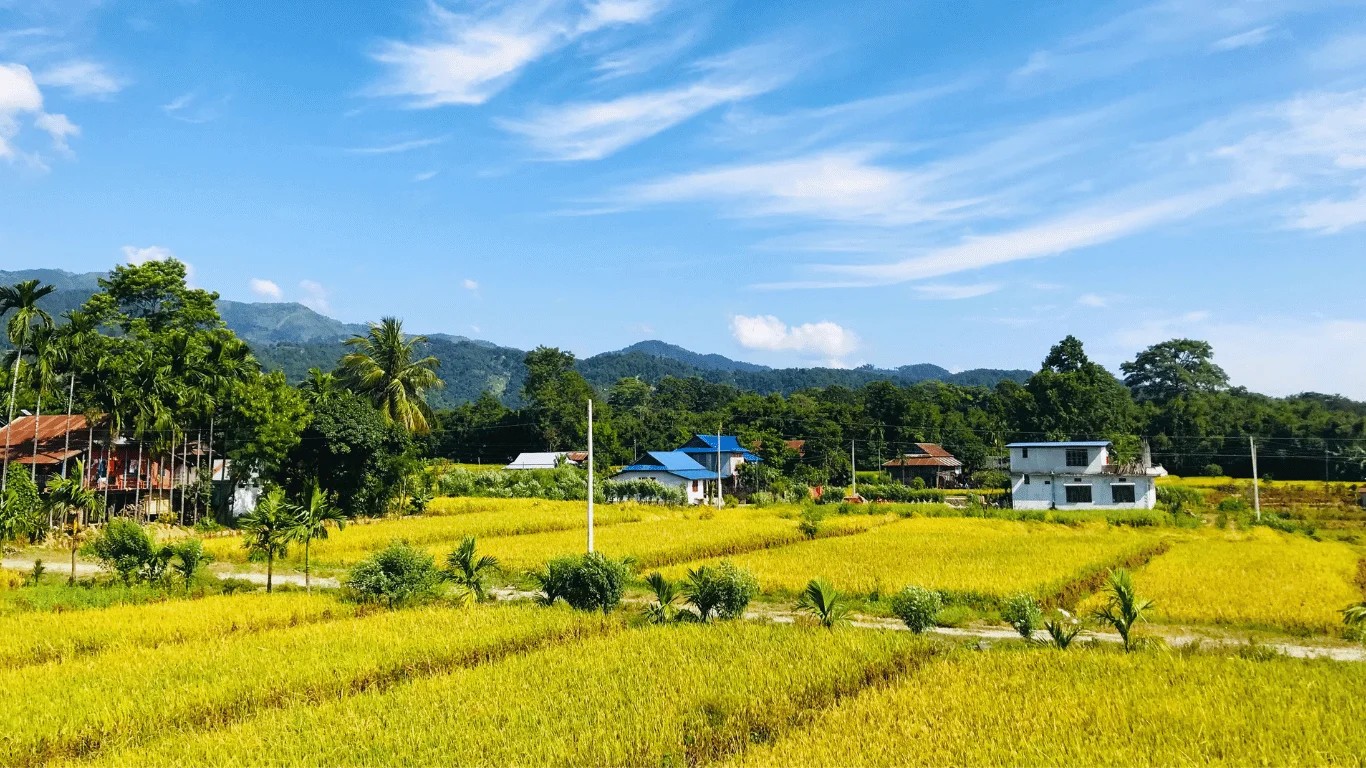
Nepal's geography is remarkable because the country rises dramatically in elevation over a relatively short north-to-south distance. Its lowest point is Kechana Kalan in Jhapa, in the eastern Terai, at approximately 60 metres above sea level. At the opposite extreme stands Mount Everest, whose summit reaches 8,848.86 metres. That is a vertical difference of nearly 8,789 metres within one country.
Geographers commonly divide Nepal into three broad geographical regions: the Terai, the Hills, and the Himalayas. The southern Terai contains warm lowlands, agricultural fields, wetlands, and subtropical forests. Moving north, the landscape rises into the Siwalik and Mahabharat ranges, followed by the middle hills, where valleys, terraced farms, and forested slopes support many settlements.
Farther north, the Himalayan region includes alpine meadows, glaciers, high mountain passes, and cold, dry valleys. Places such as Mustang and Dolpo have landscapes that resemble parts of the Tibetan Plateau, with relatively little rainfall in some areas because of their position beyond major mountain barriers.
This variation helps explain why Nepal has such different climates and ecosystems. A visitor can experience warm plains, temperate hills, and freezing mountain environments during a single trip, although reaching each region requires suitable transport and planning.
It also means that the best time to visit depends on the destination and activity. The weather conditions suitable for a wildlife safari in Chitwan may be very different from those required for a high-altitude trek in the Everest region. Nepal's geography is not simply about height; it shapes travel, livelihoods, biodiversity, and daily life.
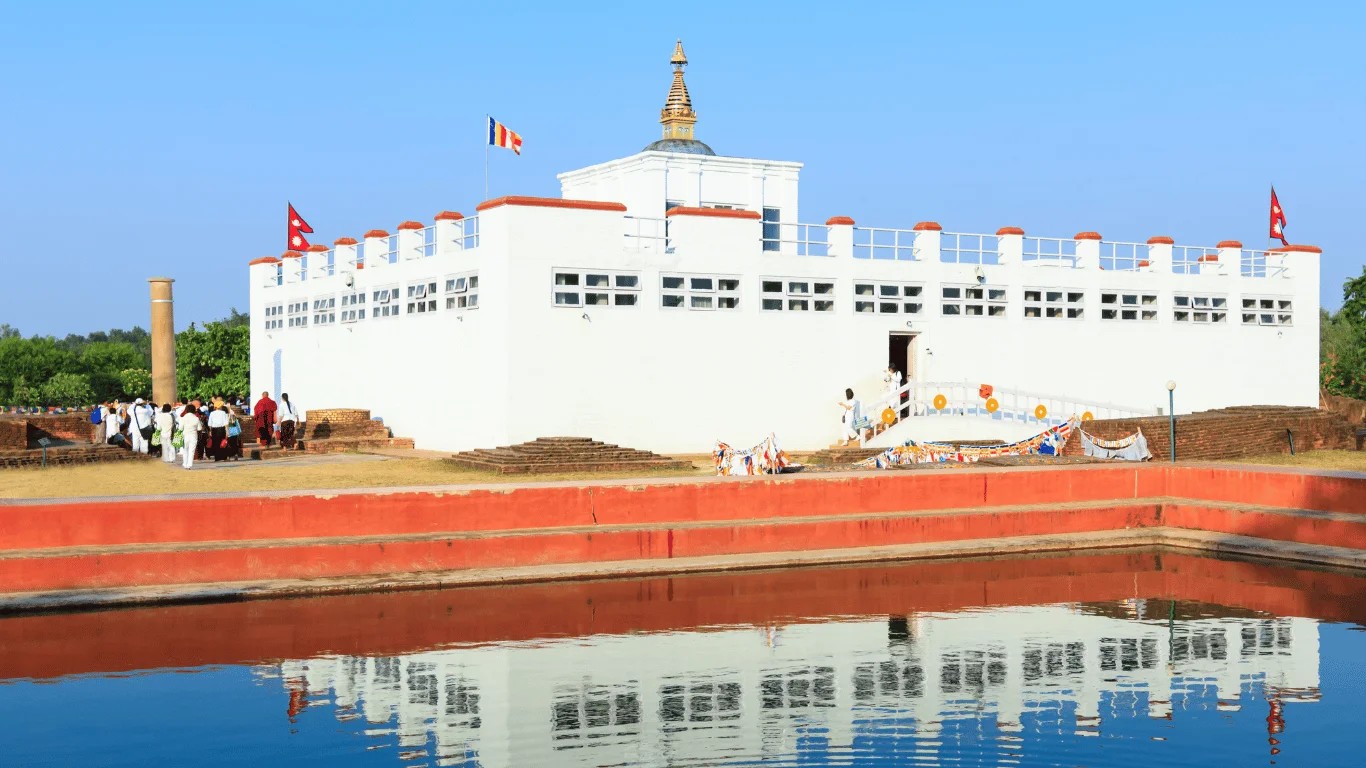
Nepal holds a significant place in Buddhist history because Siddhartha Gautama, who later became known as Gautama Buddha, was born in Lumbini in the southern Terai plains. Today, Lumbini is an important pilgrimage destination for Buddhists from Nepal and around the world, as well as for visitors interested in religion, archaeology, and ancient history.
The sacred garden contains the Maya Devi Temple, archaeological remains, and the Ashoka Pillar, erected by the Mauryan emperor Ashoka during his visit in the third century BCE. The pillar's inscription identifies Lumbini as the birthplace of Buddha, providing an important historical record connecting the site to the early history of Buddhism. UNESCO recognizes Lumbini as a World Heritage property.
Lumbini is not simply a single temple or monument. Its wider development includes monasteries and meditation centres established by Buddhist communities from different countries, with architectural styles reflecting their respective traditions. The peaceful garden and archaeological areas offer a different experience from Nepal's busy cities and mountain trekking routes.
One detail worth clarifying is that the historical dating of Buddha's life has been debated by scholars. UNESCO's heritage description gives 623 BCE as his birth year, but this date should not be treated as universally settled by modern historical research.
For travelers, Lumbini can be visited as part of a cultural itinerary through the Terai or combined with other historical destinations. It is also a useful reminder that Nepal's international significance extends well beyond the Himalayas: the country has an important place in the religious and philosophical history of Asia.
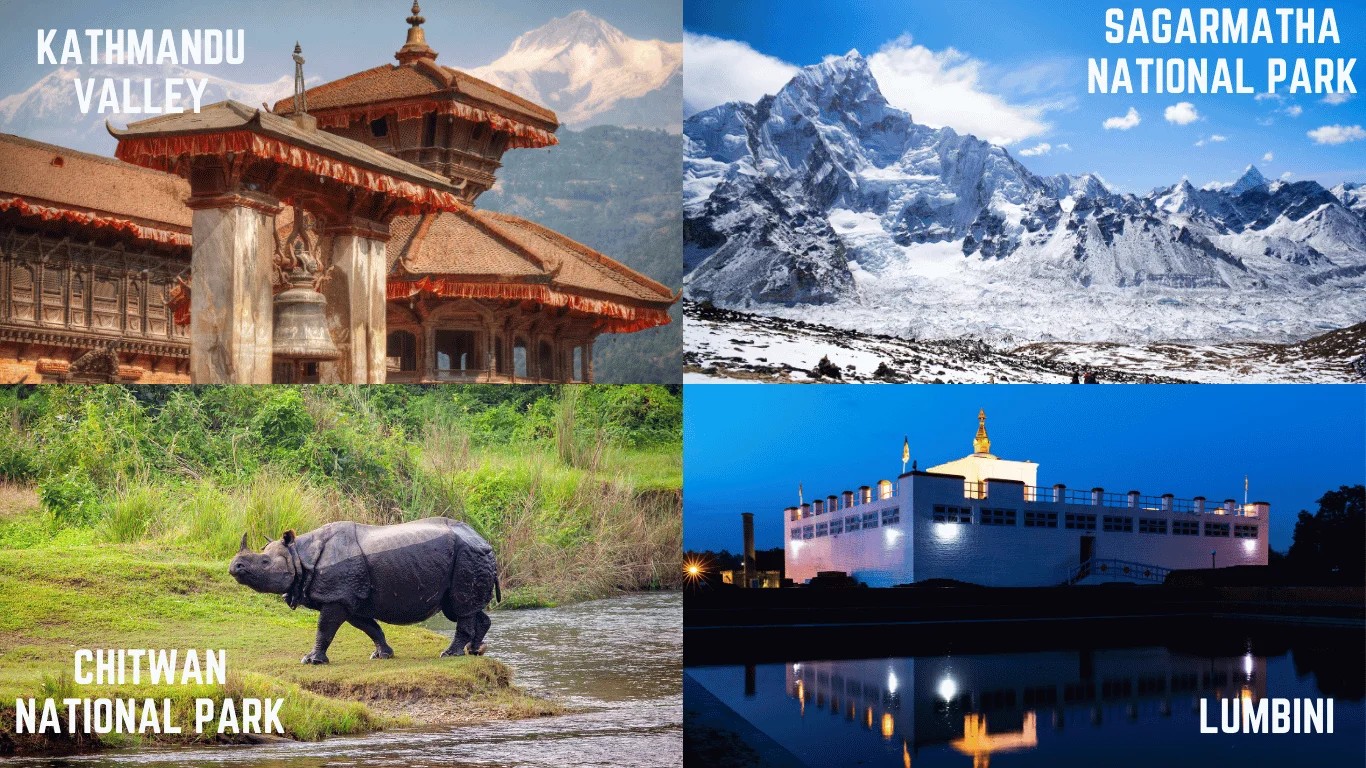
Nepal's cultural and natural heritage is recognized internationally through UNESCO's World Heritage List. The country has four inscribed World Heritage properties: Kathmandu Valley, Lumbini, Chitwan National Park, and Sagarmatha National Park. Two are cultural properties, while the other two are natural properties.
Kathmandu Valley is particularly remarkable for its concentration of historic architecture, temples, palaces, and traditional urban settlements. Its World Heritage property includes seven monument zones, among them Kathmandu, Patan, and Bhaktapur Durbar Squares, as well as the sacred complexes of Pashupatinath and Swayambhu. Together, these places reveal the artistic achievements and religious traditions of the Kathmandu Valley's historic communities.
The natural properties offer a very different perspective. Chitwan National Park protects lowland ecosystems that support species such as the greater one-horned rhinoceros and Bengal tiger. Sagarmatha National Park encompasses Mount Everest, glaciers, deep valleys, and the homeland of Sherpa communities whose cultural traditions are closely connected to the mountains.
Lumbini adds another dimension through its archaeological remains and religious importance as the birthplace of Gautama Buddha.
These four properties demonstrate how much Nepal offers beyond mountain scenery. A single trip can combine historic squares, Buddhist pilgrimage sites, subtropical wildlife habitats, and high-altitude Himalayan landscapes. They also highlight the importance of conservation: World Heritage recognition brings international attention, but preserving these places requires ongoing work to manage tourism, protect ecosystems, and maintain historic structures.
For visitors, UNESCO-listed destinations provide a useful starting point for understanding Nepal's history, architecture, spirituality, and natural environment.
Nepal is known for Himalayan trekking, but its southern lowlands are also important habitats for endangered wildlife. One of the country's most encouraging conservation stories is the recovery of its wild Bengal tiger population.
Nepal's national tiger surveys estimated approximately 121 wild tigers in 2009, 198 in 2013, 235 in 2018, and 355 in 2022. The latest national census, announced in July 2026, recorded 429 wild tigers, representing a substantial increase from the earlier estimates. The figures reflect the results of repeated nationwide surveys rather than casual wildlife sightings.
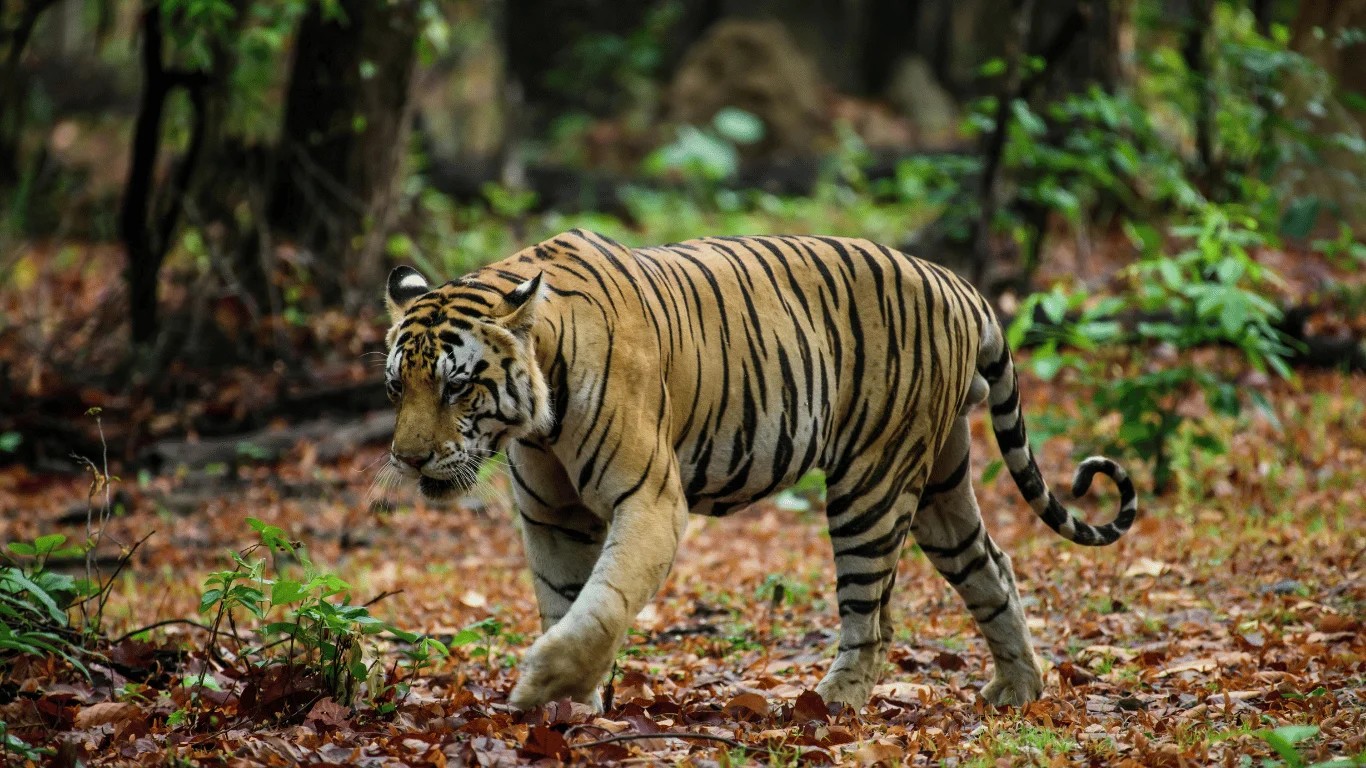
This recovery is associated with several decades of conservation work, including anti-poaching measures, habitat protection, wildlife monitoring, and collaboration between government agencies and local communities. Protected areas such as Chitwan, Bardia, Parsa, Banke, and Shuklaphanta provide important habitats for tigers, while forest corridors help connect otherwise separated populations.
However, an increase in tiger numbers does not mean conservation challenges have disappeared. More tigers can increase the possibility of conflict with nearby communities, especially where wildlife habitats overlap with farms, settlements, and livestock grazing areas. Protecting corridors and supporting people living near tiger habitats remain essential.
For travelers, this is another reason to consider Nepal's lowland national parks alongside its mountain destinations. Responsible wildlife tourism can support local livelihoods and conservation when managed carefully. A jungle safari in Chitwan or Bardia offers a chance to learn about Nepal's wildlife, although spotting a tiger in its natural habitat is never guaranteed.
An unusual but little-known fact about Nepal is its time zone. Nepal Standard Time, commonly abbreviated as NPT, is UTC+5:45. This means local time is five hours and 45 minutes ahead of Coordinated Universal Time, rather than the more familiar whole-hour offsets used in many countries.
The 45-minute difference also makes Nepal's time distinct from that of neighboring India, which uses UTC+5:30. As a result, Nepal is 15 minutes ahead of India. For example, when it is noon in India, it is 12:15 p.m. in Nepal.
The country's standard time is linked to the longitude of Gauri Shankar, a Himalayan mountain east of Kathmandu. The meridian used for Nepal's time standard is approximately 86°15′ east longitude. This helps explain why Nepal's time differs from India's even though the two countries share a long border.
Nepal does not currently observe daylight saving time, so clocks do not shift forward or backward seasonally. The same UTC offset applies throughout the year.
Although the difference may seem small, it matters when arranging international flights, joining online meetings, contacting trekking agencies, or coordinating travel across South Asia. Visitors arriving from India may need to adjust their watches by just 15 minutes, while travelers from Europe or North America may have to account for larger differences.
Nepal's unusual time zone is a practical reminder that national borders do not always follow neat hourly divisions. It is also a fun detail to share when introducing Nepal to someone who assumes every country uses a whole-hour offset from UTC.
Among Nepal's most distinctive cultural traditions is the worship of the Kumari, a young girl revered as the living embodiment of the Hindu goddess Taleju. The tradition is especially associated with the Newar communities of the Kathmandu Valley and reflects the close relationship between Hindu and Buddhist religious practices in Nepal.
The Royal Kumari of Kathmandu lives in Kumari Ghar, a historic courtyard building near Kathmandu Durbar Square. She is selected according to established religious and cultural criteria, including her community background and a series of traditional assessments. The process is overseen by religious authorities and members of the relevant community. Other Kumari traditions also exist in places such as Patan and Bhaktapur.

The Kumari makes public appearances on particular religious occasions, most notably during Kathmandu's Indra Jatra festival. During these events, devotees gather to receive her blessings, and the tradition becomes a visible part of the city's living cultural heritage.
The role is temporary. Traditionally, a Kumari's tenure ends when she reaches puberty or experiences certain conditions specified by religious custom, after which a successor is selected. The transition is an important part of the institution rather than an indication that the former Kumari loses her place in the community.
For visitors, the Kumari tradition offers insight into a religious practice that cannot be understood simply by looking at temples or statues. It is a living institution shaped by ritual, community identity, and centuries of belief.
Anyone hoping to see the Kumari should remember that her appearances are governed by tradition and are not guaranteed on an ordinary sightseeing visit. Respectful behavior and following local guidance are essential.
Nepal's extraordinary biodiversity is another reason the country attracts nature enthusiasts and researchers from around the world. Although it accounts for only a small fraction of the world's land area, Nepal contains a wide range of ecosystems, from subtropical grasslands and wetlands to temperate forests and alpine habitats. These changing environments support many different species of plants, mammals, birds, and other wildlife.
According to the Nepal Tourism Board's published nature information, the country is home to approximately 850 bird species, as well as wildlife including Bengal tigers, greater one-horned rhinoceroses, snow leopards, red pandas, and Himalayan tahr. Its plant life is equally varied, with rhododendrons, orchids, medicinal herbs, and many other species growing in different ecological zones.
Nepal's protected-area network helps conserve this diversity. National parks, wildlife reserves, and conservation areas cover more than 23% of the country's land area, according to the Nepal Tourism Board. These protected landscapes support wildlife and preserve important habitats, while also providing opportunities for research, education, and responsible nature tourism.
The country's steep changes in elevation help explain this richness. A warm, wet lowland forest and a cold Himalayan slope create very different conditions for plants and animals, even when the locations are not separated by enormous horizontal distances.
However, biodiversity is not something Nepal can take for granted. Habitat fragmentation, climate change, pollution, and human-wildlife conflict remain important conservation concerns. Protected areas need effective management, and local communities must be able to benefit from conservation without bearing an unfair share of its costs.
For travelers, visiting national parks and conservation areas with responsible guides is one way to learn about Nepal's natural heritage beyond the famous mountain trails.
Nepal's appeal extends far beyond Mount Everest. Its ancient cities, sacred pilgrimage sites, distinctive cultural traditions, varied languages, and wildlife habitats reveal a country shaped by both natural contrasts and centuries of human history.
Whether you are interested in exploring Kathmandu Valley's historic architecture, visiting Lumbini, spotting wildlife in Chitwan National Park, or trekking through the Himalayas, each region offers a different perspective on Nepal.
Nepal is much more than its mountains, and the best way to understand it is to see it for yourself. Whether you dream of standing at Everest Base Camp, walking through Kathmandu’s ancient squares or visiting Lumbini, Majestic Trails Nepal can plan a trek or tour that fits your interests, time and travel style. Explore our trips or message us on WhatsApp at +977 9700937981 to start planning.
What makes for the best treks in Nepal can vary from person to person. While Everest Base Camp Trek (EBC) at 5545 m is ideal for a trekker wanting the...

Let's cut straight to it. Autumn, specifically September through November, is the best time to trek in Nepal. Spring runs a very close second, coverin...

Nepal stands as the ultimate playground for trekkers worldwide, offering everything from gentle valley walks to extreme high-altitude expeditions. Whe...
Nepal has a way of catching people off guard, and quite frankly, it operates in a league of its own. You think you're booking a trekking holiday to pl...

There's something about Bhaktapur that hits differently compared to the rest of the Kathmandu Valley. The moment you walk through its narrow brick-pav...
