
All Mountains in Nepal: Peaks, Himalayan Ranges & Trekking Highlights
15 May 2026
Nepal is a country defined by mountains. Stretching across the country’s northern edge, the Himalayas pack Earth’s highest peaks into one nation. Eigh...

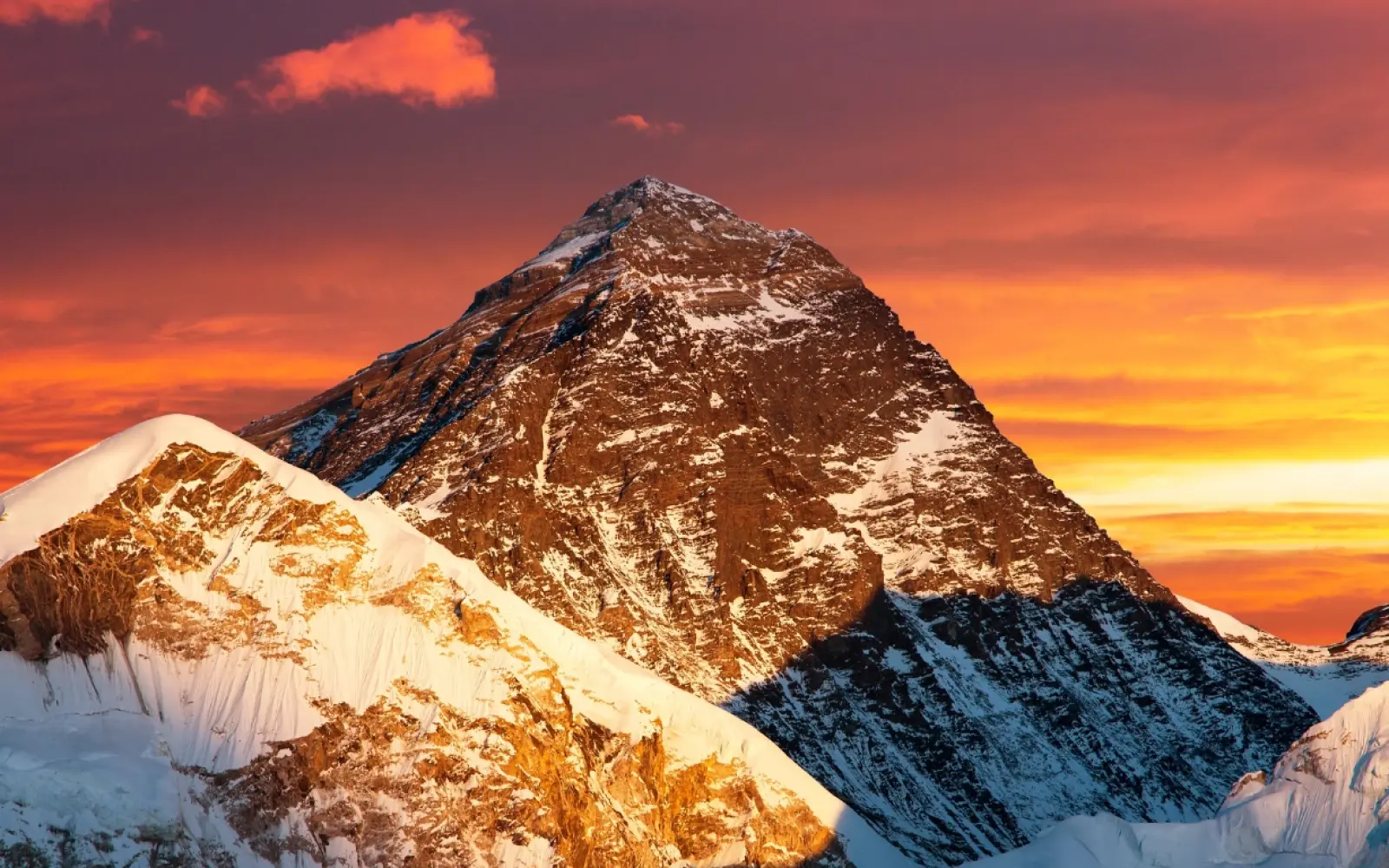

What does Everest mean? Mount Everest is the highest mountain on earth at 8,849 m, but the name "Everest" has only existed since 1865 — when British surveyors named it after Sir George Everest, the man who mapped the Indian subcontinent. To the people who actually live below it, the mountain has two older and more meaningful names. In Nepal it is called Sagarmatha — "Goddess of the Sky." In Tibet it is called Chomolungma — "Goddess Mother of Mountains." And to the Sherpa community whose ancestors lived under it for centuries before any European saw it, Mount Everest is not just a mountain — it is God.
That last fact is the most important thing about what Mount Everest means, and almost no website explains it with the certainty it deserves. After 10+ years guiding international trekkers through the Everest region, Majestic Trails Nepal has watched Sherpa families perform pujas, hang prayer flags, and refer to the mountain in ways that go far beyond reverence. Mount Everest IS divine to the people who live in its shadow.
This guide explains the full meaning of Everest — the British surveyor origin, the Nepali and Tibetan names, the cultural and spiritual significance, what the mountain means as a life metaphor, and why all of it matters.
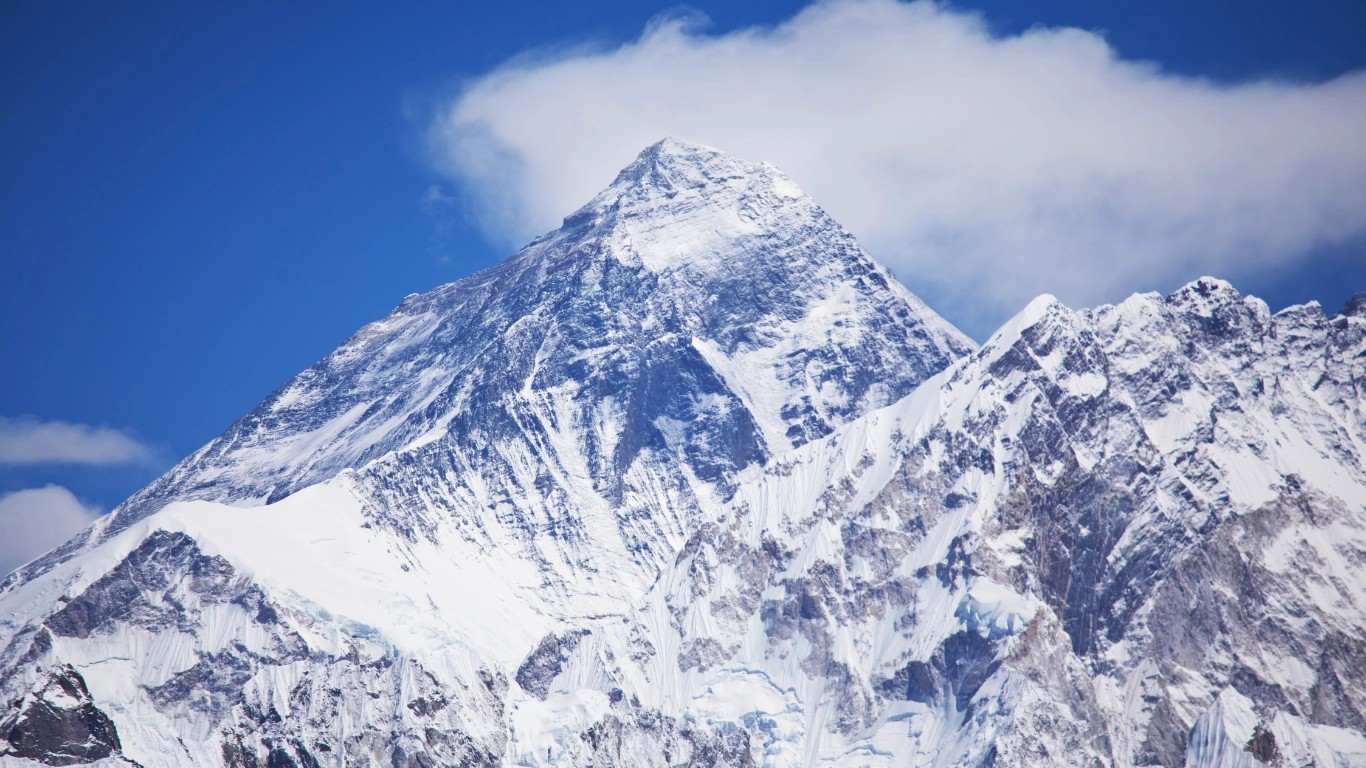
The full meaning of Everest depends on which language and which culture you ask. The English name "Everest" honors a British surveyor. The Nepali name "Sagarmatha" means Goddess of the Sky. The Tibetan name "Chomolungma" means Goddess Mother of Mountains. The Sherpa understanding of the mountain is that it is a living god.
In short: Mount Everest is the world's tallest mountain at 8,849 m, located on the Nepal-Tibet border, with three official names representing three different cultural relationships to the same peak.
The meaning of Mount Everest is not a single answer. It is layered.
The name "Everest" comes from Sir George Everest, a British surveyor who served as Surveyor General of India from 1830 to 1843. He never saw the mountain that now bears his name.
The Royal Geographical Society of Britain officially named the mountain "Mount Everest" in 1865 — proposed by Sir Andrew Waugh, Sir George's successor as Surveyor General. The mountain had previously been catalogued as "Peak XV" in British survey records. Sir George Everest himself opposed the naming. He felt the mountain should keep its local name. He was overruled.
Interestingly, the name "Everest" as a surname has Old French and Norman roots — meaning roughly "from the eastern district" or "easternmost." This is why some people search for what Everest means in Greek, but the answer is: nothing in Greek. The name is Anglo-Norman in origin and entered the English language through the Norman conquest of Britain.
So the literal meaning of the word "Everest" is geographic — it identifies a family that originally came from an eastern region. It has no connection to mountains, sky, or any spiritual concept. The man's name was simply transferred to the mountain.
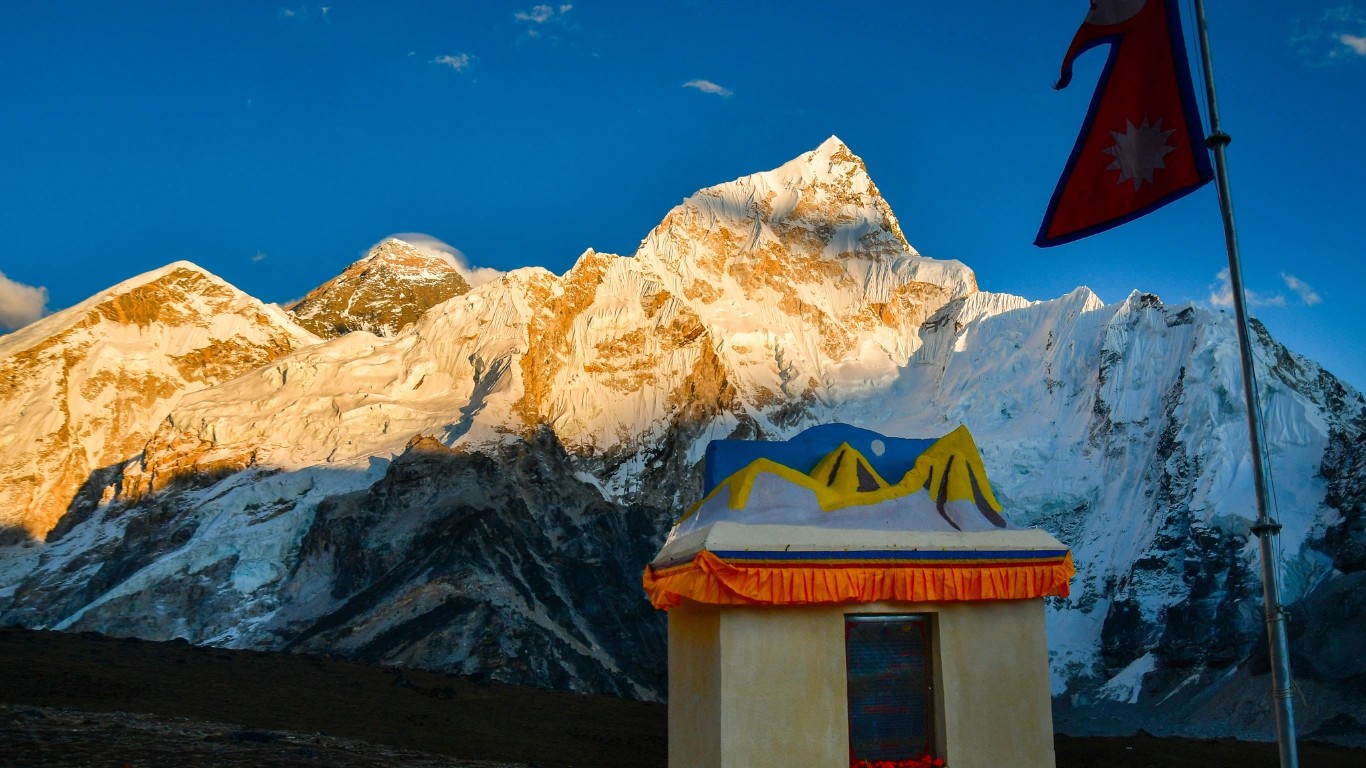
In Nepalese, Mount Everest is called Sagarmatha. The name means "Goddess of the Sky" or, more literally, "Forehead of the Sky" — from the Sanskrit roots sagar (sky) and matha (forehead).
The Nepali government officially adopted Sagarmatha as the mountain's name in the 1960s, partly to reclaim cultural ownership of the peak from colonial-era naming. The national park surrounding Mount Everest is now called Sagarmatha National Park — a UNESCO World Heritage Site since 1979.
What does Mount Everest mean in Nepali culture? It is the highest expression of the divine made physical. The "forehead of the sky" image captures something specific — the mountain is not just touching the sky, it IS the sky's forehead, the place where the heavens meet the earth most directly.
For Nepali people, Sagarmatha is also a source of national pride. The mountain belongs to Nepal in a way no other landmark does. The Nepali flag, the national identity, and the country's tourism brand all draw from Sagarmatha.
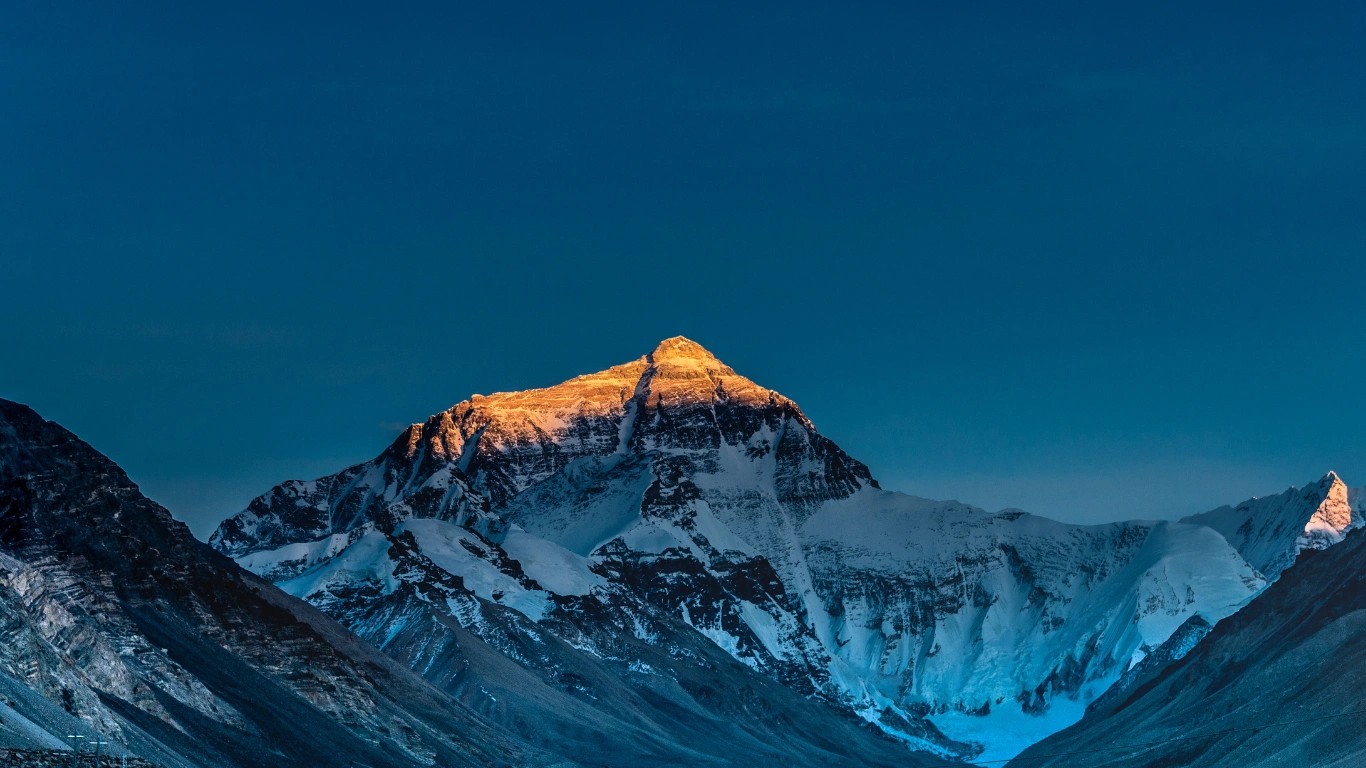
In Tibet, Mount Everest is called Chomolungma. The name means "Goddess Mother of Mountains" or "Goddess Mother of the World." From the Tibetan roots Jomo (lady, goddess) and Lungma (mother) — though some translations render it as "Sacred Mother."
Chomolungma is the older name. Tibetan civilization recognized the mountain by this name centuries before the British surveyed it. Tibetan Buddhist tradition holds that Mount Everest is the home of a goddess named Miyolangsangma — one of the Five Sisters of Long Life, a protective deity of the mountain.
The Sherpa people of Nepal — whose ancestors migrated from Tibet several centuries ago — also use Chomolungma in their traditional and religious practices. When Sherpa families bless climbing expeditions before they leave for the mountain, the puja ceremony invokes Chomolungma, not Sagarmatha and certainly not Everest.
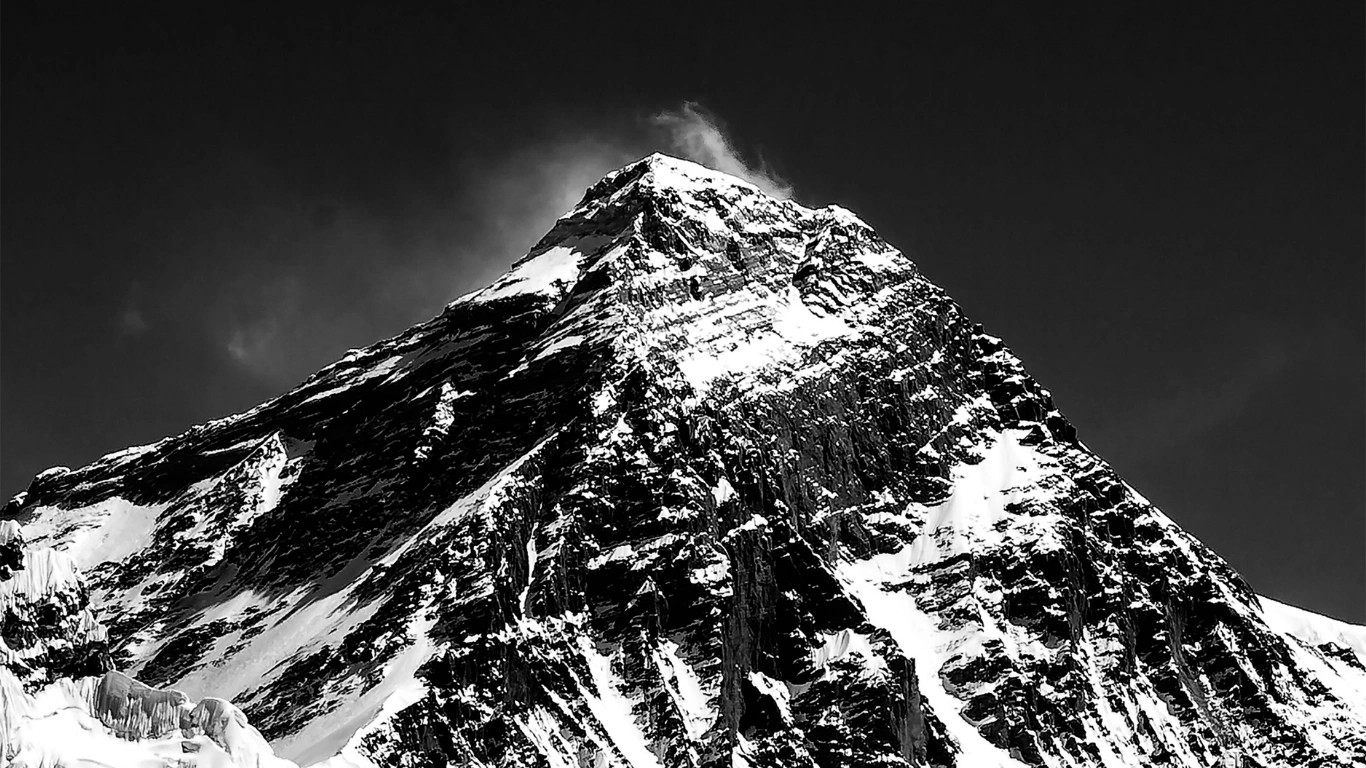
Before any of the official names, there was a description.
Tenzing Norgay — the Sherpa who made the first ascent of Mount Everest with Edmund Hillary on May 29, 1953 — once shared what his mother called the mountain. She did not say Sagarmatha. She did not say Chomolungma. She did not say Everest.
She said: "the mountain where birds cannot fly above."
That description, passed down through a Sherpa family before the mountain had an official name in any language, captures what Mount Everest means more honestly than any surveyor's record or government decree. It is a mountain so high that the natural laws of the sky bend around it.
This sentence is the most important thing in this entire blog. The full meaning of Everest is found here — not in dictionaries, not in geography textbooks, but in a Sherpa mother's description of a mountain she lived beneath her whole life.
Mount Everest has three names because three cultures named it independently across different centuries — and all three names are now in use officially.
The Sherpa and Tibetan name Chomolungma is the oldest, used for centuries before any non-local person saw the mountain. The Nepali name Sagarmatha was officially codified in the 1960s but reflects deeper Sanskrit and cultural roots. The English name Everest is the youngest — only 161 years old as of 2026 — and was imposed by colonial British surveying without local consultation.
In international media and English-language publications, "Mount Everest" remains the dominant name. In Nepal, government documents and Nepali-language media use "Sagarmatha." In Tibet and China, "Chomolungma" remains the primary name and appears on Chinese official maps.
The reason all three names persist is that each represents a real relationship to the mountain. Removing any of them erases a piece of how humans have known this peak.
The meaning of Everest shifts across cultures and languages. Here is what Mount Everest is called and what it means in different languages:
| Language | Name | Meaning |
|---|---|---|
| English | Mount Everest | Named after Sir George Everest, British surveyor |
| Nepali | Sagarmatha | Goddess of the Sky / Forehead of the Sky |
| Tibetan | Chomolungma | Goddess Mother of Mountains |
| Chinese | Zhumulangma Feng | Chinese transliteration of Chomolungma |
| Sanskrit | Devgiri or Devadurga | Mountain of God / Mountain Goddess |
| Hindi | Sagarmatha (सगरमाथा) | Same Sanskrit root — Goddess of the Sky |
| Sherpa | Chomolungma | Goddess Mother of Mountains (inherited from Tibetan) |
| Bengali | এভারেস্ট (Everest) | Transliteration of the English name |
What does Mount Everest mean in English? The literal answer is that it means "Sir George Everest's mountain" — a surname applied to a peak. What does Mount Everest mean in Nepali? Goddess of the Sky. What does Mount Everest mean in Hindi? The same — Sagarmatha shares the Sanskrit root with Hindi.
The pattern is striking. Every Asian language that named the mountain locally gave it a divine meaning. Only English gave it a human surname.
The spiritual meaning of Mount Everest is straightforward in Sherpa and Tibetan Buddhist tradition — Mount Everest is God.
That sentence is not metaphor. It is not poetic exaggeration. To the Sherpa community, Mount Everest is a living divine entity. The mountain is worshipped. Pujas are performed in its honor before any climbing expedition begins. Prayer flags are strung across passes and base camps to carry blessings to the mountain. Lamas chant for the mountain. Sherpa families speak of the mountain the way other cultures speak of God.
This is not a tourist marketing angle. After 10+ years guiding the Everest region, our team has watched it directly. Sherpa porters bow toward the mountain. Sherpa cooks light butter lamps at tea house shrines facing the peak. Sherpa guides ask permission of the mountain before crossing certain points on the trail. The mountain is a living presence in daily Sherpa life.
In Tibetan Buddhism specifically, the goddess Miyolangsangma is believed to live on Mount Everest. She is one of the Five Sisters of Long Life — protective deities of the Himalayas. Sherpa families consider her direct intervention possible. Climbers who behave badly on the mountain are said to anger her. Climbers who show humility are said to be granted safe passage.
The summit puja ceremony at Tengboche Monastery — performed at 3,860 m on the way to base camp — is one of the most important religious events on the entire EBC trek route. Climbing expeditions stop here before continuing. Trekking groups receive blessings. The chants ask Chomolungma's permission for the journey ahead.
For Sherpa people, summiting Everest is not conquering a mountain. It is being permitted by a goddess.
No, Mount Everest does not appear in the Bible. The name "Everest" did not exist until 1865 — more than 1,800 years after the New Testament was written and more than 2,500 years after the oldest parts of the Old Testament.
Some people search for the biblical meaning of the name Everest because they assume names of important things must have ancient religious origins. This is not the case for Everest. The mountain was named after a British surveyor in the 19th century. It has no connection to any biblical text, Hebrew root, or scriptural reference.
If you are looking for biblical mountains, the Bible mentions Mount Sinai, Mount Ararat, Mount Zion, and the Mount of Olives — but never Mount Everest. The mountain existed long before the Bible was written. It simply was not known to the cultures that produced the biblical text.
The honest answer to "what does the name Everest mean in the Bible" is that the question itself contains a wrong assumption. The name is modern, English, and named after a man — not a religious concept.
People often say "this is my Everest" or "you are my Everest" when describing a major life challenge or a goal they cannot stop pursuing. What does this metaphor mean?
The "my Everest" metaphor uses Mount Everest as a symbol for:
When someone says "studying for the bar exam was my Everest," they mean it pushed them to their absolute limit. When someone says "you are my Everest," they mean the relationship has been their hardest and most meaningful pursuit. The word "everester" — used to describe someone who climbs the mountain or commits to extreme cycling challenges — comes from this same symbolic meaning.
What does it mean to summit Mount Everest, in metaphor? It means reaching the peak of human possibility. Few words in English carry that weight. Few mountains either.
The reason the Everest metaphor works is that everyone knows Mount Everest is the highest place on earth. Using it as a symbol for the highest thing in your life is universally understood across languages and cultures.
Mount Everest is located on the border between Nepal and Tibet (an autonomous region of China). The summit lies exactly on the international border.
Quick facts:
Most trekkers and climbers access Mount Everest from the Nepal side. The Everest Base Camp Trek follows the Nepali route through Lukla, Namche Bazaar, and Tengboche to reach base camp at 5,364 m. The Tibetan side requires permits through Chinese authorities and is significantly more restricted.
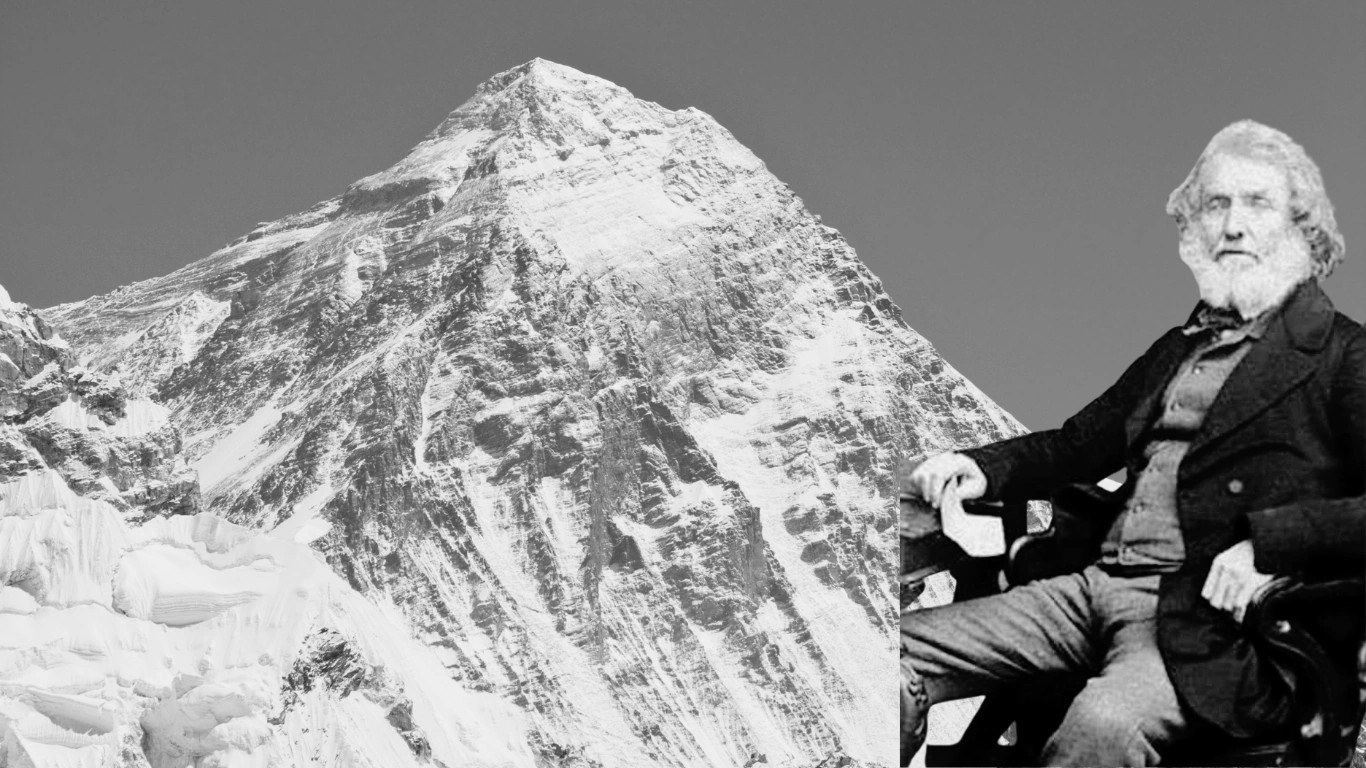
Sir George Everest (1790-1866) was a Welsh-born British surveyor who served as Surveyor General of India from 1830 to 1843. His major contribution was completing the Great Trigonometrical Survey of India — a massive scientific project measuring the Indian subcontinent with unprecedented accuracy.
Sir George Everest never saw the mountain that bears his name. His work was largely complete by the time Peak XV (now Mount Everest) was identified as the world's highest mountain in 1852. The naming came in 1865, a year before his death, proposed by his successor Sir Andrew Waugh.
George Everest himself opposed the naming. He argued the mountain should keep its local name and that his surname was difficult for Indian and Nepalese people to pronounce. The Royal Geographical Society overruled his objection. The name "Mount Everest" became official anyway.
The English pronunciation of his surname is "EEV-rest" — with the first syllable rhyming with "weave." Most people today pronounce the mountain's name as "EH-ver-est," which is incorrect according to the family's preference. Even the name's pronunciation drifted away from its origin.
What does this story tell us about what Everest means? It tells us the English name is essentially an accident of colonial bureaucracy. The mountain had names for centuries before. The British just made theirs the international default.
After 10+ years guiding the Everest region for Majestic Trails Nepal, what we have witnessed about what Mount Everest means to the people who live below it is this: the mountain is woven into every single aspect of Sherpa daily life.
Sherpa porters check the mountain's mood before starting work — a clear morning means the goddess is welcoming, a clouded peak means caution is required. Sherpa cooks at high-altitude tea houses keep small altars facing the mountain and refresh butter lamps daily. Sherpa guides teach their children not to point at the mountain with their finger — pointing is considered disrespectful to a divine being.
The Tengboche Monastery puja for trekking and climbing groups is not a tourist performance. It is genuine religious practice. The lama who performs it is asking Chomolungma — the goddess Miyolangsangma — for permission and protection for the group below. Most international trekkers do not realize they are participating in a religious ceremony directed at a living deity.
We have seen Sherpa families bring newborn children to view the mountain for the first time as a kind of introduction. We have seen elderly Sherpas refuse helicopter evacuation from base camp because they did not want to leave the mountain's presence at the end of their lives. We have seen Sherpa guides cry when they speak about the mountain — not from sadness but from devotion.
For Sherpa people, the meaning of Mount Everest is not a question to answer. It is a relationship to live. The mountain is family. The mountain is god. The mountain is home.
Everest means three different things in three different languages. In English, "Everest" comes from Sir George Everest, the British surveyor who mapped India. In Nepali, the mountain is called Sagarmatha, meaning "Goddess of the Sky." In Tibetan, it is called Chomolungma, meaning "Goddess Mother of Mountains." To Sherpa people, the mountain is a living god.
In Nepalese, Mount Everest is called Sagarmatha (सगरमाथा), which means "Goddess of the Sky" or literally "Forehead of the Sky." The name combines the Sanskrit words sagar (sky) and matha (forehead). Nepal officially adopted Sagarmatha as the mountain's name in the 1960s, and the surrounding UNESCO World Heritage Site is called Sagarmatha National Park.
In Tibet, Mount Everest is called Chomolungma, meaning "Goddess Mother of Mountains" or "Goddess Mother of the World." The name comes from the Tibetan words Jomo (lady/goddess) and Lungma (mother). Tibetan Buddhist tradition holds that the mountain is home to Miyolangsangma, one of the Five Sisters of Long Life — protective deities of the Himalayas.
Nothing — Everest is not a Greek word. The name is Anglo-Norman in origin, derived from an Old French surname meaning "from the eastern district." Some people search for the Greek meaning assuming all important names have classical roots, but the Mount Everest name is purely 19th-century British, named after Sir George Everest.
The name Everest does not appear in the Bible and has no biblical meaning. The mountain was named in 1865, more than 1,800 years after the New Testament was written. Biblical mountains include Sinai, Ararat, Zion, and the Mount of Olives — but never Everest. The question is based on a wrong assumption that all famous names have ancient religious origins.
In literal terms, summiting Mount Everest means reaching the peak at 8,849 m above sea level. In symbolic terms, it means achieving the highest possible accomplishment — the metaphor "this is my Everest" uses summit Everest meaning to describe any peak life challenge. For Sherpa people, summiting Everest is being granted permission by the goddess Miyolangsangma, not conquering the mountain.
The spiritual meaning of Mount Everest is that the mountain is divine. To Sherpa and Tibetan Buddhist tradition, Mount Everest is a living god — specifically the home of the goddess Miyolangsangma. Pujas are performed before climbing expeditions, prayer flags are hung at base camp, and Sherpa families speak of the mountain as a living spiritual presence in their daily lives.
What does Everest mean? It depends on whether you read the English dictionaries that gave the mountain a colonial surname, the Nepali maps that call it Goddess of the Sky, the Tibetan texts that name it Goddess Mother of Mountains, or the Sherpa families who simply call it God.
All four meanings are true. None of them cancel the others. The world's highest mountain holds enough meaning for every culture that has stood beneath it.
At Majestic Trails Nepal, we have spent 10+ years walking under this mountain with international trekkers from every continent. The most powerful thing we have learned is that the meaning of Mount Everest is not something you read in a guide. It is something you understand the moment you stand at Kala Patthar at sunset and watch the summit catch fire in golden light. Then you realize why the Sherpa people call it God.
→ View our 14-day Everest Base Camp Trek — see what Everest means in person
→ Contact our trek planning team — we respond within 24 hours
Nepal is a country defined by mountains. Stretching across the country’s northern edge, the Himalayas pack Earth’s highest peaks into one nation. Eigh...
If you're curious about trekking in Nepal, you've landed in the right place. Nepal is home to the world's most breathtaking mountain trails, ancient c...
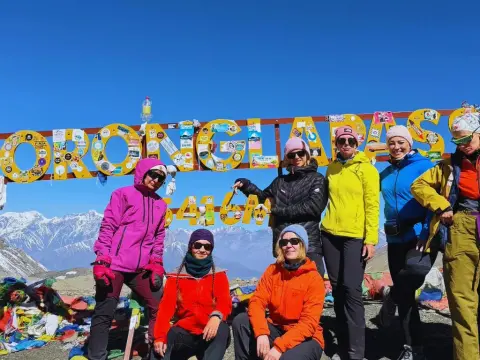
Choosing the right Annapurna Circuit trek agency is genuinely one of the most consequential decisions you will make in planning this journey. Not beca...
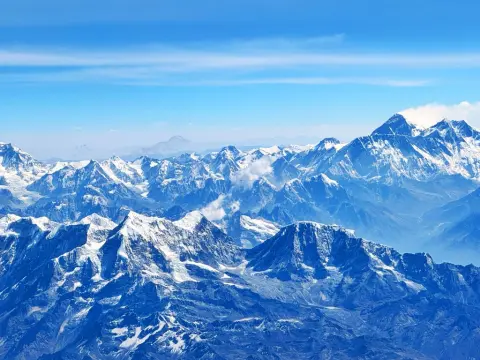
The Himalayan mountain range spans Nepal, Bhutan, India, and China. It also crosses Pakistan, making it a five-country range in total. The Himalayas s...
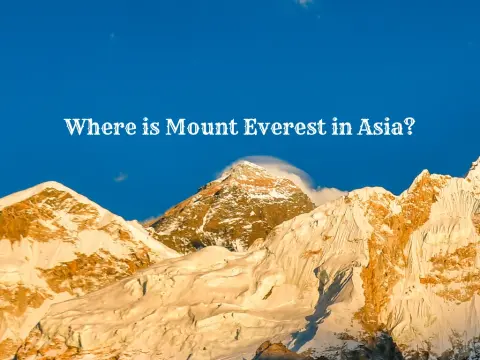
Mount Everest sits on the border between Nepal and the Tibet Autonomous Region of China, deep within the eastern Himalayas of South Asia. It is the hi...
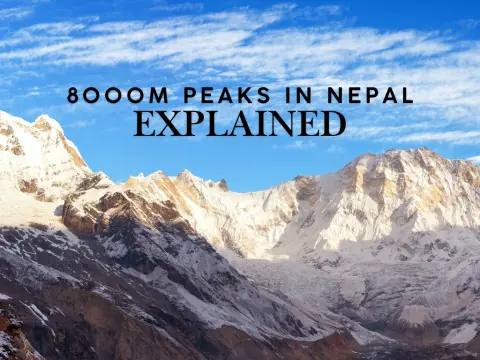
Nepal is home to 14 peaks over 8,000 meters. This includes all 8 internationally recognized eight-thousanders and 6 additional summits officially adde...
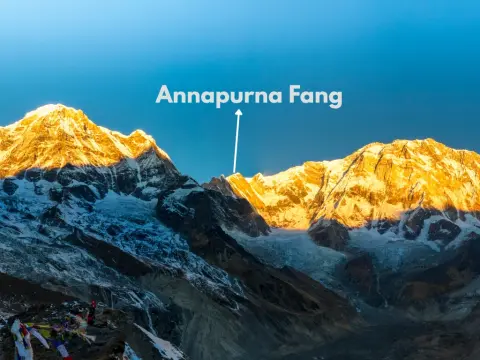
Annapurna Fang (Varaha Shikhar) stands at 7,647 m in the Annapurna massif of Nepal — the third highest peak in the entire Annapurna group, yet one of...
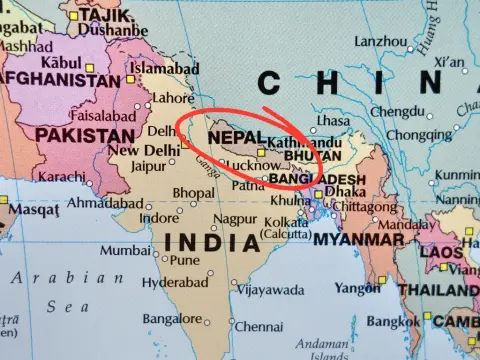
Geographically secluded within one of Asia's most dramatic territorial corridors yet profoundly sovereign in every constitutional sense, Nepal is a la...
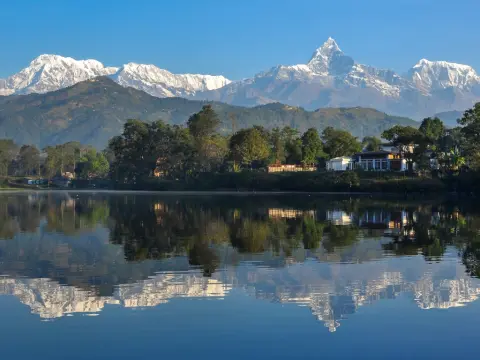
Annapurna is a section of the Nepal Himalayas containing 6 prominent peaks above 7,200 m and 15 peaks above 7,000 m, anchored by Annapurna I at 8,091...
