
All Mountains in Nepal: Peaks, Himalayan Ranges & Trekking Highlights
15 May 2026
Nepal is a country defined by mountains. Stretching across the country’s northern edge, the Himalayas pack Earth’s highest peaks into one nation. Eigh...

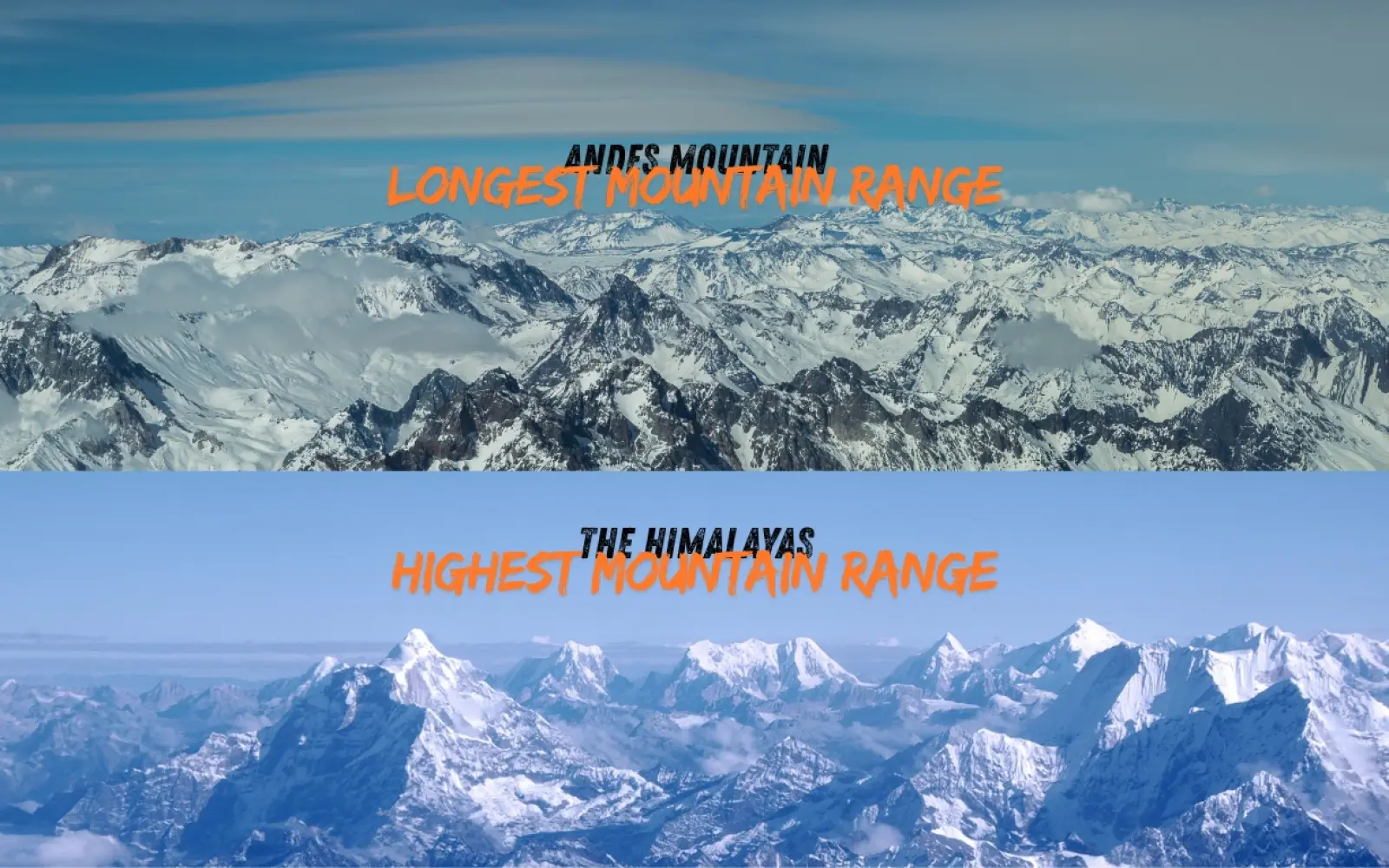

The longest and highest mountain range in the world is not a single mountain range — it is two different mountain ranges depending on what you measure. The Andes Mountains are the longest mountain range above sea level at 7,000 km along South America. The Himalayas are the highest mountain range, containing 9 of the 10 tallest mountains on earth including Mount Everest at 8,848.86 m. If you count underwater mountain ranges, the Mid-Atlantic Ridge stretches over 40,000 km — making it the truly longest mountain range on the planet by total distance.
After 10+ years guiding international trekkers through the Himalayas, Majestic Trails Nepal has watched the same confusion play out hundreds of times. People search "longest and highest mountain range in the world" expecting one answer. The truth is more interesting than that — and the Himalayas are only one part of the story.
This complete 2026 guide explains the longest mountain range, the highest mountain range, the 2nd longest and 2nd highest, the top 10 of each, the deadliest peak in the world (the "Killer Mountain"), and which mountain range you can actually trek as a traveler.
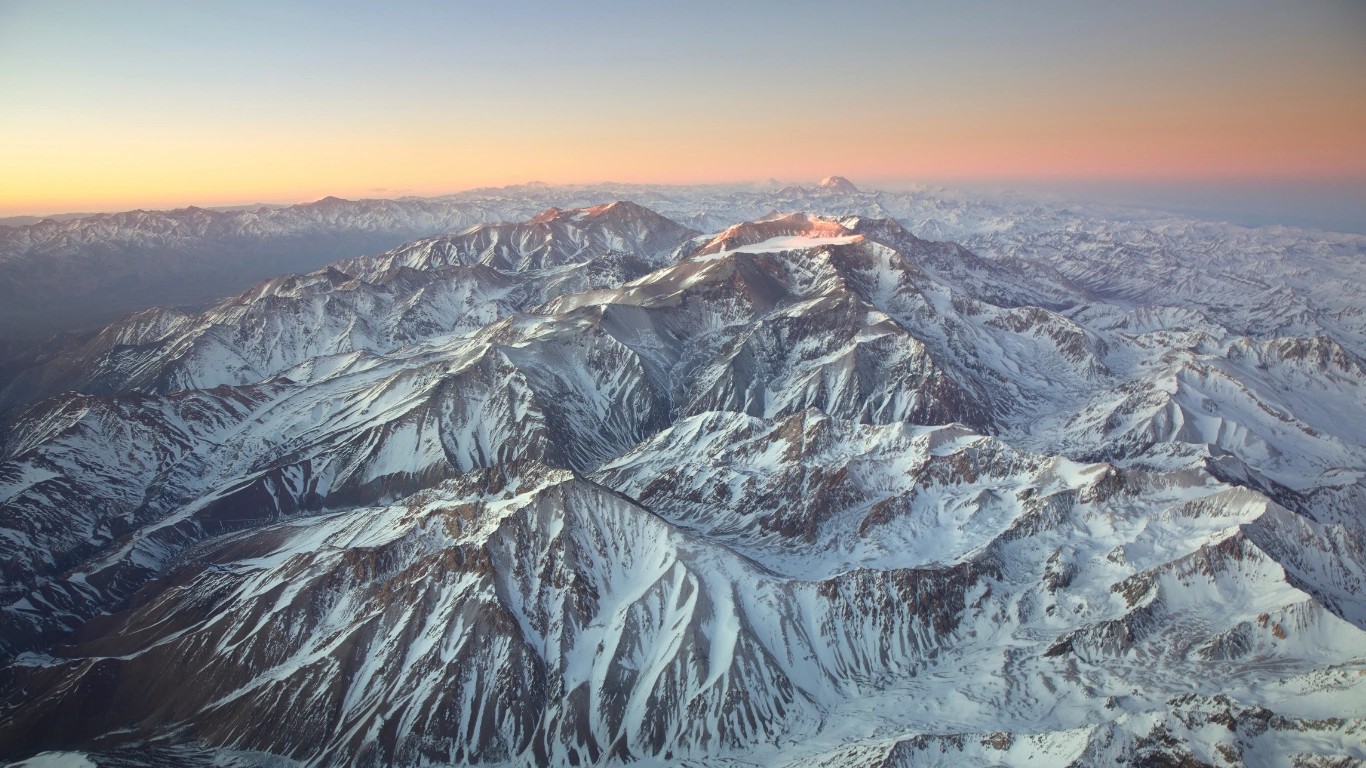
The highest mountain range in the world is the Himalayas. The longest mountain range above sea level is the Andes. These are two different mountain ranges on two different continents — and the question assumes incorrectly that the longest is also the highest.
Here is the honest breakdown:
The Himalayas contain 9 of the 10 highest mountains on earth. The Andes are more than twice as long as the Himalayas. Both ranges are still actively growing because they were formed by tectonic plate collisions that have not stopped.
If someone asks you "what is the longest and highest mountain range in the world," the most accurate answer is: the Himalayas are highest, the Andes are longest, and the Mid-Atlantic Ridge is technically the longest of all if you include the seafloor.
The top 10 longest mountain ranges in the world span six continents and include both above-water and underwater ranges. Here is the complete list:
| Rank | Mountain Range | Length | Location |
|---|---|---|---|
| 1 | Mid-Atlantic Ridge | 40,389 km | Atlantic Ocean (underwater) |
| 2 | Andes | 7,000 km | South America |
| 3 | Rocky Mountains | 4,800 km | North America |
| 4 | Great Dividing Range | 3,500 km | Australia |
| 5 | Transantarctic Mountains | 3,500 km | Antarctica |
| 6 | Kunlun Mountains | 3,000 km | Asia (Tibet/China) |
| 7 | Ural Mountains | 2,640 km | Russia/Kazakhstan |
| 8 | Atlas Mountains | 2,500 km | North Africa |
| 9 | Appalachian Mountains | 2,400 km | North America |
| 10 | Himalayas | 2,400 km | Asia |
The Himalayas — the highest mountain range in the world — are only the 10th longest. This is the geographic truth most people do not expect. The Himalayan range is concentrated and dramatic but relatively short compared to the long, sprawling Andes and Rockies.
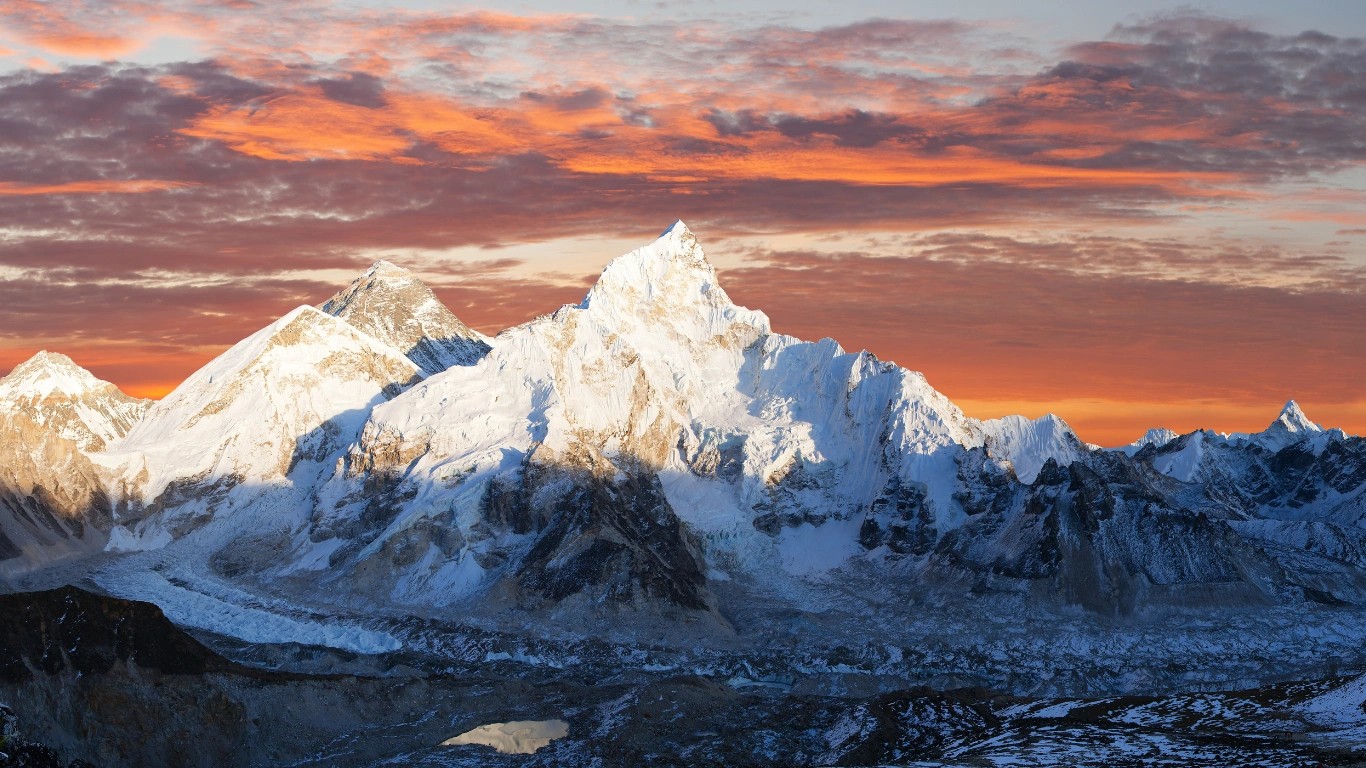
The top 10 highest mountain ranges in the world contain the planet's tallest peaks. The Himalayan range dominates this list. Here is the breakdown by maximum altitude:
| Rank | Mountain Range | Highest Peak |
|---|---|---|
| 1 | Himalayas | Mount Everest (8,848.86 m) |
| 2 | Karakoram | K2 (8,611 m) |
| 3 | Hindu Kush | Tirich Mir (7,708 m) |
| 4 | Pamir Mountains | Ismoil Somoni Peak (7,495 m) |
| 5 | Tian Shan | Jengish Chokusu (7,439 m) |
| 6 | Andes | Aconcagua (6,961 m) |
| 7 | Alaska Range | Denali (6,194 m) |
| 8 | Caucasus Mountains | Mount Elbrus (5,642 m) |
| 9 | Alps | Mont Blanc (4,809 m) |
| 10 | Atlas Mountains | Toubkal (4,167 m) |
The Himalayas, Karakoram, Hindu Kush, Pamirs, and Tian Shan all sit in Central Asia and were all formed by the same Indian-Eurasian plate collision. This region — called the "Greater Himalaya" by geologists — contains every mountain above 7,000 m on earth.
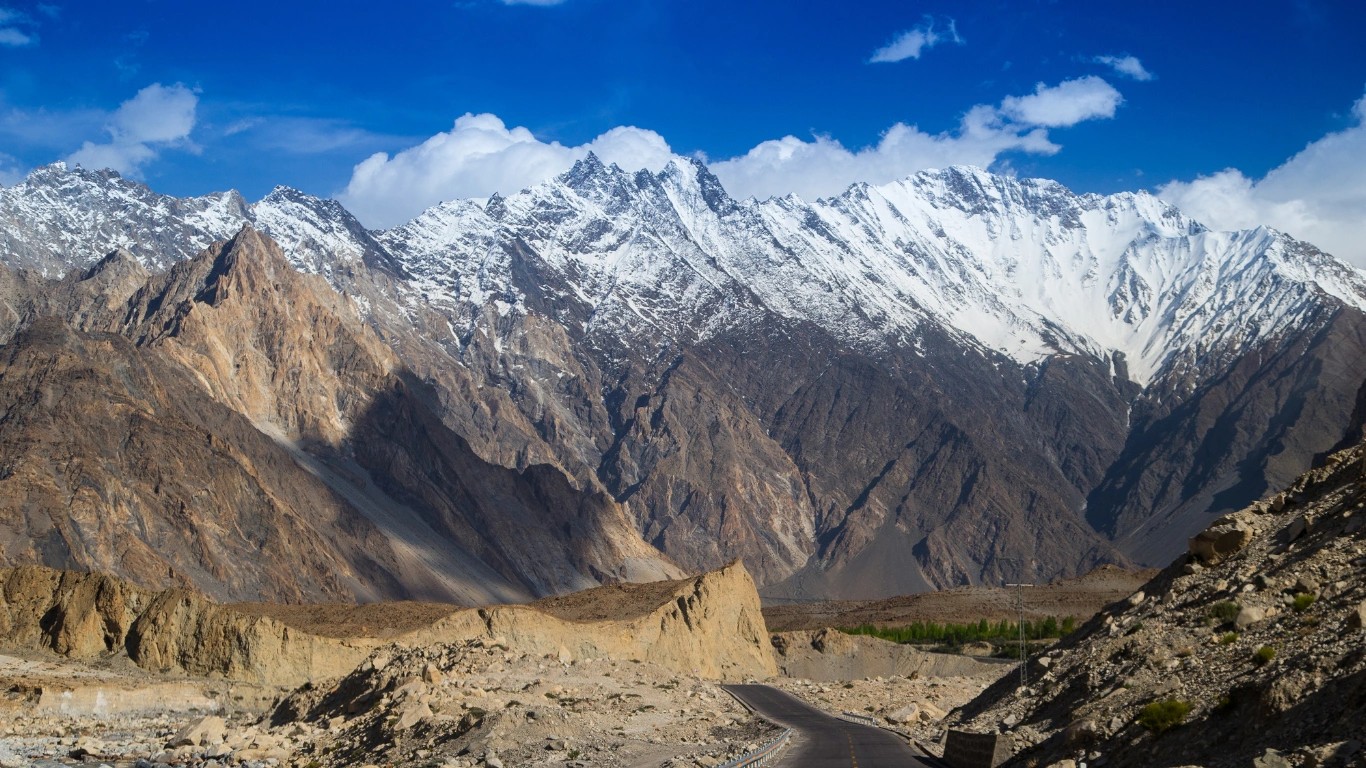
The 2nd highest mountain range in the world is the Karakoram, located on the Pakistan-China border. The Karakoram's highest peak is K2 at 8,611 m — the world's second highest mountain after Everest.
What makes the Karakoram different from the Himalayas:
The Karakoram is often confused with the Himalayas because they are next to each other and share similar climbing culture. Geologically and politically they are separate ranges. Many of the world's most extreme climbers prefer K2 over Everest because it requires technical skill, not just altitude tolerance.
The 2nd longest mountain range above sea level in the world is the Rocky Mountains, stretching approximately 4,800 km across North America. The Rockies cross Canada and the United States from British Columbia to New Mexico.
If you include underwater mountain ranges, the rankings shift:
Most people use "longest mountain range" to mean above-water ranges visible on a map. By that standard, the 2nd longest mountain range is the Rocky Mountains. The Rockies are also significantly older than the Himalayas — formed approximately 80 million years ago compared to the Himalayas at 50 million years.
The Andes Mountains are the longest mountain range above sea level in the world, stretching 7,000 km along the western edge of South America. The range crosses seven countries — Venezuela, Colombia, Ecuador, Peru, Bolivia, Chile, and Argentina — making it one of the most internationally shared mountain ranges on earth.
Key facts about the Andes:
The Andes are unusual among mountain ranges because they are continuously connected from north to south — you can theoretically walk the entire 7,000 km along the spine of the range. Few have done it. The complete Andes traverse remains one of the great unfinished trekking goals in the world.
The Andes also host some of the world's most iconic high-altitude destinations: Machu Picchu in Peru, Salar de Uyuni in Bolivia, Patagonia in Chile and Argentina, and the Atacama Desert at high altitude. The range's biodiversity is staggering — from tropical Amazonian foothills to glaciated peaks within the same country.
Despite the length, the Andes do not match the Himalayas for sheer altitude. Only one Andean peak (Aconcagua) exceeds 6,900 m, while the Himalayas contain 9 peaks above 8,000 m.
The Himalayas are the highest mountain range in the world. The range contains 9 of the 10 tallest mountains on earth and includes every peak above 8,000 m except K2 (which sits in the neighboring Karakoram range).
Key facts about the Himalayas:
The Himalayas matter geographically because they create the climate of South Asia. The range blocks monsoon winds, defines river systems (Ganges, Indus, Brahmaputra, Mekong, Yangtze, Yellow), and creates the highest plateau on earth (the Tibetan Plateau) just north of the range.
Nepal alone contains 8 of the 14 mountains above 8,000 m on earth:
This concentration of extreme altitude in a single country is unmatched anywhere on earth. Pakistan and China share the remaining 8,000 m peaks (K2, Nanga Parbat, Gasherbrum I, Broad Peak, Gasherbrum II, Shishapangma).
After 10+ years guiding the Himalayas, Majestic Trails Nepal can confirm what every trekker discovers within their first week — the Himalayas do not behave like other mountain ranges. The scale is incomprehensible until you stand inside it. The first time a trekker reaches Poon Hill (3,210 m) and sees Dhaulagiri, Annapurna South, and Machhapuchhre rising 5,000 m higher than where they stand, the relationship to mountains changes permanently.
The Mid-Atlantic Ridge is the longest mountain range on earth — 40,389 km long, stretching from the Arctic Ocean to the southern tip of Africa. Most people do not know it exists because it is almost entirely underwater.
Key facts about the Mid-Atlantic Ridge:
The Mid-Atlantic Ridge runs down the center of the Atlantic Ocean from north to south. Iceland is the most famous place where the ridge breaks the ocean surface. The Azores, Ascension Island, Tristan da Cunha, and Bouvet Island are other parts of the ridge that surface as islands.
If you count underwater terrain, the Mid-Atlantic Ridge is unambiguously the longest mountain range on earth. If you only count above-water ranges visible on a map, the Andes win. Most search engines and reference sources accept the Andes as the answer because most people think of mountain ranges as land-based.
Geologically, the Mid-Atlantic Ridge is also the most active mountain range on earth. New rock forms there continuously as the plates separate.
The Himalayan-Karakoram-Hindu Kush system has the largest mountainous area of any range on earth — approximately 4.3 million square kilometers when you include all connected sub-ranges. The Andes, despite being longer, are narrower and cover approximately 3.4 million square kilometers in total area.
By single-range area calculations:
This is why searches for "longest and highest mountain range in the world by area" return slightly different answers depending on the source. The Andes are longest as a single range. The Greater Himalayan System covers the largest total area as a connected mountainous region.
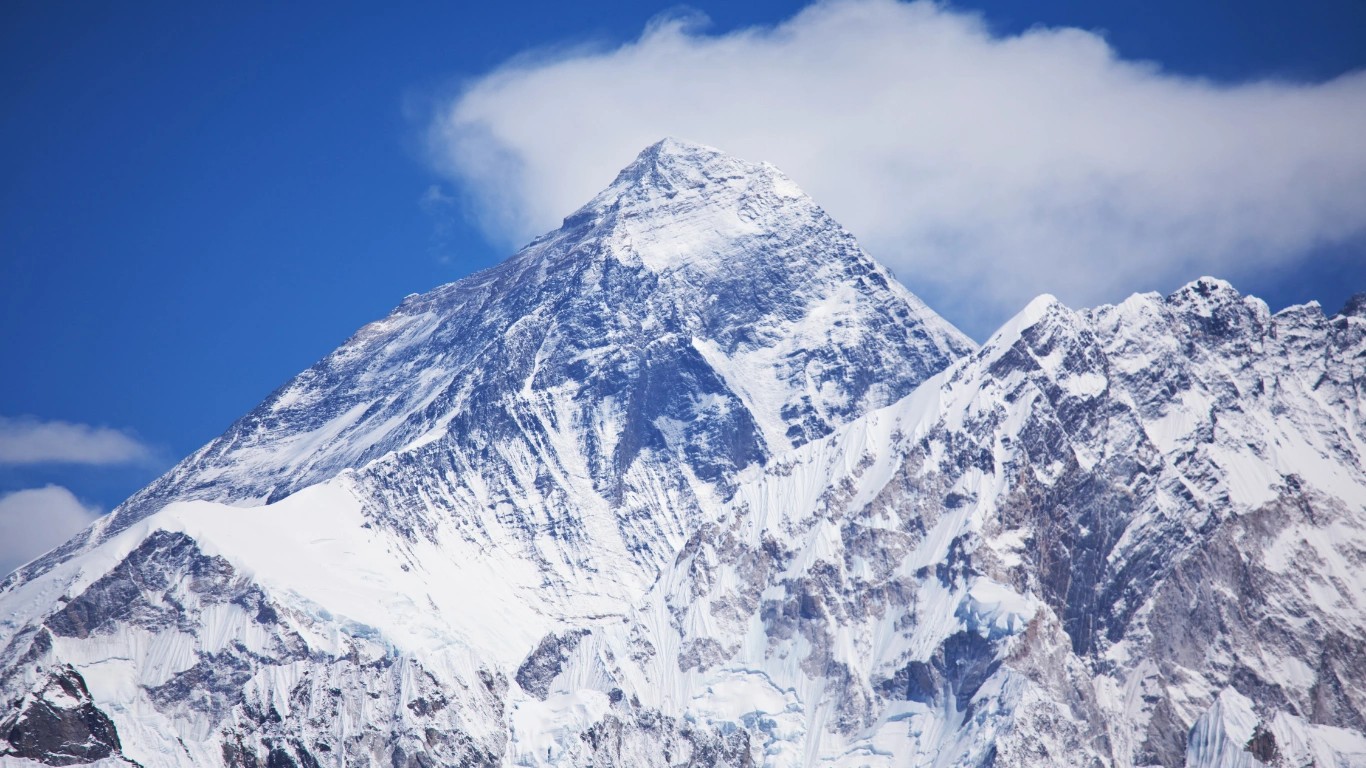
The top 10 highest mountains in the world all sit above 8,000 m and all lie within the Himalayan or Karakoram ranges in Asia. Here is the complete list:
| Rank | Mountain | Height |
|---|---|---|
| 1 | Mount Everest | 8,848.86 m |
| 2 | K2 | 8,611 m |
| 3 | Kangchenjunga | 8,586 m |
| 4 | Lhotse | 8,516 m |
| 5 | Makalu | 8,485 m |
| 6 | Cho Oyu | 8,188 m |
| 7 | Dhaulagiri I | 8,167 m |
| 8 | Manaslu | 8,163 m |
| 9 | Nanga Parbat | 8,126 m |
| 10 | Annapurna I | 8,091 m |
The 6th highest mountain in the world is Cho Oyu at 8,188 m, located on the Nepal-Tibet border. Cho Oyu is generally considered the easiest 8,000 m peak to climb. Many climbers attempting their first 8,000 m peak choose Cho Oyu as preparation for Everest.
The 7 highest mountains in the world are Everest, K2, Kangchenjunga, Lhotse, Makalu, Cho Oyu, and Dhaulagiri I — all above 8,160 m.
8 of the 10 highest mountains in the world lie wholly or partially in Nepal. This is why Nepal is considered the world's premier mountain trekking destination.
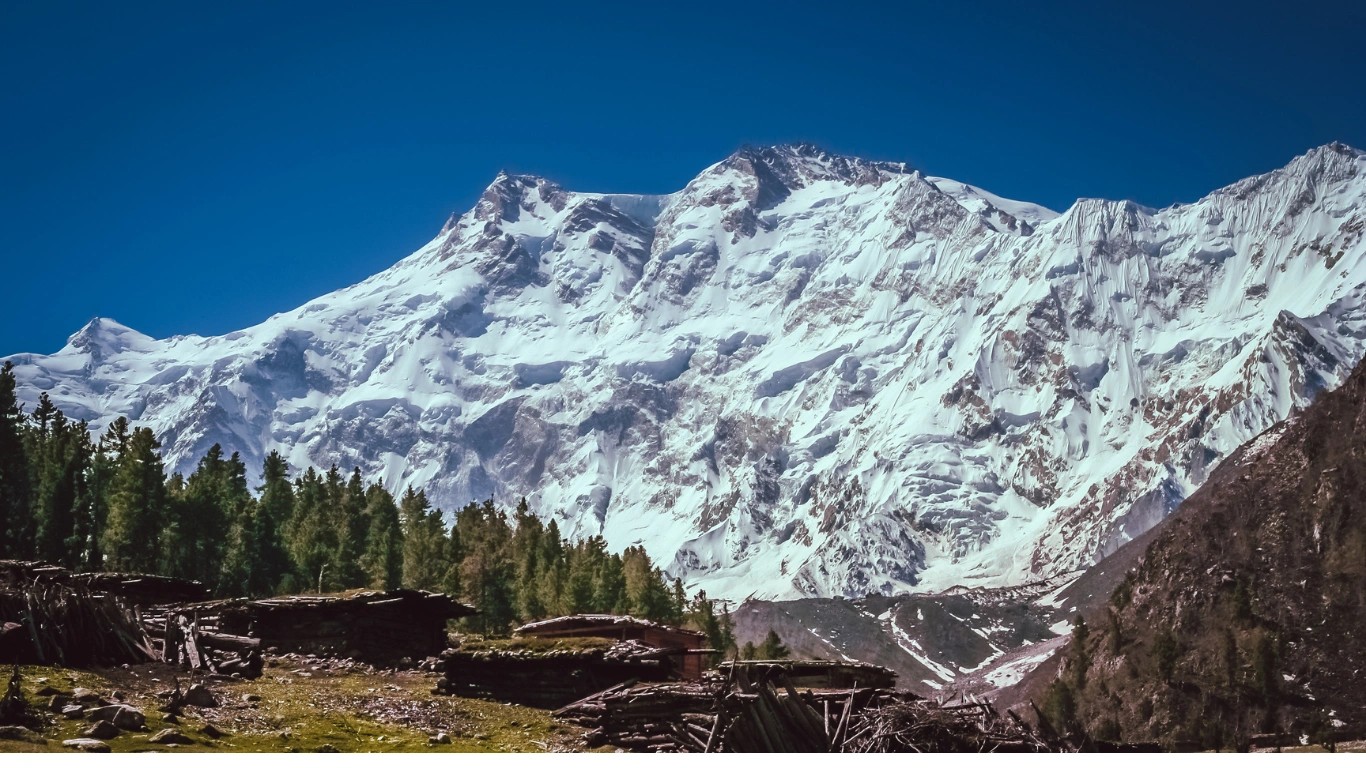
Nanga Parbat is called the Killer Mountain. It is the world's 9th highest mountain at 8,126 m, located in the Western Himalayas in Pakistan. Nanga Parbat earned this nickname because of its extremely high fatality rate during early climbing attempts and its still-significant climbing dangers.
These deadly statistics apply only to mountaineering expeditions attempting to summit the peaks. Trekking to base camp is completely safe. Annapurna I summit attempts have a 32% fatality rate, but the Annapurna Base Camp Trek to 4,130 m has recorded zero serious altitude sickness incidents in 10+ years of Majestic Trails Nepal guiding.
When you hear "Annapurna is the deadliest mountain in the world," that refers to climbers attempting the 8,091 m summit — not the trekkers reaching base camp far below. The two activities share the name but nothing else.
For travelers and trekkers deciding which mountain range to visit, here is the honest side-by-side comparison:
| Factor | Andes | Himalayas |
|---|---|---|
| Length | ~7,000 km | ~2,400 km |
| Highest Peak | Aconcagua (6,961m) | Mount Everest (8,848.86m) |
| 8,000m Peaks | 0 | 9 |
| Best for Long Expedition | Better (full traverse possible) | Limited |
| Best for High-altitude Trekking | Technical + wild | Best in the world |
| Most Famous Destinations | Machu Picchu, Patagonia | Everest and Annapurna Base Camp |
| Culture | Inca / Quechua | Sherpa / Tibetan / Hindu |
| Best Country to Start | Peru | Nepal |
Both ranges deliver world-class trekking and cultural experiences. The Andes win on length and biodiversity. The Himalayas win on altitude and the sheer scale of high mountain visible from a single point.
Both the Andes and the Himalayas were formed by plate tectonics — but through completely different mechanisms that explain why each range has the characteristics it does today.
The Himalayas were formed when the Indian tectonic plate collided with the Eurasian plate approximately 50 million years ago. India is still moving north at approximately 5 cm per year. This collision continues, which is why the Himalayas are still growing — by approximately 5 mm per year vertically.
The collision crushes both plates together, forcing the rock upward. This is why the Himalayas are concentrated, dramatic, and extremely high — they have nowhere to spread.
The Andes were formed when the Nazca Plate (oceanic) was pushed beneath the South American Plate (continental). This is a subduction zone — the oceanic plate slides under the continental plate, melts in the mantle, and creates volcanoes that build up over millions of years.
This is why the Andes are long and contain volcanoes (Cotopaxi, Chimborazo) while the Himalayas are short and have no active volcanism. The Andes also still grow but more slowly than the Himalayas — about 1-2 cm per year.
Unlike the Andes and Himalayas which were built by plates pushing together, the Mid-Atlantic Ridge is built by plates pulling apart. New rock erupts from the mantle continuously where the North American and Eurasian plates separate at 2.5 cm per year.
Three different tectonic mechanisms. Three different mountain ranges. All still actively forming today.
The Himalayas are the world's premier mountain trekking destination. The Andes are second — phenomenal in their own way but harder to access for serious high-altitude trekking. Below is the honest comparison for travelers deciding where to trek.
Nepal has built one of the most sophisticated trekking infrastructures on earth. Teahouses, licensed guides, established permits, helicopter rescue, and decades of experience handling international trekkers. The Andes are more fragmented across seven countries with varying levels of trekking infrastructure. Peru and Argentina are excellent. Other Andean countries are still developing.
For first-time international trekkers, the Himalayas in Nepal offer the strongest combination of altitude, scenery, infrastructure, cost, and accessibility.
Nepal contains 8 of the 14 mountains above 8,000 m on earth. This is the highest concentration of extreme altitude in any country, anywhere. If you want to trek the world's highest mountain range, Nepal is where you go.
The Himalayas in Nepal offer the rare combination of extreme altitude AND accessibility. You can stand below Everest or Annapurna I within 14 days of arriving in Kathmandu — at a cost that the Andes simply cannot match.
→ View our Best Treks in Nepal — complete operator guide
→ View our 14-day Everest Base Camp Trek package
The highest mountain range in the world is the Himalayas with Mount Everest at 8,848.86 m. The longest mountain range above sea level is the Andes at 7,000 km along South America. These are two different mountain ranges. The Mid-Atlantic Ridge is technically the longest of all at 40,389 km but is mostly underwater.
The 2nd highest mountain range in the world is the Karakoram, located on the Pakistan-China border. The Karakoram contains K2 (8,611 m) — the world's second highest mountain — plus three other peaks above 8,000 m: Gasherbrum I, Broad Peak, and Gasherbrum II.
The 2nd longest mountain range above sea level is the Rocky Mountains at 4,800 km across North America from Canada to New Mexico. If you include underwater ranges, the 2nd longest is the Andes at 7,000 km — with the Mid-Atlantic Ridge in first place at 40,389 km.
The top 10 longest mountain ranges by length are: Mid-Atlantic Ridge, Andes, Rocky Mountains, Great Dividing Range, Transantarctic Mountains, Kunlun Mountains, Ural Mountains, Atlas Mountains, Appalachian Mountains, and Himalayas. By altitude the top 10 are: Himalayas, Karakoram, Hindu Kush, Pamirs, Tian Shan, Andes, Alaska Range, Caucasus, Atlas, and Alps.
Nanga Parbat is called the Killer Mountain. Located in the Western Himalayas in Pakistan at 8,126 m, the mountain killed 31 climbers between 1895 and 1953 before the first successful ascent. K2 is called the "Savage Mountain" and Annapurna I has the highest fatality rate of any 8,000 m peak at approximately 32%.
The 6th highest mountain in the world is Cho Oyu at 8,188 m, located on the Nepal-Tibet border. Cho Oyu is widely considered the easiest 8,000 m peak to climb and is often chosen by climbers attempting their first 8,000 m summit.
The longest single mountain is Mauna Loa in Hawaii at 5,271 m above the ocean floor and 4,170 m above sea level. Measured from the seafloor, Mauna Loa is taller than Mount Everest. As a mountain range, the Andes are longest above water at 7,000 km.
Yes, the Himalayas are the world's most developed trekking destination. Nepal offers established routes including Everest Base Camp (14 days), Annapurna Base Camp (14 days), Annapurna Circuit (14-21 days), and Manaslu Circuit (15 days). All major routes have teahouse accommodation, licensed guides, and required permits available year-round.
The Himalayas are taller than the Andes by approximately 1,888 m at their highest peaks. Mount Everest in the Himalayas reaches 8,858.86 m. Aconcagua in the Andes — the highest Andean peak — reaches only 6,961 m. The Himalayas contain 9 peaks above 8,000 m. The Andes contain zero peaks above 7,000 m.
The Himalayan range extends across five countries — Pakistan, India, Nepal, China (Tibet), and Bhutan — over a length of approximately 2,400 km. The western end is the Nanga Parbat area in Pakistan. The eastern end is Namcha Barwa in Tibet near the Burmese border. The range is bordered by the Karakoram to the northwest and the Hindu Kush further west.
The longest and highest mountain range in the world is two different mountain ranges. The Andes are longest at 7,000 km. The Himalayas are highest with 9 of the 10 tallest peaks on earth. The Mid-Atlantic Ridge is technically the longest of all but lies underwater. The Karakoram is second highest. The Rocky Mountains are second longest above sea level. The Killer Mountain is Nanga Parbat in the Western Himalayas.
These are the geographic facts. The more interesting truth is what they mean for travelers.
The Andes are wild and long. You can spend a lifetime exploring them. The Himalayas are short by comparison but stand higher than anything else on earth — and they are accessible to ordinary trekkers in ways that no other mountain range in the world is. You can fly into Kathmandu on a Monday and stand at the base of the world's tallest mountain 12 days later. No other 8,000 m mountain on earth offers this.
At Majestic Trails Nepal, we have spent 10+ years guiding trekkers through the highest mountain range in the world. We have watched first-time visitors stop dead on the trail when they realize what they are looking at. We have watched returning trekkers come back five and six times because the Himalayas pull on something the rest of the world does not. We have watched a 70-year-old reach Everest Base Camp because the right preparation matters more than age in this range.
The longest mountain range in the world is the Andes. The highest is the Himalayas. The only one you can stand inside this year — and feel small in a way nothing else can make you feel — is the Himalayas.
→ View our 14-day Everest Base Camp Trek — stand at the base of the world's highest mountain
→ View our 14-day Annapurna Base Camp Trek — the most accessible Himalayan base camp experience
→ Read our Top 10 Best Treks in Nepal — complete operator guide for 2026
→ Contact our trek planning team — we respond within 24 hours
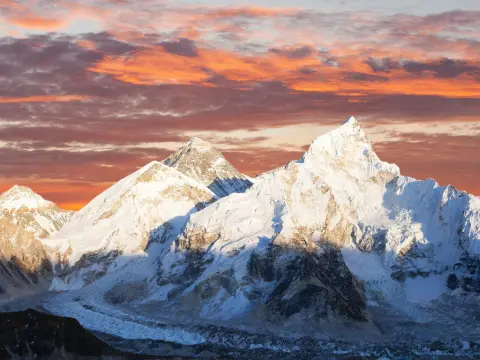
Nepal is a country defined by mountains. Stretching across the country’s northern edge, the Himalayas pack Earth’s highest peaks into one nation. Eigh...

Nepal is a land where nature paints its most spectacular masterpieces. From the towering peaks of the Himalayas to serene alpine lakes, dense jungles...
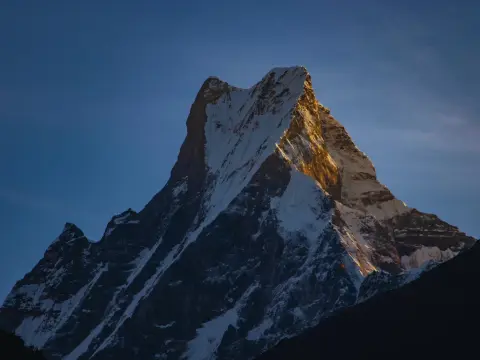
Macchapuchre stands as one of the most iconic and mysterious peaks in the entire Himalayan range. Also commonly spelled Machhapuchhre, this magnificen...
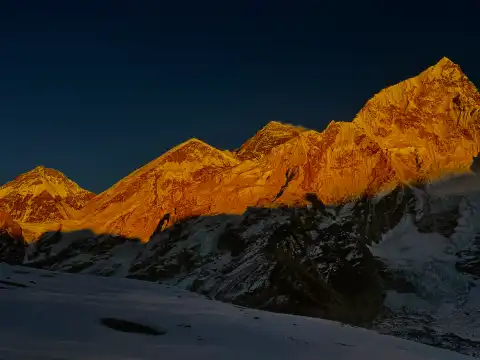
Kalapathar stands at 5,545 meters (18,192 feet) as the highest accessible viewpoint on the Everest Base Camp trek and arguably the most spectacular pa...
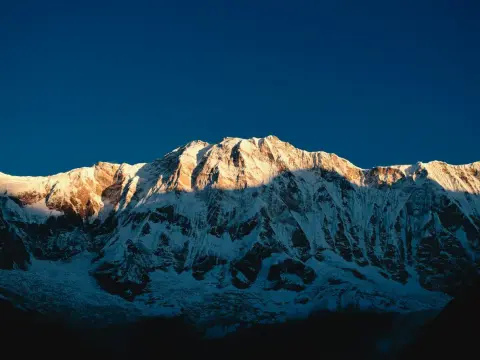
Annapurna I is the 10th highest mountain in the world. It is located in the country of Nepal, in Asia. It was the first mountain above 8,000 meters to...
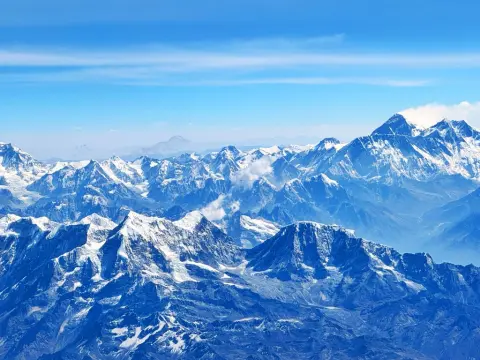
The Himalayan mountain range spans Nepal, Bhutan, India, and China. It also crosses Pakistan, making it a five-country range in total. The Himalayas s...
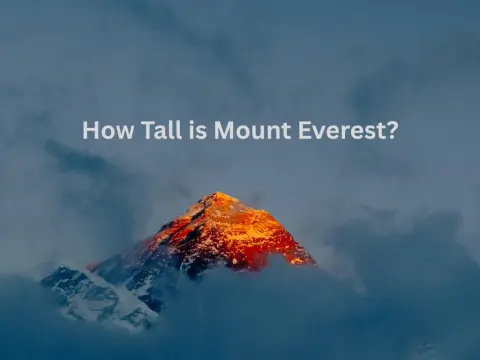
Mount Everest is 8,848.86 meters tall. That is 29,031.7 feet, or roughly 5.5 miles straight up from the ocean's average surface. Nepal and China joint...
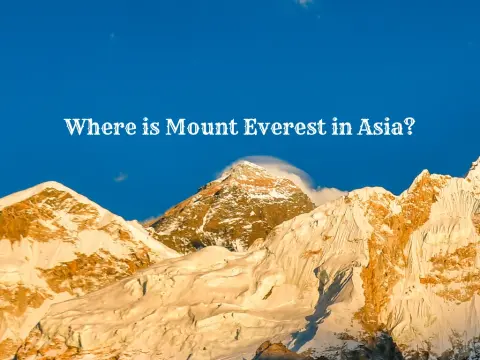
Mount Everest sits on the border between Nepal and the Tibet Autonomous Region of China, deep within the eastern Himalayas of South Asia. It is the hi...
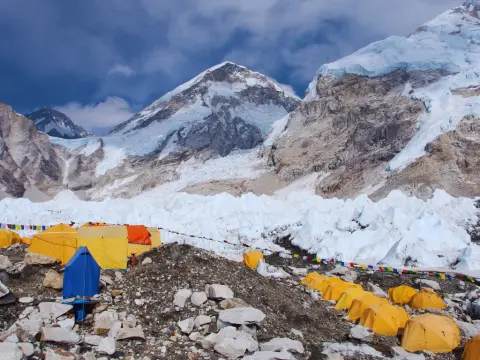
Everest Base Camp in Nepal sits at 5,364 meters above sea level, which converts to 17,598 feet. That is the number you will find on official trekking...
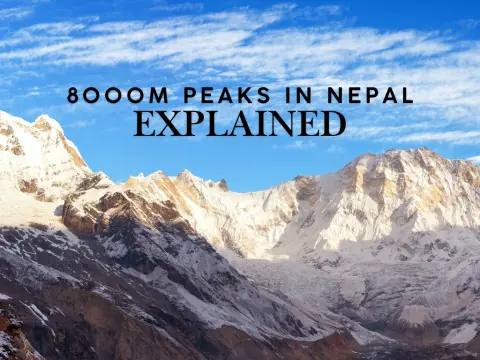
Nepal is home to 14 peaks over 8,000 meters. This includes all 8 internationally recognized eight-thousanders and 6 additional summits officially adde...
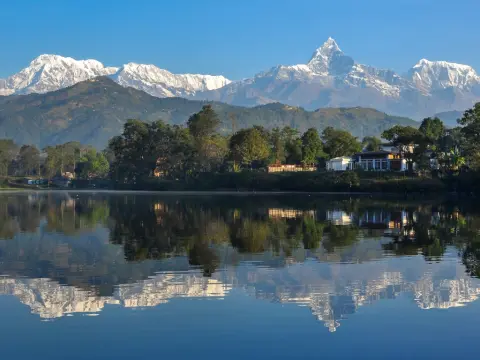
Annapurna is a section of the Nepal Himalayas containing 6 prominent peaks above 7,200 m and 15 peaks above 7,000 m, anchored by Annapurna I at 8,091...
