
Best Time to Trek in Nepal
17 Jan 2026
Let's cut straight to it. Autumn, specifically September through November, is the best time to trek in Nepal. Spring runs a very close second, coverin...


Spring in Nepal is a season of renewal, a time when the Himalayas awaken from their winter slumber, painting the landscape with vibrant hues and offering unparalleled trekking experiences. As the snow recedes and the air clears, this period, from March to May, transforms the entire nation of Nepal into a heaven for trekkers from all around the world, as the melting of the ice and the clearing of the skies make it the perfect time to venture into this land of breathtaking beauty. This article is your ultimate guide to the wonders of Spring trekking in Nepal. And if you’re ready to experience it hassle-free, Majestic Trails Nepal can help plan your perfect Spring adventure with expert guides, permits, and personalized itineraries.
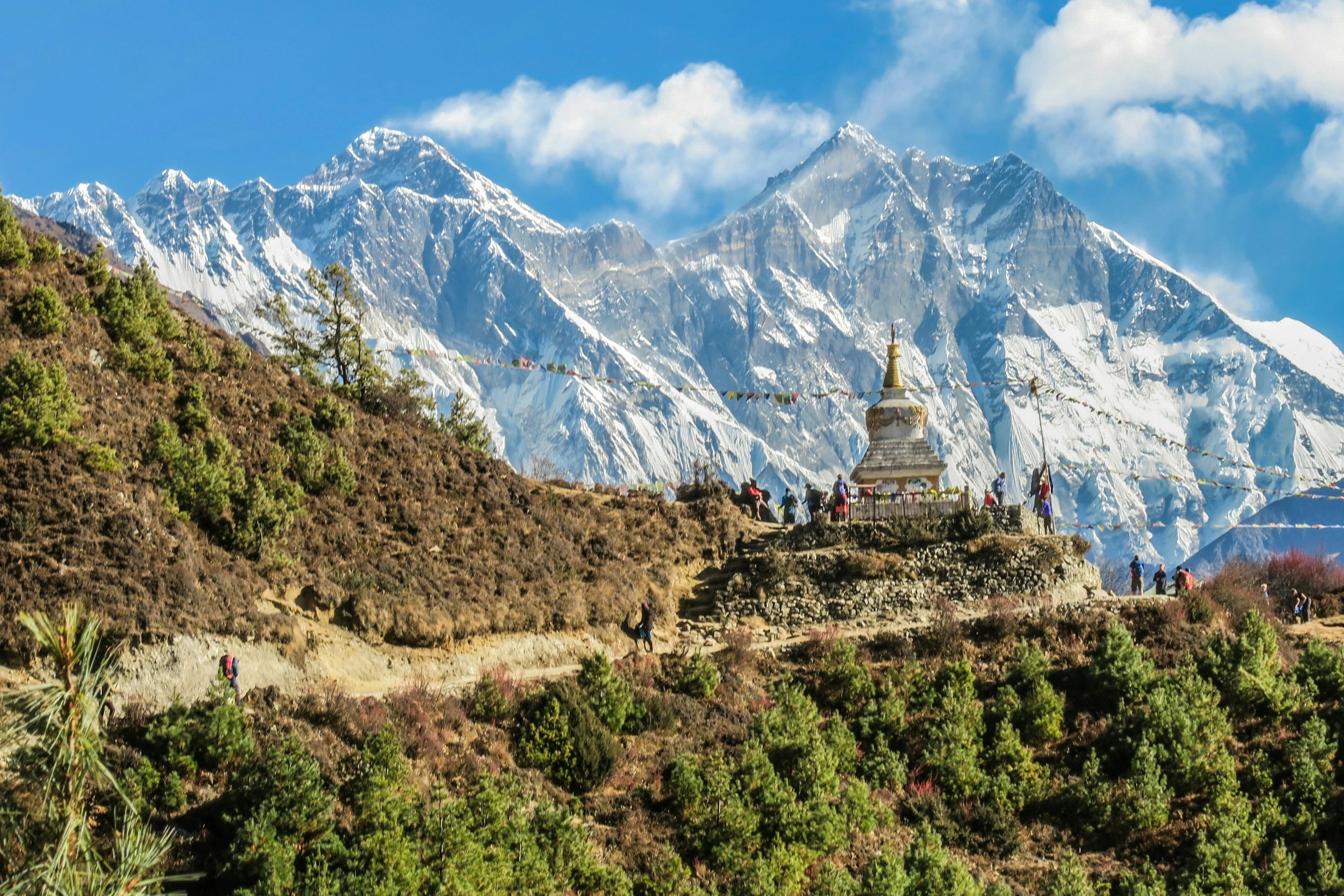
There is much to the appeal of the Himalayas during Spring that attracts trekkers from around the world. It is a time of extreme change in the environment. This is when the cold of winter is remembered only as the comfortable milder temperatures, making the treks less challenging. For those who wish to see the sights of the Himalayas, the blue skies of Spring are unparalleled compared to the hazy weather of the other seasons when the sun's rays hit the atmosphere after the cold weather. The grandeur and majesty of the Mountain ranges become exposed, offering spectacular views that are both breathtaking and humbling. This is the time when the entire environment of Nepal, the entry point to the mighty ranges, becomes electric with the fervor and energy of the impending adventure.
This ultimate resource aims to provide you with all the necessary information to complete your trekking adventure through the wonders of Spring in the mighty country of Nepal. We will enter the climatic favor of the season and experience the spectacular sight of nature’s renewal with the blooming vegetation, and highlight the richness of the culture of this amazing place during the spring season.
It should help you to find the best-suited trek to match your ambition and learn the necessary details about the budget and details to understand the early, middle, and late spring seasons comprehensively. We will also highlight the top trekking experiences through the snow-capped Himalayas, ranging from the famous Everest Base Camp trek to less-explored routes, and learn why and when they should occur during the spring season.
We also provide you with the top tips for preparation during the spring season to help you prepare for your adventure into the heart of the Mountains.
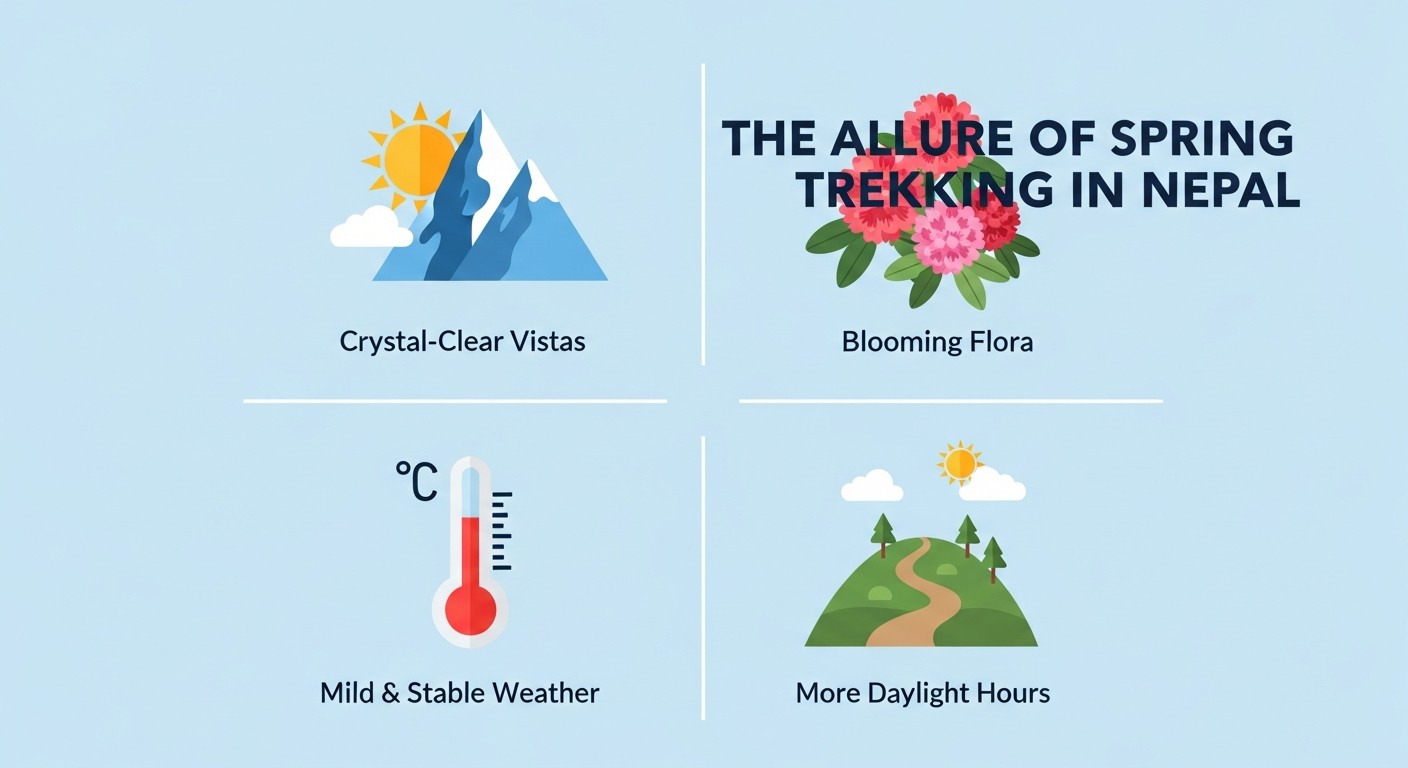
Spring offers a perfect convergence of ideal trekking conditions in the Himalayas.
Spring brings a special kind of magic to Nepal, which further adds to the breathtaking beauty of the Himalayas and makes this region a colorful and living tapestry of life and color. It is the combination of the environmental and cultural festivities of the season that makes spring the most preferred time for trekking. The Himalayas appear clear and distinct against the blue sky, and the lower regions teem with life.
Spring is one of the key seasons for trekking in Nepal due to its stable weather. Temperatures start to warm up after a cold winter, and daytime highs are pleasant, considered perfect for walking. During normal circumstances, temperatures can rise from 10°C to 20°C during the day in the low to mid-altitude parts of the famous Everest region or the Annapurna region. Of course, if you head upwards to the higher elevations, like Base Camps, the temperatures will be cooler, ranging from 0°C to 10°C during the day and below freezing during the night. Most importantly, spring enjoys low precipitation and minimal cloud cover, which essentially gives you what many travelers crave: crystal-clear skies that provide breathtaking panoramic views of the mountains.
The Himalayas, in spring, become a riot of colors because of the profusion of rhododendrons and other wildflowers that bloom together. As the snow melts, the hillsides get converted into brilliant red, pink, purple, and white carpets. Though the rhododendron, being the national flower of Nepal, is very common throughout, its density in the Annapurna region turns whole forests into a sight to see. Treks like the Annapurna Base Camp Trek become especially famous for this phenomenon because they offer a trekker the unique experience of walking through the rhododendron forests in bloom. Besides rhododendrons, many alpine flowers pop out to further beautify the trails and provide a dramatic contrast to the stark, snow-capped mountains.
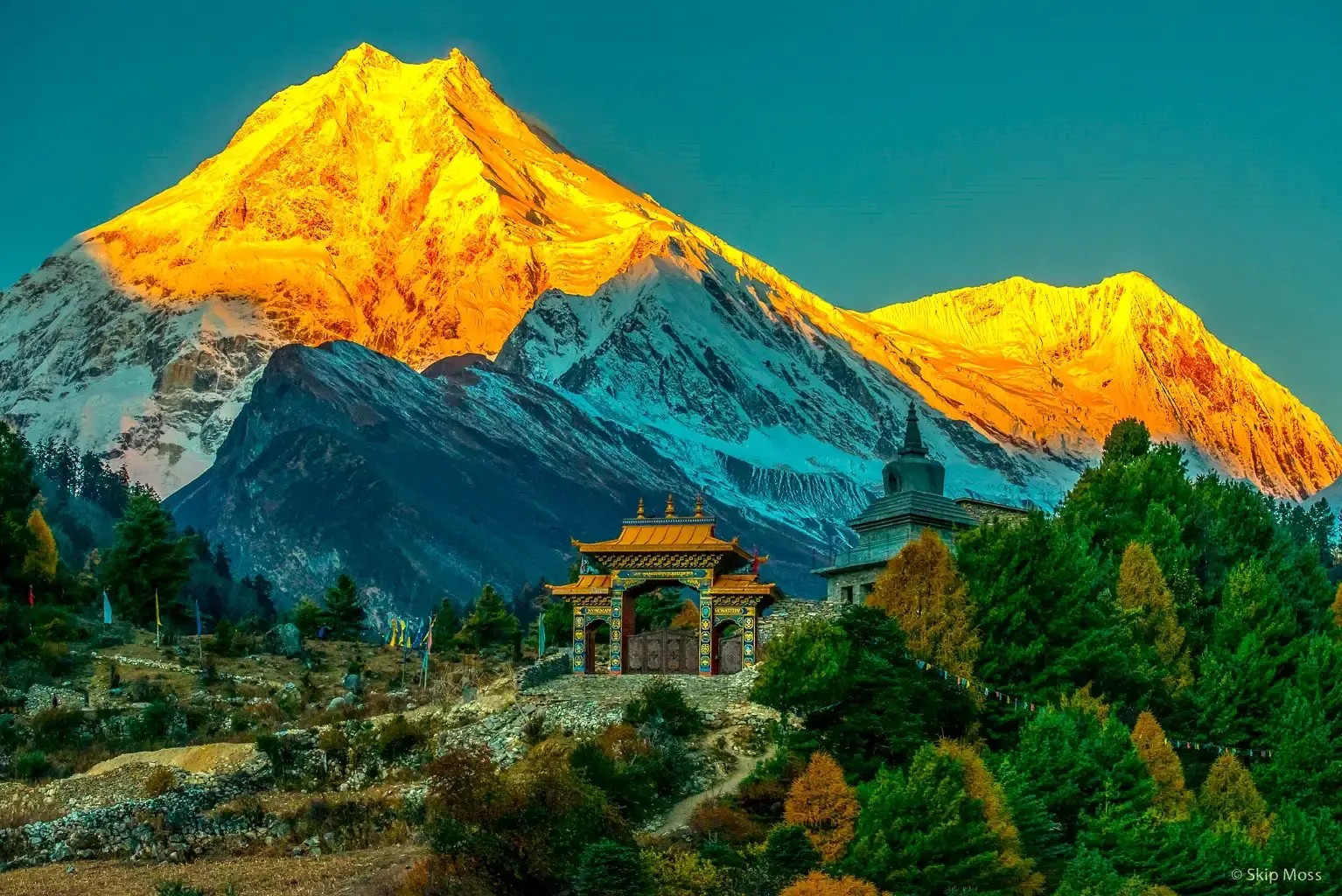
The blue skies of Spring enable one to experience the beauty of the Himalayan ranges without any obstruction. The clear skies ensure that one can see the Himalayan peaks, including Everest, Annapurna, and Manaslu, in their clear forms. This becomes even more true during the early morning and late afternoon hours, as the rays of the setting or rising sun touch these snow-capped mountains. In short, the clear skies of Spring are one of the best features of trekking during this season, and the primary attraction for trekking enthusiasts who want to explore the highest mountains in the world, including Everest and Annapurna, remains the spectacular sights offered to them.
Spring in Nepal is also a period of rich cultural festivities, with many Festivals being celebrated in March, April, and May. These festivals present trekkers with the exciting opportunity to witness the diverse cultural heritage of Nepal. Some of the most celebrated Festivals in Nepal include Holi, the Festival of Colors, which typically falls in March. Following Holi celebrations, the Bisket Jatra in Bhaktapur and the Ghode Jatra in Kathmandu introduce trekkers to the ages-old traditions of the people. Then comes Buddha Jayanti, the celebration of the birth of Lord Buddha, in the later phases of spring, which is marked with deep reverence. Participation in the Festivals imbues treks with depth, allowing trekkers to interact with the locals and get an insight into the merry festivities of the locals. The Festivals and lively events in Nepal bring vibrancy to the serenity of the majestic Himalayas.
In addition to the natural attractions and diversity, Spring is also a favorable season for trekking in Nepal. The snowfalls of Winter have already cleared from trekking trails, so trekkers can expect more favorable conditions without the fear of meeting impassable snow barriers on their trails. Though some of the higher trails can still have some snow cover, trails like the Everest Base Camp Trek and the Annapurna Base Camp Trek will be more favorable and clearer. Also, most of the teahouses and trekking lodges in trekking trails are in operation, which is essential for the basic needs of trekkers like food and stay. This season has an active support system that is adequate for dealing with the heavy flow of trekkers.
Selecting the right trek is crucial for a fulfilling Spring adventure in Nepal. The vast array of options, from iconic expeditions to serene valleys, means there's a journey for every type of traveler. Careful consideration of personal preferences and physical capabilities will ensure your Himalayan experience is both rewarding and safe.
When planning your Spring trek, several key factors must be considered. Duration is paramount; do you have a week, two weeks, or longer? The difficulty level is also critical. Are you looking for a challenging high-altitude expedition or a more moderate scenic walk? Finally, consider your desired experience: do you prioritize breathtaking mountain views, cultural immersion, or a combination of both? For instance, the Everest Base Camp Trek is a longer, more challenging undertaking focused on iconic Himalayan grandeur, while the Ghorepani Poon Hill Trek offers stunning views in a shorter, more accessible timeframe. The Manaslu Circuit Trek, while more challenging, offers a more off-the-beaten-path experience with rich cultural encounters.
There are numerous options for trekking in Nepal. These include scenic treks, which are those that allow for the breathtaking views of nature without necessarily having to incur strenuous efforts. They tend to have lower altitudes. Then there are those that are considered as moderate, such as the Annapurna Base Camp Trek and the Langtang Valley Trek, ideal for those wanting to incur greater challenges, and with these comes higher altitude, thus providing breathtaking views of the mountains. There are expeditions that tend to need quite considerable levels of fitness. These tend to be arduous. They also give great views of nature because they tend to take you right inside the Himalayas. Then there is a trek that tends to provide a totally new style of trek. This is because it focuses on a particular arid region that tends to uphold the Tibetan Upper Mustang Trek.
Budgeting for a Spring trek in Nepal involves several components. Costs typically include international flights, visa fees, travel insurance, permits, guide and porter services, accommodation, food, and personal expenses. Spring is a popular season, so prices for flights and accommodation might be slightly higher than in the other seasons. A moderate budget for a 10-14 days trek like Annapurna Base Camp can range from USD 1000 to USD 1500 per person, excluding international flights. This generally covers essential services. For more remote or specialized treks like the Manaslu Circuit or Upper Mustang, costs can be higher due to permit requirements and logistics. It's advisable to factor in an additional buffer for unforeseen expenses and tips for guides and porters, who are vital to a safe and enjoyable trek.
While the entire Spring season is excellent for trekking in Nepal, each month offers slightly different experiences.
Spring offers a revitalized Himalayan landscape, making it an ideal time for a wide array of treks. From iconic routes to hidden gems, each promises a unique encounter with Nepal's natural and cultural wonders.
The Everest Base Camp Trek is perhaps the most famous trek in Nepal, and Spring is an optimal time to undertake this epic journey. The temperatures are moderate, and the skies are exceptionally clear, providing breathtaking mountain views of Everest and its surrounding peaks. The trek typically takes around 12-14 days, offering a challenging yet immensely rewarding experience for trekkers. The Sherpa villages, the unique culture, and the sheer scale of the Mountains make this trek an unforgettable adventure.
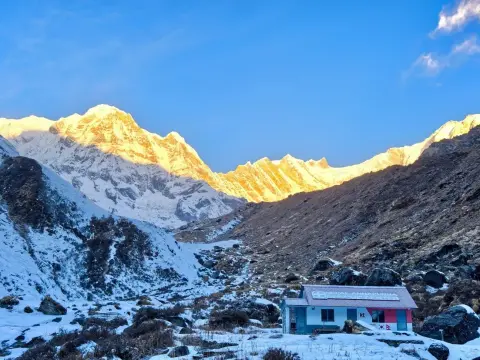
The Annapurna Base Camp Trek is renowned for its stunning scenery and, in Spring, its spectacular blooming rhododendrons. This easy-to-moderate trek typically lasts 7-11 days and takes you into the heart of the Annapurna sanctuary, surrounded by towering mountains. Walking through forests carpeted with vibrant rhododendrons in full bloom is a unique highlight of this trek during March and April. The Base Camp itself offers an amphitheater of magnificent peaks, including Annapurna South, Machhapuchhre (Fishtail), Annapurna 1, and Hinchuli.
The Annapurna Circuit Trek is a classic Himalayan journey, offering diverse landscapes, from subtropical valleys to high mountain passes. In Spring, the weather is ideal, with clear skies and manageable temperatures, making the crossing of Thorong La Pass (5,416m/17,769.03ft) more feasible. This longer trek, typically 12-16 days, showcases the grandeur of the Annapurna massif and offers cultural immersion in traditional Nepali villages. The blooming rhododendrons at lower elevations add an extra layer of beauty to this already magnificent trek.
The Langtang Valley Trek is a popular choice for trekkers seeking a shorter Himalayan experience closer to Kathmandu. In Spring, the valley is lush and green, and the temperatures are pleasant. This trek, usually lasting 7-10 days, offers stunning mountain views, including Langtang Lirung, and a deep dive into the unique Tamang culture. The region's natural beauty, combined with its cultural richness, makes it an attractive option for those with limited time.
For trekkers seeking a more remote and less crowded experience, the Manaslu Circuit Trek is an excellent Spring choice. This challenging trek encircles the eighth-highest mountain in the world, Manaslu, and offers incredible mountain views and a taste of authentic Nepali village life. The Spring weather is typically stable, making the crossing of Larkya La Pass (5,106m/16,751.97ft) more accessible. This trek is ideal for experienced trekkers looking for adventure away from the main tourist trails.
The Ghorepani Poon Hill Trek is perfect for those with limited time or seeking a less strenuous introduction to Himalayan trekking. This 3-5 day trek is famous for the sunrise view from Poon Hill, which offers panoramic vistas of the Annapurna ranges and the Dhaulagiri ranges. In Spring, the trails are dry, and the temperatures are comfortable, making it an enjoyable experience. The blooming rhododendrons in the surrounding forests also add to its charm. (rohodhodren forest)
The Mardi Himal Trek is a relatively newer trekking route that has gained popularity for its stunning, unobstructed views of Machhapuchhre (Fishtail) and the Annapurna range. In Spring, this trek offers excellent visibility and pleasant temperatures. It's a moderate trek, typically 5-7 days, that takes you through rhododendron forests and offers a more serene experience compared to more popular routes.
The Upper Mustang Trek offers a unique cultural and geographical experience, distinct from the lush green valleys of other regions. This trek takes you into a stark, arid landscape that resembles the Tibetan plateau. Spring is a favorable time due to the moderate temperatures and clear visibility, allowing exploration of ancient monasteries, walled cities, and unique rock formations. Special permits are required for this region, and it's generally a more expensive trek.
Successfully navigating Spring trekking in Nepal requires careful preparation, focusing on gear, acclimatization, and logistical necessities. The unique conditions of the season present both opportunities and challenges that demand specific attention to ensure a safe and enjoyable adventure.
Packing for a Spring trek in Nepal is all about layering. While days can be warm and sunny, mornings and evenings, especially at higher altitudes, can be quite cold.
Altitude sickness, or Acute Mountain Sickness (AMS), is a significant concern for trekkers in Nepal. Spring's generally mild temperatures might lead some to underestimate the risks, but proper acclimatization remains paramount.
Navigating Nepal's permit system is essential for any trek. The specific permits required depend on the trekking region.
Spring in Nepal is indeed the golden season to go for a trek as it provides an exceptional combination of the most favorable climatic conditions, spectacular natural sights, and the most memorable cultural expressions. Right from the colors of the Rhododendron flowers filling the slopes to the clear blue skies showing the breathtaking views of the Himalayan Mountains, each and every moment of the Spring trek to Nepal is meant to be an experience like no other. Your dream of visiting the Everest Base Camp, the Annapurna Sanctuary, or even the unknown routes such as the Manaslu Circuit becomes possible in Spring.
The accessibility of the trail systems, the hospitality of the local people in celebrating their Festivals, and the majesty of the surrounding landscapes are factors that come together to make for an unforgettable experience. It is important to note that proper planning, proper packing, and proper acclimatization are critical ingredients in ensuring that your Spring trekking experience in Nepal is not only safe but also successful. Your Spring trekking experience in Nepal is waiting.

Let's cut straight to it. Autumn, specifically September through November, is the best time to trek in Nepal. Spring runs a very close second, coverin...

The Langtang Valley Trek is one of Nepal’s most rewarding trekking adventures—less crowded than Everest or Annapurna, yet rich in culture, biodiversit...

Short on time but big on ambition? Nepal delivers extraordinary mountain experiences in as little as three days, and this guide breaks down exactly wh...
The Annapurna Base Camp trek stands among the world's most iconic Himalayan adventures. Every year, thousands of trekkers from across the globe journe...
