
Group Departure Trekking in Nepal – Join Pre-Scheduled Adventures
3 Jul 2025
Group Departure Trekking in Nepal offers the perfect solution for adventurers who want to explore the Himalayas without the hassle of planning every d...

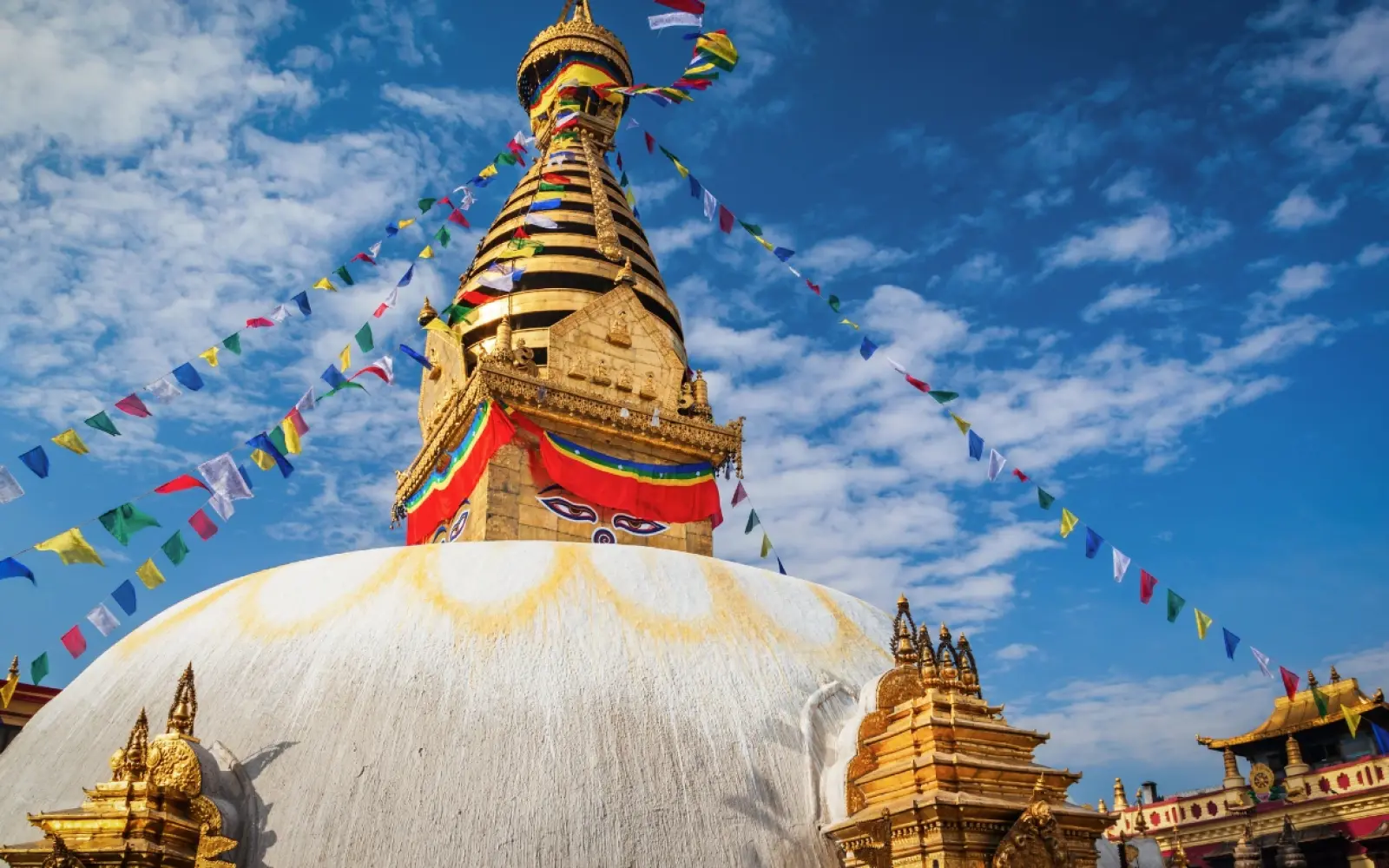

People visiting Kathmandu almost always ask the same two questions about Swayambhunath: how high is it, and where exactly is it? Seems simple. But the "77 meters" figure you'll find everywhere online creates real confusion, because it doesn't describe what most people assume it does.
So here is the short answer before anything else.
The Swayambhunath hill rises 77 meters above the Kathmandu Valley floor. That is the elevation gain from the base of the hill to the summit. The stupa structure itself, meaning the white dome and golden spire, stands approximately 36 meters tall. The entire complex sits at roughly 1,336 to 1,400 meters above sea level. Three different heights. Three different things they measure.
This guide covers all of that, plus the history, the deities, the key visitor questions, and everything you need before you climb those 365 steps.
| Detail | Information |
| Official name | Swayambhu Maha Chaitya (स्वयम्भू महाचैत्य) |
| Also known as | Monkey Temple, Swayambhu, Swoyambhu |
| Location | Swayambhu, Kathmandu District, Bagmati Province, Nepal |
| GPS coordinates | 27°42'54"N, 85°17'24"E |
| Hill height above valley floor | 77 meters (253 feet) |
| Stupa height (dome + spire) | ~36 meters (118 feet) |
| Elevation above sea level | ~1,336 to 1,400 meters |
| Distance from Thamel | ~3 km west |
| Steps to summit | 365 stone steps (eastern staircase) |
| Entrance fee | NPR 200 (~USD 1.50) for foreign visitors |
| Religion | Buddhist and Hindu |
| First recorded construction | ~5th century CE |
| UNESCO inscription | 1979 (3rd session), Reference No. 121bis-004 |
| UNESCO criteria | Cultural: (iii), (iv), (vi) |
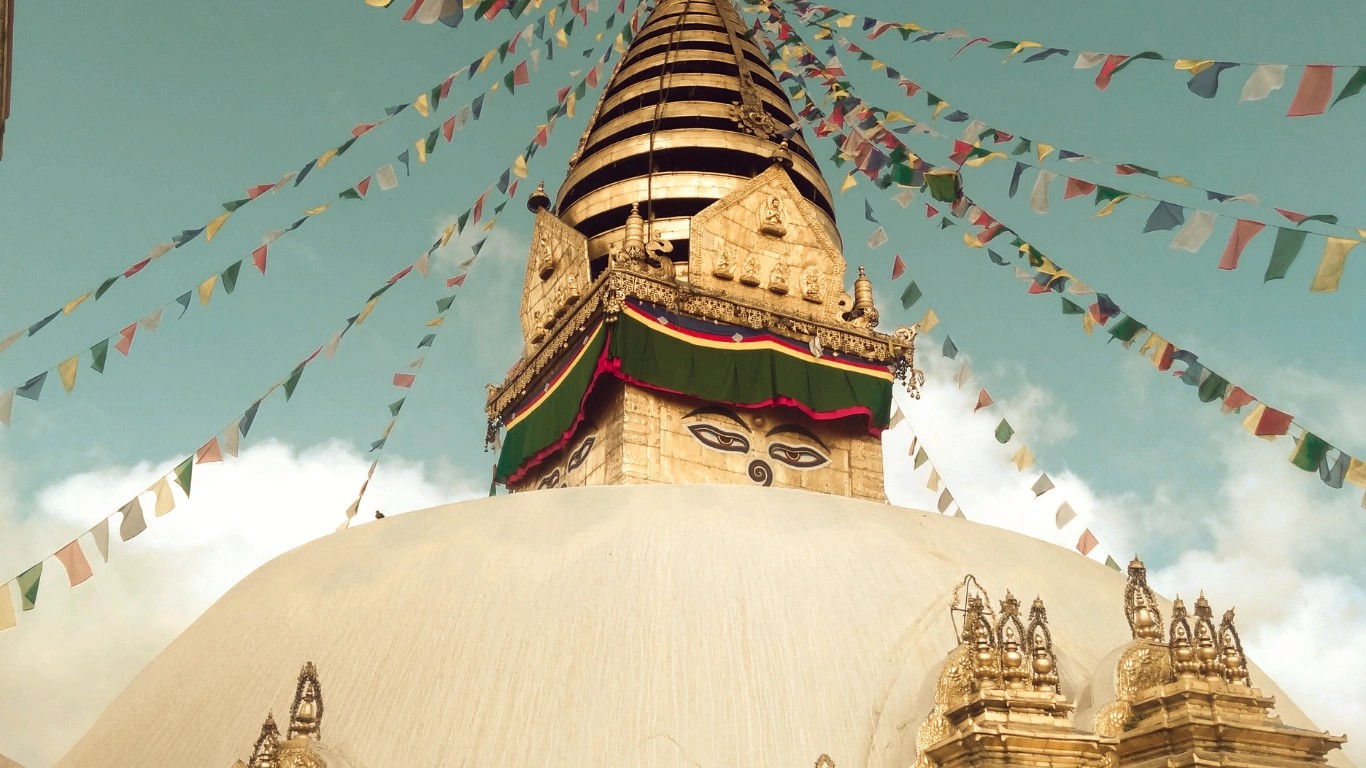
Swayambhunath is located 3 kilometers west of Thamel in Kathmandu, Nepal. The complex sits atop Swayambhu Hill, in the Swayambhu neighborhood of Kathmandu District, Bagmati Province.
The GPS coordinates are 27°42'54"N, 85°17'24"E. Drop that into Google Maps and you land directly at the main stupa.
From Thamel on foot, the walk takes 30 to 45 minutes. By taxi it is 10 to 15 minutes, with fares ranging from NPR 500 to NPR 1,000. Apps like Pathao and InDrive give fixed metered prices and are worth using to avoid disputes. Local buses run the route for NPR 20 to 30.
The main entrance is on the east side of the hill, right off the Ring Road. You'll see the wide plaza, the ticket booth, and the 365 stone steps rising through the trees. There is also a paved road on the western side for those who want to drive or walk up without climbing the staircase.
This is where most articles get it wrong, and it is worth being precise.
| Height Measurement | Value | What It Refers To |
| Hill above Kathmandu Valley floor | 77 meters (253 feet) | Elevation gain from hill base to summit |
| Stupa structure (dome and spire) | 36 meters (118 feet) | The architectural monument itself |
| Complex elevation above sea level | 1,336 to 1,400 meters | Global elevation of the hilltop |
| Climbing effort from base | 77 meters vertical gain | What you gain ascending the 365 steps |
The Swayambhunath hill height above the Kathmandu Valley is 77 meters. This is what UNESCO documentation refers to, what Nepal Tourism Board cites, and what sources like Encyclopaedia Britannica record.
The Swayambhunath stupa height is approximately 36 meters. That covers the white dome at the base, the square harmika structure painted with the all-seeing eyes of the Buddha, the 13 tapering tiers above it (called Trayodashabhuvana), and the gold-crowned gajur at the very top.
When you see searches like "swayambhunath hill rises 77 metres above Kathmandu Valley" or "swayambhunath hill height above Kathmandu valley floor," all of those refer to the same thing: the hill, not the stupa.
So the quick answers are: swayambhunath hill height is 77 meters. Swayambhunath stupa height in meters is approximately 36 meters. And the elevation of the complex above sea level is around 1,336 to 1,400 meters.
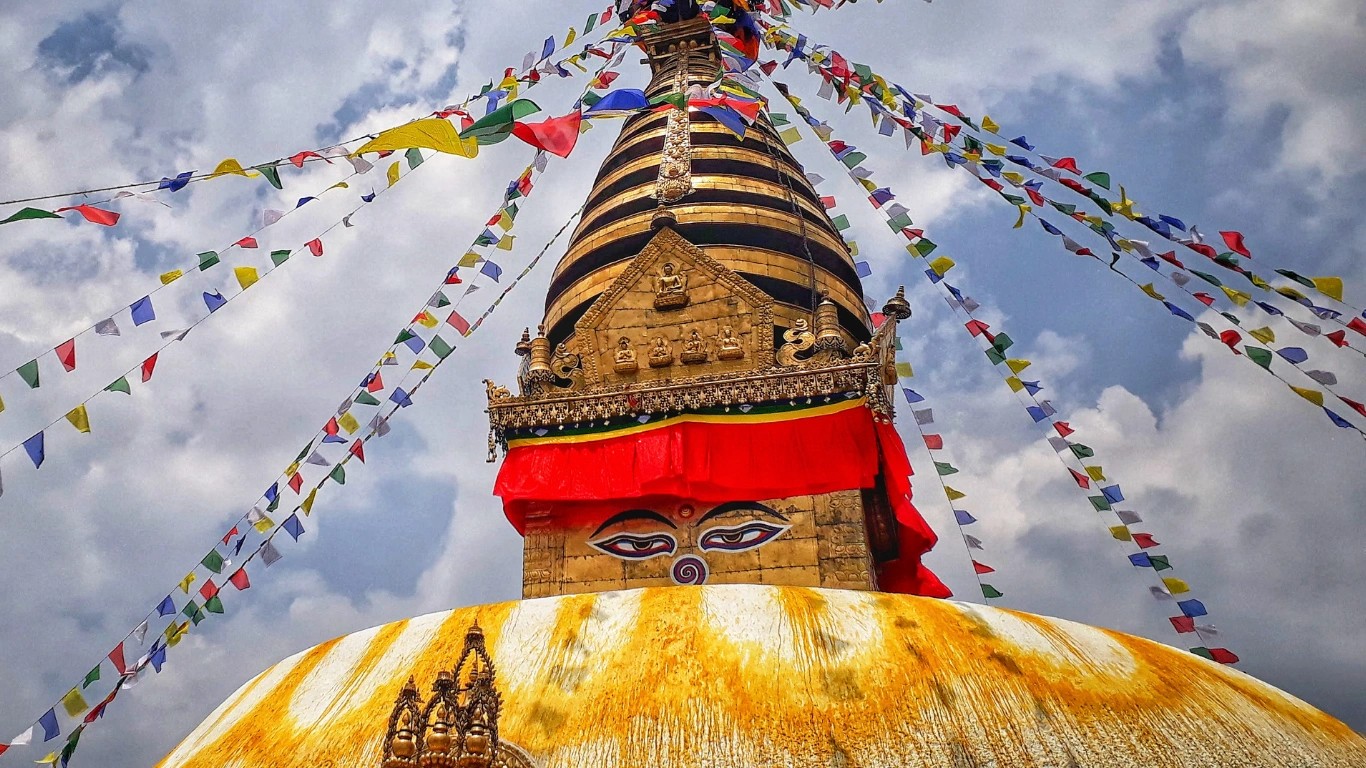
Swayambhunath is famous for several reasons, and honestly, they all stack on top of each other.
It is one of the oldest religious sites in the world. The recorded history goes back to the 5th century CE, with mythological traditions claiming origins far older. For over 1,500 years, pilgrims from across Asia have climbed this hill.
It represents Buddhist-Hindu religious harmony. The complex includes Buddhist stupas, chaityas, and monasteries alongside Hindu shrines. Both communities worship here daily. That kind of authentic, centuries-old religious coexistence is genuinely rare in the world.
The views are extraordinary. The hill rises 77 meters above the Kathmandu Valley floor, giving you a panoramic view of the entire city. On clear mornings in autumn, you can see the Langtang range and distant Himalayan peaks on the northern horizon.
The all-seeing eyes of the Buddha are iconic. Painted on all four sides of the stupa's harmika, the eyes of the Buddha gazing out over the valley have become one of the most recognizable images in South Asian religious art.
It is a UNESCO World Heritage Site. Inscribed in 1979 as part of the Kathmandu Valley heritage group, the site holds international recognition for its outstanding cultural value.
The monkeys. They are sacred, numerous, and impossible to ignore. Hundreds of rhesus macaques live on the hill and have become as much a part of the site's identity as the stupa itself.
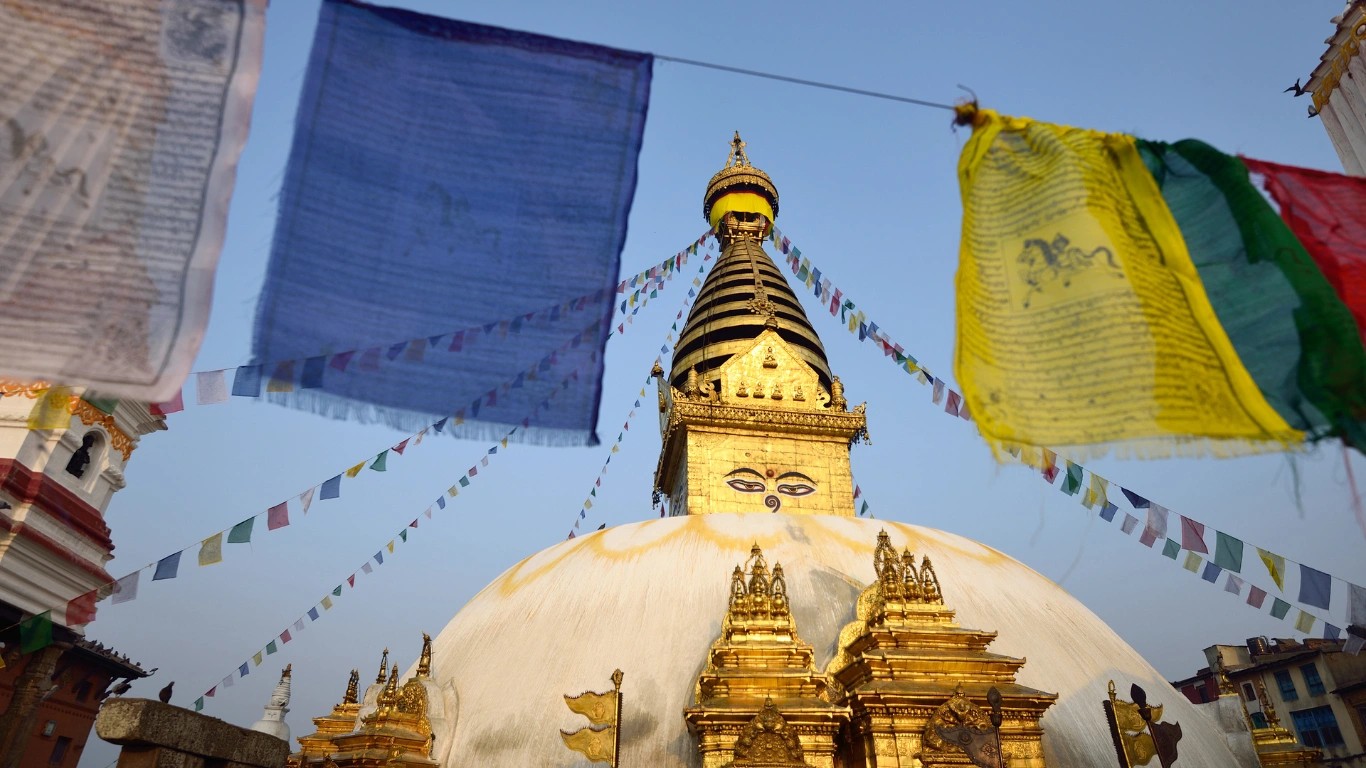
The history of Swayambhunath runs deeper than most visitors realize. There are two distinct layers: the mythological origin embedded in Buddhist scripture, and the recorded archaeological and historical timeline.
According to the Swayambhu Purana, a Buddhist scripture about the origins of Kathmandu Valley, the valley was once a great lake inhabited by mythical serpents called Nagas. Vipassi Buddha, of many eons ago, came to the lake and planted the seed of a lotus flower. The lotus grew and emitted radiant eternal light (Jyotirupa), with the Five Great Buddhas appearing within its rays.
Later, the bodhisattva Manjushri, the deity of wisdom, traveled to the lake and recognized the lotus as a place of great spiritual power. He used his indestructible sword to cut through the surrounding mountains, draining the lake and creating the Kathmandu Valley. This act of draining made the lotus's sacred light accessible to people.
Kassapa Buddha, one of the Buddhas of the past, later sent King Prachandadev from Bengal to build a great stupa enclosing and protecting this sacred light. Prachandadev was ordained as a monk and established the stupa with the surrounding rituals. This is believed to be the first physical structure at Swayambhunath.
| Period | Event |
| ~3rd century BCE | Emperor Ashoka is said to have visited with his wife and daughter, Princess Charumati, who married a Nepali prince and built temples on the hill |
| 5th century CE | King Vrsadeva, great-grandfather of King Manadeva, carried out major reconstruction work |
| 5th to 13th century | Mahayana master Nagarjuna stayed for 12 years; Acharya Vasubandhu lived and died here; Padmasambhava performed rituals here on his way to Tibet |
| 13th century | Swayambhunath became a major center of Tibetan Buddhism |
| 15th century | Indian Buddhist monk and Bodh Gaya abbot Sariputra led major reconstruction, assisted by a Malla dynasty king |
| 17th century | Pratap Malla, powerful king of Kathmandu, built the 365-step eastern stairway as an act of devotion |
| 1504 CE | Tibetan Buddhist master Tsangnyön Heruka renovated the stupa in three months at the invitation of the Kathmandu king |
| 1921 | Last major renovation before the modern era |
| 1979 | UNESCO World Heritage inscription as part of Kathmandu Valley (3rd session, Reference 121bis-004) |
| 2008 to 2010 | Complete renovation and re-gilding of the stupa using 20 kilograms of gold, funded by the Tibetan Nyingma Meditation Center of California |
| April 2015 | The 2015 Gorkha earthquake damaged the Swayambhunath complex |
| Post-2015 | Restoration work carried out on damaged structures |
The historical depth here is significant. The Swayambhunath history stretches across at least three distinct Buddhist traditions (Newar Buddhism, Vajrayana, and Tibetan Buddhism), two major religions, and contributions from rulers ranging from Ashoka of the Maurya Empire to local Malla kings and Tibetan masters. Not many sites in the world carry that kind of layered, multi-tradition history while remaining continuously active.
Swayambhunath is not dedicated to a single deity. It is a multi-faith complex, and the gods and beings worshipped there reflect both the Buddhist and Hindu traditions that have coexisted on this hill for over a millennium.
| Deity / Being | Tradition | Significance at Swayambhunath |
| Adi-Buddha (Swayambhu) | Vajrayana Buddhism | The primordial, self-arisen Buddha whose sacred light is said to dwell at the core of the stupa |
| Vairocana | Vajrayana Buddhism | One of five Dhyani Buddhas; represents wisdom and emptiness; positioned at center |
| Akshobhya | Vajrayana Buddhism | One of five Dhyani Buddhas; represents mirror-like wisdom; positioned to the east |
| Ratnasambhava | Vajrayana Buddhism | One of five Dhyani Buddhas; represents equality and generosity; positioned to the south |
| Amitabha | Vajrayana Buddhism | One of five Dhyani Buddhas; represents infinite light and compassion; positioned to the west |
| Amoghasiddhi | Vajrayana Buddhism | One of five Dhyani Buddhas; represents fearless action; positioned to the north |
| Manjushri | Buddhism | Bodhisattva of wisdom; credited in mythology with draining the lake to reveal Swayambhu |
| Hariti Ajima | Buddhist-Hindu fusion | Fierce Dharma Protector goddess; protects children under 12; guardian of the stupa |
| Green and White Tara | Vajrayana Buddhism | Female bodhisattva of compassion and protection; widely worshipped in the complex |
| Saraswati | Hinduism | Goddess of knowledge and learning; her temple sits near the eastern steps |
| Vasundhara | Newar Buddhism | Goddess of wealth and prosperity |
The primary deity is Adi-Buddha, also referred to simply as Swayambhu, which translates to "self-created" or "self-arisen." In Vajrayana Buddhism, particularly the Newar Buddhist tradition, Swayambhu represents the primordial Buddha from whose light all creation emerged. The entire stupa is considered his physical manifestation on earth.
The Harati Ajima Temple inside the complex deserves specific mention. Harati (also called Ajimaya or Sitalamaju) was originally a fierce smallpox goddess. According to Buddhist tradition, Gautama Buddha himself converted her into a Dharma Protector during a sermon at the stupa. Today, her temple north of the main chaitya is among the most actively visited spots in the entire complex, with constant offerings from both Buddhist and Hindu devotees.
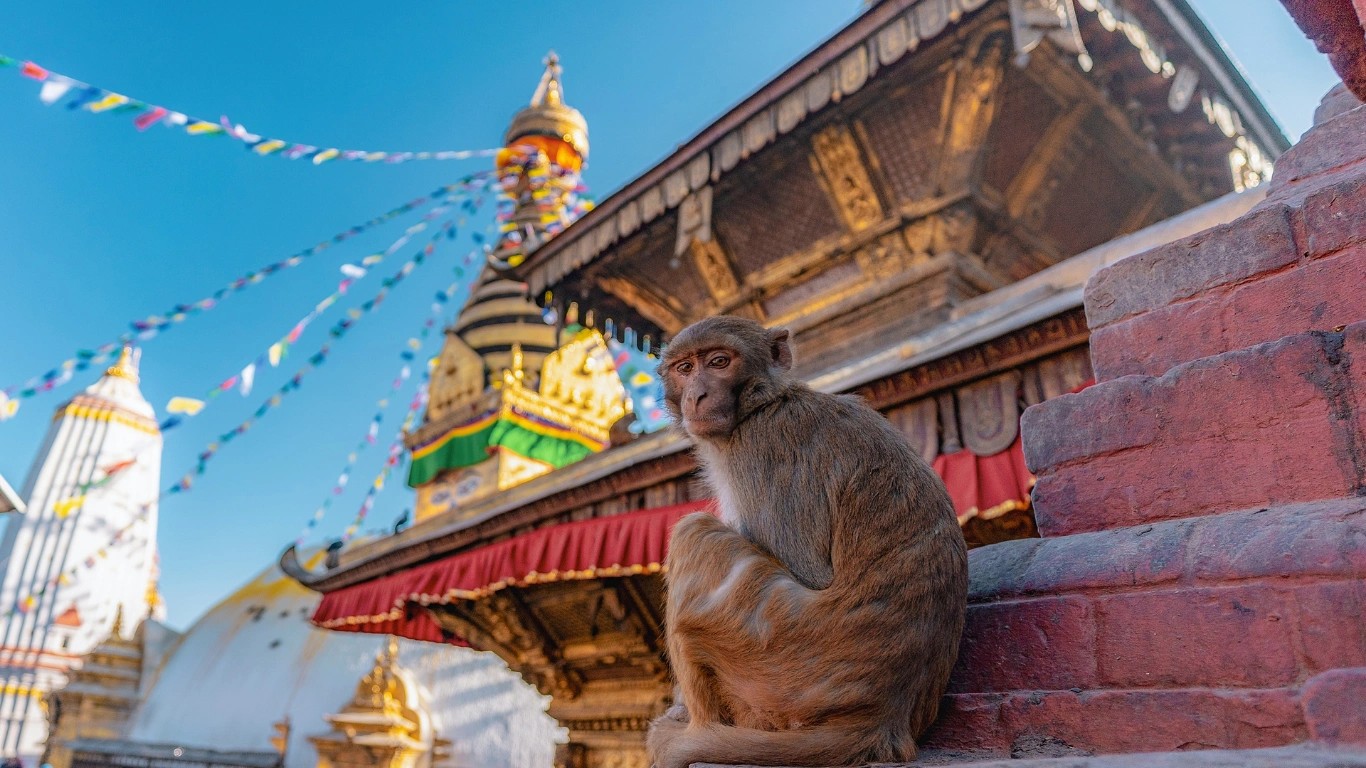
The Swayambhunath monkey temple nickname comes from the hundreds of rhesus macaques that live in the trees and on the platforms of the hill. They are everywhere. They sit by the prayer wheels, they watch from the rooftops of smaller shrines, and they intercept anything edible without hesitation.
In Vajrayana Buddhist tradition, these monkeys are considered sacred. The mythology connects them to Manjushri, the bodhisattva who drained the ancient lake to reveal Swayambhu. According to tradition, the lice in Manjushri's hair transformed into these monkeys when the valley emerged. So the animals on the hill are understood as sacred descendants of a divine act, not ordinary wildlife.
The "Monkey Temple" name itself is fairly recent in historical terms. Foreign visitors in the 1970s had trouble pronouncing Swayambhunath, so they started using a simpler description. The nickname stuck and spread globally through travel literature. Today, most international visitors know it as the Monkey Temple before they learn its actual name.
Worth knowing before you go: these monkeys are fast and observant. They will grab water bottles, sunglasses, loose snacks, and anything hanging from a bag or wrist. Keep bags zipped, food out of sight, and valuables in a secure pocket. Most incidents are minor theft-of-snacks situations, but it is better to be prepared.
The stupa is not just a building. Every element carries symbolic meaning in Vajrayana Buddhist cosmology.
The 2010 renovation was the most significant since 1921. The entire stupa was re-gilded using 20 kilograms of gold, funded by the Tibetan Nyingma Meditation Center in California. The earthquake of April 2015 caused damage to several surrounding structures, and restoration work has continued since.
Swayambhunath was inscribed as part of the Kathmandu Valley UNESCO World Heritage Site in 1979, during the committee's 3rd session. The reference number is 121bis-004. It was recognized under three cultural criteria.
The Kathmandu Valley listing covers seven monument zones in total, including Pashupatinath, Boudhanath, three Durbar Squares, and Changu Narayan, alongside Swayambhunath.
On foot: The walk from central Thamel takes 30 to 45 minutes. Head west, and check Google Maps for the best current route through the residential streets. The path passes through quiet local neighborhoods and is pleasant in the morning.
A practical approach many visitors use is walking there in the morning, climbing the steps, spending 90 minutes to two hours at the top, then taking a taxi back. That gives you the full physical experience of the 365-step ascent with a comfortable return.
Visitor tips:
Swayambhunath is usually visited as part of a Kathmandu sightseeing day that includes other UNESCO heritage sites. The most common combination is Swayambhunath in the morning, Pashupatinath and Boudhanath in the afternoon. Some visitors add Kathmandu Durbar Square or Patan.
The site holds genuine significance in the spiritual geography of the valley. In Hindu cosmology, the hill predates Kathmandu city itself. The Buddhist mythology around the lotus and the primordial lake makes it a creation site, not just a place of worship. Walking here is not the same as visiting a museum. The priests, the pilgrims, the smell of incense, the sound of chanting in the early morning, all of that is still happening today exactly as it has for centuries.
From Majestic Trails Nepal, we bring travelers here as part of our Kathmandu cultural day tours and as the starting point for Kathmandu Valley heritage walks. In our experience, clients who arrive early and take 90 minutes to walk the hilltop slowly, rather than rushing through for photos, leave with a very different feeling about the place.
Planning a visit to Swayambhunath and the Kathmandu Valley? Majestic Trails Nepal offers guided heritage tours, Kathmandu sightseeing day trips, and full Nepal itineraries with licensed guides who know these sites in depth. Contact us to plan your trip.
The Swayambhunath hill rises 77 meters above the Kathmandu Valley floor. This is the elevation gain from the base of the hill to the summit where the stupa stands.
The stupa structure itself, the white dome and golden spire, is approximately 36 meters (118 feet) tall. This is separate from the 77-meter hill height.
Swayambhu is a Sanskrit term meaning "self-created" or "self-arisen." It refers to the Buddhist belief that the sacred light at the center of the stupa arose spontaneously from a primordial lotus, without human action.
The first recorded construction was ordered by King Vrsadeva in the 5th century CE, confirmed by a stone inscription dated to 640 CE.
Pratap Malla, the king of Kathmandu, built the eastern staircase in the 17th century as an act of devotion.
Approximately 3 kilometers west of Thamel. The walk takes 30 to 45 minutes. By taxi, 10 to 15 minutes.
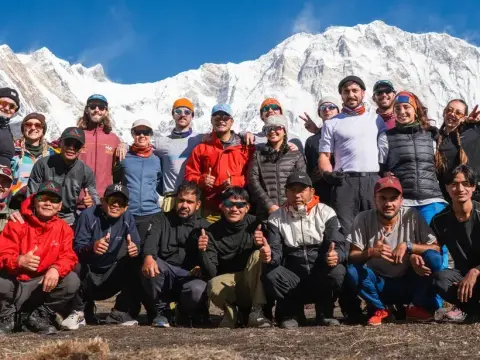
Group Departure Trekking in Nepal offers the perfect solution for adventurers who want to explore the Himalayas without the hassle of planning every d...

Let's cut straight to it. Autumn, specifically September through November, is the best time to trek in Nepal. Spring runs a very close second, coverin...

The Langtang Valley Trek is one of Nepal’s most rewarding trekking adventures—less crowded than Everest or Annapurna, yet rich in culture, biodiversit...

Short on time but big on ambition? Nepal delivers extraordinary mountain experiences in as little as three days, and this guide breaks down exactly wh...
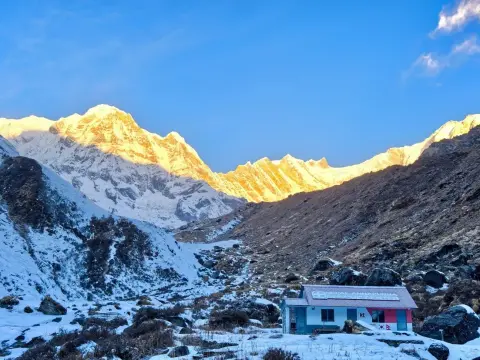
The Annapurna Base Camp trek stands among the world's most iconic Himalayan adventures. Every year, thousands of trekkers from across the globe journe...
Imagine waking up to breathtaking Himalayan sunrises, sharing candlelit dinners beside serene lakes, and exploring ancient temples hand-in-hand with y...
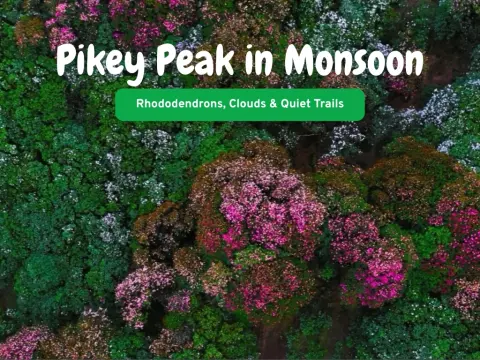
Solukhumbu is synonymous with Mount Everest, but beyond the famous peak lie quieter, magical destinations that often get overlooked. One such gem is P...
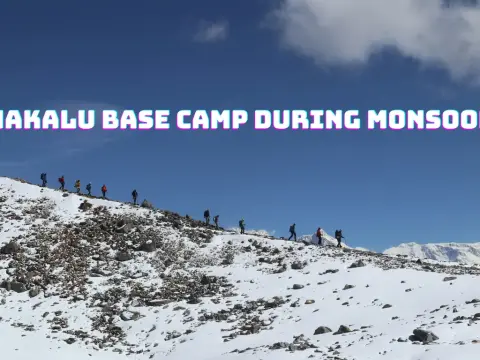
Makalu Base Camp Trek in the monsoon offers one of Nepal’s most remote and raw trekking experiences. Located inside Makalu Barun National Park, named...
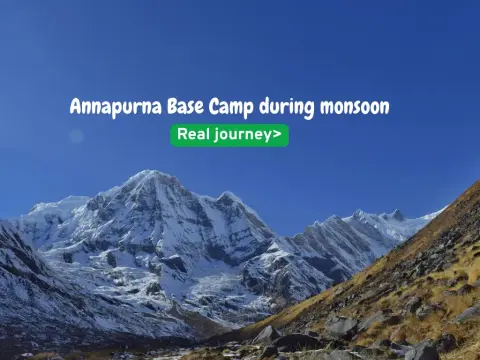
Trekking to Annapurna Base Camp Trek is one of Nepal’s most iconic mountain journeys. For mountaineers, the climb begins here, but for trekkers, Annap...
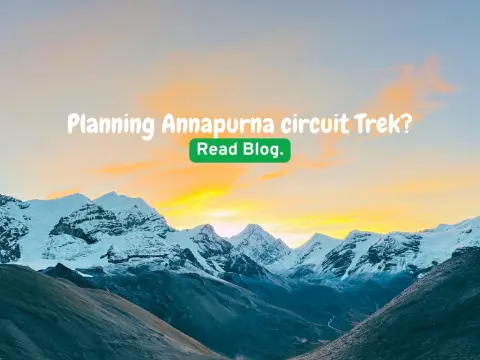
The Annapurna Circuit Trek is one of the world’s most legendary long-distance treks — a journey that circles the Annapurna massif through Nepal’s most...
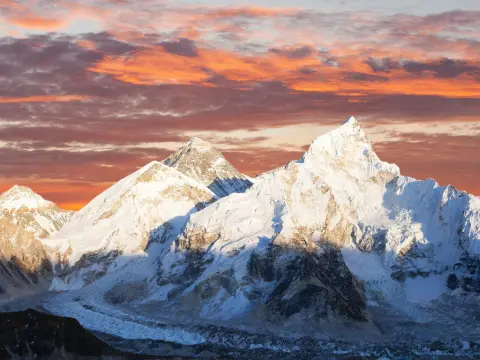
Nepal is a country defined by mountains. Stretching across the country’s northern edge, the Himalayas pack Earth’s highest peaks into one nation. Eigh...
Choosing the best time to trek Pikey Peak Trek is one of the first decisions you'll make when planning this beautiful Himalayan adventure. Located in...
