
The 10 Best Treks in Nepal for 2026
10 Jun 2025
What makes for the best treks in Nepal can vary from person to person. While Everest Base Camp Trek (EBC) at 5545 m is ideal for a trekker wanting the...

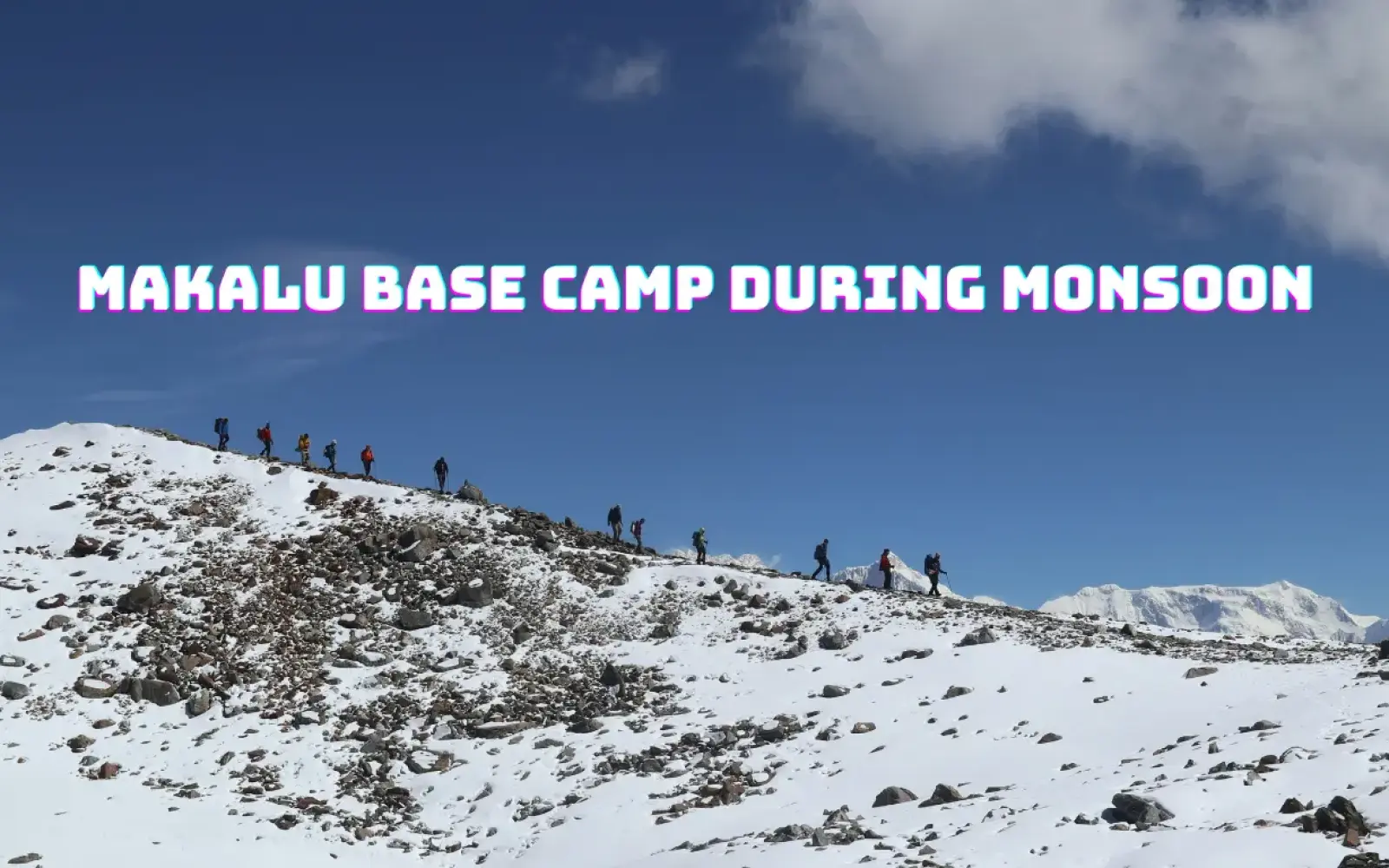

Makalu Base Camp Trek in the monsoon offers one of Nepal’s most remote and raw trekking experiences. Located inside Makalu Barun National Park, named after the world’s fifth-highest mountain, it is arguably the most isolated protected area in the Himalayas, with an elevation gain exceeding 8,000 meters. Unlike crowded routes, this trek attracts travelers seeking solitude, challenge, and untouched wilderness. Alpine lakes scatter the trail, surrounded by giants such as Everest, Lhotse, and Kanchenjunga.
At times, Makalu Base Camp Trek in monsoon feels like the hardest journey imaginable. At other moments, it becomes one of the most beautiful experiences ever shared. Along the way, travelers exchange wild berries, icicles, and simple meals. The journey builds solidarity among strangers, and the people met along the trail are as compelling as the mountains themselves.
Trekkers pass through rain-soaked forests of the biodiverse Barun Valley, snow-covered highlands, landslide-prone trails, glacial lakes, and permafrost zones. Along the way, small villages of Sherpa, Rai, and Limbu communities welcome travelers, sharing warmth and culture despite isolation.
At Majestic Trails Nepal, we’ve guided trekkers through these remote landscapes, ensuring journeys are safe, authentic, and deeply connected to both nature and local communities.
This itinerary follows the same route described below, starting from Kathmandu and Tumlingtar, passing through Seduwa, Tashigaon, Khongma Danda, Shipton La Pass, Dobate, Yangle Kharka, Langmale, and finally reaching Makalu Base Camp. The journey unfolds through forests, landslides, high passes, glacial valleys, and remote Himalayan settlements before returning via the same route.
Reaching Makalu Base Camp in monsoon is a journey in itself. Spanning roughly 100 miles of hiking, along with flights and long drives, it takes exactly one week to reach the base camp from Kathmandu. The noise and bustle of the capital feel distant from the wilderness ahead.
With the start of summer approaching, the journey begins with a flight to Tumlingtar Airport at 460 meters above sea level. The heat here is intense — a sharp contrast to the cold conditions awaiting at higher elevations. From the airport, a vehicle heads toward Num, traditionally the starting point of the trek. Along the way, the route passes through Khandbari, the headquarters and largest town in Sankhuwasabha District.
With road access now extending deeper into the buffer zone of Makalu Barun National Park, the journey continues by vehicle for another three hours through rain and hailstorms to Seduwa — the official entry point into the national park. After a full day of air and road travel, the trek toward Makalu Base Camp in monsoon finally begins.
The first day of walking marks the last encounter with true villages along the route. Unlike most treks in Nepal, where settlements continue higher into the mountains, the trail beyond Seduwa quickly enters sparsely populated wilderness. Between Seduwa and Tashigaon lie only small settlements — Chyaksa Danda, Kauma, and Narbugaon — before nature fully takes over.
After several hours through rhododendron forests and river crossings, the trail reaches Tashigaon.
At 2,100 meters, Tashigaon is the last permanent settlement on the trail to Makalu Base Camp in monsoon. The name means “Village of Auspiciousness” in Tibetan, and it is home to around 80 households. The village depends almost entirely on subsistence farming. Rice, millet, maize, and potatoes grow in small terraced fields, while livestock graze on narrow mountain ledges. Life here is simple, steady, and deeply connected to the land.
Tashigaon has a small school and a few basic teahouses serving trekkers. Despite isolation, people welcome strangers like family. Conversations flow easily — about where travelers are from, where they stayed the night before, and where they are headed next. Tashigaon feels less like a stop and more like a threshold. Beyond it, village life fades, and the true wilderness of Makalu Base Camp in monsoon begins.
Leaving behind the final signs of settlement, the trail begins its relentless ascent into the wild heart of Makalu Barun. This section tests endurance with countless stone staircases, climbing through dense forests. From 2,100 meters, nearly 1,400 meters of elevation is gained in a single day en route to Khongma Danda — a ridge camp perched high above the valley.
The climb passes through thick rhododendron and fir forests. Mist rolls through the trees, visibility drops, and the forest becomes quiet and mysterious. As the air thins and cools, the trail grows steeper and more demanding. Encouragement and laughter among trekkers help break the monotony, and every small rest feels earned.
Eventually, Khongma Danda emerges through the mist — remote, exposed, and welcoming after one of the toughest climbs of the Makalu Base Camp in monsoon trek.
After a night at Khongma Danda, the trek continues toward one of the most dramatic crossings of the journey — Shipton La Pass. The morning air is cold and thin as trekkers prepare for the climb to nearly 4,200 meters.
Groups of trekkers and mountaineers pass each other on the trail, some heading toward Makalu Base Camp in monsoon, others returning. Among them are elderly climbers who once summited Makalu decades earlier, now walking slowly but steadily across the same terrain again. The rhythm becomes simple: one hundred steps, rest — then repeat.
Shipton La, named after British explorer Eric Shipton, feels like walking through another world. One moment, sunlight breaks through clouds; the next, everything dissolves into mist. Suddenly, the clouds part, revealing jagged black peaks and endless ridgelines stretching toward Tibet. Trees disappear, replaced by lichen-covered rocks, snow patches, and wind.
Descending from the pass reveals Kalo Pokhari — the sacred Black Lake — partially frozen even in summer. From here, the trail drops steeply toward Dobate, where trekkers finally rest after one of the most demanding yet breathtaking days of the Makalu Base Camp in monsoon trek.
Dobate is little more than a tiny outpost — a single lodge tucked beneath towering cliffs at 3,862 meters. Once a yak barn, it now serves as the only shelter in this exposed section of the route. Beyond this point, the terrain grows wilder and more unpredictable.
From Dobate, the trail begins another steep descent — but unlike any encountered before. This section leads into one of the most dangerous and unstable parts of the Makalu Base Camp in monsoon trek: a massive landslide crossing that takes nearly two hours to traverse.
Here, the mountain itself feels alive. Entire cliff faces have collapsed, leaving behind vast scars of loose rock and shifting earth. Every step demands concentration. This part of the route is infamous — not because it is technical, but because it is unpredictable and constantly changing.
After carefully navigating the landslide zone, the trail finally steadies. Phematang appears — a single house offering food and shelter beside the trail. Timing here matters, as river levels rise in the evenings, making crossings dangerous. Arriving earlier ensures a safer passage.
After lunch at Phematang, the trail continues through rhododendron forests as rain drifts in and out. Eventually, Yangle Kharka comes into view, misty and quiet, marking a deeper entry into the Himalayan wilderness.
The next morning begins in silence. Snow has fallen steadily through the night, transforming the landscape around Yangle Kharka into a white world. Just as the skies begin to clear, a rescue helicopter breaks through the quiet, briefly reminding trekkers of the fragility of life in the mountains.
By the time walking resumes, the snow has melted into mud beneath boots. The trail continues through terrain that feels ancient and sacred. Soon, the path reaches a junction — one route diverges toward Shiva Dhara, a revered pilgrimage site hidden deep in the cliffs beyond the river, believed to be a meditation place of Lord Shiva. Staying on course toward Makalu Base Camp in monsoon, the trail climbs onward.
Rain comes and goes unpredictably. As elevation increases, rain turns into flurries of snow. The landscape grows harsher but more beautiful. By evening, Langmale Kharka appears, wrapped in mist and cloud, surrounded by massive peaks that reveal themselves only briefly.
The final day toward Makalu Base Camp in monsoon unfolds across a barren alpine landscape strewn with glacial boulders and frostbitten grass. The trail gradually rises and falls, weaving through terrain shaped over millennia by retreating ice.
Not long into the walk, a still glacial-fed lake appears beside the trail — Shershong Lake — lying quietly in the high valley. Beyond the lake, the path follows the Barun River through widening open terrain. The trail here feels unusually flat, with stones carefully laid to guide trekkers across the valley floor. Views stretch endlessly in every direction.
As the trek moves deeper into the valley, silence settles in. There is no tree line here — only stone, wind, and sky. The vastness becomes overwhelming in the best possible way.
And finally, after several hours of walking, Makalu Base Camp comes into view.
Morning arrives quietly.
And then there it is.
Makalu — rising like a frozen cathedral.
Towering at 8,485 meters, it stands impossibly close yet utterly unreachable. All around lie named and unnamed peaks — some of the highest mountains on Earth — forming a natural amphitheater around the valley. For a moment, it feels as though this place belongs only to those standing there.
At the base of Makalu rests a still turquoise lake formed by glacial melt, sitting in stark contrast to the jagged peaks surrounding it. The landscape here is raw and humbling — a wide-open glacial valley carved by time and shaped by immense natural forces.
Located at 4,870 meters above sea level, Makalu Base Camp consists of just three lodges scattered across the valley floor, surrounded by towering walls of rock and ice. Yak dung dots the sandy ground, reminders of the animals that sustain life in this harsh environment. From here, magnificent views of surrounding peaks unfold as the river winds its way to the far end of the valley.
During climbing season, mountaineers arrive at base camp — including teams of Sherpa siblings preparing to summit the world’s fifth-highest mountain. Their presence adds to the atmosphere of quiet determination and respect for the mountain’s power.
As snow falls outside, hot bowls of Sherpa stew warm trekkers inside the lodges. Sometimes helicopters cannot land due to weather. Sometimes storms linger. But time feels irrelevant here. What matters is the mountain towering above and the journey that led to its base.
Makalu Base Camp in monsoon is as much a mental test as a physical one. The terrain demands focus, but the weather demands patience. Rain comes without warning. Snow replaces rain in minutes. Visibility vanishes, then returns just long enough to tease views of massive peaks before closing in again.
There are moments on the trail when exhaustion meets uncertainty — when progress slows, boots are soaked, and the question isn’t how far but how steady. In these moments, the journey becomes internal. Monsoon trekking here teaches restraint: knowing when to push, when to slow down, and when to accept the pace the mountains allow.
It’s in this rhythm — one hundred steps, rest, repeat — that resilience quietly forms.
One of the most unexpected elements of this trek is how quickly strangers become companions. Hard conditions dissolve social barriers. People share food, laughter, encouragement — even icicles plucked from the trail or wild berries discovered along the way.
There’s no competition here. Everyone is moving through the same rain, snow, mud, and uncertainty. That shared vulnerability creates a unique solidarity — brief but intense — that often lingers long after the trek ends. Conversations are simple, honest, and grounded in the present moment.
In Makalu, connection doesn’t come from comfort. It comes from endurance.
The Barun Valley during monsoon feels alive in a way few Himalayan valleys do. Ancient forests drip with moisture, moss clings thickly to trunks, and birds move constantly through the canopy. This region is one of the most biodiverse in the Himalayas, home to over 400 species of birds — many unseen, but always heard.
As elevation increases, forests thin and give way to open highlands where waterfalls appear suddenly along cliff faces, fed by relentless rain. Monsoon doesn’t hide nature here — it magnifies it. Every sound feels closer. Every movement feels amplified.
This is not a landscape to rush through. It demands observation.
In Makalu, especially during monsoon, control is an illusion. Helicopters don’t always arrive. Storms linger. Rivers rise by evening. Plans bend, then break.
At base camp, time stretches. Snow falls outside. Stew simmers inside. Sometimes waiting becomes the journey itself. This surrender — to weather, to altitude, to unpredictability — is not a weakness here. It’s survival.
Makalu teaches that progress isn’t always forward motion. Sometimes, it’s stillness.
This trek doesn’t deliver transformation in dramatic moments. It works slowly. Through fatigue. Through repetition. Through silence.
From humid lowlands to frozen alpine deserts, the transition is not just physical — it’s perceptual. Comfort becomes irrelevant. Simplicity becomes enough. By the time Makalu rises before you — massive, silent, absolute — the mountain feels less like a destination and more like a witness.
Makalu Base Camp in the monsoon doesn’t shout its lessons.
It leaves them with you — long after you walk back down.
Makalu Base Camp in monsoon is not just a trek.
It is a reminder that the greatest adventures are not always glamorous. They are the ones that push you to your limits, test patience, and demand resilience — while quietly reshaping you along the way.
From humid lowlands to frozen alpine deserts, from dense forests to silent glacial valleys, this journey moves through some of the most extreme landscapes on Earth. It builds connections with strangers, with nature, and with oneself.
And somehow, through rain, snow, cold, exhaustion, and wonder, it gives exactly what is needed.
If bags weren’t so heavy, it might even feel possible to run all the way back home.
Experiencing Makalu Base Camp in monsoon with Majestic Trails Nepal is more than a trek—it’s a journey into the heart of the Himalayas guided by expertise, care, and a passion for authentic adventure.”
What makes for the best treks in Nepal can vary from person to person. While Everest Base Camp Trek (EBC) at 5545 m is ideal for a trekker wanting the...

Let's cut straight to it. Autumn, specifically September through November, is the best time to trek in Nepal. Spring runs a very close second, coverin...

The Langtang Valley Trek is one of Nepal’s most rewarding trekking adventures—less crowded than Everest or Annapurna, yet rich in culture, biodiversit...
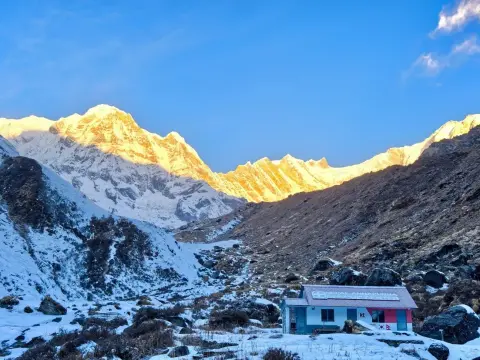
The Annapurna Base Camp trek stands among the world's most iconic Himalayan adventures. Every year, thousands of trekkers from across the globe journe...
Imagine waking up to breathtaking Himalayan sunrises, sharing candlelit dinners beside serene lakes, and exploring ancient temples hand-in-hand with y...

Nepal, cradled by the majestic Himalayas, calls out to adventurers with its unrivaled trekking opportunities. While the Everest Base Camp (EBC) trek a...
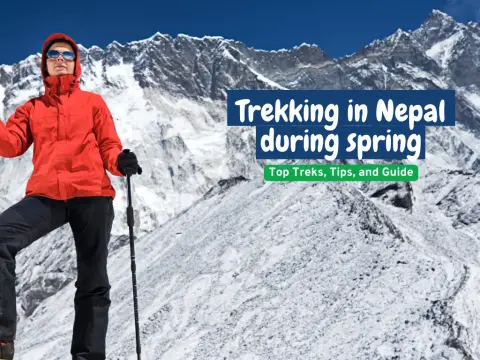
Introduction: Why Spring is Nepal's Golden Season for TrekkersSpring in Nepal is a season of renewal, a time when the Himalayas awaken from their wint...
