
The 10 Best Treks in Nepal for 2026
10 Jun 2025
What makes for the best treks in Nepal can vary from person to person. While Everest Base Camp Trek (EBC) at 5545 m is ideal for a trekker wanting the...

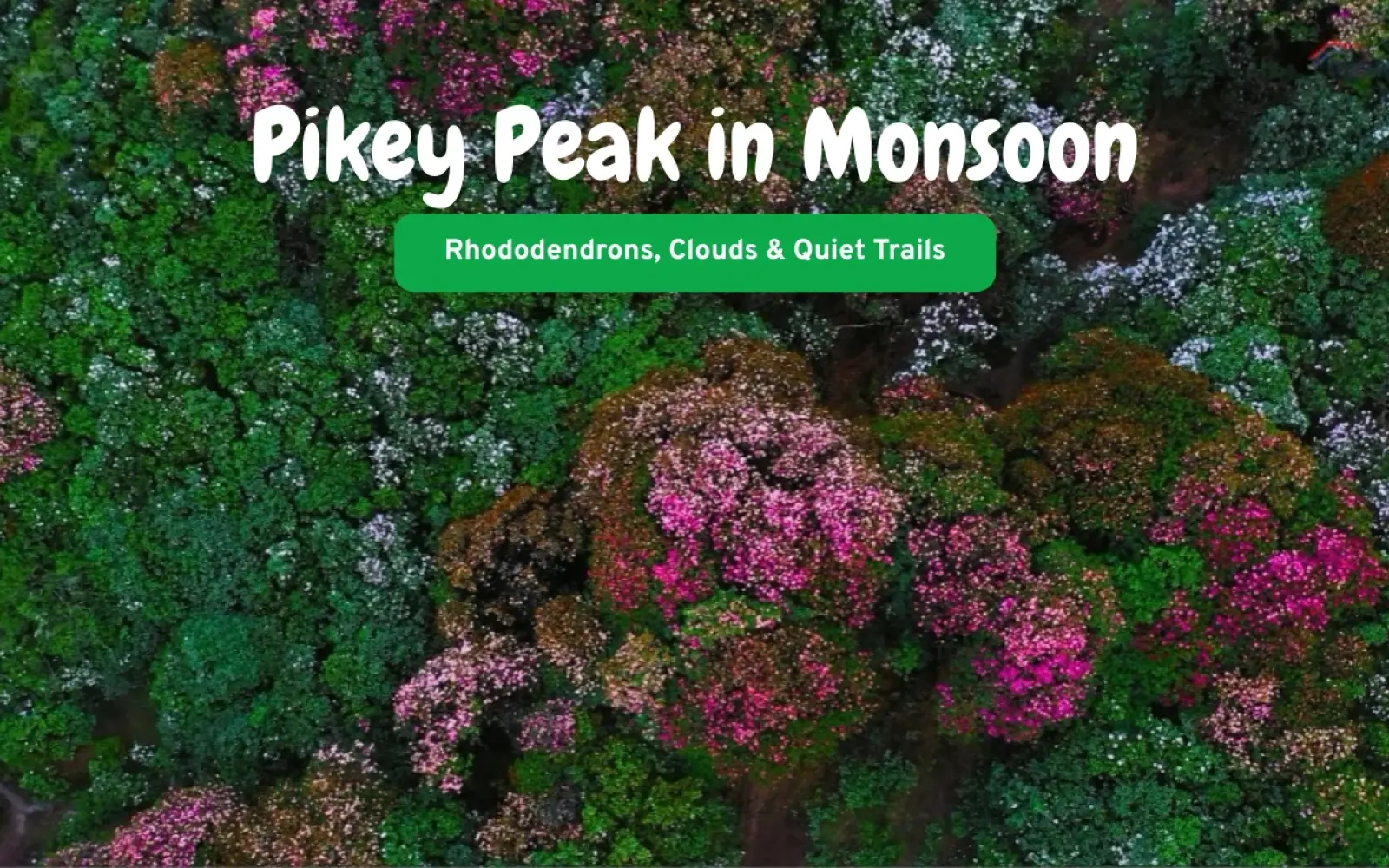

Solukhumbu is synonymous with Mount Everest, but beyond the famous peak lie quieter, magical destinations that often get overlooked. One such gem is Pikey Peak Trek, in Lower Solukhumbu.
As the founder of Majestic Trails Nepal, I decided to explore it during the monsoon season — a time when most people avoid trekking — to experience its beauty firsthand and share that knowledge with our visitors.
Monsoon trekking is different. Instead of the busy paths and dramatic snow-capped peaks seen on the Everest Base Camp route, the hills here are mist-covered, rhododendron forests bloom in vivid colors, clouds drift lazily across valleys, and villages welcome you with genuine warmth.
It’s a quieter, more immersive way to see Nepal.
At 4,065 meters, Pikey Peak is famous for one of Nepal’s finest sunrise viewpoints — offering views of Everest, Kanchenjunga, Makalu, Gaurishankar, Langtang, and Annapurna ranges on a clear day.
But even when clouds hide the mountains, Pikey Peak still delivers something rare: silence, greenery, misty trails, and an emotional connection with nature.
Our journey began early from Kathmandu, driving east through Dhulikhel and along the scenic BP Highway, one of Nepal’s most beautiful roads.
The highway winds through lush forests, rivers, and hill settlements, offering constant views of terraced fields and rolling landscapes.
After lunch in Mulkot, we continued toward Khurkot and turned onto the Mid-Hill Highway toward Okhaldhunga.
Along the way, we passed cornfields, small villages, and roadside shrines — including Setidevi Temple, where travelers traditionally offer mirrors for safe journeys.
By nightfall, fog and rain welcomed us into Okhaldhunga Bazaar, the district headquarters immortalized in Nepali literature.
Though darkness hid the landscapes, the warmth of local life was enough to make us feel at home.
Morning fog covered Okhaldhunga, but village life carried on as usual — shops opening, children walking to school, tea kettles steaming in roadside eateries.
We drove toward Dhap, the main junction where roads separate toward Salleri and Pikey Peak.
From here, the road turned rougher and narrower, signaling our entry into remote Lower Solukhumbu.
Rain began as we moved toward Sigane, where we stopped for hot noodle soup.
Beyond Sigane, muddy off-road tracks became nearly impassable. Vehicles slipped, wheels spun, and progress slowed to a crawl.
Finally, with no other option, we left our vehicles behind and continued by tractor, the most reliable transport in these hills during the monsoon.
As the rain softened and clouds lifted, the landscape revealed rolling green hills, pine forests, and wide open meadows — Lower Solukhumbu at its most poetic.
By evening, we reached Bhulbhule, a peaceful hilltop settlement surrounded by blooming rhododendrons.
With limited electricity and solar lighting, the village felt timeless.
We enjoyed warm food, quiet conversations, and misty sunset views — nature’s gentle reward after a challenging journey.
Bhulbhule sits at around 3,360 meters, making it a perfect starting point for acclimatization.
After breakfast, rain delayed our departure, but eventually, we began our trek toward Pikey Base Camp.
The trail climbed gradually through rhododendron forests bursting with red, pink, white, and purple blossoms.
Fog drifted between the trees, birds sang in the canopy, and fallen leaves softened each step. Even without mountain views, the journey felt magical — almost dreamlike.
We stopped at Lamuje for warm yak milk tea, then continued toward Chepsa, a small settlement where we met cheerful local children and rested briefly.
Further uphill, the trail opened into alpine grasslands.
Mobile network returned unexpectedly, allowing trekkers to call loved ones — a rare luxury in the mountains.
Finally, after about 4–5 hours of trekking, we reached Pikey Base Camp (Tungna Baje Hotel) at around 3,700 meters.
Pikey Base Camp consists of only a handful of lodges, powered mainly by solar energy.
Electricity is limited, so charging devices can be challenging — carrying a power bank is highly recommended.
Warm ginger tea welcomed us as rain clouds drifted overhead.
Despite the cold, the hospitality was unforgettable.
Locals shared stories, music, and laughter, turning a simple lodge into a place of connection.
That evening, we enjoyed traditional meals and rested early, hoping for clear skies the next morning.
Morning sunlight teased us briefly before fog rolled back in.
Still, we packed our bags and began the climb toward Pikey Peak.
The trail rose steeply along stone steps, passing prayer flags and grazing fields.
Mist swallowed the landscape, and at times we could only see a few meters ahead. Yet the path was clear, and the rhythm of footsteps guided us upward.
After about one hour, we reached the summit of Pikey Peak (4,065 m).
Normally, this viewpoint offers one of the finest 360-degree Himalayan panoramas in Nepal — including Everest, Kanchenjunga, Makalu, Gaurishankar, Langtang, and Annapurna ranges.
But that day, the mountains remained hidden behind clouds.
And strangely, it didn’t feel like a loss.
Instead, we stood above a sea of fog, surrounded by silence, prayer flags fluttering in the wind, and rolling green hills beneath our feet.
It was peaceful, emotional, and deeply grounding.
Sometimes, travel gives you exactly what you need — not what you expect.
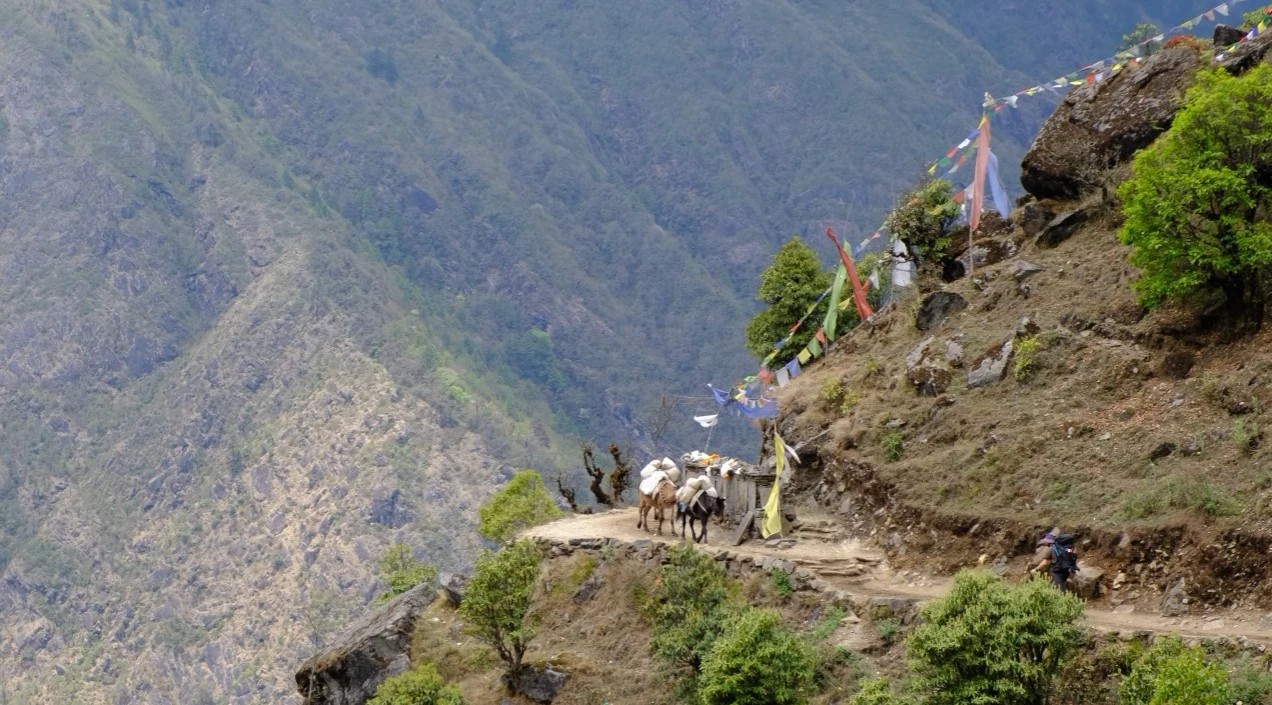
Yes — Pikey Peak Trek is one of the best beginner-friendly treks in Nepal:
With proper acclimatization and pacing, even first-time trekkers can complete this journey comfortably.
| Season | Experience |
| Spring (Mar–May) | Rhododendrons + Clear Himalayan views |
| Autumn (Sep–Nov) | Best weather & mountain visibility |
| Monsoon (Jun–Aug) | Green landscapes, foggy trails, cultural immersion |
| Winter (Dec–Feb) | Cold but peaceful, occasional snow |
While spring and autumn offer classic mountain views, the monsoon reveals Pikey Peak’s softer, emotional side — perfect for travelers who love atmosphere, solitude, and storytelling journeys.
Our dream was to witness Everest and the Himalayan giants from Pikey Peak. Instead, we found blooming forests, drifting clouds, kind strangers, and quiet moments that spoke louder than any mountain view.
Travel doesn’t always go according to plan — and that’s exactly what makes it meaningful.
The tractor drivers who helped us when roads failed, lodge owners who carried our bags uphill, children who smiled without hesitation, and forests that whispered in the rain — they all became part of our story.
Every journey is a blessing. Every season has its own magic. And Pikey Peak Trek proves that beauty exists even when mountains hide.
👉 Explore our Pikey Peak Trek itinerary with Majestic Trails Nepal →
What makes for the best treks in Nepal can vary from person to person. While Everest Base Camp Trek (EBC) at 5545 m is ideal for a trekker wanting the...
Group Departure Trekking in Nepal offers the perfect solution for adventurers who want to explore the Himalayas without the hassle of planning every d...

Let's cut straight to it. Autumn, specifically September through November, is the best time to trek in Nepal. Spring runs a very close second, coverin...

Short on time but big on ambition? Nepal delivers extraordinary mountain experiences in as little as three days, and this guide breaks down exactly wh...
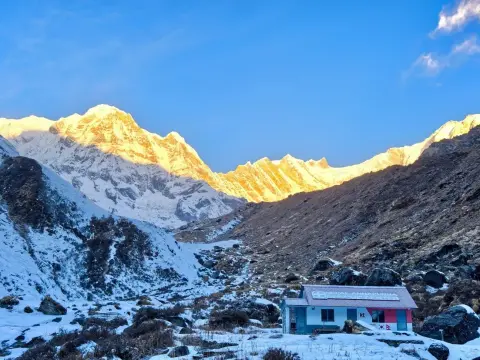
The Annapurna Base Camp trek stands among the world's most iconic Himalayan adventures. Every year, thousands of trekkers from across the globe journe...
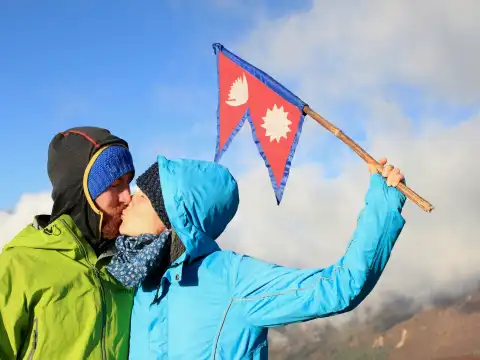
Imagine waking up to breathtaking Himalayan sunrises, sharing candlelit dinners beside serene lakes, and exploring ancient temples hand-in-hand with y...
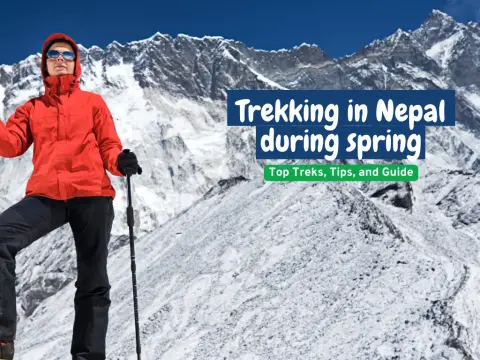
Introduction: Why Spring is Nepal's Golden Season for TrekkersSpring in Nepal is a season of renewal, a time when the Himalayas awaken from their wint...
