[{"name":"Langtang Valley Trek \u2014 10 Days","duration":"10","image_url":"https:\/\/www.majestictrailsnepal.com\/storage\/trip-galleries\/1\/thumb_e7907ed736676d12e6ab17328008e746.webp","offer_price":null,"url":"https:\/\/www.majestictrailsnepal.com\/trips\/langtang-valley-trek"},{"name":"Everest Base Camp Trek","duration":"14","image_url":"https:\/\/www.majestictrailsnepal.com\/storage\/trip-galleries\/2\/thumb_4b769c9c4b5b007a61f4ce3b76ff440d.webp","offer_price":null,"url":"https:\/\/www.majestictrailsnepal.com\/trips\/everest-base-camp-trek"},{"name":"Everest Panorama Trek","duration":"9","image_url":"https:\/\/www.majestictrailsnepal.com\/storage\/trip-galleries\/3\/thumb_e6ee74caea3e2900c23ca370b06bab80.webp","offer_price":null,"url":"https:\/\/www.majestictrailsnepal.com\/trips\/everest-panorama-trek"},{"name":"Annapurna Base Camp Trek","duration":"14","image_url":"https:\/\/www.majestictrailsnepal.com\/storage\/trip-galleries\/4\/thumb_3f8d40f9472f701d7c46a827925201bc.webp","offer_price":null,"url":"https:\/\/www.majestictrailsnepal.com\/trips\/annapurna-base-camp-trek"},{"name":"Annapurna Base Camp Express Trek","duration":"9","image_url":"https:\/\/www.majestictrailsnepal.com\/storage\/trip-galleries\/5\/thumb_bac80de2bd257d651fa75d9c8025da1a.webp","offer_price":null,"url":"https:\/\/www.majestictrailsnepal.com\/trips\/annapurna-base-camp-express-trek"},{"name":"Annapurna Circuit Trek","duration":"15","image_url":"https:\/\/www.majestictrailsnepal.com\/storage\/trip-galleries\/6\/thumb_b73bdec74acacaa0d72a2a2a513f3d4a.webp","offer_price":null,"url":"https:\/\/www.majestictrailsnepal.com\/trips\/annapurna-circuit-trek"},{"name":"Ghorepani Poon Hill Trek","duration":"8","image_url":"https:\/\/www.majestictrailsnepal.com\/storage\/trip-galleries\/7\/thumb_aeda9e6388ab2692138cc9c9efa81a7f.webp","offer_price":null,"url":"https:\/\/www.majestictrailsnepal.com\/trips\/ghorepani-poon-hill-trek"},{"name":"Mardi Himal Trek \u2014 9 Days","duration":"9","image_url":"https:\/\/www.majestictrailsnepal.com\/storage\/trip-galleries\/8\/thumb_c511ee87ecab8ff015210dd647392d66.webp","offer_price":null,"url":"https:\/\/www.majestictrailsnepal.com\/trips\/mardi-himal-trek"},{"name":"Manaslu Circuit Trek","duration":"15","image_url":"https:\/\/www.majestictrailsnepal.com\/storage\/trip-galleries\/9\/thumb_7726908390ad6b249f2f6a7856f9dc17.webp","offer_price":null,"url":"https:\/\/www.majestictrailsnepal.com\/trips\/manaslu-circuit-trek"},{"name":"Upper Mustang Trek","duration":"16","image_url":"https:\/\/www.majestictrailsnepal.com\/storage\/trip-galleries\/10\/thumb_6a9b52ecd1d8cda92d594e5351431d6e.webp","offer_price":null,"url":"https:\/\/www.majestictrailsnepal.com\/trips\/upper-mustang-trek"},{"name":"Pokhara City Tour","duration":"1","image_url":"https:\/\/www.majestictrailsnepal.com\/storage\/trip-galleries\/11\/thumb_cf762ba4c20363bd1c0f239db35fcc84.webp","offer_price":null,"url":"https:\/\/www.majestictrailsnepal.com\/trips\/pokhara-city-tour"},{"name":"Paragliding in Pokhara","duration":"1","image_url":"https:\/\/www.majestictrailsnepal.com\/storage\/trip-galleries\/12\/thumb_b896201edf88bbe0f570e876c3c337a3.webp","offer_price":70,"url":"https:\/\/www.majestictrailsnepal.com\/trips\/paragliding-in-pokhara"},{"name":"Kathmandu City Tour","duration":"2","image_url":"https:\/\/www.majestictrailsnepal.com\/storage\/trip-galleries\/13\/thumb_846ad05bd3ce7bebb3843c24c08db6f9.webp","offer_price":null,"url":"https:\/\/www.majestictrailsnepal.com\/trips\/kathmandu-city-tour"},{"name":"Lumbini Buddhist Pilgrimage Tour","duration":"4","image_url":"https:\/\/www.majestictrailsnepal.com\/storage\/trip-galleries\/14\/a2998dca0ce22f28a61c3862dd47f6a3.webp","offer_price":null,"url":"https:\/\/www.majestictrailsnepal.com\/trips\/lumbini-buddhist-pilgrimage-tour"},{"name":"5 days langtang valley trek","duration":"5","image_url":"https:\/\/www.majestictrailsnepal.com\/storage\/trip-galleries\/15\/thumb_7a6c65c139b8085d220ac01913cb1448.webp","offer_price":510,"url":"https:\/\/www.majestictrailsnepal.com\/trips\/5-days-langtang-valley-trek"},{"name":"Leisure Port Nepal Price: Rafting and Camping Adventure","duration":"7","image_url":"https:\/\/www.majestictrailsnepal.com\/storage\/trip-galleries\/17\/thumb_02cb8c3f0697c7c5c4f73d744b47d87f.webp","offer_price":550,"url":"https:\/\/www.majestictrailsnepal.com\/trips\/leisure-port-nepal-price-rafting-and-camping-adventure"},{"name":"10 days spiritual tour in Nepal","duration":"10","image_url":"https:\/\/www.majestictrailsnepal.com\/storage\/trip-galleries\/18\/thumb_b4e7eba000673d1bce6b56abb422fe3b.webp","offer_price":1200,"url":"https:\/\/www.majestictrailsnepal.com\/trips\/10-days-spiritual-tour-in-nepal"},{"name":"Annapurna Circuit Short Trek","duration":"10","image_url":"https:\/\/www.majestictrailsnepal.com\/storage\/trip-galleries\/19\/thumb_769ee8cbe02a510d8db76419c97a2dc9.webp","offer_price":null,"url":"https:\/\/www.majestictrailsnepal.com\/trips\/annapurna-circuit-short-trek"},{"name":"Best Short Manaslu Circuit Trek","duration":"11","image_url":"https:\/\/www.majestictrailsnepal.com\/storage\/trip-galleries\/20\/thumb_ac1b4977a3fce9d11ee68240cad675b6.webp","offer_price":null,"url":"https:\/\/www.majestictrailsnepal.com\/trips\/best-short-manaslu-circuit-trek"},{"name":"Langtang Gosaikunda Trek","duration":"13","image_url":"https:\/\/www.majestictrailsnepal.com\/storage\/trip-galleries\/22\/thumb_577a6402f2ca4b3f12bfd80b96b33a23.webp","offer_price":940,"url":"https:\/\/www.majestictrailsnepal.com\/trips\/langtang-gosaikunda-trek"},{"name":"3 Passes Trek Nepal","duration":"22","image_url":"https:\/\/www.majestictrailsnepal.com\/storage\/trip-galleries\/24\/thumb_8020edea67aefce87e9012dc89a60087.webp","offer_price":null,"url":"https:\/\/www.majestictrailsnepal.com\/trips\/3-passes-trek-nepal"},{"name":"Tsum Valley Trek","duration":"13","image_url":"https:\/\/www.majestictrailsnepal.com\/storage\/trip-galleries\/25\/thumb_194c03e3c3463dff07a3f621a81ef9ea.webp","offer_price":null,"url":"https:\/\/www.majestictrailsnepal.com\/trips\/tsum-valley-trek"},{"name":"Gokyo and Renjo La Pass Trek","duration":"14","image_url":"https:\/\/www.majestictrailsnepal.com\/storage\/trip-galleries\/26\/thumb_7b865f0f0d0d4c6807b625b6e391b56d.webp","offer_price":1490,"url":"https:\/\/www.majestictrailsnepal.com\/trips\/gokyo-and-renjo-la-pass-trek"},{"name":"Honeymoon Tour in Nepal","duration":"9","image_url":"https:\/\/www.majestictrailsnepal.com\/storage\/trip-galleries\/27\/thumb_dabf449c090bb16efd5823c653eb61b3.webp","offer_price":null,"url":"https:\/\/www.majestictrailsnepal.com\/trips\/honeymoon-tour-in-nepal"},{"name":"Pikey Peak Trek","duration":"10","image_url":"https:\/\/www.majestictrailsnepal.com\/storage\/trip-galleries\/28\/thumb_5425e57ce3ea84d31a7b24b83b1af94f.webp","offer_price":1090,"url":"https:\/\/www.majestictrailsnepal.com\/trips\/pikey-peak-trek"},{"name":"Makalu Base Camp Trek","duration":"17","image_url":"https:\/\/www.majestictrailsnepal.com\/storage\/trip-galleries\/29\/thumb_d68c8ec6492540c922045d825a38cd50.webp","offer_price":null,"url":"https:\/\/www.majestictrailsnepal.com\/trips\/makalu-base-camp-trek"},{"name":"Nepal Winter Tour","duration":"8","image_url":"https:\/\/www.majestictrailsnepal.com\/storage\/trip-galleries\/30\/thumb_c8491c0c4b1fb19d8e93630866895799.webp","offer_price":null,"url":"https:\/\/www.majestictrailsnepal.com\/trips\/nepal-winter-tour"},{"name":"Maratika Tour in Nepal","duration":"6","image_url":"https:\/\/www.majestictrailsnepal.com\/storage\/trip-galleries\/31\/thumb_97948560c5a12a486f9ac2b76567cafd.webp","offer_price":null,"url":"https:\/\/www.majestictrailsnepal.com\/trips\/maratika-tour-in-nepal"},{"name":"Nepal Lake Trek","duration":"14","image_url":"https:\/\/www.majestictrailsnepal.com\/storage\/trip-galleries\/32\/thumb_d9b260fe13127816f5b3c25447caf70c.webp","offer_price":null,"url":"https:\/\/www.majestictrailsnepal.com\/trips\/nepal-lake-trek"},{"name":"Taste of Nepal Tour Package","duration":"9","image_url":"https:\/\/www.majestictrailsnepal.com\/storage\/trip-galleries\/33\/thumb_f4b55ab5760a8e057b4c3e208e25ab36.webp","offer_price":null,"url":"https:\/\/www.majestictrailsnepal.com\/trips\/taste-of-nepal-tour-package"},{"name":"Poon Hill Yoga Trek in Nepal","duration":"9","image_url":"https:\/\/www.majestictrailsnepal.com\/storage\/trip-galleries\/34\/thumb_904b238e690107c5c9b1092296880cc9.webp","offer_price":null,"url":"https:\/\/www.majestictrailsnepal.com\/trips\/poon-hill-yoga-trek-in-nepal"},{"name":"Nar Phu Nepal Trek","duration":"10","image_url":"https:\/\/www.majestictrailsnepal.com\/storage\/trip-galleries\/35\/thumb_f959e3e22c260629add0ba61a4038812.webp","offer_price":null,"url":"https:\/\/www.majestictrailsnepal.com\/trips\/nar-phu-nepal-trek"},{"name":"Annapurna Base Camp Helicopter Tour","duration":"1","image_url":"https:\/\/www.majestictrailsnepal.com\/storage\/trip-galleries\/36\/thumb_e81861e8772a9d7fac92ab4a7d43e3bf.webp","offer_price":null,"url":"https:\/\/www.majestictrailsnepal.com\/trips\/annapurna-base-camp-helicopter-tour"},{"name":"Annapurna Circuit with Nar Phu Valley Trek","duration":"16","image_url":"https:\/\/www.majestictrailsnepal.com\/storage\/trip-galleries\/38\/thumb_b70692cbd1c1dd772587c940be2d0bc9.webp","offer_price":null,"url":"https:\/\/www.majestictrailsnepal.com\/trips\/annapurna-circuit-with-nar-phu-valley-trek"}]
Group Departure Trekking in Nepal – Join Pre-Scheduled Adventures
Group Departure Trekking in Nepal offers the perfect solution for adventurers who want to explore the Himalayas without the hassle of planning every detail themselves. These pre-scheduled treks provide fixed departure dates, complete itineraries, and the opportunity to join fellow travelers from around the world on unforgettable mountain journeys.
Whether you're a solo traveler seeking companionship on the trail, a couple looking for a hassle-free adventure, or a small group wanting to join a larger expedition, group departure treks combine convenience with comprehensive support. Professional guides, organized logistics, and shared experiences create memorable adventures while reducing individual costs.
From the iconic Everest Base Camp route to the diverse landscapes of the Annapurna Circuit, Nepal group trekking packages cater to various fitness levels and time constraints. With everything arranged—from permits to accommodation—you simply need to show up ready to trek and enjoy the incredible Himalayan experience alongside like-minded adventurers.
Why Choose Group Departure Trekking?
Joining a scheduled group trek offers numerous advantages over independent trekking or organizing private expeditions.
Pre-Planned Itineraries
Every detail of your trek is already organized by experienced professionals who know the routes intimately. This eliminates the stress of researching trails, booking teahouses, and coordinating transportation.
Benefits include:
Optimized daily distances matching average trekker capabilities
Strategic acclimatization rest days built into schedules
Proven routes with reliable accommodation options
Backup plans for weather-related adjustments
Experienced Guides Included
Professional, government-licensed guides lead all group departures, bringing invaluable local knowledge and safety expertise to your journey.
Your guides provide:
Navigation through complex trail systems
Cultural insights about villages and traditions
Emergency response training and first aid certification
Communication with local communities in their native languages
Altitude sickness monitoring and health assessments
Safety in Numbers
Trekking in a group significantly enhances safety compared to solo adventures, particularly in remote mountain environments.
Group trekking safety advantages:
Immediate assistance available if anyone experiences health issues
Multiple people to help in emergency situations
Reduced risk of getting lost on unclear trail sections
Psychological comfort knowing you're not alone in challenging conditions
Collective decision-making during weather uncertainties
Meet Like-Minded Trekkers
Group departures create instant communities of adventure enthusiasts from diverse backgrounds who share a common goal.
Social benefits:
Form friendships that often last long after the trek ends
Share experiences, photos, and memories with companions
Mutual encouragement during difficult climbing sections
Evening conversations that enrich cultural understanding
Celebration of achievements together at destination points
Cost-Effectiveness
Sharing resources among group members reduces per-person costs compared to private treks, making Himalayan adventures more accessible.
Economic advantages:
Guide and porter costs divided among participants
Group discounts on permits and park fees in some regions
Shared transportation expenses to and from trailheads
Better negotiating power for accommodation and services
Upcoming Group Departure Treks
Below is a Upcoming scheduled group departures. Contact us for current availability and additional dates.
Note: Departures are confirmed with a minimum of 4 participants. Early booking recommended during peak seasons (March-May, September-November). Contact us and provide your date.
Special Offers:
Early Bird Discount: Book 60+ days in advance for 5% off
Group Discount: 4+ people booking together receive 10% off
Repeat Trekker Bonus: Previous clients get 7% off additional treks
Popular Group Departure Treks in Nepal
Several iconic routes dominate the scheduled treks in Nepal calendar, each offering unique landscapes and cultural experiences.
Everest Base Camp Group Trek
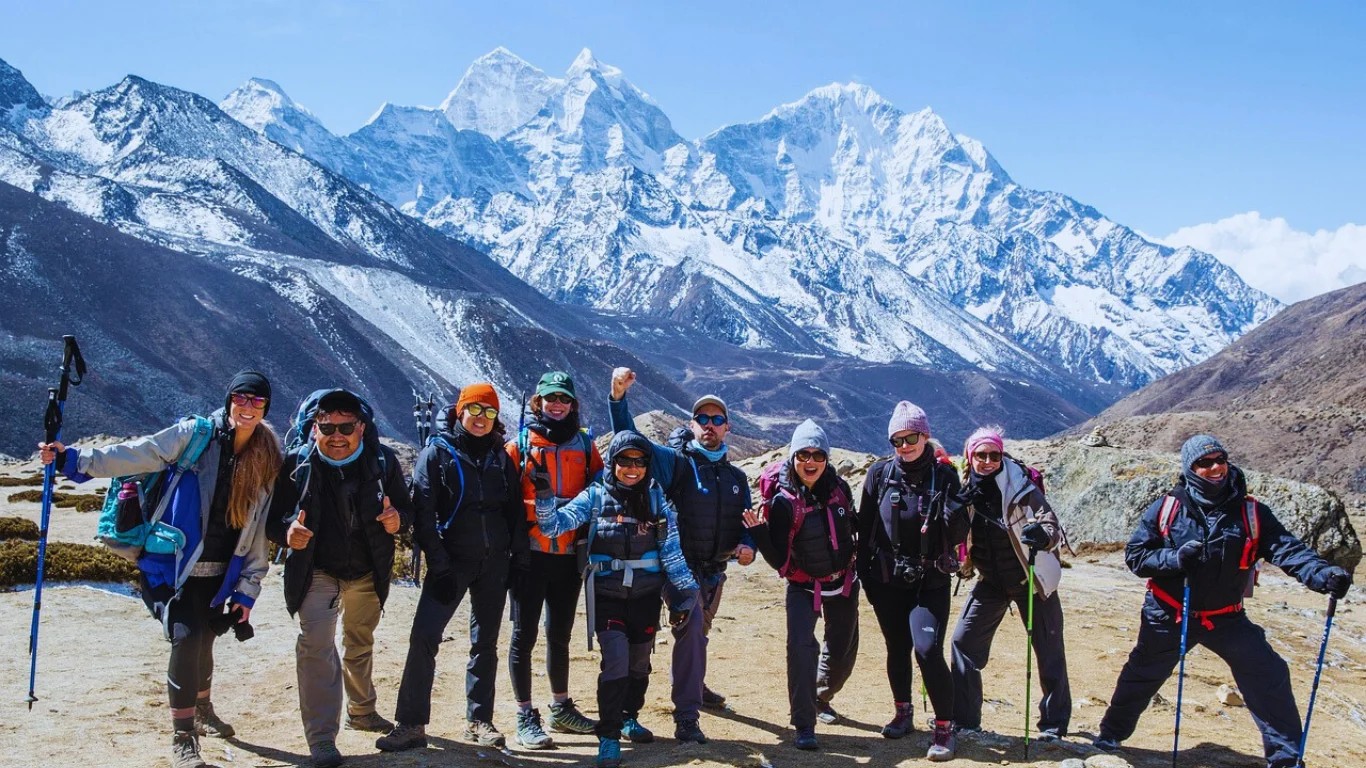
Trekkers posing together at Everest Base Camp on a group departure trek in Nepal.
The world's most famous trekking route brings you to the base of Earth's highest mountain, following in the footsteps of legendary mountaineers. Check out the Prices of Everest Base Camp group trek.
Trek Overview:
Duration: 12-14 days
Maximum Altitude: 5,364 meters (Kala Patthar viewpoint)
Difficulty Level: Moderate to Challenging
Best Seasons: March-May, September-November
Highlights:
Stand at Everest Base Camp (5,364m)
Sunrise views from Kala Patthar with Everest panorama
Visit Tengboche Monastery, the spiritual heart of Khumbu
Experience Sherpa culture in traditional villages
Dramatic mountain scenery including Lhotse, Nuptse, and Ama Dablam
Thrilling flight into Lukla's hillside airport
Annapurna Circuit Group Trek
This classic circuit trek showcases incredible landscape diversity, from subtropical forests to high-altitude desert, crossing one of the world's highest trekking passes. Check out the group depatures prices of Annapurna Circuit Trek.
Trek Overview:
Duration: 15-18 days
Maximum Altitude: 5,416 meters (Thorong La Pass)
Difficulty Level: Moderate to Challenging
Best Seasons: March-May, September-November
Highlights:
Cross Thorong La Pass at 5,416 meters
Diverse landscapes from rice terraces to alpine tundra
Visit sacred Muktinath Temple
Stunning views of Annapurna, Dhaulagiri, and Manaslu ranges
Experience varied cultural communities from Hindu to Buddhist
Natural hot springs in Tatopani
Langtang Valley Group Trek
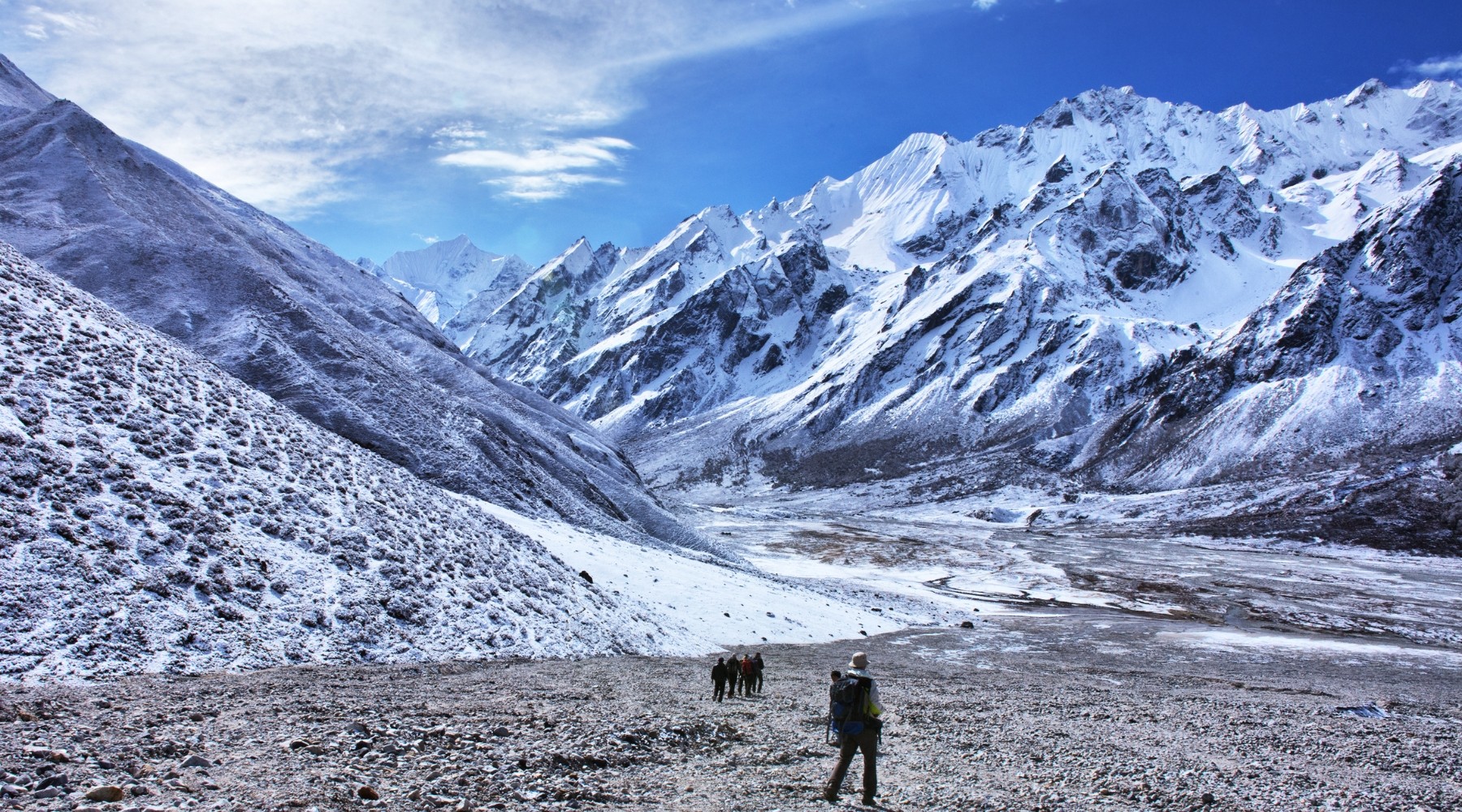
Adventurers walking together through Langtang Valley during a group departure trek.
Often called the "valley of glaciers," Langtang offers spectacular mountain scenery closer to Kathmandu, making it ideal for those with limited time.
Trek Overview:
Duration: 7-10 days
Maximum Altitude: 4,984 meters (Kyanjin Ri viewpoint)
Difficulty Level: Moderate
Best Seasons: March-May, September-November
Highlights:
Close-up views of Langtang Lirung (7,227m)
Traditional Tamang villages with Tibetan cultural influences
Ancient cheese factories producing local yak cheese
Optional climb to Tserko Ri (4,984m) or Kyanjin Ri (4,773m)
Rich wildlife including red pandas and Himalayan tahr
Relatively less crowded than Everest and Annapurna regions
Annapurna Base Camp Group Trek
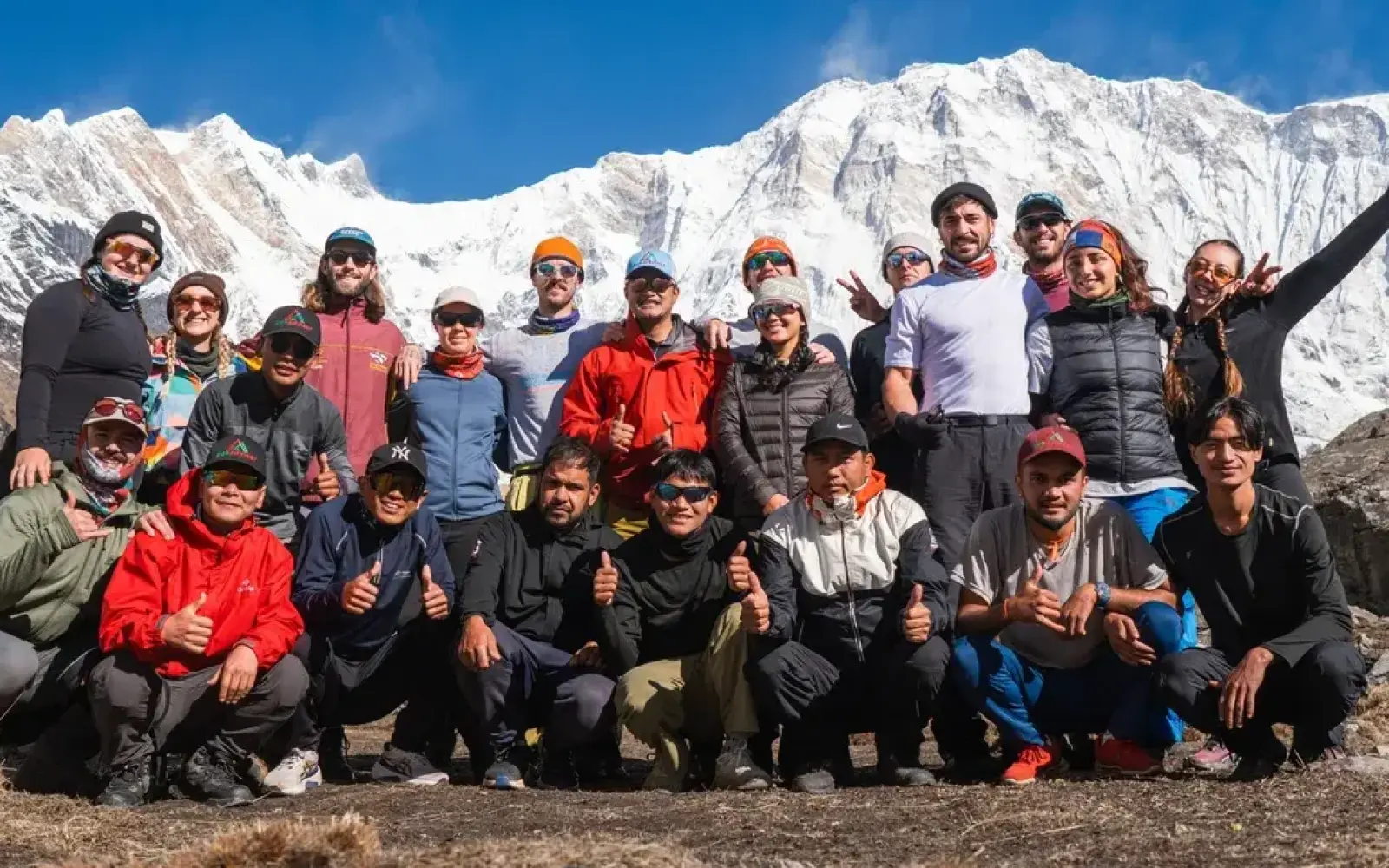
A group of trekkers enjoying the view at Annapurna Base Camp during a scheduled group departure.
This shorter alternative to the Annapurna Circuit leads directly into the heart of the Annapurna Sanctuary, surrounded by towering peaks on all sides.
Trek Overview:
Duration: 7-12 days
Maximum Altitude: 4,130 meters (Annapurna Base Camp)
Difficulty Level: Moderate
Best Seasons: March-May, September-November
Highlights:
360-degree amphitheater of peaks at Annapurna Base Camp
Views of iconic Macchapuchre (Fishtail) mountain
Pass through diverse climate zones and vegetation
Traditional Gurung villages with cultural hospitality
Terraced farmland transitioning to alpine landscape
Natural hot springs at Jhinu Danda
Mardi Himal Short Trek
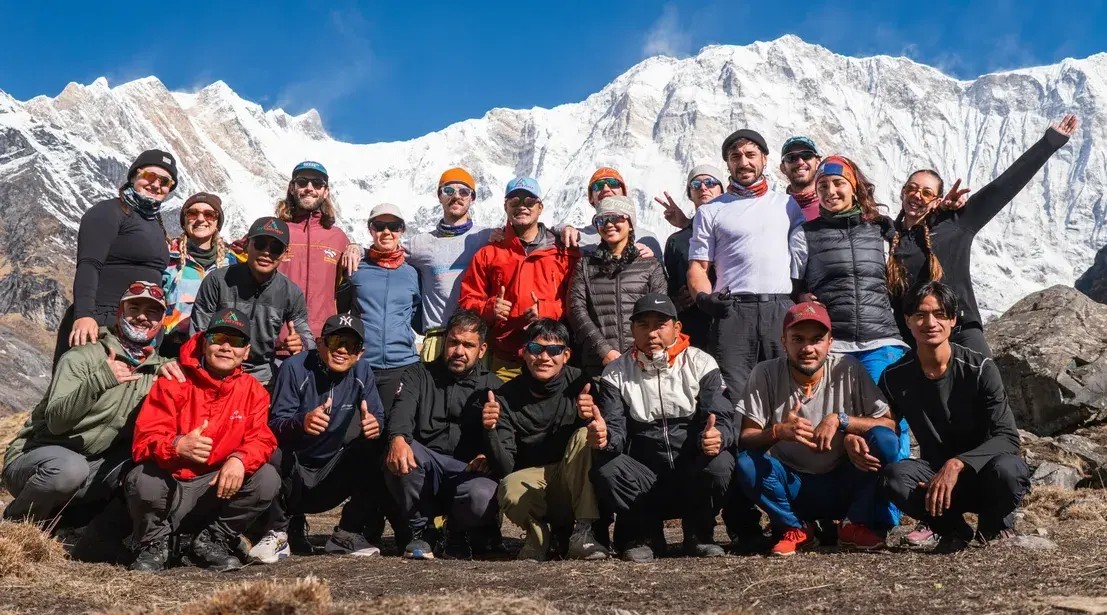
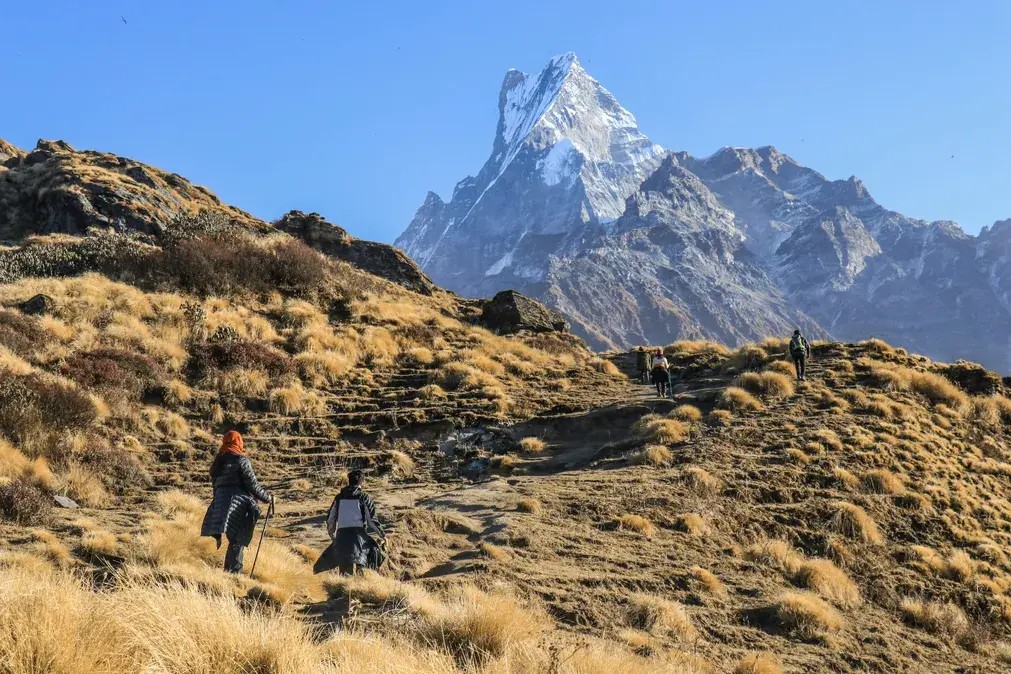
Trekkers enjoying scenic views on the Mardi Himal Short Trek during a group departure.
Perfect for travelers with limited time, this relatively new route offers spectacular mountain views with fewer crowds.
Trek Overview:
Duration: 5-7 days
Maximum Altitude: 4,500 meters (Mardi Himal Base Camp)
Difficulty Level: Moderate
Best Seasons: March-May, September-November
Highlights:
Close-up views of Macchapuchre and Mardi Himal
Ridge walking with panoramic Himalayan vistas
Less crowded trails compared to classic routes
Relatively shorter duration ideal for time-limited travelers
Diverse landscapes from rhododendron forests to alpine zones
Accessible from Pokhara with easy logistics
Sample Group Departure Itinerary: Everest Base Camp Trek
This 14-day Everest Base Camp group trek itinerary demonstrates the typical structure of group departure packages.
Day 1: Arrival in Kathmandu (1,400m)
Airport pickup and transfer to hotel
Welcome dinner with trek briefing
Gear check and last-minute equipment rental if needed
Meet your trekking group and guide team
Day 2: Fly to Lukla, Trek to Phakding (2,610m)
Exciting mountain flight to Lukla (35 minutes)
Begin trekking through pine forests
Follow the Dudh Koshi River valley
Overnight in Phakding teahouse
Walking Time: 3-4 hours
Day 3: Phakding to Namche Bazaar (3,440m)
Cross several suspension bridges
Enter Sagarmatha National Park
Steep climb to Namche Bazaar
First views of Everest (weather permitting)
Walking Time: 5-6 hours
Day 4: Acclimatization Day in Namche Bazaar
Optional hike to Everest View Hotel (3,880m)
Visit Sherpa Culture Museum
Explore Namche's markets and bakeries
Rest and prepare for higher altitudes
Day 5: Namche to Tengboche (3,860m)
Traverse mountainside with spectacular views
Visit Tengboche Monastery
Afternoon prayer ceremony (if timing allows)
Views of Everest, Lhotse, Nuptse, and Ama Dablam
Walking Time: 5-6 hours
Day 6-10: Tengboche to Everest Base Camp and Return
Progress through Dingboche and Lobuche
Include acclimatization day at Dingboche
Reach Everest Base Camp (5,364m)
Climb Kala Patthar for sunrise Everest views
Begin descent to lower elevations
Day 11-13: Return Trek to Lukla
Descend through villages already visited
Celebrate completion with group in Lukla
Final night with team
Day 14: Fly to Kathmandu, Farewell Dinner
Morning flight back to Kathmandu
Free afternoon for shopping or relaxation
Optional farewell dinner with group
Certificate of completion ceremony
Optional Extensions
Extra Kathmandu Days: Temple tours, cultural experiences
Pokhara Add-On: Lakeside relaxation and activities
Chitwan Safari: Wildlife viewing in subtropical jungle
Cost & Package Details
Nepal trekking packages for group departures typically range from $1,200 to $2,500 per person, depending on trek duration, route difficulty, and included services.
What's Included in Standard Packages
Accommodation:
Hotel nights in Kathmandu (3-4 stars) with breakfast
Teahouse lodges during the trek (twin-sharing rooms)
Basic but clean facilities with shared bathrooms
Meals:
Full board during trekking days (breakfast, lunch, dinner)
Tea/coffee at meals
Selection of local and international dishes
Transportation:
Airport pickup and drop-off
All ground transportation to/from trailheads
Domestic flights (Lukla, Pokhara, etc.) where applicable
Guide and Porter Services:
Government-licensed trekking guide
Assistant guide for groups over 8 people
Porter service (one porter for two trekkers, carrying up to 20kg)
Staff accommodation, meals, insurance, and salaries
Permits and Fees:
Trekking permits (TIMS card)
National park entry fees
Local community fees where applicable
Safety Equipment:
Comprehensive first aid kit
Oximeter for altitude monitoring
Emergency evacuation arrangements (costs covered by your insurance)
What's NOT Included
International airfare to/from Nepal
Nepal entry visa ($30-50 USD depending on duration)
Travel and medical insurance (mandatory)
Lunch and dinner in Kathmandu
Personal trekking equipment
Personal expenses (WiFi, charging, extra snacks, drinks)
Tips for guides and porters (customary but not mandatory)
Emergency evacuation costs (covered by insurance)
Optional Upgrades
Private Room Supplement: $15-25 per night for single occupancy
Luxury Teahouse Upgrade: Higher-end lodges where available ($200-400 additional)
Private Group Departure: Customize dates for your own group (minimum 4 people)
Carry altitude sickness medication (Diamox) after medical consultation
Bring personal prescription medications in original packaging
Pack basic first aid supplies (blister treatment, pain relievers, antiseptic)
During the trek:
Stay hydrated (3-4 liters daily at altitude)
Follow guide's pace—slow and steady
Inform guides immediately of any symptoms
Don't skip acclimatization days
Avoid alcohol at high altitudes
Travel Insurance
Mandatory for all group participants. Your policy must cover:
Medical treatment up to at least $100,000
Helicopter evacuation from altitudes up to 6,000 meters
Trip cancellation and interruption
Lost or stolen equipment
Recommended providers: World Nomads, Global Rescue, IMG Global, True Traveller
Cultural Sensitivity
Respect local customs:
Dress modestly, especially in villages and religious sites
Ask permission before photographing people
Remove shoes before entering temples and homes
Walk clockwise around Buddhist monuments and stupas
Respect environmental guidelines (carry out all trash)
Frequently Asked Questions
Can beginners join group departure treks?
Yes! Many scheduled treks in Nepal cater specifically to beginners with no prior trekking experience. Routes like Langtang Valley, Annapurna Base Camp, and Mardi Himal are excellent introductions to Himalayan trekking. Guides adjust pace to group abilities, and itineraries include acclimatization days.
Beginner-friendly treks:
Poon Hill Short Trek (4-5 days)
Langtang Valley Trek (7-10 days)
Mardi Himal Trek (5-7 days)
However, moderate fitness and mental preparation remain important even on beginner routes.
How large are typical group sizes?
Most group departures maintain 4-12 participants to balance social interaction with personalized attention. Smaller groups (4-6 people) offer more flexibility, while larger groups (10-12) create vibrant social atmospheres and better cost efficiency.
Groups exceeding 8 people typically include an assistant guide ensuring everyone receives adequate support.
Can I choose my trek difficulty level?
Absolutely. Operators offer departures across various difficulty levels from easy to strenuous. When booking, clearly communicate your fitness level, experience, and preferences. Trek descriptions always indicate difficulty ratings.
Difficulty categories:
Easy: Poon Hill, Ghorepani Trek
Moderate: Langtang Valley, Annapurna Base Camp, Mardi Himal
Moderate-Challenging: Everest Base Camp
Challenging: Annapurna Circuit, Three Passes Trek, Manaslu Circuit
Are international travelers welcome on all departures?
Yes! Group departures attract international participants from around the world. This diversity enriches the experience as trekkers share perspectives from different cultures. English serves as the common language, with guides fluent in English and often additional languages.
Single travelers, couples, and small groups from any country can join scheduled departures.
What if I need to cancel my booking?
Cancellation policies vary by operator but typically follow this structure:
60+ days before departure: Full refund minus deposit (usually 10-20%)
30-59 days before: 50% refund
15-29 days before: 25% refund
Less than 15 days: No refund
Travel insurance with trip cancellation coverage protects your investment against unforeseen circumstances.
How do I book a group departure trek?
Simple booking process:
Choose your trek and date from available departures
Submit booking inquiry with preferred dates and participant details
Receive confirmation with payment instructions
Pay deposit (typically 20-30%) to secure your spot
Complete pre-trek paperwork including insurance details
Pay remaining balance 30-45 days before departure
Receive final trip details including meeting points and contacts
What happens if minimum group size isn't met?
Operators typically require minimum 4 participants to confirm departures. If minimum isn't reached, you'll receive these options:
Transfer to alternative departure date
Join different trek with available space
Upgrade to private trek with supplemental cost
Full refund of all payments
Reputable operators notify participants at least 30 days in advance if cancellation appears likely.
Why Book Your Group Departure Trek With Us
Choosing the right trekking company makes the difference between a good trek and an extraordinary adventure.
Our Commitments
Experienced Team: Government-licensed guides with 10+ years of Himalayan experience and certified first aid training.
Safety First: Comprehensive emergency protocols, satellite communication devices on all treks, and 24/7 support.
Fair Wages: We pay guides and porters above industry standards and provide complete insurance coverage.
Environmental Responsibility: Follow Leave No Trace principles, support local conservation efforts, and minimize environmental impact.
Cultural Sensitivity: Work directly with local communities, employ local staff, and respect traditional practices.
Transparent Pricing: No hidden costs, clear inclusions/exclusions, and honest communication about all aspects.
Ready to Join?
Group Departure Trekking in Nepal offers the perfect combination of adventure, convenience, and camaraderie. Whether you're drawn to the legendary Everest Base Camp, the diverse Annapurna Circuit, or the accessible Langtang Valley, our scheduled departures provide complete support for unforgettable Himalayan experiences.
Book your adventure today and join trekkers from around the world on the journey of a lifetime!