
Why Trekking in Nepal Should Be Your Next Adventure
14 Feb 2026
If you've ever wondered why trekking in Nepal captivates adventurers from every corner of the globe, the answer lies in its extraordinary combination...

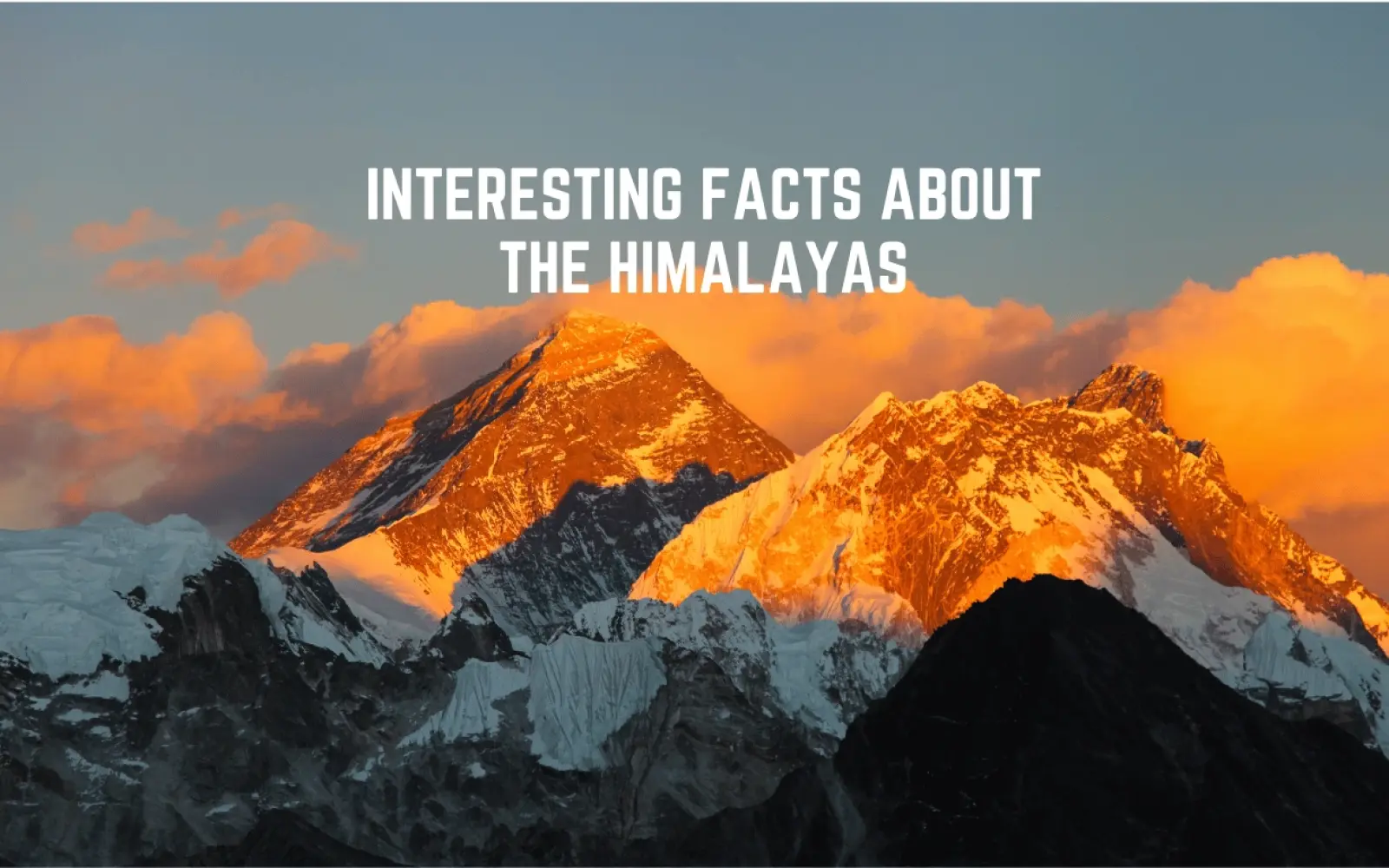

The Himalayas stretch 2,400 km across five countries — Nepal, India, Bhutan, China (Tibet), and Pakistan — and contain 10 of the world's 14 highest peaks. The name means "Abode of Snow" in Sanskrit. Mount Everest, the highest at 8,848.86m, sits on the Nepal-Tibet border. The range is 50-60 million years old, still growing 5mm per year, and is home to over 15,000 glaciers holding the largest ice reserves outside the polar regions.
This guide covers 40 interesting facts about the Himalayas — from geological history and the highest mountains, to wildlife, glaciers, sacred cultures, and the modern realities of climbing and trekking in the world's tallest mountain range.
Key Takeaways — the 10 Most Important Facts
| Detail | Information |
|---|---|
| Meaning of "Himalaya" | Abode of Snow (Sanskrit) |
| Total length | ~2,400 km (1,491 miles) |
| Width | 150-350 km |
| Countries spanned | 5 (Nepal, India, Bhutan, China, Pakistan) |
| Age | 50-60 million years |
| Growth rate | ~5mm per year |
| Highest peak | Mount Everest (8,848.86m) |
| Number of 8,000m+ peaks | 10 of the world's 14 |
| Total glaciers | 15,000+ |
| Population living in the Himalayas | 52+ million |
| Rivers originating from Himalayas | Indus, Ganges, Brahmaputra + many more |
| People served by Himalayan rivers | 1.6+ billion |
The Himalayas are the highest mountain range on Earth, stretching approximately 2,400 km (1,491 miles) across the Indian subcontinent and separating the plains of India from the Tibetan Plateau. The range spans five countries — Nepal, India, Bhutan, China (Tibet Autonomous Region), and Pakistan — and contains the world's highest peaks including Mount Everest at 8,848.86m.
The Himalayas were formed roughly 50-60 million years ago when the Indian tectonic plate collided with the Eurasian plate — a process that continues today, pushing the mountains higher by approximately 5mm every year.
For anyone wanting just the essentials, here are the 5 most important facts about the Himalayas:
Fact #1: The Himalayas are the world's highest mountain range, with peaks reaching over 8,000 meters.
Fact #2: "Himalaya" means "Abode of Snow" in Sanskrit.
Fact #3: The Himalayas span 5 countries: Nepal, India, Bhutan, China (Tibet), and Pakistan.
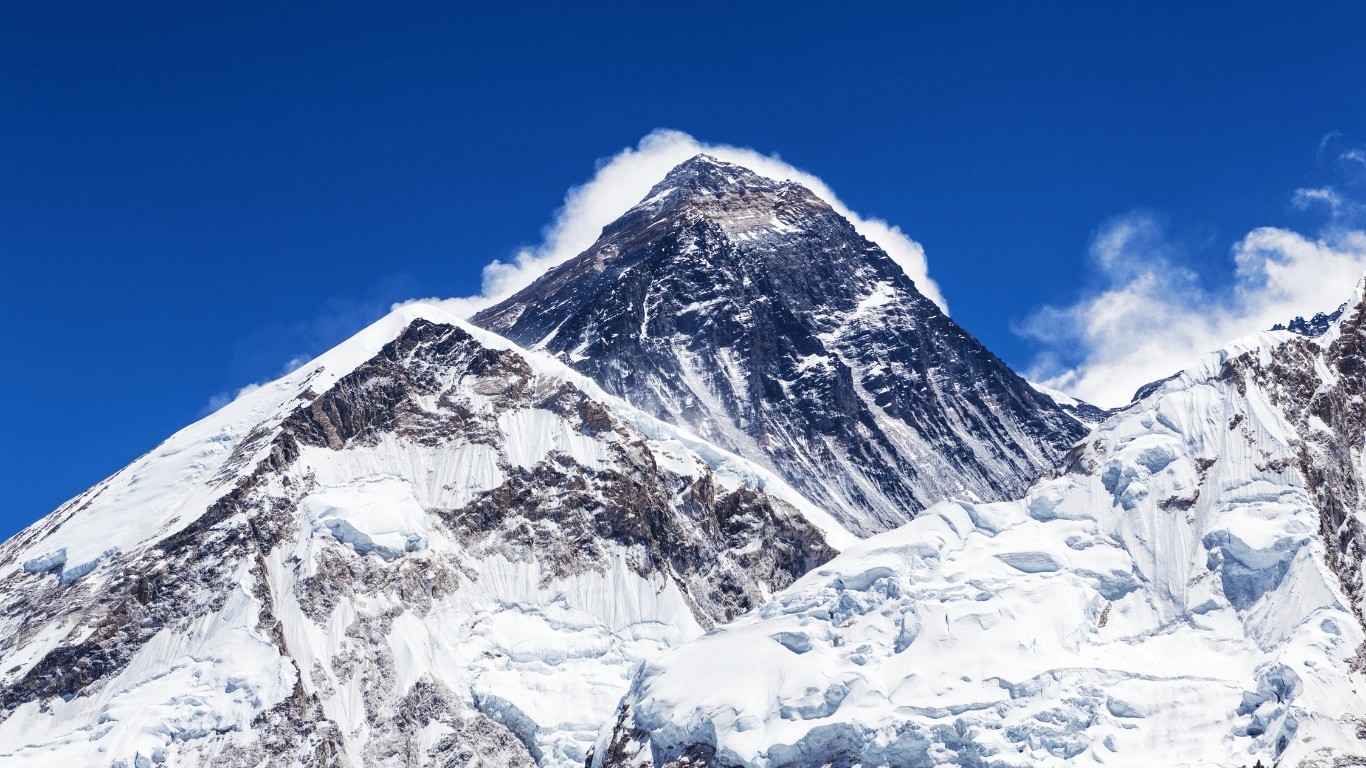
Fact #4: Mount Everest, the world's highest peak at 8,848.86m, sits on the Nepal-Tibet border.
Fact #5: The Himalayan glaciers feed rivers that provide water to over 1.6 billion people across South Asia.
Expanding beyond the basics — here are 10 fascinating facts about the Himalayan mountain range:
Fact #6: The Himalayas contain 10 of the world's 14 mountains over 8,000 meters (called the "eight-thousanders"). The remaining 4 are in the neighbouring Karakoram range in Pakistan and China.
Fact #7: The Himalayas are still growing — pushed higher by approximately 5mm every year as the Indian tectonic plate continues to press northward into the Eurasian plate at about 45mm per year.
Fact #8: The range formed 50-60 million years ago — geologically young compared to ranges like the Appalachians (450 million years old) or Ural Mountains (250 million years old).
Fact #9: 8 of the 14 eight-thousanders sit in Nepal or on Nepal's borders — more than any other country. Nepal contains Everest, Kanchenjunga (border with India), Lhotse, Makalu, Cho Oyu (border with Tibet), Dhaulagiri, Manaslu, and Annapurna.
Fact #10: The Himalayas are home to over 15,000 glaciers, making them the third largest ice deposit on Earth after Antarctica and the Arctic. These glaciers store approximately 12,000 cubic kilometers of freshwater.
Fact #11: The Himalayas feed the Indus, Ganges, and Brahmaputra rivers — three of Asia's most important river systems supporting agriculture and drinking water for over 1.6 billion people.
Fact #12: The range is home to 3,000+ species of flowering plants and 25 species of rhododendron — Nepal's national flower.
Fact #13: The Great Himalaya Trail stretches 1,700 km across Nepal alone from Kanchenjunga in the east to Humla in the west, and can be extended to 4,500+ km across the entire Himalayan arc from Pakistan to Tibet.
Fact #14: The Kali Gandaki Gorge in Nepal — between Dhaulagiri (8,167m) and Annapurna (8,091m) — is technically the deepest gorge in the world when measured from surrounding peaks to river bed.
Fact #15: The Himalayas are considered sacred by four major religions — Hinduism, Buddhism, Jainism, and Bön. Mount Kailash alone is holy to all four.
Continuing to build out the picture — here are 10 more remarkable facts (#16-25):
Fact #16: Mount Everest was first climbed on May 29, 1953, by Tenzing Norgay Sherpa and Sir Edmund Hillary. Since then, over 6,000 people have summited Everest — but more than 340 have died in the attempt.
Fact #17: Kanchenjunga (8,586m) was thought to be the world's highest mountain until the 1849 British survey proved Everest higher. Kanchenjunga remains the world's third highest peak.
Fact #18: K2 (8,611m), the world's second highest peak, is technically in the Karakoram range — not the Himalayas — though the two ranges are geologically connected.
Fact #19: The Himalayas cause the Indian monsoon — they block the southwest monsoon winds from crossing into Central Asia, dumping rainfall on India's northern plains and creating one of the world's most fertile agricultural regions.
Fact #20: The Tibetan Plateau north of the Himalayas is the world's highest and largest plateau, averaging 4,500m above sea level. Because the Himalayas block moisture from reaching it, the plateau is largely arid.
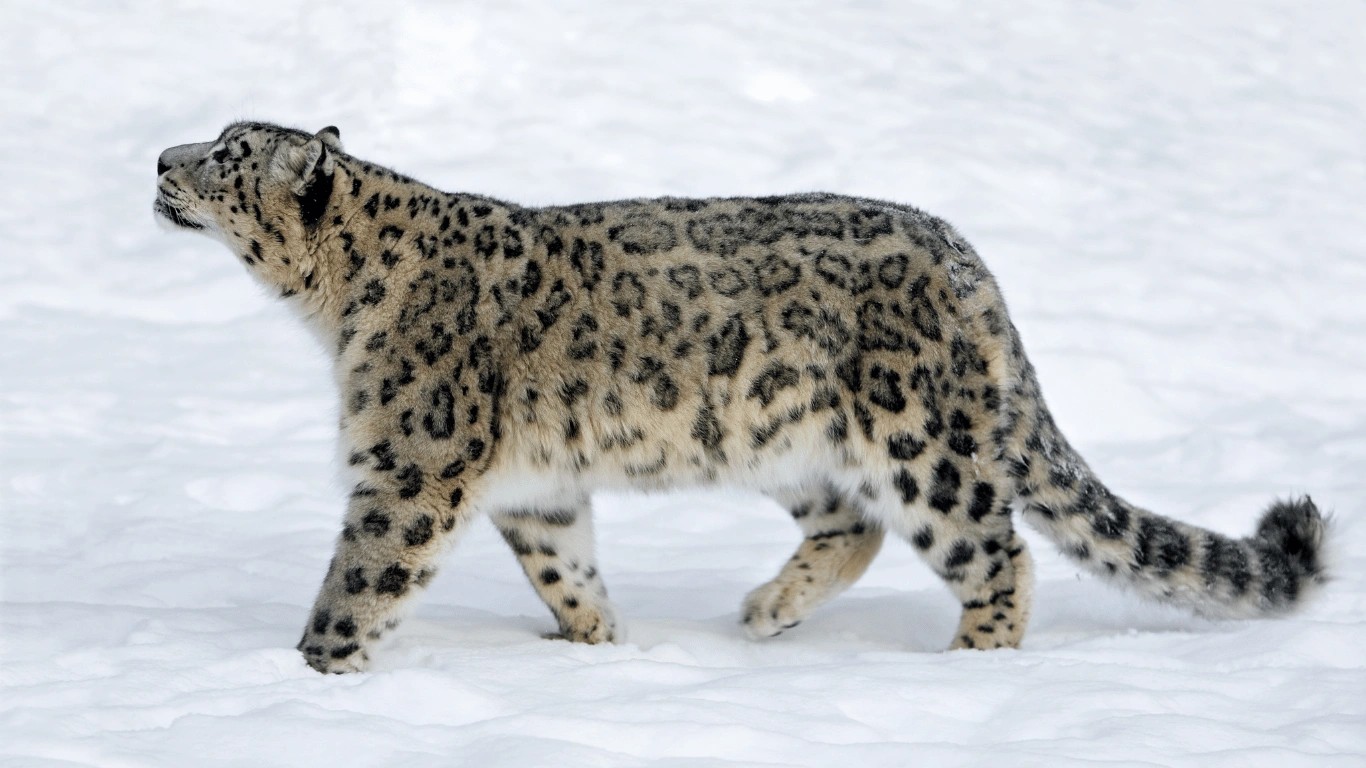
Fact #21: The snow leopard — one of the world's most elusive big cats — is native to the high Himalayas. Fewer than 6,500 remain in the wild worldwide, with populations spread across 12 countries in Central and South Asia.
Fact #22: The red panda — a small, tree-dwelling mammal unrelated to the giant panda despite sharing bamboo diet — is native to the eastern Himalayas of Nepal, Bhutan, and India.
Fact #23: The yeti, or "abominable snowman," is a legendary creature said to inhabit the high Himalayas. Despite numerous expeditions, no verified scientific evidence for the yeti has ever been found. The name comes from the Tibetan "yeh-teh," meaning "little manlike animal."
Fact #24: Bhutan's Gangkhar Puensum (7,570m) is officially the world's highest unclimbed mountain. It was closed to mountaineering in 1994 out of respect for local spiritual beliefs, and no climbing permits have been issued since.
Fact #25: The Sherpa people — an ethnic group originally from Tibet who settled in Nepal's Everest region around 500 years ago — are genetically adapted to high-altitude living. Their word "sherpa" simply means "people from the east."
Facts #26-40 — the deeper, less-well-known truths about the Himalayan mountain range:
Fact #26: Kami Rita Sherpa holds the world record for most Mount Everest summits — 32 times as of May 17, 2026, when he reached the summit at age 56. He works as a professional guide for a commercial expedition company. His closest competitor is fellow Nepali Pasang Dawa Sherpa with 29 summits.
Fact #27: The Himalayan region has more than 50 different ethnic groups speaking distinct languages, from the Sherpa and Tibetan peoples of the high valleys to the Newari, Tamang, and Gurung communities of the middle hills.
Fact #28: The Dalai Lama — the spiritual leader of Tibetan Buddhism — traditionally resided in the Potala Palace in Lhasa (3,656m) in the Tibetan Himalayas until his exile to Dharamsala, India in 1959.
Fact #29: The Yeti Airlines name is genuinely used in Nepal — one of the country's largest domestic carriers. Nepal has multiple airlines named after mountain creatures (Yeti, Buddha, Simrik, Tara, Sita).
Fact #30: The highest permanent human settlement on Earth is Wenquan, a Tibetan village at 5,100m. Nepal's highest permanent settlement is Namche Bazaar (3,440m).
Fact #31: Nepal is the only country in the world with a non-quadrilateral national flag — its flag is two triangular pennants representing the peaks of the Himalayas.
Fact #32: The Himalayan honey bee produces "mad honey" — a psychoactive honey harvested from rhododendron nectar by Gurung tribesmen in the middle hills. It has genuine hallucinogenic effects due to grayanotoxin compounds.
Fact #33: Mount Everest is not the tallest mountain on Earth when measured from base to peak — that's Mauna Kea in Hawaii, which rises 10,000m from the ocean floor (though only 4,205m above sea level).
Fact #34: The Himalayas experience some of the world's most extreme weather. The jet stream hits the summit ridge of Everest, producing winds over 320 km/h (200 mph) and temperatures below -60°C (-76°F).
Fact #35: The 1934 Nepal-Bihar earthquake (magnitude 8.0) killed over 10,000 people and reshaped parts of the Himalayan landscape. The 2015 Nepal earthquake (magnitude 7.8) killed over 8,800 and caused the Langtang village to be completely buried under an avalanche.
Fact #36: The Himalayas produce the strongest gravitational anomaly on Earth — the massive concentration of rock affects gravity readings measurably compared to sea-level averages.
Fact #37: Mount Everest has its own postal code — 999040 (Nepal side), though there are no permanent post offices at Base Camp.
Fact #38: The oldest known evidence of human presence in the high Himalayas dates to the Chusang site in Tibet, where footprints and handprints in ancient mud have been dated to approximately 7,400 years ago at an altitude of 4,270m.
Fact #39: The Himalayan climate is warming approximately twice as fast as the global average, causing rapid glacier retreat. Some Himalayan glaciers have retreated over 15 km in the past century.
Fact #40: The Himalayan salt (pink salt) sold worldwide actually comes from the Khewra Salt Mine in Pakistan's Punjab region — not from the high Himalayan mountains. It's called "Himalayan" because the mine sits at the foothills of the range.
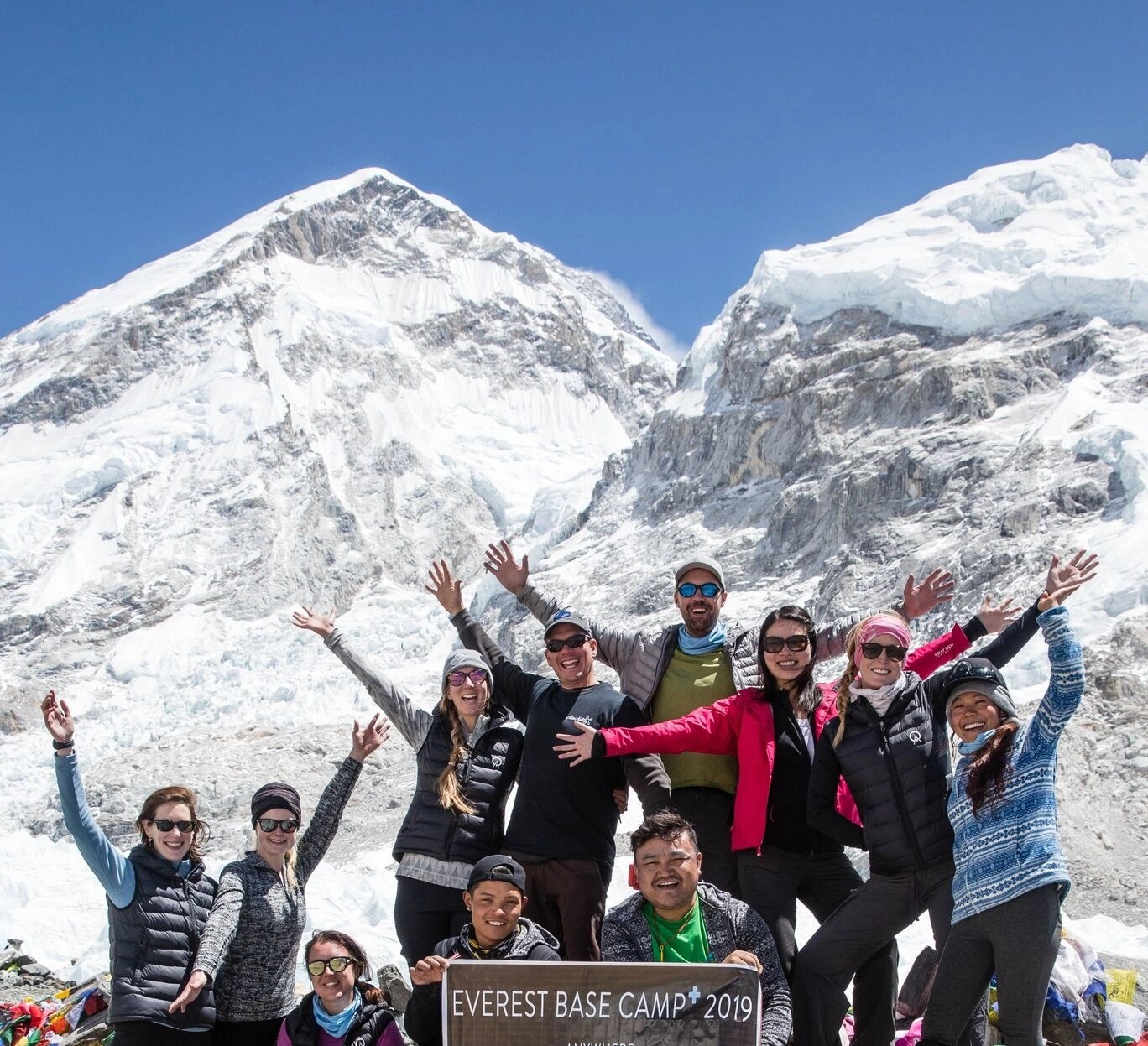
For younger readers, here are 5 kid-friendly Himalayan facts:
Kids Fact #1: The Himalayas have the world's tallest mountain, Mount Everest — so tall that airplanes fly around it, not over it. Everest is almost 9 kilometers tall — the same as 24 Eiffel Towers stacked on top of each other!
Kids Fact #2: The Himalayas are home to snow leopards — cats so shy that most people who live near them never see one. They have huge paws that work like snowshoes, and long tails they wrap around themselves like scarves for warmth.
Kids Fact #3: The Himalayas are still growing — every year they get about as tall as a small pebble taller. Millions of years from now they'll be even more massive!
Kids Fact #4: People believe a creature called the Yeti lives in the Himalayas — a giant hairy snow-creature. Scientists haven't proven it's real, but many mountain people still tell stories about it.
Kids Fact #5: The Himalayan rivers give water to more people than any other mountain range — about 1.6 billion people drink water that started as snow melting on the Himalayas. That's more than 1 in 5 people on Earth!
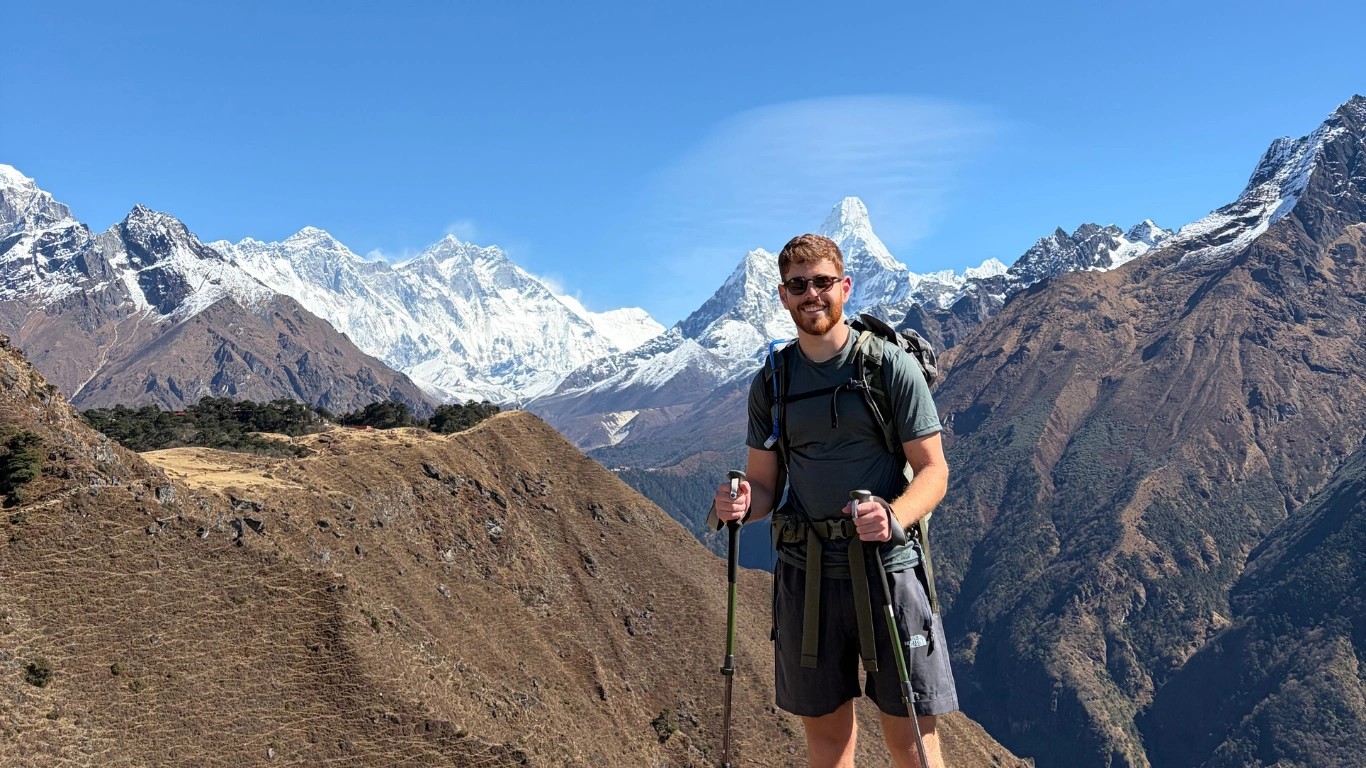
Mount Everest deserves its own section. Here are the essential Everest facts:
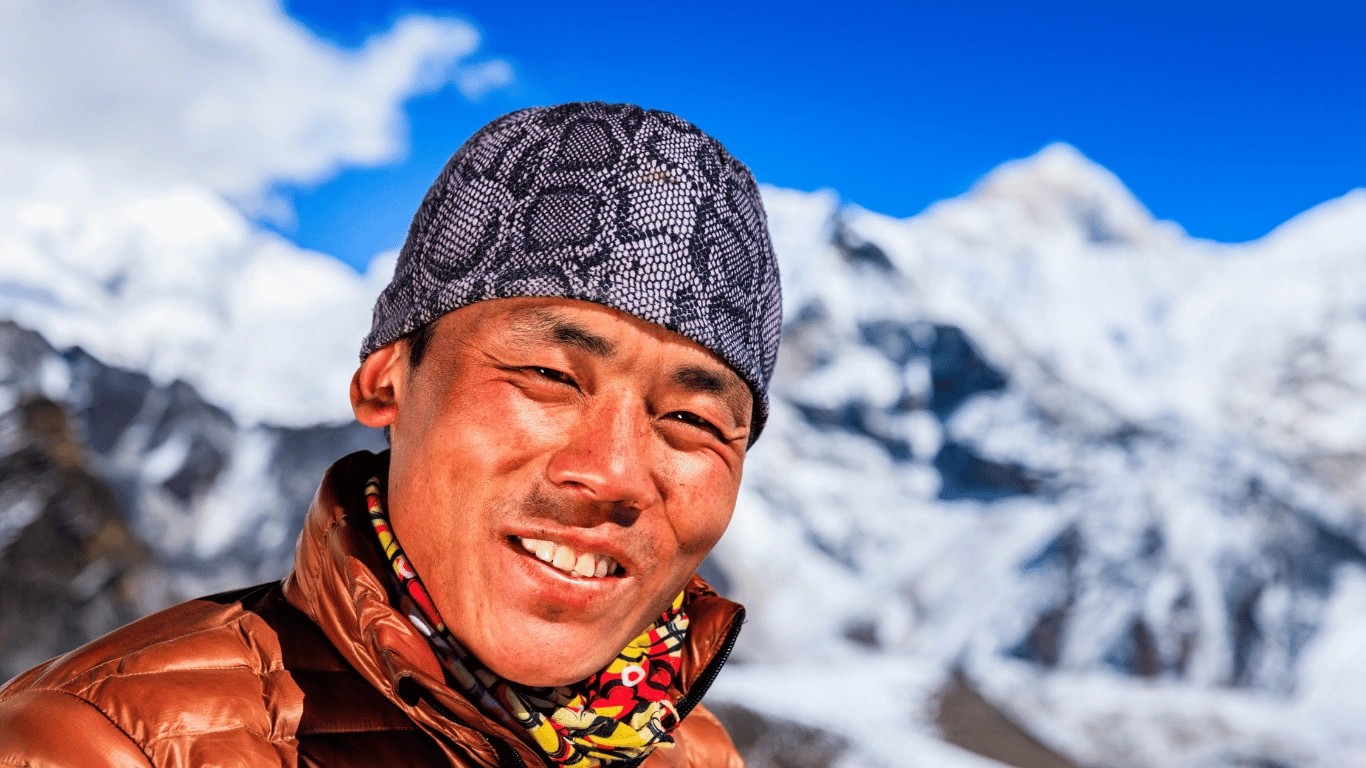
52+ million people live in the Himalayan region, spanning dozens of distinct ethnic groups. Some highlights:
Sacred to four religions: Hindu, Buddhist, Jain, and Bön all consider Himalayan mountains sacred.
Ancient trade routes: the Silk Road passed through Himalayan valleys; salt-and-grain trade routes between Tibet and India crossed passes like Nangpa La (5,806m) for centuries.
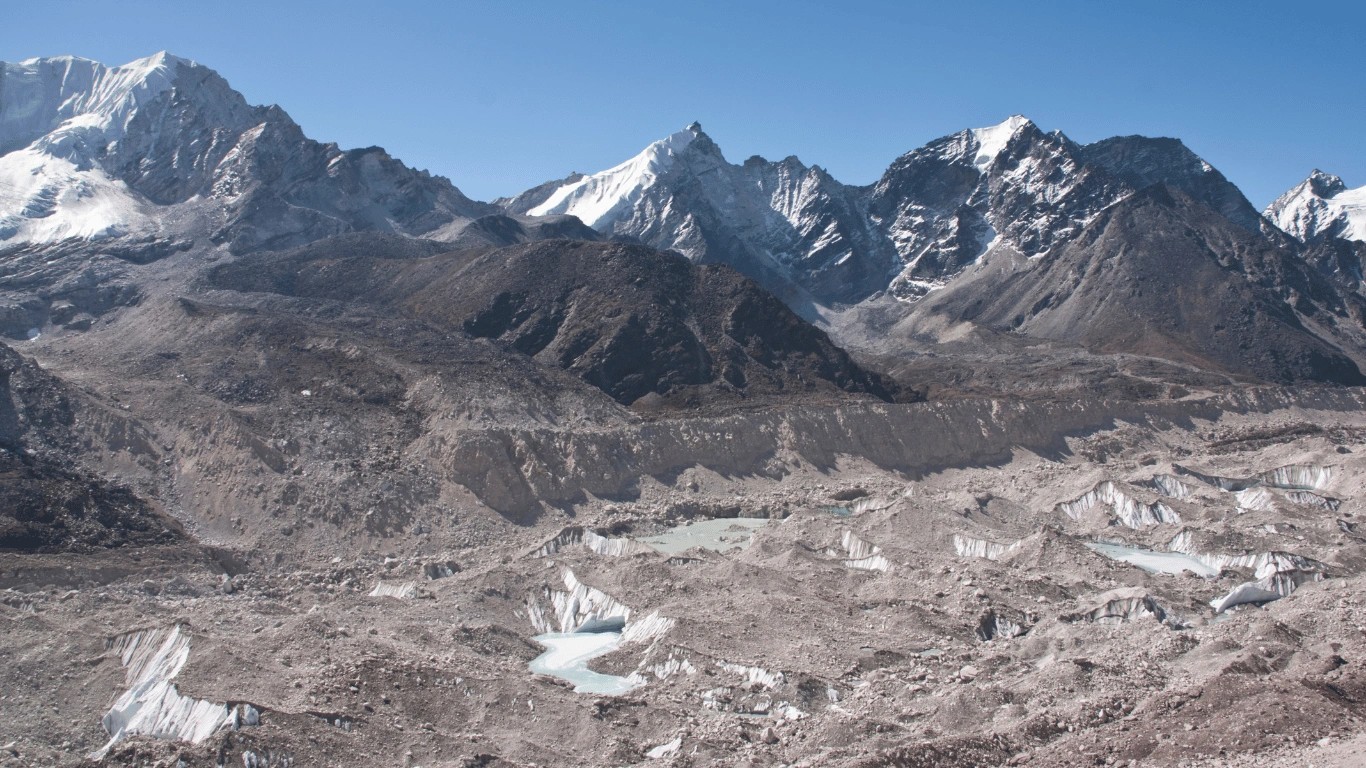
The Himalayan glacier system contains over 15,000 individual glaciers, holding approximately 12,000 cubic kilometers of freshwater.
Major river systems fed by the Himalayas:
Total population depending on Himalayan rivers: approximately 1.6 billion people across South Asia — nearly 20% of the world's population.
Glacier retreat: most Himalayan glaciers are retreating due to climate change. The Gangotri Glacier (source of the Ganges) has retreated over 850m in the past 25 years.
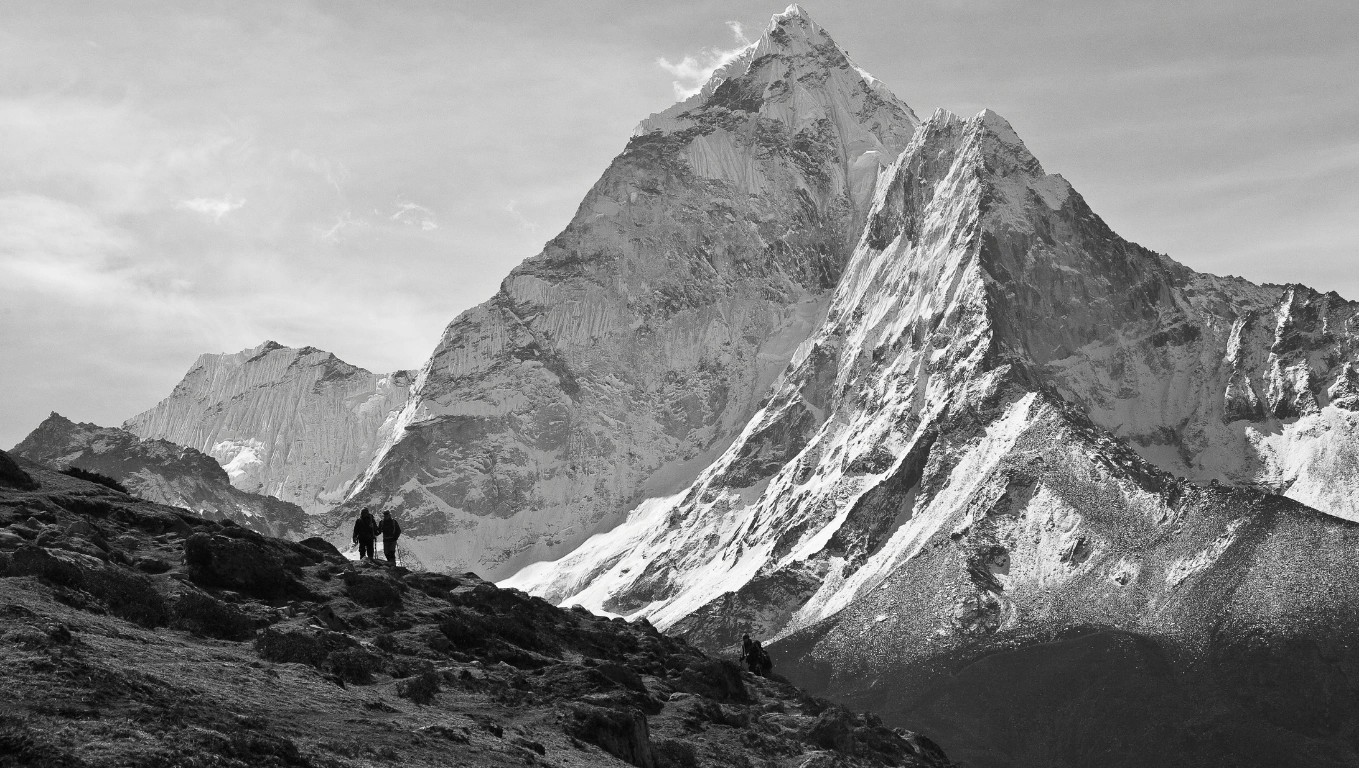
14 eight-thousanders: mountains above 8,000m. All 14 are in the Himalaya or Karakoram ranges. Nepal has 8 within its borders or on its border. Reinhold Messner became the first person to climb all 14 in 1986.
Trekking peaks: Nepal designates 27 mountains between 5,500m and 6,584m as "trekking peaks" that can be climbed with an NMA (Nepal Mountaineering Association) permit rather than a full expedition permit.
Most popular treks:
Yaks are the primary pack animals at altitudes above 3,000m in the Himalayas. Below 3,000m, mules and donkeys are used.
Altitude sickness (AMS) affects roughly 25% of trekkers who sleep above 2,450m and over 50% of trekkers above 4,500m. Proper acclimatization dramatically reduces the risk.
The trekking season peaks in Nepal from September-November (autumn) and March-May (spring), with the best weather and clearest views.
The top 10 facts: (1) The range contains 10 of the world's 14 highest peaks. (2) "Himalaya" means "Abode of Snow" in Sanskrit. (3) The mountains span 5 countries. (4) Mount Everest at 8,848.86m is the world's highest peak. (5) The range formed 50-60 million years ago. (6) The Himalayas are still growing 5mm per year. (7) Over 15,000 glaciers feed the rivers. (8) Himalayan rivers supply water to 1.6+ billion people. (9) 8 of the 14 eight-thousanders sit in Nepal. (10) The Sherpa people are ethnically adapted to high altitude.
The 5 essential facts: (1) The Himalayas are the world's highest mountain range. (2) The name means "Abode of Snow" in Sanskrit. (3) They span 5 countries — Nepal, India, Bhutan, China, and Pakistan. (4) Mount Everest is 8,848.86m tall. (5) Himalayan glaciers supply water to over 1.6 billion people.
Fun facts for kids: (1) Mount Everest is as tall as 24 Eiffel Towers stacked on top of each other. (2) Snow leopards live in the Himalayas but are so shy most people never see one. (3) The mountains are still growing taller every year. (4) People believe a creature called the Yeti lives in the mountains. (5) Some birds fly higher than Mount Everest to migrate across the range..
The Himalayas are important for: (1) freshwater supply to 1.6+ billion people, (2) monsoon rainfall generation, (3) preventing cold Central Asian winds from reaching India, (4) hosting the world's highest peaks, (5) supporting 15,000+ glaciers, (6) providing habitat for endangered species like snow leopards, (7) housing 52+ million people, (8) forming international borders, (9) supporting global mountaineering culture, (10) preserving sacred sites for four religions.
The Himalayas are special because they contain 10 of the world's 14 highest peaks, are still growing due to active tectonic collision, hold the world's largest ice reserves outside the poles, feed rivers supporting over 1.6 billion people, host unique wildlife like snow leopards and red pandas, and are considered sacred by four major religions — making them the world's most geographically, ecologically, and spiritually significant mountain range.
The Himalayas are approximately 50-60 million years old — geologically young compared to ranges like the Appalachians (450 million years) or Ural Mountains (250 million years).
The Himalayas contain roughly 100+ major peaks above 7,200m and thousands of smaller peaks. Of the world's 14 eight-thousanders (peaks above 8,000m), 10 sit in the Himalaya range.
Mount Everest at 8,848.86m is the highest mountain in the Himalayas — and the world. It sits on the Nepal-Tibet border.
The Himalayas stretch approximately 2,400 km (1,491 miles) from Nanga Parbat in Pakistan in the west to Namche Barwa in Tibet in the east.
The Himalayas are approximately 150-350 km wide, varying by location.
The Himalayas span 5 countries: Nepal, India, Bhutan, China (Tibet Autonomous Region), and Pakistan.
The Himalayas are the world's greatest mountain range — not just because they are tallest, but because they are alive. The mountains are still growing. The glaciers are still moving. The rivers are still feeding one-fifth of humanity. The sacred traditions of four religions are still practiced in the shadow of these peaks.
From Mount Everest's summit to the sacred waters of Mount Kailash, from the snow leopards of the high valleys to the sacred forests of the middle hills, the Himalayan range holds more geographic, ecological, spiritual, and cultural significance per square kilometer than perhaps any other place on Earth.
The Himalayas are not just mountains. They are the roof of the world — and they are the source of the water, the culture, and the wonder that has shaped human civilization for thousands of years.
Written by
Trekking guide
Prabin Adhikari is a professional trekking guide in Nepal with extensive experience leading trekkers across the Himalayas. Known for his friendly personality, local knowledge, and commitment to safety, he ensures every journey is enjoyable and well-organized.
If you've ever wondered why trekking in Nepal captivates adventurers from every corner of the globe, the answer lies in its extraordinary combination...
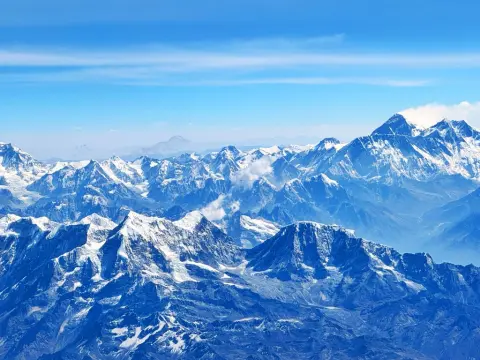
The Himalayan mountain range spans Nepal, Bhutan, India, and China. It also crosses Pakistan, making it a five-country range in total. The Himalayas s...
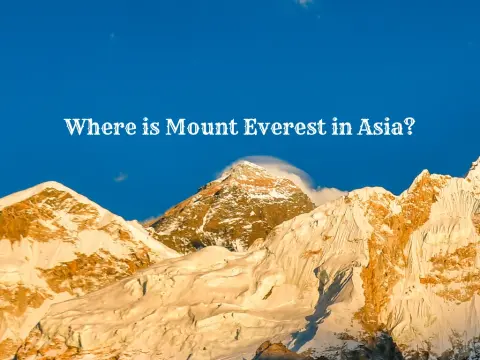
Mount Everest sits on the border between Nepal and the Tibet Autonomous Region of China, deep within the eastern Himalayas of South Asia. It is the hi...
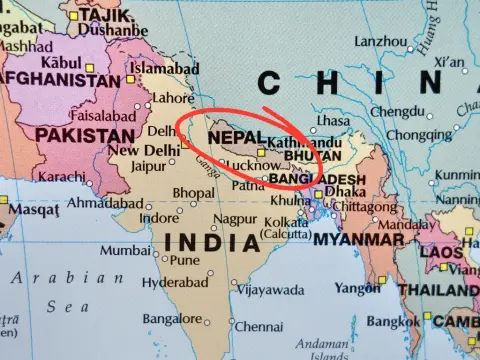
Geographically secluded within one of Asia's most dramatic territorial corridors yet profoundly sovereign in every constitutional sense, Nepal is a la...

The first sight of the Himalayas rarely matches what people expect. From an airplane window on the approach to Kathmandu, travelers look for a single...
