
Nepal Trek Challenge – The Ultimate Himalayan Trekking Test
20 Feb 2026
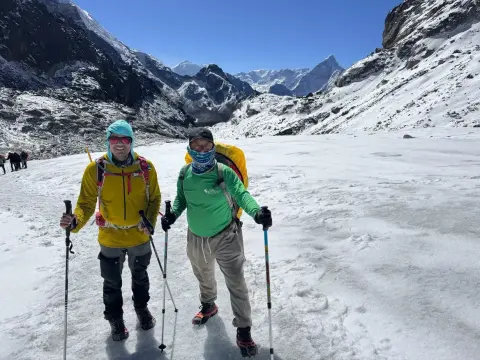
A Nepal trek challenge represents the pinnacle of adventure trekking. It demands everything from you—physical endurance, mental resilience, altitude t...

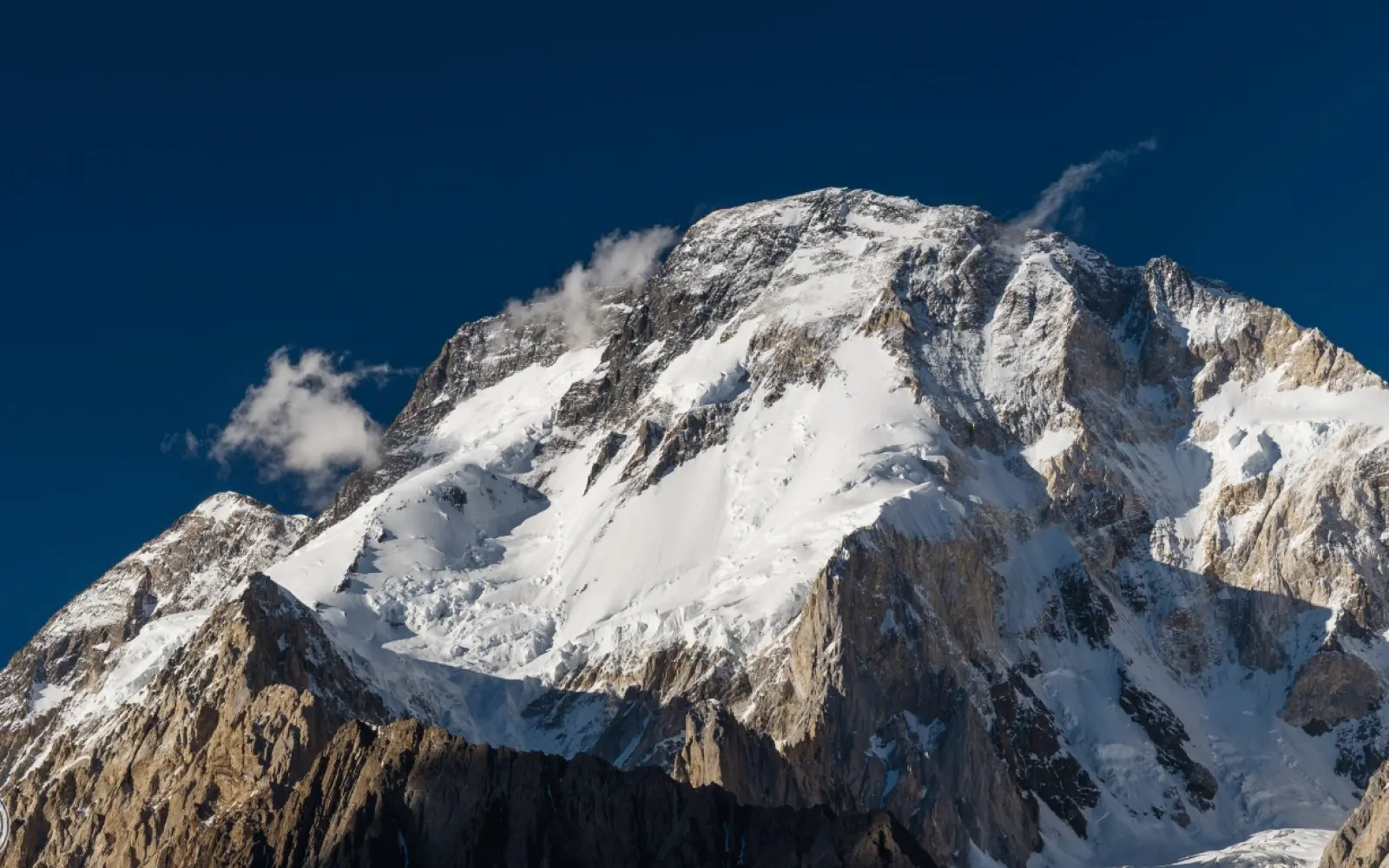

Broad Peak (8,051m) is the world's 12th highest mountain, sitting in the Karakoram range on the border between Pakistan and China, roughly 8 kilometres from K2. It's one of only 14 mountains on earth over 8,000 metres — the "eight-thousanders" — and, despite sometimes being described as "easier" than its more famous neighbor, it has a genuinely serious fatality rate, a long list of tragedies, and is not a mountain for anyone without full 8,000-metre expedition experience.
This guide covers everything Broad Peak is known for — its height, location next to K2, climbing history, notable ascents, deaths, and the 2013 winter tragedy that became the subject of the Netflix film "Broad Peak."
Key Takeaways
| Detail | Information |
|---|---|
| Height | 8,051 m (26,414 ft) |
| World ranking | 12th highest mountain |
| Range | Karakoram |
| Country | Pakistan (Gilgit-Baltistan) / China border |
| Distance from K2 | ~8 km |
| Number of summits | 4 (Main, Central, North, false summit) |
| First ascent | 9 June 1957 (Austrian expedition) |
| First winter ascent | 5 March 2013 (Polish expedition) |
| Approximate fatality rate | ~5% |
Broad Peak is an 8,051-metre mountain in the Karakoram range, straddling the border between Pakistan and China. It is one of the 14 mountains on Earth that rise above 8,000 metres — the so-called eight-thousanders — and ranks as the 12th highest peak in the world.
The mountain got its English name from Sir Martin Conway in 1892, who described it as broad — because the massif extends for over 1.5 kilometres above 8,000 metres, with multiple distinct summits rather than a single sharp peak. Its Balti name is Faichan Kangri.
Despite occasionally being described as "easier" than K2 by some climbers, Broad Peak is still a serious high-altitude expedition mountain and has claimed many lives.
Broad Peak is in Pakistan, specifically in the Karakoram range of northern Pakistan's Gilgit-Baltistan region, on the border with China (Xinjiang). It's part of the same cluster of massive peaks that includes K2.
Trekkers and climbers reach Broad Peak base camp via the standard Baltoro Glacier trek — the same approach used for K2 expeditions — beginning from Skardu and going through Askole, Paiju, Urdukas, and Concordia. Concordia, where the Baltoro and Godwin-Austen glaciers meet, is one of the most spectacular high-altitude junctions in the world, with views of K2, Broad Peak, and the Gasherbrum peaks all visible from one spot.
Broad Peak stands at 8,051 metres (26,414 feet), making it the 12th highest mountain in the world and one of the 14 eight-thousanders.
For scale, here's how Broad Peak's altitude compares to other well-known peaks:
| Mountain | Height | Rank |
|---|---|---|
| Everest | 8,848 m | 1st |
| K2 | 8,611 m | 2nd |
| Kanchenjunga | 8,586 m | 3rd |
| Broad Peak | 8,051 m | 12th |
| Gasherbrum II | 8,035 m | 13th |
| Shishapangma | 8,027 m | 14th |
Broad Peak is one of only five 8,000-metre peaks in Pakistan — the others being K2, Gasherbrum I, Gasherbrum II, and Nanga Parbat.
Broad Peak's name reflects its most distinctive feature: it isn't a single sharp summit like Everest or K2, but a long, wide massif with multiple tops.
The mountain has four named summits along its ridge:
The false summit issue is real, and worth understanding. Climbers exhausted from the ascent have historically mistaken the foresummit for the main summit and turned back — or, more tragically, run into serious problems on the ridge traverse between them. This is one of the factors that has contributed to Broad Peak's death toll.
Broad Peak was first climbed on 9 June 1957 by an Austrian expedition led by Marcus Schmuck. The team reached the summit without supplemental oxygen and without high-altitude porters — one of the great alpine-style achievements of its era.
The four climbers who made the first ascent:
Tragically, Hermann Buhl died just weeks later on nearby Chogolisa, after falling through a cornice. His death cast a long shadow over what should have been a celebration of the Broad Peak first ascent.
Since 1957, hundreds of climbers have summited Broad Peak, though the total number of successful summits is significantly lower than on Everest — reflecting both the mountain's difficulty and its more limited commercial climbing industry.
Broad Peak is often described as one of the "easier" eight-thousanders, but that description is misleading and dangerous. Compared to K2 next door, yes — Broad Peak is technically less demanding. Compared to any mountain a non-expedition climber has ever attempted, it is extraordinarily difficult.
Honest realities of a Broad Peak climb:
"Easy" is a comparison to K2, not to real life. Broad Peak has killed experienced mountaineers, and continues to. It is not a beginner's 8,000-metre peak.
Broad Peak's fatality rate is approximately 5% — meaning around 5% of people who attempt the summit die on the mountain. This is significantly lower than K2 (roughly 20%) but still very serious for a mountain sometimes marketed as "accessible."
Notable tragedies include:
Bodies remain on Broad Peak from various expeditions, as recovery from above 7,000 metres is often impossible.
Beyond the 1957 first ascent, Broad Peak has featured in several significant mountaineering achievements:
On 5 March 2013, a Polish expedition made the first-ever winter ascent of Broad Peak — a genuinely historic achievement, and the story behind the Netflix film.
The four climbers who reached the summit:
They summited late in the day, in extreme conditions. On the descent, Berbeka and Kowalski became separated from the others and did not survive. Bielecki and Małek made it down alive.
Berbeka's story is particularly moving: thirty years earlier, in 1988, he had reached the foresummit of Broad Peak in winter and turned back, believing he had reached the top. Only later did he realise he had stopped short. His 2013 return, at age 58, was a decades-long personal quest to actually stand on the true summit — which he did, only to die on the way down.
The bodies of Berbeka and Kowalski were never recovered.
Yes. The 2022 Polish film "Broad Peak" on Netflix is a dramatised account of Maciej Berbeka's real 2013 expedition and his 1988 near-miss on the false summit thirty years earlier.
The film focuses on Berbeka specifically — his long-standing personal connection to Broad Peak, the 1988 foresummit turnaround, and his return in 2013. Because it is a dramatisation, certain scenes are creative interpretations, but the core events — the historic winter ascent, the tragedy on descent, Berbeka's death — are all real, verifiable, and part of documented mountaineering history.
Sources like the American Alpine Club and ExplorersWeb have thorough factual accounts of the actual expedition if you want to read the real story alongside the film.
Broad Peak and K2 sit only about 8 kilometres apart, both accessible from the same Concordia base area on the Baltoro Glacier. But they are dramatically different mountains to climb.
| Feature | Broad Peak | K2 |
|---|---|---|
| Height | 8,051 m | 8,611 m |
| World ranking | 12th | 2nd |
| Fatality rate | ~5% | ~20% |
| Technical difficulty | Serious but less technical | Extremely technical |
| Weather exposure | High | Very high |
K2 is significantly harder, more technical, and far more deadly. Broad Peak is often climbed by expeditions using K2 as their target-year "warm-up" — though that word massively understates what Broad Peak actually is.
Yes. Broad Peak and K2 are approximately 8 kilometres apart, both in Pakistan's Karakoram range, and both accessed from the same base area near Concordia on the Baltoro Glacier.
Yes. Broad Peak is in Pakistan's Gilgit-Baltistan region, on the border with China. Not in Nepal, and not in the Himalaya proper — it's part of the separate Karakoram range.
Yes. The 2022 film is a dramatisation of Maciej Berbeka's real 2013 first-winter-ascent expedition, and the 1988 expedition on which he mistook the false summit for the true one. The core events, including Berbeka's death on descent, are all historically accurate.
Broad Peak is a serious 8,000-metre expedition mountain, not a beginner peak. It is often described as "easier" than K2 but that comparison is misleading — it has a fatality rate of about 5%, extreme altitude, a dangerous false-summit ridge, and severe weather. Full high-altitude expedition experience is required.
Broad Peak stands at 8,051 metres (26,414 feet), making it the 12th highest mountain in the world.
The foresummit (or false summit) is a subsidiary point on Broad Peak's long ridge, sitting around 8,030 metres — very close to the main summit's height. Exhausted climbers have historically mistaken it for the true summit, and the exposed ridge traverse between the two has been the site of multiple tragedies.
Yes. Nirmal "Nims" Purja summited Broad Peak on 26 July 2019 as part of Project Possible, his successful attempt to climb all 14 eight-thousanders in under seven months.
Approximately 5% — meaning about 5% of climbers who attempt to summit die on the mountain. Significantly lower than K2 (~20%), but still very serious.
Broad Peak is a genuinely serious 8,000-metre expedition mountain — not a trekking objective, and not something anyone should approach without extensive high-altitude climbing experience and a specialised Pakistan-based expedition operator.
We're Majestic Trails Nepal. We guide treks — not expeditions — and we operate in Nepal, not Pakistan. But if reading about Broad Peak has inspired you to see 8,000-metre mountains up close, without attempting to climb one, there's a genuinely accessible way to do that: trek in Nepal.
Nepal is home to 8 of the world's 14 eight-thousanders — Everest, Kanchenjunga, Lhotse, Makalu, Cho Oyu, Dhaulagiri, Manaslu, and Annapurna I. Standing at Everest Base Camp, or walking the Annapurna Circuit past mountains over 8,000 metres, you get to experience the scale of Himalayan giants without the extreme risk of an 8,000-metre climb.
If that sounds like the version of the Himalaya you actually want to experience, we can help.
→ Everest Base Camp Trek — walk beneath the world's highest peak
→ Annapurna Circuit Trek — around one of the great 8,000-metre massifs
→ Manaslu Circuit Trek — the world's 8th highest peak
A Nepal trek challenge represents the pinnacle of adventure trekking. It demands everything from you—physical endurance, mental resilience, altitude t...
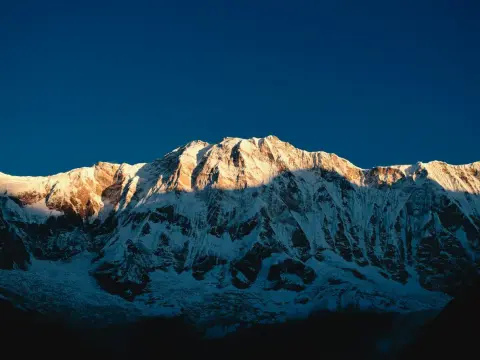
Annapurna I is the 10th highest mountain in the world. It is located in the country of Nepal, in Asia. It was the first mountain above 8,000 meters to...
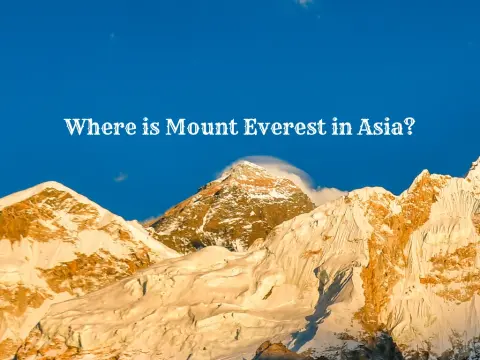
Mount Everest sits on the border between Nepal and the Tibet Autonomous Region of China, deep within the eastern Himalayas of South Asia. It is the hi...
