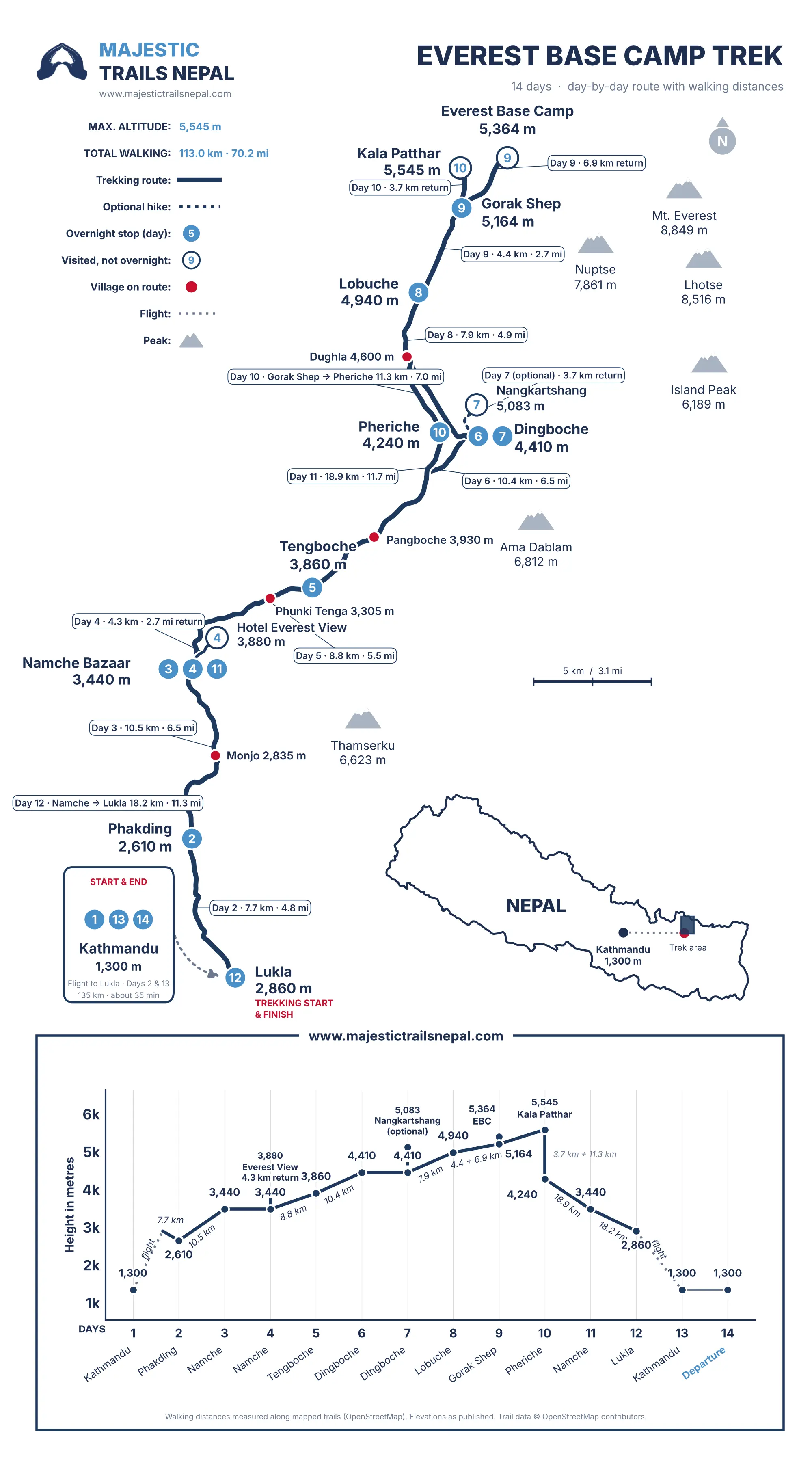
The Everest Base Camp Trek is a 14-day guided trek from Kathmandu to Mount Everest Base Camp (5,364m), the world's most famous trekking destination at the foot of the highest mountain on Earth. The trek includes a Lukla flight, 12 walking days on established Himalayan trails, 2 dedicated acclimatization days at Namche Bazaar and Dingboche (4,410m), and sunrise viewing from Kala Patthar.
What does it really feel like to walk to the base of Mount Everest? This overview explains the journey from start to finish.
The trek begins with a short mountain flight from Kathmandu (or Ramechhap in the busiest months) to Lukla at 2,860m (9,383 ft). From there you walk up the Dudh Koshi river, crossing high suspension bridges draped in prayer flags, into Sagarmatha National Park, a UNESCO World Heritage Site. Namche Bazaar is your first big stop and your first rest day, with Everest, Lhotse and Ama Dablam visible from the hill above town.
Above Namche the valley opens up. You pass Tengboche Monastery, cross into the alpine landscape around Dingboche (4,410m / 14,469 ft), and take a second rest day with a hike to Nangkartshang Peak (5,083m / 16,677 ft). Then the trail climbs past the climbers' memorials at Thukla Pass to Lobuche and Gorak Shep, the last settlement before base camp.
On the big day you walk along the Khumbu Glacier to Everest Base Camp, the tents and prayer flags of expedition season (spring) or quiet glacier ice in autumn. Later you climb Kala Patthar at sunset, when the light on Everest is at its best, and the guide decides on the spot whether the group goes to the top or to the halfway viewpoint, depending on energy and weather.
The return follows the same valley down through Pheriche and Namche to Lukla, giving you time to enjoy views you passed on the way up. Most days involve 5–7 hours of walking. The altitude, not the distance, is what makes the trek demanding.
Throughout the trek you walk with a licensed Majestic Trails Nepal guide and porters, one porter for every two trekkers. Your guide checks your oxygen saturation with a pulse oximeter every morning and evening and, just as importantly, asks how you feel, because numbers alone never tell the full story.
This trek suits many people, but not everyone. These points will help you decide honestly.
Book this trip if you can walk 5–7 hours a day on hilly ground, you are comfortable with simple teahouse rooms and shared bathrooms above Namche, and you want the classic Everest experience in two weeks. You do not need trekking experience above 4,000m, but you do need to train for 8–12 weeks before you come and be ready to walk slowly and listen to your guide.
Think twice if you have heart, lung or blood-pressure conditions that have not been checked by a doctor, you only have 10 days, or you dislike basic facilities and cold nights. If time is short, a shorter trek such as Poon Hill or Mardi Himal may suit you better. If you want the Everest views without the walk, ask us about a helicopter tour from Kathmandu.
Not sure? Book a free video call with us before you book. We will talk through your fitness, age, any health concerns, and the best month for you, and tell you honestly whether this trek is a good fit.
The Everest Base Camp Trek is a 14-day journey that begins in Kathmandu, where narrow Thamel lanes, temple bells and the smell of incense set the mood for the mountains ahead. Early the next morning, a short flight carries you over green ridges and terraced hills to Lukla (2,860m / 9,383 ft), a small mountain airstrip perched on the edge of a cliff. In the busiest months, the day starts a little earlier with a drive to Ramechhap for the flight, but the moment you step out in Lukla, the cool air and the sound of yak bells tell you the adventure has begun.
From Lukla, the trail follows the milky-blue Dudh Koshi river through pine forests and small Sherpa villages, past prayer wheels, carved mani stones and long suspension bridges strung with colourful prayer flags. After an easy first night in Phakding, you climb to Namche Bazaar (3,440m / 11,286 ft), the lively heart of the Khumbu, with its bakeries, gear shops and Saturday market. On the rest day here, a short hike above town gives most trekkers their very first view of Mount Everest, with Lhotse and the elegant Ama Dablam beside it.
Beyond Namche, the valley opens up and the mountains feel close enough to touch. You reach Tengboche (3,860m / 12,664 ft), home to the largest monastery in the region, where monks chant in the evening as Ama Dablam turns pink in the last light. The trail then climbs above the tree line to the stone-walled fields of Dingboche (4,410m / 14,469 ft). Here you take a second rest day and hike up Nangkartshang (5,083m / 16,677 ft) for wide views of Makalu, Lhotse and Island Peak.
The landscape becomes wild and high from here. Past the climbers' memorials at Thukla Pass and through Lobuche, you walk beside the great Khumbu Glacier to Gorak Shep, the last teahouse settlement, and on to Everest Base Camp (5,364m / 17,598 ft). Standing among the rocks, ice towers and prayer flags at the foot of the Khumbu Icefall is a moment most trekkers never forget. Then comes the highlight of the trek: sunset from Kala Patthar (5,545m / 18,192 ft), when the last golden light falls on Everest's summit, Nuptse and Lhotse while the valley below slips into shadow. Your guide decides on the day whether the group goes to the top or enjoys the view from the halfway point.
The walk back down through Pheriche and Namche is easier on the lungs and gives you time to enjoy the views you were too breathless to notice on the way up. A last night in Lukla, often with a small celebration with your guide and porters, is followed by the flight back to Kathmandu. It is a strenuous but non-technical route: with good fitness, two acclimatisation days and a guide who looks after you, it is within reach of most healthy first-time trekkers.
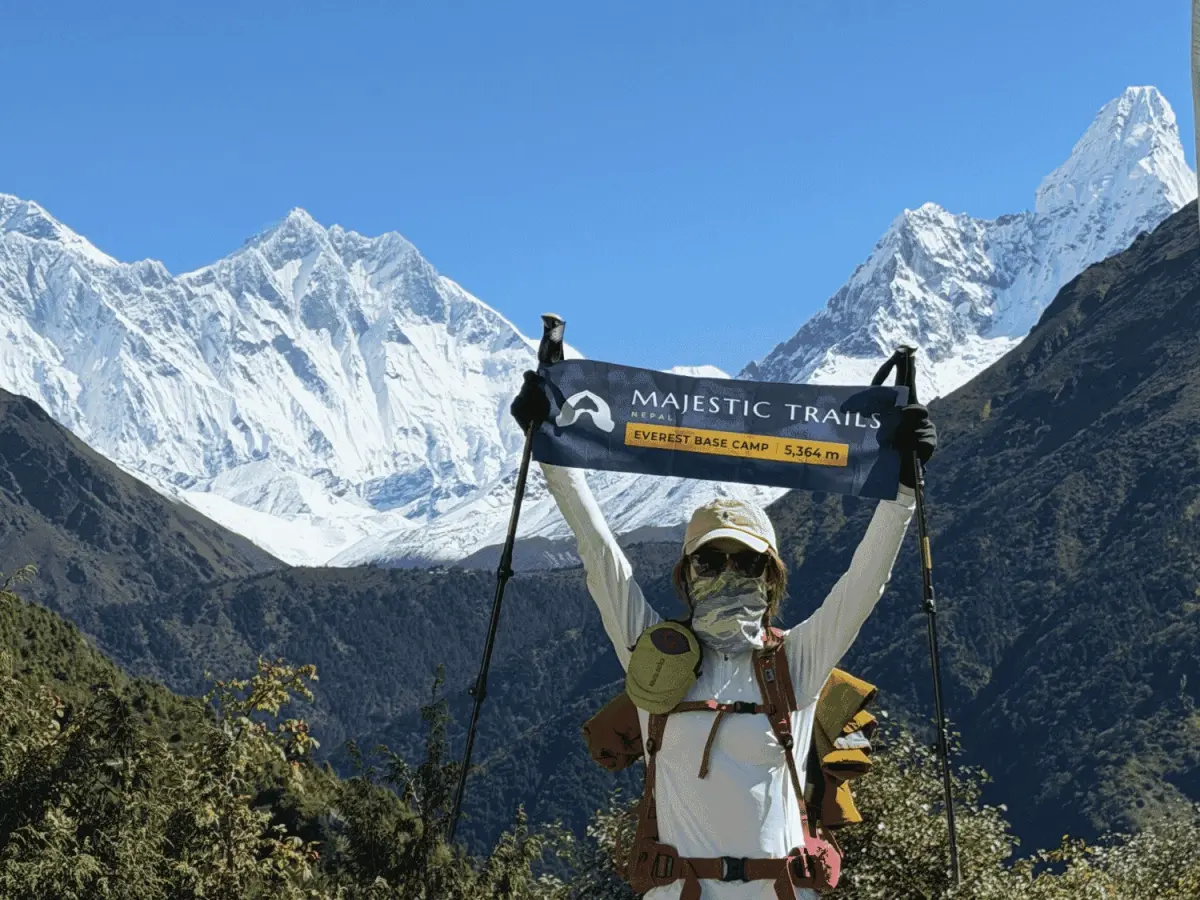
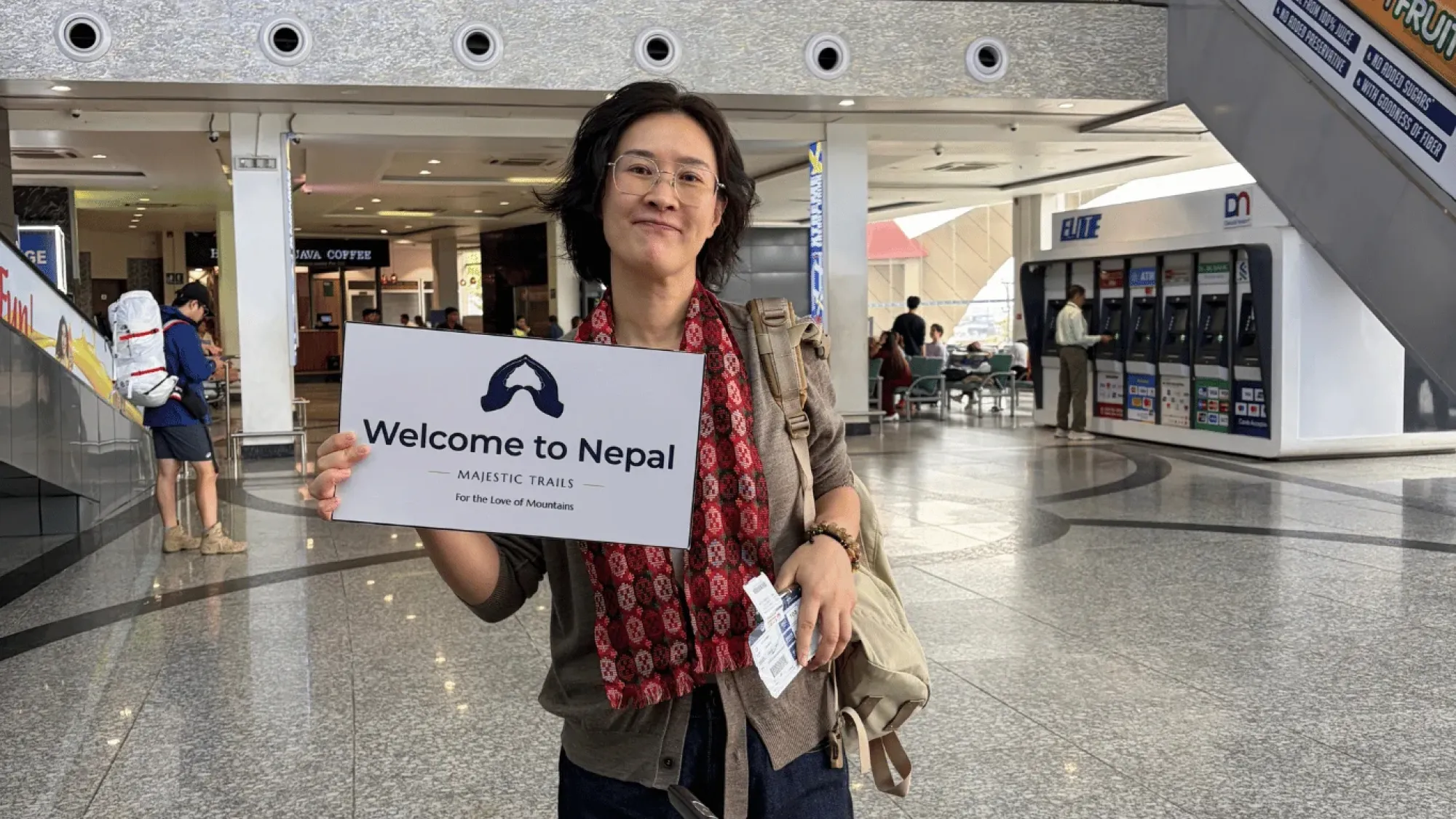
Welcome to Nepal. Our team member will be waiting at Tribhuvan International Airport arrival hall with the Majestic Trails Nepal sign.
After visa processing (we assist if needed) and currency exchange, our private vehicle transfers you to your 3-star hotel in Thamel — Kathmandu's tourist district and historic gateway for Himalayan trekkers.
Afternoon pre-trek briefing includes:
The afternoon is yours to explore UNESCO sites (Boudhanath, Swayambhunath, Pashupatinath, Kathmandu Durbar Square), gather last-minute gear from Thamel shops, or rest after international flight.
Today marks the real beginning of your EBC trek. You rise early to catch the domestic flight to Lukla — a 35-minute journey (or a 4-6 hour drive to Ramechhap followed by a 20-minute flight if trekking October-November).
The Lukla flight itself is legendary. You depart from Kathmandu at sunrise, climb over the ridge into the Solukhumbu valley, and descend onto the 527m runway at Tenzing-Hillary Airport. Named after Sir Edmund Hillary and Tenzing Norgay (first Everest summiteers, 1953), Lukla Airport is officially classified among the world's most technically demanding airfields.
For complete flight logistics, see our Lukla Flights 2026 Complete Guide.
Once in Lukla, you meet your porters, have breakfast, and begin the first trekking day. The trail winds through charming Sherpa villages, past fluttering prayer flags and spinning mani wheels. You cross your first suspension bridge over the Dudh Koshi River and pass ancient chortens and small monasteries during a gentle descent to Phakding.
Tonight, you stay at a teahouse in Phakding, where you get your first taste of the warm hospitality that defines Sherpa culture in the Everest region.
Today is one of the most iconic days of the EBC Trek. Leaving Phakding, you follow the roaring Dudh Koshi River, crossing multiple steel suspension bridges draped with prayer flags. The route passes through Benkar and Monjo, where you officially enter Sagarmatha National Park — a UNESCO World Heritage Site.
After checking in at the park entrance and presenting your permits, the trail descends to Jorsalle, your last stop before the infamous Namche Hill.
The Namche Hill climb — a relentless 600m ascent through pine forests over 2-3 hours. Partway up, if the sky is clear, you'll catch your very first view of Mount Everest peeking between the ridges. This moment often brings genuine emotion.
Eventually, you arrive at the amphitheater-like setting of Namche Bazaar — the Sherpa capital, historic trading hub, and commercial heart of the Everest region. Built into the mountainside and buzzing with life, Namche is where tradition meets trekking culture. Bakeries, cafés, trekking shops, the yak market, and the world's highest Irish pub await.
The golden rule of high-altitude trekking is "climb high, sleep low." That's exactly what today accomplishes.
After a relaxed breakfast, we hike above Namche toward Hotel Everest View (3,880m) — one of the world's highest luxury hotels, offering unparalleled panoramic views of Everest, Ama Dablam, Lhotse, Thamserku, and Kongde Ri.
Along the way, you pass Syangboche airstrip and often spot Himalayan monals (Nepal's national bird). Upon reaching Hotel Everest View, warm tea on the patio while gazing at the peaks you'll be trekking toward.
Return afternoon activities:
This day is not just about acclimatization — it's about deep cultural immersion in the Sherpa world you're passing through.
Majestic Trails Nepal's Note: Two nights at Namche is our standard, not the one night that cheaper operators use. This extra night dramatically reduces AMS risk for the days ahead. Non-negotiable in our itinerary.
Leaving Namche, the trail contours around the hillside with mesmerizing views of Everest and Ama Dablam straight ahead. This stretch is especially photogenic — bring your camera ready.
You pass small villages like Kyangjuma before descending to the river at Phunki Tenga, where you stop for lunch beside a quiet stream.
From here, a steady uphill climb of 500m through rhododendron and pine forest brings you to the serene spiritual center of Tengboche. The famed Tengboche Monastery — the largest in Khumbu — hosts morning and evening chanting sessions open to trekkers. Time your arrival to attend if possible.
With panoramic mountain backdrops of Everest, Nuptse, Lhotse, and Ama Dablam, Tengboche is a favorite for photographers and reflective trekkers.
The morning in Tengboche is magical. Wake to the sound of monastery bells and the first sun touching Ama Dablam's snowy summit.
After breakfast, the trek descends through rhododendron forest to Debuche. Keep watch for musk deer and Himalayan monals along the way. Crossing the Imja Khola on a suspension bridge, you pass the ancient Sherpa village of Pangboche — home to Pangboche Monastery and its famous ancient relics.
From here, the trail steadily ascends through alpine meadows and juniper scrub. The treeline begins to fade. The terrain becomes more barren but increasingly dramatic. Ama Dablam looms larger with every step.
By early afternoon, you arrive in Dingboche (4,410m) — a windswept valley ringed by peaks and carved by glacial rivers. At this altitude, your steps naturally slow down. You genuinely begin to feel the physical effects of high-altitude trekking.
Tonight, you rest in a comfortable teahouse where the dining room is warmed by a traditional yak dung stove.
This is your second scheduled acclimatization day — crucial for adapting to sustained altitudes above 4,000m.
Morning option: Nangkartshang Peak / Nagarjun Hill (5,083m)
A 3-4 hour round trip to this prominent ridge. Steep climb but non-technical. From the summit, prayer flags flap in the high mountain wind, and you get panoramic views of Makalu (8,463m), Island Peak (6,189m), Ama Dablam (6,812m), Cholatse (6,440m), and Taboche (6,542m).
Reaching just above 5,000m on this day-hike is critical acclimatization for the coming days at Lobuche and Gorak Shep.
Majestic Trails Nepal's note: After the Namche 2-night acclimatization, this second acclimatization day at Dingboche is what makes our 95.7% completion rate possible. Skipping this day is where most operators sabotage their trekkers' success.
Afternoon: rest, hydrate, journal, prepare mentally for the push to Everest Base Camp.
Today's trek begins with a gradual ascent out of Dingboche, offering views down the Imja Valley and up toward the looming walls of Taboche and Cholatse.
The trail becomes increasingly remote as you climb toward Dughla — a small tea stop at 4,600m. After a brief tea break, the steep uphill section leads you to the Thukla Pass (4,830m), where stone memorials have been built for mountaineers who lost their lives on Everest, Lhotse, and surrounding peaks. This sacred place leaves many trekkers humbled — a sobering reminder of the mountain's power.
Continuing through glacial moraine, you arrive at Lobuche (4,940m), a small settlement of stone teahouses at the base of the Khumbu Glacier. It's noticeably colder here. Altitude makes even the shortest movements feel strenuous.
The anticipation is electric — tomorrow, you finally reach Everest Base Camp.
Today is the day your dream turns into reality.
Leave Lobuche early and trek along the edge of the Khumbu Glacier, navigating rocky terrain and glacial debris. After 3-4 hours, you reach Gorak Shep (5,164m) — the final human settlement on the EBC trek.
After a brief break and lunch, you drop your backpacks and begin the out-and-back journey to Everest Base Camp.
The route is rough and icy, but the surrounding landscape is genuinely otherworldly — massive seracs (ice pillars), deep crevasses, glacier debris, and prayer flags flapping near the base of Mount Everest itself.
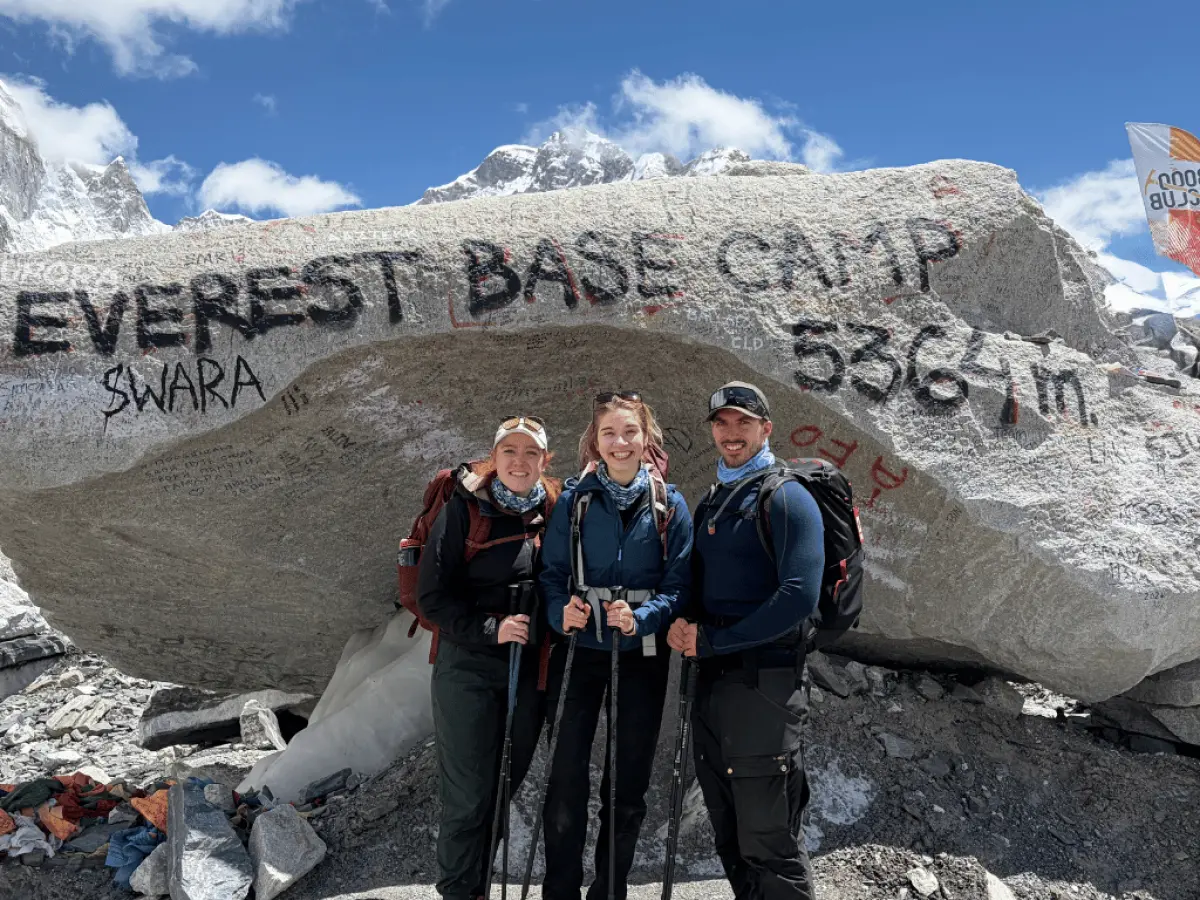
Finally, you arrive at the legendary Everest Base Camp — marked by cairns and countless prayer flags. You're standing at 5,364m, right where every Everest expedition begins.
During spring climbing season (April-May), the area is dotted with colorful expedition tents, and you may meet climbers preparing for summit attempts.
You've earned every step of this journey. Take photos, touch the ice, sit quietly and let the moment sink in. After celebration, return to Gorak Shep to rest.
Rise before dawn (4-5 AM) for the climb to Kala Patthar (5,545m).
The steep 400m climb from Gorak Shep takes 2-3 hours in the pre-dawn cold. Temperatures may drop to -15°C or colder. But you're rewarded with the single most iconic sunrise view of Mount Everest available anywhere on Earth.
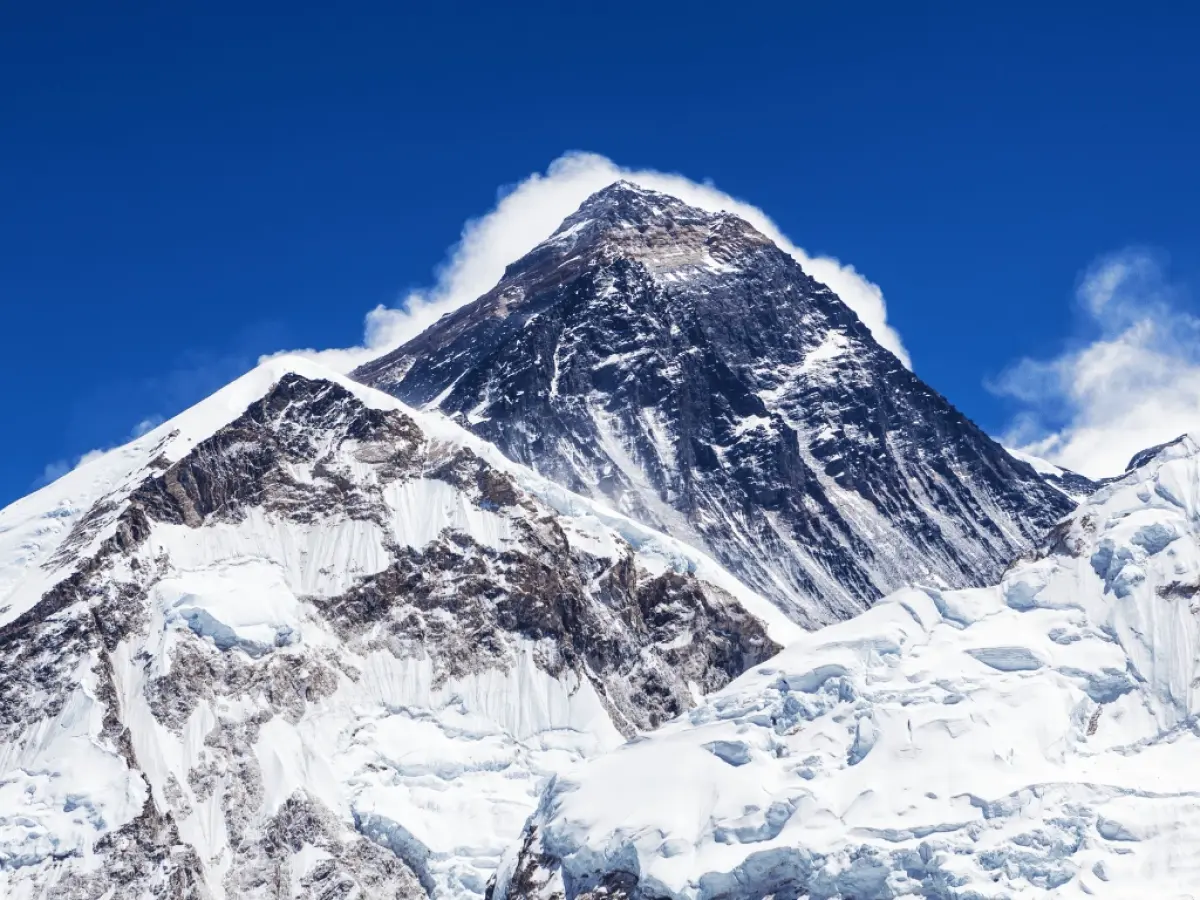
From the summit, Everest glows gold and pink with the first light. Nuptse, Pumori, Ama Dablam, and the entire Khumbu range stretch out beneath you. This is the most photographed sunrise in Himalayan trekking — and no photograph captures what it's actually like to stand there.
After descending to Gorak Shep for breakfast, begin the long descent toward Pheriche (4,240m) — a wind-swept highland village with an HRA (Himalayan Rescue Association) medical clinic. The air gets richer with every step down. Your body feels lighter.
This day marks the beginning of your return journey — but the memories stay etched forever.
From the highlands of Pheriche, rejoin the original route via Pangboche, crossing old stone walls, yak pastures, and centuries-old monasteries. The trail continues through Tengboche, where you may stop again at the monastery for reflection.
After lunch at Phunki Tenga, continue the long descent back to Namche Bazaar. The lower altitude feels genuinely wonderful — hot showers, coffee shops, real beds await.
This is your final trekking day of the EBC Trek — a time for quiet reflection and celebration. The trail retraces its way across suspension bridges and through forests filled with rhododendrons and pine. You pass cheerful villages like Monjo and Ghat, each offering glimpses of rural life in the Khumbu.
By afternoon, you reach Lukla — the gateway where it all began. Share a celebratory drink with your guide and porters, tip your team, and enjoy your last night in the Himalayas with a heart full of achievement.
Say goodbye to the Himalayas as you board the scenic Lukla flight back to Kathmandu (or Ramechhap if operating from that airport). From your window seat, look one last time at the snowy giants you walked beneath.
Weather buffer: If your Lukla flight is delayed by weather, this is where the built-in buffer day protects you. If needed, we adjust helicopter alternatives — see our Lukla Flights Guide for the full protocol.
Once in Kathmandu, check back into your hotel and enjoy a well-earned day of rest. Explore Thamel, shop for souvenirs, or simply indulge in a spa massage and delicious food.
Our team meets with you in the evening for a post-trek debrief where you can share honest feedback about your experience.
Our team transfers you to Tribhuvan International Airport for your onward journey.
As you fly away, know that you've completed something truly extraordinary — an adventure to the base of the world's highest mountain, achieved by less than 40,000 trekkers annually worldwide.
The Everest Base Camp Trek will live in your memory as one of the most rewarding and meaningful experiences of your life.
Complete transparent pricing based on group size:
| Group Size | Price Per Person (USD) |
|---|---|
| 1 person (solo) | USD 1,550 |
| 2-4 people | USD 1,500 |
| 5-9 people | USD 1,450 |
| 10-16 people | USD 1,380 |
The Everest Base Camp Trek is rated moderate to strenuous. The trails are not technical, but the sustained walking at altitudes above 4,000m demands genuine physical preparation.
For the complete honest assessment, see our Can a Normal Person Do EBC? guide with our 10-sign readiness checklist.
Every Majestic Trails Nepal EBC trek follows a comprehensive safety protocol designed to prevent, monitor, and respond to high-altitude health issues.
Insurance is mandatory before booking. Your policy must cover:
Recommended providers: World Nomads, Global Rescue, IMG Global, Allianz. Verify your specific policy includes technical trekking to your target altitude.
The two prime seasons for the EBC Trek are Spring (March-May) and Autumn (September-November).
Majestic Trails Nepal's honest note: For first-time EBC trekkers, October is the single best month of the year. Weather stability + mountain visibility + moderate temperatures create optimal conditions. Book October dates 4+ months ahead.
For detailed monthly breakdowns, see our Best Time to Trek in Nepal Guide.
Every Majestic Trails Nepal EBC trek uses carefully selected teahouses along the route.
Teahouse menus are more varied than most trekkers expect. Our guides know which kitchens maintain the best hygiene at each stop.
Traditional Nepali/Tibetan options at every teahouse:
International options at most teahouses:
Dietary requirements accommodated:
Important meat advisory above 3,500m:
We advise against consuming meat above 3,500m. Meat is often carried up from lower elevations without refrigeration and may cause digestive issues at altitude when your body is already stressed. Vegetarian meals are safer and nutritionally equivalent at altitude.
Drinking water:
Safe drinking water is provided throughout the trek via purification tablets or boiled water. Buying bottled water is discouraged for both environmental impact and cost reasons.
Majestic Trails Nepal's honest food recommendation: Dal bhat twice a day. Every day. High-carb, high-protein, plentiful, safe. Nepali guides eat dal bhat because it works at altitude — not because it's traditional.
The Everest Base Camp Trek was the ultimate adventure of a lifetime! Trekking through the heart of the Himalayas, I experienced breathtaking views of the world’s highest peak, Mount Everest, and the majestic surrounding peaks like Lhotse and Ama Dablam. The trail challenged me physically but rewarded me with stunning landscapes, vibrant Sherpa culture, and warm hospitality in traditional teahouses. Reaching Everest Base Camp was a deeply emotional moment—standing at the foot of the mighty Everest, feeling the energy and spirit of the mountain. The trek was perfectly guided, with expert support ensuring safety and comfort throughout. This trek is ideal for anyone ready to push their limits and immerse themselves in one of the most iconic trekking experiences on Earth. Highly recommended for adventurers who want to explore Nepal’s breathtaking mountains and rich cultural heritage with confidence.
Trekking to Everest Base Camp was a dream come true, and Majestic Trails Nepal made it a reality. The trek was intense but incredibly rewarding, with stunning views of the world’s highest peaks. Our guide was amazing, offering insights into the culture and history of the region. The team ensured our safety and comfort throughout, making the challenging trek more enjoyable. This is a must-do trek for anyone who loves adventure and breathtaking mountain views.
Choosing Majestic Trails Nepal was one of the best decisions we made during our trip to Nepal. Our guide Suman knew every village and mountain along the trail and shared stories about Nepali culture throughout the trek. Our porter Kiran was hardworking and incredibly kind. He always greeted us with a smile at every stop. The scenery was breathtaking, and the team's professionalism made the experience even better. We felt safe, well looked after, and truly welcomed. Thank you for an unforgettable adventure!
The Everest Base Camp Trek is considered moderate to strenuous. It involves long trekking hours, steady ascents, and high altitudes. The difficulty mainly lies in the altitude (reaching over 5,300 meters at Everest Base Camp), and proper acclimatization is crucial to avoid altitude sickness. Trekkers should be in good physical condition and prepared for long days of walking.
While the trek is suitable for those with moderate fitness levels, it can be challenging for beginners due to the long hours of trekking and high altitudes. It is important to prepare by training in advance, building endurance, and ensuring proper acclimatization. If you’re new to trekking, it’s best to consult with your trekking agency for advice on preparation.
Acclimatization is key to a safe trek at high altitudes. The itinerary includes rest days in places like Namche Bazaar (3,440 meters) and Dingboche (4,410 meters), where you can take short hikes to higher altitudes to help your body adjust. Your guide will monitor your health and ensure a steady ascent to minimize the risk of altitude sickness.
During the trek, you will stay in tea houses (local guesthouses) along the route. These provide basic amenities, including a bed, blanket, and shared bathroom facilities. Tea houses offer meals like dal bhat (lentil soup with rice), noodles, soups, and other local and international options.
Yes, you can charge batteries en route. Charger should be brought. There are hot shower facilities as well. You may have to pay a certain amount for both ($4-$5). Negotiate. Also, a hot water facility could be free at a lower elevation.