[{"name":"Langtang Valley Trek \u2014 10 Days","duration":"10","image_url":"https:\/\/www.majestictrailsnepal.com\/storage\/trip-galleries\/1\/thumb_e7907ed736676d12e6ab17328008e746.webp","offer_price":null,"url":"https:\/\/www.majestictrailsnepal.com\/trips\/langtang-valley-trek"},{"name":"Everest Base Camp Trek","duration":"14","image_url":"https:\/\/www.majestictrailsnepal.com\/storage\/trip-galleries\/2\/thumb_4b769c9c4b5b007a61f4ce3b76ff440d.webp","offer_price":null,"url":"https:\/\/www.majestictrailsnepal.com\/trips\/everest-base-camp-trek"},{"name":"Everest Panorama Trek","duration":"9","image_url":"https:\/\/www.majestictrailsnepal.com\/storage\/trip-galleries\/3\/thumb_e6ee74caea3e2900c23ca370b06bab80.webp","offer_price":null,"url":"https:\/\/www.majestictrailsnepal.com\/trips\/everest-panorama-trek"},{"name":"Annapurna Base Camp Trek","duration":"14","image_url":"https:\/\/www.majestictrailsnepal.com\/storage\/trip-galleries\/4\/thumb_3f8d40f9472f701d7c46a827925201bc.webp","offer_price":null,"url":"https:\/\/www.majestictrailsnepal.com\/trips\/annapurna-base-camp-trek"},{"name":"Annapurna Base Camp Express Trek","duration":"9","image_url":"https:\/\/www.majestictrailsnepal.com\/storage\/trip-galleries\/5\/thumb_bac80de2bd257d651fa75d9c8025da1a.webp","offer_price":null,"url":"https:\/\/www.majestictrailsnepal.com\/trips\/annapurna-base-camp-express-trek"},{"name":"Annapurna Circuit Trek","duration":"15","image_url":"https:\/\/www.majestictrailsnepal.com\/storage\/trip-galleries\/6\/thumb_b73bdec74acacaa0d72a2a2a513f3d4a.webp","offer_price":null,"url":"https:\/\/www.majestictrailsnepal.com\/trips\/annapurna-circuit-trek"},{"name":"Ghorepani Poon Hill Trek","duration":"8","image_url":"https:\/\/www.majestictrailsnepal.com\/storage\/trip-galleries\/7\/thumb_aeda9e6388ab2692138cc9c9efa81a7f.webp","offer_price":null,"url":"https:\/\/www.majestictrailsnepal.com\/trips\/ghorepani-poon-hill-trek"},{"name":"Mardi Himal Trek \u2014 9 Days","duration":"9","image_url":"https:\/\/www.majestictrailsnepal.com\/storage\/trip-galleries\/8\/thumb_c511ee87ecab8ff015210dd647392d66.webp","offer_price":null,"url":"https:\/\/www.majestictrailsnepal.com\/trips\/mardi-himal-trek"},{"name":"Manaslu Circuit Trek","duration":"15","image_url":"https:\/\/www.majestictrailsnepal.com\/storage\/trip-galleries\/9\/thumb_7726908390ad6b249f2f6a7856f9dc17.webp","offer_price":null,"url":"https:\/\/www.majestictrailsnepal.com\/trips\/manaslu-circuit-trek"},{"name":"Upper Mustang Trek","duration":"16","image_url":"https:\/\/www.majestictrailsnepal.com\/storage\/trip-galleries\/10\/thumb_6a9b52ecd1d8cda92d594e5351431d6e.webp","offer_price":null,"url":"https:\/\/www.majestictrailsnepal.com\/trips\/upper-mustang-trek"},{"name":"Pokhara City Tour","duration":"1","image_url":"https:\/\/www.majestictrailsnepal.com\/storage\/trip-galleries\/11\/thumb_cf762ba4c20363bd1c0f239db35fcc84.webp","offer_price":null,"url":"https:\/\/www.majestictrailsnepal.com\/trips\/pokhara-city-tour"},{"name":"Paragliding in Pokhara","duration":"1","image_url":"https:\/\/www.majestictrailsnepal.com\/storage\/trip-galleries\/12\/thumb_b896201edf88bbe0f570e876c3c337a3.webp","offer_price":70,"url":"https:\/\/www.majestictrailsnepal.com\/trips\/paragliding-in-pokhara"},{"name":"Kathmandu City Tour","duration":"2","image_url":"https:\/\/www.majestictrailsnepal.com\/storage\/trip-galleries\/13\/thumb_846ad05bd3ce7bebb3843c24c08db6f9.webp","offer_price":null,"url":"https:\/\/www.majestictrailsnepal.com\/trips\/kathmandu-city-tour"},{"name":"Lumbini Buddhist Pilgrimage Tour","duration":"4","image_url":"https:\/\/www.majestictrailsnepal.com\/storage\/trip-galleries\/14\/a2998dca0ce22f28a61c3862dd47f6a3.webp","offer_price":null,"url":"https:\/\/www.majestictrailsnepal.com\/trips\/lumbini-buddhist-pilgrimage-tour"},{"name":"5 days langtang valley trek","duration":"5","image_url":"https:\/\/www.majestictrailsnepal.com\/storage\/trip-galleries\/15\/thumb_7a6c65c139b8085d220ac01913cb1448.webp","offer_price":510,"url":"https:\/\/www.majestictrailsnepal.com\/trips\/5-days-langtang-valley-trek"},{"name":"Leisure Port Nepal Price: Rafting and Camping Adventure","duration":"7","image_url":"https:\/\/www.majestictrailsnepal.com\/storage\/trip-galleries\/17\/thumb_02cb8c3f0697c7c5c4f73d744b47d87f.webp","offer_price":550,"url":"https:\/\/www.majestictrailsnepal.com\/trips\/leisure-port-nepal-price-rafting-and-camping-adventure"},{"name":"10 days spiritual tour in Nepal","duration":"10","image_url":"https:\/\/www.majestictrailsnepal.com\/storage\/trip-galleries\/18\/thumb_b4e7eba000673d1bce6b56abb422fe3b.webp","offer_price":1200,"url":"https:\/\/www.majestictrailsnepal.com\/trips\/10-days-spiritual-tour-in-nepal"},{"name":"Annapurna Circuit Short Trek","duration":"10","image_url":"https:\/\/www.majestictrailsnepal.com\/storage\/trip-galleries\/19\/thumb_769ee8cbe02a510d8db76419c97a2dc9.webp","offer_price":null,"url":"https:\/\/www.majestictrailsnepal.com\/trips\/annapurna-circuit-short-trek"},{"name":"Best Short Manaslu Circuit Trek","duration":"11","image_url":"https:\/\/www.majestictrailsnepal.com\/storage\/trip-galleries\/20\/thumb_ac1b4977a3fce9d11ee68240cad675b6.webp","offer_price":null,"url":"https:\/\/www.majestictrailsnepal.com\/trips\/best-short-manaslu-circuit-trek"},{"name":"Langtang Gosaikunda Trek","duration":"13","image_url":"https:\/\/www.majestictrailsnepal.com\/storage\/trip-galleries\/22\/thumb_577a6402f2ca4b3f12bfd80b96b33a23.webp","offer_price":940,"url":"https:\/\/www.majestictrailsnepal.com\/trips\/langtang-gosaikunda-trek"},{"name":"3 Passes Trek Nepal","duration":"22","image_url":"https:\/\/www.majestictrailsnepal.com\/storage\/trip-galleries\/24\/thumb_8020edea67aefce87e9012dc89a60087.webp","offer_price":null,"url":"https:\/\/www.majestictrailsnepal.com\/trips\/3-passes-trek-nepal"},{"name":"Tsum Valley Trek","duration":"13","image_url":"https:\/\/www.majestictrailsnepal.com\/storage\/trip-galleries\/25\/thumb_194c03e3c3463dff07a3f621a81ef9ea.webp","offer_price":null,"url":"https:\/\/www.majestictrailsnepal.com\/trips\/tsum-valley-trek"},{"name":"Gokyo and Renjo La Pass Trek","duration":"14","image_url":"https:\/\/www.majestictrailsnepal.com\/storage\/trip-galleries\/26\/thumb_7b865f0f0d0d4c6807b625b6e391b56d.webp","offer_price":1490,"url":"https:\/\/www.majestictrailsnepal.com\/trips\/gokyo-and-renjo-la-pass-trek"},{"name":"Honeymoon Tour in Nepal","duration":"9","image_url":"https:\/\/www.majestictrailsnepal.com\/storage\/trip-galleries\/27\/thumb_dabf449c090bb16efd5823c653eb61b3.webp","offer_price":null,"url":"https:\/\/www.majestictrailsnepal.com\/trips\/honeymoon-tour-in-nepal"},{"name":"Pikey Peak Trek","duration":"10","image_url":"https:\/\/www.majestictrailsnepal.com\/storage\/trip-galleries\/28\/thumb_5425e57ce3ea84d31a7b24b83b1af94f.webp","offer_price":1090,"url":"https:\/\/www.majestictrailsnepal.com\/trips\/pikey-peak-trek"},{"name":"Makalu Base Camp Trek","duration":"17","image_url":"https:\/\/www.majestictrailsnepal.com\/storage\/trip-galleries\/29\/thumb_d68c8ec6492540c922045d825a38cd50.webp","offer_price":null,"url":"https:\/\/www.majestictrailsnepal.com\/trips\/makalu-base-camp-trek"},{"name":"Nepal Winter Tour","duration":"8","image_url":"https:\/\/www.majestictrailsnepal.com\/storage\/trip-galleries\/30\/thumb_c8491c0c4b1fb19d8e93630866895799.webp","offer_price":null,"url":"https:\/\/www.majestictrailsnepal.com\/trips\/nepal-winter-tour"},{"name":"Maratika Tour in Nepal","duration":"6","image_url":"https:\/\/www.majestictrailsnepal.com\/storage\/trip-galleries\/31\/thumb_97948560c5a12a486f9ac2b76567cafd.webp","offer_price":null,"url":"https:\/\/www.majestictrailsnepal.com\/trips\/maratika-tour-in-nepal"},{"name":"Nepal Lake Trek","duration":"14","image_url":"https:\/\/www.majestictrailsnepal.com\/storage\/trip-galleries\/32\/thumb_d9b260fe13127816f5b3c25447caf70c.webp","offer_price":null,"url":"https:\/\/www.majestictrailsnepal.com\/trips\/nepal-lake-trek"},{"name":"Taste of Nepal Tour Package","duration":"9","image_url":"https:\/\/www.majestictrailsnepal.com\/storage\/trip-galleries\/33\/thumb_f4b55ab5760a8e057b4c3e208e25ab36.webp","offer_price":null,"url":"https:\/\/www.majestictrailsnepal.com\/trips\/taste-of-nepal-tour-package"},{"name":"Poon Hill Yoga Trek in Nepal","duration":"9","image_url":"https:\/\/www.majestictrailsnepal.com\/storage\/trip-galleries\/34\/thumb_904b238e690107c5c9b1092296880cc9.webp","offer_price":null,"url":"https:\/\/www.majestictrailsnepal.com\/trips\/poon-hill-yoga-trek-in-nepal"},{"name":"Nar Phu Nepal Trek","duration":"10","image_url":"https:\/\/www.majestictrailsnepal.com\/storage\/trip-galleries\/35\/thumb_f959e3e22c260629add0ba61a4038812.webp","offer_price":null,"url":"https:\/\/www.majestictrailsnepal.com\/trips\/nar-phu-nepal-trek"},{"name":"Annapurna Base Camp Helicopter Tour","duration":"1","image_url":"https:\/\/www.majestictrailsnepal.com\/storage\/trip-galleries\/36\/thumb_e81861e8772a9d7fac92ab4a7d43e3bf.webp","offer_price":null,"url":"https:\/\/www.majestictrailsnepal.com\/trips\/annapurna-base-camp-helicopter-tour"},{"name":"Annapurna Circuit with Nar Phu Valley Trek","duration":"16","image_url":"https:\/\/www.majestictrailsnepal.com\/storage\/trip-galleries\/38\/thumb_b70692cbd1c1dd772587c940be2d0bc9.webp","offer_price":null,"url":"https:\/\/www.majestictrailsnepal.com\/trips\/annapurna-circuit-with-nar-phu-valley-trek"}]
Where Is Annapurna Base Camp? Complete Location & Trekking Guide
Why Every Trekker Asks "Where Is Annapurna Base Camp?"
Few places on Earth stir the imagination of mountain lovers quite like Annapurna Base Camp. Nestled deep within the folds of the Himalaya, this legendary destination draws tens of thousands of trekkers every year — seasoned mountaineers and first-time hikers alike. But before anyone laces up their boots and books a flight to Kathmandu, the very first question tends to be a simple one: where is Annapurna Base Camp?
The answer, as it turns out, is far more fascinating than a single set of coordinates on a map. The location of Annapurna Base Camp places it inside a dramatic natural amphitheater of ice and rock, surrounded by some of the tallest peaks on the planet, deep within central Nepal's Annapurna Conservation Area. Reaching it requires a multi-day trek through terraced rice paddies, subtropical rhododendron forests, traditional Gurung and Magar villages, and eventually above the tree line into a stark, breathtaking glacial basin.
At Majestic Trails Nepal, organizing treks to this iconic destination is at the heart of what the company does. This guide is designed to answer every question trekkers have about the Annapurna Base Camp trek location — from the precise altitude and GPS coordinates to step-by-step route details, seasonal advice, and practical planning tips.
Whether the goal is a spring expedition surrounded by blooming rhododendrons or an autumn trek under crystal-clear Himalayan skies, understanding exactly where this base camp sits — and how to reach it — is the essential first step.
The Exact Location of Annapurna Base Camp: Altitude, Coordinates & Geography
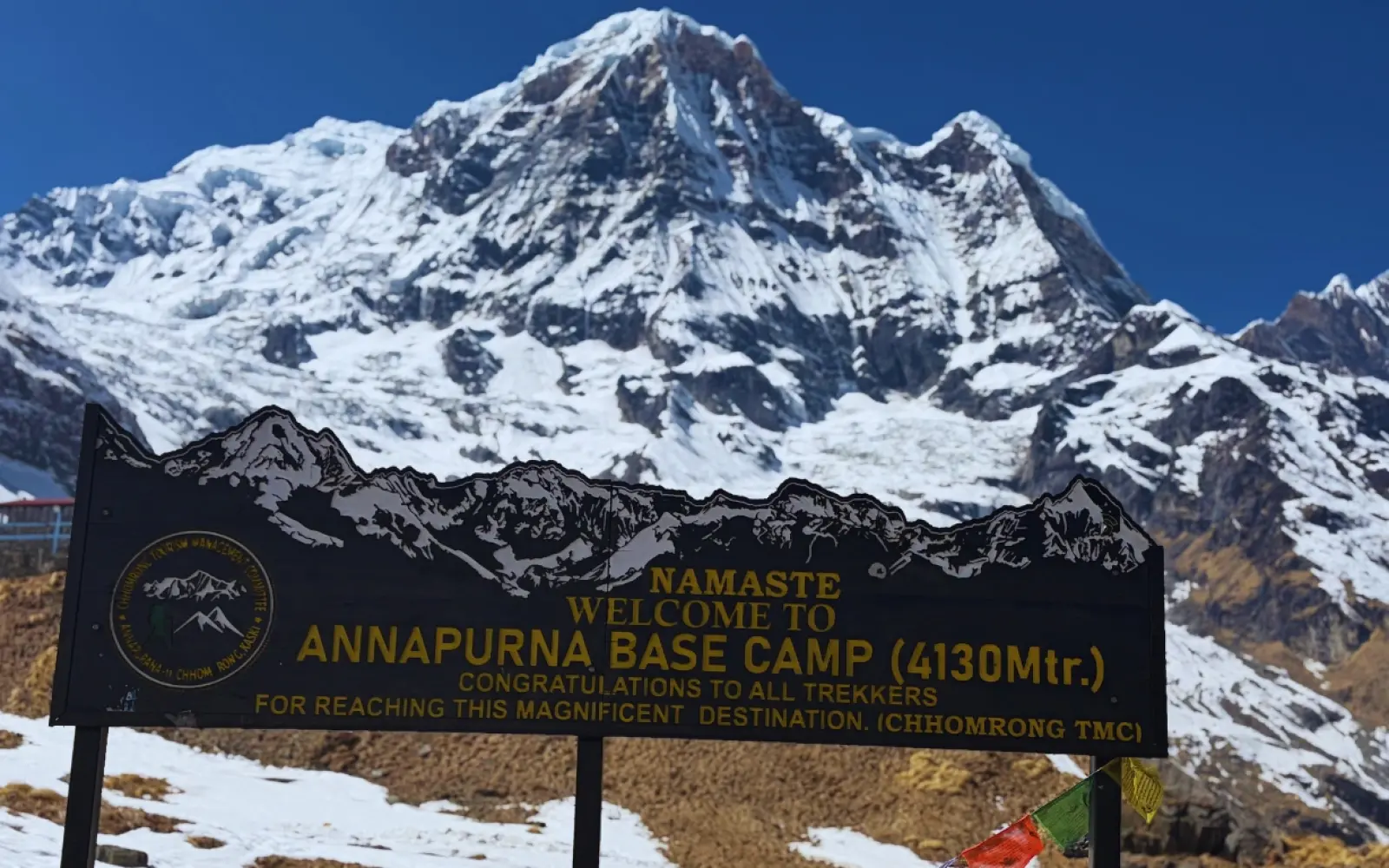
The exact location of Annapurna Base Camp at 4,130 meters, surrounded by Himalayan giants.
Where in Nepal Is Annapurna Base Camp?
Annapurna Base Camp is located in the Kaski District of Gandaki Province, in central Nepal. It sits at the head of the Modi Khola (river) valley, deep within the Annapurna Sanctuary — a high-altitude glacial basin completely encircled by towering Himalayan peaks. The ABC location in Nepal places it roughly 40 kilometers (25 miles) north of the lakeside city of Pokhara, though the actual trekking distance is considerably longer due to the winding mountain trail.
The exact location of Annapurna Base Camp can be identified by the following geographic details:
Annapurna Base Camp GPS location: Approximately 28.5308° N latitude, 83.8781° E longitude
District: Kaski, Gandaki Province, Nepal
Protected Area: Annapurna Conservation Area (ACA), managed by the National Trust for Nature Conservation (NTNC)
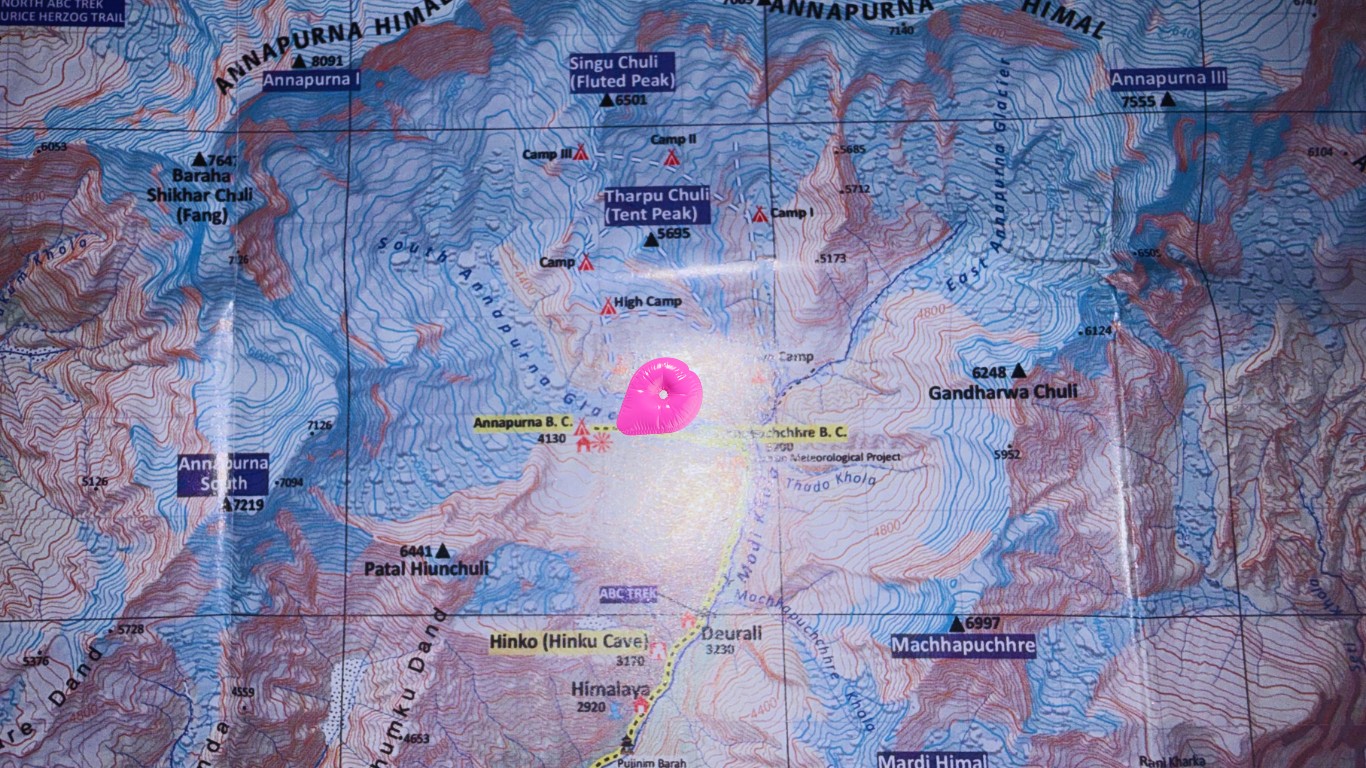
For trekkers looking at a map to Annapurna Base Camp, the camp appears as a small clearing on the southern flank of Annapurna I (8,091 m), the tenth-highest mountain in the world. It is not a permanent settlement but rather a collection of stone teahouse lodges that serve as the final overnight stop for trekkers on the ABC trail.
The Annapurna Sanctuary: A Natural Amphitheater
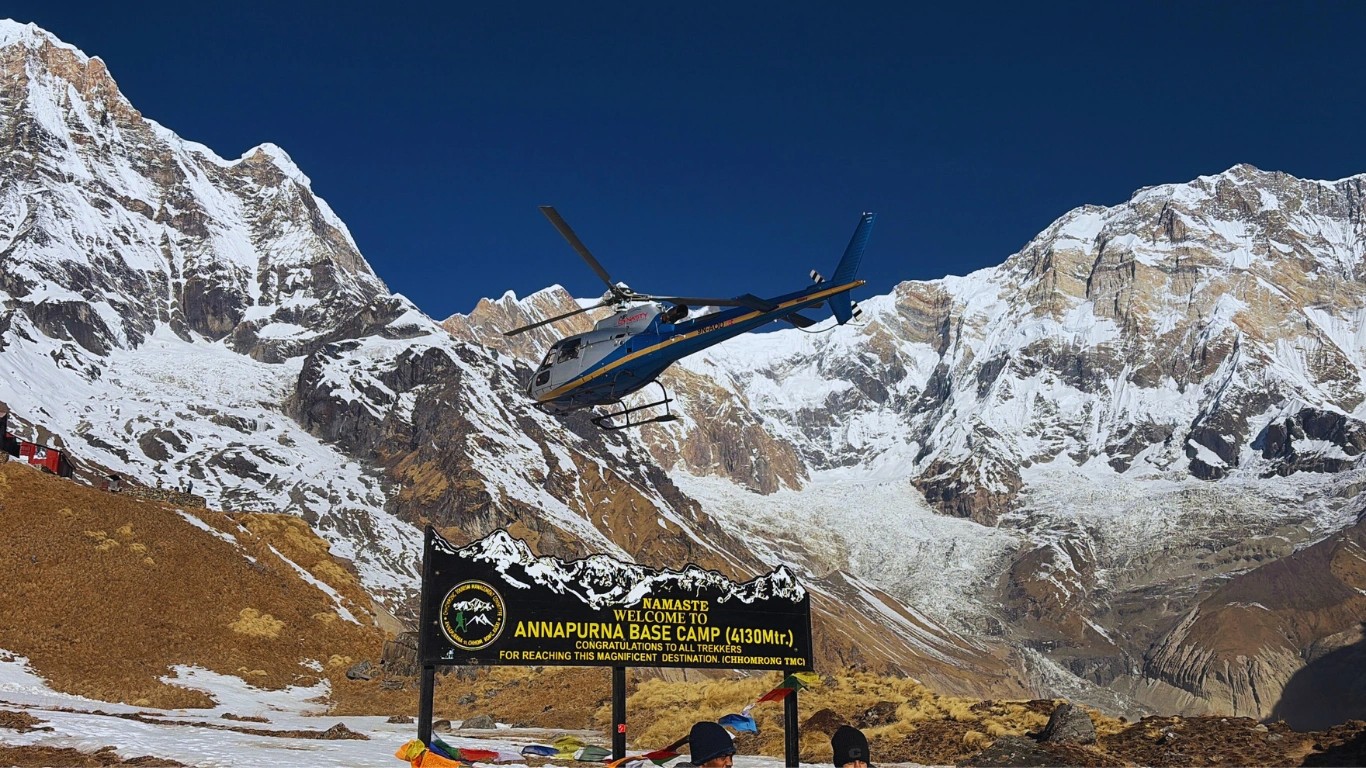
Panoramic view of the Annapurna Base Camp trek location inside the glacial Sanctuary.
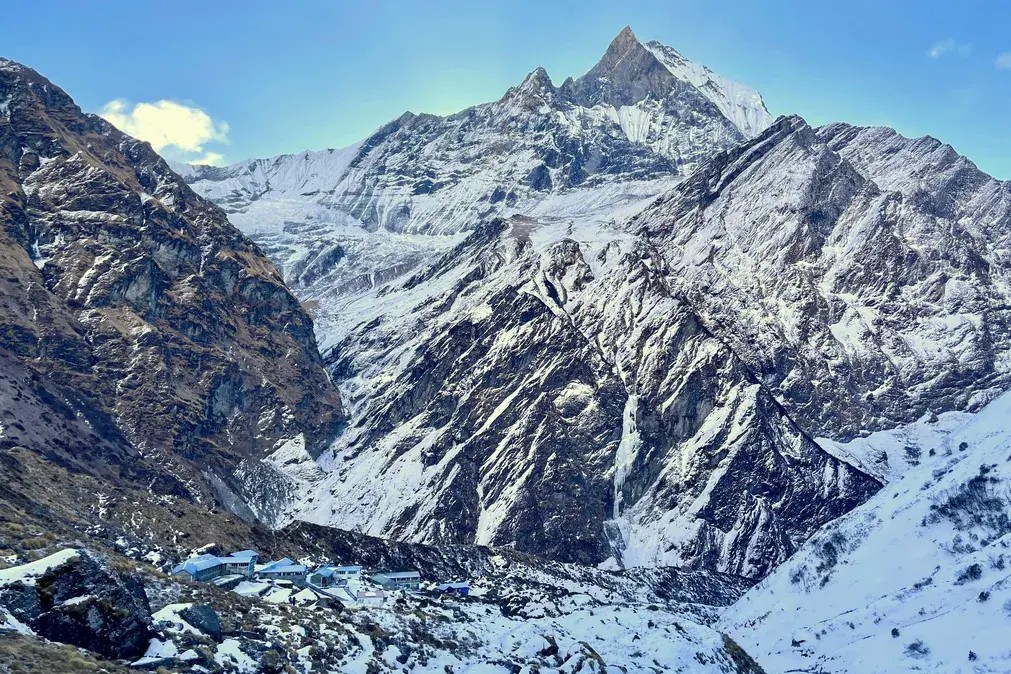
Understanding the Annapurna Base Camp Himalayan location requires understanding the Annapurna Sanctuary itself. The Sanctuary is a high-altitude glacial basin — essentially a massive natural bowl — formed by a ring of peaks that rise steeply on all sides. The only way in or out on foot is through a narrow gap between the towering walls of Machapuchare (Fishtail Mountain, 6,993 m) and Hiunchuli (6,441 m), a passage so dramatic that many trekkers describe it as walking through a gateway into a hidden world.
Once inside the Sanctuary, the basin opens up, and Annapurna Base Camp sits at the northern end, surrounded by:
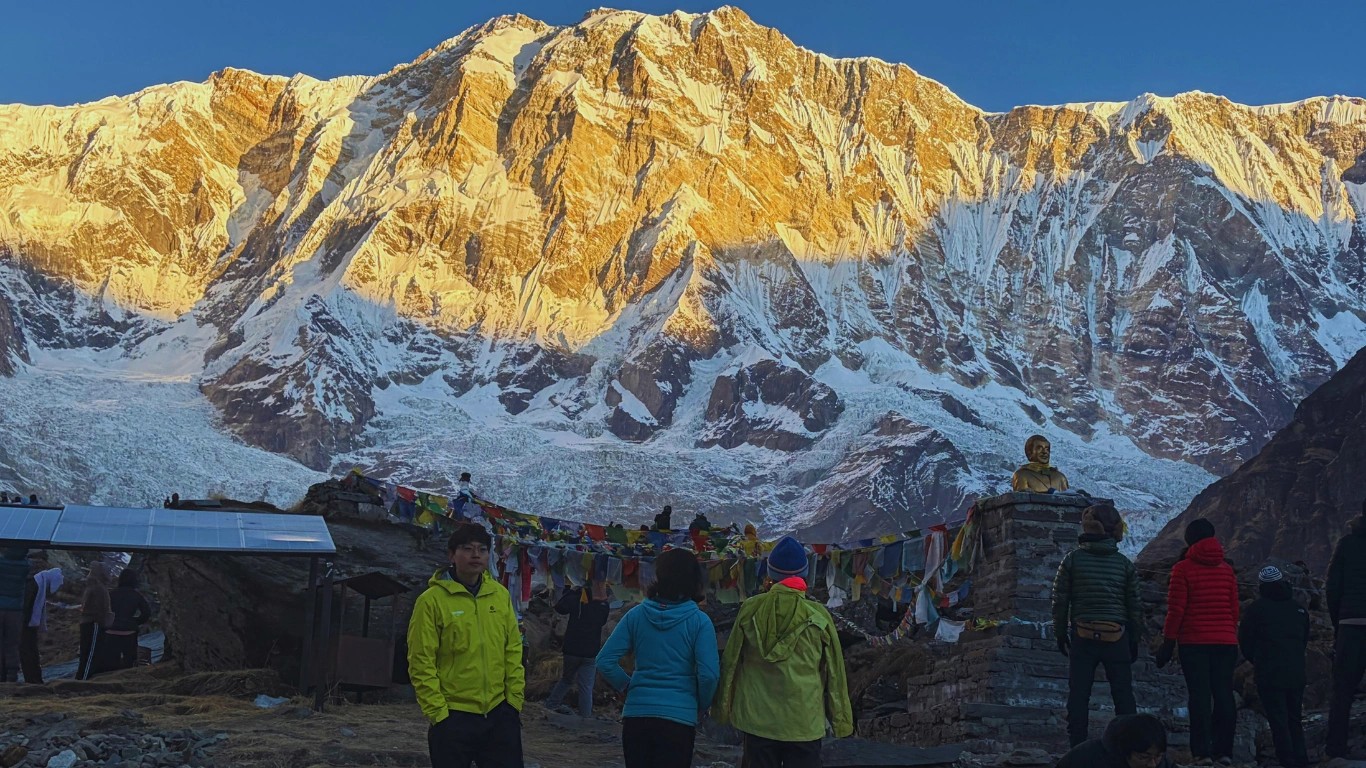
Annapurna I (8,091 m) — the tenth-highest peak in the world, looming directly to the north
Annapurna South (7,219 m) — a massive wall of ice and rock to the west
Machapuchare / Fishtail Mountain (6,993 m) — Nepal's most recognizable unclimbed peak, guarding the entrance to the Sanctuary
Hiunchuli (6,441 m) — rising sharply to the southwest
Gangapurna (7,455 m) — visible to the northeast
Annapurna III (7,555 m) — part of the dramatic eastern wall of the basin
Tent Peak / Tharpu Chuli (5,663 m) — a popular trekking peak near the base camp
This 360-degree panorama of peaks is what makes the Annapurna Base Camp altitude and location so extraordinary. Very few places in the Himalaya allow trekkers to stand at the foot of an 8,000-meter peak and be surrounded by this many major summits at such close range.
Villages Near Annapurna Base Camp
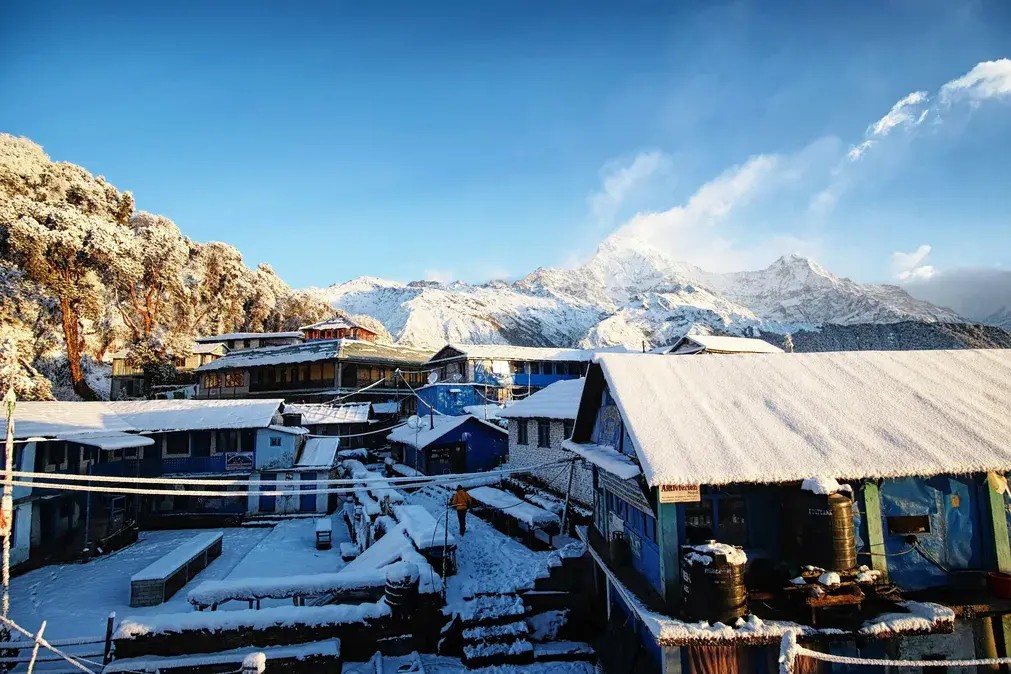
Traditional Gurung village of Tadapani, a key stop on the route to Annapurna Base Camp.
While the base camp itself has no permanent residents, several villages near Annapurna Base Camp serve as critical waypoints along the trekking route. These settlements provide teahouse accommodation, meals, and a window into the traditional cultures of Nepal's hill communities.
Key villages along the trail include:
Ghandruk (1,940 m): A large, picturesque Gurung village with stunning views of Annapurna South, Machapuchare, and Hiunchuli. Ghandruk is one of the most popular starting or stopping points on the trek.
Chhomrong (2,170 m): Often considered the gateway to the Annapurna Sanctuary. This terraced hillside village is the last major settlement before the trail enters the Sanctuary.
Bamboo (2,310 m): A small cluster of lodges in a deep, forested valley along the Modi Khola.
Dovan (2,580 m): Another small settlement within the forest zone.
Himalaya Hotel (2,873 m): A handful of lodges marking the transition from dense forest to sparser vegetation.
Deurali (3,230 m): The last stop before the trail breaks above the tree line and enters the open terrain of the Sanctuary.
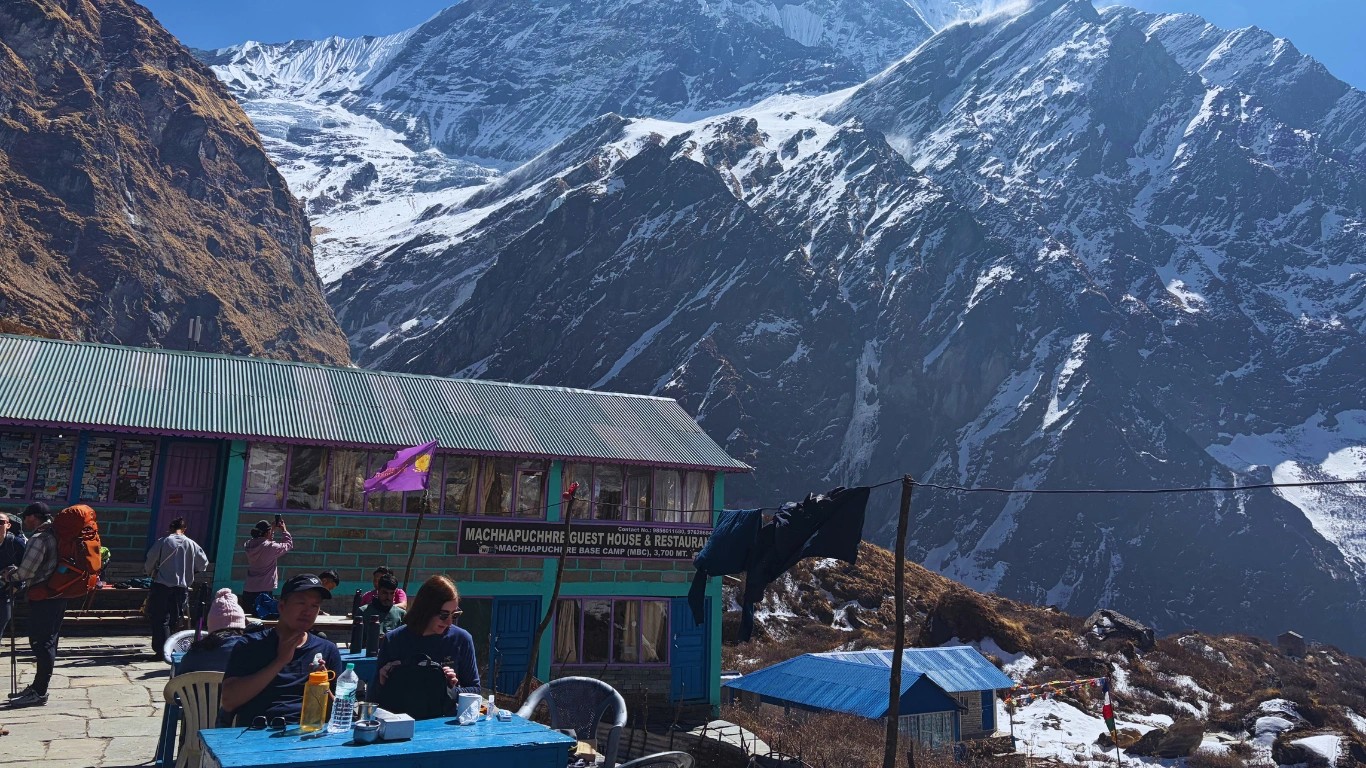
Machapuchare Base Camp (MBC) (3,700 m): A collection of lodges just below the base camp, offering a final overnight stop with extraordinary views of the Fishtail Mountain.
These villages form the backbone of the trekking infrastructure and are the reason the ABC trek is possible as a teahouse trek — no camping or cooking equipment required.
Annapurna Conservation Area: The Protected Landscape
The entire trek to Annapurna Base Camp falls within the Annapurna Conservation Area (ACA), the largest protected area in Nepal, covering 7,629 square kilometers. Established in 1986, the ACA is home to over 1,200 species of flowering plants, 102 mammals, 474 bird species, and 39 species of reptiles and amphibians.
All trekkers entering the ACA are required to obtain two permits:
Annapurna Conservation Area Permit (ACAP) — NPR 1,000 for SAARC nationals; NPR 3,000 for other foreign nationals (fees subject to change)
These permits can be obtained in Kathmandu (at the Nepal Tourism Board office in Bhrikutimandap) or in Pokhara (at the Pokhara Tourism Office) before starting the trek.
When organizing a trek through a licensed trekking company like Majestic Trails Nepal, permit arrangements are typically handled as part of the package.
How to Reach Annapurna Base Camp: Routes, Starting Points & Travel Logistics
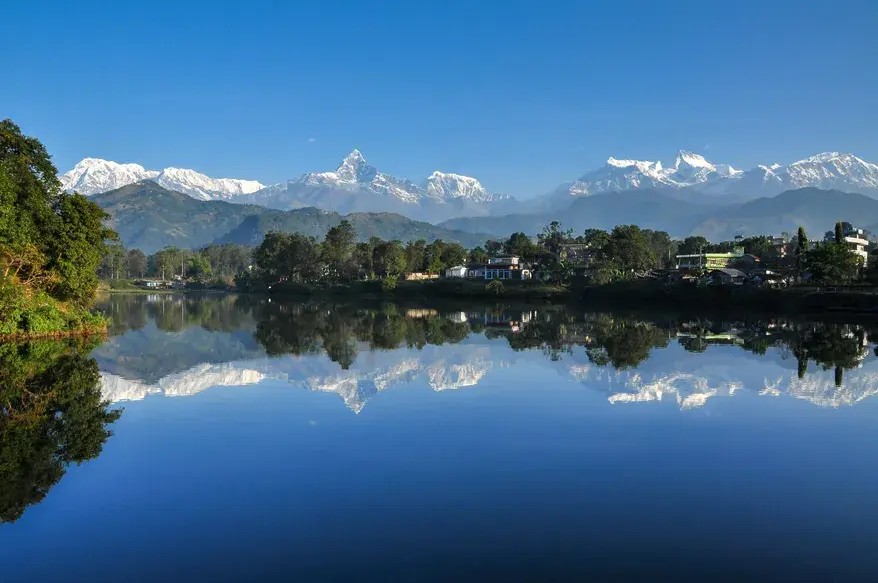
Pokhara lakeside with the Annapurna range in the background — the starting city for trekking to Annapurna Base Camp.
Step 1: Getting to Pokhara — The Gateway City
Every journey to Annapurna Base Camp begins in Pokhara, Nepal's adventure capital and the closest major city to the Annapurna region. Understanding the distance to Annapurna Base Camp from Pokhara starts with getting to Pokhara itself.
From Kathmandu to Pokhara:
By air: 25–30 minute flight from Tribhuvan International Airport (KTM) to Pokhara Airport (PKR). Multiple domestic airlines operate this route daily.
By road: 6–8 hours by tourist bus or private vehicle along the Prithvi Highway (approximately 200 km). Luxury tourist buses, local buses, and private jeeps are all available.
By tourist bus: Comfortable tourist buses depart Kathmandu each morning from Sorhakhutte or Kantipath bus stations, arriving in Pokhara by mid-afternoon.
Pokhara sits at 827 meters elevation on the shores of Phewa Lake, with direct views of the Annapurna and Machapuchare massifs. It is the logistical hub for all Annapurna region treks, and trekkers typically spend at least one night in Pokhara to organize permits, gear, and final preparations before heading to the trailhead.
Step 2: Reaching the Trailhead — ABC Trek Starting Points
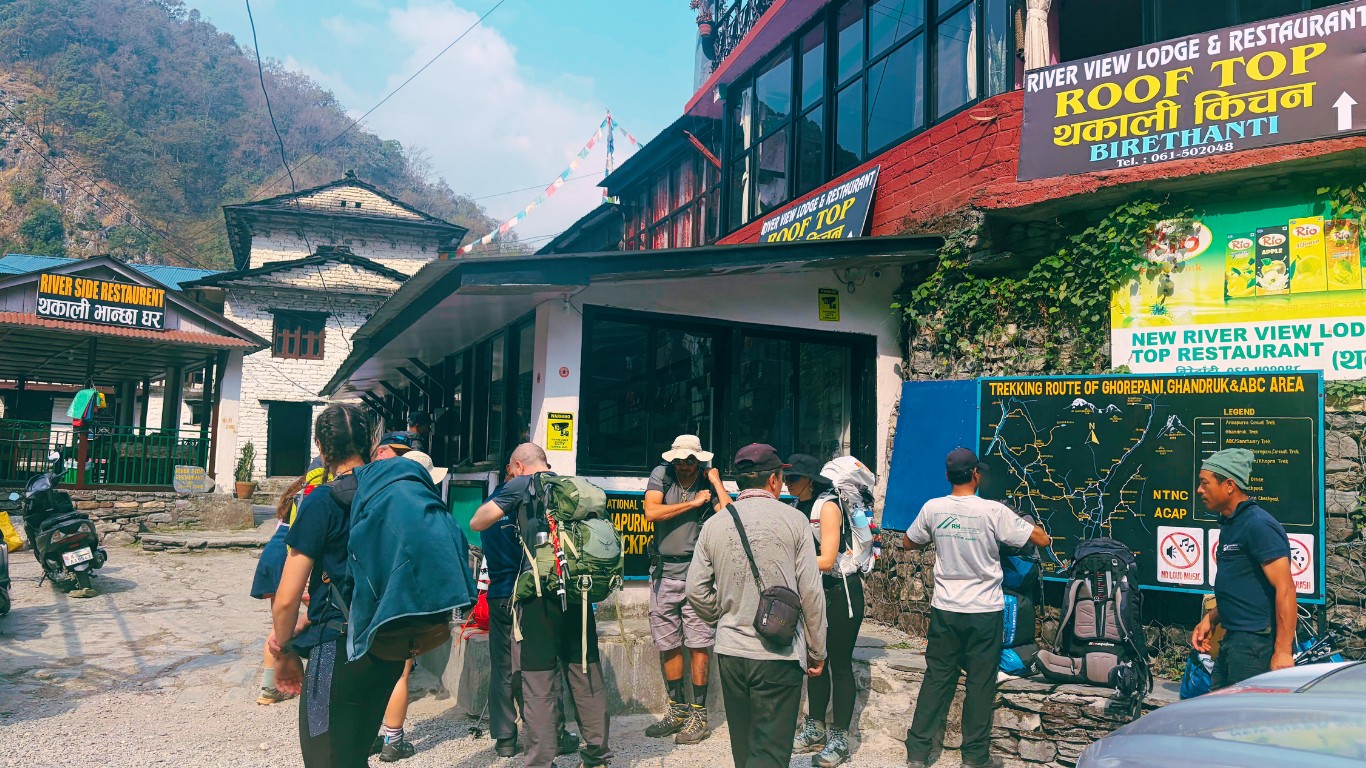
Birethati trailhead, the most popular ABC trek starting point for hikers heading to Annapurna Base Camp.
From Pokhara, the next step in understanding how to reach Annapurna Base Camp is getting to the trailhead. Several ABC trek starting points are used depending on the route chosen:
Nayapul (1,070 m)
The most common starting point. Nayapul is a small roadside town approximately 42 km (1.5–2 hours by road) northwest of Pokhara. Taxis, private jeeps, and local buses service this route daily. From Nayapul, trekkers walk to Tikhedhunga and then ascend toward Ghorepani or directly toward Chhomrong.
Phedi / Kande (1,770 m)
An alternative starting point that begins higher, saving some trekking time. Phedi is located along the road to Dhampus, about 30–45 minutes by vehicle from Pokhara. This starting point is sometimes preferred for shorter itineraries.
Siwai / Jhinu Danda
Some routes use the Siwai or Jhinu Danda approach, particularly for trekkers returning via the Modi Khola valley. These are less common starting points but are used for loop-route itineraries.
Ghandruk (via jeep road)
A jeep road now extends from Nayapul to Ghandruk (or close to it), allowing trekkers to bypass the lower-elevation walk and start the trek from Ghandruk itself. This option shortens the total trekking duration.
Step 3: The Trek Itself — Popular Routes to Annapurna Base Camp
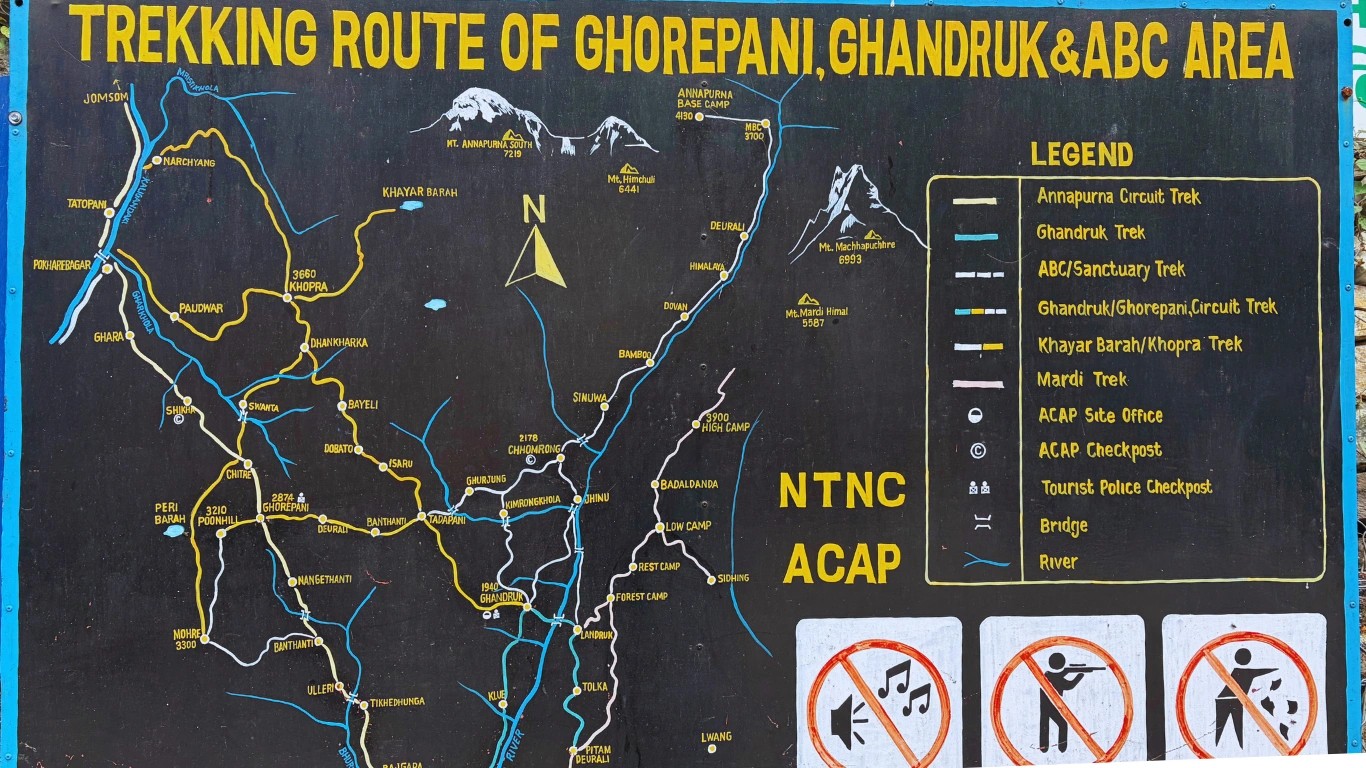
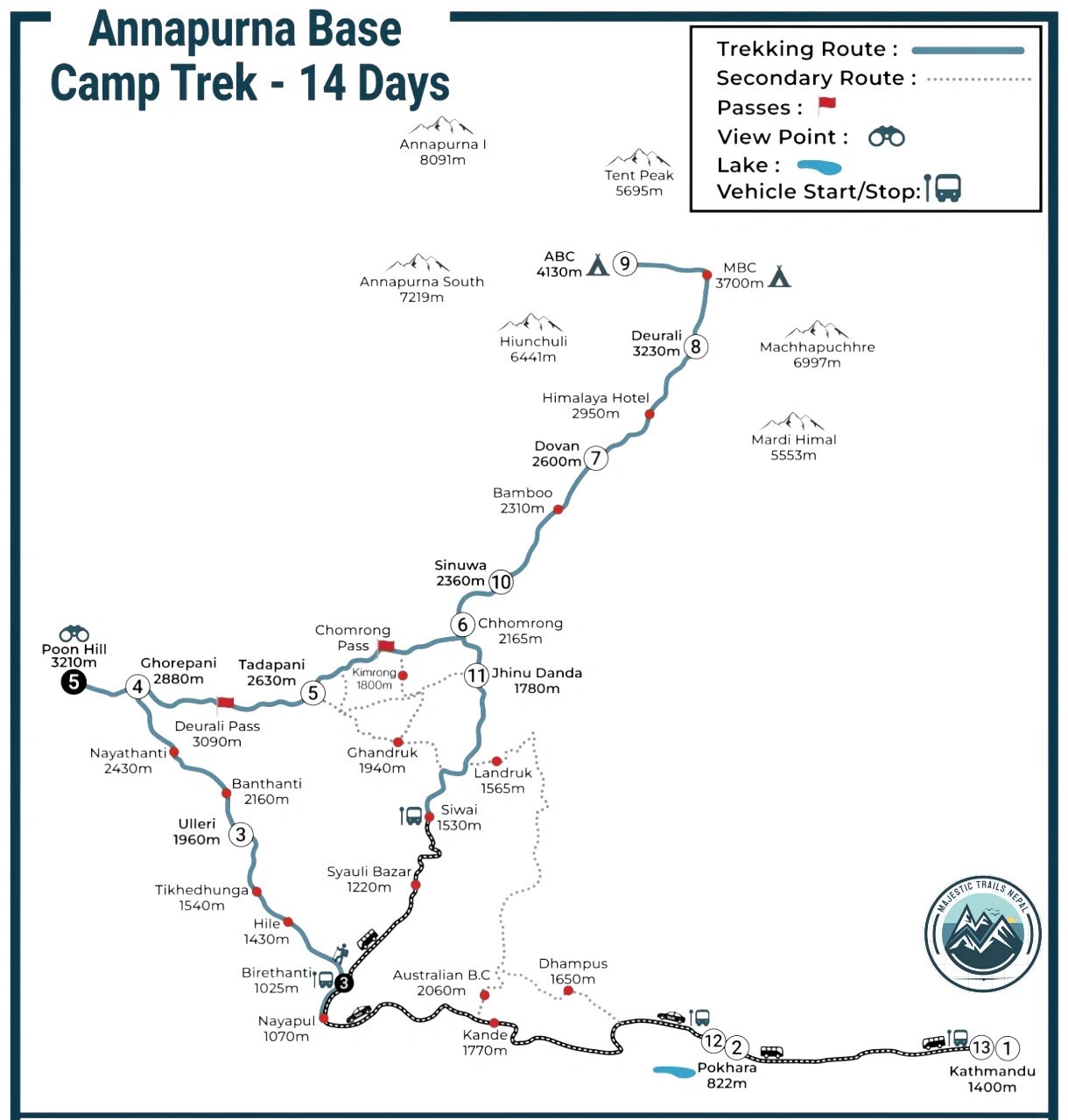
Several popular trek routes to Annapurna Base Camp exist, all converging at Chhomrong before following a single trail into the Annapurna Sanctuary. Understanding the Annapurna Base Camp trekking route in Nepal means knowing the options:
Route 1: Classic Route via Nayapul–Ghorepani–Tadapani–Chhomrong (with Poon Hill)
Annapurna Base Camp trek route map showing popular trails from Nayapul and Ghandruk to ABC.
This is the most popular and scenic route, combining the famous Poon Hill sunrise viewpoint with the ABC trek. The itinerary typically runs 10–12 days and passes through some of the most beautiful sections of the Annapurna trail.
Sample Itinerary:
Day
Route
Altitude
1
Pokhara to Nayapul, trek to Tikhedhunga
1,540 m
2
Tikhedhunga to Ghorepani
2,860 m
3
Poon Hill sunrise, trek to Tadapani
2,630 m
4
Tadapani to Chhomrong
2,170 m
5
Chhomrong to Bamboo
2,310 m
6
Bamboo to Deurali
3,230 m
7
Deurali to Annapurna Base Camp
4,130 m
8
ABC to Bamboo
2,310 m
9
Bamboo to Jhinu Danda (hot springs)
1,780 m
10
Jhinu Danda to Nayapul, drive to Pokhara
1,070 m
This route provides an excellent itinerary to Annapurna Base Camp for trekkers who want the complete experience, including cultural villages, rhododendron forests, and the Poon Hill panorama.
Route 2: Direct Route via Nayapul–Ghandruk–Chhomrong
A slightly shorter option (7–10 days) that skips Poon Hill and heads directly from Nayapul to Ghandruk, then to Chhomrong and up into the Sanctuary. This is the best way to reach Annapurna Base Camp for trekkers with limited time who want to focus on the base camp experience itself.
Route 3: Short Route via Phedi/Kande–Dhampus–Landruk–Chhomrong
Starting from the higher trailhead at Phedi, this route passes through the ridgeline village of Dhampus, descends to Landruk, and connects to Chhomrong. It is the shortest standard option, sometimes completed in as few as 7 days.
All three routes merge at Chhomrong. From Chhomrong onward, there is only one trail leading into the Annapurna Sanctuary and up to the base camp.
How Far Is Annapurna Base Camp?
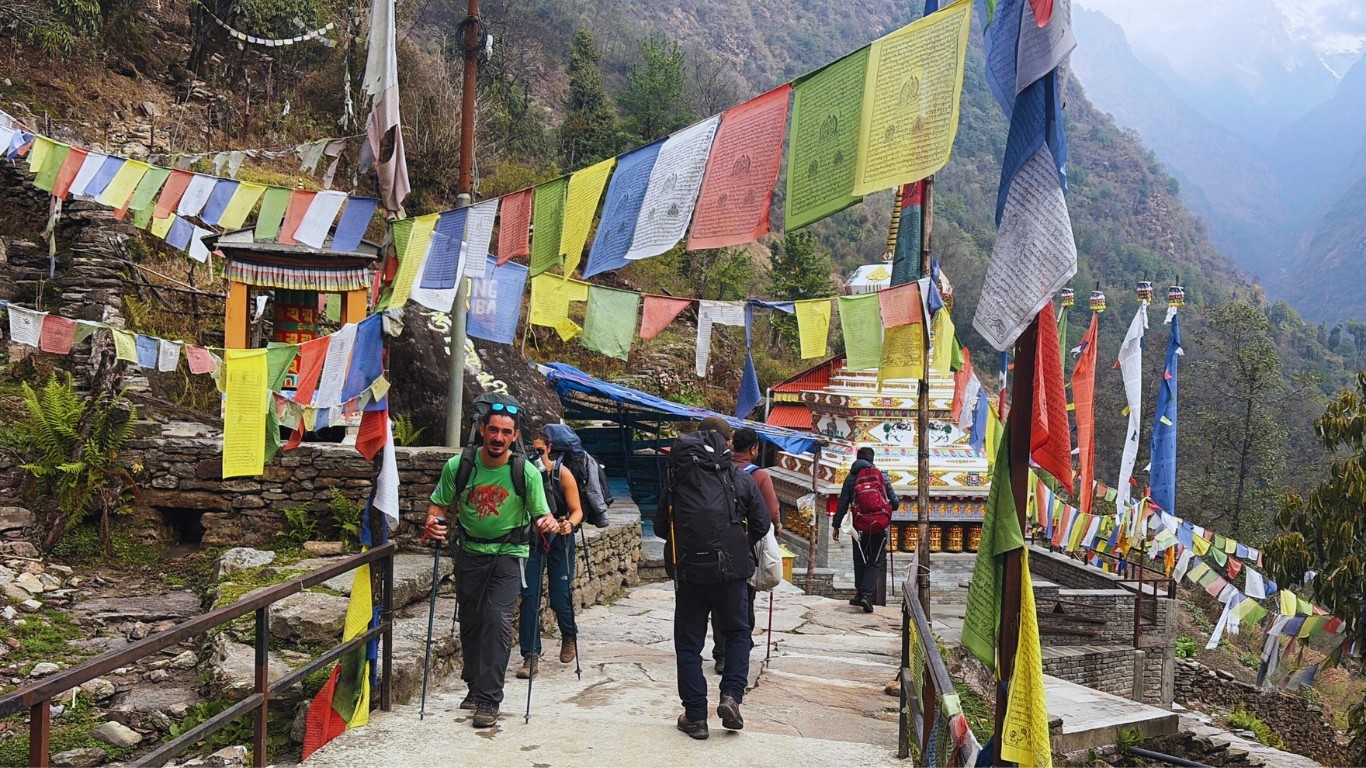
Trekkers ascending stone steps on the trail, showing how far the journey to Annapurna Base Camp really is.
One of the most frequently asked questions is how far is Annapurna Base Camp from the starting point. The answer depends on the route:
From Nayapul (via Ghorepani/Poon Hill): Approximately 55–65 km one way, typically covered in 5–7 trekking days
From Nayapul (via Ghandruk, direct): Approximately 45–50 km one way, typically 4–6 trekking days
From Pokhara (total road + trek distance): Approximately 90–110 km depending on the route
It is important to note that distance in the Himalaya is not the same as distance on flat terrain. The trail involves significant elevation gain and loss, with steep stone staircases, river crossings, narrow ridgeline paths, and varied terrain. Daily trekking distances typically range from 8 to 15 kilometers, with 5 to 8 hours of walking per day.
How to Get to Annapurna Base Camp: The Full Travel Chain
For international travelers, here is the complete sequence for understanding how to get to Annapurna Base Camp:
Fly to Kathmandu (Tribhuvan International Airport)
Travel to Pokhara (domestic flight or road transport)
Drive to trailhead (Nayapul, Phedi, or Ghandruk)
Trek to Annapurna Base Camp (4–7 days depending on route)
Return trek to trailhead (2–3 days)
Drive back to Pokhara
The total duration from leaving Pokhara to returning is typically 7–12 days. Most trekkers allocate 12–16 days for the entire Nepal trip including Kathmandu sightseeing, Pokhara preparation days, and buffer days for weather.
Best Season to Visit Annapurna Base Camp
Clear autumn skies over the Annapurna range during the best season to visit Annapurna Base Camp.
Choosing the right time to trek is essential for safety, comfort, and the quality of Himalayan views. The best season to visit Annapurna Base Camp depends on weather patterns, trail conditions, and personal preferences.
Autumn (October–November) — Peak Trekking Season
Autumn is widely regarded as the best season to visit Annapurna Base Camp. After the monsoon rains end in late September, the air is clean, the skies are clear, and the Himalayan views are at their most spectacular.
Temperatures at ABC: Daytime highs around 5–10°C; nighttime lows around -5 to -10°C
Visibility: Excellent; the clearest mountain views of the year
Trail conditions: Dry, well-maintained trails with minimal risk of landslides
Crowds: This is the busiest season; teahouses can fill up, so advance booking is recommended
Vegetation: Post-monsoon greenery in lower elevations; golden autumn light
October and November are the most popular months for the ABC trek, and for good reason. The combination of stable weather, stunning visibility, and comfortable temperatures makes this the ideal window for most trekkers.
Spring (March–May) — Rhododendron Season
Spring is the second most popular season and offers its own unique appeal. The forests between 2,000 and 3,500 meters burst into bloom with rhododendrons — Nepal's national flower — in vibrant shades of red, pink, and white.
Temperatures at ABC: Similar to autumn; slightly warmer at lower elevations
Visibility: Generally good, though afternoon clouds and haze can build up, especially in May
Trail conditions: Dry and stable, though late May can see pre-monsoon precipitation
Crowds: Busy but slightly less crowded than October–November
Vegetation: Spectacular rhododendron and magnolia blooms in the forest zones
March and April are the best spring months. By May, pre-monsoon weather can bring afternoon clouds and occasional rain at lower elevations.
Winter (December–February) — Cold but Clear
Winter trekking to Annapurna Base Camp is possible for well-prepared trekkers. The skies are often crystal clear, and the trails are far less crowded. However, temperatures at the base camp can plummet well below -15°C at night, and some sections of the trail may have snow and ice.
Temperatures at ABC: Daytime around 0–5°C; nighttime can reach -15 to -25°C
Visibility: Excellent on clear days
Trail conditions: Snow and ice above 3,000 meters; some teahouses may close
Crowds: Very few trekkers; a peaceful, solitary experience
Considerations: Proper cold-weather gear is essential; shorter daylight hours
December and January are the coldest months. February sees slightly warmer temperatures and the beginning of the transition to spring.
Monsoon (June–September) — Not Recommended
The monsoon season brings heavy rainfall, leeches, slippery trails, limited visibility, and a high risk of landslides. Trekking to Annapurna Base Camp during the monsoon is strongly discouraged. Cloud cover typically obscures mountain views for most of the day, and trail conditions can be dangerous.
Packing List & Trekking Tips for the Annapurna Base Camp Trek
A well-prepared trekker is a safe and comfortable trekker. This section serves as a practical trekking guide to Annapurna Base Camp, covering essential gear, altitude preparation, and safety advice.
Essential Trekking Gear
Clothing:
Moisture-wicking base layers (top and bottom)
Insulating mid-layers (fleece jacket or down jacket)
Waterproof and windproof outer shell (jacket and pants)
Trekking pants (convertible zip-off pants are versatile)
Warm hat, sun hat, and buff/neck gaiter
Liner gloves and insulated gloves
Warm socks (merino wool recommended) — at least 3–4 pairs
Thermal underwear for cold nights at higher altitudes
Down jacket for evenings and early mornings above 3,000 m
Footwear:
Sturdy, waterproof trekking boots (broken in before the trek)
Camp shoes or sandals for evenings in teahouses
Gaiters (optional; useful in snow or muddy conditions)
Gear & Equipment:
Trekking backpack (30–40 liters for a day pack; 50–65 liters if carrying own gear)
Sleeping bag rated to -10°C or colder (teahouse blankets are available but may not be sufficient at higher elevations)
Trekking poles (highly recommended for steep ascents and descents)
Headlamp with extra batteries
Water bottles or hydration bladder (at least 2 liters capacity)
Water purification tablets or UV purifier
Sunglasses with UV protection (essential at altitude)
Sunscreen (SPF 50+)
First aid kit (including blister treatment, altitude sickness medication, pain relievers, and personal medications)
Quick-dry towel
Dry bags or zip-lock bags for waterproofing valuables
Documents & Essentials:
Passport (required for permits and lodge check-ins)
Trekking permits (ACAP and TIMS)
Travel insurance documentation (must cover trekking at altitude and helicopter evacuation)
Cash in Nepali Rupees (there are no ATMs on the trail)
Photocopies of passport and permits
Altitude Preparation & Acclimatization
The Annapurna Base Camp altitude and location at 4,130 meters means that altitude sickness (Acute Mountain Sickness, or AMS) is a real concern. While ABC is not extremely high by Himalayan standards, the relatively rapid altitude gain from low-elevation starting points means trekkers must take acclimatization seriously.
Key altitude guidelines:
Ascend gradually. The standard itinerary builds in natural acclimatization by gaining altitude slowly over multiple days.
Stay hydrated. Drink 3–4 liters of water per day while trekking at altitude.
Recognize AMS symptoms. Headache, nausea, dizziness, loss of appetite, and difficulty sleeping are early warning signs. If symptoms worsen, descend immediately.
Do not skip rest days. If the itinerary includes an acclimatization day, use it. Do not push ahead to "save time."
Avoid alcohol and sleeping pills at altitude. Both can mask AMS symptoms and impair the body's ability to acclimatize.
Consider Diamox. Some trekkers take acetazolamide (Diamox) as a preventive measure, but it should only be used after consulting a doctor.
The golden rule: If symptoms of AMS appear and do not improve with rest and hydration, descend. Altitude sickness can be life-threatening if ignored.
Most trekkers who follow a well-paced itinerary — such as the ones offered by Majestic Trails Nepal — complete the trek without significant altitude issues. The key is preparation, patience, and listening to the body.
Safety Tips for the ABC Trek
Trek with a licensed guide. While the ABC trail is well-marked, a licensed trekking guide provides route knowledge, cultural insight, emergency response capability, and logistical support. Nepal's trekking regulations increasingly require trekkers to use licensed guides for major treks.
Carry comprehensive travel insurance. Ensure the policy covers trekking at altitudes above 4,000 meters and includes helicopter evacuation coverage.
Check weather forecasts. Weather in the Himalaya can change rapidly. Guides and teahouse operators can provide local weather information.
Register with your embassy. Some embassies in Kathmandu offer traveler registration services for trekkers heading into remote areas.
Inform someone of your itinerary. Leave a copy of your trekking plan with your hotel in Pokhara or a contact at home.
Respect the environment. The Annapurna Conservation Area has strict regulations about waste management. Carry out all non-biodegradable waste. Use designated toilet facilities.
Trekking Recommendations
Trekkers resting at a teahouse along the Annapurna Base Camp trail location.
For trekkers wondering how to plan a trek to Annapurna Base Camp, the following recommendations reflect the collective experience of organizing hundreds of ABC treks:
Fitness: The trek is moderate in difficulty. No technical climbing is involved, but trekkers should be comfortable walking 5–8 hours per day on uneven terrain with significant elevation changes. Pre-trek cardiovascular training (hiking, running, cycling, stair climbing) is highly beneficial.
Duration: Plan for at least 7–10 trekking days (excluding travel days to/from Pokhara). A 10–12 day itinerary that includes Poon Hill is the most rewarding option.
Accommodation: The entire trek can be completed using teahouse lodges. Rooms are basic but comfortable, with twin beds and shared bathrooms. Hot showers and Wi-Fi are available at some lodges (often for an additional fee).
Food: Teahouse menus offer dal bhat (lentil soup with rice), noodle soups, pasta, pancakes, fried rice, and other trekking staples. Dal bhat is the best value and most energy-dense option — and refills are typically included.
Porters: Hiring a porter to carry the main bag allows trekkers to walk with only a daypack, significantly reducing fatigue. Majestic Trails Nepal can arrange experienced, insured porters as part of any trek package.
Understanding the Annapurna Base Camp Trek: Why It Matters
A trekkers standing at Annapurna Base Camp with Annapurna I towering above — the reward for the journey.
A Trek of Global Significance
The Annapurna Base Camp trek is not just a walk through the mountains. It is one of the most celebrated treks on the planet, consistently ranked alongside the Everest Base Camp trek and the Tour du Mont Blanc as a bucket-list adventure. The Annapurna Base Camp Himalayan trek location is what makes it special — no other moderate-difficulty trek in the world brings hikers so close to the face of an 8,000-meter peak.
The trek's appeal lies in its combination of:
Accessibility: The trail is well-maintained, the teahouse infrastructure is excellent, and the altitude is manageable for most fit trekkers.
Diversity: The route passes through multiple climate zones, from subtropical lowlands to alpine meadows to glacial moraine, within just a few days.
Cultural richness: The trail winds through villages of the Gurung and Magar ethnic communities, offering a living encounter with Nepal's mountain cultures.
Dramatic scenery: The final approach into the Annapurna Sanctuary — past Machapuchare Base Camp and into the amphitheater of peaks — is one of the most awe-inspiring experiences in Himalayan trekking.
Who Should Trek to Annapurna Base Camp?
The ABC trek is suitable for a wide range of trekkers:
First-time Himalayan trekkers looking for an achievable but rewarding mountain experience
Experienced hikers who want to stand at the foot of an 8,000-meter peak
Cultural travelers interested in Nepal's hill communities and mountain traditions
Families with older children (typically 12+ years) who have some hiking experience
Solo travelers looking for a well-organized, safe trekking experience in a popular region
Where to Find Annapurna Base Camp on a Map
Detailed Annapurna Base Camp trek route map showing the trail from Nayapul to ABC and back.
For visual planners and map enthusiasts, understanding where to find Annapurna Base Camp is easier with the right cartographic tools.
Recommended Maps & Resources
Nepal Kartenwerk (Schneider Maps): High-quality topographic maps of the Annapurna region used by mountaineering expeditions.
Nepal Map Publisher (NMP) Annapurna Region Trekking Map: Widely available in Kathmandu and Pokhara bookshops; shows the full Annapurna Base Camp trek route map with elevation profiles.
OpenStreetMap (online): Free, detailed topographic mapping with trail markers.
Google Earth / Google Maps: Search for "Annapurna Base Camp" to see the satellite view of the Sanctuary. The Annapurna Base Camp coordinates (28.5308° N, 83.8781° E) can be entered directly.
Trekking apps: Apps such as Maps.me, AllTrails, and Gaia GPS offer downloadable offline maps with the ABC trail clearly marked.
The Annapurna Base Camp trail location is clearly established on all major trekking maps of Nepal and does not require technical navigation skills to follow. The trail is well-marked with signposts, paint markers, and stone cairns, and the teahouse network means trekkers are never far from assistance.
Frequently Asked Questions (FAQs)
1. Where exactly is Annapurna Base Camp located?
Annapurna Base Camp is located at an altitude of 4,130 meters (13,550 feet) in the Annapurna Sanctuary, a glacial basin within the Annapurna Conservation Area in the Kaski District of central Nepal. The Annapurna Base Camp in Nepal sits at the foot of Annapurna I (8,091 m), the world's tenth-highest peak, and is surrounded by a dramatic ring of Himalayan mountains including Machapuchare, Annapurna South, Gangapurna, and Hiunchuli. Its approximate GPS coordinates are 28.5308° N, 83.8781° E.
2. How do you get to Annapurna Base Camp from Pokhara?
To reach Annapurna Base Camp from Pokhara, trekkers first drive approximately 1.5–2 hours to the trailhead at Nayapul (or an alternative starting point such as Phedi or Ghandruk). From there, the trek to ABC takes 4–7 days depending on the chosen route and pace. The distance to Annapurna Base Camp from Pokhara is roughly 90–110 km including road and trail, with the trekking portion covering 45–65 km. The most common routes pass through villages such as Ghandruk, Chhomrong, Bamboo, Deurali, and Machapuchare Base Camp before reaching ABC.
3. What is the best time of year to trek to Annapurna Base Camp?
The best season to visit Annapurna Base Camp is autumn (October–November) or spring (March–May). Autumn offers the clearest skies, best mountain visibility, and most stable weather. Spring brings warmer temperatures and spectacular rhododendron blooms in the forests. Winter trekking (December–February) is possible for experienced, well-equipped trekkers but involves extreme cold at higher elevations. The monsoon season (June–September) is not recommended due to heavy rain, poor visibility, and trail hazards.
4. How difficult is the Annapurna Base Camp trek?
The ABC trek is rated as moderate in difficulty. It involves 5–8 hours of walking per day on mountain trails with significant elevation changes, including steep stone staircases, forest paths, and exposed terrain at higher altitudes. No technical climbing or mountaineering experience is required. Trekkers with a reasonable level of fitness and some hiking experience can complete the trek successfully. Proper preparation, a well-paced itinerary, and adequate acclimatization time are the keys to a safe and enjoyable experience.
5. Do you need a guide for the Annapurna Base Camp trek?
Nepal's trekking regulations require foreign trekkers to hire a licensed guide for treks in national parks and conservation areas, including the Annapurna Conservation Area. Beyond the regulatory requirement, a licensed trekking guide adds significant value: route knowledge, cultural interpretation, emergency response, logistical support, and local language skills. Majestic Trails Nepal provides experienced, licensed guides for all ABC trek packages.
6. Can you see Annapurna Base Camp on Google Maps?
Yes. Entering the Annapurna Base Camp coordinates (28.5308° N, 83.8781° E) into Google Maps or Google Earth will show the satellite view of the base camp area within the Annapurna Sanctuary. The resolution is sufficient to see the general layout of the lodge buildings and the surrounding glacial terrain. For more detailed trail mapping, dedicated trekking maps and apps are recommended.
Final Thoughts: Planning the Trek of a Lifetime
Understanding where is Annapurna Base Camp is the first step toward one of the most rewarding trekking experiences in the world. From its dramatic position inside the Annapurna Sanctuary to the well-established trail network connecting it to the foothills of central Nepal, the ABC trek offers an extraordinary combination of natural beauty, cultural immersion, and high-altitude adventure.
The Nepal Annapurna Base Camp location — at 4,130 meters, surrounded by 7,000- and 8,000-meter peaks, accessible via a network of traditional villages and teahouse lodges — makes this one of the most achievable yet spectacular Himalayan treks available to trekkers of all experience levels.
Majestic Trails Nepal specializes in organizing fully supported Annapurna Base Camp treks with experienced guides, reliable logistics, and flexible itineraries tailored to each trekker's goals and fitness level. Whether the plan is a 7-day express trek or a leisurely 12-day journey incorporating Poon Hill and the Gurung Heritage Trail, expert planning makes all the difference.
The mountains are waiting. The trail is ready. And now, the question of where is Annapurna Base Camp has been thoroughly answered. The only remaining question is: when will you go?
Related Travel Blogs
Join our Newsletter
Sign up to stay updated with latest offers, recent events and more news.