
Best Time to Trek Annapurna Base Camp – Seasons, Weather, and Expert Tips
28 Dec 2025
The Annapurna Base Camp trek stands among the world's most iconic Himalayan adventures. Every year, thousands of trekkers from across the globe journe...

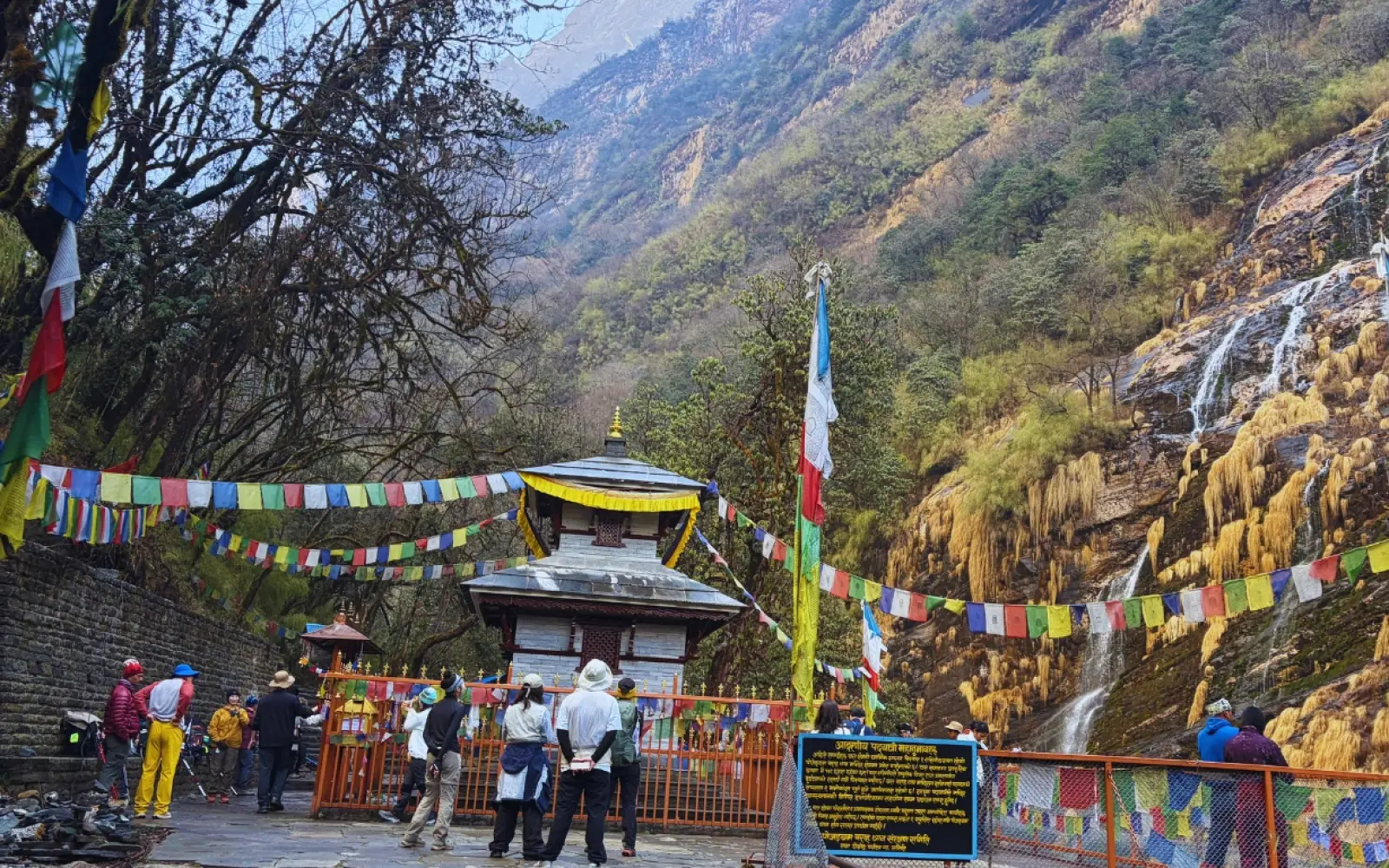

The Annapurna Base Camp trek is celebrated worldwide for its dramatic mountain scenery and diverse landscapes. Yet beyond the towering peaks and rhododendron forests lies something equally powerful—sacred spaces that have protected travelers for generations.
Nestled deep within the Modi Khola valley, Pojenhyam Temple stands as one of the most spiritually significant landmarks on the entire ABC trail. This revered Shakti Pitha remains unknown to many international trekkers, despite sitting directly along the main trekking route.
For those who pause here, the temple offers more than a photo opportunity. It provides a profound connection to the spiritual traditions that have guided Himalayan communities for centuries.
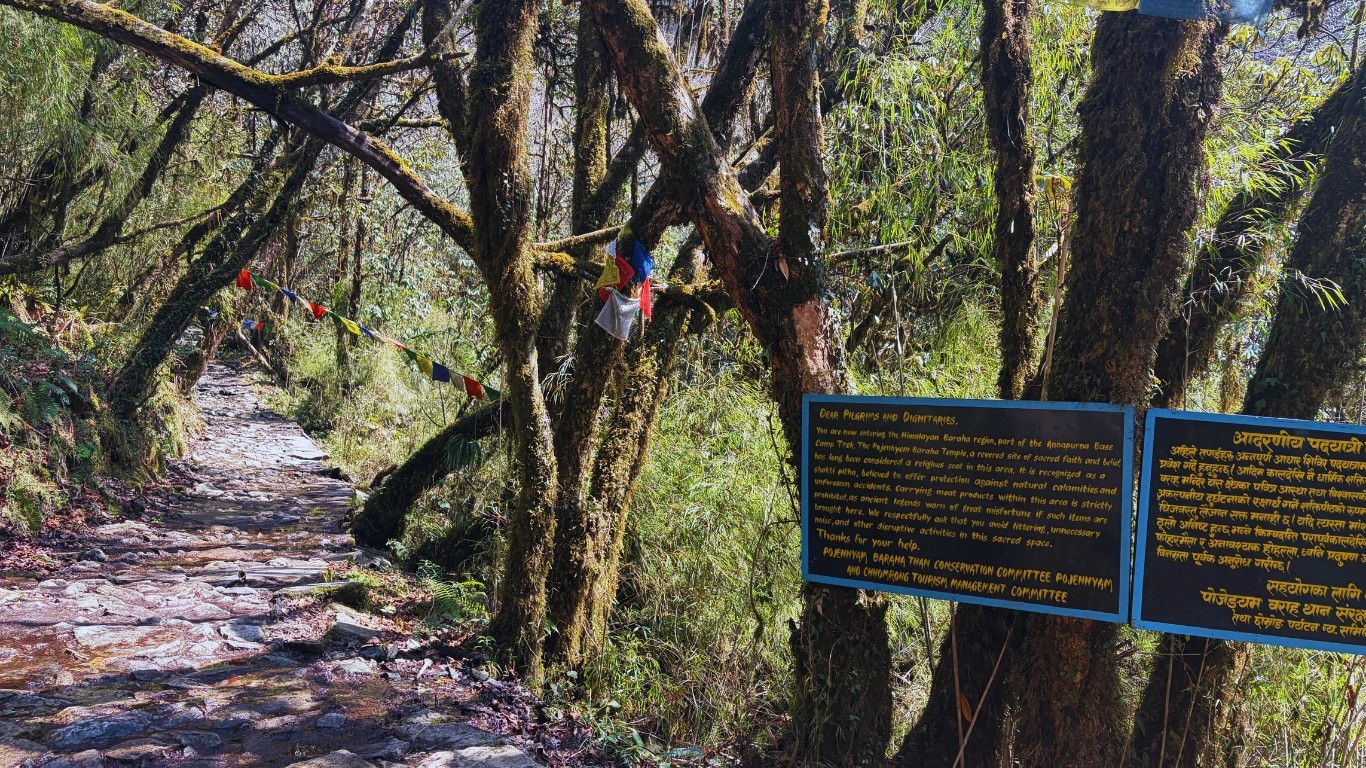
Pojenhyam Temple, also known locally as Baraha Temple, lies between the villages of Dovan and Himalaya on the Annapurna Base Camp trekking route.
This stretch of the trail takes trekkers deeper into the Modi Khola valley, where the landscape grows increasingly dramatic. The sacred temple on the ABC trail appears almost unexpectedly, marked by a signboard that invites travelers to enter the protected zone.
Most trekkers pass through this area on their second or third day ascending toward base camp. The location makes it an ideal place for reflection before continuing into the higher, more challenging terrain ahead.
The natural setting surrounding Pojenhyam Temple adds to its spiritual atmosphere. Behind the temple, a distinctive waterfall cascades down the valley walls, creating a constant, meditative sound.
The Modi Khola river flows powerfully between the temple and the waterfall. These glacier-fed waters originate from the icy slopes near Annapurna South, carrying the essence of the sacred peaks themselves.
Standing at this location, trekkers witness the raw power of Himalayan hydrology. The rushing river, the falling water, and the forested valley create a sensory experience unlike anywhere else on the temples on the Annapurna Base Camp route.
This convergence of natural elements likely contributed to the site's selection as a place of worship generations ago.
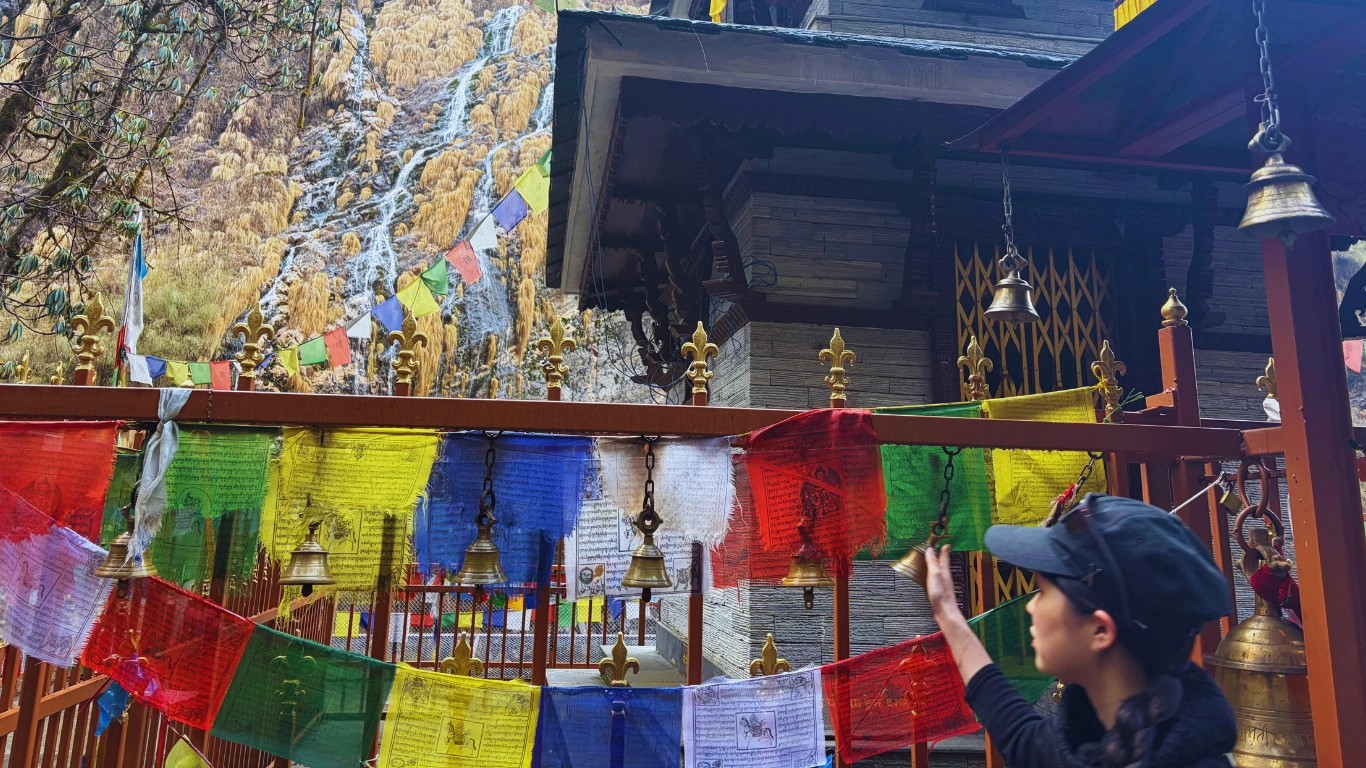
Local communities recognize Pojenhyam Temple as a Shakti Pitha—a sacred site associated with divine feminine energy and spiritual protection.
According to local beliefs, this temple protects travelers from accidents and natural disasters along the treacherous mountain paths. Porters, guides, and villagers often stop to offer prayers before continuing their journeys.
The concept of Shakti Pithas holds deep significance across South Asian spiritual traditions. These sites are believed to hold concentrated divine energy capable of blessing and safeguarding devotees.
For trekkers on the Annapurna Base Camp trek, understanding this significance transforms a simple trail stop into a meaningful cultural encounter.
Visiting Pojenhyam Temple comes with responsibilities that all trekkers should understand and honor.
Local traditions strictly prohibit carrying meat products beyond this sacred point. This rule reflects the temple's spiritual purity and the beliefs of communities who have maintained this site for generations.
According to local legends, ignoring these sacred rules invites misfortune. While international visitors may hold different beliefs, respecting local customs demonstrates cultural sensitivity and responsible travel ethics.
The prohibition begins at the temple signboard and extends through the sacred zone. Trekkers planning their supplies should account for this restriction when packing food for the Dovan to Himalaya trekking trail and beyond.
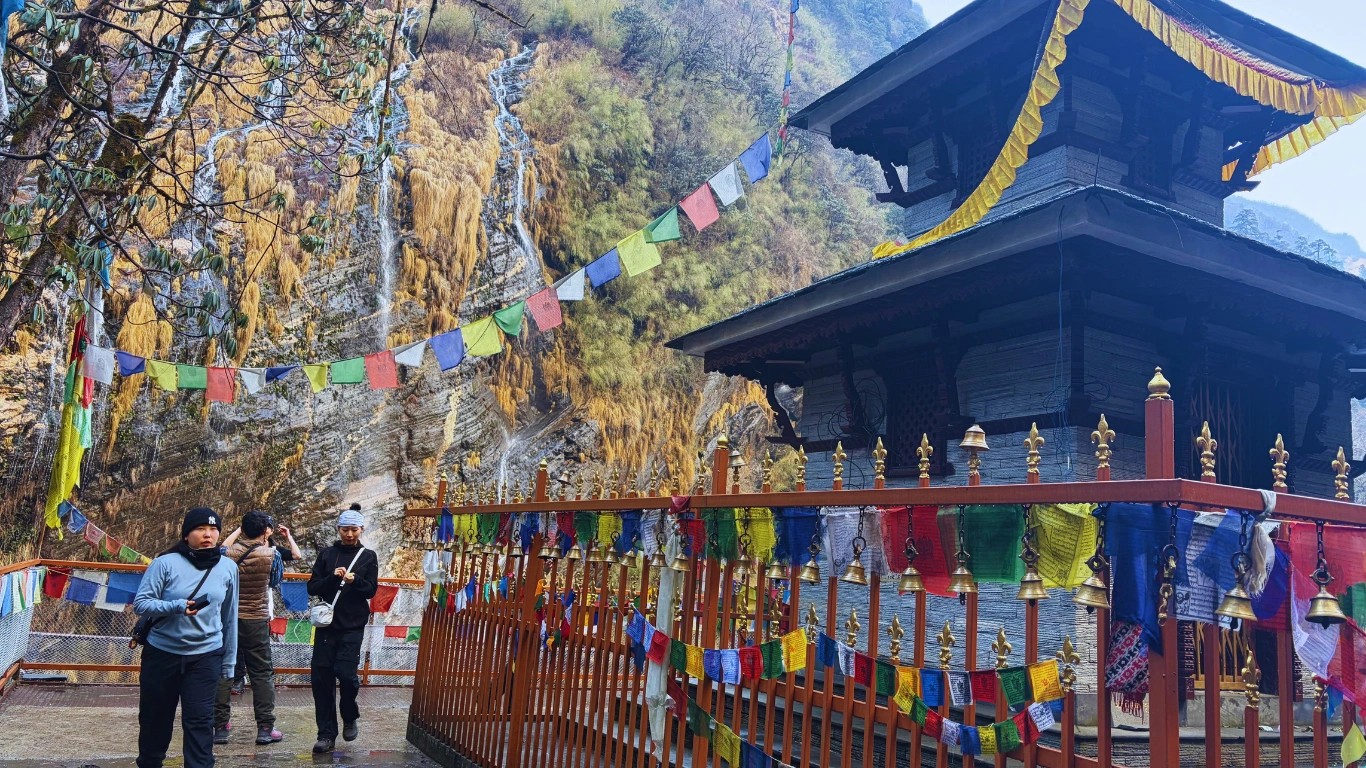
Walking through this section of the Annapurna Base Camp trek offers moments of genuine wonder.
First, you encounter the signboard announcing the sacred area. The trail then leads past the temple structure, where prayer flags flutter and incense often burns.
Many trekkers choose to stop and offer their own quiet prayers or moments of gratitude. Others simply observe respectfully before continuing onward.
The atmosphere here differs noticeably from other trail sections. Something about the waterfall's sound, the river's power, and the temple's presence creates genuine stillness.
Group photos near the temple have become a popular tradition among trekking teams. These images capture not just faces but a shared experience of encountering the sacred within the wild Himalayan landscape.
Responsible trekking extends beyond environmental considerations to include cultural respect.
When visiting Pojenhyam Temple or any sacred site on Annapurna Region trekking routes, trekkers should avoid littering completely. Even biodegradable waste disrupts the sanctity of these spaces.
Unnecessary noise and disruptive behavior show disrespect to local beliefs and diminish the experience for other travelers. Speaking quietly and moving mindfully honors both the place and fellow trekkers.
At Majestic Trails Nepal, we emphasize these values on every journey. Our guides share cultural context that helps visitors appreciate rather than simply observe the sacred landmarks along our routes.
Understanding the spiritual significance of sites like Pojenhyam Temple enriches the entire Annapurna Base Camp trek experience.
Pojenhyam Temple represents something increasingly rare in popular trekking destinations—an authentic sacred space that remains deeply meaningful to local communities.
Between the dramatic landscapes and physical challenges of the Annapurna Base Camp trek, this temple offers something different. It invites pause, reflection, and connection to traditions far older than modern trekking itself.
Whether you stop to pray, observe quietly, or simply acknowledge the significance of this Shakti Pitha, your journey becomes richer for the encounter.
Planning your own ABC adventure? Explore our complete Annapurna Base Camp Trek guide or discover other Best Treks in Nepal that combine natural beauty with cultural depth.
Pojenhyam Temple, also called Baraha Temple, is a sacred Hindu shrine located along the Annapurna Base Camp trekking route. Recognized locally as a Shakti Pitha, this temple is believed to protect travelers from accidents and natural disasters. It sits in the Modi Khola valley between Dovan and Himalaya villages.
The temple lies directly on the main Annapurna Base Camp trail within the Modi Khola valley. Trekkers encounter it naturally while ascending from Dovan toward Himalaya village. A signboard marks the entrance to the sacred area, making it easy to identify along the route.
Local traditions prohibit carrying meat products beyond the temple to maintain the site's spiritual purity. As a Shakti Pitha, the area is considered sacred ground. According to local beliefs, violating this rule may bring misfortune, and respecting this custom shows cultural sensitivity toward mountain communities.
Shakti Pithas are sacred sites associated with divine feminine energy in Hindu tradition. These locations are believed to hold concentrated spiritual power capable of blessing and protecting devotees. Pojenhyam Temple's recognition as a Shakti Pitha makes it spiritually significant for local communities and travelers alike.
Trekkers should avoid littering, making unnecessary noise, or behaving disruptively at sacred sites. Respecting local customs, including dietary restrictions near temples, demonstrates responsible travel ethics. Observing quietly or offering respectful prayers is appropriate, while photography should be done mindfully and with consideration.
Yes, all trekkers on the standard Annapurna Base Camp route pass directly by Pojenhyam Temple between Dovan and Himalaya. No detour is required. The temple is accessible during regular trekking hours, and most visitors pause briefly to observe or photograph this remarkable sacred landmark.
A distinctive waterfall flows behind the temple, while the Modi Khola river—originating from glaciers near Annapurna South—rushes between the temple and waterfall. This dramatic convergence of water features creates a powerful natural atmosphere that enhances the site's spiritual significance.
Ready to experience the sacred and spectacular on your Himalayan adventure? Contact Majestic Trails Nepal to plan your Annapurna Base Camp trek with expert local guidance.
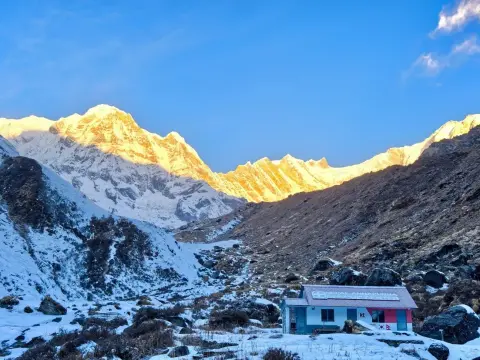
The Annapurna Base Camp trek stands among the world's most iconic Himalayan adventures. Every year, thousands of trekkers from across the globe journe...

Trekking to Annapurna Base Camp Trek is one of Nepal’s most iconic mountain journeys. For mountaineers, the climb begins here, but for trekkers, Annap...
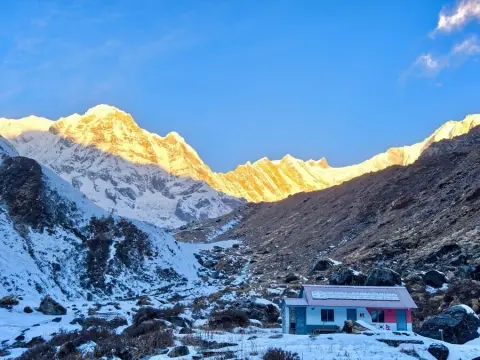
The morning mist lifted slowly from the Modi Khola valley as our trekking group paused near Deurali. Suddenly, movement caught my eye—a Himalayan tahr...
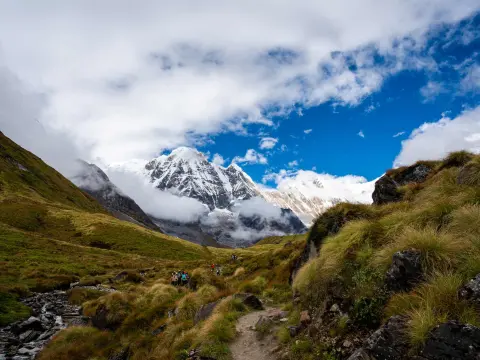
The Annapurna Base Camp trek is a moderate trek, suitable for fit beginners, with no technical climbing required. Its main challenge is not the altitu...

The alarm rings at 4:30 AM. You stumble out of your sleeping bag in Machhapuchhre Base Camp, cursing the cold—until you step outside.The first rays of...
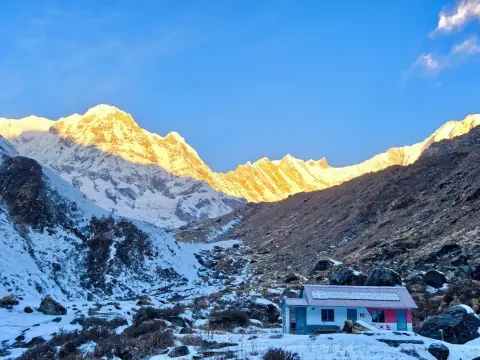
Nestled at 4,130 meters within a dramatic glacial amphitheater, the Annapurna Base Camp (ABC) trek stands among Nepal's most iconic Himalayan journeys...
