
Best Time to Trek in Nepal
17 Jan 2026
Let's cut straight to it. Autumn, specifically September through November, is the best time to trek in Nepal. Spring runs a very close second, coverin...

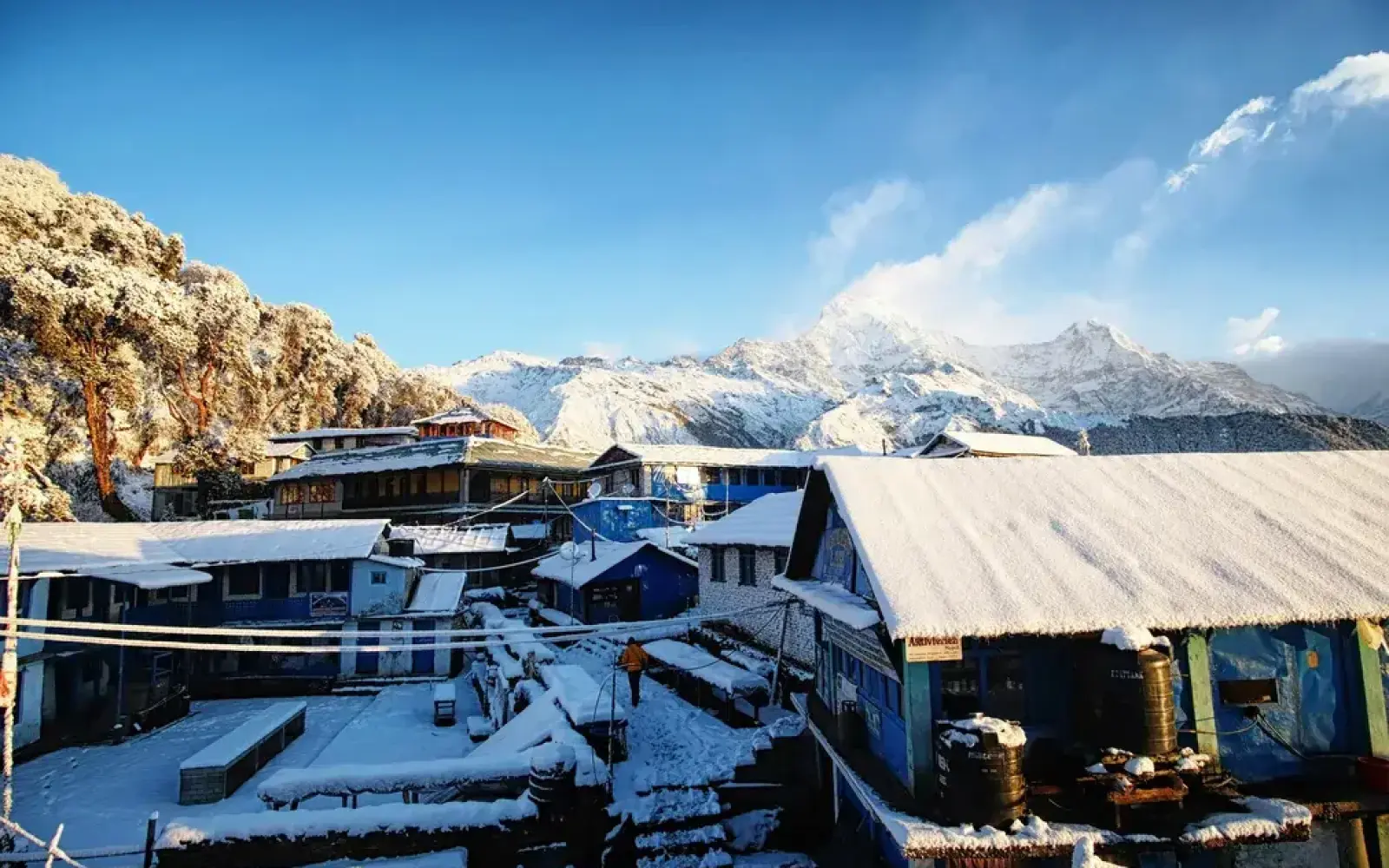

Winter in Nepal gets misunderstood a lot. Most travelers from Europe or North America picture deep snowdrifts, frozen trails, and dangerous conditions, drawing from their own experience of what December through February feels like back home. Nepal simply does not work that way.
The Himalayas act as a natural wall along Nepal's northern border, blocking the cold continental air that pushes south from Central Asia. The result is that most valleys, foothills, and mid-altitude trail zones stay remarkably mild and trekking-friendly through the winter months. Rainfall essentially disappears. Skies open up. And the mountain views? They are, without exaggeration, at their absolute clearest between December and February.
Winter treks in Nepal are not just doable. For the right trekker, they are the best time to go.
Temperatures do vary significantly by elevation. At Everest Base Camp, night temperatures can drop to around -15°C. On most other popular routes sitting between 2,000m and 3,500m, expect temperatures ranging from roughly -3°C to 10°C during the day. Manageable with the right gear, and often genuinely pleasant on sunny afternoons.
Here are the 10 best winter treks in Nepal worth putting on your 2026 itinerary
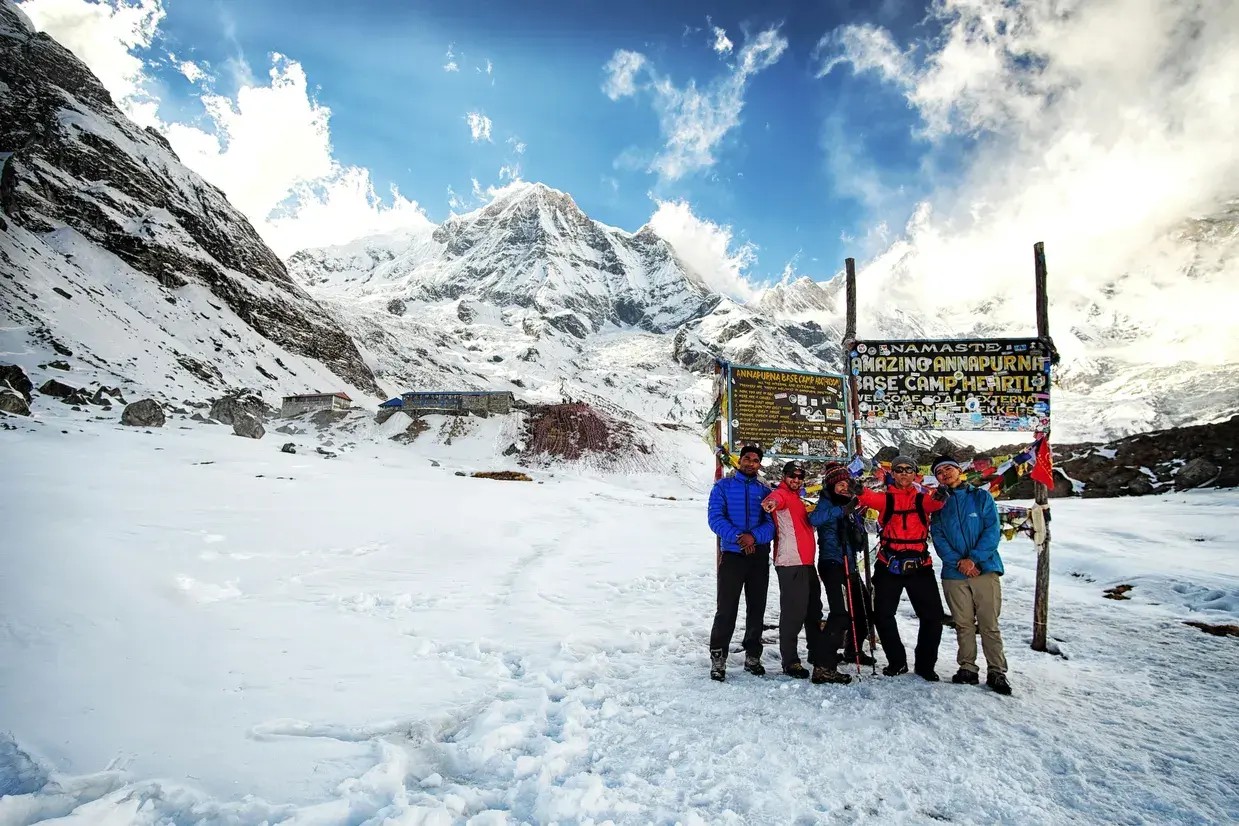
Annapurna Base Camp sits at 4,130m inside the Annapurna Sanctuary, a natural amphitheater ringed by some of the highest peaks in the world. Annapurna I (8,091m), Machhapuchhare, Hiunchuli, and Gangapurna surround the base camp on all sides. In winter, fresh snow on these summits makes the views even more dramatic than what you get in the busier autumn season.
The trail from Birethati climbs through rhododendron forests, Gurung and Magar villages, and narrow gorges before opening up into the sanctuary. Below 3,000m, conditions in winter are genuinely comfortable, with warm days and cool nights. The upper sections above Deurali can have ice on the trail by January, so microspikes are worth carrying. Most teahouses along the route remain operational through winter.
Key Details
| Detail | Information |
| Maximum Altitude | 4,130m |
| Duration | 7 to 12 days |
| Difficulty | Moderate |
| Best Winter Months | December to early February |
| Winter Temperature Range | -5°C to 12°C depending on altitude |
Why Go in Winter
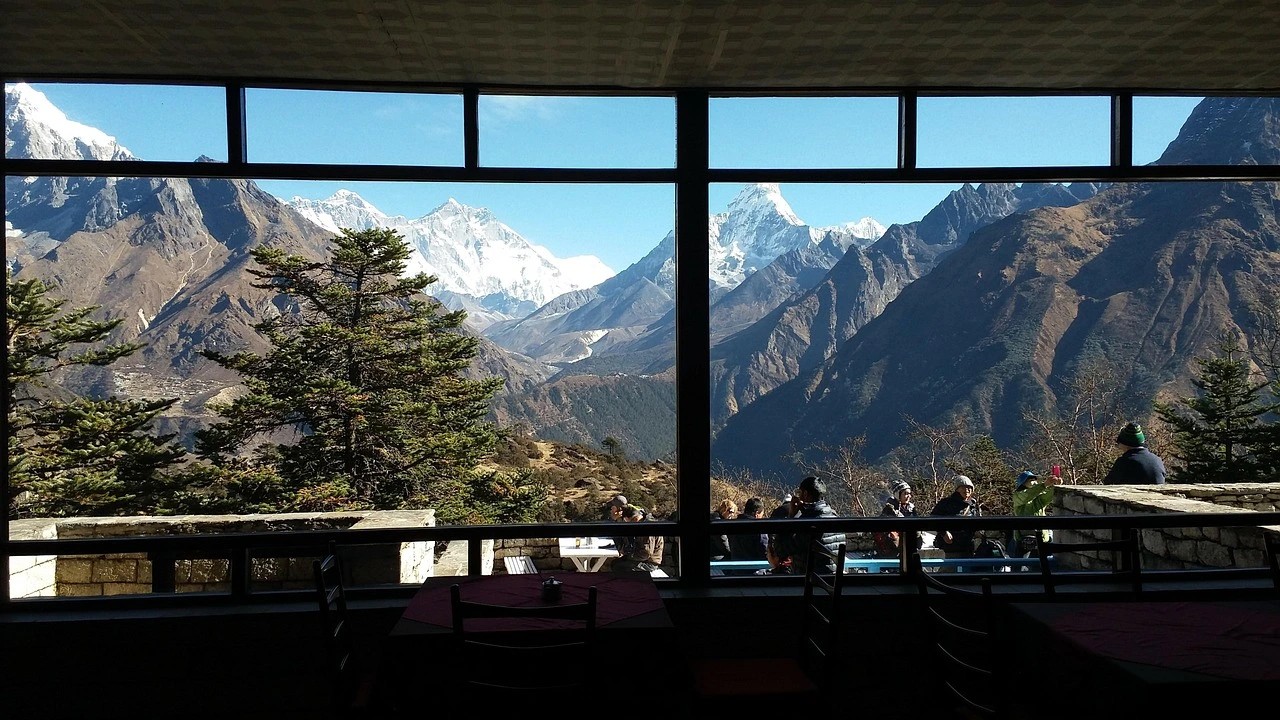
The Everest Base Camp trek in winter is a completely different experience from its autumn peak-season version. The trails are quieter. The lodges are less packed. And the views of Everest, Lhotse, Nuptse, and Ama Dablam against deep blue winter skies are something photographs genuinely struggle to capture accurately.
The route follows the Dudh Koshi valley from Lukla through Namche Bazaar, Tengboche, Dingboche, and Lobuche before reaching Base Camp at 5,364m. Snow covers sections of the trail above Namche, particularly between Tengboche and Dingboche, but the path remains walkable for well-prepared trekkers. Teahouses stay open through winter, though some in the upper Khumbu operate with reduced staff and menus.
Winter temperatures in the Khumbu region average between -10°C and -15°C at night near Base Camp, while Namche Bazaar sits considerably warmer at around 0°C to 5°C during the day.
Key Details
| Detail | Information |
| Maximum Altitude | 5,364m (Everest Base Camp) |
| Duration | 12 to 14 days |
| Difficulty | Moderate to Challenging |
| Best Winter Months | December to February |
| Winter Temperature Range | -15°C (EBC) to 0°C (Namche) |
Why Go in Winter
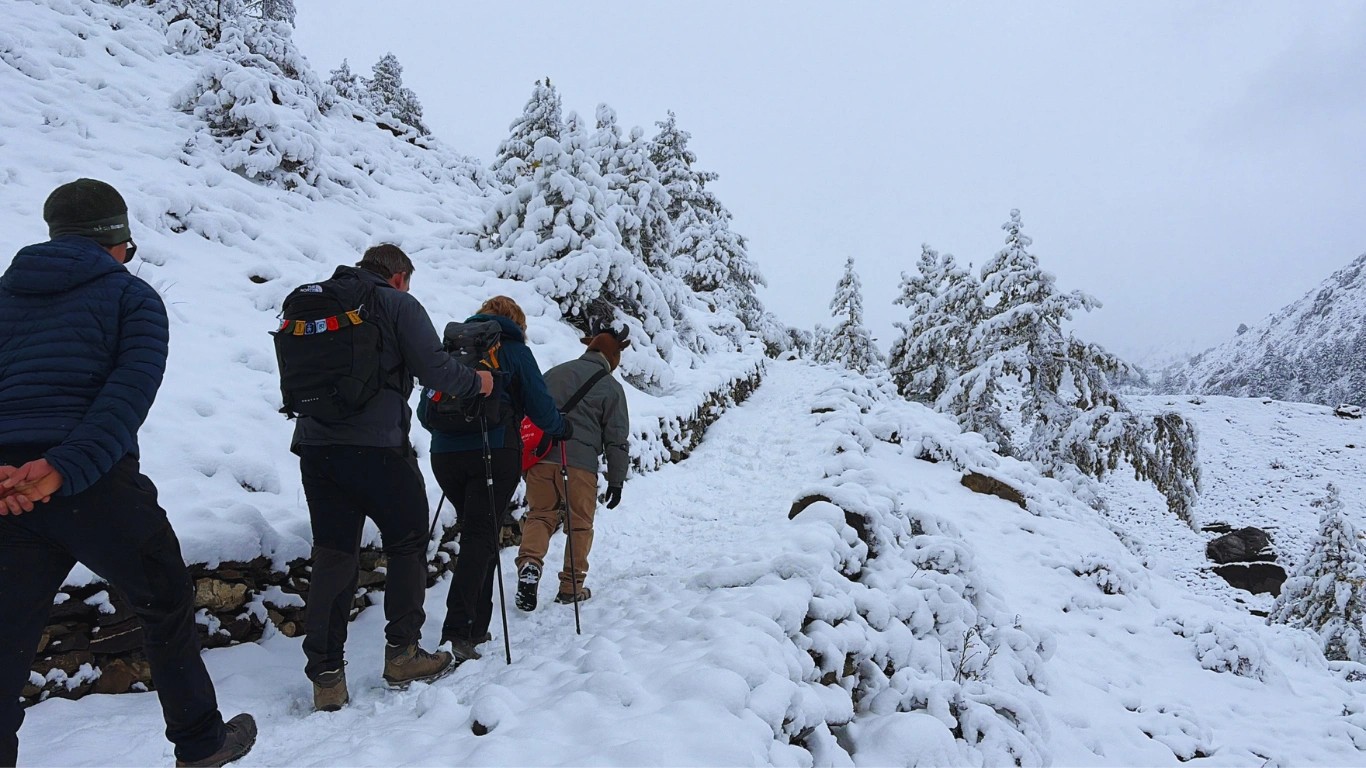
The Annapurna Circuit Trek is one of Nepal's most diverse long-distance treks, covering between 160km and 230km depending on the route variation chosen. It circles the entire Annapurna massif, crossing the Thorong La Pass at 5,416m, which is the high point of the route and the part that requires the most planning in winter.
The circuit passes through subtropical farmland, alpine meadows, and the stark high-desert landscape of Mustang before descending into the Kali Gandaki valley. The communities along the route, including Gurung, Thakali, and Tibetan-origin villages, offer genuine cultural immersion that feels distinct from the Everest region. In winter, the lower sections of the circuit are perfectly comfortable. The Thorong La crossing requires careful timing and good weather windows, which are available but less predictable than in October.
Key Details
| Detail | Information |
| Maximum Altitude | 5,416m (Thorong La Pass) |
| Distance | 160 to 230km |
| Duration | 12 to 21 days |
| Difficulty | Moderate to Challenging |
| Best Winter Months | December to early January |
Why Go in Winter
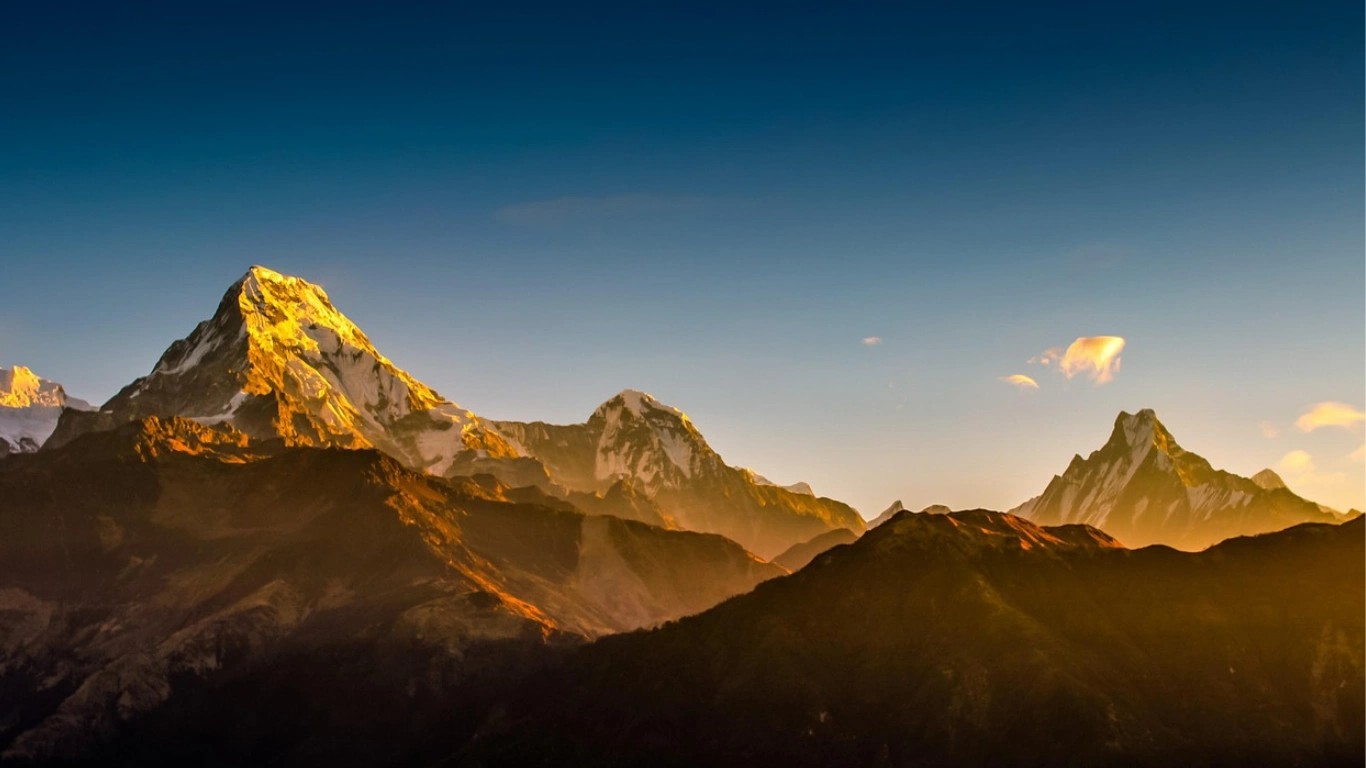
Poon Hill is arguably the most accessible winter trek destination in Nepal for travelers who want spectacular Himalayan views without a high-altitude commitment. The route tops out at 3,210m at the Poon Hill viewpoint, which is low enough to stay comfortable and safe for most fitness levels through all winter months.
The pre-dawn climb to Poon Hill viewpoint rewards trekkers with a panoramic sweep that takes in Dhaulagiri, Annapurna I, Annapurna South, Machhapuchhare, Gangapurna, and several other major peaks. In winter, the Ghorepani area often receives light snowfall that coats the rhododendron forests and trail edges without blocking the path, creating a visual effect that most trekkers find genuinely stunning. This is one of the best winter treks in Nepal for beginners and families.
Key Details
| Detail | Information |
| Maximum Altitude | 3,210m (Poon Hill viewpoint) |
| Duration | 4 to 6 days |
| Difficulty | Easy to Moderate |
| Best Winter Months | December to February |
| Winter Temperature Range | -2°C to 10°C |
Why Go in Winter
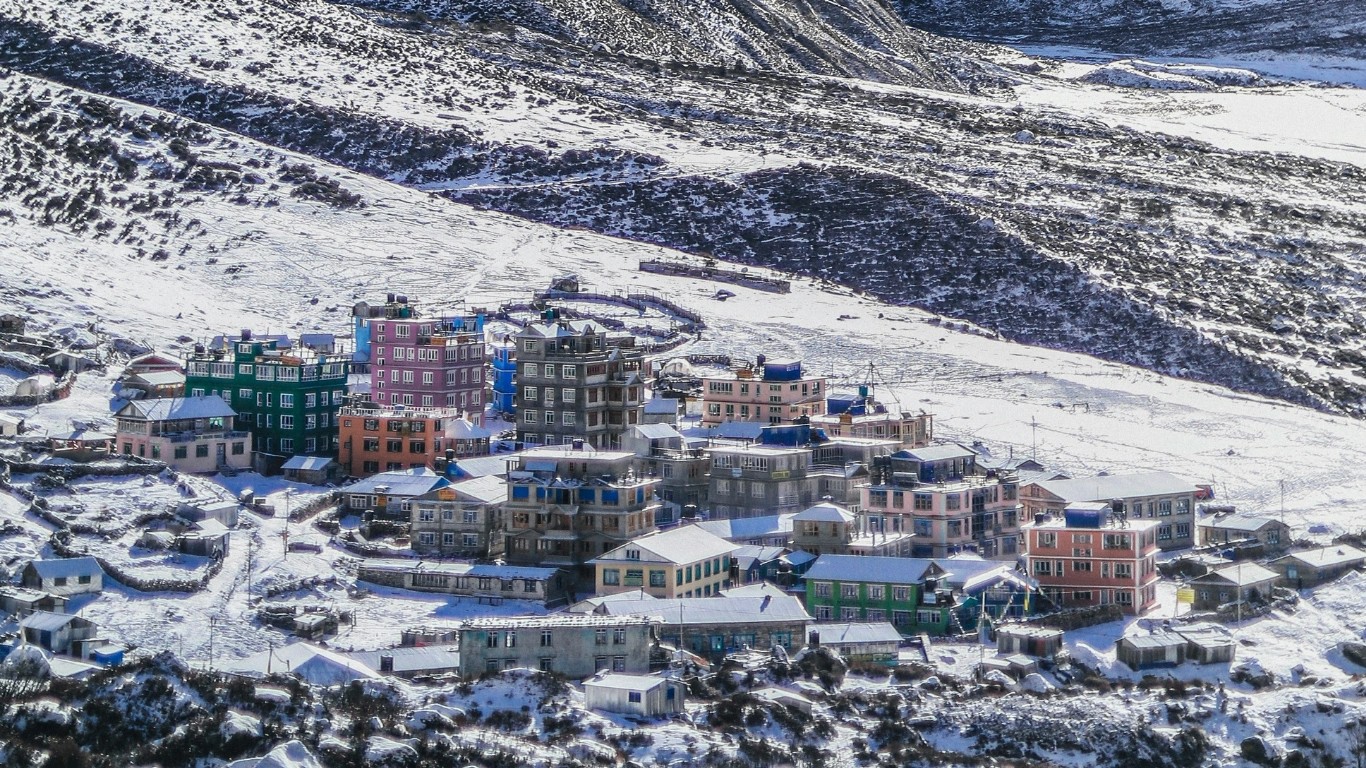
Langtang is the closest major trekking region to Kathmandu, making it a practical choice for travelers with limited time. The trail reaches 4,773m at Kyanjin Ri, a viewpoint that delivers an unobstructed panorama of the Langtang range, including Langtang Lirung at 7,234m. In winter, these peaks carry fresh snow and the glaciers that flow between them are at their most visually dramatic.
Langtang National Park supports a surprising range of wildlife, including Himalayan monal pheasants, Himalayan tahr, red pandas, and snow leopards. Winter is actually a reasonable season for wildlife sightings along the lower trail sections because animals move down in elevation seeking warmth. The village of Kyanjin Gompa, rebuilt after the 2015 earthquake, offers solid teahouse accommodation for winter trekkers.
Key Details
| Detail | Information |
| Maximum Altitude | 4,773m (Kyanjin Ri) |
| Duration | 7 to 10 days |
| Difficulty | Moderate |
| Best Winter Months | December to February |
| Distance from Kathmandu | Approximately 7 hours by road to Syabrubesi |
Why Go in Winter
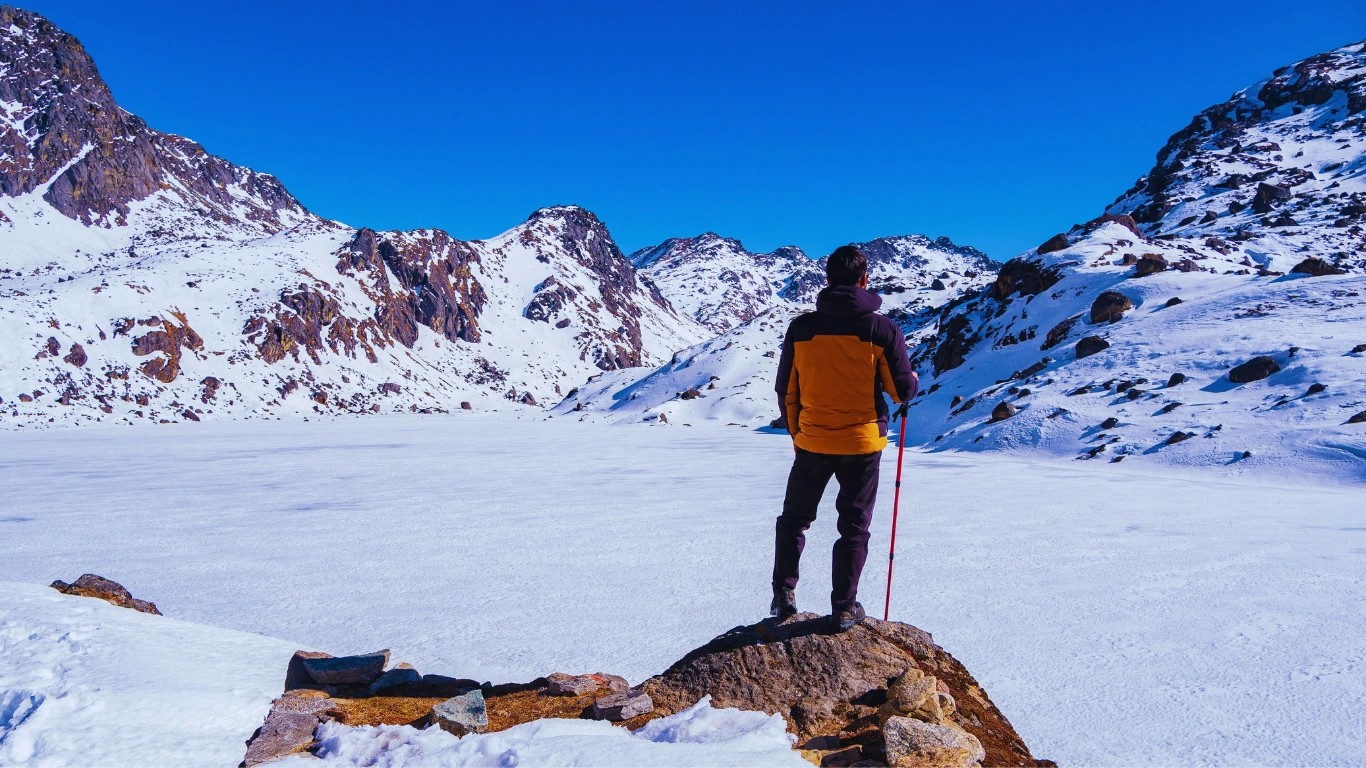
This route extends the standard Langtang Valley trek to include the sacred alpine lake of Gosainkunda at 4,380m. The lake holds deep religious significance in both Hindu and Buddhist traditions and draws pilgrims year-round, though the journey is quieter and more contemplative in winter. Remarkably, Gosainkunda remains largely unfrozen even through January and February, which surprises most first-time visitors.
The trail passes through Langtang National Park with views of Langtang Lirung, Gang Chenpo, Naya Kanga, Dorje Lakpa, and Yansa Tsenji. The Lirung and Kim Sung glaciers, visible from the trail, are at their most photogenic in winter light. The combination of sacred lake, glacier scenery, and forested national park terrain makes this one of the more complete winter trekking experiences in the Langtang region. Check out our Langtang Gosaikunda Package.
Key Details
| Detail | Information |
| Maximum Altitude | 4,380m (Gosainkunda Lake) |
| Duration | 9 to 12 days |
| Difficulty | Moderate to Challenging |
| Best Winter Months | December to mid-February |
Why Go in Winter
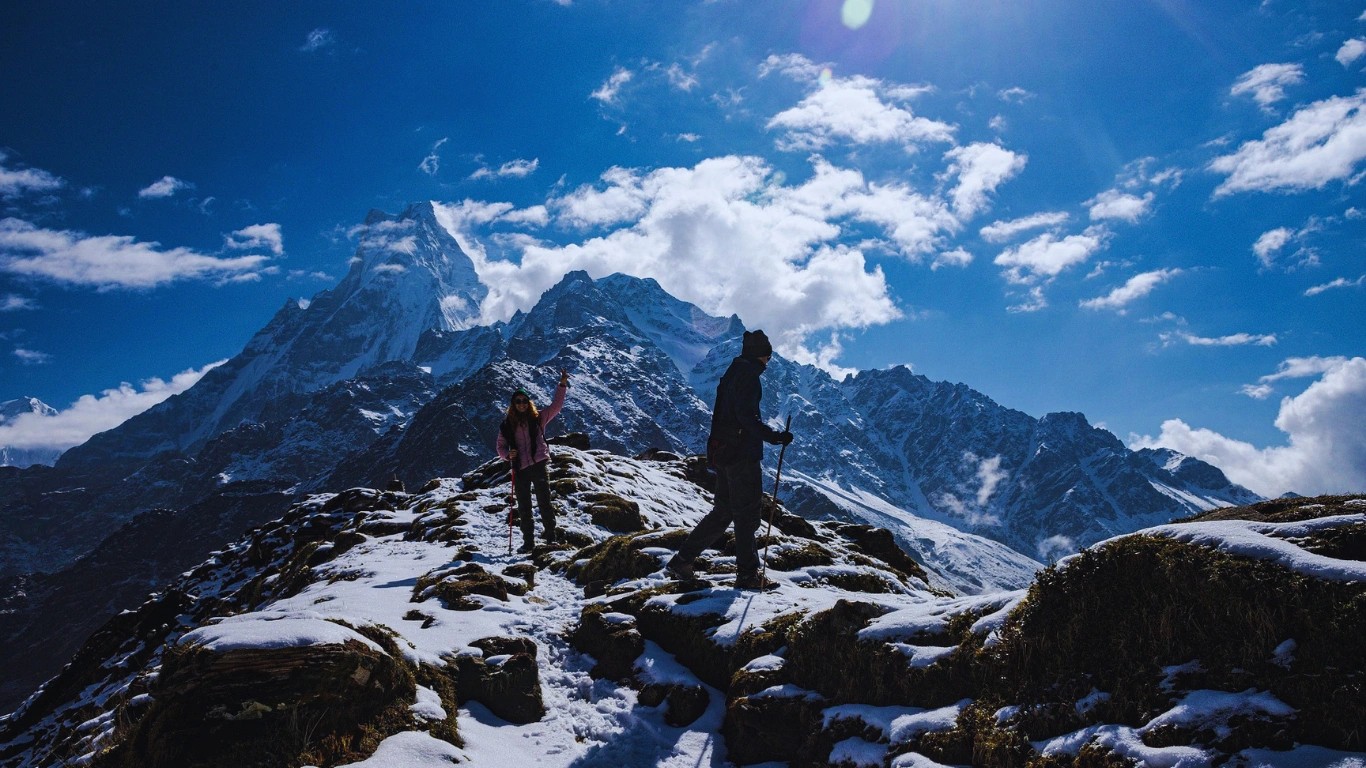
Mardi Himal Base Camp at 4,500m is one of those destinations that genuinely earns the description of hidden gem, though it is becoming better known each year. The route starts near Pokhara and passes through dense oak and rhododendron forest, suspension bridges, and Gurung villages before reaching the high camp and base camp.
In winter, the forest sections are atmospheric and frost-dusted without being difficult to navigate. The higher section approaching base camp offers sweeping views of Annapurna South, Machhapuchhare, Dhaulagiri, and Manaslu. Because the trail was only recently developed and remains outside the main Annapurna circuit infrastructure, it is one of the quieter options for winter trekking in Nepal even now.
Key Details
| Detail | Information |
| Maximum Altitude | 4,500m (Mardi Himal Base Camp) |
| Duration | 5 to 7 days |
| Difficulty | Moderate |
| Best Winter Months | December to February |
| Starting Point | Pokhara (Kande or Lwang) |
Why Go in Winter
The Tamang Heritage Trail runs through the same Langtang region but takes a fundamentally different focus. Where most treks prioritize altitude and mountain views, this route goes deeper into the living culture of the Tamang people, a community with strong Tibetan Buddhist roots who have farmed and traded in these hills for centuries.
The trail passes through traditional Tamang villages, terraced fields, carved monasteries, and ends near the famous hot springs at Tatopani. Panoramic views of Langtang and the Ganesh Himal appear at higher points. In winter, the villages are in their quietest, most authentic mode, and the hot springs at Tatopani take on a particular appeal after cold days on the trail. This is one of the best winter treks in Nepal for travelers who prioritize cultural experience over summit views.
Key Details
| Detail | Information |
| Maximum Altitude | Approximately 3,000m |
| Duration | 5 to 7 days |
| Difficulty | Easy to Moderate |
| Best Winter Months | December to February |
Why Go in Winter
Kopra Danda sits in the Annapurna region but follows a newer, less-traveled route that most trekkers still have not discovered. That is genuinely part of the appeal. The trail passes through ethnic villages, dense forest, and high ridge lines that open up to views of Machhapuchhare, Nilgiri, Hiunchuli, Dhaulagiri, and the full Annapurna range.
The side trip to Khayer Lake, a sacred high-altitude lake near Kopra Danda, is one of the quiet highlights of the route. In winter, the reflection of snow-covered peaks in Khayer Lake is a rare and striking sight. Because this trail sees far less traffic than Poon Hill or Annapurna Base Camp, winter feels even more peaceful here than on the better-known routes.
Key Details
| Detail | Information |
| Maximum Altitude | 3,660m (Kopra Ridge) |
| Duration | 7 to 9 days |
| Difficulty | Moderate |
| Best Winter Months | December to February |
Why Go in Winter
Ruby Valley sits between Manaslu Conservation Area and Langtang National Park, connecting two of Nepal's most impressive protected zones through a trail corridor that most travelers have never heard of. The highest point is Pang Sang Pass at 3,845m. The route passes through dense rhododendron, pine, oak, and bamboo forests, across suspension bridges, and through the traditional communities of Tamang, Gurung, Brahmin, and Dalit groups who have shaped this landscape for generations.
In winter, the Ganesh Himal range, Lamjung Himal (6,800m), Langtang Lirung (7,234m), and Manaslu (8,163m) appear sharper and more defined against clear winter skies than at any other time of year. The trail also passes several waterfalls and deep river gorges that take on a different character in winter light. For trekkers wanting something genuinely off the beaten path, Ruby Valley in winter delivers.
Key Details
| Detail | Information |
| Maximum Altitude | 3,845m (Pang Sang Pass) |
| Duration | 7 to 10 days |
| Difficulty | Moderate |
| Best Winter Months | December to February |
Why Go in Winter
| Region | Altitude Range | Day Temp (Winter) | Night Temp (Winter) |
| Kathmandu Valley | 1,400m | 8°C to 20°C | 0°C to 5°C |
| Pokhara area treks | 1,000m to 3,200m | 5°C to 15°C | -3°C to 5°C |
| Langtang region | 1,500m to 4,800m | 2°C to 12°C | -8°C to 2°C |
| Annapurna region | 1,000m to 4,200m | 2°C to 14°C | -5°C to 3°C |
| Khumbu / Everest region | 2,800m to 5,400m | -3°C to 8°C | -15°C to -3°C |
Most travelers look at December through February as an offseason, which is honestly their loss. Here is what winter trekking in Nepal actually offers:
| Tip | Details |
| Layer your clothing | Thermal base layer, mid-layer fleece, and a quality down jacket are the minimum. Add a wind shell for exposed ridgelines. |
| Footwear | Waterproof boots with ankle support are non-negotiable. Carry microspikes for icy sections above 3,500m. |
| Hire a licensed guide | A registered guide provides safety, local weather knowledge, and navigation on snow-covered trails. Mandatory for some restricted areas. |
| Protect against cold at night | A sleeping bag rated to at least -10°C is recommended for high-altitude teahouses in winter. |
| Stay hydrated | Cold air suppresses thirst perception. Drink water consistently and prioritize hot soups and warm liquids. |
| Start early | On passes and high ridge sections, start by 6 AM to avoid afternoon cold fronts and secure the best weather windows. |
| Travel insurance | Ensure your policy covers high-altitude trekking and helicopter evacuation. This is not optional for winter trekking in Nepal. |
| Check permit requirements | TIMS card and national park fees apply to all major routes. Some restricted areas like Upper Mustang require additional permits. |
| Factor | Winter (Dec-Feb) | Autumn (Oct-Nov) |
|---|---|---|
| Crowds | Very few trekkers | Peak crowds, busy trails |
| Weather Stability | Variable, potential storms | Most stable weather |
| Cost | Often lower prices | Peak season pricing |
| Trail Condition | Snow above 3,500m | Generally dry trails |
| Mountain Views | Exceptional clarity | Excellent but sometimes haze |
| Experience Style | Solitude, adventure | Social, vibrant atmosphere |
| Teahouse Availability | Some closures at high elevation | All teahouses operational |
Neither season is objectively "better"—the choice depends entirely on what experience you seek. Winter rewards those craving solitude and adventure. Autumn suits those wanting reliable conditions and social trail environments.
Ideal Candidates:
Less Ideal For:
Physical preparation becomes even more important when adding cold-weather challenges.
Winter opens up a version of Nepal's trails that most travelers never see. The right preparation, a good guide, and a realistic understanding of conditions at altitude are all you need. At Majestic Trails Nepal, we run departures on all of the above routes through the winter season with guides who know these trails in every weather condition. Reach out and we will build an itinerary that fits your timeline, fitness level, and the kind of experience you are actually after.
Winter in Nepal runs from December through February. January is typically the coldest month, with the lowest temperatures recorded across all elevations.
Yes, with proper preparation. Most popular routes below 4,000m are safe and accessible throughout winter. Higher routes like Everest Base Camp and Thorong La require more preparation and good weather windows.
Night temperatures at Everest Base Camp can reach as low as -15°C in January. Daytime temperatures hover around -5°C to 0°C on clear days.
The Ghorepani Poon Hill trek is the most beginner-friendly winter trek in Nepal, with a maximum altitude of 3,210m and well-maintained teahouses along the entire route.
Snowfall in Nepal during winter is largely limited to high-altitude zones above 3,500m. Lower valleys, Kathmandu, and Pokhara receive little to no snow in most winters.
Kathmandu sits at 1,400m and experiences winter temperatures between 2°C and 20°C. Morning fog is common in December and January, but snow is rare in the city itself.
Most teahouses along popular routes remain open throughout winter. However, some smaller establishments at higher elevations close during December–February due to reduced trekker numbers.
Absolutely. Annapurna Base Camp remains one of the most popular winter treks. The trail stays accessible, and the snowy amphitheater views are spectacular. Timing around weather windows maximizes the experience.
Beginners can successfully complete lower-elevation winter treks like Ghorepani Poon Hill with proper gear and guidance. Higher, longer treks require prior trekking experience and cold-weather exposure.
Experienced guides assess conditions daily and adjust itineraries accordingly. This might mean waiting for conditions to improve, taking alternative routes, or in extreme cases, turning back. Flexibility is essential for winter trekking.

Let's cut straight to it. Autumn, specifically September through November, is the best time to trek in Nepal. Spring runs a very close second, coverin...
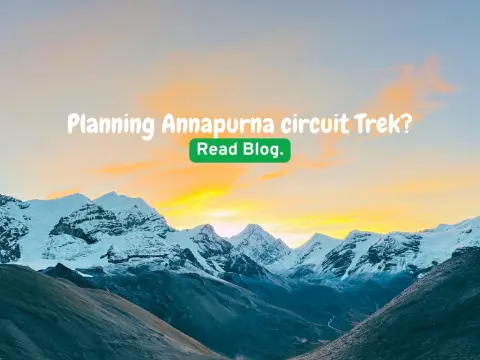
The Annapurna Circuit Trek is one of the world’s most legendary long-distance treks — a journey that circles the Annapurna massif through Nepal’s most...
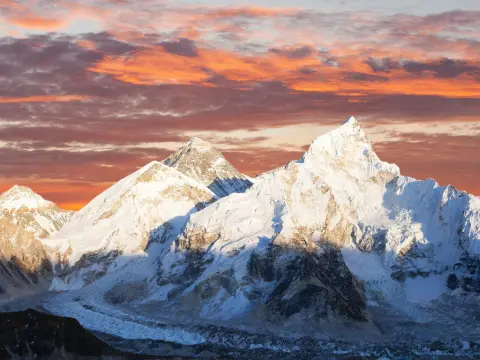
Nepal is a country defined by mountains. Stretching across the country’s northern edge, the Himalayas pack Earth’s highest peaks into one nation. Eigh...
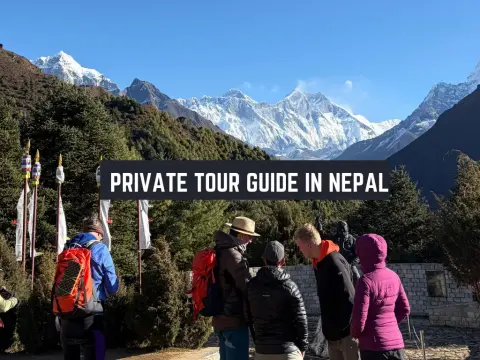
Nepal isn't a destination you rush through. From the ancient temples of Kathmandu to the soaring peaks of the Himalayas, every corner of this remarkab...
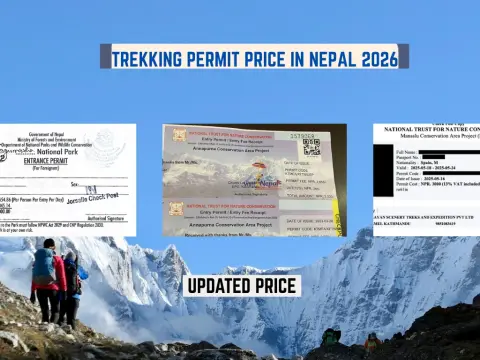
IntroductionPlanning a trek in Nepal requires more than just physical preparation—you also need the right permits. Trekking permits are official docum...
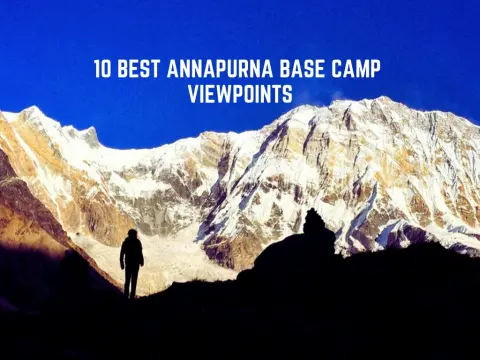
The alarm rings at 4:30 AM. You stumble out of your sleeping bag in Machhapuchhre Base Camp, cursing the cold—until you step outside.The first rays of...
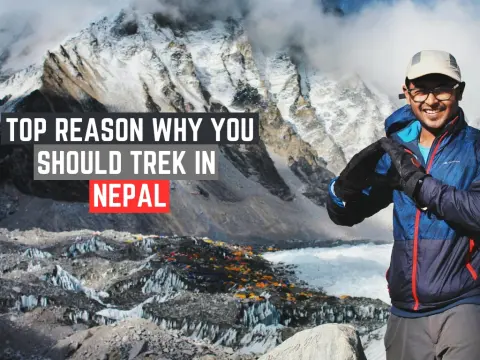
If you've ever wondered why trekking in Nepal captivates adventurers from every corner of the globe, the answer lies in its extraordinary combination...
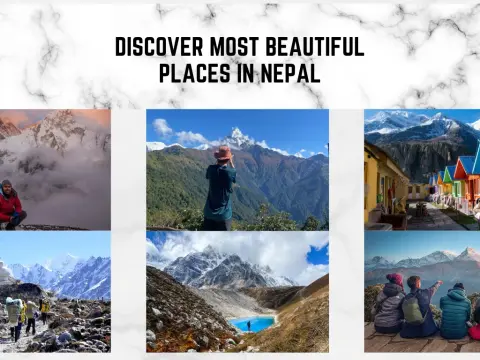
Nepal is a land where nature paints its most spectacular masterpieces. From the towering peaks of the Himalayas to serene alpine lakes, dense jungles...
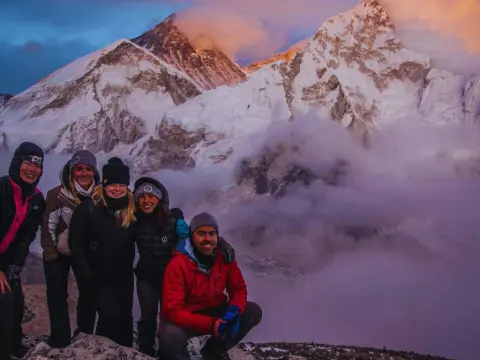
If you're curious about trekking in Nepal, you've landed in the right place. Nepal is home to the world's most breathtaking mountain trails, ancient c...
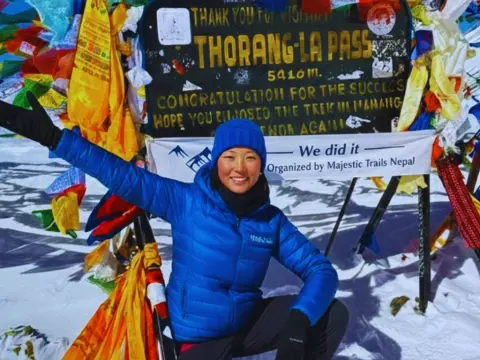
The most popular treks in Nepal include Everest Base Camp, Annapurna Base Camp, Langtang Valley, Mardi Himal, and Ghorepani Poon Hill. These treks ran...
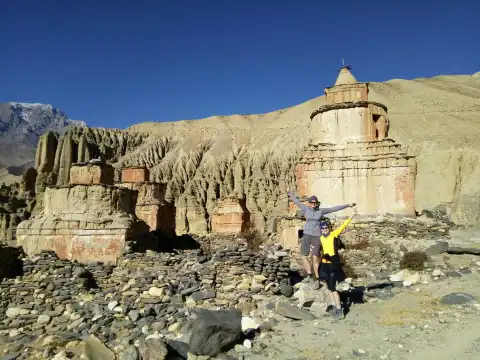
Mustang trekking in Nepal is an extraordinary journey into one of the world's last remaining Tibetan Buddhist kingdoms. Located in the remote northwes...
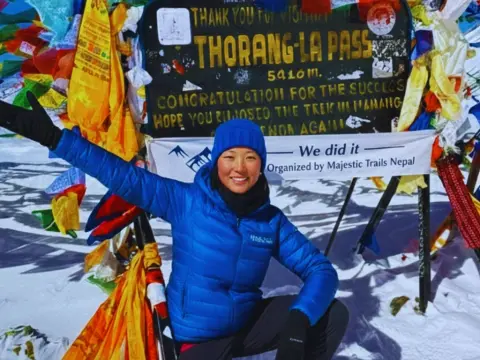
The ACT Nepal Trek stands as one of the most iconic high-altitude adventures on Earth, drawing thousands of trekkers annually to Nepal's magnificent A...
