
Nar Phu Trek Nepal – Explore the Remote Himalayan Valley
23 Feb 2026
The Nar Phu trek Nepal takes you into one of the Himalayas' last truly hidden valleys. Tucked away in the Annapurna region near the Tibetan border, th...


The wind carries ancient Buddhist prayers across frozen passes. Prayer flags snap against a cobalt sky. Your boots crunch through fresh snow at 5,000 meters, and the Himalayas stretch endlessly before you.
This is the Nar Phu Valley Trek.
Understanding the Nar Phu Valley Trek altitude is essential for anyone planning this extraordinary journey into one of Nepal's most restricted and pristine regions. Rising from 2,600 meters at Koto to a breathtaking 5,320 meters at Kang La Pass, this trek demands respect, preparation, and proper acclimatization.
At Majestic Trails Nepal, we've guided countless trekkers through these sacred valleys. Our local guides were born in these mountains. They know every altitude gain, every rest stop, and every secret viewpoint. In this comprehensive guide, we'll share everything you need to know about elevation, acclimatization, and trekking safely through this remote Himalayan treasure.
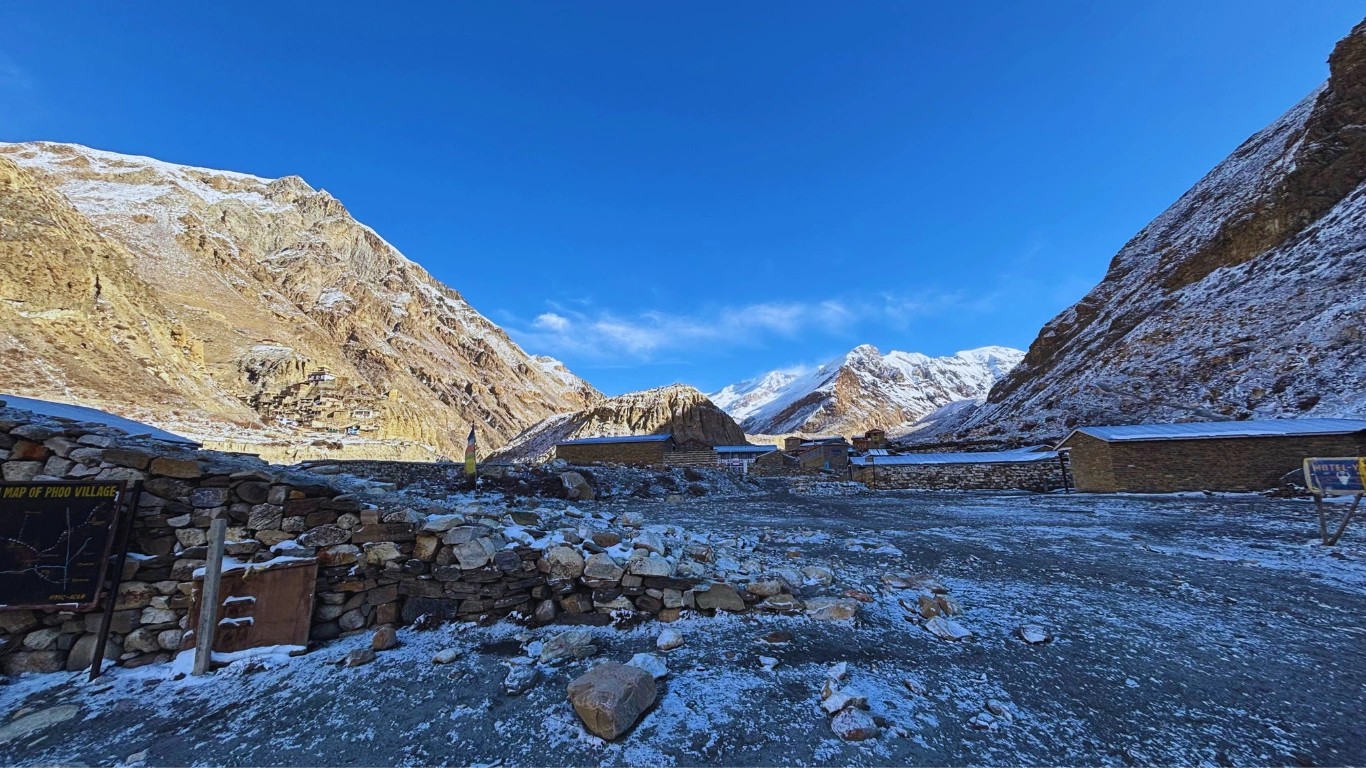
The Nar Phu Valley Trek is a challenging high-altitude adventure that penetrates one of Nepal's most culturally preserved regions. This restricted area trek requires special permits and rewards trekkers with untouched landscapes and authentic Tibetan-influenced villages.
| Parameter | Details |
|---|---|
| Total Trekking Days | 10–14 days (depending on itinerary) |
| Total Distance | Approximately 90–110 km |
| Starting Altitude | 2,600m (Koto) |
| Highest Point | 5,320m (Kang La Pass) |
| Ending Altitude | 3,660m (Ngawal) or lower |
| Total Elevation Gain | ~2,720m |
| Difficulty Level | Strenuous to Challenging |
Many trekkers wonder how the Nar Phu trek elevation compares to the famous Annapurna Circuit. While Thorong La Pass on the Annapurna Circuit reaches 5,416 meters—slightly higher than Kang La—the Nar Phu Valley Trek presents unique altitude challenges:
The altitude challenges on this trek are real. But so are the rewards: empty trails, genuine Tibetan culture, and mountain views that few ever witness.
Understanding the Nar Phu village altitude at each stage helps you mentally and physically prepare. Our Majestic Trails Nepal guides always say: "Know the numbers, respect the mountains."
| Day | Location | Altitude (m) | Altitude (ft) |
|---|---|---|---|
| 1 | Koto (Starting Point) | 2,600m | 8,530ft |
| 2 | Meta | 3,560m | 11,680ft |
| 3 | Phu Village | 4,080m | 13,386ft |
| 4 | Phu (Acclimatization) | 4,080m | 13,386ft |
| 5 | Nar Village | 4,110m | 13,484ft |
| 6 | Nar (Acclimatization) | 4,110m | 13,484ft |
| 7 | Kang La Base Camp | 4,540m | 14,895ft |
| 8 | Kang La Pass → Ngawal | 5,320m → 3,660m | 17,454ft → 12,008ft |
| 9 | Manang | 3,540m | 11,614ft |
Koto to Meta (2,600m → 3,560m)
Elevation Gain: 960m | Duration: 6–7 hours
The journey begins at Koto, where you leave the Annapurna Circuit crowds behind. The trail winds through dense rhododendron forests, crossing suspension bridges over thundering rivers. The altitude gain is significant—nearly 1,000 meters in one day. Take it slow. Listen to your body.
Guide Tip: "We always stop at the hot springs near Koto before climbing. It relaxes muscles and prepares the body for altitude." — Pemba Sherpa, Senior Guide
Meta to Phu Village (3,560m → 4,080m)
Elevation Gain: 520m | Duration: 5–6 hours
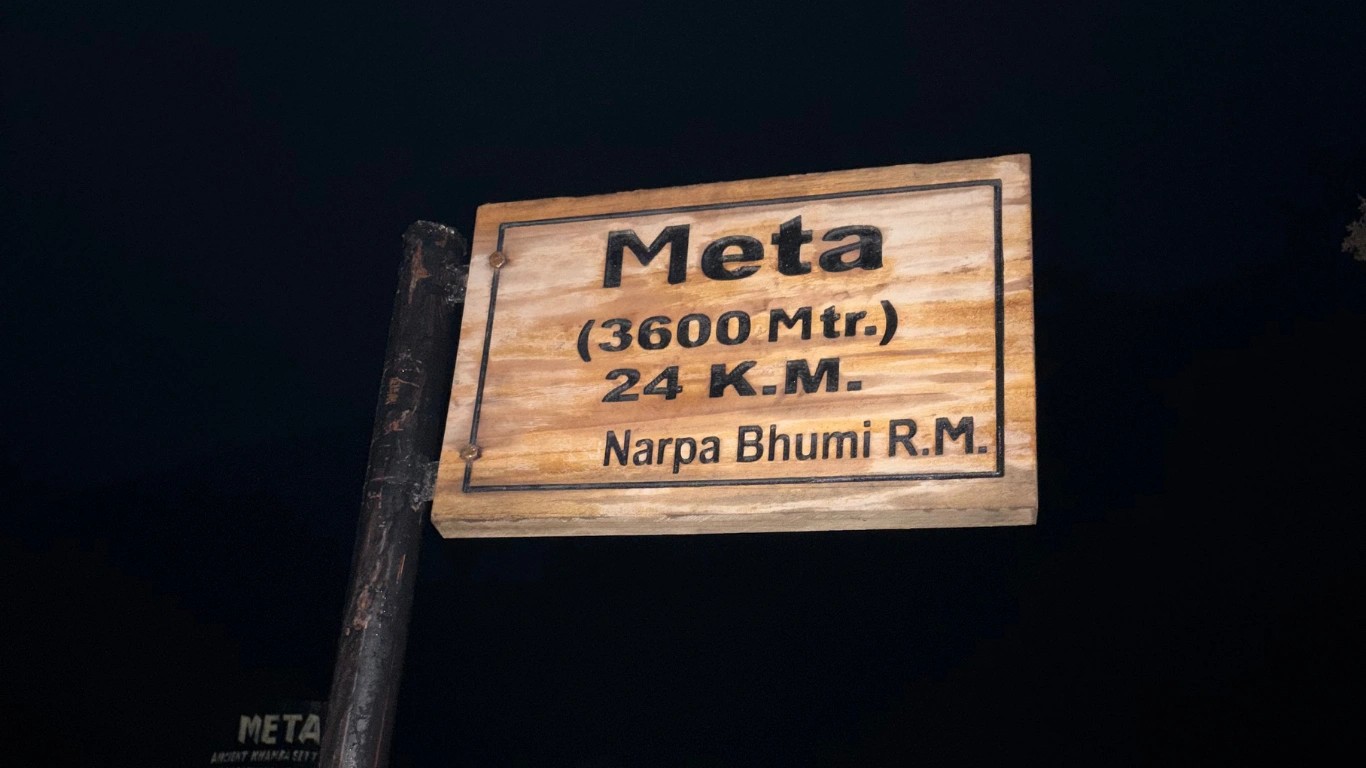
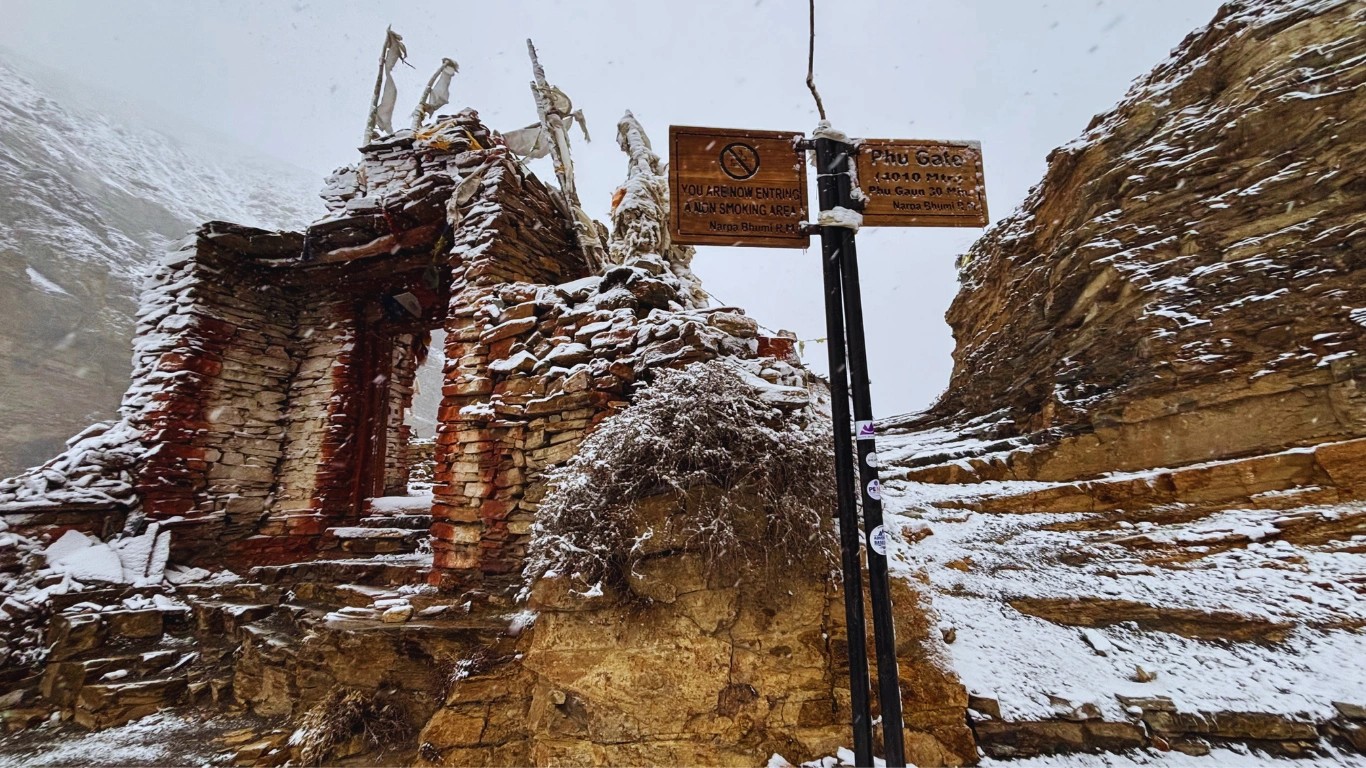
Meta offers basic teahouse accommodation. The trail to Phu becomes more rugged, passing through narrow gorges and alpine meadows. Prayer stones line the path. You're entering sacred territory.
Phu Village (4,080m)
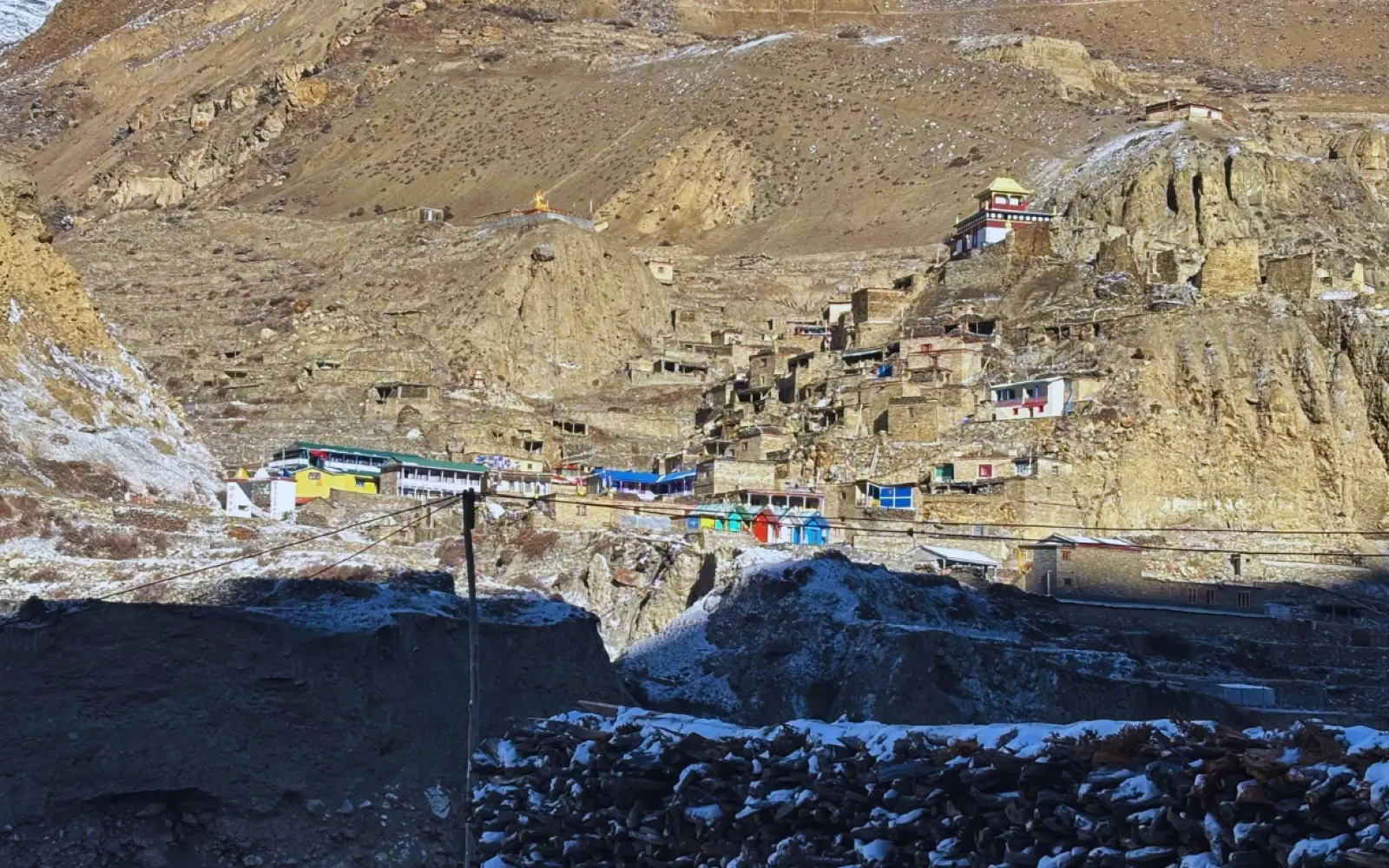
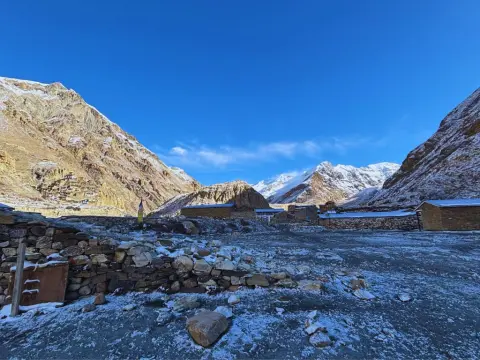
Phu is otherworldly. Stone houses cluster around an ancient monastery. Yaks graze on brown hillsides. The Nar Phu valley trek height here exceeds 4,000 meters, and you'll feel it—especially at night when temperatures plummet. We recommend spending two nights here for proper acclimatization.
Phu to Nar Village (4,080m → 4,110m)
Elevation Gain: 30m | Duration: 5–6 hours
Though the altitude difference is minimal, this trail traverses challenging terrain. You'll cross high ridges with panoramic views of Himalayan giants including Pisang Peak and Kanguru.
Nar Village (4,110m)
Nar sits in a spectacular natural amphitheater. Mountains embrace the village on three sides. The air is thin but incredibly pure. Spend time here. Watch the light change across the peaks. Visit the monastery. Your body needs rest before Kang La Pass.
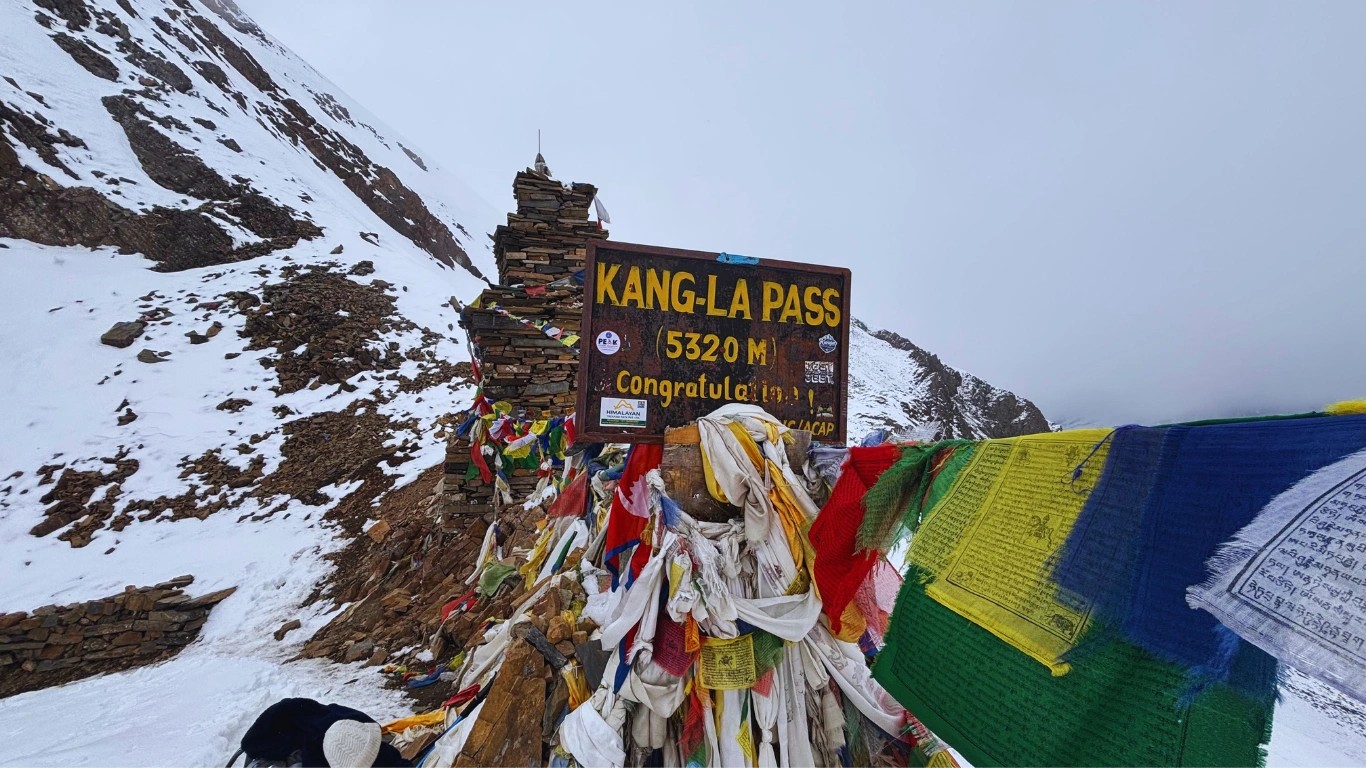
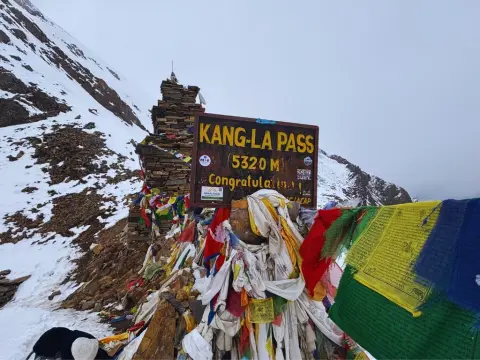
At 5,320 meters (17,454 feet), Kang La Pass represents the Nar Phu high point and the trek's ultimate challenge. This is serious high-altitude trekking Nepal territory—comparable to Everest Base Camp in elevation.
The air contains roughly 50% less oxygen than at sea level. Every step feels deliberate. Your heart works harder. Your breath comes faster. But the views? Absolutely transcendent.
On a clear morning, you'll see:
You wake at 4 AM in the darkness of Kang La Base Camp. Stars blaze overhead—more than you've ever seen. The cold bites through your down jacket. Your guide serves hot tea. You check your gear by headlamp. Then you begin climbing.
The trail is steep, rocky, sometimes icy. Prayer flags mark the path ahead—bright colors against white snow. Wind gusts push against you. Each breath feels labored. But your team moves together, steady and sure.
When you finally reach the pass, everything stops. The sun crests the eastern peaks, painting the snow gold and pink. You stand at 5,320 meters, surrounded by giants. Your prayer flag joins thousands of others, snapping in the wind.
This is why you came.
Attempting Kang La Pass without proper acclimatization is dangerous. Period.
At this altitude, risks include:
Our Majestic Trails Nepal guides never rush this section. We build rest days into every itinerary. We monitor trekkers constantly. And we carry emergency oxygen for unexpected situations.
Understanding altitude sickness prevention is non-negotiable for the Nar Phu Valley Trek. Here's our comprehensive Nar Phu acclimatization guide developed through years of guiding experience.
AMS occurs when your body cannot adapt quickly enough to reduced oxygen levels. Symptoms typically appear above 2,500 meters and worsen at higher elevations.
Mild AMS Symptoms:
Severe AMS Symptoms (Seek immediate help):
For safe high altitude trekking Nepal, we structure our Nar Phu itineraries with strategic acclimatization stops:
| Location | Altitude | Rest Day Activity |
|---|---|---|
| Phu Village | 4,080m | Explore monastery, short hike to 4,500m |
| Nar Village | 4,110m | Visit Nar Phedi, hike to viewpoint |
The Golden Rule: Climb high, sleep low. During rest days, hike to higher elevations, then return to sleep at lower altitude. This trains your body to handle reduced oxygen.
Hydration:
Nutrition:
"Bistari, bistari" (slowly, slowly) is the most important Nepali phrase for trekking.
Guide Insight: "I watch how trekkers walk, how they breathe, how they eat dinner. Small changes tell me everything. If someone's energy drops suddenly, we slow down immediately." — Dawa Tamang, Expedition Leader
Beyond health risks, the Nar Phu trekking difficulty manifests in everyday physical experiences. Here's what to expect.
2,600m – 3,500m (Moderate Altitude)
3,500m – 4,500m (High Altitude)
4,500m – 5,320m (Very High Altitude)
Altitude dramatically influences conditions:
| Altitude Range | Daytime Temperature | Nighttime Temperature | Weather Patterns |
|---|---|---|---|
| 2,600–3,500m | 15–20°C | 5–10°C | Generally stable |
| 3,500–4,500m | 8–15°C | -5 to 5°C | More variable |
| 4,500–5,320m | 0–8°C | -15 to -5°C | Unpredictable, windy |
Our guides implement strict high-altitude safety measures:
The interaction between altitude and seasons significantly affects your Nar Phu experience. Here's our breakdown for this restricted area trek altitude challenge.
Pros:
Cons:
Altitude Impact: Snow levels recede through spring, making Kang La crossing safer by late April.
Pros:
Cons:
Altitude Impact: Post-monsoon clarity means stunning views from high passes. Optimal season for high-altitude trekking Nepal.
Our Recommendation: October and early November offer the best conditions for Nar Phu Valley Trek altitude challenges.
Not Recommended
Heavy rainfall makes trails dangerous. Landslides common. Leeches abundant at lower elevations. High passes may be impassable due to snow.
For Experienced Trekkers Only
Conditions:
Altitude Impact: Severe conditions multiply altitude challenges. Only attempt with expert guides and full winter expedition gear.
Proper equipment becomes critical as Nar Phu valley trek height increases. Our guides have compiled this essential gear list.
Base Layer:
Mid Layer:
Outer Layer:
| Item | Specification | Notes |
|---|---|---|
| Trekking boots | Waterproof, ankle support, crampon-compatible | Break in before trek! |
| Camp shoes | Warm slippers or down booties | Essential for cold nights |
| Gaiters | Waterproof | For snow on Kang La |
Essential:
Optional (Provided by Majestic Trails Nepal):
Packing Tip: "Many trekkers overpack clothing and underpack technical gear. You need fewer shirts than you think but more warm layers for high passes." — Majestic Trails Nepal Equipment Guide
The Nar Phu Valley is a restricted area requiring special documentation. Independent trekking is not permitted.
| Permit Detail | Information |
|---|---|
| Cost (Sept–Nov) | USD $100 per person for first 7 days, $15/day after |
| Cost (Dec–Aug) | USD $75 per person for first 7 days, $10/day after |
| Processing | Kathmandu only, requires registered agency |
| Requirements | Passport copy, photos, itinerary, registered guide |
This permit grants access to the restricted Nar and Phu valleys. It must be obtained through a registered trekking agency—Majestic Trails Nepal handles all processing for our clients.
| Permit Detail | Information |
|---|---|
| Cost | NPR 3,000 (~USD $23) for foreigners |
| Processing | Kathmandu or Pokhara |
| Requirements | Passport, photos |
ACAP supports conservation efforts throughout the Annapurna region.
Hassle-Free Service: Majestic Trails Nepal processes all permits on behalf of our trekkers. We handle paperwork, fees, and submissions—you simply provide passport copies and photos.
Planning your budget for high altitude trekking Nepal requires understanding all cost components.
| Cost Category | Budget Range (USD) | Notes |
|---|---|---|
| Permits | $125–$150 | RAP + ACAP |
| Guide (14 days) | $280–$350 | Licensed, experienced |
| Porter (14 days) | $200–$260 | Carries 15–20kg |
| Accommodation | $150–$250 | Teahouse + camping |
| Meals | $200–$350 | All meals on trek |
| Transport | $50–$100 | Kathmandu-Besisahar-Koto |
| Camping Equipment | Included or $100+ | If agency-provided |
| Contingency | $100–$200 | Always recommended |
| Total Estimate | $1,100–$1,700 | Budget to mid-range |
Majestic Trails Nepal offers comprehensive packages that include:
View our Nar Phu Valley Trek packages
When tackling the demanding Nar Phu Valley Trek altitude, your choice of trekking partner matters enormously.
Our guides aren't just trained—they're from these mountains. Many grew up in villages throughout the Annapurna region. They know the trails intimately, the weather patterns intuitively, and the culture authentically.
High-altitude trekking demands expertise:
Every trekker is different. We adjust:
We believe in protecting the places we love:
"The altitude on Nar Phu challenged me more than I expected. But our guide Pasang made all the difference—he knew exactly when to push and when to rest. Crossing Kang La Pass was the highlight of my life."
— Sarah M., UK
"Majestic Trails Nepal's knowledge of high-altitude trekking gave me complete confidence. Even at 5,000+ meters, I felt safe and supported."
— Marco T., Italy
The Nar Phu Valley Trek altitude presents real challenges—but those challenges lead to extraordinary rewards. Empty trails through sacred valleys. Ancient villages untouched by time. The triumph of standing atop Kang La Pass with the Himalayas unfolding in every direction.
This isn't a trek for everyone. But if you're drawn to remote places, authentic culture, and genuine adventure, the Nar Phu Valley might be exactly what you're seeking.
Ready to experience Nar Phu Valley with expert local guides?
Contact Majestic Trails Nepal today. We'll design an itinerary that matches your fitness, timeline, and trekking goals—ensuring you're fully prepared for every altitude challenge along the way.
The highest altitude of the Nar Phu Valley Trek is 5,320 meters (17,454 feet) at Kang La Pass. This challenging high point connects the Nar Phu Valley to Ngawal on the Annapurna Circuit. Proper acclimatization at Phu and Nar villages is essential before attempting this pass.
The Nar Phu Valley Trek is rated strenuous to challenging. The combination of significant altitude gain, remote terrain, and limited infrastructure makes it more demanding than standard Annapurna region treks. Previous high-altitude trekking experience above 4,000 meters is strongly recommended.
Yes, a licensed guide is mandatory. The Nar Phu Valley is a restricted area, and permits are only issued to trekkers traveling with registered trekking agencies. Independent trekking is not allowed. This requirement exists for both safety and cultural preservation reasons.
Prevent altitude sickness by:
Key village altitudes along the Nar Phu Valley Trek:
October and November are the best months for the Nar Phu Valley Trek. Autumn offers stable weather, clear skies, and comfortable temperatures for high-altitude trekking. April and May provide a good spring alternative with rhododendron blooms at lower elevations.
The Annapurna Circuit's Thorong La Pass reaches 5,416 meters—about 96 meters higher than Kang La Pass (5,320m) on the Nar Phu Trek. However, the Nar Phu Valley Trek is generally considered more challenging due to its remoter terrain, steeper elevation gains between camps, and limited rescue access.
The Nar Phu Valley Trek is not recommended for complete beginners. Trekkers should have prior high-altitude experience and good physical fitness. If you're newer to trekking, we recommend completing treks like Everest Base Camp or the standard Annapurna Circuit first to understand how your body responds to altitude.
The Nar Phu trek Nepal takes you into one of the Himalayas' last truly hidden valleys. Tucked away in the Annapurna region near the Tibetan border, th...
The best time for the Annapurna Nar Phu Valley Trek is during spring (March to May) and autumn (September to November). Both seasons offer stable weat...
The Nar Phu Valley Trek difficulty is best described as moderate to challenging, but that label alone does not explain the trek properly. Nar Phu is n...
Planning the Nar Phu Valley Trek and wondering what it actually costs? Here's a direct answer: the Nar Phu Valley Trek Cost 2026 ranges from approxima...
The wind carries the scent of juniper smoke from a distant village. Prayer flags snap against a steel-blue sky. Below your boots, ancient glacial ice...
