
Best Time to Trek Nar Phu Valley Trek
31 Mar 2026
The best time for the Annapurna Nar Phu Valley Trek is during spring (March to May) and autumn (September to November). Both seasons offer stable weat...

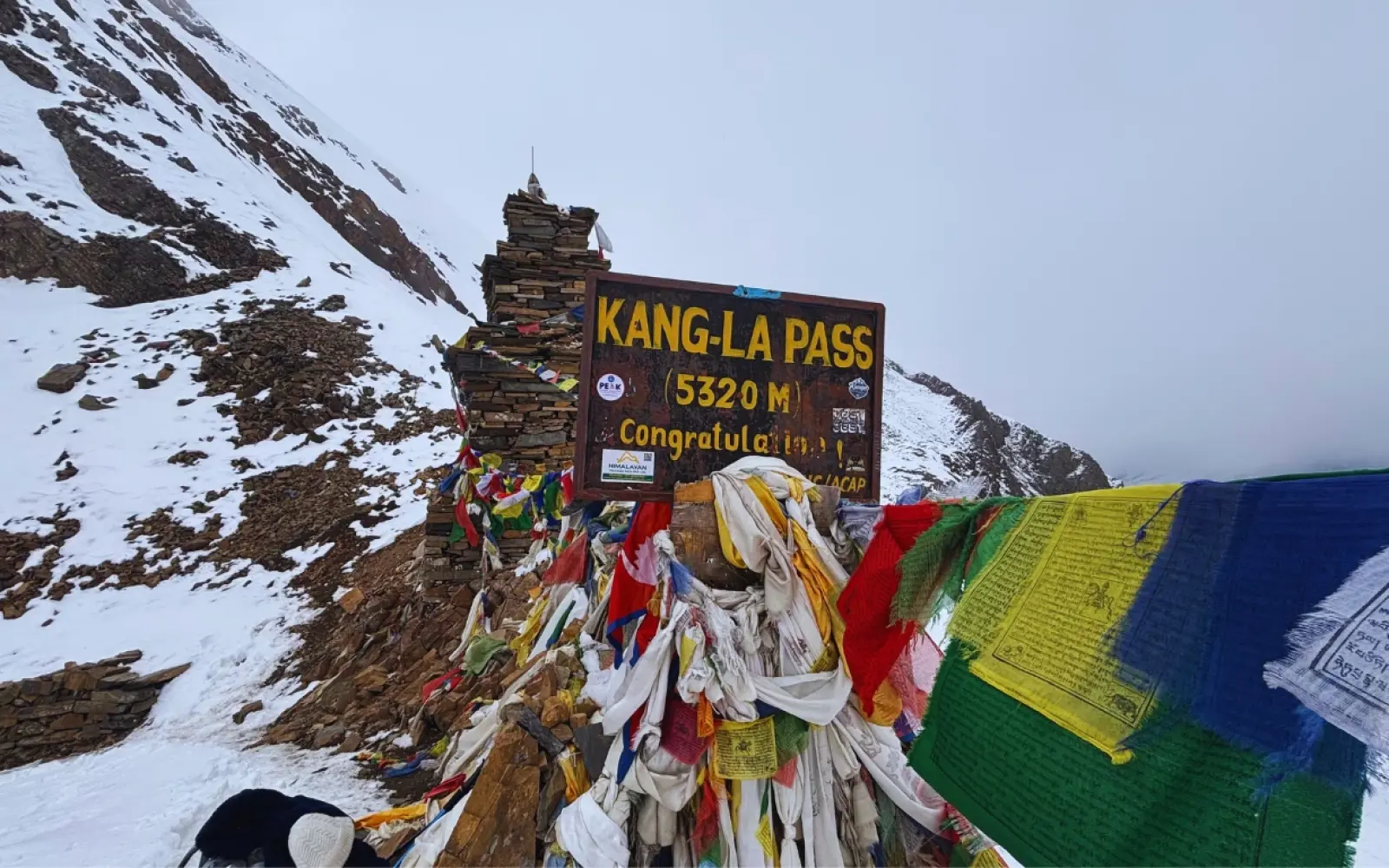

The wind carries the scent of juniper smoke from a distant village. Prayer flags snap against a steel-blue sky. Below your boots, ancient glacial ice crunches with each step as you approach one of Nepal's most dramatic high-altitude thresholds—a crossing so remote that most trekkers have never heard its name.
Welcome to Kang La Pass, the hidden gateway between two of the Himalaya's most secretive valleys.
At 5,320 meters, this isn't a pass you stumble upon. It demands intention, preparation, and respect. But for those willing to venture beyond the crowded trails of the Annapurna Circuit, Kang La rewards with an experience that feels almost sacred—a journey through restricted valleys, Tibetan Buddhist villages frozen in time, and landscapes that belong more to dreams than reality.
At Majestic Trails Nepal, we've been guiding trekkers across Kang La Pass for over a decade. Our Nepali guides know every stone on this route, every teahouse owner by name, every weather pattern that sweeps through these valleys. This guide distills everything we've learned—so you can decide if this extraordinary crossing belongs on your trekking bucket list.
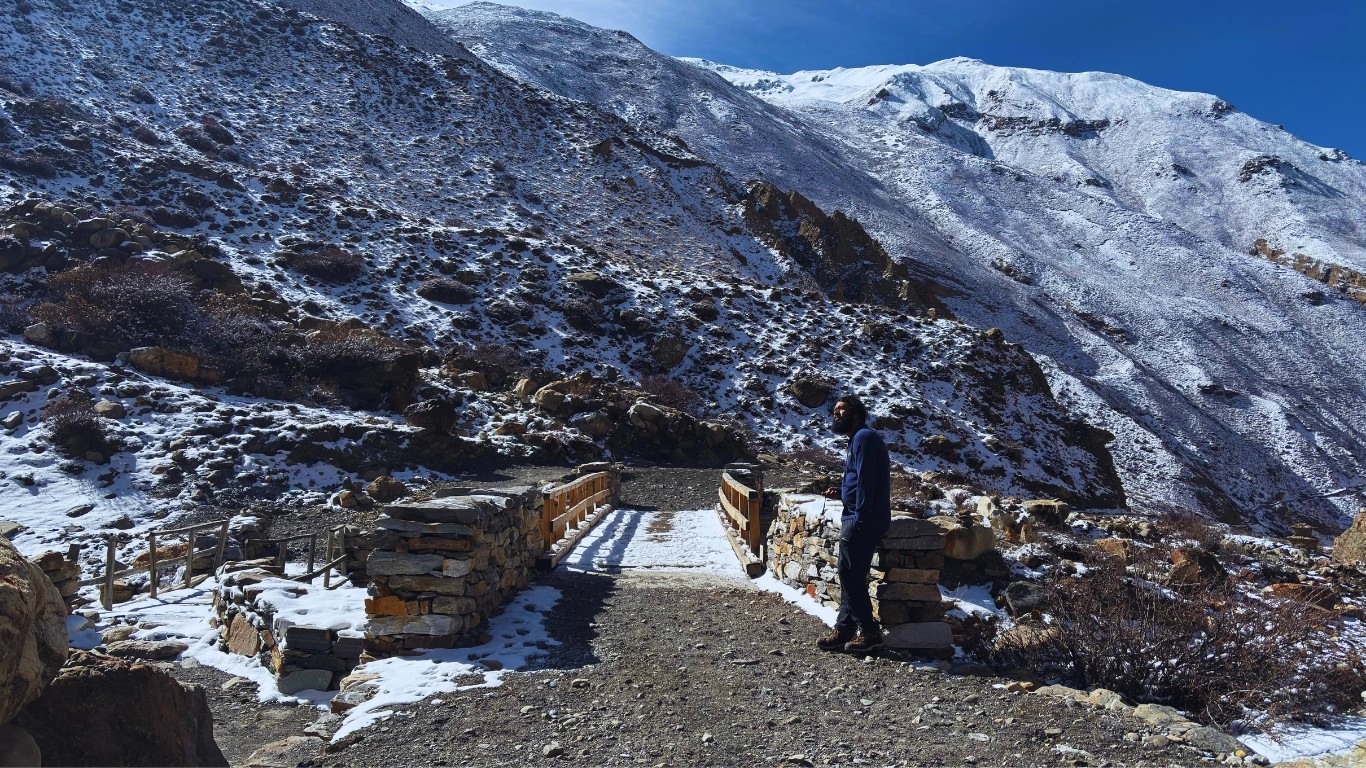
Kang La Pass sits in the heart of Nepal's Nar Phu Valley, a restricted trekking region tucked into the northern shadows of the Annapurna massif. This remote area shares a border with Tibet, and that proximity shapes everything—the culture, the terrain, the Buddhist monasteries perched impossibly on cliffsides.
Geographically, the pass serves as a high-altitude corridor connecting two remarkable villages:
Think of Kang La as a secret doorway. On one side lies the isolated, permit-restricted Nar Phu Valley—a place where yak herders follow seasonal migrations unchanged for centuries. On the other side, the pass deposits you onto the well-trodden Annapurna Circuit, near the famous Thorong La crossing.
The geography here is dramatic and unforgiving. The approach from Nar takes you through a narrow valley carved by ancient glaciers, past frozen lakes that shimmer turquoise in autumn light. Massive peaks—including Pisang Peak, Chulu peaks, and the Annapurna range—create a fortress of rock and ice in every direction.
What strikes first-time visitors most, according to our guides, is the silence. No vehicle noise reaches these valleys. No crowds shuffle past. Just wind, birdsong, and the occasional distant rumble of avalanche snow settling on far-off slopes.
Before committing to any high-altitude trek, you need hard numbers. Here's what you should know about the Kang La Pass altitude and logistics:
Essential Statistics:
Key Villages Along the Route:
| Village | Elevation | Notable Features |
|---|---|---|
| Koto | 2,600m | Entry point to Nar Phu Valley |
| Meta | 3,560m | First major settlement in valley |
| Phu | 4,080m | Ancient monastery, Tibetan culture |
| Nar | 4,110m | Traditional yak-herding village |
| Ngawal | 3,660m | Exit point on Annapurna Circuit |
Permit Requirements:
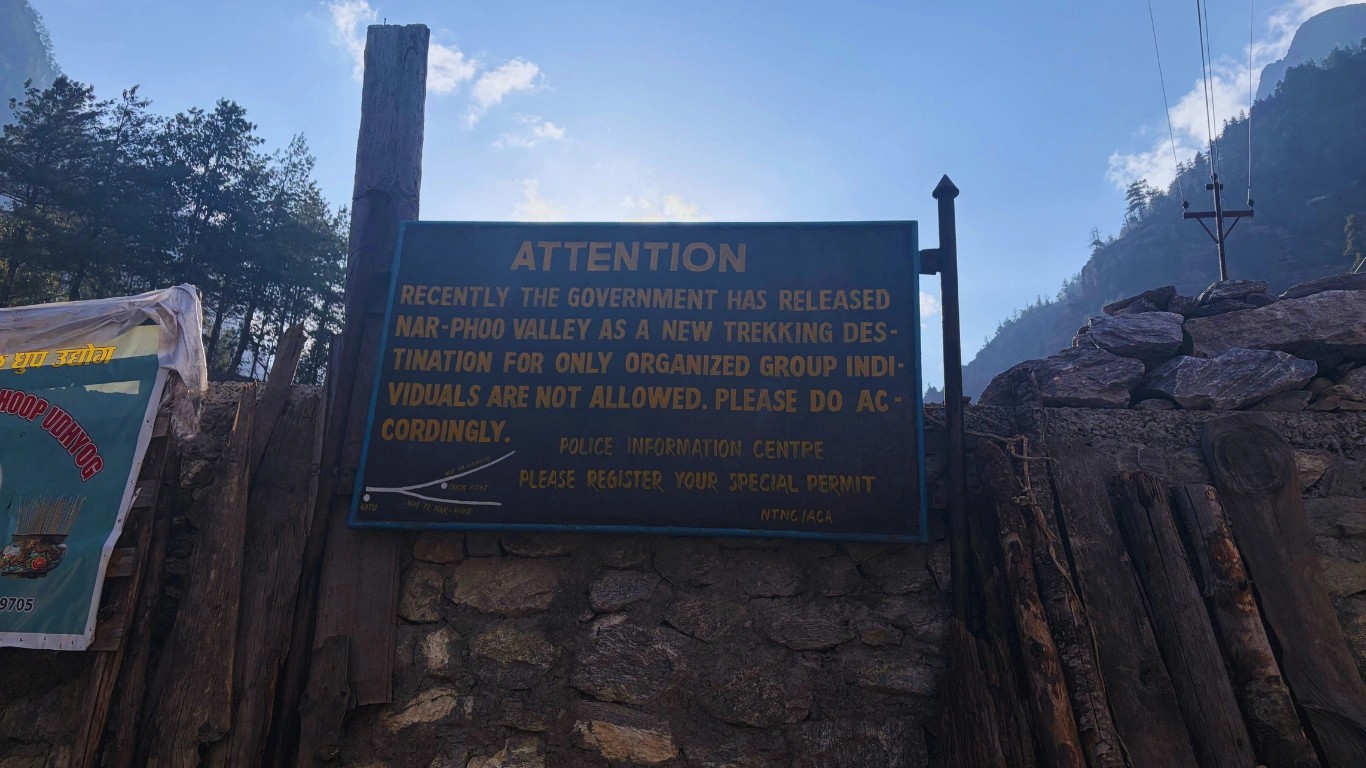
The restricted area designation means solo trekking is prohibited—you must travel with a registered trekking agency and licensed guide. This isn't bureaucratic inconvenience; it's what keeps the Nar Phu Valley pristine, authentic, and safe.
The Kang La Pass trek route typically begins in Besisahar or Kathmandu and unfolds over 12-16 days, depending on your itinerary and acclimatization schedule. Here's how Majestic Trails Nepal structures the journey:
Your adventure starts with a drive from Kathmandu to Koto (2,600m), the gateway village where the Nar Phu Valley splits from the main Annapurna Circuit trail. The drive itself offers glimpses of rural Nepal—terraced rice paddies, suspension bridges swaying over roaring rivers, children walking to school along mountain paths.
From Koto, you enter the restricted zone. The trail climbs through dense rhododendron and pine forests, crossing the Nar Khola river multiple times on wooden bridges. The first major stop is Meta (3,560m), a small settlement with basic teahouses where you'll sleep surrounded by towering canyon walls.
The scenery transforms quickly. Humid subtropical vegetation gives way to high-altitude desert. The air dries. Colors shift from green to amber and rust.
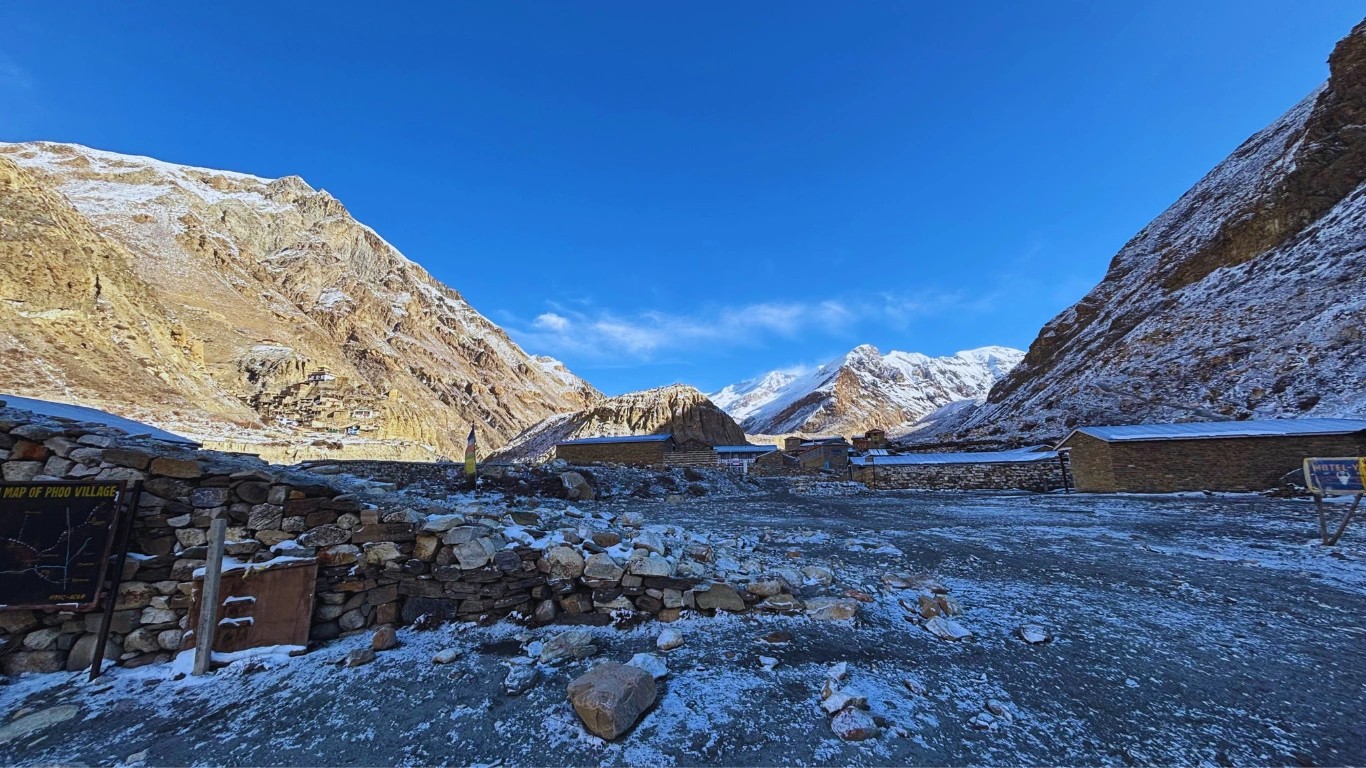
This segment forms the cultural heart of the trek. You'll spend 2-3 days exploring Phu and Nar—twin villages that feel transported from medieval Tibet.
Phu Village (4,080m) clings to a hillside beneath crumbling fortress ruins. The monastery here dates back centuries, its prayer wheels spinning in the constant wind. Villagers tend yak herds and barley fields, seemingly unbothered by the modern world's intrusions.
Nar Village (4,110m), an hour's walk from Phu, spreads across a wider plateau. Stone houses with flat roofs stack against each other for warmth. Drying yak dung—fuel for winter fires—covers every available surface. It smells like woodsmoke and survival.
These rest days aren't just cultural immersion; they're crucial for acclimatization before the pass crossing. Our guides encourage exploration: hike to viewpoints, visit monasteries, drink butter tea with local families.
The main event. Most trekkers leave Nar before dawn, following a steep trail through boulder fields and past glacial tarns. The route is unmarked in places—one reason why crossing without an experienced guide is dangerous.
Above 5,000 meters, the terrain becomes rocky and potentially icy. The final push to Kang La's summit requires careful foot placement, especially in early morning when overnight frost lingers.
The descent toward Ngawal is equally demanding—steep scree slopes that require concentration and proper trekking poles.
After crossing Kang La Pass, you emerge at Ngawal (3,660m) on the Annapurna Circuit. From here, most trekkers continue to Manang, then cross Thorong La Pass (5,416m) before descending to Muktinath and Jomsom.
This combination—Kang La plus Thorong La—creates one of Nepal's most comprehensive high-altitude treks, featuring two major pass crossings and some of the most diverse scenery in the Himalaya.
Alternatively, you can descend directly to Besisahar if time is limited or fatigue sets in.
Let's be direct: the Kang La Pass difficulty level is significant. This isn't a beginner trek.
Remote treks demand psychological resilience. There's no helicopter evacuation from Nar on a bad weather day. Teahouse conditions are basic—cold rooms, squat toilets, limited menu options. You'll be disconnected from the internet for most of the journey.
For some, this isolation is liberation. For others, it becomes stressful. Know yourself before booking.
Many trekkers ask us: Is Kang La Pass harder than Thorong La?
| Factor | Kang La Pass | Thorong La Pass |
|---|---|---|
| Altitude | 5,320m | 5,416m |
| Trail Condition | Rough, unmarked sections | Well-maintained, clear path |
| Crowds | Nearly empty | Busy (especially autumn) |
| Technical Difficulty | Higher | Moderate |
| Rescue Access | Very limited | Helicopter access possible |
Our verdict: Kang La is technically harder due to rougher terrain and isolation, even though Thorong La is slightly higher. The Thorong La trail sees hundreds of trekkers daily in peak season; Kang La might see a handful per week.
We advise clients to arrive with:
If you're newer to trekking, consider completing the Everest Base Camp trek or Annapurna Circuit (without Kang La) first to test your altitude tolerance.
Acute Mountain Sickness (AMS) is the invisible danger on any high-altitude trek. At Kang La Pass altitude, the oxygen level in the air drops to roughly 50% of sea-level concentration. Your body must adapt—and that takes time.
Symptoms often appear above 3,500m and can escalate rapidly if ignored.
Majestic Trails Nepal builds rest days into every Kang La Pass itinerary. Typically:
The golden rule: climb high, sleep low. Day hikes above your sleeping elevation train your body to process thinner air.
On Kang La, you're days from proper medical facilities. Our guides carry:
More importantly, experienced guides recognize AMS symptoms before trekkers do. They'll slow the pace, add rest days, or make the difficult call to turn back if conditions warrant. This isn't caution for caution's sake—it's potentially lifesaving.
"I've seen fit, young trekkers hit by altitude sickness and watched 60-year-olds cruise to the pass," says Pemba, one of our senior guides. "Fitness helps, but respect for the mountain matters more."
Timing matters enormously for remote trekking in Nepal. Kang La Pass is crossable only during specific windows.
Best overall season. Monsoon rains have ended, skies clear to deep blue, and the Himalayan views are extraordinary. Temperatures remain manageable during the day (5-15°C at lower elevations, dropping below freezing at higher points). The pass itself is usually snow-free in October, though early November can bring dustings.
Drawback: This is peak trekking season across Nepal. While Kang La remains quiet, permits sell faster and teahouses in Nar/Phu may fill.
Excellent alternative. Rhododendrons bloom at lower elevations (spectacular in late March), and weather is generally stable. April offers warm days and clear mornings. By May, afternoon clouds build more frequently, and the approaching monsoon adds humidity.
The pass may retain snow patches in early spring, requiring careful navigation.
The crossing of Kang La Pass is the trek's emotional and physical climax. Here's what the day looks like:
Your guide knocks softly. Outside, stars blaze in the pre-dawn darkness. You layer up in everything you own—thermals, fleece, down jacket, hardshell. Hot tea and porridge wait in the teahouse's cold dining room.
Headlamps click on. The group moves single file into the darkness, following cairns and your guide's memory. The trail climbs immediately, steep switchbacks through rocky terrain.
Sunrise catches the surrounding peaks—Annapurna, Gangapurna, Chulu—painting them orange and pink. You pause, breathing hard, convinced the pass must be close. Your guide smiles and points higher.
Prayer flags flutter from a simple cairn. The wind here is fierce, cutting through layers. You don't linger—photographs, a moment of gratitude, perhaps a quiet prayer. The air is too thin, the cold too penetrating.
But the view—the view stops time. To the north, the brown plateau of the Nar Phu Valley spreads toward Tibet. To the west, the white giants of the Annapurna range rise like frozen waves.
The western side of Kang La is steep and loose. Trekking poles become essential as you navigate scree slopes that slide beneath your boots. Concentration matters. One wrong step could mean a twisted ankle hours from help.
You stumble into Ngawal's main street, legs trembling, lungs grateful for thicker air. The teahouse owner serves dal bhat. You eat in silence, processing what you've just accomplished.
"Pass day isn't about speed," our guide Lakpa often tells clients. "It's about presence. Be where your feet are."
The Nar Phu Valley holds restricted area trek status, meaning independent trekking is prohibited. Here's what you need:
This permit grants access to the Nar Phu Valley only. It cannot be obtained at the trailhead.
Important: Permit fees are set by the Nepal government and may change. Majestic Trails Nepal handles all permit arrangements for our clients, eliminating paperwork stress.
Understanding the Kang La Pass trek budget helps you plan realistically. Here's a breakdown:
| Permit | Cost (USD) |
|---|---|
| Nar Phu Restricted Area (8 days) | $100 |
| ACAP | $30 |
| Total Permits | $150 |
Hiring a licensed guide is mandatory for restricted areas. Rates vary by experience:
For a 14-day trek, expect guide costs of $420-700.
Teahouses in Nar Phu are basic but comfortable. Daily costs:
| Item | Budget (USD) |
|---|---|
| Permits | $150 |
| Guide (14 days) | $500 |
| Porter (optional, 14 days) | $400 |
| Accommodation | $100 |
| Meals (14 days) | $350 |
| Transport | $150 |
| Contingency | $150 |
| Total | $1,800 |
Package treks through Majestic Trails Nepal include permits, guides, porters, accommodation, meals, and transport at fixed prices—often more economical than arranging separately, with none of the logistical headaches.
Plenty of agencies offer Nar Phu Valley trek packages. Here's why trekkers trust us:
We're not a faceless international operator. Majestic Trails Nepal is Nepali-owned, Nepali-operated. Our guides grew up in these mountains. They know which teahouse serves the best dal bhat, which viewpoint rewards an extra 30-minute hike, which route variations suit your fitness level.
When you trek with us, you're supporting local families directly.
Remote treks demand preparation. Our guides carry satellite communication, first aid supplies, and oxygen saturation monitors. We maintain conservative acclimatization schedules—even when clients feel ready to push faster. We've turned clients back from passes when conditions demanded it.
Our safety record reflects this philosophy.
No two trekkers are identical. Want photography time at sunrise over Phu monastery? We'll adjust the schedule. Need an extra rest day? Built in. Interested in combining Kang La with Thorong La for the ultimate crossing? We design the route.
Our job is crafting your perfect trek—not selling identical packages.
After guiding hundreds of trekkers across Kang La, our team has distilled this advice:
Footwear:
Clothing:
Equipment:
Personal Items:
Start training 2-3 months before your trek:
Mental preparation matters equally. Practice discomfort—cold showers, early mornings, going without phone access. The trek will test patience and flexibility.
The Nar Phu Valley preserves Tibetan Buddhist traditions. Please:
Few passes in Nepal remain truly hidden. Kang La is one of them.
Beyond the crowds, beyond the well-worn trails, this ancient crossing offers something increasingly rare in the Himalaya: authenticity. The villages of Nar and Phu haven't changed for cameras. The prayer flags at the summit weren't installed for Instagram. The silence that blankets these valleys is real—and profound.
Crossing Kang La Pass isn't easy. It demands preparation, respect, and surrender to the mountain's rhythms. But for those willing to accept the challenge, the reward is a glimpse of Nepal as it once was everywhere—remote, sacred, wild.
At Majestic Trails Nepal, we've witnessed trekkers transformed by this journey. We've watched skeptics fall silent before monastery prayers. We've seen exhausted climbers weep at the summit, overwhelmed by beauty they didn't know existed.
If Kang La is calling, we're ready to guide you there.
Contact Majestic Trails Nepal to begin planning your Kang La Pass adventure. Our team will answer your questions, customize your itinerary, and prepare you for one of Nepal's most unforgettable Himalayan crossings.
The hidden pass awaits. Will you answer?
Ready to explore Kang La Pass? Contact our team for a personalized itinerary and quote. Let's plan your journey to Nepal's most secretive Himalayan crossing.
Kang La Pass is rated strenuous to challenging. The combination of high altitude (5,320m), rough terrain, remote location, and 12-16 day duration makes it suitable for experienced trekkers with good fitness. Prior high-altitude experience is strongly recommended.
The Kang La Pass altitude is 5,320 meters (17,454 feet), making it one of Nepal's higher trekking passes—slightly lower than the famous Thorong La (5,416m) but more technically demanding due to trail conditions.
In terms of pure altitude, Thorong La is higher. However, many trekkers find Kang La more difficult due to its rougher, less-marked trail; steeper descents; isolation from rescue services; and limited teahouse options. The overall experience demands more self-reliance.
We advise against Kang La Pass for complete beginners. Ideally, you should have completed at least one high-altitude trek (above 4,000m) before attempting this route. The physical demands and altitude risks are significant for those without prior experience.
Yes—a guide is legally required. The Nar Phu Valley holds restricted area status, meaning all trekkers must travel with a registered trekking agency and licensed guide. Beyond legal requirements, the remoteness and unmarked trail sections make independent trekking genuinely dangerous.
October and November (autumn) offer the best conditions: clear skies, stable weather, manageable temperatures. April and May (spring) provide an excellent alternative with blooming rhododendrons. Avoid monsoon season (June-September) and winter (December-February).
A complete Kang La Pass trek typically requires 12-16 days, including travel from Kathmandu, acclimatization days in Phu and Nar, the pass crossing, and descent to the Annapurna Circuit. Combining with Thorong La adds 4-5 additional days.
Three permits are required: Nar Phu Restricted Area Permit ($100 for 8 days) and Annapurna Conservation Area Permit ($30). These must be arranged through a registered agency—Majestic Trails Nepal handles all permit processing for our clients.
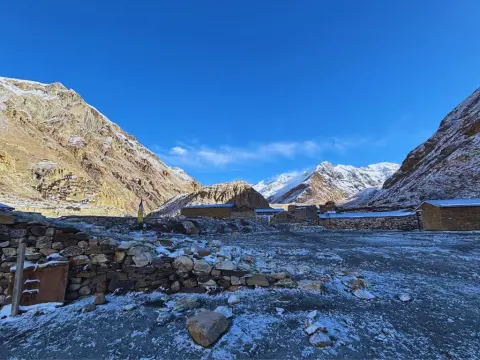
The best time for the Annapurna Nar Phu Valley Trek is during spring (March to May) and autumn (September to November). Both seasons offer stable weat...
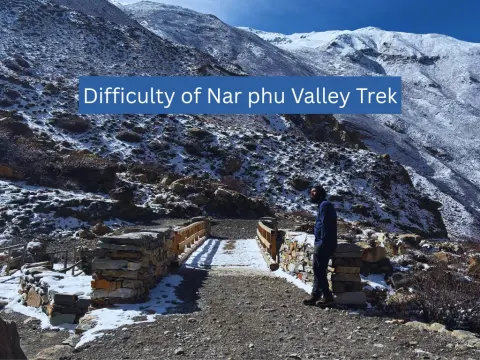
The Nar Phu Valley Trek difficulty is best described as moderate to challenging, but that label alone does not explain the trek properly. Nar Phu is n...
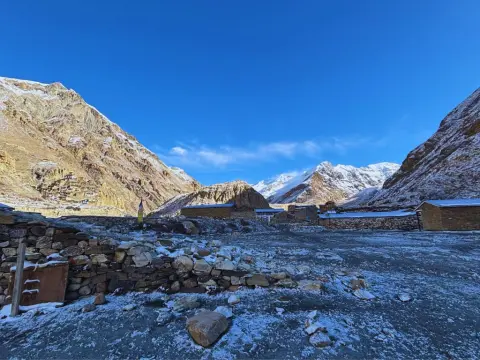
Planning the Nar Phu Valley Trek and wondering what it actually costs? Here's a direct answer: the Nar Phu Valley Trek Cost 2026 ranges from approxima...
