[{"name":"Langtang Valley Trek \u2014 10 Days","duration":"10","image_url":"https:\/\/www.majestictrailsnepal.com\/storage\/trip-galleries\/1\/thumb_e7907ed736676d12e6ab17328008e746.webp","offer_price":null,"url":"https:\/\/www.majestictrailsnepal.com\/trips\/langtang-valley-trek"},{"name":"Everest Base Camp Trek","duration":"14","image_url":"https:\/\/www.majestictrailsnepal.com\/storage\/trip-galleries\/2\/thumb_4b769c9c4b5b007a61f4ce3b76ff440d.webp","offer_price":null,"url":"https:\/\/www.majestictrailsnepal.com\/trips\/everest-base-camp-trek"},{"name":"Everest Panorama Trek","duration":"9","image_url":"https:\/\/www.majestictrailsnepal.com\/storage\/trip-galleries\/3\/thumb_e6ee74caea3e2900c23ca370b06bab80.webp","offer_price":null,"url":"https:\/\/www.majestictrailsnepal.com\/trips\/everest-panorama-trek"},{"name":"Annapurna Base Camp Trek","duration":"14","image_url":"https:\/\/www.majestictrailsnepal.com\/storage\/trip-galleries\/4\/thumb_3f8d40f9472f701d7c46a827925201bc.webp","offer_price":null,"url":"https:\/\/www.majestictrailsnepal.com\/trips\/annapurna-base-camp-trek"},{"name":"Annapurna Base Camp Express Trek","duration":"9","image_url":"https:\/\/www.majestictrailsnepal.com\/storage\/trip-galleries\/5\/thumb_bac80de2bd257d651fa75d9c8025da1a.webp","offer_price":null,"url":"https:\/\/www.majestictrailsnepal.com\/trips\/annapurna-base-camp-express-trek"},{"name":"Annapurna Circuit Trek","duration":"15","image_url":"https:\/\/www.majestictrailsnepal.com\/storage\/trip-galleries\/6\/thumb_b73bdec74acacaa0d72a2a2a513f3d4a.webp","offer_price":null,"url":"https:\/\/www.majestictrailsnepal.com\/trips\/annapurna-circuit-trek"},{"name":"Ghorepani Poon Hill Trek","duration":"8","image_url":"https:\/\/www.majestictrailsnepal.com\/storage\/trip-galleries\/7\/thumb_aeda9e6388ab2692138cc9c9efa81a7f.webp","offer_price":null,"url":"https:\/\/www.majestictrailsnepal.com\/trips\/ghorepani-poon-hill-trek"},{"name":"Mardi Himal Trek \u2014 9 Days","duration":"9","image_url":"https:\/\/www.majestictrailsnepal.com\/storage\/trip-galleries\/8\/thumb_c511ee87ecab8ff015210dd647392d66.webp","offer_price":null,"url":"https:\/\/www.majestictrailsnepal.com\/trips\/mardi-himal-trek"},{"name":"Manaslu Circuit Trek","duration":"15","image_url":"https:\/\/www.majestictrailsnepal.com\/storage\/trip-galleries\/9\/thumb_7726908390ad6b249f2f6a7856f9dc17.webp","offer_price":null,"url":"https:\/\/www.majestictrailsnepal.com\/trips\/manaslu-circuit-trek"},{"name":"Upper Mustang Trek","duration":"16","image_url":"https:\/\/www.majestictrailsnepal.com\/storage\/trip-galleries\/10\/thumb_6a9b52ecd1d8cda92d594e5351431d6e.webp","offer_price":null,"url":"https:\/\/www.majestictrailsnepal.com\/trips\/upper-mustang-trek"},{"name":"Pokhara City Tour","duration":"1","image_url":"https:\/\/www.majestictrailsnepal.com\/storage\/trip-galleries\/11\/thumb_cf762ba4c20363bd1c0f239db35fcc84.webp","offer_price":null,"url":"https:\/\/www.majestictrailsnepal.com\/trips\/pokhara-city-tour"},{"name":"Paragliding in Pokhara","duration":"1","image_url":"https:\/\/www.majestictrailsnepal.com\/storage\/trip-galleries\/12\/thumb_b896201edf88bbe0f570e876c3c337a3.webp","offer_price":70,"url":"https:\/\/www.majestictrailsnepal.com\/trips\/paragliding-in-pokhara"},{"name":"Kathmandu City Tour","duration":"2","image_url":"https:\/\/www.majestictrailsnepal.com\/storage\/trip-galleries\/13\/thumb_846ad05bd3ce7bebb3843c24c08db6f9.webp","offer_price":null,"url":"https:\/\/www.majestictrailsnepal.com\/trips\/kathmandu-city-tour"},{"name":"Lumbini Buddhist Pilgrimage Tour","duration":"4","image_url":"https:\/\/www.majestictrailsnepal.com\/storage\/trip-galleries\/14\/a2998dca0ce22f28a61c3862dd47f6a3.webp","offer_price":null,"url":"https:\/\/www.majestictrailsnepal.com\/trips\/lumbini-buddhist-pilgrimage-tour"},{"name":"5 days langtang valley trek","duration":"5","image_url":"https:\/\/www.majestictrailsnepal.com\/storage\/trip-galleries\/15\/thumb_7a6c65c139b8085d220ac01913cb1448.webp","offer_price":510,"url":"https:\/\/www.majestictrailsnepal.com\/trips\/5-days-langtang-valley-trek"},{"name":"Leisure Port Nepal Price: Rafting and Camping Adventure","duration":"7","image_url":"https:\/\/www.majestictrailsnepal.com\/storage\/trip-galleries\/17\/thumb_02cb8c3f0697c7c5c4f73d744b47d87f.webp","offer_price":550,"url":"https:\/\/www.majestictrailsnepal.com\/trips\/leisure-port-nepal-price-rafting-and-camping-adventure"},{"name":"10 days spiritual tour in Nepal","duration":"10","image_url":"https:\/\/www.majestictrailsnepal.com\/storage\/trip-galleries\/18\/thumb_b4e7eba000673d1bce6b56abb422fe3b.webp","offer_price":1200,"url":"https:\/\/www.majestictrailsnepal.com\/trips\/10-days-spiritual-tour-in-nepal"},{"name":"Annapurna Circuit Short Trek","duration":"10","image_url":"https:\/\/www.majestictrailsnepal.com\/storage\/trip-galleries\/19\/thumb_769ee8cbe02a510d8db76419c97a2dc9.webp","offer_price":null,"url":"https:\/\/www.majestictrailsnepal.com\/trips\/annapurna-circuit-short-trek"},{"name":"Best Short Manaslu Circuit Trek","duration":"11","image_url":"https:\/\/www.majestictrailsnepal.com\/storage\/trip-galleries\/20\/thumb_ac1b4977a3fce9d11ee68240cad675b6.webp","offer_price":null,"url":"https:\/\/www.majestictrailsnepal.com\/trips\/best-short-manaslu-circuit-trek"},{"name":"Langtang Gosaikunda Trek","duration":"13","image_url":"https:\/\/www.majestictrailsnepal.com\/storage\/trip-galleries\/22\/thumb_577a6402f2ca4b3f12bfd80b96b33a23.webp","offer_price":940,"url":"https:\/\/www.majestictrailsnepal.com\/trips\/langtang-gosaikunda-trek"},{"name":"3 Passes Trek Nepal","duration":"22","image_url":"https:\/\/www.majestictrailsnepal.com\/storage\/trip-galleries\/24\/thumb_8020edea67aefce87e9012dc89a60087.webp","offer_price":null,"url":"https:\/\/www.majestictrailsnepal.com\/trips\/3-passes-trek-nepal"},{"name":"Tsum Valley Trek","duration":"13","image_url":"https:\/\/www.majestictrailsnepal.com\/storage\/trip-galleries\/25\/thumb_194c03e3c3463dff07a3f621a81ef9ea.webp","offer_price":null,"url":"https:\/\/www.majestictrailsnepal.com\/trips\/tsum-valley-trek"},{"name":"Gokyo and Renjo La Pass Trek","duration":"14","image_url":"https:\/\/www.majestictrailsnepal.com\/storage\/trip-galleries\/26\/thumb_7b865f0f0d0d4c6807b625b6e391b56d.webp","offer_price":1490,"url":"https:\/\/www.majestictrailsnepal.com\/trips\/gokyo-and-renjo-la-pass-trek"},{"name":"Honeymoon Tour in Nepal","duration":"9","image_url":"https:\/\/www.majestictrailsnepal.com\/storage\/trip-galleries\/27\/thumb_dabf449c090bb16efd5823c653eb61b3.webp","offer_price":null,"url":"https:\/\/www.majestictrailsnepal.com\/trips\/honeymoon-tour-in-nepal"},{"name":"Pikey Peak Trek","duration":"10","image_url":"https:\/\/www.majestictrailsnepal.com\/storage\/trip-galleries\/28\/thumb_5425e57ce3ea84d31a7b24b83b1af94f.webp","offer_price":1090,"url":"https:\/\/www.majestictrailsnepal.com\/trips\/pikey-peak-trek"},{"name":"Makalu Base Camp Trek","duration":"17","image_url":"https:\/\/www.majestictrailsnepal.com\/storage\/trip-galleries\/29\/thumb_d68c8ec6492540c922045d825a38cd50.webp","offer_price":null,"url":"https:\/\/www.majestictrailsnepal.com\/trips\/makalu-base-camp-trek"},{"name":"Nepal Winter Tour","duration":"8","image_url":"https:\/\/www.majestictrailsnepal.com\/storage\/trip-galleries\/30\/thumb_c8491c0c4b1fb19d8e93630866895799.webp","offer_price":null,"url":"https:\/\/www.majestictrailsnepal.com\/trips\/nepal-winter-tour"},{"name":"Maratika Tour in Nepal","duration":"6","image_url":"https:\/\/www.majestictrailsnepal.com\/storage\/trip-galleries\/31\/thumb_97948560c5a12a486f9ac2b76567cafd.webp","offer_price":null,"url":"https:\/\/www.majestictrailsnepal.com\/trips\/maratika-tour-in-nepal"},{"name":"Nepal Lake Trek","duration":"14","image_url":"https:\/\/www.majestictrailsnepal.com\/storage\/trip-galleries\/32\/thumb_d9b260fe13127816f5b3c25447caf70c.webp","offer_price":null,"url":"https:\/\/www.majestictrailsnepal.com\/trips\/nepal-lake-trek"},{"name":"Taste of Nepal Tour Package","duration":"9","image_url":"https:\/\/www.majestictrailsnepal.com\/storage\/trip-galleries\/33\/thumb_f4b55ab5760a8e057b4c3e208e25ab36.webp","offer_price":null,"url":"https:\/\/www.majestictrailsnepal.com\/trips\/taste-of-nepal-tour-package"},{"name":"Poon Hill Yoga Trek in Nepal","duration":"9","image_url":"https:\/\/www.majestictrailsnepal.com\/storage\/trip-galleries\/34\/thumb_904b238e690107c5c9b1092296880cc9.webp","offer_price":null,"url":"https:\/\/www.majestictrailsnepal.com\/trips\/poon-hill-yoga-trek-in-nepal"},{"name":"Nar Phu Nepal Trek","duration":"10","image_url":"https:\/\/www.majestictrailsnepal.com\/storage\/trip-galleries\/35\/thumb_f959e3e22c260629add0ba61a4038812.webp","offer_price":null,"url":"https:\/\/www.majestictrailsnepal.com\/trips\/nar-phu-nepal-trek"},{"name":"Annapurna Base Camp Helicopter Tour","duration":"1","image_url":"https:\/\/www.majestictrailsnepal.com\/storage\/trip-galleries\/36\/thumb_e81861e8772a9d7fac92ab4a7d43e3bf.webp","offer_price":null,"url":"https:\/\/www.majestictrailsnepal.com\/trips\/annapurna-base-camp-helicopter-tour"},{"name":"Annapurna Circuit with Nar Phu Valley Trek","duration":"16","image_url":"https:\/\/www.majestictrailsnepal.com\/storage\/trip-galleries\/38\/thumb_b70692cbd1c1dd772587c940be2d0bc9.webp","offer_price":null,"url":"https:\/\/www.majestictrailsnepal.com\/trips\/annapurna-circuit-with-nar-phu-valley-trek"}]
Nagarkot 2026 — Complete Guide to Sunrise, Mountain Views & Day Trips from Kathmandu
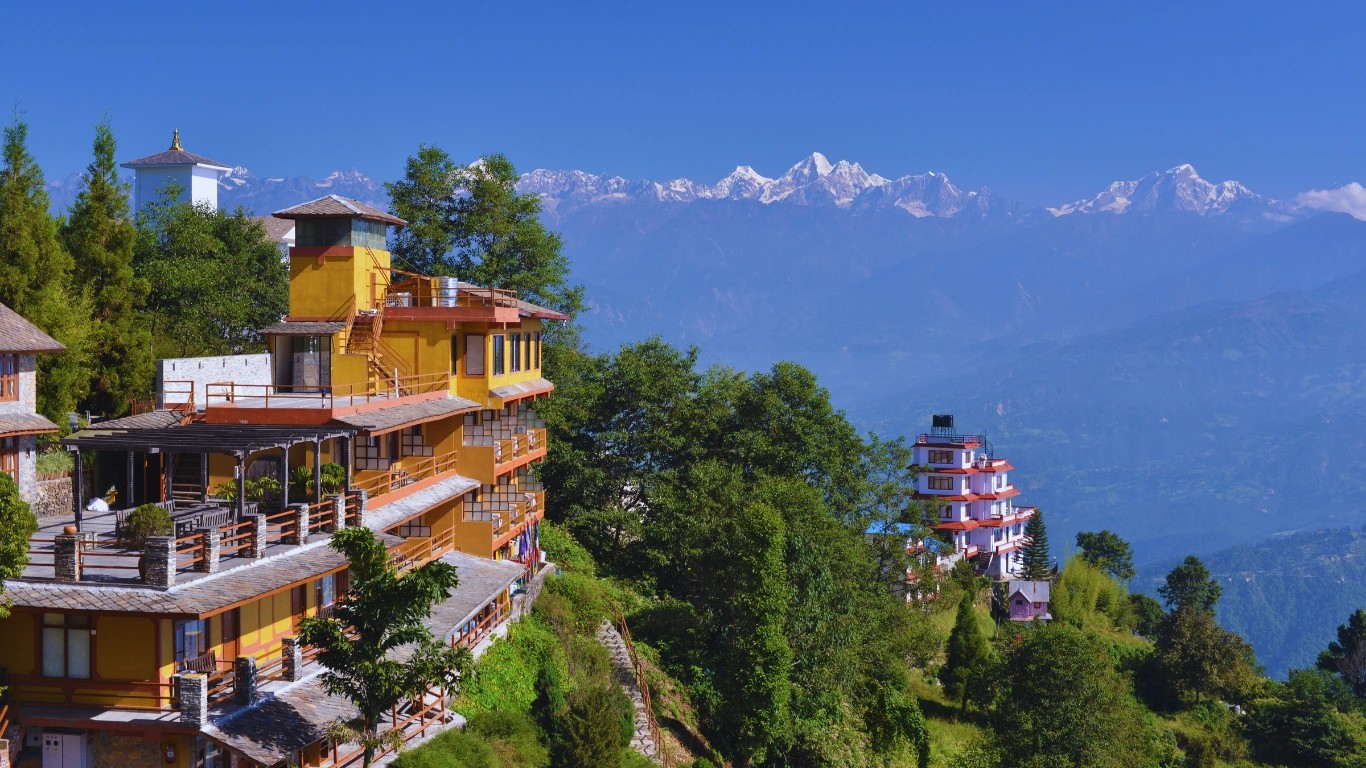
Nagarkot is a hilltop village in Bhaktapur District, 32 km east of Kathmandu, sitting at an elevation of 2,175 m above sea level. It is one of Nepal's most accessible Himalayan viewpoints — close enough to Kathmandu for a day trip, high enough to see 8 of Nepal's 13 Himalayan mountain ranges on clear mornings, and quiet enough to feel like a different country than the chaotic capital below. On a clear day, Mount Everest itself is visible from Nagarkot as a distant snow-capped peak.
Majestic Trails Nepal has been running guided trips for 10+ years, and has seen Nagarkot grow to be the most popular short getaway from Kathmandu, both for foreign visitors looking to have a Himalayan view without a two week trek, and for Nepalese families looking for a weekend getaway, or a picnic spot. This is a comprehensive guide for 2026 covering everything including how to get there, when to go, the year-round weather, what mountains you will see, restaurants and food, picnic areas, and trekking routes from Nagarkot to Chisapani, Changunarayan, Bhaktapur and Dhulikhel.
What Is Nagarkot? — Why It Is Famous
Nagarkot
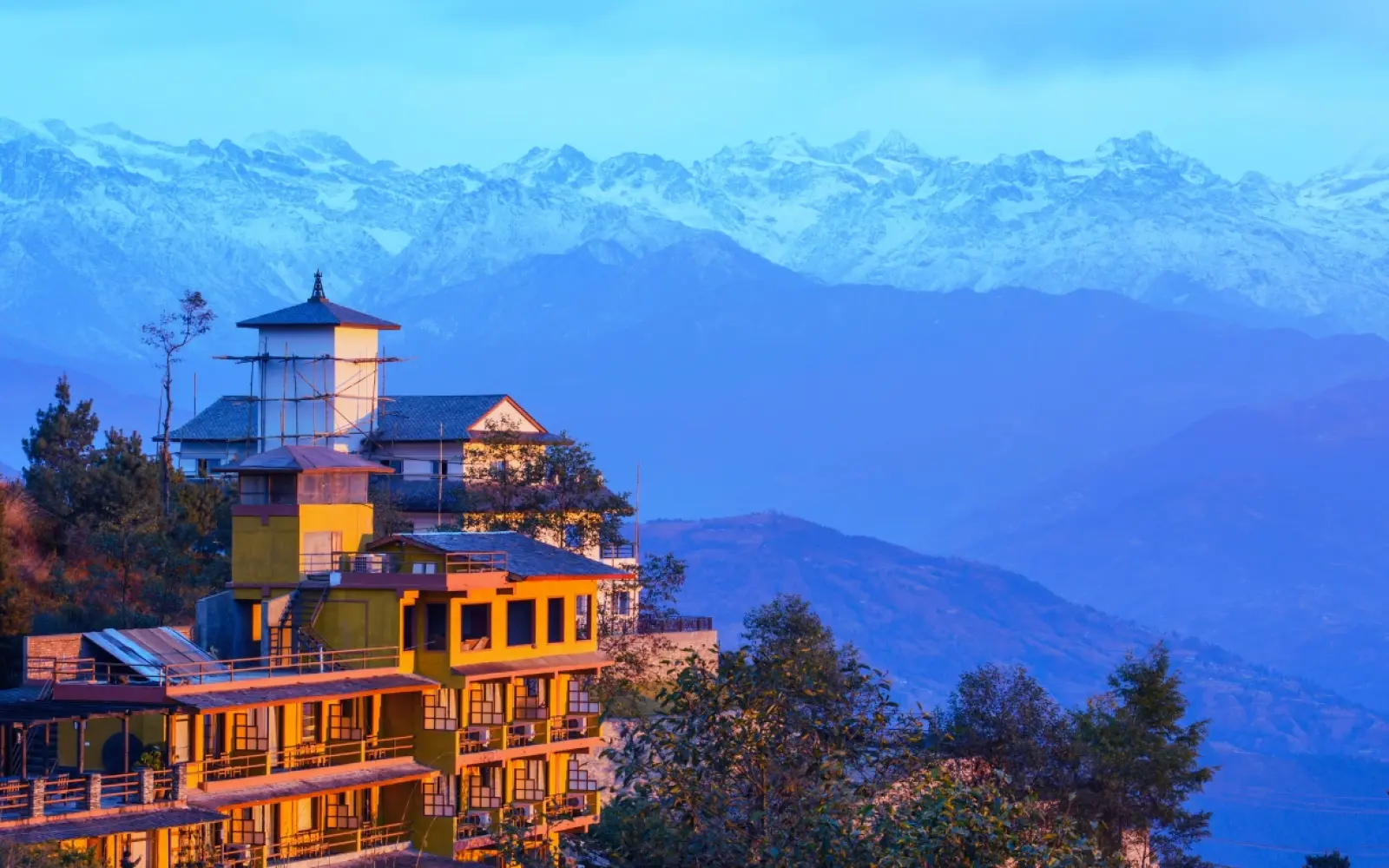
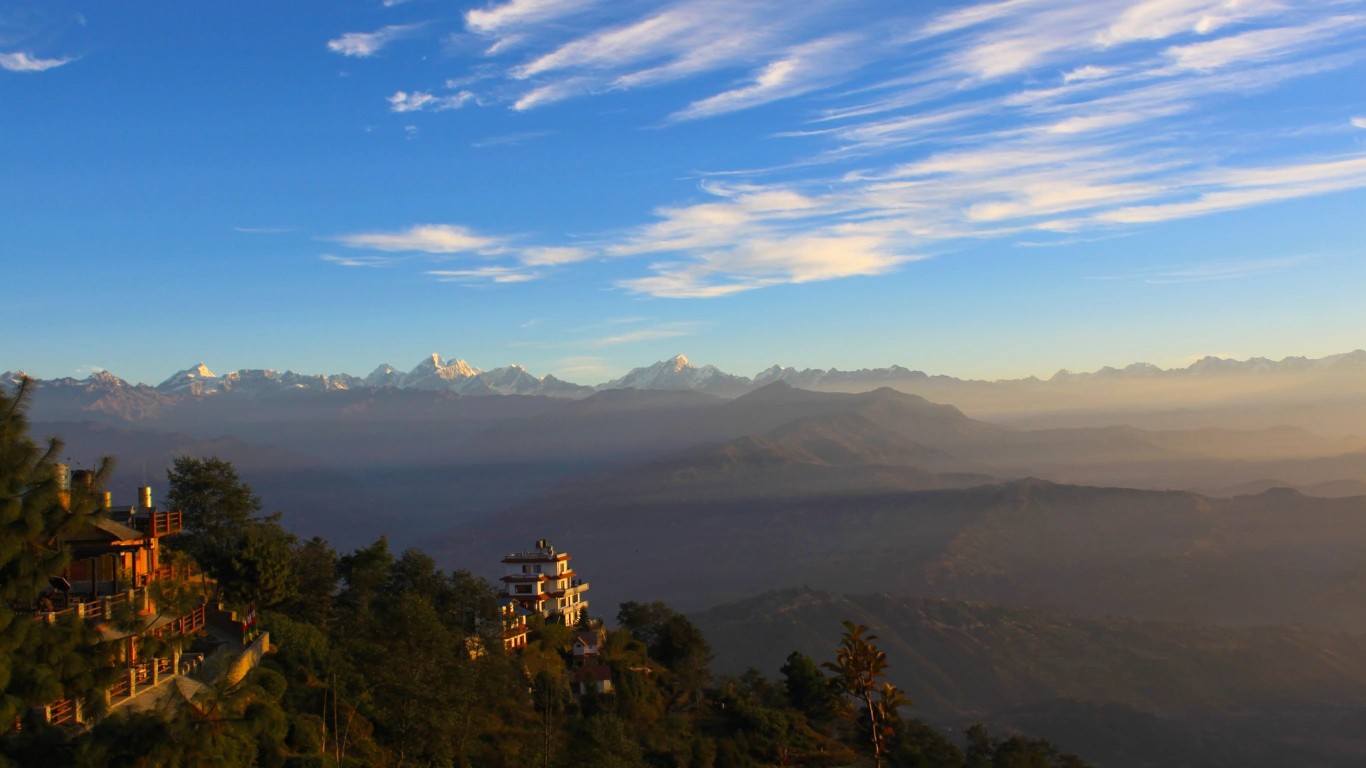
Nagarkot is a tiny village in the Bhaktapur District, on the eastern edge of the Kathmandu Valley in the Bagmati Province. It is known for only one thing: THE SUNRISE!
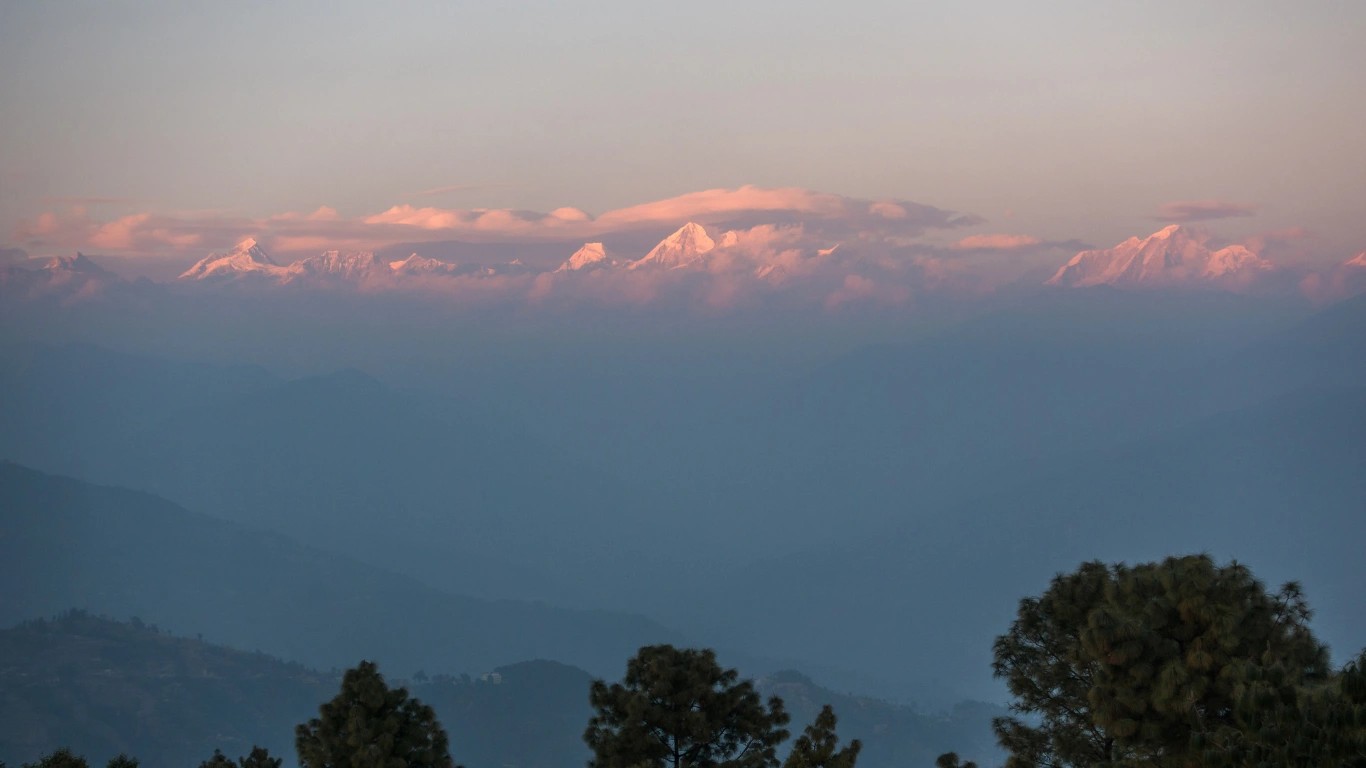
The eastern Himalayan skyline glints gold and pink before the sun could even rise, from Nagarkot's perspectives. The village is high enough to peer over several mountain ranges, but close to Kathmandu to be back in town for lunch. The easy access coupled with the elevation has made Nagarkot the most popular day-trip destination in the Kathmandu Valley.
Why Nagarkot is famous:
One of the broadest Himalayan panoramas anywhere in Nepal — 8 of Nepal's 13 Himalayan ranges visible from a single viewpoint
Closest "real" Himalayan viewpoint to Kathmandu — only 32 km away
Mount Everest visible on clear days
Historic site — Nagarkot was originally an ancient fortress used to monitor the Kathmandu Valley
Royal heritage — used by Nepali royalty as a summer escape from Kathmandu heat
Sunrise tower at 2,164 m offering 360-degree mountain views
Popular picnic spot for Nepali domestic tourists
Direct connection to Chisapani, Changunarayan, and Dhulikhel hiking routes
How High Is Nagarkot? — Altitude and Elevation
Nagarkot is at 2175 meter.
Nagarkot sits at an elevation of 2,175 m (7,136 ft) above sea level. Some sources also cite 2,195 m — the precise figure depends on whether the measurement is taken from the village center, the ridgeline, or the view tower.
Location
Altitude
Nagarkot village center
2,175 m (7,136 ft)
Nagarkot ridgeline
2,195 m (7,201 ft)
Nagarkot View Tower
2,164 m (7,099 ft)
Kathmandu (for reference)
1,400 m (4,593 ft)
Elevation difference vs Kathmandu
~775 m higher
The 775 m altitude difference from Kathmandu means Nagarkot is noticeably cooler than the capital. Temperatures typically run 5-8°C lower than Kathmandu year-round. This is why Nepali royalty historically used Nagarkot as a summer escape from Kathmandu heat.
Importantly, 2,175 m is well below altitude sickness threshold (which starts above 2,500 m). Visitors of any age and any fitness level can safely visit Nagarkot without acclimatization concerns.
How Far Is Nagarkot from Kathmandu? — Distance and Drive Time
Nagarkot is 32 km east of Kathmandu. The drive takes approximately 1.5 to 2 hours depending on traffic conditions and route choice.
Route
Distance
Drive Time
Kathmandu (Thamel) to Nagarkot
32 km
1.5-2 hours
Bhaktapur to Nagarkot
17 km
45 minutes
Kathmandu Airport to Nagarkot
28 km
1.5 hours
Sankhu to Nagarkot
15 km
1 hour
Changunarayan Temple to Nagarkot
11 km
45 minutes
Dhulikhel to Nagarkot
24 km
1.5 hours
Drive time honestly:
Morning departures (4-5 AM for sunrise) — 1.5 hours, light traffic
Daytime departures (10 AM - 4 PM) — 2 hours, Kathmandu traffic adds time
The road from Kathmandu winds through Bhaktapur and then climbs steeply up the valley rim. The final 15 km from Bhaktapur to Nagarkot is a narrow mountain road with many bends — drivers unfamiliar with the route should expect a slower journey.
From Kathmandu Airport (Tribhuvan International) to Nagarkot is approximately 28 km and 1.5 hours by taxi — many travelers arriving on overnight international flights drive directly to Nagarkot for morning sunrise after a short rest.
How to Get to Nagarkot from Kathmandu — All Transport Options
There are five main ways to reach Nagarkot from Kathmandu. Each has different cost, comfort, and time trade-offs.
Option 1 — Private Taxi or Car (Most Popular)
Cost: NPR 3,500-5,000 one way / NPR 6,000-8,000 round trip
Time: 1.5-2 hours each way
Comfort: High — door to door, no waiting
Best for: Day trips, sunrise tours, comfort travelers
Option 2 — Tourist Bus / Hotel Pickup Service
Cost: NPR 600-1,500 per person
Time: 2-2.5 hours
Comfort: Medium — pickup from major hotels, shared with other tourists
Best for: Budget tourists, solo travelers
Option 3 — Public Bus
Cost: NPR 100-200 per person
Time: 2.5-3 hours including transfers
Route: Take a bus from Kathmandu's Bhaktapur bus stop (Ratna Park or Bagh Bazaar) to Bhaktapur, then transfer to a Nagarkot bus from Bhaktapur Sallaghari
Best for: Backpackers, budget travelers, those wanting authentic local transport
Best for: Confident riders, experienced motorbike travelers
Option 5 — Cycling
Cost: Bike rental NPR 1,500-3,000 per day
Time: 3-5 hours uphill, 2 hours downhill
Comfort: Strenuous — significant elevation gain, mountain road
Best for: Cycling enthusiasts, fitness adventurers
Majestic Trails Nepal recommendation: For first-time visitors, the private taxi option is best for sunrise trips. For multi-day visits, the tourist bus from your hotel is the easiest. Public bus is genuinely usable for budget travelers but requires patience and basic Nepali language skills for the transfers.
Kathmandu to Nagarkot by Bus — Public Transport Guide
Yes, you can reach Nagarkot by public bus from Kathmandu. The route requires a transfer in Bhaktapur and takes approximately 2.5 to 3 hours total.
Step-by-step bus route:
Step 1: Take a local bus from Ratna Park or Bagh Bazaar in Kathmandu heading to Bhaktapur (Bagh Bazaar Bhaktapur bus)
Step 2: Get off at Bhaktapur Sallaghari (the main bus stop near Bhaktapur Durbar Square)
Step 3: Transfer to a Nagarkot bus from Bhaktapur Sallaghari (buses depart hourly during daytime)
Step 4: The Nagarkot bus climbs the mountain road for approximately 45-60 minutes to reach Nagarkot center
Public bus tips:
Buses run from approximately 6 AM to 6 PM
Last bus from Nagarkot back to Kathmandu typically departs by 5 PM
Total cost is approximately NPR 100-200 per person each way
Buses can be crowded, especially during Nepali holidays and weekends
For sunrise viewing, public bus is not ideal — you cannot reach Nagarkot before dawn using public transport
Bhaktapur to Nagarkot — Distance, Bus, and Taxi Fare
Bhaktapur to Nagarkot is 17 km and takes approximately 45 minutes by car or 1 hour by local bus. Many international travelers combine Bhaktapur Durbar Square (UNESCO World Heritage Site) with Nagarkot on the same itinerary.
Transport
Cost
Time
Private taxi
NPR 1,500-2,500
45 minutes
Local bus
NPR 50-100
1 hour
Hiking from Bhaktapur
Free
4-5 hours uphill
Bhaktapur to Nagarkot taxi fare typically ranges from NPR 1,500 to 2,500 depending on:
Time of day (early morning sunrise trips cost more)
Driver willingness to wait (round trip vs one way)
Negotiation — fares are not metered in this corridor
Season — peak tourist season slightly higher
The Bhaktapur to Nagarkot hike is a popular cultural-and-mountain combination day trip:
Start at Bhaktapur Durbar Square (1,401 m)
Hike up through Telkot and Lakuribhanjyang
Reach Nagarkot at 2,175 m
Total ascent: ~775 m over 17 km
This hike is suitable for fit travelers and takes 4-5 hours uphill. Most visitors arrange a vehicle for the descent back to Bhaktapur or Kathmandu.
Nagarkot Sunrise and Sunset — Best Time, Best Spot
sunset at sarangkot
Sunrise and sunset from Nagarkot is the single most popular activity in the village. The sun appears between 5:30 AM and 6:30 AM depending on the season, and the golden light hits the Himalayan peaks before the sun is fully visible.
Here’s the improved section with sunset times added in the same style for your content:
Nagarkot sunrise and sunset time by month
Month
Sunrise Time
Sunset Time
January
6:45 AM
5:20 PM
February
6:30 AM
5:45 PM
March
6:00 AM
6:00 PM
April
5:30 AM
6:20 PM
May
5:15 AM
6:40 PM
June
5:00 AM
6:55 PM
July
5:10 AM
6:50 PM
August
5:25 AM
6:30 PM
September
5:45 AM
6:05 PM
October
6:00 AM
5:40 PM
November
6:20 AM
5:15 PM
December
6:45 AM
5:10 PM
Best Nagarkot sunrise and sunset viewpoints
Nagarkot View Tower (2,164 m) — the most popular and iconic viewpoint. A short climbing tower at the top of the village with 360-degree Himalayan views. Arrive 30–45 minutes before sunrise to watch the sky shift from deep blue to golden orange before the first sunlight touches the peaks.
Top of any hotel rooftop — many hotels in Nagarkot have rooftop dining halls or terraces facing the Himalayan range, making them ideal for both sunrise coffee and sunset photography.
Open ridgeline near the village — perfect for travelers who want a quieter, less crowded viewpoint away from the main tourist zone. These ridges often offer a wider horizon for sunset views.
Operator tip: Sunrise crowds at the Nagarkot View Tower can be heavy in peak seasons (October–November and March–April). Arriving 45 minutes early gives you the best photo spot. For sunset, the tower is usually less crowded, but the western ridge viewpoints often provide better golden-hour colors and a more peaceful atmosphere.
Can You See Mount Everest from Nagarkot? — Honest Answer
Far view of Mount EVerest from Nagarkot
Yes, Mount Everest is visible from Nagarkot on clear days — but it appears as a distant peak in the panorama, not as a close-up view.
The honest reality:
Mount Everest is approximately 160 km away from Nagarkot in straight-line distance
On exceptionally clear mornings (typically October-February), Everest is clearly visible as a distinct snow-capped pyramid among the Himalayan skyline
During monsoon (June-August) and most of summer, Everest is hidden by clouds and haze
Mount Everest does not dominate the Nagarkot view — closer peaks like Langtang Lirung and Dorje Lakpa appear larger and more impressive
What Everest looks like from Nagarkot:
You will see Everest as a small but unmistakable triangular peak on the eastern horizon. It is recognizable by its sharp pyramidal shape rising above the surrounding ridges. To photograph it clearly, a zoom lens (200mm+) is recommended.
For travelers who want a close-up Mount Everest view, the Everest Base Camp Trek or the Mount Everest scenic flight from Kathmandu delivers a much more dramatic experience. Nagarkot delivers the broad Himalayan panorama; the EBC Trek delivers the close-up Everest experience.
Mountains Visible from Nagarkot — Full Panorama Guide
Panoroma view of all mountains from nagarkot
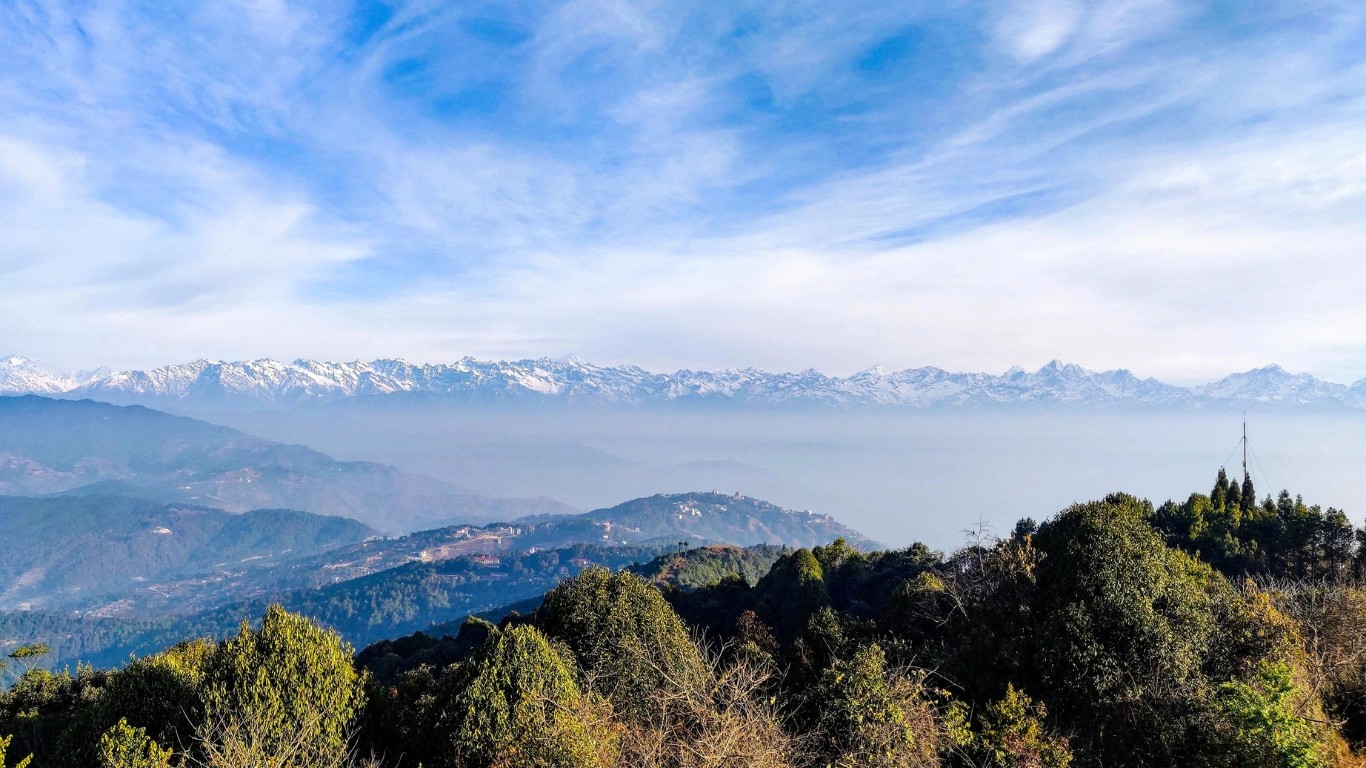
Nagarkot offers one of the broadest Himalayan panoramas anywhere in Nepal. On a clear day, 8 out of 13 Himalayan mountain ranges in Nepal are visible from the village.
The 8 Himalayan ranges visible from Nagarkot:
Range
Notable Peaks
Direction
Annapurna Range
Annapurna II (7,937 m)
West
Manaslu Range
Manaslu (8,163 m)
West
Ganesh Himal Range
Ganesh I (7,422 m)
Northwest
Langtang Range
Langtang Lirung (7,234 m)
North
Jugal Range
Dorje Lakpa (6,966 m)
North
Rolwaling Range
Gauri Shankar (7,134 m)
Northeast
Mahalangur Range
Everest (8,849 m), Lhotse, Cho Oyu
East
Numbur Range
Numbur (6,958 m)
East
Closest and most dramatic peaks visible from Nagarkot:
Langtang Lirung (7,234 m) — the closest 7,000 m peak, dominates the northern view
Dorje Lakpa (6,966 m) — the sharply pointed peak in the Jugal range
Gauri Shankar (7,134 m) — sacred peak named after Shiva and Parvati
Shisha Pangma (8,027 m) — visible to the north, technically in Tibet
Ganesh Himal (7,422 m) — wide ridgeline to the northwest
Mount Everest (8,849 m) — visible on clear days as a distant pyramid
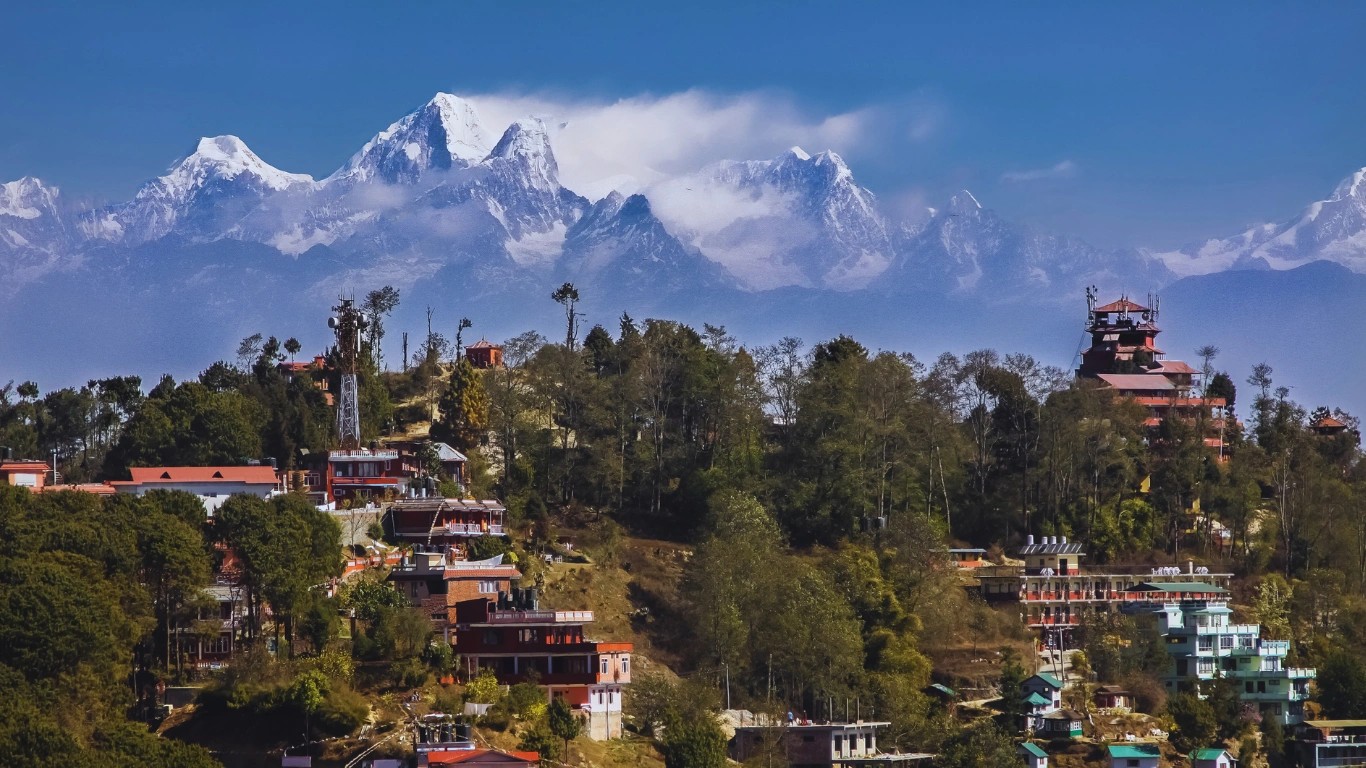
The Langtang range is the most dramatic single view from Nagarkot. It is closer than Everest and appears physically much larger in the panorama.
Langtang View from Nagarkot
Langtang from Nagarkot
The Langtang Range is the closest major Himalayan range visible from Nagarkot, dominating the northern panorama. Langtang Lirung at 7,234 m is the most prominent single peak in this view, sitting only about 60 km north of Nagarkot.
What you see in the Langtang view:
Langtang Lirung (7,234 m) — main peak
Langtang Ri (7,205 m)
Dorje Lakpa (6,966 m) to the east
Gauri Shankar (7,134 m) further east
The deep valley of the Langtang region between the peaks
Because the Langtang range is closer to Nagarkot than the Everest range, the mountains appear physically larger and more textured. Trekkers who have walked the Langtang Valley recognize specific peaks they have stood beneath.
For travelers wanting to actually walk the Langtang region after seeing it from Nagarkot, the Langtang Valley Trek takes 10-12 days and reaches 4,773 m at Kyanjin Ri.
Nagarkot Weather and Temperature — Year-Round Guide
Nagarkot weather differs noticeably from Kathmandu because of the 775 m altitude difference. Temperatures are 5-8°C cooler year-round, and the mountain air is significantly cleaner than the capital.
Nagarkot temperature by season:
Season
Months
Day Temp
Night Temp
Conditions
Spring
Mar-May
15-22°C
7-13°C
Clear mornings, occasional afternoon clouds
Summer
Jun-Aug
18-25°C
13-18°C
Monsoon — heavy rain, fog, limited views
Autumn
Sep-Nov
12-20°C
5-12°C
Best season — clear skies, sharp visibility
Winter
Dec-Feb
5-12°C
-2 to 5°C
Coldest — clear mornings, possible snow
Practical weather notes:
Mountain views are most reliable in October-November and February-March
Monsoon (June-August) brings heavy rain and clouds — mountain views are rare
Winter mornings can be foggy but clear up by 9-10 AM
The early morning before sunrise is the coldest time — pack warm layers
For real-time Nagarkot weather forecast before your trip, check Nepal Department of Hydrology and Meteorology or standard weather apps — but be aware mountain weather changes within hours
What to wear by season:
Spring/Autumn: light jacket for mornings, t-shirt for daytime
Winter: heavy down jacket, gloves, hat — especially for pre-dawn sunrise viewing
Does It Snow in Nagarkot?
Yes, Nagarkot occasionally receives snowfall during winter months, typically between mid-December and February. Snow is not guaranteed every winter, but most years see at least one significant snowfall event.
Nagarkot snow reality:
Average winter snow days: 3-7 per year
Heaviest snowfall months: January and early February
Snow accumulation: typically 5-15 cm when it occurs, occasionally more
Snow usually melts within 2-3 days
For Nepali domestic tourists, Nagarkot snowfall is a major attraction. When snow is forecast, hotels fill up quickly and Kathmandu visitors drive up specifically to see the snow. International tourists rarely time their visits for snow.
Operator note: If you want to experience Nagarkot in snow, check Nepal weather forecasts in mid-January and plan a same-week trip. Snow predictions in Nepal are unreliable more than 5-7 days ahead.
Best Time to Visit Nagarkot — Seasonal Guide
Right time to go nagarkot
The best time to visit Nagarkot is October to November for the clearest mountain views, followed by March to early April for warming temperatures and spring blooms. Here is the honest seasonal breakdown.
Season
Months
Verdict
Why
Autumn
Oct-Nov
Best overall
Clearest skies, stable weather, all peaks visible
Spring
Mar-Apr
Excellent
Warming temps, rhododendron blooms, good visibility
Winter
Dec-Feb
Good for views
Sharpest visibility but cold mornings, possible snow
Summer
May-early Jun
Variable
Warm but increasing afternoon clouds
Monsoon
Jun-Aug
Avoid for views
Heavy rain, clouds, fog — mountains usually hidden
Late monsoon
Sep
Improving
Skies clearing, lush green landscape
For sunrise specifically:
October-November: 80%+ chance of clear sunrise view
March-April: 70-80% chance of clear view
December-February: 70%+ chance but very cold mornings
Places to Visit in Nagarkot — Things to Do Beyond Sunrise
Most international visitors come to Nagarkot only for sunrise. But the village and surrounding area offer multiple activities for travelers staying overnight or extending their stay.
Things to do in Nagarkot:
Nagarkot View Tower — climb the iconic sunrise viewpoint at 2,164 m
Nagarkot Dam — small reservoir area popular with local picnic groups, lake-side walking
Nagarkot Jharna (waterfall) — small waterfall accessible by short walk from the village
Mahadev Pokhari — small sacred pond near the village
Kali Devi Temple — Hindu temple with mountain views
Jalpa Devi Temple — another local temple below the view tower
Muhan Pokhari — natural water source area
Nagarkot Eco Trail / Nature Walk — short forest walking trails
Nagarkot Panoramic Hiking Trail — longer mountain ridge walk
Paragliding — limited operators offer paragliding with Himalayan views
Village walks — explore the local Tamang community villages
Bhangeri — small settlement and viewpoint nearby
Lapsi tree area — culturally significant local tree species
Indrawati River Valley views — eastern valley landscape
Best things to do for short visits:
If you only have a few hours, prioritize the View Tower for sunrise, breakfast at a local lodge, then either a short nature walk or a return drive to Kathmandu via Bhaktapur Durbar Square.
Nagarkot Picnic Spots — Where Nepali Families Go
Nagarkot is one of the most popular picnic destinations for Nepali families and groups from Kathmandu. The combination of cool mountain air, open grass areas, and Himalayan views makes it ideal for day picnics — especially during weekends and Nepali holidays.
Best picnic spots in Nagarkot:
Nagarkot Dam area — most popular picnic spot, open grass areas around the small reservoir, easy vehicle access
Forest clearings along the panoramic trail — quieter alternative with mountain views
Open areas near the View Tower — slightly elevated picnic spots with better mountain visibility
Bhangeri area — local picnic alternative with fewer crowds
Hotel garden lawns — many Nagarkot hotels rent garden space for organized picnics
Picnic logistics:
Most Nepali picnic groups bring their own cooked food or cooking equipment
Some hotels offer "picnic packages" with food and tent rentals
Music and barbecue equipment is common at Nepali picnics
Weekends (Saturday especially) are the busiest picnic days
For international visitors who want to experience this cultural angle, joining or observing a Nepali picnic is a unique cultural experience
Nagarkot View Tower
The Nagarkot View Tower is the most iconic landmark in Nagarkot. It sits at 2,164 m on the highest ridgeline, approximately 30 minutes walk from most hotels in the village.
View Tower facts:
Altitude: 2,164 m
Distance from village center: 30 minutes walk uphill
Best viewing time: 30 minutes before sunrise
Entry: free
Open: 24 hours (most visitors arrive in pre-dawn darkness)
The tower offers a true 360-degree view — the full Himalayan range to the north, the Kathmandu Valley to the south, and the Indrawati River Valley to the east. From the tower, you can identify mountains from Annapurna in the far west all the way to the Mahalangur (Everest) range in the east.
Operator tip: Walking to the View Tower in pre-dawn darkness requires a flashlight or phone torch. The path is well-defined but unlit. Most hotels can provide a basic flashlight if requested.
Paragliding in Nagarkot
Yes, paragliding is available from Nagarkot — though it is less common than from Pokhara's famous Sarangkot. Limited local operators run paragliding flights from the Nagarkot ridges when weather conditions permit.
Nagarkot paragliding facts:
Flight duration: typically 15-30 minutes
Altitude: takeoff around 2,100 m, descent to lower valley
Cost: approximately USD 80-120 per person
Season: best in autumn (Oct-Nov) and spring (Mar-Apr)
View during flight: Himalayan panorama and Kathmandu Valley
Equipment: tandem flight with certified pilot
Honest note: Paragliding from Nagarkot is less developed than Sarangkot in Pokhara. If paragliding is a priority for your Nepal trip, Pokhara delivers a more reliable and scenic experience. Nagarkot paragliding is a bonus add-on for travelers already visiting the area.
Restaurants and Food in Nagarkot
Most restaurants in Nagarkot are attached to hotels and resorts. The village does not have a separate restaurant district like Kathmandu's Thamel — visitors typically eat at their accommodation or the dining hall of nearby hotels.
Food options in Nagarkot:
Hotel restaurants — most accommodations offer multi-cuisine menus (Nepali, Indian, Continental, Chinese)
Local Nepali tea houses — small family-run shops serving dal bhat, momos, and tea
View Tower area cafés — basic snacks and hot drinks near the sunrise viewpoint
Bhaktapur restaurants en route — many visitors stop in Bhaktapur for Newari food on the way to or from Nagarkot
Popular dishes to try in Nagarkot:
Dal bhat — traditional Nepali rice, lentils, vegetables, pickles
Momos — Nepali dumplings (vegetable or buffalo)
Thukpa — Tibetan noodle soup, especially good in cold weather
Newari chatamari — rice flour crepe (typical of nearby Bhaktapur)
Hot ginger lemon honey tea — warming morning drink before sunrise
Operator tip: Hotel dinners in Nagarkot are typically the highest-quality food option. Most lodges include breakfast in room rates, and dinner is often a multi-course Nepali set meal. Standalone restaurants are limited — book accommodation that includes dinner if you arrive in the evening.
Chisapani to Nagarkot Trek — The Classic Kathmandu Valley Hike
The Chisapani to Nagarkot Trek is one of the most popular short treks near Kathmandu. The route takes 2-3 days and passes through Shivapuri National Park, traditional Tamang villages, and forested ridges with constant Himalayan views.
Chisapani-Nagarkot Trek facts:
Duration: 2-3 days
Maximum altitude: Chisapani 2,194 m
Difficulty: Easy to moderate
Starting point: Sundarijal (north of Kathmandu)
Ending point: Nagarkot (or extend to Dhulikhel)
Best season: October-November, March-April
Standard 3-day Chisapani-Nagarkot itinerary:
Day 1: Drive Kathmandu to Sundarijal, hike to Chisapani (2,194 m)
Day 2: Trek Chisapani to Nagarkot via Jhule, Chauki Bhanjyang, and Telkot
Day 3: Sunrise at Nagarkot, drive back to Kathmandu
This trek is genuinely beginner-friendly and suitable for families, older travelers, and anyone wanting Himalayan exposure without high-altitude commitment. It is one of the few multi-day treks in Nepal that does not require flying anywhere — both start and end are within Kathmandu Valley drive distance.
Changunarayan to Nagarkot Hike — Cultural and Mountain Route
The Changunarayan to Nagarkot Hike combines the oldest temple in Nepal (UNESCO World Heritage Site) with a 3-hour hike to Nagarkot. This is one of the best half-day hikes in the Kathmandu Valley.
Changunarayan-Nagarkot Hike facts:
Duration: 3-4 hours hiking + temple visit
Distance: 11 km
Difficulty: Easy to moderate
Elevation gain: ~700 m
Cultural significance: Changunarayan Temple dates to the 4th century — possibly the oldest temple in Nepal
Typical itinerary:
Drive Kathmandu to Changunarayan Temple (approximately 1 hour)
Visit the UNESCO World Heritage temple (1 hour)
Hike uphill through villages and forests to Nagarkot (3 hours)
Overnight at Nagarkot for sunrise
Drive back to Kathmandu after breakfast
This combination is perfect for cultural travelers who want both heritage and mountains in a short trip.
Nagarkot to Dhulikhel Trek
The Nagarkot to Dhulikhel Trek is a 1-2 day extension from Nagarkot that adds another viewpoint, another cultural town, and a longer Himalayan experience. Dhulikhel sits at 1,550 m and offers its own mountain panorama plus Newari cultural heritage.
Nagarkot to Dhulikhel hike facts:
Duration: 6-8 hours hiking (or split over 2 days)
Distance: 24 km
Difficulty: Moderate
Trail: ridge walk through forests and villages
Ending point: Dhulikhel — historic Newari town
Most travelers do this as part of a longer 3-4 day hiking package combining Sankhu, Nagarkot, and Dhulikhel.
Is Nagarkot Worth Visiting? — Operator Verdict
Yes, Nagarkot is genuinely worth visiting for travelers in Kathmandu — especially first-time visitors to Nepal.
Honest operator assessment:
Nagarkot is worth visiting if you:
Have 1-2 days in Kathmandu and want a Himalayan experience
Cannot commit to a multi-day trek but want mountain views
Are traveling with older relatives or young children
Want a cooler escape from Kathmandu's heat and pollution
Enjoy sunrise/sunset photography
Want to combine UNESCO sites (Bhaktapur, Changunarayan) with mountains
Nagarkot is NOT the right fit if you:
Want close-up views of Mount Everest (do EBC trek or scenic flight instead)
Are an experienced trekker wanting genuine adventure (Annapurna, Everest, Manaslu offer this)
Visit during monsoon (June-August) when views are hidden
Have limited interest in mountains and prefer city culture
For most Nepal first-timers with limited time, Nagarkot delivers the highest Himalayan view-to-effort ratio of any destination in the country.
Where to Stay in Nagarkot
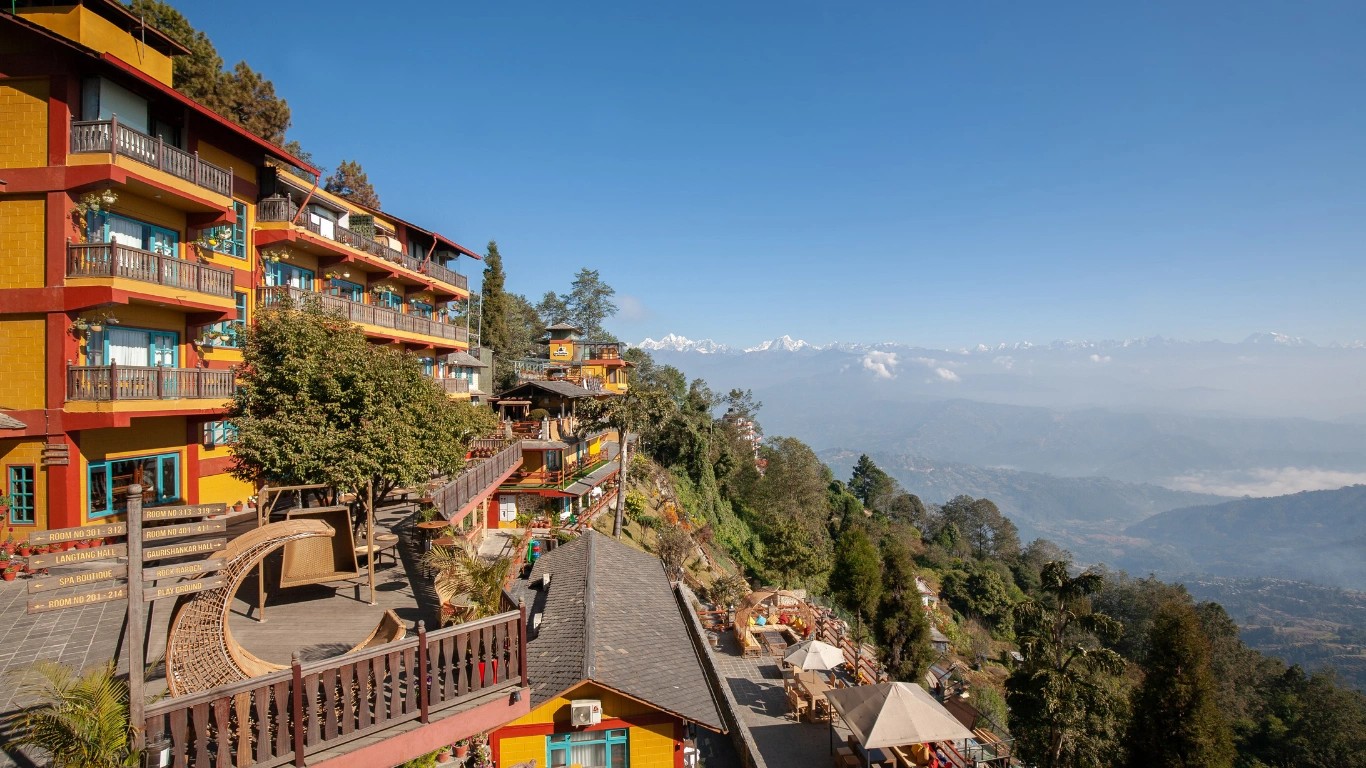
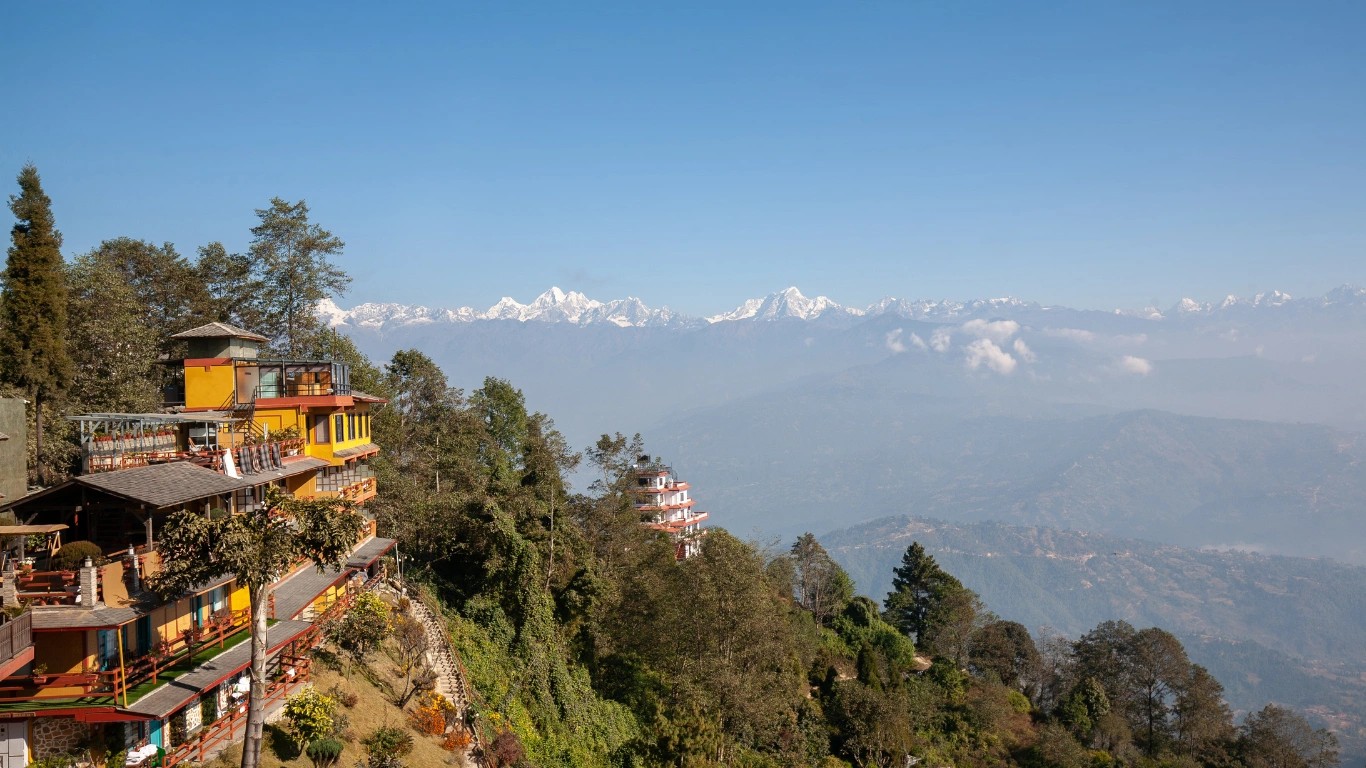
Nagarkot has approximately 30-40 hotels and resorts ranging from budget guesthouses to luxury mountain lodges. Choice depends on budget, view preference, and length of stay.
Hotel categories in Nagarkot:
Category
Price per night
Best for
Budget guesthouse
USD 15-30
Backpackers, solo travelers
Mid-range hotel
USD 30-80
Couples, families
Resort
USD 80-200
Comfort travelers, honeymooners
Luxury mountain lodge
USD 200-500+
High-end travelers, special occasions
Operator tip: The most important factor for Nagarkot hotels is mountain view orientation. Rooms facing north and east give you Himalayan views from your bed and balcony. Always confirm "Himalayan view" or "Mountain view" rooms specifically when booking — not all rooms in any given hotel have the same view.
For families and couples planning a special occasion, booking a room with a Himalayan view balcony delivers a much better experience than the cheaper interior rooms.
Nagarkot Day Trip from Kathmandu — How to Plan
A standard Nagarkot day trip from Kathmandu works best as a sunrise tour with hotel pickup at 4-5 AM, viewing sunrise from Nagarkot, breakfast at a local lodge, then return to Kathmandu by mid-morning. Alternatively, an afternoon-and-sunset visit ending with an overnight stay delivers both sunset and sunrise views.
Option 1 — Same-Day Sunrise Trip:
4:30 AM: Hotel pickup in Kathmandu
6:00 AM: Arrive Nagarkot, walk to View Tower
6:30 AM: Sunrise viewing
7:30 AM: Breakfast at local lodge
8:30 AM: Return drive to Kathmandu via Bhaktapur
10:00 AM: Back in Kathmandu
Option 2 — Overnight Trip (recommended):
Day 1: Afternoon drive from Kathmandu, arrive 3-4 PM
Evening: Sunset viewing, dinner at hotel
Night: Overnight at Nagarkot hotel
Day 2: 5:30-6:00 AM sunrise viewing
Morning: Breakfast, optional nature walk
Late morning: Return drive to Kathmandu
The overnight option captures both sunset and sunrise plus a peaceful evening — significantly better than the rushed sunrise-only day trip.
Frequently Asked Questions
1. Why is Nagarkot famous?
Nagarkot is famous as the most accessible Himalayan viewpoint near Kathmandu. From its 2,175 m elevation, visitors can see 8 of Nepal's 13 Himalayan ranges including Mount Everest on clear days, all within a 1.5-hour drive from Kathmandu. Nagarkot was historically an ancient fortress and royal summer retreat, and it remains Nepal's most popular short escape from the capital — used by both international tourists and Nepali families for picnics and weekend visits.
2. How far is Nagarkot from Kathmandu?
Nagarkot is 32 km east of Kathmandu. The drive takes approximately 1.5-2 hours depending on traffic. By private taxi the route is the fastest. By public bus the journey takes 2.5-3 hours with a transfer in Bhaktapur. From Kathmandu Airport, the distance is approximately 28 km and takes 1.5 hours.
3. How high is Nagarkot?
Nagarkot is at 2,175 m (7,136 ft) above sea level. The Nagarkot View Tower sits at 2,164 m. The village is 775 m higher than Kathmandu, which makes it noticeably cooler and clearer than the capital city.
4. Can you see Mount Everest from Nagarkot?
Yes, Mount Everest is visible from Nagarkot on exceptionally clear days, typically October to February. The mountain appears as a distant snow-capped pyramid approximately 160 km away on the eastern horizon. It does not dominate the view — Langtang Lirung and other closer peaks appear larger. For close-up Everest views, the Everest Base Camp Trek or a mountain flight from Kathmandu delivers a much more dramatic experience.
5. How many Himalayan ranges are visible from Nagarkot?
8 out of Nepal's 13 Himalayan mountain ranges are visible from Nagarkot on clear days. These include the Annapurna range, Manaslu range, Ganesh Himal, Langtang range, Jugal range, Rolwaling range, Mahalangur (Everest) range, and Numbur range.
6. What is the best time to visit Nagarkot?
The best time to visit Nagarkot is October-November for the clearest mountain views, followed by March-April for warming temperatures. December-February offers sharp visibility but very cold mornings. Avoid June-August (monsoon) when clouds and rain hide the mountains.
7. Does it snow in Nagarkot?
Yes, Nagarkot occasionally receives snowfall during winter, typically between mid-December and early February. Snow is not guaranteed every winter but most years see 3-7 snow days with light accumulation of 5-15 cm.
8. How to go Nagarkot from Kathmandu by bus?
Take a local bus from Ratna Park or Bagh Bazaar in Kathmandu to Bhaktapur Sallaghari, then transfer to a Nagarkot bus from Bhaktapur. Total time is 2.5-3 hours and total cost is approximately NPR 100-200. The last bus from Nagarkot back to Kathmandu typically departs by 5 PM.
9. What is Bhaktapur to Nagarkot taxi fare?
Bhaktapur to Nagarkot taxi fare typically costs NPR 1,500-2,500 one way. The drive is 17 km and takes approximately 45 minutes. Fares are not metered in this corridor and vary based on time of day, round trip versus one way, and negotiation.
10. Where to stay in Nagarkot?
Nagarkot has 30-40 hotels ranging from budget guesthouses (USD 15-30) to luxury mountain lodges (USD 200-500+). When booking, always confirm "mountain view" or "Himalayan view" rooms specifically — interior rooms in the same hotel may not have any view.
11. Is Nagarkot worth visiting?
Yes, Nagarkot is worth visiting for travelers in Kathmandu with limited time who want Himalayan exposure. It delivers the highest mountain-view-to-effort ratio of any destination in Nepal. However, experienced trekkers seeking deeper adventure should prioritize multi-day treks in the Annapurna or Everest regions for a more substantial experience.
12. Is Nagarkot a good picnic spot?
Yes, Nagarkot is one of the most popular picnic destinations for Nepali families and groups from Kathmandu. The Nagarkot Dam area, forest clearings along the panoramic trail, and open spaces near the View Tower are all popular picnic locations. Weekends and Nepali holidays are the busiest picnic days.
Conclusion — The Most Accessible Himalayan View in Nepal
Nagarkot is what makes Nepal accessible to travelers who cannot commit to multi-day trekking. The country's identity is built on the Himalayas, and most international visitors arrive wanting at least one moment standing in front of those mountains. Nagarkot delivers that moment in less than 2 hours from Kathmandu.
After 10+ years operating across Nepal, Majestic Trails Nepal has seen Nagarkot become the default first-day or last-day stop for visitors arriving from international flights. For travelers with one extra day in Kathmandu, the choice between staying in the city or visiting Nagarkot is simple — Nagarkot wins every time. The sunrise alone is worth the early start.
For travelers wanting more than just a viewpoint, the Chisapani to Nagarkot Trek, the Changunarayan to Nagarkot Hike, and the Nagarkot to Dhulikhel Trek all extend the experience into proper multi-day adventures. These hikes show off the cultural and natural wealth of the Kathmandu Valley rim — a region most international visitors never explore beyond the UNESCO temple sites.
Founder & Head Guide of Majestic Trails Nepal, Government License No. 19911. Bibek is currently in Kathmandu monitoring the August 2026 flood situation and providing free emergency support to stranded trekkers. He grew up in Dhading district, has personally guided in the Everest, Annapurna, and Langtang regions, and in the Manaslu Region, and completed formal Travel and Tourism studies before entering the industry as a porter.
Related Travel Blogs
Join our Newsletter
Sign up to stay updated with latest offers, recent events and more news.