
Best Short treks in Nepal
31 Jul 2025
Short on time but big on ambition? Nepal delivers extraordinary mountain experiences in as little as three days, and this guide breaks down exactly wh...

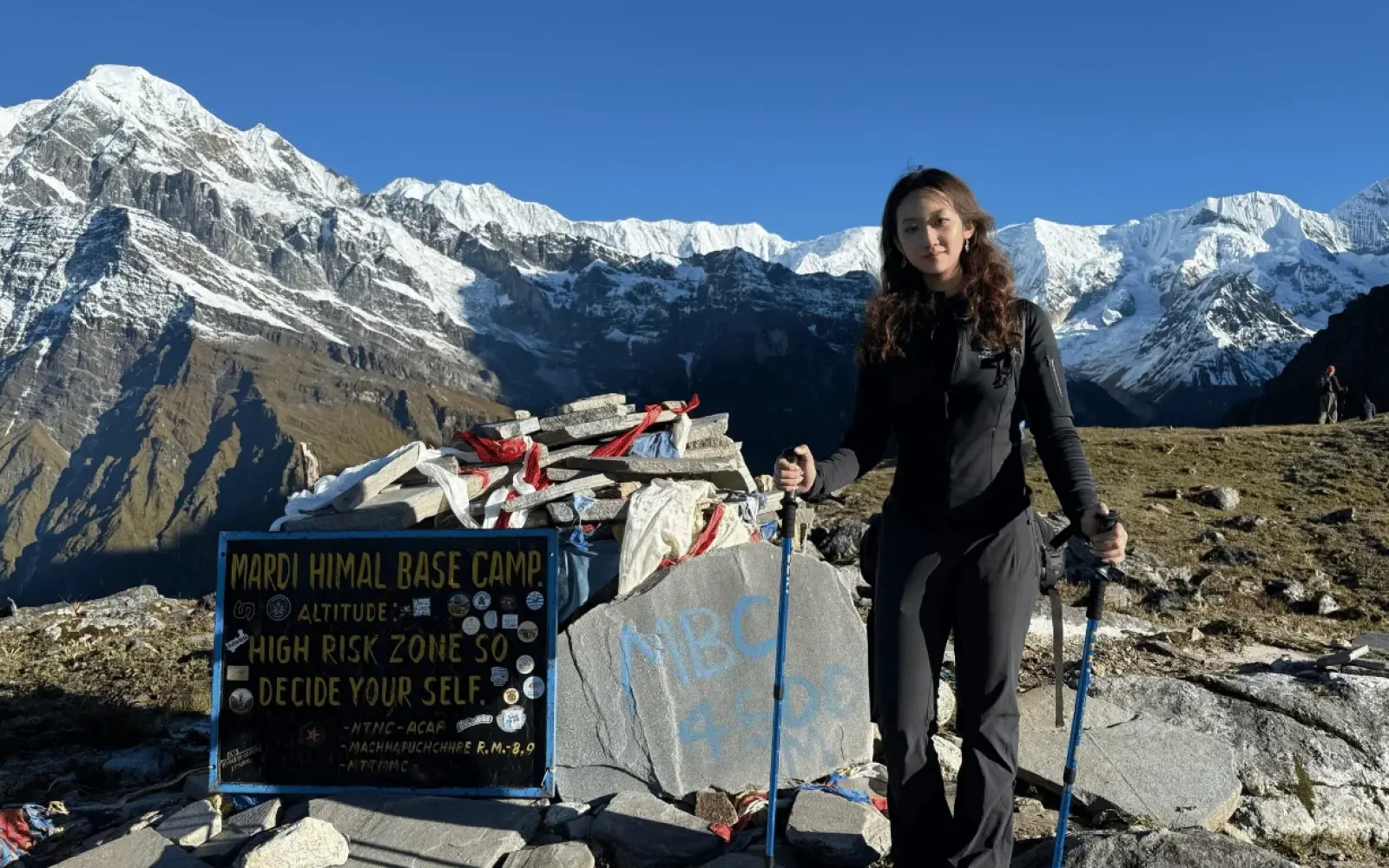

Mardi Himal Base Camp is 4,500 metres (14,764 feet) above sea level. It's the highest point you can reach on the Mardi Himal Trek in the Annapurna region of Nepal: 920m (3,018 ft) above High Camp, where you sleep the night before, and 300m (984 ft) above the Upper Viewpoint at 4,200m (13,780 ft), where most trekkers watch the sunrise.
You don't sleep at Base Camp. It's a day hike from High Camp, starting before dawn, and whether you carry on past the Viewpoint depends on the weather and how you feel that morning. This guide covers every height on the way, how Base Camp compares with Machhapuchhre and Annapurna Base Camp, the hike itself, and how our guides keep the altitude safe on our Mardi Himal Trek.
Key Takeaways
If you read nothing else, these are the points that matter.
The key facts, in one place.
| Height | 4,500m (14,764 ft) |
| Region | Annapurna Conservation Area, Kaski district, Nepal |
| Mountain above it | Mardi Himal, 5,587m (18,330 ft) |
| Nearest teahouse | High Camp, 3,580m (11,745 ft) |
| Height gain from High Camp | 920m (3,018 ft) |
| Typical round trip from High Camp | About 6–8 hours |
| Overnight at Base Camp? | No; there are no lodges |
| Best months | October, November, December, and April |
| Permit | Annapurna Conservation Area Permit (ACAP) |
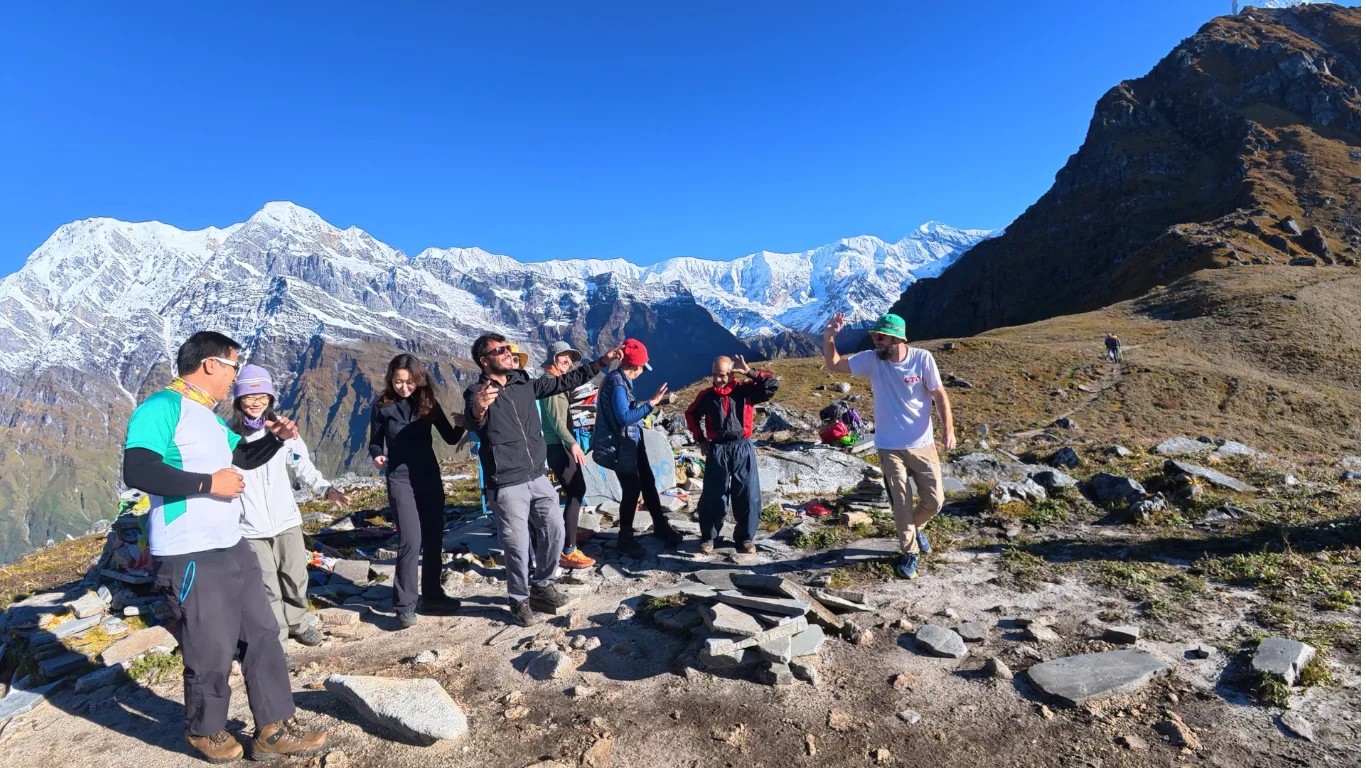
The Mardi Himal Trek climbs a long ridge almost all the way from the trailhead to Base Camp. This is the full climb, stop by stop.
The trek begins with an hour's drive from Pokhara's lakeside up to Kande on the Pokhara–Baglung highway. You've already gained nearly 1,000m (3,281 ft) before taking a step.
The first walking days are gentle: a few hours up to Deurali (Australian Camp) and its first big mountain view, then through rhododendron and oak forest to Forest Camp.
This is the big day. The forest thins at Low Camp and the trail climbs onto the open ridge, past Badal Danda, to High Camp, the last teahouses and the highest place you sleep. You gain 980m (3,215 ft) of sleeping height in one day, so go slowly.
The next morning you climb before dawn to the Upper Viewpoint, and on a good day continue along the ridge to Base Camp. Then you come all the way back down to sleep at Low Camp. For the height of every camp in more detail, see our Mardi Himal altitude guide.
These are two different places, 300m (984 ft) apart, but many websites, photos, and itineraries treat them as one. Knowing the difference tells you what your trek actually includes.
All three sit one above the other on the same ridge.
| Place | Height | What it is | Who goes |
|---|---|---|---|
| High Camp | 3,580m (11,745 ft) | Last teahouses; overnight stop | Everyone |
| Upper Viewpoint | 4,200m (13,780 ft) | Sunrise & close-up Machhapuchhre views | Most trekkers |
| Mardi Himal Base Camp | 4,500m (14,764 ft) | Open ridge below Mardi Himal peak | Trekkers with time and energy |
If you've seen other numbers, you're not imagining it. Some pages put the Viewpoint at 4,250m (13,944 ft), one well-known operator lists High Camp at 4,100m (13,451 ft), and many photos captioned "Mardi Himal Base Camp" were really taken at the Viewpoint. The differences usually come from readings taken at different points along a long ridge, and from websites copying each other's numbers.
The heights on this page are the ones our guides use on every trip: High Camp 3,580m, Upper Viewpoint 4,200m, and Base Camp 4,500m. The Base Camp figure matches Mardi Himal's Wikipedia entry and most Annapurna trekking companies.
A number on its own doesn't tell you much. Here's what standing at 4,500m actually means for your body and for the view.
The air at 4,500m has the same mix of gases as at sea level, but the air pressure is only about 57% of sea level's, so every breath brings in a little over half as much oxygen. That's why the last few hundred metres to Base Camp feel so slow, even for fit trekkers, and why you climb this high only for a few hours before heading back down to sleep.
From Base Camp you're standing right at the foot of Mardi Himal, with some of the Annapurna range's biggest mountains around you.
| Peak | Height |
|---|---|
| Mardi Himal | 5,587m (18,330 ft) |
| Hiunchuli | 6,441m (21,132 ft) |
| Machhapuchhre (Fishtail) | 6,993m (22,943 ft) |
| Annapurna South | 7,219m (23,684 ft) |
| Annapurna I | 8,091m (26,545 ft) |
All three "base camps" sit around Machhapuchhre, which is why they're so often confused. They're on different treks, at different heights, and offer very different experiences.
Machhapuchhre Base Camp, usually called MBC, is a stop on the Annapurna Base Camp trek, deep in the Annapurna Sanctuary on the far side of Machhapuchhre from the Mardi Himal ridge. It has teahouses, and most trekkers sleep there the night before Annapurna Base Camp.
Mardi Himal Base Camp is 800m (2,625 ft) higher, on its own ridge, and has no lodges at all: you reach it as a day hike from High Camp. Both give you Machhapuchhre up close, but from opposite sides: from MBC you look up at it from the sanctuary floor, and from the Mardi Himal ridge you see it rise straight ahead along the skyline.
Annapurna Base Camp is 370m (1,214 ft) lower than Mardi Himal Base Camp, but it's the bigger trek: around ten walking days, through a busy, lodge-lined valley into a vast mountain amphitheatre where you sleep among the peaks. Mardi Himal Base Camp is higher and quieter, on a shorter trek with about five walking days, but it's a day visit with nowhere to stay at the top.
The three base camps, compared on the things trekkers ask us about most.
| Feature | Mardi Base Camp | Annapurna Base Camp |
|---|---|---|
| Height | 4,500m (14,764 ft) | 4,130m (13,550 ft) |
| Trek | Mardi Himal Trek | Annapurna Base Camp Trek |
| Walking days | About 5 | About 10 in total |
| Sleep there? | No; day hike from High Camp | Yes, in a couple of lodges |
| Crowds | Quiet | Busy in peak season |
| Feel | Open ridge right under Mardi Himal | Amphitheatre ringed by Annapurna I |
| Difficulty | Moderate, with a hard final day | Moderate |
Choose Mardi Himal Base Camp if you have about a week, want quieter trails, and like the idea of a long ridge walk with the mountains in front of you all the way. Choose Annapurna Base Camp, with its night at Machhapuchhre Base Camp, if you have two weeks and want to sleep surrounded by the peaks. Read more on our Annapurna Base Camp Trek page.
If you're choosing between treks, the highest point is one of the clearest differences.
Mardi Himal Base Camp is higher than both Annapurna and Machhapuchhre Base Camps and well above Poon Hill, but still far below the 5,000m-plus points of Everest Base Camp and the Annapurna Circuit. That makes it a natural step up from a first short trek, and good preparation for the bigger ones.
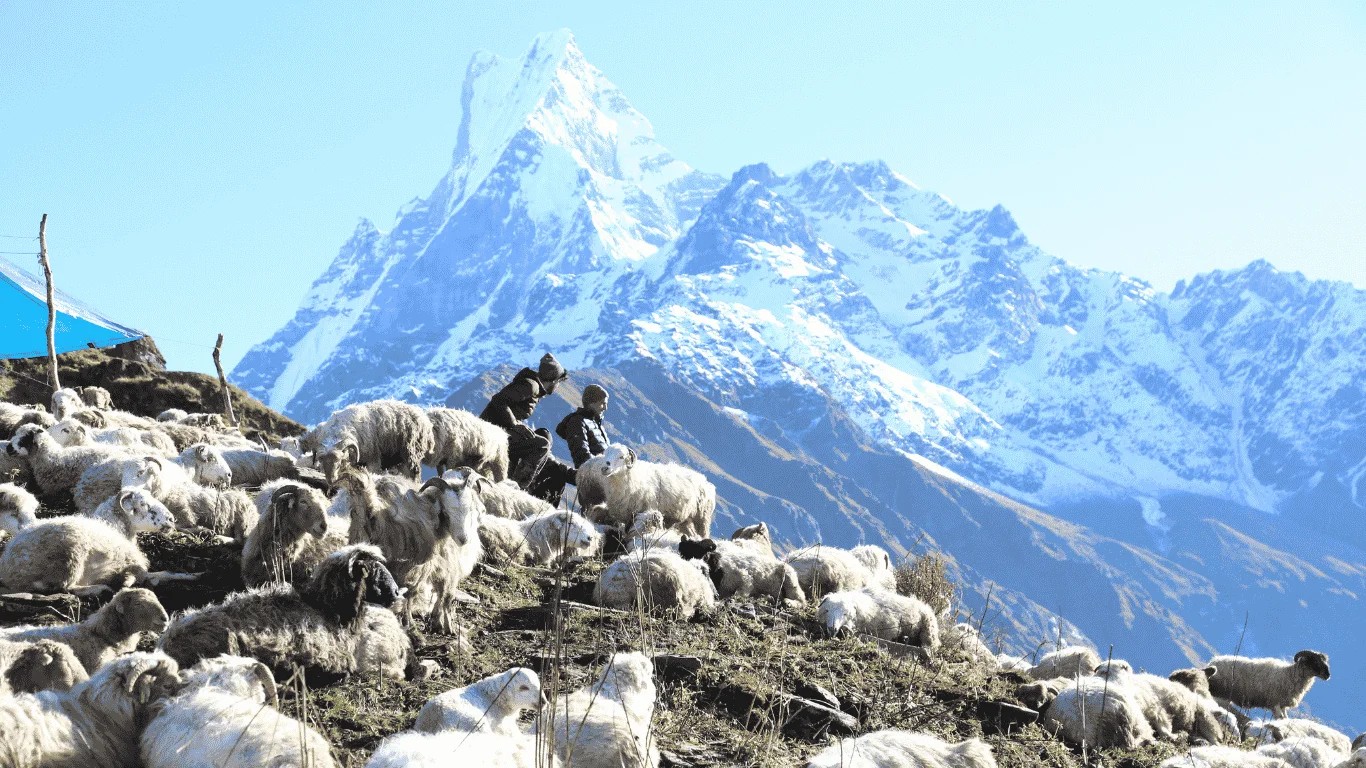
Reaching Base Camp is one long morning, up and back, followed by a long descent. Here's how the day unfolds.
Our guides wake trekkers at around 4:00am and set off by headlamp. The reason is the weather as much as the sunrise: on Mardi Himal, cloud tends to rise out of the valleys as the morning warms, earliest in spring and latest from October to December. Starting early gives you the clearest views and the most time to decide about Base Camp.
The first section climbs a steep, open ridge to the Upper Viewpoint at 4,200m (13,780 ft). It isn't technical, but it's relentless, it's cold in the dark, and it's where you'll first really feel the thin air. Walk slowly and steadily; it's not a race to the sunrise.
Beyond the Viewpoint, the trail carries on along the ridge over rockier, more open ground toward the foot of Mardi Himal peak. After fresh snow it's slower and harder to follow, and it's more exposed to the wind. This is where your guide decides, based on the conditions and the group, whether to continue.
Plan for a long morning. Published itineraries generally allow about 6–8 hours for the round trip from High Camp to Base Camp and back, and one operator quotes around four hours one way. If you turn back at the Viewpoint, the morning is much shorter.
After Base Camp you return to High Camp for a late breakfast, then keep descending to Low Camp to sleep. That's a drop of 1,530m (5,020 ft) from Base Camp in one day, hard on tired knees, so trekking poles help. The good news: sleeping lower is the best thing for your body after a day at 4,500m.
Most trekkers reach Base Camp with nothing worse than heavy legs and a fast heartbeat. But 4,500m is high enough for altitude sickness, so it's worth knowing the signs.
The danger at altitude comes mainly from where you sleep, not from how high you walk. On Base Camp day you go up to 4,500m for a few hours and then sleep at 2,970m, which is exactly what mountain doctors recommend. The riskier day is actually the climb to High Camp the day before, when you gain 980m (3,215 ft) of sleeping height. Medical guidelines advise that above 3,000m you shouldn't sleep more than 500m higher than the night before, so take that day slowly.
Tell your guide and turn back if you notice any of these, at the Viewpoint or on the way to Base Camp:
The treatment for all of them is the same: go down. On this day, going down is already the plan.
Our guides follow the same routine on every departure, so small problems are caught early.
For more, read our guide to altitude sickness on Nepal treks.
Don't expect a village, or even a teahouse. Base Camp is open, high ground at the foot of Mardi Himal peak, and the reward is the view and the quiet.
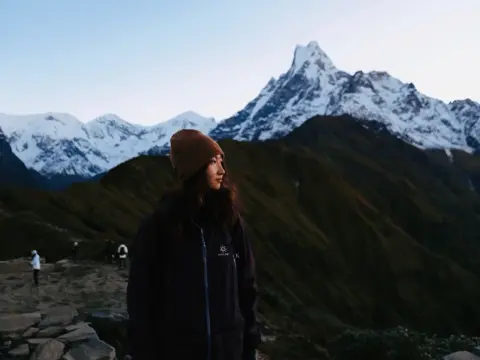
Mardi Himal (5,587m / 18,330 ft) rises directly above you, with Machhapuchhre (6,993m / 22,943 ft), Annapurna South (7,219m / 23,684 ft), and Hiunchuli (6,441m / 21,132 ft) all around. Far fewer people come this far than stop at the Viewpoint, so it's usually much quieter.
There are no lodges, tea stops, or toilets at Base Camp. Carry water, snacks, and a warm layer from High Camp, and plan to be back at High Camp for breakfast.
Base Camp is colder and windier than High Camp, and below freezing in the early morning for most of the year. Enjoy the view, take your photos, and don't plan to stay long.
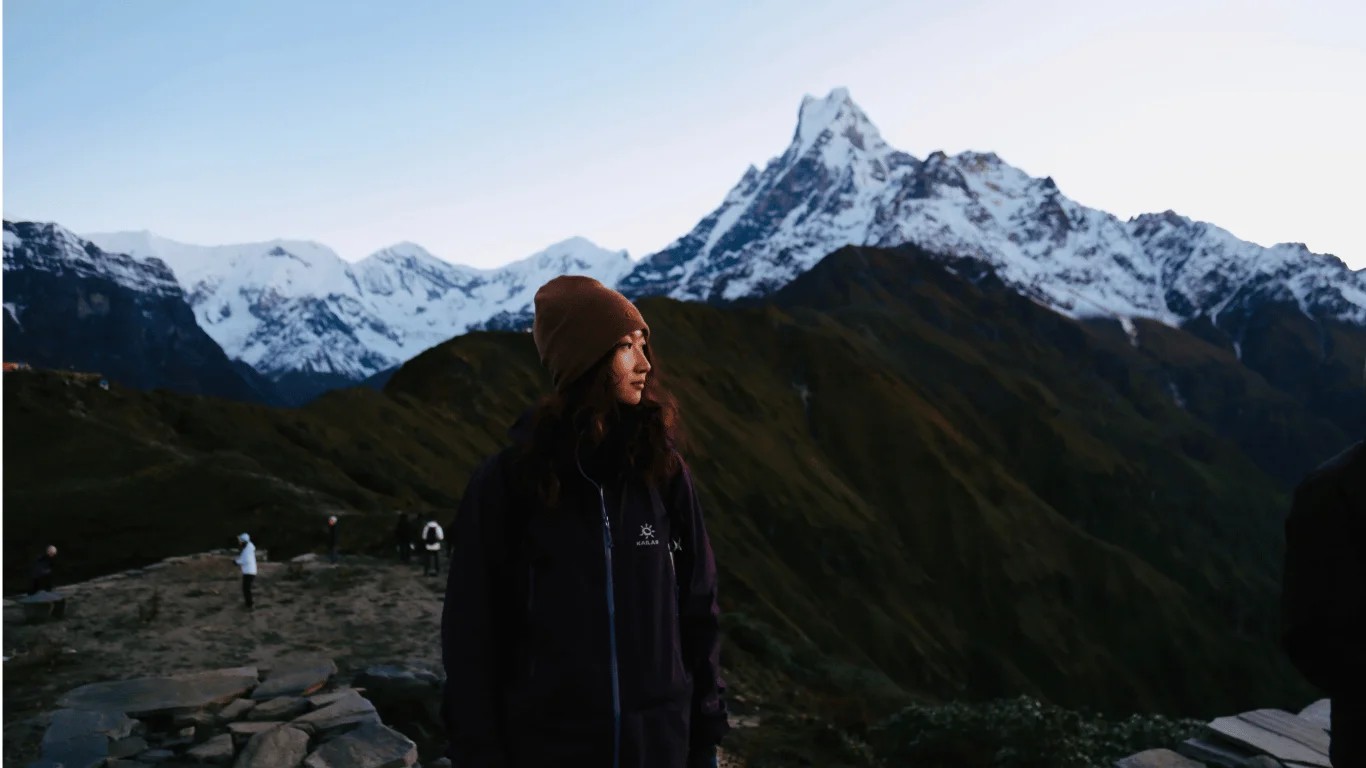
Air cools by roughly 6°C for every 1,000m you climb, so Base Camp is usually about 5–6°C (9–11°F) colder than High Camp, before the wind. The season decides how likely you are to get there with a view.
The best season. Mornings are clear and dry and stay clear longest, and there's no snow on the ridge. Nights at High Camp are around freezing, so Base Camp is well below freezing at dawn.
December is clear and quiet, but bitterly cold at dawn. Snow becomes common in January, and February brings the heaviest snow of the year, when the climb above High Camp can be blocked. Microspikes are essential.
Warmer, with rhododendrons lower down, but cloud closes in earlier in the day. Leave High Camp as early as you can if you want Base Camp with a view.
The hardest season. Rain, cloud, and a slippery trail make Base Camp unlikely, although the ridge does clear on some early mornings.
For the full month-by-month picture, read our guide to the best time to trek Mardi Himal.
Reaching Base Camp is never worth a risk, and our guides decide on the morning. They'll stop at the Viewpoint, or turn back earlier, when:
For many trekkers the Viewpoint is the highlight and the natural end of the climb. Base Camp is a bonus, not a must.
Carry on to Base Camp when most of these are true on the morning.
Make the Viewpoint your summit if any of these apply. You won't miss the main view.
You leave your main bag at High Camp, so it's a day pack only. Our guides check these before you set off.
From Pokhara, most trekkers reach High Camp on the third walking day and make the Base Camp hike on the fourth.
| Itinerary | Days | Who it suits |
|---|---|---|
| Short trek from Pokhara | 4–5 days of walking | Fit trekkers with little time; no spare day for bad weather |
| Our 9-day Mardi Himal Trek | 5 walking days, plus Kathmandu and Pokhara | Most trekkers; includes transfers and a buffer for travel |
| With an extra night at Low Camp | Adds 1 day | Anyone worried about altitude; splits the big climb to High Camp |
If reaching Base Camp itself matters to you, tell us when you book, so we can plan the day, and if possible a spare morning, around it.
Base Camp is inside the Annapurna Conservation Area, so the permits are the same as for the rest of the trek.
These are the questions people ask us, and Google, most often about Mardi Himal Base Camp.
It's the hardest day of the trek. You climb 920m (3,018 ft) from High Camp in the cold and dark, then descend 1,530m (5,020 ft) to Low Camp the same day. No climbing skills are needed, but you do need good fitness and a steady pace.
Fit beginners can, on a clear morning with a guide, especially in autumn. Many first-time trekkers are happy to stop at the Upper Viewpoint (4,200m / 13,780 ft), which has the same mountain view and a much shorter day.
No. There are no lodges or tea stops at Base Camp. The last teahouses are at High Camp (3,580m / 11,745 ft), where you sleep the night before.
Yes. Mardi Himal Base Camp is 4,500m (14,764 ft) and Annapurna Base Camp is 4,130m (13,550 ft), a difference of 370m (1,214 ft). But you sleep at Annapurna Base Camp, while Mardi Himal Base Camp is only a day hike.
No. Machhapuchhre Base Camp (MBC) is at 3,700m (12,139 ft) on the Annapurna Base Camp trek, with teahouses where trekkers sleep. Mardi Himal Base Camp is 800m (2,625 ft) higher, on the Mardi Himal ridge, with no lodges.
Below freezing in the early morning for most of the year, and colder still with the wind. It's usually about 5–6°C colder than High Camp, and coldest from December to February.
Not as part of the trek. Mardi Himal peak (5,587m / 18,330 ft) is a climbing peak that needs a separate climbing permit, mountaineering equipment, and experience.
It's about an hour's drive from Pokhara to the trailhead at Kande, then three days' walking to High Camp and a morning hike to Base Camp. The whole trek, up and back down, covers about 50km (31 miles).
Our guides walk this ridge in every season and know when to push on to Base Camp and when the Viewpoint is the right place to stop. See the full itinerary, prices from USD 750, and dates for our 9-day Mardi Himal Trek, and tell us when you book if Base Camp matters to you. Questions? Message Bibek on WhatsApp (+977 9700937981).
Written by
Founder & Trekking Guide
Bibek Dhamala is the CEO of Majestic Trails Nepal, a locally operated trekking company based in Thamel, Kathmandu. With a background in trekking and mountain guiding, he understands the challenges of Himalayan adventures and the importance of responsible tourism, experienced local guides, and personalized service. Through Majestic Trails Nepal, Bibek aims to help trekkers explore Nepal’s Himalayas safely and authentically, from Everest Base Camp and the Annapurna region to the remote trails of Manaslu. He is passionate about supporting local communities, creating meaningful trekking experiences, and sharing the natural and cultural beauty of Nepal with travelers from around the world.

Short on time but big on ambition? Nepal delivers extraordinary mountain experiences in as little as three days, and this guide breaks down exactly wh...
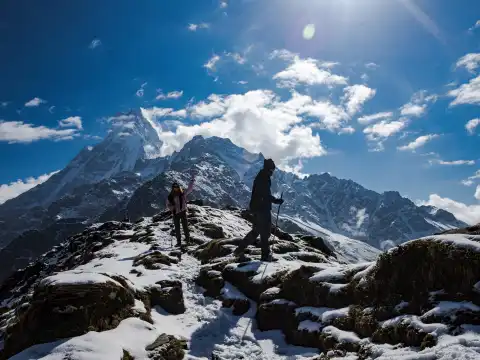
Planning your Mardi Himal Trek itinerary starts with understanding the complete journey from Kathmandu. International travelers arrive at Tribhuvan In...
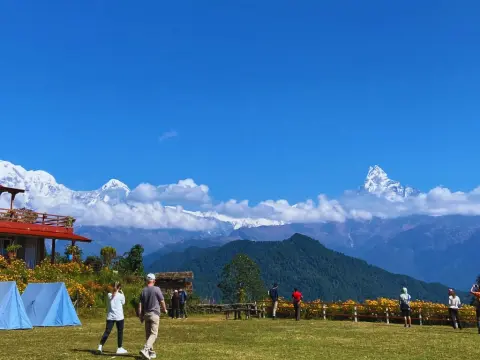
The Mardi Himal Trek is a short, beginner-friendly trek in the Annapurna region of Nepal that reaches Mardi Himal Base Camp at 4,500 m, beneath the to...
The best time to trek Mardi Himal is October and November. After the monsoon, mornings at High Camp are the clearest of the year, the trail is dry, an...
