
Top 10 Spiritual Places in Nepal
14 Feb 2026
Nepal is far more than a trekking destination nestled among the world's highest peaks. This ancient Himalayan kingdom pulses with profound spiritual e...

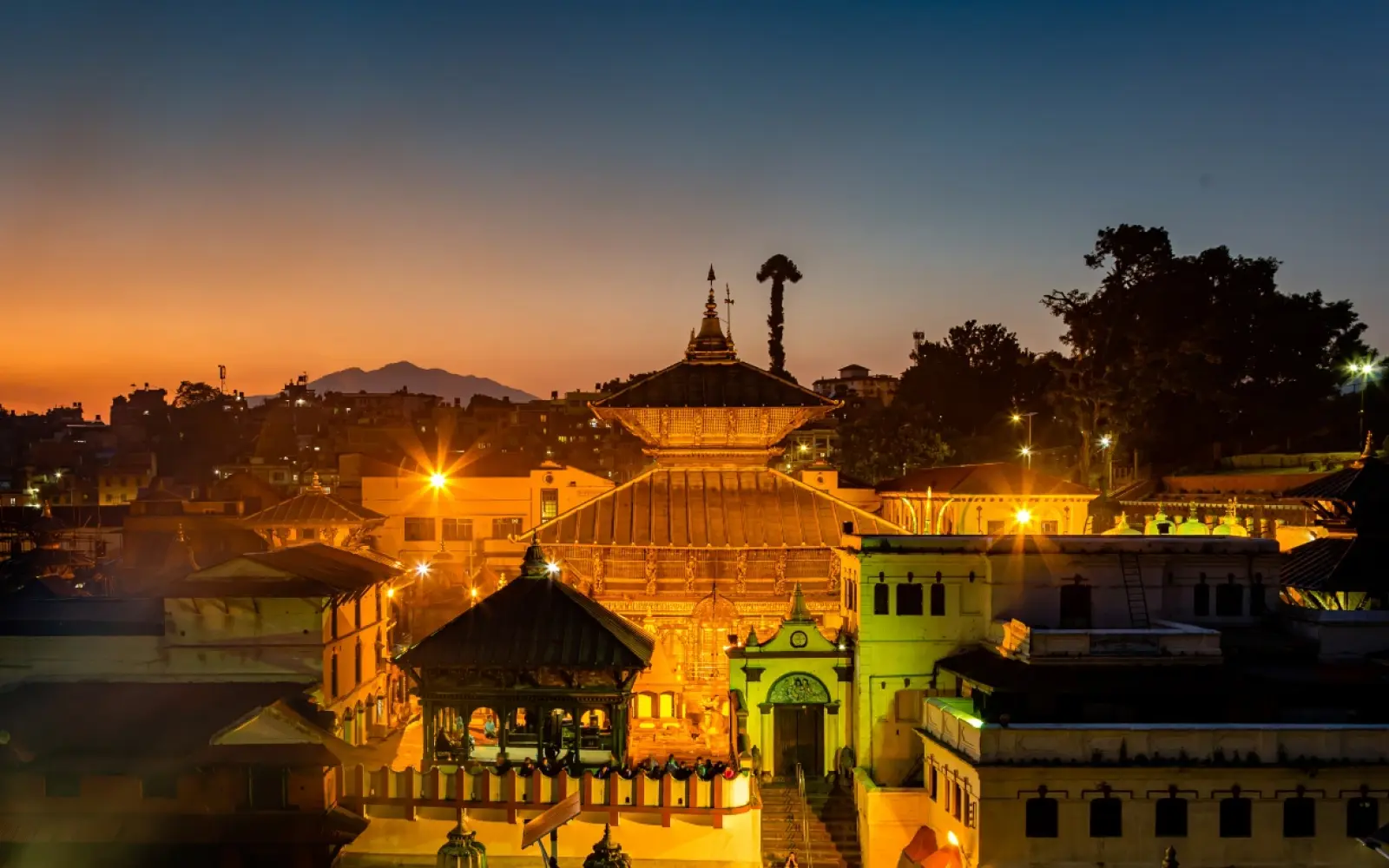

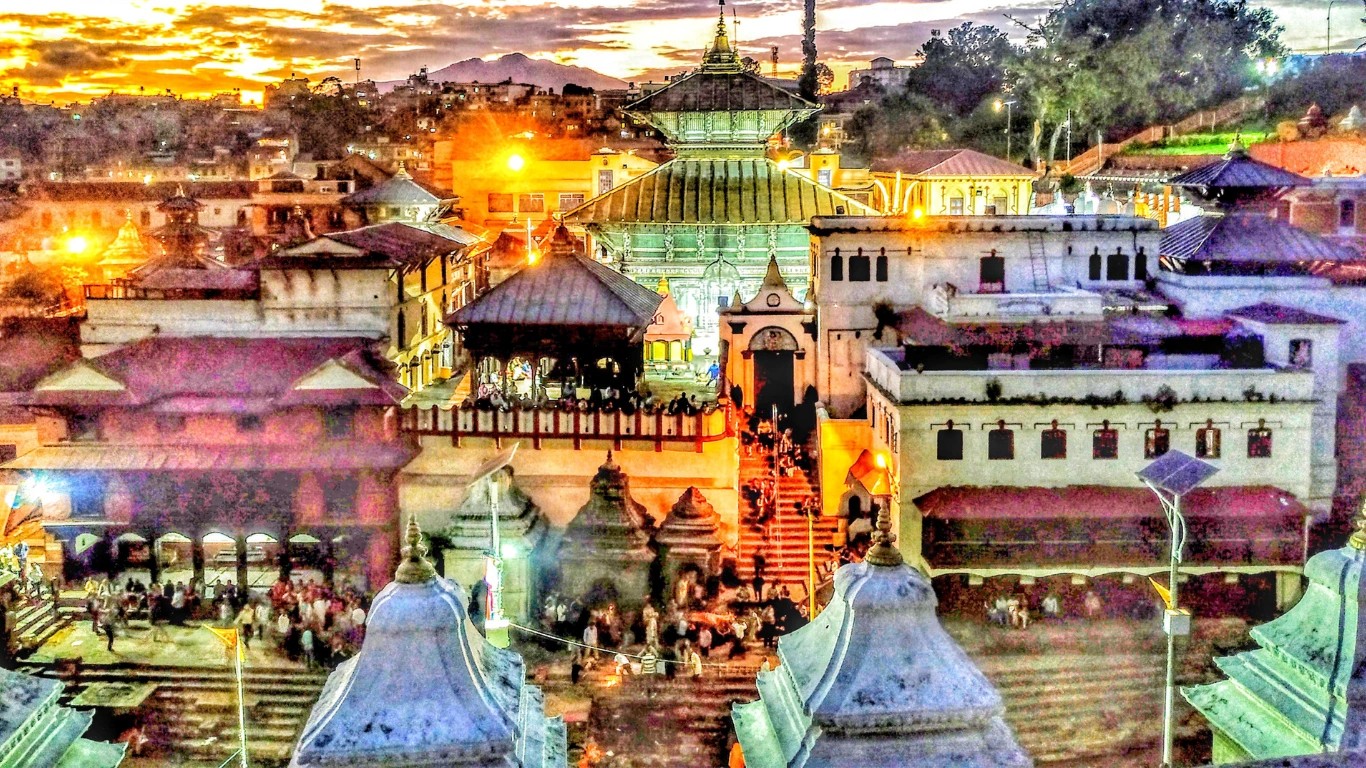
Pashupatinath Temple is the holiest Hindu shrine in Nepal. It stands on the west bank of the Bagmati River, about 5 kilometers east of central Kathmandu, in an old settlement once called Deopatan. The temple is dedicated to Shiva in his form as Pashupati, the lord of all living beings. UNESCO added it to the World Heritage List in 1979 as part of the Kathmandu Valley. Written records place a shrine on this spot as early as 400 CE, which makes the site more than 1,600 years old.
The history of Pashupatinath Temple runs in layers. The ground itself was sacred long before any building stood on it. The temple has been raised, damaged, and rebuilt many times across the Licchavi, Malla, Shah, and Rana periods. The pagoda you see today, with its gilded roof and silver doors, dates from a reconstruction finished in 1692. The Shiva linga inside is far older, and for Hindus its sanctity has no start date at all.
This guide walks through that history in plain terms. It covers who built the temple, what the old chronicles and stone inscriptions actually say, the legend behind its founding, and why pilgrims still call it the head of Shiva. It also covers the practical side, because Pashupatinath is one of the first places most travelers see in Nepal before heading to the mountains.
Before the detail, here is the short version.
| Feature | Detail |
| Location | West bank of the Bagmati River, Deopatan, Kathmandu, Nepal |
| Deity | Shiva, worshipped as Pashupati (lord of all beings) |
| Oldest record | Around 400 CE, Licchavi period |
| Present structure | Rebuilt in 1692, a two-tiered pagoda |
| Architecture | Newar pagoda style, gilded copper roof, four silver doors |
| Complex size | 246 hectares, more than 500 temples and shrines |
| UNESCO status | World Heritage Site since 1979 |
| Main festivals | Maha Shivaratri, Teej |
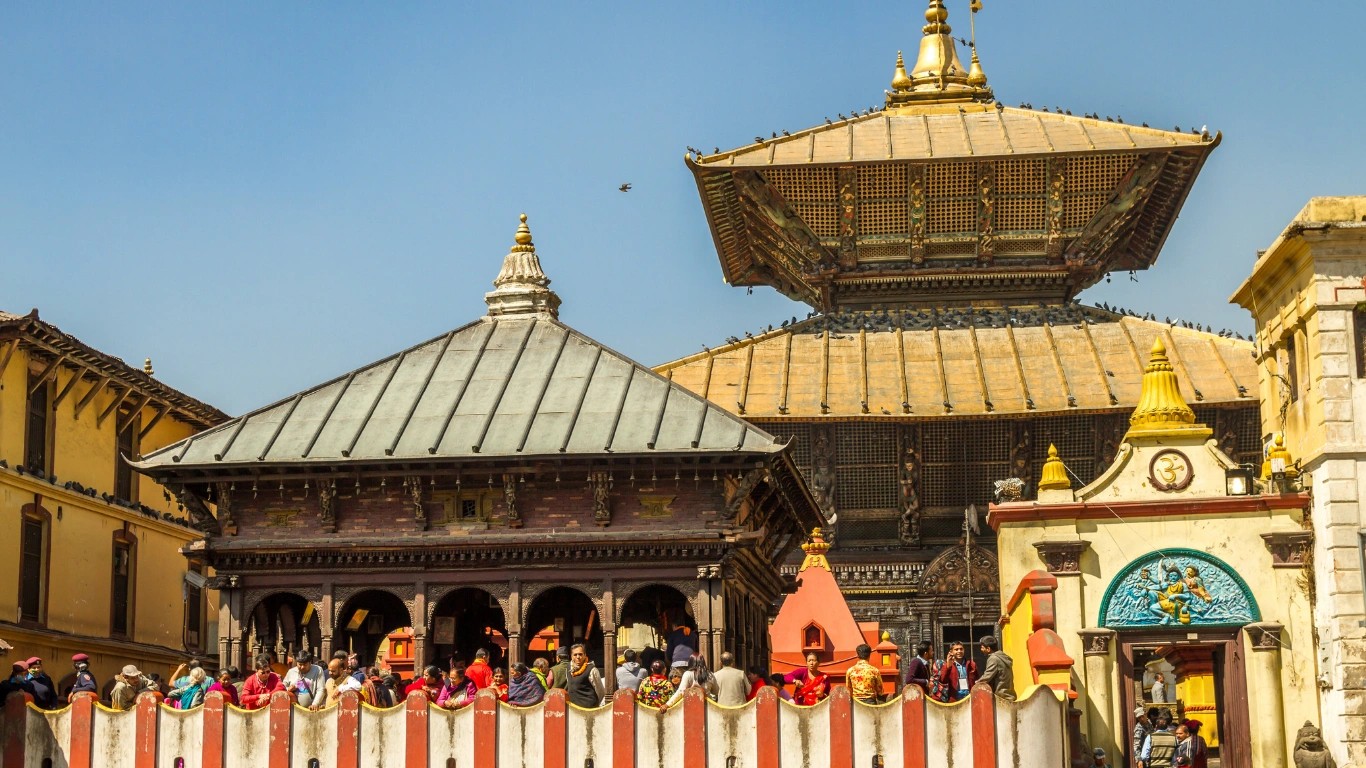
The temple's story stretches across more than two thousand years of legend and record. This timeline separates what tradition says from what inscriptions can prove.
| Period | What happened |
| 5th century BCE | Tradition holds that a religious site already existed here, though no structure survives from this era. |
| Around 400 CE | The oldest recorded temple. Licchavi inscriptions first mention royal grants to Pashupati. |
| 5th to 6th century CE | Land grants under Licchavi kings such as Manadeva I support the shrine. |
| 733 CE | A stone slab of King Jayadeva II, still standing in the inner courtyard, records donations to the temple. |
| 1099 to 1126 CE | King Shivadeva I reconstructs the sanctum. |
| 12th to 13th century | Ananta Malla adds the pagoda roof. |
| 15th to 16th century | Termites destroy the wooden structure. Malla rulers rebuild it. |
| 1692 CE | The present pagoda is rebuilt after further termite and earthquake damage. |
| 18th to 20th century | Shah and Rana rulers gild the roofs and add shrines. King Mahendra builds the western entrance gate. |
| 1979 | UNESCO inscribes the temple as a World Heritage Site. |
| 2015 | The Gorkha earthquake damages some outer buildings. The main sanctum survives untouched. |
The honest answer is that no single builder is recorded in stone. The old sources point in two directions, and most articles online simply pick one and state it as fact.
Nepal's oldest chronicle, the Gopal Raj Vamshavali, credits the Licchavi king Prachanda Deva with the first temple. A second chronicle tells a different story. It says a simple linga shrine stood here first, and that King Supuspa Deva later raised a five-storey temple over it. Supuspa Deva is thought to have ruled Kathmandu between roughly 464 and 505 CE.
What historians can date with more confidence comes from inscriptions rather than chronicles. Licchavi stone records from the 5th and 6th centuries mention royal grants to Pashupati. One slab set up by King Jayadeva II, dated 733 CE, still stands in the temple's inner courtyard. These records do not name a founder, but they prove the temple was already an important, state-supported shrine 1,300 years ago.
Later kings kept rebuilding it. Shivadeva I reconstructed the sanctum in the early 12th century. Ananta Malla added the pagoda roof soon after. By the 15th and 16th centuries, termites had eaten the original wooden structure, and Malla rulers rebuilt it. The temple reached its present form in 1692, after another round of termite and earthquake damage. Shah and Rana rulers later gilded the roofs and added shrines, and King Mahendra built the western entrance gate in the 20th century.
So the short answer to who built Pashupatinath Temple is this: Licchavi kings founded it, Malla kings rebuilt it into the pagoda that stands today, and Shah and Rana rulers decorated it.
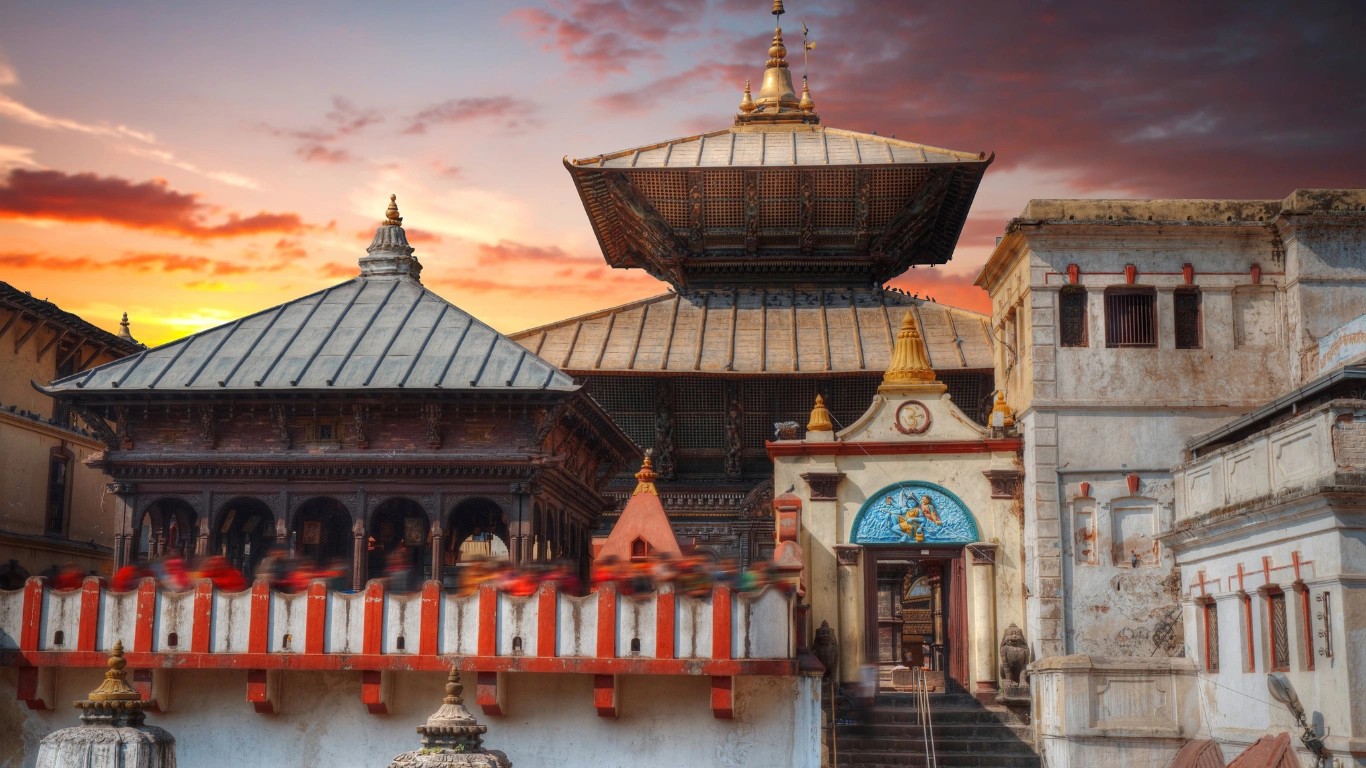
The most significant destruction of the Pashupatinath Temple occurred in November 1349, when Sultan Shamsuddin Ilyas Shah of Bengal invaded the Kathmandu Valley, plundering and severely damaging the shrine ,
The temple has endured and been rebuilt several times over its long history:
Two legends explain how the temple began. Both appear in the Skanda Purana and the Shiva Purana.
The first is the deer legend. Shiva and Parvati once came to the Kathmandu Valley and loved the forest on the bank of the Bagmati so much that they turned into deer to stay. When the other gods came to fetch Shiva back, he refused. In the struggle, one of his antlers broke. That broken horn was worshipped as a linga, then buried and lost over time.
The second legend picks up centuries later. A cowherd noticed that one of his cows walked to the same spot each day and let her milk flow onto the ground. He dug at the place and found the lost linga of Pashupatinath. Locals began to worship it, and the temple grew around it.
Both stories share one idea. The linga was self-manifested, or Swayambhu, not carved by human hands. That belief sits at the center of why the shrine is considered so powerful.
The name breaks into two Sanskrit words. Pashu means animal, or more broadly any living creature. Pati means lord or protector. Together, Pashupati means the lord of all living beings.
In Hindu thought the meaning runs deeper than animals. Pashu also stands for the bound soul, the being caught in the cycle of birth and death. Pati is the divine that frees it. So Pashupati is Shiva as the guardian who protects all life and leads souls toward liberation. This is why the temple is tied so closely to death and moksha, and why many Hindus wish to be cremated on its riverbank.
This is one of the most confused points online, so here is the clear answer. Pashupatinath is not one of the twelve Jyotirlingas. The twelve Jyotirlinga shrines are named in the Shiva Purana, and all of them lie in India, from Somnath in Gujarat to Kashi Vishwanath in Varanasi.
Tradition still gives Pashupatinath a place of honor among them. Many Hindus believe the twelve Jyotirlingas form the body of Shiva, while Pashupatinath is the head. Some call it the thirteenth Jyotirlinga out of respect. A common belief holds that a pilgrimage to the twelve stays incomplete without darshan at Pashupatinath.
So the accurate way to put it is simple. Pashupatinath is Nepal's most sacred Shiva temple and is revered as the head of Shiva, but it is not counted among the official twelve Jyotirlingas.
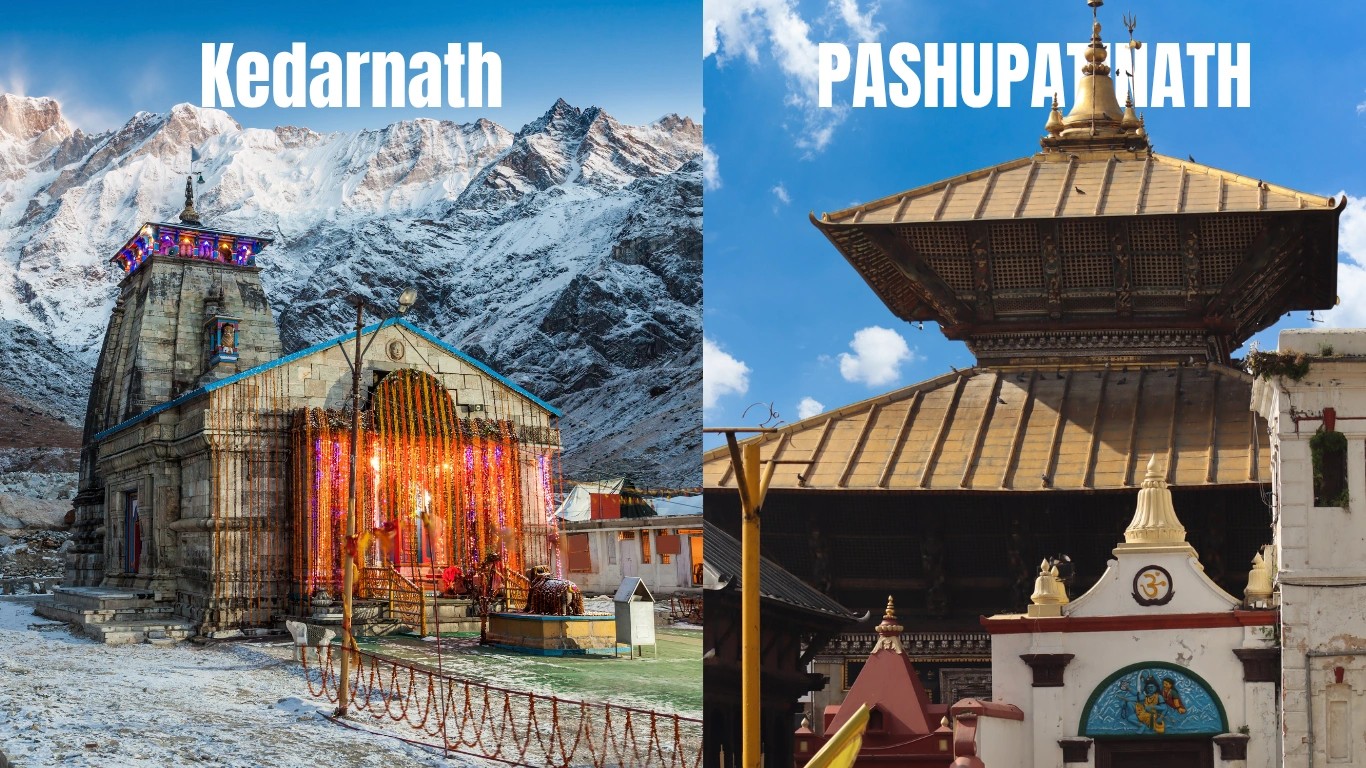
Pashupatinath and Kedarnath are linked by one of the most famous stories in the Mahabharata. After the war at Kurukshetra, the Pandavas sought Shiva's blessing to wash away the sin of killing their kin. Shiva avoided them. He took the form of a bull and dived into the earth.
As the bull sank, its body surfaced in five places across the Himalayas, now known as the Panch Kedar. The hump rose at Kedarnath. The arms appeared at Tungnath, the face at Rudranath, the navel at Madhyamaheshwar, and the hair at Kalpeshwar. The head is said to have emerged at Pashupatinath in Nepal.
This is why the two shrines are described as two halves of one divine body, and why many pilgrims treat a visit to Kedarnath and Pashupatinath as a single spiritual journey.
The main temple is built in the Newar pagoda style, the signature architecture of the Kathmandu Valley. It rests on a square stone platform and rises about 23 meters to a golden pinnacle. Two copper roofs, plated in gold, sit one above the other. Four doors face the cardinal directions, each covered in silver.
Inside sits the temple's heart, a stone Mukhalinga, which is a Shiva linga with carved faces. It stands about one meter high on a silver base wrapped by a silver serpent. Four faces look out to the four directions, and a fifth faces the sky. Each represents an aspect of Shiva.
| Face | Direction | Meaning |
| Sadyojata | West | Creation |
| Vamadeva | North | Preservation and healing |
| Tatpurusha | East | The eternal soul and meditation |
| Aghora | South | Dissolution and the destruction of ego |
| Ishana | Upward | The formless supreme reality |
Only the Bhatta priests may touch the linga. At noon, all four doors open so devotees can circle the shrine and see each face in turn. Arrive before midday and you may glimpse only one or two faces through the front door.
Two groups of priests run the temple. The Bhatta are Vedic scholars chosen from Karnataka in South India, trained in the tradition of the Sringeri Sharada Peetham. Only they may perform the daily worship and touch the linga. The Rajbhandaris are the caretakers and treasurers, a Newar clan who assist but do not perform the core rituals. There are 108 of them.
The daily rhythm starts before dawn with the bathing of the linga and runs through the day's offerings of flowers, milk, and water. The most watched ritual is the evening Bagmati Aarati, held on the riverbank behind the temple. Priests offer lamps, incense, and Vedic chants while singers perform live bhajans. The ceremony runs about 40 minutes and draws large crowds. It is recent by temple standards, started around the year 2000 and made a daily practice from 2006. Arrive an hour early for a front-row seat, which is free.
Beside the temple lie the cremation ghats. Arya Ghat and the nearby ghats are among the holiest places in Nepal for last rites. Hindus believe that cremation here, on the bank of the Bagmati, helps the soul reach moksha. This is why many elderly pilgrims come to spend their final days near the temple.
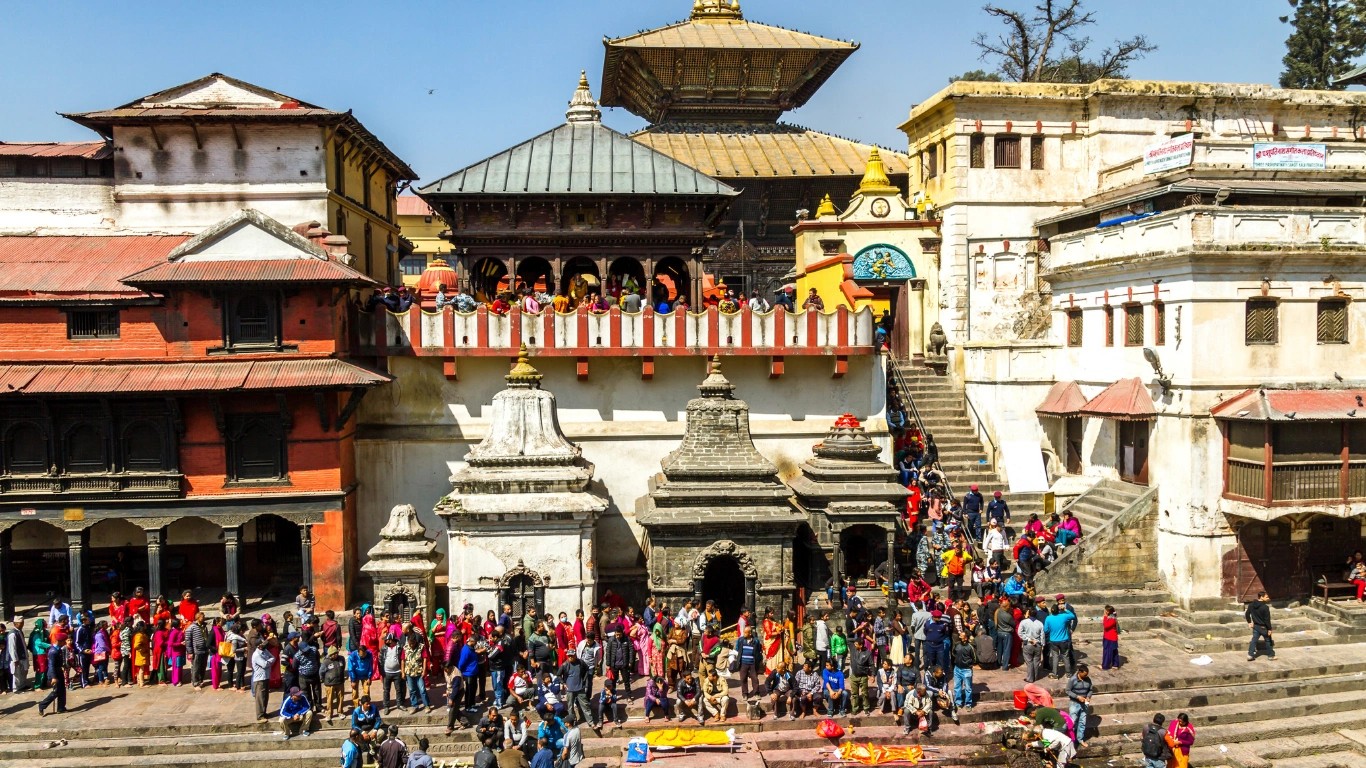
The temple hosts festivals all year, but two stand above the rest.
Other important days include Janai Purnima, when Hindu men change their sacred thread, and the fortnightly Ekadashi observances.
Pashupatinath sits about 5 kilometers east of central Kathmandu and only 2 to 3 kilometers from Tribhuvan International Airport. From Thamel, the main tourist hub, a taxi is the easiest option. Ride-share apps like Pathao and InDrive are cheaper. Local buses and vans also run toward the Gaushala area, a short walk from the temple.
| Detail | Information |
| Location | Deopatan, east Kathmandu, west bank of the Bagmati |
| Coordinates | 27.7104° N, 85.3486° E |
| Opening hours | Around 4:00 AM to 9:00 PM |
| Four-face darshan | Doors open at noon |
| Evening aarti | Each evening, around 6:00 PM, behind the temple |
| Entry, inner complex | Free for Nepali and Indian citizens |
| Entry, other nationalities | NPR 1,000 per day, outer areas only |
| Inner sanctum access | Practicing Hindus only |
| Photography | Not allowed inside the temple |
A few things to know before you go:
The best months to visit are October to April, when the weather is clear and mild. For atmosphere, come during Maha Shivaratri, though be ready for heavy crowds.
For most visitors, Pashupatinath is one stop on a longer Nepal trip. Kathmandu is the gateway to the Himalayas, and nearly every trek begins and ends here. Trekkers usually spend a day or two in the city sorting permits and adjusting to the altitude before flying to the trailhead.
That makes Pashupatinath a natural half-day. Pair it with the Buddhist stupa at Boudhanath, a short drive away, and the hilltop shrine of Swayambhunath, and you have a full day of the valley's UNESCO sites.
Majestic Trails Nepal builds these Kathmandu heritage days into its trekking itineraries. Their most popular route is the Everest Base Camp trek, the classic walk to the foot of the world's highest mountain. For travelers who want fewer crowds or a different landscape, the team also runs strong alternatives:
A guided trek handles the permits, logistics, and acclimatization, which frees your time for the trail and for sites like Pashupatinath rather than paperwork.
The word secret ties to Guhyeshwari, the temple's paired shrine a short walk away. Guhya means hidden or secret, and the main image there is kept concealed, seen only by priests. The wider precinct is also laid out like a Sri Yantra, a sacred tantric diagram, and holds old caves once used by yogis for meditation. So the secret is both literal, in the concealed shrines, and spiritual, in the tantric design of the site.
According to the Mahabharata, Shiva took the form of a bull and dived into the earth to avoid the Pandavas. His body surfaced in five Himalayan sites. The hump rose at Kedarnath and the head at Pashupatinath. The two temples are seen as parts of one divine body, which is why a pilgrimage to one is often paired with the other.
Pashupati means the lord of all living beings, from pashu, meaning creature or bound soul, and pati, meaning lord or protector. As Pashupati, Shiva is the guardian who protects all life and frees souls from the cycle of rebirth.
The linga here is believed to grant wishes and wash away sins, a belief recorded in the Shiva Purana. Cremation on the Bagmati is thought to bring moksha, or liberation from rebirth. For many Hindus, a single darshan of the shrine is enough to purify a lifetime of wrongs.
The oldest record of a temple here dates to around 400 CE, which makes the site more than 1,600 years old. The current pagoda, though, was rebuilt in 1692, so the building you see is roughly 330 years old.
No, it is not one of the twelve official Jyotirlingas, which all lie in India. In Hindu tradition, though, it is revered as the head of Shiva, with the twelve forming the body.
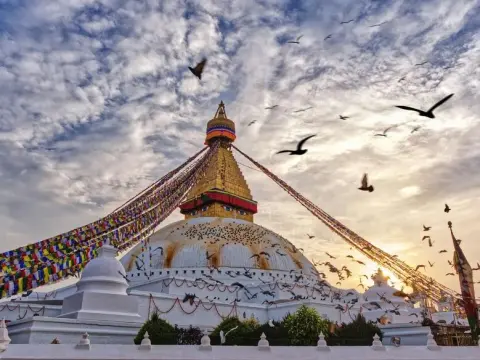
Nepal is far more than a trekking destination nestled among the world's highest peaks. This ancient Himalayan kingdom pulses with profound spiritual e...
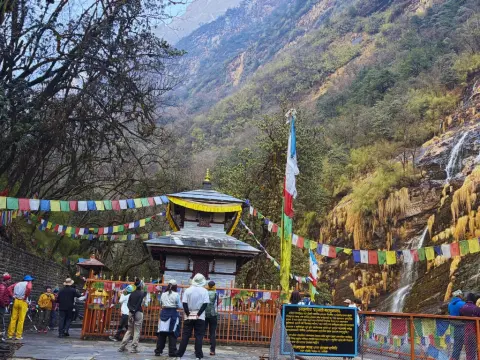
The Annapurna Base Camp trek is celebrated worldwide for its dramatic mountain scenery and diverse landscapes. Yet beyond the towering peaks and rhodo...
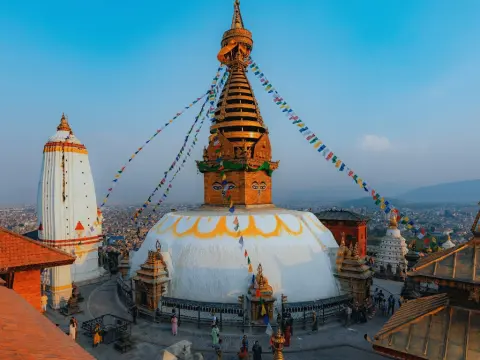
Nepal punches way above its weight when it comes to UNESCO recognition. For a small, landlocked country wedged between two giants, it holds ten UNESCO...
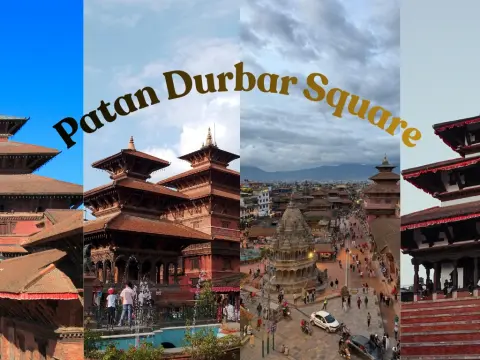
Patan Durbar Square is a UNESCO World Heritage Site in the heart of Lalitpur, Nepal, about 5 km southeast of central Kathmandu. It was the royal palac...
