[{"name":"Langtang Valley Trek \u2014 10 Days","duration":"10","image_url":"https:\/\/www.majestictrailsnepal.com\/storage\/trip-galleries\/1\/thumb_e7907ed736676d12e6ab17328008e746.webp","offer_price":null,"url":"https:\/\/www.majestictrailsnepal.com\/trips\/langtang-valley-trek"},{"name":"Everest Base Camp Trek","duration":"14","image_url":"https:\/\/www.majestictrailsnepal.com\/storage\/trip-galleries\/2\/thumb_4b769c9c4b5b007a61f4ce3b76ff440d.webp","offer_price":null,"url":"https:\/\/www.majestictrailsnepal.com\/trips\/everest-base-camp-trek"},{"name":"Everest Panorama Trek","duration":"9","image_url":"https:\/\/www.majestictrailsnepal.com\/storage\/trip-galleries\/3\/thumb_e6ee74caea3e2900c23ca370b06bab80.webp","offer_price":null,"url":"https:\/\/www.majestictrailsnepal.com\/trips\/everest-panorama-trek"},{"name":"Annapurna Base Camp Trek","duration":"14","image_url":"https:\/\/www.majestictrailsnepal.com\/storage\/trip-galleries\/4\/thumb_3f8d40f9472f701d7c46a827925201bc.webp","offer_price":null,"url":"https:\/\/www.majestictrailsnepal.com\/trips\/annapurna-base-camp-trek"},{"name":"Annapurna Base Camp Express Trek","duration":"9","image_url":"https:\/\/www.majestictrailsnepal.com\/storage\/trip-galleries\/5\/thumb_bac80de2bd257d651fa75d9c8025da1a.webp","offer_price":null,"url":"https:\/\/www.majestictrailsnepal.com\/trips\/annapurna-base-camp-express-trek"},{"name":"Annapurna Circuit Trek","duration":"15","image_url":"https:\/\/www.majestictrailsnepal.com\/storage\/trip-galleries\/6\/thumb_b73bdec74acacaa0d72a2a2a513f3d4a.webp","offer_price":null,"url":"https:\/\/www.majestictrailsnepal.com\/trips\/annapurna-circuit-trek"},{"name":"Ghorepani Poon Hill Trek","duration":"8","image_url":"https:\/\/www.majestictrailsnepal.com\/storage\/trip-galleries\/7\/thumb_aeda9e6388ab2692138cc9c9efa81a7f.webp","offer_price":null,"url":"https:\/\/www.majestictrailsnepal.com\/trips\/ghorepani-poon-hill-trek"},{"name":"Mardi Himal Trek \u2014 9 Days","duration":"9","image_url":"https:\/\/www.majestictrailsnepal.com\/storage\/trip-galleries\/8\/thumb_c511ee87ecab8ff015210dd647392d66.webp","offer_price":null,"url":"https:\/\/www.majestictrailsnepal.com\/trips\/mardi-himal-trek"},{"name":"Manaslu Circuit Trek","duration":"15","image_url":"https:\/\/www.majestictrailsnepal.com\/storage\/trip-galleries\/9\/thumb_7726908390ad6b249f2f6a7856f9dc17.webp","offer_price":null,"url":"https:\/\/www.majestictrailsnepal.com\/trips\/manaslu-circuit-trek"},{"name":"Upper Mustang Trek","duration":"16","image_url":"https:\/\/www.majestictrailsnepal.com\/storage\/trip-galleries\/10\/thumb_6a9b52ecd1d8cda92d594e5351431d6e.webp","offer_price":null,"url":"https:\/\/www.majestictrailsnepal.com\/trips\/upper-mustang-trek"},{"name":"Pokhara City Tour","duration":"1","image_url":"https:\/\/www.majestictrailsnepal.com\/storage\/trip-galleries\/11\/thumb_cf762ba4c20363bd1c0f239db35fcc84.webp","offer_price":null,"url":"https:\/\/www.majestictrailsnepal.com\/trips\/pokhara-city-tour"},{"name":"Paragliding in Pokhara","duration":"1","image_url":"https:\/\/www.majestictrailsnepal.com\/storage\/trip-galleries\/12\/thumb_b896201edf88bbe0f570e876c3c337a3.webp","offer_price":70,"url":"https:\/\/www.majestictrailsnepal.com\/trips\/paragliding-in-pokhara"},{"name":"Kathmandu City Tour","duration":"2","image_url":"https:\/\/www.majestictrailsnepal.com\/storage\/trip-galleries\/13\/thumb_846ad05bd3ce7bebb3843c24c08db6f9.webp","offer_price":null,"url":"https:\/\/www.majestictrailsnepal.com\/trips\/kathmandu-city-tour"},{"name":"Lumbini Buddhist Pilgrimage Tour","duration":"4","image_url":"https:\/\/www.majestictrailsnepal.com\/storage\/trip-galleries\/14\/a2998dca0ce22f28a61c3862dd47f6a3.webp","offer_price":null,"url":"https:\/\/www.majestictrailsnepal.com\/trips\/lumbini-buddhist-pilgrimage-tour"},{"name":"5 days langtang valley trek","duration":"5","image_url":"https:\/\/www.majestictrailsnepal.com\/storage\/trip-galleries\/15\/thumb_7a6c65c139b8085d220ac01913cb1448.webp","offer_price":510,"url":"https:\/\/www.majestictrailsnepal.com\/trips\/5-days-langtang-valley-trek"},{"name":"Leisure Port Nepal Price: Rafting and Camping Adventure","duration":"7","image_url":"https:\/\/www.majestictrailsnepal.com\/storage\/trip-galleries\/17\/thumb_02cb8c3f0697c7c5c4f73d744b47d87f.webp","offer_price":550,"url":"https:\/\/www.majestictrailsnepal.com\/trips\/leisure-port-nepal-price-rafting-and-camping-adventure"},{"name":"10 days spiritual tour in Nepal","duration":"10","image_url":"https:\/\/www.majestictrailsnepal.com\/storage\/trip-galleries\/18\/thumb_b4e7eba000673d1bce6b56abb422fe3b.webp","offer_price":1200,"url":"https:\/\/www.majestictrailsnepal.com\/trips\/10-days-spiritual-tour-in-nepal"},{"name":"Annapurna Circuit Short Trek","duration":"10","image_url":"https:\/\/www.majestictrailsnepal.com\/storage\/trip-galleries\/19\/thumb_769ee8cbe02a510d8db76419c97a2dc9.webp","offer_price":null,"url":"https:\/\/www.majestictrailsnepal.com\/trips\/annapurna-circuit-short-trek"},{"name":"Best Short Manaslu Circuit Trek","duration":"11","image_url":"https:\/\/www.majestictrailsnepal.com\/storage\/trip-galleries\/20\/thumb_ac1b4977a3fce9d11ee68240cad675b6.webp","offer_price":null,"url":"https:\/\/www.majestictrailsnepal.com\/trips\/best-short-manaslu-circuit-trek"},{"name":"Langtang Gosaikunda Trek","duration":"13","image_url":"https:\/\/www.majestictrailsnepal.com\/storage\/trip-galleries\/22\/thumb_577a6402f2ca4b3f12bfd80b96b33a23.webp","offer_price":940,"url":"https:\/\/www.majestictrailsnepal.com\/trips\/langtang-gosaikunda-trek"},{"name":"3 Passes Trek Nepal","duration":"22","image_url":"https:\/\/www.majestictrailsnepal.com\/storage\/trip-galleries\/24\/thumb_8020edea67aefce87e9012dc89a60087.webp","offer_price":null,"url":"https:\/\/www.majestictrailsnepal.com\/trips\/3-passes-trek-nepal"},{"name":"Tsum Valley Trek","duration":"13","image_url":"https:\/\/www.majestictrailsnepal.com\/storage\/trip-galleries\/25\/thumb_194c03e3c3463dff07a3f621a81ef9ea.webp","offer_price":null,"url":"https:\/\/www.majestictrailsnepal.com\/trips\/tsum-valley-trek"},{"name":"Gokyo and Renjo La Pass Trek","duration":"14","image_url":"https:\/\/www.majestictrailsnepal.com\/storage\/trip-galleries\/26\/thumb_7b865f0f0d0d4c6807b625b6e391b56d.webp","offer_price":1490,"url":"https:\/\/www.majestictrailsnepal.com\/trips\/gokyo-and-renjo-la-pass-trek"},{"name":"Honeymoon Tour in Nepal","duration":"9","image_url":"https:\/\/www.majestictrailsnepal.com\/storage\/trip-galleries\/27\/thumb_dabf449c090bb16efd5823c653eb61b3.webp","offer_price":null,"url":"https:\/\/www.majestictrailsnepal.com\/trips\/honeymoon-tour-in-nepal"},{"name":"Pikey Peak Trek","duration":"10","image_url":"https:\/\/www.majestictrailsnepal.com\/storage\/trip-galleries\/28\/thumb_5425e57ce3ea84d31a7b24b83b1af94f.webp","offer_price":1090,"url":"https:\/\/www.majestictrailsnepal.com\/trips\/pikey-peak-trek"},{"name":"Makalu Base Camp Trek","duration":"17","image_url":"https:\/\/www.majestictrailsnepal.com\/storage\/trip-galleries\/29\/thumb_d68c8ec6492540c922045d825a38cd50.webp","offer_price":null,"url":"https:\/\/www.majestictrailsnepal.com\/trips\/makalu-base-camp-trek"},{"name":"Nepal Winter Tour","duration":"8","image_url":"https:\/\/www.majestictrailsnepal.com\/storage\/trip-galleries\/30\/thumb_c8491c0c4b1fb19d8e93630866895799.webp","offer_price":null,"url":"https:\/\/www.majestictrailsnepal.com\/trips\/nepal-winter-tour"},{"name":"Maratika Tour in Nepal","duration":"6","image_url":"https:\/\/www.majestictrailsnepal.com\/storage\/trip-galleries\/31\/thumb_97948560c5a12a486f9ac2b76567cafd.webp","offer_price":null,"url":"https:\/\/www.majestictrailsnepal.com\/trips\/maratika-tour-in-nepal"},{"name":"Nepal Lake Trek","duration":"14","image_url":"https:\/\/www.majestictrailsnepal.com\/storage\/trip-galleries\/32\/thumb_d9b260fe13127816f5b3c25447caf70c.webp","offer_price":null,"url":"https:\/\/www.majestictrailsnepal.com\/trips\/nepal-lake-trek"},{"name":"Taste of Nepal Tour Package","duration":"9","image_url":"https:\/\/www.majestictrailsnepal.com\/storage\/trip-galleries\/33\/thumb_f4b55ab5760a8e057b4c3e208e25ab36.webp","offer_price":null,"url":"https:\/\/www.majestictrailsnepal.com\/trips\/taste-of-nepal-tour-package"},{"name":"Poon Hill Yoga Trek in Nepal","duration":"9","image_url":"https:\/\/www.majestictrailsnepal.com\/storage\/trip-galleries\/34\/thumb_904b238e690107c5c9b1092296880cc9.webp","offer_price":null,"url":"https:\/\/www.majestictrailsnepal.com\/trips\/poon-hill-yoga-trek-in-nepal"},{"name":"Nar Phu Nepal Trek","duration":"10","image_url":"https:\/\/www.majestictrailsnepal.com\/storage\/trip-galleries\/35\/thumb_f959e3e22c260629add0ba61a4038812.webp","offer_price":null,"url":"https:\/\/www.majestictrailsnepal.com\/trips\/nar-phu-nepal-trek"},{"name":"Annapurna Base Camp Helicopter Tour","duration":"1","image_url":"https:\/\/www.majestictrailsnepal.com\/storage\/trip-galleries\/36\/thumb_e81861e8772a9d7fac92ab4a7d43e3bf.webp","offer_price":null,"url":"https:\/\/www.majestictrailsnepal.com\/trips\/annapurna-base-camp-helicopter-tour"},{"name":"Annapurna Circuit with Nar Phu Valley Trek","duration":"16","image_url":"https:\/\/www.majestictrailsnepal.com\/storage\/trip-galleries\/38\/thumb_b70692cbd1c1dd772587c940be2d0bc9.webp","offer_price":null,"url":"https:\/\/www.majestictrailsnepal.com\/trips\/annapurna-circuit-with-nar-phu-valley-trek"}]
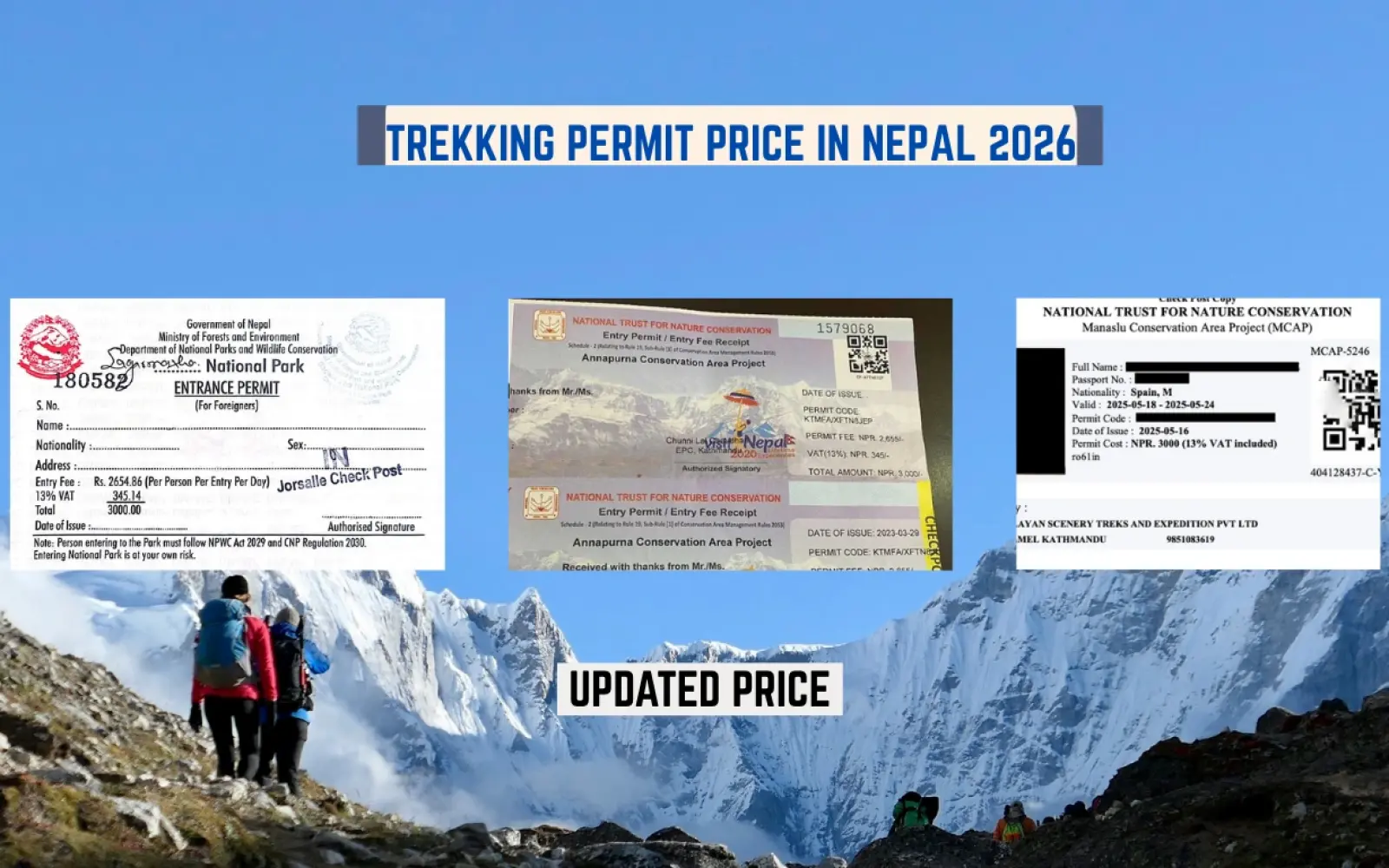
Trekking Permit Price in Nepal 2026 – Updated Fees by Region
Planning a trek in Nepal requires more than just physical preparation—you also need the right permits. Trekking permits are official documents issued by the Nepalese government and conservation authorities that grant legal access to specific trekking regions throughout the country. These permits are mandatory for most trekking routes and play a crucial role in conservation efforts, local development, and trekker safety.
Understanding the trekking permit price in Nepal 2026 is essential for budgeting your adventure accurately. With updated fees across different regions and important regulatory changes—including the discontinuation of TIMS (Trekkers' Information Management System)—it's more important than ever to have current, accurate information. This comprehensive guide covers all Nepal trekking permits cost for 2026, including fees for ACAP (Annapurna Conservation Area Permit), MCA (Manaslu Conservation Area), and restricted area permits, helping you plan your trek with confidence and clarity.
What Are Trekking Permits in Nepal?
Trekking permits in Nepal are authorization documents required to enter designated trekking regions, conservation areas, and restricted zones. These permits serve multiple purposes:
Conservation funding: Fees support wildlife protection and environmental conservation
Local development: Revenue contributes to community development in remote areas
Safety monitoring: Registration helps authorities track trekkers for emergency response
Regulated tourism: Controls visitor numbers in sensitive ecological and cultural areas
Types of Trekking Permits
1. ACAP (Annapurna Conservation Area Permit)
The Permit of Annapurna region Treks
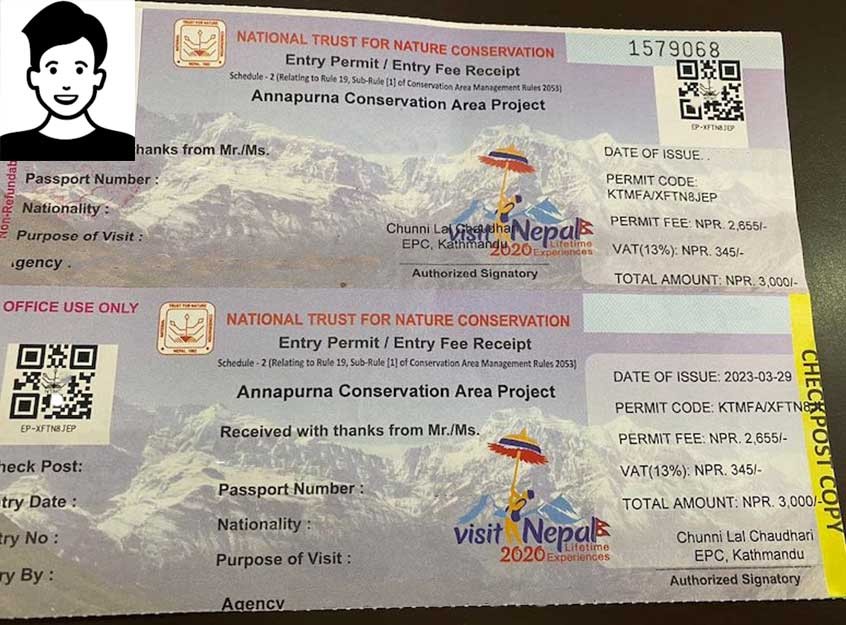
Required for all treks in the Annapurna region like Annapurna Base Camp, Mardi Himal Trek, Annapurna circuit Trek and Ghorepani Poon hill Trek , managed by the National Trust for Nature Conservation (NTNC).
2. MCA (Manaslu Conservation Area Permit) Necessary for trekking in the Manaslu region, also managed by NTNC.
3. LAC (Lower Area Conservation Permits) Required for various lower elevation trekking regions throughout Nepal.
4. RAP (Restricted Area Permits) Special permits for restricted regions like Upper Mustang, Upper Dolpo, Humla, and others, issued by the Department of Immigration.
5. National Park Entry Permits
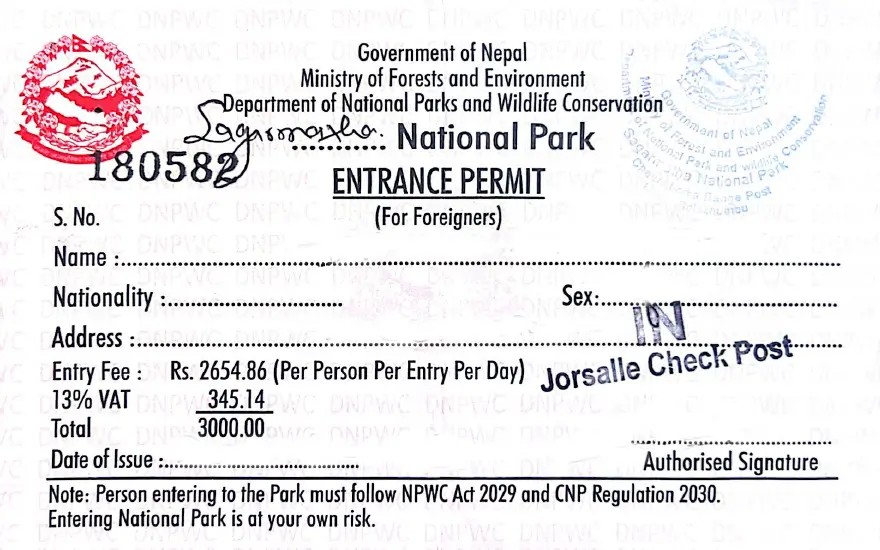
The one sagarmatha national park for Everest region Treks.
Required for trekking within national parks like Sagarmatha (Everest), Langtang, and Makalu-Barun.
Important Trekking Permit Rules and Regulations 2026
Before obtaining your trekking permit, familiarize yourself with these essential regulations:
General Permit Conditions
Non-transferable and non-refundable: Trekking permits cannot be transferred to another person or refunded, so plan your dates carefully
Single entry validity: Each permit is valid for one entry only to the designated conservation area
Legal compliance: Permit holders must abide by the National Park and Wildlife Conservation Act 2029 B.S. (1973) and related regulations
Carry always: The permit must be carried during the entire trek and presented when requested by conservation area personnel
Check-post permits: Double fees apply for permits issued at check-posts rather than in advance
Children: Those below 10 years do not require a permit
Special Permissions and Restrictions
Restricted areas: Special permits required for designated restricted zones in Annapurna Conservation Area (ACA) and Manaslu Conservation Area (MCA), available at the Department of Immigration
Mountaineering: Separate permits available from the Nepal Mountaineering Association
Drones: Strictly prohibited unless prior approval granted by concerned authorities
Documentary filming: Special permits must be obtained from the Ministry of Information Communication with approvals from NTNC
Hunting: Completely prohibited throughout all conservation areas
Fishing: Requires permits issued by local Conservation Area Management Committees (available at lodges)
Scientific collection: NTNC approval required before collecting any scientific specimens
Mandatory Check-post Registration
Trekkers must register at check-posts along the trekking route. This registration:
Allows authorities to monitor tourist flow
Increases chances of rescue during emergencies
Helps with conservation area management
Provides accurate trekking statistics
Environmental and Safety Requirements
Minimum Impact Code: All trekkers must follow environmental best practices
Agency responsibility: Trekking agencies must ensure proper preparations for safety, legality, and environmental friendliness
Conservation compliance: Respect all wildlife, environmental, and cultural preservation guidelines
Regional Permit Adjustments
Important Note for Upper Mustang and Upper Dolpa: If the royalty paid for a mountain expedition is less than the trekking permit fee, the difference amount must be paid.
TIMS Clarification – What Trekkers Need to Know in 2026
TIMS is No Longer Required
One of the most important updates for 2026 is that TIMS (Trekkers' Information Management System) is outdated and no longer required for trekking in Nepal. This is crucial information that many trekkers remain confused about.
Why the Confusion?
Many travel agency websites and outdated guides still list TIMS as a requirement. This misinformation can lead to:
Unnecessary fees being paid
Confusion during permit application
Outdated trekking budgets
Time wasted obtaining obsolete permits
What You Actually Need Instead of TIMS
Focus your attention and budget on these updated trekking permit requirements:
ACAP (Annapurna Conservation Area Permit) for Annapurna treks
MCA (Manaslu Conservation Area Permit) for Manaslu region
RAP (Restricted Area Permits) for Upper Mustang, Upper Dolpo, etc.
National Park Entry Permits for Everest, Langtang, Makalu-Barun regions
LAC (Lower Area Conservation) permits for various other regions
Avoid Unnecessary Fees
By understanding that TIMS is no longer needed, you can:
Save money on outdated permit fees
Streamline your permit application process
Get accurate, current permit information
Budget correctly for your 2026 Nepal trek
Always verify permit requirements with official sources such as:
Nepal Tourism Board
Department of Immigration
National Trust for Nature Conservation (NTNC)
Nepal Mountaineering Association
Trekking Permit Price 2026 by Region – Complete Fee Structure
Here is the comprehensive breakdown of trekking fees Nepal updated for 2026, organized by region:
1. Upper Mustang Permit Price
Covered Areas:
Lomanthang Rural Municipality (All areas of ward no. 1 to 5)
Lo-Ghekar Damodarkunda Rural Municipality (All areas of ward no. 1 to 5)
Baragung Muktichetra Rural Municipality (All areas of ward no. 3 and Satang Village of ward no. 5)
Permit Fee:
Per person: USD 50 per person/day (Updated price 2025)
Special Note: If royalty paid for mountain expedition is less than the trekking permit fee, the difference amount should be paid.
2. Upper Dolpa Permit Price
Covered Areas:
Dolpo Buddha Rural Municipality (All areas of ward no. 4 to 6)
Shey Phoksundo Rural Municipality (All areas of ward no. 1 to 7)
Charka Tangsong Rural Municipality (All areas of ward no. 1 to 6)
Permit Fee:
First 10 days: USD 500 per person
Beyond 10 days: USD 50 per person/day
Special Note: If royalty paid for mountain expedition is less than the trekking permit fee, the difference amount should be paid.
3. Gorkha Manaslu Area (Manaslu Conservation Area)
Covered Areas:
Chumnubri Rural Municipality (All areas of ward nos. 1, 2, 3, and 4)
Permit Fee (Seasonal):
September – November (Peak Season):
First week: USD 100 per person
Beyond 1 week: USD 15 per person/day
December – August (Off-Season):
First week: USD 75 per person
Beyond 1 week: USD 10 per person/day
4. Humla Permit Price
Covered Areas:
Simikot Rural Municipality (All areas of ward nos. 1, 6, and 7)
Namkha Rural Municipality (All areas of ward no. 1 to 6)
Changkheli Rural Municipality (All areas of ward no. 3 to 5)
Permit Fee:
First week: USD 50 per person
Beyond 1 week: USD 10 per person/day
5. Taplejung (Kanchenjunga Region)
Covered Areas:
Phaktanglung Rural Municipality (All areas of ward nos. 6 and 7)
Mikwakhola Rural Municipality (All areas of ward no. 5)
Sirijunga Rural Municipality (All areas of ward no. 8)
Permit Fee:
First 4 weeks: USD 20 per person/week
Beyond 4 weeks: USD 25 per person/week
6. Lower Dolpa Area
Covered Areas:
Thulibheri Municipality (All areas of ward no. 1 to 11)
Tripurasundari Municipality (All areas of ward no. 1 to 11)
Dolpo Buddha Rural Municipality (All areas of ward no. 1 to 3)
Shey Phoksundo Rural Municipality (All areas of ward no. 8 and 9)
Jagdulla Rural Municipality (All areas of ward no. 1 to 6)
Mudkechula Rural Municipality (All areas of ward no. 1 to 9)
Kaike Rural Municipality (All areas of ward no. 1 to 7)
Permit Fee:
First week: USD 20 per person
Beyond 1 week: USD 5 per person/day
7. Dolakha (Gaurishankar Region)
Covered Areas:
Gaurishankhar Rural Municipality (All areas of ward no. 9)
Bighu Rural Municipality (All areas of ward no. 1)
Permit Fee:
USD 20 per person/week
8. Gorkha Tsum Valley Area
Covered Areas:
Chumnubri Rural Municipality (All areas of ward nos. 3, 6, and 7)
Q1: Is TIMS still required for trekking in Nepal in 2026? No, TIMS is outdated and no longer required. Focus on obtaining ACAP, MCA, RAP, or other regional permits as applicable.
Q2: Can I get a refund if I change my trekking dates? No, all trekking permits are non-transferable and non-refundable. Plan your dates carefully before applying.
Q3: Do children need trekking permits? Children below 10 years do not require permits. Anyone 10 years and older needs the appropriate permit.
Q4: What happens if I lose my permit during the trek? You may face difficulties at check-posts. It's recommended to carry photocopies and contact the issuing office immediately if the original is lost.
Q5: Can I use the same permit for multiple entries? No, permits are valid for single entry only. You'll need a new permit for each trek.
Q6: Are permits available at check-posts? Yes, but double fees are charged for permits issued at check-posts. It's more economical to obtain them in advance.
Q7: What's the difference between ACAP and RAP? ACAP is for the Annapurna Conservation Area, while RAP (Restricted Area Permits) are for specially regulated regions like Upper Mustang, Manaslu, etc.
Q8: Do I need a guide for all treks? Not for all treks, but restricted areas require organized tours with licensed guides. Independent trekking is allowed in many non-restricted areas.
Q9: Can I bring a drone for aerial photography? Drones are strictly prohibited unless you obtain prior approval from concerned authorities. Apply well in advance if needed.
Q10: How do seasonal fees work? Some regions like Manaslu and Tsum Valley have higher fees during peak season (September-November) and lower fees off-season (December-August).
Conclusion
Understanding the trekking permit price in Nepal 2026 is essential for planning a successful and legal trek through the Himalayas. With comprehensive information about Nepal trekking permits cost across all 15 regulated regions—from the remote Upper Mustang to the popular Everest region—you can now budget accurately and prepare properly.
Key Takeaways:
✅ TIMS is no longer required—don't let outdated information confuse your planning or waste your money
✅ Permits are non-transferable and non-refundable—plan your trekking dates carefully
✅ Regional fees vary significantly—from USD 20/week to USD 500 for 10 days
✅ Seasonal variations apply—some regions have different fees for peak and off-peak seasons
✅ Register at check-posts—mandatory for safety and conservation monitoring
✅ Respect all regulations—environmental protection, wildlife conservation, and cultural sensitivity are non-negotiable
✅ Obtain permits in advance—avoid double fees and save time
✅ Choose licensed agencies—ensure safety, legality, and environmental responsibility
Plan Your Trek Safely
With the latest trekking permit fees in Nepal updated for 2026, you can confidently plan your Himalayan adventure without unnecessary confusion about outdated TIMS requirements. Whether you're trekking the Annapurna Circuit, exploring the remote Upper Dolpo, or journeying to Everest Base Camp, having the correct permits and understanding all regulations ensures a smooth, legal, and memorable experience.
Always verify permit requirements with official sources before your trek, follow the Minimum Impact Code, respect local communities and conservation areas, and prepare for the adventure of a lifetime in the magnificent mountains of Nepal.
Ready to trek? Get your permits sorted, pack your bags, and prepare for an unforgettable journey through the roof of the world!
This guide is based on official information current as of 2026. Fees and regulations may be subject to change. Always verify with official government sources or licensed trekking agencies before your departure.
Related Travel Blogs
Join our Newsletter
Sign up to stay updated with latest offers, recent events and more news.