
Wellness Tour to Nepal – Yoga, Meditation & Himalayan Retreat
8 Feb 2026
There's a moment that happens somewhere between your first mountain sunrise and your final meditation session. It's the moment you realize you've been...

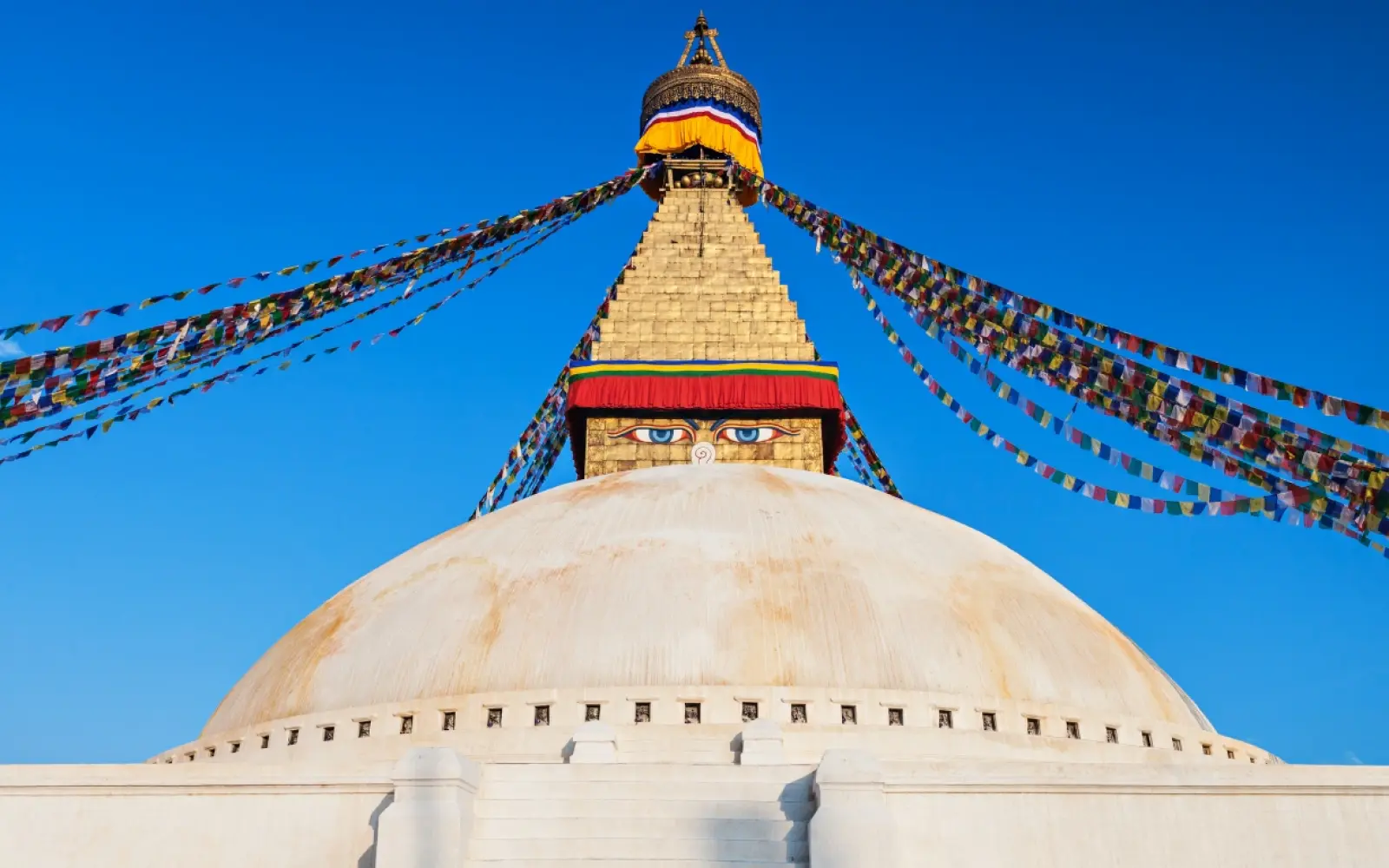

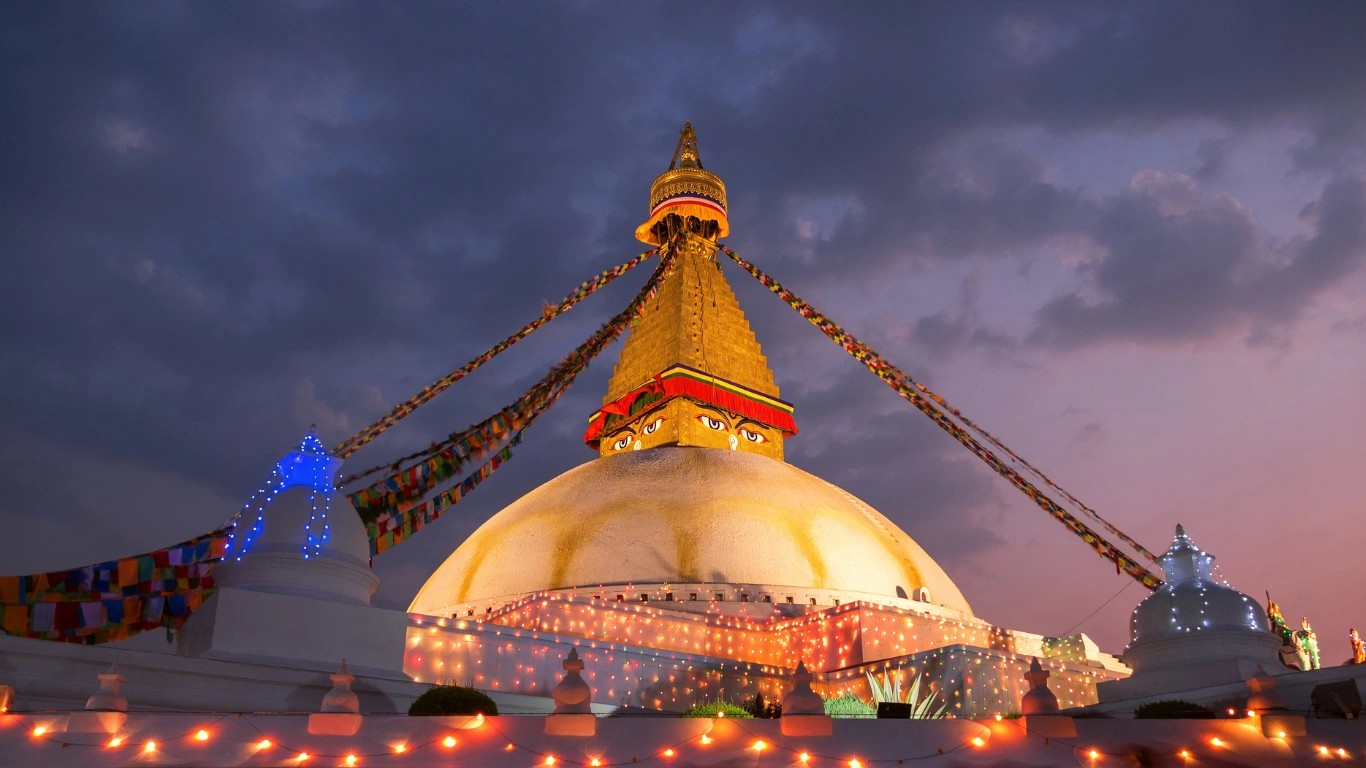
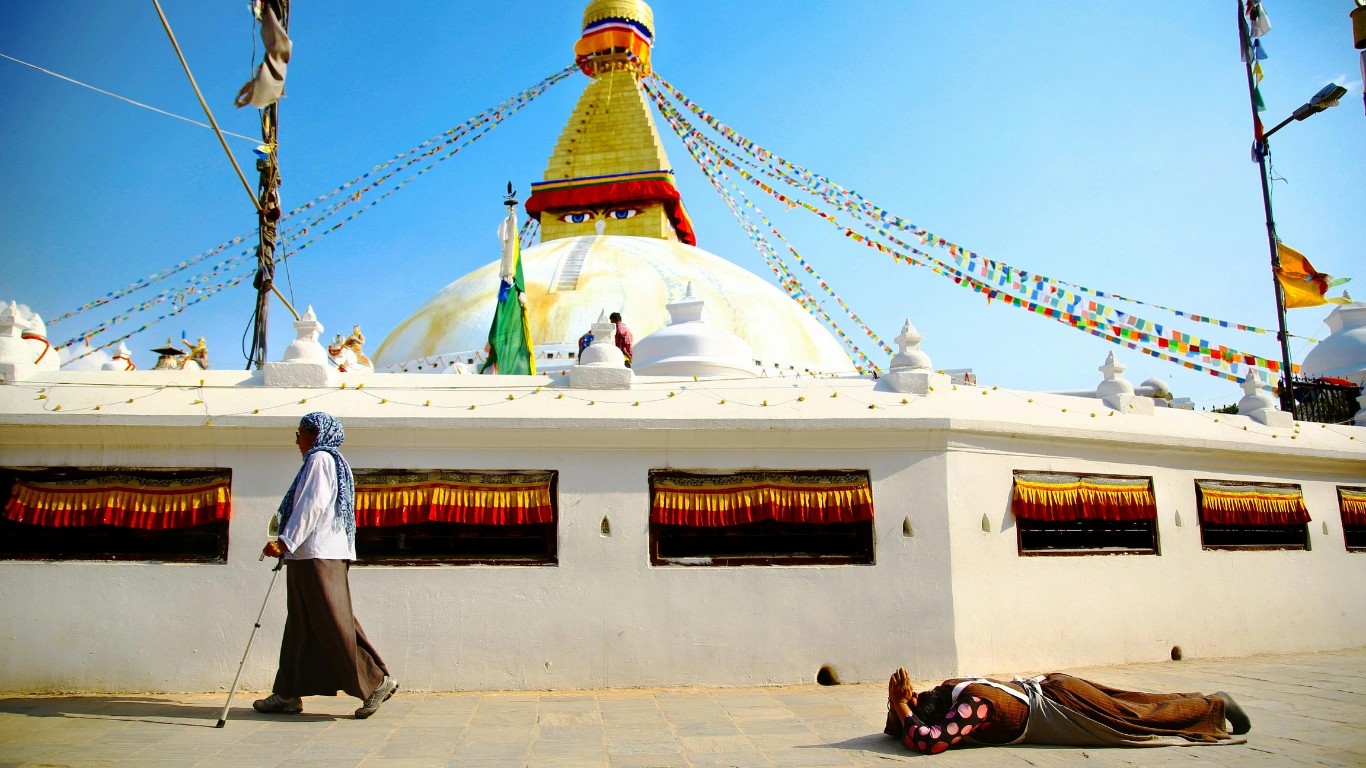
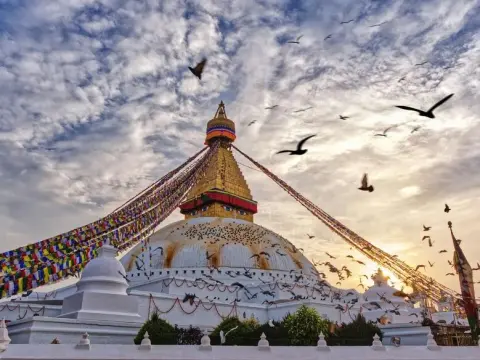
Come at dusk. The day's heat has left the square, the shops have switched on their lamps, and the great white dome is turning gold under the floodlights. And then you notice the movement — a slow, unhurried river of people circling the stupa clockwise, maroon-robed monks among grandmothers among tourists, hands brushing the prayer wheels, a low murmur of mantras rising over the flutter of prayer flags. Nobody is in a hurry. Somewhere a butter lamp is lit. You take one step into the circle, and without deciding to, you are walking too.
Boudhanath Stupa in Kathmandu, Nepal is the largest stupa in the country and the beating heart of Tibetan Buddhism in Nepal. Located about 11 km northeast of the city centre, this UNESCO World Heritage Site dates to Nepal's Licchavi period — roughly the 5th to 6th century CE — and is believed to hold the relics of Kassapa Buddha. After the 1959 Tibetan uprising, thousands of Tibetan refugees settled around it, and today more than 50 monasteries surround the stupa, making Boudha the most important centre of Tibetan Buddhism outside Tibet itself.
Key Takeaways
| Detail | Information |
|---|---|
| Location | Boudha, ~11 km NE of central Kathmandu |
| Also known as | Boudha, Khasti Chaitya, Jarung Kashor |
| Type | Stupa (not a temple) |
| Built | Licchavi period (~5th–6th century CE) |
| UNESCO status | World Heritage Site since 1979 |
| Diameter | ~100 ft — the largest stupa in Nepal |
| Believed to contain | Relics of Kassapa Buddha |
| Entry fee | NPR 400 foreign / NPR 100 SAARC / free Nepali |
| Opening hours | Roughly 5:00 AM – 9:00 PM daily |
| Best time to visit | Early morning or evening (the kora) |
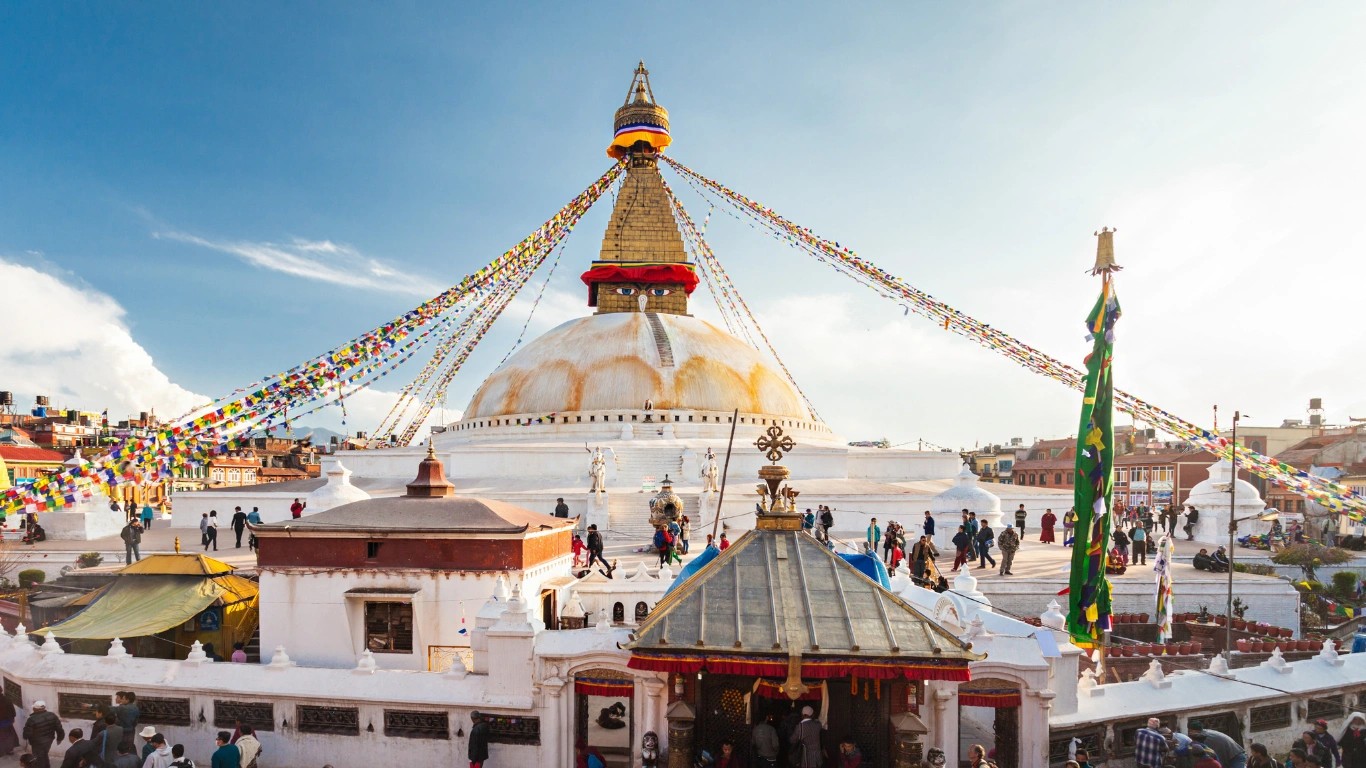
Boudhanath is a massive Buddhist stupa in Kathmandu, Nepal — the largest in the country and the most important centre of Tibetan Buddhism outside Tibet. It is often called the Boudhanath temple, though strictly speaking it is a stupa, not a temple: a solid, dome-shaped monument built to house sacred relics, which worshippers walk around rather than enter. There is no interior room, no shrine hall inside, no door.
The Boudhanath stupa in Nepal became a UNESCO World Heritage Site in 1979, as part of the Kathmandu Valley listing. But its real distinction is not the plaque. It is that Boudhanath remains completely, unselfconsciously alive — a working sacred site where the ritual life of a community happens to unfold in front of you.
The name Boudhanath comes from Sanskrit — Buddha combined with nath, meaning "lord" or "protector" — so it can be read as "Lord Buddha" or the shrine of the Buddha. Locally it is most often simply called Boudha, the name of the whole neighbourhood that surrounds it.
The stupa carries several other names, each from a different community:
The variety of names is not a confusion — it is the point. Newar, Tibetan, and Tamang communities have all claimed and cared for this stupa across centuries, and each brought their own name for it. Boudhanath belongs to all of them.
The Boudhanath stupa in Kathmandu, Nepal is located in the Boudha neighbourhood, about 11 km northeast of the city centre and roughly the same distance from Tribhuvan International Airport. It sits within Kathmandu Metropolitan City, in the Kathmandu Valley, and is one of the easiest major heritage sites in Nepal to reach.
Getting there:
A useful practical note: Boudhanath is close enough to the airport that it makes an excellent first or last stop in Nepal — many trekkers visit on their arrival day, before flying out to the mountains, or on the way back down.
Boudhanath dates to Nepal's Licchavi period, most likely the 5th to 6th century CE — making it roughly 1,500 years old. But here is the honest position, which many guides gloss over: the exact date and the identity of its builder are genuinely disputed.
What the sources actually say:
You will find websites confidently declaring it was built in "600 AD" or even "the 14th century." The 14th-century claim is simply wrong, and the confident single dates overstate what the evidence supports. The truthful answer: Boudhanath is a Licchavi-era foundation, roughly 5th–6th century, layered over by 1,500 years of rebuilding.
Its position also explains its importance. Boudhanath sat on the ancient trade route between Tibet and the Kathmandu Valley. For centuries, Tibetan merchants crossing the Himalaya stopped here to rest and pray. The stupa was a waypoint on a mountain highway long before it was a tourist site.
Boudhanath has two great origin legends, and they come from different traditions. Both are worth knowing, because Nepalis will tell you one or the other depending on who they are.
The buffalo-hide legend (Tibetan/Tamang):
A humble poultry keeper — called Jadzima or Samvari in different tellings — asked the king for a piece of land on which to build a shrine to the Buddha. The king, distracted, agreed to give her as much land as a single buffalo hide could cover. She then cut the hide into one long, thread-thin strip and laid it out in an enormous circle. The king, bound by his own word, could not take it back — and the great stupa was built on the land she had so cleverly claimed. This is the story behind the Tibetan name Jarung Kashor, often glossed as "permission, once given, cannot be taken back."
The king's penance legend (Newar):
In this telling, King Manadeva of the Licchavi dynasty unknowingly killed his own father. Stricken with grief, and seeking to atone for so terrible an act, he was instructed by priests to build a great stupa as an act of penance — and Boudhanath rose as the monument to his repentance.
The two stories say something true about the place. One is about cleverness and a promise kept; the other about guilt and redemption. Boudhanath has room for both.
Boudhanath is believed to contain the relics of Kassapa Buddha — one of the Buddhas said to have lived before Siddhartha Gautama. Some traditions instead hold that a relic of the historical Buddha lies within.
But here is the honest, direct answer most guides avoid giving: nobody can confirm what is inside, because the stupa is solid and sealed. You cannot enter a stupa. It is not a temple with an interior room — it is a monument, built as a sacred container, and its contents have never been opened to public inspection.
What is genuinely known:
For Buddhists, this is exactly right. The relics are not an exhibit. The point of a stupa is not to look inside it, but to walk around it.
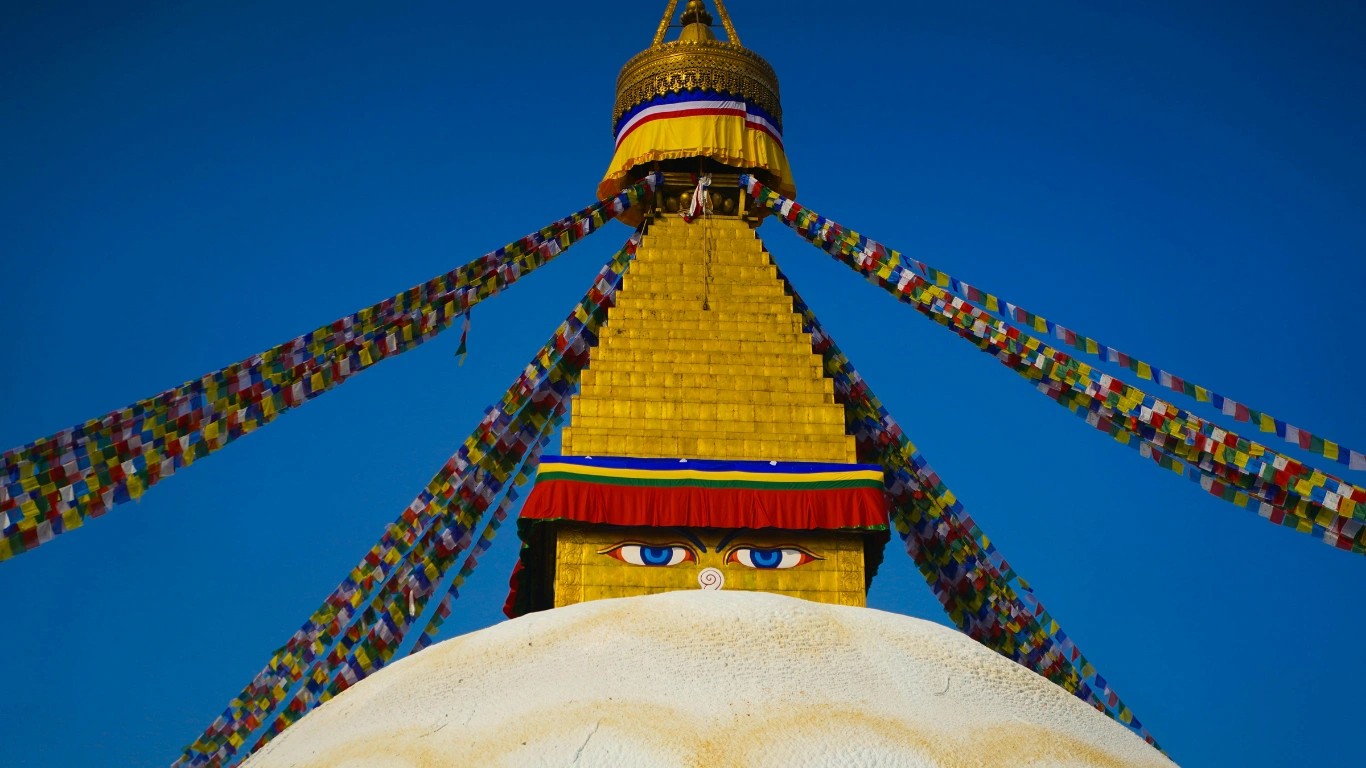
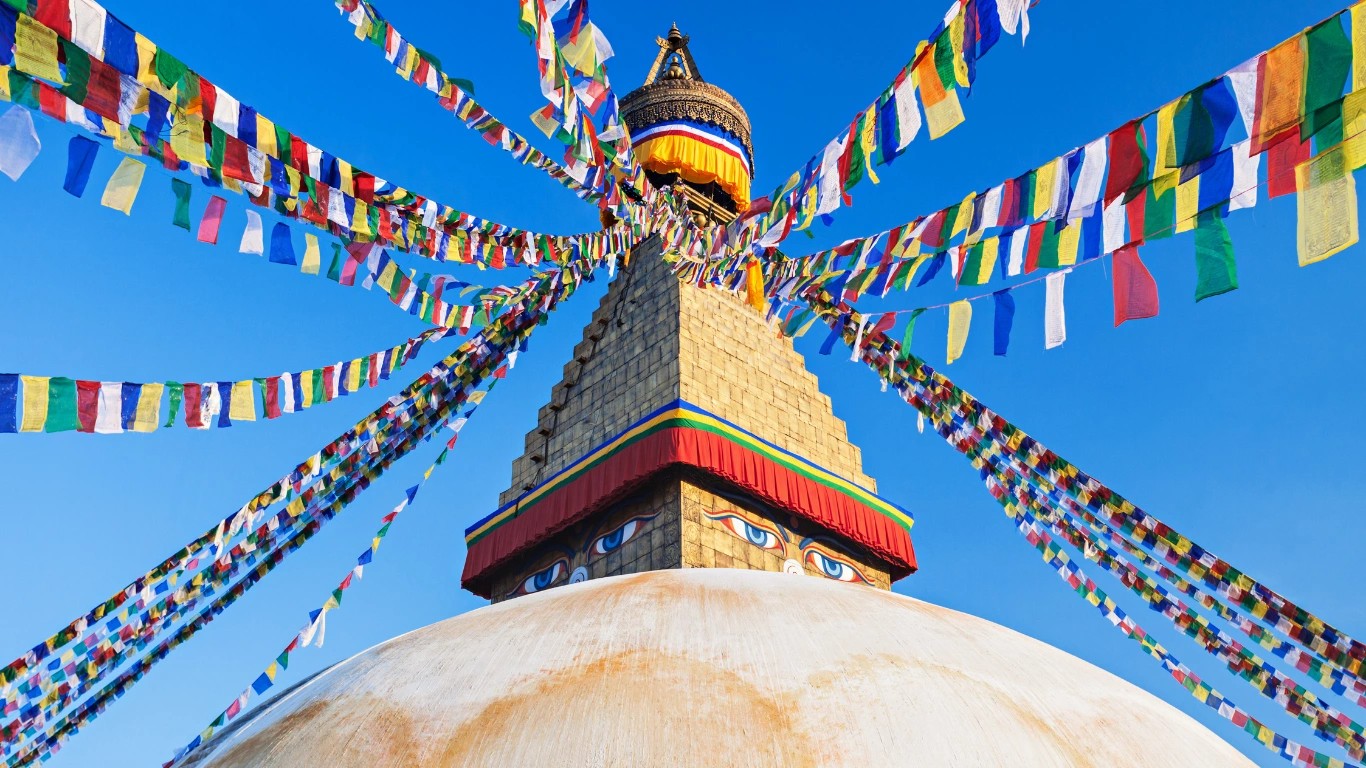
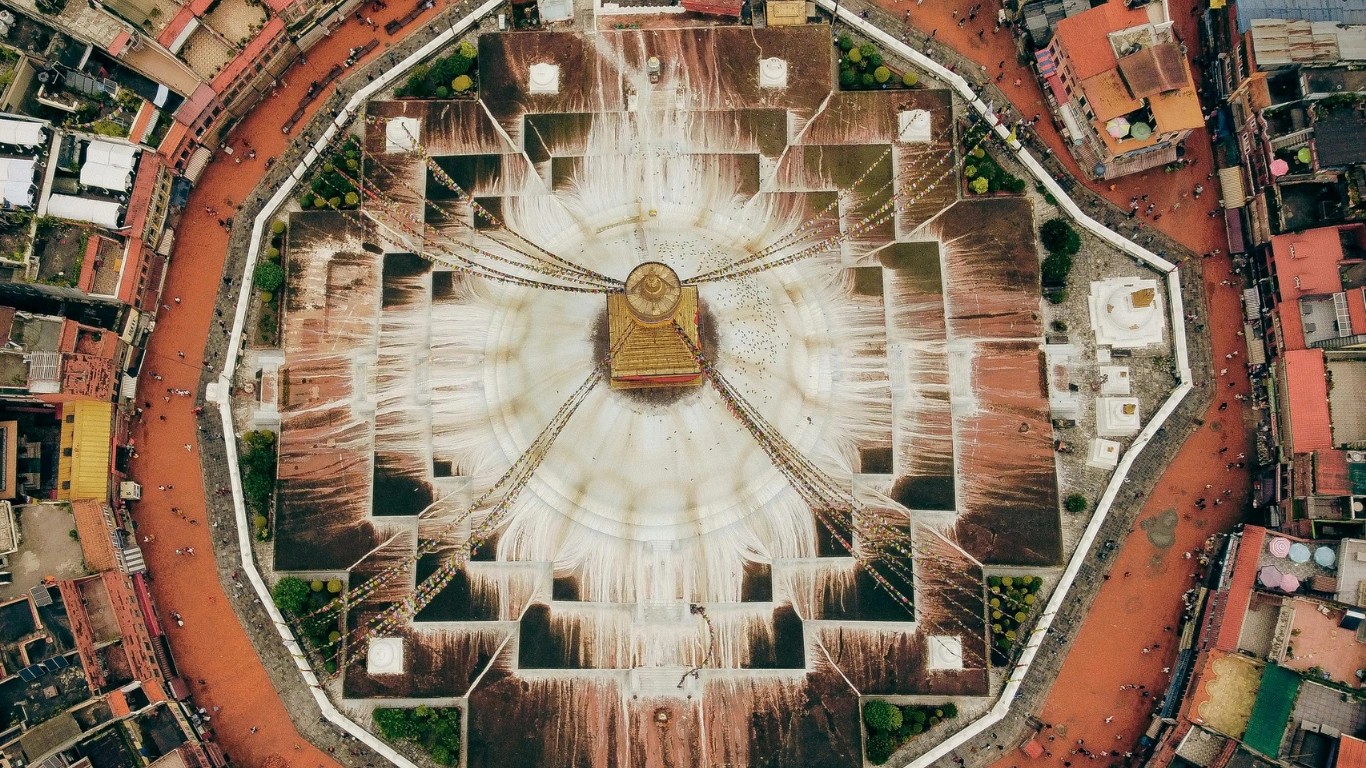
Boudhanath is built as a giant three-dimensional mandala — every part of it is a teaching, not decoration. Understanding the layers turns it from a big white dome into something you can read.
Together, the five elements — earth, water, fire, air, and ether — are all present in the structure. The stupa is a model of the universe and of the Buddhist path at the same time.
Boudhanath's modern character was shaped by a single historical event: the 1959 Tibetan uprising and the flight of refugees from Tibet. Thousands of Tibetans crossed the Himalaya into Nepal, and many settled around this stupa — a site their traders and pilgrims had known for centuries.
They brought their monasteries, their art, their chanting, and their daily rituals with them. In the decades since:
This is what makes Boudhanath different from a monument. Swayambhunath is older; the durbar squares are grander architecturally. But Boudha is alive in a way few heritage sites are — because for the people who live around it, it was never a heritage site at all. It is simply where they pray.
The entry fee for Boudhanath Stupa is NPR 400 for foreign nationals and NPR 100 for SAARC nationals. Nepali citizens and children under 10 enter free. The stupa area is generally open from around 5:00 AM to 9:00 PM daily.
| Visitor | Entry fee |
|---|---|
| Foreign nationals | NPR 400 |
| SAARC nationals (India, etc.) | NPR 100 |
| Nepali citizens | Free |
| Children under 10 | Free |
Practical notes:
Visit Boudhanath in the early morning or, better, in the evening. This is the single most useful piece of advice anyone can give you about this place, and midday visitors miss the entire point of it.
The kora — the clockwise circumambulation of the stupa — is the living ritual at Boudha's heart. It happens all day, but at dawn and dusk it becomes something else entirely:
If you can only come once, come in the evening. Buy a ticket, climb to a rooftop café for a tea and a view over the dome as the light fades, then go down and walk the kora yourself. Nobody will mind. That is what the space is for.
One more timing note: during Losar (Tibetan New Year, usually February or March) and Buddha Jayanti (usually May), Boudhanath is transformed — prayer flags in every direction, processions, music, thousands of butter lamps. If your trip overlaps with either, do not miss it.
Boudhanath is a place to be rather than to tick off, and an hour or two spent slowly here is worth more than a fast circuit with a camera.
More than 50 Tibetan monasteries (gompas) surround Boudhanath, and visiting one or two adds enormously to the experience. Each belongs to a different lineage, and several welcome respectful visitors.
One honest caution: these are working monasteries, not tourist attractions. Monks live, study, and pray in them. Enter quietly, remove your shoes where indicated, do not photograph people or ceremonies without asking, and leave if a service is underway. A little respect opens far more doors here than a camera does.
Boudhanath is an active place of worship, and a few simple courtesies matter enormously to the people who pray here.
None of this is complicated. The simplest rule: watch what the local people are doing, and do that.
The April 2015 earthquake badly damaged Boudhanath — cracking the dome and destabilising the spire, which had to be dismantled and rebuilt. For a country in mourning, the sight of the great stupa wounded was a heavy blow.
What happened next is the part worth telling. The restoration was funded and carried out largely by the Buddhist community itself — monasteries, local devotees, and donors from around the world — with volunteers working alongside craftsmen. Rather than waiting for the state or international agencies, Boudha rebuilt itself.
The stupa was fully restored and re-consecrated in November 2016, just nineteen months after the earthquake. Today you would not know it had been damaged at all. For many Nepalis, that speed and self-reliance made Boudhanath a symbol of something beyond religion: the country's stubborn capacity to rebuild what matters most.
Boudhanath comes from Sanskrit — Buddha plus nath ("lord" or "protector") — so it means something like "Lord Buddha." It is also known as Khasti Chaitya (Newar) and Jarung Kashor (Tibetan/Tamang), and is usually just called Boudha locally.
Boudhanath is famous for being the largest stupa in Nepal, a UNESCO World Heritage Site, and the most important centre of Tibetan Buddhism outside Tibet. It is believed to hold relics of Kassapa Buddha and is surrounded by more than 50 Tibetan monasteries.
Boudhanath Stupa is in the Boudha neighbourhood of Kathmandu, Nepal — about 11 km northeast of the city centre, and roughly the same distance from Tribhuvan International Airport. It is a 20–30 minute taxi ride from Thamel.
No. Boudhanath is not the largest stupa in the world, though it is the largest in Nepal and one of the largest anywhere. Larger stupas exist elsewhere — Borobudur in Indonesia and the Kesaria Stupa in India both exceed it in scale. Boudhanath is, however, often called the world's largest spherical stupa. Its real distinction is not size but status: it is the living heart of Tibetan Buddhism outside Tibet.
Boudhanath is a stupa, not a temple, though it is often called the Boudhanath temple. A temple is a building you enter to worship inside; a stupa is a solid monument containing sacred relics, which worshippers walk around rather than enter. Boudhanath has no interior chamber.
The stupa is believed to contain the relics of Kassapa Buddha. However, the structure is solid and sealed — there is no interior chamber, and its contents have never been opened to public inspection. Visitors walk around the stupa rather than entering it.
Boudhanath dates to Nepal's Licchavi period, roughly the 5th–6th century CE, though the exact date and builder are disputed — chronicles credit either King Manadeva or King Shivadeva. It sat on the ancient Tibet–Kathmandu trade route and has been rebuilt many times since.
Most likely in the 5th or 6th century CE during the Licchavi period, making it around 1,500 years old. Sources claiming a precise single year, or a 14th-century origin, overstate what the historical evidence supports.
NPR 400 for foreign nationals and NPR 100 for SAARC nationals. Nepali citizens and children under 10 enter free. Bring cash in Nepali rupees.
The stupa area is generally open from around 5:00 AM to 9:00 PM daily. The best times to visit are early morning and evening, when locals walk the sacred kora.
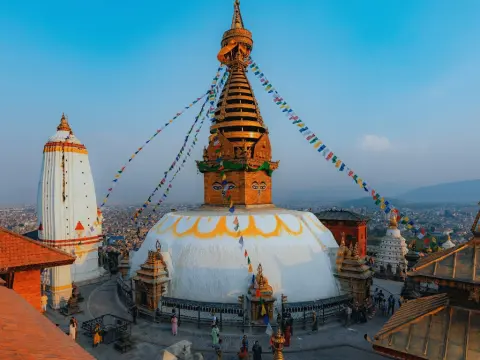
They are different rather than better or worse. Swayambhunath ("the Monkey Temple") is older, sits on a hill with panoramic views, and blends Hindu and Buddhist worship. Boudhanath is larger and more purely Tibetan Buddhist, with a far stronger living ritual atmosphere. If you have time, see both.
Allow one to two hours — enough to walk the kora, see a monastery, and sit with a tea on a rooftop. Come in the evening and you may well stay longer than you planned.
Yes, absolutely. Boudhanath welcomes visitors of every faith and none. Walk clockwise, dress modestly, and be respectful of the people praying around you.
You can read about the Boudhanath stupa in Nepal, and you can look at photographs of it, and neither will quite prepare you for standing in that square at dusk while a thousand people walk slowly around a white dome that has been there for fifteen centuries. It is the largest stupa in Nepal, a UNESCO World Heritage Site, and the spiritual centre of Tibetan Buddhism in the country — but none of those facts explain why people come back again and again.
What draws them back is simpler. Boudhanath is a place where an ancient ritual is still just… happening, in the open, every evening, with no performance and no admission to anything but the ordinary daily life of a faith. You are not watching it from behind a rope. You can step into the circle and walk.
If you are in Kathmandu, go at dusk. Buy your ticket, climb to a rooftop for a tea while the light goes gold on the dome, then go down and walk the kora with everyone else. It costs almost nothing and it will stay with you for years.
→ Explore our Kathmandu City Tour — Boudhanath, Pashupatinath, and the valley's great heritage sites with a local guide
→ See our Lumbini Buddhist Pilgrimage Tour — the birthplace of the Buddha
→ Read our complete Nepal Travel Guide — visas, permits, best time to visit, and more
There's a moment that happens somewhere between your first mountain sunrise and your final meditation session. It's the moment you realize you've been...
Nepal is far more than a trekking destination nestled among the world's highest peaks. This ancient Himalayan kingdom pulses with profound spiritual e...
Nepal punches way above its weight when it comes to UNESCO recognition. For a small, landlocked country wedged between two giants, it holds ten UNESCO...
