[{"name":"Langtang Valley Trek \u2014 10 Days","duration":"10","image_url":"https:\/\/www.majestictrailsnepal.com\/storage\/trip-galleries\/1\/thumb_e7907ed736676d12e6ab17328008e746.webp","offer_price":null,"url":"https:\/\/www.majestictrailsnepal.com\/trips\/langtang-valley-trek"},{"name":"Everest Base Camp Trek","duration":"14","image_url":"https:\/\/www.majestictrailsnepal.com\/storage\/trip-galleries\/2\/thumb_4b769c9c4b5b007a61f4ce3b76ff440d.webp","offer_price":null,"url":"https:\/\/www.majestictrailsnepal.com\/trips\/everest-base-camp-trek"},{"name":"Everest Panorama Trek","duration":"9","image_url":"https:\/\/www.majestictrailsnepal.com\/storage\/trip-galleries\/3\/thumb_e6ee74caea3e2900c23ca370b06bab80.webp","offer_price":null,"url":"https:\/\/www.majestictrailsnepal.com\/trips\/everest-panorama-trek"},{"name":"Annapurna Base Camp Trek","duration":"14","image_url":"https:\/\/www.majestictrailsnepal.com\/storage\/trip-galleries\/4\/thumb_3f8d40f9472f701d7c46a827925201bc.webp","offer_price":null,"url":"https:\/\/www.majestictrailsnepal.com\/trips\/annapurna-base-camp-trek"},{"name":"Annapurna Base Camp Express Trek","duration":"9","image_url":"https:\/\/www.majestictrailsnepal.com\/storage\/trip-galleries\/5\/thumb_bac80de2bd257d651fa75d9c8025da1a.webp","offer_price":null,"url":"https:\/\/www.majestictrailsnepal.com\/trips\/annapurna-base-camp-express-trek"},{"name":"Annapurna Circuit Trek","duration":"15","image_url":"https:\/\/www.majestictrailsnepal.com\/storage\/trip-galleries\/6\/thumb_b73bdec74acacaa0d72a2a2a513f3d4a.webp","offer_price":null,"url":"https:\/\/www.majestictrailsnepal.com\/trips\/annapurna-circuit-trek"},{"name":"Ghorepani Poon Hill Trek","duration":"8","image_url":"https:\/\/www.majestictrailsnepal.com\/storage\/trip-galleries\/7\/thumb_aeda9e6388ab2692138cc9c9efa81a7f.webp","offer_price":null,"url":"https:\/\/www.majestictrailsnepal.com\/trips\/ghorepani-poon-hill-trek"},{"name":"Mardi Himal Trek \u2014 9 Days","duration":"9","image_url":"https:\/\/www.majestictrailsnepal.com\/storage\/trip-galleries\/8\/thumb_c511ee87ecab8ff015210dd647392d66.webp","offer_price":null,"url":"https:\/\/www.majestictrailsnepal.com\/trips\/mardi-himal-trek"},{"name":"Manaslu Circuit Trek","duration":"15","image_url":"https:\/\/www.majestictrailsnepal.com\/storage\/trip-galleries\/9\/thumb_7726908390ad6b249f2f6a7856f9dc17.webp","offer_price":null,"url":"https:\/\/www.majestictrailsnepal.com\/trips\/manaslu-circuit-trek"},{"name":"Upper Mustang Trek","duration":"16","image_url":"https:\/\/www.majestictrailsnepal.com\/storage\/trip-galleries\/10\/thumb_6a9b52ecd1d8cda92d594e5351431d6e.webp","offer_price":null,"url":"https:\/\/www.majestictrailsnepal.com\/trips\/upper-mustang-trek"},{"name":"Pokhara City Tour","duration":"1","image_url":"https:\/\/www.majestictrailsnepal.com\/storage\/trip-galleries\/11\/thumb_cf762ba4c20363bd1c0f239db35fcc84.webp","offer_price":null,"url":"https:\/\/www.majestictrailsnepal.com\/trips\/pokhara-city-tour"},{"name":"Paragliding in Pokhara","duration":"1","image_url":"https:\/\/www.majestictrailsnepal.com\/storage\/trip-galleries\/12\/thumb_b896201edf88bbe0f570e876c3c337a3.webp","offer_price":70,"url":"https:\/\/www.majestictrailsnepal.com\/trips\/paragliding-in-pokhara"},{"name":"Kathmandu City Tour","duration":"2","image_url":"https:\/\/www.majestictrailsnepal.com\/storage\/trip-galleries\/13\/thumb_846ad05bd3ce7bebb3843c24c08db6f9.webp","offer_price":null,"url":"https:\/\/www.majestictrailsnepal.com\/trips\/kathmandu-city-tour"},{"name":"Lumbini Buddhist Pilgrimage Tour","duration":"4","image_url":"https:\/\/www.majestictrailsnepal.com\/storage\/trip-galleries\/14\/a2998dca0ce22f28a61c3862dd47f6a3.webp","offer_price":null,"url":"https:\/\/www.majestictrailsnepal.com\/trips\/lumbini-buddhist-pilgrimage-tour"},{"name":"5 days langtang valley trek","duration":"5","image_url":"https:\/\/www.majestictrailsnepal.com\/storage\/trip-galleries\/15\/thumb_7a6c65c139b8085d220ac01913cb1448.webp","offer_price":510,"url":"https:\/\/www.majestictrailsnepal.com\/trips\/5-days-langtang-valley-trek"},{"name":"Leisure Port Nepal Price: Rafting and Camping Adventure","duration":"7","image_url":"https:\/\/www.majestictrailsnepal.com\/storage\/trip-galleries\/17\/thumb_02cb8c3f0697c7c5c4f73d744b47d87f.webp","offer_price":550,"url":"https:\/\/www.majestictrailsnepal.com\/trips\/leisure-port-nepal-price-rafting-and-camping-adventure"},{"name":"10 days spiritual tour in Nepal","duration":"10","image_url":"https:\/\/www.majestictrailsnepal.com\/storage\/trip-galleries\/18\/thumb_b4e7eba000673d1bce6b56abb422fe3b.webp","offer_price":1200,"url":"https:\/\/www.majestictrailsnepal.com\/trips\/10-days-spiritual-tour-in-nepal"},{"name":"Annapurna Circuit Short Trek","duration":"10","image_url":"https:\/\/www.majestictrailsnepal.com\/storage\/trip-galleries\/19\/thumb_769ee8cbe02a510d8db76419c97a2dc9.webp","offer_price":null,"url":"https:\/\/www.majestictrailsnepal.com\/trips\/annapurna-circuit-short-trek"},{"name":"Best Short Manaslu Circuit Trek","duration":"11","image_url":"https:\/\/www.majestictrailsnepal.com\/storage\/trip-galleries\/20\/thumb_ac1b4977a3fce9d11ee68240cad675b6.webp","offer_price":null,"url":"https:\/\/www.majestictrailsnepal.com\/trips\/best-short-manaslu-circuit-trek"},{"name":"Langtang Gosaikunda Trek","duration":"13","image_url":"https:\/\/www.majestictrailsnepal.com\/storage\/trip-galleries\/22\/thumb_577a6402f2ca4b3f12bfd80b96b33a23.webp","offer_price":940,"url":"https:\/\/www.majestictrailsnepal.com\/trips\/langtang-gosaikunda-trek"},{"name":"3 Passes Trek Nepal","duration":"22","image_url":"https:\/\/www.majestictrailsnepal.com\/storage\/trip-galleries\/24\/thumb_8020edea67aefce87e9012dc89a60087.webp","offer_price":null,"url":"https:\/\/www.majestictrailsnepal.com\/trips\/3-passes-trek-nepal"},{"name":"Tsum Valley Trek","duration":"13","image_url":"https:\/\/www.majestictrailsnepal.com\/storage\/trip-galleries\/25\/thumb_194c03e3c3463dff07a3f621a81ef9ea.webp","offer_price":null,"url":"https:\/\/www.majestictrailsnepal.com\/trips\/tsum-valley-trek"},{"name":"Gokyo and Renjo La Pass Trek","duration":"14","image_url":"https:\/\/www.majestictrailsnepal.com\/storage\/trip-galleries\/26\/thumb_7b865f0f0d0d4c6807b625b6e391b56d.webp","offer_price":1490,"url":"https:\/\/www.majestictrailsnepal.com\/trips\/gokyo-and-renjo-la-pass-trek"},{"name":"Honeymoon Tour in Nepal","duration":"9","image_url":"https:\/\/www.majestictrailsnepal.com\/storage\/trip-galleries\/27\/thumb_dabf449c090bb16efd5823c653eb61b3.webp","offer_price":null,"url":"https:\/\/www.majestictrailsnepal.com\/trips\/honeymoon-tour-in-nepal"},{"name":"Pikey Peak Trek","duration":"10","image_url":"https:\/\/www.majestictrailsnepal.com\/storage\/trip-galleries\/28\/thumb_5425e57ce3ea84d31a7b24b83b1af94f.webp","offer_price":1090,"url":"https:\/\/www.majestictrailsnepal.com\/trips\/pikey-peak-trek"},{"name":"Makalu Base Camp Trek","duration":"17","image_url":"https:\/\/www.majestictrailsnepal.com\/storage\/trip-galleries\/29\/thumb_d68c8ec6492540c922045d825a38cd50.webp","offer_price":null,"url":"https:\/\/www.majestictrailsnepal.com\/trips\/makalu-base-camp-trek"},{"name":"Nepal Winter Tour","duration":"8","image_url":"https:\/\/www.majestictrailsnepal.com\/storage\/trip-galleries\/30\/thumb_c8491c0c4b1fb19d8e93630866895799.webp","offer_price":null,"url":"https:\/\/www.majestictrailsnepal.com\/trips\/nepal-winter-tour"},{"name":"Maratika Tour in Nepal","duration":"6","image_url":"https:\/\/www.majestictrailsnepal.com\/storage\/trip-galleries\/31\/thumb_97948560c5a12a486f9ac2b76567cafd.webp","offer_price":null,"url":"https:\/\/www.majestictrailsnepal.com\/trips\/maratika-tour-in-nepal"},{"name":"Nepal Lake Trek","duration":"14","image_url":"https:\/\/www.majestictrailsnepal.com\/storage\/trip-galleries\/32\/thumb_d9b260fe13127816f5b3c25447caf70c.webp","offer_price":null,"url":"https:\/\/www.majestictrailsnepal.com\/trips\/nepal-lake-trek"},{"name":"Taste of Nepal Tour Package","duration":"9","image_url":"https:\/\/www.majestictrailsnepal.com\/storage\/trip-galleries\/33\/thumb_f4b55ab5760a8e057b4c3e208e25ab36.webp","offer_price":null,"url":"https:\/\/www.majestictrailsnepal.com\/trips\/taste-of-nepal-tour-package"},{"name":"Poon Hill Yoga Trek in Nepal","duration":"9","image_url":"https:\/\/www.majestictrailsnepal.com\/storage\/trip-galleries\/34\/thumb_904b238e690107c5c9b1092296880cc9.webp","offer_price":null,"url":"https:\/\/www.majestictrailsnepal.com\/trips\/poon-hill-yoga-trek-in-nepal"},{"name":"Nar Phu Nepal Trek","duration":"10","image_url":"https:\/\/www.majestictrailsnepal.com\/storage\/trip-galleries\/35\/thumb_f959e3e22c260629add0ba61a4038812.webp","offer_price":null,"url":"https:\/\/www.majestictrailsnepal.com\/trips\/nar-phu-nepal-trek"},{"name":"Annapurna Base Camp Helicopter Tour","duration":"1","image_url":"https:\/\/www.majestictrailsnepal.com\/storage\/trip-galleries\/36\/thumb_e81861e8772a9d7fac92ab4a7d43e3bf.webp","offer_price":null,"url":"https:\/\/www.majestictrailsnepal.com\/trips\/annapurna-base-camp-helicopter-tour"},{"name":"Annapurna Circuit with Nar Phu Valley Trek","duration":"16","image_url":"https:\/\/www.majestictrailsnepal.com\/storage\/trip-galleries\/38\/thumb_b70692cbd1c1dd772587c940be2d0bc9.webp","offer_price":null,"url":"https:\/\/www.majestictrailsnepal.com\/trips\/annapurna-circuit-with-nar-phu-valley-trek"}]
Introduction: Where Wild Nature Meets the World's Fifth Highest Peak
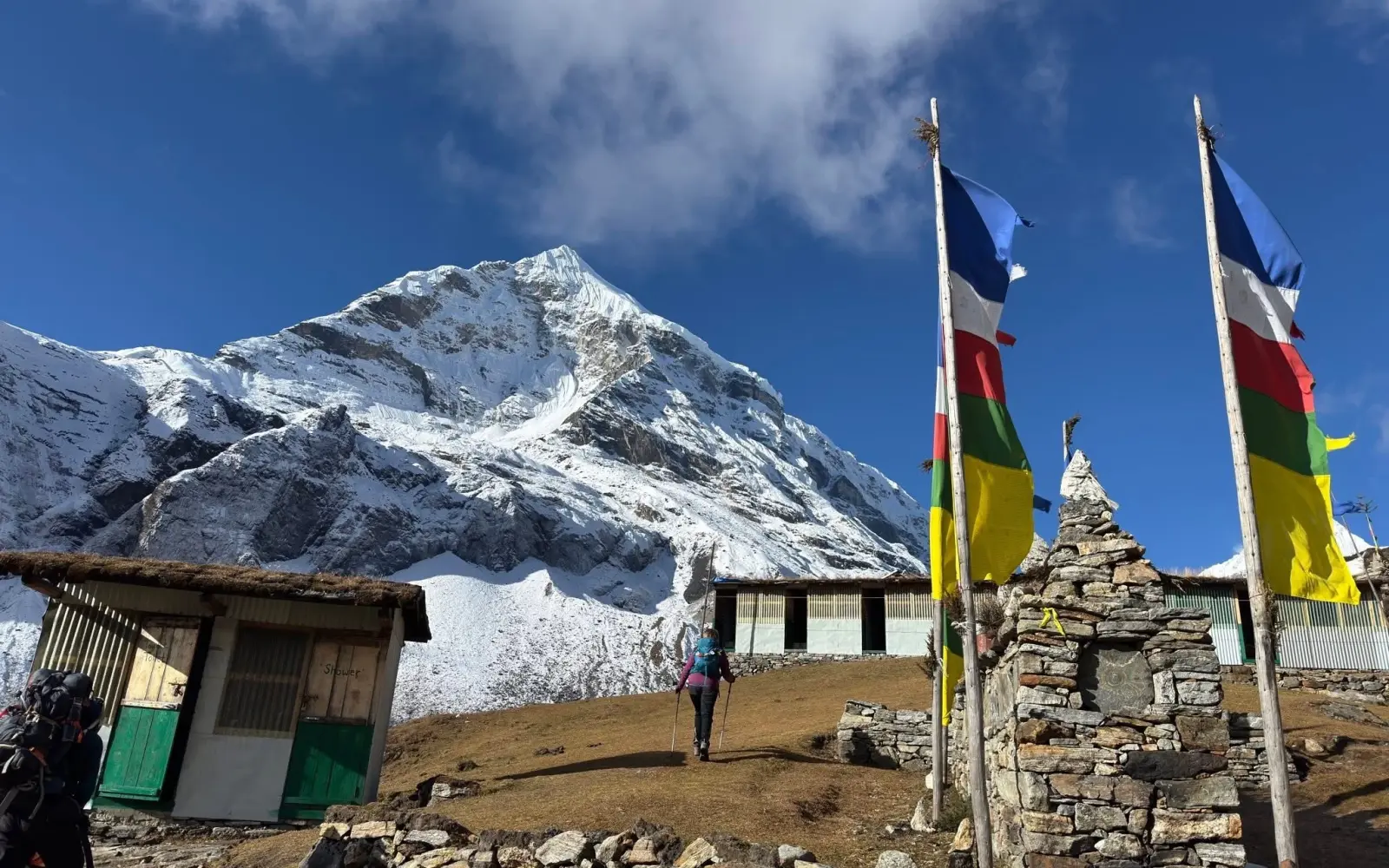
The moment I stepped into the Makalu-Barun Valley for the first time, I understood why biologists call this region "the last wilderness of Nepal." Unlike the crowded trails of Everest or Annapurna, the Makalu Base Camp Trek offers something increasingly rare in the Himalayas—pristine, undisturbed nature that feels almost prehistoric in its wildness.
Standing at 8,485 meters, Mount Makalu dominates the skyline, but the true magic lies in the journey itself. From subtropical forests buzzing with rare birds to alpine meadows carpeted with blue poppies, the flora and fauna of Makalu Base Camp Trek represent one of the most biodiverse corridors in the entire Himalayan range.
This comprehensive guide will take you through every ecological zone you'll encounter, the wildlife you might spot, and practical tips to make your nature experience unforgettable. Whether you're a serious wildlife photographer, a casual nature enthusiast, or simply someone who wants to understand the living landscape around you, this guide covers everything you need to know.
Ready to explore one of Nepal's most ecologically significant trekking routes? Let's dive into the remarkable natural world of the Makalu region.
Understanding the Makalu-Barun Ecosystem
A UNESCO-Recognized Biodiversity Hotspot
The Makalu-Barun National Park, established in 1992, encompasses 1,500 square kilometers of protected wilderness. Combined with the adjacent Makalu-Barun Conservation Area (830 square kilometers), this region forms one of the most important biodiversity conservation zones in the Eastern Himalayas.
What makes this area exceptional is the dramatic elevation range. In just 40 kilometers of horizontal distance, the landscape rises from 435 meters in the lowland buffer zones to over 8,000 meters at the Himalayan peaks. This vertical gradient creates distinct ecological zones, each hosting unique communities of plants and animals.
Key Statistics:
Total Protected Area: 2,330 square kilometers
Elevation Range: 435m to 8,485m
Plant Species Documented: 3,128+
Mammal Species: 88 confirmed species
Bird Species: 440+ recorded species
Endemic Species: 47 plants found nowhere else on Earth
The Four Major Ecological Zones
As you trek toward Makalu Base Camp, you'll pass through four distinct vegetation zones:
Subtropical Zone (435m–2,000m): Dense sal forests, bamboo groves, and agricultural terraces
Temperate Zone (2,000m–3,000m): Mixed broadleaf forests with oaks, maples, and magnolias
Subalpine Zone (3,000m–4,000m): Rhododendron forests, birch, and fir stands
Alpine Zone (4,000m–5,000m+): Dwarf shrubs, alpine meadows, and hardy cushion plants
Each zone presents different flora and fauna, making the trek a living biology lesson that unfolds with every day of walking.
Flora of the Makalu Base Camp Trek
Lower Elevation Forests (1,000m–2,500m)
The trek typically begins from Tumlingtar or Num, where the lower Arun Valley hosts lush subtropical and warm temperate forests. These areas receive heavy monsoon rainfall, creating perfect conditions for diverse plant life.
Dominant Tree Species:
Sal (Shorea robusta): Nepal's most valuable hardwood, dominant in lowland forests
Chilaune (Schima wallichii): Recognizable by its white flowers in spring
Katus (Castanopsis indica): Chestnuts collected by local communities
Utis (Alnus nepalensis): Fast-growing pioneer species along streams
Bamboo Forests: Several bamboo species create dense understory thickets in this zone. The most notable include:
Nigalo (Arundinaria species): Critical food source for red pandas
Mal Bans (Bambusa balcooa): Large clumping bamboo near villages
Tama (Dendrocalamus hamiltonii): Young shoots eaten as vegetables locally
Medicinal Plants of Lower Elevations: The Rai and Limbu communities inhabiting the Makalu region possess extensive traditional knowledge of medicinal plants. Some commonly found species include:
Local Name
Scientific Name
Traditional Use
Amala
Phyllanthus emblica
Vitamin C, immunity
Harro
Terminalia chebula
Digestive health
Chiraito
Swertia chirayita
Fever, liver disorders
Pipla
Piper longum
Respiratory issues
Gurjo
Tinospora sinensis
General tonic
The Rhododendron Kingdom (2,500m–4,000m)
Nepal is home to 32 of the world's 850 rhododendron species, and the Makalu region contains at least 25 of them. Between March and May, the forests transform into extraordinary displays of color that rival any botanical garden on Earth.
Major Rhododendron Species:
Rhododendron arboreum (Lali Gurans)
Nepal's national flower
Elevation: 1,500m–3,500m
Color: Typically deep red, occasionally pink or white
Peak bloom: March–April
Interesting fact: Flowers are edible and used to make local wine
Rhododendron campanulatum
Elevation: 3,000m–4,500m
Color: Pale pink to lavender
Forms dense thickets above treeline
Leaves have distinctive rusty underside
Rhododendron hodgsonii
Elevation: 3,000m–4,200m
Color: Pink to magenta
Large leaves up to 30cm long
Named after British naturalist Brian Hodgson
Rhododendron anthopogon
Elevation: 3,500m–5,000m
Dwarf species rarely exceeding 1 meter
Aromatic leaves used for incense
Among the hardiest high-altitude species
Best Time to See Rhododendrons: The optimal window for rhododendron viewing is mid-March to early May. Lower elevation species bloom first, with the flowering "wave" moving upward through April. By late April, the subalpine species around 3,500-4,000m are at their peak.
Orchid Diversity
The Makalu region hosts approximately 86 orchid species, making it one of the richest orchid habitats in Nepal. Most orchids occur between 1,500m and 3,000m elevation.
Notable Orchid Species:
Cymbidium species: Large, showy flowers popular in horticulture
Dendrobium species: Diverse group with over 20 local species
Pleione praecox: Ground orchid with pink flowers
Coelogyne species: Fragrant white or cream flowers
Orchid Viewing Tips:
Look on tree trunks and branches—most Himalayan orchids are epiphytic
Early monsoon (May-June) brings peak orchid flowering
Carry binoculars to spot canopy orchids
Never collect or disturb orchids
Alpine Flora (4,000m–5,000m+)
Above the treeline, the plant world becomes a study in survival. Plants here must cope with intense UV radiation, freezing temperatures, thin air, and short growing seasons.
The Legendary Blue Poppy: The Himalayan Blue Poppy (Meconopsis horridula and related species) is among the most sought-after sights for botanical enthusiasts. These stunning flowers bloom in the alpine meadows around Makalu Base Camp during June-August.
Elevation: 4,200m–5,500m
Flower color: Electric blue to purple
Bloom period: June–August (monsoon season)
Habitat: Rocky slopes, scree fields, and alpine meadows
Primula species: Multiple species in pink, purple, and yellow
Saxifraga species: Cushion plants growing on rocks
Potentilla species: Yellow cinquefoils in meadows
Bistorta species: Pink spiky flowers in wet areas
Juniper (Juniperus species): Aromatic shrub used for incense
Adaptations for Survival: Alpine plants have evolved remarkable survival strategies:
Dense hair or wool to trap warmth
Cushion growth forms to minimize wind exposure
Deep taproots to access water and anchor against wind
Rapid flowering cycles (sometimes just 2-3 weeks)
Dark pigmentation to absorb maximum sunlight
Vegetation Changes by Season
Understanding seasonal changes helps you anticipate what you'll see:
Season
Elevation Focus
Key Flora Highlights
Spring (March-May)
2,000m–4,000m
Rhododendrons, magnolias, primulas
Pre-monsoon (May-June)
3,000m–4,500m
Orchids, late rhododendrons, early alpines
Monsoon (June-Sept)
4,000m–5,000m
Blue poppies, alpine meadow flowers
Autumn (Oct-Nov)
All elevations
Fall colors, seed heads, mushrooms
Winter (Dec-Feb)
Lower zones
Evergreen forests, limited flowering
Fauna of the Makalu Base Camp Trek
Flagship Mammal Species
The Makalu-Barun ecosystem supports some of the most charismatic wildlife in the Himalayas. While sightings require patience and luck, knowing what to look for dramatically increases your chances.
Red Panda (Ailurus fulgens)
The red panda is perhaps the most beloved animal of the Eastern Himalayas, and Makalu offers excellent habitat for this endangered species.
Key Facts:
Population in Makalu region: Estimated 40-60 individuals
Preferred elevation: 2,200m–4,800m
Diet: 95% bamboo, supplemented by berries, eggs, and insects
Activity pattern: Most active at dawn and dusk
Conservation status: IUCN Endangered
Where to Look: Red pandas favor temperate forests with bamboo understory. The stretch between Tashigaon and Khongma offers the best chances. Look for them in trees—they spend most of their time in the canopy.
Identification Tips:
Reddish-brown fur with white face markings
Long, bushy ringed tail
Size of a large house cat
Often curled on branches or feeding on bamboo
Best Sighting Chances:
Season: Spring (March-May) and autumn (October-November)
Time: Early morning (6-8 AM) and late afternoon (4-6 PM)
Weather: Clear, calm days after overnight rain
Snow Leopard (Panthera uncia)
The "ghost of the mountains" inhabits the highest reaches of the Makalu ecosystem. With only 300-500 snow leopards estimated in Nepal, sightings are rare but not impossible.
Territory: Males can range over 200+ square kilometers
Conservation status: IUCN Vulnerable
Signs to Watch For:
Scrape marks in soft soil (territorial markers)
Scat deposits on prominent rocks
Pugmarks in snow (rare to see tracks in mud)
Territorial spray marks (scent marking)
Realistic Expectations: Actual snow leopard sightings on the Makalu trek are extremely rare. However, camera trap studies confirm their presence throughout the upper Barun Valley. Your best chance is spotting signs rather than the animal itself.
Himalayan Musk Deer (Moschus chrysogaster)
This elusive, fanged deer is more common than the snow leopard but still challenging to observe.
Key Facts:
Elevation: 2,500m–4,400m
Weight: 11–18 kg
Distinguishing features: No antlers; males have long canine teeth
Activity: Crepuscular and nocturnal
Conservation status: IUCN Endangered (heavily poached for musk)
Identification: Look for a small, stocky deer with large ears and no antlers. Males possess elongated canine tusks that protrude below the upper lip.
Other Notable Mammals
Himalayan Black Bear (Ursus thibetanus):
Common in lower and middle elevation forests
Omnivorous, often seen in fruiting trees
Generally avoids humans but can be dangerous if surprised
White chest patch distinguishes from other bears
Himalayan Tahr (Hemitragus jemlahicus):
Stocky wild goat with thick reddish-brown fur
Males have impressive manes
Often seen on steep cliffs and rocky outcrops
Elevation: 2,500m–5,000m
Serow (Capricornis thar):
Goat-antelope hybrid appearance
Dark coloration with pale legs
Solitary, forest-dwelling
Elevation: 2,000m–4,000m
Wild Boar (Sus scrofa):
Common in lower forests
Often heard rooting at night
Agricultural pest in some villages
Elevation: Up to 3,500m
Smaller Mammals:
Yellow-throated Marten: Aggressive predator, often seen in pairs
Himalayan Weasel: Long, slender body, common at higher elevations
Royle's Pika: Rabbit-like creature in boulder fields
Himalayan Marmot: Large ground squirrels in alpine meadows
Assamese Macaque: Common near villages and lower forests
Birdlife Along the Trek
With over 440 recorded bird species, Makalu ranks among Asia's premier birding destinations. The trek passes through multiple habitat types, ensuring diverse sightings.
Pheasants and Gamebirds
Nepal's national bird and several other spectacular pheasants call Makalu home:
Himalayan Monal (Lophophorus impejanus):
Nepal's national bird
Male: Iridescent rainbow plumage
Female: Mottled brown (well camouflaged)
Elevation: 2,400m–4,500m
Often seen on grassy slopes at dawn
Satyr Tragopan (Tragopan satyra):
Stunning red and spotted plumage
Extremely shy and difficult to observe
Elevation: 2,400m–4,200m
Prefers dense rhododendron understory
Blood Pheasant (Ithaginis cruentus):
Named for red coloring on male's breast
Common but wary
Elevation: 3,000m–5,000m
Often in small groups
Other Notable Species:
Kalij Pheasant
Koklass Pheasant
Hill Partridge
Snow Partridge (high elevations)
Raptors and Birds of Prey
The dramatic landscapes of Makalu provide perfect hunting grounds for numerous raptors:
Himalayan Griffon: Massive vulture with 2.5m wingspan
Safety Note: Snake encounters are uncommon but possible in lower forests. Watch where you step, especially around water sources and during monsoon season.
Butterflies and Insects
The Makalu region hosts remarkable insect diversity, with over 80 butterfly species documented.
Notable Butterflies:
Kaiser-i-Hind (rare, legally protected)
Golden Birdwing
Bhutan Glory
Common Windmill
Various Apollo species (high altitude)
Best Butterfly Season: April through September, with peak diversity in May-June.
Conservation Efforts and Challenges
Makalu-Barun National Park Protection
Established in 1992, Makalu-Barun National Park was Nepal's first protected area designed to link conservation with sustainable development. The park operates under several key principles:
Buffer Zone Management: The 830 sq km buffer zone surrounding the park involves local communities in conservation. Revenue from park entry fees (30% retention locally) funds:
Community forests
School scholarships
Health posts
Trail maintenance
Anti-Poaching Measures: Park rangers conduct regular patrols to prevent poaching of:
Musk deer (for musk glands)
Red pandas (illegal pet trade)
Medicinal plants (overcollection)
Snow leopards (skins and bones)
Challenges Facing the Ecosystem:
Climate Change:
Treeline moving upward
Glacial retreat affecting water sources
Shifting species ranges
Unpredictable weather patterns
Human Pressures:
Firewood collection
Overgrazing by livestock
Illegal harvesting of medicinal plants
Growing tourism impacts
Poaching:
Despite protection, illegal hunting persists
Musk deer particularly vulnerable
Snare traps still found occasionally
How Trekkers Can Help
Every visitor to Makalu plays a role in conservation. Here's how you can minimize your impact and support protection efforts:
Waste Management:
Pack out all trash—nothing should be left behind
Carry a reusable water bottle with purification system
Avoid single-use plastics whenever possible
Use toilet facilities where available; otherwise, bury waste properly
Wildlife Respect:
Maintain minimum 30-meter distance from wildlife
Never feed wild animals
Keep noise levels low, especially at dawn and dusk
Do not attempt to photograph stressed animals
Plant Protection:
Stay on established trails
Never pick flowers or plants
Avoid trampling alpine meadows
Don't collect seeds or plant specimens
Supporting Local Conservation:
Pay park entry fees (funds conservation)
Hire local guides and porters
Stay in locally-owned lodges
Purchase local handicrafts
Carbon Offset: Consider offsetting your flight emissions through reputable programs. Several organizations fund forest restoration in Nepal.
Practical Tips for Nature Enthusiasts
Best Seasons for Wildlife and Flora
Spring (March–May): Grade A for Flora
Advantages:
Rhododendron blooms peak
Clear skies with occasional afternoon showers
Bird migration in full swing
Longer daylight hours
Considerations:
Popular season means more trekkers
Some high passes may have snow early season
Afternoon clouds can obscure mountain views
Autumn (October–November): Grade A for Overall Experience
Advantages:
Crystal-clear skies
Comfortable temperatures
Fall foliage colors
Excellent wildlife activity before winter
Post-monsoon freshness
Considerations:
Less dramatic flower displays
Nights getting cold at altitude
Peak trekking season (though Makalu remains quiet)
Monsoon (June–September): Grade B+ for Serious Botanists
Advantages:
Blue poppies and alpine flowers bloom
Lush, green landscapes
Fewest other trekkers
Waterfalls at peak flow
Considerations:
Heavy rain, muddy trails
Leeches in lower forests
Clouds often obscure views
Some sections may be difficult
Winter (December–February): Grade C for Wildlife
Advantages:
Very few other trekkers
Clear, stable weather at lower elevations
Some wildlife moves to lower elevations
Considerations:
Upper sections snow-covered or impassable
Extremely cold, short days
Limited flora activity
Some lodges may close
Essential Gear for Nature Observation
Optical Equipment:
Binoculars: 8x42 or 10x42 ideal for general wildlife
Spotting scope: Optional but excellent for distant wildlife
Camera: DSLR or mirrorless with telephoto lens (100-400mm range ideal)
Macro lens: For flowers, insects, and small details
Field Guides:
Birds of Nepal by Grimmett, Inskipp & Inskipp
Flowers of the Himalaya by Polunin & Stainton
Mammals of Nepal by Shrestha (compact guide)
Digital apps: Merlin Bird ID, iNaturalist
Recording Equipment:
Notebook and pencil for observations
Audio recorder for bird calls
GPS device or phone app for location logging
Practical Items:
Headlamp with red light option (doesn't disturb wildlife)
Lightweight tarp or sit pad for observation waits
Camouflage or neutral-colored clothing
Patience—the most essential tool!
Wildlife Photography Tips
Technical Settings:
Use fast shutter speeds (1/500s or faster for birds)
Higher ISO is acceptable for sharp images
Aperture priority mode works well for most wildlife
Domestic water buffalo (not wild, but characteristic)
Day 3-4: Num to Tashigaon (2,100m)
What You'll See:
Transition into temperate forest
Traditional Rai and Limbu villages
Increasing forest cover
First rhododendrons appearing
Flora Highlights:
Oak and maple forests
Epiphytic orchids on tree trunks
Various fern species
Early rhododendrons at higher points
Fauna to Watch For:
Yellow-throated marten (look in trees!)
Kalij pheasant (listen for calls)
Laughingthrushes in undergrowth
Barking deer (distant alarm calls)
Day 5-6: Tashigaon to Khongma (3,500m)
What You'll See:
Dense rhododendron forests
Moss-draped cloud forest
Red panda habitat
Dramatic elevation gain
Flora Highlights:
Peak rhododendron diversity
Tree ferns in sheltered gullies
Magnolia forests
Lichen-covered branches
Fauna to Watch For:
Red panda (best chances on trek!)
Himalayan black bear (signs more common than sightings)
Musk deer
Satyr tragopan and blood pheasant
Pro Tip: Spend an extra day here if possible. The forests between Tashigaon and Khongma offer the trek's best mammal observation opportunities. Consider early morning walks before breakfast.
Day 7-8: Khongma to Dobato (3,800m)
What You'll See:
Subalpine transition zone
Dwarf rhododendron scrub
Open meadows appearing
Himalayan tahr country
Flora Highlights:
Rhododendron campanulatum dominates
Juniper and dwarf birch
Early primulas
High-altitude grasses
Fauna to Watch For:
Himalayan monal (excellent chances)
Blood pheasant
Himalayan tahr on cliffs
Marmots in meadows
Day 9-10: Dobato to Langmale (4,410m)
What You'll See:
True alpine environment
Glacial landforms
Alpine meadows
First views of Makalu's faces
Flora Highlights:
Blue poppies (monsoon season)
Alpine primulas
Edelweiss and saxifrages
Juniper scrub ending
Fauna to Watch For:
Himalayan marmot (abundant)
Pika (rock rabbits)
Snow partridge
Grandala (electric blue bird)
Day 11-12: Langmale to Makalu Base Camp (4,870m)
What You'll See:
High alpine desert
Glacial moraines
Stark but beautiful landscapes
Makalu's massive south face
Flora Highlights:
Hardy cushion plants
Mosses and lichens on rocks
Seasonal alpine flowers (brief summer)
Vegetation becoming sparse
Fauna to Watch For:
Himalayan snowcock (listen for calls)
Snow leopard signs (pugmarks, scrapes)
Lammergeier soaring overhead
Mountain choughs (yellow-billed)
Frequently Asked Questions
What is the best time to see wildlife on the Makalu Base Camp Trek?
October and November offer the best combination of visibility, wildlife activity, and comfortable trekking conditions. Animals are preparing for winter, moving actively. Spring (April-May) is best for birds and flowers.
Can I really see a red panda on this trek?
Yes, though sightings require luck and patience. The Khongma-Tashigaon stretch provides legitimate habitat. Hire a local guide who knows the area. Early mornings in bamboo forest zones offer the best chances.
Is the Makalu region suitable for serious birdwatchers?
Absolutely. With 440+ species in diverse habitats, this is premier birding territory. The relatively low tourist numbers mean less disturbance. Consider extending your itinerary for thorough birding.
What should I do if I encounter a Himalayan black bear?
Stay calm. Make noise to announce your presence—bears prefer to avoid humans. If you see one, back away slowly without making direct eye contact. Never run. Bear encounters are rare; most hear you coming and leave.
Are there leeches on this trek?
During monsoon season (June-September), leeches are common in lower forests up to about 2,500m. They're harmless but annoying. Wear gaiters, tuck pants into socks, and apply DEET or salt to deter them. Post-monsoon and spring treks have minimal leech issues.
How can I photograph the Himalayan monal?
Monals are most active at dawn on open slopes. Look for them feeding on grass and roots. Use a telephoto lens (300mm+) and approach slowly. They often allow closer approach than most pheasants if you move quietly and avoid sudden movements.
Conclusion: Experiencing the Wild Heart of the Eastern Himalayas
The flora and fauna of Makalu Base Camp Trek represent one of the last great wilderness experiences in the Himalayas. From the rhododendron forests of Khongma to the stark alpine meadows below Makalu's massive face, this journey offers nature lovers an unparalleled opportunity to witness Himalayan biodiversity in its most pristine form.
Unlike more commercialized treks, the Makalu region retains a sense of genuine wildness. Red pandas still browse in the bamboo, monal pheasants display on misty hillsides, and blue poppies bloom in meadows rarely visited by foreign trekkers. These experiences are becoming increasingly precious as wilderness areas worldwide diminish.
But experiencing Makalu also carries responsibility. Every trekker who passes through these forests and meadows leaves an impact. By following responsible practices—staying on trails, carrying out waste, respecting wildlife, and supporting local conservation—we can help ensure that future generations will find the same wild wonders.
Whether you're a dedicated naturalist seeking specific species or simply a traveler who wants to feel the living heartbeat of the mountains, the Makalu Base Camp Trek delivers an experience unlike any other in Nepal.
Ready to witness the extraordinary wildlife and plant life of the Makalu region yourself?
Visit our Makalu Base Camp trek itinerary page to see the complete route, daily schedule, and all the details you need to plan your adventure.
For questions about wildlife-focused extensions, the best timing for your specific interests, or custom itineraries designed for nature photography, explore our complete Makalu trekking guide or contact our team directly.
The wild heart of the Eastern Himalayas is waiting. The question is: are you ready to answer its call?
Majestic Trails Nepal has been organizing responsible treks to the Makalu region since our founding. Our guides possess intimate knowledge of local wildlife and work actively with conservation organizations to protect the unique biodiversity of this extraordinary landscape. Plan your Makalu adventure with a team that shares your passion for wild nature.
Related Travel Blogs
Join our Newsletter
Sign up to stay updated with latest offers, recent events and more news.