[{"name":"Langtang Valley Trek \u2014 10 Days","duration":"10","image_url":"https:\/\/www.majestictrailsnepal.com\/storage\/trip-galleries\/1\/thumb_e7907ed736676d12e6ab17328008e746.webp","offer_price":null,"url":"https:\/\/www.majestictrailsnepal.com\/trips\/langtang-valley-trek"},{"name":"Everest Base Camp Trek","duration":"14","image_url":"https:\/\/www.majestictrailsnepal.com\/storage\/trip-galleries\/2\/thumb_4b769c9c4b5b007a61f4ce3b76ff440d.webp","offer_price":null,"url":"https:\/\/www.majestictrailsnepal.com\/trips\/everest-base-camp-trek"},{"name":"Everest Panorama Trek","duration":"9","image_url":"https:\/\/www.majestictrailsnepal.com\/storage\/trip-galleries\/3\/thumb_e6ee74caea3e2900c23ca370b06bab80.webp","offer_price":null,"url":"https:\/\/www.majestictrailsnepal.com\/trips\/everest-panorama-trek"},{"name":"Annapurna Base Camp Trek","duration":"14","image_url":"https:\/\/www.majestictrailsnepal.com\/storage\/trip-galleries\/4\/thumb_3f8d40f9472f701d7c46a827925201bc.webp","offer_price":null,"url":"https:\/\/www.majestictrailsnepal.com\/trips\/annapurna-base-camp-trek"},{"name":"Annapurna Base Camp Express Trek","duration":"9","image_url":"https:\/\/www.majestictrailsnepal.com\/storage\/trip-galleries\/5\/thumb_bac80de2bd257d651fa75d9c8025da1a.webp","offer_price":null,"url":"https:\/\/www.majestictrailsnepal.com\/trips\/annapurna-base-camp-express-trek"},{"name":"Annapurna Circuit Trek","duration":"15","image_url":"https:\/\/www.majestictrailsnepal.com\/storage\/trip-galleries\/6\/thumb_b73bdec74acacaa0d72a2a2a513f3d4a.webp","offer_price":null,"url":"https:\/\/www.majestictrailsnepal.com\/trips\/annapurna-circuit-trek"},{"name":"Ghorepani Poon Hill Trek","duration":"8","image_url":"https:\/\/www.majestictrailsnepal.com\/storage\/trip-galleries\/7\/thumb_aeda9e6388ab2692138cc9c9efa81a7f.webp","offer_price":null,"url":"https:\/\/www.majestictrailsnepal.com\/trips\/ghorepani-poon-hill-trek"},{"name":"Mardi Himal Trek \u2014 9 Days","duration":"9","image_url":"https:\/\/www.majestictrailsnepal.com\/storage\/trip-galleries\/8\/thumb_c511ee87ecab8ff015210dd647392d66.webp","offer_price":null,"url":"https:\/\/www.majestictrailsnepal.com\/trips\/mardi-himal-trek"},{"name":"Manaslu Circuit Trek","duration":"15","image_url":"https:\/\/www.majestictrailsnepal.com\/storage\/trip-galleries\/9\/thumb_7726908390ad6b249f2f6a7856f9dc17.webp","offer_price":null,"url":"https:\/\/www.majestictrailsnepal.com\/trips\/manaslu-circuit-trek"},{"name":"Upper Mustang Trek","duration":"16","image_url":"https:\/\/www.majestictrailsnepal.com\/storage\/trip-galleries\/10\/thumb_6a9b52ecd1d8cda92d594e5351431d6e.webp","offer_price":null,"url":"https:\/\/www.majestictrailsnepal.com\/trips\/upper-mustang-trek"},{"name":"Pokhara City Tour","duration":"1","image_url":"https:\/\/www.majestictrailsnepal.com\/storage\/trip-galleries\/11\/thumb_cf762ba4c20363bd1c0f239db35fcc84.webp","offer_price":null,"url":"https:\/\/www.majestictrailsnepal.com\/trips\/pokhara-city-tour"},{"name":"Paragliding in Pokhara","duration":"1","image_url":"https:\/\/www.majestictrailsnepal.com\/storage\/trip-galleries\/12\/thumb_b896201edf88bbe0f570e876c3c337a3.webp","offer_price":70,"url":"https:\/\/www.majestictrailsnepal.com\/trips\/paragliding-in-pokhara"},{"name":"Kathmandu City Tour","duration":"2","image_url":"https:\/\/www.majestictrailsnepal.com\/storage\/trip-galleries\/13\/thumb_846ad05bd3ce7bebb3843c24c08db6f9.webp","offer_price":null,"url":"https:\/\/www.majestictrailsnepal.com\/trips\/kathmandu-city-tour"},{"name":"Lumbini Buddhist Pilgrimage Tour","duration":"4","image_url":"https:\/\/www.majestictrailsnepal.com\/storage\/trip-galleries\/14\/a2998dca0ce22f28a61c3862dd47f6a3.webp","offer_price":null,"url":"https:\/\/www.majestictrailsnepal.com\/trips\/lumbini-buddhist-pilgrimage-tour"},{"name":"5 days langtang valley trek","duration":"5","image_url":"https:\/\/www.majestictrailsnepal.com\/storage\/trip-galleries\/15\/thumb_7a6c65c139b8085d220ac01913cb1448.webp","offer_price":510,"url":"https:\/\/www.majestictrailsnepal.com\/trips\/5-days-langtang-valley-trek"},{"name":"Leisure Port Nepal Price: Rafting and Camping Adventure","duration":"7","image_url":"https:\/\/www.majestictrailsnepal.com\/storage\/trip-galleries\/17\/thumb_02cb8c3f0697c7c5c4f73d744b47d87f.webp","offer_price":550,"url":"https:\/\/www.majestictrailsnepal.com\/trips\/leisure-port-nepal-price-rafting-and-camping-adventure"},{"name":"10 days spiritual tour in Nepal","duration":"10","image_url":"https:\/\/www.majestictrailsnepal.com\/storage\/trip-galleries\/18\/thumb_b4e7eba000673d1bce6b56abb422fe3b.webp","offer_price":1200,"url":"https:\/\/www.majestictrailsnepal.com\/trips\/10-days-spiritual-tour-in-nepal"},{"name":"Annapurna Circuit Short Trek","duration":"10","image_url":"https:\/\/www.majestictrailsnepal.com\/storage\/trip-galleries\/19\/thumb_769ee8cbe02a510d8db76419c97a2dc9.webp","offer_price":null,"url":"https:\/\/www.majestictrailsnepal.com\/trips\/annapurna-circuit-short-trek"},{"name":"Best Short Manaslu Circuit Trek","duration":"11","image_url":"https:\/\/www.majestictrailsnepal.com\/storage\/trip-galleries\/20\/thumb_ac1b4977a3fce9d11ee68240cad675b6.webp","offer_price":null,"url":"https:\/\/www.majestictrailsnepal.com\/trips\/best-short-manaslu-circuit-trek"},{"name":"Langtang Gosaikunda Trek","duration":"13","image_url":"https:\/\/www.majestictrailsnepal.com\/storage\/trip-galleries\/22\/thumb_577a6402f2ca4b3f12bfd80b96b33a23.webp","offer_price":940,"url":"https:\/\/www.majestictrailsnepal.com\/trips\/langtang-gosaikunda-trek"},{"name":"3 Passes Trek Nepal","duration":"22","image_url":"https:\/\/www.majestictrailsnepal.com\/storage\/trip-galleries\/24\/thumb_8020edea67aefce87e9012dc89a60087.webp","offer_price":null,"url":"https:\/\/www.majestictrailsnepal.com\/trips\/3-passes-trek-nepal"},{"name":"Tsum Valley Trek","duration":"13","image_url":"https:\/\/www.majestictrailsnepal.com\/storage\/trip-galleries\/25\/thumb_194c03e3c3463dff07a3f621a81ef9ea.webp","offer_price":null,"url":"https:\/\/www.majestictrailsnepal.com\/trips\/tsum-valley-trek"},{"name":"Gokyo and Renjo La Pass Trek","duration":"14","image_url":"https:\/\/www.majestictrailsnepal.com\/storage\/trip-galleries\/26\/thumb_7b865f0f0d0d4c6807b625b6e391b56d.webp","offer_price":1490,"url":"https:\/\/www.majestictrailsnepal.com\/trips\/gokyo-and-renjo-la-pass-trek"},{"name":"Honeymoon Tour in Nepal","duration":"9","image_url":"https:\/\/www.majestictrailsnepal.com\/storage\/trip-galleries\/27\/thumb_dabf449c090bb16efd5823c653eb61b3.webp","offer_price":null,"url":"https:\/\/www.majestictrailsnepal.com\/trips\/honeymoon-tour-in-nepal"},{"name":"Pikey Peak Trek","duration":"10","image_url":"https:\/\/www.majestictrailsnepal.com\/storage\/trip-galleries\/28\/thumb_5425e57ce3ea84d31a7b24b83b1af94f.webp","offer_price":1090,"url":"https:\/\/www.majestictrailsnepal.com\/trips\/pikey-peak-trek"},{"name":"Makalu Base Camp Trek","duration":"17","image_url":"https:\/\/www.majestictrailsnepal.com\/storage\/trip-galleries\/29\/thumb_d68c8ec6492540c922045d825a38cd50.webp","offer_price":null,"url":"https:\/\/www.majestictrailsnepal.com\/trips\/makalu-base-camp-trek"},{"name":"Nepal Winter Tour","duration":"8","image_url":"https:\/\/www.majestictrailsnepal.com\/storage\/trip-galleries\/30\/thumb_c8491c0c4b1fb19d8e93630866895799.webp","offer_price":null,"url":"https:\/\/www.majestictrailsnepal.com\/trips\/nepal-winter-tour"},{"name":"Maratika Tour in Nepal","duration":"6","image_url":"https:\/\/www.majestictrailsnepal.com\/storage\/trip-galleries\/31\/thumb_97948560c5a12a486f9ac2b76567cafd.webp","offer_price":null,"url":"https:\/\/www.majestictrailsnepal.com\/trips\/maratika-tour-in-nepal"},{"name":"Nepal Lake Trek","duration":"14","image_url":"https:\/\/www.majestictrailsnepal.com\/storage\/trip-galleries\/32\/thumb_d9b260fe13127816f5b3c25447caf70c.webp","offer_price":null,"url":"https:\/\/www.majestictrailsnepal.com\/trips\/nepal-lake-trek"},{"name":"Taste of Nepal Tour Package","duration":"9","image_url":"https:\/\/www.majestictrailsnepal.com\/storage\/trip-galleries\/33\/thumb_f4b55ab5760a8e057b4c3e208e25ab36.webp","offer_price":null,"url":"https:\/\/www.majestictrailsnepal.com\/trips\/taste-of-nepal-tour-package"},{"name":"Poon Hill Yoga Trek in Nepal","duration":"9","image_url":"https:\/\/www.majestictrailsnepal.com\/storage\/trip-galleries\/34\/thumb_904b238e690107c5c9b1092296880cc9.webp","offer_price":null,"url":"https:\/\/www.majestictrailsnepal.com\/trips\/poon-hill-yoga-trek-in-nepal"},{"name":"Nar Phu Nepal Trek","duration":"10","image_url":"https:\/\/www.majestictrailsnepal.com\/storage\/trip-galleries\/35\/thumb_f959e3e22c260629add0ba61a4038812.webp","offer_price":null,"url":"https:\/\/www.majestictrailsnepal.com\/trips\/nar-phu-nepal-trek"},{"name":"Annapurna Base Camp Helicopter Tour","duration":"1","image_url":"https:\/\/www.majestictrailsnepal.com\/storage\/trip-galleries\/36\/thumb_e81861e8772a9d7fac92ab4a7d43e3bf.webp","offer_price":null,"url":"https:\/\/www.majestictrailsnepal.com\/trips\/annapurna-base-camp-helicopter-tour"},{"name":"Annapurna Circuit with Nar Phu Valley Trek","duration":"16","image_url":"https:\/\/www.majestictrailsnepal.com\/storage\/trip-galleries\/38\/thumb_b70692cbd1c1dd772587c940be2d0bc9.webp","offer_price":null,"url":"https:\/\/www.majestictrailsnepal.com\/trips\/annapurna-circuit-with-nar-phu-valley-trek"}]
Hartalika Teej 2026 in Nepal falls on Monday, September 14, 2026 (Bhadra Shukla Tritiya, Bhadra 29, 2083 BS). The full festival runs three days: September 13 (Dar Khane Din), September 14 (Haritalika Teej), and September 16 (Rishi Panchami).
The three-day festival generally involves a specific schedule:
Dar Khane Din (Feast Day): Sunday, September 13, 2026. Women gather for a lavish midnight feast before beginning the strict fast.
Haritalika Teej (Main Fasting Day): Monday, September 14, 2026. Women dress in traditional vibrant red attire to apply mehendi and observe a strict nirjala (no food or water) fast, spending the day singing, dancing, and visiting temples like Pashupatinath Temple.
Rishi Panchami (Purification): Wednesday, September 16, 2026. Women perform purification rituals and worship the Sapta Rishi (seven sages) to conclude the festival.
In Nepal, the main Teej fasting day is officially recognized as a public holiday for female employees. You can check exact regional timings and further details on the Time and Date holiday portal.
For Hindi-language readers searching teej kab hai 2026, hartalika teej 2026 date in hindi, or तीज 2026 कब है: the main fasting day is 14 September 2026, Somvar (Monday).
Teej 2026 Date in Nepal: Full Schedule
In Nepal, the three-day Haritalika Teej festival in 2026 takes place from September 13 to September 16 (Bhadra 28 to Bhadra 31, 2083 in the Nepali calendar). It is a national holiday for women employees across the country.
Festival Day
Nepali Calendar
Gregorian Date
Key Observance
Dar Khane Din (Day 1)
Bhadra 28, 2083 BS
Sunday, September 13, 2026
Grand pre-fast feast, Teej songs, group dancing
Haritalika Teej (Day 2)
Bhadra 29, 2083 BS
Monday, September 14, 2026
Nirjala Vrat, Shiva Puja, Pashupatinath visits
Rishi Panchami (Day 3)
Bhadra 31, 2083 BS
Wednesday, September 16, 2026
Ritual bath with datiwan, Sapta Rishi worship
The Government of Nepal has officially gazetted September 14, 2026 as a public holiday for female employees.
What Is Nepali Teej? The Festival Explained
Teej Festival Nepal
Teej (Sanskrit: तीज) means "third." The word refers to the tritiya, the third day of a lunar fortnight. In Nepal, Haritalika Teej is the dominant and most widely observed form of the festival. It is a three-day Hindu celebration dedicated to Goddess Parvati and Lord Shiva.
The name Haritalika combines two Sanskrit roots: harit (to abduct) and aalika (female friend). The name references the myth at the festival's core, in which Parvati's closest friend helped her escape an arranged marriage so she could pursue her devotion to Shiva without interference.
Haritalika Teej is observed across all seven provinces of Nepal, by women of multiple communities: Bahun, Chhetri, Newar, Maithili, Bhojpuriya, and Kirat, among others. It is also observed by Nepali diaspora communities in India, the Gulf, the United Kingdom, Australia, and the United States.
What distinguishes Nepali Teej from its Indian counterparts is scale and intensity. Nowhere else does Haritalika Teej attract the same volume of temple attendance, the same cultural investment in collective song, or the same level of civic recognition.
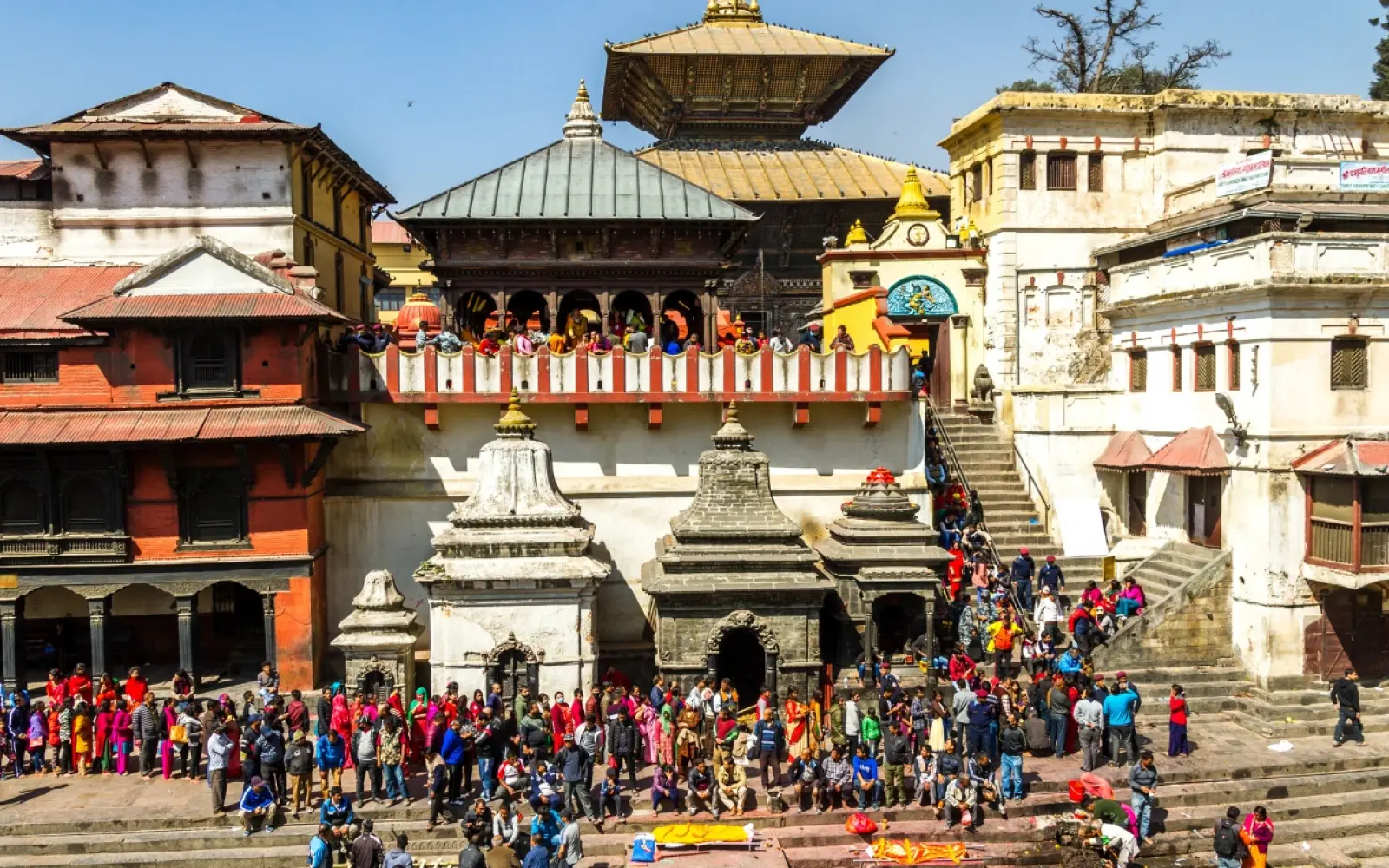
At Pashupatinath Temple in Kathmandu on Teej morning, the queue of women in red saris begins forming before 4 AM. By 7 AM, it stretches several hundred metres along the Bagmati riverbank.
What Is Teej Celebrated For?
Teej carries three layers of meaning, all active simultaneously.
Devotion to Parvati and Shiva. The festival commemorates the divine union of Goddess Parvati and Lord Shiva. It honours Parvati's persistence across 108 incarnations of prayer and penance. Women who fast and worship enact their own version of that commitment.
Marital wellbeing. Married women fast and pray specifically for their husband's health, longevity, and prosperity. The fast is understood as a spiritual act: abstinence generates sacred merit, and that merit extends divine protection to the family.
Welcoming the monsoon. Teej falls at the height of Nepal's monsoon season. Bhadra, the Nepali month in which it occurs, is mid-monsoon in the Himalayan foothills. The combination of rain, green landscape, and collective celebration makes Teej both a religious and a seasonal festival.
The Legend of Haritalika Teej: Parvati's 108th Birth
Hindu mythology grounds Teej in one of the subcontinent's most enduring narratives of devotion.
Parvati had loved Lord Shiva across 107 lifetimes of intense penance (tapasya). In her 108th birth, she was reborn as the daughter of King Himalaya. Her father arranged her marriage to Lord Vishnu, believing it was the best outcome for her.
Parvati refused. Her close friend Haritalika understood, and helped her escape to a remote forest. There, in secret, Parvati fashioned a Shiva Lingam from river sand and prayed with complete focus. She gave up food, water, and all comfort. Lord Shiva was moved by her unwavering devotion. He appeared before her and accepted her as his wife.
Teej carries Haritalika's name in her honour. The friend who enabled Parvati's escape is the festival's namesake. The story holds a second meaning: female solidarity made the divine union possible. That is partly why Teej, at its core, is a festival of women gathering for a shared purpose.
The festival also marks one of the rare spaces in traditional Nepali life where women hold the ceremonial centre. Men prepare the feast. Women lead the worship.
Why Do Girls and Unmarried Women Observe Teej?
The festival is not limited to married women.
Unmarried Hindu women in Nepal also observe the Teej fast. Their intention differs in one specific way: they fast to pray for a devoted, virtuous, and spiritually grounded husband. The framework mirrors Parvati's own path. She was unmarried and seeking when she began her penance.
For young women, Teej is also one of the most significant annual social events. The Dar Khane Din feast, the group dancing, and the communal Teej song sessions create a space where women celebrate themselves without domestic obligations. Scholars of South Asian culture have documented that Teej song sessions at family gatherings have historically served as one of the few public platforms through which women voiced personal and social concerns collectively.
What Travellers and Visitors Actually Witness
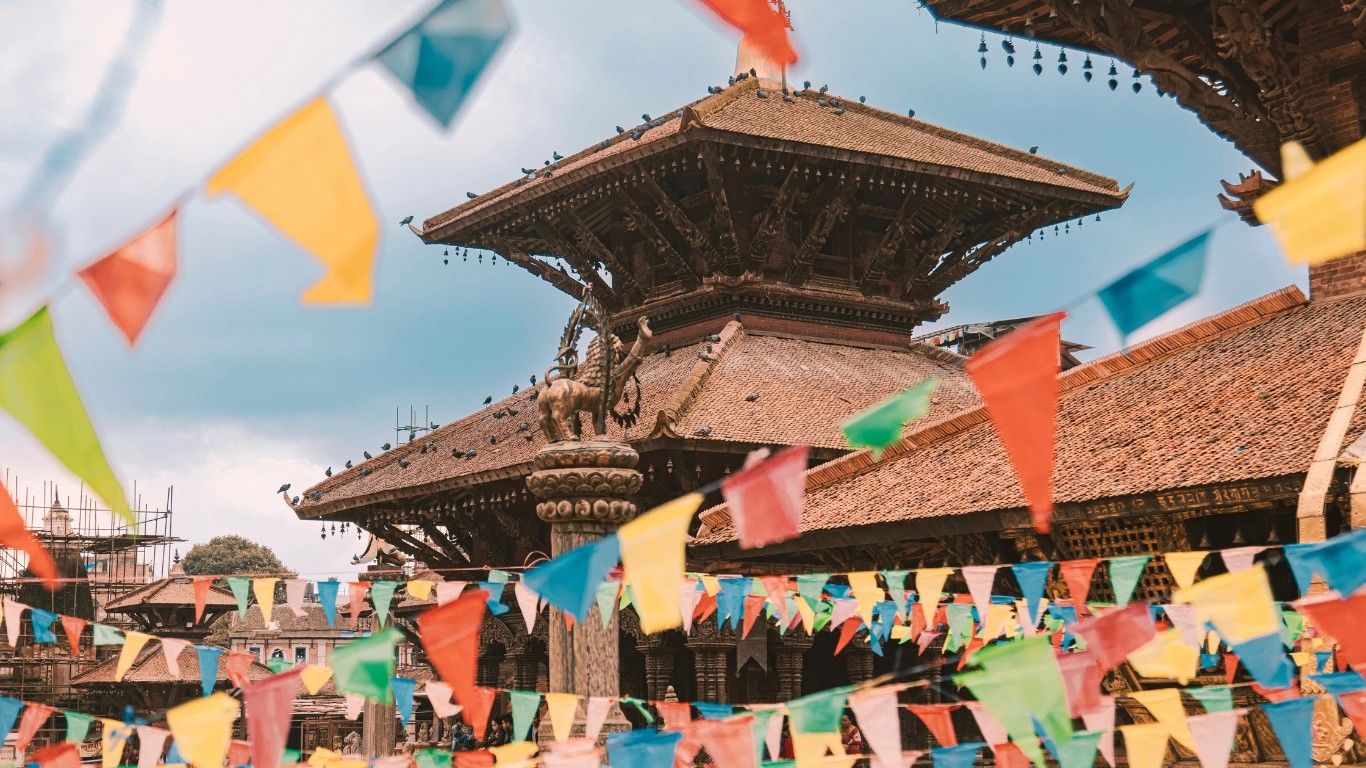
Trekkers witnessing the Festival at Pokhara, Nepal
For those who have never seen it, the scale takes people by surprise. One UK visitor who happened to be in Kathmandu during the 2025 festival described waking up to a completely transformed city: women out in red saris and gold jewellery, green bangles clanging on every step, an energy that was infectious. They were swept along with a river of women toward Pashupatinath Temple, one of the holiest temples in Kathmandu, where the women danced, laughed, and sang while the temple bells kept ringing into the evening.
The visual spectacle at Pashupatinath is the festival's defining image. Thousands of women draped in red and green throng the temple premises, and what fascinates observers most is watching women of all ages, young and old, dance for hours in the heat and rain without a drop of water or food for an entire day. Foreign women tourists are sometimes invited to participate in the merry-making.
This is part of what makes Teej distinct among Hindu festivals. It is simultaneously solemn and joyful, built around fasting yet expressed through dance.
Teej 2026: A Day-by-Day Guide
Here is the day by day itinerary:
Day 1: Dar Khane Din (September 13, 2026, Bhadra 28, 2083 BS)
Dar Khane Din translates as "the day of eating dar." Dar is the ritual pre-fast feast.
Women arrive at family homes, usually a mother's or maternal aunt's house, in full traditional attire. The ensemble is deliberately bridal: red sari, pote (green-and-gold bead necklace), tilhari (gold and coral pendant associated with married Nepali women), sindoor in the hair part, and glass bangles. Mehendi, applied over the previous days, deepens in colour by this evening.
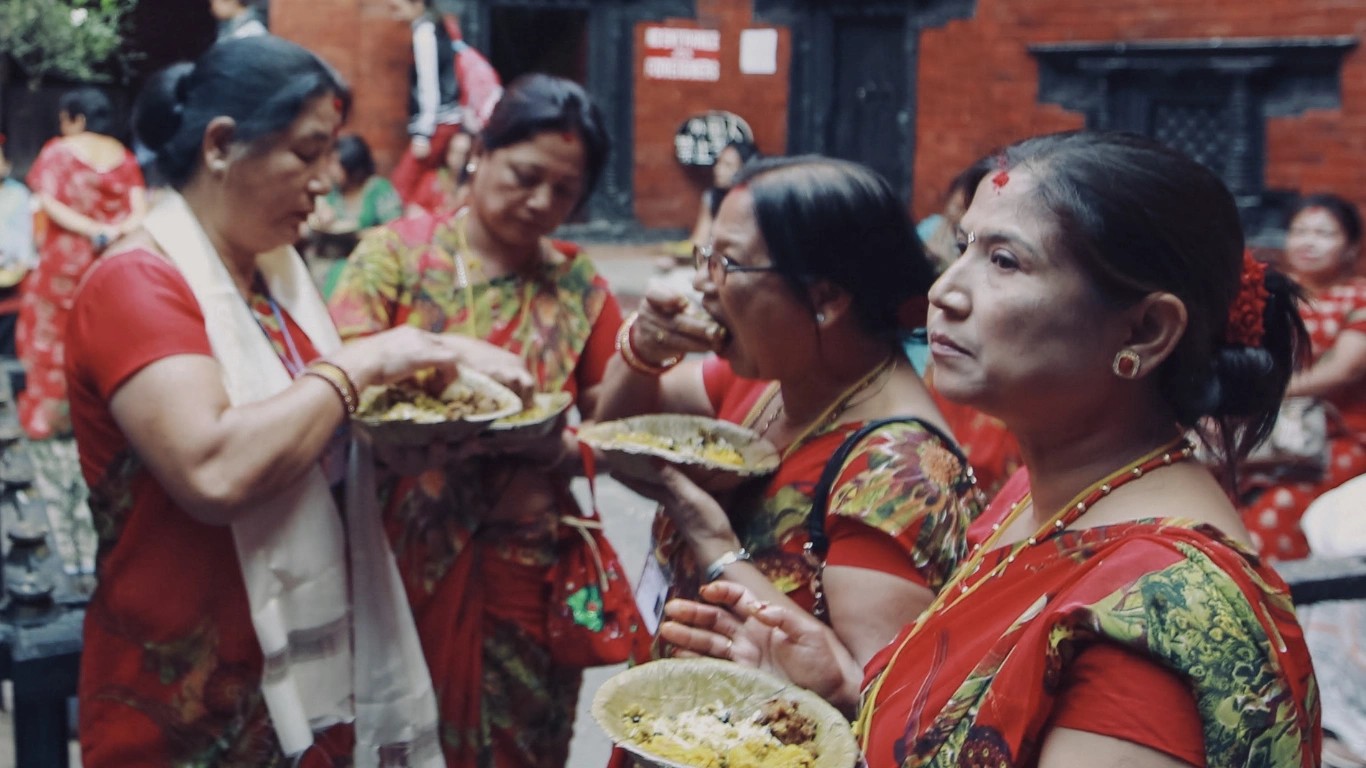
Men prepare and serve the meal. The feast is deliberately rich, designed to fuel the body through the 24-hour nirjala fast that follows. Standard Dar dishes include cooked rice, mutton preparations, lentil curries, sel roti (rice-flour doughnuts), sweets, yogurt, and seasonal fruit. Because women typically receive multiple invitations from different brothers or male relatives, dancing between servings is common practice: a way to build appetite across multiple feasts.
The dancing is not incidental. Teej songs (Teej geet) accompany the feast from the afternoon through late evening. Women use this platform to sing about their lives, their relationships, and their social aspirations. Historically, these songs gave women a public voice that daily domestic life rarely permitted.
Celebrations continue until midnight. At midnight, the nirjala fast begins.
Dar Khane Din 2025 was observed on August 26, 2025. Dar Khane Din 2026 falls on September 13, 2026 (Sunday).
This is the main fasting day. The majority of search volume, including teej 2026, teej festival 2026, hartalika teej 2026, when is teej in nepal, and nepali teej 2026, references this date.
The Nirjala Vrat is a complete fast: no food, no water, from midnight through the following morning. The duration is a full 24 hours. Women with health conditions may observe a modified fast using only water and fruit, but the nirjala form is the culturally dominant and most widely practised version.
Before dawn, women bathe, dress in red saris, and walk to Shiva temples. Worship centres on Pashupatinath Temple in Kathmandu, which holds UNESCO World Heritage status and sits on the banks of the Bagmati River. Devotees arrive before 4 AM to secure a position in the queue. The sight of the queue on Teej morning is one of the visual spectacles of the Nepali festival calendar: a procession of women in red saris moving through ancient stone corridors in the half-light before sunrise.
At the temple, women circumambulate the Shiva Lingam three times. The puja offerings include bel patra leaves, flowers, fruits, and lamps, representing devotion and spiritual connection. The oil lamp ritual is central: women light a lamp that must remain burning through the night. The sustained flame is understood to bring peace and prosperity to the family.
Throughout the day, Teej songs fill the temple courtyards. Women sing in groups, sometimes with live instruments. The atmosphere combines solemnity with celebration, the paradox of a festival built simultaneously around abstinence and abundance.
The fast is broken in the late evening or early the following morning with prasad, sacred food blessed at the temple, typically sweet sugar water or light fruit offerings.
September 14, 2026 is an official gazetted public holiday in Nepal for female employees.
Rishi Panchami closes the Teej festival with a focus on purification rather than intercession.
Women rise before sunrise and perform the datiwan ritual bath. Women bathe in red mud found on the roots of the sacred Datiwan bush, along with its leaves, in the belief that this symbolic bath will absolve them of all their sins. On Rishi Panchami, 108 pieces of datiwan are used in the ceremonial bathing, performed at a river, pond, or other sacred water source. The number 108 corresponds to the 108 beads of a Hindu mala and to the 108 incarnations of Goddess Parvati.
Following the bath, women observe the Sapta Rishi Puja: worship of the seven ancient sages (Saptarishis) of Hindu tradition (Kashyap, Atri, Bharadwaj, Vishwamitra, Gautam, Jamadagni, and Vashishtha). Women sit in a semicircle before a priest who recites devotional mantras while women offer grain, fruit, food, and money as symbolic gifts to each sage.
The purification is understood to atone for ritual impurities accumulated throughout the year, including those connected to menstrual cycles, which traditional Hindu practice marks as periods of temporary ritual restriction.
Both married and unmarried women who have reached puberty observe Rishi Panchami. After completing the puja, the fast is broken with special dishes including bean soup, mutton soup, and other desserts unique to the day.
Which Color Clothes to Wear on Teej?
Red is the non-negotiable festival colour. Red saris dominate every Dar Khane Din gathering, every temple courtyard, and every Teej photograph across Nepal. The colour is not simply aesthetic. Wearing a red saree for Teej signifies a powerful cultural tradition connected to fertility, marital love, and marital happiness. Wearing red during Teej is a declaration of identity.
Green is the complementary colour, appearing in glass bangles, in the detailed mehendi patterns on hands and feet, and in the pote necklace worn by married women. Gold ornaments complete the ensemble.
The full sorha singaar (sixteen adornments) is the aspiration on Dar Khane Din and the main Teej day. The sixteen adornments include sindoor, tika, pote, tilhari, nose ring (bulaki), earrings, bangles, armlets, rings, anklets, and specific garment elements. The ideal is bridal adornment: women mark the festival by presenting themselves at their most ceremonially complete.
White, black, and muted tones are avoided throughout all three festival days. These colours carry associations with mourning in Hindu Nepali tradition.
Mehendi on Teej: Cultural Significance and Practice
Mehendi during Teej
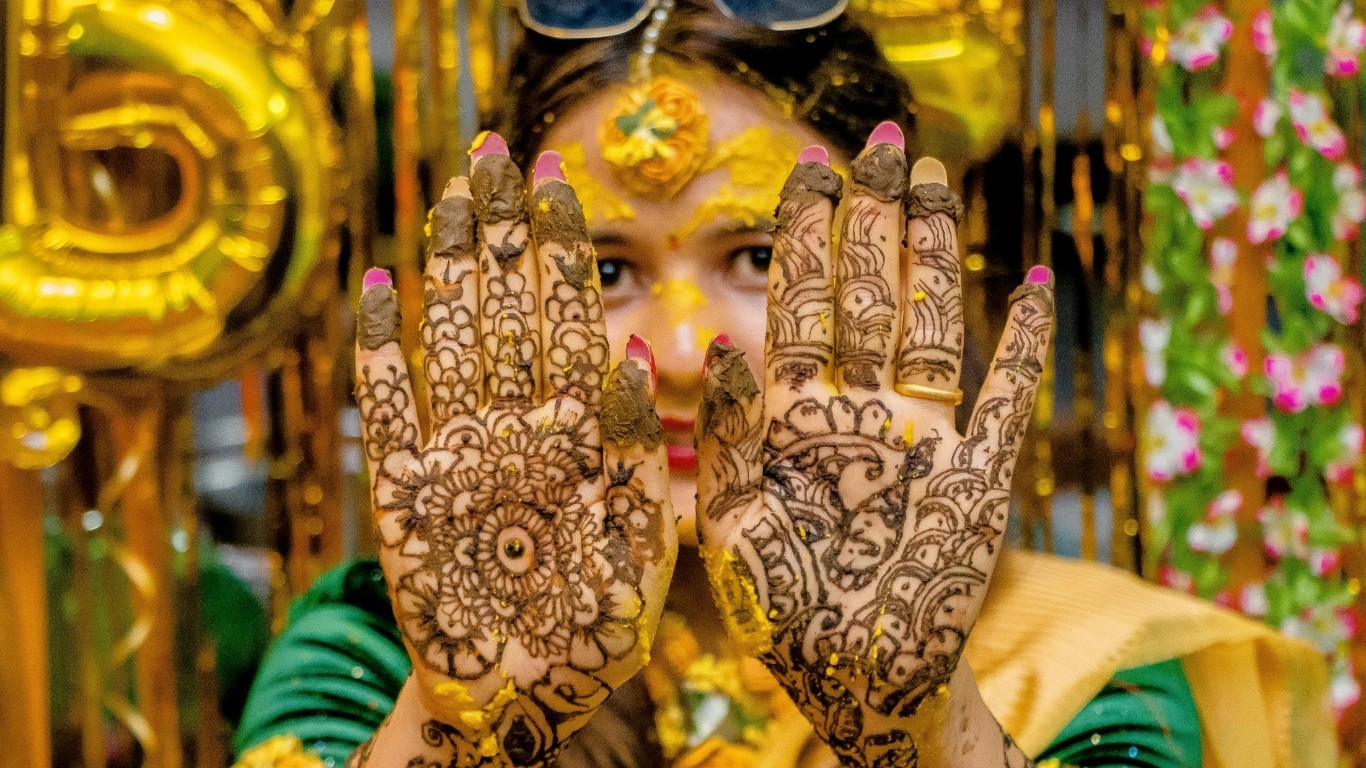
Mehendi (henna) is applied on the eve of Teej or during Dar Khane Din, in group sessions that are as social as they are ritual.
The specific cultural belief attached to Teej mehendi is concrete: a deeper, darker stain indicates stronger love between the woman and her husband. Women leave mehendi applied for as long as possible before washing, treating the deepening colour as a measure of devotion. For unmarried women, a rich stain is considered a favourable omen for finding a devoted partner.
The application session extends Dar Khane Din. Women apply elaborate patterns to each other's hands and feet while singing Teej songs. In recent decades, designs have grown more intricate, influenced by South Asian bridal henna trends, while retaining their ritual significance.
How Is Teej Different from Karva Chauth?
Both Teej and Karva Chauth are fasting festivals observed by Hindu women for their husbands' wellbeing. The similarity is real. The differences are significant.
Factor
Hartalika Teej
Karva Chauth
Duration
Three days, with a 24-hour nirjala fast
One day
Fast broken by
Prasad at the temple
Sighting of the moon at moonrise
Regional origin
Nepal's primary festival; also Bihar, eastern UP, Maharashtra, MP, Chhattisgarh
Primarily Punjabi and North Indian
Religious focus
Goddess Parvati and Lord Shiva, Shiva Lingam as ritual object
The moon as ceremonial vehicle
Closing ritual
Sapta Rishi Puja of Rishi Panchami
None; ends at moonrise
Civic recognition
National public holiday in Nepal for female employees
No equivalent state recognition
Scale
Tens of thousands at single temples like Pashupatinath
Household or neighbourhood gatherings
Teej 2026 Date in Hindi: Hartalika Teej Kab Hai?
For readers searching hartalika teej 2026 date in hindi, teej kab hai 2026, तीज 2026 कब है, haritalika teej kab hai 2026, 2026 mein teej kab hai, tij kab h 2026, haritalika teej 2026 mein kab hai, teej vrat kab hai 2026, tija kab hai 2026, teej kitne tarikh ko hai, 2026 me teej kab hai, 2026 ka teej kab hai, and hartalika teej 2026 date in bihar:
हरतालिका तीज 2026 में 14 सितंबर 2026, सोमवार को है।
Bihar, Uttar Pradesh, Maharashtra, aur Nepal mein Hartalika Teej 2026 ka date ek hi hai: 14 September 2026, Somvar.
दिन
नेपाली कैलेंडर
तारीख
उत्सव
दर खाने दिन
भाद्र 28, 2083
13 सितंबर 2026 (रविवार)
भोज, तीज गीत, नृत्य
हरतालिका तीज
भाद्र 29, 2083
14 सितंबर 2026 (सोमवार)
निर्जला व्रत, शिव पूजा
ऋषि पंचमी
भाद्र 31, 2083
16 सितंबर 2026 (बुधवार)
दातिवन स्नान, सप्तर्षि पूजा
Teej in the Nepali Calendar: 2083 and 2082
Nepal uses the Bikram Sambat (BS) calendar for all religious and civil observances. The Gregorian year 2026 corresponds to Nepali year 2083 BS.
Teej 2083 Date (Teej in 2083): Haritalika Teej 2083 falls on Bhadra 29, 2083 BS, corresponding to September 14, 2026 in the Gregorian calendar. This addresses searches for teej 2083, teej 2083 date, teej in 2083, teej in nepali date 2082, and teej 2082 date.
Teej 2082 Date (Teej 2082 Nepal): Teej 2082 BS refers to the 2025 festival year. Haritalika Teej 2082 fell on Bhadra Shukla Tritiya, 2082 BS, which was August 27, 2025 in the Gregorian calendar. This addresses searches for teej 2082, teej 2082 nepal, teej 2082 date, and when is teej in nepali date 2082.
Teej 2025 in Nepal: When Was Haritalika Teej 2025?
Haritalika Teej 2025 in Nepal fell on Wednesday, August 27, 2025 (Bhadra Shukla Tritiya, 2082 BS).
Day
Date
Observance
Dar Khane Din
August 26, 2025 (Tuesday)
Pre-fast feast, Teej songs, group dancing
Haritalika Teej
August 27, 2025 (Wednesday)
Nirjala Vrat, Pashupatinath temple visits
Rishi Panchami
August 28, 2025 (Thursday)
Datiwan ritual bath, Sapta Rishi Puja
This answers searches for teej 2025, nepali teej 2025, teej 2025 in nepal, teej 2025 nepali date, hartalika teej 2025 nepal, nepali teej 2025 date, teej 2025 date, when is teej 2025 in nepal, teej 2025 date nepal, nepali haritalika teej 2025, teej 2025 nepali calendar, teej 2025 nepali date 2082, and when is nepali teej 2025.
The 2025 festival saw strong attendance at Pashupatinath and Janaki Mandir, reflecting sustained post-COVID recovery in public religious participation. Women dressed in full red bridal attire, wore traditional jewellery including pote and tilhari, and applied detailed Teej mehendi designs. Dar Khane Din gatherings across Kathmandu continued into the early morning hours.
Teej 2024, 2023, 2022, 2021: Historical Festival Dates
Teej 2024 (Haritalika Teej 2024): Main day: September 6, 2024. Dar Khane Din: September 5. Rishi Panchami: September 8. Hariyali Teej 2024 fell on August 7. Kajari Teej 2024 fell on August 22.
Teej 2023 (Haritalika Teej 2023): Main day: September 18, 2023. The 2023 festival saw exceptional turnout, particularly at Pashupatinath, marking a full return to large-scale public celebration.
Teej 2022 (Haritalika Teej 2022): Main day: August 30, 2022 (Bhadra 14, 2079 BS).
Teej 2021 (Haritalika Teej 2021): Main day: August 23, 2021 (Bhadra 7, 2078 BS). Government restrictions related to COVID-19 shaped observances that year, with reduced temple access and smaller community gatherings across most cities.
Three Types of Teej: Hariyali, Kajari, and Hartalika
Teej is not a single festival. The Sanskrit term tija means "third" and refers to the tritiya of a lunar fortnight. Three distinct festivals share the name, each falling on a different tritiya during the monsoon months.
1. Hariyali Teej 2026 (August 15, 2026)
Hariyali Teej, or "Green Teej," falls on Shravana Shukla Tritiya. In 2026, this is Saturday, August 15, 2026. The festival is primarily observed in Rajasthan, Punjab, Haryana, and Uttar Pradesh.
The name references the monsoon green: women wear green saris and set up swings under trees. It is also called Sindhara Teej or Chhoti Teej (the "smaller Teej"). This addresses searches for hariyali teej 2026, hariyali teej 2026 mein kab hai, and nepali hariyali teej 2025.
2. Kajari Teej / Badi Teej 2026 (August 31, 2026)
Kajari Teej, called Badi Teej (the "bigger Teej") in Rajasthan, falls on Bhadrapada Krishna Tritiya, 15 days after Hariyali Teej. In 2026: Monday, August 31, 2026. Kajari Teej is prominent in Uttar Pradesh, Bihar, Jharkhand, and Madhya Pradesh. Women observe a nirjala fast and sing Kajari folk songs. This addresses searches for badi teej 2026 and kajari teej 2026.
3. Hartalika Teej 2026 (September 14, 2026)
Hartalika Teej falls on Bhadrapada Shukla Tritiya, one lunar month after Hariyali Teej. In 2026: Monday, September 14, 2026. This is Nepal's primary Teej festival and the most culturally embedded form across South Asia.
Which Teej is on 26 July? Hariyali Teej 2025 fell on approximately July 26 to 27, 2025, depending on regional calendar calculation. No Teej festival falls on July 26, 2026. The 2026 dates are August 15 (Hariyali), August 31 (Kajari), and September 14 (Hartalika).
Where Is Teej Celebrated in Nepal?
Pashupatinath Temple, Kathmandu draws the largest single concentration of Teej devotees in Nepal. The UNESCO World Heritage complex on the Bagmati River receives tens of thousands of women on Haritalika Teej day. Experienced pilgrims arrive before 4 AM to avoid the longest queues. By midmorning, the queue for temple entry extends several hundred metres.
Guhyeshwari Temple, adjacent to Pashupatinath, is a major secondary site in the Kathmandu Valley and draws independent crowds of its own.
Janaki Mandir, Janakpur is the focal point for Teej in the Terai. Janakpur's Maithili cultural heritage gives this celebration a distinct regional character, with its own song traditions and ritual variations.
Bindhyabasini Temple, Pokhara draws pilgrims from across the Gandaki region. The Phewa lakeside setting makes Teej in Pokhara photographically striking.
Dantakali Temple, Dharan is a Shakti-tradition temple in eastern Nepal, significant for women from across the region.
Biratnagar, Butwal, and Lumbini host large communal Dar Khane Din feasts and Teej cultural programmes. In Dhangadhi and Mahendranagar in far-western Nepal, Teej is observed through community temple rituals and organised cultural events.
Is Teej a Public Holiday in Nepal?
Yes. Haritalika Teej (September 14, 2026) is an official public holiday in Nepal, gazetted by the Government of Nepal. In order to protect the traditional culture, the government of Nepal has made the Teej festival a national holiday. The holiday applies specifically to female employees. Male employees follow standard working schedules.
This is one of the few gender-specific public holidays in any national calendar. The policy reflects both the cultural centrality of Teej to Nepali women and the practical incompatibility of early morning temple queues, all-day fasting, and full community participation with standard employment schedules.
Rishi Panchami (September 16, 2026) is not a gazetted public holiday but sees high participation rates among women who complete the full three-day observance.
India does not gazette Hartalika Teej as a national public holiday, though state governments in Bihar and Uttar Pradesh may grant local observance in relevant communities.
Is Teej Celebrated for Husbands?
Temple
Yes. For married women, the primary stated intention of the Teej fast is the wellbeing of the husband.
The spiritual logic: a wife's abstinence, devotion, and physical sacrifice generate merit that transfers as divine protection for her husband's health and longevity. The model is Goddess Parvati, who fasted and prayed across 108 incarnations specifically to secure Lord Shiva's love and fidelity.
The husband's role during Teej is supportive rather than ceremonial. Husbands often give blessings in the evening, adding love and respect to the occasion. Husbands typically accompany wives to temples, take over household responsibilities during the fasting day, and present gifts of jewellery, saris, or bangles as gestures of appreciation. On Dar Khane Din, it is male relatives (brothers, fathers, husbands) who prepare and serve the feast to the women.
For unmarried women, the fast is directed toward attracting a devoted partner rather than sustaining an existing marriage. The intention shifts; the ritual practice is identical.
Teej Outside Nepal: Celebrations Across South Asia
India
Three Teej forms are observed across North and Central India.
Hariyali Teej is the dominant festival of Rajasthan, Punjab, Haryana, and western Uttar Pradesh. Women wear green saris and set up swings under trees. The Teej procession in Jaipur is one of the most elaborate state-level Teej events in India.
Kajari Teej is prominent in Uttar Pradesh, Bihar, and Jharkhand. Nirjala fasting, neem tree veneration, and Kajari folk song performance are the defining elements.
Hartalika Teej is observed in Maharashtra, Madhya Pradesh, Chhattisgarh, Jharkhand, and Bihar in a form closely parallel to the Nepali festival. Women make clay idols of Shiva, Gauri, Ganesha, and Kartikeya, observe Nirjala Vrat, and conduct bhajan sessions through the night.
Teej festival in which state? The most prominent celebrations are in Rajasthan, Uttar Pradesh, Bihar, Jharkhand, Punjab, Haryana, Maharashtra, Madhya Pradesh, and Chhattisgarh.
Hartalika Teej 2026 date in Bihar: The same as Nepal. September 14, 2026 (Monday). The Hindu lunar calendar aligns across regions for this festival.
Nepali Diaspora
Haritalika Teej is observed in Nepali communities across the Gulf (especially UAE and Qatar), the UK, the US, Australia, and Indian cities including Darjeeling, Sikkim, Delhi NCR, and Assam.
Teej 2026 FAQ: Every Major Search Question Answered
When is Teej in Nepal 2026?
Haritalika Teej falls on September 14, 2026. The full festival runs September 13 to September 16.
Teej kab hai 2026 / तीज 2026 कब है / teej kb h?
14 September 2026, Monday (Somvar).
Hartalika teej 2026 date in Hindi?
हरतालिका तीज 2026: 14 सितंबर 2026, सोमवार।
When is Teej this year / teej this year in Nepal?
Teej this year (2026) is September 14, with Dar Khane Din on September 13 and Rishi Panchami on September 16.
Teej 2026 date in Nepali calendar?
Bhadra 29, 2083 BS.
When is Teej 2025 in Nepal / teej 2025 nepal date?
August 27, 2025 (Bhadra Shukla Tritiya, 2082 BS).
Dar Khane Din 2025 / teej dar khane din 2025?
August 26, 2025. Dar Khane Din 2026: September 13, 2026.
Teej 2082 date / teej 2082 nepal?
August 27, 2025 Gregorian (Bhadra Shukla Tritiya, 2082 BS).
Teej 2083 / teej in 2083?
September 14, 2026 (Bhadra 29, 2083 BS).
What is Nepali Teej?
Nepal's Haritalika Teej is a three-day Hindu festival honouring Goddess Parvati and Lord Shiva. Women observe a 24-hour nirjala fast, visit temples, make offerings to the Shiva Lingam, and celebrate with Teej songs and communal dancing.
Is Teej celebrated for husbands?
Yes. Married women fast and pray for their husband's health and longevity. The spiritual model is Parvati's devotion to Shiva. Unmarried women fast to seek a devoted life partner.
Which color clothes to wear on Teej?
Red (primary). Green accessories and gold jewellery. White and black are avoided.
How is Teej different from Karva Chauth?
Teej is a three-day festival with a 24-hour nirjala fast, centred on Shiva and Parvati, closing with the Rishi Panchami purification ritual. Karva Chauth is a one-day fast broken at moonrise. The two are geographically, ritually, and culturally distinct.
Is Teej a public holiday in Nepal?
Yes. September 14, 2026 is a gazetted public holiday for female employees under Government of Nepal notification.
When is nepali teej 2026 / nepali teej 2026 date?
September 14, 2026. Three-day festival: September 13 to September 16, 2026.
Teej in Nepal with Majestic Trails Nepal
Experience Teej in Nepal as a traveller by planning your visit during Bhadra (August to September) and spending time at Pashupatinath Temple in Kathmandu or Janaki Mandir in Janakpur. The combination of collective song, vivid red attire, and early morning temple devotion makes Haritalika Teej one of the most photographically and culturally distinctive Hindu festivals in South Asia.
Majestic Trails Nepal can help you pair your Teej visit with a Himalayan trek in the weeks before or after the monsoon, for a complete cultural and mountain experience. The autumn trekking season opens just as the festival ends, making September an ideal time to combine both.
Related Travel Blogs
Join our Newsletter
Sign up to stay updated with latest offers, recent events and more news.